Unraveling Metabolic Pathways: A Comprehensive Guide to LC-HRMS for Discovery Metabolomics
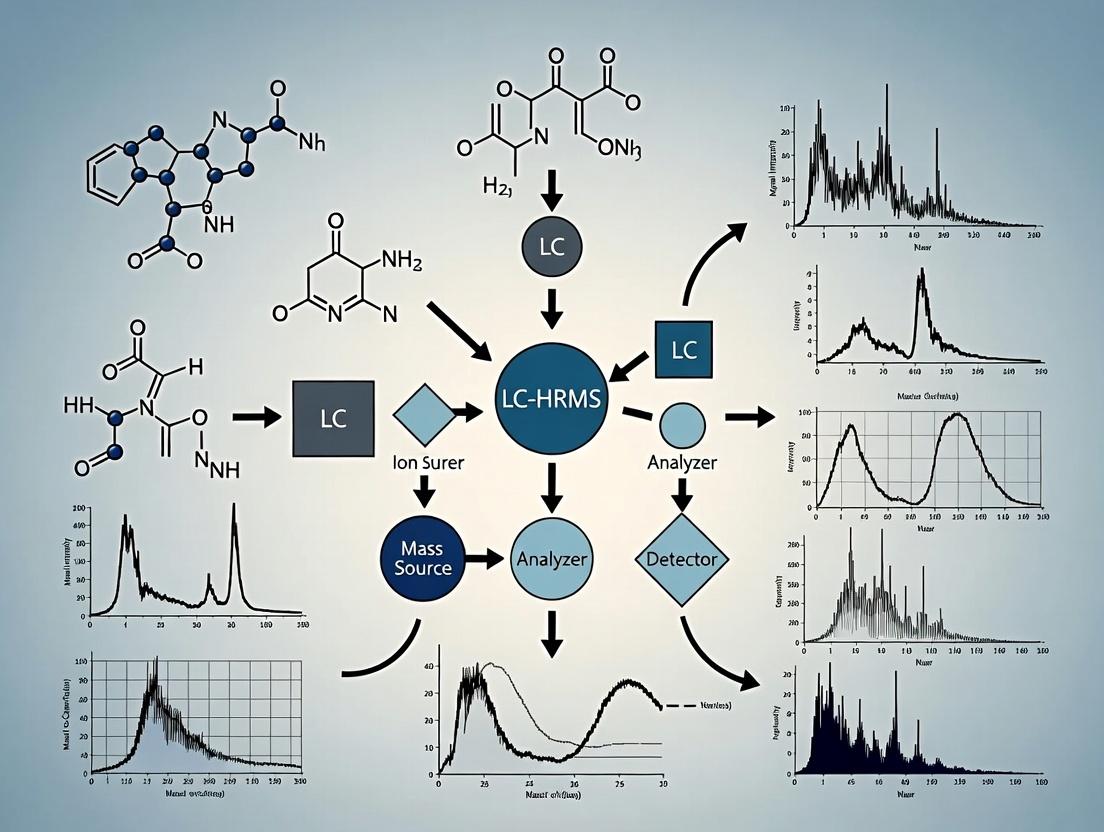
This article provides a detailed exploration of Liquid Chromatography-High Resolution Mass Spectrometry (LC-HRMS) as the cornerstone technology for untargeted metabolic profiling and pathway discovery.
Unraveling Metabolic Pathways: A Comprehensive Guide to LC-HRMS for Discovery Metabolomics
Abstract
This article provides a detailed exploration of Liquid Chromatography-High Resolution Mass Spectrometry (LC-HRMS) as the cornerstone technology for untargeted metabolic profiling and pathway discovery. Tailored for researchers, scientists, and drug development professionals, it covers the foundational principles of LC-HRMS, advanced methodological workflows for hypothesis generation, practical troubleshooting strategies to ensure data quality, and rigorous validation frameworks for biological interpretation. By synthesizing current best practices, this guide aims to empower users to confidently leverage LC-HRMS to map novel metabolic pathways, identify biomarkers, and accelerate translational research in biomedicine and pharmaceutical development.
LC-HRMS 101: Core Principles for Untargeted Metabolic Profiling and Hypothesis Generation
Why LC-HRMS is the Gold Standard for Untargeted Metabolomics
Within the context of a broader thesis on metabolic profiling for pathway discovery, Liquid Chromatography-High Resolution Mass Spectrometry (LC-HRMS) stands as the indispensable platform. Its unparalleled ability to profile thousands of metabolites in a single, high-fidelity analysis provides the foundational data required to map biochemical perturbations, identify novel biomarkers, and elucidate disease mechanisms. This document outlines the core technical advantages, application protocols, and essential resources that establish LC-HRMS as the gold standard.
Technical Advantages and Quantitative Performance
The superiority of LC-HRMS in untargeted metabolomics is quantifiable across several performance metrics, as summarized in Table 1.
Table 1: Quantitative Performance Metrics of Modern LC-HRMS Systems
| Performance Metric | Typical Range | Impact on Untargeted Profiling |
|---|---|---|
| Mass Resolution (FWHM) | 60,000 - 500,000+ | Enables separation of isobaric and isotopologue ions, critical for accurate formula assignment. |
| Mass Accuracy (ppm) | < 1 - 5 ppm (internal calibration) | Drastically reduces candidate elemental formulas for unknown features, enhancing identification confidence. |
| Dynamic Range | ≥ 4 - 5 orders of magnitude | Allows simultaneous detection of high-abundance and low-abundance metabolites in a single injection. |
| Scan Speed (Hz) | 10 - 60+ Hz (Orbitrap/Q-TOF) | Enables sufficient data points across narrow LC peaks (< 5 sec) for accurate quantification. |
| Chromatographic Resolution | Peak Capacity: 200 - 500+ (UPLC) | Reduces ion suppression and spectral complexity, improving MS detectability. |
Detailed Experimental Protocol: Untargeted Metabolite Profiling for Pathway Discovery
Protocol 1: Sample Preparation from Cultured Mammalian Cells
Objective: To extract a broad range of polar and semi-polar intracellular metabolites with minimal degradation.
Materials:
- Cell culture (e.g., HepG2, primary hepatocytes)
- Cold (-20°C) 80% methanol (LC-MS grade) in water
- Phosphate-buffered saline (PBS), 4°C
- Pre-chilled (-80°C) 1.5 mL microcentrifuge tubes
- Sonicator with microtip probe
- Refrigerated centrifuge
- SpeedVac concentrator
Procedure:
- Quenching & Washing: Rapidly aspirate media. Immediately add 2 mL of 4°C PBS to the culture dish. Swirl and aspirate. Repeat once.
- Extraction: Add 1 mL of cold 80% methanol directly to the cells on the plate. Scrape cells and transfer the suspension to a pre-chilled tube.
- Homogenization: Sonicate the suspension on ice (3 cycles of 10 sec on, 20 sec off).
- Precipitation: Incubate extracts at -20°C for 1 hour to precipitate proteins and lipids.
- Clearing: Centrifuge at 16,000 x g for 15 minutes at 4°C.
- Concentration: Transfer the supernatant to a new tube. Dry using a SpeedVac concentrator at room temperature.
- Reconstitution: Reconstitute the dried metabolite pellet in 100 µL of appropriate LC-MS starting mobile phase (e.g., 98:2 H₂O:ACN + 0.1% formic acid). Vortex thoroughly.
- Clearing: Centrifuge at 16,000 x g for 10 minutes at 4°C. Transfer the final supernatant to an LC-MS vial for analysis.
Protocol 2: LC-HRMS Data Acquisition
Objective: To achieve chromatographic separation and high-resolution mass spectral acquisition of the metabolome.
Chromatography Conditions:
- Column: HILIC (e.g., BEH Amide, 2.1 x 100 mm, 1.7 µm) or Reversed-Phase (e.g., C18, 2.1 x 100 mm, 1.8 µm).
- Mobile Phase A: Water + 0.1% Formic Acid (or 10 mM Ammonium Formate, pH 3)
- Mobile Phase B: Acetonitrile + 0.1% Formic Acid
- Gradient: (HILIC Example) 95% B to 50% B over 15 min, hold 2 min, re-equilibrate.
- Flow Rate: 0.4 mL/min
- Column Temp: 40°C
- Injection Volume: 5 µL
Mass Spectrometry Conditions (Orbitrap-based Example):
- Ionization: Heated Electrospray Ionization (HESI), positive and negative polarity modes.
- Spray Voltage: ±3.5 kV
- Capillary Temp: 320°C
- Sheath/Aux Gas: Nitrogen
- Resolution: 120,000 @ m/z 200
- Scan Range: m/z 70 - 1050
- Data Acquisition: Full MS / data-dependent MS² (dd-MS²) for top N ions.
- Lock Mass: Use a ubiquitous contaminant ion (e.g., polysiloxane, m/z 445.12002) for real-time internal mass calibration.
Visualizing the Untargeted Metabolomics Workflow
Untargeted Metabolomics LC-HRMS Workflow
The Scientist's Toolkit: Key Research Reagent Solutions
Table 2: Essential Materials for LC-HRMS Untargeted Metabolomics
| Item | Function & Importance |
|---|---|
| LC-MS Grade Solvents (Water, Acetonitrile, Methanol) | Minimize background chemical noise and ion suppression, ensuring high signal-to-noise ratios. |
| Mass Calibration Solutions | Provide known m/z ions across a wide range to calibrate the mass analyzer, guaranteeing <1 ppm mass accuracy. |
| Stable Isotope-Labeled Internal Standards (e.g., ¹³C, ¹⁵N) | Monitor extraction efficiency, correct for matrix effects, and aid in absolute quantification. |
| Quality Control (QC) Pool Sample | A pooled aliquot of all experimental samples, injected repeatedly throughout the run to monitor system stability and for data normalization. |
| Retention Time Index Standards | A mixture of compounds that elute across the chromatographic gradient, aiding in alignment and identification. |
| In-house or Commercial Metabolite Library | A curated database of accurate mass, retention time, and fragmentation spectra for metabolite identification. |
Visualizing Data Analysis and Pathway Mapping Logic
Data Analysis & Pathway Mapping Logic
LC-HRMS is the foundational engine for hypothesis-generating metabolomics. Its high mass accuracy and resolution are non-negotiable for confidently distinguishing the vast chemical space of the metabolome. When coupled with robust, standardized protocols—from sample quenching to computational pathway mapping—it delivers the comprehensive and reliable data required to advance pathway discovery research in drug development and molecular biology.
Application Note AN-2025-01: Metabolic Profiling for Pathway Discovery in Drug Development
Thesis Context: This note supports a thesis investigating the use of Liquid Chromatography-High Resolution Mass Spectrometry (LC-HRMS) for untargeted metabolic profiling to elucidate novel biochemical pathways in response to therapeutic intervention.
1. Introduction LC-HRMS is the cornerstone of modern metabolomics, enabling the simultaneous detection and identification of hundreds to thousands of metabolites. Its high resolution, mass accuracy, and sensitivity are critical for differentiating isobaric compounds and generating hypotheses about altered metabolic pathways in disease states.
2. Core Platform Components & Quantitative Performance
Table 1: Key Ion Source Performance Characteristics
| Ion Source Type | Principle | Optimal Flow Rate (µL/min) | Polarity Mode | Key Advantages for Metabolomics |
|---|---|---|---|---|
| Electrospray Ionization (ESI) | Charged droplet desolvation | 1 - 1000 | Positive & Negative | Gentle; excellent for polar metabolites; compatible with LC. |
| Heated Electrospray Ionization (H-ESI) | ESI with heated capillary | 50 - 1000 | Positive & Negative | Improved desolvation for higher flow rates; increased sensitivity. |
| Atmospheric Pressure Chemical Ionization (APCI) | Gas-phase chemical ionization | 200 - 2000 | Positive & Negative | Better for less polar, thermally stable compounds. |
Table 2: HRMS Analyzer Comparison
| Analyzer Type | Resolution (FWHM) | Mass Accuracy (ppm) | Scan Speed | Key Application in Profiling |
|---|---|---|---|---|
| Quadrupole-Time of Flight (Q-TOF) | 20,000 - 80,000 | < 2 - 5 | Very Fast | Ideal for fast LC and unknown screening; good dynamic range. |
| Orbitrap (FTMS) | 60,000 - 1,000,000 | < 1 - 3 | Fast to Moderate | Superior resolution and accuracy for complex mixtures; excellent for isotope fine structure. |
| Fourier Transform Ion Cyclotron Resonance (FT-ICR) | > 1,000,000 | < 1 | Slower | Ultimate resolution; used for ultra-complex samples (e.g., crude extracts). |
3. Detailed Experimental Protocols
Protocol 1: Untargeted Metabolic Profiling of Cell Culture Supernatants
Objective: To capture a broad snapshot of the extracellular metabolome for pathway analysis.
Materials: See "Scientist's Toolkit" below. Procedure:
- Sample Preparation:
- Quench 1 mL of cell culture media by mixing with 4 mL of cold (-20°C) 40:40:20 methanol:acetonitrile:water.
- Vortex for 30 seconds, incubate at -20°C for 1 hour.
- Centrifuge at 15,000 x g for 15 minutes at 4°C.
- Transfer supernatant to a new tube and dry under a gentle stream of nitrogen.
- Reconstitute dried extract in 100 µL of 95:5 water:acetonitrile with 0.1% formic acid for positive mode, or 0.1% ammonium hydroxide for negative mode. Vortex thoroughly.
- Centrifuge at 15,000 x g for 10 minutes and transfer supernatant to an LC vial with insert.
Liquid Chromatography:
- Column: HILIC column (e.g., 2.1 x 150 mm, 1.7 µm).
- Mobile Phase A: 10 mM ammonium formate in water, pH 3.0 (for ESI+) / 10 mM ammonium acetate in water, pH 8.0 (for ESI-).
- Mobile Phase B: Acetonitrile.
- Gradient: 95% B to 50% B over 15 min, hold 2 min, re-equilibrate for 8 min.
- Flow Rate: 0.25 mL/min. Column Temp: 40°C. Injection Volume: 5 µL.
HRMS Data Acquisition:
- Ion Source: H-ESI. Spray Voltage: +3.5 kV / -2.8 kV. Capillary Temp: 320°C.
- Sheath/Aux Gas: Nitrogen, 40/10 arbitrary units.
- Analyzer: Full MS scan with data-dependent MS/MS (dd-MS²).
- Full Scan: Resolution = 70,000, Scan Range = m/z 70-1050, AGC Target = 1e6.
- dd-MS²: Top 5 most intense ions per cycle. Resolution = 17,500, Isolation Window = m/z 2.0, Stepped NCE = 20, 40, 60.
Protocol 2: Data Processing for Pathway Discovery
- Convert raw files to an open format (.mzML) using MSConvert (ProteoWizard).
- Process with computational tools (e.g., XCMS Online, MS-DIAL) for feature detection, alignment, and annotation.
- Parameters: Peak width = c(5,30), ppm = 5, snthresh = 6.
- Annotate using accurate mass (± 3 ppm) against databases (HMDB, METLIN, KEGG). Confirm with MS/MS spectral matching.
- Perform statistical analysis (PCA, PLS-DA) to identify significant features (p < 0.05, FC > 2).
- Map significant metabolites to pathways using KEGG Mapper or MetaboAnalyst.
4. Visualizations
Untargeted Metabolomics Workflow
LC-HRMS Platform Schematic
5. The Scientist's Toolkit: Essential Research Reagents & Materials
Table 3: Key Reagents for LC-HRMS Metabolite Profiling
| Item | Function | Example/Note |
|---|---|---|
| LC-MS Grade Water/MeOH/ACN | Mobile phase preparation. | Minimizes background noise and ion suppression. |
| Ammonium Formate/Acetate | Mobile phase additives for pH/ion control. | Volatile salts compatible with MS. |
| Stable Isotope Internal Standards (^13C, ^15N) | Quality control, normalization, quantification. | e.g., Cambridge Isotope Laboratories mix. |
| HILIC & Reversed-Phase (C18) Columns | Separation of diverse metabolite classes. | Use orthogonal methods for coverage. |
| NIST Mass Spectral Library | Reference MS/MS spectra for annotation. | Enhances identification confidence. |
| Quality Control (QC) Pool Sample | Monitors system stability. | Prepared by mixing aliquots of all test samples. |
| Derivatization Reagents (e.g., MOX, TMS) | For GC-HRMS analysis of volatile compounds. | Expands metabolite coverage. |
This protocol details the core discovery metabolomics pipeline, a foundational component of a broader thesis employing Liquid Chromatography-High-Resolution Mass Spectrometry (LC-HRMS) for untargeted metabolic profiling. The primary objective is to systematically transform raw spectral data into testable biological hypotheses regarding pathway modulation in response to disease, treatment, or genetic perturbation, thereby driving pathway discovery research.
The Discovery Metabolomics Workflow: A Stepwise Protocol
The pipeline consists of four consecutive stages: Sample Preparation, LC-HRMS Analysis, Data Processing & Annotation, and Biological Interpretation.
Stage 1: Sample Preparation & QC Protocol
Objective: To generate a reproducible, high-quality metabolome extract suitable for LC-HRMS analysis. Key Materials: See "Research Reagent Solutions" table below. Detailed Protocol:
- Quenching & Extraction: For cultured cells, rapidly aspirate media and add pre-chilled (-40°C) 80% methanol/water (v/v) with internal standards (e.g., stable isotope-labeled amino acids, fatty acids). Scrape cells on dry ice. For tissues, homogenize immediately in the same extraction solvent using a bead mill homogenizer at 4°C.
- Protein Precipitation: Vortex samples vigorously for 30 seconds, then incubate at -20°C for 1 hour.
- Clearing: Centrifuge at 16,000 × g for 15 minutes at 4°C.
- Supernatant Collection: Transfer supernatant to a fresh tube. Dry under a gentle stream of nitrogen gas or using a vacuum concentrator.
- Reconstitution: Reconstitute the dried metabolite pellet in a solvent compatible with your LC method (e.g., 100 µL of 5% acetonitrile/water for HILIC, or 100 µL of water for reversed-phase). Vortex thoroughly.
- Quality Control (QC) Pool: Combine equal aliquots from every experimental sample to create a pooled QC sample. This QC is injected repeatedly throughout the analytical run to monitor instrument stability.
- Clear Vial Transfer: Centrifuge reconstituted samples again at 16,000 × g for 10 minutes at 4°C. Carefully transfer the clarified supernatant to LC vials with inserts for analysis.
Stage 2: LC-HRMS Analytical Acquisition
Objective: To separate and detect thousands of metabolite features with high mass accuracy and resolution. Typical Conditions (HILIC-Positive Mode Example):
- Column: BEH Amide, 2.1 × 150 mm, 1.7 µm.
- Mobile Phase A: 95:5 Water:Acetonitrile, 10 mM Ammonium Acetate, pH 9.0.
- Mobile Phase B: Acetonitrile.
- Gradient: 85% B to 20% B over 14 min, hold 2 min, re-equilibrate.
- Flow Rate: 0.3 mL/min.
- Temperature: 40°C.
- MS: Q-Exactive Orbitrap or equivalent.
- Full Scan: 70-1050 m/z, resolution = 70,000 @ 200 m/z.
- Data-Dependent MS/MS (dd-MS²): Top 10 ions per cycle, resolution = 17,500, stepped NCE 20, 40, 60.
Run Sequence: Inject QC sample 5-10 times at start for column conditioning. Randomize all experimental samples. Inject QC after every 4-8 experimental samples to monitor drift.
Stage 3: Data Processing & Metabolite Annotation
Objective: To convert raw files into a feature table with putative identifications. Software: XCMS Online, MS-DIAL, or Compound Discoverer. Workflow:
- Conversion: Convert
.rawfiles to open formats (.mzML). - Peak Picking: Detect chromatographic peaks.
- Alignment: Align peaks across samples based on RT and m/z.
- Grouping & Gap Filling: Group features and fill in missing peaks.
- Normalization: Use internal standards (e.g., ISTD) and/or probabilistic quotient normalization.
- Annotation:
- Level 1: Confident identity via MS/MS match to authentic standard analyzed in-house.
- Level 2: Putative annotation via MS/MS match to public library (e.g., GNPS, MassBank).
- Level 3: Putative characterization by chemical class based on MS/MS in-silico tools (e.g., CSI:FingerID).
- Level 4: Unknown feature, distinguished only by m/z and RT.
Table 1: Metabolite Identification Confidence Levels
| Confidence Level | Identification Evidence Required | Typical Yield in Untargeted Study |
|---|---|---|
| Level 1 | MS/MS & RT match to authentic standard | 1-5% |
| Level 2 | MS/MS match to public spectral library | 5-15% |
| Level 3 | In-silico MS/MS prediction or class | 10-30% |
| Level 4 | m/z & RT only (Unidentified) | 50-80% |
Stage 4: Statistical Analysis & Biological Interpretation
Objective: To identify significantly altered metabolites and map them to biological pathways. Protocol:
- Statistical Analysis: Perform multivariate (e.g., PCA, PLS-DA) and univariate (e.g., t-test, ANOVA with FDR correction) analysis on the normalized feature table.
- Volcano Plot: Create a plot of statistical significance (-log10(p-value)) vs. magnitude of change (log2(fold-change)) to prioritize key metabolites.
- Pathway Analysis: Input significantly altered metabolites (Level 2+ annotation) into tools like MetaboAnalyst, Mummichog, or IMPaLA.
- Enrichment Analysis: These tools test for over-representation of metabolites from known biological pathways versus random chance, outputting enriched pathways with p-values.
- Integration: Correlate metabolomic findings with transcriptomic or proteomic data from the same samples (if available) to strengthen biological inference.
Table 2: Example Output from Pathway Enrichment Analysis (Hypothetical Data)
| Pathway Name | Total Compounds | Hits | p-Value | FDR |
|---|---|---|---|---|
| TCA Cycle | 20 | 6 | 1.2e-05 | 0.0002 |
| Glycine, Serine & Threonine Metabolism | 32 | 5 | 0.0003 | 0.012 |
| Purine Metabolism | 66 | 7 | 0.0018 | 0.038 |
| Phosphatidylcholine Biosynthesis | 28 | 4 | 0.005 | 0.078 |
Visual Workflow & Pathway Diagrams
Title: Discovery Metabolomics Pipeline Workflow
Title: TCA Cycle Dysregulation with Key Metabolite Hits
The Scientist's Toolkit: Research Reagent Solutions
Table 3: Essential Materials for LC-HRMS Discovery Metabolomics
| Item | Function & Rationale |
|---|---|
| Pre-chilled 80% Methanol (-40°C) with Internal Standards | Rapid quenching of metabolism and efficient extraction of polar metabolites. Internal standards correct for variability. |
| Stable Isotope-Labeled Internal Standard Mix | A cocktail of ( ^{13}\text{C} ), ( ^{15}\text{N} )-labeled amino acids, nucleotides, etc., for quality control and semi-quantitation. |
| Bead Mill Homogenizer (for tissues) | Ensures complete and rapid disruption of tough tissue matrices for reproducible metabolite recovery. |
| LC-MS Grade Solvents & Additives (Water, Acetonitrile, Methanol, Ammonium Acetate/Formate) | Minimizes chemical noise and ion suppression caused by solvent impurities. |
| HILIC & Reversed-Phase (C18) UPLC Columns | Complementary separation modes maximize coverage of hydrophilic and hydrophobic metabolomes. |
| Pooled QC Sample | A representative sample used to condition the system, monitor stability, and correct for instrumental drift. |
| Commercial Metabolite Standards | Required for confirming Level 1 identifications and generating in-house MS/MS spectral libraries. |
| NIST or MassBank MS/MS Libraries | Public spectral databases essential for performing Level 2 putative annotations. |
| Software Suites (e.g., Compound Discoverer, XCMS, MS-DIAL, MetaboAnalyst) | Integrated platforms for processing raw data, statistical analysis, and pathway mapping. |
Within the broader thesis on employing Liquid Chromatography-High Resolution Mass Spectrometry (LC-HRMS) for metabolic profiling in pathway discovery research, chemoinformatics data processing forms the critical bridge between raw spectral data and biological insight. This document details the essential application notes and protocols for the three foundational chemoinformatics stages: peak picking, alignment, and metabolite annotation, which are paramount for translating complex datasets into meaningful metabolic pathway maps.
Application Notes & Protocols
Peak Picking (Feature Detection)
Peak picking transforms raw LC-HRMS data into a list of metabolic features defined by mass-to-charge ratio (m/z), retention time (RT), and intensity.
Protocol: Algorithmic Feature Detection with CentWave (via XCMS)
- Data Input: Load raw .mzML or .mzXML files into R/Python environment.
- Parameter Definition: Set the CentWave algorithm parameters (see Table 1).
- Peak Detection: Execute the
xcms::findChromPeaksfunction with method = "centWave". - Post-Processing: Apply the
xcms::refineChromPeaksfunction to remove peaks below a signal-to-noise threshold or outside the expected RT width. - Output: A features table (peak list) for each sample.
Table 1: Key Parameters for CentWave Peak Picking
| Parameter | Typical Value Range | Function |
|---|---|---|
peakwidth |
c(5, 20) seconds | Min and max expected peak width in chromatographic time. |
ppm |
10-30 ppm | Mass accuracy tolerance for grouping ions. |
snthresh |
6-10 | Signal-to-noise ratio cutoff. |
prefilter |
c(3, 5000) | Steps: (k, I); retain masses with ≥k peaks > intensity I. |
Figure 1: Peak picking workflow using the CentWave algorithm.
Peak Alignment (Correspondence)
Alignment matches corresponding features across multiple samples to account for retention time drift and mass variance.
Protocol: Retention Time Correction and Grouping (via XCMS)
- Subset Alignment: Identify a subset of well-behaved peaks across all samples using
xcms::adjustRtimewith the obiwarp method. - Apply Correction: Adjust the RT of all peaks in each sample based on the model.
- Feature Grouping: Perform correspondence across samples using
xcms::groupChromPeakswith the density method, grouping peaks with similar m/z and adjusted RT. - Fill Missing Peaks: Optionally, re-integrate signals in "gap" regions where a peak was detected in some but not all samples (
xcms::fillChromPeaks). - Output: A consensus feature matrix (Rows = Features, Columns = Samples).
Table 2: Quantitative Impact of Alignment on a 100-Sample Dataset
| Metric | Before Alignment | After Alignment (Obiwarp) |
|---|---|---|
| Avg. Features/Sample | 5,200 ± 350 | NA |
| Total Unique MZ-RT Pairs | ~185,000 | 6,150 |
| Median RT Deviation (min) | 0.45 | 0.05 |
| Features with >20% Missing Values | NA | Reduced by ~65% |
Figure 2: Peak alignment and feature matrix creation workflow.
Metabolite Annotation
Annotation assigns putative identities to aligned features using spectral databases and computational prediction.
Protocol: Multi-Layered Annotation Using MS/MS Spectral Matching
- Level 1 Annotation (Confident): For features with MS/MS data, search against authentic standard spectral libraries (e.g., MassBank, NIST). Match criteria: m/z Δ < 10 ppm, RT Δ < 0.2 min, and cosine similarity score > 0.8.
- Level 2 Annotation (Putative): Match MS/MS spectrum against in-silico or broad public libraries (e.g., GNPS). Assign putative compound class.
- Level 3 Annotation (Tentative): For features without MS/MS, query exact mass against compound databases (e.g., HMDB, KEGG) with a strict mass tolerance (e.g., < 5 ppm). Consider possible adducts ([M+H]+, [M+Na]+, [M-H]-) and in-source fragments.
- Level 4 Annotation (Unknown): Characterize by molecular formula and/or spectral similarity to empirical rules.
- Output: An annotated feature table with confidence levels.
Table 3: Annotation Confidence Levels (as per Metabolomics Standards Initiative)
| Level | Identification Evidence | Typical Output |
|---|---|---|
| 1 | Two orthogonal properties (e.g., RT & MS/MS) match authentic standard. | Confident identity |
| 2 | MS/MS spectrum matches public/library spectrum. | Putative compound class |
| 3 | Exact mass match to database compound(s). | Tentative candidates |
| 4 | Differential analysis m/z & RT only. | Unknown feature |
Figure 3: Multi-layered metabolite annotation decision workflow.
The Scientist's Toolkit: Research Reagent Solutions
Table 4: Essential Materials for LC-HRMS Metabolic Profiling Data Processing
| Item | Function in Chemoinformatics |
|---|---|
| Authentic Chemical Standards | Provides Level 1 identification. Used to build in-house MS/MS libraries and validate RT. |
| Quality Control (QC) Pool Sample | A homogenous mix of all study samples. Injected repeatedly to monitor instrument stability, optimize alignment, and filter irreproducible features. |
| Blank Solvent Samples | Used to identify and subtract background ions and contaminants originating from the LC-MS system or solvents. |
| Derivatization Reagents (e.g., MSTFA) | For GC-MS workflows; increases volatility and alters fragmentation for improved identification. |
| Internal Standards (IS) | Stable isotope-labeled compounds (e.g., 13C, 15N). Spiked into all samples to monitor and correct for matrix effects and ionization variability. |
| Retention Time Index Markers | A series of homologous compounds (e.g., fatty acid methyl esters) used to standardize RT reporting across platforms and batches. |
Within the broader thesis on the application of Liquid Chromatography-High Resolution Mass Spectrometry (LC-HRMS) for metabolic profiling, a critical step is the biological interpretation of identified metabolites. This protocol details the process of connecting a list of statistically significant metabolites to their associated biochemical pathways using public databases and enrichment analysis, a cornerstone of pathway discovery research in drug development.
Pathway databases curate knowledge on biochemical reactions and interactions. The choice of database impacts interpretation. Below is a summary of key repositories.
Table 1: Core Pathway Databases for Metabolite Mapping
| Database Name | Primary Focus | Metabolite Coverage | Update Frequency | Key Feature for LC-HRMS |
|---|---|---|---|---|
| KEGG | Broad biochemical pathways, diseases, drugs | Extensive, well-curated | Regular | KEGG Compound IDs facilitate direct mapping from HMDB. |
| Reactome | Detailed human biological processes | High-quality, evidence-based | Quarterly | Robust API for automated analysis; detailed reaction mechanisms. |
| WikiPathways | Community-curated pathways | Broad, includes cell & disease-specific | Continuous | Flexible, often includes newer findings relevant to drug mechanisms. |
| SMPDB (Small Molecule Pathway DB) | Human metabolic, disease, drug pathways | Focus on small molecules | Periodic | Excellent for pharmacology and metabolic disease contexts. |
| MetaboAnalyst (Pathway Module) | Analysis platform with integrated databases | Aggregates from KEGG, Reactome, etc. | Regular | Provides statistical enrichment tools alongside database access. |
Protocol: From LC-HRMS Feature List to Pathway Enrichment
Pre-processing and Metabolite Identification
Input: A list of significant m/z features (with retention time) from LC-HRMS statistical analysis (e.g., from volcano plot of case vs. control). Objective: Convert features to a list of confident metabolite identifiers.
- Annotation: Use in-house or cloud-based spectral libraries (e.g., MassBank, NIST, GNPS) to annotate features. Confirm with MS/MS fragmentation where possible.
- Identifier Standardization: Map all annotated metabolite names to standard database identifiers. This is crucial for downstream analysis.
- Preferred IDs: Use databases like HMDB (Human Metabolome Database) to obtain KEGG Compound IDs (e.g., C00031) or PubChem CID.
- Tool: Utilize the
MetaboAnalystRorggplot2package in R, or the onlineMetaboAnalyst 5.0web tool for batch conversion.
Over-Representation Analysis (ORA) for Pathways
Principle: Tests if metabolites from a particular pathway appear more frequently in your significant list than expected by chance.
Experimental Protocol:
Prepare Input Files:
- Query List: A simple text file containing the standardized identifiers (e.g., KEGG IDs) of your significant metabolites, one per line.
- Background List (Optional but Recommended): A text file containing identifiers for all metabolites detected in your LC-HRMS experiment. This defines the "universe" for the statistical test. If omitted, the tool's default background (all metabolites in its database) is used.
Select and Run an Enrichment Tool:
- Web-Based (Recommended for initial analysis): Use MetaboAnalyst 5.0.
- Upload your query list (and background list).
- Select the pathway database (e.g., KEGG, Reactome).
- Set organism (e.g., Homo sapiens).
- Choose the enrichment method (typically "Hypergeometric Test" for ORA).
- Set significance measure: False Discovery Rate (FDR) adjusted p-value < 0.05 is standard.
Programmatic (For reproducible workflows): Use R packages like
clusterProfilerorReactomePA.
- Web-Based (Recommended for initial analysis): Use MetaboAnalyst 5.0.
Interpret Results:
- Key outputs include: Pathway name, p-value, FDR (q-value), enrichment ratio (observed/expected count), and the list of your metabolites found in that pathway.
- Visualize results using tools' built-in bar charts, dot plots, or pathway topology maps.
Pathway Topology Analysis (PTA)
Principle: Considers the relative position and connectivity of metabolites within a pathway (e.g., upstream vs. downstream). Often integrated into tools like MetaboAnalyst.
Experimental Protocol:
- Follow steps 3.2.1 and 3.2.2 using a tool that supports PTA (e.g., MetaboAnalyst).
- Select "Pathway Topology Analysis" in addition to ORA.
- The tool will calculate a pathway impact score (e.g., based on betweenness centrality) in addition to the p-value. Pathways with high impact and high significance are prioritized.
Visualizing the Workflow
Diagram 1: From LC-HRMS Data to Pathway Insight
Key Signaling Pathways in Metabolic Profiling
Common pathways identified in LC-HRMS-based discovery research, particularly in areas like cancer, neurodegeneration, and metabolic syndrome.
Diagram 2: Core Metabolic Pathways in Profiling
The Scientist's Toolkit
Table 2: Essential Research Reagent Solutions & Materials
| Item / Reagent | Function in Protocol | Key Consideration for LC-HRMS |
|---|---|---|
| LC-MS Grade Solvents (Acetonitrile, Methanol, Water) | Sample preparation, mobile phases. | Minimizes background ions, ensures reproducibility and sensitivity. |
| Internal Standards (IS)(e.g., Stable Isotope-Labeled Metabolites) | Normalization for metabolite extraction efficiency and instrument variability. | Should cover multiple chemical classes; not endogenous to sample. |
| Derivatization Reagents(e.g., MSTFA for GC-MS; optional for LC-MS) | Chemically modifies metabolites to improve volatility (GC) or ionization (LC). | Can increase coverage but adds complexity; not always needed for LC-HRMS. |
| Quality Control (QC) Pool Sample | A pooled aliquot of all study samples. | Run repeatedly to monitor instrument stability, correct drift. |
| Spectral Reference Libraries(e.g., NIST, MassBank, GNPS) | Annotation of MS/MS spectra for metabolite identification. | Use libraries specific to your ionization mode (ESI+/ESI-). |
| Database Access & APIs(KEGG API, Reactome API) | Programmatic retrieval of pathway data for automated pipelines. | Essential for high-throughput, reproducible research workflows. |
Statistical & Enrichment Software(MetaboAnalyst, R clusterProfiler) |
Performing ORA, topology analysis, and visualization. | Choose based on reproducibility (R) or ease-of-use (web). |
From Sample to Insight: Advanced LC-HRMS Workflows for Pathway Discovery
Optimized Sample Preparation Protocols for Diverse Matrices (Cell, Tissue, Biofluid)
The fidelity of Liquid Chromatography-High-Resolution Mass Spectrometry (LC-HRMS) based metabolic profiling is fundamentally dependent on the robustness of the initial sample preparation. In pathway discovery research, the goal is to capture a snapshot of the metabolome that is as unbiased and comprehensive as possible, reflecting true biological states rather than artifacts of processing. This application note details optimized, matrix-specific protocols designed to maximize metabolite recovery, ensure reproducibility, and minimize degradation, thereby providing high-quality input for downstream LC-HRMS analysis and subsequent pathway elucidation.
Table 1: Comparative Performance of Quenching and Extraction Methods Across Matrices
| Matrix | Optimal Quenching Solution | Optimal Extraction Solvent | Key Metabolite Classes Enhanced | Average Increase in Feature Detection vs. Standard Method* |
|---|---|---|---|---|
| Mammalian Cells (Adherent) | 60% Methanol (v/v) at -40°C | Methanol:Water:Chloroform (4:3:1) | Polar metabolites, Lipids | +32% |
| Mammalian Cells (Suspension) | Cold 0.9% Ammonium Bicarbonate in 60% MeOH | Methanol:Acetonitrile:Water (2:2:1) | Amino acids, Nucleotides, CAC intermediates | +28% |
| Liver Tissue (Murine) | Snap-freeze in liquid N₂ | Pre-cooled (-20°C) 80% Methanol with bead homogenization | Acylcarnitines, Bile acids, Phospholipids | +45% |
| Brain Tissue | Focused Microwave Irradiation or Snap-freeze | Chloroform: Methanol (2:1) Folch method | Neurotransmitters, Polar lipids, Eicosanoids | +51% (vs. snap-freeze only) |
| Plasma/Serum | Protein Precipitation at -20°C for 2h | Methanol:Acetonitrile (1:1) | Broad-polarity coverage | +22% |
| Urine | None (immediate dilution) | Dilute-and-shoot in 80% ACN, or SPE (HLB) | Organic acids, Purines, Xenobiotics | +18% (SPE for concentrated species) |
*Standard methods: For cells, 80% MeOH at -20°C; for tissue, homogenization in 50% ACN; for biofluids, protein precipitation with ACN only.
Detailed Experimental Protocols
Protocol 3.1: Optimized Preparation for Adherent Cell Cultures
Goal: To rapidly quench metabolism and extract a wide range of polar and non-polar metabolites.
- Quenching & Washing: Aspirate culture medium. Immediately add 5 mL of pre-cooled (-40°C) 60% aqueous methanol. Incubate plate on a pre-cooled (-20°C) metal block for 2 minutes. Aspirate quenching solution.
- Scraping & Extraction: Add 1 mL of extraction solvent (Methanol:Water:Chloroform, 4:3:1, -20°C) directly to the plate. Scrape cells using a pre-cooled cell scraper. Transfer the suspension to a pre-chilled 2 mL microcentrifuge tube.
- Phase Separation: Vortex for 30 seconds, then incubate for 10 minutes at -20°C. Centrifuge at 16,000 x g for 10 minutes at 4°C.
- Separation: The upper aqueous phase (polar) and lower organic phase (non-polar) are carefully transferred to separate vials. Dry under a gentle stream of nitrogen or in a vacuum concentrator.
- LC-HRMS Reconstitution: Reconstitute the polar fraction in 100 µL of 5% acetonitrile/water and the lipid fraction in 100 µL of 90% isopropanol/acetonitrile for LC-HRMS analysis.
Protocol 3.2: Optimized Preparation for Liver Tissue
Goal: To preserve labile metabolites and ensure complete tissue disruption.
- Homogenization: Weigh 20-30 mg of snap-frozen tissue in a pre-chilled 2 mL bead-milling tube containing 1.4 mm ceramic beads. Immediately add 500 µL of pre-cooled (-20°C) 80% methanol.
- Disruption: Homogenize using a bead mill homogenizer (e.g., Precellys) at 6,000 rpm for 2 cycles of 20 seconds each, with a 30-second pause on ice between cycles.
- Extraction: Incubate the homogenate at -20°C for 1 hour to facilitate protein precipitation and metabolite extraction.
- Clarification: Centrifuge at 16,000 x g for 15 minutes at 4°C.
- Collection: Transfer the supernatant to a new microcentrifuge tube. Pellet can be saved for protein assay for normalization.
- LC-HRMS Preparation: Dry down the supernatant under vacuum. Reconstitute in 100 µL of solvent compatible with your LC method (e.g., 5% ACN/water for HILIC, 50% ACN/water for RP).
Protocol 3.3: Optimized Preparation for Plasma
Goal: Efficient protein removal with maximal metabolite recovery.
- Precipitation: Aliquot 50 µL of plasma into a microcentrifuge tube. Add 200 µL of cold (-20°C) Methanol:Acetonitrile (1:1).
- Mixing: Vortex vigorously for 1 minute.
- Incubation: Incubate at -20°C for 2 hours to maximize protein precipitation.
- Clarification: Centrifuge at 16,000 x g for 15 minutes at 4°C.
- Collection & Dilution: Carefully collect the supernatant. For optimal LC-MS injection, dilute 1:1 with water to match initial mobile phase conditions, then filter through a 0.2 µm PVDF spin filter prior to vialing.
Visualizations: Workflows and Pathway Context
Diagram 1: Cross-Matrix Sample Prep Workflow for LC-HRMS
Title: Universal Metabolomics Sample Preparation Workflow
Diagram 2: Prep Impact on Central Carbon Metabolism Profiling
Title: How Sample Prep Affects Central Carbon Metabolism Data
The Scientist's Toolkit: Essential Research Reagent Solutions
Table 2: Key Reagents and Materials for Optimized Metabolite Extraction
| Item | Function & Rationale | Example Product/Category |
|---|---|---|
| Pre-chilled Quenching Solvents | Rapidly halts enzymatic activity to preserve in vivo metabolite ratios. Critical for energy metabolites. | 60% Methanol in water (-40°C), Liquid N₂ |
| Biphasic Extraction Solvents | Simultaneously extracts polar and non-polar metabolites, enabling comprehensive profiling from a single sample. | Methanol/Chloroform/Water (Folch or Bligh-Dyer variants) |
| Bead-based Homogenizers | Provides efficient, rapid, and reproducible tissue/cell disruption at low temperatures, minimizing degradation. | Ceramic or zirconia beads (1.4mm) with a high-speed homogenizer |
| Inert Sample Vials | Prevents adsorption of metabolites, especially lipids and acidic compounds, to vial walls. | Glass vials with polymer-coated inserts, or polypropylene tubes |
| Internal Standard Mix | Corrects for variability in extraction efficiency, injection volume, and ion suppression. Should be added at lysis step. | Stable isotope-labeled metabolites spanning multiple chemical classes (e.g., CAMEO Mix) |
| Protein Precipitation Plates | Enables high-throughput processing of biofluid samples with minimal sample loss and evaporation. | 96-well protein precipitation plates with 0.2 µm filter membranes |
| Vacuum Concentrator | Provides gentle, uniform removal of extraction solvents without heat-induced degradation of labile metabolites. | Centrifugal vacuum concentrator with refrigerated vapor trap |
Within LC-HRMS-based metabolic profiling for pathway discovery, achieving comprehensive coverage of the metabolome is paramount. The polar diversity of metabolites presents a significant analytical challenge, as no single chromatographic mode can retain and separate all species effectively. This application note provides a comparative analysis of Reversed-Phase (RP) and Hydrophilic Interaction Liquid Chromatography (HILIC), detailing protocols for their implementation in tandem to maximize metabolite coverage in discovery research.
Comparative Mechanism and Selectivity
Reversed-Phase (RP) Chromatography: Separates molecules based on hydrophobicity. It uses a non-polar stationary phase (e.g., C18) and a polar mobile phase (water/acetonitrile or methanol). Metabolites elute in order of increasing hydrophobicity.
Hydrophilic Interaction Liquid Chromatography (HILIC): Retains polar metabolites via partitioning and hydrogen bonding with a water-rich layer immobilized on a polar stationary phase (e.g., silica, amide). It uses a polar stationary phase and a mobile phase high in organic solvent (e.g., acetonitrile). Metabolites elute in order of increasing hydrophilicity.
Quantitative Performance Comparison
Table 1: Chromatographic Performance Characteristics
| Parameter | Reversed-Phase (C18) | HILIC (Amide) |
|---|---|---|
| Optimal Polarity Range | Mid to non-polar (lipids, bile acids, steroids) | Polar to highly polar (amino acids, sugars, organic acids, nucleotides) |
| Typical Mobile Phase | Water + Methanol/Acetonitrile (+ modifiers) | Acetonitrile/Water (+ buffers like ammonium acetate/formate) |
| Elution Order | Hydrophilic first, hydrophobic last | Hydrophobic first, hydrophilic last |
| MS Compatibility | Excellent with ESI+; can suffer from ion suppression for very polar analytes | Excellent for polar analytes in both ESI+ and ESI-; enhanced sensitivity |
| Gradient Start (% Organic) | Low (5-10%) | High (80-95%) |
| Column Equilibration | Relatively fast (5-10 column volumes) | Slow, requires careful control (10-20+ column volumes) |
| Retention & Peak Shape for Acids/Bases | May require ion-pairing reagents; tailing possible | Excellent for charged, polar metabolites without ion-pairing |
Table 2: Metabolite Class Coverage (Representative)
| Metabolite Class | Reversed-Phase Retention | HILIC Retention | Recommended Mode |
|---|---|---|---|
| Fatty Acyls (LCFA) | Strong | Very Weak | RP |
| Phospholipids | Moderate | Weak | RP |
| Bile Acids | Strong | Weak | RP |
| Steroids | Strong | Very Weak | RP |
| Amino Acids | Very Weak (unmodified) | Strong | HILIC |
| Organic Acids | Weak | Strong | HILIC |
| Nucleotides | Very Weak | Strong | HILIC |
| Carbohydrates | Very Weak | Strong | HILIC |
| Acyl Carnitines | Moderate | Moderate | Both |
| Polar Xenobiotics | Variable | Strong | HILIC |
Detailed Protocols
Protocol 4.1: Reversed-Phase LC-HRMS for Mid/Non-Polar Metabolites
Objective: Profile lipids, co-factors, and semi-polar metabolites.
Materials:
- Column: BEH C18, 2.1 x 100 mm, 1.7 µm.
- Mobile Phase A: Water with 0.1% Formic Acid.
- Mobile Phase B: Acetonitrile with 0.1% Formic Acid.
- System: UHPLC coupled to Q-TOF or Orbitrap mass spectrometer.
Method:
- Column Equilibration: Flush column with 95% A / 5% B for 5 min at 0.4 mL/min.
- Injection: 2-5 µL of sample (e.g., protein-precipitated plasma extract in 80% methanol).
- Gradient:
- 0-1 min: Hold at 5% B.
- 1-12 min: Ramp from 5% to 100% B.
- 12-14 min: Hold at 100% B.
- 14-14.1 min: Return to 5% B.
- 14.1-16 min: Re-equilibrate at 5% B.
- Column Temperature: 45°C.
- MS Conditions: ESI positive/negative switching. Data-Dependent Acquisition (DDA) or Data-Independent Acquisition (DIA). Resolution: >35,000. Mass Range: 50-1200 m/z.
Protocol 4.2: HILIC LC-HRMS for Polar Metabolites
Objective: Profile central carbon metabolism intermediates, amino acids, nucleotides.
Materials:
- Column: BEH Amide, 2.1 x 150 mm, 1.7 µm.
- Mobile Phase A: 95% Acetonitrile / 5% Water, 20 mM Ammonium Acetate, pH 9.0.
- Mobile Phase B: 50% Acetonitrile / 50% Water, 20 mM Ammonium Acetate, pH 9.0.
- System: UHPLC coupled to Q-TOF or Orbitrap mass spectrometer.
Method:
- Column Equilibration: Flush column with 100% A for at least 10 column volumes (~15 min) at 0.4 mL/min.
- Injection: 2-5 µL of sample. Note: Sample solvent must be high organic (e.g., 80% acetonitrile) to match starting conditions.
- Gradient:
- 0-2 min: Hold at 100% A.
- 2-12 min: Linear gradient from 100% A to 40% A / 60% B.
- 12-13 min: Hold at 40% A / 60% B.
- 13-13.1 min: Return to 100% A.
- 13.1-18 min: Re-equilibrate at 100% A.
- Column Temperature: 40°C.
- MS Conditions: ESI positive/negative switching. DDA or DIA. Resolution: >35,000. Mass Range: 50-1200 m/z.
Pathway Mapping & Experimental Workflow
Title: Dual-Chromatography Metabolomics Workflow
Title: Metabolic Pathway Coverage by Chromatography Mode
The Scientist's Toolkit: Key Research Reagent Solutions
Table 3: Essential Materials for Comprehensive Metabolite Profiling
| Item / Reagent Solution | Function & Rationale |
|---|---|
| Dual Chromatography Columns | BEH C18 Column: Gold standard for RP separation of medium-to-nonpolar metabolites. BEH Amide HILIC Column: Provides robust, reproducible retention of highly polar, charged metabolites. |
| LC-MS Grade Solvents & Buffers | High-purity water, acetonitrile, methanol, and ammonium acetate/formate are critical to minimize background noise, ion suppression, and column degradation. |
| Stable Isotope-Labeled Internal Standards (SIL-IS) | A mixture of 13C/15N-labeled amino acids, organic acids, nucleotides, etc., spiked into every sample pre-extraction to monitor extraction efficiency, matrix effects, and for relative quantitation. |
| Quality Control (QC) Pool Sample | A pooled aliquot of all study samples, injected repeatedly throughout the analytical batch to monitor system stability, perform feature alignment, and correct for signal drift. |
| Protein Precipitation Solvent | Cold Methanol/Water or Acetonitrile/Methanol/Water mixtures provide efficient, broad-spectrum metabolite extraction and protein removal from biological matrices. |
| Mass Spectrometer Tuning & Calibration Solution | A proprietary mix of ions across a defined m/z range (e.g., from sodium formate) to ensure sub-ppm mass accuracy and optimal instrument performance. |
| Retention Time Index (RTI) Standards | A cocktail of compounds spanning polarity (e.g., in positive and negative mode) to normalize retention times across batches and platforms. |
Application Notes for Metabolic Profiling in Pathway Discovery
In the context of LC-HRMS-based metabolic profiling for pathway discovery, the choice between Data-Dependent Acquisition (DDA) and Data-Independent Acquisition (DIA) is fundamental. Each mode presents distinct advantages and trade-offs in coverage, reproducibility, and data complexity, directly impacting the ability to map metabolites onto biochemical pathways.
DDA prioritizes the most intense precursor ions in each MS1 scan for subsequent fragmentation. This is highly effective for identifying abundant metabolites but can suffer from stochastic under-sampling of low-abundance ions, leading to gaps in pathway mapping. DIA, conversely, systematically fragments all ions within sequential, wide isolation windows, ensuring comprehensive and reproducible MS2 data collection. This comes at the cost of vastly more complex composite spectra, requiring advanced bioinformatic deconvolution for interpretation.
For discovery-phase pathway research, DIA is increasingly favored for its systematic coverage and quantitative consistency, which are critical for observing subtle metabolic perturbations. DDA remains valuable for initial biomarker discovery or when working with extensive sample-specific spectral libraries.
Quantitative Comparison of DDA and DIA
Table 1: Performance Characteristics of DDA vs. DIA in Metabolic Profiling
| Feature | Data-Dependent Acquisition (DDA) | Data-Independent Acquisition (DIA) |
|---|---|---|
| Primary Principle | Selective MS2 of top-N intense precursors from MS1. | Parallel MS2 of all precursors in sequential, wide m/z windows. |
| Precursor Selectivity | High. Stochastic and intensity-driven. | None (or targeted). Systematic and unbiased. |
| MS2 Comprehensiveness | Low to Moderate. Limited by cycle time; prone to missing low-abundance ions. | High. All ions within defined m/z range are fragmented. |
| Inter-Sample Reproducibility | Moderate. Variable due to stochastic precursor selection. | High. Consistent fragmentation pattern across runs. |
| Data Complexity | Lower. Clean, precursor-specific MS2 spectra. | Very High. Composite spectra with multiple co-fragmented precursors. |
| Identification Reliance | Heavy dependence on real-time spectral matching or post-acquisition library search. | Requires extensive, project-specific spectral libraries or deconvolution algorithms. |
| Ideal for Discovery | Untargeted profiling of major metabolites; novel compound ID with pure standards. | Comprehensive mapping of metabolic networks; reproducible differential analysis. |
| Typical Cycle Time | ~1-3 seconds (depends on N). | ~3-6 seconds (depends on window number & overlap). |
| Quantitative Precision | Good for identified features. | Excellent due to consistent fragment ion tracing. |
Table 2: Impact on Pathway Discovery Metrics (Representative Data)
| Metric | DDA Results (Typical Range) | DIA Results (Typical Range) | Implication for Pathway Mapping |
|---|---|---|---|
| % MS1 Features with MS2 | 20-40% | 80-100% | DIA provides spectral evidence for a greater proportion of detected ions. |
| Coefficient of Variation (CV) for MS2 Acquisition | 25-40% | <5% | DIA enables more reliable cross-sample comparison for pathway activity. |
| Identified Metabolites per Sample | 200-500 (library-dependent) | 500-1000+ (library-dependent) | DIA expands the observable biochemical space. |
| Coverage of Low-Abundance Pathway Intermediates | Low | High | DIA is superior for reconstructing complete pathways. |
Detailed Experimental Protocols
Protocol 1: DDA Method for Untargeted Metabolite Discovery
Objective: To acquire MS2 spectra for the most abundant ions in a biological extract for initial metabolite identification.
Materials: See "The Scientist's Toolkit" below. LC Conditions:
- Column: C18 (e.g., 2.1 x 100 mm, 1.7 µm)
- Flow Rate: 0.4 mL/min
- Gradient: 5-95% B over 18 min (A: 0.1% Formic Acid in H2O; B: 0.1% Formic Acid in Acetonitrile)
- Column Temp: 40°C
- Injection Volume: 5 µL
HRMS Parameters (Q-TOF or Orbitrap based):
- MS1 Survey Scan: m/z 70-1050, Resolution: 70,000 (at 200 m/z), AGC Target: 3e6, Max IT: 100 ms.
- DDA Criteria: Top 10 most intense ions per cycle. Intensity threshold: 5e3. Charge states: 1+, 2+ considered. Dynamic exclusion: 15 s.
- MS2 Acquisition: Isolation window: 1.2 m/z. HCD fragmentation at normalized collision energy (NCE): 25, 35, and 45 eV stepped. Resolution: 17,500, AGC Target: 1e5, Max IT: 50 ms.
- Cycle Time: ~1.2 seconds.
Protocol 2: DIA (SWATH-MS) Method for Comprehensive Metabolic Profiling
Objective: To acquire fragment ion data for all detectable metabolites in a reproducible manner for pathway-scale differential analysis.
Materials: See "The Scientist's Toolkit" below. LC Conditions: Identical to Protocol 1 to ensure consistency.
HRMS Parameters (Q-TOF or Orbitrap based):
- MS1 Survey Scan: m/z 70-1050, Resolution: 35,000, AGC Target: 3e6, Max IT: 50 ms.
- DIA Segmentation: Define 30 variable isolation windows (e.g., narrower in crowded low m/z region, wider at high m/z) covering the entire m/z range.
- MS2 Acquisition (per window): Resolution: 15,000. HCD fragmentation at fixed NCE: 30 eV. AGC Target: 1e6, Max IT: 30 ms. Overlap between windows: 1 m/z.
- Cycle Time: ~3.0 seconds.
Protocol 3: Spectral Library Generation for DIA Data Extraction
Objective: To create a project-specific reference library of metabolite MS1 and MS2 spectra for DIA deconvolution.
- Pool equal aliquots from all experimental samples.
- Analyze the pool using the DDA method (Protocol 1) but with extended fractions: Inject multiple times, fractionating the LC eluent over time (e.g., 12 fractions of 1-min each into a trapping plate).
- Re-inject each fraction using the same DDA method but with narrower m/z precursor selection (e.g., Top 5 per cycle) to increase MS2 quality.
- Process all DDA files using identification software (e.g., MS-DIAL, Compound Discoverer) against public databases (HMDB, METLIN).
- Curate identifications (by RT, fragmentation, and if possible, standards) to build a consensus spectral library (.msp or .sptxt format).
Visualizations
DDA Acquisition Workflow (79 chars)
DIA (SWATH) Acquisition Workflow (84 chars)
DDA vs DIA Impact on Pathway Mapping (74 chars)
The Scientist's Toolkit: Essential Research Reagent Solutions
Table 3: Key Materials for LC-HRMS Metabolic Profiling Experiments
| Item | Function & Specification | Example Vendor/Product |
|---|---|---|
| HPLC-Grade Solvents | Low-UV absorbance, LC-MS purity for mobile phases to minimize background noise and ion suppression. | Fisher Chemical, Honeywell |
| Volatile Buffers/Additives | Enable ESI ionization and peak shaping. Common: Formic Acid, Ammonium Acetate, Ammonium Hydroxide. | Sigma-Aldrich, Fluka |
| Stable Isotope Internal Standards | For retention time alignment, QC monitoring, and semi-quantification across batches. | Cambridge Isotope Labs, Sigma-Isotopes |
| Metabolite Standard Library | For targeted verification, building spectral libraries, and determining RT/fragmentation. | IROA Technologies, Metabolon |
| Quality Control (QC) Pool | A homogeneous sample derived from all study samples, injected repeatedly to monitor system stability. | Prepared in-lab from study aliquots. |
| Sample Preparation Kit | For reproducible metabolite extraction (e.g., protein precipitation, phospholipid removal). | Biocrates, Phenomenex |
| Data Analysis Software | For processing raw DDA/DIA data, database searching, and statistical analysis. | MS-DIAL, Compound Discoverer, Skyline |
| Spectral Library Database | Public repositories for metabolite identification via MS/MS spectral matching. | HMDB, METLIN, MassBank |
This application note details a comprehensive workflow using Liquid Chromatography-High Resolution Mass Spectrometry (LC-HRMS) for the discovery of a novel drug-induced metabolic pathway. Framed within the broader thesis that systematic LC-HRMS metabolic profiling is pivotal for uncovering hidden biotransformation routes, we present a case study on the identification of a previously unreported glutamine conjugate pathway induced by a developmental oncology drug, Compound X.
Modern drug development requires a deep understanding of drug metabolism. Beyond canonical Phase I and II reactions, drugs can induce novel metabolic pathways, revealing unexpected bioactivation or detoxification routes. LC-HRMS, with its high mass accuracy and resolution, is the cornerstone technology for untargeted metabolic profiling and de novo pathway discovery.
Experimental Workflow & Protocol
Protocol 1: In Vitro Incubation for Metabolite Generation
Objective: Generate a comprehensive metabolite profile of Compound X using human liver subcellular fractions. Materials:
- Compound X (1 mM stock in DMSO)
- Pooled Human Liver Microsomes (HLM, 20 mg/mL) and Cytosol (HLC, 20 mg/mL)
- Co-factor Solutions: NADPH Regenerating System, Acetyl-CoA (1 mM), UDP-Glucuronic Acid (2 mM), L-Glutamine (5 mM), ATP (5 mM)
- Potassium Phosphate Buffer (0.1 M, pH 7.4)
- LC-MS Grade Acetonitrile and Methanol
Procedure:
- Prepare incubation mixtures (final volume 200 µL):
- Test: 100 µL HLM or HLC, 5 µL Compound X (10 µM final), 10 µL of each relevant co-factor, buffer to volume.
- Control 1: No co-factor.
- Control 2: No enzyme source.
- Control 3: Heat-inactivated enzyme source.
- Vortex and pre-incubate at 37°C for 5 min.
- Initiate reaction by adding the primary co-factor (e.g., NADPH for HLM).
- Incubate at 37°C in a shaking water bath for 120 min.
- Terminate reaction with 400 µL ice-cold acetonitrile.
- Vortex, centrifuge at 14,000 g for 15 min at 4°C.
- Transfer supernatant to a fresh vial and evaporate under a gentle nitrogen stream at 40°C.
- Reconstitute residue in 100 µL of 10% acetonitrile/water.
- Centrifuge and transfer to an LC vial for analysis.
Protocol 2: LC-HRMS Analysis for Untargeted Profiling
Objective: Separate and detect metabolites with high mass accuracy. LC Conditions:
- Column: C18 (100 x 2.1 mm, 1.7 µm)
- Mobile Phase A: 0.1% Formic acid in water
- Mobile Phase B: 0.1% Formic acid in acetonitrile
- Gradient: 5% B to 95% B over 18 min, hold 2 min.
- Flow Rate: 0.3 mL/min
- Column Temp: 40°C
- Injection Volume: 5 µL
HRMS Conditions (Q-TOF):
- Ionization: ESI positive/negative switching
- Mass Range: 100-1200 m/z
- Resolution: >30,000 FWHM
- Data Acquisition: Data-Dependent Acquisition (DDA): Top 10 most intense precursors per cycle subjected to MS/MS fragmentation.
Protocol 3: Data Processing for Pathway Discovery
Objective: Identify unknown metabolites and propose structures.
- Raw Data Conversion: Convert .d files to .mzML using MSConvert (ProteoWizard).
- Peak Picking & Alignment: Use software (e.g., XCMS Online, Compound Discoverer) with parameters: mass tolerance 5 ppm, min peak intensity 10,000.
- Metabolite Mining: Filter for peaks present only in test incubations.
- Formula Prediction: Generate molecular formulas from accurate mass (error < 3 ppm) and isotopic patterns.
- Fragmentation Analysis: Interpret MS/MS spectra using spectral databases (e.g., mzCloud, MassBank) and in-silico fragmentation tools (e.g., CFM-ID, SIRIUS).
- Pathway Hypothesis: Link metabolites based on mass shifts (e.g., +129.0426 Da suggests glutamine conjugation) and common fragments.
Key Results & Data Presentation
The analysis revealed a major unknown metabolite (M7) not explained by standard pathways.
Table 1: Identified Metabolites of Compound X
| Metabolite ID | Retention Time (min) | Observed [M+H]+ (m/z) | Mass Error (ppm) | Proposed Biotransformation | Abundance (Peak Area x10^6) |
|---|---|---|---|---|---|
| Parent (X) | 11.2 | 387.1804 | 1.2 | - | 15.2 |
| M1 | 8.1 | 403.1753 | 2.1 | Hydroxylation | 8.7 |
| M2 | 7.5 | 563.2230 | 1.8 | Glucuronidation | 12.5 |
| M7 | 5.8 | 516.2230 | 2.5 | Glutamine Conjugation | 9.3 |
Table 2: Key Fragment Ions of Novel Metabolite M7
| m/z | Relative Abundance | Proposed Assignment |
|---|---|---|
| 516.2230 | 100% | [M+H]+ of Conjugate |
| 387.1802 | 95% | [Parent + H]+ (Loss of Glutamine moiety) |
| 129.0426 | 80% | [Glutamine -H2O +H]+ (Pyroglutamic acid ion) |
| 112.0161 | 45% | Fragment of Parent Scaffold |
Visualization of Workflow and Pathway
Workflow for LC-HRMS Based Pathway Discovery
Proposed Novel Glutamine Conjugation Pathway
The Scientist's Toolkit: Research Reagent Solutions
| Item | Function in Pathway Discovery |
|---|---|
| Pooled Human Liver Subcellular Fractions (Microsomes, Cytosol) | Biologically relevant enzyme sources for in vitro metabolite generation. |
| NADPH Regenerating System | Essential co-factor for cytochrome P450-mediated Phase I oxidations. |
| UDP-Glucuronic Acid (UDPGA) | Key co-substrate for UGT-mediated glucuronidation (Phase II). |
| Acyl-CoA & L-Glutamine | Co-factors used to probe for novel conjugation pathways, as in this case study. |
| Stable Isotope-Labeled Drug (e.g., ¹³C, ²H) | Tracers to confirm metabolite origin and elucidate fragmentation patterns. |
| High-Resolution Mass Spectrometer (Q-TOF, Orbitrap) | Provides accurate mass measurements for definitive formula assignment. |
| Metabolomics Data Processing Software (e.g., Compound Discoverer, MZmine) | Enables peak picking, alignment, and differential analysis for metabolite mining. |
| In-Silico Fragmentation Software (e.g., SIRIUS, CFM-ID) | Assists in structural elucidation of unknown metabolites without standards. |
This case study demonstrates a definitive LC-HRMS workflow for discovering novel drug metabolism pathways. The identification of a glutamine conjugate underscores the power of untargeted metabolic profiling with high-resolution analytics and strategic in vitro model design. This approach is essential for comprehensive safety and efficacy profiling in modern drug development.
Application Notes
This protocol details an integrated multi-omics workflow for correlating LC-HRMS-derived metabolomic data with transcriptomic and proteomic datasets to elucidate active biological pathways. The approach is central to a broader thesis on using LC-HRMS for metabolic profiling in pathway discovery, particularly in drug development and disease mechanism research. The core challenge is the temporal and quantitative disconnect between molecular layers; metabolites change rapidly, while proteins and transcripts exhibit slower turnover. This protocol synchronizes sample processing and employs advanced computational integration to overcome this.
Key quantitative insights from recent studies (2023-2024) are summarized below:
Table 1: Quantitative Performance Metrics of Multi-Omics Integration Tools (2023 Benchmarks)
| Tool / Platform | Correlation Range (Metab-Transc) | Correlation Range (Metab-Prot) | Typical Pathway Enrichment p-value | Data Type Integration |
|---|---|---|---|---|
| Omics Notebook | 0.65 - 0.82 | 0.58 - 0.78 | < 1e-08 | Transcriptomics, Proteomics, Metabolomics |
| MixOmics | 0.60 - 0.85 | 0.55 - 0.80 | < 1e-05 | Multi-assay, Microbiome |
| 3Omics | 0.62 - 0.80 | 0.60 - 0.75 | < 1e-10 | Gene, Protein, Metab. |
| GWENA | 0.68 - 0.83 | N/A | < 1e-07 | Transcriptomics, Metabolomics |
Table 2: Impact of Sample Synchronization on Cross-Omics Correlation
| Synchronization Method | Median Correlation Coefficient Improvement | Key Applicable Omics Layers |
|---|---|---|
| Pulse-Chase Metabolic Labeling | +0.25 | Proteomics, Metabolomics |
| Cycloheximide Transcript Arrest | +0.18 | Transcriptomics, Metabolomics |
| Rapid Quenching & Unified Lysis | +0.32 | All Layers |
| No Synchronization | Baseline (ref.) | - |
Experimental Protocols
Protocol 1: Synchronized Sample Preparation for Multi-Omics Analysis
Objective: To generate matched transcriptomic, proteomic, and metabolomic pellets from the same cell population. Materials: Cultured cells (e.g., HepG2), ice-cold PBS, TRIzol LS, methanol (80%, -80°C), acetone, unified lysis buffer (8M urea, 2M thiourea, 1% C7BzO). Procedure:
- Rapid Quenching: Aspirate medium and immediately add 5 mL of 80% methanol pre-chilled to -80°C. Place culture dish on a dry ice/ethanol bath for 2 minutes.
- Cell Scraping & Partition: Scrape cells and transfer the slurry to a pre-chilled 15 mL tube. Centrifuge at 4000 x g, 4°C for 10 min.
- Metabolite-rich Supernatant: Transfer 4.5 mL of supernatant to a new tube for LC-HRMS metabolomics. Dry under nitrogen and store at -80°C.
- Pellet Processing for Transcriptomics/Proteomics: To the remaining pellet, add 1 mL TRIzol LS. Vortex vigorously for 1 min.
- Phase Separation: Add 200 µL chloroform, shake, and centrifuge at 12,000 x g, 15 min, 4°C.
- Upper aqueous phase (RNA): Transfer to a new tube for RNA purification.
- Interphase & Organic phase (Protein & DNA): Retain. Add 300 µL ethanol (100%) to the interphase/organic mix, vortex, centrifuge. The resulting pellet is used for protein precipitation with acetone.
- Protein Precipitation: Wash protein pellet twice with 0.3M guanidine HCl in 95% ethanol, then once with acetone. Air dry and dissolve in unified lysis buffer.
Protocol 2: LC-HRMS Metabolomic Profiling for Pathway Annotation
Objective: To acquire untargeted metabolomic data for integration. LC Conditions: Column: HILIC (e.g., BEH Amide, 2.1x100mm, 1.7µm). Mobile Phase A: 95% H2O/5% ACN, 10mM AmAc, pH 9.0. B: 100% ACN. Gradient: 100% B to 70% B over 12 min. Flow: 0.4 mL/min. HRMS Conditions: Platform: Q-Exactive HF-X. Polarity: Positive/Negative switching. Resolution: 120,000 @ m/z 200. Scan Range: m/z 70-1050. Data Processing: Use software (e.g., Compound Discoverer 3.3, XCMS Online) for peak alignment, annotation via mzCloud, and pathway mapping via KEGG or MetaboAnalyst 5.0.
Protocol 3: Multi-Omics Data Integration via DIABLO (MixOmics)
Objective: To identify correlated features across omics layers and link them to pathways. Procedure:
- Data Preprocessing: Log-transform and pareto-scale each dataset (transcript counts, protein abundances, metabolite intensities). Perform missing value imputation (kNN for metabolomics, MinProb for proteomics).
- DIABLO Framework: Use the
block.splsdafunction in R (mixOmicspackage).- Design a between-omics correlation matrix targeting correlations >0.8.
- Set number of components (
ncomp) to 3-5. - Tune the number of features per component (
keepX) viatune.block.splsdausing repeated cross-validation.
- Correlation Network & Pathway Enrichment: Extract the selected variables (mRNA, protein, metabolite IDs) from component 1. Input gene and compound IDs into
multiGSEA(ReactomePA) for joint pathway over-representation analysis. A significance cutoff of FDR < 0.05 is applied.
The Scientist's Toolkit
Table 3: Key Research Reagent Solutions for Integrated Multi-Omics
| Item | Function in Multi-Omics Workflow |
|---|---|
| TRIzol LS Reagent | Enables sequential partitioning of a single sample for RNA, protein, and metabolite isolation (phase separation). |
| Unified Lysis Buffer (8M Urea/2M Thiourea) | Efficiently solubilizes proteins from the TRIzol interphase for downstream proteomic digestion and LC-MS/MS. |
| HILIC LC Columns (e.g., BEH Amide) | Provides robust retention and separation of polar metabolites for comprehensive LC-HRMS profiling. |
| Stable Isotope Tracers (e.g., U-13C Glucose) | Allows for flux analysis, linking metabolic activity dynamically to transcript/protein abundance changes. |
| Isobaric Tags (e.g., TMTpro 16plex) | Enables multiplexed, quantitative proteomics from limited sample material matched to metabolomic data. |
| Cross-Omics Integration Software (MixOmics) | Implements multivariate (sPLS, DIABLO) models to identify correlated variables across different data types. |
Visualization Diagrams
Multi-Omics Experimental Workflow
Multi-Omics Data Integration Logic
Example Correlated Pathway: Glycolysis
Solving Common LC-HRMS Challenges: A Practical Guide to Data Quality and Reproducibility
In the context of LC-HRMS for metabolic profiling in pathway discovery, chromatographic performance is paramount. Peak tailing, retention time shifts, and low sensitivity directly compromise data quality, leading to inaccurate metabolite identification, erroneous fold-change calculations, and failed biomarker discovery. This document provides application notes and protocols for diagnosing and rectifying these common issues to ensure robust, reproducible data for systems biology research.
Diagnosis and Resolution of Common Issues
Peak Tailing
Primary Causes: Secondary interactions with active sites in the column or system, column degradation (e.g., phase collapse in C18), void formation at column inlet, or inappropriate mobile phase pH. Diagnostic Protocol:
- Inject a test mix of neutral, basic, and acidic analytes specific to metabolism (e.g., uracil (void marker), caffeine, procainamide).
- Calculate the Asymmetry Factor (As or T): At 10% of peak height, T = B/A, where A is the distance from the peak front to the peak max, and B is the distance from the peak max to the peak tail. Acceptable range: 0.9-1.2 for LC-HRMS.
- Systematic Troubleshooting:
- Check System: Replace guard column, inspect/tighten fittings, and perform a blank run.
- Check Mobile Phase: Ensure pH is 2 units away from analyte pKa for ionizable metabolites; use high-purity, fresh solvents and appropriate buffers.
- Check Column: If issues persist, replace the analytical column.
Table 1: Diagnostic Parameters and Targets for Peak Shape Evaluation
| Analyte Type (Example) | Theoretical Plate (N) | Asymmetry Factor (As) | Acceptable Range (As) |
|---|---|---|---|
| Neutral (Caffeine) | >10,000 | 1.0 ± 0.2 | 0.8 - 1.2 |
| Basic (Procainamide) | >8,000 | 1.0 ± 0.3 | 0.7 - 1.3 |
| Acidic (Salicylic Acid) | >9,000 | 1.0 ± 0.3 | 0.7 - 1.3 |
Retention Time Shift
Primary Causes: Inconsistent mobile phase composition or pH, column temperature fluctuations, column degradation, or system leaks. Diagnostic Protocol:
- Quantify the Shift: In a sequence, calculate the standard deviation (SD) and %RSD of the retention time (RT) for internal standards across all runs. Critical threshold: %RSD > 1% indicates instability.
- Structured Investigation:
- Mobile Phase & Degassing: Verify HPLC grade solvent preparation, use fresh buffers (<2 days for volatile salts), and ensure consistent degassing.
- Temperature: Verify column oven stability (±1°C).
- System: Check for low-pressure or post-pump leaks.
- Column Equilibration: For gradient runs, ensure a minimum of 5-10 column volumes of initial conditions before each run.
Table 2: Troubleshooting Guide for Retention Time Shifts
| Observed Symptom | Likely Cause | Corrective Action |
|---|---|---|
| Progressive shortening of RT | Column degradation or void formation | Replace guard column; replace analytical column. |
| Progressive lengthening of RT | Contaminant buildup on column head | Perform strong wash/regeneration per column SOP. |
| Random RT fluctuation | Inconsistent mobile phase delivery or temperature | Check pump seals/check valves; verify oven set point. |
| Sudden, consistent shift in all RT | Change in mobile phase pH/batch | Prepare new mobile phase from fresh stock. |
Low Sensitivity
Primary Causes: Ion suppression in source, inefficient ionization, mass analyzer contamination, or post-column extra-column band broadening. Diagnostic Protocol:
- Quantify Signal Loss: Compare peak area/height of a standard (e.g., reserpine at 1 pg/µL) to historical system suitability data. A >30% drop requires action.
- Systematic Check:
- LC System: Check for post-column tubing leaks or excessive length/volume.
- MS Source: Clean ion transfer tube, inspect and clean orifice/lenses, check ESI spray stability and position.
- Ion Suppression Test: Perform post-column infusion of a constant analyte while injecting a blank matrix extract to observe signal dips.
Integrated Experimental Protocol for System Suitability in Metabolic Profiling
Title: LC-HRMS System Suitability Test for Untargeted Metabolomics Objective: To verify chromatographic and MS performance is fit for purpose prior to a metabolomics batch run. Materials: See "The Scientist's Toolkit" below. Procedure:
- Prepare Test Mix: Combine metabolite-class standards in 80:20 water:acetonitrile at recommended concentrations.
- Chromatography: Use your standard aqueous/organic gradient (e.g., 5-95% ACN in 0.1% Formic Acid over 15 min, C18 column, 0.3 mL/min, 40°C).
- Acquisition: Run in positive and negative ESI mode with HRMS (e.g., 70,000 resolution, 100-1000 m/z).
- Data Analysis:
- Extract chromatograms for each standard.
- Calculate RT %RSD, peak width at half height, asymmetry factor, and S/N for each.
- Compare to pre-defined acceptance criteria (e.g., RT %RSD < 1%, S/N > 100 for 1 pg on-column, As between 0.8-1.2).
- Action: If criteria fail, execute diagnostic protocols in Sections 2.1-2.3.
Visualizing the Diagnostic Workflow
Diagram Title: LC-HRMS Troubleshooting Decision Workflow
The Scientist's Toolkit: Essential Reagents & Materials
Table 3: Key Research Reagent Solutions for LC-HRMS Metabolomics Maintenance
| Item | Function / Purpose | Example Product / Specification |
|---|---|---|
| MS-Grade Water/Acetonitrile/Methanol | Low trace metal and UV-absorbing impurities to minimize background noise and column contamination. | Optima LC/MS Grade, LiChrosolv LC-MS HiPerSolv |
| Volatile Buffers (Formate/Ammonium Acetate) | Provide pH control and ion-pairing in ESI-MS compatible format; prevent salt buildup in source. | Ammonium Formate (≥99.0%, LC-MS), 0.1% Formic Acid (v/v) |
| Column Regeneration Solvents | Strong washes to remove non-polar and polar contaminants from stationary phase. | 90:10 IPA/ACN (v/v) for lipids; 90:10 Water/ACN for salts |
| System Suitability Test Mix | Diagnostics for efficiency (plates), peak shape (tailing), and RT stability. | Custom mix of caffeine, uridine, L-phenylalanine, etc. |
| ESI Tune Mix | Calibrate mass axis and optimize resolution/sensitivity across specified m/z range. | Agilent ESI-L Low Concentration Tune Mix, Pierce LTQ Velos ESI |
| Ion Transfer Tube Cleaning Kits | Remove conductive salts and non-volatile deposits to restore ion transmission. | Manufacturer-specific sonicators with mild acid baths (e.g., 10% acetic acid) |
| Internal Standard Cocktail (ISTD) | Monitor RT stability, correct for ion suppression, and quantify recovery in complex samples. | Stable isotope-labeled amino acids, fatty acids, and central carbon metabolites (e.g., 13C6-Glucose, D27-Myristic Acid). |
Within the context of LC-HRMS-based metabolic profiling for pathway discovery, maintaining optimal instrument performance is non-negotiable. Subtle drifts in mass accuracy, ion suppression, and detector saturation can corrupt data integrity, leading to false metabolite identifications and erroneous pathway mapping. These phenomena are interrelated: ion suppression from co-eluting matrix components can reduce signal for analytes of interest, prompting inappropriate increases in instrument gain or injection volume, which in turn pushes detectors into saturation and compromises quantitative accuracy. Mass accuracy drift, often stemming from environmental fluctuations or calibration state decay, undermines the primary advantage of HRMS—confident molecular formula assignment. This document outlines application notes and standardized protocols for diagnosing, mitigating, and correcting these critical performance issues to ensure robust metabolic profiling data.
Quantitative Performance Benchmarks & Diagnostics
Routine monitoring of key metrics is essential. The following tables establish benchmarks based on current literature and manufacturer specifications for high-resolution mass spectrometers (e.g., Orbitrap, Q-TOF) used in metabolomics.
Table 1: Key HRMS Performance Metrics for Metabolic Profiling
| Metric | Target Performance | Acceptance Threshold | Monitoring Frequency | Primary Impact |
|---|---|---|---|---|
| Mass Accuracy (RMS) | < 1 ppm (internal calibration) | < 3 ppm | Each run via lock mass | Molecular formula assignment |
| Mass Drift (over 24h) | < 0.5 ppm | < 1.5 ppm | Daily QC injections | Long-term identification fidelity |
| Detector Linear Range | Up to 10^4-10^5 (Orbitrap) | Signal intensity deviation < 15% | Monthly with calibration curve | Quantitative accuracy |
| Signal Stability (QC RSD) | < 20% for most metabolites | < 30% | Each batch via pooled QC | Reproducibility |
| Baseline Noise Level | Stable, minimal spikes | No saturating peaks in blank | Each run | Detection limit |
Table 2: Common Causes and Corrective Actions for Performance Issues
| Observed Issue | Root Causes | Immediate Diagnostic | Corrective Action |
|---|---|---|---|
| Mass Accuracy Drift | Temperature fluctuation, calibration gas depletion, dirty ion source, lock mass failure. | Check calibration mix intensities; review mass error trend plots. | Recalibrate; stabilize lab temperature; clean source; verify lock mass compound. |
| Signal Suppression | Co-eluting matrix, high buffer concentration, ion source fouling, poor chromatography. | Post-column infusion experiment; compare neat vs. matrix spike. | Improve chromatographic separation; optimize sample clean-up; modify ionization source parameters. |
| Detector Saturation | Excessive analyte concentration, ion gain too high, improper detector settings. | Inspect peak shape (top flattening); check for intensity plateau. | Dilute sample; reduce injection volume; lower detector voltage/ion current target. |
Detailed Experimental Protocols
Protocol 3.1: Diagnosing Mass Accuracy Drift
Objective: To systematically identify the source of mass measurement drift over an analytical sequence. Materials: Reference calibration solution (e.g., Pierce LTQ Velos ESI Positive Ion Calibration Solution), lock mass solution (e.g., DIPEA, Ultramark, or a ubiquitous metabolite in your matrix), pooled quality control (QC) sample. Workflow:
- Pre-sequence Calibration: Perform external calibration using the manufacturer's protocol.
- Internal Reference Integration: Introduce a constant lock mass compound via a dedicated syringe pump or as a ubiquitous component in the mobile phase. For infused samples, include calibration ions in the scan event.
- Data Acquisition: Run a sequence including blanks, pooled QCs, and study samples. The lock mass signal is monitored in every scan.
- Post-run Analysis:
- Extract the measured m/z of the lock mass for every scan across the sequence.
- Plot the mass error (ppm) vs. injection number or time.
- Calculate the root-mean-square (RMS) mass error for pre-defined segments.
- Interpretation: A unidirectional drift suggests environmental (temperature/pressure) issues or component aging. Random scatter indicates ion statistics problems or source instability.
Diagram Title: Diagnostic Workflow for Mass Accuracy Drift
Protocol 3.2: Assessing Ion Suppression/Enhancement via Post-Column Infusion
Objective: To spatially map ion suppression/enhancement effects throughout the chromatographic run. Materials: Syringe pump, T-connector, representative analyte mix at constant concentration, blank matrix extract. Workflow:
- Setup: Connect the effluent from the LC column to a T-connector. Connect a syringe pump containing a constant infusion of the analyte mix (at a concentration yielding a mid-range signal) to the second inlet of the T-connector. The outlet flows directly to the MS ion source.
- Infusion Baseline: With the LC pump delivering starting mobile phase (no gradient), start the analyte infusion. Record the stable MS signal for all infused analytes.
- Chromatographic Overlay: Inject a blank matrix extract and start the analytical LC gradient. The MS now monitors the signal of the constantly infused analytes as the matrix components elute.
- Data Analysis: Plot the analyte signal intensity vs. retention time. Suppression appears as a dip in the otherwise stable baseline, corresponding to the elution of suppressing matrix ions.
- Mitigation: Use the resulting "suppression map" to adjust chromatography to shift critical analytes away from suppression zones or to optimize sample clean-up.
Diagram Title: Post-Column Infusion Setup for Suppression Testing
Protocol 3.3: Characterizing Detector Saturation and Linear Dynamic Range
Objective: To define the upper limit of quantitative linearity for the HRMS system and detect saturation. Materials: A standard compound representative of your analyte class (e.g., leucine enkephalin for ESI+), serial dilutions in matrix-matched solvent. Workflow:
- Sample Preparation: Prepare a series of 8-10 samples with analyte concentration spanning at least 5 orders of magnitude (e.g., from 1 pg/µL to 10 µg/µL). Include a blank.
- Data Acquisition: Inject each sample in triplicate in random order.
- Analysis: For each concentration, plot the mean recorded signal intensity (peak area or height) vs. the known concentration.
- Modeling: Fit a linear regression model to the lower concentration data. Identify the point where the observed signal consistently deviates (e.g., >15%) from the predicted linear response. This is the onset of saturation.
- Protocol Update: Ensure all sample concentrations (after preparation) fall within the validated linear range. For signals approaching saturation, apply a validated dilution factor.
The Scientist's Toolkit: Research Reagent Solutions
Table 3: Essential Reagents & Materials for HRMS Performance Management
| Item | Function & Rationale | Example Product/Brand |
|---|---|---|
| ESI Calibration Solution | Provides known m/z ions for instrument calibration, essential for maintaining mass accuracy. | Pierce LTQ Velos ESI Calibration Solution (Positive/Negative) |
| Lock Mass Compound | A compound providing a constant reference ion during runs for real-time internal mass correction. | DIPEA (m/z 102.1283, ESI+), Ultramark 1621 (cluster ions), or endogenous metabolites like LPC(19:0). |
| Pooled Quality Control (QC) Sample | A homogeneous pool of representative biological matrix used to monitor system stability, signal suppression, and reproducibility across batches. | Pooled study samples or commercially available reference plasma/urine. |
| Post-Column Infusion Analyte Mix | A cocktail of stable, well-characterized compounds used in the post-column infusion experiment to map ion suppression zones. | Custom mix of metabolites or drugs covering a range of m/z and hydrophobicity. |
| Detector Linearity Standards | A set of serial dilutions of a certified standard for defining the upper limit of quantitative linearity and detecting saturation. | Certified reference material (CRM) for a target metabolite (e.g., caffeine, chloramphenicol). |
| Instrument Qualification Kit | Standardized mixtures for periodic performance verification (sensitivity, resolution, mass accuracy). | Waters Mass Check Solution, Agilent Tune Mix. |
| High-Purity Solvents & Additives | Minimize chemical noise, background ions, and source contamination that contribute to signal drift and suppression. | LC-MS grade water, acetonitrile, methanol; Optima grade formic acid, ammonium acetate. |
Integrated Mitigation Strategy for Metabolic Profiling Workflows
Effective management requires a proactive, integrated approach. Implement a standard operating procedure (SOP) that includes:
- Daily: External mass calibration check; analysis of a pooled QC sample to assess signal stability and mass error.
- Per Sequence: Use of a continuous lock mass; bracketing with QC samples every 6-10 study samples.
- Weekly: Post-column infusion check if analyzing new matrices.
- Monthly: Full linear dynamic range assessment for key representative metabolites.
- Data Processing: Apply lock mass correction algorithms; flag samples where QC metrics fall outside pre-set boundaries.
By systematically addressing mass accuracy drift, signal suppression, and detector saturation, researchers can ensure the data generated for metabolic pathway discovery is both reliable and reproducible, forming a solid foundation for meaningful biological insight.
Batch Effect Correction and Quality Control (QC) Strategies for Large-Scale Studies
Within a thesis on LC-HRMS for metabolic profiling in pathway discovery research, robust batch effect correction and quality control (QC) are non-negotiable. Large-scale studies, often spanning months, are plagued by technical variability from instrument drift, column degradation, reagent lot changes, and environmental fluctuations. These batch effects can be larger than true biological signals, leading to false pathway inferences. This document provides application notes and protocols to ensure data integrity, enabling accurate biological interpretation.
Table 1: Common Sources of Technical Variability in LC-HRMS Metabolic Profiling
| Source | Typical Impact on Data | Measurable Metric |
|---|---|---|
| LC Performance | Retention time (RT) shift, peak broadening | RT standard deviation (>0.2 min indicates issue) |
| MS Performance | Mass accuracy drift, intensity fluctuation | Mass error (ppm) (>5 ppm indicates issue), Total Ion Count (TIC) variation |
| Sample Preparation | Extraction efficiency variability | CV of Internal Standards (>20% indicates issue) |
| Long-Term Drift | Systematic intensity shift across batches | Correlation of QC samples across sequence (R² <0.9 indicates issue) |
Table 2: Recommended QC Acceptance Criteria for Untargeted Profiling
| QC Sample Type | Frequency | Primary Purpose | Acceptance Criteria |
|---|---|---|---|
| Pooled QC (Process) | Every 5-10 samples | Monitor system stability | >80% of features with CV <30% |
| Solvent Blank | Beginning, end, and after high-conc. samples | Detect carryover | Peak area in blank <1% of QC area |
| Standard Reference | Beginning and end of batch | Assess instrument performance | Mass accuracy <5 ppm; RT shift <0.2 min |
| NIST SRM 1950 | Each batch (if applicable) | Inter-laboratory reproducibility | Concordance with certified values for >50% of measurable metabolites |
Experimental Protocols
Protocol 3.1: Preparation and Injection Scheme for Large-Scale Studies
Objective: To establish a randomized injection sequence that minimizes bias and enables batch effect modeling. Materials: Randomized sample list, pooled QC samples (from equal aliquots of all study samples), process blanks (extraction solvent), certified reference material (e.g., NIST SRM 1950). Procedure:
- QC Pool Creation: Combine a small, equal volume from each study sample. Mix thoroughly. Aliquot into individual vials for injection.
- Sequence Randomization: Use a random number generator to assign injection order for all study samples, blocking by key factors (e.g., group, subject) where possible.
- Sequence Build: a. Inject 5-10 solvent blanks for column conditioning. b. Inject 5-10 pooled QCs for system equilibration (data discarded). c. Implement the sequence: [1 QC, n randomized samples] where n is 5-10. d. Include a solvent blank after any suspected high-concentration sample. e. Conclude with 5 pooled QC injections.
- Reference Injection: Inject the NIST SRM or similar standard at the start and end of the batch.
Protocol 3.2: Post-Acquisition Data QC and Diagnostic Visualization
Objective: To assess raw data quality and identify major technical outliers. Procedure:
- TIC & BPC Inspection: Overlay Total Ion Chromatograms and Base Peak Chromatograms for all QCs. Visually inspect for major deviations in intensity or profile.
- PCA on QC Samples: Perform unsupervised Principal Component Analysis (PCA) using only the pooled QC samples.
- Acceptance: QC samples should cluster tightly in PC space (95% confidence ellipsoid).
- Failure Action: Identify outlying QC injections; inspect corresponding raw chromatograms for anomalies. Consider excluding from batch correction modeling.
- Feature-level QC: Calculate the coefficient of variation (CV%) for each detected feature across all QC injections. Plot the distribution of CVs.
- Acceptance: >80% of features have CV <30% in untargeted mode.
- Failure Action: Features with CV >30% in QCs are flagged as unstable and may be excluded from downstream pathway analysis.
Protocol 3.3: Batch Effect Correction Using Quality Control-Robust Spline Correction (QCRSC)
Objective: To remove systematic non-linear drift in feature intensities using pooled QC samples as anchors.
Reagents & Software: R environment with statTarget or pmp packages (or equivalent).
Procedure:
- Data Preparation: Compile a feature intensity table (samples × features) with annotated sample type (Study, QC, Blank).
- Signal Drift Modeling: For each feature independently: a. Fit a smoothing spline or LOESS curve to the QC sample intensities as a function of injection order. b. The fitted model represents the estimated technical drift.
- Correction: For each sample (Study and QC), divide the measured feature intensity by the value of the fitted drift curve at its injection order (multiplicative correction).
- Validation: Re-perform PCA. Post-correction, QC samples should cluster even more tightly, and study samples should no longer separate by injection date/batch.
Visualizations
Diagram 1: Workflow for QC and batch correction
Diagram 2: Batch effect correction modeling logic
The Scientist's Toolkit
Table 3: Essential Research Reagent Solutions for LC-HRMS QC & Batch Correction
| Item | Function & Purpose in Protocol |
|---|---|
| Pooled QC Sample | A homogenous reference made from aliquots of all study samples. Serves as the anchor for monitoring drift and performing QCRSC. |
| Stable Isotope-Labeled Internal Standards (SIL-IS) | A mixture of compounds not endogenous to the study system, spiked into every sample at known concentration. Corrects for variability in sample preparation and ionization efficiency. |
| NIST SRM 1950 (Metabolites in Human Plasma) | Certified reference material with consensus values. Used to assess accuracy, recovery, and inter-batch/inter-lab reproducibility. |
| Retention Time Index (RTI) Standards | A mixture of compounds (e.g., fatty acid methyl esters) spiked into all samples to enable non-linear alignment of retention times across batches. |
| Process Blanks | Solvent subjected to the exact same preparation protocol as study samples. Critical for identifying background contamination and carryover. |
| Column Performance Test Mix | A standard mixture of compounds with known peak shapes. Used periodically to monitor LC column degradation and system pressure changes. |
1. Introduction Within the broader thesis on Liquid Chromatography-High Resolution Mass Spectrometry (LC-HRMS) for metabolic profiling in pathway discovery research, the reliability of biological conclusions is paramount. A primary source of error stems from suboptimal data processing parameters, which can generate both false positive signals (incorrect metabolite identifications, spurious pathway alterations) and false negative results (failure to detect true, biologically relevant metabolites). This application note details the critical parameters, provides protocols for their systematic optimization, and presents a toolkit for researchers to enhance data fidelity in discovery-driven metabolomics.
2. Key Processing Parameters & Impact on Data Fidelity The table below summarizes the core data processing parameters, their typical functions, and their divergent impacts on false positives (FP) and false negatives (FN).
Table 1: Impact of LC-HRMS Data Processing Parameters on False Positives and Negatives
| Processing Step | Key Parameter | Function | Risk if Set Too High/Lenient | Risk if Set Too Low/Strict |
|---|---|---|---|---|
| Peak Picking | Signal-to-Noise (S/N) Threshold | Distinguishes true peaks from baseline noise. | Increased FP: Noise peaks integrated as features. | Increased FN: Low-abundance true peaks missed. |
| Minimum Peak Width | Filters based on chromatographic width. | Increased FP: Includes noise spikes. | Increased FN: Excludes sharp, real peaks from fast-eluting compounds. | |
| Alignment | Retention Time (RT) Tolerance | Groups same metabolite across samples. | Increased FP: Incorrectly aligns different metabolites. | Increased FN: Fails to align same metabolite with small RT shifts. |
| Grouping | m/z Tolerance | Groups adducts, isotopes of same feature. | Increased FP: Merges different metabolites. | Increased FN: Creates multiple features for single metabolite. |
| Annotation | MS/MS Fragment & RT Match Tolerances | Confirms metabolite identity. | Increased FP: Incorrect identifications from loose matching. | Increased FN: Correct identifications rejected. |
| Blank Subtraction | Fold-Change vs. Blank Threshold | Removes background/contaminants. | Increased FN: Biologically relevant metabolites removed. | Increased FP: Background contaminants persist. |
3. Experimental Protocol for Parameter Optimization This protocol uses a designed quality control (QC) sample spiked with known compounds at varying concentrations to empirically determine optimal settings.
Protocol 3.1: Systematic Parameter Calibration Using a Spiked QC Mix
- Objective: To define parameter values that maximize true positive detection while minimizing false positives/negatives.
- Materials: See "Scientist's Toolkit" (Section 6).
- Procedure:
- QC Sample Preparation: Prepare a pooled QC sample from all study samples. Spike it with a validated metabolite standard mix (e.g., IROA Mass Spectrometry Metabolite Library) covering a range of chemical classes and concentrations (high, medium, low, near-LOQ).
- LC-HRMS Analysis: Inject the spiked QC sample repeatedly (n=5-10) in sequence with procedural blanks.
- Baseline Processing: Process the data file series using a standard software (e.g., XCMS, MS-DIAL, Compound Discoverer) with initial, broad parameter estimates.
- Iterative Optimization: For each key parameter in Table 1 (e.g., S/N, m/z tolerance):
- Define a tested range based on literature and instrument specs.
- Process the QC dataset at each value in the range.
- For the spiked metabolites, calculate: True Positives (TP, detected spiked standards), False Negatives (FN, missed spiked standards), False Positives (FP, features in blank or not in spike list).
- Optimal Value Selection: Plot TP, FP, and FN rates vs. parameter value. The optimal value is typically at the intersection maximizing TP while minimizing FP and FN (or as defined by your study's tolerance for error type).
- Validation: Apply the optimized parameter set to a separate validation QC spike dataset or a pilot study dataset. Assess biological reproducibility and the plausibility of generated pathway maps.
Protocol 3.2: Post-Processing Statistical Filtering to Mitigate Residual False Discoveries
- Objective: Apply statistical thresholds to the feature table to further reduce false positives.
- Procedure:
- CV Filter: Calculate the coefficient of variation (CV) for each feature across the technical replicate QC injections. Features with a CV > 20-30% are often noisy and can be filtered out.
- Blank Filtering: For each feature, calculate the median intensity in procedural blanks vs. study samples. Remove features where the sample/blank intensity ratio is < 5 (or a threshold defined from blank variability).
- Multivariate Filter: Perform Principal Component Analysis (PCA) on the QC data. Features contributing heavily to variation within the tight QC cluster (e.g., outliers in loadings plots) are likely technical noise and can be considered for removal.
4. Visualization of the Optimization Workflow and Impact
Title: Data Processing Workflow and Parameter Risk Map
5. Integration with Metabolic Pathway Analysis Erroneous features directly corrupt pathway enrichment analysis. The following diagram illustrates how parameter optimization safeguards downstream biological interpretation.
Title: Impact of Data Fidelity on Pathway Mapping
6. The Scientist's Toolkit: Research Reagent Solutions
Table 2: Essential Materials for Processing Parameter Optimization
| Item | Function in Optimization |
|---|---|
| Pooled Quality Control (QC) Sample | A homogenous mixture of all study samples; used to monitor and correct for instrumental drift and to assess technical precision (CV filter). |
| Certified Metabolite Standard Mix (e.g., IROA Library, Mass Spectrometry Metabolite Library of Standards) | A spike-in solution with known compounds at known concentrations; provides ground truth for calculating TP/FN/FP rates during parameter calibration. |
| Procedural Blanks | Solvents and tubes processed identically to biological samples; essential for identifying and subtracting background contaminants (blank filter). |
| Stable Isotope-Labeled Internal Standards (e.g., 13C, 15N) | Added uniformly to all samples; monitors extraction efficiency, matrix effects, and can aid in distinguishing true peaks from noise. |
| Chromatographic Performance Standards | A set of compounds injected at regular intervals; used to track retention time stability and mass accuracy over the run sequence. |
| Data Processing Software (e.g., XCMS Online, MS-DIAL, Compound Discoverer, OpenMS) | Platforms that allow user-defined parameter sets for raw data processing, enabling systematic testing and optimization. |
| Statistical Software (e.g., R, Python with pandas/scikit-learn) | Used to implement custom statistical filters (CV, blank subtraction, PCA-based outlier detection) and calculate performance metrics. |
Best Practices for Sample Randomization, Pooled QC Samples, and System Suitability Tests
This Application Note details essential pre-analytical and analytical protocols for robust Liquid Chromatography-High Resolution Mass Spectrometry (LC-HRMS) in metabolic profiling for pathway discovery. Framed within a broader thesis on metabolomics-driven biomarker and mechanism identification, these practices ensure data integrity, minimize technical variance, and confirm instrument fitness for large-scale studies.
Sample Randomization: Protocol & Rationale
Objective: To eliminate bias from instrument drift, column degradation, and batch effects.
Detailed Protocol:
- List Preparation: Generate a master list of all unique biological samples (e.g., n=100 from 10 treatment groups x 10 replicates).
- Assignment of QC Slots: Integrate positions for Pooled QC samples (see Section 3) at regular intervals (e.g., every 5-10 injections) and at the beginning and end of the batch.
- Randomization: Use a validated random number generator or software (e.g., R
sample()function, Excel's RAND()) to assign the unique sample IDs to the remaining injection positions. - Block Randomization (for complex designs): If samples originate from multiple plates or extraction batches, randomize within each block first, then randomize the order of blocks.
- Sequence Documentation: Maintain a final, immutable run sequence table.
Table 1: Example Randomized Run Sequence (Partial)
| Injection # | Sample Type | Sample ID | Group | Notes |
|---|---|---|---|---|
| 1 | System Suitability | SST Mix | N/A | Pre-batch check |
| 2 | Blank | Solvent | N/A | Wash injection |
| 3 | Pooled QC | QCPool1 | QC | Conditioning |
| 4 | Biological | S_78 | Control | Randomized position |
| 5 | Biological | S_23 | Treatment A | Randomized position |
| 6 | Biological | S_45 | Treatment B | Randomized position |
| 7 | Pooled QC | QCPool2 | QC | Monitoring (every 6th) |
| ... | ... | ... | ... | ... |
| 115 | Pooled QC | QCPoolN | QC | Final monitoring |
| 116 | Reference Standard | Ref_Std | N/A | Post-batch calibration |
| 117 | Blank | Solvent | N/A | Final wash |
Pooled Quality Control (QC) Samples: Preparation & Use
Objective: To monitor and correct for systematic instrumental drift and assess analytical precision.
Detailed Protocol for Pooled QC Creation:
- Aliquoting: Pipette an equal volume (e.g., 10 µL) from each individual biological sample in the study into a clean, low-binding microcentrifuge tube.
- Mixing: Vortex thoroughly for 2 minutes to create a homogenous pool representing the entire sample population.
- Storage: Aliquot the master pool into single-use vials (to avoid freeze-thaw cycles) and store at -80°C under the same conditions as the study samples.
- Injection Strategy: Inject the Pooled QC repeatedly:
- At the start of the sequence for column conditioning (5-10 injections).
- At regular intervals throughout the batch (every 5-10 samples).
- At the end of the batch.
Data Analysis Metrics from Pooled QCs:
- Retention Time Shift: Should be < 0.1 min for LC, < 5 ppm for MS.
- Peak Intensity Stability: Relative Standard Deviation (RSD%) of peak areas for key endogenous metabolites. Target: RSD < 20-30% for low-abundance features in complex matrices; < 15% for standards.
- Mass Accuracy: Continuous monitoring of lock mass or internal standards.
Table 2: Acceptability Criteria for Pooled QC Data in Metabolic Profiling
| Metric | Target Acceptability Threshold | Corrective Action if Failed |
|---|---|---|
| RT Drift (for reference compound) | < 0.1 min or 2% | Re-equilibrate column; check LC gradient stability |
| Mass Accuracy (ppm) | < 3-5 ppm | Re-calibrate instrument |
| Feature Intensity RSD% (Pooled QC) | < 20-30% (matrix features) | Investigate source contamination, ion suppression, or detector instability |
| # Features Detected (Pooled QC) | ± 20% of study median | Check column performance and ion source cleanliness |
System Suitability Test (SST) Protocol
Objective: To verify instrument performance is adequate for the intended analysis before committing valuable samples.
Detailed SST Protocol:
- SST Solution: Prepare a standard mixture of known metabolites covering a range of chemical properties (polarity, mass, retention time) relevant to the study. Common compounds include caffeine, reserpine, sulfadimethoxine, or proprietary mixes.
- Injection: Inject the SST solution in replicate (n=3-5) at the beginning of each analytical batch.
- Key Performance Indicators (KPIs) Measured:
- Chromatography: Peak shape (asymmetry factor, 0.8-1.2), theoretical plates (>5000), retention time reproducibility (RSD% < 0.5%).
- Mass Spectrometry: Mass accuracy (mean absolute error < 3 ppm), resolution (at specified m/z, e.g., 10% valley definition), signal intensity (S/N > 10:1 for a specified concentration), and baseline noise.
- Pass/Fail Decision: The batch proceeds only if all SST KPIs meet pre-defined criteria.
Integrated Workflow for Pathway Discovery
The synergy of these practices within an LC-HRMS metabolic profiling workflow is critical for generating high-quality data for statistical analysis and biological interpretation in pathway discovery.
Diagram Title: LC-HRMS Metabolomics Quality Assurance Workflow
The Scientist's Toolkit: Research Reagent Solutions
Table 3: Essential Materials for Robust Metabolic Profiling Studies
| Item/Category | Function & Rationale |
|---|---|
| Stable Isotope Internal Standards (e.g., 13C, 15N labelled) | Correct for matrix effects & ionization efficiency; enable absolute quantification. |
| Metabolite Standard Mixture for SST | Verify LC resolution, MS accuracy/precision, and overall system performance. |
| Quality Control Reference Serum/Plasma (e.g., NIST SRM 1950) | Inter-laboratory reproducibility benchmarking and method validation. |
| Low-Binding Microcentrifuge Tubes & Pipette Tips | Minimize adsorptive losses of hydrophobic or low-abundance metabolites. |
| SPE Cartridges (C18, HILIC, Mixed-Mode) | For targeted sample cleanup or fractionation to reduce complexity. |
| LC Columns: C18 (e.g., BEH, HSS) & HILIC (e.g., Amide) | Complementary separation modes for broad metabolite coverage. |
| Mass Calibration Solution | Ensures sub-ppm mass accuracy crucial for formula assignment. |
| Blank Solvents (LC-MS Grade Water, Acetonitrile, Methanol) | Minimize background contamination and artifact peaks. |
Beyond Discovery: Validating Metabolic Pathways and Benchmarking LC-HRMS Performance
Within the thesis on LC-HRMS for metabolic profiling in pathway discovery, untargeted analysis serves as a powerful hypothesis-generating tool, revealing a multitude of altered metabolites. However, the transition from these putative identifications to biologically validated targets is a critical bottleneck. This application note details a robust framework for orthogonal validation, combining chemical standard confirmation with targeted, quantitative MRM (Multiple Reaction Monitoring) assays to ensure analytical rigor and produce reliable data for downstream biological interpretation.
Core Validation Workflow
The validation pathway follows a sequential, confirmatory process.
Diagram Title: Orthogonal Validation Workflow from LC-HRMS to MRM
Protocol: Orthogonal Validation Using Authentic Chemical Standards
Objective: To confirm the identity of metabolites putatively identified via untargeted LC-HRMS analysis.
Materials & Reagents:
- LC-HRMS system (Q-TOF, Orbitrap)
- UPLC column (e.g., HSS T3, 1.8 µm, 2.1 x 100 mm)
- Mobile phases: A: 0.1% Formic acid in H₂O; B: 0.1% Formic acid in ACN
- Authentic chemical standard(s) of putative metabolite(s)
- Appropriate solvent for standard reconstitution (e.g., water, methanol)
- Quality control sample (e.g., pooled study samples)
Procedure:
- Standard Solution Preparation: Prepare a stock solution of the authentic standard at a known concentration (e.g., 1 mg/mL) in a suitable solvent. Serially dilute to create a working solution appropriate for instrument detection.
- Chromatographic Alignment: Inject the standard solution using the identical chromatographic method (column, gradient, temperature, flow rate) as the untargeted analysis.
- Retention Time (RT) Comparison: Record the RT of the standard peak. A match with the putative feature's RT (typically within ± 0.1 min or ± 2% under controlled conditions) provides the first level of validation.
- MS/MS Spectral Confirmation: Acquire MS/MS spectra for the standard at multiple collision energies (e.g., 10, 20, 40 eV). Compare the fragment ions and their relative abundances to the MS/MS spectrum from the untargeted experiment.
- Co-elution Spiking Experiment: Spike a low concentration of the standard directly into a representative biological sample extract. Re-analyze. Confirm the enhancement of the specific ion peak without peak splitting, demonstrating co-elution.
Acceptance Criteria: A confirmed identification requires a RT match and a high-confidence MS/MS spectral match (e.g., dot product score > 0.8 or manual evaluation of key fragments).
Protocol: Development of a Targeted MRM Assay
Objective: To develop a sensitive, specific, and quantitative assay for validated metabolites in complex biological matrices.
Materials & Reagents:
- Triple Quadrupole LC-MS/MS system
- UPLC column (as above for method transfer)
- Mobile phases (as above for method transfer)
- Authentic chemical standard & stable isotope-labeled internal standard (SIL-IS)
- Matrix for calibration curves (e.g., surrogate blank matrix)
- Biological study samples
Procedure:
- MRM Transition Optimization: Directly infuse the pure standard solution (typically 100-500 ng/mL) into the MS.
- Optimize the precursor ion ([M+H]⁺, [M-H]⁻, etc.).
- Optimize collision energy (CE) for 2-3 dominant product ions.
- Select the most intense transition for quantification (Quantifier) and 1-2 additional transitions for qualification (Qualifiers).
- Chromatographic Optimization: Transfer and, if necessary, refine the LC method for sharper peaks and shorter run times on the triple quadrupole platform.
- Internal Standard Selection: Ideally, use a SIL-IS for each analyte. If unavailable, use a structurally similar analog as IS.
- Calibration Curve Preparation: Prepare a series of calibration standards in a suitable blank matrix by spiking known amounts of the analyte. Add a fixed amount of IS to all standards, QCs, and samples.
- Method Validation: Perform a partial validation for the transition from discovery to targeted analysis. Key parameters include:
- Linearity: Correlation coefficient (R²) > 0.99 over the biological range.
- Accuracy & Precision: Intra- and inter-day accuracy (85-115%) and precision (<15% RSD).
- Limit of Quantification (LOQ): Signal-to-noise ratio > 10 with acceptable precision and accuracy.
Data Presentation: Comparative Metrics of Untargeted vs. Targeted Approaches
Table 1: Key Performance Characteristics of Orthogonal Phases
| Analytical Parameter | Untargeted LC-HRMS (Discovery) | Targeted LC-MS/MS (MRM) (Validation) |
|---|---|---|
| Primary Goal | Hypothesis generation, global profiling | Absolute quantification, high-confidence validation |
| Scan Mode | Full scan / Data-Dependent MS/MS | Multiple Reaction Monitoring (MRM) |
| Dynamic Range | ~3-4 orders of magnitude | ~4-5 orders of magnitude |
| Typical Precision (RSD) | 10-30% (variable by feature) | < 10-15% (optimized) |
| Identification Basis | Accurate mass, isotopic pattern, library MS/MS | RT match to standard, MRM transition(s) |
| Throughput Focus | Broad coverage, semi-quantitative | High sensitivity & specificity, quantitative |
Table 2: Example MRM Transition Table for Validated Metabolites
| Metabolite | Precursor Ion (m/z) | Product Ion (Quantifier) (m/z) | Product Ion (Qualifier) (m/z) | Collision Energy (V) | Retention Time (min) |
|---|---|---|---|---|---|
| L-Carnitine | 162.1 [M+H]⁺ | 103.1 | 85.1 | 18 | 2.5 |
| Succinic Acid | 117.0 [M-H]⁻ | 73.0 | 99.0 | -14 | 3.8 |
| Cholic Acid (d4 IS) | 391.3 [M-H]⁻ | 391.3 | 345.3 | -40 | 8.2 |
The Scientist's Toolkit: Key Research Reagent Solutions
Table 3: Essential Materials for Orthogonal Validation
| Item | Function & Importance |
|---|---|
| Authentic Unlabeled Chemical Standards | Gold standard for confirming metabolite identity via RT and MS/MS matching. Non-negotiable for Level 1 identification. |
| Stable Isotope-Labeled Internal Standards (SIL-IS) | Corrects for matrix effects and ionization variability in MRM assays, enabling accurate quantification. |
| Certified MS-Grade Solvents & Additives | Ensures low background noise, prevents ion suppression, and guarantees chromatographic reproducibility. |
| Well-Characterized Biological QC Pool | Monitors system stability and performance across both untargeted and targeted analytical batches. |
| Commercial MRM Transition Libraries | Accelerates method development by providing pre-optimized transitions for known metabolites. |
| Standardized Blank Matrix | Essential for preparing calibration curves that accurately reflect the sample matrix for quantitative MRM assays. |
Pathway Contextualization
Validated and quantified metabolites are integrated into biochemical pathway maps, transforming analytical data into biological insight.
Diagram Title: Integrating Validated Metabolite Data into Pathway Models
Within the broader thesis on LC-HRMS for metabolic profiling in pathway discovery, untargeted and targeted analyses provide a static snapshot of the metabolome. While powerful for hypothesis generation, these snapshots cannot delineate pathway activity, directionality, or flux—the dynamic flow of molecules through biochemical networks. Stable Isotope Tracer (SIT) studies, integrated with LC-HRMS, bridge this gap. By introducing isotopically labeled precursors (e.g., ¹³C-glucose, ¹⁵N-glutamine) into biological systems and tracking their incorporation into downstream metabolites via precise mass shifts, researchers can empirically map functional pathway engagement, measure turnover rates, and uncover novel metabolic routes, thus moving from correlation to mechanistic causation.
Application Note: Tracing Central Carbon Metabolism in Cancer Cell Lines
Objective: To quantify the relative contributions of glycolysis and the tricarboxylic acid (TCA) cycle in a cancer cell model under normoxic and hypoxic conditions.
Experimental Design: Cells are cultured in parallel with media containing either [U-¹³C₆]-glucose (uniformly labeled) or [1,2-¹³C₂]-glucose. Cells are harvested at multiple time points (e.g., 0, 15 min, 1h, 6h, 24h). Metabolites are extracted using a methanol/water/chloroform protocol and analyzed via LC-HRMS in negative and positive ionization modes.
LC-HRMS Parameters:
- Column: HILIC (e.g., BEH Amide, 2.1 x 100 mm, 1.7 µm)
- Mobile Phase: (A) 95:5 Water:ACN, 20 mM AmAc, 20 mM NH₄OH; (B) ACN
- MS: High-resolution mass spectrometer (e.g., Q-Exactive Orbitrap) with full-scan (m/z 70-1000) and data-dependent MS/MS.
Data Analysis: Raw data is processed to extract ion chromatograms for mass isotopologues (M0, M+1, M+2,... M+n) of key metabolites (lactate, citrate, α-ketoglutarate, succinate, malate). Isotopologue distributions are corrected for natural abundance using software (e.g., IsoCorrection, AccuCor). Flux is inferred from the enrichment patterns and time-course data.
Table 1: ¹³C-Enrichment in Key Metabolites from [U-¹³C₆]-Glucose (6-hour time point, Normoxia)
| Metabolite | M+0 (%) | M+2 (%) | M+3 (%) | M+4 (%) | M+6 (%) | Interpretation |
|---|---|---|---|---|---|---|
| Lactate | 12.5 | 0.0 | 0.0 | 0.0 | 87.5 | High glycolytic flux; M+6 indicates direct conversion from glucose. |
| Citrate | 25.1 | 8.3 | 0.0 | 41.2 | 0.0 | M+4 dominance indicates pyruvate dehydrogenase & TCA cycle activity. |
| Succinate | 38.7 | 15.6 | 10.1 | 35.6 | 0.0 | M+4 pattern preserved, confirming TCA cycle progression. |
| Aspartate | 40.2 | 22.4 | 5.8 | 31.6 | 0.0 | M+4 labeling shows derivation from oxaloacetate (TCA intermediate). |
Table 2: Relative Pathway Activity Under Different Conditions
| Condition | Glycolytic Flux (Lactate M+6) | TCA Cycle Flux (Citrate M+4) | PEPCK-M Flux (via [1,2-¹³C₂] Glc -> M+3 Succinate) |
|---|---|---|---|
| Normoxia (21% O₂) | 100% (Reference) | 100% (Reference) | < 5% |
| Hypoxia (1% O₂) | 245% ± 15 | 32% ± 8 | 55% ± 12 |
Detailed Protocol: ¹³C-Glucose Tracing in Adherent Cells
I. Cell Seeding and Treatment
- Seed cells in 6-well plates to reach 70% confluence at the time of the experiment.
- Prior to tracing, wash cells twice with warm, isotope-free culture medium.
- Aspirate wash medium and add pre-warmed tracing medium containing 10 mM [U-¹³C₆]-glucose in otherwise glucose-free medium, supplemented with standard serum and nutrients.
- Incubate cells for a predetermined time (T0 to T24) in a controlled CO₂ incubator.
- At harvest, quickly aspirate medium and immediately proceed to metabolite extraction.
II. Metabolite Extraction (Dual-Phase)
- Quenching & Lysis: To each well, add 1 mL of -20°C 80% methanol/H₂O. Scrape cells on dry ice or ice-cold metal plate. Transfer cell suspension to a pre-chilled 1.5 mL microcentrifuge tube.
- Phase Separation: Add 500 µL of ice-cold chloroform. Vortex vigorously for 30 seconds.
- Centrifugation: Centrifuge at 21,000 x g for 15 minutes at 4°C. This yields a tri-phasic mixture: upper aqueous phase (metabolites), interface (protein pellet), lower organic phase (lipids).
- Collection: Carefully transfer 800 µL of the upper aqueous phase to a new pre-chilled tube. Transfer 400 µL of the lower organic phase to a separate tube for lipidomics.
- Drying: Dry the aqueous extract using a vacuum concentrator (SpeedVac) without heat (~2 hours).
- Reconstitution: Reconstitute the dried metabolite pellet in 100 µL of LC-MS grade 50% acetonitrile/water. Vortex for 30 seconds, sonicate for 5 minutes, and centrifuge at 21,000 x g for 10 minutes at 4°C. Transfer supernatant to an LC-MS vial for analysis.
III. LC-HRMS Analysis for Polar Metabolites
- Injection Volume: 5 µL
- Column Temperature: 40°C
- Flow Rate: 0.25 mL/min
- Gradient:
- 0-2 min: 85% B
- 2-17 min: 85% B → 30% B
- 17-19 min: 30% B → 2% B
- 19-24 min: Hold at 2% B
- 24-26 min: 2% B → 85% B
- 26-35 min: Re-equilibrate at 85% B
- MS Settings: Resolution = 140,000 (at m/z 200); AGC target = 3e6; Max IT = 100 ms; Sheath Gas = 40; Aux Gas = 15; Spray Voltage = +/- 3.5 kV.
Pathway and Workflow Visualizations
Central Carbon Metabolism 13C Tracer Fate
Stable Isotope Tracing LC-HRMS Workflow
The Scientist's Toolkit: Key Research Reagent Solutions
| Item/Category | Example Product/Description | Primary Function in SIT Studies |
|---|---|---|
| Uniformly Labeled Tracers | [U-¹³C₆]-D-Glucose, [U-¹³C₅,¹⁵N₂]-Glutamine | Provides maximum labeling information; essential for mapping comprehensive pathway usage and anabolic fluxes. |
| Position-Specific Tracers | [1,2-¹³C₂]-Glucose, [5-¹³C]-Glutamine | Elucidates specific pathway branches (e.g., oxidative vs. reductive TCA metabolism, PEKK-M activity). |
| Tracer Media Formulation | Glucose-free DMEM, Dialyzed FBS, ¹³C-Labeled Nutrient Mixtures | Enables precise control over the labeled nutrient source while maintaining cell viability and physiological conditions. |
| Metabolite Extraction Solvent | 80% Methanol (-20°C) in Water, LC-MS Grade | Rapidly quenches metabolism and efficiently extracts polar, water-soluble metabolites for LC-HRMS analysis. |
| LC-MS Column (HILIC) | BEH Amide, SeQuant ZIC-pHILIC | Separates polar metabolites (TCA intermediates, nucleotides, CoAs) which are critical for isotope enrichment analysis. |
| Natural Abundance Correction SW | IsoCorrection, AccuCor, MetaboAnalyst | Algorithmically removes isotopic contributions from natural ¹³C, ²H, ¹⁵N, etc., to reveal true tracer enrichment. |
| Flux Analysis Software | INCA, 13C-FLUX, Escher-FBA | Uses isotopologue distribution data to build computational models and calculate absolute metabolic flux rates. |
Within the context of LC-HRMS for metabolic profiling in pathway discovery research, selecting the optimal high-resolution mass spectrometry (HRMS) platform is critical. Quadrupole-Time-of-Flight (Q-TOF) and Orbitrap mass analyzers are the two predominant technologies. This application note provides a detailed comparison, experimental protocols, and analytical workflows to guide researchers in pharmaceutical and biochemical research.
Comparative Performance Data
Table 1: Key Performance Parameter Comparison
| Parameter | Q-TOF Platform (e.g., Agilent 6546, SCIEX X500R) | Orbitrap Platform (e.g., Thermo Q Exactive HF-X, Exploris 240) | Implication for Metabolite ID/Quant |
|---|---|---|---|
| Mass Resolution (RP) | 25,000 - 80,000 (at m/z 922) | 60,000 - 500,000 (at m/z 200) | Higher RP (Orbitrap) improves separation of isobaric metabolites. |
| Mass Accuracy (RMS) | <1.5 ppm (internal calibration) | <1.0 ppm (internal calibration) | Both offer sub-ppm accuracy for reliable formula assignment. |
| Scan Speed (MS¹) | Up to 200 spectra/sec | Up to 40 spectra/sec (at 60k RP) | Faster scanning (Q-TOF) benefits UHPLC peak definition and co-elution deconvolution. |
| Dynamic Range | ~5 orders of magnitude | ~5-6 orders of magnitude | Orbitrap may offer slight edge in quantifying low-abundance metabolites in complex matrices. |
| Fragmentation (MS/MS) | TOF-based detection; fast, high-resolution product ion scans. | FT-based detection; very high-resolution product ion scans. | High-res MS/MS (both) enables confident structural elucidation. |
| Robustness to Matrix | Generally high; less susceptible to space-charge effects. | High; but may require more frequent cleaning for sensitivity. | Both suitable for biofluids (plasma, urine) and tissue homogenates. |
Table 2: Typical Metabolomics Workflow Performance
| Workflow Step | Q-TOF Advantage | Orbitrap Advantage |
|---|---|---|
| Untargeted Profiling | Rapid, data-independent acquisition (DIA/SWATH) for comprehensive coverage. | Ultra-high resolution for discerning fine isotopic patterns and low-mass defects. |
| Targeted Quantification (SRM/MRM) | Not primary strength; limited by quadrupole resolution. | High-resolution parallel monitoring (HR-PRM) with excellent selectivity & quant. linearity. |
| Stable Isotope Tracing (¹³C, ¹⁵N) | Fast scanning tracks multiple isotopologue distributions across narrow peaks. | High mass precision accurately quantifies low-enrichment isotopologues. |
| Unknown ID / Structure Eluc. | Fast MS/MS acquisition aids in collecting fragmentation for many precursors. | Exceptional MS/MS resolution aids in interpreting complex fragmentation patterns. |
Detailed Experimental Protocols
Protocol 1: Untargeted Metabolic Profiling for Pathway Discovery
Objective: To comprehensively detect and putatively identify metabolites from biological samples (e.g., cell lysates, plasma) for pathway analysis.
Materials: See "The Scientist's Toolkit" below.
Procedure:
- Sample Preparation:
- Homogenize tissue or pellet cells in 80% ice-cold methanol (with internal standards, e.g., Cambridge Isotope Laboratories MSK-CUST-ND).
- Vortex, sonicate (10 min, 4°C), and incubate (-20°C, 1 hr).
- Centrifuge (16,000 x g, 15 min, 4°C).
- Transfer supernatant to a fresh tube, dry under nitrogen or vacuum.
- Reconstitute in 50 µL of 5% methanol in water for LC-MS analysis.
LC-HRMS Analysis (Generic RP Method):
- Column: Acquity UPLC HSS T3 (2.1 x 100 mm, 1.8 µm) or equivalent.
- Mobile Phase: A: 0.1% Formic acid in H₂O; B: 0.1% Formic acid in Acetonitrile.
- Gradient: 1% B to 99% B over 12 min, hold 2 min, re-equilibrate (total run ~18 min).
- Flow Rate: 0.4 mL/min. Temperature: 40°C. Injection Volume: 5 µL.
- MS Parameters (Q-TOF): Electrospray Ionization (ESI) ±ve mode. Capillary Voltage: 3.0 kV. Nebulizer Gas: 35 psi. Drying Gas: 10 L/min, 325°C. Fragmentor Voltage: 130 V. Data Acquisition: 2 GHz Extended Dynamic Range mode, m/z 50-1700. MS/MS Auto-MS/MS mode, cycle time 0.5 sec, collision energies: 10, 20, 40 eV.
- MS Parameters (Orbitrap): ESI ±ve mode. Spray Voltage: 3.5 kV. Capillary Temp: 320°C. Sheath Gas: 40, Aux Gas: 10. S-Lens RF: 60. Full MS: Resolution 120,000, Scan Range m/z 65-975, AGC Target 3e6. dd-MS² (TopN=10): Resolution 30,000, AGC 1e5, Max IT 50 ms, Isolation Window 1.4 m/z, Stepped NCE 20, 40, 60.
Data Processing & Pathway Mapping:
- Convert raw files (.d, .raw) to open formats (.mzML) using MSConvert (ProteoWizard).
- Perform feature detection, alignment, and annotation with software (e.g., Compound Discoverer, MS-DIAL, XCMS).
- Perform statistical analysis (PCA, t-test) to identify significant features.
- Use accurate mass (±5 ppm) and MS/MS spectral matching (e.g., mzCloud, GNPS, HMDB) for putative identification.
- Map significant metabolites to KEGG or Metacyc pathways using enrichment analysis tools.
Protocol 2: High-Resolution Targeted Quantification (HR-PRM on Orbitrap)
Objective: To precisely quantify a pre-defined panel of metabolites central to a specific pathway (e.g., TCA cycle, glycolysis).
Procedure:
- Calibrant & IS Preparation: Prepare serial dilutions of unlabeled analyte standards. Prepare a fixed concentration of stable isotope-labeled internal standards (SIL-IS) for each analyte.
- Sample Preparation: As in Protocol 1, but spike SIL-IS into extraction solvent for loss correction.
- LC-HRMS/MS Analysis (Targeted Method):
- LC Method: Optimized for separation of target isomers (e.g., succinate/fumarate).
- MS Parameters (Orbitrap HR-PRM): Full MS scan (60,000 RP) for survey. PRM events are triggered based on a scheduled inclusion list (±1.5 min window). For each target: Resolution 30,000, AGC Target 2e5, Max IT 100 ms, Isolation Window 1.0 m/z, Fixed NCE (optimized per compound).
- Data Analysis:
- Process using Skyline or TraceFinder software.
- Integrate extracted ion chromatograms (XIC) for analyte and its corresponding SIL-IS. Use a mass tolerance of 5 ppm.
- Generate calibration curves (analyte/IS peak area ratio vs. concentration). Use linear or quadratic fitting with 1/x weighting.
- Calculate sample concentrations from the curve.
Protocol 3: Data-Independent Acquisition (DIA/SWATH) for Retrospective Analysis on Q-TOF
Objective: To acquire a comprehensive, fragment-ion map of all detectable analytes for later mining.
Procedure:
- Sample & LC: As per Protocol 1.
- MS Acquisition (Q-TOF SWATH): Use two alternating MS experiments.
- Experiment 1 (MS¹): Scan m/z 50-1200, accumulation time 0.1 sec.
- Experiment 2 (MS/MS): Cycle through 32 consecutive, sequential Q1 isolation windows (e.g., 25 Da width, 1 Da overlap) covering m/z 50-1200. Accumulation time 0.025 sec per window (total cycle ~0.9 sec). Use collision energy spread (e.g., 15-45 eV) per window.
- Data Deconvolution & Mining:
- Use software like SCIEX OS or third-party tools (DIA-Umpire, MS-DIAL) to deconvolute DIA data into pseudo-MS/MS spectra.
- Perform library searching against in-house or commercial MS/MS spectral libraries.
Visualizations
Title: Untargeted Metabolomics Workflow for Pathway Discovery
Title: Decision Logic for Q-TOF vs. Orbitrap Selection
The Scientist's Toolkit: Essential Research Reagent Solutions
Table 3: Key Materials for LC-HRMS Metabolomics
| Item (Example Product) | Function & Explanation |
|---|---|
| Internal Standard Mix (MSK-CUST-ND from Cambridge Isotope Labs) | A cocktail of stable isotope-labeled (¹³C, ¹⁵N) metabolites across chemical classes. Corrects for matrix effects, extraction efficiency, and instrument variability. |
| LC-MS Grade Solvents (Water, Methanol, Acetonitrile, Formic Acid) | Ultra-pure solvents minimize chemical noise, background ions, and column contamination, ensuring high sensitivity and reproducibility. |
| HILIC & RP UPLC Columns (e.g., Waters HSS T3, SeQuant ZIC-pHILIC) | Complementary chromatographic phases for comprehensive metabolite coverage (RP for lipids/non-polar; HILIC for polar/central carbon metabolites). |
| Metabolite Standard Library (e.g., IROA Technologies, Sigma-Aldiol) | Authentic chemical standards for method development, calibration, and confirmation of metabolite identities via retention time matching. |
| Quality Control Pool (Pooled sample from all experimental groups) | Injected periodically throughout the run to monitor instrument stability, retention time drift, and data quality. |
| MS Calibration Solution (e.g., Agilent ESI-L, Thermo Pierce LTQ) | Provides reference ions across a wide m/z range for frequent mass accuracy calibration, essential for reliable identification. |
| Sample Vials & Inserts (e.g., Glass, low-adsorption, deactivated) | Minimize analyte adsorption to vial surfaces, especially critical for low-abundance or "sticky" metabolites like organic acids. |
Application Notes
This analysis, framed within a thesis on LC-HRMS for metabolic pathway discovery, provides a technical comparison of three core analytical platforms. The data supports strategic instrument selection based on research objectives in metabolomics and systems biology.
Table 1: Core Technical Comparison for Metabolic Pathway Mapping
| Feature | LC-HRMS (Q-Orbitrap) | GC-MS (Quadrupole) | NMR (600 MHz) |
|---|---|---|---|
| Detection Range | Broadest (>10,000 features); polar/non-polar, thermally labile | Volatile, thermally stable compounds; derivatization extends range | Most universal; detects any NMR-active nucleus (¹H, ¹³C) |
| Analytical Sensitivity | Very High (pM-fM in SRM mode) | High (pM-nM) | Low (μM-mM) |
| Throughput | High (10-20 min/sample) | Moderate to High (15-30 min/sample) | Low (5-30 min/sample) |
| Quantitation | Excellent (Linear range: 3-5 orders) | Excellent (Linear range: 4-5 orders) | Good (Linear range: 2-3 orders) |
| Structural Elucidation | High (MS/MS, accurate mass, library matching) | Moderate (Fragmentation libraries, RI) | Highest (Definitive stereochemistry, novel structure) |
| Sample Prep | Moderate (Protein precipitation, extraction) | High (Often requires derivatization) | Minimal (Buffer exchange, pH adjustment) |
| Metabolite ID Confidence | Level 1-2 (Std needed for L1) | Level 1-2 (Std & RI for L1) | Level 1 (Definitive) |
| Pathway Strength | Discovery & Hypothesis-Generating | Targeted & Central Carbon Metabolism | Definitive Mapping & Flux Analysis |
Table 2: Performance in Key Pathway Mapping Tasks
| Task | Optimal Technique | Justification & Quantitative Benchmark |
|---|---|---|
| Untargeted Profiling | LC-HRMS | Detects ~30-40% more unique features than GC-MS in complex extracts. |
| Central Carbon Metabolism | GC-MS | Quantifies 50+ key intermediates (e.g., TCA, glycolysis) with high precision (RSD <5%). |
| Lipid Pathway Mapping | LC-HRMS | Resolves 1000+ lipid species; enables flux studies via ¹³C-tracer incorporation. |
| Unknown ID/De Novo | NMR | Provides unambiguous structural assignment, critical for novel pathway elucidation. |
| High-Throughput Screening | LC-HRMS | Capable of analyzing 200+ samples/day with robust data quality. |
| In Vivo Flux Analysis | NMR + MS | NMR for ¹³C-positional isotopomers; LC/GC-MS for sensitivity and breadth. |
Experimental Protocols
Protocol 1: Untargeted Metabolic Profiling for Pathway Discovery via LC-HRMS Objective: To broadly capture metabolic changes and generate hypotheses for altered biochemical pathways.
- Sample Preparation: Homogenize tissue (50 mg) in 1 mL 80:20 methanol:water at -20°C. Vortex, sonicate (10 min, 4°C), and incubate (-20°C, 1 hr). Centrifuge (15,000 x g, 15 min, 4°C). Transfer supernatant, dry under nitrogen, and reconstitute in 100 μL starting mobile phase.
- LC Conditions:
- Column: C18 (2.1 x 100 mm, 1.7 μm)
- Mobile Phase: A) Water + 0.1% Formic Acid; B) Acetonitrile + 0.1% Formic Acid
- Gradient: 2% B to 98% B over 18 min, hold 3 min.
- Flow Rate: 0.4 mL/min; Column Temp: 40°C.
- HRMS Acquisition (Orbitrap):
- Polarity: Positive & Negative ESI (separate runs).
- Full Scan: m/z 70-1050, Resolution = 120,000 @ m/z 200.
- Data-Dependent MS/MS: Top 10 ions; Resolution = 15,000; HCD fragmentation (stepped NCE: 20, 40, 60).
- Source Parameters: Sheath Gas = 50, Aux Gas = 15, Spray Voltage = 3.8 kV (+) / 3.2 kV (-).
Protocol 2: Targeted Analysis of TCA Cycle Intermediates via GC-MS Objective: To precisely quantify key polar metabolites in central energy pathways.
- Derivatization:
- Dry 50 μL of polar extract (from Protocol 1).
- Add 20 μL of 20 mg/mL methoxyamine hydrochloride in pyridine; incubate (90 min, 37°C) with shaking.
- Add 40 μL of MSTFA (N-Methyl-N-(trimethylsilyl)trifluoroacetamide) with 1% TMCS; incubate (60 min, 37°C).
- GC-MS Conditions:
- Column: DB-5MS (30 m x 0.25 mm, 0.25 μm)
- Inlet: 250°C, splitless mode.
- Oven Program: 60°C (1 min) to 325°C at 10°C/min.
- Carrier Gas: Helium, constant flow 1.2 mL/min.
- MS: Electron Impact (EI) at 70 eV; Quadrupole Temp: 150°C; Source Temp: 230°C.
- Acquisition: Selected Ion Monitoring (SIM) for 3-4 characteristic ions per metabolite.
Protocol 3: ¹H NMR-Based Metabolite Identification and Validation Objective: To unambiguously identify an unknown metabolite discovered via LC-HRMS.
- Sample Preparation for NMR:
- Isolate unknown peak via semi-preparative LC.
- Dry completely and reconstitute in 600 μL of deuterated buffer (e.g., 100 mM phosphate, pD 7.4 in D₂O). Add 10 μL of 1 mM TSP-d₄ (sodium trimethylsilylpropanesulfonate) as chemical shift reference (δ 0.0 ppm).
- NMR Acquisition & Analysis:
- Use a 600 MHz spectrometer with a cryoprobe.
- Run standard ¹H 1D pulse sequence (noesygppr1d) with water suppression. Accumulate 256 transients.
- Process data (exponential line broadening: 0.3 Hz, zero-filling, Fourier transform, phase & baseline correction).
- Perform 2D experiments (¹H-¹H COSY, ¹H-¹³C HSQC, HMBC) on concentrated sample for structural elucidation.
Pathway & Workflow Visualizations
Title: Integrated Multi-Platform Metabolomics Workflow
Title: Platform-Specific Strengths in Pathway Mapping
The Scientist's Toolkit: Essential Research Reagents & Materials
| Item | Function in Pathway Mapping |
|---|---|
| Methanol & Acetonitrile (LC-MS Grade) | Primary solvents for metabolite extraction and LC mobile phases, minimizing ion suppression. |
| MSTFA with 1% TMCS | Derivatization agent for GC-MS; silylates polar groups to increase metabolite volatility. |
| Methoxyamine Hydrochloride | Protects carbonyls (aldehydes/ketones) during derivatization, preventing multiple peaks. |
| Deuterated NMR Solvents (e.g., D₂O, CD₃OD) | Provides a lock signal for NMR spectrometer and avoids solvent interference in ¹H spectrum. |
| TSP-d₄ (Sodium Trimethylsilylpropanesulfonate) | NMR internal chemical shift reference (δ 0.0 ppm) and quantification standard. |
| ¹³C-Labeled Tracers (e.g., U-¹³C-Glucose) | Enables flux analysis by tracing labeled atoms through metabolic networks via MS or NMR. |
| Solid Phase Extraction (SPE) Cartridges (C18, HILIC) | For sample cleanup, fractionation, or concentration of metabolites prior to analysis. |
| Authenticated Chemical Standards | Required for Level 1 identification and creating quantitative calibration curves. |
| Stable Isotope Internal Standards (¹³C, ¹⁵N-labeled) | Spiked into samples to correct for matrix effects and losses during sample preparation. |
1. Introduction and Application Notes
Within LC-HRMS-based metabolic profiling for pathway discovery, confident metabolite identification is the critical bottleneck. The field has converged on a multi-level confidence framework, originally proposed by the Metabolomics Standards Initiative (MSI) and now widely adopted. This protocol details the application of this framework, providing clear experimental criteria and reporting standards to ensure reproducibility and accurate biological interpretation in drug development research.
2. Confidence Levels: Definitions and Required Evidence
The table below summarizes the four established confidence levels, the minimum data required, and their implications for pathway discovery.
Table 1: Metabolite Identification Confidence Framework for LC-HRMS
| Confidence Level | Definition | Minimum Required Evidence (LC-HRMS) | Reporting Standard & Pathway Context |
|---|---|---|---|
| Level 1: Identified | Unequivocal identification by at least two orthogonal properties. | 1. Matching retention time/index (RT/RI) to authentic standard analyzed on the same analytical system.2. Exact mass match (typically ± 5 ppm).3. MS/MS spectrum match (library or standard) with scoring (e.g., dot product). | Report: RT, m/z, adduct, MS/MS spectrum, database/standard ID.Pathway Impact: Definitive assignment to known biochemical pathways. |
| Level 2: Putatively Annotated | Identification based on spectral similarity to public/commercial libraries without a reference standard. | 1. Exact mass or formula match to database.2. MS/MS spectral library match (e.g., GNPS, MassBank).3. Annotation of characteristic fragment ions. | Report: Library name, similarity score, postulated structure.Pathway Impact: Strong hypothesis for pathway involvement; requires Level 1 confirmation for definitive mapping. |
| Level 3: Putatively Characterized | Assignment to a compound class based on chemical properties. | 1. Accurate mass and derived formula.2. Evidence from diagnostic fragments or neutral losses indicative of a chemical class (e.g., lipids, flavonoids). | Report: Proposed compound class, diagnostic evidence.Pathway Impact: Indicates activity of a general pathway type; guides further targeted investigation. |
| Level 4: Unknown | Distinct spectral feature that can be quantified but not identified. | 1. Accurate m/z and RT.2. Detectable MS/MS spectrum (if possible). | Report: m/z, RT, ion intensity.Pathway Impact: Highlights a metabolic "dark matter"; differential abundance can flag novel pathway nodes. |
3. Detailed Experimental Protocols
Protocol 3.1: Achieving Level 1 Identification Objective: To unambiguously identify a metabolite detected in a biological sample. Materials: See "Scientist's Toolkit" below. Procedure:
- System Calibration: Calibrate the LC-HRMS system in both positive and negative ionization modes using the manufacturer's recommended calibration solution prior to analysis.
- Reference Standard Preparation: Prepare a dilution series of the authentic chemical standard in a solvent compatible with your sample matrix. The concentration range should bracket the expected concentration in the sample.
- Co-Chromatography Analysis: a. Inject the biological sample extract and note the accurate mass and retention time (RT) of the feature of interest. b. Inject the pure standard separately and note its RT and accurate mass under identical LC-HRMS conditions. c. Critical Step: Spike the biological sample with a known amount of the pure standard and re-inject. The intensity of the feature must increase proportionally, and no peak splitting should occur.
- MS/MS Spectral Matching: Acquire MS/MS spectra for the feature in the sample and the pure standard at multiple collision energies (e.g., 10, 20, 40 eV). Compare spectra using a validated scoring algorithm (e.g., dot product ≥ 0.8).
- Validation: The RT shift between the sample and standard must be ≤ 2%. The accurate mass error must be ≤ 5 ppm. The MS/MS match score must meet a pre-defined threshold.
Protocol 3.2: Establishing Level 2 Annotation via Spectral Library Matching Objective: To assign a putative identity using public spectral libraries. Procedure:
- Data Pre-processing: Convert raw HRMS files to an open format (.mzML) using MSConvert (ProteoWizard).
- Feature Finding & MS/MS Deconvolution: Process data with software (e.g., MZmine 3, MS-DIAL) to extract accurate mass, RT, and associated MS/MS spectra for all features.
- Library Query: Export the MS/MS spectrum (in .mgf format) of the unknown feature. Query against public libraries (GNPS, MassBank, HMDB) using the GNPS Molecular Networking workflow or similar platform.
- Annotation & Scoring: Annotations are provided with a spectral match score (e.g., Cosine score). Thresholds: A score ≥ 0.7 and the presence of matched fragment ions > m/z 200 are recommended for a confident Level 2 annotation. Always check for possible isomeric matches.
- Reporting: Document the library used, the match score, the number of matched peaks, and the top candidate structures.
4. Visualization: Workflows and Pathways
Title: Metabolite ID Confidence Level Decision Workflow
Title: Central Carbon Metabolism Pathway Map
5. The Scientist's Toolkit: Research Reagent Solutions
Table 2: Essential Materials for Confident Metabolite Identification
| Item | Function & Application |
|---|---|
| Authentic Chemical Standards | Pure compounds used for Level 1 identification via co-chromatography, RT matching, and MS/MS spectrum verification. |
| Stable Isotope-Labeled Internal Standards (e.g., ¹³C, ¹⁵N) | Used for retention time alignment, quantification, and tracing metabolic flux in pathway discovery. |
| Quality Control (QC) Pool Sample | A pooled aliquot of all experimental samples; analyzed repeatedly to monitor LC-HRMS system stability and data quality. |
| Commercial MS/MS Spectral Libraries (e.g., NIST, Wiley) | Curated, high-quality reference spectra for direct spectral matching in vendor software (supports Level 2). |
| HILIC & Reversed-Phase (C18) LC Columns | Complementary stationary phases to increase metabolite coverage and provide orthogonal separation for challenging IDs. |
| Mobile Phase Additives (FA, AA, NH₄Ac) | Formic Acid (FA), Acetic Acid (AA), Ammonium Acetate (NH₄Ac) enhance ionization and adduct formation control in +/- ESI modes. |
| Data Independent Acquisition (DIA) Kits | Standardized kits (e.g., for lipids) with predefined acquisition methods and libraries for consistent Level 2/3 annotation. |
| Metabolomics Software Suites (e.g., Compound Discoverer, MS-DIAL) | Integrated platforms for processing raw data, performing database searches, and managing confidence level assignments. |
Conclusion
LC-HRMS has fundamentally transformed our capacity for metabolic pathway discovery, moving from targeted hypothesis testing to systematic, untargeted exploration of the metabolome. By mastering its foundational principles, implementing robust methodological workflows, proactively troubleshooting instrumental and analytical challenges, and adhering to rigorous validation standards, researchers can unlock profound biological insights. The future of the field lies in the deeper integration of AI-driven data analysis, real-time metabolomic profiling, and the standardization of cross-platform data to build comprehensive, dynamic metabolic network maps. These advances will be pivotal in translating pathway discoveries into novel diagnostic biomarkers, therapeutic targets, and personalized medicine strategies, cementing LC-HRMS as an indispensable tool in biomedical and pharmaceutical research.