Strategic Approaches to Enhance Yield in Heterologous Biosynthetic Pathways: From Foundational Concepts to Advanced Engineering
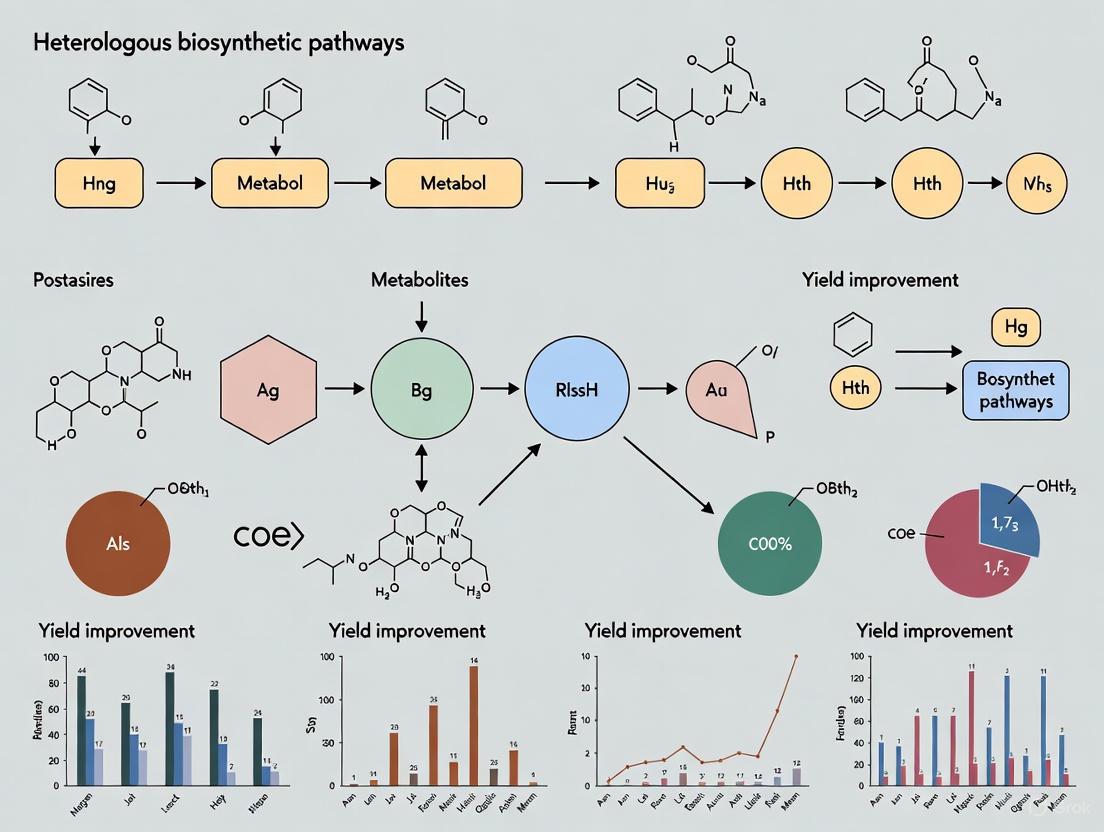
This comprehensive review addresses the critical challenge of low yield in heterologous biosynthetic pathways, a primary bottleneck in the microbial production of high-value natural products and pharmaceuticals.
Strategic Approaches to Enhance Yield in Heterologous Biosynthetic Pathways: From Foundational Concepts to Advanced Engineering
Abstract
This comprehensive review addresses the critical challenge of low yield in heterologous biosynthetic pathways, a primary bottleneck in the microbial production of high-value natural products and pharmaceuticals. Tailored for researchers, scientists, and drug development professionals, the article systematically explores the fundamental principles governing heterologous expression, from initial host selection to advanced metabolic engineering strategies. It provides a methodological framework for pathway construction and optimization, details practical solutions for common production bottlenecks, and examines rigorous validation techniques for comparative chassis performance. By synthesizing current literature and emerging technologies, this work serves as a strategic guide for advancing heterologous production systems from laboratory scales to commercially viable processes, ultimately accelerating the development of novel therapeutic agents.
Understanding the Core Principles and Challenges of Heterologous Expression
Defining Heterologous Biosynthesis and Its Industrial Significance
Heterologous biosynthesis refers to the engineering of biological pathways in a host organism that is not the native producer, enabling the production of valuable compounds like pharmaceuticals, nutraceuticals, and fine chemicals. This approach is industrially significant as it offers a sustainable, scalable, and economically viable alternative to traditional extraction from plants or chemical synthesis, which are often limited by low yields, complex purification, and environmental concerns [1]. By transferring and optimizing metabolic pathways into tractable microbial or plant hosts such as Escherichia coli, Aspergillus species, or Nicotiana benthamiana, researchers can overcome supply chain vulnerabilities and meet growing industrial demands for bioactive molecules [2] [3].
Current Research and Data in Yield Optimization
Recent advances focus on systematic pathway engineering and host optimization to improve the titers, rates, and yields (TRY) critical for industrial adoption. The following table summarizes key findings and yield metrics from contemporary studies in heterologous production.
Table: Recent Advances in Heterologous Biosynthesis for Yield Improvement
| Target Compound | Host Organism | Key Engineering Strategy | Maximum Titer Achieved | Industrial Significance | Source |
|---|---|---|---|---|---|
| Naringenin (flavonoid) | Escherichia coli | Stepwise enzyme screening (TAL, 4CL, CHS, CHI) and use of a tyrosine-overproducing strain. | 765.9 mg/L (de novo) | High-value antioxidant & anti-inflammatory; demonstrates systematic pathway optimization [1]. | [1] |
| 10-Hydroxy-2-decenoic acid (10-HDA) | Escherichia coli | Heterologous expression of the MexHID transporter protein from Pseudomonas aeruginosa for product efflux. | 0.94 g/L | Royal jelly bioactive; overcoming product toxicity and feedback inhibition is key [4]. | [4] |
| Various Terpenoids & Proteins | Aspergillus oryzae & A. niger | Exploiting native secretion capacity & eukaryotic PTMs; CRISPR-Cas9 mediated genetic modifications. | Varies (e.g., Protease: 10.8 mg/mL) | GRAS-status fungal platform for complex eukaryotic proteins and natural products [3]. | [3] |
| Plant Natural Products (e.g., Diosmin) | Nicotiana benthamiana (plant chassis) | Transient multi-gene expression via Agrobacterium infiltration. | e.g., 37.7 µg/g FW (Diosmin) | Rapid prototyping of complex plant pathways without stable transformation [2]. | [2] |
The experimental workflow for comprehensive pathway optimization, as exemplified by the naringenin case study, involves a logical sequence of design, building, and testing phases [1] [2]. The following diagram maps this iterative process.
Diagram: The iterative Design-Build-Test-Learn (DBTL) cycle for optimizing heterologous biosynthetic pathways.
Experimental Protocols for Yield Enhancement
Protocol: Stepwise Pathway Assembly and Screening
This protocol, derived from high-yield naringenin production in E. coli, details a methodical approach to identifying the optimal enzyme combination for each step in a heterologous pathway [1].
- Objective: To de novo produce naringenin by sequentially validating and optimizing the expression of four enzymes: Tyrosine ammonia-lyase (TAL), 4-coumarate-CoA ligase (4CL), chalcone synthase (CHS), and chalcone isomerase (CHI).
- Host Strain Preparation: Use engineered E. coli M-PAR-121, a tyrosine-overproducing strain, as the base chassis. Prepare competent cells for transformation [1].
- Modular Plasmid Construction: Clone genes encoding candidate enzymes from various sources (e.g., Flavobacterium johnsoniae TAL, Arabidopsis thaliana 4CL) into compatible expression vectors (e.g., pRSFDuet-1, pCDFDuet-1) with inducible promoters (e.g., T7lac) [1].
- Sequential Transformation and Screening:
- Step 1 - TAL Screening: Co-transform the base strain with plasmids expressing different TAL variants. Cultivate in production medium, induce expression, and quantify the intermediate p-coumaric acid via HPLC after 24-48 hours. Select the TAL gene yielding the highest titer (e.g., 2.54 g/L) [1].
- Step 2 - 4CL & CHS Screening: Using the best TAL strain, test combinations of 4CL and CHS genes. Quantify the product naringenin chalcone (e.g., target: 560.2 mg/L) [1].
- Step 3 - CHI Screening: Introduce different CHI genes into the best-performing strain from Step 2. The final product, naringenin, is quantified (target: >765 mg/L) [1].
- Process Optimization: With the best enzyme combination, further optimize yield by adjusting cultivation parameters such as induction timing, temperature, and carbon source concentration [1].
Protocol: Overcoming Product Toxicity via Transporter Engineering
This protocol outlines a strategy to alleviate feedback inhibition and cytotoxicity, a common barrier to high yields, as demonstrated for 10-HDA production [4].
- Objective: To enhance the yield of a toxic product (10-HDA) by engineering efflux mechanisms in an E. coli host.
- Tolerant Strain Screening: Screen environmental samples (e.g., soil) in LB medium supplemented with inhibitory concentrations (0.5-2 g/L) of the target product (10-HDA). Isolate and identify tolerant strains via 16S rRNA sequencing (e.g., Pseudomonas aeruginosa) [4].
- Transporter Gene Mining: Annotate the genome of the tolerant strain to identify candidate efflux transporter genes (e.g., RND family pumps like MexHID). Amplify these genes via PCR [4].
- Expression in Production Host:
- Plasmid-based Expression: Clone the transporter gene into an expression plasmid (e.g., pET28a) and transform into the production E. coli strain (e.g., BL21(DE3)) [4].
- Chromosomal Integration (Advanced): For stable, tunable expression, integrate multiple copies of the transporter expression cassette into the host chromosome using CRISPR-associated transposon techniques (MUCICAT) [4].
- Validation of Function:
- Tolerance Assay: Compare the growth of transporter-expressing strains vs. control in media with high product concentrations.
- Efflux Assay: Measure intracellular vs. extracellular product concentration over time via LC-MS/MS. Successful engineering should increase the extracellular product ratio and the substrate conversion rate (e.g., up to 88.6%) [4].
- Fed-Batch Fermentation: Validate performance in a bioreactor with substrate feeding, aiming for high titers (e.g., 0.94 g/L 10-HDA) [4].
The Technical Support Center: Troubleshooting Heterologous Pathways
This section provides targeted troubleshooting guides and FAQs framed within the central thesis of improving yield in heterologous biosynthetic pathways.
Troubleshooting Guide
Problem: Low or No Production of Target Metabolite
- Check 1: Gene Expression & Protein Solubility
- Action: Run SDS-PAGE to confirm protein expression. If protein is in inclusion bodies, consider strategies like lower induction temperature (16-25°C), co-expression of chaperones, or using specialized host strains (e.g., E. coli SHuffle for disulfide bond formation) [5].
- Thesis Context: Low soluble enzyme levels directly limit pathway flux and final yield.
- Check 2: Precursor Availability
- Action: Quantify intracellular precursors (e.g., malonyl-CoA, tyrosine). If low, engineer the host's native metabolism to overproduce them (e.g., use feedback-resistant enzyme variants, knockout competing pathways) [1].
- Thesis Context: Insufficient precursor supply is a primary bottleneck; enhancing precursor pools is foundational to yield improvement.
- Check 3: Product Toxicity & Degradation
- Action: Test if your product inhibits cell growth. Implement transporter engineering (as in Protocol 2.2) to export the product [4]. Also, check culture stability over time to rule out enzymatic or chemical degradation.
- Thesis Context: Product toxicity caps maximum achievable titer; efflux engineering decouples production from cell viability.
Problem: High Intermediate Accumulation, Low Final Product
- Check: Pathway Bottleneck
- Action: This indicates a rate-limiting downstream step. Quantify all pathway intermediates. The enzyme acting on the most accumulated intermediate is likely suboptimal. Screen orthologs of this enzyme or modulate its expression level using promoters of different strengths [1].
- Thesis Context: Systematic identification and removal of kinetic bottlenecks are essential for balanced pathway flux and high yield.
Problem: Inconsistent Yields Between Experiments
- Check 1: Genetic Instability
- Action: For plasmid-based systems, conduct serial passage experiments without selection. If yield drops, it indicates plasmid loss. Transition to chromosomal integration (e.g., using CRISPR-Cas systems) for stable inheritance [4] [3].
- Thesis Context: Genetic instability undermines scalable, reproducible bioprocessing required for industrial translation.
- Check 2: Cultivation Parameter Sensitivity
Frequently Asked Questions (FAQs)
Q1: How do I choose the best heterologous host for my pathway? A: The choice depends on the pathway's complexity and product.
- E. coli: Ideal for rapid prototyping, high growth, and well-established genetics. Best for pathways without complex P450s or eukaryotic PTMs. Use for compounds like naringenin [1].
- Yeast (S. cerevisiae): Offers eukaryotic organelles (ER), better for P450s, and generally higher product tolerance. Good for terpenoids and alkaloids.
- Filamentous Fungi (Aspergillus spp.): Excellent for protein secretion, native secondary metabolism, and complex PTMs. Preferred for high-value pharmaceuticals and enzymes [3].
- Plant Chassis (N. benthamiana): Used for transient expression of very complex plant pathways, especially when enzymes are membrane-bound or require specific plant organelles [2].
Q2: What are the most common reasons for poor functional expression of plant-derived enzymes in microbial hosts? A: Key issues include:
- Codon Bias: Plant codons are often suboptimal for microbial translation. Always use codon-optimized synthetic genes.
- Protein Misfolding & Lack of PTMs: Enzymes may require specific chaperones or post-translational modifications (glycosylation, phosphorylation) absent in prokaryotes. Consider switching to a eukaryotic host (yeast, fungi) or co-expressing helper proteins [5] [3].
- Incorrect Subcellular Localization: Plant enzymes may be targeted to chloroplasts or other organelles. Remove targeting peptides for cytoplasmic expression in microbes or engineer appropriate localization in the new host.
Q3: Beyond enzyme selection, what host-level strategies are critical for maximizing yield? A: Yield optimization requires systems-level engineering:
- Dynamic Pathway Control: Decouple growth from production phase using inducible promoters or metabolite-responsive biosensors to avoid metabolic burden [2].
- Cofactor Engineering: Balance and regenerate crucial cofactors (NADPH, ATP, SAM) by modulating related metabolic pathways.
- Tolerance Engineering: Use adaptive laboratory evolution or global transcriptomic analysis to identify and engineer genes conferring resistance to pathway intermediates or the final product [4].
The Scientist's Toolkit: Key Reagents & Materials
Essential materials for constructing and optimizing heterologous biosynthetic pathways.
Table: Essential Research Reagent Solutions for Heterologous Biosynthesis
| Reagent/Material | Function in Research | Example & Application |
|---|---|---|
| Specialized Expression Hosts | Provide a chassis with enhanced precursor supply or folding capacity. | E. coli M-PAR-121: Engineered for L-tyrosine overproduction, used as a base strain for flavonoid pathways [1]. |
| Expression Vectors & Toolkits | Enable modular cloning and tunable expression of multiple pathway genes. | Duet vectors (pETDuet, pRSFDuet): Allow co-expression of 2-3 genes with different selection markers and inducer sensitivities [1]. |
| Transporter Protein Genes | Efflux toxic products to relieve feedback inhibition and increase yield. | MexHID from P. aeruginosa: An RND-family efflux pump shown to export 10-HDA in E. coli, boosting titer [4]. |
| Fungal Expression Systems | Enable functional expression of complex eukaryotic proteins and natural products. | Aspergillus oryzae platform: A GRAS host for producing terpenoids, antibodies, and enzymes requiring eukaryotic PTMs [3]. |
| CRISPR-Cas9 Editing Tools | Enable precise gene knockouts, knock-ins, and multiplexed genomic integration for stable pathway expression. | Used in A. niger for multi-copy gene integration to enhance enzyme production and in E. coli for chromosomal pathway assembly [4] [3]. |
Future Directions and Strategic Outlook
The future of heterologous biosynthesis lies in moving beyond static pathway expression towards intelligent, self-regulated systems. Key frontiers include:
- AI-Integrated Pathway Design: Utilizing deep learning models trained on multi-omics data to predict optimal enzyme combinations, host chassis, and potential bottlenecks before experimental construction [6].
- Dynamic Metabolic Engineering: Implementing synthetic genetic circuits that respond to metabolite levels in real-time, dynamically rerouting resources to balance growth and production, thereby maximizing yield and stability [2].
- Expanded Host Arsenal: Further development of non-traditional hosts (like other filamentous fungi or photosynthetic microbes) tailored for specific chemical classes, alongside improving transformation and editing tools for these hosts [2] [3]. The continuous integration of systems biology, machine learning, and advanced genetic tools will transform heterologous biosynthesis from a challenging endeavor into a predictable and robust platform for sustainable industrial manufacturing.
The logical relationship between core optimization strategies and the resulting improvements in key performance metrics is summarized in the following diagram.
Diagram: Core optimization strategies drive key metabolic improvements, leading to enhanced industrial performance metrics.
Technical Support Center: Troubleshooting Guide & FAQ
This guide addresses common bottlenecks in heterologous biosynthetic pathways, from gene transcription to protein secretion, providing diagnostic questions, actionable solutions, and underlying principles to improve yield [7] [8].
Frequently Asked Questions (FAQ)
Q1: My recombinant protein is toxic to the host cell, causing poor growth and low yield. What can I do?
- Diagnosis: Uncontrolled basal (leaky) expression of the target protein can drain cellular resources or disrupt essential processes [8].
- Solutions:
- Tune Expression: Use a tunable expression system like the Lemo21(DE3) E. coli strain, where expression of the T7 RNA polymerase inhibitor (T7 lysozyme) is controlled by an L-rhamnose-inducible promoter. Titrating L-rhamnose from 0 to 2000 µM provides precise, inverse control over target protein production [9] [8].
- Enhance Repression: Switch to a host strain with tighter promoter control. For T7 systems, use strains expressing T7 lysozyme (e.g., pLysS, pLysE, or lysY strains) to inhibit basal T7 RNA polymerase activity. For lac-based systems, ensure the host carries the lacIq allele for high repressor production [8].
- Consider Cell-Free: For highly toxic proteins, use a cell-free protein synthesis system (e.g., PURExpress) to eliminate host viability constraints [8].
Q2: My gene is integrated and present in multiple copies, but mRNA and protein levels remain low. What is the bottleneck?
- Diagnosis: This indicates a transcriptional bottleneck. The cellular machinery, specifically the availability of active transcription factors (TFs), is insufficient to drive expression from all promoters simultaneously [10] [11].
- Solutions:
- Engineer Transcription Factors (TF Engineering): Co-express a constitutively active form of a limiting TF. For example, expressing VP16-CREB in recombinant CHO cells increased monoclonal antibody and etanercept production by up to 3.9-fold by directly enhancing transcription from CMV and CRE-containing promoters [10].
- Optimize Promoter Choice: Use strong synthetic promoters, but be aware they compete for the same limited pool of TFs. Combining strong promoters with TF engineering is most effective [10].
Q3: My protein is designed for secretion but accumulates inside the cell. Where is the blockage?
- Diagnosis: The protein translocation machinery is saturated. This is a common secretory bottleneck where the capacity of the Sec translocon (in bacteria) or the ER translocation complex (in eukaryotes) is exceeded [9] [12] [13].
- Solutions:
- Harmonize Expression with Capacity: Reduce the expression level of the target gene to match the host's translocation capacity. This was shown to optimize periplasmic yield in E. coli by preventing Sec-translocon saturation [9].
- Engineer the Secretory Machinery (Push-and-Pull): Increase the flux through the translocation channel. In Pichia pastoris, engineering the cytosolic Hsp70 cycle ("Pushing" proteins into the ER) combined with engineering the ER Hsp70 cycle ("Pulling" them in) synergistically enhanced antibody fragment secretion up to 5-fold [13].
- Overexpress Key Chaperones/Folding Factors: Systematic overexpression of secretion pathway components can identify limiting factors. In Bacillus subtilis, overexpression of the chaperones prsA and the dnaK operon increased heterologous α-amylase secretion by up to 12-fold [12].
Q4: How can I computationally predict and analyze the metabolic burden of my secretory pathway?
- Diagnosis: Producing a recombinant protein, especially a large or heavily modified one, consumes significant energy and building blocks (e.g., ATP, amino acids, sugar nucleotides), which can limit growth and yield [14].
- Solution: Use genome-scale stoichiometric models that integrate metabolism with the secretory pathway. Models like iCHO2048s (for CHO cells) can compute the ATP cost per molecule of your target protein and predict its impact on cellular growth rate [14].
- Key Insight: These models reveal that highly secretory cells naturally suppress the expression of other expensive host-cell proteins to allocate resources efficiently [14].
Q5: My target protein is insoluble or forms inclusion bodies. How can I improve soluble yield?
- Diagnosis: Overexpression can overwhelm folding machinery, leading to aggregation. For disulfide-bonded proteins, expression in the reducing cytoplasm can prevent correct bond formation [8].
- Solutions:
- Lower Induction Temperature: Induce protein expression at 15–20°C to slow synthesis and favor proper folding [8].
- Use Solubility Tags: Fuse the target to a solubility tag like Maltose-Binding Protein (MBP) using vectors such as pMAL [8].
- Co-express Chaperones: Co-express chaperone systems (e.g., GroEL/GroES, DnaK/DnaJ) to assist in folding [12] [8].
- Engineer Disulfide Bond Formation: For cytoplasmic expression of disulfide-bonded proteins, use engineered strains like SHuffle E. coli, which provide an oxidative cytoplasm and express disulfide bond isomerase (DsbC) [8].
Table 1: Impact of Specific Engineering Strategies on Heterologous Protein Yield
| Bottleneck Target | Host System | Engineering Strategy | Key Factor/Component | Reported Yield Increase | Source |
|---|---|---|---|---|---|
| Transcriptional Limitation | Recombinant CHO cells | TF Engineering | Constitutively Active VP16-CREB | Up to 3.9-fold | [10] |
| Sec Translocon Saturation | E. coli (periplasm) | Expression Tuning | Lemo21(DE3) strain for precise control | Optimized yield (prevents saturation) | [9] |
| Protein Translocation/Folding | Bacillus subtilis | Combinatorial Chaperone Overexpression | PrsA lipoprotein & DnaK operon | 9 to 12-fold (AmyL/AmyS enzymes) | [12] |
| ER Translocation (Push-and-Pull) | Pichia pastoris | Engineering Hsp70 cycles | Cytosolic (SSB1) & ER (KAR2, LHS1) chaperones | Up to 5-fold (antibody fragments) | [13] |
Table 2: Computational Analysis of Secretory Protein Costs in CHO Cells (iCHO2048s Model) Data derived from [14].
| Protein Category | Example Protein | Estimated ATP Cost (Molecules per Protein) | Key Cost Drivers |
|---|---|---|---|
| Expensive Endogenous | Complex glycoproteins | High (>5,000) | Large size, multiple disulfide bonds, extensive glycosylation. |
| Average Endogenous | Typical secreted protein | Medium (Baseline) | Standard processing and folding requirements. |
| Recombinant Therapeutics | Factor VIII (F8) | 9,488 | Large size, high glycosylation, aggregation-prone. |
| Monoclonal Antibody | High | Multiple chains, ~17 disulfide bonds, glycosylation. | |
| Model Prediction | - | - | Highly secretory cells suppress expression of expensive endogenous proteins to save resources [14]. |
Detailed Experimental Protocols
This protocol outlines the use of a constitutively active transcription factor (VP16-CREB) to enhance recombinant protein expression in CHO cells.
1. Principle: Co-expression of VP16-CREB, a fusion of the potent VP16 activation domain to CREB, directly and strongly activates promoters containing cAMP Response Elements (CRE), such as the CMV promoter, alleviating TF availability limitations.
2. Materials:
- Cell Lines: Recombinant CHO (rCHO) cell line expressing your gene of interest (GOI) under a CRE-containing promoter (e.g., CMV).
- Vectors: Expression vector for VP16-CREB (under a constitutive promoter like EF-1α) and a control empty vector.
- Reagents: Standard cell culture media, transfection reagent (e.g., PEI), selection antibiotic (e.g., puromycin if vector has resistance gene).
3. Procedure: - Day 1: Seed rCHO cells in appropriate plates for transfection. - Day 2: Transfect cells with the VP16-CREB expression vector. Include a control transfection with the empty vector. - Day 3: Begin antibiotic selection (if applicable) to establish a stable pool or isolate clones. - Analysis: After stable integration/expression (5-7 days post-transfection): - Viable Cell Density: Monitor growth to ensure VP16-CREB expression is not cytotoxic. - Product Titer: Quantify the concentration of your recombinant protein (e.g., by ELISA) in the culture supernatant of test vs. control cells. - mRNA Level: Perform qRT-PCR on cell pellets to measure GOI transcript levels.
4. Expected Outcome: Successful VP16-CREB expression should increase GOI mRNA and corresponding protein titer by up to several-fold without negatively impacting cell growth [10].
This protocol describes a combinatorial approach to identify and overcome secretion limitations by overexpressing components of the Sec pathway.
1. Principle: Overexpressing individual and combinations of genes involved in secretion (chaperones, translocase components, signal peptidases) can reveal which factors are rate-limiting for a specific heterologous protein.
2. Materials:
- Strain: B. subtilis strain (e.g., 1A751) expressing your heterologous secretory protein (e.g., α-amylase AmyL) from a plasmid.
- Genetic Tools: Vectors or chromosomal integration systems for overexpressing B. subtilis genes (e.g., prsA, dnaK operon, secYEG, ffh).
3. Procedure: - Construct Library: Create a series of isogenic strains, each overexpressing a single candidate gene (e.g., 23 core Sec pathway genes) in the background of your producer strain. - Primary Screening: Cultivate all strains in parallel in shake flasks. Measure extracellular enzyme activity or protein concentration. - Identify Hits: Select genes whose individual overexpression gives a significant boost in secretion (e.g., prsA gave a 3.2-5.5 fold increase for α-amylases [12]). - Combinatorial Engineering: Construct strains overexpressing combinations of the top hits (e.g., prsA + dnaK operon). Test these for synergistic effects. - Fermentation Validation: Scale up the best-performing engineered strain in a fed-batch bioreactor to assess yield under controlled conditions.
4. Expected Outcome: Identification of key limiting factors (often chaperones like PrsA and DnaK). Combinatorial engineering can lead to multiplicative improvements in extracellular protein titers [12].
Mandatory Visualizations
Diagram 1 Title: Transcriptional Bottleneck and TF Engineering Solution Workflow
Diagram 2 Title: Secretory Bottleneck Diagnosis and Engineering Strategy
Diagram 3 Title: Push-and-Pull Engineering to Relieve ER Translocation Bottleneck
The Scientist's Toolkit: Research Reagent Solutions
Table 3: Key Reagents and Strains for Overcoming Production Barriers
| Reagent/Strain Name | Category | Primary Function | Key Application / Bottleneck Addressed | Source/Example |
|---|---|---|---|---|
| Lemo21(DE3) E. coli | Expression Host | Provides tunable T7 expression via rhamnose-controlled T7 lysozyme. | Prevents toxicity & optimizes yield by matching expression to host capacity; avoids Sec-translocon saturation. | [9] [8] |
| SHuffle E. coli Strains | Expression Host | Engineered for cytosolic disulfide bond formation (oxidizing cytoplasm, DsbC present). | Soluble expression of disulfide-bonded proteins that normally aggregate in the cytoplasm. | [8] |
| VP16-CREB Expression Vector | Genetic Tool | Delivers a constitutively active transcription factor. | Alleviates transcriptional bottlenecks in mammalian cells using CMV or CRE-containing promoters. | [10] |
| pMAL Protein Fusion Vectors | Expression Vector | Fuses target protein to Maltose-Binding Protein (MBP) solubility tag. | Enhances solubility and folding of insoluble target proteins; facilitates purification. | [8] |
| Genome-Scale Model iCHO2048s | Computational Tool | Stoichiometric model integrating CHO metabolism with secretory pathway. | Predicts ATP cost, metabolic burden, and growth impact of secreting a specific recombinant protein. | [14] |
| PrsA & DnaK Operon Expression Constructs | Genetic Tool | For overexpressing key chaperones in B. subtilis. | Relieves folding/secretory bottlenecks identified via systematic screening. | [12] |
| PURExpress In Vitro Kit | Cell-Free System | Reconstituted transcription-translation system without cells. | Produces proteins toxic to living hosts or requiring special modified conditions (e.g., disulfide bonds). | [8] |
| T7 Express lysY/Iq Strains | Expression Host | Combines tight basal repression (lysY, lacIq) in a T7 system. | Reduces leaky expression, improving stability for toxic proteins and cell viability. | [8] |
Selecting the optimal host organism is a foundational decision in heterologous biosynthetic pathway research, directly impacting the yield, functionality, and scalability of target compounds such as therapeutic proteins or complex natural products [15]. This technical support center is framed within a thesis focused on systematic strategies to improve yield. It provides a comparative analysis of the three primary microbial hosts—bacteria, yeast, and filamentous fungi—alongside practical troubleshooting guides and detailed protocols to address common experimental challenges [16] [17].
Comparative Host Organism Selection Table
The choice of host involves balancing genetic tractability, production capacity, and post-translational capabilities. The following table summarizes key selection criteria based on current research and yield data.
Table: Comparative Analysis of Host Organisms for Heterologous Biosynthetic Pathways
| Criterion | Bacteria (e.g., E. coli) | Yeast (e.g., S. cerevisiae, P. pastoris) | Filamentous Fungi (e.g., A. niger, A. oryzae) |
|---|---|---|---|
| Typical Yield Range | Often high for simple proteins (g/L scale) [15]. | Moderate to high; e.g., P. pastoris improved from 5 mg/L to >5 g/L in integrated optimization [17]. | Variable; heterologous proteins often lower than native. Engineered strains achieve 110–417 mg/L for proteins [16] and 8.5 to 65.6-fold improvement for terpenes [18]. |
| Key Benefits | Rapid growth, high density, inexpensive media, extensive genetic tools [15]. | Eukaryotic PTMs, GRAS status, good secretion, strong inducible promoters [15]. | Exceptional secretion capacity (grams/L for native enzymes), diverse native metabolite precursors, GRAS status for many species [16] [19] [15]. |
| Major Handicaps | Lack of eukaryotic PTMs, improper folding for complex proteins, toxic inclusion bodies [15]. | Potential hyperglycosylation, tough cell wall, metabolic burden [15]. | High background proteases, complex genetics, "silent" endogenous pathways competing for precursors [16] [19] [15]. |
| Optimal Use Case | Non-glycosylated proteins, enzymes, simple natural product pathways [20]. | Glycosylated proteins, membrane enzymes, cytochrome P450 reactions, medium-complexity pathways [15] [17]. | High-volume secretion of industrial enzymes, complex eukaryotic proteins, and fungal-type secondary metabolites (polyketides, terpenes) [16] [19] [18]. |
| Inhibitor Tolerance | Generally lower tolerance to lignocellulosic inhibitors [21]. | High; S. cerevisiae tolerated 75% hydrolysate in one study [21]. | Moderate; A. niger grew in 25% prehydrolysate and utilized diverse nutrients [21]. |
Technical Support: Troubleshooting Guides & FAQs
FAQ 1: We selected a filamentous fungal host for its strong secretion, but our heterologous protein yield is extremely low compared to its native enzymes. What are the primary constraints?
- Answer: This is a common issue. The yield discrepancy can be 400-fold or more between native and heterologous proteins in fungi like Aspergillus niger [19]. Key constraints include:
- Transcriptional Inefficiency: The heterologous gene may not be integrated into a genomic locus with strong transcriptional activity [16].
- Secretion Bottlenecks: The secretory machinery (ER, Golgi, vesicles) can be overloaded or inefficient for the foreign protein, leading to ER stress and degradation via the ERAD pathway [16] [19].
- Proteolytic Degradation: Native extracellular proteases (e.g., PepA in A. niger) can degrade your product [16].
- Suboptimal Signal Peptides: The signal peptide driving secretion may not be recognized efficiently by the fungal host [19].
FAQ 2: Our bacterial expression system produces the target protein but mainly as inactive inclusion bodies. How can we shift production to soluble, active protein?
- Answer: Inclusion body formation is typical when expressing eukaryotic proteins in E. coli. Mitigation strategies include:
- Lower Induction Temperature: Reduce the growth temperature (e.g., to 18-25°C) at induction to slow protein synthesis and favor proper folding.
- Promoter and Induction Optimization: Use weaker promoters or lower inducer (e.g., IPTG) concentrations to decrease expression rate.
- Fusion Tags: Fuse the target protein to solubility-enhancing tags like maltose-binding protein (MBP) or glutathione S-transferase (GST).
- Co-express Chaperones: Co-express bacterial chaperone proteins (e.g., GroEL-GroES, DnaK-DnaJ-GrpE) to assist folding [15].
- Codon Optimization: Optimize the gene sequence for E. coli codon usage to ensure efficient and accurate translation.
FAQ 3: In a yeast host, our protein yield is acceptable, but the product shows excessive or irregular glycosylation that affects its activity. How can this be managed?
- Answer: Hyperglycosylation and non-human glycan patterns are key yeast limitations.
- Use Glyco-Engineered Strains: Employ engineered P. pastoris or S. cerevisiae strains with humanized glycosylation pathways (e.g., Δoch1 strains that prevent hypermannosylation).
- Eliminate Glycosylation Sites: If glycosylation is not required for function, use site-directed mutagenesis to remove N-linked glycosylation motifs (Asn-X-Ser/Thr) from the protein sequence.
- Choose Alternative Host: For proteins requiring specific human-like glycans, consider switching to mammalian cell systems or advanced fungal platforms engineered for humanized glycosylation [15].
FAQ 4: We are expressing a biosynthetic gene cluster (BGC) for a secondary metabolite in a heterologous host, but production is "silent" (undetectable). What strategies can awaken this pathway?
- Answer: Activating silent BGCs is a central challenge in natural product discovery [22].
- Promoter Replacement: Substitute native promoters of key biosynthetic genes with strong, constitutive, or inducible promoters from the host organism [19] [18].
- Ensure Key Precursors: Modify host metabolism to ensure ample supply of required precursors (e.g., acetyl-CoA for terpenes, amino acids for NRPs). Engineering the mevalonate pathway in A. oryzae dramatically improved terpene yields [18].
- Express Positive Regulators: Clone and co-express any pathway-specific positive regulatory genes that may be missing from your construct.
- Use Dedicated Chassis: Employ highly engineered "clean" chassis strains. For actinomycete BGCs, use Streptomyces strains with deleted endogenous BGCs to reduce competition [23]. For fungal metabolites, use fungal hosts like A. niger or A. oryzae [16] [18].
Detailed Experimental Protocols
This protocol details the creation of A. niger AnN2, a chassis with reduced background secretion for improved heterologous protein production.
Objective: Delete multiple copies of a native glucoamylase gene (TeGlaA) and disrupt a major extracellular protease gene (PepA) to create a clean production host.
Materials:
- A. niger industrial strain AnN1 (or equivalent).
- CRISPR/Cas9 plasmid system for A. niger.
- Donor DNA fragments for gene deletion/disruption.
- Fungal transformation reagents (e.g., PEG-mediated protoplast transformation).
- Selection media (appropriate antibiotics).
Method:
- Design gRNAs: Design single guide RNAs (sgRNAs) targeting conserved regions within the tandem repeats of the TeGlaA gene and the PepA gene locus.
- Construct Donor DNA: Create donor DNA fragments containing homologous arms (~500-1000 bp) flanking the target genes and a selectable marker cassette (e.g., for hygromycin resistance).
- Co-transformation: Co-transform A. niger AnN1 protoplasts with the CRISPR/Cas9 plasmid (expressing Cas9 and the sgRNAs) and the donor DNA fragments.
- Selection & Screening: Plate transformations on selective media. Screen surviving colonies via PCR to confirm the deletion of 13 out of 20 TeGlaA copies and disruption of PepA.
- Marker Recycling: Use the CRISPR/Cas9 system to excise the selectable marker, resulting in the marker-free, low-background AnN2 chassis strain.
- Validation: Confirm reduced extracellular protein and glucoamylase activity in AnN2 compared to AnN1 [16].
This protocol outlines the rational engineering of central metabolism to boost precursor supply for heterologous terpene production.
Objective: Systematically modify multiple metabolic pathways (ethanol fermentation, acetyl-CoA supply, mevalonate pathway) to create a versatile high-yielding host.
Materials:
- A. oryzae wild-type strain (e.g., RIB40).
- CRISPR/Cas9 genome editing plasmids for A. oryzae.
- Donor DNA cassettes for gene knock-outs, knock-ins, and promoter replacements.
- Analytical tools (GC-MS, HPLC) for metabolome and product analysis.
Method:
- Systems Analysis: Conduct RNA-seq and metabolome analysis of the host under production conditions to identify limiting steps (e.g., low expression of mevalonate pathway genes, active ethanol fermentation diverting carbon) [18].
- Target Pathway Selection: Based on analysis, select targets:
- Shut off ethanol fermentation: Knock out pyruvate decarboxylase (pdc) and/or alcohol dehydrogenase (adh) genes.
- Enhance cytosolic acetyl-CoA: Overexpress the ATP-citrate lyase (acl) gene or enzymes of the pyruvate dehydrogenase bypass.
- Potentiate the mevalonate pathway: Overexpress rate-limiting enzymes like HMG-CoA reductase (hmgR).
- Sequential Genome Editing: Use CRISPR/Cas9 with a plasmid recycling method to iteratively introduce up to 13 genetic modifications into a single strain [18].
- Integration of Heterologous Pathway: Integrate the target terpene biosynthetic gene cluster (e.g., for pleuromutilin, aphidicolin) into defined loci (e.g., wA, niaD, pyrG) of the engineered host.
- Fermentation & Validation: Cultivate the final strain and quantify terpene yield improvements (e.g., 8.5 to 65.6-fold increases) compared to the unmodified host [18].
Visualizing Workflows and Pathways
Diagram 1: Host Selection and Engineering Workflow
Diagram 2: Protein Secretion Pathway & Bottlenecks in Filamentous Fungi
The Scientist's Toolkit: Key Research Reagent Solutions
Table: Essential Materials for Heterologous Pathway Engineering
| Reagent/ Material | Primary Function | Example Application & Notes |
|---|---|---|
| CRISPR/Cas9 Systems | Enables precise gene knock-out, knock-in, and multiplexed editing in hosts ranging from bacteria to fungi. | Used to delete 13 glucoamylase genes in A. niger [16] and iteratively engineer 13 metabolic modifications in A. oryzae [18]. |
| Recombineering Systems (e.g., Red/ET in E. coli) | Facilitates seamless cloning and modification of large DNA constructs (>50 kb) in E. coli using short homology arms. | Crucial for capturing and refactoring large Biosynthetic Gene Clusters (BGCs) prior to heterologous expression [23]. |
| Conjugation-Compatible Vectors | Allows transfer of large, non-mobilizable plasmids from E. coli to actinomycetes or fungi via bacterial conjugation. | Essential for introducing BGCs into Streptomyces hosts; improved strains like GB2005 offer better stability for repeats [23]. |
| Modular Promoter & Terminator Libraries | Provides genetic parts of varying strengths for fine-tuning gene expression within the heterologous pathway. | Key for balancing expression in multi-enzyme pathways; used with strong fungal promoters like glaA or inducible ones like amyB [16] [18]. |
| Chassis Strains with Deleted Endogenous BGCs | "Clean" host backgrounds that minimize metabolic competition and native product interference. | Streptomyces coelicolor M1152/M1154 or engineered A. niger AnN2; enhance target pathway flux and simplify product purification [16] [23]. |
| Metabolomic & Transcriptomic Analysis Kits | Tools for systems-level analysis to identify metabolic bottlenecks and gene expression limitations in the engineered host. | Used in A. oryzae to identify low MVA pathway expression and active ethanol fermentation as yield-limiting factors [18]. |
In the pursuit of scalable and sustainable bioproduction, a central thesis has emerged: maximizing yield in heterologous biosynthetic pathways is fundamentally constrained by the compatibility between the host organism and the target protein's origin. Microbial expression systems—encompassing both prokaryotic (non-fungal) and eukaryotic (fungal) platforms—serve as indispensable workhorses for producing recombinant proteins for therapeutics, enzymes, and sustainable foods [24] [25]. However, researchers consistently encounter a significant expression yield disparity when expressing proteins across these systems. Fungal proteins (e.g., from yeasts or filamentous fungi) often exhibit lower titers in bacterial hosts like E. coli, while complex non-fungal proteins (e.g., human therapeutics) can misfold or be poorly secreted in fungal hosts [26] [25].
This technical support center is designed within the context of a broader research thesis aimed at systematically diagnosing and overcoming these yield limitations. By integrating comparative analysis of host-specific genetic elements, troubleshooting common experimental failures, and applying advanced engineering strategies, we provide a structured framework to bridge the yield gap and achieve robust, high-titer production in heterologous pathways [24] [27].
Troubleshooting Guides and FAQs
This section addresses common experimental challenges, organized by host system and symptom.
Bacterial Expression Systems (Non-Fungal Hosts)
Q1: I get no colonies after transforming my expression plasmid into E. coli. What should I check? [26]
- Antibiotic Selection: Verify the correct antibiotic is used for your plasmid.
- Competent Cell Viability: Test competent cells with a control plasmid (e.g., pUC19).
- Gene Toxicity: If your gene of interest (GOI) is toxic, use tighter regulation strains like BL21(DE3) pLysS or BL21-AI. Plate transformations on media containing 0.1% glucose to repress basal T7 polymerase expression during plating [26] [28].
Q2: My protein is not expressed, or the yield is very low. What are the main causes? [26] [28]
- Sequence Issues: Confirm the reading frame and absence of premature stop codons via sequencing. Check for rare codon clusters (e.g., AGG, AGA for Arg in E. coli) that can stall translation; consider using codon-enhanced strains or optimizing the gene sequence.
- Plasmid Instability: Use freshly transformed cells for expression. If using ampicillin, consider switching to carbenicillin due to ampicillin's degradation during culture [26].
- Suboptimal Induction: Titrate IPTG concentration (from 1 mM down to 0.1 mM). Lower the induction temperature (to 30°C, 25°C, or 18°C) and extend induction time to improve yield and solubility [26].
Q3: My expressed protein is entirely insoluble (found in inclusion bodies). How can I improve solubility? [26]
- Reduce Induction Rate: Lower the temperature at induction (e.g., to 18°C) and use less inducer.
- Modify Growth Medium: Use a less rich medium (e.g., M9 minimal medium) or add 1% glucose to slow metabolism.
- Test Fusion Tags: Utilize vectors with solubility-enhancing tags (e.g., MBP, SUMO).
- Cofactor Supplementation: If the protein requires a metal ion or other cofactor, add it to the growth medium.
Fungal Expression Systems (Yeast/Filamentous Fungi)
Q4: I observe low protein titers in Saccharomyces cerevisiae. What strategies can boost expression? [25]
- Promoter Engineering: Use strong, tunable promoters (e.g., GAL1, TEF1, PGK1). Consider hybrid or synthetic promoters for hyper-expression [24] [25].
- Secretion Pathway Engineering: Optimize the signal peptide (e.g., α-factor pre-pro leader) and engineer the unfolded protein response (UPR) to enhance secretory capacity.
- Glycosylation Management: Humanize the glycosylation pathway by knocking out OCH1 to prevent hyper-mannosylation, which can affect protein activity and stability [25].
Q5: My filamentous fungus (e.g., Aspergillus niger) forms dense pellets, reducing protein yield. How can I improve morphology? [27]
- Genetic Morphology Engineering: Use CRISPR/Cas9 to disrupt genes responsible for cell wall aggregation, such as α-1,3-glucan synthase (agsA, agsB) and galactosaminogalactan synthase (sph3, uge3). This leads to a dispersed mycelial morphology, improving nutrient uptake and increasing biomass and protein content [27].
- Process Optimization: Employ Response Surface Methodology (RSM) to optimize fermentation conditions (carbon source, nitrogen source, pH) for dispersed growth.
Q6: How do I address proteolytic degradation of my secreted protein in fungal cultures?
- Use Protease-Deficient Strains: Employ engineered host strains with deletions of major extracellular proteases.
- Culture Condition Adjustment: Quickly separate biomass from supernatant post-fermentation, lower cultivation temperature, and adjust medium pH away from the protease optimum.
- Add Protease Inhibitors: Include compatible inhibitors like PMSF in the lysis or harvest buffer (note: PMSF is unstable in aqueous solution) [26].
Comparative Analysis: Key Factors Influencing Yield
Genetic Element Compatibility
The choice and optimization of host-specific genetic elements are critical. The table below compares core elements across major microbial hosts [24].
Table 1: Key Genetic Elements for Protein Expression in Microbial Hosts
| Element | E. coli (Prokaryote) | S. cerevisiae (Fungus) | K. phaffii (Fungus) | B. subtilis (Prokaryote) |
|---|---|---|---|---|
| Strong Promoters | T7, tac, araBAD | GAL1, TEF1, PGK1 | AOX1 (inducible), GAP (constitutive) | P43, spoVG |
| RBS/5' UTR | Shine-Dalgarno sequence | Kozak sequence (A/GCCATGG) | Kozak-like sequence | Shine-Dalgarno-like sequence |
| Common Inducers | IPTG, Arabinose | Galactose, Copper | Methanol, Glycerol | IPTG, Xylose |
| Secretion Signal | PelB, OmpA | α-factor pre-pro leader | S. cerevisiae α-factor, native PHO1 | AmyQ, SacB |
| Typical Vector | High-copy plasmids (pET, pBAD) | Episomal (2µ) or integrative | Integrative (pPICZ) | Integrative or plasmid-based |
Quantitative Yield Disparity and Engineering Outcomes
Engineering interventions can dramatically alter yield profiles. The following table summarizes key results from recent studies [25] [27].
Table 2: Impact of Engineering Strategies on Protein Yield
| Host System | Target/Strategy | Base Yield | Engineered/ Optimized Yield | Key Intervention |
|---|---|---|---|---|
| E. coli | Soluble expression of difficult protein | Mostly insoluble | High solubility | Lower temp (18°C), auto-induction media [26] |
| S. cerevisiae | Secreted industrial enzyme (e.g., Lipase) | ~5,000 U/L | 11,000 U/L [25] | Promoter & secretion pathway engineering |
| A. niger (Wild-type) | Mycoprotein content | ~27.5% protein | 45.91% protein [27] | Morphology engineering (CRISPR) + RSM optimization |
| A. niger (Wild-type) | Biomass production | ~7.74 g/L | 16.67 g/L [27] | Morphology engineering (CRISPR) + RSM optimization |
Detailed Experimental Protocols
This protocol outlines the genetic engineering of filamentous fungal morphology to alleviate mass transfer limitations and boost protein yield.
1. Design and Assembly of CRISPR Constructs:
- Target Selection: Identify and select sgRNAs targeting the coding sequences of aggregation genes agsA, agsB, sph3, and uge3.
- Plasmid Construction: Clone sgRNA sequences into a fungal CRISPR/Cas9 plasmid containing a Cas9 expression cassette and a selectable marker (e.g., hygromycin resistance).
2. Fungal Transformation and Screening:
- Protoplast Preparation: Cultivate wild-type A. niger spores, harvest young mycelia, and digest the cell wall using lysing enzymes to generate protoplasts.
- Transformation: Introduce the CRISPR plasmid into protoplasts using polyethylene glycol (PEG)-mediated transformation.
- Selection and Screening: Plate transformed protoplasts on selective regeneration media. Isolate individual transformants.
- Genotype Validation: Perform genomic DNA extraction from transformants. Use PCR amplification and sequencing of the target loci to confirm gene disruptions.
3. Phenotypic and Yield Analysis:
- Morphology Assay: Inoculate engineered and wild-type strains in liquid culture. Observe and quantify mycelial morphology (pellet size, dispersion) over time.
- Biomass and Protein Yield: Harvest mycelial biomass by filtration, dry, and weigh. Determine total protein content using standard assays (e.g., Kjeldahl or Bradford method).
4. Fermentation Optimization using RSM:
- Design of Experiments (DoE): Use a Box-Behnken design to test the interaction of key factors (e.g., carbon source concentration, nitrogen source concentration, initial pH).
- Model Building and Validation: Perform shake-flask fermentations under the designed conditions, measure biomass and protein yield, and use software to build a predictive model. Validate the model with experiments at predicted optimal conditions.
Protocol: Multi-Factor Optimization for Soluble Expression inE. coli
A systematic approach to rescue soluble expression of problematic proteins [26] [28].
1. Small-Scale Parallel Induction Test:
- Inoculate 5 mL cultures of the expression strain harboring the target plasmid.
- At mid-log phase (OD600 ~0.6), induce parallel cultures under different conditions:
- Temperature: 37°C, 30°C, 25°C, 18°C.
- IPTG Concentration: 1.0 mM, 0.5 mM, 0.1 mM, 0.01 mM.
- Induce for varying durations (2-4 hours at 37°C; 4-6 hours at 30°C; overnight at 18°C).
2. Analysis of Solubility:
- Harvest cells by centrifugation. Lyse cells via sonication or lysozyme treatment.
- Separate soluble (supernatant) and insoluble (pellet) fractions by centrifugation.
- Analyze both fractions by SDS-PAGE to determine the distribution of the target protein.
3. Follow-up Optimization:
- If solubility improves at lower temperature/IPTG, scale up the best condition.
- If the protein remains insoluble, consider constructing a fusion tag vector (e.g., MBP, GST) and repeat the small-scale test.
- For proteins requiring cofactors, repeat the test in media supplemented with the required cofactor.
Pathway and Workflow Visualizations
Diagram 1: Systematic Troubleshooting Workflow for Yield Disparity (Max Width: 760px)
Diagram 2: Morphology Engineering Pathway in Filamentous Fungi (Max Width: 760px)
The Scientist's Toolkit: Key Research Reagent Solutions
Table 3: Essential Reagents and Materials for Yield Optimization Experiments
| Category | Reagent/Material | Example Product/Catalog | Primary Function in Yield Optimization |
|---|---|---|---|
| Expression Vectors | pET Series Vectors (for E. coli) | Novagen pET-28a(+) | High-level, inducible T7-driven expression in bacterial hosts [24]. |
| pPICZ Series Vectors (for K. phaffii) | Thermo Fisher Scientific pPICZ A | Methanol-inducible, zeocin-resistant vectors for protein secretion in yeast [24]. | |
| Engineered Host Strains | E. coli BL21(DE3) pLysS | Thermo Fisher Scientific C302003 | Provides tighter control of basal expression for toxic genes via T7 lysozyme [26]. |
| S. cerevisiae BY4741 Δoch1 | Common lab strain | Knocked-out α-1,6-mannosyltransferase to prevent hypermannosylation for humanized glycosylation [25]. | |
| Genetic Toolkits | CRISPR-Cas9 Plasmid for Fungi | e.g., Addgene #118159 | Enables targeted gene knockouts (e.g., agsA) for morphology engineering [27]. |
| Gibson Assembly Master Mix | NEB #E2611L | Facilitates seamless cloning of multiple DNA fragments for pathway assembly. | |
| Culture & Induction | Isopropyl β-d-1-thiogalactopyranoside (IPTG) | GoldBio I2481C | Standard inducer for lac/T7-based systems in bacteria; concentration optimization is critical [26]. |
| L-Arabinose (for pBAD/araBAD systems) | Sigma-Aldisk A3256 | Inducer for tight, titratable expression in E. coli; useful for toxic proteins [26]. | |
| Analysis & Purification | Protease Inhibitor Cocktail (EDTA-free) | Roche 04693159001 | Prevents proteolytic degradation during cell lysis and protein purification [26]. |
| Ni-NTA Agarose Resin | Qiagen 30210 | Immobilized metal affinity chromatography resin for purifying polyhistidine (His)-tagged proteins. | |
| Fermentation Optimization | Response Surface Methodology Software | Design-Expert, Minitab | Statistical software for designing experiments and modeling complex variable interactions to optimize yield [27]. |
Welcome to the Technical Support Center for Heterologous Pathway Optimization. This resource provides targeted troubleshooting guides and FAQs to address common experimental challenges related to protein folding, modification, and transport, with the goal of improving yield in heterologous biosynthetic pathways.
Molecular Chaperone Systems: Folding & Yield Optimization
Molecular chaperones are essential for rescuing misfolded proteins and preventing aggregation, directly impacting the functional yield of heterologously expressed enzymes [29].
Troubleshooting Guide: Low Soluble Protein Yield
- Problem: Most target protein is found in the insoluble fraction (inclusion bodies).
- Potential Causes & Solutions:
- Cause 1: Overwhelmed Host Folding Machinery. Expression is too fast for chaperones to fold the protein [30].
- Solution: Lower induction temperature (e.g., to 25-30°C) or reduce inducer concentration to slow translation [30].
- Cause 2: Insufficient Chaperone Capacity. Native host chaperone levels are inadequate for the target protein [29].
- Solution: Co-express chaperone plasmids (e.g., GroEL/GroES for E. coli). Pre-induction stress (e.g., 42°C heat shock, 3% ethanol) can upregulate endogenous heat shock proteins [30].
- Cause 3: Incorrect Chaperone Stoichiometry. Paradoxically, high concentrations of some RNA/protein chaperones can decrease native yield by repeatedly unfolding substrates [29].
- Solution: Titrate chaperone co-expression levels. Monitor functional activity, not just total protein.
- Cause 1: Overwhelmed Host Folding Machinery. Expression is too fast for chaperones to fold the protein [30].
FAQ: Molecular Chaperones
- Q: Why does increasing chaperone concentration sometimes decrease my final functional yield?
- A: This phenomenon, observed with chaperones like CYT-19, is explained by the Iterative Annealing Mechanism (IAM). While chaperones resolve kinetic traps, they can also unfold native states. An optimal concentration maximizes the product of the folding rate and native yield within a biological timeframe, not the absolute equilibrium yield [29].
- Q: How are chaperone activities regulated in the cell?
- A: Chaperone function is precisely tuned by post-translational modifications (PTMs). For example, phosphorylation of Hsp70 at a specific tyrosine residue (Y525) can alter its subcellular localization, affecting its client interactions [31]. A complex "chaperone code" of PTMs likely regulates activity, specificity, and localization [31].
Experimental Protocol: Testing Chaperone Co-expression for Solubility
- Clone your target gene into an expression vector with a different antibiotic resistance than your chaperone plasmid.
- Transform both plasmids into your expression host. Include controls with the target gene alone and the empty chaperone vector.
- Induce Expression at a lowered temperature (e.g., 25°C). For E. coli, you may pre-treat cultures with a mild stressor (e.g., 42°C for 15-30 minutes) before induction to induce endogenous chaperones [30].
- Lysate Fractionation: Lyse cells and centrifuge at high speed (>15,000 x g). Separate supernatant (soluble) and pellet (insoluble) fractions [30].
- Analysis: Analyze both fractions by SDS-PAGE and Western Blot or activity assays to quantify soluble, functional protein [30].
Data Presentation: Chaperone Mechanism
Table 1: Comparison of Chaperone Folding Mechanisms [29]
| Chaperone System | Primary Substrate | Proposed Mechanism | Key Effect of Increasing [Chaperone] | Optimization Goal |
|---|---|---|---|---|
| GroEL/GroES (E. coli) | Proteins (e.g., Rubisco) | Iterative Annealing (IAM) in an enclosed cage | Increases native state yield | Maximize final yield |
| CYT-19 | RNA (e.g., Tetrahymena ribozyme) | Iterative Annealing (IAM) | Can decrease steady-state native yield | Maximize (rate x yield) product |
Visualization: Chaperone-Assisted Folding via Iterative Annealing
Diagram 1: Generalized model of chaperone-assisted folding via Iterative Annealing [29].
Post-Translational Modifications (PTMs): Compatibility & Engineering
PTMs are often required for proper folding, stability, and activity of eukaryotic proteins and are a major bottleneck in prokaryotic expression systems [32].
Troubleshooting Guide: PTM-Related Expression Failure
- Problem: Protein is expressed but insoluble or inactive in a bacterial host.
- Potential Causes & Solutions:
- Cause 1: Missing Essential PTMs. The host lacks machinery for modifications critical for folding (e.g., disulfide bonds, glycosylation) [32].
- Solution: Switch to a eukaryotic host (yeast, insect cells). For E. coli, use engineered strains (e.g., Origami for disulfides) or co-express modifying enzymes [30].
- Cause 2: PTM-Induced Aggregation. Some PTM sites correlate with aggregation in non-native hosts [32].
- Solution: Use bioinformatic tools (e.g., PROSITE, CSS-Palm) to predict PTM sites. Consider mutagenesis to remove problematic sites (e.g., non-consensus N-glycosylation) if functionality permits [32].
- Cause 3: Inefficient Secretion. Signal peptides for vesicular transport may not be recognized.
- Solution: Replace native signal peptide with one optimized for your host (e.g., α-factor for yeast).
- Cause 1: Missing Essential PTMs. The host lacks machinery for modifications critical for folding (e.g., disulfide bonds, glycosylation) [32].
FAQ: Post-Translational Modifications
- Q: Which PTMs are most likely to cause soluble expression failure in E. coli?
- A: Bioinformatic analysis of 1488 human proteins expressed in E. coli showed that predicted N-glycosylation, myristoylation, palmitoylation, and disulfide bond formation sites significantly correlated with insoluble expression or failure to express [32].
- Q: Do all PTMs negatively impact bacterial expression?
- A: No. Surprisingly, the predicted presence of phosphorylation, ubiquitination, SUMOylation, and prenylation sites correlated with successful soluble expression. This may be because these modifications often occur on surface-accessible, structured regions rather than being essential for initial folding [32].
Experimental Protocol: Bioinformatics Screen for Problematic PTMs
- Sequence Analysis: Submit your target protein sequence to predictive servers:
- Correlation Assessment: Cross-reference predictions with solubility databases (e.g., TargetTrack). Prioritize modifications known to be difficult in your chosen host [32].
- Design Strategy: For essential PTMs absent in your host, consider host change, co-expression, or in vitro modification. For aggregation-prone motifs, consider site-directed mutagenesis if structurally justified.
Data Presentation: PTM Impact on Expression
Table 2: Correlation of Predicted PTMs with Soluble Expression in E. coli [32]
| Post-Translational Modification | Correlation with Soluble Expression in E. coli | Potential Rationale | Recommended Action for Pathway Optimization |
|---|---|---|---|
| N-Glycosylation | Strong Negative | Bacterial inability to glycosylate leads to aggregation of hydrophobic sequons [32]. | Use yeast/insect cell host; remove NXS/T sites via mutagenesis. |
| Disulfide Bond Formation | Strong Negative | Oxidizing cytoplasmic environment improper for correct bond formation [32]. | Use engineered E. coli strains (e.g., Origami), target to periplasm, or use eukaryotic host. |
| Myristoylation & Palmitoylation | Negative | Lipid anchors cause membrane association/aggregation in bacteria [32]. | Co-express modifying enzymes or use eukaryotic host. |
| Phosphorylation, SUMOylation | Positive | Sites often located in soluble, structured domains; not folding-critical in test system [32]. | Typically not a primary barrier; may enhance stability. |
The Scientist's Toolkit: Research Reagent Solutions
- Chaperone Plasmid Kits: Commercial kits (e.g., Takara's Chaperone Plasmid Set) for co-expressing GroEL/GroES, DnaK/DnaJ/GrpE in E. coli [30].
- Specialized E. coli Strains:
- Fusion Tags: MBP (maltose-binding protein), Trx (thioredoxin) to enhance solubility [30]. Include protease cleavage sites (e.g., TEV) for tag removal.
- Protease-Deficient Strains: E. coli BL21(DE3) to minimize target protein degradation.
Vesicular Transport & Secretory Pathway Engineering
Efficient vesicular transport is crucial for secreting pathway enzymes or final products, compartmentalizing reactions, and reducing intracellular toxicity.
Troubleshooting Guide: Poor Secretion or Localization
- Problem: Protein is not secreted or incorrectly localized despite a signal peptide.
- Potential Causes & Solutions:
- Cause 1: Inefficient ER Translocation/Signal Sequence. The signal peptide is not optimal for the host.
- Solution: Use host-optimized signal peptides (e.g., yeast α-factor, B. subtilis sacB). Validate with secretion assays.
- Cause 2: Block in Vesicular Trafficking. Protein is retained in ER or Golgi.
- Solution: Check for missing/improper PTMs (e.g., glycosylation) required for forward trafficking. Consider co-expressing trafficking chaperones.
- Cause 3: Using Vesicles as Delivery Tools (EVs): Low drug loading or targeting efficiency.
- Solution: For Extracellular Vesicles (EVs), use pre-isolation engineering (genetic modification of parent cells) or post-isolation modification (click chemistry, surface fusion) to decorate EVs with targeting ligands [33].
- Cause 1: Inefficient ER Translocation/Signal Sequence. The signal peptide is not optimal for the host.
FAQ: Vesicular Transport & Extracellular Vesicles
- Q: What are the main types of coated vesicles in secretory trafficking?
- A: COPII-coated vesicles bud from the ER to the Golgi. COPI-coated vesicles mediate retrograde transport within the Golgi and from Golgi to ER. Clathrin-coated vesicles transport from the trans-Golgi network to lysosomes/vacuoles and from the plasma membrane during endocytosis [34].
- Q: How can Extracellular Vesicles (EVs) be engineered for therapeutic delivery in synthetic pathways?
- A: EVs can be modified via pre-isolation (genetic engineering of parent cells to display targeting proteins) or post-isolation methods (chemical conjugation, membrane fusion to attach drugs or targeting moieties) [33]. This allows for targeted delivery of pathway enzymes or toxic intermediates.
Experimental Protocol: Stepwise Optimization of a Heterologous Pathway (Case Study: Naringenin in E. coli)
This protocol exemplifies a systematic approach to maximize yield [1].
- Step 1 - Substrate (p-Coumaric Acid) Optimization:
- Action: Express tyrosine ammonia-lyase (TAL) genes from different sources (Flavobacterium johnsoniae, Rhodotorula glutinis) in various E. coli strains (BL21, MG1655, tyrosine-overproducer M-PAR-121).
- Validation: Measure p-coumaric acid titer. Select the highest-producing strain/enzyme combination (e.g., M-PAR-121 with FjTAL produced 2.54 g/L) [1].
- Step 2 - Intermediate (Naringenin Chalcone) Optimization:
- Action: In the optimized strain from Step 1, express different 4-coumarate-CoA ligase (4CL) and chalcone synthase (CHS) gene combinations.
- Validation: Measure naringenin chalcone. Select the best combination (e.g., At4CL + CmCHS produced 560.2 mg/L) [1].
- Step 3 - Final Product (Naringenin) Optimization:
- Action: Introduce different chalcone isomerase (CHI) genes into the optimized pathway from Step 2.
- Validation: Measure final naringenin titer. Select the best CHI (e.g., MsCHI from Medicago sativa yielded 765.9 mg/L) [1].
- Step 4 - Process Optimization:
- Action: Fine-tune cultivation parameters (induction timing, carbon source concentration, feeding strategy) for the complete, optimized pathway.
Data Presentation: Heterologous Host Selection & Pathway Optimization
Table 3: Comparative Analysis of Host Organisms for Heterologous Expression [15]
| Host Organism | Key Benefits | Major Handicaps for Pathway Engineering | Example Species |
|---|---|---|---|
| Bacteria (E. coli) | Fast growth, high protein yield, extensive genetic tools [15]. | Limited PTM capacity, potential inclusion body formation [15] [32]. | Escherichia coli |
| Yeast | Eukaryotic PTMs, generally recognized as safe (GRAS), good protein folding [15]. | Hyper-glycosylation possible, lower diversity of native precursors [15]. | Saccharomyces cerevisiae, Pichia pastoris |
| Filamentous Fungi | High secondary metabolite diversity, excellent secretion [15]. | Complex native metabolism competes for precursors, slower genetic manipulation [15]. | Aspergillus niger |
| Mammalian Cells | Most authentic human PTMs, proper folding of complex proteins [15]. | Very high cost, slow growth, low yield [15]. | HEK293, CHO cells |
Visualization: Extracellular Vesicle Biogenesis & Engineering
Diagram 2: Exosome biogenesis and engineering strategies for targeted delivery [33].
Practical Strategies for Pathway Construction and Expression Enhancement
Promoter Engineering and Transcriptional Optimization Techniques
This technical support center provides targeted solutions for researchers optimizing heterologous biosynthetic pathways to improve compound yield. Promoter engineering is a foundational metabolic engineering strategy for maximizing the production of valuable secondary metabolites and proteins in a host organism [15]. Transcriptional optimization involves precisely tuning the expression levels of pathway genes, a critical step as the simple introduction of foreign genes rarely results in successful, high-yield expression [15]. The guidance here, framed within the context of yield improvement for drug development and biochemical production, addresses common experimental hurdles with practical troubleshooting, proven protocols, and essential resource lists.
Frequently Asked Questions (FAQs) and Troubleshooting Guides
Q1: I have cloned my biosynthetic pathway into a standard expression vector, but the final product yield is extremely low or undetectable. What are the first elements I should troubleshoot?
- Primary Issue: Suboptimal transcriptional control of pathway genes.
- Diagnosis & Solution:
- Verify Promoter-Host Compatibility: The promoter must be functional in your chosen host. A strong E. coli promoter may be silent in yeast or fungal systems. Consult host-specific literature for validated promoters [15].
- Check Promoter Strength Mismatch: A rate-limiting enzyme may be under-expressed, or a toxic intermediate may be overproduced. Measure transcript levels (e.g., via RT-qPCR) for each pathway gene to identify bottlenecks or imbalances.
- Consider Inducible vs. Constitutive Expression: For pathways producing toxic intermediates, switch from a strong constitutive promoter to a tightly regulated inducible system (e.g., PAOX1 in Pichia pastoris) [15] to separate growth and production phases.
- Recommended Action: Implement a promoter screening strategy. Clone the rate-limiting gene(s) under the control of a library of promoters with varying strengths and measure the impact on yield [35].
Q2: How do I select the best promoter for a specific gene in my pathway?
- Strategy: Use a combined bioinformatic and experimental screening approach.
- Bioinformatic Screening: For your host organism, analyze RNA-seq data to identify genes with consistently high transcript levels. The promoters upstream of these genes are candidates for strong, endogenous promoters [35].
- Experimental Validation: Clone candidate promoters to drive a reporter gene (e.g., GFP, lacZ) and measure fluorescence or enzyme activity. This quantitative reporter assay will rank promoter strength reliably [35].
- Library Construction: Assemble a library of 5-10 promoters with a wide range of measured strengths. Use this library to systematically vary the expression of each pathway gene [35].
Q3: My pathway expression causes severe growth retardation or cell death in the host. How can I overcome this?
- Likely Cause: Metabolic burden, toxicity of pathway intermediates, or resource competition.
- Solutions:
- Fine-Tune Expression: Replace a very strong promoter with a moderately strong one to reduce the burden. Information theory principles suggest matching expression noise and dynamic range is key to optimal function [36].
- Use Inducible Promoters: Decouple cell growth from product synthesis. Grow the culture to high density under repressive conditions, then induce pathway expression [15].
- Engineer the Host: Modify the host genome to bolster precursor supply or delete competing pathways. For example, in a PHA production strain, deleting the glucose dehydrogenase (gcd) gene redirected carbon flux and increased yield by ~5% [35].
Q4: I need to co-express multiple genes in a pathway. How do I manage their relative expression levels?
- Core Approach: Promoter balancing and vector strategy.
- Promoter Balancing: Use the promoter library (see Q2) to assign different-strength promoters to each gene. Avoid using the identical strong promoter for all genes.
- Chromosomal Integration vs. Plasmids: For long-term stability, integrate gene cassettes into the host genome. Use different selectable markers or a site-specific recombination system for sequential integration [35].
- Polycistronic vs. Monocistronic Design: In prokaryotes, consider operons. In eukaryotes, express each gene from its own promoter and terminator to allow individual tuning.
Q5: Computational tools are recommended for pathway design. Which ones are useful for promoter and transcriptional optimization?
- For Pathway Expansion & Enzyme Prediction: Tools like BNICE.ch and BridgIT can predict novel enzymatic reactions to create derivatives of your target compound and suggest enzymes that might catalyze these steps [37].
- For Host Selection & Analysis: Refer to curated databases and models for well-studied hosts (e.g., S. cerevisiae, P. putida) [15]. For novel hosts, perform RNA-seq to identify strong native promoters [35].
- For Theoretical Optimization: Concepts from information theory can provide a framework for understanding the maximum informational capacity of a promoter-transcription factor system [36].
Detailed Experimental Protocols
Protocol 1: Screening Endogenous Strong Promoters via RNA-seq and Reporter Assay
This protocol is adapted from a successful study enhancing polyhydroxyalkanoate (PHA) production in Pseudomonas putida [35].
- Culture & RNA Extraction: Grow your host organism under standard and production-relevant conditions in biological triplicate. Harvest cells at mid-log phase and extract total RNA.
- RNA-seq & Bioinformatic Analysis: Perform paired-end RNA sequencing. Map reads to the host genome and calculate gene expression values (e.g., FPKM or TPM). Select the top 30-50 genes with the highest and most stable expression across conditions [35].
- Promoter Cloning: Identify the genomic region ~300-500 bp upstream of the start codon for each target gene. Amplify these regions via PCR.
- Reporter Construct Assembly: Clone each promoter fragment into a shuttle vector upstream of a promoterless reporter gene (e.g., gfp or lacZ). Transform the library into the host.
- Promoter Strength Characterization: Measure reporter output (fluorescence/activity) in a microtiter plate reader during growth. Normalize the signal to cell density (OD600). Rank promoters by their maximum normalized activity.
Protocol 2: Optimizing a Biosynthetic Pathway via Promoter Substitution
This protocol details the chromosomal integration of optimized promoters to tune a heterologous pathway [35].
- Identify Rate-Limiting Step(s): Use transcriptomics or proteomics on an initial pathway strain to identify genes with disproportionately low expression.
- Design Integration Cassettes: For each gene to be optimized, create a DNA cassette containing: your selected promoter, the gene's open reading frame, and a downstream terminator. Flank this cassette with ~500 bp homology arms targeting the desired chromosomal locus (often the native gene locus).
- Vector Construction & Transformation: Clone the cassette into a suicide vector (e.g., with a counter-selectable marker like sacB). Introduce the vector into the host and select for first crossover events.
- Selection & Screening: Apply counter-selection to force a second recombination event, leading to promoter replacement. Verify integration via colony PCR and sequencing.
- Performance Assay: Ferment the engineered strain alongside the control. Measure final product titer, yield, and cell dry weight. Iterate by testing different promoter strengths.
Key Data and Host Selection Reference
Table 1: Performance Data from Promoter Engineering in PHA Production
Data from a study replacing the native promoter of the PHA synthase gene (phaC1) and other genes in Pseudomonas putida KT2440 [35].
| Engineered Strain | Modification | Relative PHA Yield (% of cell dry weight) | Absolute PHA Yield (g/L) | Key Improvement |
|---|---|---|---|---|
| KTU (Parent) | None | ~22% (baseline) | ~0.64 (baseline) | Baseline strain |
| KTU-P46C1 | Strong promoter P46 driving phaC1 | 33.24% | N/A | +51% in relative yield |
| KTU-P46C1-∆gcd | P46 driving phaC1, gcd gene deleted | 38.53% | N/A | +5.29% from deletion |
| KTU-P46C1A-∆gcd | P46 driving phaC1 & acoA, gcd deleted | ~42% | 1.70 | +90% relative yield, +165% absolute titer |
Table 2: Common Heterologous Hosts for Biosynthetic Pathways
Summary of benefits and handicaps for different host systems [15].
| Host System | Key Benefits | Primary Handicaps | Ideal Use Case |
|---|---|---|---|
| Yeast (e.g., S. cerevisiae) | Low cost, fast growth, GRAS status, good protein processing, strong genetic tools [15]. | Hyperglycosylation potential, limited native precursors. | Eukaryotic proteins, terpenoids, alkaloids [37]. |
| Filamentous Fungi (e.g., Aspergillus) | High secretion capacity, rich secondary metabolism [15]. | Complex genetics, background metabolism. | Fungal natural products, industrial enzymes. |
| Plants / Plant Cells | Correct compartmentalization, suits plant pathways [15]. | Slow growth, complex transformation. | Very large proteins or complex plant metabolites. |
| Bacteria (e.g., E. coli, P. putida) | Very fast growth, inexpensive media, high expression, simple genetics [15]. | Lack of eukaryotic protein processing, potential toxicity. | Prokaryotic pathways, simple eukaryotic proteins, organic acids [35]. |
Visual Guide: Promoter Engineering Workflow
The Scientist's Toolkit: Essential Research Reagents
| Item | Function & Application | Example/Note |
|---|---|---|
| Promoterless Reporter Vector | Quantitative measurement of promoter strength. Essential for screening. | Plasmid with GFP, RFP, or lacZ lacking a promoter [35]. |
| Shuttle Vectors | Cloning and expression in multiple hosts (e.g., E. coli and your target host). | pBBR1MCS series for Pseudomonas [35]. |
| Suicide Vectors | Enables stable chromosomal integration via homologous recombination. | Contains counter-selectable marker like sacB for genome editing [35]. |
| RNA-seq Kit | Identifies highly transcribed native genes for endogenous promoter discovery. | Commercial kits for bacterial, yeast, or fungal RNA extraction and library prep. |
| qPCR Master Mix | Validates transcript levels for pathway genes during troubleshooting. | SYBR Green or probe-based mixes for your host organism. |
| Inducer Compounds | Controls expression from inducible promoters (on/off, graded response). | Methanol (PAOX1), Tetracycline (Tet-On), Galactose (GAL1/10) [15]. |
In heterologous biosynthetic pathway research, a primary objective is to maximize the yield of a target compound, such as a therapeutic drug precursor or a valuable chemical. A fundamental strategy involves increasing the copy number of genes encoding rate-limiting enzymes to overcome metabolic bottlenecks and enhance flux toward the product [38]. This process, the strategic amplification of target gene dosage, is a core tool in the metabolic engineer's arsenal [39].
However, simply increasing gene copy number does not guarantee success. Cellular metabolism is a tightly regulated network. The Gene Dosage Balance Hypothesis (GDBH) states that stoichiometric imbalances in protein complexes or interconnected pathways can lead to fitness defects, dominant negative phenotypes, and reduced productivity [40]. For example, overexpressing a single subunit of a multi-enzyme complex can titrate other essential partners, leading to the formation of non-functional subcomplexes and a decrease in overall pathway efficiency [41].
Therefore, the strategic increase of gene copy number must be a calculated decision. This technical support center provides a framework for researchers to diagnose when copy number amplification is appropriate, execute effective strategies, troubleshoot common issues, and validate outcomes, all within the context of building efficient microbial cell factories for heterologous production [38] [4].
Foundational Principles and Strategic Approaches
Core Concept: The Gene Dosage Balance Hypothesis
The Gene Dosage Balance Hypothesis is a critical concept for predicting the outcome of copy number manipulation. It posits that genes whose products interact in stoichiometric complexes are dosage-sensitive. Increasing the copy number of one gene without its partners can be detrimental [40].
- Application in Pathway Engineering: In a heterologous pathway, enzymes often function in sequential steps or as part of complexes. Indiscriminate amplification of a single gene can disrupt this balance. The key is to identify bottleneck enzymes whose activity, not complex assembly, limits the flux. These are ideal candidates for copy number increase [38] [41].
- Quantitative Impact: The relationship between gene copy number and product yield is often nonlinear. Initial increases may boost yield, but a point of diminishing returns is reached due to metabolic burden, resource competition, or toxicity of intermediates [4].
Table 1: Comparison of Gene Dosage Amplification Strategies
| Strategy | Mechanism | Typical Copy Number Increase | Genetic Stability | Key Considerations | Example Reference |
|---|---|---|---|---|---|
| Multi-Copy Plasmid | Extrachromosomal replication. | 10-100+ copies (varies by origin). | Low (prone to segregational loss). | High metabolic burden; easy to construct. | Common base strategy [4]. |
| Tandem Genomic Amplification (ACN) | Homologous recombination creates repeated gene arrays. | 2-50+ copies. | Unstable without selection. | Can be selected under product/substrate pressure; may revert. | Mechanism in bacterial heteroresistance [42]. |
| Multicopy Chromosomal Integration | Stable insertion of expression cassettes at multiple genomic loci. | 2-12+ copies. | High (mitotically stable). | Lower burden than plasmids; requires specialized tools (e.g., CRISPR-transposon). | Used in E. coli for 10-HDA [4]. |
| Stabilized Amplification System | Recombination-based system for controlled copy number increase and stabilization. | ~10 copies (e.g., in B. subtilis). | Very High (maintained over 110 gens). | Uses genetic switches (e.g., ncAA-dependent) to lock copy number. | "BacAmp" system in B. subtilis [43]. |
| Increased Plasmid Copy Number (PCN) | Mutations in plasmid replication control. | 3-89 fold increase. | Stable only with selection. | Affects all genes on the plasmid; high burden. | Observed in antibiotic resistance [42]. |
Decision Workflow: When and What to Amplify
The following workflow diagram outlines the logical decision process for implementing a gene copy number strategy, integrating the principle of gene dosage balance.
Technical Support: Troubleshooting Common Issues
This section addresses specific experimental challenges in a question-and-answer format.
Pre-Implementation Diagnosis
Q1: How do I definitively identify which gene in my heterologous pathway is the true bottleneck for copy number intervention? A: Combine multi-omics data with targeted perturbation. First, use transcriptomics and proteomics to see if the enzyme is abundantly expressed. Then, conduct a flooding experiment: titrate the intracellular concentration of the enzyme's substrate (if possible) and observe if product formation increases. If it does, the step is likely bottlenecked. Alternatively, use a modular approach [38], where you temporarily overexpress candidate genes on a tunable plasmid and measure the impact on flux and intermediate accumulation. The gene whose overexpression most improves yield without causing intermediate buildup is a primary target.
Q2: What are the early signs that my host strain is experiencing metabolic burden from gene overexpression, even before measuring final product? A: Monitor growth kinetics and physiological parameters. Key indicators include: (1) A significantly prolonged lag phase during culture; (2) A reduced maximum specific growth rate (μmax); (3) A decreased final biomass yield (OD600); and (4) Changes in by-product secretion (e.g., acetate overflow in E. coli). These signs indicate that host resources (ATP, ribosomes, precursors) are being diverted from growth to maintain heterologous expression [4].
Implementation and Optimization Issues
Q3: I've increased the copy number of my target gene, but the product titer has not improved. What could be wrong? A: This is a common issue. Refer to the troubleshooting table below for systematic diagnosis.
Table 2: Troubleshooting Guide for Lack of Titer Improvement Post-Amplification
| Possible Cause | Diagnostic Experiments | Potential Solutions |
|---|---|---|
| Transcriptional/Translational Limitation | Measure mRNA levels (qPCR) and protein levels (Western blot) of the target gene. | Optimize promoter strength [44], RBS sequence [44], or codon usage. Switch to a different expression system. |
| Post-Translational Issue | Check for protein aggregation (insoluble fraction) or degradation. Assess enzyme activity in vitro. | Use solubility tags, lower induction temperature, co-express chaperones. Employ enzyme engineering for stability [39]. |
| Cofactor/Substrate Limitation | Measure intracellular levels of required cofactors (e.g., NADPH, ATP) or precursor substrates. | Implement cofactor engineering [38] [45] (e.g., introducing NADPH regeneration pathways) or precursor supply engineering. |
| Toxic Intermediate Accumulation | Measure intracellular concentrations of pathway intermediates. | Amplify the next enzyme in the pathway to pull flux forward, or introduce a transporter protein to export the toxic compound [4]. |
| Violation of Dosage Balance | Analyze protein-protein interactions (yeast two-hybrid, co-IP). Check for dominant-negative effects by expressing the gene alone in a wild-type background. | Amplify a balanced module of interacting genes simultaneously [40] [41]. Consider polycistronic expression. |
Q4: My engineered strain with amplified genes shows good yield initially but loses productivity after serial subculturing. How can I improve genetic stability? A: This indicates genetic instability, common with plasmid-based or tandem amplification systems. To solve this:
- Switch to a chromosomal integration system. Methods like CRISPR-mediated multicopy integration (e.g., MUCICAT) [4] or the "BacAmp" system [43] are designed for stability.
- If using plasmids, apply selective pressure (antibiotics, essential gene complementation) during both culture and production phases. However, this is not industrially desirable.
- Sequence the strain after long-term culture to check for deletions or rearrangements in the amplified region [42]. Design your constructs to avoid direct repeats that facilitate recombination.
Advanced Balance and Scaling Challenges
Q5: For a multi-enzyme complex, how do I determine the optimal copy number ratio for co-amplification? A: This requires a rational tuning approach. Start by constructing strains with varying, controlled copy numbers for each gene (using integrases, CRISPR, or a library of promoters/RBS [44]). Use a design-of-experiments (DoE) matrix to test different combinations. The output should be a multi-dimensional response surface mapping copy numbers to product titer. The optimal ratio is likely where titer is maximized and growth burden is minimized. High-throughput screening coupled with machine learning can accelerate this process [38].
Q6: How do I scale up a copy-number-optimized strain from shake flasks to a bioreactor without losing performance? A: Scale-up introduces new stresses (shear, mixing, heterogeneous nutrient gradients). Key steps include:
- Re-validate genetic stability: Perform a serial transfer experiment mimicking the longer bioreactor culture time.
- Profile physiology under controlled conditions: Use a bench-top bioreactor to measure critical parameters like oxygen uptake rate (OUR) and carbon dioxide evolution rate (CER). Compare these profiles to the host strain to quantify the metabolic burden.
- Adapt process parameters: The induced expression of multiple gene copies may require adjusted induction timing (e.g., at a higher cell density) or feed strategies to meet the heightened metabolic demand for amino acids and energy.
Detailed Experimental Protocols
Protocol: Multicopy Chromosomal Integration Using CRISPR-Associated Systems (e.g., in E. coli)
This protocol is adapted from the strategy used to overexpress transporter proteins for 10-HDA production [4].
Objective: To stably integrate multiple copies of a gene expression cassette into the chromosome of E. coli.
Materials:
- Plasmids: (1) Donor plasmid containing your gene of interest (GOI) with flanking homology arms and a selection marker. (2) CRISPR-Cas plasmid expressing Cas9 and a crRNA targeting a neutral genomic site (or multiple crRNAs for multi-locus integration).
- Strains: E. coli cloning strain (e.g., DH5α), E. coli production strain (e.g., BL21(DE3)).
- Reagents: Standard molecular biology reagents for PCR, Gibson assembly, transformation. Antibiotics for selection.
Procedure:
- Design and Clone: Identify 3-5 neutral "safe-harbor" sites in the E. coli genome (e.g., intergenic regions, defunct prophage sites). Design ~500 bp homology arms on the donor plasmid flanking your GOI cassette, specific to each target site. For simultaneous multi-copy integration, construct a crRNA array on the CRISPR plasmid targeting all chosen sites.
- Co-transformation: Transform the production strain with both the donor plasmid and the CRISPR-Cas plasmid.
- Selection and Screening: Plate on double-antibiotic plates to select for cells containing both plasmids. Inoculate colonies into liquid medium with antibiotics and induce Cas9 expression (e.g., with arabinose). Cas9 will create double-strand breaks at the target sites, which are repaired using the donor plasmid as a template via homology-directed repair (HDR).
- Curing and Validation: Plate the culture on media with antibiotic selecting only for the integrated marker (but not the plasmids) to select for successful integrants and lose the plasmids. Screen colonies by PCR across the integration junctions to confirm correct insertion at each target locus. Use droplet digital PCR (ddPCR) to absolutely quantify the final gene copy number [46].
- Characterization: Measure growth curves and product titer compared to a single-copy integrant control to assess burden and benefit.
Protocol: Validating Copy Number Increase and Its Effects
Objective: To confirm the increase in gene copy number and correlate it with molecular and physiological changes.
Part A: Measuring Gene Copy Number (GCN)
- Method: Digital PCR (dPCR) or ddPCR. This is the gold standard for absolute quantification [46].
- Steps: (1) Design TaqMan probes or EvaGreen assays for your GOI and a reference single-copy genomic gene. (2) Extract genomic DNA from your engineered and control strains. (3) Perform the dPCR/ddPCR reaction according to the manufacturer's protocol. (4) Calculate the GCN as the ratio of the concentration (copies/μL) of the GOI to the reference gene.
Part B: Measuring Transcript and Protein Levels
- Transcript (qRT-PCR): Isolate RNA, synthesize cDNA, and perform qPCR using primers for your GOI. Normalize to a stable housekeeping gene. Compare expression fold-change to the GCN increase.
- Protein (Western Blot): Perform SDS-PAGE on whole-cell lysates, transfer to a membrane, and probe with an antibody specific to your enzyme. Use a housekeeping protein (e.g., GroEL) as a loading control. Densitometry analysis will show if increased mRNA translates to more protein.
Part C: Assessing Metabolic Burden
- Growth Kinetics: In a microplate reader, monitor the OD600 of engineered and control strains in biological triplicates over 24+ hours in the appropriate medium. Calculate the μmax and generation time from the exponential phase.
- Product Titer: At stationary phase, measure the concentration of your target product using HPLC or GC-MS. Correlate the titer with the GCN, transcript level, and protein level data.
The Scientist's Toolkit: Essential Reagents and Materials
Table 3: Key Research Reagent Solutions for Gene Dosage Experiments
| Reagent/Material | Function/Description | Key Considerations for Dosage Work |
|---|---|---|
| Tunable Expression Vectors | Plasmids with inducible promoters (T7, pTet, pBAD) and varying copy number origins (high, medium, low). | Essential for initial proof-of-concept and titration of gene expression levels before stable integration [44]. |
| CRISPR-Cas Genome Editing System | For precise, multi-locus chromosomal integration. Includes Cas9 protein/gene, crRNA/tracrRNA, and repair templates. | Enables stable, multi-copy integration without plasmids. Systems like CRISPR-associated transposons (CAST) are particularly useful [4]. |
| Digital PCR (dPCR/ddPCR) System | Platform for absolute nucleic acid quantification without a standard curve. | Critical for accurately measuring final gene copy number in engineered strains, especially with complex rearrangements [46]. |
| Anti-Sense RNA (asRNA) or CRISPRi Tools | For targeted knockdown of gene expression without knockout. | Useful for creating "dosage ladders" to find the optimal expression level or for down-regulating competing pathways to balance flux [38]. |
| Chassis Strains with Defective Recombination | Strains with recA mutations or similar (e.g., E. coli MG1655 recA). | Reduces the rate of unwanted recombination between repeated sequences in tandem amplifications, improving short-term genetic stability during testing [43]. |
| Cofactor Regeneration Enzyme Mixes | Commercial kits or purified enzymes (e.g., glucose dehydrogenase for NADPH regeneration). | Used in in vitro enzyme assays to determine if low activity post-amplification is due to enzyme kinetics or cofactor limitation [45]. |
| Segment-Specific FISH Probes | Fluorescently labeled oligonucleotide probes for in situ hybridization. | Can visually confirm and localize tandem genomic amplifications on chromosomes, though lower throughput than sequencing [46]. |
Troubleshooting Core Issues in Fusion Protein Expression
This section addresses common, critical failures encountered when expressing fusion proteins in heterologous systems, focusing on leveraging endogenous carriers to improve yield.
Q1: My fusion protein is not being expressed at all, or yields are extremely low. What are the first diagnostic steps? A: Begin with a systematic check of your genetic construct and host system. First, sequence the entire expression cassette to verify there are no unintended stop codons, frameshifts, or mutations introduced during cloning [30]. Do not rely solely on SDS-PAGE with Coomassie staining for detection due to its low sensitivity; employ a Western blot using an antibody against your target protein or the fusion tag [30]. Simultaneously, assess if the issue is transcriptional. In fungal systems like Aspergillus niger, ensure integration into a known high-transcription locus, such as the site of a highly expressed native gene like glucoamylase (GlaA) [16]. For E. coli, verify promoter strength and the integrity of the ribosomal binding site. A common culprit is mRNA secondary structure around the translation start site; trying an alternative promoter can often resolve this [30] [47].
Q2: My protein is expressed but forms insoluble inclusion bodies. How can I recover soluble, functional protein? A: Insolubility indicates folding cannot keep pace with synthesis. Your primary strategy should be to slow down expression and enhance folding capacity.
- Reduce Expression Rate: Lower the growth temperature (e.g., to 15-20°C) and/or reduce the concentration of the inducer (e.g., IPTG) [30] [47].
- Employ Solubility-Enhancing Fusion Partners: Fuse your target to a highly soluble carrier protein like Maltose-Binding Protein (MBP) or thioredoxin. These tags can improve the solubility of the fused passenger protein and are themselves expressed to very high levels [30]. Test both N-terminal and C-terminal fusions.
- Co-express Chaperones: Co-express plasmid sets containing chaperone proteins (e.g., GroEL/ES, DnaK/DnaJ-GrpE) that assist in proper folding [30]. Alternatively, induce a heat-shock response by briefly exposing the culture to 42°C or ethanol before induction to upregulate endogenous chaperones [30].
- Leverage Engineered Host Strains: For proteins requiring disulfide bonds, use engineered strains like SHuffle E. coli, which provides an oxidative cytoplasm and expresses disulfide bond isomerases to facilitate correct folding [47].
Q3: I am using a highly expressed endogenous signal peptide/secretion pathway, but my heterologous protein is not secreted efficiently. What bottlenecks should I investigate? A: Secretion bottlenecks are multi-layered. Investigate sequentially:
- Signal Peptide Compatibility: The endogenous signal peptide may not be optimal for your heterologous protein. Use signal peptide engineering or screening libraries to identify the most efficient sequence for your target [48].
- Endoplasmic Reticulum (ER) and Post-ER Traffic: Inefficient translocation into the ER or congestion in the secretory pathway can cause retention. Overexpress key vesicular trafficking components. For example, overexpression of the COPI component Cvc2 in A. niger enhanced secretion of a heterologous pectate lyase by 18% [16]. Also, consider modulating ER chaperone (e.g., BiP) and foldase levels to assist with folding in the ER [48].
- Proteolytic Degradation: Your protein may be degraded by extracellular proteases. Disrupt major protease genes (e.g., pepA in A. niger) in your host strain [16]. Including protease inhibitors in the culture medium can also be a diagnostic tool.
- Cell Wall Translocation: For fungal systems, the cell wall can be a barrier. Regulating cell wall porosity through genetic modification of its composition can improve protein transit [48].
Q4: How can I stabilize a metastable protein (like a viral prefusion glycoprotein) for high-yield expression? A: Stabilizing a specific conformational state requires structure-informed design. A proven computational strategy involves optimizing the protein sequence for the desired conformation (e.g., prefusion) while destabilizing the unwanted state (e.g., postfusion) [49].
- Protocol - Computational Stabilization Design:
- Identify Sub-optimal Positions: Perform in silico alanine scanning on atomic structures of both conformational states to find residues that are energetically favorable in the desired state but unfavorable in the alternative state [49].
- Combinatorial Design: At these candidate positions, computationally screen for amino acid substitutions that lower the free energy of the target conformation while raising it for the alternative conformation [49].
- Filter and Prioritize: Filter designs to retain mutations that make strong, specific interactions (e.g., new hydrogen bonds, salt bridges, improved packing) in the target state. Typically, 3-4 top designs are selected for experimental testing [49].
- Experimental Validation: Express the designed variants. Successful designs show enhanced expression yield, improved thermal stability, and retain binding to conformation-specific antibodies [49]. This method has yielded up to a 17-fold increase in expression for stabilized SARS-CoV-2 spike proteins [49].
Q5: Expression of my extremophilic protein in a mesophilic host (like E. coli) fails or yields insoluble product. What specific strategies can help? A: The atypical amino acid composition and codon usage of extremophilic genes are key hurdles.
- Codon Optimization: Always synthesize the gene with codon optimization for your expression host [50].
- Solubility without Denaturation: Avoid standard denaturation/refolding protocols. Instead, use the protein's isoelectric point (pI) as a guide. Maintain all extraction and purification buffers at a pH at least 1.0-2.0 units away from the pI to keep the protein soluble in its native state [50].
- High-Density, Prolonged Induction: Induce expression at high cell density (OD600 ~0.8-1.0) and extend the induction period (e.g., 20-24 hours at lower temperatures). This slow, high-yield approach often produces soluble, active protein [50].
- Tailored Affinity Purification: Choose the immobilized metal ion for IMAC based on the protein's pI. For acidic proteins (pI <7), use Co²⁺ resin. For basic proteins (pI >7), use Ni²⁺ resin, as it generally has higher binding capacity [50].
Performance Data & Protocol Reference
Quantitative Yield Data from Engineered Platform Strains
The following table summarizes yields achieved by leveraging endogenous high-expression loci in an engineered Aspergillus niger chassis strain (AnN2), where 13 out of 20 native glucoamylase gene copies were replaced with target genes [16].
Table 1: Heterologous Protein Yields in Engineered A. niger Chassis Strain AnN2 [16]
| Target Protein | Origin | Function | Expression Yield (mg/L in shake flask) | Key Activity (if applicable) |
|---|---|---|---|---|
| AnGoxM (Glucose Oxidase) | Aspergillus niger (homologous) | Industrial Enzyme | 416.8 | ~1,300 U/mL |
| MtPlyA (Pectate Lyase) | Myceliophthora thermophila | Industrial Enzyme | 233.7 | ~1,865 U/mL |
| TPI (Triose Phosphate Isomerase) | Bacterial | Metabolic Enzyme | 110.8 | ~1,830 U/mg |
| LZ-8 (Immunomodulatory Protein) | Ganoderma lucidum | Pharmaceutical Protein | 185.5 | Not Assayed |
Key Experimental Protocol: Constructing a High-Yield Fungal Chassis Strain
This protocol details the creation of a low-background, high-expression chassis strain in Aspergillus niger by repurposing native glucoamylase loci [16].
Objective: To engineer an A. niger strain with reduced background secretion and freed, high-activity genomic loci for targeted integration of heterologous genes.
Materials:
- Parental Strain: Industrial A. niger strain AnN1 (high glucoamylase producer).
- Genetic Tools: CRISPR/Cas9 system with appropriate gRNA expression plasmids.
- Donor DNA: Linear DNA fragments containing your gene of interest, flanked by homology arms (e.g., using the native glucoamylase promoter and terminator).
- Selection Markers: Marker recycling system (e.g., pyrG for auxotrophic selection and counter-selection with 5-FOA).
Method:
- Design gRNAs: Design CRISPR gRNAs targeting two regions: (a) the promoter region of the tandemly repeated native glucoamylase (TeGlaA) gene cluster, and (b) the major extracellular protease gene (pepA).
- Co-transformation: Co-transform the parental strain AnN1 with the Cas9/gRNA plasmid and a donor DNA fragment designed to replace a TeGlaA copy with a selectable marker (e.g., pyrG).
- Strain Selection: Select for transformants that have integrated the marker into the TeGlaA locus. Use CRISPR to sequentially delete multiple TeGlaA copies (e.g., 13 out of 20) and disrupt the pepA gene, using marker recycling between steps. The resulting strain (AnN2) has drastically reduced background protein and glucoamylase activity [16].
- Target Gene Integration: Transform the AnN2 chassis strain with a new donor DNA fragment containing your gene of interest, flanked by homology arms matching the now-vacant TeGlaA locus, alongside a CRISPR plasmid targeting the same locus for clean integration.
- Screening and Validation: Screen for successful integrants (e.g., by loss of marker or PCR). Cultivate positive strains in appropriate medium and assay for protein secretion (via SDS-PAGE/Western blot) and activity at 48-72 hours [16].
The Scientist's Toolkit: Essential Reagents & Materials
Table 2: Key Research Reagent Solutions for Fusion Protein Expression
| Reagent / Material | Primary Function | Example Use Case / Note |
|---|---|---|
| pMAL Vectors | Expression and solubility enhancement. Encodes MBP fusion tag for improved solubility and amylose-resin purification. | Overcoming insoluble expression of problematic heterologous proteins in E. coli [47]. |
| Chaperone Plasmid Sets | Co-expression of folding assistants. Provides plasmids for overexpressing chaperone complexes like GroEL/ES or DnaK/DnaJ-GrpE. | Increasing soluble yield of proteins prone to misfolding [30]. |
| SHuffle E. coli Strains | Cytoplasmic disulfide bond formation. Engineered to have an oxidative cytoplasm and express disulfide bond isomerase (DsbC). | Functional expression of proteins requiring multiple or complex disulfide bonds in the E. coli cytoplasm [47]. |
| Rosetta / BL21-CodonPlus Strains | Supplying rare tRNAs. Carry plasmids encoding tRNAs for codons rarely used in E. coli (e.g., AGG, AGA, AUA, CUA, GGA). | Expressing genes from eukaryotes or GC-rich organisms without codon optimization [30]. |
| CRISPR-Cas9/Cas12a Systems | Precision genome editing. Enables targeted gene knock-outs, knock-ins, and multiplexed editing in fungal and bacterial hosts. | Engineering host strains: deleting proteases, freeing genomic loci, modulating secretion pathways [48] [16]. |
| T7 Express lysY Strains | Tight control of T7 expression. Host strain expresses T7 lysozyme to inhibit basal T7 RNA polymerase activity. | Expressing proteins toxic to E. coli under the T7 promoter, minimizing leaky expression before induction [47]. |
| Optimized Signal Peptide Library | Screening for efficient secretion. A library of diverse signal peptides, often derived from highly secreted native proteins. | Identifying the optimal N-terminal signal for secreting a heterologous protein in a given host system [48]. |
Visual Guides to Core Concepts & Workflows
Strategy for Heterologous Protein Secretion in Filamentous Fungi
Diagram 1: From Gene to Secretion: Pathways and Bottlenecks in Fungal Hosts.
Computational Design Workflow for Protein Stabilization
Diagram 2: Computational Stabilization of Metastable Protein Conformations.
Diagnostic & Optimization Decision Tree
Diagram 3: Diagnostic Tree for Fusion Protein Yield Problems.
Computational Pathway Design and Retrosynthetic Algorithms for Route Optimization
The systematic design of efficient biosynthetic pathways is a cornerstone of modern synthetic biology, particularly for the heterologous production of high-value compounds such as pharmaceuticals. Traditional manual approaches to pathway design are often time-consuming and inefficient, historically requiring hundreds of person-years of effort for molecules like artemisinin [51]. The primary thesis of contemporary research is that integrating computational retrosynthetic algorithms with experimental synthetic biology can dramatically accelerate this process and, crucially, improve the final yield of target compounds.
Computational pathway design operates by applying retrosynthetic logic—working backward from a target molecule to available precursors—within a defined biochemical rule set [52]. This process navigates a vast search space of possible reactions, which is made tractable through databases containing millions of compounds, reactions, and enzymes [51]. The ultimate goal is to identify and engineer pathways that are not only chemically plausible but also thermodynamically favorable, kinetically efficient, and compatible with the host organism's metabolism to maximize titers, rates, and yields (TRY) [53] [54]. This article establishes a technical support framework to address common experimental challenges encountered when implementing computationally designed pathways, with a constant focus on strategies for yield optimization.
Troubleshooting Guides & FAQs for Pathway Implementation
This section addresses common technical challenges categorized by the experimental workflow phase. The following diagram outlines the key decision points and recommended actions within this troubleshooting process.
Phase 1: Pathway Design & In Silico Validation
Q1: The retrosynthesis algorithm proposed a novel pathway, but I am skeptical about its thermodynamic feasibility. How can I validate this before starting lab work?
A1: Prior to experimental implementation, you must perform a thermodynamic feasibility assessment.
- Core Issue: Algorithms may propose pathways with reaction steps that are thermodynamically unfavorable (ΔG'° > 0), creating an energy barrier that limits or prevents flux toward the product, capping your maximum possible yield [54].
- Actionable Protocol:
- Use dedicated tools like dGPredictor (integrated into the novoStoic2.0 platform) or eQuilibrator to estimate the standard Gibbs energy change (ΔG'°) for each reaction step [54].
- For the overall pathway, calculate the sum of ΔG'°. While individual steps can be slightly unfavorable, the pathway from primary metabolites to the target should be thermodynamically favorable overall.
- If unfavorable steps are identified, use the pathway ranking function in tools like SubNetX or novoStoic2.0 to find alternative routes. Rank pathways based on integrated criteria including thermodynamic favorability, length, and host compatibility [55] [54].
- Yield Improvement Tip: Select pathways with the most negative overall ΔG'° and avoid steps that require energy input (e.g., ATP hydrolysis) unless absolutely necessary, as this reduces metabolic burden.
Q2: My target molecule is complex, and the algorithm only returns linear pathways with a single precursor. I suspect yield is limited by precursor supply. How can I design branched pathways that draw from multiple inputs?
A2: You need to shift from linear pathway finders to algorithms that extract balanced, stoichiometric subnetworks.
- Core Issue: Simple graph-based retrosynthesis tools often produce linear pathways. For complex molecules, high yield requires balanced subnetworks that draw carbon and energy from multiple native metabolic nodes to satisfy stoichiometry and redox balance [55].
- Actionable Protocol:
- Use a tool like SubNetX, which is specifically designed to extract stoichiometrically balanced subnetworks from large biochemical databases [55].
- Define your target compound, host organism (e.g., E. coli), and its available core precursors (e.g., glucose, glycerol, native amino acids).
- The algorithm will expand from the target backward and from the precursors forward, assembling a subnetwork where co-substrates and byproducts are explicitly linked to host metabolism. It then uses Mixed-Integer Linear Programming (MILP) to find minimal sets of reactions (feasible pathways) within this network [55].
- Rank the resulting feasible pathways by predicted yield within the context of a genome-scale metabolic model of your host.
- Yield Improvement Tip: Pathways that efficiently co-utilize abundant, energy-rich precursors (e.g., PEP, acetyl-CoA) from different nodes of central metabolism often support higher theoretical yields than linear routes from a single source.
Phase 2: Genetic Construction & Host Integration
Q3: I am assembling a large Biosynthetic Gene Cluster (BGC) (>15 kb) but getting very low assembly efficiency, resulting in few correct clones. What high-fidelity method can I use?
A3: Move beyond traditional cloning and adopt a hierarchical Golden Gate Assembly (GGA) strategy.
- Core Issue: Large, complex DNA constructs are prone to assembly errors using homology-based methods (e.g., Gibson assembly). Low efficiency wastes time and resources during cloning [56].
- Actionable Protocol (Based on refactoring a 23 kb actinorhodin cluster [56]):
- Fragment Domestication: Synthesize or amplify the BGC as ~2 kb fragments. Use silent mutations to remove all internal recognition sites for your chosen Type IIS restriction enzymes (e.g., BsaI, PaqCI) [56].
- Hierarchical Assembly: Do not attempt a one-pot assembly of all fragments.
- Primary Assembly: In separate reactions, assemble small sets (2-6) of domesticated fragments into intermediate vectors using one enzyme (e.g., BsaI). This achieves near 100% efficiency for small assemblies [56].
- Secondary Assembly: Assemble the intermediate plasmids into the final destination vector using a second enzyme (e.g., PaqCI) [56].
- Verification: Use a combination of diagnostic restriction digestion and nanopore sequencing to confirm the final assembly [56].
- Yield Improvement Tip: A perfectly assembled pathway ensures all genetic parts are present and correctly oriented, which is the foundational requirement for balanced gene expression and high yield. This method also facilitates the rapid generation of pathway variants (e.g., promoter swaps, gene knockouts) for optimization [56].
Q4: After cloning and expressing a novel pathway, my host strain grows very slowly, suggesting high metabolic burden. How can I reduce this?
A4: Metabolic burden from heterologous expression must be managed to maximize resources directed toward product synthesis.
- Core Issue: Overexpression of multiple heterologous enzymes diverts cellular resources (ATP, ribosomes, precursors) from growth and can induce stress responses, lowering overall productivity and yield [57].
- Actionable Protocol:
- Titrate Expression Strength: Replace strong constitutive promoters with tunable (e.g., inducible) or weaker promoters. Use promoter libraries to find the minimal expression level needed for sufficient enzyme activity.
- Operon Organization: Strategically organize genes into operons to ensure coordinated expression. Place potentially rate-limiting steps under stronger control.
- Utilize Enzyme Promiscuity: Where possible, employ a single, promiscuous enzyme to catalyze multiple similar steps, reducing the number of heterologous proteins needed [54].
- Enhance Precursor Supply: Overexpress or deregulate native host genes to increase the flux toward the pathway's primary precursor (e.g., overexpress DAHP synthase for shikimate pathway derivatives) [53].
- Yield Improvement Tip: The optimal balance between host fitness and pathway activity often lies at intermediate expression levels. Use growth rate as a key indicator and aim to engineer a robust host that grows well while producing.
Phase 3: Fermentation & Analysis
Q5: I detect my target product initially, but yield plateaus early or the product disappears. What could be happening?
A5: This indicates potential degradation of the product or accumulation of a toxic intermediate that inhibits the pathway.
- Core Issue:
- Product Degradation: The host organism may possess native enzymes that modify or degrade your heterologous product.
- Intermediate Toxicity: A pathway intermediate may be toxic to the host, halting cell growth and production. Alternatively, an intermediate may be consumed by a competing native enzyme [56].
- Actionable Protocol:
- Metabolite Profiling: Use LC-MS or GC-MS to profile culture samples over time. Look for the accumulation of any unexpected intermediates or the disappearance of your product.
- Knockout Competing Reactions: If a native catabolic route is suspected, use CRISPR-Cas9 to knockout the responsible gene(s) in the host genome.
- Implement Exporters: If intermediate or product toxicity is suspected, search databases for and express putative transporter proteins that can export the compound from the cytoplasm [57].
- Conduct Gene Essentiality Analysis: As demonstrated with the actinorhodin cluster, systematically inactivate each pathway gene in the heterologous host. This can reveal which genes are essential and which, when inactivated, cause the accumulation of intermediates that rewire metabolism or inhibit growth [56].
- Yield Improvement Tip: Fed-batch fermentation can often overcome toxicity and degradation issues by maintaining lower concentrations of harmful compounds in the bioreactor. It also allows for better control of nutrient levels, frequently resulting in significantly higher titers, as seen in psilocybin production (2.00 g/L in fed-batch vs. 558 mg/L in shake flasks) [57].
Detailed Experimental Protocols
Protocol 1: Hierarchical Golden Gate Assembly of Large BGCs
This protocol enables error-free, high-efficiency assembly of large DNA pathways, a critical step for reliable pathway testing [56].
- Objective: To assemble a 20-30 kb biosynthetic gene cluster from domesticated DNA fragments with >90% efficiency.
- Materials:
- Domesticated DNA fragments (0.5-2 kb each) in entry vectors.
- Intermediate assembly vectors (e.g., pAmp-RFP-BsaI) and destination vector (e.g., pPAP-RFP-PaqCI) [56].
- Type IIS restriction enzymes: BsaI-HFv2, PaqCI.
- T4 DNA Ligase.
- Chemically competent E. coli.
- Method:
- Primary Assembly Reaction: For each set of 4-6 fragments, set up a 20 µL Golden Gate reaction:
- 50 ng of each entry vector.
- 100 ng of intermediate destination vector.
- 1 µL BsaI-HFv2.
- 1 µL T4 DNA Ligase.
- 1x T4 Ligase Buffer.
- Cycle: 37°C (2 min) + 16°C (5 min), 25-30 cycles; then 60°C (5 min); 4°C hold.
- Transformation & Screening: Transform 5 µL of each reaction into competent E. coli. Screen 4-8 colonies per assembly by colony PCR or restriction digest of plasmid minipreps. Sequence-validate one correct intermediate plasmid per set.
- Secondary Assembly Reaction: Assemble the validated intermediate plasmids (2-3) into the final destination vector:
- Use 50-100 ng of each intermediate plasmid.
- Replace BsaI-HFv2 with PaqCI.
- Use the same cycling conditions.
- Final Verification: Transform the secondary reaction. Verify the final construct by long-read nanopore sequencing covering all assembly junctions [56].
- Primary Assembly Reaction: For each set of 4-6 fragments, set up a 20 µL Golden Gate reaction:
Protocol 2: Applying the SubNetX Algorithm for Branched Pathway Design
This computational protocol identifies stoichiometrically balanced, high-yield pathways for complex molecules [55].
- Objective: To extract a feasible, branched biosynthetic subnetwork for a target compound integrated into a host metabolic model.
- Inputs Required:
- Target compound (SMILES or InChI string).
- Specification of host organism (e.g., E. coli K-12 MG1655).
- Biochemical reaction network database (e.g., ARBRE for aromatics, ATLASx for expanded biochemical space) [55].
- Genome-scale metabolic model (GEM) of the host (e.g., iML1515 for E. coli).
- Workflow Steps:
- Network Preparation: Load the balanced biochemical reaction network. Define target compound and host native metabolites as allowed precursors.
- Graph Search for Linear Cores: The algorithm performs a backward search from the target to find linear pathway cores connecting to host precursors.
- Subnetwork Expansion & Balancing: For each linear core, the algorithm expands the network to include reactions that produce required co-substrates (e.g., ATP, NADPH) and consume byproducts, linking them to the host's native metabolism to create a stoichiometrically balanced subnetwork [55].
- Integration & Pathway Extraction: The balanced subnetwork is integrated into the host's GEM. A Mixed-Integer Linear Programming (MILP) algorithm then finds the minimum number of heterologous reactions from this subnetwork required to produce the target, generating a set of feasible pathways [55].
- Ranking: Rank feasible pathways based on user-defined criteria:
- Maximum Theoretical Yield (from flux balance analysis using the GEM).
- Pathway length (number of heterologous steps).
- Enzyme availability or compatibility score.
- Thermodynamic feasibility score.
- Output: A list of ranked, host-integrated pathways with associated yield predictions and reaction lists for experimental implementation.
The Scientist's Toolkit: Research Reagent Solutions
The following table details essential reagents and tools for implementing computationally designed pathways.
Table 1: Key Research Reagent Solutions for Pathway Implementation
| Category | Item/Reagent | Primary Function in Pathway Optimization | Example/Note |
|---|---|---|---|
| Host Strains | E. coli BW25113 (ΔtnaA) | Host for de novo production; tryptophanase knockout increases intracellular tryptophan for indole-derived compounds [57]. | Used for high-yield psilocybin production [57]. |
| E. coli BL21(DE3) | Standard protein expression host; useful for screening and characterizing individual pathway enzymes. | Compatible with T7 expression systems. | |
| Streptomyces coelicolor M1152 | Actinomycete heterologous host; deleted for endogenous antibiotic clusters to minimize background [56]. | Used for expressing refactored actinorhodin cluster [56]. | |
| Specialized Media | Modified M9 Minimal Medium | Defined medium for fermentations; allows precise control of carbon source (e.g., glycerol) and precursor feeding [57]. | Supports high-cell-density fermentation for yield maximization [57]. |
| SFM (Soya Flour Mannitol) Agar | Solid medium for Streptomyces cultivation and visual phenotype screening (e.g., pigment production) [56]. | Used to detect actinorhodin production as a blue pigment [56]. | |
| Molecular Biology | Type IIS Restriction Enzymes (BsaI, PaqCI) | Enzymes for Golden Gate Assembly; create unique, non-palindromic overhangs for scarless, directional multi-fragment assembly [56]. | Critical for hierarchical assembly of large constructs [56]. |
| pPAP-RFP-PaqCI Vector | Destination vector for final pathway assembly; contains resistance marker and visual reporter (RFP) for screening [56]. | RFP loss indicates successful insertion of the assembled cluster [56]. | |
| Analysis & Software | novoStoic2.0 Web Platform | Integrated platform for pathway design, thermodynamic evaluation (dGPredictor), and enzyme selection (EnzRank) [54]. | Streamlines transition from in silico design to enzyme engineering needs [54]. |
| Global Natural Products Social (GNPS) Molecular Networking | An online platform for LC-MS/MS data analysis; compares spectral profiles to identify known/novel compounds in engineered strains [56]. | Revealed unexpected chemical diversity from a refactored gene cluster [56]. |
Performance Data of Computational Tools
The effectiveness of a computational tool is measured by its prediction accuracy and its ability to guide successful experimental outcomes. The following table summarizes key performance metrics for contemporary algorithms.
Table 2: Performance Comparison of Retrosynthesis and Pathway Design Tools
| Tool Name | Core Algorithm Type | Key Performance Metric | Reported Value/Outcome | Experimental Validation Cited |
|---|---|---|---|---|
| RSGPT [58] | Template-free Generative Transformer | Top-1 Accuracy (USPTO-50k benchmark) | 63.4% | State-of-the-art accuracy; demonstrates utility for single- and multi-step planning [58]. |
| SubNetX [55] | Constraint-based Subnetwork Extraction | Success Rate for 70 Pharmaceutical Compounds | Successfully extracted balanced subnetworks for all 70 targets. | Pathways are stoichiometrically feasible within a host GEM; designed scopolamine pathway matches known routes [55]. |
| novoStoic2.0 [54] | Rule-based Retrosynthesis + Thermodynamics | Application to Hydroxytyrosol Pathways | Designed pathways shorter and with lower cofactor demand than known routes. | Pathways are thermodynamically assessed; platform integrates enzyme selection for novel steps [54]. |
| Golden Gate Assembly (Hierarchical) [56] | DNA Assembly Methodology | Assembly Efficiency for a 23 kb Cluster | ~100% efficiency for 6-fragment assemblies; >10x higher yield than one-pot assembly. | Correct assembly confirmed by sequencing and functional production of actinorhodin [56]. |
| Retrosynthesis Workflow [53] | Combined (FindPath, BNICE.ch, RetroPath2.0) | Production Titer in E. coli | 0.71 g/L L-DOPA, 0.29 g/L dopamine (shake flask). | Successfully implemented and validated both known and novel computationally designed pathways [53]. |
Enhancing Cofactor Supply and Electron Transfer Systems
Frequently Asked Questions (FAQs) and Troubleshooting Guides
FAQ 1: How can I improve the cost-efficiency of my NAD(P)+-dependent enzymatic synthesis?
Issue Summary: Low product yield and high operational cost due to the stoichiometric consumption of expensive NAD(P)+ cofactors in oxidoreductase reactions. Detailed Troubleshooting:
- Implement an Enzymatic Cofactor Regeneration System: The most effective strategy is to couple your main dehydrogenase (e.g., GatDH, ArDH) with a regeneration enzyme like a water-forming NADH oxidase (NOX) or NADPH oxidase. This recycles the reduced cofactor (NAD(P)H) back to its oxidized form (NAD(P)+), allowing a single cofactor molecule to be used for thousands of reaction cycles (Total Turnover Number, TTN >10,000) [59]. For example, coupling L-arabinitol dehydrogenase with NOX achieved a 93.6% conversion to L-xylulose [60].
- Optimize the Enzyme Coupling Method: Simply mixing free enzymes can lead to instability and inefficient electron transfer. Co-immobilization of the dehydrogenase and oxidase on a shared carrier (e.g., inorganic hybrid nanoflowers) can enhance stability and local cofactor concentration, leading to significantly higher activity. Sequential co-immobilization of L-arabinitol dehydrogenase and NOX showed a 6.5-fold higher activity than free enzymes [60].
- Consider a Cofactor-Independent Alternative: For specific reductions, explore emerging photo-biocatalytic systems. A hybrid catalyst of cross-linked aldo-keto reductase (AKR) with reductive graphene quantum dots (rGQDs) can use water as a hydrogen source under infrared light, completely bypassing the need for NAD(P)H. This system achieved an 82% yield in the synthesis of a pharmaceutical intermediate with >99.99% enantiomeric excess [61].
Table 1: Comparison of NAD(P)+ Regeneration Systems for Enhanced Yield [60] [59] [61]
| Regeneration System | Key Components | Typical TTN (or Yield) | Advantages | Common Challenges |
|---|---|---|---|---|
| Enzymatic (Coupled Dehydrogenase) | Formate/Formate Dehydrogenase (FDH) | >10,000 | High specificity, mild conditions. | Cosubstrate (formate) cost; potential byproduct (CO₂) inhibition. |
| Enzymatic (NAD(P)H Oxidase) | O₂ / Water-forming NOX | Yield: >90% (e.g., L-tagatose) [60] | Atom-efficient (byproduct is H₂O); uses O₂. | Oxygen mass transfer limitations; enzyme stability. |
| Whole-Cell Biotransformation | Engineered cells co-expressing pathway enzyme & NOX | Titer: 5.5 g/L (L-gulose) [60] | Built-in cofactor pool; simplified catalyst preparation. | Substrate/product transport barriers; side reactions. |
| Photo-biocatalytic (Cofactor-Free) | rGQDs, cross-linked enzyme, IR light | Yield: 82% ((R)-3,5-BTPE) [61] | Eliminates cofactor cost; uses water & light. | Emerging technology; requires light penetration in reactor. |
FAQ 2: My engineered pathway for a CoA-dependent product (e.g., butyrate) has low titer. How can I enhance flux?
Issue Summary: Bottlenecks in the supply of coenzyme A (CoA) or its thioester derivatives limit the throughput of pathways for fatty acids, polyketides, or other valuable compounds. Detailed Troubleshooting:
- Engineer the Native CoA Biosynthesis Pathway: Overexpress key genes (e.g., panK encoding pantothenate kinase) to drive CoA synthesis. Critically, also engineer feedback-resistant mutants of these enzymes (e.g., PanK) to alleviate inhibition by intracellular CoA or acetyl-CoA [62].
- Enhance Precursor Supply: CoA biosynthesis depends on pantothenate (Vitamin B5) and cysteine. Amplify the endogenous pathways or supply these precursors in the growth medium to ensure adequate building blocks are available [62].
- Address Product Toxicity and Re-uptake: The produced acid (e.g., butyrate) can inhibit growth and be re-assimilated. Identify and optimize specific efflux pumps. In E. coli for butyrate production, engineering a TolC-associated MdtEF efflux pump was crucial, leading to an 11.1-fold increase in titer and an 86% increase in yield [62].
Table 2: Strategies for Engineering Cofactor/Coenzyme Supply [62] [59]
| Target Cofactor | Biosynthetic Engineering Strategy | Example Outcome | Compatible Pathway Products |
|---|---|---|---|
| Coenzyme A (CoA) | Overexpress feedback-resistant pantothenate kinase (panK); enhance cysteine & pantothenate supply. | 21.12 g/L butyrate at 0.95 mol/mol yield in E. coli [62]. | Butyrate, other organic acids, polyketides, flavonoids. |
| ATP | Employ substrate-level phosphorylation modules or engineer kinase/transhydrogenase cycles. | Improved yields in phosphorylation-intensive syntheses (e.g., polyphosphates). | Pharmaceuticals, fine chemicals requiring energetic steps. |
| Flavin Nucleotides (FMN/FAD) | Overexpress riboflavin biosynthesis genes (rib operon). | Enhanced activity of flavin-dependent oxidoreductases and monooxygenases. | Chiral alcohols, epoxides, degradation of aromatics. |
FAQ 3: How can I improve electron transfer efficiency in my bioelectrochemical system or electro-fermentation setup?
Issue Summary: Low current density or slow substrate conversion due to inefficient extracellular electron transfer (EET) between microbes and electrodes. Detailed Troubleshooting:
- Choose/Engineer the Right Microbial Strain: Utilize native electroactive bacteria (EAB) like Shewanella oneidensis or Geobacter sulfurreducens. For non-EAB chassis, introduce key EET pathways. Genetic engineering can upregulate essential components like c-type cytochromes (e.g., MtrCAB complex in Shewanella) or conductive pili [63] [64].
- Supplement with Electron Shuttles: Add soluble redox mediators like flavins (riboflavin, FMN) or phenazines to facilitate indirect electron transfer. In Shewanella, secreted flavins can increase current output by over 70% [64].
- Engineer the Biofilm: Modulate biofilm formation for better electrode coverage and conduction. This can involve genetic manipulation of quorum sensing, exp polysaccharide production, or specific adhesion proteins [63]. A well-structured, conductive biofilm is often key to high EET rates.
- Optimize the Electrode Material: Use high-surface-area, biocompatible electrodes (e.g., carbon felt, graphene-based materials). Modifying electrodes with nanomaterials or conducting polymers can significantly improve microbial attachment and direct electron transfer [64].
FAQ 4: My immobilized enzyme system for cofactor regeneration loses activity quickly. How can I improve stability?
Issue Summary: Rapid deactivation of immobilized dehydrogenases or oxidases during repetitive batch or continuous use. Detailed Troubleshooting:
- Re-evaluate Your Immobilization Strategy: Move from simple adsorption to covalent binding or cross-linked enzyme aggregates (CLEAs). Co-immobilization of the dehydrogenase and its coupled regeneration enzyme (e.g., NOX) on the same particle minimizes diffusion distance for the cofactor, improving local recycling efficiency and stability. Combined CLEAs of GatDH and NOX showed high thermal stability for L-tagatose production [60].
- Optimize the Carrier Material: Select a support that minimizes enzyme denaturation. Porous organic-inorganic hybrid materials (e.g., MOFs - Metal-Organic Frameworks) or nanocomposites often provide a protective microenvironment. Immobilization on inorganic hybrid nanoflowers increased L-xylulose production yield 2.9-fold compared to free enzymes [60] [65].
- Control Reaction Conditions: Even when immobilized, enzymes are sensitive to pH, temperature, and shear stress. Operate within the optimal window, especially for pH, to prevent irreversible inactivation. Implement continuous systems with controlled residence times to prevent product inhibition [65].
Detailed Experimental Protocols
Protocol 1: Co-immobilization of a Dehydrogenase with NADH Oxidase for Cofactor Regeneration
This protocol describes the creation of a cross-linked enzyme aggregate (CLEA) containing both a target dehydrogenase and a water-forming NADH oxidase (NOX) for efficient in-situ NAD+ regeneration [60].
- Enzyme Production: Express and purify your target dehydrogenase (e.g., Galactitol Dehydrogenase, GatDH) and a water-forming NOX (e.g., SmNOX from Streptococcus mutans) in E. coli.
- Enzyme Mixing: Combine the purified GatDH and SmNOX in a molar ratio optimized for your reaction (e.g., 1:1 to 1:2) in a phosphate buffer (50 mM, pH 7.0).
- Precipitation: Slowly add dropwise a precipitant agent (e.g., saturated ammonium sulfate solution or tert-butanol) under gentle stirring at 4°C until the solution becomes turbid, indicating protein aggregation.
- Cross-linking: Add a cross-linker, typically glutaraldehyde, to a final concentration of 0.5% (v/v). Continue stirring gently at 4°C for 2-4 hours.
- Quenching and Washing: Quench the reaction by adding a glycine solution. Centrifuge the resulting CLEAs, and wash the pellet repeatedly with buffer to remove unreacted cross-linker and any non-immobilized enzyme.
- Activity Assay: Assess the activity of the co-immobilized CLEAs in your target reaction (e.g., converting galactitol to L-tagatose) and compare it to the free enzyme mix. Measure the TTN of NAD+ to evaluate regeneration efficiency.
Protocol 2: Engineering CoA Biosynthesis in E. coli for Enhanced Butyrate Production
This protocol outlines genetic modifications to deregulate CoA biosynthesis in an E. coli strain engineered with a heterologous butyrate pathway [62].
- Gene Selection: Identify key genes in the CoA pathway: panK (pantothenate kinase), coaBC (phosphopantothenoylcysteine synthetase/decarboxylase), coaD (phosphopantetheine adenylyltransferase), and coaE (dephospho-CoA kinase).
- Feedback Resistance Engineering: Use site-directed mutagenesis to introduce mutations into the panK gene (e.g., based on Corynebacterium glutamicum PanK mutations H177Q) that render it resistant to feedback inhibition by CoA or acetyl-CoA.
- Pathway Assembly: Clone the feedback-resistant panK mutant along with other key genes (coaBC, coaD) into an expression vector under a strong, inducible promoter (e.g., pTrc99a with IPTG induction).
- Precursor Pathway Amplification: To enhance pantothenate supply, additionally overexpress genes from the pantothenate biosynthesis operon (panB, panC, panD). Consider engineering cysteine supply by overexpressing cysE (serine acetyltransferase) and cysK (cysteine synthase A).
- Strain Transformation & Testing: Transform the constructed plasmid(s) into your butyrate-producing E. coli host. Compare the intracellular CoA/acetyl-CoA levels, growth, and butyrate titer/yield of the engineered strain against the control under fermentation conditions.
Protocol 3: Assembling a Cofactor-Independent Photo-biocatalyst with rGQDs
This protocol describes the preparation of a hybrid catalyst using reductive graphene quantum dots (rGQDs) and a cross-linked enzyme for cofactor-free reductions powered by infrared light [61].
- Enzyme Cross-linking: Prepare cross-linked enzyme aggregates (CLEAs) of your target reductase (e.g., an Aldo-Keto Reductase, AKR) following steps similar to Protocol 1.
- rGQD Synthesis & Functionalization: Synthesize rGQDs via a bottom-up method (e.g., microwave-assisted pyrolysis of citric acid). Characterize their size and upconversion photoluminescence properties under 980 nm IR light.
- Hybrid Catalyst Assembly: Mix the AKR-CLEAs with an aqueous suspension of rGQDs. Allow them to self-assemble via cation−π, anion−π, and hydrophobic interactions for 12-24 hours at 4°C with gentle shaking.
- Characterization: Recover the insoluble hybrid material by centrifugation. Characterize using SEM/TEM to confirm the coral-like structure with rGQDs anchored on the enzyme surface. Verify IR light responsiveness via upconversion emission spectra.
- Photo-biocatalytic Reaction: Suspend the rGQDs/AKR catalyst in a buffered aqueous solution containing your prochiral ketone substrate. Degas the system with argon to remove oxygen. Illuminate the reaction mixture with a 980 nm IR laser or LED source while stirring. Monitor product formation and enantiomeric excess over time.
System Diagrams and Workflows
Diagram 1: Coupled Enzymatic System for NAD+ Regeneration (76 characters)
Diagram 2: Cofactor-Indirect Photo-biocatalytic Reduction (73 characters)
The Scientist's Toolkit: Essential Research Reagents & Materials
| Item | Function/Description | Key Application / Note |
|---|---|---|
| Water-forming NADH Oxidase (NOX) | Enzyme that oxidizes NADH to NAD+ using O₂, producing water. Essential for in-situ NAD+ regeneration. | Couple with NAD-dependent dehydrogenases for rare sugar or chiral alcohol synthesis [60]. |
| Formate Dehydrogenase (FDH) | Enzyme that oxidizes formate to CO₂ while reducing NAD+ to NADH. A common workhorse for NADH regeneration. | Used with formate as a cheap cosubstrate. High TTN but requires CO₂ management [59]. |
| Reductive Graphene Quantum Dots (rGQDs) | Infrared-light-responsive nanomaterial that can split water to generate active hydrogen under 980 nm light. | Core component of cofactor-independent photo-biocatalysts for asymmetric reductions [61]. |
| Cross-linker (Glutaraldehyde) | Bifunctional reagent that forms covalent bonds between enzyme molecules, creating stable aggregates (CLEAs). | Used for enzyme co-immobilization to enhance stability and facilitate cofactor channeling [60] [65]. |
| pETDuet or pACYDuet Vectors | T7-promoter based E. coli expression vectors with two multiple cloning sites. Allow coordinated co-expression of two genes. | Ideal for co-expressing a pathway dehydrogenase and a cofactor regeneration enzyme (e.g., NOX) in one host cell [60]. |
| Feedback-resistant Pantothenate Kinase (PanK) | Engineered variant of the panK enzyme insensitive to inhibition by CoA/acetyl-CoA. | Overexpression deregulates CoA biosynthesis, boosting precursor supply for CoA-thioester pathways [62]. |
| Riboflavin / Flavin Mononucleotide (FMN) | Soluble redox-active molecules secreted by bacteria like Shewanella. Act as electron shuttles. | Added to bioelectrochemical systems to enhance extracellular electron transfer (EET) rates [63] [64]. |
| Carbon Felt or Graphite Felt Electrodes | High-surface-area, porous, and conductive electrode materials. | Used as anode/cathode in microbial fuel cells or electrosynthesis to support robust biofilm growth and EET [64]. |
Protein Fusion and Tagging for Detection and Quantification of Low-Expressing Proteins
In the pursuit of improving yield in heterologous biosynthetic pathways, the reliable detection and quantification of low-abundance proteins is a fundamental challenge. Protein fusion and tagging technologies provide indispensable solutions, enabling researchers to visualize, purify, and accurately measure key enzymes that are often expressed at minimal levels in engineered microbial or plant systems [66] [2]. These tools are critical for diagnosing pathway bottlenecks, optimizing expression conditions, and ultimately increasing the titers of valuable compounds, such as pharmaceuticals produced in engineered E. coli or plant chassis [57] [67]. This technical support center consolidates troubleshooting guides, FAQs, and detailed protocols to assist researchers in effectively applying these technologies to enhance biosynthetic pathway performance.
Troubleshooting Guide
This guide addresses common experimental failures in fusion protein workflows critical for analyzing heterologous pathway enzymes.
Table 1: Troubleshooting Fusion Protein Expression and Purification
| Problem | Possible Cause | Recommended Solution | Relevant Pathway Context |
|---|---|---|---|
| Low or No Protein Expression | Transcriptional/Translational issues (rare codons, mRNA instability) [68]. Protein toxicity to host cell [68]. | Optimize codon usage for the host; use tRNA-supplemented strains. Use a weaker promoter or lower induction temperature (e.g., 15-25°C) [68]. | Essential for expressing plant-derived cytochrome P450s (e.g., PsiH in psilocybin pathways), which are often toxic in E. coli [57]. |
| Fusion Protein Insolubility | Misfolding and aggregation, especially of complex eukaryotic proteins [66]. Rapid synthesis at high temperature [68]. | Fuse target to a solubility-enhancing tag (e.g., MBP, SUMO, Trx) [66]. Reduce expression temperature to 15-20°C and extend induction time [68]. | A key bottleneck in pathway reconstruction; soluble expression is necessary for functional activity of biosynthetic enzymes. |
| Proteolytic Degradation | Action of host proteases (e.g., Lon, OmpT in E. coli) [68]. | Use protease-deficient host strains. Include broad-spectrum protease inhibitors in lysis buffer [68]. | Degradation leads to loss of low-abundance pathway enzymes, skewing quantification and activity assays. |
| Poor Affinity Column Binding | His-tag: Tag buried within protein structure [69]. MBP-tag: Binding site blocked by fusion partner; maltose in media [68]. | His-tag: Add a flexible linker; purify under denaturing conditions (e.g., 6 M guanidine HCl); test tag at opposite terminus [69]. MBP-tag: Vary linker length; repress host amylase by adding 0.2% glucose to media [68]. | Failed purification halts the characterization of individual enzymes, preventing metabolic flux analysis. |
| Low Cleavage Efficiency | Protease cleavage site (e.g., TEV, SUMO) inaccessible due to fused protein structure [68]. | Introduce denaturants (e.g., 1-2 M urea) during cleavage; add 4-6 residue N-terminal extension to the target protein [68]. | Inefficient tag removal can interfere with the native activity of the purified biosynthetic enzyme. |
Table 2: Troubleshooting Detection and Quantification of Low-Abundance Proteins
| Problem | Possible Cause | Recommended Solution |
|---|---|---|
| Weak or No Signal in Western Blot/IF | Protein expression below detection limit of standard antibodies. Poor antibody affinity or specificity [70]. | Use signal amplification systems (e.g., Tyramide Signal Amplification). Employ a high-affinity tag system (e.g., ALFA-tag/NbALFA, SunTag) for enhanced detection [71]. Validate antibody with knockout control [70]. |
| High Background Noise | Antibody cross-reactivity with host proteins [70]. Non-specific binding. | Perform stringent validation using host cell knockout lines [70]. Optimize blocking conditions and antibody dilution. Switch to a different epitope tag with minimal homology to host proteins (e.g., ALFA, V5) [71]. |
| Inaccurate Quantification (ELISA) | Tag or epitope masked, leading to under-reporting. Protein aggregation. | Use a sandwich ELISA with antibodies against two different epitopes. Validate with a complementary method (e.g., quantitative Western blot with a fluorescent secondary). Ensure samples are in a monodisperse state [70]. |
Frequently Asked Questions (FAQs)
Q1: What fusion tag should I choose to improve the solubility of a challenging plant biosynthetic enzyme expressed in E. coli? A1: For enhancing solubility, large, highly soluble fusion partners like Maltose-Binding Protein (MBP, ~42 kDa) or NusA (~55 kDa) are often the most effective [66]. For a smaller tag option, SUMO (~11 kDa) is an excellent choice as it also enhances solubility and allows for precise cleavage. Thioredoxin (Trx, ~12 kDa) can be particularly useful for proteins requiring a reduced cytoplasmic environment for proper folding [66]. The choice may require empirical testing.
Q2: How can I detect a very low-expressing protein that is invisible in standard Western blots? A2: Consider moving beyond standard tags. Implement an epitope tag system designed for signal amplification. The SunTag system, which recruits multiple copies of a fluorescent protein, can dramatically enhance signal for imaging and quantification [71]. For fixed samples, using nanobody-based tags (e.g., ALFA-tag) with their high-affinity binders can provide superior sensitivity and lower background compared to traditional antibodies [71].
Q3: My His-tagged protein won't bind to the nickel column. What should I do before redesigning the construct? A3: First, test if the tag is accessible by performing binding under denaturing conditions (e.g., 6 M guanidine HCl or 8 M urea). If binding occurs, the tag is buried [69]. You can then attempt to purify under denaturing conditions and refold, or add a flexible linker (e.g., (GGGGS)n) between the tag and your protein in your existing construct. Alternatively, try switching the tag to the opposite terminus (N- vs. C-terminal) of the protein [69].
Q4: Why is my fusion protein degrading, and how can I stop it? A4: Degradation is often caused by host proteases. Switch to a protease-deficient E. coli strain (e.g., lacking Lon and OmpT proteases) [68]. Always include a cocktail of protease inhibitors in your lysis buffer. Harvest cells promptly and keep samples cold. If degradation persists, consider expressing your protein in a different cellular compartment (e.g., periplasm) or a different host system (e.g., yeast, Nicotiana benthamiana) [2].
Q5: How can I quantify the absolute amount of a low-abundance enzyme in my engineered production strain? A5: The most accurate method is to use a quantitative Western blot with a purified, known concentration of the tagged protein as a standard curve. For in vivo tracking, fusing the protein to a fluorescent reporter (e.g., GFP) allows for relative quantification via fluorescence intensity, though maturation time and brightness can be limiting [71]. Mass spectrometry (MS)-based targeted proteomics (e.g., SRM/PRM) is the gold standard for absolute quantification without the need for tags, though it requires more specialized equipment [67].
Detailed Experimental Protocols
Protocol 1: Enhanced Solubility Screening Using MBP Fusion
This protocol is designed to express and test the solubility of a low-yielding biosynthetic enzyme (e.g., a plant cytochrome P450) [57].
1. Cloning: Clone the gene of interest (GOI) into a pMAL or similar vector, downstream of the malE gene encoding MBP, with a protease cleavage site (e.g., TEV) in between [68]. 2. Expression Testing:
- Transform into an E. coli expression strain (e.g., BL21(DE3)) and a derivative with chaperone plasmids (e.g., pGro7).
- Inoculate 5 mL cultures in LB + 0.2% glucose (to repress premature expression). Grow at 37°C to OD600 ~0.6.
- Induce with 0.3 mM IPTG. Test expression at different temperatures: 37°C for 4 hrs, 25°C for 8 hrs, and 16°C overnight [68]. 3. Solubility Analysis:
- Harvest cells by centrifugation. Lyse using sonication or lysozyme treatment in a suitable buffer.
- Centrifuge at 15,000 x g for 30 min at 4°C to separate soluble (supernatant) and insoluble (pellet) fractions.
- Analyze equal proportions of total lysate, supernatant, and pellet fractions by SDS-PAGE stained with Coomassie Blue or via anti-MBP Western blot [68]. 4. Purification (if soluble): Pass the soluble lysate over an amylose resin column. Wash with column buffer, and elute with buffer containing 10-20 mM maltose.
Protocol 2: Absolute Quantification of a Tagged Low-Abundance Enzyme via Quantitative Western Blot
This protocol quantifies the expression level of a key, low-abundance enzyme in a heterologous pathway [70].
1. Standard Curve Preparation:
- Purify the target protein with its tag (e.g., His-SUMO-Enzyme). Determine its accurate concentration using an absorbance assay (A280) or a colorimetric assay (e.g., BCA).
- Prepare a dilution series of the purified protein in lysis buffer (e.g., 1000, 500, 250, 125, 62.5, 31.25 ng). 2. Sample Preparation:
- Lyse experimental cell pellets (from your engineered strain) in a standardized volume of lysis buffer. Measure total protein concentration of the lysate.
- Load a fixed amount of total lysate protein (e.g., 20 µg) alongside the purified protein standard curve on an SDS-PAGE gel. 3. Blotting and Detection:
- Transfer to a PVDF membrane. Block with 5% non-fat milk.
- Probe with a validated primary antibody against the tag or protein. Use a fluorescently labeled secondary antibody (e.g., IRDye 800CW) for detection in the linear range. 4. Quantification:
- Image the blot using a fluorescence scanner or Odyssey system.
- Plot the fluorescence intensity of the standard band series against its known amount to generate a standard curve.
- Use the curve's equation to calculate the amount of your target protein in the lysate bands, then normalize to the total loaded protein to determine its relative abundance in the cell.
Visualizations
Fusion Tag Selection Workflow for Pathway Enzymes
Tagging Key Enzymes in a Heterologous Psilocybin Pathway [57]
The Scientist's Toolkit: Research Reagent Solutions
Table 3: Essential Reagents for Fusion Protein Work in Pathway Engineering
| Reagent / Material | Primary Function | Key Considerations for Pathway Research |
|---|---|---|
| Solubility-Enhancing Tags (MBP, SUMO, NusA) [66] | Increase soluble yield of aggregation-prone heterologous enzymes. MBP allows affinity purification. | Critical for expressing plant-derived enzymes (e.g., P450s, methyltransferases) in bacterial hosts. Large tags may require removal for functional assays. |
| Epitope Tags for Detection (ALFA-tag, V5, FLAG, HA) [71] [72] | Enable sensitive immunodetection and quantification of low-abundance proteins via antibodies or nanobodies. | ALFA-tag/NbALFA system offers high affinity and low background. Essential for monitoring expression levels of all pathway enzymes. |
| Affinity Purification Tags (His-tag, Strep-tag II, MBP) [66] [72] | Facilitate rapid one-step purification from crude lysates. | His-tag is small and versatile but can have binding issues [69]. Strep-tag offers high purity under native conditions. |
| Protease Cleavage Sites (TEV, HRV 3C, SUMO Protease) [66] | Allow removal of fusion tag after purification to study native protein activity. | Cleavage efficiency must be optimized. Tag-free enzyme is often required for accurate kinetic characterization. |
| Specialized Expression Hosts (Protease-deficient E. coli, N. benthamiana) [68] [2] | Minimize degradation of vulnerable proteins. Provide eukaryotic folding environment. | N. benthamiana is invaluable for transient expression of multi-enzyme plant pathways and assessing function [2] [67]. |
| Validation Antibodies (Knockout/Knockdown Validated) [70] | Ensure specific detection of the tagged protein against host background. | Critical step. Antibodies must be validated using a host strain lacking the target gene to confirm specificity for quantitative studies [70]. |
Advanced Engineering Solutions for Production Bottlenecks
Technical Support Center: Troubleshooting Heterologous Protein Yield
This technical support center addresses common experimental challenges in improving the yield of heterologous biosynthetic pathways. The guidance synthesizes strategies from successful chassis engineering and medium optimization projects within the broader thesis context of enhancing recombinant protein production.
Troubleshooting Guides
Problem: Suspected Protease Degradation of Target Protein
- Step 1 - Diagnostic Analysis: Run an SDS-PAGE of culture supernatant alongside a sample treated with a broad-spectrum protease inhibitor cocktail. The appearance of additional lower molecular weight bands or smearing in the untreated sample indicates proteolysis [73]. For ultra-low expression proteins, fuse a HiBiT-tag for highly sensitive luminescence-based detection [74].
- Step 2 - Genetic Intervention: If working with Aspergillus niger, disrupt major extracellular protease genes like pepA using CRISPR/Cas9 [16]. For Yarrowia lipolytica, supplement the medium with FeCl₃ and MnSO₄, which inhibit a specific 28 kDa extracellular protease [75].
- Step 3 - Medium & Process Adjustment: Switch to a chemically defined medium to enhance reproducibility and control. Add specific protease inhibitors identified via statistical screening (e.g., Box-Behnken design) [75]. For E. coli expressions, use OmpT- and Lon-deficient expression strains and add protease inhibitors during cell lysis [73].
Problem: Low Heterologous Protein Expression Titer
- Step 1 - Verify Transcription & Integration: Use qPCR to confirm the copy number and transcription of the integrated gene. In fungal systems, target integration to native high-expression loci (e.g., former glucoamylase sites in A. niger) [16].
- Step 2 - Optimize Translation & Secretion: Ensure codon optimization for the host. For secretory pathways, overexpress vesicle trafficking components (e.g., the COPI component Cvc2 in A. niger, which improved yield by 18%) [16]. For CHO cells, add a Kozak sequence and leader peptide upstream of the gene to enhance translation [76].
- Step 3 - Enhance Protein Stability: Use computational protein design (e.g., ProteinMPNN) to generate stabilized variants with higher expression and melting temperatures while retaining function [77]. Fuse the target protein to a highly expressed, stable host protein (e.g., glucoamylase) [74].
Problem: Host Cell Toxicity or Poor Growth During Expression
- Step 1 - Tighten Expression Control: For inducible systems, use hosts with additional repressor elements (e.g., lacIq for lac-based promoters or T7 lysozyme (lysY) for T7 systems) to minimize basal (leaky) expression [73].
- Step 2 - Tune Expression Level: Use tunable promoters (e.g., PrhaBAD). Test a range of inducer concentrations (e.g., 0-2000 µM L-rhamnose) to find the level that maximizes yield without inhibiting growth [73].
- Step 3 - Engineer Stress Resistance: In CHO cells, knock out pro-apoptotic genes like Apaf1 to delay cell death and extend the production phase [76].
Frequently Asked Questions (FAQs)
Q1: My heterologous protein is expressed but not secreted. What should I check? A: First, verify the signal peptide is compatible with your host. Use a native, highly efficient signal peptide (e.g., from A. niger glaA or Y. lipolytica LIP2) [16] [75]. Second, check for intracellular accumulation via western blot or activity assays on lysed cells. Intracellular accumulation may indicate bottlenecks in the secretory pathway, which can be addressed by overexpressing molecular chaperones or ER-to-Golgi trafficking components [16] [74].
Q2: How do I choose the best medium for my recombinant protein production? A: Avoid complex, undefined media for scale-up due to batch variability [75]. Start with a defined basal medium suited for your host (e.g., SM4 for yeasts, DMEM/F12 for CHO cells) [75] [78] [76]. Then, use statistical experimental design (e.g., response surface methodology) to systematically optimize the concentrations of key components like carbon sources, nitrogen sources (e.g., glutamate), and specific trace metals (e.g., PTM1 solution) that can both boost yield and inhibit proteases [75].
Q3: How can I improve the expression of a protein that forms inclusion bodies? A: (1) Lower expression temperature: Induce at 15-20°C to slow translation and favor proper folding [73]. (2) Use a solubility tag: Express the protein as a fusion with Maltose-Binding Protein (MBP) or other solubility enhancers [73]. (3) Co-express chaperones: Co-express GroEL/GroES or DnaK/DnaJ/GrpE to assist folding [73]. (4) Redesign the protein: Use computational tools like ProteinMPNN to design stabilized variants with higher intrinsic solubility [77].
Q4: What are the key considerations for designing gRNAs for protease gene knockout? A: Use established design tools (e.g., CHOPCHOP, Benchling, CRISPOR) to ensure high on-target efficiency and predict off-target effects [79]. Select gRNAs with high specificity scores targeting early exons of the protease gene. For A. niger, a validated target is the PepA gene [16]. For delivery, consider synthetic, chemically modified sgRNAs for high efficiency and low toxicity in primary cells [80].
Data Presentation: Quantitative Outcomes of Optimization Strategies
The following tables summarize key quantitative data from featured studies, providing a benchmark for expected improvements.
Table 1: Impact of Targeted Gene Knockouts on Expression Platform Performance
| Host Organism | Genetic Modification | Key Outcome | Quantitative Result | Source |
|---|---|---|---|---|
| Aspergillus niger (Industrial Strain AnN1) | Deletion of 13/20 TeGlaA copies & disruption of PepA protease gene. | Creation of low-background chassis strain AnN2. | 61% reduction in background extracellular protein. Retention of high-expression integration loci. | [16] |
| Aspergillus niger | Disruption of extracellular protease genes. | Improved stability of heterologous protein monellin. | Enabled detection and yield improvement of HiBiT-tagged monellin, leading to a final titer of 0.284 mg/L. | [74] |
| CHO Cells | Knockout of apoptotic gene Apaf1 using CRISPR/Cas9. | Increased cell viability and recombinant protein yield. | Established anti-apoptotic cell line for enhanced production. | [76] |
Table 2: Medium Optimization for Protease Inhibition & Yield Enhancement
| Host Organism | Optimized Medium | Key Additive/Component | Protective/Enhancement Effect | Result | Source |
|---|---|---|---|---|---|
| Yarrowia lipolytica | GNY (Modified SM4) | PTM1 Trace Metals Solution, FeCl₃, Glutamate | Inhibition of a 28 kDa extracellular protease. | Protected human interferon α2b (hIFNα2b) from degradation. | [75] |
| Yarrowia lipolytica | GNY (Modified SM4) | FeCl₃, MnSO₄ | Identified as primary protease-inhibiting components via Box-Behnken design. | Statistical identification of key inhibitory trace elements. | [75] |
| Aspergillus niger | Starch-based Fermentation Medium | N/A (Medium optimization study) | Part of a multi-factor strategy to improve monellin yield. | Contributed to achieving final monellin titer of 0.284 mg/L. | [74] |
Experimental Protocols
Protocol 1: CRISPR/Cas9-Mediated Protease Gene Knockout in Aspergillus niger (Adapted from [16])
- gRNA Design & Plasmid Construction: Design a 20-nt gRNA targeting an early exon of the target protease gene (e.g., pepA) using CRISPR design tools [79]. Clone the gRNA expression cassette (e.g., driven by the A. niger U6 promoter) into a CRISPR/Cas9 plasmid containing a selectable marker (e.g., AfpyrG) and the Cas9 endonuclease.
- Strain Transformation: Transform the plasmid into A. niger protoplasts using standard polyethylene glycol (PEG)-mediated transformation. Plate on selective medium.
- Screening & Validation: Isolate transformants and screen via diagnostic PCR using primers flanking the target site to detect deletions. Sequence the PCR products to confirm frameshift mutations or precise deletions.
- Marker Recycling (Optional): For multiple knockouts, use a recyclable marker system or transient Cas9 expression to enable sequential edits without accumulating markers.
Protocol 2: Optimization of Chemically Defined Medium for Protease Inhibition (Adapted from [75])
- Baseline Medium Selection: Test cell growth and protein production in several defined minimal media (e.g., SM1, SM4) versus a complex medium. Assess yield and proteolytic degradation via western blot.
- Component Screening: Using the best-performing basal medium (e.g., SM4), supplement with various candidates (e.g., trace metal mixes like PTM1, individual amino acids like glutamate, vitamins). Use a fractional factorial or Plackett-Burman design to screen many components efficiently.
- Response Surface Optimization: For the most promising components (e.g., FeCl₃, MnSO₄), employ a Box-Behnken or Central Composite Design to model their interactive effects on both protein yield and protease activity (assayed via zymography).
- Validation in Bioreactor: Validate the optimized medium formulation in a controlled bioreactor setup. Compare final protein titer, biological activity, and proteolytic fragment levels against the original medium.
Strategic Visualization
Diagram 1: Integrated Strategy to Combat Protease Degradation
Diagram 2: Bottlenecks in Heterologous Protein Expression Pathway
The Scientist's Toolkit: Essential Research Reagents
Table 3: Key Reagent Solutions for Yield Optimization Experiments
| Category | Item | Function & Application | Example/Source |
|---|---|---|---|
| Genetic Engineering | CRISPR/Cas9 System | For precise knockout of protease genes or knock-in at high-expression loci. | Aspergillus niger toolkit [16]; Synthego/CHOPCHOP for gRNA design [79]. |
| High-Quality gRNAs | Chemically modified synthetic sgRNAs increase editing efficiency and reduce toxicity in primary cells. | Thermo Fisher TrueGuide Synthetic gRNA [80]. | |
| Codon-Optimized Genes | Gene synthesis with host-preferred codons to overcome translational bottlenecks. | Commercial gene synthesis services. | |
| Culture Media | Chemically Defined Basal Media | Provides reproducible growth conditions; essential for process scale-up. | SM4 for yeasts [75]; DMEM/F12, Ham's F-12 for CHO cells [78] [76]. |
| Trace Metal Solutions | Can be critical for both cell growth and inhibition of specific extracellular proteases. | PTM1 solution [75]. | |
| Protease Inhibitor Cocktails | Added during cell lysis or to culture supernatant to prevent sample degradation during analysis. | Commercial broad-spectrum cocktails [73]. | |
| Expression & Stability Enhancers | Molecular Chaperone Plasmids | Co-expression plasmids for GroEL/GroES or DnaK/DnaJ/GrpE to improve folding in E. coli. | Available from various plasmid repositories. |
| Solubility & Affinity Tags | MBP, GST, or His tags to improve solubility and simplify purification. | pMAL vectors (MBP) [73]. | |
| Computational Design Software | Tools like ProteinMPNN to redesign proteins for higher stability and expression. | Publicly available neural network [77]. | |
| Analytical Tools | HiBiT Tagging System | A 1.3 kDa peptide tag for highly sensitive, luminescence-based detection of ultra-low expression proteins. | Used for monitoring monellin expression in A. niger [74]. |
| Zymography Gels | Electrophoresis gels containing a protein substrate to detect and characterize protease activity in supernatants. | Used to identify a 28 kDa protease in Y. lipolytica [75]. |
Technical Support Center: Troubleshooting ER Stress for Pathway Optimization
This technical support center provides targeted guidance for researchers manipulating the Unfolded Protein Response (UPR) and Endoplasmic Reticulum-Associated Degradation (ERAD) to enhance the yield of heterologous biosynthetic pathways. A failure to properly manage ER stress is a common bottleneck, leading to low protein expression, cell toxicity, and reduced product titers.
Troubleshooting Guide 1: UPR Activation & Sustained Signaling
- Problem Statement: Inadequate or excessive UPR activation compromising cell viability and protein production.
- Root Cause Analysis: The three UPR sensors (IRE1α, PERK, ATF6) require precise regulation. Weak stress may not trigger sufficient adaptive responses, while chronic activation switches signaling to pro-apoptotic pathways [81] [82].
| Symptom | Possible Cause | Diagnostic Check | Recommended Action |
|---|---|---|---|
| Low yield of secreted heterologous protein despite high mRNA levels. | Inadequate UPR activation; insufficient chaperone/ERAD capacity. | Measure splicing of XBP1 mRNA (IRE1α activity) and protein levels of BiP/GRP78 [83]. | Titrate a mild ER stress inducer (e.g., low-dose Tunicamycin) to pre-activate adaptive UPR. |
| High cell death/apoptosis in production culture. | Chronic, maladaptive UPR signaling. | Monitor markers of apoptotic switch: CHOP expression (PERK pathway), cleaved caspase-3, JNK activation [81] [82]. | Attenuate overactive IRE1α signaling using pharmacological inhibitors (e.g., 4μ8C) or moderate ERAD enhancement to clear stress [84]. |
| Unintended degradation of target protein mRNA. | Overactivation of IRE1α's RIDD activity [83]. | Perform qPCR on target mRNA and known RIDD substrates. | Modulate IRE1α activity with specific inhibitors or engineer target gene to reduce ER-localization signals. |
Troubleshooting Guide 2: ERAD Pathway Efficiency
- Problem Statement: Misfolded proteins from heterologous expression accumulate, causing unresolved ER stress and toxicity.
- Root Cause Analysis: ERAD is the primary clearance mechanism. Its capacity, regulated by the UPR, can be overwhelmed [83] [85].
| Symptom | Possible Cause | Diagnostic Check | Recommended Action |
|---|---|---|---|
| Accumulation of ubiquitinated proteins in ER fractions. | Retrotranslocation or proteasomal bottleneck. | Assess localization of ubiquitinated proteins and p97/VCP ATPase activity [86] [85]. | Overexpress key dislocation complex components (e.g., SEL1L-HRD1) or the p97/VCP cofactor complex [83]. |
| Poor clearance of a glycosylated misfolded proxy (e.g., Null Hong Kong α1-antitrypsin). | Deficiencies in the ERAD lectin/chaperone recognition system. | Measure turnover rate of the glycoprotein substrate [86]. | Overexpress EDEM family proteins (ER degradation-enhancing α-mannosidase-like) to enhance substrate recognition and delivery to SEL1L-HRD1. Note: Mannosidase activity may be dispensable for this function [87]. |
| Cell survival improves but product yield does not. | Non-selective ERAD degradation of your target protein. | Perform pulse-chase assays to compare turnover of misfolded proteins vs. your target. | Engineer target protein: Improve folding efficiency by codon optimization, fusion with stable domains, or co-expression of specific chaperones to avoid ERAD recognition. |
Troubleshooting Guide 3: Feedback Regulation & Crosstalk
- Problem Statement: Manipulating one pathway (UPR or ERAD) leads to unexpected outcomes in the other, destabilizing the system.
- Root Cause Analysis: UPR and ERAD are engaged in intimate crosstalk. IRE1α is both an inducer and a substrate of SEL1L-HRD1-mediated ERAD, creating a feedback loop [83] [84].
| Symptom | Possible Cause | Diagnostic Check | Recommended Action |
|---|---|---|---|
| Overexpressing XBP1s initially boosts yield but later causes severe toxicity. | Chronic IRE1α/XBP1s signaling without negative feedback. | Check IRE1α protein stability. It should be turned over by ERAD under basal conditions [84]. | Co-manipulate the system: Enhance SEL1L-HRD1 activity alongside XBP1s expression to maintain IRE1α homeostasis and prevent runaway signaling [83]. |
| Enhancing ERAD components suppresses UPR markers but also reduces product secretion. | Over-efficient ERAD may prematurely degrade properly folding intermediates. | Monitor secretion efficiency and the folding intermediate state of your product. | Implement a stress-adaptive promoter to drive ERAD component expression only when UPR is activated, creating a dynamic, demand-driven system. |
Troubleshooting Guide 4: Yield Optimization in Heterologous Systems
- Problem Statement: Integrating UPR/ERAD manipulation into a scalable production process.
- Root Cause Analysis: The optimal balance between folding capacity and degradation is system-specific and changes with fermentation conditions.
| Symptom | Possible Cause | Diagnostic Check | Recommended Action |
|---|---|---|---|
| Yield benefits from pathway engineering are lost at high-cell-density fermentation. | Metabolic burden or altered stress kinetics in production-scale bioreactors. | Profile UPR activation dynamics (e.g., XBP1 splicing, BiP levels) throughout the fermentation timeline. | Develop a fed-batch strategy with inducers: Use a two-stage process where UPR/ERAD components are induced prior to or simultaneously with the heterologous pathway. |
| Genetically engineered high-ERAD strain performs poorly with a new target protein. | Substrate specificity of ERAD; not all misfolded proteins use the same recognition and dislocation channels [86] [85]. | Identify which ERAD branch (ERAD-L, M, C) your target is likely using via domain analysis and genetic screens. | Perform customized engineering: For luminal domain issues (ERAD-L), focus on EDEM and OS-9. For membrane protein issues, investigate the Doa10 E3 ligase complex [86]. |
Experimental Protocols & Key Data
This section consolidates key quantitative findings and detailed methodologies from recent studies to inform your experimental design.
Table: Key UPR Sensor Characteristics and Manipulation Targets
| Sensor (Pathway) | Primary Activation Action | Pro-apoptotic Switch | Key Manipulative Target for Yield |
|---|---|---|---|
| IRE1α (Most Conserved) [83] | Dimerization/oligomerization → XBP1 mRNA splicing → Chaperone/ERAD gene transcription [83] [81]. | Sustained activity → RIDD (mRNA decay) & ASK1-JNK apoptosis signaling [81]. | Modulate with small molecules (e.g., 4μ8C). Overexpress spliced XBP1 (XBP1s) directly. |
| PERK | Phosphorylation → eIF2α phosphorylation → translational attenuation → ATF4/CHOP expression [81]. | Prolonged stress → High CHOP → Drives apoptosis via ERO-1α and oxidative stress [81]. | Transiently activate to reduce load; inhibit chronically to prevent apoptosis. CHOP knockout can be beneficial. |
| ATF6 | Transport to Golgi → Cleavage → ATF6f fragment → Transcription of chaperone (e.g., BiP) and ERAD genes (e.g., Derlin-3) [81]. | Contributes to CHOP induction under prolonged stress [82]. | Overexpress the cleaved cytosolic fragment (ATF6f) to boost chaperone capacity. |
Table: Comparison of ERAD Enhancement Strategies
| Strategy | Mechanism | Experimental Evidence & Efficacy | Consideration for Heterologous Pathways |
|---|---|---|---|
| Upregulate EDEM Family | Enhances recognition and delivery of misfolded glycoproteins to the SEL1L-HRD1 complex [86] [87]. | In a Drosophila ER proteinopathy model, dEDEM upregulation suppressed neurodegeneration, extended lifespan, and did not activate the UPR transcriptional network [87]. | Mannosidase activity of EDEMs may be dispensable for protective effect, suggesting a chaperone-like function [87]. Broadly applicable. |
| Overexpress SEL1L-HRD1 Core Complex | Increases capacity for substrate retrotranslocation and ubiquitination [83] [84]. | SEL1L-HRD1 deficiency leads to IRE1α accumulation and dysregulated signaling [83]. Critical for degrading specific problematic proteins (e.g., viral movement proteins in plants) [88]. | Core clearance machinery. Essential but may require balancing with folding chaperones to avoid degrading "slow-folding" but functional heterologous proteins. |
| Modulate IRE1α Activity | Regulates the transcriptional induction of many ERAD components via XBP1s [83] [84]. | Chronic neuronal overexpression of Xbp1-RB (spliced) reduced Aβ42 levels but caused age-dependent behavioral deficits in flies [87]. | A double-edged sword. Use inducible/transient expression or combine with SEL1L-HRD1 overexpression to harness benefits while mitigating toxicity from RIDD/kinase signaling. |
Table: Experimental Readouts and Protocols
| Assay | What It Measures | Key Protocol Details from Literature |
|---|---|---|
| XBP1 mRNA Splicing Assay | Activation level of the IRE1α branch of the UPR. | RT-PCR using primers flanking the unconventional 26-nucleotide intron in murine/human XBP1. Spliced product (XBP1s) is smaller and can be resolved on high-percentage agarose or PAGE gels [83] [81]. |
| ERAD Substrate Turnover Assay | Functional efficiency of the ERAD pathway. | Use model substrates like Null Hong Kong α1-antitrypsin (NHK) or T-cell receptor α subunit (TCRα). Perform pulse-chase analysis with 35S-Met/Cys, immunoprecipitate substrate from cell lysates, and quantify degradation rate by phosphorimager [83] [87]. |
| Co-immunoprecipitation of ERAD Complexes | Protein-protein interactions within the ERAD machinery (e.g., substrate recognition). | Isolate microsomes to enrich ER proteins. Use crosslinkers (e.g., DSP) for transient interactions. Immunoprecipitate a core component like SEL1L or HRD1 and probe for interactors like OS-9, EDEM1, or substrates by Western blot [83] [84]. |
Pathway Diagrams and Workflows
The Scientist's Toolkit: Research Reagent Solutions
Table: Key Reagents for Investigating ER Stress, UPR, and ERAD
| Reagent / Tool | Primary Function / Target | Example Application in Yield Optimization | Notes & Considerations |
|---|---|---|---|
| Tunicamycin | N-linked glycosylation inhibitor; induces ER stress by causing accumulation of unfolded glycoproteins. | Used at sub-lethal doses to pre-activate the adaptive UPR and increase chaperone capacity before inducing heterologous protein expression [81]. | A potent stressor. Dose and timing are critical to avoid triggering apoptosis. |
| Thapsigargin | Sarco/endoplasmic reticulum Ca²⁺-ATPase (SERCA) inhibitor; depletes ER calcium stores, inducing ER stress. | Alternative to Tunicamycin for inducing a different UPR activation profile. Useful for testing robustness of engineered strains [81]. | |
| 4μ8C (4μ8-Carbonyl) | Selective inhibitor of IRE1α's RNase activity (blocks XBP1 splicing and RIDD). | Used to attenuate chronic or overactive IRE1α signaling when it becomes detrimental to cell viability or product integrity [81]. | Does not inhibit IRE1α kinase activity. Ideal for dissecting IRE1α's roles. |
| ISRIB (Integrated Stress Response Inhibitor) | Reverses the effects of eIF2α phosphorylation, restoring translation. | Used to counteract PERK-mediated translational attenuation if it is limiting production of the target protein or essential cellular machinery [81]. | Can improve protein synthesis but may also reduce protective benefits of transient attenuation. |
| XBP1s Expression Vector | Constitutively active, spliced form of the XBP1 transcription factor. | Directly activates the adaptive IRE1α branch without needing upstream stress signaling. Used to boost ER folding and degradation capacity predictably [83] [87]. | Risk of toxicity with chronic, high-level expression. Use inducible promoters. |
| SEL1L and HRD1 Expression Vectors | Core components of the major ERAD retrotranslocation and ubiquitination complex [83] [84]. | Co-expressed to enhance the ERAD capacity of the host cell, helping clear misfolded proteins that cause congestion [83] [88]. | Essential to monitor target protein stability, as it may also be subjected to increased degradation. |
| EDEM1 Expression Vector | ERAD-enhancing α-mannosidase-like protein involved in recognizing and delivering misfolded glycoproteins [86] [87]. | Overexpression enhances ERAD without necessarily activating the full UPR transcriptional program, offering a potentially less burdensome clearance boost [87]. | The mannosidase activity may be dispensable; its chaperone-like function is key for many substrates [87]. |
| CHOP Knockout/Knockdown Tools | Targets the C/EBP homologous protein, a key mediator of ER stress-induced apoptosis. | Genetic deletion or siRNA knockdown of CHOP can prolong cell viability under persistent production stress by delaying the apoptotic switch [81]. | Removing a pro-apoptotic factor does not solve the underlying folding problem; must be combined with folding/degradation enhancements. |
| ER Stress Antibody Panels (e.g., anti-BiP/GRP78, anti-phospho-eIF2α, anti-CHOP, anti-XBP1s) | Detect and quantify activation levels of specific UPR branches. | Essential for diagnostic profiling of host cell stress status before and after engineering. Used to verify intended manipulation (e.g., increased BiP, unchanged CHOP) [81] [89]. | XBP1s-specific antibodies are crucial for distinguishing the active transcription factor from the unspliced form. |
| Model ERAD Substrate Reporters (e.g., NHK-α1-antitrypsin, TCRα-GFP) | Well-characterized proteins that are constitutively targeted for ERAD. | Used as sensitive reporters to measure functional ERAD throughput in your engineered host cell line, independent of your target protein [83] [87]. | Provides a standardized metric for comparing ERAD efficiency across different genetic or chemical interventions. |
This technical support center is designed to assist researchers in optimizing heterologous protein secretion in microbial hosts, a critical bottleneck in synthetic biology and biomanufacturing. A key thesis in the field posits that enhancing the yield of biosynthetic pathways often depends not only on enzymatic capacity but also on the host cell's ability to traffic and export products efficiently [90]. Central to this is membrane engineering—the targeted modification of cellular membrane lipid composition and associated machinery to improve membrane integrity, vesicle formation, and transport protein function. This guide provides targeted troubleshooting and methodologies focused on manipulating phospholipid synthesis to alleviate secretion constraints, thereby supporting the broader goal of improving titer and productivity in heterologous pathway research [91].
FAQs: Core Concepts in Membrane Engineering for Secretion
Q1: How does phospholipid synthesis directly impact heterologous protein secretion? A1: Phospholipids are the fundamental structural components of cellular membranes, including the endoplasmic reticulum (ER) and Golgi apparatus, where protein folding and processing occur. Enhanced phospholipid synthesis increases membrane abundance and fluidity, which can:
- Expand the secretory pathway capacity, reducing ER stress and protein aggregation [90].
- Facilitate vesicle budding and fusion, improving the efficiency of protein transport from the ER to the Golgi and onto the cell surface [92].
- Provide a more suitable environment for membrane-embedded translocons and transporters (e.g., ABC transporters), ensuring proper function for substrate efflux or protein translocation [93].
Q2: What are the primary genetic targets for enhancing phospholipid synthesis in yeast? A2: Key targets are transcription factors and enzymes in the phosphatidylinositol (PI) and phosphatidylcholine (PC) synthesis pathways. A proven strategy involves the overexpression of the transcription factors Ino2 and Ino4, which upregulate the expression of multiple phospholipid biosynthetic genes (e.g., INO1, CHO1, OPI3) [91]. This results in a global increase in membrane lipid production. Other targets include PIS1 (PI synthase) and genes in the Kennedy pathway for PC synthesis.
Q3: Can membrane engineering also help with the secretion of toxic compounds or metabolic intermediates? A3: Yes. This is a critical application in whole-cell biocatalysis. Engineering the membrane involves two complementary strategies:
- Strengthening Membrane Integrity: Modifying phospholipid headgroups and fatty acid chain composition can enhance membrane stability and reduce passive diffusion of toxic small molecules, thereby improving host cell tolerance [90].
- Overexpressing Efflux Transporters: Co-expressing specific ABC transporters can actively pump toxic products or intermediates out of the cell, reducing intracellular feedback inhibition and cytotoxicity, which is a common yield-limiting factor [93].
Q4: What are the common analytical methods to verify the effects of membrane engineering? A4: Success should be validated at both the membrane and secretion levels:
- Membrane Analysis: Thin-layer chromatography (TLC) or liquid chromatography-mass spectrometry (LC-MS) to profile phospholipid composition. Measurement of membrane fluidity using fluorescent probes (e.g., Laurdan general polarization).
- Secretion Analysis: SDS-PAGE and Western blot of extracellular culture medium to quantify secreted protein levels. Activity assays for secreted enzymes. Measurement of intracellular vs. extracellular product concentration for small molecules [91].
Troubleshooting Guide: Protein Secretion Experiments
| Problem Area | Possible Cause | Diagnostic Steps | Recommended Solutions |
|---|---|---|---|
| Low Secretion Titer | Limited secretory pathway capacity; ER bottleneck. | Measure intracellular protein accumulation (cell lysate blot); Check for UPRE (Unfolded Protein Response) reporter activation. | Overexpress phospholipid synthesis genes (e.g., INO2/INO4) [91]. Co-express molecular chaperones (e.g., BiP/KAR2). |
| Poor vesicle-mediated transport. | Visualize Golgi and vesicle morphology via electron microscopy. | Engineer lipid metabolism to promote vesicle budding (e.g., modulate sterol content) [92] [90]. | |
| Product Toxicity / Low Cell Viability | Toxic product accumulation damages membrane. | Monitor cell growth curve; assess membrane integrity with propidium iodide staining. | Modify membrane composition for robustness (e.g., increase saturated fatty acid proportion) [90]. Express specific ABC transporters for product efflux [93]. |
| Incorrect Protein Processing/Folding | Harsh membrane environment destabilizes translocons. | Assess protein glycosylation pattern; analyze disulfide bond formation. | Optimize phospholipid headgroup balance (e.g., PC/PE ratio) to improve translocon function. |
| Experimental Variability in Liposome-Based Assays | Inconsistent liposome preparation. | Measure liposome size distribution via dynamic light scattering (DLS). | Standardize preparation protocol (see Table 2). Use microfluidic devices for homogeneous liposome generation [92]. |
Detailed Experimental Protocols
Protocol 1: EngineeringSaccharomyces cerevisiaefor Enhanced Phospholipid Synthesis
This protocol is adapted from a patent for improving heterologous protein secretion [91].
Objective: To genetically modify a yeast strain to overexpress phospholipid biosynthesis genes.
Materials:
- Yeast strain (e.g., BY4741).
- Plasmid or integration cassette containing INO2 and INO4 genes under strong constitutive promoters (e.g., PGK1p or TEF1p).
- Lithium acetate transformation reagents.
- Synthetic complete (SC) dropout medium for selection.
Method:
- Strain Construction: Transform the target yeast strain with the high-copy-number plasmid or chromosomal integration cassette carrying the INO2/INO4 overexpression construct using standard lithium acetate method.
- Selection and Verification: Plate on appropriate SC dropout medium. Select multiple colonies and verify genotype by colony PCR and sequencing.
- Phenotypic Validation: Grow validated strains in liquid culture. Analyze phospholipid content via TLC or measure secretion of a reporter protein (e.g., cellulase) compared to the wild-type control [91].
Protocol 2: Preparation of Phospholipid Vesicles (Liposomes) forIn VitroSecretion Studies
This protocol summarizes common methods for creating model membranes [92].
Objective: To generate uniform liposomes that mimic cytoplasmic or vesicular membranes for studying protein-membrane interactions.
Materials: Phosphatidylcholine (PC), Phosphatidylethanolamine (PE), and other desired lipids in chloroform; Rotary evaporator; Bath sonicator or extruder; Buffer solution.
Method (Thin-Film Hydration & Extrusion):
- Form Lipid Film: Mix lipids in chloroform in a round-bottom flask. Evaporate solvent under a gentle nitrogen stream, then place under vacuum for >2 hours to form a dry, thin film.
- Hydrate: Add an appropriate aqueous buffer (e.g., HEPES-KOH, pH 7.4) to the flask. Vortex vigorously or rotate to suspend the lipid film, forming multilamellar vesicles (MLVs).
- Size Reduction: Subject the MLV suspension to freeze-thaw cycles (5x) using liquid nitrogen and a warm water bath. Pass the suspension through a polycarbonate membrane filter (e.g., 100 nm pore size) using a liposome extruder 20-30 times to form small, unilamellar vesicles (SUVs).
- Characterization: Use DLS to confirm liposome size (PDI < 0.2) and concentration.
Research Reagent Solutions
| Reagent / Material | Function / Purpose | Key Consideration for Secretion Studies |
|---|---|---|
| Choline Chloride / Inositol | Precursors for phosphatidylcholine (PC) and phosphatidylinositol (PI) synthesis. | Supplementing media can boost membrane lipid production without genetic modification. |
| Ergosterol | Key sterol in fungal membranes, regulating fluidity and vesicle function. | Co-supplementation with phospholipid precursors can optimize membrane properties [90]. |
| Digitonin | Mild detergent for selectively permeabilizing the plasma membrane. | Used to assay compartment-specific secretion intermediates (e.g., ER or Golgi contents). |
| Fluorescent Lipid Analogs (e.g., NBD-PC) | Track membrane synthesis, trafficking, and vesicle fusion in vivo. | Essential for visualizing membrane dynamics in engineered strains. |
| ATPγS (Adenosine 5′-O-[γ-thio]triphosphate) | Non-hydrolyzable ATP analog. | Used in in vitro assays to inhibit ABC transporter function and confirm ATP-dependent efflux [93]. |
Table 1: Impact of Membrane Engineering Strategies on Secretion Yields
| Host Organism | Engineering Target | Secreted Product | Yield Improvement vs. Control | Key Finding |
|---|---|---|---|---|
| S. cerevisiae | Overexpression of INO2 and INO4 [91] | Bacterial cellulase | ~2.5-fold increase in extracellular activity | Increased phospholipid synthesis directly correlated with higher secretion. |
| E. coli | Modulated phosphatidylglycerol (PG) to cardiolipin (CL) ratio [90] | Recombinant membrane protein | 3-fold higher functional protein in membrane | Optimal membrane lipid composition crucial for integral membrane protein insertion. |
| S. cerevisiae | Co-expression of ABC transporter PDR5 [93] | Toxic sesquiterpene | 50% higher final titer | Active efflux reduced product inhibition and cytotoxicity. |
Table 2: Comparison of Common Liposome Preparation Methods for Membrane Studies [92]
| Method | Principle | Advantages | Disadvantages | Best for Secretion Studies |
|---|---|---|---|---|
| Thin-Film Hydration | Lipid film hydration & mechanical dispersion. | Simple, high encapsulation for lipophilic compounds. | Heterogeneous size (MLVs), low encapsulation for hydrophilic compounds. | Preliminary model membrane studies. |
| Ethanol Injection | Rapid mixing of lipid ethanolic solution with buffer. | Simple, fast, produces small vesicles (SUVs/OLVs). | Low encapsulation efficiency, residual ethanol. | Creating homogeneous SUVs for fusion assays. |
| Reverse-Phase Evaporation | Formation of inverted micelles in organic phase. | High encapsulation efficiency for hydrophilic agents. | Exposure to organic solvents, can denature proteins. | Encapsulating cargo (e.g., enzymes) within vesicles. |
| Detergent Removal | Gradual removal of detergent from lipid-detergent micelles. | Produces homogeneous, large unilamellar vesicles (LUVs). | Time-consuming, requires detergent removal step. | Creating precise, protein-incorporating proteoliposomes. |
Supporting Diagrams
Diagram 1: A Dual-Pronged Membrane Engineering Strategy
Diagram 2: Iterative Workflow for Membrane Engineering Optimization
Genome Reduction Strategies for Minimized Metabolic Background and Enhanced Precursor Pool
Technical Support Center
This technical support center provides a structured resource for researchers employing genome reduction to enhance heterologous biosynthetic pathways. The guidance is framed within the broader thesis that streamlining a chassis genome minimizes competitive metabolic reactions, diverts resources toward precursor synthesis, and ultimately improves the yield and stability of engineered pathways for drug development and chemical production [94].
Troubleshooting Common Experimental Issues
This section addresses specific, high-impact problems encountered during genome reduction projects.
Issue 1: Poor Cell Viability or Growth Post-Genome Reduction
- Problem Description: After deleting a series of non-essential genes, the engineered strain exhibits significantly slowed growth, low biomass yield, or fails to grow in the target production medium.
- Potential Causes & Solutions:
- Cause A: Accumulation of Synthetic Lethalities. The combined deletion of two or more genes, each non-essential individually, becomes lethal [94].
- Solution: Implement sequential, not simultaneous, large deletions. Use genome-scale metabolic models in silico to predict synthetic lethal gene pairs before physical deletion [94]. Revert the most recent deletion and re-design the reduction plan.
- Cause B: Unforeseen Essentiality in Production Conditions. A gene considered non-essential in rich laboratory media may be crucial under the nutrient-limited or stress conditions of a production fermentation [94].
- Solution: Perform essentiality assays (e.g., transposon mutagenesis) directly in the intended production medium. Always validate gene essentiality in the final process-relevant conditions.
- Cause C: Disruption of Undocumented Regulatory Elements. Deletion of a genomic region may remove hidden promoters, small RNAs, or chromosomal structural elements vital for gene expression [95].
- Solution: Use precise, scarless deletion methods (e.g., CRISPR-Cas9 with homology-directed repair) over imprecise excision methods. Sequence the junction sites post-deletion to confirm precision [96].
- Cause A: Accumulation of Synthetic Lethalities. The combined deletion of two or more genes, each non-essential individually, becomes lethal [94].
Issue 2: Failure to Improve Heterologous Product Titer
- Problem Description: A successfully constructed reduced-genome strain shows no increase—or even a decrease—in the yield of the target compound compared to the wild-type chassis.
- Potential Causes & Solutions:
- Cause A: Imbalanced Precursor and Cofactor Pools. Reduction may have created a bottleneck by over-amplifying one precursor while depleting another (e.g., ATP, NADPH) [97].
- Cause B: Introduction of Unknown Metabolic Burden. The heterologous pathway itself may now impose a relatively larger burden on the simplified metabolism, triggering stress responses [99].
- Solution: Use transcriptomics to identify upregulated stress response genes. Consider further engineering to delete stress regulators or incorporate pathway compartmentalization to isolate toxic intermediates [100].
- Cause C: Inefficient Product Export or Storage. Increased precursor flux leads to intracellular product accumulation, causing toxicity or feedback inhibition [97].
- Solution: Engineer export systems or storage mechanisms (e.g., lipid bodies for hydrophobic compounds). For polymers like PHAs, overexpress granule-associated proteins to increase storage capacity [97].
Issue 3: Genetic Instability in the Reduced Genome Strain
- Problem Description: The strain loses productivity or exhibits phenotypic reversion over serial passages or during long-term fermentation.
- Potential Causes & Solutions:
- Cause A: Selection for "Cheater" Mutants. Mutations that inactivate the heterologous pathway or restore deleted functions can arise, allowing faster-growing non-producers to outcompete producers [98].
- Solution: Implement a synthetic selection strategy. Couple production of the target compound to an essential function (e.g., antibiotic resistance via a biosensor) using a toggled positive/negative selection scheme to eliminate cheaters [98].
- Cause B: Activation of Mobile Genetic Elements. Removal of suppressors can activate transposons, causing random insertions [94].
- Solution: Proactively delete transposases and insertion sequence (IS) elements during the genome reduction process to drastically improve genetic stability [94].
- Cause C: Insufficient Genome "Streamlining." Retained cryptic prophages or genomic islands can still cause instability [94].
- Solution: Continue the reduction process by identifying and deleting remaining non-essential, repetitive, and unstable genomic regions, often informed by comparative genomics [101].
- Cause A: Selection for "Cheater" Mutants. Mutations that inactivate the heterologous pathway or restore deleted functions can arise, allowing faster-growing non-producers to outcompete producers [98].
Experimental Protocols & Methodologies
Protocol 1: Targeted Genome Reduction Using CRISPR-Cas9 [96]
- Design: Identify target genomic regions for deletion using essentiality databases and in silico modeling. Design two single-guide RNAs (sgRNAs) targeting sequences flanking the region. Design a repair DNA template containing the desired junction sequence and a selectable/counter-selectable marker.
- Edit: Co-transform the Cas9 plasmid, sgRNA plasmid, and repair template into the host. Select for transformants.
- Validate: Screen colonies by PCR using primers outside the deleted region. Sequence the PCR product to confirm precise deletion. Cure the Cas9 and sgRNA plasmids.
- Iterate: Repeat the process for subsequent deletions. Always verify growth and essential functions after each round.
Protocol 2: Evolution-Guided Optimization of a Reduced-Genome Chassis [98]
- Sensor Integration: Integrate a biosensor for your target compound (or a key precursor) that regulates an essential antibiotic resistance gene.
- Diversification: Introduce random mutagenesis (e.g., via MAGE) into the reduced-genome strain targeting pathway and regulatory genes.
- Selection: Apply antibiotic pressure in the presence of a low, non-inducing background of the target compound. Only high-producing cells will survive.
- Cheater Elimination ("Toggle"): Grow the enriched population without antibiotic but with a reporter that selects against cells that survive via sensor/selector mutations (e.g., a toxin gene also controlled by the sensor).
- Iteration: Repeat diversification and toggled selection for 3-4 rounds. Isolate clones and quantify production titers.
Frequently Asked Questions (FAQs)
Q1: What are the primary measurable benefits of genome reduction for a production chassis?
- A: The key benefits include: improved genetic stability (e.g., up to 50% reduction in mutation rates) [94]; enhanced substrate-to-product yield due to reduced byproduct formation; faster growth and higher cell densities from reduced metabolic burden [94]; and increased transformation efficiency for further genetic engineering [94].
Q2: Should I use a "top-down" reduction or a "bottom-up" synthesis approach?
- A: The choice depends on resources and goals. Top-down reduction (deleting genes from an existing strain like E. coli) is currently more practical for applied strain development, allowing for incremental improvement of industrial workhorses [101]. Bottom-up synthesis (chemically synthesizing a minimal genome like JCVI-syn3.0) is a powerful research tool for understanding fundamental life principles but remains complex and costly for creating robust production hosts [101].
Q3: How do I decide which genes to delete first?
- A: Prioritize regions that directly compete for precursors with your heterologous pathway. Next, target mobile genetic elements (transposons, prophages) to enhance stability. Then, consider virulence factors, toxins, and genes for byproduct synthesis (e.g., acetate, lactate). Always consult multiple essentiality studies conducted in conditions similar to your production medium [94].
Q4: Can genome reduction be combined with other metabolic engineering strategies?
- A: Absolutely. Genome reduction is highly synergistic with: Pathway compartmentalization (e.g., targeting pathways to organelles in yeast to isolate toxic intermediates) [100]; Cofactor engineering (re-balancing NADH/NADPH pools in the simplified host) [97]; and Dynamic pathway regulation using biosensors [98]. The reduced background clutter makes these secondary interventions more effective.
The table below quantifies key performance enhancements achieved in various genome-reduced bacterial strains.
Table 1: Quantitative Benefits of Genome Reduction in Bacterial Chassis
| Metric of Improvement | Organism | Reported Change | Primary Cause of Improvement | Source |
|---|---|---|---|---|
| Growth Rate / Biomass Yield | Lactococcus lactis N8 | Generation time shortened by 17% | Deletion of prophages & genomic islands (6.9% genome reduction) | [94] |
| Genetic Stability | Escherichia coli | Spontaneous mutation rate reduced by >50% | Deletion of error-prone DNA polymerases (SOS response) | [94] |
| Heterologous Product Titer | E. coli (Engineered) | Naringenin production increased 36-fold; Glucaric acid increased 22-fold | Evolution-guided optimization in a sensor-equipped strain | [98] |
| Genome Size Reduction | Various Symbiotic Bacteria | Genome reduced to ~10% of free-living relative (e.g., ~450 kb vs. 4.5 Mb) | Evolutionary adaptation to a stable host environment | [94] |
| Precursor Pool Availability | Cupriavidus necator (Engineered) | High flux of acetyl-CoA redirected to PHB (>80% CDW) | Deletion of competing pathways and regulatory tuning | [97] |
Visualization of Key Concepts
Diagram 1: Genome Reduction Strategy Workflow
Diagram 2: Logic of Precursor Pool Enhancement via Reduction
The Scientist's Toolkit: Essential Research Reagents & Materials
Table 2: Key Reagents and Tools for Genome Reduction Experiments
| Item Name / Category | Function in Genome Reduction Research | Example / Notes |
|---|---|---|
| CRISPR-Cas9 System | Enables precise, targeted deletion of genomic regions. | Includes Cas9 nuclease (or variants like Cas12a), sgRNA scaffolds, and repair template DNA [96]. |
| Biosensor-Selector Plasmids | Couples intracellular metabolite concentration to cell survival for evolution-guided optimization. | Constructs with metabolite-responsive promoters driving antibiotic resistance genes (e.g., TetR-TolC, TtgR-KanR) [98]. |
| Genome-Scale Metabolic Model (GEM) | In silico tool to predict essential genes, synthetic lethalities, and flux distributions. | Models for E. coli (iJO1366), B. subtilis, etc., used with flux balance analysis (FBA) software [98] [94]. |
| Degradation Tag Plasmids | Reduces "cheater" escape in biosensor systems by lowering basal reporter expression. | Vectors for fusing ssrA or other degradation tags to selector proteins to tighten regulation [98]. |
| Next-Generation Sequencing (NGS) Service | Validates precise deletions, checks for off-target edits, and identifies unexpected mutations in evolved strains. | Essential for whole-genome sequencing of final reduced-genome chassis and evolved high-producers [98] [101]. |
| Automated Strain Engineering Platform | Facilitates high-throughput, multiplexed genetic edits for large-scale reduction projects. | Technologies like MAGE (multiplex automated genome engineering) or CRISPR-enabled multiplexing [98] [101]. |
This technical support center is designed to assist researchers in overcoming common and critical challenges in heterologous biosynthetic pathway engineering, with the ultimate goal of improving target metabolite yield. The guidance is framed within the thesis that systematic redirection of carbon and energy flux is paramount to achieving economically viable titers, rates, and yields (TRY). The following troubleshooting guides and FAQs address specific experimental hurdles, providing actionable solutions and detailed protocols.
Troubleshooting Guide: Common Experimental Issues & Solutions
Host Selection and Pathway Integration
Q1: After introducing a heterologous pathway, my host organism shows poor growth and negligible product yield. What are the primary host-related factors to investigate?
- A: This is a fundamental host-pathway incompatibility issue. Investigate these key areas:
- Host Suitability: Confirm your host organism can supply the necessary precursors, cofactors (e.g., NADPH, ATP), and possesses a compatible cellular environment (pH, redox state, organelles) for your enzymes [15]. For example, functional expression of eukaryotic cytochrome P450s often requires the endoplasmic reticulum machinery found in yeast, not bacteria [15].
- Codon Optimization: Heterologous genes, especially those from phylogenetically distant organisms, should be codon-optimized for your chosen host to ensure efficient translation.
- Promoter Strength & Balance: The use of uniformly strong promoters can create metabolic bottlenecks and burden. Employ a suite of promoters with varying strengths to balance enzyme expression levels across the pathway [15] [102].
- Toxicity of Intermediates: Pathway intermediates may be toxic to the heterologous host. Implement dynamic sensors or use weaker promoters for enzymes producing suspected toxic compounds [103] [102].
Q2: How do I choose between microbial (bacteria/yeast) and plant-based heterologous expression systems?
- A: The choice depends on the pathway complexity, product type, and project goals. Key considerations are summarized in the table below [15] [103].
Table 1: Key Considerations for Selecting a Heterologous Host Organism
| Host Type | Key Benefits | Primary Handicaps | Ideal Use Case |
|---|---|---|---|
| Bacteria (E. coli) | Fast growth, high protein yield, extensive genetic tools, inexpensive media [15]. | Limited post-translational modifications, potential inclusion body formation, absence of organelles [15]. | Simple pathways, prokaryotic enzymes, high-volume chemical production. |
| Yeast (S. cerevisiae, P. pastoris) | Eukaryotic secretion & PTMs, GRAS status, good genetic tools, high-density fermentation [15] [104]. | Hyperglycosylation possible, lower transformation efficiency than E. coli [15]. | Complex eukaryotic enzymes, pathways requiring P450s, secreted proteins [104]. |
| Plant-based (N. benthamiana) | Native platform for plant metabolites, proper enzyme compartmentalization, scalability via farming [103]. | Slow growth, complex genetics, potential low yield, regulatory hurdles for GMOs [15] [103]. | High-value plant secondary metabolites, pathways requiring plant-specific organelles. |
Computational Modeling and Flux Analysis
Q3: My genome-scale metabolic model predicts high yield, but experimental titer remains low. How can I reconcile model predictions with reality?
- A: Discrepancies often arise from incorrect model constraints or biological assumptions.
- Verify Model Constraints: Ensure the uptake rates for carbon, nitrogen, and oxygen in your model reflect your actual experimental conditions. An overly optimistic substrate uptake rate will inflate predictions.
- Check for "Gaps": Use a gap-filling algorithm (e.g., in the KBase or ModelSEED platforms) to identify and add missing reactions essential for growth on your specified medium [105]. A draft model missing key transporters or pathway steps will be non-functional.
- Inspect the Objective Function: The model maximizes a defined objective (e.g., biomass growth). If the objective does not couple product formation to growth, high product yield may not be "optimal" for the model. Create a synthetic objective function that forces flux through your product.
- Perform Flux Sampling: Instead of relying on a single optimal solution, use Flux Balance Analysis (FBA) to sample the range of possible flux distributions. This can identify alternative metabolic states the cell might occupy that are suboptimal for your product but viable [106] [107].
Q4: What is the step-by-step protocol for performing a basic Flux Balance Analysis (FBA) to identify knockout targets?
Table 2: Protocol for Gene Knockout Simulation Using Flux Balance Analysis
| Step | Action | Purpose & Notes |
|---|---|---|
| 1. Model Acquisition | Obtain a genome-scale metabolic model (GSMM) for your host organism (e.g., from BIGG or ModelSEED databases). | Provides a stoichiometric representation of all known metabolic reactions in the organism. |
| 2. Model Customization | Incorporate heterologous pathway reactions into the GSMM. Define your target product's secretion reaction. | Creates a chassis model that accurately represents your engineered strain. |
| 3. Constraint Definition | Set constraints: Substrate uptake rates (e.g., glucose = -10 mmol/gDW/hr). Define oxygen uptake. Set ATP maintenance (ATPM) requirement. | Represents your specific experimental conditions. |
| 4. Objective Setting | Typically, maximize biomass reaction flux to simulate growth. For product-centric analysis, maximize product secretion flux. | Defines the cellular "goal" the simulation will optimize for. |
| 5. Simulation - Wild Type | Run FBA with the objective to maximize biomass. Record the predicted biomass and product yields. | Establishes a baseline for comparison. |
| 6. Simulation - Knockout | Iteratively set the flux bounds for each candidate reaction to zero (simulating a knockout). Re-run the FBA. | Identifies reactions whose deletion reduces or eliminates biomass/product yield (essential reactions) and those that may increase product yield (potential knockout targets). |
| 7. Target Validation | Select non-essential knockouts that increase product yield in silico. Prioritize targets that divert carbon away from competing pathways. | Generates a shortlist of genes for experimental knockout. |
Diagram: Workflow for identifying gene knockout targets using Flux Balance Analysis.
Managing Metabolic Burden and Toxicity
Q5: My engineered strain grows well initially but production collapses after a few hours, or the cell morphology changes. Is this metabolic burden, and how can I mitigate it?
- A: Yes, this is a classic sign of metabolic burden where resource competition between host and heterologous pathways becomes unsustainable [109].
- Diagnosis: Quantify the burden by measuring the growth rate (μ) and product formation rate relative to a control strain. A significant decrease in μ upon pathway induction confirms burden [109].
- Solutions:
- Dynamic Pathway Control: Implement a genetic circuit where pathway expression is induced after a growth phase, or is inversely coupled to the cellular metabolic state (e.g., repressed by high ATP) [102].
- Tune Expression Levels: Reduce expression of non-rate-limiting enzymes in the pathway. Often, moderate expression is optimal for flux while minimizing burden [109].
- Enhance Host Fitness: Evolve or engineer the host to be more robust. This can include overexpressing chaperones to handle protein folding stress, modifying ribosomes for faster translation, or enhancing precursor supply pathways [15].
Q6: How can I dynamically control a pathway to separate growth and production phases, and what genetic parts are needed?
- A: A two-stage dynamic control system is highly effective. The core components are [102]:
- Sensor: A biological component that detects a specific metabolite (e.g., a transcription factor that binds N-acetylglucosamine).
- Actuator: A genetic component that regulates transcription in response to the sensor (e.g., a promoter activated by the sensor-transcription factor complex).
- Circuit Design: In the first stage (growth), the heterologous pathway is repressed. The sensor monitors a growth-phase metabolite. Upon depletion of this metabolite (signaling the end of exponential growth), the sensor activates the actuator, turning on the production pathway in the second stage [102].
Specialized Systems: Plant Metabolic Engineering
Q7: When using Nicotiana benthamiana for transient expression, I see high expression of fluorescent tags but low product accumulation. What could be wrong?
- A: In plants, successful production requires more than just enzyme expression [103].
- Subcellular Localization: Ensure all pathway enzymes are targeted to the same cellular compartment (e.g., cytosol, chloroplast, endoplasmic reticulum). Mislocalization can break the pathway.
- Precursor Availability: The plant may not produce sufficient native precursor. Consider co-expressing upstream native enzymes to boost precursor supply.
- Competing Endogenous Metabolism: Native plant enzymes may divert your pathway intermediates. Use RNA interference (RNAi) or CRISPR-Cas9 to knock down competing endogenous genes [103].
- Enzyme Stability: Some heterologous enzymes may be unstable in the plant cell environment. Check protein stability or use plant-codon-optimized gene sequences.
Diagram: The core challenge of metabolic engineering: competition for carbon and energy between host maintenance and heterologous production.
Key Experimental Protocols
Protocol for Media Optimization Using FBA and Experimental Design
This protocol combines in silico predictions with high-throughput experimentation to rapidly identify optimal media compositions [105] [108].
- In silico Screening: Using your customized GSMM, perform FBA across a matrix of possible media components (e.g., varying carbon, nitrogen, phosphate sources). Use Phenotypic Phase Plane (PhPP) analysis to identify combinations that maximize product flux [106] [108].
- Design of Experiments (DOE): Based on the FBA predictions, select 4-6 key components for experimental testing. Use a fractional factorial or Plackett-Burman experimental design to create a set of media formulations that efficiently explores the component space [108].
- High-Throughput Cultivation: Grow your engineered strain in microtiter plates with the different media formulations. Monitor growth (OD600) and product titer (e.g., via HPLC or fluorescence).
- Data Analysis & Validation: Fit a statistical model (e.g., linear regression) to the data to identify components with significant positive or negative effects. Validate the top 1-3 predicted optimal media in lab-scale bioreactors.
Protocol for Implementing a Quorum-Sensing Based Dynamic Controller in Bacteria
This protocol outlines steps to create a population-density-dependent "auto-induction" system [102].
- Circuit Construction: Clone the following into your expression vector(s):
- A constitutive promoter driving expression of a LuxI-type synthase (produces acyl-homoserine lactone, AHL).
- A LuxR/Promoter system where LuxR is expressed constitutively or from the same promoter as your pathway. The promoter controlling your heterologous pathway is activated by the LuxR-AHL complex.
- Strain Transformation: Introduce the constructed circuit into your production host.
- Characterization: In a time-course experiment, measure cell density (OD600), intracellular AHL levels (or use a fluorescent reporter), and product titer. The system should show low production at low cell density and a rapid increase in production as the population reaches a threshold density.
- Tuning: The induction threshold can be tuned by modifying the strength of the promoter driving luxI or the copy number of the circuit.
Research Reagent Solutions
Table 3: Essential Research Reagents for Heterologous Pathway Engineering
| Reagent/Tool Category | Specific Example | Primary Function in Pathway Engineering |
|---|---|---|
| Expression Vectors | pET vectors (E. coli), pPICZ/pPINK (P. pastoris), binary vectors for plants (e.g., pBIN19) [15] [104]. | Provides regulatory elements (promoters, terminators), selection markers, and facilitates genomic integration or plasmid-based expression. |
| Inducible Promoters | T7/lac (E. coli), PAOX1 (methanol-induced in P. pastoris), estrogen/ethanol-inducible systems in plants [15] [102]. | Allows precise temporal control over gene expression, enabling the decoupling of growth and production phases. |
| Genome Editing Tools | CRISPR-Cas9 systems tailored for host organism (bacteria, yeast, plants). | Enables targeted gene knockouts (of competing pathways), knock-ins, and transcriptional activation/repression. |
| Metabolic Modeling Software | KBase, COBRA Toolbox (MATLAB/Python), ModelSEED [105] [107]. | Platforms for constructing, gap-filling, and simulating genome-scale metabolic models to predict engineering targets. |
| Biosensor Components | Transcription factor-based sensors (e.g., for malonyl-CoA, ATP), riboswitches [102]. | Enables real-time monitoring of metabolic states and forms the core of dynamic control circuits for autonomous flux regulation. |
| Automated Synthesis Platforms | BioXp system for gene and library synthesis [110]. | Accelerates the Design-Build-Test-Learn (DBTL) cycle by enabling rapid, high-throughput construction of pathway variants and enzyme libraries. |
Frequently Asked Questions (FAQs)
Q: What is "flux balance" and why is "balancing" it more important than simply maximizing the expression of every pathway enzyme? A: Flux is the rate at which metabolites flow through a pathway. Flux balance refers to the state where the production and consumption of every metabolite in the network are equal, preventing toxic accumulation or depletion. Maximizing expression of all enzymes often creates imbalance: some enzymes over-consume intermediates faster than they are produced, causing bottlenecks, while others create toxic intermediate buildup. Successful engineering requires balancing enzyme expression to create a smooth, coordinated flux toward the product [106] [107].
Q: What is the difference between "static" and "dynamic" metabolic engineering? A: Static engineering involves making permanent genetic changes (e.g., gene knockouts, constitutive overexpression) that are always active. It is simpler but cannot respond to changing cellular conditions. Dynamic engineering employs synthetic genetic circuits that autonomously sense cellular states and adjust pathway flux in response. This allows the cell to prioritize growth early in cultivation and switch to production later, mitigating metabolic burden and improving overall robustness and yield [102].
Q: My model suggests deleting a central metabolic gene to increase yield, but this knockout makes the strain grow very slowly. Is this trade-off unavoidable? A: Not always. A slow-growing, high-yielding strain is often a result of incomplete pathway redirection. The knockout may block a major carbon sink, but if alternative wasteful sinks remain active, carbon is still diverted away from both growth and product. The solution is to:
- Use adaptive laboratory evolution (ALE) to select for faster-growing mutants that may find new metabolic routes.
- Combine the knockout with additional modifications (e.g., upregulation of product export) to more completely channel flux toward the product [106] [108].
Q: What are the first diagnostic steps when a newly constructed pathway produces zero product? A: Follow a systematic diagnostic cascade:
- Verify Gene Integration/Expression: Use PCR and RNA sequencing (RNA-seq) to confirm all pathway genes are present and transcribed.
- Verify Protein Expression: Use Western blot or enzyme activity assays to confirm functional enzyme production.
- Check for Substrate/Precursor Availability: Feed labeled (e.g., ¹³C) precursors and track their fate. Confirm your host produces the required starting molecule.
- Test for in vitro Pathway Function: Assay cell lysates with added precursors and cofactors to bypass cellular regulation and confirm the enzymes themselves are functional together [15] [103].
Troubleshooting Common Fermentation Problems
This section addresses frequent challenges in optimizing heterologous biosynthetic pathways, offering evidence-based solutions to improve product yield and process stability.
Low Final Product Titer
Problem: The engineered strain grows well but fails to accumulate the target compound at a high concentration.
Possible Cause & Solution 1: Metabolic Burden and Resource Competition
- Root Cause: High expression of heterologous enzymes diverts cellular resources (ATP, amino acids, cofactors) from growth and production [111].
- Solution: Implement a dynamic regulation strategy. Decouple growth and production phases. For example, use growth-phase specific promoters to activate the heterologous pathway only after sufficient biomass is formed [112]. Alternatively, partition the pathway across a synthetic microbial community to distribute the metabolic load [111].
Possible Cause & Solution 2: Toxicity of Product or Intermediates
- Root Cause: The target compound or a pathway intermediate inhibits cell growth or key enzymatic functions [4].
- Solution: Engineer product efflux systems. Identify and overexpress transporter proteins to actively export the product from the cell. For instance, overexpression of the MexHID transporter from Pseudomonas aeruginosa in E. coli enhanced the efflux of the toxic compound 10-HDA, increasing substrate conversion to 88.6% and final titer [4]. Medium supplementation with adsorbent resins can also remove the product from the aqueous phase.
Possible Cause & Solution 3: Inefficient Precursor Supply
- Root Cause: The central metabolism does not provide enough precursor molecules (e.g., malonyl-CoA, acetyl-CoA, aromatic amino acids) to drive the heterologous pathway [1].
- Solution: Perform host strain engineering. Use a precursor-overproducing platform strain. For naringenin production, using the tyrosine-overproducing E. coli M-PAR-121 strain as a chassis led to a final titer of 765.9 mg/L [1]. Alternatively, upregulate key nodes in central carbon metabolism and delete competing pathways [112].
Poor Cell Growth and Viability
Problem: The engineered strain exhibits slow growth, low final biomass, or loss of viability during fermentation.
Possible Cause & Solution 1: Suboptimal Cultivation Conditions
- Root Cause: Physical parameters (pH, temperature, agitation) are not optimized for the specific host-product combination.
- Solution: Employ systematic condition optimization. Use a one-factor-at-a-time approach followed by Response Surface Methodology (RSM) to find optimal interaction between key parameters. For Streptomyces sp. MFB27, RSM identified optimal secondary metabolite production at 31°C, pH 7.5, and 112 rpm, which differed slightly from optimal growth conditions [113].
Possible Cause & Solution 2: Accumulation of Inhibitory By-Products
- Root Cause: Native host metabolism generates by-products (e.g., acetate in E. coli, ethanol in yeast) that inhibit growth at high concentrations.
- Solution: Conduct by-pathway deletion. Delete genes responsible for major by-product formation. In an E. coli D-PA production strain, sequential deletion of poxB, pta-ackA, and ldhA (for acetate and lactate formation) progressively improved yield [112]. Simultaneously, optimize the feeding strategy in fed-batch fermentation to maintain low substrate concentration and minimize overflow metabolism.
Possible Cause & Solution 3: Inadequate Medium Formulation
- Root Cause: The medium lacks essential nutrients or contains them in suboptimal ratios for the engineered strain's demands.
- Solution: Execute medium component optimization. Screen carbon, nitrogen, and inorganic salt sources. For Bacillus velezensis G7, an orthogonal test determined the optimal medium contained 4.5 g/100 mL glucose, 1.5 g/100 mL yeast, and 1.2 g/100 mL MgSO₄·7H₂O [114]. Magnesium ions are crucial as enzyme cofactors [114].
Unwanted By-Product Formation
Problem: Significant carbon flux is diverted to side compounds, reducing yield and complicating downstream purification.
Possible Cause & Solution 1: Promiscuous Enzyme Activity
- Root Cause: Endogenous host enzymes act on non-native substrates from the heterologous pathway.
- Solution: Identify and replace the offending enzyme. In S. cerevisiae, the essential enoyl reductase Tsc13 was found to reduce p-coumaroyl-CoA to phloretic acid, a major side product in flavonoid pathways. Replacing the yeast TSC13 gene with a plant homologue from apple nearly eliminated this side reaction [115].
Possible Cause & Solution 2: Imbalanced Pathway Enzyme Expression
- Root Cause: Relative expression levels of heterologous enzymes cause metabolic bottlenecks and accumulation of intermediates that are shunted into native pathways.
- Solution: Apply pathway balancing techniques. Use plasmids with different copy numbers or promoters of varying strength to tune enzyme expression levels. A stepwise optimization for naringenin tested different genes (TAL, 4CL, CHS, CHI) from various biological sources to find the most efficient and specific combination [1].
Detailed Experimental Protocols
This section provides actionable methodologies for key optimization experiments cited in the troubleshooting guide.
Objective: To find the optimal interaction of critical culture parameters (e.g., temperature, pH, agitation) for maximizing product yield.
Single-Factor Screening:
- Select parameters for testing (e.g., temperature, initial pH, agitation rate).
- While holding all other conditions constant, vary one parameter across a defined range.
- Measure cell growth (OD₆₀₀) and product titer for each condition.
- Identify the approximate optimal level for each parameter.
Experimental Design:
- Based on single-factor results, select 2-4 key parameters for RSM.
- Choose a design (e.g., Box-Behnken, Central Composite) to define a set of experimental runs that vary all parameters simultaneously.
Modeling and Validation:
- Perform all fermentation runs as per the design.
- Fit the data (e.g., product titer) to a quadratic polynomial model.
- Use statistical analysis to generate response surface plots and identify the precise optimum point.
- Validate the model by running a fermentation at the predicted optimal conditions and comparing the result to the prediction.
Objective: To systematically identify the best-performing enzyme variants for each step of a heterologous biosynthetic pathway.
Select Host Strain and First Pathway Step:
- Choose a metabolically engineered host (e.g., tyrosine-overproducing E. coli for phenylpropanoids).
- Clone candidate genes for the first pathway enzyme (e.g., TAL from different organisms) into an expression vector.
Screening and Selection:
- Transform constructs into the host strain.
- Perform small-scale fermentations under standard conditions.
- Quantify the output of the first pathway step (e.g., p-coumaric acid for TAL).
- Select the strain with the highest production.
Iterative Pathway Extension:
- Using the best strain from the previous step as the new baseline, introduce candidate genes for the next enzyme in the pathway (e.g., 4CL).
- Screen for the product of the extended pathway (e.g., p-coumaroyl-CoA or naringenin chalcone).
- Repeat this process until the complete pathway is assembled and the best-performing enzyme combination for each step is identified.
Objective: To enhance product efflux and reduce intracellular toxicity through heterologous transporter expression.
Transporter Identification:
- Screen for bacterial strains that exhibit natural tolerance to high concentrations of the target product.
- Sequence the genome of a tolerant strain (e.g., Pseudomonas aeruginosa) and annotate genes for potential efflux transporters, focusing on families like RND [4].
Functional Validation:
- Clone candidate transporter gene clusters (e.g., mexHID) into an expression plasmid.
- Transform the plasmid into the production host.
- Compare the growth and product tolerance of the engineered strain versus the control under product stress.
Integration and Fermentation:
- For stable expression, integrate the transporter gene cassette into the host chromosome using a technique like CRISPR-associated transposon integration [4].
- Perform fed-batch fermentation with the engineered strain, monitoring cell density, substrate consumption, and extracellular product accumulation. Expect a higher specific yield and final titer due to reduced feedback inhibition.
Frequently Asked Questions (FAQs)
Q1: Should I use E. coli or S. cerevisiae as my production host? What are the key considerations? A: The choice depends on your pathway's requirements.
- Choose E. coli if your pathway does not require eukaryotic post-translational modifications, involves P450 enzymes that are difficult to express functionally, or benefits from extremely rapid growth and high-density fermentation. E. coli is also preferable for pathways relying on its unique endogenous metabolites [116].
- Choose S. cerevisiae (yeast) if your pathway contains membrane-bound cytochrome P450 enzymes (which require the endoplasmic reticulum for proper function), benefits from natural compartmentalization, or requires a host with a strong history of industrial-scale fermentation for complex products. Yeast is also ideal for genomic integration of pathways [116].
Q2: What is the most effective strategy to begin optimizing a low-yielding fermentation process? A: Start with a systematic analysis of the fermentation broth. Use HPLC or LC-MS to quantify not only the target product but also key precursors and major by-products. This metabolite profiling will identify the most pressing issue: Is carbon being lost to a major by-product (pointing to a need for genetic deletions)? Is a pathway intermediate accumulating (suggesting a bottleneck requiring enzyme balancing)? Is the product itself accumulating intracellularly (indicating potential toxicity and a need for exporter engineering)? This data-driven approach is more efficient than randomly changing conditions [112] [115].
Q3: My product yield stalls after a certain point in fermentation. What advanced strategies can I consider? A: When conventional optimization plateaus, consider these advanced strategies:
- Synthetic Microbial Consortia: Split a long, burdensome pathway between two or more engineered strains. This divides the metabolic load and can mitigate issues with toxic intermediates. The community can be designed with cross-feeding dependencies to ensure stability [111].
- Dynamic Metabolic Engineering: Implement genetic circuits that automatically switch the cell's priority from growth to production based on a specific trigger (e.g., cell density, depletion of a nutrient). This maximizes biomass before diverting resources to the product pathway [112].
- Cofactor Engineering: If your pathway is redox-heavy (consumes NADPH/NADH), engineer cofactor regeneration systems. Overexpression of NAD kinase or transhydrogenase can increase NADPH supply, directly boosting yields for many plant natural products [112].
Q4: How critical is the choice of cultivation medium, and what components should I prioritize during optimization? A: The medium is critical as it supplies all building blocks for biomass and product. Prioritize optimizing:
- Carbon Source: Type and concentration. High glucose can cause catabolite repression or overflow to by-products; consider fed-batch feeding [112].
- Nitrogen Source: Affects protein synthesis and metabolic regulation. Complex sources (yeast extract, peptone) often boost production but are ill-defined [114].
- Key Inorganic Ions: Mg²⁺ is a critical cofactor for many kinases and enzymes [114]. PO₄³⁻ is essential for energy metabolism.
- Buffer System: Maintains optimal pH, especially important if organic acids are produced or consumed. Systematic screening using statistical designs (like orthogonal tests or RSM) is the most reliable way to find optimal compositions [114] [117].
The following tables summarize key performance metrics achieved through various optimization strategies discussed in the search results.
Table 1: Performance Gains from Genetic and Metabolic Engineering
| Target Compound | Host Organism | Optimization Strategy | Key Genetic Modification | Result (Yield/Titer) | Source |
|---|---|---|---|---|---|
| D-Pantothenic Acid | E. coli | By-pathway deletion, Cofactor engineering | Deletion of poxB, pta-ackA, ldhA; ATP recycling system | 98.6 g/L, 0.44 g/g glucose | [112] |
| Naringenin | E. coli | Stepwise enzyme screening | Expression of FjTAL, At4CL, CmCHS, MsCHI in strain M-PAR-121 | 765.9 mg/L (de novo) | [1] |
| Flavonoids | S. cerevisiae | Eliminating side-reaction | Replacement of yeast TSC13 with plant homologue | Near elimination of phloretic acid side-product | [115] |
| 10-HDA | E. coli | Transporter engineering | Overexpression of P. aeruginosa MexHID transporter | 88.6% conversion rate, 0.94 g/L titer | [4] |
Table 2: Performance Gains from Cultivation Condition Optimization
| Target Product | Host Organism | Optimized Parameters (Pre-Optimization → Optimal) | Optimization Method | Improvement | Source |
|---|---|---|---|---|---|
| Bioactive Metabolites | Streptomyces sp. MFB27 | Temperature, pH, Agitation (One-Factor → RSM) | Single-factor + RSM with Box-Behnken | Significantly enhanced biomass & metabolites [113] | [113] |
| Bacteriocin | Pediococcus acidilactici CCFM18 | Temperature, pH, Time (One-Factor → RSM) | Single-factor + RSM | 1.8-fold increase (to 1454.61 AU/mL) [117] | [117] |
| Bacteriocin P7 | Bacillus velezensis G7 | Medium Components (Glucose, Yeast, MgSO₄) | Orthogonal Test | Determined optimal medium composition [114] | [114] |
Visual Guides: Optimization Workflows
Diagram 1: Systematic troubleshooting workflow for low product yield.
Diagram 2: Division of labor in a synthetic microbial community.
The Scientist's Toolkit: Research Reagent Solutions
Table 3: Essential Reagents and Materials for Fermentation Optimization
| Reagent / Material | Primary Function in Optimization | Key Considerations & Examples |
|---|---|---|
| Defined Mineral Salts Medium | Serves as a reproducible basal medium for testing the impact of individual components; eliminates variability from complex ingredients. | Used in [112] [114] to systematically assess carbon, nitrogen, and inorganic salt requirements. |
| Complex Nitrogen Sources (Yeast Extract, Peptone, Tryptone) | Provides amino acids, vitamins, and growth factors that can rapidly boost biomass and potentially product synthesis. | Yeast extract was optimized as the best nitrogen source for bacteriocin production in [114]. |
| Statistical Design Software (e.g., Design-Expert, JMP) | Enables efficient experimental design (e.g., Plackett-Burman, Box-Behnken) and analysis of results for RSM. | Critical for identifying optimal parameter interactions in [113] [117]. |
| Broad-Host-Range Expression Vectors (e.g., pTrc99a, pRSFDuet, pSET152) | Allows for heterologous gene expression and pathway assembly in different microbial hosts (E. coli, Streptomyces). | Vectors like pSET152 were used for heterologous expression in Streptomyces [118]. |
| Platform Strain Collection | Genetically engineered hosts that overproduce key precursors (e.g., tyrosine, malonyl-CoA). | Using the tyrosine-overproducer E. coli M-PAR-121 was foundational for high naringenin yield [1]. |
| Adsorbent Resins (e.g., XAD, HP) | Added in-situ to adsorb hydrophobic products, reducing feedback inhibition and potential toxicity. | A common strategy to improve titers of antibiotics and other secondary metabolites. |
| CRISPR-Cas Genome Editing Tools | Enables precise gene knockouts, integrations, and multiplexed engineering for strain development. | Used for stable chromosomal integration of transporter genes [4]. |
Analytical Frameworks for Pathway Validation and Chassis Performance Assessment
Sensitive Detection Methods for Ultra-Low Expression Proteins
Accurate detection of ultra-low expression proteins is a critical challenge in modern bioscience, particularly within the field of heterologous biosynthetic pathway engineering. The yield of a target metabolite in an engineered host is often limited by the activity of key, low-abundance enzymes or regulatory proteins [15]. Traditional detection methods frequently lack the sensitivity to quantify these proteins, creating a bottleneck in diagnosing and optimizing pathway flux. Emerging sensitive detection technologies, pioneered in clinical diagnostics like HER2-low breast cancer stratification, offer powerful tools for metabolic engineers [119] [120]. This technical support center provides troubleshooting guidance and best practices for researchers aiming to integrate these advanced detection methods into their workflows to overcome expression hurdles and improve pathway yields.
FAQs & Troubleshooting Guides
Q1: Why is detecting ultra-low expression proteins important for improving yield in heterologous pathways?
In heterologous biosynthesis, overall pathway yield is often governed by the weakest link, which can be a rate-limiting enzyme expressed at very low levels. Simply increasing gene dosage does not always solve this issue due to metabolic burden, toxicity, or improper folding [15]. Sensitive detection allows you to:
- Quantify Rate-Limiting Enzymes: Precisely measure the cellular concentration of key enzymes to identify true bottlenecks versus post-translational activity issues.
- Diagnose Expression Problems: Distinguish between no expression, ultra-low expression, and rapid degradation of pathway components.
- Optimize Expression Systems: Objectively compare different promoters, ribosome binding sites, host strains, or cultivation conditions by their ability to produce functional, low-abundance proteins.
- Validate Computational Models: Provide accurate quantitative data to refine metabolic models that predict pathway behavior [15].
Q2: My target protein is suspected to be expressed at very low levels and is not detectable by standard Western blot. What are my options?
When conventional methods fail, consider these advanced strategies with increasing sensitivity:
- Boost Signal with Enhanced Immunoassays: Switch to a quantitative immunohistochemistry/immunocytochemistry (qIHC) approach. This uses tyramide signal amplification (TSA) or enzyme-labeled fluorescence (ELF) to dramatically increase sensitivity over standard chromogenic detection, allowing visualization and quantification of low-copy-number proteins in fixed cells [119].
- Utilize Proximity-Based Amplification: Employ techniques like Proximity Ligation Assay (PLA). This method requires two antibodies targeting the same protein. When in close proximity, DNA strands attached to the antibodies can ligate and amplify, generating a detectable signal only when the target protein is present, significantly reducing background.
- Shift to a Nucleic Acid Proxy: Detect the corresponding mRNA via quantitative transcriptomics (e.g., RNA-Seq, nCounter). As demonstrated in HER2 research, transcriptomics can detect ERBB2 mRNA in 86% of samples classified as protein-negative by IHC [120]. This is an excellent indirect measure, provided mRNA levels correlate with protein expression in your system.
- Implement Digital Detection: Use Single-Molecule Arrays (Simoa) or Digital ELISA. These technologies capture individual protein molecules on beads within femtoliter wells, allowing for direct counting. They offer a sensitivity improvement of up to 1000x over conventional ELISA.
- Apply AI-Enhanced Image Analysis: Use artificial intelligence (AI) tools to analyze IHC or immunofluorescence images. AI models trained on ground-truth qIHC data can identify and quantify faint, heterogeneous staining patterns that the human eye might miss or misclassify [119] [121].
Q3: I am using a sensitive method (like qIHC), but the signal-to-noise ratio is poor. How can I reduce background?
High background obscures low-abundance targets. Systematic troubleshooting is essential:
- Validate Antibody Specificity: This is the most common issue. Perform a knockout/knockdown control if possible. Use siRNA, CRISPR, or a host strain lacking the target gene to confirm the signal is absent.
- Optimize Antibody Titration: A high antibody concentration increases background. Perform a checkerboard titration against your sample to find the concentration that maximizes specific signal while minimizing background.
- Increase Stringency of Washes: Increase the number and duration of washes after primary and secondary antibody incubation. Add mild detergents (e.g., 0.05% Tween-20) to the wash buffer.
- Use Blocking Agents: Ensure adequate blocking with serum (from the same species as the secondary antibody), BSA, or commercial blocking buffers. For challenging samples, block for longer periods (overnight at 4°C).
- Check Secondary Antibody: Ensure the secondary antibody is cross-adsorbed against immunoglobulin proteins from the host species of your sample to prevent non-specific binding.
- Review Fixation and Permeabilization: Over-fixation can mask epitopes, leading to increased non-specific staining. Under-fixation can cause poor morphology and high background. Optimize the protocol for your specific cell type or tissue.
Q4: How can I ensure my quantitative measurements of ultra-low expression are accurate and reproducible?
- Use an Internal Reference Standard: Include a control cell line or sample with a known, consistent quantity of the target protein in every experiment. This controls for inter-assay variability [119].
- Generate a Standard Curve: For methods like digital ELISA or qIHC with a fluorescence readout, always run a standard curve using recombinant protein across the expected concentration range.
- Define Regions of Interest (ROIs) Objectively: When analyzing images, use AI-assisted tools or strict, pre-defined intensity thresholds to select areas for quantification, avoiding observer bias [121].
- Report Normalized Values: Normalize your target protein signal to a stable, high-abundance internal control (e.g., a housekeeping protein or total protein stain) to account for variations in cell number or sample loading.
- Replicate Extensively: Due to the inherent variability at low concentration limits, perform a minimum of three independent biological replicates, each with technical duplicates or triplicates.
Q5: My heterologous pathway yield is low. How do I determine if it's due to low expression of a key enzyme or another issue?
Follow this diagnostic workflow:
- Measure mRNA Levels: Use RT-qPCR or RNA-Seq for all pathway genes. If the mRNA for a key enzyme is absent or extremely low, the problem is at the transcriptional level (weak promoter, gene silencing, plasmid loss).
- Apply Ultra-Sensitive Protein Detection: If mRNA is present, use one of the above methods (e.g., qIHC, Simoa) to check for the corresponding protein. If protein is undetectable, the issue may be translation, rapid degradation, or insolubility (inclusion body formation) [122] [123].
- Check for Solubility and Activity: Fractionate cell lysates into soluble and insoluble fractions. Run an activity assay on the soluble fraction if available. The presence of activity without corresponding sensitive immuno-detection could indicate an epitope masking issue with your antibodies.
- Profile Metabolites: Use LC-MS to measure intermediates in your pathway. An accumulation of the substrate immediately before a particular enzyme and a depletion of its product points to a bottleneck at that enzymatic step, which could be due to low expression or low specific activity.
Q6: Can AI tools really help, and how do I implement them?
Yes. AI, particularly deep learning models, can significantly improve accuracy and consistency [121].
- Function: AI models can be trained to recognize specific staining patterns associated with ultra-low expression, differentiate true membranous staining from cytoplasmic background, and quantify signal across entire tissue sections or cell populations with high reproducibility [119].
- Implementation Path:
- For Novices: Use commercially available AI-powered image analysis software plugins (e.g., for ImageJ/Fiji or cloud-based platforms). These often have pre-trained models for common assays or allow you to train custom models with your own annotated images.
- For Advanced Users: Collaborate with a computational biologist to develop a custom model. You will need a "ground truth" training set of images (e.g., stained via highly sensitive qIHC) that have been expertly annotated [119].
- Benefit: In a multinational study, AI assistance improved pathologists' agreement with expert consensus scores from 76.3% to 89.6% for classifying HER2-low samples [121].
Comparative Analysis of Key Technologies
The table below summarizes core methods for detecting ultra-low expression proteins.
Table 1: Comparison of Sensitive Detection Methods for Ultra-Low Expression Proteins
| Method | Key Principle | Sensitivity Gain (vs. Standard) | Spatial Info? | Best For | Key Challenge |
|---|---|---|---|---|---|
| Quantitative IHC (qIHC) | Enzymatic or fluorescent signal amplification [119]. | 10-100x | Yes | Visualizing distribution & heterogeneity in fixed cells/tissues. | Requires optimization, antibody-dependent. |
| AI-Enhanced IHC Analysis | Computer vision algorithms quantify faint, complex staining [119] [121]. | Improves accuracy of existing IHC by ~13-22% [121]. | Yes | Objective, high-throughput analysis of IHC/qIHC images. | Need for training data and computational resources. |
| Digital ELISA (Simoa) | Single-molecule counting in femtoliter wells. | Up to 1000x | No | Absolute quantification of protein concentration in lysates. | Specialized equipment, may lose spatial context. |
| Proximity Ligation Assay (PLA) | Signal generation only when two antibodies are in proximity. | 100-1000x | Yes | Detecting specific protein-protein interactions or low-abundance targets in situ. | Requires two specific antibodies. |
| Quantitative Transcriptomics | Measurement of mRNA levels via RNA-Seq or targeted panels [120]. | Can detect mRNA when protein is IHC-negative [120]. | Possible (spatial transcriptomics) | Indirect proxy, identifying transcriptional bottlenecks. | mRNA-protein correlation may not be perfect. |
Detailed Experimental Protocols
Protocol 1: Quantitative Immunohistochemistry (qIHC) for Cell Pellet Analysis
This protocol adapts the qIHC methodology used for tissue sections [119] for engineered microbial or mammalian cell pellets, enabling sensitive detection of heterologous pathway enzymes.
Materials:
- Fixed cell pellets embedded in paraffin (FFPE) or optimal cutting temperature (OCT) compound.
- Target-specific primary antibody, validated.
- HRP-conjugated secondary antibody.
- Tyramide Signal Amplification (TSA) kit with fluorescent dye (e.g., Cy3, Alexa Fluor 488).
- Microscope slides, coverslips, humidified staining chamber.
- Antigen retrieval solution (e.g., citrate buffer, pH 6.0).
- Blocking buffer (e.g., 5% normal serum, 1% BSA).
- Nuclear counterstain (e.g., DAPI).
- Fluorescent mounting medium.
Procedure:
- Sectioning: Cut 4-5 μm thick sections from the FFPE or OCT block and mount on slides. Bake FFPE slides at 60°C for 1 hour.
- Deparaffinization & Rehydration (FFPE only): Immerse slides in xylene (2 x 5 min), then in a graded ethanol series (100%, 100%, 95%, 70% - 2 min each), and finally in distilled water.
- Antigen Retrieval: Perform heat-induced epitope retrieval by boiling slides in appropriate retrieval buffer for 20 min in a pressure cooker or microwave. Cool for 30 min. Rinse in PBS.
- Peroxidase Blocking: Incubate with 3% hydrogen peroxide for 10 min to quench endogenous peroxidase activity. Rinse with PBS.
- Blocking: Apply blocking buffer for 1 hour at room temperature in a humid chamber.
- Primary Antibody: Apply diluted primary antibody and incubate overnight at 4°C. Include a no-primary antibody control.
- Washing: Wash slides with PBS containing 0.05% Tween-20 (PBST) (3 x 5 min).
- Secondary Antibody: Apply HRP-conjugated secondary antibody for 1 hour at room temperature.
- Washing: Wash with PBST (3 x 5 min).
- Signal Amplification: Prepare tyramide working solution per kit instructions. Apply to slides and incubate for the optimal time (e.g., 2-10 min). Crucially, this step amplifies the signal.
- Washing: Wash thoroughly with PBST (3 x 5 min).
- Counterstaining & Mounting: Apply DAPI for 5 min, rinse, and mount with fluorescent mounting medium.
- Imaging & Analysis: Image using a fluorescence microscope with consistent settings. Quantify mean fluorescence intensity in defined cell areas using image analysis software (e.g., ImageJ, QuPath).
Protocol 2: AI-Assisted Analysis of Staining Images
This protocol outlines steps to use an AI model for quantifying low-expression signals from qIHC or immunofluorescence images [119] [121].
Materials:
- High-resolution, whole-slide or multi-field fluorescence/DAB images.
- Image analysis software with AI/ML capabilities (e.g., QuPath, Halo, or custom Python scripts using TensorFlow/PyTorch).
- A set of training images annotated by an expert (defining positive vs. negative cells/regions).
Procedure:
- Image Preparation: Ensure all images are acquired under identical exposure/gain settings. Standardize file formats.
- Annotation (Training Phase): For a subset of images, an expert manually annotates regions or individual cells as "positive" (faint true staining) or "negative" (background/noise). This creates the ground truth dataset [119].
- Model Training: Input the annotated dataset into the AI platform. The model (e.g., a convolutional neural network) learns the features distinguishing positive from negative signals.
- Validation: Test the trained model on a separate set of annotated images not used in training. Metrics like accuracy, precision, and recall are calculated to assess performance.
- Application: Apply the validated model to all experimental images. The AI will segment cells and classify/quantify staining intensity in each.
- Data Extraction: Export quantitative data (e.g., percentage of positive cells, mean intensity per cell) for statistical analysis.
Research Reagent Solutions
Essential tools for working with ultra-low expression proteins in heterologous systems.
Table 2: Key Research Reagents for Ultra-Low Expression Protein Work
| Category | Item | Function & Rationale |
|---|---|---|
| Vector Systems | Tightly Regulated Promoters (e.g., pBAD, T7/lacO with pLysS) [122] [124]. | Minimizes "leaky" basal expression, which is critical for toxic proteins and for accurately measuring inducible ultra-low expression. |
| Fusion Tag Vectors (e.g., MBP, SUMO, GST, His-tag) [124] [125]. | Enhances solubility and expression of difficult heterologous proteins. His-tags facilitate purification under denaturing conditions if needed. | |
| Host Strains | Protease-Deficient Strains (e.g., E. coli BL21(DE3) derivatives) [124] [126]. | Reduces degradation of susceptible, low-abundance recombinant proteins. |
| Codon-Plus/Rosetta Strains [122] [124]. | Supply rare tRNAs, improving translation efficiency for genes with non-host codon bias. | |
| Disulfide Bond Engineered Strains (e.g., E. coli SHuffle) [124]. | Promotes correct folding of eukaryotic proteins requiring disulfide bonds in the cytoplasm. | |
| Detection Reagents | High-Affinity, Validated Primary Antibodies | Fundamental for specificity in any immunoassay. Knockout validation is ideal. |
| Signal Amplification Kits (e.g., Tyramide, ELISA Signal Amplification). | Chemically boosts detection signal to reveal low-copy-number targets [119]. | |
| Fluorescent Dyes with High Quantum Yield (e.g., Alexa Fluor Plus series). | Provides brighter, more photostable signals for imaging low-expression targets. | |
| Analysis Tools | AI-Based Image Analysis Software (e.g., QuPath, Visiopharm, HALO) [119] [121]. | Enables consistent, unbiased quantification of faint and heterogeneous staining patterns across samples. |
Strategic Visualization
Diagram: Diagnostic Workflow for Pathway Yield Issues
Diagram: Detection Methods to Pathway Optimization
Comparative Performance Data: Key Metrics for Host Selection
Selecting the optimal host organism is a critical first step in heterologous pathway engineering. The table below summarizes key performance characteristics of E. coli, S. cerevisiae, and Aspergillus spp., based on their common applications, to guide initial platform selection [7] [116].
| Feature | Escherichia coli (Prokaryote) | Saccharomyces cerevisiae (Unicellular Fungus) | Aspergillus spp. (Filamentous Fungus) |
|---|---|---|---|
| Typical Doubling Time | ~20 minutes [127] | ~90 minutes [116] | ~2-4 hours (strain-dependent) |
| Genetic Toolbox | Extensive, highly advanced. Easy transformation, numerous vectors, and engineered strains available. | Advanced. Efficient homologous recombination for genomic integration; well-developed synthetic biology tools [128]. | Rapidly advancing. CRISPR/Cas9 systems are now efficient for gene knockouts and integrations [16]. |
| Post-Translational Modifications | Limited. Lacks eukaryotic glycosylation and complex disulfide bond machinery; proteins often targeted to cytoplasm or periplasm [127]. | Eukaryotic. Capable of N-linked glycosylation, disulfide bond formation, and secretion; differs from mammalian patterns [116] [128]. | Robust eukaryotic secretion. Excellent for protein glycosylation and high-level extracellular secretion of enzymes [16]. |
| Typical Yield Range (Proteins) | Very high expression common, but often as insoluble inclusion bodies (IBs). Soluble yields vary widely (mg/L to g/L scale). | Moderate to high. Secreted yields typically in the 10s-100s mg/L range; can be engineered for higher titers [128]. | Industry-leading for secreted enzymes. Native enzymes (e.g., glucoamylase) can reach ~30 g/L; heterologous proteins typically 100s mg/L to g/L scale [16]. |
| Typical Yield Range (Small Molecules) | Excellent for many pathways (e.g., terpenoids, organic acids). Titers often in the g/L scale due to high metabolic flux [116]. | Excellent for eukaryotic pathways (e.g., alkaloids, isoprenoids). High tolerance to many products; titers can reach g/L scale [116]. | Emerging platform. Strong for organic acids and secondary metabolites; high native precursor pools can be harnessed. |
| Key Advantages | Fastest growth, highest possible expression levels, inexpensive culture, unparalleled genetic tools. | Eukaryotic PTMs, robust and GRAS status, tolerates low pH and high ethanol, good for membrane-bound P450s [116]. | Exceptional protein secretion capacity, strong promoters, GRAS status, high metabolic diversity and flux. |
| Major Challenges | Inclusion body formation, lack of complex PTMs, toxicity of some products, endotoxin contamination. | Hyper-glycosylation, metabolic burden from strong expression, lower secretion titers than filamentous fungi. | Complex genetics (polykaryotic), high endogenous protease activity, higher background of native secreted proteins [16]. |
| Ideal Use Case | Soluble prokaryotic proteins, enzymes not requiring glycosylation, metabolic pathways for small molecules. | Secreted eukaryotic proteins, pathways requiring intracellular organelles or P450s, pilot-scale bioprocesses. | Industrial-scale enzyme production, secreted eukaryotic proteins, valorization of complex feedstocks. |
Technical Support Center: Troubleshooting Guides & FAQs
This section addresses common experimental challenges within the context of yield optimization for heterologous biosynthesis.
FAQ 1: My target protein is expressed in E. coli but forms insoluble inclusion bodies (IBs). How can I recover soluble, functional protein? Issue: This is a classic problem when expressing recombinant proteins, especially eukaryotic ones, in E. coli. High expression rates saturate folding chaperones, leading to aggregation [127]. Troubleshooting Guide:
- Modulate Expression Conditions: Lower the induction temperature (e.g., to 16-25°C), use a lower concentration of inducer (e.g., IPTG), or induce at a later growth phase (higher OD). This slows translation, allowing more time for proper folding [127].
- Engineer the Host Strain: Use strains engineered for disulfide bond formation (e.g., trxB gor mutants for the SHuffle series) or strains overexpressing chaperonins (e.g., GroEL/GroES, DnaK/DnaJ) [127].
- Fuse with Solubility Tags: Express the target protein as a fusion with tags like Maltose-Binding Protein (MBP), GST, or SUMO. These tags enhance solubility and can later be cleaved off [127].
- Refold from IBs: If soluble expression fails, IBs can be purified under denaturing conditions (e.g., with urea or guanidinium HCl) and then refolded in vitro by gradual dilution or dialysis into a native buffer. Screen multiple refolding conditions (pH, redox couples, arginine) [127].
FAQ 2: I am using S. cerevisiae, but my heterologous protein yield is low despite strong promoter use. What strategies can improve titers? Issue: Low yields in yeast can stem from transcriptional, translational, or secretory bottlenecks, or from metabolic burden [128]. Troubleshooting Guide:
- Optimize Transcriptional Regulation: Replace standard promoters (e.g., PGK1) with stronger or tunable hybrid promoters (e.g., pTEF1). Implement synthetic gene circuits for dynamic pathway control to reduce growth-phase burden [128].
- Engineer the Secretory Pathway: For secreted proteins, optimize the signal peptide (try native vs. α-factor prepro leader). Overexpress key components of the unfolded protein response (UPR) or vesicle trafficking (e.g., COPII) to relieve ER stress and enhance secretion [128].
- Reduce Protein Degradation: Knock out vacuolar proteases (e.g., PEP4, PRB1) to minimize degradation. For cytosolic proteins, consider fusing with stable carrier proteins [128].
- Address Metabolic Burden: Integrate expression cassettes into the genome instead of using high-copy plasmids to improve genetic stability. Balance the expression of multiple pathway enzymes to prevent the accumulation of toxic intermediates [116].
FAQ 3: My Aspergillus niger chassis secretes large amounts of native proteins, drowning out my target heterologous product. How can I minimize this background? Issue: Industrial Aspergillus strains are hyper-secretors of native enzymes like glucoamylases and proteases, which dominate the secretome and can degrade your target product [16]. Troubleshooting Guide:
- Create a Low-Background Chassis: Use CRISPR/Cas9 to disrupt genes for major extracellular proteases (e.g., pepA). In strains with multiple gene copies of a dominant enzyme (e.g., 20 copies of glucoamylase), delete a subset of these copies to free up high-expression loci and secretion capacity without fully crippling growth [16].
- Target Integration Strategically: Integrate your expression cassette into the genomic loci previously occupied by the deleted high-expression native genes (e.g., the glucoamylase locus). This co-opts the strong native promoter and associated chromatin environment for your gene [16].
- Enhance Secretory Traffic: Overexpress components of the vesicular transport machinery (e.g., the COPI component cvc2) to improve the flux of heterologous proteins through the secretory pathway, which can increase target protein yield by ~18% [16].
FAQ 4: The final product of my biosynthetic pathway is toxic to the microbial host, limiting yield. What are the general strategies to overcome this? Issue: Feedback inhibition or direct cytotoxicity of pathway intermediates or final products is a major barrier in metabolic engineering [4]. Troubleshooting Guide:
- Implement Product Efflux: Identify and heterologously express transporter proteins that actively export the toxic compound from the cell. For example, expressing the Pseudomonas aeruginosa MexHID transporter in E. coli enhanced tolerance and yield of the antimicrobial compound 10-HDA by effluxing it from the cytoplasm [4].
- Use a Two-Phase Cultivation System: For hydrophobic compounds, add a water-immiscible organic solvent (e.g., dodecane, octanol) or solid resins to the fermentation broth. The toxic product will partition into the second phase, reducing its effective concentration in the aqueous culture medium.
- Employ Dynamic Regulation or Adaptive Laboratory Evolution (ALE): Design genetic circuits where product toxicity triggers the downregulation of its own biosynthesis to avoid cell death. Alternatively, use ALE—serially passaging cultures under gradually increasing product stress—to select for mutant populations with naturally enhanced tolerance [129].
FAQ 5: How do I choose between a prokaryotic (E. coli) and a eukaryotic (S. cerevisiae or Aspergillus) host for a new plant natural product pathway? Issue: The optimal host depends on the biochemical requirements of the pathway and the desired product format [7] [116]. Decision Workflow:
- Analyze Pathway Enzymes: Does the pathway contain membrane-bound eukaryotic cytochrome P450 enzymes? If yes, S. cerevisiae is strongly preferred, as it provides the necessary endoplasmic reticulum for proper P450 function [116].
- Consider Product Nature: Is the final product a secreted protein requiring glycosylation? Aspergillus offers the highest secretion potential. For intracellular small molecules, both E. coli (faster) and S. cerevisiae (more compartmentalized) are viable.
- Evaluate Precursor Availability: Map the pathway to central metabolism. E. coli has strong acetyl-CoA and aromatic amino acid pools. S. cerevisiae has a robust mevalonate pathway for terpenoids. Aspergillus has diverse organic acid pools.
- Assess Scalability Needs: For an initial proof-of-concept requiring rapid testing of many genetic variants, E. coli's speed is unmatched. For pilot or industrial-scale production of a secreted enzyme, Aspergillus is often the ultimate choice [16].
Detailed Experimental Protocols
Protocol 1: CRISPR/Cas9-Mediated Genomic Engineering for Creating a Low-Background Aspergillus niger Chassis Strain [16] Objective: To delete multiple copies of a dominant native gene (e.g., glucoamylase, glaA) and a major protease gene (pepA) to reduce background secretion. Materials: A. niger parental strain (e.g., AnN1), CRISPR/Cas9 plasmid system for Aspergillus, donor DNA fragments with homologous arms, fungal transformation reagents (PEG, CaCl₂), selective media. Procedure:
- Design: Design sgRNAs targeting conserved regions within the multi-copy glaA gene cluster and a unique sequence in the pepA gene.
- Construct: Clone the sgRNA expression cassettes and homologous donor DNA (containing a selectable marker flanked by ~1 kb homology arms for recycling) into the CRISPR plasmid.
- Transform: Protoplast the A. niger mycelium and transform with the purified CRISPR plasmid and donor DNA using standard PEG/CaCl₂ transformation.
- Select & Screen: Plate transformants on selective media. Screen resistant colonies by PCR to verify targeted gene deletions and marker excision.
- Validate: Ferment the engineered strain (e.g., AnN2) and quantify total extracellular protein and residual glucoamylase activity to confirm reduced background.
Protocol 2: Transporter Protein Engineering to Mitigate Product Toxicity in Escherichia coli [4] Objective: To enhance host tolerance and product yield by expressing a heterologous efflux pump for a toxic compound (e.g., 10-HDA). Materials: E. coli production strain, plasmid with transporter gene (e.g., mexHID from P. aeruginosa), toxic compound (10-HDA), LB medium, antibiotics, HPLC system for quantification. Procedure:
- Strain Construction: Clone the transporter operon (mexHID) into an expression plasmid (e.g., pET series) or integrate it into the chromosome using CRISPR-associated transposase systems for stable, copy-number-controlled expression.
- Tolerance Assay: Grow the control and transporter-expressing strains in liquid media supplemented with increasing concentrations of the toxic product. Monitor growth (OD₆₀₀) over time to determine the minimum inhibitory concentration (MIC) and compare strain tolerance.
- Production Test: Induce the biosynthetic pathway and transporter expression in production medium. Sample the culture periodically.
- Analytics: Separate cells from broth via centrifugation. Analyze both the intracellular (cell pellet extract) and extracellular (supernatant) fractions for product concentration using HPLC. A successful transporter will increase the ratio of extracellular to intracellular product.
- Fermentation: Perform a fed-batch fermentation with the best strain, using a substrate feed strategy to maintain a low, non-inhibitory concentration of precursor. Measure final product titer and yield.
Protocol 3: Biocontrol Assay for Antagonistic Microbial Interactions [130] Objective: To test the ability of Saccharomyces cerevisiae to inhibit the growth and mycotoxin production of Aspergillus spp., relevant for co-culture or fermentation sterility. Materials: Yeast strain (e.g., S. cerevisiae CCMA 0159), toxigenic Aspergillus strain (e.g., A. carbonarius), appropriate agar plates (e.g., coffee-based medium), sterile cellophane disks, incubator. Procedure:
- Prepare Inocula: Grow yeast to stationary phase in YPD broth. Prepare a spore suspension of the Aspergillus strain in sterile water with 0.01% Tween 20.
- Dual Culture Setup: For the antagonism assay, streak or spot the yeast and the fungal spore suspension at defined distances (e.g., 2-3 cm apart) on the same agar plate. For the volatile compound assay, inoculate yeast on one half of a divided plate or on the lid, and inoculate fungi on the opposite side.
- Incubate: Incubate plates at the optimal temperature for the fungus (e.g., 25-30°C) for 5-7 days.
- Measure Inhibition: Measure the radius of fungal growth towards and away from the yeast colony. Calculate the percentage inhibition of mycelial radial growth.
- Mycotoxin Analysis: (Optional) Extract agar plugs from the fungal growth zone and analyze for mycotoxin (e.g., Ochratoxin A) using HPLC-MS/MS. Compare toxin levels in co-culture versus fungal monoculture.
Visualizations of Key Concepts and Workflows
Host Selection & Engineering Workflow for Yield Optimization
Protein Secretion Pathway in Aspergillus spp. and Key Engineering Targets
Experimental Evolution (ALE) Workflow for Trait Improvement
The Scientist's Toolkit: Essential Research Reagents & Materials
| Category | Item / Solution | Primary Function in Heterologous Biosynthesis | Example/Note from Literature |
|---|---|---|---|
| Genetic Engineering Tools | CRISPR/Cas9 System (for fungi/bacteria) | Enables precise genomic knock-outs, knock-ins, and multi-copy gene editing to engineer chassis strains and pathways. | Used to delete 13/20 glucoamylase copies and pepA in A. niger to create a low-background chassis [16]. |
| Strong/Tunable Promoters | Drives high or controllable expression of heterologous genes. Key for balancing pathway enzymes. | A. niger AAmy promoter [16]; Hybrid promoters in S. cerevisiae (pTEF1) [128]; T7/lac in E. coli. | |
| Genomic Integration Systems | Provides stable, plasmid-free expression, eliminating issues of plasmid loss and antibiotic use in fermenters. | CRISPR-associated transposons for multi-copy chromosome integration in E. coli (MUCICAT) [4]. | |
| Host Engineering Reagents | Chaperone Plasmid Sets (for E. coli) | Co-express protein folding chaperones (GroEL/ES, DnaK/J) to improve solubility of aggregation-prone proteins [127]. | Commercially available sets (e.g., Takara Chaperone Plasmid Set). |
| Transporter Protein Genes | Efflux toxic products from cells to alleviate feedback inhibition and increase tolerance. | Pseudomonas aeruginosa MexHID transporter enhanced 10-HDA yield in E. coli [4]. | |
| Protease-Deficient Strains | Minimize degradation of target recombinant proteins during production and purification. | S. cerevisiae pep4 prb1 mutants [128]; A. niger ΔpepA strains [16]. | |
| Cultivation & Analytics | Two-Phase Fermentation Additives | Organic solvents (dodecane) or resins adsorb hydrophobic/toxic products, in situ removing them from the aqueous phase. | Common strategy for terpenoids and fatty acid-derived compounds. |
| Fed-Batch/Sustained-Release Substrates | Controls substrate feed rate to avoid toxicity from bolus addition and maintain optimal metabolic flux. | Used in 10-HDA production with decanoic acid feeding [4]. | |
| HPLC-MS/MS Systems | Quantifies target small molecules and identifies potential intermediates or by-products in complex broths. | Essential for measuring titers of compounds like 10-HDA [4], ethanol [131], or mycotoxins [130]. | |
| Specialized Assays | Antifungal Susceptibility Testing (AFST) | Quantifies minimum inhibitory concentration (MIC) to measure resistance evolution or antagonist efficacy. | EUCAST/CLSI standards used in experimental evolution of fungi [129]. |
| Fluorescent Protein Markers & FACS | Labels subpopulations for tracking competition and fitness in co-cultures or during experimental evolution. | GFP/RFP markers enable flow cytometry-based population analysis [129]. | |
| Volatile Organic Compound (VOC) Traps | Captures and analyzes antifungal VOCs produced by biocontrol agents like yeast. | SPME fibers for GC-MS; used to study S. cerevisiae inhibition of Aspergillus [130]. |
Technical Support Center
Welcome to the Technical Support Center for Heterologous Protein Expression in Aspergillus niger. This resource is designed within the context of a broader thesis aimed at systematically overcoming yield limitations in heterologous biosynthetic pathways. The center focuses on the specific challenge of expressing ultra-low yield proteins, using the sweet protein monellin (achieving 0.284 mg/L in shake flasks) as a critical model system [74]. The following guides synthesize current strategies from genetic chassis engineering to fermentation optimization to help you diagnose and resolve issues in your experimental workflow [16] [48].
Core Principles for Yield Improvement
Improving yield requires a multi-dimensional approach targeting sequential bottlenecks:
- Transcriptional & Genomic: Maximize gene dosage and mRNA production.
- Translational & Folding: Ensure efficient protein synthesis and correct conformation.
- Secretory & Trafficking: Optimize the pathway from the endoplasmic reticulum (ER) to the extracellular space.
- Cell Factory & Fermentation: Engineer host physiology and control cultivation conditions [48].
Troubleshooting Guide: Heterologous Protein Expression inA. niger
This guide addresses common failure points categorized by the biological stage of the expression pathway.
Problem Category 1: Low or No Detectable Transcription & Expression
- Problem 1.1: Weak promoter activity. The chosen promoter is not sufficiently strong or is poorly induced under your conditions.
- Solution: Replace with a stronger, native inducible promoter. The glucoamylase (glaA) promoter is highly effective for secreted proteins. Alternatively, use constitutive promoters like PgpdA (glyceraldehyde-3-phosphate dehydrogenase) [132].
- Problem 1.2: Insufficient gene copy number. A single copy of the gene is insufficient for detectable expression of difficult proteins like monellin.
- Problem 1.3: Poor detection sensitivity. Ultra-low expression proteins (e.g., monellin) are undetectable by standard methods like SDS-PAGE or Western blot.
- Solution: Fuse the target protein to a high-sensitivity tag like the 1.3 kDa HiBiT peptide. Quantification via luminescence upon complementation with LgBiT allows detection at very low concentrations [74].
Problem Category 2: Protein Misfolding, Aggregation, or Intracellular Degradation
- Problem 2.1: Accumulation of misfolded proteins triggering ER stress. The heterologous protein does not fold correctly in the ER lumen.
- Solution A (Pre-folding): Overexpress molecular chaperones (e.g., BiP) to assist with folding [74].
- Solution B (Post-folding): Attenuate the ER-associated degradation (ERAD) pathway to reduce degradation of potentially foldable proteins [74] [48].
- Solution C (Redox): Engineer the antioxidant system. Overexpression of glutathione reductase (Glr1) can reduce reactive oxygen species (ROS) generated during oxidative folding in the ER by 50% and increase total protein secretion by 88% [133].
- Problem 2.2: Inefficient signal peptide cleavage or translocation. The protein is not efficiently directed into the secretory pathway.
- Solution: Perform signal peptide engineering. Test different native signal peptides (e.g., from GlaA) or synthetic variants to maximize translocation efficiency into the ER [48].
Problem Category 3: Inefficient Secretion and Extracellular Degradation
- Problem 3.1: Bottlenecks in vesicular trafficking. The protein is synthesized and folded but not efficiently transported out of the cell.
- Solution: Engineer the secretory pathway components. Overexpression of COPI vesicle components (e.g., Cvc2) has been shown to enhance secretion of a model protein (MtPlyA) by 18% [16].
- Problem 3.2: Proteolytic degradation in the culture supernatant. The target protein is degraded by native fungal proteases after secretion.
- Problem 3.3: Suboptimal host morphology. Large, dense fungal pellets limit nutrient/oxygen diffusion and secretion.
- Solution: Control cultivation conditions to favor a dispersed mycelial or small-pellet morphology. Genes affecting morphology (e.g., racA) can also be engineered. Research shows protein secretion primarily occurs in a peripheral shell of hyphae; therefore, smaller pellets maximize the productive biomass fraction [134].
Problem Category 4: Suboptimal Fermentation & Metabolic Performance
- Problem 4.1: Metabolic burden redirects resources away from protein production.
- Solution: Engineer central carbon metabolism. Overexpression of glycolytic enzymes (e.g., phosphofructokinase PfkA) can increase flux towards protein synthesis precursors. Modulating the TCA cycle can also reduce byproduct formation [48].
- Problem 4.2: Cultivation medium is not optimized for protein production.
- Solution: Systematically optimize the medium composition. For monellin, medium optimization was a critical final step to achieving the reported yield [74]. Employ design-of-experiments (DoE) methodologies.
Frequently Asked Questions (FAQs)
Q1: Why is monellin expression in A. niger considered a model for ultra-low expression challenges? A1: Monellin is a small, heterologous, non-fungal protein that is notoriously difficult to express in microbial systems. Yields in A. niger are typically in the mg/L range, which is about three orders of magnitude lower than native fungal enzymes like glucoamylase (g/L range). Its ultra-low expression, small size (~11 kDa), and difficulty in detection make it an excellent stress test for any expression platform, revealing bottlenecks that may be less apparent for higher-yielding proteins [74] [132].
Q2: What is the single most impactful genetic modification to improve heterologous protein secretion in A. niger? A2: There is no universal single solution, as the bottleneck is protein-specific. However, a highly effective starting point is the creation of a dedicated chassis strain. This involves reducing the background of highly expressed native proteins (like glucoamylase) and deleting major extracellular proteases. For example, deleting 13 copies of a heterologous glucoamylase gene and the pepA protease gene created a chassis (AnN2) with 61% less extracellular background protein, providing a "cleaner" host for expressing new targets [16].
Q3: How can I accurately quantify an ultra-low expression protein like monellin when it's invisible on a gel? A3: Conventional protein electrophoresis is often insufficient. The most effective method is to fuse the protein to a high-sensitivity luminescent tag like HiBiT. The HiBiT tag (11 amino acids) binds with high affinity to its complementary subunit (LgBiT), generating a quantitative luminescent signal. This system allows for sensitive, antibody-free detection and accurate quantification of proteins at very low concentrations [74].
Q4: Does increasing the gene copy number always lead to higher protein yield? A4: Not always. While multi-copy integration is a powerful strategy (used to improve monellin yield), there is a point of diminishing returns. Excessively high transcription can overwhelm the ER folding and secretory machinery, leading to increased ER stress, activation of the UPR/ERAD pathways, and aggregation or degradation of the protein. The optimal copy number must be balanced with the host's post-translational capacity [74] [48].
Q5: Beyond genetic engineering, what process-level factors critically affect yield? A5: Fungal morphology is a critical and often overlooked factor. A. niger can grow as dispersed hyphae or as pellets (micro-colonies). Protein expression for secreted enzymes like glucoamylase is typically confined to a peripheral shell of actively growing hyphae. Therefore, large pellets have a non-productive core. Optimizing conditions to form small pellets or dispersed mycelia can dramatically increase the amount of productive biomass and thus the total yield [134].
Detailed Experimental Protocols
Protocol 1: HiBiT-Tag Fusion for Detection and Quantification of Ultra-Low Expression Proteins
Application: Sensitive detection and quantification of proteins expressed at very low levels (e.g., monellin). Key Steps:
- Gene Design: Synthesize a codon-optimized gene for your target protein (e.g., monellin). Add an 8xHis-tag to the N-terminus for purification and the HiBiT-tag sequence to the C-terminus [74].
- Vector Construction: Clone this construct into an A. niger expression vector downstream of a strong promoter (e.g., glaA promoter) and upstream of a suitable terminator. Include a native fungal signal peptide (e.g., from GlaA) at the very N-terminus to direct secretion [74].
- Transformation & Screening: Transform the expression cassette into your A. niger host strain (e.g., a protease-deficient chassis). Screen transformants.
- Quantification:
- Collect culture supernatant.
- Mix supernatant with recombinant LgBiT protein and the luciferase substrate.
- Measure luminescence immediately. The signal is proportional to the amount of HiBiT-tagged protein present.
- Use a standard curve from a synthetic HiBiT peptide for absolute quantification [74].
Protocol 2: CRISPR/Cas9-Mediated Multi-Copy Gene Integration into High-Expression Loci
Application: Increasing gene dosage by targeted integration into genomic sites known for high transcription. Key Steps:
- Target Site Selection: Identify a native, transcriptionally active locus in your chassis strain. An excellent target is the locus previously occupied by multiple glucoamylase (glaA) genes in industrial strains [16].
- Donor DNA Construction: Design a donor DNA cassette containing your gene of interest (GOI) under a strong promoter, flanked by homology arms (500-1000 bp) matching the sequences upstream and downstream of the target integration site [16].
- gRNA Design: Design a guide RNA (gRNA) that directs Cas9 to create a double-strand break within the target locus.
- Co-transformation: Co-transform the A. niger protoplasts with three components: (i) a plasmid expressing Cas9 and the specific gRNA, (ii) the linear donor DNA cassette, and (iii) a selectable marker plasmid if needed [16].
- Screening & Validation: Screen for correct integration events via PCR across the homology junctions. Marker recycling techniques can be used for sequential integrations to achieve multiple copies [16].
Protocol 3: Modulating Antioxidant Pathways to Enhance Protein Folding Capacity
Application: Reducing ER stress and improving the yield of proteins requiring disulfide bond formation. Key Steps:
- Gene Selection: Select key antioxidant genes for overexpression. Glutathione reductase (Glr1) is a prime candidate, as it regenerates reduced glutathione (GSH), a critical redox buffer [133].
- Strain Engineering: Construct an overexpression cassette for Glr1 (or other genes like gndA, maeA for NADPH regeneration) under a strong promoter. Integrate it into your production host [133].
- Phenotypic Validation:
- ROS Measurement: Harvest mycelia, incubate with the fluorescent probe DCFH-DA, and measure fluorescence intensity to confirm reduced intracellular ROS levels [133].
- Enzyme Activity Assay: Measure the activity of a co-expressed reporter enzyme (e.g., glucoamylase) in the supernatant.
- Total Protein: Use a Bradford or BCA assay to measure the increase in total extracellular protein [133].
Table 1: Impact of Genetic Engineering Strategies on Protein Yield in A. niger
| Optimization Strategy | Target Protein | Reported Yield / Improvement | Key Insight / Mechanism |
|---|---|---|---|
| Baseline Monellin Expression [74] | Monellin (MNEI) | 0.284 mg/L | First reported expression in A. niger; requires HiBiT-tag for detection. |
| Multi-Copy Integration [16] [74] | Various (Monellin, MtPlyA, etc.) | Increased yield (vs. single copy) | Targets native high-expression loci (e.g., former glaA sites). |
| Protease Deletion [16] | Chassis strain (AnN2) | 61% reduction in background extracellular protein | Disruption of pepA gene creates a cleaner production host. |
| Secretory Pathway Engineering [16] | MtPlyA (Pectate Lyase) | +18% production | Overexpression of COPI component Cvc2 enhances vesicle trafficking. |
| Antioxidant System Engineering [133] | Glucoamylase (Model) | +88% total protein secretion, +243% enzyme activity | Overexpression of Glr1 reduces ROS by 50%, improving ER folding capacity. |
| Fusion with Carrier Protein [74] | Monellin | Increased yield (specific data not provided) | Fusion to native, highly expressed GlaA can boost expression/secretion. |
Table 2: Comparison of Host Chassis Performance
| Strain / Chassis | Key Genetic Features | Advantages | Ideal Use Case |
|---|---|---|---|
| Standard Lab Strain | Wild-type or auxotrophic mutants. | Easy to transform, well-characterized. | Initial proof-of-concept, pathway engineering. |
| Protease-Deficient Strain | Deletions in major protease genes (e.g., pepA, prtT). | Reduces extracellular degradation of target protein. | Expression of proteins sensitive to fungal proteases. |
| Engineered Chassis (e.g., AnN2) [16] | Reduced native secretion background (e.g., deleted glaA copies) + protease deficient. | "Clean" host with high available secretion capacity. | High-yield production of valuable heterologous proteins. |
| Metabolically Engineered Strain | Modifications in central carbon metabolism or redox balance [48] [133]. | Enhanced precursor supply and reduced metabolic stress. | Demanding processes where metabolic burden is a key limitation. |
Pathway and Strategy Visualization
Diagram 1: Heterologous protein secretion pathway and key engineering targets.
Diagram 2: Logical workflow for integrated multi-dimensional optimization.
The Scientist's Toolkit: Research Reagent Solutions
Table 3: Essential Reagents and Materials for A. niger Heterologous Expression
| Reagent / Material | Function / Description | Key Application / Note |
|---|---|---|
| HiBiT Tagging System | A 1.3 kDa peptide that generates quantitative luminescence upon complementation with LgBiT. | Critical for detecting and quantifying ultra-low expression proteins like monellin, bypassing the need for antibodies [74]. |
| CRISPR/Cas9 System for A. niger | Plasmid systems expressing Cas9 and sgRNA, often with recyclable markers. | Enables precise gene knock-outs (e.g., proteases) and targeted multi-copy integrations into specific genomic loci [16] [74]. |
| Strong Inducible Promoters | DNA sequences from highly expressed native genes that drive transcription. | PglaA (glucoamylase promoter) induced by starch/maltose is the gold standard for secreted proteins [16] [132]. |
| Native Signal Peptides | N-terminal sequences targeting proteins for the secretory pathway. | The GlaA signal peptide is most commonly used and trusted for efficient secretion initiation [74] [132]. |
| Protease-Deficient A. niger Strains | Host strains with knockouts in genes like pepA and prtT. | Foundation for any production run to minimize extracellular degradation of your target protein [16] [74]. |
| Molecular Chaperone Expression Plasmids | Vectors for overexpressing foldases like BiP (binding protein). | Used to alleviate ER stress and improve folding efficiency of complex heterologous proteins [74] [48]. |
| Antioxidant Pathway Genes | Genes like Glr1 (glutathione reductase) or gndA (NADPH regeneration). | Engineered to reduce oxidative stress in the ER caused by intensive protein folding, thereby improving overall protein yield [133]. |
| Defined Fermentation Media | Customizable media like minimal medium with maltose (MMM) or starch. | Allows controlled induction of expression and systematic optimization of components (C, N, P sources) for maximum yield [74] [134]. |
| GlaA Fusion Vector | Expression vector where the target gene is fused to the C-terminus of glucoamylase. | A classic strategy where the highly expressed GlaA acts as a carrier to "pull" the difficult-to-express protein through the secretion pathway [74]. |
Technical Support Center: Troubleshooting and FAQs
This technical support resource is designed within the thesis context of improving yield in heterologous biosynthetic pathways. It addresses common experimental challenges encountered when using Gram-negative Proteobacteria as chassis for natural product synthesis, providing targeted solutions and methodological guidance [135] [136] [137].
Section 1: Chassis Selection and Engineering
FAQ 1.1: My target biosynthetic gene cluster (BGC) is from a slow-growing myxobacterium. Which chassis should I choose for heterologous expression to improve yield?
- Answer: For BGCs from Gram-negative bacteria, especially myxobacteria (δ-proteobacteria) or Burkholderiales (β-proteobacteria), consider engineered strains of Schlegelella brevitalea over conventional hosts like Escherichia coli or Pseudomonas putida [136]. S. brevitalea DSM 7029 has essential biosynthetic elements like a 4'-phosphopantetheinyl transferase and can produce methylmalonyl-CoA, a crucial extender unit for many polyketides that is not detected in P. putida [136]. Its doubling time (~1 hour) is significantly faster than myxobacteria like Myxococcus xanthus (~5 hours) [136].
- Troubleshooting Guide: If yields remain low in the wild-type S. brevitalea, utilize genome-reduced derivative strains (e.g., DT series). Rational genome streamlining removes non-essential elements like transposases and prophages, which can improve genetic stability and biomass by alleviating early autolysis—a common issue in the wild-type strain [136].
FAQ 1.2: I am constructing a genome-reduced chassis. What genomic regions should I prioritize for deletion to optimize it for heterologous production?
- Answer: Follow a two-pronged rational deletion strategy [136]:
- Delete endogenous BGCs (except precursor biosynthetic genes) to reduce metabolic background and competition for precursors and energy.
- Delete "parasitic" genomic elements, including regions encoding transposases, insertion sequence (IS) elements, prophages, and flagellar machinery (non-essential in bioreactors). This improves genetic robustness and can delay cell autolysis.
- Experimental Protocol for Target Identification:
- Use antiSMASH to identify all native BGCs in the genome [136].
- Use the Database of Essential Genes (DEG) to predict essential genes and avoid their deletion [136].
- Use PHAST to annotate prophage sequences [136].
- Perform transcriptome analysis to identify low-transcription regions near mobile genetic elements as prime deletion targets [136].
Table 1: Comparison of Gram-Negative Chassis for Heterologous Expression
| Chassis Strain | Doubling Time | Key Advantages | Key Limitations | Ideal for BGCs from |
|---|---|---|---|---|
| Escherichia coli (e.g., M-PAR-121) | ~20-30 min [1] | Excellent genetic tools, fast growth, can be engineered for precursor overproduction (e.g., tyrosine) [1]. | Lacks specialized secondary metabolism machinery; may not correctly express large, complex BGCs [135] [136]. | Simplified plant pathways (e.g., flavonoids), type III PKS [1]. |
| Pseudomonas putida | ~1-2 hours | Robust metabolism, high tolerance to toxic compounds. | Lacks methylmalonyl-CoA production [136]. | Various, but not optimal for methylmalonyl-CoA-dependent pathways. |
| Schlegelella brevitalea (Wild-type DSM 7029) | ~1 hour [136] | Native methylmalonyl-CoA production; possesses essential PCP/PKS elements; faster than many myxobacteria [136]. | Prone to early autolysis (post-48h), reducing final biomass [136]. | Myxobacteria, Burkholderiales (β-proteobacteria) [136]. |
| S. brevitalea (Genome-reduced DT mutants) | Improved post-48h viability [136] | Alleviated autolysis, cleaner metabolic background, superior yields for proteobacterial NRP/PK products [136]. | Requires specialized genetic engineering protocols. | Myxobacteria, Burkholderiales; demonstrated superior yields for 6 tested natural products [136]. |
Diagram Title: Decision Workflow for Selecting a Proteobacterial Chassis
Section 2: Pathway Assembly and Optimization
FAQ 2.1: I have assembled a heterologous pathway in my chosen chassis, but the product titer is very low. What is a systematic approach to identify the bottleneck?
- Answer: Implement a step-by-step (modular) pathway validation and optimization strategy [1]. Instead of assembling the full pathway at once, build and test it in modules, measuring the accumulation of key intermediates. This pinpoints the limiting enzymatic step.
- Experimental Protocol for Stepwise Pathway Optimization (Example: Naringenin Pathway) [1]:
- Module 1 (Precursor): Express the first enzyme (e.g., Tyrosine Ammonia-Lyase/TAL) in different chassis strains. Measure the intermediate (e.g., p-coumaric acid) after 24-48 hours. Select the highest-producing strain/enzyme combination.
- Module 2 (Core Assembly): In the selected strain, co-express the genes from Module 1 with the next enzymes (e.g., 4CL and CHS). Measure the subsequent intermediate (e.g., naringenin chalcone). Screen different gene orthologs (e.g., 4CL from Arabidopsis thaliana, CHS from Cucurbita maxima) to find the optimal combination.
- Module 3 (Final Step): Introduce the final enzyme (e.g., Chalcone Isomerase/CHI) with the best combinations from previous steps. Measure final product (e.g., naringenin) titer.
- Systemic Optimization: With the best enzyme组合, optimize cultivation conditions (carbon source concentration, induction timing, harvest time).
Table 2: Results from Stepwise Pathway Optimization for Naringenin in E. coli [1]
| Pathway Module | Key Enzymes Tested | Optimal Combination Found | Intermediate/Product Titer Achieved |
|---|---|---|---|
| Precursor Formation | TAL from Rhodotorula glutinis (RgTAL)TAL from Flavobacterium johnsoniae (FjTAL) | FjTAL in strain M-PAR-121 (tyrosine-overproducer) | p-Coumaric acid: 2.54 g/L |
| Chalcone Formation | 4CL from A. thaliana (At4CL)4CL from Populus trichocarpa (Pt4CL)CHS from C. maxima (CmCHS)CHS from Petunia hybrida (PhCHS) | FjTAL + At4CL + CmCHS | Naringenin Chalcone: 560.2 mg/L |
| Final Product | CHI from Medicago sativa (MsCHI)CHI from P. hybrida (PhCHI) | FjTAL + At4CL + CmCHS + MsCHI | Naringenin: 765.9 mg/L (de novo, shake flask) |
FAQ 2.2: My heterologously expressed megasynthase (NRPS/PKS) appears inactive. What could be wrong?
- Answer: For large NRPS/PKS systems from marine proteobacteria, non-canonical "stuttering" or iterative mechanisms are common and may not follow linear collinearity rules [135]. The cluster may also lack integrated tailoring domains (e.g., acyltransferase/AT), which might be recruited from primary metabolism [135].
- Troubleshooting Guide:
- Bioinformatic Re-analysis: Use updated versions of antiSMASH and PRISM to analyze the BGC, paying special attention to domain architecture. Look for unusual module organization or missing canonical domains [135] [137].
- Check for Post-Translational Activation: Ensure your chassis has a functional 4'-phosphopantetheinyl transferase to activate carrier protein (PCP/ACP) domains. S. brevitalea has this natively, but some E. coli strains may require supplementation [136].
- Examine Precursor Supply: Verify that your chassis produces necessary precursors (e.g., methylmalonyl-CoA for PKS). Consider supplementing the media or engineering precursor pathways [136].
Section 3: Production and Scale-Up
FAQ 3.1: My chassis culture undergoes rapid cell lysis in late-stage fermentation, destroying product yield. How can I mitigate this?
- Answer: Early autolysis is a documented issue in some proteobacterial chassis, including wild-type S. brevitalea [136].
- Troubleshooting Guide:
- Use a Genome-Reduced Chassis: Switch to a constructed DT mutant of S. brevitalea, where deletions of prophage and autolysis-related genes have improved cell integrity and extended fermentation life [136].
- Medium Additives: Supplement the fermentation medium with sucrose (e.g., 0.2 M), which has been shown to delay cell death and extend the production cycle in S. brevitalea [136].
- Process Control: Monitor culture density (OD600) closely. Harvest the culture at late-log phase or early stationary phase, before the onset of autolysis (often after 48 hours in wild-type) [136].
Section 4: Analytics and Validation
FAQ 4.1: I suspect my engineered strain is producing a novel analog or shunt product. How can I characterize it?
- Answer: Employ Mass Spectrometry (MS)-based metabolomics to compare the metabolite profile of your engineered strain against the wild-type chassis and, if available, the native producer [135].
- Experimental Protocol for Metabolite Profiling:
- Extraction: Culture test and control strains under identical conditions. Harvest cells and supernatant separately. Extract metabolites using appropriate organic solvents (e.g., ethyl acetate for supernatant, methanol for cells).
- Analysis: Analyze extracts via LC-HRMS/MS (Liquid Chromatography-High Resolution Tandem Mass Spectrometry).
- Data Mining: Use computational tools to identify peaks unique to the test strain. Calculate accurate masses and analyze fragmentation patterns (MS/MS) to propose structures.
- Isolation: Scale up the culture of the test strain. Use preparatory HPLC to isolate the compound of interest for further NMR structural elucidation.
The Scientist's Toolkit: Key Research Reagent Solutions
Table 3: Essential Materials for Heterologous Expression in Proteobacteria
| Reagent/Material | Function/Description | Example/Reference |
|---|---|---|
| antiSMASH Software | In silico identification and analysis of Biosynthetic Gene Clusters (BGCs). Critical for predicting pathway logic and targeting cloning [135] [136]. | Version 7.0+ for detailed domain prediction [137]. |
| Genome-Reduced Chassis | Engineered host with deleted non-essential regions (prophages, transposons) and native BGCs to reduce background and improve yield stability [136]. | Schlegelella brevitalea DT series mutants [136]. |
| Specialized E. coli Strains | Engineered for heterologous expression, often with enhanced precursor supply. | M-PAR-121 (tyrosine-overproducer) [1]; BL21(DE3) for protein expression. |
| Modular Cloning System | Enables rapid assembly and swapping of gene modules for stepwise pathway optimization. | Duet vectors (pRSFDuet, pCDFDuet), Golden Gate assemblies [1]. |
| LC-HRMS/MS System | Essential analytical instrument for metabolite profiling, titer measurement, and novel compound discovery [135] [1]. | Used for quantifying p-coumaric acid, naringenin, etc. [1]. |
| Methylmalonyl-CoA | Crucial polyketide extender unit. Verify its availability in your chosen chassis or supplement precursors. | Natively produced in S. brevitalea, often limiting in P. putida and E. coli [136]. |
This technical support center provides targeted troubleshooting and FAQs for researchers employing computational workflows to design and optimize heterologous biosynthetic pathways. The guidance is framed within the broader thesis of improving compound yield, addressing failures at the critical intersection of in silico prediction and in vivo experimental validation [37].
Troubleshooting Guides
Guide 1: Resolving "No Suitable Enzyme Candidate Found" Errors
This error occurs when computational tools fail to predict enzymes for a desired biotransformation, halting pathway design.
Diagnosis & Solution:
- Widen Search Parameters: The initial reaction rule set or similarity threshold may be too strict. In tools like BNICE.ch or RetroPath2.0, iteratively apply more generalized reaction rules to explore analogous chemistries [37].
- Manual Curation & Promiscuity Mining: Query databases (UniProt, BRENDA) for enzymes known to act on substrates with similar core scaffolds (e.g., other benzylisoquinoline alkaloids) rather than identical functional groups. Literature mining for reported enzyme promiscuity is often fruitful [37].
- Consider Multi-Step Routes: A single difficult transformation can often be decomposed into two or more enzymatically plausible steps. Use retrobiosynthesis tools (e.g., novoPathFinder) to find intermediates that bridge the gap [138].
Underlying Thesis Context: A lack of enzyme candidates directly limits the scope of derivatization and potential yield improvement. Expanding the search strategy is essential to access novel pathway branches.
Guide 2: Addressing Low or No Production in the Heterologous Host
Predicted pathways fail to produce the target compound when implemented in a microbial chassis (e.g., S. cerevisiae, E. coli).
Diagnosis & Solution:
- Verify Computational Assumptions:
- Thermodynamic Feasibility: Re-check the Gibbs free energy (ΔG) of predicted steps using tools like component contribution. Ensure the overall pathway is energetically favorable [37].
- Host-Specific Cofactor & Precursor Availability: The pathway may demand cofactors (NADPH, SAM) or precursors (malonyl-CoA, tyrosine) that are limiting in your chassis. Use genome-scale models (GEMs) to assess and adjust host metabolism [139].
- Debug the Experimental Implementation:
- Enzyme Solubility & Activity: Confirm enzyme expression via SDS-PAGE and assay activity in vitro. Poor solubility, incorrect folding, or lack of essential post-translational modifications (common in bacterial hosts for eukaryotic enzymes) are frequent culprits [140] [141].
- Toxic Intermediate Accumulation: Detect intermediates via LC-MS. Accumulation indicates a bottleneck where a downstream enzyme is inefficient or inhibited. This may require enzyme engineering or adjusting expression levels via promoter tuning [139].
- Gene Expression & Stability: Use qPCR to confirm transcript presence and plasmid stability tests to ensure pathway genes are not lost during cultivation.
Underlying Thesis Context: Failed experimental validation represents the primary bottleneck in yield improvement. Systematic debugging transitions a pathway from a computational model to a functional metabolic module.
Guide 3: Fixing "Garbage In, Garbage Out" (GIGO) in Workflow Predictions
Poor quality or inappropriate input data leads to biologically irrelevant pathway and enzyme predictions.
Diagnosis & Solution:
- Source Data Quality: Never use enzyme or metabolite data from uncurated sources. Rely on authoritative databases (KEGG, MetaCyc, Uniprot) to define your starting pathway and reaction rules [37] [142].
- Implement Rigorous QC Checkpoints:
- For Custom Compound Libraries: Validate chemical structures (correct chirality, tautomers) using cheminformatics tools (e.g., RDKit) before network expansion [37].
- For Omics Data Used for Host Integration: Follow established QC pipelines. For RNA-seq data, use FastQC to check for adapter contamination, low Phred scores, or abnormal GC content before using expression data to inform host choice [143].
- Contextualize Predictions: Filter final candidate molecules against biological databases. A compound predicted by an algorithm but absent from all biological, bioactive, and natural product databases has a very low prior probability of being synthesizable by enzymes [37].
Underlying Thesis Context: The fidelity of yield optimization strategies depends entirely on the biological relevance of the computationally designed pathways. High-quality, context-aware data is non-negotiable.
Frequently Asked Questions (FAQs)
Q1: How do I choose between different computational tools for pathway prediction (e.g., BNICE.ch vs. RetroPath2.0)? A: The choice depends on your strategy.
- Use BNICE.ch-like (template-based) tools when you want to explore known biochemistry and enzyme promiscuity around a core scaffold. They apply generalized enzymatic reaction rules to systematically expand a network of derivatives [37] [138].
- Use RetroPath2.0-like (template-free) tools when designing completely novel, non-natural pathways to a target molecule. They use chemical reaction mechanisms to propose transformations without being limited to known enzyme activities [138].
- For derivative pathway expansion, the BNICE.ch approach described in the foundational workflow is most directly applicable [37].
Q2: Why might a top-ranked enzyme candidate from BridgIT or Selenzyme fail in vivo, and how should I prioritize candidates? A: Prediction tools rank based on reaction similarity, not host compatibility. A top candidate may fail due to:
- Poor expression/solubility in your chassis.
- Cofactor mismatch (e.g., requiring NADH vs. NADPH).
- Subcellular localization issues.
- Low catalytic efficiency for the non-native substrate.
Prioritization Strategy:
- Shortlist by Host Preference: Filter candidates from phylogenetically related organisms or those previously expressed successfully in your chosen host (e.g., yeast, E. coli) [141].
- Assess Pathway Context: Prefer enzymes whose native metabolic role involves similar endogenous metabolite fluxes.
- Validate In Vitro First: Express and purify a small panel of top candidates for in vitro activity assays before committing to full pathway assembly in vivo [37].
Q3: Our engineered strain produces the target derivative but at an extremely low yield. What are the first systematic steps to improve it? A: Low yield indicates pathway imbalance. Conduct a systematic analysis:
- Profile Metabolites: Use LC-MS to quantify extracellular product and intracellular intermediates. This identifies the rate-limiting step where intermediate accumulates [139].
- Analyze Gene Expression: Use RNA-seq or proteomics to check if the enzyme at the bottleneck is expressed at lower levels than others.
- Intervention Strategies:
- Upregulate Limiting Enzyme: Increase gene copy number or use a stronger promoter.
- Downregulate Competing Pathways: Use CRISPRi to silence native host pathways that drain key precursors [139].
- Engineere Enzyme Kinetics: If expression is high but activity low, perform directed evolution on the bottleneck enzyme.
- Optimize Cofactor Supply: Engineer cofactor recycling systems (e.g., switching NADH-dependent to NADPH-dependent enzymes) if cofactor limitation is predicted [140].
Q4: What are the key criteria for selecting a heterologous host for a computationally designed pathway? A: The ideal host balances ease of engineering with native metabolic capacity [140] [141] [139].
Table 1: Key Heterologous Host Selection Criteria
| Host Organism | Best For Pathways That... | Key Advantages | Primary Challenges for Yield |
|---|---|---|---|
| Escherichia coli | Require simple precursors (e.g., from central carbon metabolism); involve prokaryotic enzymes. | Fast growth, well-established tools, high-density fermentation. | Lack of complex PTMs; potential toxicity of intermediates; limited precursor supply for some plant/ fungal compounds. |
| Saccharomyces cerevisiae (Yeast) | Are eukaryotic in origin (e.g., plant alkaloids); require intracellular compartmentalization or eukaryotic PTMs. | Eukaryotic PTMs, robust genetics, tolerates acidic products. | Slower growth than bacteria; hypermannosylation of proteins; complex nutrient requirements. |
| Filamentous Fungi (e.g., Aspergillus niger) | Are very long or highly modified (e.g., polyketides, non-ribosomal peptides). | Exceptional protein secretion, native capacity for secondary metabolism. | Complex genetics, slow growth cycle, dense morphology complicating fermentation. |
| Bacillus subtilis | Require secreted proteins; industrial-scale fermentation. | Non-pathogenic, efficient secretion, GRAS status. | Extracellular proteases can degrade products, less mature toolbox than E. coli. |
Q5: How can I manage the complexity of files and data generated by these integrated computational/experimental workflows? A: Adopt a reproducible and well-documented project structure from the start [144].
- Directory Structure: Use a logical, chronologically organized hierarchy for experiments (e.g.,
project/experiments/2025-12-02_noscapine_derivatives). - Version Control: Use Git for all scripts, configuration files, and small datasets. Track every change to analysis parameters.
- Computational Notebooks: Use Jupyter or R Markdown notebooks to document analysis steps, ensuring results are traceable from raw data to final figure.
- Electronic Lab Notebook (ELN): Record all experimental procedures, strain constructions, and raw results, linking to the relevant computational analysis directory [144].
- Metadata is Critical: For every sample sequenced or analyzed, record full metadata (strain, growth condition, date, researcher) in a standardized file (e.g.,
.csv).
Workflow Visualization
The following diagram illustrates the integrated computational-experimental workflow and its critical feedback loops for troubleshooting and yield optimization.
Figure 1: Integrated Computational-Experimental Workflow with Troubleshooting Loops. This diagram outlines the core workflow for expanding heterologous biosynthetic pathways, highlighting the critical feedback loops (red arrows) where experimental failures inform iterative computational redesign and debugging.
Research Reagent Solutions
This table lists essential tools and reagents for implementing the described workflows, bridging computational predictions to physical experiments.
Table 2: Key Research Reagent Solutions for Pathway Derivation and Validation
| Category & Item | Specific Example / Product | Primary Function in Workflow | Thesis-Relevant Note |
|---|---|---|---|
| Computational Tools | BNICE.ch [37], RetroPath2.0 [37], BridgIT [37] | Predicts biochemical derivatives, retrosynthetic pathways, and candidate enzymes for novel transformations. | Core innovation driver. Enables systematic exploration of chemical space around a pathway, identifying high-yield derivative targets. |
| Database Subscriptions | KEGG [37], MetaCyc, UniProt [142], BRENDA | Provides curated data on metabolites, reactions, and enzymes for network expansion and candidate validation. | Prevents GIGO. High-quality data is essential for biologically feasible predictions, avoiding wasted experimental effort. |
| Cloning & Assembly System | Yeast TAR (Transformation-Associated Recombination) [139], Gibson Assembly, Golden Gate | Assembles large, multi-gene biosynthetic pathways into expression vectors for heterologous hosts. | Enables complex pathway implementation. Critical for testing computationally designed pathways in vivo. |
| Heterologous Host Strains | S. cerevisiae CEN.PK or BY series [141], E. coli DH10B or BL21, B. subtilis SCK6 [141] | Provides the cellular chassis for pathway expression, each with different advantages for precursor supply and tolerance. | Host choice dictates yield ceiling. Selection must align with pathway requirements (e.g., PTMs, precursor availability) [140]. |
| Analytical Standards | Certified reference standards for parent pathway intermediates and target derivatives (e.g., from Sigma-Aldrich, Carbosynth). | Essential for developing and validating LC-MS/GC-MS methods to detect and quantify pathway metabolites. | Quantification is key for optimization. Accurate titer measurement is the only way to assess the success of yield improvement strategies. |
| Metabolomics Service/Platform | Access to LC-HRMS (Liquid Chromatography-High Resolution Mass Spectrometry) | Detects and identifies predicted and unpredicted pathway metabolites, crucial for debugging failed pathways. | Reveals the metabolic reality. Identifies bottlenecks (accumulated intermediates) and side-products draining yield. |
Table 3: Summary of Common Failures and Directed Interventions for Yield Improvement
| Observed Failure Point | Likely Cause | Immediate Diagnostic Actions | Corrective Interventions for Yield |
|---|---|---|---|
| No enzyme candidate predicted. | Overly strict search parameters; transformation too novel. | Widen reaction rules; search for promiscuous enzymes on similar scaffolds. | Propose a multi-step route; consider non-enzymatic or engineered enzyme step. |
| No product detected in vivo. | Pathway not functional (thermodynamics, expression, toxicity). | Check enzyme expression in vitro; profile intracellular intermediates. | Re-balance expression; change host; troubleshoot enzyme folding/activity. |
| Low product yield. | Metabolic imbalance (bottleneck, competition, low precursor flux). | Quantify intermediates (LC-MS); analyze transcript/protein levels. | Engineer bottleneck step; knock out competing pathways; augment precursor supply. |
| Host growth severely impaired. | Product or intermediate toxicity; excessive metabolic burden. | Test compound toxicity directly; measure growth with/without pathway. | Implement export pumps; dynamic pathway control; switch to more tolerant host. |
| Unpredicted side-products dominate. | Enzyme promiscuity; host native metabolism interference. | Identify side-product structures (HRMS/NMR); analyze host background. | Engineer enzyme specificity; delete host side-reaction genes. |
In the field of heterologous biosynthesis, where genetic pathways are transferred from their native organisms into optimized host chassis, achieving high titer, yield, and productivity (TRY) is the definitive measure of success. These metrics directly determine the economic viability and scalability of producing everything from advanced biofuels and sustainable pigments to complex pharmaceuticals [145]. However, optimizing these pathways is a persistent challenge, often plagued by metabolic imbalances, host toxicity, and suboptimal enzyme expression [30] [2].
This technical support center is designed within the context of a broader thesis focused on systematically improving yield. It provides researchers and drug development professionals with targeted troubleshooting guidance, proven experimental protocols, and clear benchmark data to diagnose issues and implement effective solutions across diverse microbial and plant-based production systems.
Troubleshooting Guide: FAQs for Heterologous Pathway Engineering
Q1: My heterologous pathway shows no detectable product. Where should I start troubleshooting?
A: Begin with a systematic verification of your genetic construct and expression. First, sequence the entire expression cassette to confirm there are no errors, such as unintended stop codons or frameshifts [30]. Do not rely solely on SDS-PAGE with Coomassie staining for protein detection, as it is relatively insensitive. Employ a more specific assay, such as a Western blot or a functional activity assay, to confirm expression [30]. If the protein is expressed but no final product is detected, investigate pathway bottlenecks by checking the expression and activity of each individual enzyme, and ensure the host provides necessary precursors and cofactors [139].
Q2: My target protein is expressed but forms insoluble inclusion bodies. How can I improve solubility?
A: Insoluble expression indicates the host's folding machinery is overwhelmed. Implement these steps:
- Slow Down Expression: Reduce the growth temperature or lower the concentration of the inducer (e.g., IPTG) to decrease the rate of protein synthesis and allow folding to catch up [30].
- Co-express Chaperones: Utilize chaperone plasmid sets (e.g., Takara’s Chaperone Plasmid Set) to overexpress specific folding assistants like GroEL/GroES. Alternatively, briefly heat-shock the culture (42°C) or add ethanol (~3%) before induction to upregulate the host's endogenous heat-shock proteins [30].
- Use a Soluble Fusion Tag: Fuse your protein to highly soluble partners like Maltose-Binding Protein (MBP) or thioredoxin. Test both N-terminal and C-terminal fusions and verify the retained functionality of your enzyme [30].
- Address Disulfide Bonds: If your protein requires disulfide bonds, switch to a host strain engineered for better oxidative folding, such as E. coli Origami or SHuffle strains [30].
Q3: I have confirmed gene expression, but product titer remains low. What strategies can boost yield?
A: Low titer often results from imbalanced pathway expression or competition with native host metabolism.
- Fine-tune Promoter Strength: Use promoter engineering tools to balance the expression levels of multiple pathway genes. For example, the PULSE system in yeast uses Cre-mediated recombination of loxPsym-flanked promoter elements to rapidly generate optimal expression profiles, which led to an 8-fold increase in β-carotene production [146].
- Re-wire Host Metabolism: Couple product formation directly to host growth. Computational approaches like Minimal Cut Set (MCS) analysis can predict a set of reaction knockouts that make product synthesis essential for biomass generation. Implementing this in Pseudomonas putida for indigoidine production shifted production to the exponential phase and achieved a high yield of ~50% theoretical maximum [145].
- Manage Metabolic Burden: In plant systems, heterologous pathways can trigger wide metabolic reprogramming. Omics analysis (transcriptomics/metabolomics) can reveal deficits. For example, betanin production in tobacco repressed nitrogen metabolism; supplementing nitrate or ammonium increased product accumulation 1.5 to 3.8-fold [147].
Q4: How can I overcome poor enzyme activity due to non-optimal codon usage?
A: Always check the codon adaptation index (CAI) of your heterologous gene for your chosen host. For bacterial hosts, use strains that supplement rare tRNAs, such as E. coli Rosetta strains [30]. For other hosts or severe cases, consider gene synthesis to codon-optimize the entire sequence for your host organism. This is often essential for high expression of plant or mammalian genes in microbial systems [30] [139].
Q5: When should I consider changing my expression host entirely?
A: Consider switching hosts when you have exhausted common optimization strategies in your current system. Indicators include persistent insolubility, toxicity of the product or intermediates, inability to perform necessary post-translational modifications (e.g., glycosylation), or a lack of specific precursors [30] [2]. For complex plant natural products, a plant chassis like Nicotiana benthamiana is often more suitable than microbes because it natively provides specialized precursors and compartmentalization [2]. For large biosynthetic gene clusters from actinobacteria, engineered Streptomyces hosts (e.g., S. coelicolor) are frequently successful [148] [139].
Core Experimental Protocols for Yield Improvement
Protocol 1: Genome-Scale Metabolic Rewiring via Minimal Cut Sets (MCS) and CRISPRi
This protocol, based on achieving high TRY for indigoidine in Pseudomonas putida, details how to couple product synthesis to growth [145].
Objective: To computationally identify and experimentally implement reaction knockouts that force the host to produce a target metabolite as a prerequisite for growth.
Materials:
- Genome-Scale Metabolic Model (GSMM) for your host (e.g., iJN1462 for P. putida KT2440).
- MCS computation software (e.g., CellNetAnalyzer).
- Multiplex CRISPR interference (CRISPRi) system optimized for your host.
- Oligonucleotides for sgRNA construction targeting identified genes.
Method:
- In Silico Model Expansion: Add a reaction representing the biosynthesis of your target compound to the host's GSMM, including all cofactors (ATP, NADPH, etc.).
- MCS Calculation: Use the MCS algorithm to compute all minimal sets of reactions whose elimination would make the target metabolite (or a key precursor) essential for growth under defined conditions (e.g., glucose minimal medium). Set a minimum product yield threshold (e.g., 80% of maximum theoretical yield).
- Solution Filtering: Filter the MCS solutions based on experimental feasibility. Eliminate sets containing essential genes (informed by essentiality datasets or omics data) and reactions catalyzed by multifunctional enzymes to avoid pleiotropic effects.
- Strain Construction: Clone a multiplex CRISPRi plasmid expressing sgRNAs targeting the chosen set of genes (e.g., 14 genes across 8 reactions). Transform the plasmid into your production host strain expressing the heterologous pathway.
- Cultivation & Validation: Cultivate the engineered strain in batch or fed-batch mode. Validate that production is now growth-coupled (occurs primarily in exponential phase) and measure final titer, yield, and productivity across different scales (shake flask to bioreactor).
Protocol 2: Rapid In Vivo Promoter Balancing Using the PULSE System
This protocol describes a cloning-free method to optimize pathway expression in yeast [146].
Objective: To generate a vast library of promoter strengths in vivo and rapidly select variants that maximize pathway flux.
Materials:
- S. cerevisiae strain with genomically integrated "ready-to-use" PULSE platform loci (containing loxPsym-flanked promoter elements).
- Plasmid or integration cassette expressing Cre recombinase.
- Plasmid(s) containing your pathway genes of interest, cloned without native promoters.
- FACS equipment for screening (if using a fluorescent reporter).
Method:
- Strain Preparation: Integrate your heterologous pathway genes into the PULSE platform strain, placing them downstream of the recombineable promoter cassettes.
- Library Generation: Introduce Cre recombinase expression to activate random recombination between loxPsym sites. This shuffles promoter elements, creating a large library of cells with a wide range of expression levels for your pathway genes.
- Screening/Selection: Screen or select for high producers. For compounds like carotenoids (colored), use visual screening or FACS. For other products, couple production to a selectable marker or use a high-throughput assay.
- Characterization: Isolate top-performing clones. Sequence the promoter regions to determine the combination of elements, then characterize production metrics in shake flask cultures.
Benchmark Data: TRY Across Production Systems
Table 1: Performance benchmarks for heterologous production across different hosts and systems.
| Product | Host System | Key Intervention | Max Titer (g/L) | Yield (g product/g substrate) | Productivity (g/L/h) | Citation |
|---|---|---|---|---|---|---|
| Indigoidine (pigment) | Pseudomonas putida (bacterium) | Genome rewiring via 14-gene CRISPRi (MCS approach) | 25.6 | 0.33 (≈50% theor. max) | 0.22 | [145] |
| β-Carotene | Saccharomyces cerevisiae (yeast) | Promoter optimization via PULSE system | Not Specified | 8-fold increase vs. baseline | Not Specified | [146] |
| Betanin (alkaloid) | Nicotiana tabacum (plant) | Nitrogen metabolism supplementation | Not Specified | 1.5-3.8 fold increase in accumulation | Not Specified | [147] |
| Novobiocin (antibiotic) | Streptomyces coelicolor (actinobacterium) | Heterologous cluster expression | Comparable to native producer | Not Specified | Not Specified | [148] |
| Commercial mAbs | CHO Cells (mammalian) | Historical process improvements (media, feeds, genetics) | Avg. ~2.56 (Range 1.1->6) | Avg. downstream yield ~70% | Not Specified | [149] |
Visualizing Key Optimization Strategies
Diagram 1: MCS-Based Metabolic Rewiring Workflow
Title: Computational and Experimental MCS Implementation
Diagram 2: PULSE Promoter Engineering Mechanism
Title: Cre-Mediated Promoter Shuffling in the PULSE System
The Scientist's Toolkit: Key Reagents & Materials
Table 2: Essential research reagents and their applications in heterologous pathway optimization.
| Reagent / Material | Function / Application | Example / Notes |
|---|---|---|
| CRISPRi Plasmid Kits (Multiplex) | For simultaneous knockdown of multiple target genes to implement MCS solutions. | Essential for metabolic rewiring strategies in bacteria like P. putida [145]. |
| Chaperone Plasmid Sets | Co-expression of protein-folding machinery to improve solubility of heterologous enzymes. | Takara’s sets; useful when insoluble expression is a bottleneck [30]. |
| Codon-Optimized Strains | Host strains supplementing rare tRNAs to correct codon bias and improve translation. | E. coli Rosetta, BL21-CodonPlus strains [30]. |
| Disulfide Bond Engineered Strains | Hosts with oxidative cytoplasm to facilitate proper folding of proteins requiring disulfide bonds. | E. coli Origami, SHuffle strains [30]. |
| Specialized Culture Media | Tailored to relieve metabolic bottlenecks identified via omics (e.g., nitrogen supplementation). | Nitrate/Ammonium supplementation for betanin production in tobacco [147]. |
| Soluble Fusion Tag Vectors | Express target proteins as fusions with highly soluble partners to enhance yield and solubility. | Vectors for MBP, GST, thioredoxin, SUMO tags [30]. |
| PhiC31 Integrase System | For stable, site-specific integration of large biosynthetic gene clusters into heterologous hosts. | Used for expressing antibiotic clusters in Streptomyces hosts [148]. |
| Agrobacterium tumefaciens Strains | For transient or stable transformation of plant chassis (e.g., N. benthamiana). | Standard tool for plant synthetic biology and pathway reconstitution [2]. |
Conclusion
Enhancing yields in heterologous biosynthetic pathways requires an integrated, multi-faceted approach that spans from careful initial host selection to sophisticated metabolic engineering. The convergence of traditional methods—such as promoter optimization and gene copy number increase—with emerging strategies like genome reduction, computational pathway design, and membrane engineering represents the future of high-yield heterologous production. Successful pathway optimization must address the entire cellular process, from transcription and translation to post-translational modifications and secretion. As heterologous expression systems continue to evolve, they will increasingly enable the sustainable production of complex natural products and novel derivatives, fundamentally transforming drug discovery and development pipelines. Future research should focus on developing more predictable and generalized engineering principles, expanding the repertoire of characterized chassis organisms, and creating integrated platforms that combine computational design with high-throughput experimental validation to accelerate the development of robust production strains for clinically relevant compounds.
References
- 1. Step-by-step optimization of a heterologous pathway for de ... [https://pmc.ncbi.nlm.nih.gov/articles/PMC11316701/]
- 2. Plant synthetic biology: from knowledge to biomolecules [https://www.frontiersin.org/journals/plant-science/articles/10.3389/fpls.2025.1562216/full]
- 3. Recent Advances in Heterologous Protein Expression and ... [https://pmc.ncbi.nlm.nih.gov/articles/PMC12299000/]
- 4. Enhancing 10-HDA production of Escherichia coli by ... [https://www.frontiersin.org/journals/bioengineering-and-biotechnology/articles/10.3389/fbioe.2025.1590291/full]
- 5. Expression of Difficult Proteins [https://www.neb.com/en-us/applications/protein-expression/expression-of-difficult-proteins?srsltid=AfmBOorfXXkXyWw1fDrsxyMvLMqZci2lCWD0pKcwNUMknL3t61eUmmGu]
- 6. Systems and synthetic biology for plant natural product ... [https://www.sciencedirect.com/science/article/pii/S2211124725004863]
- 7. Methods and options for the heterologous production of ... [https://pmc.ncbi.nlm.nih.gov/articles/PMC9896020/]
- 8. Avoid Common Obstacles in Protein Expression [https://www.neb.com/en-us/tools-and-resources/feature-articles/bypassing-common-obstacles-in-protein-expression?srsltid=AfmBOopZYV3IRQ4SBHqXrx811aBrwHxhreM0WqisZ6pl5MEQFT-flheB]
- 9. Optimizing heterologous protein production in the periplasm of E. coli... [https://pubmed.ncbi.nlm.nih.gov/23497240/]
- 10. Mitigating transcriptional bottleneck using a constitutively ... [https://www.sciencedirect.com/science/article/abs/pii/S1096717623001325]
- 11. Mechanisms of transcription factor selectivity - PMC [https://pmc.ncbi.nlm.nih.gov/articles/PMC7316385/]
- 12. Combinatorial Sec pathway analysis for improved ... heterologous [https://microbialcellfactories.biomedcentral.com/articles/10.1186/s12934-015-0282-9]
- 13. Pushing and pulling proteins into the yeast secretory ... [https://www.sciencedirect.com/science/article/pii/S1096717622001057]
- 14. Genome-scale reconstructions of the mammalian secretory ... [https://www.nature.com/articles/s41467-019-13867-y]
- 15. Heterologous Metabolic Pathways: Strategies for Optimal ... [https://pmc.ncbi.nlm.nih.gov/articles/PMC7385092/]
- 16. Development of an efficient heterologous protein ... [https://pmc.ncbi.nlm.nih.gov/articles/PMC12236015/]
- 17. Integrated Bioprocess Optimization: Gene, Host & ... [https://substack.com/home/post/p-154971894?utm_campaign=post&utm_medium=web]
- 18. Versatile filamentous fungal host highly-producing ... [https://www.nature.com/articles/s42003-024-06958-0]
- 19. Heterologous protein production in filamentous fungi - PMC [https://pmc.ncbi.nlm.nih.gov/articles/PMC10386965/]
- 20. Recent developments towards the heterologous ... [https://www.sciencedirect.com/science/article/abs/pii/S095816690500162X]
- 21. Comparison of the growth of filamentous fungi and yeasts ... [https://www.sciencedirect.com/science/article/pii/S1878818114000681]
- 22. BGC heteroexpression strategy for production of novel ... [https://www.sciencedirect.com/science/article/abs/pii/S1096717625000540]
- 23. A highly efficient heterologous expression platform to ... [https://link.springer.com/article/10.1186/s12934-025-02722-z]
- 24. Engineering genetic elements for microbial protein ... [https://pmc.ncbi.nlm.nih.gov/articles/PMC12629926/]
- 25. Engineering strategies for enhanced heterologous protein ... [https://pmc.ncbi.nlm.nih.gov/articles/PMC10801990/]
- 26. Bacteria Expression Support—Troubleshooting [https://www.thermofisher.com/us/en/home/technical-resources/technical-reference-library/protein-expression-support-center/bacterial-expression-support/bacterial-expression-support-troubleshooting.html]
- 27. Engineering dispersed mycelium morphology in ... [https://www.sciencedirect.com/science/article/abs/pii/S0960852425006182]
- 28. Troubleshooting: Protein Expression [https://www.goldbio.com/blogs/articles/troubleshooting-protein-expression?srsltid=AfmBOop4BPOkKzYVNm-_UaO7noudHKSJCqqvRrX-H_-JuaIW9bhFoXq9]
- 29. Molecular chaperones maximize the native state yield on ... [https://pmc.ncbi.nlm.nih.gov/articles/PMC5754791/]
- 30. Solved: Heterologous Gene Expression Problems [https://bitesizebio.com/10285/heterologous-gene-expression-problems/]
- 31. Regulation of molecular chaperones through post- ... [https://pmc.ncbi.nlm.nih.gov/articles/PMC4492711/]
- 32. Multiple Post-translational Modifications Affect ... [https://pmc.ncbi.nlm.nih.gov/articles/PMC3411053/]
- 33. Extracellular vesicles for targeted drug delivery [https://pmc.ncbi.nlm.nih.gov/articles/PMC12486671/]
- 34. The Mechanism of Vesicular Transport - The Cell - NCBI - NIH [https://www.ncbi.nlm.nih.gov/books/NBK9886/]
- 35. A promoter engineering-based strategy enhances ... [https://www.sciencedirect.com/science/article/abs/pii/S0141813021020705]
- 36. Information flow and optimization in transcriptional regulation [https://pmc.ncbi.nlm.nih.gov/articles/PMC2527900/]
- 37. A computational workflow for the expansion of ... [https://www.nature.com/articles/s41467-021-22022-5]
- 38. Hierarchical metabolic engineering for rewiring cellular ... [https://pmc.ncbi.nlm.nih.gov/articles/PMC12514951/]
- 39. Biotechnological production of terpenoids using cell factories [https://pmc.ncbi.nlm.nih.gov/articles/PMC12568664/]
- 40. Gene Dosage Balance in Cellular Pathways [https://pmc.ncbi.nlm.nih.gov/articles/PMC1448121/]
- 41. Gene dosage effects: nonlinearities, genetic interactions ... [https://www.sciencedirect.com/science/article/abs/pii/S0168952513000693]
- 42. Three concurrent mechanisms generate gene copy ... [https://www.nature.com/articles/s41467-024-48233-0]
- 43. Facilitating stable gene integration expression and copy ... [https://www.sciencedirect.com/science/article/pii/S2405805X24000619]
- 44. Engineering Genetic Elements for Microbial Protein ... [https://www.sciencedirect.com/science/article/pii/S2405805X2500170X]
- 45. Multidimensional metabolic engineering of Yarrowia lipolytica ... [https://pubs.rsc.org/en/content/articlehtml/2025/gc/d5gc01276g]
- 46. Strategies for the detection of copy number and other ... [https://pmc.ncbi.nlm.nih.gov/articles/PMC3525157/]
- 47. Avoid Common Obstacles in Protein Expression [https://www.neb.com/en-us/tools-and-resources/feature-articles/bypassing-common-obstacles-in-protein-expression?srsltid=AfmBOoqVzNm4C5OdYcGxemcTtM88dl9TeZi9PJU7FvxFl7Xa_V7M2BUW]
- 48. Multidimensional strategies for efficient heterologous ... [https://www.sciencedirect.com/science/article/abs/pii/S0734975025001764]
- 49. A general computational design strategy for stabilizing viral ... [https://www.nature.com/articles/s41467-024-45480-z]
- 50. An optimized protocol for high yield expression and ... [https://www.sciencedirect.com/science/article/abs/pii/S1046592819305340]
- 51. From reactants to products: computational methods for biosynthetic pathway design - PMC [https://pmc.ncbi.nlm.nih.gov/articles/PMC12159830/]
- 52. A retrosynthetic biology approach to metabolic pathway design for therapeutic production - PMC [https://pmc.ncbi.nlm.nih.gov/articles/PMC3163555/]
- 53. Frontiers | Computer-aided design and implementation of efficient biosynthetic pathways to produce high added-value products derived from tyrosine in Escherichia coli [https://www.frontiersin.org/journals/bioengineering-and-biotechnology/articles/10.3389/fbioe.2024.1360740/full]
- 54. novoStoic2.0: An integrated framework for pathway synthesis ... [https://journals.plos.org/ploscompbiol/article?id=10.1371/journal.pcbi.1012516]
- 55. Designing pathways for bioproducing complex chemicals by combining tools for pathway extraction and ranking | Nature Communications [https://www.nature.com/articles/s41467-025-59827-7]
- 56. Construction and Diversification of Natural Product ... [https://pmc.ncbi.nlm.nih.gov/articles/PMC12645565/]
- 57. Engineering Non-Natural Biosynthetic Pathways for ... [https://www.sciencedirect.com/science/article/abs/pii/S1096717625001697]
- 58. RSGPT: a generative transformer model for retrosynthesis ... [https://www.nature.com/articles/s41467-025-62308-6]
- 59. Review Enzymatic cofactor regeneration systems: A new ... [https://www.sciencedirect.com/science/article/abs/pii/S0048969723002450]
- 60. Regeneration of cofactor NAD(P)+ with NAD(P)H oxidase ... [https://pmc.ncbi.nlm.nih.gov/articles/PMC12433975/]
- 61. Cofactor-independent photo-enzymatic reductions with ... [https://www.nature.com/articles/s41467-025-61908-6]
- 62. Engineered Coenzyme A Biosynthesis and Butyrate ... [https://pubmed.ncbi.nlm.nih.gov/40641096/]
- 63. Microbiomics for enhancing electron transfer in an ... [https://pmc.ncbi.nlm.nih.gov/articles/PMC9372394/]
- 64. Tools for Enhancing Extracellular Electron Transfer in ... [https://www.mdpi.com/2311-5637/11/7/381]
- 65. Enzyme immobilization advances: a key to unlocking ... [https://pubs.rsc.org/en/content/articlehtml/2025/gc/d5gc03388h]
- 66. Beyond Purification: Evolving Roles of Fusion Tags in ... [https://pmc.ncbi.nlm.nih.gov/articles/PMC12468823/]
- 67. From data to discovery: leveraging big data in plant natural ... [https://pmc.ncbi.nlm.nih.gov/articles/PMC12183336/]
- 68. Troubleshooting Guide for NEBExpress® MBP Fusion and ... [https://www.neb.com/en-us/tools-and-resources/troubleshooting-guides/troubleshooting-guide-for-nebexpress-mbp-fusion-and-purification-system-neb-e8201?srsltid=AfmBOooo70UWMToKmNCVRFLcA3ktKHpclhQs2gORpskOgCfLvasaA1xD]
- 69. When your his-tagged constructs don't bind— ... [https://www.takarabio.com/about/bioview-blog/tips-and-troubleshooting/when-your-his-tagged-constructs-dont-bind?srsltid=AfmBOoqfJXQhuyUQ6udmMrr1NRezDCg8b-z5HeuGq-VhHoJ6TrhsgtPt]
- 70. Antibody Applications and Validation [https://www.antibodies.com/antibody-basics/applications-validation]
- 71. Fluorescent labeling of proteins in vitro and in vivo using ... [https://pmc.ncbi.nlm.nih.gov/articles/PMC12179601/]
- 72. Find breakthroughs in your protein research with Epitope ... [https://www.huabio.com/blogs/news/find-breakthroughs-in-your-protein-research-with-epitope-tags?srsltid=AfmBOooWbnYFT6Qf9wvKhL8Xa27TBxiH7ms3sHbEBCQJQ3l8tWsEnBYf]
- 73. Avoid Common Obstacles in Protein Expression [https://www.neb.com/en-us/tools-and-resources/feature-articles/bypassing-common-obstacles-in-protein-expression?srsltid=AfmBOorDGy6K7vylnSuryA2dTOHweLqdbn6tT0pdgRc8L7gXLV487CKh]
- 74. Exploration of the Strategy for Improving the Expression ... [https://www.mdpi.com/2309-608X/9/5/528]
- 75. Design of an efficient medium for heterologous protein ... [https://pmc.ncbi.nlm.nih.gov/articles/PMC3123180/]
- 76. Optimization of a novel expression system for recombinant ... [https://www.nature.com/articles/s41598-024-76995-6]
- 77. Improving Protein Expression, Stability, and Function with ... [https://pmc.ncbi.nlm.nih.gov/articles/PMC10811672/]
- 78. Basics of Culture Media | Thermo Fisher Scientific - US [https://www.thermofisher.com/us/en/home/references/gibco-cell-culture-basics/cell-culture-environment/culture-media.html]
- 79. CRISPR Design Tools [https://www.synthego.com/crispr-design-tools/]
- 80. Guide RNAs for CRISPR-Cas9 [https://www.thermofisher.com/us/en/home/life-science/genome-editing/crispr-grna.html]
- 81. Endoplasmic reticulum stress: molecular mechanism and ... [https://www.nature.com/articles/s41392-023-01570-w]
- 82. 内质网应激时未折叠蛋白反应在细胞生死交汇点的作用。 [https://suppr.wilddata.cn/browses/detail/pubmed/22268789]
- 83. Crosstalk between ERAD and UPR pathways - PMC [https://pmc.ncbi.nlm.nih.gov/articles/PMC6327314/]
- 84. Crosstalk between ERAD and UPR pathways [https://www.sciencedirect.com/science/article/abs/pii/S0968000418301221]
- 85. Endoplasmic Reticulum-Associated Protein Degradation [https://pubmed.ncbi.nlm.nih.gov/35940909/]
- 86. Endoplasmic-reticulum-associated protein degradation [https://en.wikipedia.org/wiki/Endoplasmic-reticulum-associated_protein_degradation]
- 87. EDEM function in ERAD protects against chronic ER ... [https://pmc.ncbi.nlm.nih.gov/articles/PMC5559287/]
- 88. 植保学院韩成贵、王颖团队揭示内质网相关降解通路关键组分 ... [https://news.cau.edu.cn/kxyj/8a7a4c32fe184f4f96f8f8388564fe10.htm]
- 89. 推动帕金森病研究的十大生物标记物 - CST 博客 [https://blog.cellsignal.cn/biomarkers-parkinsons-disease-research]
- 90. 微生物细胞工厂耐受性工程:从细胞膜到群体行为的系统调控 ... [https://www.ebiotrade.com/newsf/2025-10/20251027083354943.htm]
- 91. patents.google.com/patent/CN102559740A/zh [https://patents.google.com/patent/CN102559740A/zh]
- 92. Research advances of liposomes and exosomes in drug ... [https://pmc.ncbi.nlm.nih.gov/articles/PMC12059997/]
- 93. ABC转运 蛋 及其在 白 生物学中的应用 合 成 [https://cjb.ijournals.cn/html/cjbcn/2020/9/gc20091754.htm]
- 94. Bacterial genome reductions: Tools, applications, and ... [https://pmc.ncbi.nlm.nih.gov/articles/PMC9473318/]
- 95. Overcoming challenges in engineering the genetic code - PMC [https://pmc.ncbi.nlm.nih.gov/articles/PMC4779434/]
- 96. How To Use CRISPR: Your Guide to Successful Genome ... [https://www.synthego.com/guide/how-to-use-crispr/]
- 97. Metabolic Engineering Strategies for Enhanced ... [https://pmc.ncbi.nlm.nih.gov/articles/PMC12349661/]
- 98. Evolution-guided optimization of biosynthetic pathways - PMC [https://pmc.ncbi.nlm.nih.gov/articles/PMC4273373/]
- 99. Engineered Biosynthesis of Natural Products in Heterologous Hosts - PMC [https://pmc.ncbi.nlm.nih.gov/articles/PMC4510016/]
- 100. Metabolic engineering for compartmentalized biosynthesis ... [https://www.sciencedirect.com/science/article/pii/S0944501324002167]
- 101. Reduction-to-synthesis: the dominant approach to genome ... [https://www.sciencedirect.com/science/article/pii/S0167779924000374]
- 102. Dynamic control in metabolic engineering: Theories, tools ... [https://www.sciencedirect.com/science/article/pii/S1096717620301440]
- 103. Navigating the challenges of engineering composite ... [https://pmc.ncbi.nlm.nih.gov/articles/PMC11910955/]
- 104. Recent Developments in Heterologous Expression of ... [https://www.mdpi.com/2673-8007/5/1/22]
- 105. FAQ: Metabolic Modeling [https://docs.kbase.us/workflows/metabolic-models/faq-metabolic-modeling]
- 106. Flux balance analysis [https://en.wikipedia.org/wiki/Flux_balance_analysis]
- 107. Introduction to flux balance analysis (FBA) [https://www.protocols.io/view/introduction-to-flux-balance-analysis-fba-daz22f8e.html]
- 108. Flux Balance Analysis for Media Optimization and Genetic ... [https://www.sciencedirect.com/science/article/pii/S2589004220302005]
- 109. Metabolic impact of heterologous protein production in ... [https://www.sciencedirect.com/science/article/pii/S1096717623001453]
- 110. Metabolic pathway + enzyme engineering [https://telesisbio.com/applications/synthetic-dna/metabolic-pathway-enzyme-engineering/]
- 111. Review Expanding the frontiers of microbial biosynthesis ... [https://www.sciencedirect.com/science/article/abs/pii/S0958166925000953]
- 112. Heterologous integration-assisted metabolic engineering ... [https://www.sciencedirect.com/science/article/abs/pii/S1096717625001223]
- 113. Optimization of culture conditions for growth and secondary ... [https://www.sciencedirect.com/science/article/pii/S2950194625001918]
- 114. Optimisation of cultivation conditions for Bacillus ... [https://pmc.ncbi.nlm.nih.gov/articles/PMC11897483/]
- 115. Improving heterologous production of phenylpropanoids in ... [https://pmc.ncbi.nlm.nih.gov/articles/PMC5815076/]
- 116. Synthetic biology strategies for microbial biosynthesis of ... [https://www.nature.com/articles/s41467-019-09848-w]
- 117. Optimization of Culture Conditions for Bacteriocin ... [https://www.mdpi.com/2311-5637/11/8/470]
- 118. Heterologous Expression and Optimization of Fermentation ... [https://pmc.ncbi.nlm.nih.gov/articles/PMC11895416/]
- 119. Quantification of HER2-low and ultra-low expression in ... [https://pubmed.ncbi.nlm.nih.gov/41049354/]
- 120. Enhancing HER2-low breast cancer detection with ... [https://www.nature.com/articles/s41523-025-00817-9]
- 121. Artificial Intelligence Assistance Can Help Improve ... [https://www.asco.org/about-asco/press-center/news-releases/artificial-intelligence-assistance-improve-accuracy-identifying-her2-low-ultralow-breast-cancers]
- 122. Troubleshooting: Protein Expression [https://www.goldbio.com/blogs/articles/troubleshooting-protein-expression?srsltid=AfmBOooyQpOkVkz23s85uhD-qpwTmvjWqh2N17O8CwWpFuSeMq7pfWds]
- 123. Protein Expression Basics Support—Troubleshooting [https://www.thermofisher.com/us/en/home/technical-resources/technical-reference-library/protein-expression-support-center/expression-basics-support/expression-basics-support-troubleshooting.html]
- 124. Tips for Optimizing Protein Expression and Purification [https://www.rockland.com/resources/tips-for-optimizing-protein-expression-and-purification/?srsltid=AfmBOooCqhrfGdtDNEhpnAkR5SNo2n9Viw3wHYJuE0J8jL0P2V7FAd9x]
- 125. Increasing Protein Yields: Solubility Tagging [https://www.leniobio.com/increasing-protein-yields-solubility-tagging/]
- 126. Troubleshooting Guide to Expressing Intrinsically ... [https://pmc.ncbi.nlm.nih.gov/articles/PMC6345686/]
- 127. Challenges Associated With the Formation of Recombinant ... [https://pmc.ncbi.nlm.nih.gov/articles/PMC7902521/]
- 128. Engineering Saccharomyces cerevisiae for efficient ... [https://www.sciencedirect.com/science/article/pii/S2667370323000541]
- 129. Unlocking the potential of experimental evolution to study ... [https://www.nature.com/articles/s44259-024-00064-1]
- 130. Inhibition of Aspergillus spp. growth and ochratoxin A ... [https://www.sciencedirect.com/science/article/abs/pii/S0168160524003192]
- 131. Glycerol Bioconversion into Bioethanol: A Comparative Analysis ... [https://openbiotechnologyjournal.com/VOLUME/19/ELOCATOR/e18740707396790/FULLTEXT/]
- 132. Aspergillus: A Powerful Protein Production Platform [https://www.mdpi.com/2073-4344/10/9/1064]
- 133. Enhancement of protein production in Aspergillus niger by ... [https://biotechnologyforbiofuels.biomedcentral.com/articles/10.1186/s13068-024-02542-0]
- 134. Spatial induction of genes encoding secreted proteins in ... [https://www.nature.com/articles/s41598-020-58535-0]
- 135. Investigating the Biosynthesis of Natural Products from ... [https://pmc.ncbi.nlm.nih.gov/articles/PMC5577590/]
- 136. Rational construction of genome-reduced Burkholderiales ... [https://pmc.ncbi.nlm.nih.gov/articles/PMC8302735/]
- 137. Next-generation synthetic biology approaches for the ... [https://www.sciencedirect.com/science/article/pii/S2667370322000510]
- 138. Computational Tools for Nonnatural Pathway Design [https://www.sciencedirect.com/science/article/pii/S2693125725000421]
- 139. Heterologous Expression - an overview [https://www.sciencedirect.com/topics/immunology-and-microbiology/heterologous-expression]
- 140. Strategies for Heterologous Expression, Synthesis, and ... [https://pmc.ncbi.nlm.nih.gov/articles/PMC8811309/]
- 141. Heterologous expression [https://en.wikipedia.org/wiki/Heterologous_expression]
- 142. Research Resources - Bioinformatics & Computational ... [https://libguides.wpi.edu/bioinformatics/researchresources]
- 143. Garbage In, Garbage Out: Dealing with Data Errors ... [https://blog.omni-inc.com/blog/garbage-in-garbage-out-dealing-with-data-errors-bioinformatics]
- 144. A Quick Guide to Organizing Computational Biology Projects [https://pmc.ncbi.nlm.nih.gov/articles/PMC2709440/]
- 145. Genome-scale metabolic rewiring improves titers rates and ... [https://pmc.ncbi.nlm.nih.gov/articles/PMC7584609/]
- 146. In vivo pathway optimization in yeast via loxpsym-mediated ... [https://pubmed.ncbi.nlm.nih.gov/40966513/]
- 147. Heterologous biosynthesis of betanin triggers metabolic ... [https://www.sciencedirect.com/science/article/pii/S1096717624001447]
- 148. Heterologous Expression of Novobiocin and Clorobiocin ... [https://pmc.ncbi.nlm.nih.gov/articles/PMC1087579/]
- 149. 30 Years of Upstream Productivity Improvements [https://www.bioprocessintl.com/expression-platforms/30-years-of-upstream-productivity-improvements]