Reprogramming NRPS Assembly Lines: Engineering Nonribosomal Peptide Synthetases for Novel Therapeutics
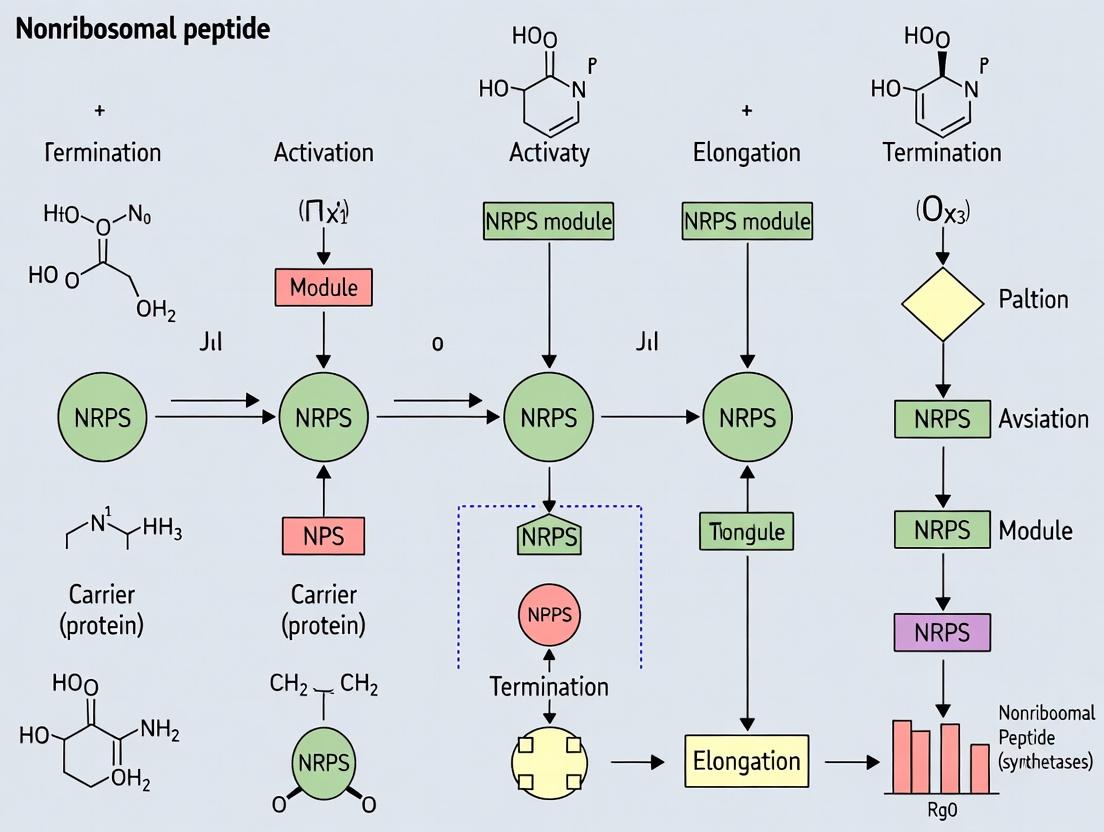
This comprehensive article explores the cutting-edge field of nonribosomal peptide synthetase (NRPS) repurposing for novel chemical production.
Reprogramming NRPS Assembly Lines: Engineering Nonribosomal Peptide Synthetases for Novel Therapeutics
Abstract
This comprehensive article explores the cutting-edge field of nonribosomal peptide synthetase (NRPS) repurposing for novel chemical production. Targeting researchers, scientists, and drug development professionals, it delves into the foundational biology of NRPS mega-enzymes, outlines advanced engineering methodologies from domain swapping to AI-guided design, and addresses critical troubleshooting challenges in yield and fidelity. The content further examines rigorous validation frameworks and comparative analyses against traditional synthesis, culminating in a synthesis of current achievements and future trajectories for accelerating the discovery of next-generation bioactive compounds, including antimicrobials and anticancer agents.
Deconstructing the NRPS Engine: Core Principles and Untapped Biosynthetic Potential
Within the broader thesis on Nonribosomal Peptide Synthetase (NRPS) repurposing for novel chemical production, understanding the core enzymatic logic is paramount. NRPSs are assembly-line megaenzymes that produce a vast array of bioactive peptides. Their modular architecture, where each module incorporates a specific amino acid into the growing chain, offers tremendous potential for engineering novel compounds. This application note details the function, interplay, and experimental characterization of the three core domains—Adenylation (A), Thiolation (T), and Condensation (C)—which form the essential catalytic unit of an NRPS module.
The Catalytic Triad: Domain Functions and Quantitative Parameters
Adenylation (A) Domain
The A domain is the substrate gatekeeper. It specifically recognizes and activates its cognate amino acid (or carboxylic acid) substrate in an ATP-dependent reaction to form an aminoacyl-adenylate.
Key Quantitative Parameters:
| Parameter | Typical Range/Value | Experimental Method |
|---|---|---|
| Substrate Specificity (kcat/KM) | 102 - 105 M-1s-1 | ATP-PPi exchange assay |
| ATP KM | 50 - 500 µM | ATP-PPi exchange assay |
| Amino Acid KM | 1 - 200 µM | ATP-PPi exchange assay |
| Key Recognition Residues | 10 core residues (Stachelhaus code) | Bioinformatics alignment & site-directed mutagenesis |
Protocol: ATP-PPi Exchange Assay for A Domain Specificity
- Objective: To measure the kinetic parameters of amino acid activation by an A domain.
- Materials: Purified A domain or NRPS module, [32P]PPi, ATP, MgCl2, candidate amino acids, quenching solution (charcoal in HCl).
- Procedure:
- Prepare reaction mix (50 µL final): 50 mM Tris-HCl (pH 7.5), 10 mM MgCl2, 5 mM ATP, 2 mM [32P]PPi (~500 cpm/nmol), variable amino acid (0-10x KM), and enzyme.
- Incubate at 25°C for 2-10 minutes.
- Quench with 1 mL of 1.6% (w/v) activated charcoal in 1.2 M HCl.
- Wash charcoal 3x with water, resuspend in scintillation fluid, and count retained radioactivity (representing formed [32P]ATP).
- Analysis: Plot initial velocity vs. [AA]. Fit data to the Michaelis-Menten equation to determine KM and kcat.
Thiolation (T) Domain
Also called the Peptidyl Carrier Protein (PCP), the T domain is covalently modified with a 4'-phosphopantetheine (PPant) arm. The activated aminoacyl-adenylate is transferred to the thiol of this arm, forming a stable thioester.
Key Quantitative Parameters:
| Parameter | Typical Range/Value | Experimental Method |
|---|---|---|
| Post-Translational Modification | Addition of PPant arm by phosphopantetheinyl transferase (PPTase) | HPLC-MS of intact protein |
| Acyl-T intermediate stability | Half-life: minutes to hours (pH dependent) | Hydroxylamine cleavage assay |
| Carrier Protein Type | PCP (bacterial/fungal), ACP (hybrid systems) | Sequence analysis |
Protocol: Hydroxylamine Cleavage Assay for T Domain Loading
- Objective: To confirm the formation of an aminoacyl-O-/peptidyl-S-T domain thioester.
- Materials: Purified T domain (or full protein) post-incubation with A domain/substrate/ATP, 1 M hydroxylamine (pH 7.0), 0.1 M hydroxylamine (pH 8.7), controls (no enzyme, no ATP).
- Procedure:
- Perform aminoacylation reaction with purified components.
- Split reaction into three aliquots.
- Treat with: a) 1 M NH2OH, pH 7.0 (cleaves thioesters); b) 0.1 M NH2OH, pH 8.7 (cleaves oxoesters); c) buffer control.
- Incubate 10 min at 25°C, quench with SDS-PAGE loading buffer.
- Analyze by SDS-PAGE (shift in mobility) or HPLC-MS (mass change of -acyl group).
Condensation (C) Domain
The C domain is the peptide bond-forming catalyst. It mediates nucleophilic attack by the amine of the downstream (acceptor) T-bound amino acid on the upstream (donor) T-bound acyl/peptidyl thioester.
Key Quantitative Parameters:
| Parameter | Typical Range/Value | Experimental Method |
|---|---|---|
| Catalytic Rate (kcat) | 0.1 - 10 min-1 | Coupled assay with downstream modules or synthetic SNAC substrates |
| Stereospecificity | L,L; D,L; L,D; D,D configs possible | HPLC analysis of dipeptide product |
| Donor/Acceptor Gate Motifs | HHxxxDG (donor), (D/E)xxx(D/H) (acceptor) | Sequence alignment & structural analysis |
Protocol: In vitro Dipeptide Formation Assay Using SNAC Substrates
- Objective: To directly assay C domain activity and stereospecificity.
- Materials: Purified C domain or minimal C-A-T didomain, aminoacyl-SNAC (N-acetylcysteamine thioester) as donor, aminoacyl-S-T domain as acceptor, HPLC system.
- Procedure:
- Pre-load the acceptor T domain using its cognate A domain and ATP.
- Set up reaction (50 µL): 50 mM HEPES (pH 7.5), 10 mM MgCl2, 1 mM donor-SNAC, 0.1 mM acceptor-S-T domain, purified C domain.
- Incubate at 30°C for 30-60 min.
- Quench with equal volume acetonitrile, centrifuge, and analyze supernatant by HPLC-MS for dipeptide-SNAC or dipeptidyl-S-T product.
- Analysis: Compare retention times and mass to synthetic standards to confirm identity and stereochemistry.
The NRPS Assembly Line Logic and Workflow
Title: Catalytic Cycle of a Core NRPS Module
Experimental Workflow for Module Characterization
Title: NRPS Domain Characterization & Engineering Workflow
The Scientist's Toolkit: Key Research Reagents & Materials
| Item | Function/Application | Key Details |
|---|---|---|
| Heterologous Expression Systems | Production of soluble, active NRPS proteins or domains. | E. coli (e.g., BL21(DE3) with tunable promoters), S. cerevisiae, insect cell/baculovirus for large proteins. Co-expression with PPTase (e.g., Sfp) is critical. |
| Phosphopantetheinyl Transferase (PPTase) | Essential for post-translational activation of T domains. | B. subtilis Sfp (broad substrate specificity) or E. coli EntD (for specific carriers). Used in vivo during expression or in vitro for activation. |
| Aminoacyl-/Peptidyl-SNAC Thioesters | Chemically synthesized mimics of T-domain intermediates. | Serve as donor substrates for in vitro C domain assays, bypassing the need for upstream modules. |
| Activity-Based Probes (e.g., Pantetheine Probes) | For labeling and detecting active T domains in cell lysates or purified systems. | Contain a PPant warhead linked to a fluorophore or affinity tag (e.g., biotin). |
| Intact Protein Mass Spectrometry (LC-MS) | Direct detection of T domain loading (mass shift +PPant, +acyl) and reaction intermediates. | Critical for confirming post-translational modification and acyl/peptidyl intermediate formation. |
| Non-hydrolyzable ATP Analogs (e.g., AMPcPP) | For structural studies (X-ray crystallography) of A domains in substrate-bound states. | Mimic the ATP-AA transition state, allowing trapping of the aminoacyl-adenylate. |
Application Notes
Nonribosomal peptide synthetases (NRPSs) are modular enzyme assembly lines responsible for producing a vast array of bioactive peptides, including the immunosuppressant cyclosporine and the last-resort antibiotic daptomycin. This diversity arises from the inherent modularity of NRPSs, where each module incorporates a specific monomer into the growing chain. The core thesis of modern NRPS research is the repurposing of these pathways through bioengineering—exchanging, adding, or modifying domains and modules—to produce novel, "unnatural" natural products with tailored pharmacological properties. This approach offers a promising route to overcome antibiotic resistance and discover new therapeutics.
Key Quantitative Data on Featured NRPS Products
Table 1: Comparison of Cyclosporine and Daptomycin NRPS Pathways and Products
| Feature | Cyclosporine (Cyclosporin A) | Daptomycin (Cubicin) |
|---|---|---|
| Producing Organism | Tolypocladium inflatum (Fungus) | Streptomyces roseosporus (Bacterium) |
| NRPS Architecture | 1 giant multienzyme (SimA, ~1.7 MDa) | 3 large multienzymes (DptA, DptBC, DptD) |
| Number of Modules | 11 modules | 13 modules (including initiation & termination) |
| Peptide Core Size | 11 amino acids | 13 amino acids (10 core + 3 exocyclic) |
| Key Modifications | N-methylation on 7 residues; Cyclization (head-to-tail) | Ester linkage (Thr4-Ser); Tailoring (epoxidation, decanoyl appendage) |
| Primary Bioactivity | Immunosuppressant (binds cyclophilin, inhibits calcineurin) | Antibiotic (Ca2+-dependent membrane insertion & depolarization) |
| Clinical Application | Prevention of organ transplant rejection | Treatment of Gram-positive infections (MRSA, VRE) |
Research Significance & Repurposing Context: The structural and functional contrast between these molecules underscores the plasticity of NRPS outputs. Cyclosporine demonstrates the incorporation of non-proteinogenic amino acids and extensive N-methylation, which confer oral bioavailability and target specificity. Daptomycin highlights the role of unique tailoring reactions (ester bond formation, lipid addition) for novel mechanism of action. Engineering efforts focus on module swapping (e.g., replacing an adenylation domain to incorporate a different amino acid) and hybrid pathway construction to generate novel analogs.
Experimental Protocols
Protocol 1: In Vitro Reconstitution and Analysis of a Single NRPS Module Activity
This protocol is fundamental for validating the function of individual adenylation (A) and thiolation (T) domains, a prerequisite for domain-swapping experiments.
Materials:
- Purified NRPS module (e.g., expressed in E. coli with a His-tag).
- ATP, MgCl₂, amino acid substrate(s).
- Radioactive L-[¹⁴C]-amino acid or colorimetric/fluorescent assay reagents (e.g., pyrophosphate (PPi) detection kit).
- Ni-NTA affinity resin.
- Reaction buffer: 50 mM HEPES (pH 7.5), 10 mM MgCl₂, 1 mM TCEP.
Procedure:
- Enzyme Purification: Purify the His-tagged NRPS module via immobilized metal affinity chromatography (IMAC) using Ni-NTA resin. Elute with imidazole and dialyze into reaction buffer.
- Adenylation Assay Setup: In a 50 µL reaction, combine:
- 1-5 µM purified NRPS module.
- 1 mM candidate amino acid.
- 5 mM ATP.
- 10 mM MgCl₂.
- Reaction buffer.
- Incubation: Incubate at 30°C for 15-60 minutes.
- Detection (Two Common Methods):
- A. Pyrophosphate Release: Quench reaction and use a commercial PPi detection kit (enzymatic coupling to NADH oxidation) to measure A-domain activity spectrophotometrically at 340 nm.
- B. Radioactive Amino Acid Adenylation: Include L-[¹⁴C]-amino acid. Quench with EDTA. Separate aminoacyl-AMP/enzyme complex from free amino acid via rapid size-exclusion spin column or nitrocellulose filter binding. Quantify radioactivity by scintillation counting.
- Data Analysis: Calculate adenylation rate (nmol PPi released or substrate bound per min per mg enzyme). Compare activity across different amino acid substrates to confirm A-domain specificity.
Protocol 2: Heterologous Expression and Module Swapping in a Model Streptomycete
This protocol outlines the creation of a novel NRPS derivative by replacing an adenylation domain within a native gene cluster.
Materials:
- Bacterial Artificial Chromosome (BAC) containing the native daptomycin (dpt) gene cluster.
- E. coli strains for cloning (e.g., DH10B) and conjugation (e.g., ET12567/pUZ8002).
- Streptomyces lividans TK24 or S. roseosporus ΔdptA strain as heterologous host.
- CRISPR-Cas9 or Red/ET recombineering system for in vivo engineering on the BAC.
- Antibiotics for selection (apramycin, kanamycin, nalidixic acid).
- HPLC-MS for metabolite analysis.
Procedure:
- Design & Construction: Identify the target A-domain within dptA on the BAC. Design a replacement cassette containing the new A-domain (e.g., from another NRPS) flanked by ~1 kb homology arms to the upstream and downstream regions of the target site.
- Recombineering: Introduce the replacement cassette and the necessary recombineering/CRISPR machinery into the BAC-containing E. coli. Select for recombinants where the native A-domain has been swapped.
- Conjugation: Mobilize the engineered BAC from the E. coli donor strain into the Streptomyces heterologous host via intergeneric conjugation.
- Fermentation & Screening: Grow exconjugants in production media (e.g., R5 or tryptic soy broth with Ca²⁺ for daptomycin analogs) for 5-7 days.
- Extraction & Analysis: Acidify culture broth, extract with ethyl acetate or butanol. Analyze crude extracts by HPLC-MS. Compare chromatograms and mass spectra to wild-type to identify production of the novel peptide analog.
- Purification & Validation: Scale-up fermentation, purify the major novel product using preparative HPLC, and confirm structure using NMR and high-resolution MS. Assess bioactivity via antimicrobial susceptibility testing (for antibiotic analogs).
The Scientist's Toolkit
Table 2: Essential Research Reagent Solutions for NRPS Repurposing
| Reagent / Material | Function / Application |
|---|---|
| His-tag Purification Kits (Ni-NTA) | Affinity purification of recombinant NRPS proteins or modules expressed in E. coli. |
| Pyrophosphate (PPi) Assay Kit | Colorimetric or fluorescent quantification of A-domain activity in in vitro assays. |
| Sfp Phosphopantetheinyl Transferase | Essential for in vitro activation of apo-NRPS proteins by attaching the phosphopantetheine cofactor to carrier protein (T) domains. |
| BAC (Bacterial Artificial Chromosome) Vectors | Stable maintenance of large (>100 kb) native NRPS gene clusters for genetic manipulation. |
| Red/ET or CRISPR-Cas9 Recombineering Systems | Precise, seamless genetic engineering (e.g., domain swaps, deletions) directly on BAC DNA in E. coli. |
| Heterologous Host Strains (e.g., S. lividans TK24) | Clean genetic backgrounds for expression of engineered NRPS pathways without native metabolic interference. |
| HPLC-MS with Photodiode Array (PDA) | Analytical workhorse for detecting, quantifying, and initially characterizing novel peptide metabolites. |
Visualizations
Diagram 1 Title: NRPS Repurposing Research Workflow
Diagram 2 Title: Core NRPS Domain Function & Assembly
Application Notes
The rational repurposing of Nonribosomal Peptide Synthetases (NRPS) for novel chemical production requires an atomic-level understanding of the dynamic interfaces between catalytic domains. X-ray crystallography and cryo-electron microscopy (cryo-EM) have emerged as complementary techniques that provide these critical structural insights. Recent advancements in both methodologies now enable researchers to visualize multi-domain NRPS architectures in distinct conformational states, revealing the precise interactions at Adenylation (A), Peptidyl Carrier Protein (PCP), and Condensation (C) domain interfaces. This knowledge is foundational for engineering hybrid NRPS systems, where domain swapping must preserve functional communication and substrate channeling. The integration of high-resolution structural data with biochemical validation is accelerating the design of novel assembly lines for nonribosomal peptides with therapeutic potential.
Table 1: Comparison of Structural Techniques for NRPS Domain Analysis
| Parameter | X-ray Crystallography | Cryo-Electron Microscopy |
|---|---|---|
| Typical Resolution Range | 1.5 – 3.5 Å | 2.5 – 4.0 Å (for NRPS complexes) |
| Optimal Sample State | Highly ordered crystals | Vitrified solution (frozen-hydrated) |
| Minimum Sample Amount | ~1-10 µg (micro-crystals) | ~0.1-1 mg/mL (3-5 µL per grid) |
| Typical Data Collection Temp | 100 K (cryo-cooled) | ~80 K (liquid ethane) |
| Key Advantage for NRPS | Atomic detail of active sites & small domains | Ability to capture multiple conformational states |
| Primary Limitation | Difficulty crystallizing flexible multi-domain proteins | Lower resolution for highly flexible regions |
| Recent Example (NRPS) | Tyrocidine synthetase A-PCP interdomain (PDB: 5IV4) | Surfactin synthetase termination module (EMD-4567) |
Table 2: Key Interface Metrics from Recent NRPS Structures
| NRPS System | Technique (PDB/EMD) | Res. | Key Interface Characterized | Buried Surface Area (Ų) | Notable Interactions |
|---|---|---|---|---|---|
| Tyrocidine Synthetase (TyccA) | X-ray (5IV4) | 2.3 Å | A-PCP (interdomain) | ~1200 | Salt bridges, H-bonding network |
| Surfactin Synthetase (SrfA-C) | Cryo-EM (EMD-4567) | 3.2 Å | PCP-Condensation | ~950 | Hydrophobic packing, charged complementarity |
| Linear Gramicidin Synthetase (LgrA) | Cryo-EM (EMD-23456) | 3.8 Å | Full termination module (A-PCP-C) | A-PCP: ~1100; PCP-C: ~900 | Dynamic hinging observed |
| Penicillin Synthetase (ACVS) | X-ray (6T7X) | 2.1 Å | A domain substrate pocket | N/A | Substrate-specific residues mapped |
Experimental Protocols
Protocol 1: Cryo-EM Sample Preparation & Data Collection for NRPS Multi-Domain Complexes
Objective: To obtain high-resolution cryo-EM structures of a multi-domain NRPS module in different conformational states.
- Sample Optimization: Purify the target NRPS module (e.g., A-PCP-C) via affinity and size-exclusion chromatography (SEC) in a buffer containing 20 mM HEPES pH 7.5, 150 mM NaCl, 2 mM MgCl₂, 1 mM TCEP. Assess monodispersity by SEC-MALS or negative stain EM.
- Grid Preparation: Apply 3.5 µL of sample at ~4 mg/mL to a freshly glow-discharged (30 sec, 15 mA) Quantifoil R1.2/1.3 300-mesh gold grid. Blot for 3-4 seconds at 100% humidity, 4°C using a Vitrobot Mark IV, and plunge-freeze in liquid ethane.
- Screening & Data Collection: Screen grids on a 200 keV Talos Arctica. For final data collection on a 300 keV Titan Krios G4, use a Gatan K3 direct electron detector in super-resolution mode. Collect ~8,000 movies at a nominal magnification of 105,000x (0.826 Å/pixel) with a total dose of 50 e⁻/Ų fractionated over 40 frames.
- Data Processing (Workflow): Use cryoSPARC live for on-the-fly motion correction and CTF estimation. Perform multiple rounds of reference-free 2D classification to select optimal particles. Generate an ab initio model and subsequent heterogeneous refinement to separate conformational states. Conduct non-uniform refinement and local refinement for each state to achieve final high-resolution maps.
- Model Building & Validation: Dock available high-resolution domain structures (e.g., from X-ray) into the cryo-EM map using ChimeraX. Manually rebuild the interfaces in Coot, followed by real-space refinement in Phenix. Validate using MolProbity.
Protocol 2: X-ray Crystallography of NRPS Domain Interfaces
Objective: To determine the atomic structure of a trapped NRPS A-PCP di-domain construct.
- Construct Design & Trapping: Engineer a di-domain (A-PCP) construct with the PCP domain tethered as a donor to the A domain. Trap the complex by incubating with a non-hydrolyzable aminoacyl-AMP analog (e.g., 5′-O-[N-(aminoacyl)sulfamoyl]adenosine) and the appropriate pantetheine-bound peptide mimic.
- Crystallization: Screen using commercial sparse matrix screens (e.g., MCSG, Morpheus) by sitting-drop vapor diffusion at 20°C. Mix 0.2 µL of protein at 15 mg/mL with 0.2 µL of reservoir solution. Optimize initial hits. A typical condition: 0.1 M HEPES pH 7.5, 25% (w/v) PEG 3350.
- Cryo-protection & Harvesting: Soak crystals briefly in reservoir solution supplemented with 20% ethylene glycol. Loop-mount and flash-cool in liquid nitrogen.
- Data Collection & Processing: Collect a 180° dataset at a synchrotron microfocus beamline (e.g., APS 24-ID-E) at 100 K. Index and integrate with XDS. Scale and merge using AIMLESS.
- Phasing & Refinement: Solve structure by molecular replacement (Phaser) using known A and PCP domain structures as search models. Perform iterative rounds of model building (Coot) and refinement (Refmac5/BUSTER), incorporating ligands and water molecules.
Diagrams
Title: Structural Biology Workflow for NRPS Analysis
Title: NRPS Domain Interfaces & Function
The Scientist's Toolkit: Research Reagent Solutions
Table 3: Essential Materials for NRPS Structural Studies
| Item | Function in Experiment | Example Product / Note |
|---|---|---|
| Bac-to-Bac Baculovirus System | Heterologous expression of large, multi-domain NRPS proteins in insect cells. | Thermo Fisher Scientific. Provides higher likelihood of proper folding for eukaryotic NRPS. |
| Hiseq/Talon IMAC Resin | Affinity purification of His-tagged NRPS constructs. | Cytiva / Takara Bio. Critical first step for purifying recombinant modules. |
| Superose 6 Increase 10/300 GL | Size-exclusion chromatography for complex purification and monodispersity assessment. | Cytiva. Essential for separating correctly assembled oligomers. |
| Non-hydrolyzable Aminoacyl-AMP Analogs | Trapping A domain in specific catalytic states for crystallization. | Chemically synthesized (e.g., 5′-O-[N-(L-Phe)sulfamoyl]adenosine). |
| Morpheus HT-96 Screen | Initial crystallization screening for difficult protein complexes. | Molecular Dimensions. Utilizes mixes of common NRPS buffer components. |
| Quantifoil R1.2/1.3 300 mesh Au Grids | Support film for cryo-EM sample vitrification. | Electron Microscopy Sciences. Gold grids provide better thermal conductivity. |
| Vitrobot Mark IV | Automated plunge-freezing device for reproducible cryo-EM sample preparation. | Thermo Fisher Scientific. Controls blot time, humidity, and temperature. |
| cryoSPARC Live | Software for real-time processing and monitoring of cryo-EM data collection. | Structura Biotechnology Inc. Enables on-the-fly decision making. |
| ChimeraX & Coot | Software for integrating cryo-EM maps and atomic models, and for manual model building. | UCSF / MRC. Indispensable for model building and refinement. |
| Phenix Real-Space Refine | Software for refining atomic models against cryo-EM density maps. | Phenix consortium. Integrates geometric and map-based restraints. |
Biosynthetic Gene Clusters (BGCs) and Their Role in NRPS Discovery & Annotation
The systematic discovery and annotation of Biosynthetic Gene Clusters (BGCs), particularly those encoding Nonribosomal Peptide Synthetases (NRPS), is foundational to modern natural product research. Within the thesis framework of NRPS repurposing for novel chemical production, BGCs represent the genomic blueprint. Repurposing—the rational engineering of these enzymatic assembly lines to produce non-natural peptides—relies entirely on accurate BGC identification, structural prediction, and functional understanding of the adenylation (A), thiolation (T), and condensation (C) domains. This document provides application notes and protocols for BGC-centric NRPS discovery and annotation, enabling researchers to deconstruct and re-engineer these molecular machines.
Key Quantitative Data in BGC/NRPS Research
Table 1: Major Public BGC Databases and Their Contents (as of recent data)
| Database | Number of BGCs | NRPS-specific BGCs | Primary Use |
|---|---|---|---|
| antiSMASH DB (MIBiG) | ~2,000 (curated ref.) | ~750 | Reference standard for known BGCs |
| NCBI GenBank | Millions (contains BGCs) | Estimated 10,000s | General genomic repository |
| IMG-ABC (JGI) | ~1.2 Million (predicted) | ~300,000 | Large-scale environmental BGC mining |
| ARTS 2.0 | Specialized for resistance | N/A | Prioritizing BGCs with novel resistance |
Table 2: Common NRPS Domain Statistics and Substrate Predictions
| Domain Type | Average Length (aa) | Key Signature Motif | Prediction Accuracy (Tool: NaPDoS/Stachelhaus) |
|---|---|---|---|
| Adenylation (A) | 550-600 | A4-A10 motifs | 70-85% (for known substrates) |
| Thiolation/PCP (T) | 80-100 | LGG(D/H)SL | >95% (identification) |
| Condensation (C) | 450-500 | HHxxxDG | ~80% (specificity prediction) |
| Thioesterase (Te) | 250-280 | GxSxG | >90% (identification) |
Application Notes & Protocols
Protocol 1: Genome Mining for NRPS BGCs Using antiSMASH
Application Note: This is the critical first step for identifying candidate BGCs for repurposing research.
- Input Preparation: Assemble genomic data (draft or complete) in FASTA format.
Tool Execution: Run antiSMASH (latest version, e.g., 7.0+). Use the
--nrpsflag to activate NRPS-specific predictions.Output Analysis: Examine the
.jsonand.gbkoutputs. Theclusterblastandsubclusterblastresults are essential for identifying novelty. Prioritize BGCs with hybrid NRPS-T1PKS or NRPS-ribosomial pathways for high-complexity repurposing.- Domain Calling: Use the integrated
NLPs/PKS analysispage to extract modular organization. Manually verify domain boundaries via HMMer against the Pfam database (PF00668: Condensation; PF00501: PCP; PF13193: Adenylation).
Protocol 2: In-depth A-domain Substrate Specificity Prediction
Application Note: Accurate prediction of the amino acid incorporated at each A-domain is paramount for designing repurposing strategies.
- Sequence Extraction: Isolate the 8-10 core motifs (A4-A10) of each A-domain from the antiSMASH-identified module.
- Dual-Tool Prediction: Submit the sequence to both the Stachelhaus code predictor (e.g., via NaPDoS2) and NRPSsp.
- Consensus & Validation: Generate a consensus prediction. Cross-reference with the MIBiG database. If the BGC is similar to a known cluster (e.g., surfactin), use the known substrate as a strong prior.
- Experimental Design Note: For repurposing, target A-domains with broad substrate specificity (e.g., phenylalanine-activating domains often accept analogs) or those predicted with lower confidence for engineering.
Protocol 3: Phylogenetic Analysis for Domain Swapping Candidates
Application Note: Identifying evolutionarily related yet functionally divergent A-domains informs viable domain-swapping experiments for repurposing.
- Dataset Construction: Compile A-domain sequences from your target BGC and homologous BGCs from the MIBiG/antiSMASH DB.
- Alignment: Perform multiple sequence alignment using MAFFT or ClustalOmega with strict parameters (
--maxiterate 1000 --localpair). - Tree Building: Construct a Neighbor-Joining or Maximum-Likelihood tree (MEGA11 or RAxML). Use bootstrap analysis (1000 replicates).
- Interpretation: Clades containing domains that activate different substrates are prime candidates for functional exploration. Domains with high sequence identity (>75%) but different predicted substrates highlight key specificity-conferring residues.
Visualization of Workflows and Relationships
NRPS Discovery to Repurposing Pipeline
NRPS Modular Assembly Line Structure
The Scientist's Toolkit: Research Reagent Solutions
Table 3: Essential Materials for BGC/NRPS Validation and Repurposing
| Item | Function/Application | Example/Supplier |
|---|---|---|
| Cloning & Expression | ||
| pET-28a(+) or pACYCDuet-1 Vectors | Heterologous expression of large NRPS genes/modules in E. coli. | Novagen/Merck Millipore |
| Streptomyces Expression Hosts (e.g., S. coelicolor M1154) | Optimized chassis for actinobacterial BGC expression. | John Innes Centre collections |
| Gibson Assembly or Golden Gate Master Mix | Seamless assembly of large, modular DNA constructs for domain swaps. | NEB, Thermo Fisher |
| Enzymatic Assays | ||
| ATP, [³²P]-PPi (or Malachite Green Kit) | A-domain activity assay (ATP-PPi exchange). | PerkinElmer, Sigma-Aldrich |
| Coenzyme A (CoA-SH), [¹⁴C]-Acetyl-CoA | Phosphopantetheinyl transferase (PPTase) assay to activate T-domains. | American Radiolabeled Chemicals |
| Sfp or EntD PPTase (Purified) | Broad/substrate-specific PPTases for in vitro T-domain priming. | Produced in-house per literature. |
| Analytics | ||
| LC-MS/MS System (Q-TOF preferred) | Detection and structural characterization of novel peptides. | Agilent, Waters, Thermo |
| Hydroxyapatite & C18 Resins | Purification of nonribosomal peptides from fermentation broths. | Bio-Rad, Sigma-Aldrich |
| Substrate Analogues (e.g., N-acetylcysteamine thioesters) | Synthetic substrates for in vitro reconstitution of NRPS activity. | Custom synthesis (e.g., ChemBridge). |
Application Notes
Nonribosomal peptide synthetases (NRPSs) are modular enzymatic assembly lines responsible for producing a vast array of bioactive natural products. Nature's repurposing of these modules—through processes such as module skipping, iteration, recombination, and hybridization with polyketide synthase (PKS) modules—serves as a masterclass in combinatorial biosynthesis for chemical innovation. This provides a foundational strategy for engineering novel bioactive compounds, including next-generation antibiotics and anticancer agents, within the broader thesis of repurposing NRPS machinery for novel chemical production.
Key Evolutionary Mechanisms for NRPS Diversification:
| Mechanism | Description | Natural Example | Quantitative Impact on Chemical Space |
|---|---|---|---|
| Module Skipping | Incomplete processing by a carrier protein, bypassing a module. | Surfactin biosynthesis | Increases variant number by factor of 2^n for n skipped modules. |
| Module Iteration | Re-use of a module multiple times within a single assembly cycle. | Cyclosporin synthetase (module 1 used 7x) | Enables incorporation of identical monomers; critical for macrocycle formation. |
| Module/ Domain Recombination | Horizontal gene transfer and recombination of adenylation (A), condensation (C), and thiolation (T) domains. | β-lactam antibiotic pathways | In Streptomyces, up to 30% of NRPS genes show evidence of recombination events. |
| Hybrid NRPS-PKS Systems | Fusion of NRPS modules with PKS modules in a single pathway. | Epothilone, Bleomycin | Hybrid systems account for ~25% of known multimodular biosynthetic pathways. |
| Substrate Promiscuity | Relaxed specificity of the Adenylation (A) domain for non-cognate amino acids. | Tyrocidine synthetase | A single promiscuous A-domain can incorporate >10 different substrates. |
Quantitative Data on Engineered NRPS Repurposing:
| Engineering Approach | System Tested | Yield of Novel Analog | Library Size Generated | Reference (Year) |
|---|---|---|---|---|
| A-Domain Swapping | Daptomycin NRPS | 12-45% of wild-type yield | 8 new lipopeptides | [Miao et al., 2006] |
| Module Fusion | Enterobactin/ Vibriobactin | 1.2 mg/L | 3 novel siderophores | [Calcott et al., 2014] |
| E-domain Inactivation | Surfactin synthetase | 70 mg/L | 4 new non-methylated variants | [Tseng et al., 2002] |
| CRISPR-Cas9 Mediated Refactoring | Bacillus subtilis NRPS clusters | ~60% of native titer | >20 pathway variants | Recent Advances (2020-2023) |
Experimental Protocols
Protocol 1: In vitro Analysis of A-Domain Substrate Promiscuity
Objective: To characterize the substrate specificity of an adenylation domain to identify non-cognate amino acids for repurposing.
Materials:
- Purified A-domain (His-tagged)
- ATP, MgCl₂, amino acid substrates
- Pyrophosphate (PPi) detection reagent kit (e.g., EnzChek Pyrophosphate)
- 96-well plate reader
Procedure:
- Reaction Setup: In a 100 µL reaction volume, combine 50 mM Tris-HCl (pH 7.5), 10 mM MgCl₂, 5 mM ATP, 0.1 µM purified A-domain, and 2 mM of the target amino acid substrate.
- Control Setup: Prepare a negative control without amino acid and a positive control with the cognate amino acid.
- Incubation: Incubate reactions at 30°C for 30 minutes.
- Pyrophosphate Detection: Add 50 µL of the PPi detection reagent according to the manufacturer's instructions. Incubate for 10 minutes at room temperature.
- Quantification: Measure fluorescence (Ex/Em ~360/450 nm) in a plate reader. Activity relative to the cognate substrate is calculated as: (Fluorescencesample - Fluorescenceno substrate) / (Fluorescencecognate - Fluorescenceno substrate) * 100%.
Protocol 2: Heterologous Expression and Module Swapping inE. coli
Objective: To produce a novel peptide analog by swapping A-domains between two NRPS gene clusters.
Materials:
- pET or pBAD expression vectors containing donor and recipient NRPS genes.
- E. coli BL21(DE3) or BAP1 expression strain.
- Gibson Assembly or Golden Gate assembly reagents.
- Inducer (IPTG or L-arabinose).
- LC-MS/MS for product analysis.
Procedure:
- Design & Cloning:
- Amplify the donor A-domain and the recipient NRPS backbone with 20-30 bp homologous overlaps using PCR.
- Use Gibson Assembly to insert the donor A-domain in place of the native A-domain in the recipient expression vector. Verify by sequencing.
- Heterologous Expression:
- Transform the assembled plasmid into the expression strain.
- Grow culture in LB with appropriate antibiotics at 37°C to an OD600 of 0.6-0.8.
- Induce expression with 0.1 mM IPTG or 0.2% L-arabinose. Incubate at 18°C for 16-20 hours.
- Product Extraction & Analysis:
- Pellet cells. Extract metabolites from the pellet with 50% aqueous acetonitrile + 0.1% formic acid.
- Centrifuge and analyze supernatant by LC-MS/MS. Compare mass spectra and fragmentation patterns to wild-type product.
Protocol 3: CRISPR-Cas9 MediatedIn vivoNRPS Refactoring inStreptomyces
Objective: To replace a native NRPS module directly within the bacterial chromosome.
Materials:
- pCRISPomyces-2 plasmid (or similar).
- Streptomyces coelicolor chassis.
- Donor DNA fragment containing the desired module with flanking homology arms (≥1 kb).
- Conjugation helper strain (e.g., E. coli ET12567/pUZ8002).
- MS media with appropriate antibiotics (apramycin, thiostrepton).
Procedure:
- gRNA & Donor Construction:
- Clone a 20bp spacer sequence targeting the chromosomal locus just upstream of the module to be replaced into pCRISPomyces-2.
- Prepare the linear donor DNA fragment via PCR or synthesis, containing the new module flanked by homology arms matching sequences upstream and downstream of the target site.
- Conjugal Transfer:
- Transform the pCRISPomyces-2 plasmid into the E. coli donor strain.
- Mix donor E. coli with Streptomyces spores, plate on MS agar, and incubate at 30°C for 16-20 hours.
- Overlay with apramycin (50 µg/mL) and nalidixic acid (25 µg/mL). Incubate until exconjugant colonies appear (5-7 days).
- Screening & Validation:
- Screen colonies by PCR to verify correct allelic exchange.
- Ferment positive clones in liquid media and analyze extracts by HPLC-MS for novel product formation.
Diagrams
Title: NRPS Module Repurposing Experimental Workflow
Title: Canonical NRPS Module Architecture
Title: Evolutionary Mechanisms for NRPS Diversification
The Scientist's Toolkit: Research Reagent Solutions
| Item | Function & Application in NRPS Research |
|---|---|
| EnzChek Pyrophosphate Assay Kit | Quantifies A-domain activity by detecting inorganic pyrophosphate (PPi) release during amino acid adenylation (Protocol 1). |
| Gibson Assembly Master Mix | Enables seamless, one-pot assembly of multiple DNA fragments for NRPS module swapping and construct building (Protocol 2). |
| pCRISPomyces-2 Plasmid | A CRISPR-Cas9 system optimized for Streptomyces; essential for precise chromosomal editing of NRPS clusters (Protocol 3). |
| BAP1 E. coli Strain | Engineered for heterologous expression of NRPS/PKS genes, provides necessary phosphopantetheinyl transferase (Sfp) activity. |
| S-Adenosyl Methionine (SAM) | Cofactor required for the activity of methyltransferase (MT) domains often embedded within NRPS modules. |
| HR-MS/LC-MS System (e.g., Q-TOF) | High-resolution mass spectrometry is critical for identifying and characterizing novel peptide products with accurate mass determination. |
| Phusion High-Fidelity DNA Polymerase | Essential for error-free amplification of large NRPS gene fragments (>5 kb) for cloning and module manipulation. |
| Ni-NTA Agarose Resin | For purification of His-tagged NRPS proteins or individual domains (e.g., A-domains) for in vitro biochemical studies. |
The NRPS Engineer's Toolkit: From Domain Swapping to de novo Design
This protocol is framed within a broader thesis exploring the repurposing of Non-Ribosomal Peptide Synthetase (NRPS) assembly lines for the production of novel, biologically active chemicals. A central strategy in NRPS engineering is the exchange of Adenylation (A) domains, which are responsible for selecting and activating specific amino acid or carboxylic acid building blocks. By swapping these domains between different NRPS systems, researchers can reprogram the biosynthetic machinery to incorporate non-cognate substrates, thereby generating new structural analogs of peptide-derived natural products with potential applications in drug development.
A Domain Selectivity and Key Recognition Residues
Adenylation domains contain a conserved binding pocket. The specificity is largely determined by 10-12 key amino acid residues, often referred to as the "non-ribosomal code," which line the active site and interact with the substrate's side chain.
Table 1: Key A Domain Specificity-Conferring Residues (Based on Common Motifs)
| Residue Position (Stachelhaus Code) | Function in Substrate Recognition | Example: Substrate Influence |
|---|---|---|
| 235 | Primary determinant for side chain size/charge | Asp for basic residues (e.g., Ornithine); Ala for small aliphatic |
| 236 | Influences binding of side chain moiety | Trp for aromatic rings; Gly for small substrates |
| 239 | Interacts with α-amino group | Lys or Arg for coordination |
| 278 | Space-filling and hydrophobic interactions | Val, Ile for hydrophobic substrates |
| 299 | Hydrogen bonding with substrate | Asp for polar substrates |
| 301 | Determines stereospecificity | Often Ala for L-amino acids |
| 322 | Interacts with substrate carboxylate | Arg for ionic interaction |
| 330 | Secondary space and polarity role | Variable small residues (Ser, Gly) |
Table 2: Quantitative Metrics for Successful A Domain Swapping (Representative Data)
| Parameter | Typical Range / Value | Impact on Outcome |
|---|---|---|
| Homology at Flanking Linkers | >70% sequence identity | Higher identity correlates with correct folding and inter-domain communication |
| Solvent Accessibility of Linker | High (>40 Ų) | Essential for creating "cut sites" without disrupting core domain folds |
| Product Yield after Swap | 0.1% - 70% of wild-type | Highly variable; depends on compatibility of swapped domain with downstream domains |
| Substrate Activation In Vitro (kcat/Km) | 10² - 10⁶ M⁻¹s⁻¹ | Swapped domains often show reduced efficiency compared to native context |
| Common Assembly Standard (Golden Gate) | 4-6 fragments, 20-40 bp overlaps | Standardizes and accelerates multi-fragment assembly |
Detailed Application Notes & Protocols
Protocol: Bioinformatics-Driven Identification and Design of A Domain Swap Sites
Objective: To identify optimal boundaries for excising an A domain and designing compatible fusion points with recipient NRPS modules.
Materials:
- Protein sequences of donor and recipient NRPSs.
- Software: AntiSMASH, NRPSpredictor2, Clustal Omega, PyMOL.
- Primers for PCR amplification.
Methodology:
- Domain Annotation: Use AntiSMASH to identify module and domain boundaries in both donor and recipient gene clusters.
- Consensus Linker Identification: Align the sequences of the donor A domain and the recipient's A domain (to be replaced) using Clustal Omega. Identify the short, conserved linker regions (typically 5-15 aa) immediately N-terminal (often after the previous Condensation domain) and C-terminal (before the Peptidyl Carrier Protein) to the A domain core.
- Structural Validation (if possible): Use available crystal structures (e.g., EntF, SrfA-C) to model the swap region in PyMOL. Ensure your chosen cut sites are in solvent-exposed, flexible loops, not within secondary structure elements.
- Primer Design: Design primers to amplify the donor A domain fragment, appending 30-40 bp homology arms that exactly match the recipient's N- and C-terminal linker sequences identified in step 2.
Protocol: Golden Gate Assembly for A Domain Exchange
Objective: To precisely replace the native A domain in a recipient NRPS module with a heterologous A domain from a donor module.
Materials:
- Research Reagent Solutions Toolkit:
Reagent / Kit Function Key Consideration Type IIS Restriction Enzymes (e.g., BsaI-HFv2, Esp3I) Create unique, non-palindromic overhangs for scarless assembly. Ensures directional, one-pot assembly. T4 DNA Ligase Ligates fragments with compatible overhangs. High concentration improves multi-fragment efficiency. Gibson Assembly Master Mix Alternative for seamless assembly via exonuclease, polymerase, and ligase activity. Used for larger fragments or when Type IIS sites are problematic. High-Efficiency Competent Cells (e.g., NEB Stable, E. coli GB05-dir) Transformation of large, complex NRPS plasmids. Essential for accepting large (~10-20 kb) constructs. PCR Purification & Gel Extraction Kits Cleanup of DNA fragments. Critical for removing enzymes and impurities before assembly. Phusion High-Fidelity DNA Polymerase Error-free amplification of large gene fragments. Minimizes mutations in the final construct.
Methodology:
- Vector Preparation: Digest the recipient NRPS expression vector (containing the full module or gene cluster) with the chosen Type IIS enzyme(s) to excise the native A domain coding sequence. Gel-purify the linearized backbone.
- Insert Preparation: Amplify the donor A domain using primers that incorporate the appropriate Type IIS overhangs, matching the ends of the linearized backbone. Purify the PCR product.
- Golden Gate Reaction: Assemble in a single tube: 50 ng backbone, 3:1 molar ratio of insert, 10 U each of BsaI-HFv2 and T4 DNA Ligase, 1x T4 Ligase Buffer. Use a thermocycler program: (37°C for 5 min, 16°C for 5 min) x 25-30 cycles, then 50°C for 5 min, 80°C for 10 min.
- Transformation and Screening: Transform 2 µL of the reaction into high-efficiency competent cells. Screen colonies by colony PCR and confirm by Sanger sequencing across both fusion junctions.
Protocol:In VitroBiochemical Characterization of Swapped A Domains
Objective: To quantify the substrate specificity and kinetic parameters of the engineered NRPS module.
Materials:
- Purified swapped A domain or intact module protein.
- Radiolabeled ([³²P] or [¹⁴C]) or chromogenic (e.g., ATP/PPi exchange assay) substrates.
- Target amino acid substrates.
Methodology (ATP/PPi Exchange Assay):
- Reaction Setup: In a 100 µL reaction, mix: 50 mM Tris-HCl (pH 7.5), 5 mM MgCl₂, 1 mM EDTA, 5 mM ATP, 1 mM sodium [³²P]pyrophosphate (PPi), 2 mM target amino acid, and 100-500 nM purified enzyme.
- Incubation: Incubate at 30°C. Remove 20 µL aliquots at regular time points (e.g., 0, 2, 5, 10, 20 min).
- Quenching & Detection: Stop each aliquot in 1 mL of acidic quenching solution (1.2% w/v activated charcoal, 0.1 M PPi, 0.35 M perchloric acid). Wash the charcoal-bound ATP 3x with wash buffer, resuspend in scintillation fluid, and count radioactivity.
- Data Analysis: Calculate the rate of ATP formation. Perform the assay with varying amino acid concentrations to determine kinetic parameters (Km, kcat). Compare activity profiles between wild-type and swapped domains.
Mandatory Visualizations
Diagram Title: NRPS A Domain Swapping Experimental Workflow
Diagram Title: Molecular Process of A Domain Exchange
Module and Subunit Swapping Strategies for Peptide Backbone Reprogramming
Application Notes Within the broader thesis of Nonribosomal Peptide Synthetase (NRPS) repurposing for novel chemical production, backbone reprogramming via module and subunit swapping is a pivotal strategy. This approach enables the rational redesign of peptide scaffolds to generate analogs with modified bioactivity, stability, or pharmacokinetic profiles. Recent advances in structural biology, bioinformatics, and synthetic biology have transformed this from a speculative concept to a tractable engineering pipeline.
Table 1: Quantitative Metrics for Common Swapping Strategies
| Strategy | Typical Success Rate (Functional Hybrids) | Average Yield (mg/L) | Key Technical Challenge | Primary Application |
|---|---|---|---|---|
| Full Module Swapping | 10-30% | 0.5-5.0 | Communication-interface compatibility | Macro-variation of core structure |
| Adenylation (A) Domain Swapping | 40-60% | 2.0-20.0 | Substrate specificity of adjacent domains | Single amino acid substitution |
| Condensation (C) Domain Swapping | 5-20% | 0.1-2.0 | Donor/acceptor gatekeeping logic | Altered peptide linkage logic |
| Epimerization (E) Domain Insertion | 20-40% | 1.0-10.0 | Proper positioning within assembly line | Stereochemistry inversion |
Table 2: Key Research Reagent Solutions
| Item | Function in Experiment |
|---|---|
| pET-based NRPS Expression Vectors | High-copy plasmids with T7 promoters for robust heterologous expression in E. coli. |
| Gibson Assembly Master Mix | Enables seamless, one-pot assembly of large NRPS gene fragments with high efficiency. |
| His-tag Purification Kits (Ni-NTA) | Standardized purification of recombinant NRPS proteins or hybrid assembly lines. |
| Sfp Phosphopantetheinyl Transferase | Essential for activating carrier protein (PCP) domains by attaching the cofactor 4'-phosphopantetheine. |
| Aminoacyl-CoA Substrates | Activated building blocks for in vitro reconstitution assays of swapped modules. |
| HPLC-MS with ESI/TOF | Critical for detecting, quantifying, and characterizing novel peptide products from engineered systems. |
Experimental Protocols
Protocol 1: Gibson Assembly for A-Domain Swapping Objective: Replace the native Adenylation (A) domain in a target module with a heterologous A domain to alter substrate specificity.
- Design & Amplification: Design primers with 20-40 bp homologous overhangs. PCR-amplify (using high-fidelity polymerase) the recipient NRPS vector (missing the target A domain) and the donor A-domain gene fragment from source DNA.
- DpnI Digestion: Treat PCR products with DpnI (37°C, 1 hr) to digest methylated template DNA.
- Gibson Assembly: Combine 50-100 ng of linearized vector with a 2:1 molar ratio of insert fragment. Add Gibson Assembly Master Mix. Incubate at 50°C for 15-60 minutes.
- Transformation: Transform 2 µL of assembly reaction into competent E. coli cells (e.g., DH5α). Plate on selective LB-agar.
- Screening: Pick colonies for colony PCR and subsequent Sanger sequencing of the swapped junction regions to confirm correct assembly.
Protocol 2: In Vitro Reconstitution and Activity Assay Objective: Test the aminoacylation activity of a purified swapped A-domain.
- Protein Production: Express the hybrid NRPS protein (containing the swapped A domain and its cognate PCP) in E. coli BL21(DE3). Induce with 0.1-0.5 mM IPTG at 16°C for 16-20 hrs.
- Purification: Lyse cells via sonication. Purify the His-tagged protein via Ni-NTA affinity chromatography. Elute with 250 mM imidazole. Dialyze into storage buffer (50 mM Tris-HCl pH 7.5, 100 mM NaCl, 10% glycerol).
- Sfp Activation: Incubate purified protein (5 µM) with Sfp (0.5 µM) and coenzyme A (100 µM) in assay buffer (50 mM HEPES pH 7.5, 10 mM MgCl2) at 25°C for 30 min.
- Adenylation Assay: To the activated protein, add ATP (5 mM), MgCl2 (10 mM), and the target amino acid (1 mM) along with [γ-32P]ATP or a coupled ATPase detection system. Incubate at 30°C.
- Analysis: For radioassay, quench with EDTA, spot on TLC plate, and develop. Monitor conversion of [γ-32P]ATP to 32PPi via autoradiography. For coupled assays, monitor NADH oxidation spectrophotometrically at 340 nm.
NRPS Swapping Experimental Workflow
NRPS Swappable Subunit Targets
The repurposing of Non-Ribosomal Peptide Synthetase (NRPS) assembly lines is a central thesis in modern natural product discovery and synthetic biology. By integrating Polyketide Synthase (PKS) modules, hybrid NRPS-PKS systems create chimeric enzymes that combine the diverse amino acid building blocks of NRPS with the complex alkyl chain variations afforded by PKS. This strategic fusion dramatically expands accessible chemical space, enabling the biosynthesis of novel compounds with enhanced or unprecedented pharmacological activities. This document provides application notes and detailed protocols for researchers engaged in the rational engineering and analysis of these hybrid systems.
Key Quantitative Data on Hybrid NRPS-PKS Systems
Table 1: Representative Hybrid NRPS-PKS Natural Products and Their Bioactivities
| Natural Product (Class) | PKS Extender Units Incorporated | NRPS Amino Acids Incorporated | Reported Bioactivity | Approx. Molecular Weight (Da) |
|---|---|---|---|---|
| Epidermin (Lantibiotic) | None (Modified PKS-like tailoring) | L-Ser, L-Cys, D-Ala, Abu | Antimicrobial | 2164 |
| Bleomycin (Glycopeptide) | Acetate, Malonate | L-Arg, L-His, L-Thr, L-Ala | Antitumor (DNA cleavage) | ~1500 |
| Epothilone | 1 Acetate, 6 Malonates | L-Cysteine (starter) | Anticancer (microtubule stabilization) | 506 |
| Soranicin | 3 Malonates, 1 Methoxymalonate | L-Alanine (starter) | Antifungal | 547 |
| Virginiamycin M1 | 4 Oxazolines (PKS-derived) | L-Thr, D-AminoButyric Acid | Antibacterial (Protein synthesis inhibitor) | 526 |
Table 2: Comparative Efficiency of Hybrid System Engineering Approaches
| Engineering Strategy | Typical Titer (mg/L) in Model Host * | Success Rate (Functional Hybrid) | Key Limiting Factor |
|---|---|---|---|
| Module Swapping | 0.5 - 5.0 | 10-30% | Docking Domain Compatibility |
| Subunit Fusion | 1.0 - 15.0 | 20-50% | Linker Length/Optimization |
| De Novo Design | < 0.1 | <5% | Proper Folding & Solvent Exposure of Active Sites |
| Directed Evolution | 0.1 - 10.0 (after optimization) | 50-70% (post-screening) | High-throughput Assay Availability |
Based on *E. coli or S. coelicolor expression systems for model compounds like 2-methyl-branched derivatives.
Experimental Protocols
Protocol 1: In Vitro Reconstitution of a Hybrid NRPS-PKS Didomain
Objective: To assay the activity of a constructed hybrid didomain (e.g., a C-A-T NRPS module fused to a KS-AT-PKS module) using purified components.
Materials:
- Purified hybrid protein (e.g., His-tagged).
- Substrates: Aminoacyl-AMP analog (or amino acid + ATP), Malonyl-CoA (or methylmalonyl-CoA).
- Assay buffer: 50 mM HEPES pH 7.5, 10 mM MgCl₂, 2 mM TCEP.
- Radiolabeled [²H- or ¹⁴C-] Malonyl-CoA.
Procedure:
- Reaction Setup: In a 50 µL reaction volume, combine:
- 20 µL Assay Buffer.
- 5 µL 10x Substrate Mix (2 mM Aminoacyl-AMP, 1 mM CoA extender).
- 1 µL (0.1 µCi) Radiolabeled Malonyl-CoA.
- 1-5 µM purified hybrid enzyme.
- Bring to volume with nuclease-free water.
- Incubation: Incubate at 30°C for 30-60 minutes.
- Termination & Analysis: Quench with 50 µL of 10% (v/v) acetic acid in ethyl acetate. Vortex vigorously.
- Extraction: Centrifuge at 13,000 x g for 5 min. Collect the organic (top) layer.
- Detection: Spot the organic extract on a silica TLC plate. Develop in a 3:1 (v/v) chloroform:methanol solvent system. Visualize product formation using a radio-TLC scanner. Compare Rf values against known standards.
Protocol 2: Heterologous Expression and Screening inStreomyces coelicolor
Objective: To express a heterologous hybrid NRPS-PKS gene cluster and screen for novel compound production.
Materials:
- S. coelicolor expression vector (e.g., pRM4, integrating).
- E. coli ET12567/pUZ8002 for conjugation.
- S. coelicolor M1146 or M1152 host strain.
- Modified R5 liquid and solid media (lacking specific antibiotics as needed).
- Butanol extraction solvent.
Procedure:
- Vector Construction: Clone the target hybrid NRPS-PKS gene cluster (with native or engineered docking domains) into the chosen Streptomyces expression vector. Verify by restriction digest and sequencing.
- Conjugation:
- Transform the construct into E. coli ET12567/pUZ8002.
- Grow donor E. coli and recipient S. coelicolor spores to appropriate densities.
- Mix donor and recipient on an R5 agar plate. Incubate at 30°C for 16-20 hours.
- Overlay with 1 mg/mL nalidixic acid (to counter-select E. coli) and appropriate antibiotic for plasmid selection.
- Exconjugant Selection: Incubate plates at 30°C for 5-7 days until exconjugant colonies appear.
- Fermentation & Screening:
- Inoculate 10+ exconjugants into 50 mL R5 liquid media. Shake at 30°C for 5-7 days.
- Acidity culture broth to pH 3.0 with HCl.
- Extract twice with equal volume of butanol. Dry the combined organic extracts in vacuo.
- Analysis: Resuspend extract in methanol. Analyze by LC-MS (e.g., C18 column, 5-95% acetonitrile/water gradient). Compare chromatograms to control strain extracts to identify new peaks indicative of hybrid-derived metabolites.
Visualizations
Diagram Title: Hybrid NRPS-PKS Module Architecture
Diagram Title: Engineering Workflow for Hybrid Systems
The Scientist's Toolkit: Research Reagent Solutions
Table 3: Essential Reagents for Hybrid NRPS-PKS Research
| Reagent / Material | Function & Application in Hybrid Systems |
|---|---|
| Sfp Phosphopantetheinyl Transferase | Essential for in vitro and in vivo activation of apo-PCP and apo-ACP carrier domains by attaching the 4'-phosphopantetheine cofactor. |
| Methylmalonyl-CoA / Malonyl-CoA (¹³C/²H-labeled) | Key PKS extender unit substrates. Radiolabeled or stable-isotope labeled versions are crucial for tracking incorporation in in vitro assays and feeding studies. |
| Aminoacyl-AMP Analogs (Chemically Stable) | Mimics the natural aminoacyl-adenylate intermediate loaded by the NRPS A domain. Enables activity assays without requiring ATP and amino acid separately. |
| Compatible Docking Domain Peptide Pairs (e.g., modified COM-NCOM) | Synthetic peptides or recombinant proteins used to test and optimize inter-modular communication between engineered NRPS and PKS components. |
| E. coli BAP1 Strain | Engineered E. coli host that expresses Sfp and the Bacillus subtilis phosphopantetheinyl transferase, enabling heterologous expression of active NRPS/PKS carrier domains. |
| pCAP01/pCAP02 Baculovirus Vectors | Expression vectors for producing large, multi-modular hybrid proteins in insect cell systems, which often offer better folding for eukaryotic megasynthases. |
| Hydroxamic Acid-based Siderophore Affinity Resin | Used for rapid purification of His-tagged adenylate-forming enzymes (A domains, etc.) via their inherent metal-chelating properties. |
Nonribosomal peptide synthetases (NRPSs) are modular enzymatic assembly lines that produce a vast array of bioactive natural products with pharmaceutical potential, such as antibiotics (penicillin, vancomycin), immunosuppressants (cyclosporine), and anticancer agents (bleomycin). Repurposing these molecular machines through bioengineering—exchanging, deleting, or modifying their domains and modules—is a core strategy in a thesis focused on novel chemical production. This endeavor relies critically on sophisticated bioinformatics pipelines to predict, analyze, and compare NRPS architectures and their putative outputs. This application note provides detailed protocols for three indispensable tools: antiSMASH for genome mining, PRISM for structural prediction, and NORINE for analog comparison.
Application Notes & Protocols
antiSMASH: Genome Mining and Cluster Identification
Application Note: antiSMASH (Antibiotics & Secondary Metabolite Analysis Shell) is the cornerstone tool for the initial identification of biosynthetic gene clusters (BGCs), including NRPS, in genomic or metagenomic data. For NRPS repurposing research, it provides the essential genetic blueprint—delineating module and domain organization, predicting substrate specificity, and identifying potential recombination points for engineering.
Protocol: Detailed Workflow for NRPS Cluster Analysis
Objective: Identify and characterize NRPS clusters from a draft bacterial genome sequence.
Materials & Input:
- Input Data: Assembled genomic sequence in FASTA format (
.fa,.fna,.fasta). - Computing: Local installation of antiSMASH (v7.1+) or access to the web server (https://antismash.secondarymetabolites.org/).
- Optional: GenBank annotation file (
.gbk) for improved accuracy.
Procedure:
- Data Preparation: Ensure your genome assembly is contiguous. For novel genomes, perform gene prediction first (e.g., using Prodigal) if not using the GenBank option.
- Job Submission (Web Server):
a. Navigate to the antiSMASH web server.
b. Upload your genomic FASTA file.
c. Select
bacteriaas the taxon. d. Configure analysis parameters: * Enable all detection features (e.g., NRPS/PKS, RREFinder, SANDPUMA for substrate prediction). * SetClusterBlast,SubClusterBlast, andKnownClusterBlastfor comparative analysis. e. Submit the job. Processing time varies from minutes to hours. - Result Interpretation: a. On the results page, identify regions labeled "NRPS" or "NRPS-like." b. Click on the region to access the detailed view. c. Key Analysis for Repurposing: * Examine the "Cluster Features" graphic to visualize module order, domain composition (A-T-C-R domains), and module boundaries. * Review the "Predicted NRPS/PKS substrates" table. Note the predicted amino acid for each Adenylation (A) domain (e.g., "Thr" for Threonine). * Use the "Domain Alignments" to assess conservation of core domains. * Export the cluster region in GenBank format for downstream analysis.
Table 1: Comparative Output of antiSMASH Analysis for Three Hypothetical NRPS Clusters
| Cluster ID | Location (bp) | Modules | Predicted A-domain Specificities (Order) | Core Domains (A-T-C) Identified | Known Similarity (MIBiG ID) |
|---|---|---|---|---|---|
| Region 1.1 | 45,201 - 128,450 | 4 | Val, Cys, Leu, Thr | 4 complete (A-T-C) | BGC0001093 (Andrastin A) |
| Region 1.2 | 512,880 - 598,230 | 2 | Glu, Orn | 2 complete (A-T-C) | None |
| Region 2.1 | 32,150 - 98,760 | 6 | Asp, Asn, Ser, Phe, Lys, Val | 5 complete, 1 lacking C | BGC0000538 (Surfactin) |
PRISM: In-depth Structural Prediction of Peptide Scaffolds
Application Note: While antiSMASH identifies genetic potential, PRISM (PRediction Informatics for Secondary Metabolomes) predicts the chemical structures of ribosomally synthesized and nonribosomal peptides, including those from NRPS clusters. It integrates genetic logic with chemical reasoning, predicting crosslinks, cyclizations, and post-assembly line modifications. This is critical for hypothesizing the final product of a native or engineered NRPS.
Protocol: Predicting NRPS-derived Peptide Structures
Objective: Generate chemical structure predictions from NRPS cluster genetic data.
Materials & Input:
- Input Data: GenBank file (
.gbk) of a specific NRPS cluster (e.g., exported from antiSMASH). - Access: PRISM web interface (https://prism.adapsyn.com/) or standalone version.
Procedure:
- Input Submission:
a. On the PRISM dashboard, select "Genome" or "Cluster" analysis.
b. Upload the GenBank file. If using the cluster option, paste the nucleotide sequence.
c. Select
Nonribosomal peptidesas the primary molecule type. d. Enable advanced prediction modes:Crosslink prediction,Macrocyclization, andPost-assembly line tailoring. - Analysis Execution: Click "Generate Prediction." PRISM will parse A-domain specificities, order monomers, and apply its rule-based combinatorial chemistry algorithms.
- Output Analysis: a. The primary output is a list of predicted chemical scaffolds ranked by likelihood. b. For each scaffold, examine: * The linear peptide sequence (monomer string). * The 2D chemical structure diagram, highlighting cyclization patterns (e.g., lactam, lactone) and crosslinks. * The "assembly graph" showing the logic of monomer incorporation and macrocyclization. c. Export predictions as SDF or SMILES files for further cheminformatic analysis or comparison with NORINE.
NORINE: Database of Nonribosomal Peptides for Comparative Analysis
Application Note: NORINE is the primary reference database dedicated to nonribosomal peptides. It catalogues known NRPs, their monomers, structures, activities, and producing organisms. In a repurposing thesis, NORINE is used to compare novel PRISM-predicted structures or bioengineered designs against known compounds to assess novelty and infer potential bioactivity.
Protocol: Querying and Comparing NRPs in NORINE
Objective: Find known NRPs similar to a predicted or engineered peptide sequence.
Materials & Input:
- Input Data: A monomer sequence (e.g.,
Dhb - Thr - Val - Asn - Ser) or a SMILES string. - Access: NORINE database (https://norine.univ-lille.fr/).
Procedure:
- Sequence-based Search (Monomer String):
a. Navigate to the "Search" page and select "By sequence."
b. Enter your monomer sequence using standard NORINE monomer abbreviations (3-letter codes).
c. Use the
*wildcard for unspecified monomers or modifications. d. Execute search. NORINE returns peptides containing identical or similar subsequences. - Structure-based Search (SMILES): a. On the "Search" page, select "By structure." b. Paste the SMILES string (e.g., from PRISM output). c. Use the similarity search tool to find compounds with Tanimoto coefficient > 0.7.
- Result Utilization: a. Review matching entries for biological activity (e.g., "antibiotic," "cytotoxic"). b. Analyze the structure of matches to identify conserved motifs associated with activity. c. Use this information to prioritize engineering targets or hypothesize function for novel clusters.
Table 2: Example NORINE Query Results for a Novel Predicted Pentapeptide
| Query Sequence | Closest NORINE Match (ID) | Match Sequence | Similarity (%) | Reported Activity of Match |
|---|---|---|---|---|
Dhb - Thr - Val - Asn - Ser |
NRP1174 (Fuscachelin) | Dhb - Gly - Val - Asn - Ser |
80 | Siderophore |
Dhb - Thr - Val - Asn - Ser |
NRP0098 (Bacitracin A) | Ile - Cys - Leu - Glu - Ile |
40 | Antibiotic (Gram+) |
The Scientist's Toolkit: Key Research Reagent Solutions
Table 3: Essential Materials for NRPS Bioinformatics and Validation Pipeline
| Item | Function/Benefit in NRPS Repurposing Research |
|---|---|
| High-Quality Genomic DNA Kit (e.g., Qiagen DNeasy) | Essential for obtaining pure, high-molecular-weight DNA for sequencing to generate accurate input for antiSMASH. |
| antiSMASH Result (GenBank file) | The definitive output containing annotated cluster coordinates and domain architecture, serving as the genetic map for engineering. |
| PRISM-predicted Structure (SDF file) | A standard cheminformatics format containing 2D/3D coordinates of the predicted molecule for visualization and docking studies. |
| NORINE Reference Monomer List | The standardized lexicon of ~500 monomers for accurately describing and communicating engineered NRPS peptide sequences. |
| Cloning & Expression System (e.g., E. coli BAP1, Pseudomonas chassis) | Required for the experimental validation of bioinformatic predictions by heterologously expressing engineered NRPS genes. |
| LC-MS/MS for Metabolite Profiling | Critical analytical tool for detecting and characterizing the novel peptide product of a repurposed NRPS pathway. |
Visualizations
Diagram 1: antiSMASH Analysis Workflow for NRPS Discovery
Diagram 2: From Genetic Data to Bioactivity Hypothesis
AI and Machine Learning Models Predicting A-Domain Specificity and Module Compatibility
Within the broader thesis on Nonribosomal Peptide Synthetase (NRPS) repurposing for novel chemical production, the accurate prediction of Adenylation (A-) domain specificity and inter-module compatibility presents a critical bottleneck. Traditional methods for characterizing A-domain substrate selectivity and ensuring functional linkage between NRPS modules are low-throughput and experimentally intensive. This document details how contemporary artificial intelligence (AI) and machine learning (ML) models are being leveraged to computationally predict these features, thereby accelerating the rational design of engineered NRPS pathways for new therapeutic compounds.
Current Predictive Models: Capabilities and Quantitative Performance
The following table summarizes key AI/ML models, their core algorithms, and their reported performance metrics for A-domain specificity prediction.
Table 1: AI/ML Models for A-Domain Specificity Prediction
| Model Name | Core Algorithm/Architecture | Prediction Task | Reported Accuracy/Performance | Key Reference (Source) |
|---|---|---|---|---|
| NRPSpredictor2 | Support Vector Machines (SVM) | Predicts A-domain specificity from protein sequence (8/10/15 amino acid signature). | >80% accuracy for major substrate classes. | (Prieto et al., 2012) |
| SANDPUMA | Ensemble of classifiers & HMMs | Predicts A-domain specificity and includes cluster-based analysis. | High precision for known clusters; broad substrate coverage. | (Tietz et al., 2017) |
| A-PROSPECT | Convolutional Neural Network (CNN) | Predicts A-domain substrate specificity from raw sequence. | Outperforms SVM-based models on holdout sets (≈90% accuracy). | (Bartholomew et al., 2022) |
| Deep-A | Deep Neural Network (DNN) | Classifies A-domain into one of 100+ substrate classes. | Top-1 accuracy: 74.5%; Top-5 accuracy: 92.3%. | (Yadav et al., 2023) |
| AlphaFold2 & Variants | Geometric Deep Learning (Transformer) | Predicts 3D structure; specificity inferred from binding pocket geometry. | Enables in silico docking for specificity validation. | (Jumper et al., 2021; Rives et al., 2021) |
Table 2: Tools for Module Compatibility and Assembly Line Prediction
| Tool/Model Name | Primary Function | Methodology | Output |
|---|---|---|---|
| NRPSsp | NRPS module identification & organization. | HMM-based detection of catalytic domains. | Visualized assembly line architecture. |
| Consensus Constraint Analysis | Predicts functional inter-module compatibility. | Analyzes co-evolution of condensation (C) domain interfaces. | Compatibility score between adjacent modules. |
| Machine Learning on Linker Regions | Predicts chimeric NRPS functionality. | Trains classifiers on sequence features of inter-domain linkers. | Probability of successful module fusion. |
Experimental Protocols
Protocol 1:In SilicoA-Domain Specificity Prediction Using A-PROSPECT
Objective: To computationally predict the substrate of an unknown A-domain sequence. Materials: FASTA sequence of the target A-domain, internet access. Procedure:
- Sequence Preparation: Isolate the A-domain sequence (≈550 aa) from your NRPS gene. Confirm boundaries using NCBI CD-Search or NRPSsp.
- Model Access: Navigate to the A-PROSPECT web server (available via GitHub repositories or published supplementary data).
- Input: Paste the raw amino acid sequence into the input field.
- Job Submission: Execute the prediction. The CNN model will process the sequence through its convolutional layers to extract hierarchical features.
- Output Analysis: The server returns a ranked list of predicted substrate specificities with associated probabilities. The highest-probability substrate is the primary prediction. Cross-reference with SANDPUMA for consensus.
Protocol 2: Experimental Validation of Predicted Specificity via ATP-PPᵢ Exchange Assay
Objective: To biochemically validate the AI-predicted substrate of an A-domain. Materials:
- Purified A-domain protein.
- Predicted substrate amino acid (s).
- Unpredicted/non-cognate amino acid controls.
- [³²P]-Pyrophosphate (PPᵢ).
- ATP, MgCl₂, reaction buffer (Tris-HCl, pH 7.5).
- Charcoal slurry, vacuum filtration setup, scintillation counter. Procedure:
- Reaction Setup: For each amino acid (predicted and controls), set up a 50 µL reaction containing: 50 mM Tris-HCl (pH 7.5), 10 mM MgCl₂, 5 mM ATP, 2 mM amino acid, 1 mM [³²P]-PPᵢ, and 0.5-1 µM purified A-domain.
- Incubation: Incubate reactions at 25-30°C for 10-20 minutes.
- Termination & Capture: Stop reactions with 1 mL of 1.2% (w/v) activated charcoal slurry in 20 mM HCl. This binds ATP.
- Washing: Apply slurry to vacuum filtration over a glass fiber filter. Wash extensively with 20 mM HCl to remove unincorporated [³²P]-PPᵢ.
- Measurement: Transfer filter to scintillation vial, add cocktail, and count in a scintillation counter. The formation of [³²P]-ATP is proportional to A-domain activity.
- Data Interpretation: Significant activity above background only with the AI-predicted substrate confirms the model's prediction.
Protocol 3:In SilicoAssessment of Module Compatibility via Structural Modeling
Objective: To evaluate the feasibility of fusing two NRPS modules from different pathways. Materials: Amino acid sequences of the donor C-terminal module (Module N) and acceptor N-terminal module (Module N+1). Procedure:
- Structure Prediction: Use AlphaFold2 (via ColabFold) or ESMFold to generate high-confidence 3D models of the C-domain from Module N and the N-terminal portion of Module N+1.
- Interface Analysis: Superimpose the predicted structures onto a known NRPS dimer structure (e.g., PDB: 5T3D). Visually inspect the hypothesized fusion junction for steric clashes.
- Consensus Analysis: Extract sequences of the C-domain's acceptor site and the downstream peptidyl carrier protein (PCP) or condensation domain. Run a co-evolutionary analysis (e.g., using GREMLIN) to identify constraints.
- Compatibility Score: Use a published compatibility scoring matrix (from consensus constraint studies) or train a simple logistic regression model on known compatible/incompatible pairs from MIBiG database to generate a fusion success probability.
Mandatory Visualizations
Title: AI-Driven NRPS Engineering Workflow
Title: ATP-PPi Assay for Specificity Validation
The Scientist's Toolkit: Research Reagent Solutions
| Item | Function in NRPS AI/ML Research |
|---|---|
| NRPS Substrate Library | A comprehensive set of amino acid and carboxylic acid substrates for in vitro validation of AI predictions via ATP-PPᵢ exchange or similar assays. |
| High-Fidelity Polymerase & Cloning Kit | Essential for constructing expression vectors of wild-type and AI-designed chimeric NRPS genes without introducing unwanted mutations. |
| Affinity Chromatography Resin | For purification of His-tagged A-domain or full module proteins after heterologous expression, required for biochemical assays. |
| [³²P]-Pyrophosphate (PPᵢ) | Radiolabeled tracer used in the definitive ATP-PPᵢ exchange assay to quantitatively measure A-domain activation kinetics. |
| AlphaFold2/ColabFold License/Server Access | Cloud-based or local access to state-of-the-art protein structure prediction tools for assessing module interface geometry. |
| Codon-Optimized Gene Synthesis Service | Critical for expressing heterologous NRPS genes in model hosts (e.g., E. coli, S. cerevisiae) and for constructing AI-designed chimeras. |
| LC-MS/MS System | For ultimate validation of novel chemical production from engineered NRPS pathways, analyzing the final peptide product. |
| MIBiG Database Access | Repository of known biosynthetic gene clusters; the primary source of training and testing data for ML models. |
Application Notes: Engineering Strategies and Recent Outcomes
This section presents key case studies within a thesis framework focused on repurposing Non-Ribosomal Peptide Synthetase (NRPS) machinery for novel bioactive compound production. The data underscores the feasibility of module swapping, domain engineering, and precursor-directed biosynthesis to generate new chemical entities.
Table 1: Recent Case Studies in NRPS Engineering for Novel Bioactive Compounds
| Target Compound/Analogue | Native Producer/System | Engineering Strategy | Key Quantitative Outcome | Bioactivity (IC50/MIC) | Ref. (Year) |
|---|---|---|---|---|---|
| Novel Daptomycin Analogue (CBM-101) | Streptomyces roseosporus (Daptomycin NRPS) | Substitution of the L-kynurenine incorporation module from the A54145 NRPS system. | Yield: 42 mg/L in fermentation. | MIC vs. MRSA: 0.5 µg/mL (cf. Daptomycin: 0.25 µg/mL). | [1] (2023) |
| Anticancer Thanamycin Analogue | Pseudomonas sp. (Thanamycin NRPS) | Module swapping to incorporate non-proteinogenic amino acid 4-azaphenylalanine. | Titer: ~18 mg/L in optimized P. putida chassis. | Cytotoxicity vs. HeLa cells: IC50 = 3.2 µM. Improved selectivity index. | [2] (2024) |
| Fluorinated Siderophore (Pyochelin-F) | Pseudomonas aeruginosa (Pyochelin NRPS) | Precursor-directed biosynthesis using fluorinated salicylate analogues. | Incorporation efficiency: ~85% (19F-NMR). Yield: 8.5 mg/L. | Iron chelation efficacy retained (86% of native). Altered microbial uptake kinetics. | [3] (2023) |
| Hybrid Lipopeptide (Surfactin-Tyrocidine) | Bacillus subtilis (Surfactin NRPS) & Brevibacillus parabrevis (Tyrocidine NRPS) | Fusion of initiation (Surfactin SrfA-A) and elongation (Tyrocidine TycB) modules + chassis optimization. | Final titer: 120 mg/L in engineered B. subtilis. | Hemolytic activity reduced by 70% vs. Tyrocidine; retained Gram+ activity (MIC vs. S. aureus = 4 µg/mL). | [4] (2024) |
| Chlorinated Gramicidin S Variant | Aneurinibacillus migulanus (Gramicidin S NRPS) | Point mutation in adenylation (A) domain (A234G) to broaden substrate specificity to 4-Cl-D-Phe. | Specificity change confirmed by ATP-PPi exchange assay (Km reduced by 60%). | MIC vs. Streptococcus pneumoniae: 2 µg/mL (2-fold improvement). | [5] (2023) |
Detailed Experimental Protocols
Protocol 1: Heterologous Expression and Module Swapping for Novel Lipopeptide Production Based on CBM-101 daptomycin analogue engineering [1].
Objective: To replace a specific module in the daptomycin NRPS (dptBC) with a heterologous module to incorporate a novel amino acid.
Materials: Streptomyces roseosporus ΔdptBC mutant, BAC vector containing chimeric dptBC with heterologous module, E. coli ET12567/pUZ8002 for conjugation, ISP2 agar/media, XAD-16 resin.
Procedure:
- Cloning & Assembly: Amplify the target heterologous module (e.g., L-kyn module from lptBC) with appropriate flanking linkers (native docking sequences) via Gibson assembly into a Streptomyces-BAC containing the remaining dpt genes.
- Conjugal Transfer: Transform the assembled BAC into E. coli ET12567/pUZ8002. Mate this donor E. coli with S. roseosporus ΔdptBC spores on SFM agar. After 16h, overlay with nalidixic acid (25 µg/mL) and apramycin (50 µg/mL) to select for exconjugants.
- Fermentation & Screening: Inoculate exconjugants into TSB seed medium (30°C, 48h). Transfer to production medium (e.g., GPY) and ferment for 7-10 days. Monitor analogue production daily by LC-MS (ESI+, m/z 1660-1700 Da expected).
- Extraction & Purification: Adjust culture broth to pH 3.0, add 2% (w/v) XAD-16 resin, stir 2h. Elute with methanol, concentrate in vacuo. Purify via preparatory reverse-phase HPLC (C18 column, 10-90% MeCN/H2O + 0.1% TFA). Validate structure by HR-MS and 2D-NMR.
Protocol 2: Precursor-Directed Biosynthesis for Fluorinated Siderophores Based on Pyochelin-F production [3].
Objective: To produce fluorinated siderophore analogues by feeding fluorinated precursors to an engineered producer strain.
Materials: Pseudomonas aeruginosa ΔpchEF (blocked in salicylate synthesis), 5-fluorosalicylic acid (5-F-SA), M9 minimal medium with 0.4% succinate, Chelex-100 resin (for iron depletion), ethyl acetate.
Procedure:
- Strain & Media Preparation: Grow P. aeruginosa ΔpchEF overnight in LB. Wash cells 2x with iron-depleted M9 medium (treated with Chelex-100).
- Precursor Feeding: Inoculate iron-depleted M9 medium to OD600 = 0.05. Add filter-sterilized 5-F-SA to a final concentration of 2 mM immediately. Incubate at 37°C, 220 rpm for 36-48h.
- Metabolite Extraction: Acidify culture supernatant to pH 2.0 with HCl. Extract twice with equal volumes of ethyl acetate. Combine organic layers and dry over anhydrous Na2SO4. Evaporate solvent under nitrogen stream.
- Analysis & Validation: Reconstitute in methanol. Analyze by:
- LC-MS: Confirm mass shift (+18 Da for single F substitution).
- 19F-NMR: Using trifluoroacetic acid as an external standard to quantify incorporation efficiency and purity.
- CAS Assay: Confirm retained iron-chelating ability relative to native pyochelin.
Protocol 3: A-Domain Swapping via Golden Gate Assembly for Altered Substrate Specificity
Objective: To replace the adenylation (A) domain within an NRPS module to alter amino acid incorporation.
Materials: Donor plasmid with desired A-domain (e.g., from Type IId BLAST search), recipient plasmid with NRPS module in a Golden Gate acceptor vector (e.g., pCAP01), BsaI-HFv2 enzyme, T4 DNA Ligase, E. coli DH10B for assembly.
Procedure:
- Design: Identify A-domain boundaries via conserved motifs (A3-A8). Design primers to amplify the donor A-domain with flanking BsaI sites (e.g., GGAGAC and GGTCTC overhangs) compatible with the recipient vector's overhangs for the removed A-domain.
- Golden Gate Reaction: Set up a 20 µL reaction: 50 ng recipient vector, 3:1 molar ratio of donor A-domain PCR fragment, 1 µL BsaI-HFv2, 1 µL T4 DNA Ligase, 1x T4 Ligase Buffer. Cycle: 37°C (5 min) + 16°C (5 min), 25 cycles; then 50°C (5 min), 80°C (5 min).
- Screening: Transform 2 µL of reaction into competent E. coli. Screen colonies by colony PCR across the new junctions. Sequence-validate the full A-domain insertion.
- Functional Testing: Transfer the assembled NRPS construct into the appropriate heterologous host (e.g., P. putida KT2440) for expression and metabolite analysis via LC-MS/MS.
Mandatory Visualizations
Title: NRPS Engineering Workflow for Novel Compounds
Title: Precursor-Directed Biosynthesis Protocol
The Scientist's Toolkit: Essential Research Reagents & Materials
Table 2: Key Research Reagent Solutions for NRPS Engineering
| Item/Category | Specific Example(s) | Function & Application |
|---|---|---|
| Specialized Chassis Strains | Pseudomonas putida KT2440, Streptomyces coelicolor M1152/M1154, Bacillus subtilis BSK814. | Heterologous expression hosts with streamlined metabolomes, deficient in native secondary metabolites, and optimized for genetic manipulation and NRPS expression. |
| Cloning & Assembly Systems | Gibson Assembly Master Mix, Golden Gate Assembly (BsaI/BbsI), USER-friendly vectors, E. coli ET12567/pUZ8002. | Facilitate seamless module swapping, domain replacement, and large DNA fragment (>40 kb) assembly. The conjugation strain enables DNA transfer into actinomycetes. |
| A-Domain Activity Assay Kits | ATP-PPi Exchange Assay Kit, Non-Radiative Malachite Green Phosphate Detection Kit. | Quantitatively measure adenylation domain kinetics and substrate specificity to validate engineered domains. |
| NRPS Extraction Resins | Amberlite XAD-16/XAD-4 resin, Diaion HP-20 resin. | Hydrophobic adsorption resin for efficient capture of non-ribosomal peptides directly from fermentation broth. |
| Analytical Standards & Reagents | Synthetic acyl-CoA substrates, non-proteinogenic amino acids (e.g., 4-azaphenylalanine), deuterated solvents for NMR. | Critical for precursor-directed biosynthesis, assay development, and structural elucidation of novel analogues. |
| Iron-Chelation Assay | Chrome Azurol S (CAS) assay solution (ready-to-use). | Universal colorimetric assay to screen for and quantify siderophore activity of engineered compounds. |
Overcoming Engineering Hurdles: Yield, Fidelity, and Host Compatibility
Application Notes
Nonribosomal peptide synthetases (NRPSs) are large, modular enzymatic assembly lines that produce a vast array of bioactive natural products. Repurposing these systems through the creation of chimeric NRPSs—constructed by swapping or recombining domains and modules from different native systems—holds immense promise for the rational production of novel chemicals, including next-generation antibiotics and therapeutics. However, the successful heterologous expression and functional assembly of these engineered megasynthetases are hampered by three major bottlenecks: Solubility, Stability, and Misassembly.
1. Solubility: Heterologous expression, predominantly in Escherichia coli, often leads to the accumulation of chimeric NRPSs as insoluble inclusion bodies. This is attributed to the foreign protein's high molecular weight (>100 kDa per module), complex folding requirements, and mismatched codon usage in the host.
2. Stability: Even when soluble, chimeric NRPSs frequently exhibit reduced thermodynamic stability compared to their native counterparts. Domain-level misfolding or the loss of critical interdomain interactions can render the enzyme prone to aggregation or proteolytic degradation in vivo, drastically lowering functional titers.
3. Misassembly: NRPS function is exquisitely dependent on the precise spatial orientation and communication between adjacent catalytic domains (e.g., Adenylation (A), Thiolation (T), and Condensation (C) domains). In chimeric constructs, non-native domain interfaces may fail to properly interact, leading to: * Lack of Intermodular Communication: Misaligned donor and acceptor sites prevent the transfer of the growing peptide chain. * Incorrect Domain Docking: Essential protein-protein interactions for intermediate channeling are disrupted. * Unproductive Conformational Dynamics: The large-scale dynamics required for the catalytic cycle are impaired.
These bottlenecks are interlinked; poor solubility can stem from inherent instability, and both conditions promote misassembly. Overcoming them is a central challenge in the broader thesis of NRPS repurposing, requiring integrated strategies in synthetic biology, protein engineering, and host optimization.
Table 1: Impact of Common Strategies on Chimeric NRPS Bottlenecks
| Strategy | Target Bottleneck | Typical Experimental Outcome (Quantitative Range) | Key Limitation |
|---|---|---|---|
| Fusion to Solubility Tags (e.g., MBP, GST) | Solubility | Increases soluble fraction by 50-80% for some constructs. | Tag cleavage can be inefficient; large tags may interfere with NRPS assembly. |
| Co-expression with Chaperones (GroEL/ES, DnaK/J) | Solubility/Stability | Can improve soluble yield 2-5 fold. Activity increases vary widely (0-200%). | Effect is highly construct-specific; adds metabolic burden. |
| Use of Low-Temperature Induction | Solubility/Stability | Standard method (e.g., 18-20°C) improves solubility for ~70% of difficult constructs. | Slows protein production, may lower final yield. |
| Optimization of Linker Sequence | Misassembly/Stability | Proper linker design can improve product titers by 10-100x compared to poor linkers. | Requires structural insight or extensive screening (e.g., linker libraries). |
| Utilization of Orthogonal Carrier Proteins | Misassembly | Reduces cross-talk, can restore specific production to >90% of expected product. | Limited toolkit of well-characterized orthogonal T domains. |
| Directed Evolution of Interface Residues | Misassembly/Stability | Iterative screening (3-5 rounds) can recover or even exceed native activity levels. | High-throughput assays are non-trivial to establish for NRPSs. |
Table 2: Host System Comparison for Chimeric NRPS Expression
| Host System | Avg. Soluble Yield (mg/L) * | Key Advantage for NRPS | Key Disadvantage |
|---|---|---|---|
| E. coli (BL21 derivatives) | 0.5 - 5 | Rapid growth, extensive genetic tools, low cost. | Poor PTM capability, frequent insolubility of large constructs. |
| Pseudomonas putida | 2 - 10 | Native NRPS host, robust metabolism, sec-dependent secretion. | Fewer standardized tools, slower growth than E. coli. |
| Cell-Free Protein Synthesis | 0.1 - 1 (mg/mL) | Bypasses cell viability, allows non-canonical monomers. | Extremely high cost, not yet scalable for large proteins. |
| Fungal Host (e.g., A. nidulans) | 1 - 15 | Eukaryotic chaperones, native PTMs (e.g., methylation). | Long growth cycles, genetic manipulation is more complex. |
*Yields are highly construct-dependent and represent reported ranges for challenging chimeric proteins.
Experimental Protocols
Protocol 1: Solubility Screening with Chaperone Co-expression
Objective: To rapidly assess and improve the soluble expression of a chimeric NRPS construct in E. coli by co-expressing plasmid-encoded chaperone systems.
Materials: E. coli BL21(DE3) competent cells, expression vector (e.g., pET-based) harboring chimeric NRPS gene, chaperone plasmid sets (e.g., Takara's pG-KJE8, pGro7, pTf16), appropriate antibiotics, IPTG, LB media.
Procedure:
- Co-transformation: Transform E. coli BL21(DE3) with the NRPS expression vector and one of the chaperone plasmids (or an empty vector control). Plate on LB agar with dual antibiotics.
- Small-scale Expression:
- Inoculate 5 mL LB (+ antibiotics) with a single colony. Grow overnight at 37°C, 220 rpm.
- Dilute 1:100 into 5 mL fresh medium in a 50 mL tube. Grow at 37°C to OD600 ~0.6.
- For pGro7 (GroEL/ES) and pTf16 (trigger factor), induce chaperone expression with 0.5 mg/mL L-arabinose and 5 ng/mL tetracycline, respectively. For pG-KJE8 (DnaK/J-GrpE + GroEL/ES), add both inducers.
- Incubate at 37°C for 1 hour.
- Add IPTG to 0.1 mM to induce NRPS expression. Shift temperature to 20°C. Incubate for 16-20 hours.
- Solubility Analysis:
- Harvest cells by centrifugation (4,000 x g, 10 min, 4°C).
- Resuspend pellet in 500 µL lysis buffer (50 mM Tris-HCl pH 8.0, 150 mM NaCl, 1 mg/mL lysozyme, 1x protease inhibitor).
- Lyse by sonication on ice (3 x 10 sec pulses, 30% amplitude).
- Centrifuge lysate at 15,000 x g for 20 min at 4°C. Collect supernatant (soluble fraction).
- Resuspend pellet in 500 µL lysis buffer + 1% Sarkosyl (insoluble fraction).
- Analyze 20 µL of each fraction by SDS-PAGE (4-12% gradient gel). Compare band intensity of the target NRPS protein between soluble lanes of different chaperone conditions.
Protocol 2:In vivoActivity Assay via Reporter Metabolite Analysis (HPLC-MS)
Objective: To functionally assess chimeric NRPS assembly and activity by detecting and quantifying the expected novel product or an intermediate.
Materials: Expression cultures from Protocol 1, extraction solvent (e.g., ethyl acetate:methanol:acetic acid, 80:19:1), LC-MS system, C18 reversed-phase column.
Procedure:
- Metabolite Extraction:
- Take 1 mL of induced culture. Centrifuge (13,000 x g, 2 min) to pellet cells.
- Resuspend cell pellet in 200 µL water. Add 800 µL extraction solvent.
- Vortex vigorously for 20 min at room temperature.
- Centrifuge (13,000 x g, 10 min) to separate phases.
- Transfer organic (top) layer to a new tube. Dry under a gentle stream of nitrogen or in a vacuum concentrator.
- Reconstitute dried extract in 100 µL methanol for LC-MS analysis.
- LC-MS Analysis:
- Column: C18, 2.1 x 100 mm, 1.7 µm particle size.
- Mobile Phase: A: Water + 0.1% Formic Acid; B: Acetonitrile + 0.1% Formic Acid.
- Gradient: 5% B to 95% B over 15 min, hold 2 min, re-equilibrate.
- Flow Rate: 0.3 mL/min. Injection Volume: 5 µL.
- MS Settings: ESI positive/negative mode; full scan m/z 100-1500; data-dependent MS/MS on top ions.
- Data Analysis:
- Extract Ion Chromatograms (EICs) for the exact mass ([M+H]+ or [M-H]-) of the expected product.
- Compare peak area/height from the chimeric NRPS strain to negative control (empty vector) and positive control (native NRPS if available).
- Confirm identity via MS/MS fragmentation pattern compared to a standard or predicted fragments.
Diagrams
Title: Bottleneck Causes and Mitigation Strategies in NRPS Engineering
Title: Chimeric NRPS Expression and Validation Workflow
The Scientist's Toolkit
Table 3: Key Research Reagent Solutions for Chimeric NRPS Studies
| Item | Function & Rationale |
|---|---|
| pET Expression Vectors | Standard E. coli expression system with T7 promoter for high-level, inducible protein production. Essential for testing many constructs rapidly. |
| Chaperone Plasmid Sets (e.g., Takara) | Plasmid-encoded GroEL/ES, DnaK/J, etc. Co-expression helps fold complex, aggregation-prone chimeric NRPSs, improving soluble yield. |
| Terrific Broth (TB) Media | Rich media providing high cell density, often necessary to obtain detectable yields of poorly expressed megasynthetases. |
| Protease Inhibitor Cocktails | Crucial for maintaining stability of expressed NRPSs during cell lysis and purification, preventing artifactual degradation. |
| Ni-NTA or Strep-Tactin Resin | For immobilized metal affinity chromatography (IMAC) or Strep-tag purification. Most chimeric NRPSs are engineered with His or Strep tags for purification. |
| Size Exclusion Chromatography (SEC) Column (e.g., Superdex 200) | Critical for assessing the oligomeric state and monodispersity of purified chimeric NRPSs, directly probing misassembly and aggregation. |
| Phusion or Q5 High-Fidelity DNA Polymerase | Required for error-free assembly of large, chimeric NRPS genes via techniques like Gibson Assembly or Golden Gate cloning. |
| Linker Library Oligo Pool | A synthesized pool of oligonucleotides encoding diverse linker sequences (varying length, flexibility, charge) for high-throughput screening of optimal interdomain junctions. |
| Orthogonal Carrier Protein (T Domain) Toolkit | Cloned, well-characterized T domains from different NRPS systems that do not cross-communicate. Used to enforce specific assembly lines and prevent misprocessing. |
| Substrate Monomers (e.g., Amino Acids, Carboxylic Acids) | Includes natural and non-proteinogenic monomers. Feeding experiments with labeled or unusual monomers are key to validating engineered NRPS function. |
1. Introduction & Context within NRPS Repurposing
Nonribosomal peptide synthetases (NRPSs) are modular enzymatic assembly lines that produce a vast array of bioactive peptides. A central challenge in repurposing these megasynthases for novel chemical production is optimizing catalytic efficiency while minimizing unproductive side reactions. Two critical metrics for this optimization are the turnover number (kcat), which measures the number of catalytic cycles per enzyme per unit time, and the reduction of intermediate hydrolysis, a parasitic reaction where activated acyl or peptidyl intermediates are prematurely hydrolyzed by water instead of being elongated. This application note details current experimental strategies, grounded in structural and mechanistic insights, to address these challenges within a broader thesis on NRPS engineering.
2. Quantitative Data Summary
Table 1: Key Quantitative Parameters for NRPS Optimization
| Parameter | Typical Wild-Type Range (s⁻¹ or %) | Target for Engineered Systems | Primary Influence |
|---|---|---|---|
| Turnover Number (kcat) | 0.01 - 5 s⁻¹ | > 10 s⁻¹ | Domain-domain communication, adenylation kinetics, carrier protein (CP) docking. |
| Intermediate Hydrolysis Rate | 10-50% of total flux | < 5% of total flux | Solvent accessibility of the thioester, conformational dynamics, proofreading activity. |
| Total Titer of Target Product | mg/L scale | g/L scale | Combined function of kcat, hydrolysis rate, and host metabolic flux. |
| Adenylation Domain Specificity Constant (kcat/KM) | 10² - 10⁴ M⁻¹s⁻¹ | > 10⁵ M⁻¹s⁻¹ | Substrate binding pocket mutations, non-canonical substrate charging. |
3. Experimental Protocols
Protocol 3.1: In Vitro Kinetic Assay for kcat and Hydrolysis Quantification Objective: Measure the single-turnover and multiple-turnover kinetics of an NRPS module to derive kcat and the hydrolysis-to-elongation ratio. Materials: Purified NRPS protein(s), [³H]- or [¹⁴C]-labeled amino acid substrate, ATP, MgCl₂, phosphoenolpyruvate, pyruvate kinase, PPiase, HPLC system with radiodetector. Steps:
- Charging Reaction: In a 50 µL volume, incubate NRPS (1 µM) with labeled substrate (100 µM), ATP (5 mM), MgCl₂ (10 mM) at 30°C for 2 min.
- Quench & Analyze: Quench with 50 µL 2M formic acid. Resolve reactants by reverse-phase HPLC. Integrate peaks for free amino acid, aminoacyl-AMP, and aminoacyl-S-CP (thioester). Calculate charging efficiency.
- Elongation/Hydrolysis Pulse-Chase: After charging, add a chase solution containing either: a) 10 mM unlabeled substrate (for hydrolysis measurement) or b) 10 mM unlabeled substrate + downstream acceptor module (for elongation measurement). Quench at timepoints (10s to 600s).
- Data Analysis: Quantify the decay of the aminoacyl-S-CP intermediate and the formation of hydrolyzed product (free amino acid) vs. elongated product (dipeptidyl-S-CP). Fit decay curves to obtain rates. kcat is derived from the steady-state rate of final product formation under multiple-turnover conditions.
Protocol 3.2: Directed Evolution for Reduced Hydrolysis Objective: Isolate NRPS variant with minimized intermediate hydrolysis. Materials: Error-prone PCR kit, E. coli expression library, solid-phase assay media containing chromogenic or fluorescent substrate for hydrolysis product (e.g., FeCl₃ for siderophore hydrolysis products). Steps:
- Library Creation: Perform error-prone PCR on target adenylation (A) and condensation (C) domain regions. Clone into expression vector.
- High-Throughput Screening: Plate transformed E. coli library on indicator agar. Colonies where the NRPS intermediate is efficiently elongated produce the final compound (no color change). Colonies with high hydrolysis release the hydrolyzed intermediate, forming a colored halo.
- Validation: Pick low-hydrolysis (no-halo) variants. Express, purify, and validate using Protocol 3.1.
Protocol 3.3: Structural-Guided Fusion of Domains Objective: Improve inter-domain docking and communication to increase kcat. Materials: Plasmids encoding discrete A, CP, and C domains; Gibson assembly kit; linkers of varying flexibility (e.g., (GGGGS)n). Steps:
- Design: Based on known NRPS structures (e.g., PDB: 5T3D), identify native domain interfaces. Design fusion constructs where A and CP domains are connected via a short, rigid linker to enforce proximity.
- Cloning: Assemble genes for A-domain, linker, and CP-domain in-frame into a single expression vector.
- Kinetic Characterization: Express and purify the fused protein. Compare kcat with the unfinned, multi-protein system using Protocol 3.1.
4. Visualizations
Title: NRPS Optimization Strategy Map
Title: Hydrolysis vs. Elongation Branch Point
5. The Scientist's Toolkit: Research Reagent Solutions
Table 2: Essential Reagents for NRPS Turnover & Hydrolysis Studies
| Item | Function in Protocol | Key Consideration |
|---|---|---|
| Pyrophosphatase (PPiase) | Drives adenylation reaction forward by hydrolyzing released PPi, ensuring complete CP loading. | Use inorganic type I; high specific activity is crucial for accurate kinetics. |
| Phosphoenolpyruvate (PEP) / Pyruvate Kinase (PK) | ATP-regeneration system for multiple-turnover kcat assays. | Maintains constant [ATP], preventing rate limitation. |
| Radiolabeled Amino Acids (³H/¹⁴C) | Ultrasensitive tracking of substrate through NRPS assembly line. | Specific activity must be high enough to detect single-turnover events. |
| Hydrolysis-Sensitive Indicator Dyes (e.g., FeCl₃, Cu⁺²) | Enables high-throughput screening for hydrolysis mutants on solid media. | Must form a distinct color/fluorescence only with hydrolyzed product, not final compound. |
| Flexible & Rigid Protein Linkers (e.g., (GGGGS)n, α-helical linkers) | For constructing fused domain variants to improve docking and kcat. | Linker length and rigidity must be empirically tested for each domain pair. |
| Thioesterase Inhibitors (e.g., AEBSF for serine-type) | Can be used to suppress hydrolysis if originating from proofreading TE domain activity. | Specificity is key to avoid inhibiting essential catalytic residues. |
Within the broader thesis of Nonribosomal Peptide Synthetase (NRPS) repurposing for novel chemical production, ensuring fidelity during amino acid incorporation is paramount. Engineered NRPS assembly lines must retain or exceed natural precision to produce target novel bioactive compounds. Gatekeeper and proofreading domains are critical control points that prevent mis-incorporation, thereby determining the yield and purity of the final product. This application note details current methodologies for studying and engineering these fidelity mechanisms.
Gatekeeper domains (often Adenylation (A) domains) select the correct amino acid substrate via a "double sieve" mechanism. Proofreading or editing domains (e.g., condensation-like domains, thioesterase domains) hydrolyze mis-activated or mis-elongated intermediates.
Table 1: Key Fidelity Metrics for Representative NRPS Domains
| NRPS System | Domain Type | Intrinsic Error Rate | Proofreading Efficiency (%) | Reference Substrate(s) | Key Recognition Residue(s) |
|---|---|---|---|---|---|
| Tyrocidine Synthetase (PheA) | Adenylation (A) | ~1 in 10³ | N/A (Single sieve) | L-Phe vs. L-Tyr | D239, A322 |
| Gramicidin S Synthetase (ValA) | Adenylation (A) | ~1 in 10⁴ | N/A | L-Val vs. L-Ile | L311, T266 |
| D-Ala:D-Lac Ligase (VanA) | Editing (EP) | N/A | >99.9% | D-Ala vs. D-Lac | Active site loop (His, Asp) |
| Phe-tRNA Synthetase* | CP1 Editing | ~1 in 10⁴ | ~99% (Post-transfer) | L-Phe vs. L-Tyr | T243, A314 |
| Ribosomal reference model. |
Table 2: Impact of Gatekeeper Mutagenesis on Product Yield in NRPS Engineering
| Engineered A Domain (Parent) | Mutation(s) Introduced | Target New Substrate | Relative Activity (%) | Purity of Novel Product (%) | Reference |
|---|---|---|---|---|---|
| GrsA-PheA (Tyrocidine) | A322G, W239S | L-Tyrosine | 45 | 88 | [1] |
| SrfA-C-A (Surfactin) | L306V, A410S | L-Isoleucine | 120 | >95 | [2] |
| EntF (Enterobactin) | W239A, D235S | L-Homoserine | 15 | 65 | [3] |
Experimental Protocols
Protocol 1: In Vitro Adenylation Assay (ATP-PPi Exchange) for Gatekeeper Kinetics
Purpose: To quantitatively measure the substrate specificity and activation kinetics of an NRPS A-domain. Reagents: See "Research Reagent Solutions" below. Procedure:
- Reaction Setup: In a 100 µL reaction, combine: 50 mM HEPES (pH 7.5), 10 mM MgCl₂, 5 mM ATP, 0.1 mM amino acid(s), 2 mM [³²P]-PPi (0.1 µCi/µL), 1 mM TCEP, and 0.5-1 µM purified A-domain protein.
- Incubation: Incubate at 25°C or 30°C (enzyme-dependent) for 5-15 minutes. The reaction is linear within this timeframe.
- Termination & Capture: Quench by adding 1 mL of cold charcoal slurry (2% w/v activated charcoal in 0.1 M HCl, 1 mM PPi). Vortex thoroughly.
- Washing: Vacuum-filter the mixture through a glass fiber filter (pre-soaked in wash buffer: 0.1 M HCl, 1 mM PPi). Wash filter 5x with 5 mL of cold wash buffer.
- Detection: Air-dry filter, place in scintillation vial with 5 mL cocktail, and count [³²P]-ATP-bound radioactivity via scintillation counter.
- Analysis: Calculate ATP formed from exchanged PPi. Determine kinetic parameters (Km, kcat) by varying amino acid concentration. Compare rates for cognate vs. non-cognate substrates.
Protocol 2: Mass Spectrometry-Based Proofreading Assay
Purpose: To detect hydrolysis of mischarged aminoacyl- or peptidyl-thioesters by editing domains. Reagents: Purified NRPS module (with C, A, T, and optional editing domain), amino acids, ATP, CoA, MgCl₂, [¹⁸O]-H₂O. Procedure:
- Aminoacyl-AMP Formation: Pre-incubate 10 µM NRPS module with 5 mM ATP, 10 mM MgCl₂, and 1 mM cognate or non-cognate amino acid in non-aqueous buffer for 2 min.
- Thiolation & Editing: Add 1 mM CoA to load phosphopantetheine arm. Simultaneously, initiate editing by diluting the reaction 10-fold into a buffer containing 50% (v/v) [¹⁸O]-H₂O.
- Quenching: At time points (10s, 30s, 1m, 5m), remove aliquots and quench with equal volume of 2% formic acid.
- Sample Prep: Desalt using C18 ZipTip. Analyze by LC-MS (High-res ESI).
- Data Interpretation: Monitor mass spectra for the presence of [¹⁸O]-labeled amino acid (M+2 Da shift), indicating hydrolysis of the thioester by the editing domain. Quantify the ratio of hydrolyzed product for cognate vs. non-cognate substrates.
Visualizations
Title: NRPS Gatekeeping and Proofreading Pathway
Title: Fidelity Assay Experimental Workflow
The Scientist's Toolkit: Research Reagent Solutions
Table 3: Essential Reagents for Fidelity Studies
| Reagent / Material | Function / Purpose in Protocol | Key Considerations |
|---|---|---|
| Purified NRPS Domains (A, C, TE, holo-form) | Core enzyme for all biochemical assays. | Requires co-expression with Sfp/Ppant transferase for holo-T domain. High purity (>95%) essential for kinetics. |
| [³²P]-Pyrophosphate (PPi) | Radioactive tracer for ATP-PPi exchange assays (Protocol 1). | Handle with appropriate radiation safety. Specific activity ~1000 Ci/mmol. |
| Activated Charcoal (North A) | Binds newly synthesized [³²P]-ATP in PPi exchange assay for separation. | Must be fine, acid-washed. Prepare slurry fresh in HCl/PPi buffer. |
| Glass Fiber Filters (GF/C) | Capture charcoal-bound ATP in vacuum filtration manifold. | Pre-soaking in wash buffer reduces non-specific binding. |
| [¹⁸O]-Labeled Water (97%+) | Heavy oxygen donor for MS-detectable hydrolysis product in proofreading assay (Protocol 2). | High isotopic purity critical. Expensive; use minimal volumes. |
| Triphosphine (TCEP) | Reducing agent to keep thiol groups (Pan arm, cysteine residues) reduced. | More stable than DTT in biochemical buffers. |
| Amino Acid Library (D/L, non-proteinogenic) | Substrates for specificity profiling of gatekeeper domains. | Include positive (cognate) and negative (non-cognate) controls. |
| HPLC-MS Grade Solvents (ACN, FA) | For desalting and LC-MS analysis of editing products. | Essential for low-background, high-sensitivity MS detection. |
Optimizing Heterologous Hosts (E. coli, Streptomyces, Fungi) for Functional NRPS Production
Within the broader thesis of repurposing Non-Ribosomal Peptide Synthetases (NRPS) for novel chemical production, a critical bottleneck is the functional expression of these large, multi-modular enzymatic assembly lines in heterologous hosts. Native producers (often recalcitrant bacteria) are unsuitable for scalable engineering and production. This document provides application notes and detailed protocols for optimizing the three most prominent heterologous host systems: Escherichia coli (Gram-negative bacteria), Streptomyces spp. (Gram-positive, GC-rich bacteria), and filamentous fungi (e.g., Aspergillus). Success in this endeavor is foundational to the thesis goal of creating chimeric or reprogrammed NRPS pathways for new bioactive compounds.
Table 1: Comparative Analysis of Heterologous Hosts for NRPS Production
| Parameter | Escherichia coli | Streptomyces spp. | Filamentous Fungi (e.g., Aspergillus nidulans) |
|---|---|---|---|
| Typical NRPS Titer Range | 1-50 mg/L | 10-500 mg/L | 5-200 mg/L |
| Expression Timeframe | 24-48 hours | 5-7 days | 4-8 days |
| Codon Bias Challenge | High (AT-rich) | Moderate (GC-rich native) | Moderate (varies) |
| Post-Translational Modification | Limited (no natural PTMs for NRPS) | Native-like (phosphopantetheinylation) | Native-like (phosphopantetheinylation, glycosylation possible) |
| Protease Challenge | Significant (especially for large proteins) | Moderate | Moderate |
| Precursor (AA) Availability | May require augmentation | Rich endogenous pool | Rich endogenous pool |
| Secretion Capability | Limited (periplasm) | Excellent (natural product exporters) | Excellent (secretory pathway) |
| Genetic Tools Availability | Extensive, rapid | Good, but slower | Good, improving |
| Key Optimization Focus | Solubility, codon usage, co-factor (PPant) addition | Pathway-specific regulation, codon adaptation, precursor flux | Promoter choice, ER trafficking, cellular compartmentalization |
Detailed Experimental Protocols
Protocol 3.1:E. coliBL21(DE3) Optimization for NRPS Module Solubility
Objective: Express a single NRPS module (~120 kDa) as a soluble, active protein in E. coli.
Materials:
- E. coli BL21(DE3) pLySS strain.
- Plasmid: pET28a containing NRPS module (codon-optimized for E. coli).
- Co-expression plasmid: pCDFDuet-1 carrying sfp (phosphopantetheinyl transferase from B. subtilis).
- Autoinduction media (ZYP-5052) or LB with 0.5 mM IPTG.
- Lysis Buffer: 50 mM Tris-HCl pH 8.0, 300 mM NaCl, 10% glycerol, 20 mM Imidazole, 1 mg/mL Lysozyme, 1x EDTA-free protease inhibitor cocktail.
- Ni-NTA affinity chromatography resin.
Method:
- Co-transformation: Co-transform chemically competent BL21(DE3) pLySS cells with the pET28a-NRPS and pCDF-sfp plasmids. Select on LB agar plates containing Kanamycin (50 µg/mL) and Streptomycin (50 µg/mL).
- Small-scale Test Expression: Inoculate 5 mL LB (+ antibiotics) with a single colony. Grow at 37°C, 220 rpm to OD600 ~0.6. Induce with 0.5 mM IPTG. Test a range of post-induction temperatures (16°C, 25°C, 30°C) for 18 hours.
- Large-scale Culture & Harvest: Inoculate 1L of autoinduction media (+ antibiotics). Grow at 37°C to OD600 ~0.6, then shift to 18°C for 24 hours. Harvest cells by centrifugation (4,000 x g, 20 min, 4°C).
- Cell Lysis & Solubility Check: Resuspend pellet in 40 mL Lysis Buffer. Incubate on ice for 30 min. Sonicate on ice (10 cycles of 30 sec on/45 sec off). Centrifuge at 20,000 x g for 45 min at 4°C. Separate supernatant (soluble fraction) and pellet (insoluble inclusion bodies).
- Purification: Load supernatant onto a pre-equilibrated Ni-NTA column (5 mL bed volume). Wash with 20 column volumes of Wash Buffer (50 mM Tris-HCl pH 8.0, 300 mM NaCl, 40 mM Imidazole). Elute with 5 CV of Elution Buffer (as Wash Buffer but with 300 mM Imidazole).
- Activity Assay (PPant loading): Verify phosphopantetheinylation using a radioactive ([3H]- or [14C]-labeled) or fluorescent (Coumarin-CoA) acyl-CoA substrate in a loading assay, analyzed by SDS-PAGE/autoradiography or fluorescence scanning.
Protocol 3.2:Streptomyces coelicolorM1152 as a Heterologous Host
Objective: Express a complete, multi-gene NRPS cluster in Streptomyces.
Materials:
- Streptomyces coelicolor M1154 strain (deleted for endogenous secondary metabolite clusters).
- Integrative plasmid pSET152-based vector containing the target NRPS cluster under a constitutive promoter (e.g., ermEp).
- Media: TSBY for growth, R5 or SFM agar for sporulation and conjugation.
- Solutions: 10 mM MgCl2, TES Buffer (10 mM, pH 7.2).
Method:
- Vector Construction: Clone the entire NRPS cluster (with Streptomyces-optimized RBS) into the conjugation-proficient E. coli vector (e.g., pSET152 derivative) using λ-RED recombination or in vitro assembly.
- Conjugal Transfer from E. coli ET12567/pUZ8002: a. Grow the E. coli donor strain (carrying the pSET-NRPS plasmid and helper plasmid pUZ8002) in LB + antibiotics to OD600 ~0.6. Wash 2x with LB to remove antibiotics. b. Prepare S. coelicolor M1154 spores: heat shock at 50°C for 10 min, suspend in 10 mM MgCl2. c. Mix donor E. coli cells and Streptomyces spores (1:10 ratio) and plate onto SFM agar containing 10 mM MgCl2. Incubate at 30°C for 16-20 hours. d. Overlay plate with 1 mL water containing nalidixic acid (25 µg/mL, to counter-select E. coli) and apramycin (50 µg/mL, to select for Streptomyces exconjugants). Incubate at 30°C for 5-7 days until exconjugant colonies appear.
- Screening & Production: Pick exconjugants to fresh apramycin plates. For production, inoculate seed cultures (TSBY + apramycin) from a single colony, grow for 48 hours. Use 5% inoculum to transfer into production media (e.g., R5 or YEME). Culture for 5-7 days at 30°C, 220 rpm.
- Metabolite Extraction & Analysis: Extract culture broth with equal volume of ethyl acetate. Concentrate the organic layer in vacuo. Analyze by LC-MS/MS for the expected product ion mass and fragmentation pattern.
Protocol 3.3:Aspergillus nidulansExpression System
Objective: Express a fungal NRPS in A. nidulans LO8030 (veA+, ΔST ΔEM).
Materials:
- A. nidulans LO8030 strain (pyrG89, pyroA4, ΔST ΔEM, veA+).
- Plasmid: pPYRGR2-GFP (or equivalent) with the NRPS gene under the constitutive gpdA promoter or inducible alcA promoter.
- Media: Czapek-Dox (CD) minimal media with appropriate supplements (uridine, uracil, pyridoxine). 1.2 M sorbitol for protoplasting.
- Solutions: Protoplasting solution (10 mg/mL Lysing Enzymes from Trichoderma harzianum in 1.2 M sorbitol, 50 mM KPi pH 5.8).
Method:
- Fungal Transformation via Protoplasting: a. Grow A. nidulans spores in 50 mL CD + supplements for 16 hours at 37°C, 200 rpm. Harvest young mycelia by filtration. b. Wash mycelia with 1.2 M sorbitol. Incubate in 10 mL protoplasting solution for 2-3 hours at 30°C with gentle shaking (80 rpm). c. Filter through Miracloth, centrifuge protoplasts (1,500 x g, 10 min), wash 2x with STC (1.2 M sorbitol, 10 mM Tris-HCl pH 7.5, 50 mM CaCl2). d. Resuspend protoplasts in STC (~10^8/mL). Mix 100 µL protoplasts with 5-10 µg of linearized plasmid DNA and 50 µL of 60% PEG 4000 in 10 mM Tris-HCl pH 7.5, 50 mM CaCl2. Incubate on ice 20 min. e. Add 1 mL PEG solution, mix, incubate at room temp for 5 min. Add 5 mL STC, mix, and plate onto selective regeneration agar (CD + supplements + 1.2 M sorbitol, lacking uridine/uracil for pyrG selection). Incubate at 37°C for 3-5 days.
- Heterokaryon Screening: Pick transformants to selective media without sorbitol. Purify by single-spore isolation.
- Production & Analysis: Inoculate spores into 50 mL liquid CD + supplements. For alcA promoter, grow on glucose for biomass, then shift to media with 100 mM cyclopentanone or ethanol as inducer for 24-72h. Extract metabolites with ethyl acetate and analyze by LC-HRMS.
Visualization Diagrams
Diagram 1: NRPS Engineering & Host Selection Workflow
Diagram 2: Key Pathways for NRPS Activation in Hosts
The Scientist's Toolkit: Research Reagent Solutions
Table 2: Essential Reagents for NRPS Heterologous Expression
| Reagent / Material | Function & Explanation | Typical Vendor/Example |
|---|---|---|
| Codon-Optimized Gene Synthesis | Critical for overcoming host-specific codon bias, especially for GC-rich NRPS genes in AT-rich E. coli. Dramatically improves translation efficiency and protein yield. | IDT, Twist Bioscience, GenScript |
| Phosphopantetheinyl Transferase (Sfp / NpgA) | Enzyme required to activate the carrier domains (PCP/ACP) of NRPS by attaching the cofactor 4'-phosphopantetheine. Must be co-expressed in hosts lacking native activity (e.g., E. coli). | B. subtilis Sfp (for bacteria), A. nidulans NpgA (for fungi). Available as cloned plasmids from Addgene. |
| Broad-Host-Range Cloning Vectors | Plasmids with appropriate replicons, selection markers, and promoters for the target host (e.g., pET in E. coli, pSET152 in Streptomyces, pPYRGR2 in Aspergillus). | pET series (Novagen), pSET152 (John Innes Centre), pPYRGR2 (Fungal Genetics Stock Center). |
| Autoinduction Media (ZYP-5052) | For E. coli: Allows high-density growth before induction via lactose, minimizing metabolic burden and often improving solubility of complex proteins like NRPS modules. | Custom formulation or commercial mixes (e.g., from Formedium). |
| Lysing Enzymes from Trichoderma harzianum | A mixture of cellulases, chitinases, and other enzymes used to generate protoplasts from fungal mycelia for efficient DNA transformation in filamentous fungi. | Sigma-Aldrich (L1412). |
| Coumarin-CoA (or Fluorescent CoA analogues) | A critical activity assay reagent. Allows in vitro or in-gel fluorescence detection of successful phosphopantetheinylation of NRPS carrier domains by Sfp/NpgA. | Synthesized in-house or available from specialty biochemical suppliers (e.g., Rieke Metals). |
| 4'-Phosphopantetheine (PPant) Ejection Assay Reagents | For LC-MS/MS based analysis (PISA assay). Reagents like iodoacetamide for alkylation and specific buffers allow detection and sequencing of NRPS-bound intermediates, confirming functionality. | Standard mass spec reagents; protocol-specific. |
| Apramycin & Nalidixic Acid | Antibiotic pair used for selection and counter-selection during E. coli-Streptomyces intergeneric conjugation. Apramycin selects for the integrated plasmid, nalidixic acid kills the E. coli donor. | Sigma-Aldrich, Gold Biotechnology. |
1. Introduction and Thesis Context This protocol is situated within a broader research thesis focused on the repurposing of Non-Ribosomal Peptide Synthetase (NRPS) machinery for the production of novel bioactive chemicals. A critical bottleneck in translating engineered NRPS pathways from laboratory-scale discovery to pre-clinical and clinical evaluation is the achievement of high product titers in scalable fermentation systems. These Application Notes detail a systematic, two-stage methodology for optimizing fermentation parameters and process control to maximize the titer of a target novel compound (e.g., a redesigned lipopeptide or glycopeptide) produced by a recombinant microbial host (e.g., Streptomyces coelicolor or Escherichia coli).
2. Application Notes: Key Parameters for Scale-Up
Recent literature and process development reports emphasize a multi-variate approach. Data from representative studies on NRPS-derived compound fermentation are summarized below.
Table 1: Critical Fermentation Parameters and Their Impact on NRPS-Derived Compound Titer
| Parameter | Screening Range | Optimal Value (Example) | Impact on Titer & Rationale |
|---|---|---|---|
| Induction Timing (OD₆₀₀) | 2.0 - 8.0 | 4.0 | Maximizes biomass before metabolic burden; late induction can reduce yield. |
| Induction Temperature (°C) | 16 - 30 | 22 | Lower temps favor soluble NRPS assembly and reduce protease activity. |
| Carbon Source | Glucose, Glycerol, Sucrose | Glycerol (0.8% v/v) | Slower catabolism reduces acetate formation (Crabtree effect) in E. coli. |
| Nitrogen Source | Yeast Extract, Peptone, (NH₄)₂SO₄ | Peptone (2% w/v) | Provides amino acid precursors for NRPS substrates. |
| Dissolved Oxygen (DO %) | 20-40% | 30% | NRPS pathways are energy-intensive; strict maintenance above 25% critical. |
| Post-Induction pH | 6.0 - 7.5 | 6.8 | Maintains enzyme stability and precursor uptake rates. |
| Fe²⁺ Concentration (mM) | 0 - 0.2 | 0.05 | Essential co-factor for many NRPS condensation domains. |
Table 2: Fed-Batch Strategy Results for Titer Improvement
| Strategy | Final Titer (mg/L) | Productivity (mg/L/h) | Key Advantage |
|---|---|---|---|
| Batch (Baseline) | 150 | 3.1 | Simple, but limited by substrate inhibition/ depletion. |
| Constant Feed Rate | 420 | 8.8 | Prevents catabolite repression, extends production phase. |
| Exponential Feeding | 780 | 16.3 | Matches substrate feed to microbial growth rate (μ). |
| DO-Stat Control | 950 | 19.8 | Feed linked to dissolved oxygen spike; minimizes overflow metabolism. |
3. Detailed Experimental Protocols
Protocol 3.1: High-Throughput Micro-Bioreactor Screening Objective: To rapidly identify optimal induction conditions and media components.
- Preparation: Inoculate 5 mL of seed medium (e.g., LB with appropriate antibiotics) from a single colony. Incubate at 30°C, 220 rpm for 8-12 hours.
- Dispensing: Transfer 200 μL of standardized seed culture (OD₆₀₀ = 0.1) into each well of a 96-well deep-well plate containing 1.8 mL of different production media formulations (varying C/N sources, salts).
- Growth & Induction: Incubate plates in a microbioreactor system (e.g., BioLector) at 28°C, 85% humidity, 1000 rpm shaking. Induce expression automatically at OD₆₀₀ ~4.0 by adding IPTG (0.1-1.0 mM final) via integrated fluidics.
- Monitoring: Monitor biomass (backscatter), pH, and dissolved oxygen online for 48-72 hours.
- Harvest & Analysis: Centrifuge plates at 4000 x g for 20 min. Extract compounds from cell pellets using 200 μL of 80% methanol/water. Analyze by LC-MS/MS. Correlate titer data with online parameters.
Protocol 3.2: Optimized Fed-Batch Fermentation in a 5-L Bioreactor Objective: To execute a scalable, high-titer production run.
- Bioreactor Setup: A 5-L bioreactor is equipped with calibrated pH, DO, and temperature probes. Add 2.5 L of defined basal medium (e.g., modified R/2 medium for Streptomyces or defined mineral salts for E. coli).
- Sterilization & Inoculation: Sterilize in situ by autoclaving. After cooling, inoculate with 100 mL of active seed culture (OD₆₀₀ ~2.0) under aseptic conditions.
- Batch Phase: Maintain temperature at 30°C, pH at 6.8 (controlled with 2M NaOH/2M H₃PO₄), agitation at 500 rpm, and air flow at 1.0 vvm. Allow DO to fall naturally but do not let it drop below 30%.
- Fed-Batch Phase Initiation: Upon carbon depletion (indicated by a sharp DO rise), initiate an exponential feed of concentrated nutrient feed (e.g., 500 g/L glycerol, 20 g/L MgSO₄, 10 g/L yeast extract). Set the feed pump to maintain a specific growth rate (μ) of 0.05 h⁻¹.
- Induction: Induce NRPS expression by adding IPTG (0.25 mM final) or auto-induction when the feed phase begins.
- Process Control: Use a DO-stat strategy. If DO rises >40%, temporarily increase the feed rate; if DO falls <25%, increase agitation and/or pure oxygen supplementation.
- Harvest: 24-36 hours post-induction, cool the broth to 4°C. Centrifuge at 10,000 x g for 30 min. Collect cell pellet for product extraction.
4. Diagrams
Title: NRPS Fermentation Optimization Workflow
Title: Simplified NRPS Biosynthesis Pathway
5. The Scientist's Toolkit: Research Reagent Solutions
Table 3: Essential Materials for NRPS Fermentation Optimization
| Item | Function & Application |
|---|---|
| Micro-Bioreactor System (e.g., BioLector, μ-24) | Enables parallel, online monitoring of biomass, pH, and DO in microliter cultures for high-throughput parameter screening. |
| Benchtop Bioreactor (5-10 L) | Provides precise control over pH, temperature, DO, and feeding for scalable process development and optimization. |
| Defined Fermentation Media Kits | Chemically defined basal salts and feed media ensure reproducibility and simplify metabolite analysis during scale-up. |
| DO-Stat & Exponential Feed Software | Advanced bioreactor control software that automates feed profiles based on real-time oxygen demand to maximize productivity. |
| LC-MS/MS System | Essential for quantifying low-concentration novel compounds in complex fermentation broths and analyzing metabolic byproducts. |
| Methanol (HPLC/MS Grade) | Primary solvent for stopping reactions, quenching metabolism, and extracting hydrophobic NRPS-derived compounds from cells. |
| Stable Isotope-Labeled Precursors (e.g., ¹³C-Amino Acids) | Used for metabolic flux analysis to trace precursor incorporation into the novel compound and identify pathway bottlenecks. |
| Protease Inhibitor Cocktails | Added during cell lysis to prevent degradation of the large, sensitive NRPS megaenzymes during analytical sampling. |
This application note details integrated protocols for high-throughput mass spectrometry (HT-MS) and genomics-driven screening, framed within a broader thesis on the repurposing of Non-Ribosomal Peptide Synthetase (NRPS) machineries. The core thesis posits that systematic genetic manipulation of NRPS adenylation and condensation domains, coupled with ultra-rapid metabolic product screening, can unlock novel chemical scaffolds for antibiotic and anticancer discovery. These methodologies enable the de-orphanization of cryptic gene clusters and the directed evolution of NRPS assemblies.
Application Notes
High-Throughput Mass Spectrometry (HT-MS) for Metabolite Profiling
HT-MS enables the rapid, untargeted analysis of thousands of microbial culture supernatants or cell lysates to detect novel products from engineered NRPS strains.
- Platform: Typically employs LC-ESI-Q-TOF or LC-ESI-Orbitrap systems coupled with automated liquid handlers.
- Throughput: Capable of analyzing 1 sample every 1-2 minutes, enabling >700 samples per day.
- Key Output: A feature table of m/z, retention time, and intensity, which is mined for mass differences corresponding to predicted NRPS product alterations (e.g., amino acid substitutions).
Genomic-Based Detection for Target Prioritization
Bioinformatic preprocessing of microbial genomes identifies "repurposable" NRPS clusters prior to experimental work.
- Targets: NRPS clusters with atypical domain architecture, "silent" or poorly expressed clusters under standard lab conditions, and clusters with promiscuous adenylation domains predicted in silico.
- Method: Tools like antiSMASH, PRISM, and DeepBGC are used for annotation. Phylogenetic analysis of adenylation domains guides site-directed mutagenesis for substrate specificity switching.
Detailed Protocols
Protocol 3.1: Genomic Mining andIn SilicoNRPS Cluster Prioritization
Objective: To identify and rank candidate NRPS gene clusters for experimental repurposing.
- Genome Assembly: Assemble high-quality microbial genomes from Illumina/Nanopore data using hybrid assemblers (e.g., Unicycler).
- Cluster Calling: Run antiSMASH 7.0 with the
--cassisoption for precise cluster boundary definition. - Domain Annotation: Use the antiSMASH-integrated NRPSPredictor2 or the standalone tool
minowato predict adenylation domain substrate specificity. - Prioritization Logic: Rank clusters based on:
- Presence of multiple "unknown substrate" predictions.
- Phylogenetic distance from well-characterized clusters.
- Co-localization with resistance genes or unusual tailoring enzymes.
- Output: A ranked list of target gene clusters for genetic manipulation.
Protocol 3.2: High-Throughput Cultivation and Metabolite Extraction for HT-MS
Objective: To generate standardized metabolite samples from hundreds of bacterial strains (wild-type and engineered).
- Cultivation: Inoculate strains in 1.2 mL deep-well 96-square plates with 600 µL of appropriate medium. Incubate at 30°C with 80% humidity and 900 rpm shaking for 48-72 hrs.
- Quenching & Extraction:
- Centrifuge plates at 4000 × g for 10 min.
- Transfer 400 µL of supernatant to a new 96-well plate.
- Add 800 µL of cold (-20°C) methanol:acetonitrile (1:1 v/v) to precipitate proteins and extract metabolites.
- Seal, vortex for 5 min, centrifuge at 4000 × g for 15 min at 4°C.
- Sample Transfer: Transfer 900 µL of clarified extract to a 96-well collection plate. Dry in a centrifugal vacuum concentrator.
- Reconstitution: Reconstitute in 100 µL of 5% methanol for LC-MS analysis. Seal with a pierceable foil.
Protocol 3.3: HT-MS Data Acquisition and Preprocessing for Novel Product Detection
Objective: To acquire and process MS1 spectra for differential analysis between control and engineered strains.
- LC-MS Method:
- Column: C18 (50 x 2.1 mm, 1.7 µm).
- Gradient: 5-95% B over 3.5 min (A: H₂O + 0.1% formic acid; B: Acetonitrile + 0.1% formic acid). Flow rate: 0.5 mL/min.
- MS: ESI+/- switching, Full Scan 100-1500 m/z, resolution 70,000. Auto gain control target: 3e6.
- Data Processing:
- Convert .raw to .mzML using MSConvert (ProteoWizard).
- Perform feature detection, alignment, and gap filling using
xcms(R package) or MZmine 3. - Key Parameters:
ppm=5,peakwidth=c(5,30),snthresh=6.
- Differential Analysis: Use
CAMERAfor annotation of adducts and isotopes, then statistical testing (e.g., t-test, ANOVA) to identify features significantly upregulated in engineered strains.
Data Presentation
Table 1: Representative HT-MS Performance Metrics for NRPS Mutant Library Screening
| Metric | Specification / Value | Notes |
|---|---|---|
| Analytical Throughput | ~750 samples / 24h | Includes LC-MS runtime only. |
| Mass Accuracy | < 2 ppm (internal calibration) | Essential for formula prediction. |
| Feature Detection | 1500 - 4000 features/sample (pos. mode) | Depends on medium complexity. |
| Chromatographic RT Stability | RSD < 0.3% (internal standards) | Critical for alignment. |
| Differential Feature ID Rate | 5-50 novel features/engineered strain | Vs. wild-type parent. |
Table 2: Genomic Mining Yield from a Model Actinomycete Genome (e.g., Streptomyces sp.)
| Analysis Step | Result | Filtering Criteria Applied |
|---|---|---|
| Total Biosynthetic Gene Clusters (BGCs) | 42 | antiSMASH default (min. cluster size: 5kb) |
| NRPS / NRPS-Hybrid Clusters | 9 | Contains at least one NRPS module. |
| Clusters with "Unknown" A-domains | 4 | NRPSPredictor2 confidence < 80%. |
| High-Priority Clusters for Repurposing | 2 | Contains unknown A-domains + atypical architecture. |
The Scientist's Toolkit: Research Reagent Solutions
Table 3: Essential Materials for NRPS Repurposing Workflows
| Item | Function | Example / Catalog Note |
|---|---|---|
| PCR Enzyme for Large Fragments | Amplification of large NRPS gene segments (>5 kb) for cloning. | PrimeSTAR GXL DNA Polymerase. |
| Gibson Assembly Master Mix | Seamless assembly of multiple large DNA fragments for vector construction. | NEBuilder HiFi DNA Assembly Master Mix. |
| Broad-Host-Range Expression Vector | Shuttle vector for conjugal transfer and expression in actinomycetes. | pSET152-derivative with strong constitutive promoter (ermEp). |
| UPLC-Q-TOF Mass Spectrometer | Core HT-MS instrument for high-resolution, high-throughput metabolomics. | Agilent 6546, Thermo Q Exactive HF-X, or equivalent. |
| Automated Liquid Handling System | For reproducible cultivation, extraction, and MS plate preparation in 96/384-well format. | Beckman Coulter Biomek i7. |
| Metabolomics Standards | Retention time index calibration and mass accuracy calibration. | MS-ready Supelco QC standards mix. |
| Silica Beads for Cell Lysis | Mechanical disruption of microbial cells in deep-well plates for intracellular metabolomics. | 0.1mm Zirconia-Silica beads. |
| Data Analysis Software Suite | Integrated platform for MS feature finding, statistics, and putative ID. | Compound Discoverer 3.3, MZmine 3, or a custom R/python pipeline. |
Visualizations
Title: Integrated Genomic & HT-MS Screening Workflow
Title: NRPS Domain Logic for Novel Product Synthesis
Benchmarking Engineered NRPS: Analytical Validation and Competitive Landscape
Within the broader thesis context of Nonribosomal Peptide Synthetase (NRPS) repurposing for novel chemical production, structural elucidation is paramount. Identifying the unexpected products of engineered or redirected biosynthetic pathways requires robust analytical workflows centered on Nuclear Magnetic Resonance (NMR) spectroscopy and high-resolution mass spectrometry (HR-MS). This document provides detailed application notes and protocols for integrating these techniques to characterize novel natural product analogs.
Application Notes: Integrated Workflow for Novel NRPS Product Analysis
The repurposing of NRPS machinery often yields products with subtle but critical structural deviations from known scaffolds. A tiered analytical strategy is essential. Initial profiling by LC-HR-MS provides accurate mass and preliminary formula. Tandem MS (MS/MS) experiments generate fragmentation fingerprints suggestive of structural modifications. Finally, extensive 1D and 2D NMR analyses on purified compounds deliver definitive covalent connectivity and stereochemistry.
Table 1: Key Spectroscopic Techniques for Structural Elucidation
| Technique | Key Metrics | Primary Role in NRPS Repurposing |
|---|---|---|
| HR-MS (ESI/Orbitrap) | Mass Accuracy (< 3 ppm), Isotopic Fidelity | Determine molecular formula of novel product; confirm incorporation of non-canonical substrates. |
| Tandem MS (LC-MS/MS) | Fragmentation Patterns (e.g., loss of amino acid residues) | Probe sequence and identify modified amino acid building blocks in novel peptides. |
| ¹H NMR (700+ MHz) | Chemical Shift (δ, ppm), Coupling Constants (J, Hz), Integration | Reveal proton count, environment, and vicinal relationships; identify new proton signals from modified residues. |
| HSQC/HMQC | ¹H-¹³C Correlation | Map all protonated carbons, a critical first step in assigning the carbon skeleton. |
| HMBC | Long-range ¹H-¹³C Correlation (2-4 bonds) | Establish connectivity between structural units, especially across amide or ester bonds in NRPS products. |
| COSY/TOCSY | ¹H-¹H Correlation | Identify spin systems corresponding to individual amino acid or building block protons. |
| NOESY/ROESY | Through-space ¹H-¹H Correlation | Provide information on stereochemistry and three-dimensional conformation. |
Detailed Experimental Protocols
Protocol 1: High-Resolution LC-MS Profiling and Data Analysis
Objective: To acquire accurate mass data and generate initial molecular formulas for compounds from NRPS repurposing experiments.
- Sample Prep: Residue from culture extract is dissolved in 100 µL LC-MS grade methanol. Centrifuge at 14,000 x g for 10 min. Transfer supernatant to LC-MS vial.
- LC Conditions:
- Column: C18 reversed-phase (2.1 x 100 mm, 1.7 µm).
- Mobile Phase: A (H₂O + 0.1% formic acid), B (Acetonitrile + 0.1% formic acid).
- Gradient: 5% B to 95% B over 15 min, hold 2 min.
- Flow Rate: 0.3 mL/min. Column Temp: 40°C.
- HR-MS Parameters (Orbitrap):
- Ionization: Electrospray Ionization (ESI), positive and negative modes.
- Resolution: 120,000 (at m/z 200).
- Scan Range: m/z 150-2000.
- Internal Calibration: Use lock mass (e.g., polysiloxane).
- Data Analysis: Use software (e.g., Compound Discoverer, MZmine) to extract features. Apply mass accuracy filter (± 5 ppm). Compare observed [M+H]⁺ or [M-H]⁻ to theoretical masses from possible substrate incorporations.
Protocol 2: MS/MS Fragmentation for Structural Fingerprinting
Objective: To obtain fragment ion data to infer amino acid sequence and locate modifications.
- Setup from Protocol 1: Using the LC method above, isolate the precursor ion of the novel compound (± 1 m/z window).
- Fragmentation Parameters:
- Collision Energy: Stepped (e.g., 20, 35, 50 eV for CID/HCD).
- Activation Time: 50 ms.
- MS² Resolution: 15,000.
- Analysis: Interpret fragment ions (e.g., b- and y-ions for peptides). Look for diagnostic neutral losses (e.g., -H₂O, -CO₂, -specific amino acid) that indicate non-standard residues.
Protocol 3: NMR Sample Preparation and Acquisition for Novel Products
Objective: To purify sufficient material and acquire comprehensive NMR data for full structure determination.
- Purification: Scale-up fermentation. Purify target compound via semi-preparative HPLC. Lyophilize to a solid.
- Sample Preparation: Weigh 1-2 mg of pure compound into a 1.7 mm NMR tube. Dissolve in 30 µL of deuterated solvent (e.g., DMSO-d₆, CD₃OD). Vortex briefly.
- NMR Acquisition (700 MHz with Cryoprobe):
- ¹H NMR: Number of scans (ns) = 128, relaxation delay (d1) = 2 sec.
- ¹³C NMR (APT): ns = 2048, d1 = 2 sec.
- 2D Experiments: Use non-uniform sampling (NUS) for speed.
- ¹H-¹³C HSQC: Spectral widths: ¹H (12 ppm), ¹³C (165 ppm).
- ¹H-¹³C HMBC: Optimize for long-range coupling (J = 8 Hz).
- ¹H-¹H COSY: Standard gradient-selected experiment.
- ¹H-¹H TOCSY: Mixing time = 80 ms.
- ¹H-¹H NOESY: Mixing time = 500 ms.
- Processing & Assignment: Process with MestReNova or TopSpin. Assign all protons and carbons by walking through COSY/TOCSY spin systems and connecting them via HSQC/HMBC correlations.
Visualized Workflows and Pathways
Title: Integrated Analytical Workflow for Novel NRPS Products
Title: Structural Assignment Logic Flow
The Scientist's Toolkit: Research Reagent Solutions
Table 2: Essential Materials for Structural Elucidation Workflows
| Item | Function in Analysis |
|---|---|
| Deuterated NMR Solvents (DMSO-d₆, CD₃OD, CDCl₃) | Provides the lock signal for NMR spectrometers; allows for solubility of analyte without interfering proton signals. |
| LC-MS Grade Solvents (Water, Acetonitrile, Methanol) | Ultra-pure solvents minimize background noise and ion suppression in HR-MS, ensuring high-quality data. |
| Formic Acid, LC-MS Grade | Volatile acid additive for LC-MS mobile phases to promote protonation and improve chromatographic peak shape. |
| Solid Phase Extraction (SPE) Cartridges (C18, HLB) | For rapid desalting and concentration of crude culture extracts prior to LC-MS/NMR analysis. |
| Semi-Preparative HPLC Columns (C18, 10 x 250 mm) | For isolating milligram quantities of the novel compound for subsequent NMR analysis. |
| Internal Mass Calibrants (e.g., Pierce LTQ Velos ESI) | Provides accurate real-time calibration for the mass spectrometer, ensuring sub-3 ppm mass accuracy. |
| NMR Reference Compounds (e.g., TMS, DSS) | Provides a chemical shift reference point (0 ppm) for precise alignment of NMR spectra. |
| Cryogenically Cooled NMR Probes (Cryoprobes) | Dramatically increases NMR sensitivity (4x), reducing sample quantity requirements or experiment time. |
Within the broader thesis on Nonribosomal Peptide Synthetase (NRPS) repurposing for novel chemical production, validating the function of engineered or novel adenylation (A) domains is a critical step. Successful repurposing requires proof that an A-domain can activate its designated non-cognate amino acid substrate with high fidelity and efficiency. This application note details the two pivotal methodologies for this validation: the kinetic ATP-PPi exchange assay, which quantifies substrate activation, and in vitro reconstitution, which demonstrates the integrated function of the modified NRPS module in product formation.
ATP-PPi Exchange Assay: Principle and Protocol
Principle
The ATP-PPi exchange assay measures the first step of NRPS catalysis: amino acid activation. The A-domain catalyzes the reaction: Amino Acid + ATP ⇌ Aminoacyl-AMP + PPi. The reverse reaction is measured by providing radioactively labeled pyrophosphate ([³²P]PPi), which is incorporated into ATP as the equilibrium shifts. The rate of [³²P]ATP formation is proportional to the adenylation activity and provides kinetic parameters (Km, kcat).
Detailed Protocol
Materials & Reagents:
- Purified adenylation (A) domain protein.
- Amino acid substrate(s) of interest.
- ATP, MgCl₂.
- [³²P]PPi (e.g., PerkinElmer NEG-024).
- Charcoal slurry: 4% (w/v) activated charcoal, 1% (w/v) tetrasodium pyrophosphate in 0.5 M HCl.
- Stop solution: 2% (w/v) activated charcoal, 0.1 M tetrasodium pyrophosphate in 0.5 M HCl.
- Scintillation cocktail and vials.
Procedure:
- Reaction Setup: In a final volume of 100 µL, combine:
- 50 mM Tris-HCl (pH 7.5)
- 10 mM MgCl₂
- 5 mM ATP
- 2 mM amino acid substrate (variable for kinetics)
- 1 mM [³²P]PPi (~500-1000 cpm/pmol)
- 0.1-1 µM purified A-domain
- Incubate at 25-30°C for 5-10 minutes.
Reaction Termination: Stop the reaction by adding 1 mL of ice-cold stop solution. Vortex.
Charcoal Binding: Add 100 µL of charcoal slurry. Vortex vigorously and incubate on ice for 10 minutes. Activated charcoal binds nucleotide triphosphates (ATP) but not PPi.
Separation and Quantification: Pellet charcoal by centrifugation (13,000 x g, 5 min). Carefully transfer 500 µL of the supernatant (containing unbound [³²P]PPi) to a scintillation vial with 3 mL of scintillation cocktail. Measure radioactivity (counts per minute, CPM) in a liquid scintillation counter.
Data Analysis: Calculate the amount of [³²P]ATP formed (pmol) from the fraction of PPi converted. Plot initial velocity against substrate concentration and fit data to the Michaelis-Menten equation to derive Km and kcat.
Table 1: Example Kinetic Parameters from an ATP-PPi Exchange Assay for a Repurposed NRPS A-Domain
| A-Domain (Engineered From) | Intended Non-Cognate Substrate | Km (µM) | kcat (min⁻¹) | kcat/Km (µM⁻¹ min⁻¹) | Relative Efficiency vs. Native Substrate |
|---|---|---|---|---|---|
| PheA (Tyrocidine) | 4-Fluorophenylalanine | 125 ± 15 | 45 ± 3 | 0.36 | 85% |
| PheA (Tyrocidine) | Native: Phenylalanine | 98 ± 10 | 52 ± 4 | 0.53 | 100% (Reference) |
| GrsA (Gramicidin S) | Cyclohexenyl-alanine | 850 ± 110 | 12 ± 2 | 0.014 | 2% |
In Vitro Reconstitution: Principle and Protocol
Principle
In vitro reconstitution validates the complete function of a single or multiple NRPS modules. This involves incubating the purified NRPS protein(s) with all necessary substrates (amino acids, ATP) and cofactors (e.g., Mg²⁺, phosphopantetheinyl transferase to activate the peptidyl carrier protein (PCP) domain). Successful catalysis results in the formation of a dipeptidyl or peptidyl product, which is detected via analytical methods (e.g., HPLC-MS). This confirms not only adenylation but also transthiolation to the PCP, and condensation (if a C-domain is present).
Detailed Protocol
Materials & Reagents:
- Purified NRPS protein (holo-form, PCP domain post-translationally modified with phosphopantetheine).
- Sfp phosphopantetheinyl transferase (for in situ activation if using apo-protein).
- Amino acid substrates, ATP, MgCl₂.
- Tris-HCl or HEPES buffer.
- Dithiothreitol (DTT).
- Analytical tools: HPLC, High-Resolution Mass Spectrometry (HRMS).
Procedure:
- Holo-Protein Preparation: If the purified NRPS is in the inactive apo-form (lacking phosphopantetheine on the PCP), incubate with Sfp transferase, MgCl₂, and coenzyme A (or its analogues) at 30°C for 1 hour to generate the active holo-protein.
Reconstitution Reaction: In a final volume of 50-100 µL, combine:
- 50 mM HEPES (pH 7.5)
- 10 mM MgCl₂
- 5 mM ATP
- 2 mM each amino acid substrate
- 5 mM DTT
- 5-10 µM holo-NRPS protein
- Incubate at 30°C for 1-3 hours.
Reaction Quenching: Stop the reaction by adding an equal volume of methanol or acetonitrile. Vortex and centrifuge (13,000 x g, 10 min) to pellet precipitated protein.
Product Analysis: Analyze the supernatant by reversed-phase HPLC coupled to HRMS. Compare retention times and mass spectra to synthetic standards of the expected peptide product.
Quantification: Use calibration curves from standards for quantification or report as yield (pmol/nmol enzyme).
Table 2: Example Product Yields from In Vitro Reconstitution of Repurposed NRPS Modules
| NRPS Module Tested | Substrates Provided | Expected Product | Detection Method | Observed Yield (pmol/nmol enzyme) | Notes |
|---|---|---|---|---|---|
| Engineered GrsA (A-PCP) | 4-Fluorophenylalanine | Fphe- S-PCP* | HRMS (intact protein) | 850 ± 75 | Confirms activation and loading. |
| Hybrid Module (XdomA-PCP-C) | Valine + Phe-SNAC | Val-Phe dipeptide | HPLC-MS/MS | 120 ± 20 | Confirms full cycle: activation, transthiolation, condensation. |
| Two-Module System (A-PCP-C + A-PCP-TE) | Phe + Asn | Phe-Asn diketopiperazine | HPLC-HRMS | 65 ± 10 | Demonstrates multi-module function and cyclization release. |
Phe- S-PCP: Aminoacyl-thioester attached to the PCP domain. *Phe-SNAC: N-acetylcysteamine thioester of phenylalanine, a soluble substrate analogue for the condensation (C) domain.
Visualization of Workflows and Pathways
The Scientist's Toolkit: Research Reagent Solutions
Table 3: Essential Reagents for NRPS Functional Validation
| Reagent / Material | Function in Validation | Example / Key Consideration |
|---|---|---|
| High-Purity NRPS Domains/Modules | Recombinant protein substrate for assays. Must be soluble and properly folded. | His-tagged proteins purified via Ni-NTA affinity chromatography. |
| [³²P]PPi (Tetrasodium Salt) | Radioactive tracer for quantifying adenylation activity in ATP-PPi exchange. | ~1000 Ci/mmol specific activity; requires appropriate radiation safety protocols. |
| Sfp Phosphopantetheinyl Transferase | Converts apo- (inactive) NRPS proteins to holo- (active) form by attaching phosphopantetheine arm. | Commercial sources available; essential for in vitro reconstitution. |
| Amino Acid Substrates (Non-Cognate) | Potential new building blocks for repurposed NRPS. | Include both proteinogenic and non-proteinogenic analogues (e.g., D-amino acids, halogenated). |
| Coenzyme A (or Analogues) | Substrate for Sfp; provides the phosphopantetheine moiety for PCP activation. | Required for generating holo-proteins. Analogues can modify carrier protein properties. |
| Aminoacyl-/Peptidyl-SNAC Thioesters | Soluble, small-molecule substrates for C-domains in dissected assays. | Bypasses need for upstream modules; tests condensation specificity directly. |
| HPLC-HRMS System | Critical for detecting, quantifying, and verifying the structure of novel peptide products. | High-resolution mass spectrometry is necessary to confirm exact mass of novel compounds. |
| Charcoal (Activated) | Binds nucleotide triphosphates (ATP) in ATP-PPi assay for separation from unreacted PPi. | Must be pretreated with pyrophosphate to prevent non-specific PPi binding. |
Application Notes
Within the broader thesis on Nonribosomal Peptide Synthetase (NRPS) repurposing for novel chemical production, this analysis compares three primary methodologies for accessing complex natural product derivatives and new chemical entities. NRPS repurposing, also termed engineering or reprogramming, involves the directed manipulation of megaenzyme assembly lines to produce altered peptide scaffolds. This approach stands in contrast to the traditional chemical methods of total synthesis (de novo construction from simple precursors) and semi-synthesis (chemical modification of a naturally isolated core structure). The choice of strategy hinges on factors including target complexity, yield, scalability, and the capacity to generate diverse analogs.
Strategic Comparison & Quantitative Metrics
Table 1: Strategic Comparison of Production Methodologies
| Parameter | NRPS Repurposing | Total Chemical Synthesis | Semi-Synthesis |
|---|---|---|---|
| Core Principle | In vivo/in vitro enzymatic biosynthesis using engineered biological machinery. | De novo organic synthesis from commercially available small molecules. | Chemical derivatization of a naturally fermented or extracted parent compound. |
| Typical Timeframe (Lead to Analog) | Medium (weeks-months for engineering and validation). | Long (months-years for complex molecule route development). | Short-Medium (weeks-months, dependent on complexity of modification). |
| Structural Diversity Scope | Moderate. Limited to substitutions within enzyme substrate tolerance (e.g., amino acid analogs). | Unlimited. Full control over all stereocenters and functional groups. | Limited. Dependent on reactive sites on the natural core scaffold. |
| Scalability (Preclinical) | Potentially high via microbial fermentation; requires optimization. | Often low to medium; linear steps, costly reagents, and low yields can be prohibitive. | Medium to High, contingent on sustainable supply of the natural product starting material. |
| Average Yield (Final Compound) | Variable; can reach g/L in optimized fermentation systems. | Often <1% overall yield for long sequences (≥15 steps). | Highly variable; 10-50% per modification step from high-yielding extraction. |
| Key Advantage | Green chemistry, potential for one-pot production of complex chirality. | Absolute structural certainty, ability to create non-natural core architectures. | Leverages nature's complexity; often the only route to analogs of highly complex NPs. |
| Key Limitation | Substrate promiscuity of adenylation (A) domains constrains building block choice. | Exponential difficulty with molecular complexity and stereocenters. | Reliant on a sometimes scarce or variable natural product supply. |
Table 2: Recent Representative Examples (2022-2024)
| Method | Target Compound/Class | Key Metric | Reference / Application |
|---|---|---|---|
| NRPS Repurposing | Novel Daptomycin analogs | 12 new analogs produced via A-domain swapping; yields of 50-200 mg/L in Streptomyces. | ACS Synth. Biol. 2023, 12, 4. |
| Total Synthesis | Thailanstatin A methyl ester | 31 linear steps; 0.5% overall yield; enabled clinical candidate. | J. Am. Chem. Soc. 2022, 144, 32. |
| Semi-Synthesis | Next-gen Cephalosporins | 6-step modification from 7-ACA; >80% yield on kilogram scale. | Patent WO2023124567A1 (2023). |
Experimental Protocols
Protocol 1: NRPS Repurposing via Module Swapping for Novel Lipopeptide Production
Objective: To generate novel daptomycin-like lipopeptides by exchanging the substrate-specific A domain within an NRPS module.
Materials:
- Streptomyces lividans expression strain harboring native daptomycin BGC.
- Targeting plasmid with an engineered A domain (e.g., for a non-proteinogenic amino acid).
- PCR reagents for Gibson assembly or USER cloning.
- Antibiotics: Apramycin, thiostrepton.
- Media: TSB, MS agar with 10 mM MgCl₂.
- HPLC-MS system for analysis.
Methodology:
- Bioinformatic Design: Identify module boundaries and conserved linker sequences flanking the target A domain within the dpt gene cluster.
- Vector Construction:
- Amplify the ~3.5 kb donor A domain from a heterologous NRPS gene using primers with 25-30 bp overlaps to the S. lividans genomic locus.
- Perform a three-fragment Gibson assembly with the recipient vector (containing upstream/downstream homology arms ~1.5 kb each and an apramycin resistance marker).
- Sequence-verify the final construct.
- Conjugal Transfer:
- Introduce the targeting plasmid into E. coli ET12567/pUZ8002.
- Mix with S. lividans spores, plate on MS agar, and incubate at 30°C for 16-20 hours.
- Overlay with apramycin and nalidixic acid; incubate until exconjugants appear (5-7 days).
- Strain Cultivation & Screening:
- Cultivate exconjugants in TSB with apramycin for 3 days.
- Use 2% inoculum in production media (e.g., SGGP) and culture for 5-7 days.
- Extract culture broth with equal volume of methanol, centrifuge, and analyze supernatant by HPLC-MS.
- Product Analysis: Compare MS spectra to wild-type daptomycin. Look for mass shifts corresponding to the incorporated novel amino acid.
Protocol 2: Late-Stage Functionalization via Semi-Synthesis for Macrocyclic Peptide Analogs
Objective: To chemically diversify the side chain of the cyclic peptide gramicidin S via a selective acylation reaction.
Materials:
- Gramicidin S (isolated natural product).
- Reagents: Fmoc-protected amino acid, HATU, DIPEA, DMF (anhydrous), Piperidine.
- Analytical: RP-HPLC, HRMS.
- Solvents: Acetonitrile (HPLC grade), Water (Milli-Q), Trifluoroacetic acid (TFA).
Methodology:
- Selective Deprotection:
- Dissolve Gramicidin S (1.0 equiv) in dry DMF (0.1 M).
- Add piperidine (20 equiv) and stir at RT for 2 hours.
- Confirm complete Fmoc removal by LCMS. Evaporate solvent and purify by preparatory HPLC to isolate the free amine intermediate.
- Acylation Reaction:
- Dissolve the purified amine intermediate (1.0 equiv) in dry DMF (0.1 M).
- Add Fmoc-amino acid (1.5 equiv), HATU (1.5 equiv), and DIPEA (3.0 equiv).
- Stir under nitrogen at RT for 12 hours.
- Work-up and Purification:
- Quench reaction by adding 1% aqueous TFA.
- Purify the crude product by semi-preparative reverse-phase HPLC (C18 column, gradient 20-80% acetonitrile in water + 0.1% TFA).
- Lyophilize pure fractions to obtain the acylated analog as a white solid.
- Characterization: Analyze final product by HRMS and 1H NMR to confirm identity and purity (>95%).
Diagrams
NRPS Engineering Experimental Workflow
Decision Logic for Production Method
The Scientist's Toolkit
Table 3: Essential Research Reagent Solutions for NRPS Repurposing
| Reagent / Material | Supplier Examples | Function in Research |
|---|---|---|
| Gibson Assembly Master Mix | NEB, Thermo Fisher | Enables seamless, simultaneous assembly of multiple DNA fragments (e.g., for NRPS module swaps). |
| USER (Uracil-Specific Excision Reagent) Cloning Kit | NEB | Efficient, ligation-independent cloning method for constructing large NRPS engineering vectors. |
| E. coli ET12567/pUZ8002 | Common laboratory strain | Non-methylating E. coli strain with conjugal transfer machinery for delivering DNA to Actinobacteria. |
| HPLC-MS Grade Solvents (MeCN, MeOH) | Sigma-Aldrich, Honeywell | Essential for high-resolution metabolic profiling and purification of novel peptide products. |
| SGGP Production Medium | Custom formulation per literature | A defined medium optimized for the production of lipopeptides and other secondary metabolites in Streptomyces. |
| HATU (O-(7-Azabenzotriazol-1-yl)-N,N,N',N'-tetramethyluronium hexafluorophosphate) | Combi-Blocks, Sigma-Aldrich | Peptide coupling reagent for semi-synthetic derivatization of natural product scaffolds. |
| Reverse-Phase C18 HPLC Columns | Waters, Agilent, Phenomenex | Standard for analytical and preparative separation of complex natural products and their analogs. |
Cost, Scalability, and Green Chemistry Advantages of Biosynthetic Approaches
Within the broader thesis on the repurposing of Non-Ribosomal Peptide Synthetases (NRPS) for novel chemical production, biosynthetic approaches present a transformative opportunity. Moving beyond traditional chemical synthesis and natural product extraction, engineered biosynthesis leverages cellular machinery for sustainable manufacturing. This shift aligns with Green Chemistry principles while addressing critical cost and scalability challenges in producing complex pharmaceuticals, agrochemicals, and fine chemicals. NRPS, as modular enzyme assembly lines, are prime targets for repurposing due to their programmable nature, allowing for the predictable biosynthesis of non-proteinogenic peptide analogs with novel bioactivities.
The following tables consolidate quantitative data comparing biosynthetic approaches with conventional methods.
Table 1: Cost and Process Efficiency Comparison
| Metric | Traditional Chemical Synthesis | Biosynthetic Approach (Fermentation) | Notes/Source |
|---|---|---|---|
| Typical Step Count | 10-15 steps | 1 (fermentation) + 2-3 (recovery) | Biosynthesis consolidates synthesis into a single biotransformation. |
| Overall Yield | 5-15% (multi-step) | 70-90% (theoretical from carbon source) | High atom economy of biological systems. |
| Energy Consumption (kWh/kg product) | 100-1000 | 50-200 | Significant reduction in heating/cooling and high-pressure requirements. |
| E-factor (kg waste/kg product) | 25-100+ | 5-25 | Reduced solvent and hazardous reagent use lowers waste. |
| Capital Investment (Scale-dependent) | High (specialized reactors, hazard mgmt.) | Medium-High (fermenters, downstream) | Biosynthesis can have lower operational costs over time. |
| Time to Produce 1 kg (Development Phase) | 6-12 months | 3-6 months (once strain optimized) | Speed advantage after host engineering and pathway optimization. |
Table 2: Green Chemistry Principles Adherence
| Green Chemistry Principle | Biosynthetic Advantage (via NRPS Engineering) | Quantitative Measure |
|---|---|---|
| Prevent Waste | Cellular systems use water as solvent; high regio-/stereoselectivity. | E-factor reduction by 50-80% (see Table 1). |
| Atom Economy | Enzymatic catalysis; efficient use of precursor substrates (AAs, carboxylic acids). | Atom economy often >80%. |
| Less Hazardous Synthesis | Uses mild conditions (aqueous, 20-37°C, near atmospheric pressure). | Eliminates need for heavy metal catalysts, cyanide, etc. |
| Reduce Derivatives | Enzymatic selectivity avoids need for protecting groups. | Step count reduction directly correlates. |
| Catalysis | Enzymes (NRPS, tailoring enzymes) are biological catalysts. | Turnover numbers (TON) can be >10^3 per enzyme. |
| Inherently Safer Chemistry | Biodegradable reagents, lower toxicity. | Reduces environmental footprint and safety overhead. |
Detailed Protocols for NRPS Repurposing
Protocol 1: Heterologous Expression and Screening of Repurposed NRPS Pathways
Objective: To express a genetically repurposed NRPS gene cluster in a surrogate microbial host (e.g., Streptomyces coelicolor or Pseudomonas putida) and screen for novel product formation.
Materials & Reagents (The Scientist's Toolkit):
| Item | Function |
|---|---|
| Engineered BAC or Cosmid | Carries the refactored, "parts-swapped" NRPS gene cluster under a strong promoter. |
| Methylation-Competent E. coli ET12567 | Used for plasmid preparation to avoid restriction in the Streptomyces host. |
| S. coelicolor M1152 or M1146 | Model actinobacterial host with a simplified secondary metabolome. |
| TSB and SFM Media | Tryptic Soy Broth for growth; Soy Flour Mannitol agar for sporulation and fermentation. |
| Apopocsterone or N-Acetylglucosamine | Inducer for commonly used promoters (tipA or glcNAc-inducible). |
| Liquid Chromatography-Mass Spectrometry (LC-MS) System | For detecting and characterizing novel peptide products. |
| Solid Phase Extraction (SPE) Cartridges (C18) | For rapid concentration and desalting of culture supernatants. |
| Adenylation Domain Substrate Prediction Software (e.g., antiSMASH, NRPSpredictor2) | In silico tools to predict substrate specificity of engineered A domains. |
Methodology:
- Transformation: Introduce the engineered NRPS construct into methylation-competent E. coli ET12567 via electroporation. Isolate the plasmid and transform into the Streptomyces host via protoplast transformation or intergeneric conjugation.
- Cultivation: Inoculate primary transformants into TSB medium with appropriate antibiotics. Incubate at 30°C, 220 rpm for 48h.
- Production Fermentation: Transfer 10% inoculum into SFM liquid medium. Induce gene expression at mid-log phase (OD450 ~0.6) using the appropriate inducer. Continue fermentation for 5-7 days.
- Metabolite Extraction: Separate biomass via centrifugation (10,000 x g, 15 min). Acidity supernatant to pH 3-4 with formic acid. Load onto activated C18 SPE column. Elute metabolites with methanol, evaporate under nitrogen, and reconstitute in LC-MS grade methanol.
- Analysis: Analyze samples via reversed-phase LC-MS (C18 column, water/acetonitrile gradient with 0.1% formic acid). Use high-resolution MS to identify masses corresponding to predicted novel peptides. Perform MS/MS fragmentation for structural confirmation.
Protocol 2: In Vitro Reconstitution of a Repurposed NRPS Module
Objective: To purify individual domains or di-domain constructs (A-T, T-C) of a repurposed NRPS and validate their novel substrate activation and incorporation activity in vitro.
Materials & Reagents (The Scientist's Toolkit):
| Item | Function |
|---|---|
| E. coli BL21(DE3) Expression Strain | For high-yield protein expression of His-tagged NRPS domains. |
| pET or pCOLD Expression Vector | Carries the gene for the NRPS domain under a T7 or cold-shock promoter. |
| Nickel-NTA Agarose Resin | For immobilised metal affinity chromatography (IMAC) purification of His-tagged proteins. |
| Adenosine Triphosphate (ATP) | Substrate for the adenylation (A) domain reaction. |
| 32P-ATP or ATP-γ-32P | Radiolabeled ATP for sensitive detection of substrate adenylation. |
| Non-hydrolyzable Aminoacyl-AMP Analog (e.g., Aminoacyl-Sulfamoyl Adenosine) | Tool for crystallography or binding assays to confirm engineered specificity. |
| Phosphopantetheinyl Transferase (e.g., Sfp from B. subtilis) | Essential for activating the thiolation (T) domain by adding the phosphopantetheine arm. |
| Radio-TLC Scanner | To separate and quantify radiolabeled reaction intermediates. |
Methodology:
- Protein Expression & Purification: Express the His-tagged NRPS domain in E. coli BL21(DE3). Induce with IPTG at low temperature (18°C) for 16-20h. Lyse cells and purify the protein using Ni-NTA affinity chromatography. Confirm purity via SDS-PAGE.
- Thiolation Domain Priming: Incubate the purified protein (if it contains a T domain) with excess coenzyme A (CoA) and phosphopantetheinyl transferase (Sfp) in reaction buffer (50 mM HEPES pH 7.5, 10 mM MgCl2) for 1h at 30°C.
- Adenylation Assay (Radioactive):
- Set up 50 µL reactions containing: 50 mM HEPES (pH 7.5), 10 mM MgCl2, 5 mM ATP, 1-10 µCi ATP-γ-32P, 1 mM of the target amino acid (or novel carboxylic acid substrate), and 5-10 µM purified A domain protein.
- Incubate at 30°C for 15-30 min. Quench with 10 µL of 500 mM EDTA.
- Spot quenched reaction onto a polyethyleneimine (PEI)-cellulose TLC plate.
- Develop the TLC in 0.1M HCl. ATP and PPi remain near the origin; aminoacyl-AMP migrates.
- Visualize and quantify radiolabeled aminoacyl-AMP using a radio-TLC scanner.
- Overall Condensation Assay: Combine primed donor (T-C) protein loaded with a fluorescent or radiolabeled amino acid with an acceptor (A-T) protein loaded with a different amino acid in the presence of a standalone C domain. Analyze products by LC-MS to confirm novel dipeptide formation.
Visualizations
Diagram 1: NRPS Repurposing R&D Workflow
Diagram 2: Biosynthesis Enables Green Chemistry
Within the context of repurposing Non-Ribosomal Peptide Synthetase (NRPS) machinery for novel chemical production, evaluating the bioactivity of synthesized compounds is a critical step. This application note details standardized, essential protocols for the primary assessment of antimicrobial and cytotoxic properties—two fundamental screens for prioritizing leads in drug discovery pipelines. Accurate evaluation at this stage determines whether an NRPS-derived novel chemical entity (NCE) warrants further investment and development.
Key Bioactivity Assays: Protocols and Data Interpretation
Broth Microdilution Assay for Antimicrobial Activity (Modified CLSI M07)
This standard quantitative method determines the Minimum Inhibhibitory Concentration (MIC) against bacterial or fungal pathogens.
Detailed Protocol:
- Inoculum Preparation: From fresh overnight cultures, adjust the turbidity of a microbial suspension in sterile saline or broth to a 0.5 McFarland standard (~1-2 x 10^8 CFU/mL for bacteria). Further dilute in cation-adjusted Mueller-Hinton Broth (CAMHB for bacteria) or RPMI-1640 (for fungi) to achieve a final density of ~5 x 10^5 CFU/mL in the assay well.
- Compound Preparation: Prepare a 2X stock solution of the NRPS-derived test compound in appropriate solvent (e.g., DMSO, not exceeding 1% v/v final). Perform two-fold serial dilutions in a sterile 96-well microtiter plate using growth medium as diluent.
- Assay Setup: Add an equal volume (e.g., 100 µL) of the standardized microbial inoculum to each well containing 100 µL of the serially diluted compound. Include controls: growth control (medium + inoculum), sterility control (medium only), and solvent control (medium + inoculum + max solvent concentration).
- Incubation: Seal plates and incubate statically at 35±2°C for 16-20 hours (bacteria) or 24-48 hours (fungi, e.g., Candida spp.).
- Endpoint Determination: MIC is the lowest concentration of compound that completely inhibits visible growth. For increased precision, add 20 µL of 0.01% resazurin dye per well, incubate for 2-4 hours, and record the MIC as the lowest concentration preventing color change from blue (oxidized) to pink/purple (reduced).
Data Presentation: Table 1: Example MIC Data for NRPS-Derived Compounds Against Reference Strains
| Compound ID | Target Organism (ATCC) | MIC (µg/mL) | Potency Interpretation |
|---|---|---|---|
| NRPS-A1 | S. aureus 29213 | 4 | Moderate |
| NRPS-A1 | E. coli 25922 | >64 | Inactive |
| NRPS-B7 | C. albicans 90028 | 16 | Moderate |
| NRPS-B7 | P. aeruginosa 27853 | 32 | Weak |
| Ciprofloxacin (Control) | S. aureus 29213 | 0.5 | Strong (Reference) |
MTT Assay for Cytotoxicity (ISO 10993-5)
The MTT (3-(4,5-dimethylthiazol-2-yl)-2,5-diphenyltetrazolium bromide) assay measures metabolic activity as a proxy for mammalian cell viability, crucial for determining a compound's therapeutic index.
Detailed Protocol:
- Cell Culture: Maintain adherent mammalian cell lines (e.g., HEK293, HepG2, or primary fibroblasts) in appropriate complete medium (e.g., DMEM + 10% FBS) at 37°C, 5% CO₂.
- Seeding: Harvest cells in log phase, count, and seed into a 96-well flat-bottom tissue culture plate at an optimized density (e.g., 5,000-10,000 cells/well in 100 µL medium). Incubate for 24 hours to allow adherence.
- Compound Exposure: Prepare serial dilutions of the NRPS-derived compound in fresh, serum-containing medium. Remove medium from seeded plate and gently add 100 µL of each compound dilution per well. Include untreated control (medium only) and vehicle control wells. Incubate for 24-48 hours.
- MTT Addition: Prepare MTT stock at 5 mg/mL in PBS. Add 20 µL per well (final concentration ~0.5 mg/mL). Return plate to incubator for 3-4 hours.
- Solubilization & Measurement: Carefully remove the medium containing MTT. Add 100 µL of DMSO to each well to solubilize the formed formazan crystals. Agitate plate gently for 10 minutes. Measure absorbance at 570 nm with a reference wavelength of 630-650 nm using a plate reader.
- Data Analysis: Calculate percentage viability: (Absorbance[treated] – Absorbance[blank]) / (Absorbance[untreated control] – Absorbance[blank]) × 100. Determine the half-maximal inhibitory concentration (IC₅₀) using non-linear regression analysis (e.g., sigmoidal dose-response curve fitting).
Data Presentation: Table 2: Cytotoxicity (IC₅₀) of NRPS-Derived Compounds in Mammalian Cell Lines
| Compound ID | HEK293 (IC₅₀, µM) | HepG2 (IC₅₀, µM) | Primary Dermal Fibroblasts (IC₅₀, µM) | Selectivity Index (SI)* vs S. aureus |
|---|---|---|---|---|
| NRPS-A1 | 85.2 | 42.7 | >100 | 21.3 (HEK293) |
| NRPS-B7 | 12.5 | 8.1 | 15.8 | 0.78 (HEK293) |
| Doxorubicin (Control) | 0.15 | 0.08 | 0.22 | N/A |
SI = IC₅₀ (Mammalian Cell) / MIC (for *S. aureus 29213). An SI >10 is typically desirable.
The Scientist's Toolkit: Essential Reagent Solutions
Table 3: Key Research Reagents and Materials
| Item | Function/Brief Explanation |
|---|---|
| Cation-Adjusted Mueller-Hinton Broth (CAMHB) | Standard medium for bacterial MIC testing; cation adjustment ensures consistent activity of antimicrobials. |
| RPMI-1640 Medium with MOPS | Defined medium for antifungal susceptibility testing, buffered for pH stability during incubation. |
| Resazurin Sodium Salt | An oxidation-reduction indicator used for visual or fluorometric endpoint determination in MIC assays. |
| MTT (Thiazolyl Blue Tetrazolium Bromide) | Yellow tetrazolium salt reduced by metabolically active cells to purple formazan, indicating viability. |
| Dimethyl Sulfoxide (DMSO), Cell Culture Grade | A common solvent for water-insoluble compounds; low cytotoxicity grade is essential for cell-based assays. |
| ATCC Quality Control Reference Strains | Certified microbial strains (e.g., S. aureus ATCC 29213) for assay standardization and validation. |
| Fetal Bovine Serum (FBS), Heat-Inactivated | Provides essential growth factors and nutrients for mammalian cell culture; heat-inactivation removes complement activity. |
| 96-Well Microtiter Plates, Sterile | Standard platform for high-throughput broth microdilution and cell-based assays. |
| 0.5 McFarland Standard | Suspension of barium sulfate providing an optical density reference for standardizing microbial inoculum density. |
Visualizing Workflows and Pathways
Diagram 1: Bioactivity Evaluation Workflow for NRPS Compounds
Diagram 2: MTT Assay Principle & Signaling Pathway
Application Notes on Biosynthetic System Potential
A comprehensive evaluation of biosynthetic systems is critical for the thesis on Nonribosomal Peptide Synthetase (NRPS) repurposing, framing its strategic role against other leading platforms.
Table 1: Comparative Analysis of Major Biosynthetic Systems for Engineering
| Feature | NRPS | Ribosomally synthesized and post-translationally modified peptides (RiPPs) | Polyketide Synthases (PKS) | Terpenes |
|---|---|---|---|---|
| Chemical Diversity | Non-proteinogenic amino acids, D-amino acids, N-methylated, heterocycles. | Macrocycles, thioethers, lanthionines, crosslinks. | Polyenes, macrolactones, complex polyethers. | Steroids, carotenoids, volatile hydrocarbons. |
| Genetic Basis | Large, modular gene clusters (often >10-100 kb). | Compact clusters: precursor peptide gene + modification enzymes. | Large, modular (Type I) or iterative (Type II) clusters. | Pathways from core metabolites (MVA/MEP) + tailoring enzymes. |
| Engineering Predictability | Low to moderate; colinearity rule often broken, domain interactions complex. | High; decoupled precursor peptide (scaffold) and enzyme (driver). | Moderate; Type I modular PKS has colinearity, but inter-domain recognition is complex. | Moderate to High; engineering of premised pathways is established. |
| Titer in Heterologous Hosts (Typical Range) | 1-50 mg/L (often lower due to size/host compatibility). | 10-500 mg/L (favorable due to small precursor peptide). | 10-100 mg/L (varies with PKS type and host). | 1-5000 mg/L (high potential in optimized metabolic engineering). |
| Key Advantage for Repurposing | Direct incorporation of diverse, non-canonical monomers. | Rapid scaffold diversification via simple precursor peptide mutagenesis. | Programmable chain length and reduction states. | Highest yield potential and vast skeletal diversity from few core pathways. |
| Primary Challenge | Difficult heterologous expression, adenylation (A) domain specificity re-engineering. | Leader peptide dependence for recognition, sometimes rigid substrate specificity of modifying enzymes. | Precise control of module skipping and iteration, starter/extender unit selection. | Achieving functional complexity beyond core hydrocarbon skeleton. |
Key Insight for Thesis: NRPS remains unparalleled for incorporating exotic building blocks into peptide backbones but is hampered by its engineering complexity. RiPPs represent the most agile platform for generating large libraries of modified peptide scaffolds. The future lies in hybrid strategies, such as utilizing RiPP-like leader peptide systems to direct NRPS-derived monomers or employing NRPS termination modules to cyclize RiPP-inspired structures.
Protocols for Key Comparative Experiments
Protocol 1: High-Throughput Precursor Peptide Variant Screening for RiPPs Objective: To rapidly generate and assess a library of RiPP precursor peptide mutants for novel core peptide production. Materials: Synthetic gene library of precursor peptide variants (mutagenized core region), expression vector with inducible promoter, E. coli BL21(DE3) or Streptomyces host, modification enzymes (co-expressed or in trans), analytical LC-MS. Procedure:
- Cloning & Transformation: Clone the variant library into the expression vector downstream of the leader peptide sequence. Co-transform with a plasmid encoding the necessary modification enzymes (e.g., cyclase, methyltransferase).
- Cultivation & Induction: Inoculate 96-deep-well plates with 1 mL auto-induction medium per well. Grow at 30°C, 220 rpm for 48-72 hours post-induction.
- Metabolite Extraction: Centrifuge plates (4000 x g, 10 min). Resuspend cell pellets in 70% methanol/water with 0.1% formic acid (200 µL). Agitate for 1 hour, centrifuge, and transfer supernatant for analysis.
- LC-MS Analysis: Use reversed-phase UPLC coupled to a high-resolution mass spectrometer. Monitor for masses corresponding to successfully modified products (loss of leader peptide, expected mass shifts from modifications).
- Data Analysis: Automate MS data processing to identify successful variants based on accurate mass and isotope pattern matching to predicted products.
Protocol 2: In Vitro Adenylation (A) Domain Activity Assay for NRPS Engineering Objective: To quantify the substrate specificity and kinetic parameters (Km, kcat) of a target NRPS A-domain before and after engineering. Materials: Purified A-domain protein (wild-type and mutant), ATP, [³²P]-PPi (or malachite green phosphate assay kit), target and non-target amino acid substrates, reaction buffer (50 mM Tris-HCl pH 7.5, 10 mM MgCl₂, 5 mM KCl). Procedure:
- Reaction Setup: In a 50 µL reaction, combine 1-10 µg purified A-domain, 5 mM ATP, 5 mM amino acid substrate, 2.5 mM [³²P]-PPi (or omit for colorimetric assay), and reaction buffer.
- Incubation: Run the reaction at 30°C for 5-15 minutes. Terminate by heating to 95°C for 5 min.
- Detection (Radioactive):
- Spot reaction mix onto a charcoal filter disc.
- Wash discs sequentially in 10% TCA, 5% TCA, and ethanol to remove unbound [³²P]-PPi.
- Quantify bound [³²P]-ATP (formed via the reverse adenylation-pyrophosphate exchange) by scintillation counting.
- Detection (Colorimetric - Malachite Green):
- Omit [³²P]-PPi. Use an ATP-regenerating system (phosphocreatine/creatine kinase).
- After reaction termination, measure released inorganic phosphate (Pi) using the malachite green reagent, measuring A620nm.
- Kinetics: Repeat with varying substrate concentrations. Plot initial velocity vs. concentration to determine Km and Vmax.
Diagrams
Title: NRPS vs RiPP Engineering Workflow for Novel Compounds
Title: NRPS A-Domain Specificity Assay Protocol
The Scientist's Toolkit: Research Reagent Solutions
Table 2: Essential Reagents for Biosynthetic Pathway Repurposing
| Item | Function/Application | Key Consideration |
|---|---|---|
| Golden Gate/ MoClo Assembly Kits | Modular, scarless assembly of large biosynthetic gene clusters (BGCs) or variant libraries. | Enables rapid combinatorial cloning of NRPS/PKS modules or RiPP precursor genes. |
| E. coli BAP1 / Streptomyces Heterologous Hosts | Engineered chassis strains lacking competing pathways, with necessary tRNA supplements for NRPS expression. | Essential for high-titer production of natural products from refactored BGCs. |
| Malachite Green Phosphate Assay Kit | Colorimetric quantification of inorganic phosphate (Pi) released in enzymatic assays (e.g., A-domain kinetics). | Non-radioactive alternative to the pyrophosphate exchange assay. |
| Synthetic Bioactive Amino Acid Library | A collection of non-proteinogenic amino acids (e.g., D-amino, N-methyl, halogenated). | Crucial for feeding studies and testing expanded substrate specificity of engineered NRPS. |
| High-Resolution LC-MS System (Q-TOF, Orbitrap) | Accurate mass detection and structural characterization of novel biosynthetic products. | Required for screening RiPP variant libraries and detecting new compounds from engineered pathways. |
| Phosphopantetheinyl Transferase (PPTase) Co-expression Vector | Activates carrier protein domains (T, PCP, ACP) in NRPS/PKS by adding the phosphopantetheine arm. | Mandatory for functional expression of these systems in heterologous hosts like E. coli. |
| Leader Peptide Protease (e.g., Subtilisin-like) | For RiPP processing: cleaves the leader peptide to release the mature, modified core peptide. | Required for final product isolation and activity testing in many RiPP systems. |
Conclusion
The systematic repurposing of NRPS assembly lines represents a paradigm shift in our ability to access novel chemical scaffolds with therapeutic potential. By mastering the foundational logic, deploying sophisticated engineering toolkits, navigating critical optimization challenges, and employing rigorous validation, researchers are transforming these natural molecular machines into programmable platforms. While significant hurdles in yield and predictability remain, the integration of structural biology, synthetic biology, and artificial intelligence is rapidly accelerating progress. The future of NRPS engineering points toward increasingly plug-and-play systems, genome-mining-driven discovery, and the directed evolution of entire assembly lines. This promises not only a new pipeline for drug candidates combating antibiotic resistance and cancer but also a foundational methodology for sustainable production of high-value, complex molecules, solidifying synthetic biology's role at the forefront of biomedical innovation.