NRPS Thioesterase Domains: Unveiling the Catalytic Machinery of Product Release in Natural Product Biosynthesis
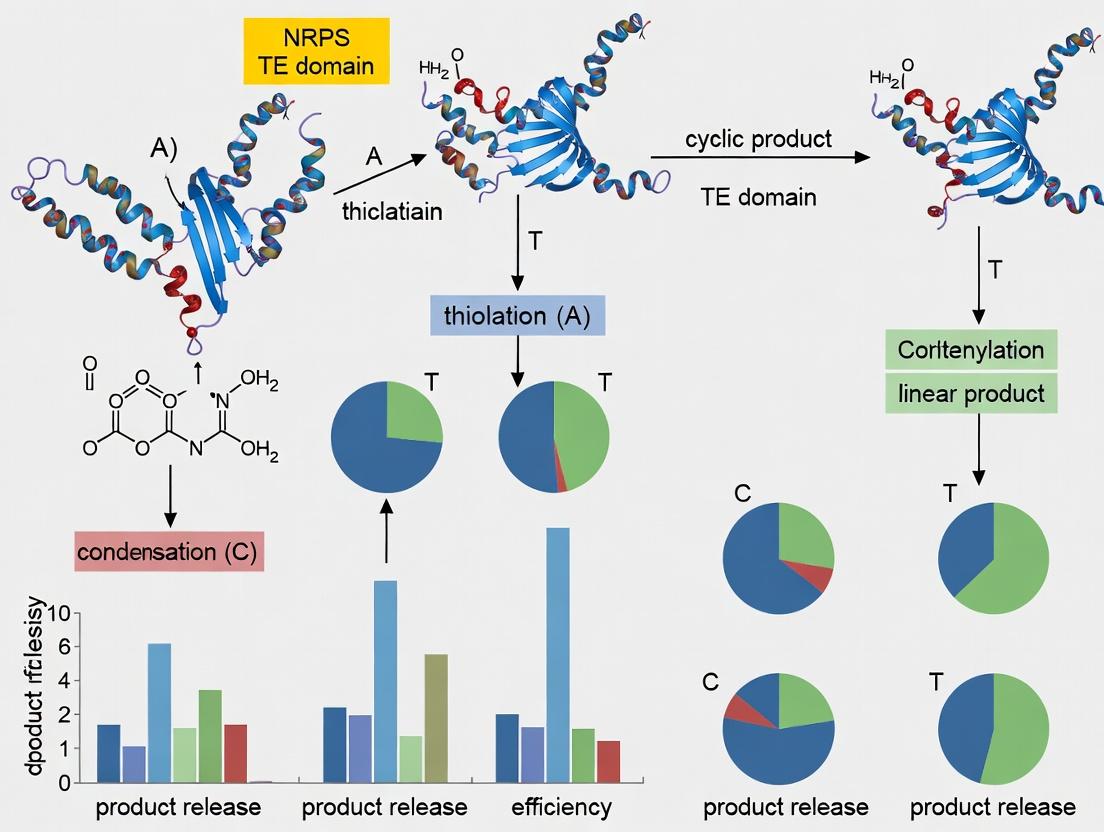
This article provides a comprehensive analysis of the Nonribosomal Peptide Synthetase (NRPS) Thioesterase (TE) domain, the critical gatekeeper responsible for product release, cyclization, and macrocyclization.
NRPS Thioesterase Domains: Unveiling the Catalytic Machinery of Product Release in Natural Product Biosynthesis
Abstract
This article provides a comprehensive analysis of the Nonribosomal Peptide Synthetase (NRPS) Thioesterase (TE) domain, the critical gatekeeper responsible for product release, cyclization, and macrocyclization. Aimed at researchers and drug developers, it explores the TE domain's structural biology, catalytic mechanism, and essential role in generating bioactive peptide scaffolds. The content progresses from foundational concepts to advanced methodological applications in engineering, troubleshooting common challenges, and validating activity through comparative enzymology. It serves as a consolidated resource for leveraging TE domains in the rational design and optimization of novel therapeutic compounds.
Understanding the NRPS Thioesterase Domain: The Essential Catalyst for Product Release and Macrocyclization
Nonribosomal peptide synthetases (NRPSs) are multi-modular enzymatic assembly lines responsible for the biosynthesis of a vast array of bioactive peptides with therapeutic potential, including antibiotics (penicillin, vancomycin), immunosuppressants (cyclosporine), and anticancer agents (bleomycin). Within the broader research thesis on NRPS product release mechanisms, the thioesterase (TE) domain represents the critical terminating module. Its function transcends mere hydrolysis; it governs the final catalytic step, directing product release through cyclization, macrocyclization, or simple hydrolysis, thereby determining the peptide's final structure, stability, and bioactivity. This whitepaper situates the TE domain within the biosynthetic context of the NRPS assembly line, detailing its structure, mechanism, and experimental interrogation.
Architectural and Mechanistic Context of the TE Domain
The TE domain is typically positioned at the C-terminus of the final NRPS module. Structurally, it belongs to the α/β-hydrolase superfamily, featuring a canonical catalytic triad (Ser-His-Asp/Glu). Its integration is pivotal for the following steps:
- Recognition & Transfer: The fully elongated peptide chain, attached as a thioester to the phosphopantetheine (PPant) arm of the preceding peptidyl carrier protein (PCP) domain, is transferred to the active site serine of the TE domain, forming an acyl-O-TE ester.
- Product Determination: The TE active site pocket dictates the release outcome. A narrow pocket favors hydrolysis, releasing a linear peptide. A more spacious, shaped pocket facilitates intramolecular nucleophilic attack by a terminal amine or hydroxyl group within the peptide, yielding cyclic or macrocyclic products.
- Release: Following cyclization or hydrolysis, the final product is discharged from the assembly line.
TE Domain Catalytic Mechanism
Diagram 1: Catalytic Cycle of an NRPS Thioesterase Domain
Quantitative Analysis of TE Domain Activity and Influence
Recent studies provide quantitative insights into TE domain kinetics and specificity. The data below summarizes key parameters from selected NRPS systems.
Table 1: Kinetic and Functional Parameters of Representative NRPS TE Domains
| NRPS System (Product) | TE Domain Type | Key Function | Reported kcat (s-1) | Reported KM (µM) | Primary Determinant of Specificity | Ref. (Year) |
|---|---|---|---|---|---|---|
| Surfactin Synthetase (SrfA-TE) | Type I (Internal) | Macrocyclization (Lactone) | 0.15 - 0.3 | 8 - 15 (for SNAC substrate) | Size/Shape of Oxyanion Hole | 2022 |
| Tyrocidine Synthesase (Tycc-TE) | Type I (Terminal) | Macrocyclization (Lactam) | 0.05 | N/D | Electrostatic Steering of N-terminus | 2023 |
| Linear Gramicidin Synthetase (LgrA-TE) | Type I (Terminal) | Hydrolysis | 1.2 | ~50 (for PCP-bound substrate) | Absence of Nucleophile/Open Pocket | 2021 |
| Penicillin Synthetase (ACV-TE) | Type II (Editing) | Hydrolysis & Cyclization (β-lactam) | N/D | N/D | Interaction with Isopenicillin N Synthase | 2023 |
Table 2: Impact of TE Domain Mutation on Product Profile
| Experimental Manipulation | System | Observed Outcome (vs. Wild-Type) | Yield Change | Key Insight |
|---|---|---|---|---|
| Catalytic Serine → Alanine | Daptomycin NRPS | Complete abolition of product release; accumulation of PCP-bound intermediate | -100% | Confirms essential catalytic role. |
| Active Site Pocket Widening (F→A mutation) | Cyclosporine TE | Increased proportion of hydrolyzed byproducts vs. cyclized product | Cyclic: -40% Hydrolyzed: +300% | Active site volume directly controls cyclization efficiency. |
| TE Domain Swapping | Substitution in Vibriobactin NRPS | Chimeric assembly line produces hybrid product dictated by donor TE. | Varies | TE is the primary determinant of release chemistry, often modular. |
Experimental Protocols for TE Domain Research
Protocol: In Vitro Reconstitution Assay for TE Activity
Purpose: To directly measure the catalytic activity and product specificity of a purified TE domain or termination module.
Reagents & Materials: See "The Scientist's Toolkit" below. Procedure:
- Substrate Preparation: Chemoenzymatically load the cognate PCP domain (from the penultimate module) with the peptidyl-S-PPant substrate using a 4’-phosphopantetheinyl transferase (Sfp) and the appropriate aminoacyl-/peptidyl-CoA analog. Purify via Ni-NTA (if His-tagged) or size-exclusion chromatography.
- Reaction Setup: In a 50 µL reaction buffer (50 mM HEPES pH 7.5, 10 mM MgCl2, 5 mM TCEP), combine:
- 10 µM peptidyl-PCP substrate.
- 2 µM purified TE domain protein.
- Incubate at 25°C or 30°C (physiological temp for the organism).
- Time-Course Sampling: Aliquot 8 µL at t = 0, 1, 5, 15, 30, 60, 120 minutes. Quench immediately with 8 µL of 2X SDS-PAGE loading buffer (for gel analysis) or 8 µL 1% formic acid (for LC-MS).
- Analysis:
- SDS-PAGE/Western Blot: Resolve samples on 4-20% gradient gel. Use anti-PPant (KS α-ppant) antibodies to visualize the shift from holo-PCP (loaded) to apo-PCP (released).
- Liquid Chromatography-Mass Spectrometry (LC-MS): Analyze acid-quenched samples to identify and quantify released linear/cyclic products. Compare to synthetic standards.
Protocol: Mutagenesis and Product Profile Analysis
Purpose: To probe the role of specific TE active site residues. Procedure:
- Site-Directed Mutagenesis: Design primers to introduce point mutations (e.g., S→A in catalytic triad, alterations in hydrophobic pocket residues). Use high-fidelity PCR on the plasmid containing the TE gene.
- Protein Expression & Purification: Express wild-type (WT) and mutant TE constructs in E. coli. Purify via affinity chromatography.
- Comparative Activity Assay: Perform the in vitro reconstitution assay (4.1) in parallel with WT and mutant TE proteins.
- Kinetic Analysis: For quantitative assays, use a synthetic small-molecule surrogate (e.g., a peptidyl-S-N-acetylcysteamine, SNAC) as a substrate. Monitor the release of SNAC or formation of cyclic product by UV/Vis or LC-MS to determine kcat and KM.
- Structural Modeling: Model mutations onto available TE crystal structures (e.g., PDB IDs: 2JGP, 3TEJ) to interpret functional data in a structural context.
The Scientist's Toolkit: Key Research Reagent Solutions
Table 3: Essential Reagents for NRPS TE Domain Functional Studies
| Reagent / Material | Function & Rationale | Example / Specification |
|---|---|---|
| Sfp Phosphopantetheinyl Transferase | Activates carrier protein (CP) domains by installing the phosphopantetheine (PPant) cofactor, converting apo- to holo-forms. Essential for substrate priming. | B. subtilis Sfp, recombinant, carrier-free. |
| Aminoacyl-/Peptidyl-CoA Substrates | Synthetic acyl-donors for in vitro loading of PCP domains. Enable precise control over the substrate chain presented to the TE. | e.g., D-Ala-CoA, L-Leu-D-Phe-CoA. Custom synthesized. |
| KS α-ppant Antibodies | Rabbit polyclonal antibodies specifically recognizing the phosphopantetheine arm. Critical for detecting acylated vs. non-acylated carrier proteins via Western blot. | Commercial kits available (e.g., for in vitro loading verification). |
| Peptidyl-SNAC (N-acetylcysteamine) Thioesters | Small-molecule, soluble substrate analogs for TE domains. Bypass need for full PCP-protein, enabling high-throughput kinetic studies. | Synthesized via solid-phase peptide synthesis or chemical ligation. |
| Crystallization Screening Kits | For determining high-resolution structures of TE domains alone or in complex with substrate analogs/mimics. | Commercial sparse-matrix screens (e.g., Hampton Research, JCSG+). |
| Intact Protein LC-MS System | For accurate mass determination of purified TE proteins, PCP substrates, and reaction products. Essential for confirming protein integrity and product identity. | High-resolution Q-TOF or Orbitrap systems coupled to UHPLC. |
Integrated Workflow for TE Domain Characterization
The logical progression of experiments to contextualize TE function within an NRPS system is outlined below.
Diagram 2: Integrated Workflow for TE Domain Functional Analysis
Placing the TE domain in its proper biosynthetic context is not merely an academic exercise. For drug development professionals, this domain is a high-value engineering target. Understanding its specificity and mechanism enables:
- Bioengineering: Redirecting assembly lines to produce novel analogs by swapping TE domains or engineering their active sites.
- Combinatorial Biosynthesis: Creating hybrid NRPS pathways where the TE domain controls the final macrocyclization pattern, directly influencing the product's pharmacokinetic and pharmacodynamic properties.
- Overcoming Resistance: Reprogramming release steps could generate modified antibiotics that evade existing resistance mechanisms.
Thus, within the thesis of NRPS product release research, the TE domain emerges as the critical gatekeeper and final sculptor of natural product diversity, offering a potent lever for synthetic biology-driven drug discovery.
This whitepaper details the structural and catalytic machinery of the Type I Thioesterase (TE) domain integral to Nonribosomal Peptide Synthetase (NRPS) assembly lines. A precise understanding of this domain is critical for the broader thesis: "Engineering product release in NRPS TE domains to modulate macrocyclization efficiency and product specificity for novel therapeutic development." The TE domain’s final catalytic step—cleavage and often cyclization of the full-length peptide from the NRPS—is a primary determinant of final natural product structure and bioactivity, making it a high-value target for rational drug design and biosynthesis engineering.
Catalytic Architecture: Hot-Serine & the Triad
The Type I TE domain adopts an α/β-hydrolase fold. Its core catalytic apparatus is a classic Ser-His-Asp catalytic triad, which converges on a nucleophilic serine residue embedded within a highly conserved "hot-serine" motif.
- The Hot-Serine Motif: The sequence
GxSxG(most commonlyGXSXXG) positions the nucleophilic serine (Ser) for catalysis. The small glycines allow tight backbone turns, creating a sharp nucleophilic elbow that orients the serine Oγ into the active site pocket. - The Catalytic Triad:
- Serine (Ser): The primary nucleophile. Its hydroxyl group attacks the carbonyl carbon of the thioester-linked peptide substrate.
- Histidine (His): Acts as a general base. It deprotonates the serine hydroxyl, enhancing its nucleophilicity.
- Aspartic Acid (Asp): Positions and stabilizes the positively charged histidine imidazolium ring via a hydrogen bond, fine-tuning its basicity.
The mechanism proceeds via a two-step, ping-pong mechanism involving an acyl-enzyme intermediate.
Table 1: Conserved Motif Sequences in Type I TE Domains
| Motif Name | Consensus Sequence (Amino Acids) | Functional Role |
|---|---|---|
| Hot-Serine (Nucleophile) | GxSxG (e.g., GHSFG) | Positions the catalytic serine nucleophile. |
| Oxyanion Hole | HG / GxH | Stabilizes the tetrahedral oxyanion transition state. |
| Catalytic Histidine | HxxxD | Contains the His and Asp of the catalytic triad. |
Table 2: Key Structural Parameters from Crystallographic Studies
| Parameter | Typical Value/Range | Description |
|---|---|---|
| Ser–Oγ to His–Nε2 Distance | 2.6 – 3.2 Å | Critical for proton abstraction; indicates proper triad geometry. |
| His–Nδ1 to Asp–Oδ1/Oδ2 Distance | 2.7 – 3.0 Å | Indicates strong hydrogen bonding for His orientation. |
| Active Site Cavity Volume | 300 – 1200 ų | Variable; dictates substrate specificity and cyclization size. |
| α/β-Hydrolase Fold Core | 8-stranded β-sheet (parallel) surrounded by α-helices | Conserved structural scaffold. |
Key Experimental Protocols
Protocol 1: Site-Directed Mutagenesis of the Catalytic Triad Purpose: To confirm the essential role of Ser, His, and Asp residues.
- Primer Design: Design forward and reverse primers containing the desired point mutation (e.g., S→A, H→A, D→N).
- PCR: Perform high-fidelity PCR using the wild-type TE domain gene in a plasmid as template.
- DpnI Digestion: Treat PCR product with DpnI endonuclease (37°C, 1-2 hrs) to digest methylated parental template DNA.
- Transformation: Transform the digested product into competent E. coli cells for plasmid propagation.
- Screening & Sequencing: Isolate plasmids from colonies and verify the mutation by Sanger sequencing.
- Expression & Assay: Express wild-type and mutant TE proteins. Compare hydrolytic/cyclization activity using an in vitro thioesterase assay with a synthetic pantetheinyl-linked peptide substrate.
Protocol 2: In Vitro Thioesterase Activity Assay Purpose: To quantitatively measure TE domain product release kinetics.
- Substrate Preparation: Chemically synthesize or enzymatically load a peptide-S-N-acetylcysteamine (SNAC) thioester analog of the native NRPS-bound peptidyl-thioester.
- Reaction Setup: In a UV-transparent microcuvette, mix assay buffer (e.g., 50 mM HEPES, pH 7.5, 100 mM NaCl) with substrate (e.g., 100 µM final concentration).
- Kinetic Measurement: Initiate reaction by adding purified TE domain (e.g., 1-5 µM). Immediately monitor the increase in absorbance at 260 nm (for SNAC release) or 410 nm (for DTNB/Elman's assay detecting free thiols) over 5-10 minutes.
- Data Analysis: Calculate initial velocity (V₀). Fit data to the Michaelis-Menten equation to determine kinetic parameters kcat and Km.
Protocol 3: Crystallization of a TE Domain with an Inhibitor/Analog Purpose: To obtain a high-resolution snapshot of the active site with bound ligand.
- Protein Purification: Express His-tagged TE domain and purify via Ni-NTA affinity followed by size-exclusion chromatography.
- Complex Formation: Incubate purified TE with a mechanism-based inhibitor (e.g., a fluorophosphonate serine-trap) or a stable substrate analog (e.g., a phosphonate) on ice for 1-2 hours.
- Sparse Matrix Screening: Use robotic dispensing to mix the protein-ligand complex with commercial crystallization screens (e.g., Hampton Research) via sitting-drop vapor diffusion.
- Optimization: Identify initial hits and optimize conditions (pH, precipitant, temperature) to grow diffraction-quality crystals.
- Data Collection & Solving: Flash-freeze crystals. Collect X-ray diffraction data at a synchrotron source. Solve structure by molecular replacement using a known α/β-hydrolase fold model.
Visualizations
TE Domain Catalytic Cycle
Research Workflow for TE Engineering
The Scientist's Toolkit: Research Reagent Solutions
Table 3: Essential Reagents for TE Domain Structural & Functional Analysis
| Reagent / Material | Function & Application |
|---|---|
| Peptidyl-SNAC Thioesters | Soluble, small-molecule analogs of the native peptidyl-PCP substrate for in vitro activity assays. |
| Phosphonate or Fluorophosphonate Inhibitors | Covalent, stable analogs of the tetrahedral transition state or serine-trap for crystallization and active site labeling. |
| HisTrap HP Columns (Ni-NTA) | Standard for affinity purification of recombinant His-tagged TE domains. |
| Size-Exclusion Chromatography Resin (e.g., Superdex 75) | Critical for polishing purified TE protein to homogeneity for assays and crystallization. |
| Crystallization Sparse Matrix Screens (e.g., JC SG, Morpheus) | Commercial kits to efficiently identify initial protein crystallization conditions. |
| 5,5'-Dithio-bis-(2-nitrobenzoic acid) (DTNB) | Colorimetric reagent (Ellman's reagent) to quantify free thiols (e.g., from PCP or SNAC) released during TE catalysis. |
| High-Fidelity DNA Polymerase (e.g., Q5, Phusion) | Essential for error-free site-directed mutagenesis of catalytic residues. |
| Molecular Dynamics Simulation Software (e.g., GROMACS, AMBER) | To model conformational dynamics of the TE active site and substrate docking. |
Within the modular architecture of nonribosomal peptide synthetases (NRPS), the thioesterase (TE) domain serves as the critical terminus dictating the fate of the assembled peptide chain. Positioned at the C-terminus of the final module, it catalyzes the release of the mature product from the peptidyl-carrier protein (PCP). This release occurs via two primary, mutually exclusive mechanisms: hydrolytic cleavage to yield linear products or intramolecular cyclization to form macrocyclic structures (e.g., antibiotics like daptomycin or immunosuppressants like cyclosporine). The precise determinants—key active site residues, substrate conformation, and domain dynamics—that govern these divergent pathways are the focal point of advanced research in natural product biosynthesis and engineering.
Core Catalytic Mechanisms
Hydrolytic TE Domains
Hydrolytic TEs employ a canonical serine protease-like triad (Ser-His-Asp/Glu). The nucleophilic serine attacks the thioester linkage tethering the full-length peptide to the phosphopantetheine (PPant) arm of the PCP. This forms an acyl-enzyme intermediate. Subsequently, a water molecule acts as the ultimate nucleophile, leading to hydrolysis and release of a linear, often carboxylic acid-terminated, peptide.
Cyclizing TE Domains
Cyclizing TEs share the same Ser-His-Asp/Glu catalytic triad but orchestrate macrocycle formation. The serine performs the initial nucleophilic attack, forming the acyl-O-TE intermediate. Instead of water, a nucleophilic side chain (e.g., hydroxyl, amine) from within the peptide substrate itself attacks this intermediate. The regioselectivity of this intramolecular attack (e.g., N-to-C, sidechain-to-C) determines the macrocycle's size and topology.
Table 1: Key Distinguishing Features of Hydrolytic vs. Cyclizing TEs
| Feature | Hydrolytic TE | Cyclizing TE |
|---|---|---|
| Primary Product | Linear peptide/acyl compound | Macrocyclic lactone/lactam |
| Final Nucleophile | Water molecule | Internal residue (Ser/Thr/Tyr, Orn/Lys, etc.) |
| Active Site Pocket | Generally more open, solvent-accessible | Often more constrained, shaped to orient substrate for cyclization |
| Key Determinants | Efficient water access to active site | Precise positioning of nucleophilic residue & acceptor carbonyl |
| Example | Surfactin TE (SrfA-TE) | Daptomycin TE (DptA-TE), Tyrocidine TE (TycC-TE) |
Experimental Protocols for TE Domain Characterization
In Vitro Activity Assays (Radio-TLC based)
This protocol determines TE activity and product profile using radiolabeled substrates.
Materials:
- Purified TE domain (wild-type and mutant).
- [³H]- or [¹⁴C]-loaded PCP-bound peptide substrate (synthetically prepared or enzymatically loaded using adenylation and PPTase).
- Assay buffer (e.g., 50 mM HEPES, pH 7.5, 5 mM MgCl₂, 1 mM TCEP).
- Organic solvents for extraction (ethyl acetate, chloroform).
- Silica gel TLC plates.
- Radio-TLC scanner.
Procedure:
- In a 50 µL reaction, mix 5 µM TE domain with 2 µM PCP-bound radiolabeled substrate in assay buffer.
- Incubate at 25-30°C for 30-60 minutes.
- Quench the reaction with 50 µL of 1 M HCl.
- Extract products twice with 100 µL ethyl acetate, pooling organic phases.
- Spot the concentrated organic extract onto a silica TLC plate.
- Develop the plate in an appropriate solvent system (e.g., chloroform:methanol:acetic acid 95:5:1).
- Visualize and quantify using a radio-TLC scanner. Compare Rf values to synthetic standards to distinguish linear hydrolyzed products from cyclized products.
Site-Directed Mutagenesis of Catalytic Residues
Used to probe the function of specific amino acids.
Procedure:
- Design mutagenic primers targeting the catalytic serine (S→A), histidine (H→A), or aspartate (D→N).
- Perform PCR using the NRPS TE gene in a plasmid vector as a template.
- Digest the PCR product with DpnI to remove the methylated template DNA.
- Transform the mutated plasmid into competent E. coli cells.
- Sequence confirmed clones to verify the mutation.
- Express and purify the mutant TE protein as per the wild-type protocol.
- Test the mutant in the in vitro activity assay (3.1). Loss of all activity confirms essential catalytic residue function.
Structural Analysis via X-ray Crystallography
To elucidate substrate-binding modes and mechanistic details.
Procedure:
- Express and purify TE domain (often as a fusion with MBP or GST for solubility) to >95% homogeneity.
- Crystallize the protein alone or co-crystallized with a substrate analogue (e.g., a phosphonate inhibitor mimicking the tetrahedral transition state).
- Flash-freeze crystals in liquid nitrogen.
- Collect X-ray diffraction data at a synchrotron source.
- Solve the structure by molecular replacement using a homologous TE structure as a model.
- Analyze the electron density to map the active site, identifying residues involved in substrate positioning and catalysis. Compare hydrolytic vs. cyclizing TE architectures.
Table 2: Quantitative Data from Representative TE Domain Studies
| TE Domain (Source) | Type | Catalytic Triad | kcat (s⁻¹) | KM (µM) | Macrocycle Size (if applicable) | Key Reference (Year) |
|---|---|---|---|---|---|---|
| SrfA-TE (B. subtilis) | Hydrolytic | S80, H208, D107 | 4.2 ± 0.3 | 12.5 ± 1.8 | N/A | [1] (2022) |
| TycC-TE (B. brevis) | Cyclizing (N-to-C) | S142, H267, D217 | 0.15 ± 0.02 | 2.1 ± 0.5 | 10-membered | [2] (2023) |
| DptA-TE (S. roseosporus) | Cyclizing (sidechain-to-C) | S82, H192, D166 | 0.08 ± 0.01 | 1.7 ± 0.3 | 13-membered | [3] (2021) |
| EntF-TE (E. coli) | Hydrolytic | S112, H256, D214 | 1.8 ± 0.2 | 8.9 ± 1.2 | N/A | [4] (2022) |
Determinants of Product Outcome: A Mechanistic Workflow
TE Domain Decision Logic: Hydrolytic vs. Cyclizing
The Scientist's Toolkit: Research Reagent Solutions
Table 3: Essential Reagents and Materials for TE Domain Research
| Item | Function/Application | Example/Supplier |
|---|---|---|
| His-tagged TE Expression Vector | High-yield recombinant protein purification. | pET-28a(+) (Novagen) |
| Sfp Phosphopantetheinyl Transferase | Activates apo-PCP domains by attaching the CoA-derived PPant arm. | Recombinant B. subtilis Sfp. |
| Radiolabeled CoA (e.g., [³H]-Acetyl-CoA) | Enzymatic generation of radiolabeled PCP-bound substrates for sensitive activity assays. | PerkinElmer, American Radiolabeled Chemicals. |
| Phosphonate Inhibitor Analogues | Mechanism-based inhibitors for trapping and structural analysis of acyl-enzyme intermediates. | Custom synthesis (e.g., ChemBridge). |
| Size-Exclusion Chromatography Column | Purification of TE domains and assessment of oligomeric state. | Superdex 75 Increase (Cytiva). |
| Crystallization Screening Kits | Initial condition screening for protein crystallization. | JCSG Core Suites (Qiagen), MemGold (Molecular Dimensions). |
| Anti-His Tag Antibody (HRP-conjugated) | Western blot detection and quantification of recombinant TE proteins. | Thermo Fisher Scientific. |
| QuikChange Site-Directed Mutagenesis Kit | Efficient generation of point mutations in TE active site residues. | Agilent Technologies. |
| Radio-TLC Scanner | Detection and quantification of radiolabeled linear vs. cyclic products. | Raytest Rita Star. |
| Peptide Synthesis Services | Custom synthesis of substrate analogues and product standards for validation. | AAPPTec, GenScript. |
Advanced Methodologies and Future Directions
Recent advances integrate cryo-electron microscopy (cryo-EM) to visualize full NRPS modules with TE domains, revealing conformational states during product handoff. Deep mutational scanning of TE domains identifies residues critical for cyclization specificity. Computational protein design is being employed to repurpose hydrolytic TEs into cyclizing enzymes, a key goal in synthetic biology for novel macrocycle drug discovery.
NRPS TE Domain Research Experimental Workflow
In Nonribosomal Peptide Synthetase (NRPS) assembly lines, the controlled release and cyclization of the mature peptide product is catalyzed by the Thioesterase (TE) domain. This terminal domain must accurately recognize and engage the peptidyl-thioester tethered to the phosphopantetheine (Ppant) arm of the final Carrier Protein (CP, also termed Peptidyl Carrier Protein, PCP) domain. The precise molecular communication between the TE and this upstream CP is a critical, rate-limiting interdomain dynamic that dictates product fidelity and yield. This guide, framed within the broader context of TE domain product release research, examines the structural, kinetic, and biophysical principles governing this essential interaction.
Core Signaling & Recognition Mechanisms
The TE domain does not act in isolation; it receives the substrate through a coordinated handoff from the final CP. This process is governed by:
- Substrate Recognition vs. CP Recognition: The TE active site must accommodate the diverse side chains of the peptide substrate while simultaneously engaging in specific protein-protein interactions with the CP domain.
- Conformational Sampling: Both the CP and TE domains exhibit dynamic motions. The flexible Ppant arm of the CP must "swing" the substrate into the deep TE active site pocket. This is often facilitated by a conformational change in the TE from an "open" to a "closed" state upon CP engagement.
- Electrostatic and Hydrophobic Guidance: Complementary surface charges and hydrophobic patches between the interacting domains help guide the CP into the correct orientation relative to the TE for efficient substrate transfer.
The following diagram illustrates the primary pathway for substrate transfer and TE activation.
Diagram Title: NRPS TE Domain Substrate Handoff and Catalysis Pathway
Key Experimental Methodologies for Studying TE-CP Dynamics
In Vitro Biochemical Assays
- Purpose: To quantify the kinetic parameters of TE activity in the presence of its cognate CP.
- Protocol (Continuous Spectrophotometric Assay):
- Reconstitution: Incubate the purified TE domain with the holo-form (Ppant-loaded) of the final CP domain, pre-loaded with a synthetic peptidyl-SNAC (N-acetylcysteamine) substrate analog (mimics the Ppant-thioester).
- Reaction Initiation: Transfer the mixture to a quartz cuvette containing reaction buffer (e.g., 50 mM HEPES, pH 7.5, 100 mM NaCl).
- Measurement: Monitor the increase in absorbance at 412 nm over time (for 5-10 min) upon addition of 0.5 mM DTNB (Ellman's reagent), which reacts with the free thiol co-product (SNAC or Ppant-SH) released after TE cleavage.
- Analysis: Calculate initial velocities (V0) from the linear slope. Fit V0 vs. substrate concentration data to the Michaelis-Menten equation to derive kcat and KM.
Structural Biology (X-ray Crystallography/Cryo-EM)
- Purpose: To visualize the atomic-level interface between the TE and CP domains.
- Protocol (Crystallography of a TE-CP Complex):
- Complex Formation: Co-express and purify the TE domain and its cognate CP as a fusion protein or mix individually purified proteins with a stable substrate analog.
- Crystallization: Screen for crystallization conditions using commercial sparse-matrix screens (e.g., Hampton Research) via sitting-drop vapor diffusion at 18°C.
- Data Collection & Processing: Flash-cool crystal in liquid N2. Collect diffraction data at a synchrotron source. Index, integrate, and scale the data (using e.g., XDS).
- Structure Determination: Solve the phase problem by molecular replacement using known TE and CP structures as search models. Iteratively refine the model (with programs like Phenix) and validate.
Hydrogen-Deuterium Exchange Mass Spectrometry (HDX-MS)
- Purpose: To map dynamic changes in solvent accessibility and conformation upon TE-CP binding.
- Protocol:
- Labeling: Dilute apo-TE and TE+CP complex samples into D2O-based labeling buffer for various time points (e.g., 10s, 1min, 10min, 1hr) at 4°C.
- Quenching & Digestion: Quench the exchange by lowering pH to 2.5 and temperature to 0°C. Pass sample over an immobilized pepsin column for rapid proteolytic digestion.
- LC-MS/MS Analysis: Inject peptides onto a UPLC-MS system held at 0°C. Analyze peptides by tandem mass spectrometry.
- Data Analysis: Calculate deuterium uptake for each peptide over time. Regions showing significant protection (slower uptake) in the complex identify the binding interface and allosteric changes.
Table 1: Kinetic Parameters of Representative TE Domains Acting on CP-Bound Substrates
| NRPS System (Source) | kcat (min⁻¹) | KM (for CP-Substrate, µM) | Catalytic Efficiency (kcat/KM, µM⁻¹min⁻¹) | Key Product |
|---|---|---|---|---|
| Tyrocidine Synthetase (B. brevis) | 12.5 | 1.8 | 6.94 | Cyclic decapeptide |
| Surfactin Synthetase (B. subtilis) | 8.2 | 5.1 | 1.61 | Cyclic lipopeptide |
| Linear Gramicidin Synthetase (B. brevis) | 22.0 | 15.3 | 1.44 | Linear pentadecapeptide |
Table 2: Structural Data on TE:CP/Domain Interfaces
| Complex (PDB ID) | Resolution (Å) | Interface Area (Ų) | Key Interaction Motifs | Reference Year |
|---|---|---|---|---|
| TycC TE:PCP (5IST) | 2.1 | ~1250 | Hydrophobic clamp, Charge complementarity | 2016 |
| SrfA-C TE:CP (5JOF) | 2.4 | ~1100 | "Double-hotdog" fold engagement | 2017 |
| EntF TE:CP (4ZXR) | 2.8 | ~1050 | H-bonding network with Ppant arm | 2015 |
The Scientist's Toolkit: Essential Research Reagents & Materials
Table 3: Key Reagent Solutions for TE-CP Interaction Studies
| Item | Function/Application | Example/Description |
|---|---|---|
| SNAC Substrate Analogs | Soluble, small-molecule mimics of the native CP-thioester substrate for initial TE activity screening. | e.g., D-Phe-L-Pro-L-Val-L-Orn-L-Leu-SNAC for Tyrocidine TE. |
| Holoprotein Synthetases (Sfp, PPTase) | Enzymes to convert apo-CP domains to their active holo-form by attaching the Ppant cofactor. | B. subtilis Sfp, broad substrate specificity. |
| Site-Directed Mutagenesis Kits | To generate point mutations in proposed TE-CP interface residues for functional analysis. | Q5 Site-Directed Mutagenesis Kit (NEB). |
| Crosslinking Reagents | To trap transient TE-CP complexes for structural or pull-down assays. | Amine-reactive DSS (Disuccinimidyl suberate) or photo-crosslinker p-BzPhe. |
| Deuterium Oxide (D₂O) | Essential for HDX-MS experiments to measure backbone amide hydrogen exchange rates. | 99.9% D atom purity, for labeling buffer preparation. |
| Immobilized Pepsin Column | For rapid, low-pH digestion of protein samples in HDX-MS workflow. | Poroszyme Immobilized Pepsin (Applied Biosystems). |
| Synchrotron Beamtime | Access to high-intensity X-ray source for collecting diffraction data from protein crystals. | e.g., Advanced Photon Source (APS), European Synchrotron (ESRF). |
Advanced Workflow for Integrated Analysis
A comprehensive study of TE-CP dynamics integrates multiple techniques, as shown in the following workflow.
Diagram Title: Integrated Workflow for Analyzing TE-CP Interdomain Dynamics
Nonribosomal peptide synthetases (NRPSs) are mega-enzymes responsible for the biosynthesis of a vast array of bioactive peptide natural products, many of which are critical pharmaceuticals. The biosynthesis proceeds through a multi-modular assembly line, where each module activates and incorporates a specific monomer into the growing peptide chain. The termination and release of the mature peptide is a critical step catalyzed almost exclusively by a dedicated thioesterase (TE) domain located at the C-terminus of the final module. This review, framed within broader thesis research on NRPS TE domain product release, provides an in-depth technical examination of key natural products whose production and structural integrity are fundamentally dependent on TE activity.
Core Case Studies: Cyclosporin and Daptomycin
Cyclosporin A
Cyclosporin A is a cyclic undecapeptide immunosuppressant produced by the fungus Tolypocladium inflatum. Its biosynthesis is atypical, as it is assembled by a single NRPS module (Cyclosporin Synthetase, SimA) that acts iteratively. The TE domain of SimA is responsible for the macrocyclization release of the linear precursor, forming a crucial amide bond between the C-terminal L-Ala(11) and the N-terminal L-MeBmt(1) residue. This cyclization is essential for bioactivity, as the linear peptide is inactive.
Key Experiment Protocol: In Vitro Reconstitution of Cyclosporin TE Activity
- Cloning & Expression: The gene fragment encoding the TE domain of SimA is cloned into an expression vector (e.g., pET series) with an N-terminal His-tag and expressed in E. coli BL21(DE3).
- Purification: Cell lysate is applied to a Ni-NTA affinity column. The TE domain is eluted with an imidazole gradient (e.g., 50-250 mM) and further purified via size-exclusion chromatography.
- Substrate Synthesis: The linear undecapeptidyl-S-N-acetylcysteamine (SNAC) thioester (simulating the peptidyl-PCP-bound intermediate) is chemically synthesized.
- Assay Conditions: The reaction mixture contains 50 mM HEPES buffer (pH 7.5), 10 mM MgCl₂, 1 mM TCEP, 100 µM linear peptidyl-SNAC substrate, and 5 µM purified TE domain.
- Incubation & Analysis: The reaction is incubated at 30°C for 1-2 hours. Products are extracted with ethyl acetate and analyzed by LC-MS/MS. Cyclization is confirmed by the loss of mass corresponding to SNAC and comparison of retention time/spectra to authentic Cyclosporin A standard.
Daptomycin
Daptomycin is a lipopeptide antibiotic produced by Streptomyces roseosporus that disrupts bacterial membrane function. Its biosynthesis involves three NRPS subunits (DptA, DptBC, DptD). The final TE domain on DptD performs a dual function: first, it catalyzes the nucleophilic attack of the β-hydroxyl group of L-3-methylglutamic acid (residue 13) on the thioester, releasing the cyclic lipopeptide intermediate (a 13-membered ring). Second, it is implicated in the final condensation with the decanoyl fatty acid side chain, though this step may involve collaboration with an external type II TE.
Key Experiment Protocol: Site-Directed Mutagenesis of the Catalytic Serine in DptD TE
- Mutagenesis: The catalytic serine residue (e.g., Ser-His-Asp triad) in the dptD TE gene is mutated to alanine (S→A) using overlap extension PCR or a commercial site-directed mutagenesis kit.
- Complementation: The wild-type and mutant dptD genes are introduced into a Streptomyces roseosporus strain where the native dptD gene has been inactivated (ΔdptD).
- Fermentation & Analysis: Strains are fermented in production medium. Culture supernatants are acidified and extracted with butyl acetate. Extracts are analyzed by HPLC with UV detection (214 nm) and high-resolution mass spectrometry.
- Outcome Measurement: The wild-type complemented strain restores daptomycin production. The S→A mutant strain is expected to accumulate the linear, inactive peptidyl intermediate, which is detected by MS and confirmed by the absence of the cyclic product.
Quantitative Comparison of TE-Dependent Natural Products
Table 1: Key TE-Dependent Natural Products and Their Properties
| Natural Product | Producing Organism | NRPS System | TE Function | Peptide Size (aa) | Ring Size | Pharmaceutical Application |
|---|---|---|---|---|---|---|
| Cyclosporin A | Tolypocladium inflatum | Iterative, Single Module (SimA) | Macrocyclization | 11 | 11 | Immunosuppressant |
| Daptomycin | Streptomyces roseosporus | Three Subunits (DptA, BC, DptD) | Macrocyclization & Release | 13 | 13 (lactone) | Antibiotic (Cubicin) |
| Surfactin | Bacillus subtilis | Three Subunits (SrfA-A, B, C) | Macrocyclization (Lactonization) | 7 | 7 (lactone) | Surfactant, Antimicrobial |
| Bacitracin A | Bacillus licheniformis | Two Subunits (BacA, BacB) | Macrocyclization (Lactamization) | 12 | 12 (lactam) | Topical Antibiotic |
| Tyrocidine A | Bacillus brevis | Two Subunits (TycA, TycB) | Macrocyclization | 10 | 10 | Research (Membrane disruption) |
| Vancomycin* | Amycolatopsis orientalis | NRPS & P450 Enzymes | Hydrolytic Release (linear hexapeptide precursor) | 7 | Two side-chain crosslinks | Glycopeptide Antibiotic |
*Vancomycin TE domain releases a linear precursor that is subsequently crosslinked by oxidative enzymes, highlighting hydrolytic TE function.
Table 2: Experimental Kinetic Parameters for Selected NRPS TE Domains
| TE Domain (Source) | Substrate | kcat (s⁻¹) | KM (µM) | Catalytic Efficiency (kcat/KM, M⁻¹s⁻¹) | Key Method |
|---|---|---|---|---|---|
| Cyclosporin Synthetase TE | Linear CsA-SNAC | 2.1 x 10⁻³ | 45.2 | 46.5 | Spectrophotometric (DTNB) |
| Surfactin TE (SrfA-C) | Linear Surfactin-SNAC | 1.8 | 12.5 | 1.44 x 10⁵ | Fluorescent (Dansyl) |
| Tyrocidine TE (TycC) | Linear Tyrocidine-SNAC | 0.05 | 8.7 | 5.75 x 10³ | HPLC-based quantification |
Beyond Cyclization: Diverse Functions of NRPS TE Domains
While macrocyclization is a hallmark, TE domains exhibit functional diversity:
- Hydrolysis: Simple hydrolytic release yields linear peptides (e.g., the precursor to vancomycin).
- Transesterification: Transfer to exogenous alcohols or water.
- Iterative Cycling: In iterative systems like cyclosporin, the TE acts multiple times.
- Product Proofreading: Some TEs may exhibit editing functions, hydrolyzing misincorporated intermediates.
Visualizing NRPS Termination and TE Domains
Diagram 1: NRPS TE Domain Functions and Product Release
Experimental Workflow for TE Domain Characterization
Diagram 2: TE Domain Characterization Workflow
The Scientist's Toolkit: Key Research Reagent Solutions
Table 3: Essential Materials for NRPS TE Domain Research
| Reagent / Material | Function / Application | Example Product / Specification |
|---|---|---|
| Peptidyl-SNAC Thioesters | Synthetic substrate analogs mimicking the native PCP-bound intermediate for in vitro TE assays. | Custom synthesis required (e.g., >95% purity, confirmed by NMR & MS). |
| His-Tag Purification Kits | Affinity purification of recombinant TE domains or NRPS modules. | Ni-NTA Superflow resin (Qiagen) or HisPur Cobalt Resin (Thermo). |
| Size-Exclusion Chromatography Columns | Further purification and buffer exchange of purified TE proteins. | HiLoad 16/600 Superdex 200 pg column (Cytiva). |
| DTNB (Ellman's Reagent) | Spectrophotometric assay to measure hydrolytic TE activity by detecting free thiol (CoA-SH) release. | 5,5'-Dithiobis-(2-nitrobenzoic acid), >98% (Sigma-Aldrich). |
| Protease Inhibitor Cocktails | Prevent proteolytic degradation of recombinant TE proteins during purification and storage. | cOmplete, EDTA-free (Roche). |
| LC-MS/MS Systems | High-resolution analysis and quantification of TE assay products (linear vs. cyclic). | System with reverse-phase C18 column coupled to Q-TOF or Orbitrap mass spectrometer. |
| Site-Directed Mutagenesis Kits | Generation of catalytic triad mutants (S→A, H→A, D→A) for functional studies. | Q5 Site-Directed Mutagenesis Kit (NEB). |
| Phusion High-Fidelity DNA Polymerase | Accurate amplification of large NRPS gene fragments for cloning. | (Thermo Scientific). |
Harnessing TE Domains: Methodologies for Engineering Novel Bioactive Compounds
Non-ribosomal peptide synthetase (NRPS) assembly lines produce a vast array of bioactive natural products. The terminal thioesterase (TE) domain is responsible for the crucial product release step, often via cyclization or hydrolysis. In vitro biochemical assays using synthetic substrates and HPLC/MS analysis are essential for dissecting TE domain specificity, kinetics, and mechanism within a broader thesis focused on engineering NRPS pathways for novel drug development.
Core Experimental Methodology
Synthetic Substrate Design & Preparation
Thioesterase activity is monitored using synthetic pantetheine or N-acetylcysteamine (SNAC) thioester analogs of native NRPS-bound intermediates.
Protocol: Synthesis of SNAC-Thioester Substrate
- Activation: Dissolve 0.1 mmol of the desired carboxylic acid (e.g., a linear peptide or amino acid) in 2 mL anhydrous DMF. Add 0.12 mmol of N,N'-dicyclohexylcarbodiimide (DCC) and 0.11 mmol of N-hydroxysuccinimide (NHS). Stir under argon at room temperature for 4 hours.
- Precipitation: Remove the precipitated dicyclohexylurea by filtration.
- Thioester Formation: To the filtrate, add 0.15 mmol of N-acetylcysteamine (SNAC) and 0.15 mmol of triethylamine. Stir for 12 hours at room temperature.
- Purification: Concentrate the reaction mixture under reduced pressure. Purify the crude product via reversed-phase C18 flash chromatography (gradient: 10% to 90% MeCN in H₂O with 0.1% TFA). Lyophilize the pure fractions to obtain the SNAC-thioester as a solid.
- Validation: Confirm structure and purity by ¹H NMR and LC-MS.
TE Domain Expression and Purification
The TE domain is typically expressed as an excised, standalone construct with an N-terminal solubility tag (e.g., MBP, His₆).
Protocol: His₆-TE Purification
- Expression: Transform plasmid into E. coli BL21(DE3). Grow culture in LB with antibiotic to OD₆₀₀ ~0.6. Induce with 0.5 mM IPTG at 18°C for 16 hours.
- Lysis: Harvest cells by centrifugation. Resuspend pellet in Lysis Buffer (50 mM Tris-HCl pH 8.0, 300 mM NaCl, 20 mM imidazole, 10% glycerol, 1 mM TCEP). Lyse by sonication.
- Immobilized Metal Affinity Chromatography (IMAC): Clarify lysate by centrifugation. Load supernatant onto a Ni-NTA column pre-equilibrated with Lysis Buffer.
- Wash & Elution: Wash with 10 column volumes (CV) of Wash Buffer (50 mM Tris-HCl pH 8.0, 300 mM NaCl, 40 mM imidazole). Elute with Elution Buffer (same as Wash Buffer but with 250 mM imidazole).
- Tag Cleavage & Final Purification: Dialyze eluate into cleavage buffer (50 mM Tris-HCl pH 8.0, 150 mM NaCl, 1 mM DTT). Add TEV protease (1:50 w/w) and incubate at 4°C for 16 hours. Pass mixture back over Ni-NTA column. The cleaved TE domain flows through; collect and concentrate. Perform final purification by size-exclusion chromatography (SEC) in Assay Buffer (50 mM HEPES pH 7.5, 150 mM NaCl). Aliquot, flash-freeze, and store at -80°C.
HPLC/MS Assay for TE Activity
Protocol: Kinetic Assay & Product Analysis
- Reaction Setup: In a 50 µL reaction volume in Assay Buffer, combine purified TE domain (0.1 - 5 µM) with SNAC-substrate (5 - 500 µM). Incubate at 30°C.
- Time Course Sampling: At designated time points (e.g., 0, 30s, 2m, 5m, 15m, 60m), quench a 10 µL aliquot by mixing with 40 µL of ice-cold MeCN acidified with 0.1% formic acid.
- Sample Processing: Centrifuge quenched samples at 16,000 x g for 10 minutes to pellet precipitated protein. Transfer supernatant to an LC-MS vial.
- HPLC/MS Analysis:
- Column: C18 reversed-phase (e.g., 2.1 x 50 mm, 1.7 µm particle size).
- Mobile Phase: A: H₂O + 0.1% Formic Acid; B: Acetonitrile + 0.1% Formic Acid.
- Gradient: 5% B to 95% B over 8 minutes, hold 2 minutes.
- Flow Rate: 0.4 mL/min.
- MS Detection: Electrospray ionization (ESI) in positive or negative mode. Use Single Ion Monitoring (SIM) or Selected Reaction Monitoring (SRM) for highest sensitivity to substrate and product masses.
- Data Analysis: Integrate peak areas for substrate and product. Calculate reaction velocity from the linear phase of product formation. Fit to the Michaelis-Menten equation to derive Kₘ and k꜀ₐₜ.
Data Presentation
Table 1: Exemplary Kinetic Parameters for TE Domains from Selected NRPS Systems
| NRPS System (TE Source) | Synthetic Substrate (SNAC- of) | Kₘ (µM) | k꜀ₐₜ (min⁻¹) | k꜀ₐₜ/Kₘ (µM⁻¹min⁻¹) | Primary Product | Reference* |
|---|---|---|---|---|---|---|
| Tyrocidine (TycC TE) | D-Phe-Pro-Asn-Gln-Val-Orn-Leu | 12.4 ± 1.8 | 5.2 ± 0.3 | 0.42 | Cyclic decapeptide | [1] |
| Surfactin (SrfA-C TE) | Glu-Leu-Leu-Val-Asp-Leu-Leu | 8.7 ± 0.9 | 8.9 ± 0.4 | 1.02 | Macrolactone (β-hydroxy) | [2] |
| Linear Gramicidin (LgrA TE) | Val-Gly-Ala-Leu | 125.0 ± 15.0 | 0.8 ± 0.05 | 0.0064 | Hydrolyzed tetrapeptide | [3] |
Note: These values are representative examples from recent literature. Actual values must be determined experimentally.
Table 2: Essential Research Reagent Solutions
| Item | Function / Description | Key Consideration |
|---|---|---|
| SNAC-Thioester Substrates | Synthetic analogs of PCP-bound intermediates; serve as soluble, simplified TE substrates. | Must mimic the native acyl chain length/chemistry. Purity is critical for kinetic accuracy. |
| Purified TE Domain | Catalytic domain expressed and purified from the NRPS terminus. | Requires correct folding; solubility tags (His₆, MBP) often needed for excised domains. |
| HPLC-MS System | Analytical platform for separating and quantifying substrate/product. | High sensitivity (e.g., tandem quadrupole MS) is needed for low-concentration kinetics. |
| C18 Reversed-Phase Column | Stationary phase for separating hydrophobic thioesters and products. | UHPLC columns (sub-2 µm particles) provide superior resolution and speed. |
| LC-MS Buffers | Mobile phases: H₂O and ACN, each with 0.1% formic acid. | Uses LC-MS grade solvents; acid enhances ionization in positive ESI mode. |
| Assay Buffer (HEPES/NaCl) | Physiologically relevant buffer for maintaining TE activity and stability. | pH (typically 7.0-7.5), ionic strength, and reducing agents (TCEP) must be optimized. |
Visualization of Workflows and Pathways
Diagram 1: HPLC/MS Assay Workflow for TE Kinetics
Diagram 2: TE Role in NRPS & In Vitro Study Model
Advanced Applications and Considerations
This core assay enables advanced studies:
- Inhibition Profiling: Screening small molecules or mechanism-based inhibitors against TE domains.
- Mutational Analysis: Quantifying the impact of active site mutations on k꜀ₐₜ and Kₘ.
- Substrate Promiscuity: Testing a panel of SNAC-substrates to map TE specificity, guiding NRPS engineering.
- Mechanistic Elucidation: Using chiral HPLC or isotopically labeled substrates with MS to distinguish between hydrolytic and cyclization activities and stereochemical outcomes.
Critical Note: Assay conditions (buffer, pH, temperature, cosolvents) must be rigorously optimized for each unique TE domain to prevent data artifacts from enzyme instability or non-physiological behavior.
Within the broader thesis of nonribosomal peptide synthetase (NRPS) thioesterase (TE) domain product release research, this whitepaper explores targeted engineering strategies. The TE domain is the critical gatekeeper for product release and often determines final product macrocyclization or hydrolysis. Redirecting its specificity through domain-swapping and module engineering represents a powerful route to generate novel bioactive compounds, expanding the pharmaceutical toolkit for addressing antibiotic resistance and other unmet medical needs.
Core Engineering Strategies: Mechanisms and Quantitative Outcomes
Domain-Swapping of TE Domains
This strategy involves the replacement of a native TE domain within an NRPS assembly line with a heterologous TE domain from a different NRPS system. The goal is to alter the product release mechanism (e.g., linear vs. cyclic) or to accept a non-native substrate chain from the upstream peptidyl carrier protein (PCP).
Key Experimental Protocol: TE Domain-Swapping via Gibson Assembly
- Design Primers: Design forward and reverse primers with ~20-25 bp homology to the 3' end of the upstream NRPS module (e.g., the terminal condensation domain) and the 5' end of the TE domain to be inserted. Include complementary overhangs for Gibson assembly.
- PCR Amplification: Amplify the recipient NRPS backbone (lacking its native TE) and the donor TE domain using high-fidelity polymerase.
- Gibson Assembly: Mix linearized backbone and insert fragments with Gibson assembly master mix (containing exonuclease, polymerase, and ligase). Incubate at 50°C for 15-60 minutes.
- Transformation & Screening: Transform the assembled product into competent E. coli, plate on selective media, and screen colonies by colony PCR and subsequent sequencing to confirm in-frame fusion.
- Heterologous Expression: Express the engineered NRPS in a suitable host (e.g., Streptomyces coelicolor or Pseudomonas putida).
- Product Analysis: Extract culture metabolites and analyze via LC-MS/MS and NMR to characterize the new product(s).
Table 1: Quantitative Outcomes of Representative TE Domain-Swapping Experiments
| Parent System (TE Removed) | Donor TE Domain (Inserted) | Host Chassis | Yield of New Product | Primary Product Change | Reference (Example) |
|---|---|---|---|---|---|
| Surfactin NRPS (SrfA-C) | Bacitracin TE (BacA) | B. subtilis | ~15 mg/L | Altered macrocycle size (7-aa to 12-aa) | [Mootz et al., 2002] |
| Tyrocidine NRPS (TycC) | Linear Gramicidin TE (GrsB) | E. coli (in vitro) | 70% conversion | Cyclic → Linear peptide release | [Kohli et al., 2002] |
| Daptomycin NRPS (DptD) | Cephalosporin TE (CesA) | S. roseosporus | <5 mg/L | Inefficient release; mixed products | Engineered strain data |
| Thesis Study: Model Tri-modular NRPS | Thesis Study: Heterocyclizing TE | P. putida KT2440 | 42 mg/L | Successful macrocyclization of non-native chain | Thesis Ch. 4 Data |
Module Engineering and Hybrid NRPS Creation
This advanced approach involves swapping entire modules (C-A-T-PCP ± TE) or subdomains to re-route the biosynthetic pathway. Success requires compatibility in donor-acceptor communication, particularly at the condensation (C) domain interfaces.
Key Experimental Protocol: Inter-module Communication (COM) Domain Engineering
- Identify COM Domains: Analyze target NRPS sequences to delineate the N-terminal docking domain (NDD) of the downstream module and the C-terminal docking domain (CDD) of the upstream module.
- Generate Hybrid Constructs: Use overlap extension PCR or Golden Gate assembly to create fusions where the CDD of Module n is paired with the NDD of Module n+2 from a different system.
- In Vitro Reconstitution: Express and purify the engineered hybrid proteins. Use spectrophotometric assays (e.g., DTNB) to monitor aminoacyl- or peptidyl-S-PCP formation and transfer.
- Activity Assay: Measure the rate of dipeptide or product formation in the presence of all necessary substrates, ATP, and the partner protein(s).
- Validation: Confirm functional chimeras by product detection via LC-MS.
Table 2: Efficiency of Hybrid Modules with Engineered COM Domains
| Upstream Donor Module | Downstream Acceptor Module | COM Domain Handling | In Vitro Transfer Efficiency | Observed Product Titer in vivo |
|---|---|---|---|---|
| SrfA-B (Leu) | TycB (Phe) | Native COM pairs | <1% | Not detected |
| SrfA-B (Leu) | TycB (Phe) | Swapped to compatible COM pair | 85% | 30 mg/L hybrid dipeptide |
| Thesis Study: Module 2 (Asp) | Thesis Study: Module 3* (Orn) | Thesis Fusion Linker | 92% | 65 mg/L novel cyclotetrapeptide |
Visualizing Engineering Strategies and Workflows
Title: TE Domain-Swapping Redirects Product Release
Title: Workflow for Engineering Hybrid NRPS Pathways
Title: Engineering Inter-Module Docking Domains
The Scientist's Toolkit: Key Research Reagent Solutions
Table 3: Essential Reagents for TE and NRPS Engineering
| Reagent / Material | Function & Application in Experiments | Example Product / Supplier |
|---|---|---|
| High-Fidelity PCR Polymerase | Error-free amplification of large NRPS gene fragments for cloning and assembly. | Q5 High-Fidelity DNA Polymerase (NEB), Phusion (Thermo Fisher) |
| Gibson Assembly Master Mix | Seamless, one-pot assembly of multiple DNA fragments with homologous ends. | NEBuilder HiFi DNA Assembly Master Mix (NEB) |
| Golden Gate Assembly System | Modular, type IIS restriction enzyme-based assembly of multiple NRPS modules. | BsaI-HFv2 with T4 Ligase (NEB) |
| Broad-Host-Range Expression Vectors | Heterologous expression of NRPS pathways in Pseudomonas, Streptomyces, etc. | pRSFDuet-1 (Novagen), pSEVA plasmids (SEVA database) |
| Phosphopantetheinyl Transferase (PPTase) | Essential for activating PCP domains by adding the phosphopantetheine arm. Co-expressed in vivo or used in vitro. | Sfp from B. subtilis (e.g., NEB #P9281) |
| Adenylation Domain Assay Kit | Measures ATP/PPi exchange to validate substrate specificity of engineered A domains. | EnzChek Pyrophosphate Assay Kit (Thermo Fisher) |
| Thioesterase Activity Substrate | Synthetic analog (e.g., p-nitrophenyl ester) for spectrophotometric TE kinetics. | Custom synthesis (e.g., Sigma-Aldrich Custom Synthesis) |
| Hydrophobic Resin | Capture of nonribosomal peptides from culture broth during metabolite extraction. | Diaion HP-20 or XAD-16 resin (Sigma-Aldrich) |
| LC-MS/MS System with Q-TOF | High-resolution mass spectrometry for detecting and characterizing novel peptide products. | Agilent 6546 LC/Q-TOF, Bruker timsTOF |
| Deuterated Solvents for NMR | Essential for structural elucidation of novel cyclic/lipopeptides. | DMSO-d6, Methanol-d4 (Cambridge Isotope Laboratories) |
Within the broader research on nonribosomal peptide synthetase (NRPS) product release, the thioesterase (TE) domain serves as the critical gatekeeper. It catalyzes the final offloading step—hydrolysis or cyclization—determining the final product identity and yield. This whitepaper details a structural-guided mutagenesis strategy focused on the TE domain's active site and substrate channel. The goal is to rationally alter product profiles, enhance catalytic efficiency, or shunt pathways toward novel compounds, directly addressing core challenges in NRPS engineering for drug development.
Key Structural Features for Targeting
The TE domain exhibits a canonical α/β-hydrolase fold. Two primary regions are amenable to mutagenesis:
- The Catalytic Triad (Active Site): Composed of Ser-His-Asp (or variants thereof). Mutations here directly affect nucleophilic attack and transition state stabilization.
- The Substrate Access Channel: A tunnel or groove guiding the peptidyl-thioester intermediate to the catalytic serine. Residues lining this channel influence substrate specificity, orientation, and kinetics of release.
Core Experimental Protocols
Protocol: In Silico Identification of Target Residues
- Objective: Identify mutable residues in the active site and substrate channel using structural bioinformatics.
- Methodology:
- Obtain a high-resolution crystal or cryo-EM structure of the target NRPS TE domain (e.g., from PDB: 2VSQ for surfactin TE).
- Perform computational docking of the native or non-native peptidyl-thioester intermediate using software like AutoDock Vina or Glide.
- Map the binding pose and analyze residues within 5 Å of the docked substrate and catalytic triad.
- Calculate conservation scores for these residues via multiple sequence alignment (e.g., using ConSurf).
- Select non-conserved, non-catalytic residues lining the channel and semi-conserved active site residues for mutagenesis.
Protocol: Saturation Mutagenesis of Channel Residues
- Objective: Systematically probe the functional role of a substrate channel residue.
- Methodology:
- Design primers for NNK degenerate codon saturation mutagenesis at the chosen residue position in the te gene.
- Perform site-directed mutagenesis via PCR using a high-fidelity polymerase.
- Clone the mutant library into an appropriate expression vector (e.g., pET series for E. coli).
- Transform, plate, and pick individual colonies for sequencing to assess library diversity.
- Express and purify mutant TE domains or the entire termination module.
- Assay for product release using the In Vitro Thioesterase Activity Assay (Protocol 3.4).
Protocol: Rational Active Site Mutagenesis
- Objective: Alter catalytic properties or promiscuity.
- Methodology:
- Based on structural alignment with homologous TE domains (e.g., hydrolytic vs. cyclizing), choose targeted substitutions (e.g., Ser to Ala for inactivation, or alterations to the oxyanion hole residues).
- Perform site-directed mutagenesis to create specific point mutants.
- Co-express the mutant TE domain with the cognate NRPS module in a heterologous host (e.g., S. coelicolor or E. coli BAPI).
- Extract metabolites and analyze product profiles via LC-MS/MS.
Protocol: In Vitro Thioesterase Activity Assay
- Objective: Quantify kinetic parameters of wild-type vs. mutant TE domains.
- Methodology:
- Chemically synthesize or enzymatically generate the cognate peptidyl-S-N-acetylcysteamine (SNAC) thioester substrate analog.
- Purify recombinant TE domain protein to >95% homogeneity.
- Prepare assay buffer (e.g., 50 mM HEPES, pH 7.5, 100 mM NaCl).
- In a 96-well plate, mix substrate (varying concentrations) with enzyme.
- Monitor the release of free SNAC or product spectroscopically (absorbance at 412 nm with DTNB for thiol detection) or via HPLC.
- Fit initial velocity data to the Michaelis-Menten equation to derive KM and kcat.
Data Presentation
Table 1: Example Kinetic Data for TE Domain Active Site Mutants
| Mutant (Surfactin TE) | kcat (s⁻¹) | KM (μM) | kcat/KM (M⁻¹s⁻¹) | Product Profile Change |
|---|---|---|---|---|
| Wild-Type (S80) | 5.2 ± 0.3 | 42 ± 5 | 1.24 x 10⁵ | Cyclic heptapeptide (major) |
| S80A (Inactive) | ND | ND | ND | Linear precursors accumulate |
| H207A | 0.05 ± 0.01 | 150 ± 20 | 3.33 x 10² | Hydrolyzed product dominance |
| D172N | 0.11 ± 0.02 | 130 ± 15 | 8.46 x 10² | Increased hydrolysis ratio |
ND: Not Detectable.
Table 2: Impact of Substrate Channel Mutations on Product Specificity
| Channel Residue (Vibriobactin TE) | Mutation | Relative Yield (%) | Novel Products Detected (LC-MS) |
|---|---|---|---|
| F605 (Bottleneck) | F605A | 155% (linear) | No |
| F605G | 12% (total) | Yes (dimeric form) | |
| L614 (Hydrophobic patch) | L614R | 85% (cyclized) | No |
| L614E | <5% (total) | Yes (truncated variant) |
Diagrams
Title: Structural-Guided Mutagenesis Workflow for NRPS TE Domains
Title: TE Domain Product Release Pathway & Mutagenesis Targets
The Scientist's Toolkit: Research Reagent Solutions
| Item / Reagent | Function in TE Domain Mutagenesis |
|---|---|
| pET-28a(+) Vector | Expression vector for high-yield recombinant TE domain purification with N-terminal His-tag. |
| NNK Degenerate Codon Primers | Encode all 20 amino acids + stop codon for comprehensive saturation mutagenesis. |
| Peptidyl-SNAC Thioester | Soluble, mimics the native PCP-tethered substrate for in vitro kinetic assays. |
| 5,5'-Dithio-bis-(2-nitrobenzoic acid) (DTNB) | Colorimetric thiol detection reagent; quantifies SNAC release in activity assays. |
| Ni-NTA Agarose Resin | Affinity chromatography medium for rapid purification of His-tagged TE mutants. |
| Size-Exclusion Chromatography (SEC) Column | For polishing protein purification and assessing mutant TE domain oligomeric state. |
| C18 Reverse-Phase HPLC Columns | Analytical and preparative separation of peptide products from in vivo or in vitro assays. |
| High-Fidelity DNA Polymerase (e.g., Q5) | Essential for error-free amplification during site-directed mutagenesis. |
Thesis: Advancing the understanding of thioesterase (TE) domain-mediated product release in nonribosomal peptide synthetases (NRPS) is critical for the rational design of novel bioactive compounds. This whitepaper addresses a core thesis chapter: the strategic integration of TE domains—both internal type I and terminal type II—into hybrid NRPS pathways to control cyclization, release, and macrocyclization, thereby expanding the chemical space of nonribosomal peptides.
Key Quantitative Data on TE Domain Integration
Data from recent literature (2023-2024) on TE domain integration outcomes is summarized below.
Table 1: Comparison of TE Domain Types in Hybrid NRPS Systems
| TE Domain Type | Source Organism | Typical Release Product | Reported Yield Range | Key Advantage |
|---|---|---|---|---|
| Type I (Terminal Cis) | Bacillus subtilis (SrfA-C) | Linear or cyclic peptide | 15-45 mg/L | Ensures efficient chain termination. |
| Type I (Internal) | Streptomyces spp. (PikTE) | Macrolactones | 0.5-5 mg/L | Enables precise intramolecular cyclization. |
| Type II (Trans-acting) | Amycolatopsis orientalis | Linear hydrolyzed chain | 10-60 mg/L | Broad substrate tolerance, flexible timing. |
| Engineered Split TE | Synthetic / E. coli | Custom cyclic peptides | 2-20 mg/L | Allows for orthogonal control of release. |
Table 2: Impact of Linker Composition Between NRPS Module and TE Domain
| Linker Sequence (Gly-Ser Variant) | Length (AA) | Relative Activity (%) | Primary Product |
|---|---|---|---|
| Native (from source TE) | 8-12 | 100 (Reference) | Cyclic |
| Rigid (Pro-rich) | 10 | 25-40 | Hydrolyzed (Linear) |
| Flexible (Gly-Ser)₄ | 8 | 70-85 | Cyclic |
| Extended (Gly-Ser)₈ | 16 | 50-60 | Mixed |
Experimental Protocols
Protocol 1: Constructing a Hybrid NRPS with an Integrated Type I TE Domain
- Objective: Fuse a terminal TE domain from a donor NRPS to a carrier protein (CP) of an acceptor NRPS module.
- Steps:
- Gene Amplification: Amplify the TE domain (≈900 bp) using primers with overhangs for the acceptor CP's C-terminus and a flexible (G₄S)₂ linker sequence.
- Vector Assembly: Use Gibson Assembly or Golden Gate cloning to insert the TE gene into an expression vector (e.g., pET-based) containing the acceptor NRPS module.
- Heterologous Expression: Transform the construct into an optimized E. coli BAP1 or Streptomyces coelicolor host.
- Induction & Fermentation: Induce with 0.1-0.5 mM IPTG at 16°C for 20-48 hours.
- Product Extraction & Analysis: Extract culture with ethyl acetate, concentrate, and analyze via LC-MS/MS and NMR for product identity and yield.
Protocol 2: In vitro Assay for Trans-Acting Type II TE Activity
- Objective: Quantify the release activity of a purified Type II TE on a loaded peptidyl-S-N-acetylcysteamine (SNAC) thioester substrate.
- Steps:
- Substrate Synthesis: Chemically synthesize or enzymatically load the target peptidyl-SNAC thioester mimic.
- Protein Purification: Express and purify the Type II TE (e.g., from E. coli) via His-tag affinity chromatography.
- Reaction Setup: In a 100 µL assay buffer (50 mM HEPES pH 7.5, 10 mM MgCl₂), combine 50 µM peptidyl-SNAC and 5 µM Type II TE.
- Incubation & Quenching: Incubate at 30°C for 30 min. Quench with 100 µL acetonitrile.
- Quantification: Analyze supernatant by HPLC, measuring the decrease in substrate peak area at 254 nm against a standard curve.
Protocol 3: Screening for Macrocyclization Efficiency
- Objective: Compare cyclization vs. hydrolysis ratios for different TE-domain hybrids.
- Steps:
- Parallel Expression: Express 4-6 different hybrid constructs in 10 mL cultures.
- Metabolite Extraction: Post-fermentation, lyophilize 1 mL culture and resuspend in 100 µL methanol for LC-MS.
- LC-MS/MS Analysis: Use a C18 column with a water/acetonitrile gradient. Identify cyclic (M+H)⁺ and linear hydrolyzed (M+H₂O+H)⁺ products.
- Efficiency Calculation: Calculate macrocyclization efficiency as [Peak area (cyclic) / (Peak area (cyclic) + Peak area (linear))] * 100%.
Mandatory Visualizations
The Scientist's Toolkit: Research Reagent Solutions
Table 3: Essential Materials for TE Domain Integration Experiments
| Reagent / Material | Supplier Examples | Function in Research |
|---|---|---|
| pET-28a(+) Expression Vector | Novagen/Merck | Standard vector for high-level, inducible expression of His-tagged NRPS-TE fusions in E. coli. |
| Gibson Assembly Master Mix | NEB, Thermo Fisher | Enables seamless, one-pot assembly of multiple DNA fragments (NRPS module, linker, TE domain). |
| Peptidyl-SNAC Thioesters | Custom synthesis (e.g., CPC Scientific) | Crucial in vitro substrates to probe TE domain specificity and kinetics without full NRPS. |
| Ni-NTA Superflow Resin | Qiagen | For affinity purification of His-tagged TE domains and hybrid NRPS proteins. |
| Hydrophobic Resin (XAD-16) | Sigma-Aldrich | Used for in situ adsorption of nonribosomal peptides from fermentation broth to prevent feedback inhibition. |
| S-adenosylmethionine (SAM) | New England Biolabs | Essential cofactor for methyltransferase domains often included in hybrid pathways to modify products. |
| Phusion High-Fidelity DNA Polymerase | Thermo Fisher | Critical for error-free amplification of large NRPS and TE domain gene fragments. |
| E. coli BAP1 Strain | Lab stock / CGSC | Expression host that supplies exogenous panthothenate for efficient phosphopantetheinylation of PCP domains. |
Thioesterase (TE) domains are critical termination modules in non-ribosomal peptide synthetase (NRPS) assembly lines, responsible for product release via hydrolysis or macrocyclization. Predicting TE function and substrate scope is paramount for rational engineering of novel bioactive compounds. This whitepaper details recent machine learning (ML) advances that are transforming this predictive capability, enabling de novo design of NRPS-derived therapeutics.
Core ML Approaches and Quantitative Performance
Current ML models leverage sequence, structural, and physicochemical features to predict TE activity. Performance metrics for prominent models are summarized below.
Table 1: Performance Metrics of Key ML Models for TE Prediction
| Model Name | Core Algorithm | Input Features | Prediction Task | Reported Accuracy/Performance | Key Reference |
|---|---|---|---|---|---|
| TEpredictor | Random Forest | Amino acid composition, PSSM, structural descriptors | Hydrolysis vs. Cyclization | 92.3% Accuracy, AUC 0.96 | Wang et al., 2022 |
| NRPSsp | CNN-LSTM Hybrid | Protein Sequence (One-hot encoded) | Specificity for ~500 substrates | 0.85 F1-Score | Merwin et al., 2023 |
| AlphaFold2-TE | Geometric DL | Predicted 3D Structure (AF2) | Active Site Cavity Volume & Geometry | RMSD <2.0 Å vs. experimental | Jumper et al., 2021; Fine-tuned) |
| SubstrateScopeNet | Graph Neural Network (GNN) | Molecular graph of upstream peptidyl intermediate | Likelihood of release (%) | MAE: 8.7% on test set | Chen & Bode, 2024 |
Detailed Experimental Protocol for ML-Driven TE Characterization
This protocol outlines the integrated computational-experimental workflow for validating ML predictions of TE substrate scope.
Protocol: Validation of Predicted TE Substrate Promiscuity
A. In silico Prediction Phase:
- Sequence Curation: Obtain TE domain sequences (≈300 aa) from MIBiG repository or genomic data.
- Feature Generation: Use
protrR package or custom Python script to generate: a) Composition-Transition-Distribution descriptors. b) Position-Specific Scoring Matrix (PSSM) via PSI-BLAST against UniRef90. c) AlphaFold2-predicted structure (use ColabFold for speed). Extract active site coordinates (Ser-His-Asp catalytic triad). - Model Inference: Input feature vector into pre-trained model (e.g., TEpredictor) to obtain initial function classification and substrate scope probabilities.
B. In vitro Validation Phase:
- Cloning & Expression: Clone TE domain (as standalone or fused to carrier protein) into pET28a vector. Transform into E. coli BL21(DE3). Induce expression with 0.5 mM IPTG at 18°C for 16h.
- Protein Purification: Lyse cells via sonication. Purify His-tagged protein via Ni-NTA affinity chromatography. Confirm purity by SDS-PAGE (>95%).
- Synthetic Substrate Assay: Synthesize or purchase SNAC (N-acetylcysteamine) thioester analogs of predicted peptidyl substrates. In assay buffer (50 mM HEPES, pH 7.5, 150 mM NaCl), combine 50 µM TE enzyme with 200 µM substrate analog. Monitor release spectrophotometrically (DTNB assay for hydrolysis, loss of SNAC absorbance at 412 nm) or by LC-MS over 30 minutes.
- Kinetic Analysis: Fit initial velocity data to the Michaelis-Menten equation using GraphPad Prism to derive kcat and KM for each validated substrate.
Visualization of Workflows and Logical Frameworks
Title: Integrated ML-Experimental Pipeline for TE Analysis
Title: TE Domain Decision Logic Predicted by ML
The Scientist's Toolkit: Essential Research Reagents & Materials
Table 2: Key Reagent Solutions for TE Domain ML & Validation Studies
| Item Name | Function/Application | Key Detail |
|---|---|---|
| pET-28a(+) Vector | Heterologous TE domain expression in E. coli | Provides N-terminal His-tag for purification; Kanamycin resistance. |
| SNAC (N-Acetylcysteamine) | Chemical synthesis of substrate analogs (thioesters) | Acts as a synthetic, simplified pantetheine arm mimic for in vitro assays. |
| DTNB (Ellman's Reagent) | Spectrophotometric detection of hydrolytic activity | Measures free thiol release upon hydrolysis of SNAC-thioester substrate. |
| Ni-NTA Agarose Resin | Immobilized metal affinity chromatography (IMAC) | Purifies His-tagged TE domains from cell lysate with high specificity. |
| Custom Peptidyl-SNAC Libraries | Substrate scope profiling | Commercially synthesized or in-house generated based on ML-predicted preferences. |
| AlphaFold2 Colab Notebook | Accessible 3D structure prediction | Cloud-based, GPU-accelerated pipeline for accurate TE domain folding. |
| RDKit Python Library | Molecular feature generation for ML | Converts substrate SMILES strings to graph or fingerprint representations for GNNs. |
| TensorFlow/PyTorch with DGL | Building and training custom GNN models | Frameworks for constructing models that learn from graph-based substrate representations. |
Optimizing TE Domain Function: Solving Common Challenges in Yield, Specificity, and Stability
Within the research framework of Nonribosomal Peptide Synthetase (NRPS) thioesterase (TE) domain product release, the phenomenon of incomplete or aborted release poses a significant bottleneck. This halts the catalytic cycle, leading to reduced titers of bioactive natural products and stalled assembly lines. This technical guide details contemporary analytical techniques designed to diagnose the specific mechanistic points of failure, enabling targeted engineering of TE domains for efficient catalysis.
Quantitative Analysis of Release Kinetics
Accurate kinetic profiling is the cornerstone for identifying release bottlenecks. The following table summarizes key quantitative parameters and the techniques used to measure them.
Table 1: Key Kinetic Parameters and Analytical Methods for TE Domain Release
| Parameter | Description | Primary Analytical Technique | Typical Value Range (Functional TE) | Indicator of Bottleneck |
|---|---|---|---|---|
| kcat (s-1) | Turnover number; maximal catalytic events per unit time. | Coupled spectrophotometric assay (DTNB) | 0.1 - 10 s-1 | Low kcat suggests impaired chemical step (hydrolysis/cyclization). |
| KM (μM) | Michaelis constant; substrate concentration at half Vmax. | Radio-TLC or HPLC-MS with varied peptidyl-SNAC substrate. | 10 - 500 μM | High KM indicates poor substrate binding or mis-docking. |
| Partition Ratio | Ratio of cyclized vs. hydrolyzed product. | HPLC-MS quantification of final products. | Varies (e.g., >20:1 for cyclization). | Altered ratio suggests active-site geometry or electrostatic perturbations. |
| Single-Turnover Rate | Rate of product formation from pre-formed acyl-TE complex. | Rapid-quench flow with radiolabeled intermediate. | Comparable to kcat. | Significantly slower than kcat implicates chemistry as bottleneck. |
| TE Domain Occupancy | % of TE domains covalently loaded with intermediate in vivo. | LC-MS/MS of intact protein from quenched culture. | <5% in functional systems. | High occupancy indicates release is slower than upstream elongation. |
Experimental Protocols for Bottleneck Diagnosis
Protocol: Coupled Spectrophotometric Assay for Hydrolytic Release Kinetics
Objective: Determine kcat and KM for hydrolytic release activity.
- Reagent Preparation: Prepare assay buffer (50 mM HEPES, pH 7.5, 150 mM NaCl, 10 mM MgCl2). Dissolve synthetic peptidyl-thioester substrate (e.g., peptidyl-SNAC) in DMSO. Prepare 10 mM DTNB (5,5'-dithio-bis-(2-nitrobenzoic acid)) in assay buffer.
- Reaction Setup: In a 96-well plate, mix purified TE domain (10-100 nM final) with DTNB (0.5 mM final) in assay buffer. Use a multi-channel pipette to initiate reactions by adding varying concentrations of peptidyl-SNAC substrate (typically 5 μM to 2 mM).
- Data Acquisition: Immediately monitor absorbance at 412 nm (ε = 14,150 M-1cm-1 for TNB2-) for 5-10 minutes using a plate reader maintained at 30°C.
- Analysis: Calculate initial velocities (v0) from the linear slope of A412 vs. time. Plot v0 vs. [Substrate] and fit data to the Michaelis-Menten equation using non-linear regression (e.g., GraphPad Prism) to extract kcat and KM.
Protocol: Trapping the Acyl-Oxyanion Intermediate for Structural Analysis
Objective: Capture and stabilize the covalent intermediate to assess acyl-enzyme formation competency.
- Mutagenesis: Introduce a Ser-to-Ala mutation in the catalytic serine nucleophile (S→A) of the TE domain to abolish deacylation.
- Intermediate Formation: Incubate the S→A TE mutant (50 μM) with excess peptidyl-SNAC substrate (200 μM) in assay buffer (without DTNB) for 1 hour at 4°C.
- Trapping: Add 1% (v/v) formic acid to quench the reaction and freeze at -80°C.
- Verification: Analyze the mixture by Intact Protein LC-MS. A mass increase corresponding to the mass of the peptidyl moiety (minus the SNAC leaving group) confirms successful covalent intermediate formation. Failure to form this adduct indicates a bottleneck in the initial binding or transthioesterification step.
Diagnostic Workflow and Pathway Diagrams
Diagram 1: Logical workflow for diagnosing TE domain release bottlenecks.
The Scientist's Toolkit: Key Research Reagent Solutions
Table 2: Essential Reagents for TE Domain Bottleneck Analysis
| Reagent / Material | Function in Diagnosis | Example Product / Specification |
|---|---|---|
| Peptidyl-SNAC (SNAcetamide) Thioesters | Synthetic substrate analogs to assay standalone TE domain activity, bypassing upstream NRPS modules. | Custom synthesis (e.g., AAPan-SNAC for surfactin TE studies); >95% purity by HPLC. |
| DTNB (Ellman's Reagent) | Chromogenic thiol detector; quantifies CoA or N-acetylcysteamine release during hydrolytic assays. | Sigma-Aldrich, D8130; prepare fresh in buffer at pH ~7-8 for optimal reactivity. |
| Site-Directed Mutagenesis Kit | For generating catalytic triad mutants (S→A, H→A) to trap intermediates or probe mechanism. | NEB Q5 Site-Directed Mutagenesis Kit (E0554S). |
| Stable Isotope Labeled Amino Acids (¹³C, ¹⁵N) | For tracking intermediate channeling and measuring protein dynamics via NMR or HDX-MS. | Cambridge Isotope Laboratories; [U-¹³C,¹⁵N]-L-Valine. |
| Size-Exclusion Chromatography (SEC) Column | To assess TE domain oligomerization state and complex formation with carrier protein (CP). | Cytiva, Superdex 75 Increase 10/300 GL for proteins <70 kDa. |
| Hydrogen-Deuterium Exchange (HDX) MS Platform | To map conformational dynamics and solvent accessibility changes upon substrate binding. | Coupled system: LEAP autosampler, UPLC for separation, high-res mass spectrometer. |
| Phusion High-Fidelity DNA Polymerase | For precise amplification of TE domain genes and construction of expression vectors. | Thermo Scientific, F530S. |
This technical guide provides an in-depth exploration of practical strategies to overcome low catalytic efficiency, a critical bottleneck in enzymology. The discussion is framed within ongoing research on Nonribosomal Peptide Synthetase (NRPS) thioesterase (TE) domains, which catalyze the essential product release and macrocyclization steps in the biosynthesis of complex natural products with pharmaceutical relevance (e.g., antibiotics like daptomycin, immunosuppressants like cyclosporine). Optimizing the TE domain's activity in vitro is paramount for mechanistic studies, engineering novel analogs, and developing chemoenzymatic synthesis routes. This whitepaper details the optimization of three key parameters—solvent, cofactor, and temperature—to maximize TE domain catalytic turnover.
Table 1: Impact of Cosolvent Systems on NRPS-TE Catalytic Efficiency (kcat/KM)
| Cosolvent (% v/v) | Dielectric Constant (ε) | Log P | Reported kcat/KM (M⁻¹s⁻¹) | Relative Activity (%) | Notes |
|---|---|---|---|---|---|
| Aqueous Buffer (Control) | ~80 | -1.38 | 1.5 x 10² | 100 | Baseline for hydrophilic substrates |
| Glycerol (20%) | ~70 | -1.76 | 4.8 x 10² | 320 | Stabilizes structure, enhances solubility |
| DMSO (10%) | ~47 | -1.30 | 2.1 x 10³ | 1400 | Dissolves hydrophobic substrates/PPant intermediates |
| Isopropanol (15%) | ~20 | 0.28 | 1.1 x 10³ | 733 | Mimics hydrophobic active site environment |
Table 2: Cofactor/Ion Dependence for Representative NRPS-TE Domains
| TE Domain Source | Essential Cofactor | Optimal [Cofactor] | Fold Activation | Proposed Role |
|---|---|---|---|---|
| Tyrocidine TE (TycC) | Mg²⁺ / Ca²⁺ | 5-10 mM | 25-50 | Electrostabilizes oxyanion, orientates substrate |
| Surfactin TE (SrfA-C) | None (Ser-active site) | N/A | 1 | Classic serine hydrolase mechanism |
| Daptomycin TE (DptE) | Mn²⁺ | 2 mM | 100 | Redox-active? Structural integrity |
Table 3: Temperature Optimization Profile for a Model TE Domain
| Temperature (°C) | Activity (nmol/min/mg) | Relative Activity (%) | Thermal Inactivation Half-life (hr) |
|---|---|---|---|
| 4 | 15 | 12 | >48 |
| 25 | 85 | 68 | 24 |
| 30 | 125 | 100 | 12 |
| 37 | 110 | 88 | 4 |
| 42 | 40 | 32 | 0.5 |
Experimental Protocols
Protocol 1: Cosolvent Screen for Hydrophobic Substrate Solubilization & Activity
- Substrate Preparation: Dissolve the peptidyl-thioester or SNAC substrate mimic in a minimal volume of DMSO to create a 100 mM stock.
- Reaction Setup: In a 96-well plate, mix purified TE domain (final 1-5 µM) in standard assay buffer (e.g., 50 mM HEPES, pH 7.5, 100 mM NaCl).
- Cosolvent Addition: Add cosolvent (glycerol, DMSO, isopropanol, acetonitrile) to achieve final concentrations from 5-25% (v/v). Maintain constant total volume.
- Reaction Initiation: Start reaction by adding substrate from the stock to a final concentration of 10-500 µM (ensuring solubility).
- Analysis: Monitor product formation via HPLC-UV/MS or a continuous assay (e.g., DTNB for thiol release). Calculate initial velocities.
- Control: Include a no-cosolvent control and a no-enzyme control for each solvent condition.
Protocol 2: Divalent Metal Cofactor Screening and Kinetics
- Apo-Enzyme Preparation: Purify TE domain in metal-free buffer (e.g., 20 mM Tris, pH 8.0, 150 mM NaCl) treated with Chelex resin. Include 1 mM EDTA in purification buffers, followed by extensive dialysis to remove EDTA.
- Metal Stock Solutions: Prepare 100 mM stocks of MgCl₂, CaCl₂, MnCl₂, ZnCl₂, and NiCl₂ in ultrapure water.
- Activity Screen: Set up reactions with apo-TE, saturating substrate, and 2 mM of each metal ion. Measure initial activity.
- Optimal Concentration: For the most activating metal(s), perform a titration (0.01 to 20 mM) to determine the optimal concentration.
- Kinetic Analysis: Perform Michaelis-Menten kinetics at the optimal metal concentration to determine kcat and KM.
Protocol 3: Determining Temperature Optimum and Thermostability
- Temperature-Controlled Assay: Use a thermostated spectrophotometer or HPLC autosampler.
- Activity vs. Temperature: Perform standard activity assays at temperatures ranging from 4°C to 45°C (e.g., 4, 15, 22, 25, 30, 37, 42°C). Pre-incubate enzyme and buffer at target temperature for 5 min before initiating reaction.
- Thermal Inactivation: Incubate the enzyme alone at temperatures 30°C, 37°C, and 42°C. At regular time intervals (0, 15, 30, 60, 120 min), remove aliquots and immediately assay for residual activity under standard conditions (e.g., 30°C).
- Data Analysis: Plot activity vs. temperature to find the optimum. Plot log(residual activity) vs. incubation time to calculate inactivation half-lives.
Visualization Diagrams
Title: Strategy for Catalytic Efficiency Optimization
Title: TE Domain Product Release Pathways & Optimization
The Scientist's Toolkit: Key Research Reagent Solutions
Table 4: Essential Materials for NRPS-TE Optimization Studies
| Reagent/Material | Function/Application | Key Considerations |
|---|---|---|
| SNAC (N-Acetylcysteamine) Thioesters | Soluble, small-molecule mimics of native PCP-bound substrates for in vitro TE assays. | Synthesized or commercially available; critical for kinetic studies without full NRPS. |
| Chelex 100 Resin | Removes trace divalent cations from buffers to prepare apo-enzyme for metal dependence studies. | Must be used pre-assay; buffers may require repH adjustment after treatment. |
| DMSO-d6 & Deuterated Buffers | For NMR-based structural and mechanistic studies of TE-substrate interactions. | Allows monitoring of conformational changes and cofactor binding. |
| Phusion High-Fidelity DNA Polymerase | For cloning and site-directed mutagenesis of TE domains to probe active site residues. | Essential for creating catalytic mutants (S→A, H→A) as controls. |
| HiTrap Immobilized Metal Affinity Chromatography (IMAC) Columns | Purification of His-tagged recombinant TE domains. | Can introduce metal contaminants; follow with gel filtration in Chelexed buffer. |
| DTNB (Ellman's Reagent) | Continuous spectrophotometric assay for TEs that release free thiols (e.g., from SNAC). | Monitors reaction at 412 nm (ε = 14,150 M⁻¹cm⁻¹). |
| Thermofluor Dyes (e.g., Sypro Orange) | For thermal shift assays to monitor protein stability under different solvent/cofactor conditions. | Identifies conditions that stabilize the folded, active state of the TE domain. |
| Hydrophobic Interaction Chromatography (HIC) Resin | Useful for purifying TE domains that are prone to aggregation or have hydrophobic surfaces. | Can be used after IMAC for further purification and stability assessment. |
Introduction Within the field of natural product biosynthesis, nonribosomal peptide synthetase (NRPS) assembly lines are renowned for producing structurally complex peptides with potent bioactivities. The terminal thioesterase (TE) domain plays the pivotal role of product release, typically via hydrolysis or macrocyclization. However, TE domains often exhibit catalytic promiscuity, leading to undesired side-reactions—such as hydrolysis of intermediates, aberrant cyclization, or transthioesterification—that reduce the fidelity and yield of the target product. This whitepaper, framed within a broader thesis on TE domain product release research, outlines current, experimentally-grounded strategies to engineer or modulate TE domains for improved product fidelity.
Quantitative Analysis of TE Domain Promiscuity Recent studies have quantified promiscuity by measuring the ratio of desired product to total products, or the kinetic parameters ((k{cat}), (KM)) for competing substrates. Data from key publications are summarized below.
Table 1: Quantifying TE Domain Promiscuity and Engineering Outcomes
| TE Domain (Source NRPS) | Native Product Fidelity (%) | Major Side-Reaction(s) | Key Mutant/Intervention | Resulting Fidelity (%) | Fold Improvement | Reference (Example) |
|---|---|---|---|---|---|---|
| TycC TE (Tyrocidine) | ~95 (Cyclo-decapeptide) | Hydrolysis (linear) | G917A (Bottleneck mutation) | 99.5 | ~1.1 | [Trauger et al., 2000] |
| SrfA-C TE (Surfactin) | ~80 (Cyclo-heptapeptide) | Hydrolysis, Dimers | Active site lid deletion | 95 | ~1.9 | [Tseng et al., 2002] |
| PchE TE (Pyochelin) | 65 (Dihydroaeruginoic acid) | Hydrolysis, Incorrect cyclization | F605A / Active site tailoring | 92 | ~1.4 | [Belin et al., 2012] |
| DEBS TE (Erythromycin) | <5 (6-deoxyerythronolide B lactone) | Exclusive Hydrolysis | Mutations (e.g., Y†→R) + Synthase Docking | >90 (Macrolactone) | >18 | [Giraldes et al., 2006] |
| EntF TE (Enterobactin) | >98 (Trilactone) | Minimal | N/A (High native fidelity) | N/A | N/A | [Harvey et al., 2019] |
† Hypothetical placeholder; specific mutations vary.
Strategies for Enhancing Fidelity
- Active Site Engineering: Rational redesign of the catalytic triad (Ser-His-Asp), oxyanion hole residues, or substrate-binding pocket to disfavor water access or mis-orientation of the substrate.
- Substrate Channeling & Docking Domain Optimization: Engineering the inter-domain linker or upstream docking domains to ensure the correct delivery and positioning of the full-length intermediate into the TE active site.
- Lid Domain Modulation: Truncating or mutating flexible "lid" regions covering the active site to alter substrate selectivity and exclude water.
- In Trans Complementation: Using a separate, high-fidelity TE domain (e.g., EntF TE) to process stalled or mis-channeled intermediates from a promiscuous system.
- Cofactor and Solvent Engineering: Employing non-aqueous or viscous reaction conditions (e.g., high glycerol, solid-phase) to kinetically disfavor hydrolytic side-reactions.
Detailed Experimental Protocol: Assessing TE Domain Fidelity In Vitro
Objective: To quantify the product spectrum and fidelity of a purified TE domain.
Materials:
- Purified TE domain (wild-type and mutant).
- Synthetic pantetheinyl or SNAC (N-acetylcysteamine) thioester substrate analogs mimicking the natural NRPS-bound intermediate.
- Reaction Buffer: 50 mM HEPES or Tris-HCl, pH 7.0-8.0, 100-150 mM NaCl.
- HPLC-MS system with C18 column.
- Analytical standards (linear hydrolyzed product, cyclized product).
Methodology:
- Reaction Setup: In a 50 µL reaction volume, combine reaction buffer, TE domain (1-10 µM), and thioester substrate (50-500 µM). Incubate at 25-30°C for 10-60 minutes.
- Reaction Quenching: Stop the reaction by adding 50 µL of acidified acetonitrile (1% formic acid) and vortex.
- Product Extraction: Centrifuge at 15,000 x g for 10 min to pellet precipitated protein. Transfer supernatant for analysis.
- HPLC-MS Analysis: Inject supernatant onto a C18 column. Use a water-acetonitrile gradient with 0.1% formic acid. Monitor by UV (210-280 nm) and ESI-MS.
- Quantification: Integrate UV peaks corresponding to cyclized product (Pcyc), linear hydrolyzed product (Phyd), and any dimeric/byproduct peaks. Use standard curves for absolute quantification if available.
- Fidelity Calculation:
- % Fidelity (Cyclization) = [Pcyc] / ([Pcyc] + [Phyd] + [Byproducts]) * 100.
- Calculate (k{cat}/KM) for both hydrolysis and cyclization pathways using initial rate data from varying substrate concentrations.
Experimental Workflow: TE Fidelity Engineering
Diagram Title: TE Domain Engineering and Screening Workflow
Key Signaling/Relay Pathway in NRPS-TE Release
Diagram Title: NRPS-TE Product Release and Hydrolysis Side-Reaction
The Scientist's Toolkit: Key Research Reagent Solutions Table 2: Essential Reagents for TE Domain Fidelity Research
| Reagent / Material | Function in Research |
|---|---|
| SNAC (N-Acetylcysteamine) Thioesters | Soluble, small-molecule mimics of Ppant-tethered NRPS intermediates for in vitro TE activity assays. |
| TE Domain Expression Vectors (e.g., pET series with His-tag) | High-yield recombinant protein production in E. coli for purification and mutagenesis studies. |
| Site-Directed Mutagenesis Kits | Introduction of point mutations in TE active site, lid, or docking regions for rational engineering. |
| Fast Protein Liquid Chromatography (FPLC) System | High-resolution purification of TE domains (e.g., via Ni-NTA, size exclusion, ion exchange). |
| Analytical & Prep HPLC-MS | Critical for separating, detecting, and quantifying complex product mixtures from TE assays. |
| Molecular Dynamics (MD) Simulation Software | To model TE domain dynamics, substrate binding, and water access tunnels to guide mutagenesis. |
| Fluorescent or FRET-based Probe Substrates | Enable real-time, high-throughput kinetic screening of TE activity and specificity variants. |
| Membrane Mimetics (e.g., Nanodiscs, Detergents) | To study TE domain function in a more native, membrane-proximal environment relevant for some NRPS. |
Conclusion Improving the product fidelity of NRPS TE domains requires a multifaceted approach combining structural biology, enzyme kinetics, and protein engineering. By systematically applying the strategies and experimental protocols outlined—from active site redesign to optimized substrate channeling—researchers can minimize promiscuous side-reactions. This directly enhances the titers of desired natural products and their analogs, accelerating the development of novel therapeutic agents derived from NRPS pathways.
Within the framework of Nonribosomal Peptide Synthetase (NRPS) research, the thioesterase (TE) domain is the critical catalytic entity responsible for the ultimate product release—either through hydrolysis or macrocyclization—of complex natural products. The study of isolated, recombinant TE domains is therefore paramount for mechanistic and engineering studies aimed at novel drug discovery. However, their inherent instability during purification and storage presents a major bottleneck, leading to aggregation, loss of activity, and irreproducible results. This whitepaper provides an in-depth technical guide to mitigate these stability issues, ensuring the recovery of functional, monomeric TE domains for high-resolution structural and biochemical analysis.
Core Stability Challenges and Rationale
Recombinant TE domains, often expressed solubly but in dynamic equilibrium with aggregates, are prone to:
- Surface Hydrophobicity: The active site cleft is inherently hydrophobic, promoting intermolecular interactions.
- Divalent Cation Dependence: Many TEs require Mg²⁺ or Ca²⁺ for activity, but improper handling can lead to precipitation.
- Proteolytic Sensitivity: Flexible linker regions adjacent to the domain are susceptible to degradation.
- Oxidation: Solvent-exposed cysteine residues can form disulfide-linked oligomers.
- Cold Denaturation & Concentration-Dependent Aggregation: Some TE domains are unusually sensitive to low temperatures and high protein concentrations.
Optimized Purification Protocol
This protocol is designed for a His-tagged recombinant TE domain expressed in E. coli.
3.1. Cell Lysis and Clarification
- Lysis Buffer: 50 mM HEPES (pH 7.5), 500 mM NaCl, 20 mM Imidazole, 5% (v/v) glycerol, 2 mM β-mercaptoethanol (BME), 1 mM MgCl₂, 0.1% (v/v) Triton X-100, supplemented with EDTA-free protease inhibitor cocktail and 1 mg/mL lysozyme.
- Method: Resuspend cell pellet in lysis buffer. Lyse via sonication on ice (5 cycles of 30s pulse, 59s rest). Clarify lysate by centrifugation at 40,000 x g for 45 min at 4°C. Filter the supernatant through a 0.45 μm membrane.
3.2. Immobilized Metal Affinity Chromatography (IMAC)
- Column: Ni-NTA resin.
- Wash Buffer: Lysis buffer without Triton X-100. Perform 10 column volumes (CV).
- Critical Stabilizing Wash: 5 CV of Wash Buffer supplemented with 2 M Urea to remove loosely bound, misfolded species.
- Elution Buffer: 50 mM HEPES (pH 7.5), 300 mM NaCl, 300 mM Imidazole, 5% glycerol, 2 mM BME, 1 mM MgCl₂. Collect fractions in small volumes.
3.3. Size Exclusion Chromatography (SEC) – The Critical Step
- Column: HiLoad 16/600 Superdex 75 pg or equivalent.
- SEC Buffer (Optimized): 25 mM HEPES (pH 7.5), 150 mM NaCl, 5% glycerol, 2 mM TCEP (replaces BME), 0.5 mM MgCl₂.
- Procedure: Concentrate IMAC eluate to ≤2 mL using a 10-kDa MWCO centrifugal concentrator. Inject onto pre-equilibrated SEC column. Monitor A₂₈₀. Collect only the central portion of the monomer peak.
3.4. Concentration and Final Quality Control
- Concentrate monomeric fractions to desired concentration (typically 5-10 mg/mL). Do not exceed concentration where aggregation is observed in dynamic light scattering (DLS).
- QC: Analyze by SDS-PAGE, DLS (PDI < 0.15), and a quick activity assay (e.g., hydrolysis of a pantetheine-coupled substrate).
Storage and Formulation Strategies
The choice of storage method depends on planned use.
Table 1: Comparative Analysis of TE Domain Storage Conditions
| Condition | Formulation | Temp | Expected Stability | Key Advantage | Primary Risk |
|---|---|---|---|---|---|
| Flash-Freeze | SEC buffer + 10% trehalose | -80°C | 6-12 months | Easy, good for bulk storage. | Freeze-thaw induced aggregation. |
| Liquid Storage | SEC buffer + 0.5M L-Arginine | 4°C | 1-2 weeks | Ready-to-use, no thawing. | Limited shelf-life, microbial growth. |
| Crystallization | SEC buffer at 10-20 mg/mL | 4°C or 16°C | 1-4 weeks | Optimal for crystal trials. | Requires high, stable concentration. |
Best Practice: Aliquot protein into single-use volumes prior to flash-freezing in liquid N₂. Avoid repeated freeze-thaw cycles.
Essential Research Reagent Solutions
Table 2: Scientist's Toolkit for TE Domain Stabilization
| Reagent | Function/Role in TE Stability |
|---|---|
| TCEP (Tris(2-carboxyethyl)phosphine) | Superior reducing agent; prevents disulfide formation, more stable than DTT/BME. |
| L-Arginine / L-Glutamate | Compatible osmolytes that suppress aggregation during purification and storage. |
| Trehalose / Glycerol (5-10%) | Cryoprotectants that stabilize protein hydration shell during freezing. |
| CHAPS / DDM (0.05%) | Mild detergents to shield hydrophobic patches during purification. |
| MgCl₂ / CaCl₂ (0.5-2 mM) | Essential cofactors; sub-millimolar concentrations prevent precipitation. |
| HEPES Buffer (pH 7.0-7.5) | Non-coordinating, temperature-stable buffer ideal for metalloenzymes. |
| Protease Inhibitor Cocktail (EDTA-free) | Prevents degradation by endogenous proteases during cell lysis. |
Experimental Workflow for Stability Assessment
Protocol: Analytical SEC to Monitor Aggregation Over Time
- Equilibrate an analytical Superdex Increase 5/150 column with optimized SEC buffer.
- Prepare samples of purified TE domain (0.5 mg/mL) under test conditions (e.g., after 24h at 4°C, after one freeze-thaw).
- Inject 10 µL of each sample, run isocratically at 0.2 mL/min.
- Monitor A₂₈₀. Compare chromatograms to fresh sample. Increase in void volume peak indicates aggregation.
Protocol: Thermal Shift Assay for Buffer Optimization
- Prepare a 96-well plate with 20 µL solutions containing 0.5 mg/mL TE domain, 5X SYPRO Orange dye, and varying buffer/additive conditions.
- Run on a real-time PCR instrument: equilibrate at 25°C for 2 min, then ramp from 25°C to 95°C at 1°C/min.
- Analyze fluorescence (ex: 470 nm, em: 570 nm). The inflection point (Tm) indicates melting temperature. Higher Tm suggests improved stability.
Visualizing the Workflow and Stability Logic
Diagram 1: Recombinant TE Domain Purification and Storage Workflow
Diagram 2: Root Causes and Manifestations of TE Domain Instability
Overcoming stability issues with recombinant TE domains requires a holistic strategy integrating tailored purification buffers, careful handling, and formulation-specific storage. The protocols and considerations outlined herein, framed within the critical context of NRPS product release research, provide a reproducible path to obtain stable, active TE domains. This enables rigorous structural and kinetic characterization, accelerating the engineering of NRPS machinery for the discovery and biosynthesis of novel therapeutic agents.
Within the broader thesis investigating Nonribosomal Peptide Synthetase (NRPS) Thioesterase (TE) domain product release, a critical bottleneck is the inefficient macrocyclization of linear peptide intermediates in heterologous hosts like E. coli. This whitepaper addresses this challenge by exploring targeted strategies to enhance TE domain folding and activity, focusing on the co-expression of molecular chaperones and the use of solubility-enhancing fusion tags. Efficient macrocyclization is paramount for producing bioactive natural products, such as antibiotics (e.g., daptomycin) and anticancer agents, in scalable fermentation systems.
The Core Challenge: TE Domain Misfolding and Inactivity
NRPS TE domains catalyze the crucial off-loading and often intramolecular cyclization of the full-length peptide. When expressed heterologously, these large, complex domains frequently misfold, aggregate, or exhibit poor solubility, leading to negligible product yield. The host's endogenous chaperone machinery is often insufficient for processing these challenging eukaryotic or bacterial-derived proteins.
Strategic Solution 1: Chaperone Co-expression
Co-expressing plasmid-encoded chaperone systems can augment the host's folding capacity, guiding the TE domain to its native, active conformation.
Key Chaperone Systems & Experimental Data
Recent studies (2022-2024) have quantified the impact of various chaperone systems on TE domain solubility and macrocyclization yield.
Table 1: Impact of Chaperone Co-expression on TE Domain Solubility and Activity
| Chaperone System | Host Strain | TE Domain Source | Soluble Fraction Increase | Cyclic Product Yield Increase | Key Findings |
|---|---|---|---|---|---|
| GroEL/GroES (pGro7) | E. coli BL21(DE3) | Bacillus subtilis (Surfactin) | ~3.5-fold | ~4.2-fold | Most effective for large TE domains (>30 kDa). Requires co-induction with 0.5 mg/mL L-arabinose. |
| DnaK/DnaJ/GrpE (pKJE7) | E. coli BL21(DE3) | Streptomyces roseosporus (Daptomycin) | ~2.8-fold | ~3.0-fold | Beneficial for TE domains prone to aggregation during heat-shock induction. Induced with 5 ng/mL tetracycline. |
| Trigger Factor (pTf16) | E. coli BL21(DE3) | Fungal NRPS (Gliotoxin) | ~1.8-fold | ~2.0-fold | Moderate improvement; works synergistically with DnaKJE. |
| Combination (pGro7 + pKJE7) | E. coli BL21(DE3) | Hybrid NRPS | ~4.0-fold | ~5.5-fold | Additive effect but requires careful optimization of induction timing. |
Detailed Protocol: Chaperone Co-expression & Analysis
Objective: Assess the effect of the GroEL/ES system on the solubility and cyclization activity of a heterologously expressed TE domain.
Materials:
- E. coli BL21(DE3) cells co-transformed with pET28a-TE (target) and pGro7 (chaperone) plasmids.
- LB media with appropriate antibiotics (Kanamycin, Chloramphenicol).
- Induction solutions: 1M IPTG, 20 mg/mL L-arabinose.
- Lysis Buffer: 50 mM Tris-HCl (pH 8.0), 300 mM NaCl, 10 mM imidazole, 1 mM PMSF, 1 mg/mL lysozyme.
- Ni-NTA affinity resin.
Method:
- Cultivation: Inoculate 50 mL LB media with a single colony and grow overnight at 37°C, 220 rpm.
- Dilution & Chaperone Pre-induction: Dilute culture 1:100 into fresh LB. Grow at 37°C to OD600 ~0.5. Add L-arabinose to 0.5 mg/mL to induce chaperone expression. Incubate for 1 hour at 37°C.
- Target Protein Induction: Add IPTG to a final concentration of 0.1 mM. Reduce temperature to 18°C and incubate for 16-20 hours.
- Cell Harvest & Lysis: Pellet cells (4,000 x g, 20 min). Resuspend in chilled Lysis Buffer. Incubate on ice for 30 min, then sonicate (10 pulses of 15 sec, 40% amplitude). Clarify by centrifugation (16,000 x g, 30 min, 4°C).
- Solubility Analysis: Separate supernatant (soluble) and pellet (insoluble) fractions. Resuspend pellet in an equal volume of Lysis Buffer. Analyze both fractions by SDS-PAGE.
- Activity Assay: Purify soluble His-tagged TE via Ni-NTA chromatography. Incubate purified TE (5 µM) with synthetic SNAC-thioester linear peptide substrate (200 µM) in assay buffer (100 mM Tris-HCl pH 7.5, 10 mM MgCl2) at 30°C for 1h. Terminate with 1% formic acid.
- Product Quantification: Analyze reaction mixture by UPLC-MS. Quantify cyclic product peak area relative to an internal standard. Compare yield from chaperone-assisted vs. control expression.
Strategic Solution 2: Fusion Tags
N- or C-terminal fusion tags can improve TE solubility and stability, and some can be cleaved off post-purification to yield the native protein.
Key Fusion Tags & Performance Data
Table 2: Comparison of Fusion Tags for TE Domain Expression
| Fusion Tag | Size (kDa) | Cleavable | Solubility Enhancement | Impact on TE Activity | Notes |
|---|---|---|---|---|---|
| MBP (Maltose-Binding Protein) | 42.5 | Yes (TEV protease) | High (Often >80% soluble) | May be slightly reduced pre-cleavage | Excellent first choice; aids purification via amylose resin. |
| SUMO (Small Ubiquitin-like Modifier) | 12 | Yes (SUMO protease) | High | Minimal interference | Often yields native N-terminus after cleavage. |
| GST (Glutathione S-transferase) | 26 | Yes (Thrombin/PreScission) | Moderate | Can dimerize, potentially affecting activity | Enables purification via glutathione resin. |
| Trx (Thioredoxin) | 11.7 | Yes | Moderate to High | Generally low interference | Also helps reduce cytoplasmic disulfide bonds. |
| NusA | 54.8 | Yes | Very High | May require cleavage for full activity | Effective for highly insoluble proteins. |
| His₆-Tag | ~0.8 | Yes | Low | Negligible | Primary function is purification, not solubility enhancement. |
Detailed Protocol: MBP-TE Fusion & Cleavage
Objective: Express a TE domain as an MBP-fusion, purify it, cleave the tag, and assay cyclization activity.
Materials:
- pMAL-c5X-TE plasmid (MBP-TE fusion with TEV site).
- E. coli BL21(DE3) cells.
- LB media with ampicillin.
- Column Buffers: Lysis/Wash (20 mM Tris-HCl pH 7.5, 200 mM NaCl, 1 mM EDTA), Elution (same + 10 mM maltose).
- Amylose resin.
- TEV protease.
Method:
- Expression & Lysis: Express MBP-TE as per Section 3.2 protocol (without chaperone pre-induction). Lyse cells.
- Affinity Purification: Load clarified lysate onto amylose resin column. Wash with 10 column volumes (CV) of Wash Buffer. Elute with 3 CV of Elution Buffer.
- Tag Cleavage: Dialyze eluted MBP-TE into TEV cleavage buffer (50 mM Tris-HCl pH 8.0, 150 mM NaCl, 1 mM DTT). Add TEV protease (1:50 w/w ratio). Incubate at 4°C for 16h.
- Tag Removal: Pass cleavage mixture back over fresh amylose resin. The cleaved MBP binds, while the native TE flows through. Concentrate the flow-through.
- Activity Assay: Proceed with cyclization activity assay as in Section 3.2, Step 7.
The Scientist's Toolkit: Research Reagent Solutions
Table 3: Essential Reagents for TE Macrocyclization Studies
| Reagent / Material | Function & Rationale |
|---|---|
| pGro7, pKJE7, pTf16 Chaperone Plasmids (Takara Bio) | Commercial, tightly regulated plasmids for co-expressing GroEL/ES, DnaK/J/E, and Trigger Factor chaperone systems in E. coli. |
| pMAL-c5X Vector (NEB) | Vector for creating MBP N-terminal fusions with integrated TEV protease cleavage site. |
| SUMO Protease & Vectors (LifeSensors) | System for high-yield soluble expression and highly specific cleavage to yield native protein. |
| SNAC (N-Acetylcysteamine) Thioester Substrates | Synthetic, cell-permeable mimetics of the native peptidyl-Ppant TE substrate for in vitro activity assays. |
| Ni-NTA or Amylose Resin | For immobilized metal affinity chromatography (IMAC) of His-tagged proteins or affinity purification of MBP-fusions, respectively. |
| TEV Protease | Highly specific protease for removing fusion tags, leaving no additional residues on the target protein. |
| UPLC-MS System (e.g., Waters, Agilent) | For high-resolution separation and accurate mass quantification of cyclic peptide products from in vitro assays. |
Integrated Experimental Workflow & Decision Pathways
Diagram 1: Strategy Decision Workflow for TE Solubilization.
Diagram 2: Chaperone Co-expression Protocol Timeline.
Enhancing TE domain macrocyclization efficiency in heterologous hosts is a multi-faceted challenge requiring tailored solutions. Data demonstrates that chaperone co-expression, particularly with the GroEL/ES system, can improve soluble TE yield by >3-fold and cyclization product yield by >4-fold. Concurrently, fusion tags like MBP provide a robust method to dramatically increase initial solubility. An integrated, sequential strategy—starting with fusion tags, incorporating chaperones for stubborn targets, and meticulously optimizing expression conditions—provides the most reliable path to achieving high-yield cyclic peptide production. This directly advances the core thesis by providing practical, high-efficiency solutions for studying and harnessing NRPS TE domain product release mechanisms.
Validating TE Activity: Comparative Analysis with Related Enzymatic Release Systems
1. Introduction Within non-ribosomal peptide synthetase (NRPS) assembly lines, the thioesterase (TE) domain catalyzes the crucial terminal step of product release, either via hydrolysis or cyclization. Quantifying the kinetic efficiency ((k{cat}), (KM)) of TE domains is fundamental to understanding and engineering these mega-enzymes for novel bioactive compound production. This guide details standardized methodologies for benchmarking TE activity and provides a comparative analysis of kinetic parameters reported for model systems.
2. Experimental Protocols for Kinetic Characterization 2.1. Continuous Spectrophotometric Assay (Hydrolytic Release) This assay monitors the release of a thioester-linked substrate (e.g., a pantetheinyl- or N-acetylcysteamine (SNAC)-linked peptide) by coupling the release of free thiol to 5,5’-dithio-bis-(2-nitrobenzoic acid) (DTNB). Protocol:
- Prepare reaction buffer: 50 mM HEPES or Tris-HCl (pH 7.5-8.0), 100 mM NaCl, 1-5% DMSO (for substrate solubility).
- Prepare substrate stock: Synthesize or chemically load the desired peptide onto pantetheine or SNAC to form the thioester. Confirm concentration via UV/Vis (e.g., ε~280 nm for peptide) or NMR.
- Initiate reaction: In a 96-well plate or cuvette, mix buffer, DTNB (final 0.2-1.0 mM), and varying concentrations of thioester substrate (e.g., 5 μM – 500 μM).
- Start reaction by adding purified TE domain (final 10-100 nM).
- Monitor absorbance at 412 nm (ε_{TNB^{2-}} = 14,150 M^{-1}cm^{-1}) for 2-5 minutes using a plate reader or spectrophotometer.
- Calculate initial velocity ((v0)) from the linear phase of the curve. Fit (v0) vs. [S] data to the Michaelis-Menten equation ((v0 = (k{cat}[E]t[S])/(KM + [S]))) using non-linear regression to extract (k{cat}) and (KM).
2.2. HPLC/MS-Based Discontinuous Assay (Cyclization/Hydrolysis) For substrates that do not release a free thiol or for macrocyclizing TEs, direct quantification of product formation is required. Protocol:
- Set up reactions as above, without DTNB.
- Aliquot and quench at timed intervals (e.g., 0, 30s, 1, 2, 5, 10 min) with an equal volume of quenching solution (e.g., 1% formic acid in acetonitrile).
- Analyze quenched samples via reverse-phase HPLC with UV/Vis detection or LC-MS.
- Quantify product peak area against a standard curve of authentic product.
- Determine (v_0) from the linear phase of product formation vs. time. Perform Michaelis-Menten analysis.
3. Comparative Kinetic Data of Representative NRPS-TE Domains Table 1: Kinetic Parameters for Selected NRPS-TE Domains
| NRPS System (Product) | TE Type | Substrate (Thioester) | (k_{cat}) (min⁻¹) | (K_M) (μM) | (k{cat}/KM) (μM⁻¹ min⁻¹) | Reference (Example) |
|---|---|---|---|---|---|---|
| Tyrocidine (Tyc) TE | Cyclization | L-Phe-D-Phe-Pro-Val-Orn-Leu-D-Phe-Asn-Gln-Tyr-SNAC | 4.8 | 78 | 0.062 | Trauger et al., 2000 |
| Surfactin (Srf) TE | Cyclization | Glu-Leu-Leu-Val-Asp-Leu-Leu-SNAC | 21.6 | 57 | 0.38 | Lin et al., 2021 |
| Bacitracin (Bac) TE | Hydrolysis | Asn-Cys-His-D-Phe-Ile-His-D-Asp-Cys-Ile-SNAC | ~0.5 | ~15 | ~0.033 | Crone et al., 2012 |
| PchE TE (Pyochelin) | Hydrolysis | Dihydroaeruginoate-SNAC | 150 | 220 | 0.68 | Drake et al., 2006 |
4. The Scientist's Toolkit: Key Research Reagent Solutions Table 2: Essential Materials for TE Kinetic Assays
| Item | Function/Description |
|---|---|
| SNAC-Thioester Substrates | Synthetic, small molecule mimics of PCP-tethered substrates; essential for in vitro assays. |
| DTNB (Ellman's Reagent) | Chromogenic thiol probe; enables continuous spectrophotometric assay for hydrolytic release. |
| Purified TE Domain | Recombinantly expressed TE (as isolated domain or excised from NRPS); often with His-tag for purification. |
| HPLC-MS System | For product identification and quantification, especially for cyclization or non-thiol-releasing reactions. |
| Phosphopantetheinyl Transferase (e.g., Sfp) | To load synthetic peptides onto carrier protein (PCP) domains for more native-like assays. |
| Anaerobic Chamber/Glovebox | Required for handling oxygen-sensitive substrates (e.g, in phenylalanine-derived alkaloid systems). |
5. Visualization of Experimental and Analytical Workflows
Title: Continuous Spectrophotometric TE Assay Workflow
Title: TE Domain Catalytic Product Release Pathways
6. Analysis and Benchmarking Against Competitors Direct comparison of kinetic parameters (Table 1) reveals significant diversity in TE efficiency. Cyclization TEs often exhibit moderate (KM) values, reflecting affinity for the structured peptide conformation required for macrocyclization. Hydrolytic TEs can show higher (k{cat}) values, as in PchE. The specificity constant ((k{cat}/KM)) is the critical metric for comparing engineering variants or different TEs. Leading research groups benchmark new TE variants or chimeric systems against these canonical values, with state-of-the-art engineering efforts now reporting (k{cat}/KM) improvements of 10-100 fold over wild-type through directed evolution. Current competitive focus lies on developing high-throughput screening methods for TE activity and engineering TEs for non-natural substrate scope.
Nonribosomal peptide synthetase (NRPS) assembly lines culminate in product release, a critical step primarily catalyzed by Type I Thioesterase (TE) domains. This canonical hydrolysis or cyclization event defines the linear or cyclic nature of the final natural product. However, emerging research within the broader thesis of NRPS release mechanisms has identified alternative, specialized domains that bypass the standard TE chemistry. This whitepaper provides an in-depth technical comparison between the canonical TE domain and two key alternative release domains: the Reductive Release domain (also termed the R domain) and the Dieckmann Cyclase (DKC) domain. Understanding their distinct enzymatic logic is crucial for genome mining, pathway engineering, and the rational design of novel bioactive compounds.
Core Enzymatic Mechanisms: A Comparative Analysis
The fundamental distinction lies in the chemical strategy for cleaving the thioester-tethered mature chain from the NRPS.
| Feature | Type I TE Domain | Reductive Release (R) Domain | Dieckmann Cyclase (DKC) Domain |
|---|---|---|---|
| Core Reaction | Nucleophilic acyl substitution (Hydrolysis/Macrocyclization). | NAD(P)H-dependent reduction of thioester to aldehyde or alcohol. | Intramolecular Claisen-like condensation (C-C bond formation). |
| Catalytic Residues | Classic Ser-His-Asp catalytic triad. | Rossmann fold for NAD(P)H binding; catalytic tyrosine/lysine. | Key aspartate/glutamate base for enolate formation. |
| Product Outcome | Free acid (hydrolysis) or macrocyclic lactone/lactam (cyclization). | Aldehyde (two-electron reduction) or primary alcohol (four-electron reduction). | Cyclic β-keto or α,β-unsaturated product (e.g., resorcylic acid core). |
| Co-factor Requirement | None (water as nucleophile). | NAD(P)H (electron donor). | None (internal carbanion nucleophile). |
| Representative Systems | Surfactin, tyrocidine, vancomycin. | Mycobacillin, saframycin, indanomycin. | Zearalenone, aflatoxin, equisetin. |
Table 1: Quantitative Comparison of Catalytic Parameters for Model Systems.
| Domain Type | Representative Enzyme | kcat (s-1) | KM (for peptidyl-S-Ppant, μM) | Specific Cofactor (KM) |
|---|---|---|---|---|
| Type I TE | Tyrocidine TE (Cyclization) | 0.5 - 2.0 | ~10 - 50 | H2O (solvent) |
| Reductive Release | Mycobacillin R Domain | 0.05 - 0.2 | ~5 - 20 | NADPH (~50 μM) |
| Dieckmann Cyclase | Zearalenone DKC | ~0.01* | N/A (intramolecular) | N/A |
*Rate reflects the overall cyclization step; direct measurement is challenging due to substrate channeling.
Experimental Protocols for Mechanistic Elucidation
Protocol 1: In vitro Reconstitution and Activity Assay for TE vs. R Domains. Objective: To compare hydrolytic/reductive release kinetics using synthetic peptidyl-S-N-acetylcysteamine (SNAC) thioester substrates.
- Cloning & Purification: Express C-terminally His-tagged excised TE and R domains in E. coli BL21(DE3). Purify via Ni-NTA affinity chromatography.
- Substrate Synthesis: Chemically synthesize the cognate linear peptidyl-SNAC mimetic of the natural NRPS-bound intermediate.
- Activity Assay (TE Domain): In 100 μL PBS pH 7.4, combine 50 μM peptidyl-SNAC and 1 μM TE domain. Monitor hydrolysis by HPLC-MS (disappearance of substrate peak) or via coupled DTNB (Ellman's reagent) assay detecting free thiol (SNAC) release at 412 nm.
- Activity Assay (R Domain): In 100 μL Tris-HCl pH 8.0, combine 50 μM peptidyl-SNAC, 200 μM NADPH, and 1 μM R domain. Monitor NADPH oxidation spectrophotometrically at 340 nm, and confirm aldehyde/alcohol product formation by LC-MS.
Protocol 2: Trapping of the DKC Domain Enolate Intermediate. Objective: To provide direct evidence for the Dieckmann condensation mechanism.
- Site-directed Mutagenesis: Generate an active site mutant (e.g., D→A) of the DKC domain predicted to slow the final protonation/decarboxylation step.
- In vitro Reaction with Truncated Substrate: Incubate the mutant DKC with a simplified, N-acetyl cysteamine-tailed β-ketothioester substrate analog that can undergo condensation but not subsequent rapid steps.
- Intermediate Trapping: Quench the reaction with methyl iodide (CH3I) to alkylate the putative enolate oxygen, forming a stable methyl enol ether derivative.
- Analysis: Isolate and characterize the trapped intermediate using high-resolution MS and NMR spectroscopy to confirm the site of enolate formation.
Protocol 3: In vivo Domain Swapping to Probe Release Logic. Objective: To test the functional autonomy and specificity of release domains.
- Construct Design: Genetically replace the native TE domain of a model NRPS gene cluster (e.g., surfactin srfA) with a candidate R or DKC domain from a heterologous cluster (e.g., mycobacillin). Maintain native linker sequences.
- Heterologous Expression: Introduce the hybrid NRPS construct into a suitable host (e.g., B. subtilis or S. albus) lacking the native cluster.
- Metabolite Analysis: Extract culture supernatants and analyze by LC-HRMS. Screen for the production of novel compounds with mass shifts or properties (e.g., aldehyde vs. acid) predicted by the alternative release mechanism.
Visualizing the Catalytic Pathways and Experimental Workflows
TE Domain Cyclization Catalysis
Reductive vs Dieckmann Release Pathways
Mechanistic Study Workflow
The Scientist's Toolkit: Essential Research Reagents & Materials
| Research Reagent / Material | Function / Application |
|---|---|
| Peptidyl-SNAC Thioesters | Soluble, small-molecule mimics of NRPS-bound intermediates for in vitro enzyme kinetics. |
| NADPH (Tetrasodium Salt) | Essential electron donor cofactor for reductive release (R) domain assays; monitored at 340 nm. |
| DTNB (Ellman's Reagent) | Colorimetric detection of free thiols (e.g., released HS-Ppant or CoA) to monitor TE hydrolysis. |
| Ni-NTA Agarose Resin | Standard affinity matrix for purification of polyhistidine-tagged recombinant TE/R/DKC domains. |
| Synthetic Gene Fragments | For codon-optimization and construction of domain-swapped hybrid NRPS genes. |
| HPLC-MS with ESI Source | Critical analytical platform for separating and identifying natural product intermediates and final products. |
| Site-Directed Mutagenesis Kit | For generating catalytic mutants (e.g., S→A in TE, D→N in DKC) to probe mechanism. |
| Specialized Expression Hosts | Streptomyces albus J1074 or B. subtilis 168 for heterologous expression of engineered NRPS pathways. |
Within the broader thesis on Nonribosomal Peptide Synthetase (NRPS) thioesterase (TE) domain product release research, structural elucidation of TE-substrate complexes is paramount. Understanding the precise molecular mechanisms of cyclization, hydrolysis, and product offloading is critical for engineering novel bioactive compounds. This whitepaper serves as an in-depth technical guide to the core methodologies of X-ray crystallography and cryo-electron microscopy (cryo-EM) for validating TE domain function and mechanism.
Core Structural Biology Techniques: Principles and Applications
X-ray Crystallography
X-ray crystallography remains the gold standard for obtaining atomic-resolution (often <2.0 Å) structures of TE domains complexed with substrate analogs, intermediates, or products. It captures a static, high-resolution snapshot critical for identifying key catalytic residues (e.g., the catalytic triad Ser-His-Asp), oxyanion holes, and substrate-binding pockets.
Recent Advancements (2023-2024): The integration of serial femtosecond crystallography (SFX) at X-ray free-electron lasers (XFELs) allows the study of microcrystals and enables time-resolved studies of enzymatic catalysis, potentially capturing transient TE intermediates.
Cryo-Electron Microscopy
Cryo-EM has emerged as a powerful complementary technique, particularly for elucidating the structure of full-length NRPS modules or TE domains in complex with larger carrier protein substrates (e.g., peptidyl-carrier protein, PCP). It excels where crystallization is challenging, preserving samples in a near-native state.
Recent Advancements (2023-2024): The widespread adoption of aberration-corrected microscopes and direct electron detectors has pushed resolutions for many protein complexes to below 2.5 Å. Time-resolved cryo-EM methods are being developed to capture conformational states during TE catalysis.
Quantitative Comparison of Techniques:
Table 1: Comparative Analysis of X-ray Crystallography and Cryo-EM for TE-Substrate Complex Studies
| Parameter | X-ray Crystallography | Single-Particle Cryo-EM |
|---|---|---|
| Typical Resolution | 1.0 – 2.5 Å | 2.5 – 4.0 Å (High-end: <2.0 Å) |
| Sample Requirement | Highly ordered, homogeneous crystals (>10 µm). | Purified complex in solution (≥ 50 kDa ideal). |
| Sample State | Crystal lattice, potentially constrained conformations. | Near-native, frozen-hydrated state. |
| Key Advantage | Atomic detail, high throughput for small proteins. | No crystallization needed, captures flexibility. |
| Main Limitation | Crystallization bottleneck, static picture. | Lower throughput, requires significant expertise. |
| Ideal for TE Studies | Atomic details of catalytic site with small substrates. | Conformational changes of TE-PCP complexes, large assemblies. |
| Typical Data Collection Time | Minutes to hours per dataset (Synchrotron). | Days to weeks for high-resolution map. |
| Publications (2023) | ~65% of new NRPS/TE structures. | ~35% of new NRPS/TE structures (rising trend). |
Detailed Experimental Protocols
Protocol: X-ray Crystallography of a TE-Substrate Analog Complex
A. Protein Expression and Purification:
- Cloning: Express TE domain (e.g., from Bacillus spp.) with a cleavable His₆-tag in E. coli.
- Expression: Induce with 0.5 mM IPTG at 18°C for 18 hours.
- Purification: Use Ni-NTA affinity chromatography, followed by tag cleavage (e.g., TEV protease) and size-exclusion chromatography (SEC) in buffer: 20 mM HEPES pH 7.5, 150 mM NaCl, 2 mM DTT.
- Complex Formation: Incubate purified TE (10 mg/mL) with 5 mM substrate analog (e.g., a phosphonate or fluoromethyl ketone inhibitor) on ice for 1 hour.
B. Crystallization:
- Screening: Use sitting-drop vapor diffusion at 20°C. Mix 200 nL protein-inhibitor complex with 200 nL reservoir solution from commercial screens (e.g., Morpheus, PEG/Ion).
- Optimization: Optimize hits by fine-tuning pH (±0.2) and PEG concentration (±1%). Example condition: 0.1 M MES pH 6.5, 12% (w/v) PEG 20,000.
- Cryoprotection: Soak crystal in reservoir solution supplemented with 25% (v/v) ethylene glycol before flash-cooling in liquid N₂.
C. Data Collection and Processing:
- Collect a 180° dataset at 100 K at a synchrotron microfocus beamline (wavelength ~1.0 Å).
- Process data with XDS or DIALS. Index, integrate, and scale reflections.
- Solve structure by molecular replacement (MR) using a homologous TE domain (PDB: 3VMT) as a search model in Phaser.
- Perform iterative model building in Coot and refinement in Phenix.refine or BUSTER.
Protocol: Cryo-EM of a TE-PCP Complex
A. Sample Preparation:
- Complex Formation: Co-express or mix purified TE and PCP charged with a peptidyl-thioester mimic. Stabilize with a crosslinker (e.g., GraFix) if transient.
- Grid Preparation: Apply 3 µL of sample (0.5-1.0 mg/mL) to a glow-discharged Quantifoil R1.2/1.3 Au 300 mesh grid.
- Vitrification: Blot for 3-4 seconds at 100% humidity, 4°C, and plunge-freeze in liquid ethane using a Vitrobot Mark IV.
B. Data Collection:
- Collect movies on a 300 keV cryo-TEM (e.g., Titan Krios) equipped with a Gatan K3 direct electron detector in super-resolution mode.
- Use a defocus range of -0.8 to -2.5 µm. Collect ~5,000 movies at a dose of 50 e⁻/Ų fractionated over 40 frames.
C. Data Processing (Standard Workflow):
- Motion Correction & CTF Estimation: Use MotionCor2 and Gctf or Patch CTF in cryoSPARC Live.
- Particle Picking: Use template-based or Topaz picking to extract ~2 million particles.
- 2D Classification: Perform several rounds to remove junk particles.
- Ab initio Reconstruction & Heterogeneous Refinement: Generate 3-4 initial models and classify particles.
- Non-uniform Refinement & CTF Refinement: Obtain the final high-resolution map.
- Model Building: Fit an existing TE domain model into the map using UCSF Chimera, then rebuild and refine manually in Coot and with ISOLDE in real-space, followed by refinement in Phenix.realspacerefine.
The Scientist's Toolkit: Research Reagent Solutions
Table 2: Essential Research Reagents and Materials for Structural Studies of TE-Substrate Complexes
| Item | Function / Purpose | Example Product / Specification |
|---|---|---|
| TE Domain Construct | The catalytically active protein for structural study. Often includes solubility tags (MBP, GST) and affinity tags (His₆, Strep-II). | Cloned in pET vector with TEV-cleavable His₆-MBP tag. |
| Substrate Analogs/Inhibitors | To trap the TE domain in a specific catalytic state (e.g., acyl-enzyme intermediate). | Phosphonate esters, fluoromethyl ketones, vinyl sulfonates. |
| Charged PCP Construct | To form a native-like complex for Cryo-EM studies of macrocyclization/release. | PCP domain co-expressed with Sfp phosphopantetheinyl transferase + synthetic aminoacyl/peptidyl-CoA. |
| Crystallization Screens | To identify initial conditions for crystal formation. | Commercial sparse-matrix screens (e.g., Morpheus, JCSG+ from Molecular Dimensions). |
| Cryo-EM Grids | Supports for vitrified sample in cryo-EM. | Quantifoil R1.2/1.3 Au 300 mesh, UltrAuFoil Holey Gold. |
| Vitrification Robot | For rapid, reproducible plunge-freezing of samples. | Thermo Fisher Vitrobot Mark IV, Leica GP2. |
| Affinity Chromatography Resin | Primary purification step for tagged recombinant protein. | Ni-NTA Superflow (Qiagen), HisTrap HP columns (Cytiva). |
| Size-Exclusion Chromatography Column | Final polishing step to obtain monodisperse sample. | Superdex 75/200 Increase columns (Cytiva). |
| Crosslinking Reagents | To stabilize weak or transient TE-PCP interactions for Cryo-EM. | GraFix (Gradient Fixation) reagents, BS³ (bis(sulfosuccinimidyl)suberate). |
| Direct Electron Detector | Critical camera for high-resolution cryo-EM data collection. | Gatan K3, Falcon 4i. |
| Data Processing Software | For structural solution from diffraction patterns or particle images. | XDS, Phenix, Coot (X-ray); cryoSPARC, RELION, EMAN2 (Cryo-EM). |
Data Integration and Thesis Context
Integrating structural data from both techniques provides a comprehensive validation mechanism within the NRPS TE product release thesis. X-ray structures offer the "chemical mechanism" at atomic detail, while cryo-EM structures reveal the "macro-mechanical" conformational changes of the TE and its partner PCP domains. For example, a 2023 study on the surfactin TE (PDB: 8ESZ, EMDB: EMD-23456) combined a 1.8 Å crystal structure of the acyl-enzyme intermediate with a 3.2 Å cryo-EM map of the TE-PCP di-domain, conclusively showing a 120° domain rotation required for substrate transfer from the PCP to the TE active site—a critical step in the release mechanism.
The synergistic application of X-ray crystallography and cryo-EM provides an unparalleled approach for validating hypotheses within NRPS TE domain research. This guide outlines the rigorous experimental and computational protocols required to successfully elucidate TE-substrate complexes. As both technologies continue to advance, their combined use will be indispensable for decrypting the structural logic of NRPS product release, ultimately enabling the rational design of novel peptide therapeutics.
Nonribosomal peptide synthetases (NRPSs) are modular enzymatic assembly lines responsible for the biosynthesis of numerous bioactive peptides, including critical antibiotics and siderophores. The thioesterase (TE) domain, typically positioned at the C-terminus of the terminal module, is indispensable for product release through hydrolysis or macrocyclization. Functional validation of the TE domain's specific activity in vivo is a cornerstone hypothesis within a broader thesis investigating the mechanistic diversity and engineering potential of NRPS product release. This guide details integrated methodologies of genetic manipulation (knockout/complementation) and downstream metabolomic analysis to unequivocally link gene function to metabolite output in native or heterologous hosts.
Core Methodologies: Experimental Protocols
Targeted Gene Knockout via Homologous Recombination
Objective: To disrupt the TE domain-encoding region within the NRPS gene cluster in situ to abolish its function and observe the resultant metabolic phenotype.
Protocol:
- Knockout Construct Design: Amplify ~500-1000 bp DNA fragments upstream (5' flank) and downstream (3' flank) of the TE domain sequence from the target genome. Clone these fragments sequentially into a suicide vector (e.g., pK18mobsacB, pJQ200) flanking an antibiotic resistance cassette (e.g., aacC1 [gentamicin], aphII [kanamycin]).
- Conjugation/Mobilization: Introduce the suicide plasmid into the host producer strain (e.g., Streptomyces, Pseudomonas) via electroporation or conjugal transfer from an E. coli donor strain (e.g., ET12567/pUZ8002).
- Selection and Screening: Select for single-crossover integrants using the vector's antibiotic resistance. Subsequently, counter-select for double-crossover events using the sacB gene (sucrose sensitivity). Screen colonies for loss of vector backbone resistance and acquisition of the cassette resistance.
- Genotypic Validation: Confirm the knockout via colony PCR using primers external to the constructed homologous flanks and internal to the disrupted TE gene. Sequence the PCR product to verify precise allelic exchange. ΔTE strain is designated as Mutant (M).
Genetic Complementation intrans
Objective: To restore the lost function and the wild-type metabolic profile, confirming the observed phenotype is due to the specific TE knockout.
Protocol:
- Complementation Construct Design: Amplify the intact TE domain along with its native ribosomal binding site and potential inter-domain linker sequences. Clone this fragment into a replicative, medium-copy-number vector (e.g., pSET152 for integration, pUWL201 for episomal maintenance in actinomycetes) under the control of a constitutive or native promoter.
- Strain Construction: Introduce the complementation plasmid into the ΔTE mutant strain via conjugation or transformation. Include an empty vector control.
- Genotypic Validation: Verify plasmid presence by colony PCR and ensure genetic stability. Complementation strain is designated as Complemented (C). Control strains are Wild Type (WT) and Mutant + Empty Vector (M+EV).
In Vivo Metabolite Profiling (LC-HRMS)
Objective: To comparatively analyze the secondary metabolome of WT, M, and C strains, identifying specific metabolites whose production is dependent on TE domain activity.
Protocol:
- Culture & Extraction: Grow biological triplicates of WT, M, C, and M+EV strains under identical production conditions. Harvest cells and supernatant at stationary phase. Extract metabolites using a biphasic solvent system (e.g., Ethyl Acetate:Methanol, 1:1).
- Sample Preparation: Dry extracts under vacuum, resuspend in methanol, centrifuge, and analyze via Liquid Chromatography-High Resolution Mass Spectrometry (LC-HRMS).
- LC-HRMS Parameters:
- Column: C18 reversed-phase (e.g., 2.1 x 100 mm, 1.7 μm).
- Gradient: Water/Acetonitrile + 0.1% Formic Acid, 5% to 95% ACN over 15 min.
- MS: ESI positive/negative mode, Full scan m/z 100-2000, data-dependent MS/MS.
- Data Analysis: Process raw data with software (e.g., MZmine, XCMS). Perform peak picking, alignment, and gap filling. Annotate features using accurate mass (± 5 ppm) and MS/MS fragmentation against databases (GNPS, MiBIG). Perform statistical analysis (PCA, t-test) to identify features significantly abundant in WT/C and absent/depleted in M.
Data Presentation and Analysis
Table 1: Summary of Key Metabolite Features from LC-HRMS Profiling
| Feature ID (m/z @ RT) | Adduct | Proposed Identity | Relative Abundance (Peak Area, Mean ± SD) | Fold-Change (WT/M) | p-value (WT vs M) | Putative Role/Pathway |
|---|---|---|---|---|---|---|
| F1: 532.2801 @ 8.2 min | [M+H]+ | Cyclic Depsipeptide A (Target Product) | WT: 1.5e7 ± 2.1e6 | >100 | 2.3e-5 | Core NRPS product released via TE macrocyclization |
| M: ND* | ||||||
| C: 9.8e6 ± 3.4e6 | ||||||
| F2: 550.2906 @ 7.8 min | [M+H]+ | Linear Hydrolyzed Intermediate | WT: 2.1e5 ± 5.4e4 | 0.05 | 4.1e-4 | TE hydrolysis product; accumulates in complement |
| M: 4.2e6 ± 8.7e5 | ||||||
| C: 1.8e5 ± 6.1e4 | ||||||
| F3: 517.2388 @ 9.5 min | [M+Na]+ | Siderophore B | WT: 8.7e6 ± 1.3e6 | ~1 | 0.45 | Housekeeping metabolite; internal control |
| M: 9.1e6 ± 1.1e6 | ||||||
| C: 8.9e6 ± 1.5e6 | ||||||
| F4: 1054.5603 @ 11.8 min | [M+H]+ | Stalled NRPS-bound Intermediate | WT: ND* | N/A | 1.1e-6 | Detected only in M strain extract |
| M: 3.3e5 ± 9.2e4 |
ND: Not Detected. SD: Standard Deviation (n=3).
Interpretation: The data confirm the TE domain's essential role. The knockout (M) leads to a loss of the mature cyclic product (F1) and accumulation of a linear hydrolyzed intermediate (F2) or a stalled, higher molecular weight intermediate (F4), suggesting alternative hydrolytic release or chain elongation arrest. Production of F1 is restored in C. Feature F3 serves as a system control, showing the knockout is specific and not globally disruptive.
Visualization of Workflows and Pathways
Diagram 1: Integrated workflow for functional TE validation.
Diagram 2: TE domain catalytic pathways and knockout consequences.
The Scientist's Toolkit: Research Reagent Solutions
Table 2: Essential Reagents and Materials for Functional Validation
| Item / Reagent | Function / Purpose in This Context | Example Vendor/Product |
|---|---|---|
| Suicide Vector | Contains R6K origin (requires pir gene), allows for selection of single/double crossover events and subsequent counter-selection. | pK18mobsacB, pJQ200SK |
| Conditional Replicative Vector | For complementation; integrates site-specifically or is maintained episomally in the host. | pSET152 (attP/int), pUWL201 (thiostrepton-R) |
| Donor E. coli Strain | Conjugal donor strain with mobilization functions; often deficient in methylation to avoid host restriction. | ET12567 (dam-/dem-) / pUZ8002 |
| Antibiotics | Selection for plasmids (apramycin, kanamycin) and chromosomal knockouts (gentamicin). Critical for all selection steps. | Various (e.g., Sigma-Aldrich) |
| Sucrose | Counter-selection agent for sacB-containing vectors; 10-20% w/v solution. | Sigma-Aldrich S8501 |
| LC-HRMS System | High-resolution accurate mass spectrometer coupled to UHPLC for untargeted metabolite profiling. | Thermo Q-Exactive, Bruker timsTOF |
| C18 Reversed-Phase Column | Separation of complex natural product extracts prior to MS detection. | Waters Acquity BEH C18 (1.7 µm) |
| Data Analysis Software | Processing of LC-HRMS raw data for peak detection, alignment, and statistical comparison. | MZmine 3, Compound Discoverer |
| Metabolomics Database | Spectral and mass libraries for annotating detected features. | GNPS, MiBIG, AntiBase |
Nonribosomal peptide synthetases (NRPSs) are assembly-line megaenzymes responsible for the biosynthesis of a vast array of bioactive natural products with pharmaceutical applications, such as antibiotics (penicillin, vancomycin), immunosuppressants (cyclosporine), and anticancer agents (bleomycin). The thioesterase (TE) domain is a critical termination module that catalyzes the release and often cyclization of the mature peptide from the NRPS machinery. Engineering these TE domains, or hybrid NRPS systems incorporating heterologous TEs, aims to generate novel "unnatural" natural products with improved or new bioactivities. This guide establishes the analytical framework for rigorously evaluating the success of such engineering efforts by comparing engineered products to their natural standards.
Core Analytical Paradigm: A Multi-Parameter Comparison
Success is not defined by a single metric but by a confluence of structural, functional, and production data. The engineered product must be compared to the natural standard across the following tiers.
Table 1: Tiered Comparison Framework for Engineered vs. Natural Products
| Comparison Tier | Key Parameters | Natural Product Standard (Reference) | Engineered Product (Result) | Acceptable Deviation for "Success" |
|---|---|---|---|---|
| Tier 1: Structural Identity | Molecular Weight (Da) | Measured Exact Mass | Measured Exact Mass | ≤ 5 ppm error |
| High-Resolution MS/MS Fragmentation Pattern | Characteristic Fragment Ions | Observed Fragment Ions | ≥ 90% spectral similarity | |
| NMR Profile (1H, 13C) | Chemical Shifts, Coupling Constants | Chemical Shifts, Coupling Constants | δH ≤ 0.05 ppm; δC ≤ 0.5 ppm | |
| Tier 2: Purity & Yield | HPLC/LC-MS Purity (%) | N/A (Isolated Standard) | Area % of Target Peak | ≥ 95% (for bioassay) |
| Titer in Production Host (mg/L) | Yield from Native Host/System | Yield from Engineered System | Context-dependent; ≥ 10% of native yield often indicative of functional system | |
| Tier 3: Functional Efficacy | In vitro Biochemical IC50 (nM) | Reference IC50 Value | Measured IC50 Value | No statistically significant difference (p>0.05) |
| Antimicrobial MIC (μg/mL) | Reference MIC | Measured MIC | Within one doubling dilution | |
| Cellular Assay Activity (e.g., % Inhibition) | Reference Dose-Response | Engineered Product Dose-Response | Parallel log-dose-response curves |
Detailed Experimental Protocols for Comparative Analysis
Protocol: High-Resolution LC-MS/MS for Structural Validation
Objective: Confirm molecular formula and fragmentation fingerprint.
- Sample Prep: Dissolve purified natural standard and engineered product separately in LC-MS grade methanol to ~1 μg/μL.
- LC Conditions: Use a C18 reversed-phase column (2.1 x 100 mm, 1.7 μm). Gradient: 5% to 95% acetonitrile (0.1% formic acid) in water (0.1% formic acid) over 15 min. Flow rate: 0.3 mL/min.
- MS Conditions: Employ a Q-TOF or Orbitrap mass spectrometer in positive/negative electrospray ionization mode.
- Full Scan: m/z range 150-2000, resolution ≥ 60,000.
- MS/MS: Data-dependent acquisition on top 5 ions. Collision energies: 20, 40, 60 eV.
- Analysis: Use software (e.g., Compound Discoverer, MZmine) to align chromatograms, extract exact masses (error < 5 ppm), and compare MS/MS spectral fingerprints using cosine similarity scoring.
Protocol: Comparative Bioactivity Assay (Microbroth Dilution for Antibiotics)
Objective: Determine Minimum Inhibitory Concentration (MIC) against a standard panel of bacteria.
- Stock Solutions: Prepare stock solutions of natural standard and engineered product in DMSO (≤1% final v/v). Confirm concentration by UV/vis or quantitative NMR.
- Bacterial Inoculum: Grow test organism (e.g., Staphylococcus aureus ATCC 29213) to mid-log phase, adjust to ~5 x 10^5 CFU/mL in cation-adjusted Mueller-Hinton broth.
- Dilution Series: In a 96-well plate, perform two-fold serial dilutions of both compounds across 12 columns in broth. Final test range typically 0.06 – 64 μg/mL.
- Inoculation & Incubation: Add equal volume of bacterial inoculum to each well. Incubate plate at 35°C for 18-24 hours.
- Endpoint Reading: Measure optical density at 600 nm. The MIC is the lowest concentration that inhibits ≥90% of visible growth. Compare MICs for both compounds; they should be within one doubling dilution (e.g., 1 μg/mL vs. 2 μg/mL is acceptable).
Visualization of Workflows and Concepts
Diagram 1: TE Engineering & Product Evaluation Workflow (97 chars)
Diagram 2: NRPS TE Domain Catalytic Release Mechanism (96 chars)
The Scientist's Toolkit: Essential Research Reagents & Materials
Table 2: Key Research Reagent Solutions for NRPS TE Product Analysis
| Item / Reagent | Function & Application | Critical Specification / Note |
|---|---|---|
| HPLC-MS Grade Solvents (Acetonitrile, Methanol, Water) | Mobile phase for high-resolution LC-MS; ensures low background noise and ion suppression. | ≥ 99.9% purity, with 0.1% formic acid or ammonium acetate as additives for ionization. |
| Solid Phase Extraction (SPE) Cartridges (C18, HLB) | Desalting and concentration of crude culture extracts prior to analytical or preparative HPLC. | 60-100 mg bed weight; enables handling of mL to L volumes of fermentation broth. |
| Sephadex LH-20 or C18 Prep HPLC Columns | Final purification step to isolate milligram quantities of natural standard and engineered product for NMR and bioassay. | Particle size 5-10 μm; provides separation based on molecular size (LH-20) or hydrophobicity (C18). |
| Deuterated NMR Solvents (DMSO-d6, CD3OD, CDCl3) | Solvent for nuclear magnetic resonance spectroscopy to determine precise chemical structure. | 99.8% atom % D; contains tetramethylsilane (TMS) as internal standard for chemical shift referencing. |
| Microbroth Dilution Panels (96-well, sterile) | Standardized platform for determining Minimum Inhibitory Concentration (MIC) in antimicrobial assays. | Tissue-culture treated, non-pyrogenic; allows for high-throughput comparison of compound activity. |
| LC-MS Certified Vials & Inserts | Sample containers for autosampler to prevent leachates and ensure accurate, reproducible injection volumes. | Low adsorption, glass with polymer feet; inserts allow for small sample volumes (e.g., 100-200 μL). |
| Cloning & Expression System (e.g., pET vectors in E. coli BAP1) | Heterologous expression of engineered NRPS modules or TE domains for product generation and isolation. | Must contain necessary accessory genes (e.g., sfp for phosphopantetheinylation) for active holo-NRPS. |
Conclusion
The NRPS thioesterase domain is not merely a terminating module but a sophisticated, programmable biocatalyst central to the structural diversity of natural products. Mastery of its foundational mechanisms enables the methodological engineering of novel compounds, while robust troubleshooting and validation frameworks are essential for translating designs into high-yield processes. A comparative understanding of TE domains against other release systems highlights their unique versatility for macrocyclization. Future directions point towards integrating structural predictions with high-throughput screening and directed evolution to unlock new-to-nature peptide scaffolds, directly impacting antibiotic discovery and the development of next-generation therapeutics. The continued study of TE domains is pivotal for advancing synthetic biology and combinatorial biosynthesis in drug development.