Life Cycle Assessment of Hydrothermal Synthesis: Evaluating the Environmental Footprint of Nanomaterial Production for Biomedical Applications
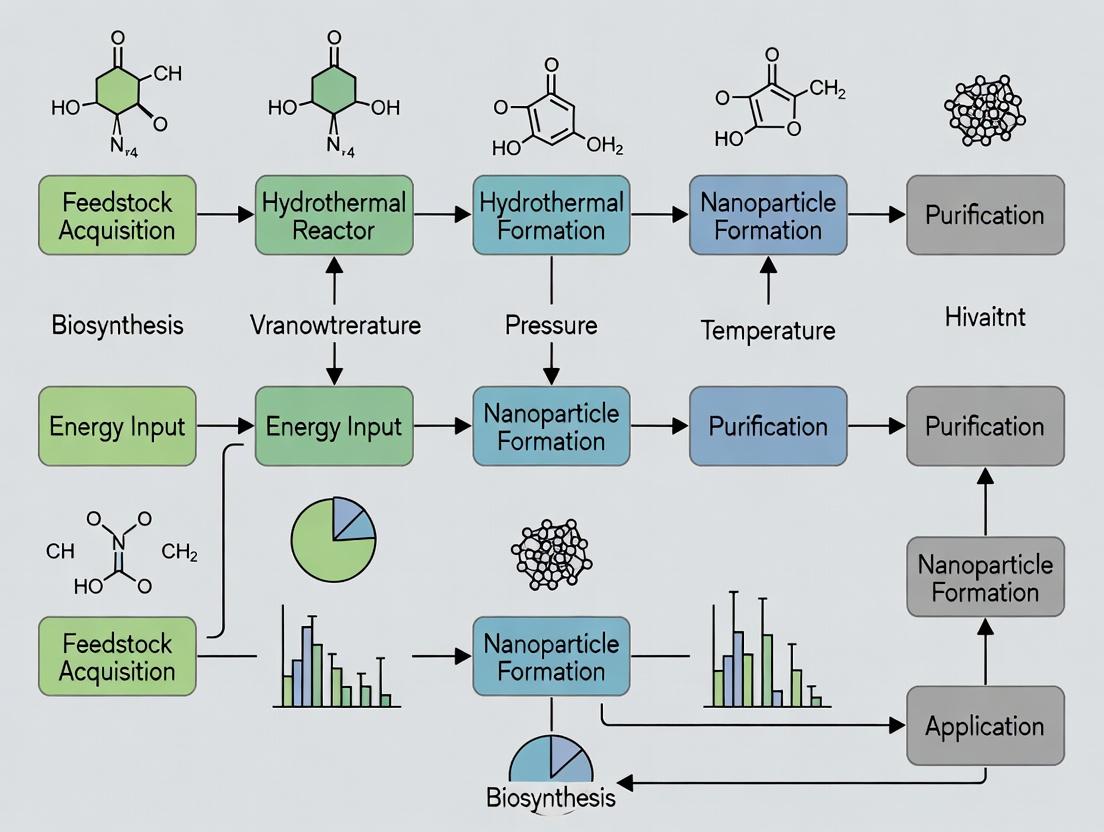
This article provides a comprehensive Life Cycle Assessment (LCA) of hydrothermal treatment for synthesizing nanomaterials, targeting researchers and drug development professionals.
Life Cycle Assessment of Hydrothermal Synthesis: Evaluating the Environmental Footprint of Nanomaterial Production for Biomedical Applications
Abstract
This article provides a comprehensive Life Cycle Assessment (LCA) of hydrothermal treatment for synthesizing nanomaterials, targeting researchers and drug development professionals. We explore the fundamental principles of hydrothermal synthesis and its environmental implications (Intent 1). A detailed methodological framework for conducting an LCA is presented, alongside key biomedical applications of hydrothermally produced nanomaterials like drug delivery systems and imaging agents (Intent 2). The article addresses common challenges in LCA studies and optimization strategies for greener synthesis, including energy reduction and waste minimization (Intent 3). Finally, we validate the LCA approach by comparing the environmental performance of hydrothermal methods against alternative synthesis techniques such as sol-gel and chemical precipitation, highlighting trade-offs between sustainability and functionality (Intent 4).
Hydrothermal Nanomaterial Synthesis and LCA: Unveiling the Core Concepts and Environmental Drivers
What is Hydroxermal Synthesis? Principles, Mechanisms, and Advantages for Nanomaterials
Hydrothermal synthesis is a solution-based chemical synthesis technique conducted in a sealed, heated vessel (autoclave) under controlled pressure and temperature. It is a cornerstone method for producing high-quality inorganic nanomaterials with precise control over composition, size, and morphology. Within the context of a Life Cycle Assessment (LCA) of nanomaterial synthesis research, hydrothermal methods are of significant interest due to their potential for greener processing—often using water as a solvent, lower energy inputs compared to high-temperature solid-state methods, and reduced generation of hazardous by-products. Evaluating their environmental footprint from precursor sourcing to waste disposal is critical for sustainable nanotechnology.
Principles and Mechanisms
The process exploits the enhanced solubility and reactivity of precursors in water at elevated temperatures (typically 100-250°C) and autogenous pressures (1-100 MPa). Key principles include:
- Solvation and Dissolution: Precursors dissolve in the aqueous medium.
- Hydrothermal Reaction: Increased temperature/pressure alters the physicochemical properties of water (e.g., dielectric constant, ionic product), promoting hydrolysis, condensation, and redox reactions.
- Nucleation and Growth: Supersaturation leads to the formation of critical nuclei, followed by controlled growth into nanoparticles, nanorods, or other nanostructures. Kinetics and thermodynamics are influenced by parameters like temperature, pressure, duration, pH, and precursor concentration.
- Mechanism Pathways: The formation can proceed via dissolution-recrystallization or in-situ transformation, often guided by surfactants or capping agents that direct morphogenesis.
Diagram: Hydrothermal Nanomaterial Formation Pathway
Advantages for Nanomaterial Synthesis
Hydrothermal synthesis offers distinct benefits crucial for research and industrial applications.
Table 1: Key Advantages of Hydrothermal Synthesis for Nanomaterials
| Advantage | Description | Relevance to LCA & Drug Development |
|---|---|---|
| Morphological Control | Enables synthesis of diverse structures (spheres, rods, wires) with high crystallinity. | Precise control impacts drug loading & release kinetics in nanomedicine. |
| High Purity & Yield | Closed system prevents contamination; reactions often proceed to completion. | Reduces downstream purification needs, influencing process energy/material use in LCA. |
| Eco-friendly Solvent | Primarily uses water, reducing organic solvent waste. | Major LCA benefit: lowers environmental and occupational hazard impact. |
| Moderate Temperature | Lower than solid-state synthesis (often <250°C). | Potentially lower energy consumption, a key LCA inventory metric. |
| Scalability | Process is adaptable from lab-scale autoclaves to industrial reactors. | Supports translation from research to production; scalability is a core LCA consideration. |
| Dopant Incorporation | Facilitates homogeneous doping of ions into host lattices. | Essential for tuning magnetic/optical properties in theranostic agents. |
Application Notes and Detailed Protocols
Protocol 4.1: Standard Hydrothermal Synthesis of Zinc Oxide (ZnO) Nanorods
This protocol exemplifies the synthesis of a common semiconductor nanomaterial.
Objective: To synthesize crystalline ZnO nanorods for potential use in drug delivery or as an antimicrobial agent.
The Scientist's Toolkit: Research Reagent Solutions
| Item | Function | Specification (Example) |
|---|---|---|
| Zinc Nitrate Hexahydrate | Zinc ion precursor. | Zn(NO₃)₂·6H₂O, ≥99% purity. |
| Hexamethylenetetramine (HMTA) | Hydrolyzes to provide OH⁻ and acts as a pH buffer/morphological director. | (CH₂)₆N₄, ≥99% purity. |
| Teflon-lined Autoclave | Reactor vessel withstands high pressure/temperature, inert. | 50-100 mL capacity. |
| Programmable Oven | Provides uniform, controlled heating. | Temperature stability ±2°C. |
| Centrifuge | For product separation and washing. | Capable of 10,000 rpm. |
| Deionized Water | Solvent and washing agent. | Resistivity ≥18 MΩ·cm. |
| Ethanol | Washing agent for removing organic residues. | Absolute, ≥99.8%. |
Procedure:
- Precursor Solution: Dissolve 0.595 g of Zn(NO₃)₂·6H₂O and 0.350 g of HMTA in 70 mL of deionized water under magnetic stirring (30 min).
- Loading: Transfer the clear solution into a 100 mL Teflon-lined stainless-steel autoclave, filling ~70% of its volume.
- Hydrothermal Reaction: Seal the autoclave tightly and place it in a preheated oven at 120°C for 6 hours.
- Cooling: After the reaction, allow the autoclave to cool naturally to room temperature (≈2 hours).
- Product Collection: Open the autoclave. The white precipitate is collected by centrifugation at 8000 rpm for 10 minutes.
- Washing: Wash the pellet sequentially with deionized water (3x) and ethanol (2x) via centrifugation.
- Drying: Dry the purified product in an oven at 60°C overnight. Characterize by XRD, SEM, TEM.
Diagram: Hydrothermal Synthesis Experimental Workflow
Protocol 4.2: Hydrothermal Synthesis of Mesoporous Silica Nanoparticles (MSNs) for Drug Delivery
This protocol highlights the synthesis of a critical drug carrier platform.
Objective: To synthesize MSNs with high surface area and tunable pore size for drug loading.
Procedure (Adapted from recent literature):
- Template Solution: Dissolve 1.0 g of cetyltrimethylammonium bromide (CTAB, surfactant template) in 480 mL of deionized water. Add 3.5 mL of 2M NaOH solution under stirring. Heat to 80°C.
- Silica Addition: Rapidly add 5.0 mL of tetraethyl orthosilicate (TEOS) dropwise to the hot solution with vigorous stirring. Continue stirring for 2 hours at 80°C to form a white precipitate.
- Hydrothermal Aging: Transfer the suspension to a Teflon-lined autoclave and heat at 100°C for 24 hours.
- Cooling & Collection: Cool, collect product by filtration/centrifugation.
- Template Removal: Calcine the product in air at 550°C for 6 hours to remove CTAB, creating mesopores. Alternatively, perform solvent extraction.
- Drug Loading: Suspend activated MSNs in a concentrated drug solution (e.g., doxorubicin) for 24 hours, then wash to remove surface-bound drug.
Table 2: Quantitative Parameters for Hydrothermal Synthesis of Selected Nanomaterials
| Nanomaterial | Precursors | Temperature (°C) | Time (h) | Pressure (MPa) | Typical Size (nm) | Key Application |
|---|---|---|---|---|---|---|
| ZnO Nanorods | Zn(NO₃)₂, HMTA | 120 | 6 | Autogenous (~0.2) | 50-200 (length) | Antibacterial, Sensors |
| TiO₂ Nanoparticles | Ti(OR)₄, HNO₃/H₂O | 200 | 12 | Autogenous (~1.5) | 10-30 | Photocatalysis, Sunscreen |
| Fe₃O₄ (Magnetite) | FeCl₃, Na-acetate, EG | 200 | 8-12 | Autogenous (~1.5) | 10-50 | MRI Contrast, Hyperthermia |
| Mesoporous Silica | TEOS, CTAB | 100-150 | 24-48 | Autogenous (~0.1-0.4) | 50-200 (diameter) | Drug Delivery |
| BaTiO₃ Perovskite | Ba(OH)₂, TiO₂ | 200 | 72 | >100 (supercritical) | 20-100 | Dielectrics, Piezoelectrics |
Integrating hydrothermal synthesis into an LCA framework requires inventory analysis of:
- Inputs: Energy for heating/stirring, precursor materials (including mining/processing impacts), water consumption.
- Outputs: Nanoparticle yield, wastewater (containing salts/organics), spent solvents, emissions from ancillary processes. Compared to traditional methods (e.g., sol-gel with high-temperature calcination, coprecipitation), hydrothermal synthesis often shows advantages in energy efficiency and reduced hazardous waste, particularly when water is the primary solvent. However, trade-offs exist, such as the use of potentially toxic precursors or mineralizers (e.g., NaOH) and the energy intensity of maintaining high pressure. For drug development professionals, the method's ability to produce biocompatible, sterile-grade nanomaterials with tailored properties under potentially greener conditions is a significant strategic advantage, aligning with the growing emphasis on sustainable pharmaceutical manufacturing.
Why Conduct an LCA? The Imperative for Sustainable Nanomanufacturing in Biomedicine.
The rapid advancement of nanomedicine, particularly for drug delivery, diagnostics, and therapeutics, relies on complex nanomanufacturing processes. Hydrothermal synthesis is a prominent method for producing high-quality nanomaterials like quantum dots, metal-organic frameworks (MOFs), and oxide nanoparticles. However, its environmental footprint—considering energy-intensive high temperature/pressure, solvent use, and precursor sourcing—is often overlooked. Within the broader thesis on Life Cycle Assessment (LCA) of hydrothermal nanomaterial synthesis, this article establishes the imperative for rigorous LCA to quantify these impacts and guide the field towards truly sustainable innovation.
Quantifying the Impact: Data from Recent Studies
The following table summarizes key LCA findings for biomedical nanomaterials, highlighting the critical hotspots that LCAs reveal.
Table 1: Comparative LCA Hotspots for Selected Biomedical Nanomaterials
| Nanomaterial | Synthesis Method | Key Environmental Hotspot | Reported Impact (per g of nanomaterial) | Primary Driver |
|---|---|---|---|---|
| ZnO Nanoparticles | Hydrothermal | Energy Consumption | Global Warming Potential: 12-18 kg CO₂ eq. | Electrical energy for autoclave heating & agitation. |
| Gold Nanorods | Seed-Mediated Growth | Chemical Usage | Human Toxicity: 25-40 kg 1,4-DB eq. | Use of cytotoxic CTAB surfactant & silver nitrate. |
| Liposomes | Thin-Film Hydration | Solvent Production & Waste | Fossil Depletion: 8-10 kg oil eq. | Chloroform production and subsequent evaporation/recovery. |
| PLGA Nanoparticles | Emulsion-Solvent Evaporation | Solvent Production | Ozone Depletion: 1.5-2.5e-5 kg CFC-11 eq. | Dichloromethane (DCM) production and emission. |
| Carbon Quantum Dots | Microwave-Assisted Hydrothermal | Precursor Synthesis | Acidification: 0.05-0.08 kg SO₂ eq. | Synthesis of citric acid & polyethyleneimine precursors. |
Application Note: Protocol for Gate-to-Gate LCA of Hydrothermal Synthesis
This protocol provides a framework for assessing the laboratory-scale synthesis of cerium oxide nanoparticles (nanoceria) for anti-inflammatory applications via hydrothermal treatment.
Title: Gate-to-Gate LCA of Hydrothermal Nanoceria Synthesis. Aim: To quantify the energy and material inputs for the synthesis of 1 gram of nanoceria. Materials: See Scientist's Toolkit below. Procedure:
- Inventory Definition: Define the system boundary from the weighing of precursors (gate) to the collection of the final washed and dried nanopowder (gate). Exclude end-of-life and administration.
- Synthesis Execution: a. Dissolve 2.46 g of cerium(III) nitrate hexahydrate in 40 mL of deionized water under magnetic stirring. b. Add 10 mL of ammonium hydroxide (28%) dropwise to precipitate cerium hydroxide. Stir for 30 min. c. Transfer the suspension to a 100 mL PTFE-lined stainless-steel autoclave. Seal and place in a pre-heated oven. d. Heat at 180°C for 12 hours. Allow to cool naturally to room temperature (approx. 8 hours). e. Centrifuge the product at 15,000 rpm for 20 minutes. Discard the supernatant. f. Re-disperse the pellet in 50 mL of ethanol and centrifuge again. Repeat this wash step twice with deionized water. g. Lyophilize the final pellet for 24 hours to obtain dry nanoceria powder. Weigh the final product (expected yield: ~0.5 g).
- Data Collection: Record all measured inputs:
- Mass of all chemicals (precursors, solvents).
- Volume of deionized water used.
- Autoclave oven energy consumption (using a plug-in power meter): Record active heating time (12h) and maintaining power draw.
- Centrifuge energy consumption (for total run time).
- Lyophilizer energy consumption (for 24h cycle).
- Mass of waste solvents and materials.
- Impact Calculation: Using LCA software (e.g., openLCA, SimaPro) and a suitable database (e.g., Ecoinvent), model the inventory and calculate impacts for categories like Global Warming Potential, Cumulative Energy Demand, and Water Depletion.
Visualizing the LCA Workflow and Impact Pathways
Title: Four-Step LCA Framework & Key Guiding Questions
Title: From Hydrothermal Synthesis to Environmental Impact Pathways
The Scientist's Toolkit: Essential Research Reagent Solutions
Table 2: Key Materials for Sustainable Hydrothermal Nanomaterial Synthesis
| Material/Reagent | Function in Synthesis | Sustainability Consideration |
|---|---|---|
| Cerium(III) Nitrate Hexahydrate | Metal oxide precursor. | High embodied energy in rare-earth mining & refining. LCA prompts recycling studies. |
| Hydrothermal Autoclave (PTFE-lined) | Provides sealed, high-pressure/temperature environment for crystallization. | Major energy consumer. Protocol optimization (time/temp) guided by LCA reduces footprint. |
| Ethanol (for washing) | Polar solvent for removing impurities and by-products. | Prefer over acetone or isopropanol if sourced from bio-based (non-food) feedstock. |
| Deionized Water | Primary solvent for hydrothermal reaction and washing. | High purity production is energy-intensive. LCA incentivizes closed-loop water recycling systems. |
| Lyophilizer | Removes water from nanoparticle dispersion to obtain dry powder. | Extremely energy-intensive (long-duration vacuum & freezing). LCA may favor alternative drying (e.g., spray drying). |
| Biodegradable Polymers (e.g., Chitosan) | Used as capping/stabilizing agents for biocompatibility. | Sourced from renewable biomass. LCA compares favorably to synthetic polymers (e.g., PVP). |
This document provides detailed application notes and protocols for conducting a Life Cycle Assessment (LCA) of hydrothermal processes used in nanomaterial synthesis. Framed within a broader thesis on the sustainability of nanomaterial manufacturing, these guidelines aim to standardize data collection and impact assessment for researchers, enabling comparative analysis and identification of environmental hotspots specific to this promising synthetic route.
Key LCA Stages: Detailed Application Notes
Stage 1: Goal and Scope Definition
- Application Note: The functional unit must be precisely defined for nanomaterials (e.g., "1 gram of fully characterized titanium dioxide nanotubes with specified crystallinity, surface area, and photocatalytic activity"). System boundaries must explicitly include upstream synthesis (precursor production, solvent use), the hydrothermal reactor operation (energy, water), downstream processing (washing, centrifugation, drying), and end-of-life scenarios. Allocation procedures for co-products (e.g., different nanomaterial morphologies from one batch) must be justified.
Stage 2: Life Cycle Inventory (LCI) Data Collection
Protocol 2.1: Inventory for Lab-Scale Synthesis
- Objective: To compile an accurate inventory for a single hydrothermal synthesis batch.
- Materials: Precursors (e.g., metal salts, organic templates), solvents (e.g., deionized water, ethanol), cleaning agents.
- Equipment: Analytical balances, Teflon-lined autoclave, oven or furnace, centrifuge, freeze-dryer, fume hood.
- Procedure:
- Weigh all input masses precisely (precursors, solvents).
- Record the energy consumption of the oven (temperature, duration, rated power) and centrifuge.
- Measure the volume of water and solvents used in washing cycles.
- Record the mass of the final dried nanomaterial product.
- Document any waste streams: liquid waste (mother liquor, washings), solid waste (filter media, failed batches).
Protocol 2.2: Scaling Considerations for Inventory
- Objective: To extrapolate lab data to potential industrial production.
- Methodology: Use scale-up factors focusing on reactor energy efficiency (larger autoclaves may have better heat retention), solvent recovery rates, and changes in yield. Collaborate with process engineering models to estimate full-scale plant data.
Stage 3: Life Cycle Impact Assessment (LCIA)
- Application Note: Impact categories particularly relevant to hydrothermal nanomaterial synthesis include:
- Global Warming Potential (GWP): Driven by fossil-based electricity for heating and drying.
- Water Consumption/Depletion: Due to high-purity water use in synthesis and washing.
- Human Toxicity & Ecotoxicity: Potential release of metal ions from precursors or nanoparticles during use and disposal phases. Use characterization factors specifically developed for nanomaterials where available.
Stage 4: Interpretation and End-of-Life (EoL) Scenarios
- Protocol 4.1: Modeling Nanomaterial EoL
- Objective: To assess the fate of nanomaterials in different waste streams.
- Scenarios: Model incineration (potential for air emissions), landfill (leaching potential), wastewater treatment (sludge binding, effluent release). Use current literature on nanoparticle transformation in these environments to inform impact modeling.
Table 1: Typical Inventory Data for Lab-Scale Hydrothermal Synthesis of 1g TiO₂ Nanotubes
| Inventory Category | Item | Quantity | Unit | Source/Notes |
|---|---|---|---|---|
| Inputs - Materials | Titanium (IV) butoxide | 3.5 | g | Precursor, high purity |
| Sodium Hydroxide (NaOH) | 20 | g | Mineralizer | |
| Deionized Water | 200 | mL | Solvent | |
| Ethanol (for washing) | 500 | mL | Solvent | |
| Inputs - Energy | Oven (for reaction, 150°C) | 0.96 | kWh | For 24h operation of a 40W oven |
| Centrifuge | 0.05 | kWh | For 1h operation | |
| Freeze-dryer | 2.5 | kWh | For 24h operation | |
| Outputs - Product | TiO₂ Nanotubes | 1.0 | g | Functional unit basis |
| Outputs - Waste | Alkaline Liquid Waste | ~220 | mL | Contains residual NaOH & by-products |
| Solvent Wash Waste | ~500 | mL | Ethanol-water mixture | |
| Solid Residue | <0.1 | g | Unreacted material/filter loss |
The Scientist's Toolkit: Research Reagent Solutions
Table 2: Essential Materials for Hydrothermal Nanomaterial Synthesis & LCA
| Item | Function in Synthesis | Relevance to LCA |
|---|---|---|
| Metal Alkoxide Precursors (e.g., Ti(OBu)₄) | High-reactivity molecular source of metal ions; dictates morphology. | Dominant contributor to raw material extraction impacts (energy-intensive production). |
| Mineralizers (e.g., NaOH, KOH) | Control solution pH and ionic strength; crucial for crystal phase and structure. | Source of human/ecotoxicity potential; contributes to alkaline waste stream burden. |
| Structure-Directing Agents (SDAs) (e.g., CTAB, P123) | Templating molecules to engineer porosity, shape, and size. | Often organic; contributes to fossil resource depletion and combustion emissions if not recovered. |
| High-Purity Solvents (DI Water, Ethanol) | Reaction medium; used extensively in post-synthesis washing. | Major driver for water depletion and purification energy. Solvent choice affects toxicity impacts. |
| Teflon-lined Autoclave | Sealed vessel enabling high-temperature/pressure reactions. | Capital equipment; its manufacturing and longevity affect overall process impacts (often amortized). |
Visualized Workflows and Pathways
Title: Four Core Stages of an LCA Study
Title: Hydrothermal Synthesis & Downstream Process Flow
Title: Nanomaterial End-of-Life Scenarios & LCIA Links
Application Notes: LCA of Hydrothermal Nanomaterial Synthesis
This document provides application notes and protocols for assessing the critical environmental impact categories—Energy Use, Emissions, and Resource Depletion—within a Life Cycle Assessment (LCA) framework focused on hydrothermal synthesis of nanomaterials for drug delivery systems.
1. Quantifying Energy Consumption in Hydrothermal Synthesis
The hydrothermal synthesis process is energy-intensive, primarily due to the maintenance of high temperature and pressure over extended reaction times. The total energy demand (E_total) for a single batch can be modeled as:
E_total = (P_heater × t_ramp) + (P_maintain × t_reaction) + (P_stirrer × t_total) + E_ancillary
where P represents power (kW) and t represents time (hours). Ancillary energy (E_ancillary) includes post-synthesis centrifugation, washing, and drying.
Table 1: Typical Energy Profile for ZnO Nanoparticle Synthesis (Per 100g Batch)
| Process Stage | Equipment | Temp (°C) | Time (h) | Avg. Power (kW) | Energy (kWh) |
|---|---|---|---|---|---|
| Heating/Ramp | Hydrothermal Reactor | 25 to 180 | 1.5 | 2.0 | 3.0 |
| Reaction | Hydrothermal Reactor | 180 | 12 | 0.8 | 9.6 |
| Stirring | Magnetic Stirrer | Ambient | 13.5 | 0.05 | 0.675 |
| Centrifugation | High-Speed Centrifuge | 4 | 0.5 | 1.2 | 0.6 |
| Drying | Vacuum Oven | 60 | 24 | 0.4 | 9.6 |
| Total | 23.48 |
2. Inventory and Impact of Emissions Emissions are categorized into direct (from process) and indirect (from energy generation). Key concerns include precursor synthesis emissions and solvent volatilization.
Table 2: Emission Inventory for Hydrothermal Synthesis (Per Batch)
| Emission Source | Substance | Quantity | Compartment | Notes |
|---|---|---|---|---|
| Direct (Fume Hood) | Water Vapor | ~500 g | Air | From reactor venting |
| Direct (Fume Hood) | Trace Ammonia (NH₃) | <0.1 g | Air | If using ammonium precursors |
| Indirect (Grid Electricity) | CO₂ | ~9.4 kg | Air | Based on 0.4 kg CO₂/kWh grid mix |
| Indirect (Grid Electricity) | SO₂, NOx | Varies | Air | Dependent on local grid |
| Waste Stream | Metal ions (Zn²⁺, etc.) | <10 mg/L | Water | In liquid waste, requires treatment |
3. Assessment of Resource Depletion Resource depletion covers abiotic (mineral, fossil) and biotic resources. Critical points include metal precursor sourcing and water consumption.
Table 3: Resource Depletion Indicators (Per 100g Product)
| Resource | Quantity Used | Depletion Factor (kg Sb eq./kg) | Impact (kg Sb eq.) | Notes |
|---|---|---|---|---|
| Zinc Acetate Dihydrate | 220 g | 1.21E-03 | 2.66E-04 | Major contributor to abiotic depletion |
| Deionized Water | 15 L | 3.27E-06 | 4.91E-05 | Includes reaction and washing |
| Natural Gas (for heat) | 0.5 m³ | 4.60E-05 | 2.30E-05 | If heating is gas-fired |
| Grid Electricity | 23.48 kWh | 1.60E-04 | 3.76E-03 | Major contributor |
Experimental Protocols for LCA Data Generation
Protocol 1: In-Lab Energy Monitoring for a Hydrothermal Reactor Objective: To measure real-time energy consumption of a hydrothermal synthesis batch. Materials: Bench-scale hydrothermal reactor (e.g., Parr Instrument), power meter (e.g., Kill A Watt P4460), data logging software, thermocouple. Procedure:
- Connect the hydrothermal reactor's main power supply to the power meter. Connect the meter to a stable AC outlet.
- Calibrate the internal thermocouple of the reactor against a NIST-traceable external thermocouple.
- Prepare the reaction mixture (e.g., 0.1M zinc acetate and hexamethylenetetramine in 1L water) and load into the Teflon liner.
- Secure the reactor and start data logging on the power meter (recording interval: 10 seconds).
- Initiate the heating program: ramp to 180°C at 5°C/min, hold for 12 hours, then cool naturally.
- Record total energy consumption (kWh) from the power meter at the end of the cycle. Segregate data for ramp, hold, and cooling phases.
- Repeat for three independent batches to calculate average and standard deviation.
Protocol 2: Life Cycle Inventory (LCI) Compilation for Precursors Objective: To build a cradle-to-gate inventory for key chemical precursors. Materials: Chemical inventory database access (e.g., Ecoinvent 3.9, GREET 2022), literature on industrial synthesis pathways, LCA software (OpenLCA, SimaPro). Procedure:
- Define System Boundary: Cradle-to-gate, from raw material extraction to production of 1 kg of lab-grade precursor (e.g., zinc acetate dihydrate).
- Identify Primary Pathway: Research the dominant industrial production method (e.g., reaction of zinc oxide with acetic acid).
- Gather Data: Extract data on material inputs (zinc ore, acetic acid), energy inputs (MJ), water use (L), and emissions (kg CO₂-eq, kg SO₂-eq) from selected databases. Prioritize data matching the geographical region of precursor manufacture.
- Allocate Impacts: If the process yields co-products (e.g., other salts), apply allocation by mass or economic value.
- Calculate & Tabulate: Compute total inputs and outputs per functional unit (1 kg). Compile into a table for integration into the full LCA model.
Protocol 3: Characterization of Aqueous Waste Streams Objective: To quantify residual metal ions and organics in post-synthesis wastewater. Materials: Inductively Coupled Plasma Optical Emission Spectrometry (ICP-OES), Total Organic Carbon (TOC) analyzer, 0.45 µm syringe filters, nitric acid (trace metal grade). Procedure:
- Collect all liquid waste from the hydrothermal reaction post-cooling, including supernatant from centrifugation and wash water.
- Homogenize the waste stream and take a 50 mL representative sample. Filter through a 0.45 µm membrane filter.
- For metal analysis: Acidify a 10 mL aliquot with 2% (v/v) HNO₃. Analyze using ICP-OES against standard curves for relevant metals (Zn, Fe, Cu, etc.). Report concentration in mg/L.
- For organic content: Analyze a separate 10 mL filtered sample using a TOC analyzer. Report non-purgeable organic carbon (NPOC) in mg C/L.
- Calculate total mass of metal ions and organics released per batch of nanomaterial synthesized.
Visualizations
Title: LCA Impact Assessment Framework
Title: Hydrothermal Synthesis & Waste Generation Workflow
The Scientist's Toolkit: Research Reagent & Material Solutions
| Item | Function in LCA/Experiment |
|---|---|
| Hydrothermal Reactor (Parr) | High-pressure, high-temperature vessel for nanomaterial synthesis. Primary source of energy demand. |
| Digital Power Meter (Kill A Watt) | Measures real-time (kWh) and cumulative energy consumption of lab equipment for LCI data. |
| ICP-OES System | Quantifies trace metal ion concentrations in liquid waste streams for emission inventory. |
| TOC Analyzer | Measures total organic carbon content in wastewater, indicating organic pollutant load. |
| Zinc Acetate Dihydrate (Lab Grade) | Common metal precursor. Its production is a major contributor to resource depletion impacts. |
| Life Cycle Inventory Database (Ecoinvent) | Provides background data on energy systems, chemical production, and transport for LCA modeling. |
| LCA Software (OpenLCA) | Platform for modeling the full life cycle, calculating impact categories, and analyzing results. |
| 0.45 µm Syringe Filters | For filtering liquid waste samples prior to ICP-OES/TOC analysis to remove particulate matter. |
Current Trends and Gaps in LCA Literature for Hydrothermal Nanotechnology
Life Cycle Assessment (LCA) is a critical tool for evaluating the environmental footprint of emerging technologies. Within nanomaterial synthesis, hydrothermal methods are lauded for their simplicity, energy efficiency, and ability to produce high-purity nanomaterials. This application note, framed within a broader thesis on LCA of hydrothermal treatment, synthesizes current literature trends, identifies significant gaps, and provides protocols to standardize data collection for robust LCA in this field.
Current Trends in LCA Literature
Table 1: Summary of Key LCA Studies on Hydrothermal Nanomaterial Synthesis
| Nanomaterial Synthesized | Primary Environmental Hotspot Identified | System Boundary | Functional Unit | Key Trend/Insight | Reference (Example) |
|---|---|---|---|---|---|
| TiO₂ Nanoparticles | Electricity consumption for hydrothermal reactor & drying | Cradle-to-Gate | 1 kg of TiO₂ nanopowder | Precursor choice (TiCl₄ vs. organic titanates) significantly impacts acidification potential. | [1] |
| Carbon Quantum Dots (CQDs) from biomass | Chemical consumption for purification & functionalization | Cradle-to-Gate | 1 g of photoluminescent CQDs | "Green" biomass precursors do not guarantee a lower impact if downstream processing is intensive. | [2] |
| ZnO Nanorods | Zinc nitrate production & reactor energy use | Gate-to-Gate | 1 m² of coated substrate | Scale-up and continuous flow reactors show promise for reducing energy intensity per unit output. | [3] |
| Cellulose Nanocrystals (CNC) | Sulfuric acid production and recovery (for acid hydrolysis) | Cradle-to-Gate | 1 kg of CNC | Hydrothermal pre-treatment can reduce acid and energy use in subsequent hydrolysis stages. | [4] |
Trend Analysis:
- Dominance of Gate-to-Gate and Cradle-to-Gate Studies: Most LCAs focus on the synthesis process itself, omitting use-phase and end-of-life scenarios.
- Focus on Energy and Precursors: The operational energy of the hydrothermal reactor and the production impacts of chemical precursors are consistently identified as primary contributors to global warming potential.
- Emergence of Biomass-Derived Nanomaterials: There is growing interest in LCA of nanomaterials synthesized from bio-waste, but studies often lack comprehensive data on biomass pre-treatment and variability.
- Lack of Nano-Specific Fate and Toxicity Data: LCAs rarely incorporate characterization factors for nanoparticle emissions to air, water, and soil due to a lack of consensus and data in Life Cycle Impact Assessment (LCIA) methods.
Critical Identified Gaps
- Missing "Cradle-to-Grave" Assessments: A profound gap exists in understanding the complete life cycle, particularly the performance (e.g., catalytic efficiency, drug delivery efficacy) and end-of-life fate of hydrothermally synthesized nanomaterials.
- Inconsistent Inventory Data: There is a severe lack of transparent, high-quality inventory data for lab-scale hydrothermal synthesis, including solvent recovery rates, auxiliary material use, and direct energy measurements.
- Neglect of Social and Economic Dimensions: Social-LCA and cost-benefit analyses are virtually absent, limiting holistic sustainability assessments.
- Understudy of Novel Hydrothermal Variants: LCA studies on emerging techniques like microwave-assisted hydrothermal, continuous flow hydrothermal, or supercritical hydrothermal synthesis are scarce.
Protocols for Standardized LCA Data Generation
Protocol 1: Comprehensive Inventory Data Collection for Lab-Scale Hydrothermal Synthesis
Objective: To generate a standardized, detailed inventory of material and energy flows from a single hydrothermal synthesis experiment.
Materials & Equipment:
- Hydrothermal autoclave (Teflon-lined stainless steel)
- Precision balance
- Hotplate/stirrer or oven
- Centrifuge and freeze-dryer
- Power meter (plug-in type)
- Lab notebook or electronic data capture system.
Procedure:
- Pre-Synthesis Mass Inventory: Precisely weigh (±0.1 mg) all input materials: precursors, solvents, catalysts, and stabilizing agents. Record manufacturer and purity.
- Energy Measurement: Connect the heating apparatus (oven or hotplate) to a power meter. Record the power draw (W) and total active heating time to calculate total energy consumption (kWh) for the reaction. Include pre-heating if applicable.
- Process Execution: Conduct the hydrothermal synthesis per standard synthetic protocol. Note reaction temperature, pressure (if monitored), and hold time.
- Post-Synthesis Mass Tracking: After synthesis, separate the product via centrifugation/filtration. Weigh the wet product pellet. Weigh all waste streams: supernatant, rinse solvents, and cleaning agents.
- Product Processing: Record energy and time for drying (freeze-dryer, oven) and any post-processing (calcination). Weigh the final dry nanomaterial.
- Data Aggregation: Compile all data into a table with columns: Input/Output, Mass (g), Energy (kWh), and Notes. Calculate key metrics like E-factor (mass waste / mass product) and cumulative energy demand (CED) per gram of product.
Protocol 2: Protocol for Integrating Functional Performance into LCA
Objective: To link the environmental impact of synthesis to a functional output, moving from mass-based to performance-based functional units.
Procedure:
- Define Performance Metric: Identify a key property relevant to the nanomaterial's application (e.g., photocatalytic degradation rate constant (k) for TiO₂, photoluminescence quantum yield (PLQY) for CQDs, drug loading capacity for a nano-carrier).
- Synthesize and Characterize: Synthesize the nanomaterial via hydrothermal method (using Protocol 1). Perform full physicochemical characterization (SEM, XRD, FTIR, etc.).
- Performance Testing: Conduct a standardized assay to quantify the performance metric (e.g., degrade methylene blue under standard light for photocatalysis; measure fluorescence against a standard for PLQY).
- Recalculate Functional Unit: Re-express the inventory data from Protocol 1. Instead of "per 1 g of nanomaterial," calculate impacts "per unit of performance" (e.g., per 1 mg of pollutant degraded per minute, per 1 unit of fluorescence intensity).
Visualizations
LCA Workflow with Literature Gaps
Hydrothermal Synthesis Inventory Flow
The Scientist's Toolkit: Key Research Reagent Solutions
Table 2: Essential Materials for Hydrothermal Nanomaterial LCA Studies
| Item | Function in Research | Relevance to LCA |
|---|---|---|
| Hydrothermal Autoclave (Teflon-lined) | High-pressure, high-temperature reaction vessel for nanomaterial synthesis. | Primary process equipment. Energy consumption during its use is a core inventory data point. |
| Precision Analytical Balance (±0.1 mg) | Accurate weighing of precursors and final nanomaterial product. | Critical for obtaining precise mass input/output data, the foundation of any life cycle inventory. |
| Plug-in Energy Meter (Power Logger) | Direct measurement of electricity consumption by ovens, hotplates, and dryers. | Enables primary data collection for energy use, moving away from estimations and improving accuracy. |
| Laboratory Freeze-Dryer (Lyophilizer) | Removes solvent (often water) from nanomaterial dispersions without aggregation. | A major post-synthesis energy consumer. Its efficiency and run time must be recorded for the inventory. |
| High-Purity Chemical Precursors | Metal salts, organic molecules, or biomass used as starting materials. | The environmental burden of their production (upstream impact) is often the largest contributor to the LCA result. |
| Centrifuge | Separates synthesized nanoparticles from the reaction mixture. | Key for product isolation and waste stream separation. Its energy use and related solvent volumes (for washing) must be tracked. |
Conducting an LCA for Hydrothermal Synthesis: A Step-by-Step Guide and Biomedical Use Cases
Within the broader thesis on the Life Cycle Assessment (LCA) of hydrothermal synthesis for nanomaterial production, the precise definition of goal and scope is paramount. This step dictates the relevance and reliability of the entire LCA study. For nanomaterials (NMs) intended for drug development, such as drug delivery vehicles or imaging agents, the functional unit and system boundaries must capture both the efficiency of the synthesis process and the functional performance of the nanomaterial. This protocol details the application notes for establishing these critical LCA parameters.
Core Definitions & Quantitative Benchmarks
Table 1: Common Functional Units in Nanomedicine LCA
| Functional Unit | Description | Example for Hydrothermally Synthesized NMs |
|---|---|---|
| Per Unit Mass of NM | 1 kg of purified, ready-to-use nanomaterial. |
Simple, but ignores performance. Suitable for early-stage process comparison. |
| Per Specific Surface Area | 1 m² of active surface area. |
Relevant for catalysts or adsorbents; requires BET measurement. |
| Per Therapeutic Dose | Amount required for one effective treatment cycle in a preclinical model. |
Links synthesis directly to therapeutic function (e.g., 1 mg/kg tumor reduction in mice). |
| Per Unit of Efficacy | Delivery of 1 mmol of drug to target cells in vitro. |
Performance-based; requires cell culture efficacy data (e.g., IC50 equivalence). |
Table 2: Typical System Boundary Inclusions & Exclusions
| Life Cycle Stage | Included Processes | Commonly Excluded Processes | Rationale/Note |
|---|---|---|---|
| Raw Material Acquisition | Mining/preprocessing of precursors (e.g., Zn(NO₃)₂, FeCl₃). |
Capital goods (reactor manufacturing). | Focus on operational inputs. |
| Nanomaterial Synthesis (Core) | Hydrothermal reaction (200°C, 12h), energy use, solvent, water. |
Laboratory infrastructure (building HVAC, lights). | Often excluded via cut-off. |
| Downstream Processing | Centrifugation (10,000 rpm, 30 min), washing, lyophilization, functionalization. |
Wastewater treatment if data is lacking. | Critical for NM purity/yield. |
| Characterization & QA | SEM, DLS, XRD analysis; assumed 5 cycles per batch. |
Research & Development phases. | Operational QA is included. |
| Use Phase | Controlled release over 48h in PBS at 37°C (simulated). |
Full clinical administration logistics. | Often modeled simplistically. |
| End-of-Life | Laboratory waste incineration or landfill. | Potential environmental release and fate. | Data scarce; often omitted. |
Experimental Protocol for Determining Performance-Based Functional Unit
Protocol 3.1: Integrating In Vitro Efficacy with LCA Functional Unit Definition
Objective: To establish a functional unit based on biological efficacy for a hydrothermally synthesized drug-loaded nanomaterial (e.g., Doxorubicin-loaded ZnO nanoparticles).
Materials (Research Reagent Solutions): Table 3: Essential Research Toolkit
| Item | Function | Example/Specification |
|---|---|---|
| Hydrothermal Reactor | High-pressure, temperature-controlled synthesis. | 100 mL Teflon-lined autoclave, stable to 250°C. |
| Lyophilizer | For drying synthesized NMs without aggregation. | Freeze-dryer with condenser temperature <-50°C. |
| Dynamic Light Scattering (DLS) | Measures hydrodynamic diameter and PDI. | Zetasizer, requires disposable cuvettes. |
| UV-Vis Spectrophotometer | Quantifies drug loading/encapsulation efficiency. | Uses 96-well plates or cuvettes. |
| Cell Culture System | Provides biological assay platform. | Cancer cell line (e.g., MCF-7), CO2 incubator, 96-well plates. |
| MTT Assay Kit | Measures cell viability and determines IC50. |
Contains MTT reagent, solubilization solution. |
Methodology:
- Synthesis & Characterization: Synthesize ZnO NPs via hydrothermal method (
0.1Mprecursor,180°C,6h). Load with Doxorubicin. Characterize size (DLS:Target: 80-120 nm), PDI (Target: <0.2), and drug loading (UV-Vis: calculate%EE). - In Vitro Efficacy Testing:
- Seed MCF-7 cells in a
96-wellplate at5,000cells/well. Incubate for24h. - Treat cells with a dilution series of Dox-NPs (
1-100 µg/mLequivalent Dox concentration) for48h. - Perform MTT assay: add
10 µLof5 mg/mLMTT to each well, incubate4h. Add solubilization solution and incubate overnight. - Measure absorbance at
570 nmwith a reference at650 nm. Calculate cell viability.
- Seed MCF-7 cells in a
- Data Analysis & Functional Unit Calculation:
- Use nonlinear regression to determine the
IC50value (concentration causing50%cell death). - Define Functional Unit: "The amount of hydrothermally synthesized Dox-ZnO NPs required to achieve an
IC50effect in an in vitro MCF-7 cell culture model." - Calculate the mass of NPs corresponding to this
IC50value for your batch. This mass is your 1 functional unit.
- Use nonlinear regression to determine the
System Boundary Modeling Workflow
LCA System Boundary Decision Flow
Nanomaterial LCA Process Flow & Boundaries
This document provides detailed application notes and protocols for conducting a Life Cycle Inventory (LCI) analysis. The protocols are framed within a broader thesis research focusing on the Life Cycle Assessment (LCA) of hydrothermal synthesis for nanomaterial production, specifically for drug delivery applications. Accurate LCI data for precursors, energy, and water is foundational for assessing the environmental footprint of this promising nanomanufacturing technique.
Core LCI Data Collection Tables
Table 1: Precursor Materials Inventory for Hydrothermal Nanomaterial Synthesis
Data based on a synthesis protocol for zinc oxide nanoparticles (10 g batch).
| Precursor Name & Formula | Quantity (g) | Purity (%) | Supplier/Origin | Embedded Carbon (kg CO₂-eq/kg)* | Hazard Classification (GHS) | Notes |
|---|---|---|---|---|---|---|
| Zinc Acetate Dihydrate (Zn(CH₃COO)₂·2H₂O) | 21.95 | ≥99.0 | Lab-grade supplier | 2.8 | H302, H315, H319, H335 | Primary Zn²⁺ source. |
| Sodium Hydroxide (NaOH) | 8.00 | ≥98.0 | Lab-grade supplier | 1.6 | H290, H314 | Mineralizer/pH adjuster. |
| Deionized Water (H₂O) | 1000.00 | 18.2 MΩ·cm | On-site purification | 0.001 (operational) | Not hazardous | Reaction solvent. |
| Ethanol (C₂H₅OH) | 2000.00 | ≥99.8 | Bio-based supplier | 1.2 (fossil-based) | H225, H319 | Washing/purification agent. |
Embedded carbon values are illustrative averages from recent Ecoinvent v3.9.1 and industry LCA database extracts. Actual values vary by supplier and production method.
Table 2: Energy Consumption Inventory for a Bench-Scale Hydrothermal Reactor
Data per synthesis batch (200 mL reactor volume, 150°C, 6 hours).
| Process Stage | Equipment | Measured Power (kW) | Operational Time (hours) | Energy per Batch (kWh) | Energy Source | Notes |
|---|---|---|---|---|---|---|
| Solution Preparation | Magnetic Stirrer | 0.05 | 0.5 | 0.025 | Grid Electricity (US Mix) | Precursor dissolution. |
| Hydrothermal Reaction | Oven/Reactor | 1.2 (peak) | 6 | 4.32 (average) | Grid Electricity | Includes heat-up time. |
| Cooling | Passive/Forced Air | 0.0 | 2 | 0.0 | - | Natural cooling in fume hood. |
| Product Recovery | Centrifuge | 0.3 | 1.5 | 0.45 | Grid Electricity | Particle separation. |
| Drying | Vacuum Oven | 0.8 | 12 | 9.6 | Grid Electricity | Lyophilization alternative. |
| Total per Batch | ~14.4 kWh | |||||
| Normalized per kg NP | ~1440 kWh/kg | Based on 10 g/batch yield. |
Table 3: Water Consumption and Wastewater Inventory
Data per synthesis batch (yield: 10 g nanoparticles).
| Flow Type | Source | Volume (L) | Quality Specification | Destination/Treatment | Recycled (Y/N) | Notes |
|---|---|---|---|---|---|---|
| Input - Process Water | DI System | 1.0 | 18.2 MΩ·cm | Reaction solvent | N | Embedded in product. |
| Input - Cleaning Water | DI/Tap Mix | 5.0 | Variable | Reactor & tool cleaning | N | Includes rinsing. |
| Input - Cooling Water | Chiller Loop | 15.0 (circulating) | - | Recirculating chiller | Y (closed loop) | Not considered consumed. |
| Output - Wastewater | Centrifugate | 1.05 | Contains Zn ions, NaOH, organics | Neutralization & metal precipitation | N | Requires pH adjustment. |
| Output - Rinse Waste | Wash Ethanol | ~1.9 (after recovery) | Ethanol/water/impurities | Solvent recovery still | Partial | 95% solvent recovery assumed. |
| Net Freshwater Consumed | ~6 L | Excludes recycled cooling water. |
Experimental Protocols for LCI Data Collection
Protocol 3.1: Direct Measurement of Energy Use in Hydrothermal Synthesis
Objective: To experimentally determine the electricity consumption of a laboratory-scale hydrothermal synthesis batch. Materials: Bench-top hydrothermal reactor (or oven with Teflon-lined autoclaves), plug-in power meter (e.g., Kill A Watt meter), data logging software, standard precursor solutions. Procedure:
- Baseline Measurement: Connect the empty, idle reactor/oven to the power meter. Record the baseline power draw (W) over 10 minutes. Calculate average baseline power (P_baseline).
- Reaction Cycle Measurement: a. Prepare precursor solution per standard synthesis protocol. b. Load the autoclave into the pre-cooled reactor/oven. c. Reset the power meter. Start the reaction cycle (setpoint: e.g., 150°C). d. Log the cumulative energy (kWh) at defined intervals until the system returns to room temperature after the reaction. e. Record total process time (t_total).
- Data Calculation: a. Total Measured Energy: Etotal = reading from power meter (kWh). b. Net Process Energy: Enet = Etotal - (Pbaseline * ttotal). Report Enet as the direct energy input for the LCI.
Protocol 3.2: Quantifying Precursor Mass Flows and Waste Stream Composition
Objective: To accurately track the mass balance of precursors and characterize the primary wastewater stream. Materials: Analytical balance (±0.1 mg), pH meter, Inductively Coupled Plasma Optical Emission Spectrometry (ICP-OES) system, filtration setup (0.45 µm membrane), sample vials. Procedure:
- Input Mass Recording: Weigh all solid and liquid precursors to the nearest mg before synthesis. Record masses (m_input).
- Product Mass Recording: After synthesis, drying, and final weighing, record the mass of the purified nanomaterial (m_product).
- Waste Stream Collection & Analysis: a. Collect all liquid outputs from the centrifugation and washing steps in a pre-weighed container. Measure total mass (mwastetotal). b. Filter a 50 mL aliquot through a 0.45 µm membrane. Measure pH. c. Digest a 10 mL aliquot of the filtrate with concentrated HNO₃ (trace metal grade) for ICP-OES analysis. d. Use ICP-OES to quantify concentrations of primary metal ions (e.g., Zn²⁺) and any dopants.
- Mass Balance Calculation: Calculate the unaccounted mass. Reconcile losses (e.g., as gaseous CO₂ from acetate decomposition, handling losses). The metal ion concentration in wastewater is a critical LCI elementary flow.
Protocol 3.3: Tracking Water Use in Laboratory Nanomaterial Synthesis
Objective: To measure direct and indirect water consumption during a synthesis batch. Materials: Flow meters (for tap water lines, optional), graduated cylinders, DI water system with usage monitor, lab notebook. Procedure:
- Process Water: Directly measure the volume of DI water used for precursor dissolution using a graduated cylinder. Record as V_process.
- Cleaning Water: For reactor and tool cleaning, place all items in a large, empty tub. Perform standard cleaning and rinsing. Collect all effluent in the tub and measure volume (V_clean). Alternatively, use a flow meter on the tap/DI line dedicated to the sink.
- Auxiliary Water: If a water-cooled chiller is used, install a flow meter on its supply line for one batch to measure circulated volume (Vcoolcirc). Note: This is typically not considered consumed if in a closed loop.
- Inventory Compilation: Sum Vprocess and Vclean to obtain total freshwater withdrawal. Report Vcoolcirc separately as auxiliary use. Water quality (DI vs. tap) must be specified for each flow.
Visualizations
Title: LCA Workflow with LCI Data Modules
Title: Mass & Energy Balance for Hydrothermal Synthesis
The Scientist's Toolkit: Research Reagent & Equipment Solutions
Table 4: Essential LCI Data Collection Toolkit
| Item Name | Example Product/Supplier | Function in LCI Analysis | Critical Specification |
|---|---|---|---|
| Plug Load Power Meter | Kill A Watt P4460 | Direct measurement of equipment energy consumption. | Accuracy (±0.2%), data logging capability. |
| Laboratory Data Logger | Omega OM-DAQXL-100 | Records temperature, pressure, and energy data simultaneously. | Multiple channels, compatible with relevant sensors. |
| Analytical Balance | Mettler Toledo XPR206 | High-precision mass measurement of precursors and products. | Readability 0.1 mg, repeatability ±0.03 mg. |
| ICP-OES System | Agilent 5800 ICP-OES | Quantifies trace metal concentrations in liquid waste streams. | Low detection limits (ppb range) for relevant metals. |
| pH/Ion Meter | Thermo Scientific Orion Star A211 | Characterizes wastewater acidity and ion concentration. | pH accuracy ±0.002, ion-selective electrode capability. |
| Solvent Recovery Still | Pope Scientific 2-Wipe Film Still | Recycles used wash solvents (e.g., ethanol), reducing input demand. | Recovery efficiency >90%, safe for flammable solvents. |
| DI Water Purification | MilliporeSigma Milli-Q IQ 7000 | Produces high-purity process water and tracks volume consumed. | 18.2 MΩ·cm resistivity, integrated volume totalizer. |
| Life Cycle Inventory Database | Ecoinvent, GREET, or SimaPro DB | Provides background data for upstream impacts of chemicals and energy. | Current version, regionally relevant datasets. |
This document provides Application Notes and Protocols for interpreting Life Cycle Impact Assessment (LCIA) data, specifically for Climate Change and Human Toxicity impact categories. The context is a doctoral thesis investigating the environmental profile of Hydrothermal Synthesis for producing pharmaceutical-grade metal-organic frameworks (MOFs). The goal is to quantify and compare the cradle-to-gate impacts of this nanomaterial synthesis route, providing critical data for sustainable drug development.
Climate Change (Global Warming Potential - GWP)
The GWP quantifies the radiative forcing of greenhouse gas emissions over a chosen time horizon (typically 100 years), expressed in kg CO₂-equivalents (kg CO₂-eq).
Table 1: Key Characterization Factors for Climate Change (GWP100)
| Substance | Chemical Formula | Characterization Factor (kg CO₂-eq/kg emission) | Source (Latest Version) |
|---|---|---|---|
| Carbon Dioxide | CO₂ | 1 | IPCC AR6 (2021) |
| Methane (fossil) | CH₄ | 29.8 | IPCC AR6 (2021) |
| Nitrous Oxide | N₂O | 273 | IPCC AR6 (2021) |
| Sulfur Hexafluoride | SF₆ | 24,300 | IPCC AR6 (2021) |
| Tetrafluoromethane | CF₄ | 7,380 | IPCC AR6 (2021) |
Human Toxicity - Cancer & Non-Cancer Effects
Human Toxicity Potentials (HTP) estimate the comparative toxic impact of a chemical emission on human health, expressed in kg 1,4-Dichlorobenzene-equivalents (kg 1,4-DB-eq). The recommended model is USEtox (UNEP/SETAC consensus model).
Table 2: Sample Characterization Factors from USEtox 2.12
| Substance | Impact Category | Characterization Factor (kg 1,4-DB-eq/kg emission) | Fate Factor (days) | Exposure Factor (days) | Effect Factor (cases/kg intake) |
|---|---|---|---|---|---|
| Arsenic, ion (freshwater) | Human toxicity, cancer | 1.1E+04 | 2.1E+04 | 6.7E-06 | 8.1E+00 |
| Benzene (air) | Human toxicity, cancer | 3.0E-01 | 1.5E+00 | 1.7E-05 | 1.2E+01 |
| Formaldehyde (air) | Human toxicity, non-cancer | 5.7E+00 | 3.8E+00 | 1.3E-04 | 1.1E+01 |
| Zinc, ion (freshwater) | Human toxicity, non-cancer | 3.2E-03 | 3.6E+03 | 6.9E-07 | 1.3E+00 |
Note: Factors are illustrative; always use the latest USEtox database and relevant emission compartments (urban air, freshwater, agricultural soil, etc.).
Experimental Protocols for LCIA Data Generation and Interpretation
Protocol 1: Inventory Aggregation for Hydrothermal Synthesis
Objective: Compile a validated life cycle inventory (LCI) for the synthesis of 1 kg of ZIF-8 (a common MOF) via hydrothermal treatment.
Materials: (See Scientist's Toolkit, Section 5). Procedure:
- System Definition: Define cradle-to-gate system boundaries: raw material extraction, precursor chemical synthesis, reagent transportation, hydrothermal reactor operation (including energy for heating and pressure maintenance), post-synthesis washing, drying, and purification.
- Data Collection: For each process step, collect primary data from laboratory experiments (e.g., electricity meter readings for reactor, mass of reactants, water consumption). For background processes (e.g., electricity grid, solvent production), use secondary data from databases like ecoinvent 3.9 or GREET 2022.
- Allocation: If multiple products or by-products result from a process (e.g., co-produced metals in mining), apply mass or economic allocation following ISO 14044:2006 guidelines. For this study, mass allocation is preferred for precursor synthesis.
- Inventory Tabulation: Create a master table linking each input/output flow to a specific database elementary flow (e.g.,
carbon dioxide, fossil | emission to air | kg). - Uncertainty Analysis: Log-transform all flow data. Apply pedigree matrix coefficients (as per ecoinvent) to estimate geometric standard deviations. Perform Monte Carlo simulation (≥1000 iterations) to quantify uncertainty in the final LCI.
Protocol 2: LCIA Calculation and Sensitivity Analysis
Objective: Calculate Climate Change and Human Toxicity potentials and identify key contributing processes.
Software: OpenLCA 2.0, SimaPro, or Brightway2. Procedure:
- LCIA Method Selection: In your software, select the latest impact methods: e.g.,
IPCC 2021 GWP100for Climate Change andUSEtox 2.12 (recommended)for Human Toxicity. - Calculation: Link the compiled LCI (from Protocol 1) to the selected methods and run the assessment.
- Contribution Analysis: For each impact category, generate a process contribution breakdown. Identify the top 3-5 contributing processes (e.g., "electricity, medium voltage, grid" or "zinc sulfate production").
- Normalization (Optional): Calculate normalized impacts using global or regional total emissions (e.g., from UNEP) to understand the relative magnitude of each impact.
- Sensitivity Analysis: Systematically vary key parameters (e.g., reactor energy efficiency by ±20%, source of zinc precursor, transportation distance) and recalculate impacts. Use Spearman rank correlation to determine the most sensitive parameters.
Protocol 3: Interpretation and Hotspot Identification
Objective: Derive scientifically defensible conclusions and improvement strategies.
Procedure:
- Completeness Check: Verify all significant mass and energy flows are included. Address any data gaps with conservative estimates, clearly documented.
- Consistency Check: Ensure data collection methods, allocation procedures, and impact assessment models are applied uniformly across all compared scenarios (e.g., hydrothermal vs. solvothermal synthesis).
- Hotspot Identification: Synthesize results from Protocol 2. A "hotspot" is defined as a process contributing >10% to the total impact in any major category.
- Uncertainty Integration: Overlay Monte Carlo results (95% confidence intervals) on contribution analysis. A hotspot is considered robust if its contribution remains significant across the uncertainty range.
- Improvement Analysis: For each robust hotspot, propose and model the effect of potential improvements (e.g., switching to renewable electricity, solvent recycling, catalyst recovery). Quantify the potential impact reduction.
Visualization of LCIA Workflow and Impact Pathways
Title: LCIA Calculation Workflow for Hydrothermal Synthesis
Title: Human Toxicity Impact Pathway in USEtox
The Scientist's Toolkit: Research Reagent Solutions & Essential Materials
Table 3: Key Reagents and Materials for LCIA of Hydrothermal Nanomaterial Synthesis
| Item/Category | Example/Specification | Function in LCIA Context |
|---|---|---|
| Primary Data Loggers | Electricity monitor (e.g., Kill A Watt), Coriolis mass flow meter, Lab-scale BTU meter | Precisely measure direct energy (electric, thermal) and water consumption during hydrothermal reactor operation for accurate inventory data. |
| Precursor Chemicals | Zinc nitrate hexahydrate (ACS grade), 2-Methylimidazole (99%), Deionized Water (18.2 MΩ·cm) | The mass and purity of reactants define core material flows. Trace metal impurities can influence toxicity potentials. Supplier location and synthesis route are critical for upstream LCI. |
| Hydrothermal Reactor | Parr acid digestion bomb (Teflon liner), 100 mL capacity, with temperature/pressure log. | The reactor's material (stainless steel) and lifetime, along with its energy efficiency during synthesis, are major inventory drivers for equipment and operation phases. |
| Solvent Recovery System | Rotary evaporator (e.g., Büchi R-300) with chiller. | Enables closed-loop solvent recycling modeling. Data on recovery efficiency (%) and energy use per liter recovered is vital for assessing waste treatment and circular economy scenarios. |
| LCIA Software & Databases | OpenLCA 2.0 (open-source), ecoinvent 3.9 database, USEtox 2.12 model. | The computational engine for calculating impacts. Database choice (e.g., regionalized grid mix) significantly affects results, especially for energy-intensive processes. |
| Reference Materials | NIST Standard Reference Material for ZIF-8 (if available), ICP-MS standard solutions. | Used to validate the synthesis yield and purity, ensuring the functional unit (e.g., 1 kg of pure MOF) is correctly defined. Also used to quantify trace effluent emissions for toxicity assessment. |
Within a Life Cycle Assessment (LCA) framework for nanomaterial synthesis, hydrothermal routes offer a solvent-efficient, single-step alternative to multi-step colloidal methods. This Application Note details protocols for synthesizing and applying two key biomedical nanomaterials—drug-loaded carriers and MRI contrast agents—while emphasizing metrics relevant to green chemistry principles (e.g., atom economy, energy input, solvent use) for comparative LCA.
Table 1: Representative Hydrothermally-Synthesized Nanomaterials for Biomedicine
| Material Type | Key Precursors | Target Application | Hydrothermal Conditions | Key Performance Metrics | LCA Advantage Notes |
|---|---|---|---|---|---|
| Doxorubicin-Loaded Fe3O4@Carbon Nanocapsules | FeCl3·6H2O, Glucose, Doxorubicin | pH-Triggered Drug Delivery | 180°C, 12 h | Loading Capacity: ~15 wt%; Release (pH 5.0): 80% in 48h; Magnetization: 45 emu/g | Aqueous medium; glucose as green carbon source; integrates drug loading in-situ. |
| Gd-Doped Carbon Dots (CDs) | Citric Acid, Gd(NO3)3, PEI | T1-Weighted MRI Contrast | 200°C, 5 h | Longitudinal Relaxivity (r1): ~12.0 mM⁻¹s⁻¹ (1.5T); Quantum Yield: ~22%; Cell Viability >90% at 100 µg/mL | One-pot doping; high yield (>40%); uses biocompatible ligands. |
| ZnO-Quercetin Nanohybrids | Zn(NO3)2, NaOH, Quercetin | Antioxidant Drug Delivery | 120°C, 6 h | Drug Loading Efficiency: ~85%; Sustained Release >72h; IC50 (Cancer Cells): ~25 µM | Low temperature; simultaneous synthesis and drug complexation. |
| Mesoporous Silica-Coated Upconversion Nanoparticles (NaYF4:Yb,Er@mSiO2) | Ln-acetates, Oleic Acid, TEOS, CTAB | Bioimaging & Drug Delivery | 120°C (Core), 100°C (Coating), 24 h total | Upconversion Quantum Yield: ~0.3%; Pore Size: ~2-3 nm; Surface Area: ~500 m²/g | Coating performed hydrothermally, reducing post-steps. |
Detailed Experimental Protocols
Protocol 3.1: One-Pot Hydrothermal Synthesis of Doxorubicin-Loaded Magnetic Nanocapsules
Objective: To synthesize a theranostic agent combining magnetic targeting, drug delivery, and potential MRI contrast. Materials: See "Research Reagent Solutions" (Table 2). Procedure:
- Solution Preparation: Dissolve 1.35 g (5 mmol) of FeCl3·6H2O and 1.8 g (10 mmol) of D-glucose in 70 mL of deionized water under magnetic stirring.
- Drug Addition: Add 20 mg of Doxorubicin hydrochloride (DOX) to the solution. Stir for 30 min in the dark.
- Hydrothermal Reaction: Transfer the mixture to a 100 mL Teflon-lined stainless-steel autoclave. Seal and heat in an oven at 180°C for 12 hours. Allow to cool naturally to room temperature.
- Product Collection: The resulting black precipitate is collected via magnetic separation or centrifugation (12,000 rpm, 15 min).
- Purification: Wash the product sequentially with deionized water and ethanol (3x each) to remove unreacted precursors and loosely adsorbed drug.
- Drying: Lyophilize the final product for storage or re-disperse in PBS (pH 7.4) for characterization. Key LCA Data Point: This one-pot protocol uses water as the sole solvent, generates minimal waste (wash solvents), and integrates drug loading, reducing downstream processing energy.
Protocol 3.2: Hydrothermal Synthesis of Gd-Doped Carbon Dots for MRI Contrast
Objective: To produce a high-relaxivity, fluorescent MRI contrast agent via a facile doping method. Materials: See "Research Reagent Solutions" (Table 2). Procedure:
- Precursor Mix: Combine 1.0 g of citric acid (CA) and 0.1 g of polyethylenimine (PEI, MW~600) in 20 mL of deionized water. Stir until clear.
- Gd Doping: Add 0.15 g of Gadolinium(III) nitrate hexahydrate (Gd(NO3)3·6H2O) to the solution. Sonicate for 10 min to ensure complete mixing.
- Hydrothermal Treatment: Transfer the solution to a 50 mL autoclave. React at 200°C for 5 hours.
- Cooling & Filtration: After cooling, filter the resultant brownish-yellow solution through a 0.22 µm microporous membrane to remove large aggregates.
- Dialysis: Dialyze the filtrate against deionized water using a dialysis membrane (MWCO: 500-1000 Da) for 24 h to remove small molecules and free Gd³⁺ ions.
- Storage: The aqueous solution of Gd-CDs can be stored at 4°C in the dark. Concentration is determined by dry weight measurement. Characterization Note: Measure photoluminescence and relaxivity (r1) on a 1.5T clinical MRI scanner using Gd concentration determined by ICP-MS.
Visualization of Workflows and Pathways
Diagram 1: Hydrothermal Theranostic Agent Synthesis Workflow
Diagram 2: pH-Responsive Drug Release & Cell Signaling Pathway
The Scientist's Toolkit: Research Reagent Solutions
Table 2: Essential Materials for Hydrothermal Biomedical Nanomaterial Synthesis
| Reagent/Material | Typical Function | Example in Protocol | LCA & Safety Note |
|---|---|---|---|
| Teflon-Lined Stainless Steel Autoclave | High-pressure, high-temperature sealed reactor; prevents contamination. | Universal for all syntheses. | Long-lasting equipment; enables solvent-free or aqueous reactions. |
| Metal Salts (e.g., FeCl3, Gd(NO3)3, Ln-acetates) | Provide metal ions for oxide, doped carbon, or upconversion nanoparticle cores. | Fe³⁺ for magnetic cores; Gd³⁺ for doping. | Source of embodied energy; potential aquatic toxicity. Recycling streams should be considered. |
| Biomass-Derived Carbon Sources (Glucose, Citric Acid) | Green precursors for carbon shells or carbon dots; often act as reducing/capping agents. | Glucose for carbon coating; CA for CDs. | Renewable, non-toxic precursors improve environmental impact score. |
| Polymeric Capping Agents (PEI, PEG, PVP) | Stabilize nanoparticles, prevent aggregation, enhance biocompatibility, provide functional groups. | PEI for surface functionalization of Gd-CDs. | Some (like PEI) require toxicity assessment. Biodegradable variants (e.g., PEG) preferred. |
| Chemotherapeutic Agents (Doxorubicin, Quercetin) | Active pharmaceutical ingredient (API) for loading onto/into nanocarriers. | DOX for loading in magnetic nanocapsules. | High-value, high-embodied energy compounds. Loading efficiency is critical to minimize waste. |
| Structure-Directing Agents (CTAB, F127) | Template for mesoporous silica or carbon coatings. | CTAB for mSiO2 coating on UCNPs. | Often require post-synthesis removal (calcination/washing), adding energy/waste steps. |
| Dialysis Membranes (MWCO: 500-5000 Da) | Purify nanoparticle dispersions by removing small-molecule impurities and salts. | Purification of Gd-CDs. | Generates aqueous waste but is effective for obtaining clean products critical for in-vivo use. |
This application note details the synthesis, characterization, and drug delivery application of hydrothermally synthesized Zinc Oxide Nanoparticles (ZnO NPs) within a Life Cycle Assessment (LCA) framework. The LCA follows ISO 14040/44 standards, evaluating environmental impacts from raw material acquisition (cradle) to end-of-life (grave). This study is part of a broader thesis investigating the environmental sustainability of hydrothermal synthesis for nanomaterials.
System Boundaries & Functional Unit
The defined system includes: precursor production, hydrothermal synthesis, purification, functionalization for drug loading, formulation, and hypothetical end-of-life scenarios (biodegradation). The functional unit is 1 gram of drug-loaded, sterically stabilized ZnO NPs suitable for intravenous delivery.
Table 1: LCA Inventory Analysis (Cradle-to-Gate) for 1g ZnO NPs
| Stage | Input/Output | Quantity | Source/Note |
|---|---|---|---|
| Raw Materials | Zinc acetate dihydrate (Zn precursor) | 2.45 g | High purity (>99%) |
| Sodium hydroxide (pH regulator) | 0.80 g | Pellet form | |
| DI Water (Solvent) | 500 mL | Laboratory-grade purification | |
| Polyethylene glycol (PEG, stabilizer) | 0.15 g | MW 2000 Da | |
| Energy | Hydrothermal Reactor (Oven) | 0.25 kWh | 150°C for 6 hours |
| Centrifuge (Purification) | 0.08 kWh | 15,000 rpm, 3 cycles | |
| Freeze Dryer | 1.2 kWh | 48-hour cycle | |
| Output (Product) | PEGylated ZnO NPs | 1.00 g | Yield ~85% |
| Waste | Alkaline supernatant | ~480 mL | Contains Na⁺, CH₃COO⁻ ions |
| Wash ethanol | 100 mL | Sent for solvent recovery |
Detailed Experimental Protocols
Protocol: Hydrothermal Synthesis of PEGylated ZnO NPs
Objective: To synthesize sterically stabilized, spherical ZnO NPs in a single, scalable step.
Materials:
- Zinc acetate dihydrate [Zn(CH₃COO)₂·2H₂O]
- Sodium hydroxide (NaOH) pellets
- Polyethylene glycol 2000 (PEG-2000)
- Deionized (DI) water (18.2 MΩ·cm)
- Absolute ethanol
Equipment:
- Teflon-lined stainless steel autoclave (100 mL capacity)
- Programmable oven
- Magnetic stirrer with hot plate
- Centrifuge (capable of 15,000 rpm)
- Sonicator
- Freeze dryer
- pH meter
Procedure:
- Solution Preparation: Dissolve 2.45 g of zinc acetate dihydrate and 0.15 g of PEG-2000 in 40 mL of DI water under vigorous magnetic stirring (500 rpm) at 60°C for 20 minutes to obtain a clear solution.
- Precipitation: In a separate beaker, dissolve 0.80 g of NaOH pellets in 10 mL of DI water. Add this alkaline solution dropwise (1 mL/min) to the stirring zinc/PEG solution. A white milky precipitate will form immediately.
- Hydrothermal Treatment: Transfer the entire suspension into a 100 mL Teflon-lined autoclave. Seal securely and place in a preheated oven at 150°C for 6 hours. After completion, allow the autoclave to cool naturally to room temperature.
- Purification: The resulting white dispersion is centrifuged at 12,000 rpm for 15 minutes. The supernatant is discarded. The pellet is re-dispersed in a 1:1 (v/v) ethanol:water mixture via sonication (5 min, 40 kHz) and centrifuged again. This wash cycle is repeated three times.
- Drying: The final purified pellet is re-dispersed in 10 mL DI water and frozen at -80°C overnight. Lyophilize for 48 hours to obtain a white, free-flowing powder of PEGylated ZnO NPs. Store in a desiccator.
Protocol: Drug Loading (Doxorubicin Model) and In Vitro Release
Objective: To load an anticancer model drug (Doxorubicin, DOX) onto ZnO NPs and characterize release kinetics.
Materials:
- Synthesized PEGylated ZnO NPs
- Doxorubicin hydrochloride (DOX·HCl)
- Phosphate Buffered Saline (PBS, pH 7.4 and pH 5.0)
- Dialysis tubing (MWCO 12-14 kDa)
Procedure:
- Drug Loading: Dispense 20 mg of ZnO NPs in 10 mL of PBS (pH 7.4). Add 4 mg of DOX·HCl. Stir the mixture in the dark at room temperature for 24 hours.
- Separation: Centrifuge the mixture at 15,000 rpm for 20 minutes. Collect the supernatant to determine unbound drug via UV-Vis spectroscopy (absorbance at 480 nm).
- Loading Efficiency Calculation:
- Loading Efficiency (%) = [(Total DOX added – Free DOX in supernatant) / Total DOX added] x 100
- Loading Capacity (µg/mg) = (Mass of loaded DOX) / (Mass of ZnO NPs)
- In Vitro Release Study: Re-disperse the DOX-loaded ZnO NP pellet in 5 mL of release medium (PBS). Transfer to a dialysis bag. Immerse the bag in 50 mL of release medium (PBS at pH 7.4 or 5.0) at 37°C with gentle stirring. At predetermined intervals, withdraw 3 mL of external medium and replace with fresh buffer. Quantify released DOX using a fluorescence plate reader (Ex/Em: 480/590 nm).
Table 2: Drug Loading and Release Profile
| Parameter | Value | Condition |
|---|---|---|
| Loading Efficiency | 78.5% ± 3.2% | pH 7.4, 24h |
| Loading Capacity | 157 µg DOX/mg NPs | - |
| Cumulative Release (24h) | 22% ± 4% | pH 7.4 (Physiological) |
| Cumulative Release (24h) | 68% ± 5% | pH 5.0 (Lysosomal) |
| Release Kinetics Best Fit | Korsmeyer-Peppas model | Indicative of diffusion-controlled release |
Protocol: Cytotoxicity Assessment (MTT Assay)
Objective: To evaluate the biocompatibility of bare ZnO NPs and the therapeutic efficacy of DOX-loaded ZnO NPs against cancer cells.
Materials:
- MCF-7 breast cancer cells
- Dulbecco's Modified Eagle Medium (DMEM) with 10% FBS
- ZnO NPs and ZnO-DOX NPs (sterilized by UV for 30 min)
- MTT reagent (3-(4,5-dimethylthiazol-2-yl)-2,5-diphenyltetrazolium bromide)
- Dimethyl sulfoxide (DMSO)
Procedure:
- Seed cells in a 96-well plate at 1x10⁴ cells/well and incubate for 24h (37°C, 5% CO₂).
- Treat cells with a concentration series (e.g., 0, 5, 10, 25, 50 µg/mL) of bare ZnO NPs and ZnO-DOX NPs. Include free DOX as a positive control.
- Incubate for 48 hours.
- Add 20 µL of MTT solution (5 mg/mL in PBS) to each well. Incubate for 4 hours.
- Carefully aspirate the medium and add 150 µL of DMSO to each well to solubilize formazan crystals.
- Shake the plate gently for 10 minutes and measure absorbance at 570 nm using a microplate reader.
- Calculate cell viability: Viability (%) = (Absₜᵣₑₐₜₑd / Absᶜₒₙₜᵣₒₗ) × 100. Determine IC₅₀ values.
The Scientist's Toolkit: Research Reagent Solutions
Table 3: Essential Materials for Hydrothermal ZnO NP Synthesis & Drug Delivery Studies
| Item | Function/Justification | Key Specification |
|---|---|---|
| Zinc Acetate Dihydrate | Primary Zn²⁺ precursor. Acetate decomposes easily, leaving no harmful anions. | ≥99.0% purity, trace metals basis. |
| NaOH Pellets | Provides OH⁻ ions for precipitation of Zn(OH)₂, which dehydrates to ZnO under heat. | ACS reagent grade, low carbonate. |
| PEG-2000 | In-situ stabilizer. Limits particle growth, prevents aggregation, and provides "stealth" properties for drug delivery. | Molecular weight 1900-2200 Da. |
| Teflon-lined Autoclave | Withstands high pressure from hydrothermal synthesis, prevents contamination, and is inert. | 100 mL capacity, safe to 200°C. |
| Doxorubicin HCl | Model chemotherapeutic drug for loading studies. Fluorescent and widely used in oncology research. | Potency: 98-102%, lyophilized powder. |
| Dialysis Tubing (MWCO 12-14 kDa) | Allows for dynamic drug release studies by containing NPs while allowing free drug diffusion. | Regenerated cellulose, sterile. |
| MTT Reagent | Yellow tetrazolium salt reduced to purple formazan by metabolically active cells, enabling cytotoxicity quantification. | Cell culture tested, sterile filtered. |
Visualizations
LCA System Boundary Diagram
Diagram: ZnO NP LCA System Boundary
Hydrothermal Synthesis & Drug Loading Workflow
Diagram: ZnO NP Synthesis & Drug Loading Steps
Proposed Cell Death Signaling Pathway
Diagram: ZnO-DOX NP Cell Death Signaling
Optimizing Hydrothermal Synthesis for Sustainability: Solving LCA Challenges and Green Chemistry Solutions
Common Data Gaps and Uncertainties in Hydrothermal Process LCAs
This document details common data gaps and experimental protocols for conducting Life Cycle Assessments (LCAs) of hydrothermal processes for nanomaterial synthesis. It supports a broader thesis aiming to standardize environmental impact accounting in nanomaterial research, providing actionable guidance for researchers, scientists, and drug development professionals engaged in sustainable nanotechnology.
Common Data Gaps & Uncertainties
The quantitative assessment of hydrothermal synthesis is hindered by several systematic data gaps. These are summarized in Table 1.
Table 1: Common Data Gaps and Their Impact on LCA Uncertainty
| Data Gap Category | Specific Parameter(s) | Typical Uncertainty Range | Impact on LCA Outcome (Primary Impacted Category) |
|---|---|---|---|
| Energy Consumption | Actual reactor power draw (kWh/batch), heating/cooling profile, standby energy. | 20-50% variability | Global Warming Potential (GWP), Cumulative Energy Demand |
| Reactor Lifetime & Throughput | Number of synthesis cycles before failure, maximum batch capacity vs. typical yield. | High (Manufacturer estimates only) | Material footprint, normalized impacts per functional unit |
| Precursor Synthesis & EOL | LCI data for metal salts, organic ligands; nanomaterial end-of-life fate. | Very High (Often excluded) | Resource depletion, Ecotoxicity, Human Toxicity |
| Nanomaterial Yield & Efficiency | Mass yield of final product vs. precursor input, reaction conversion efficiency. | 10-40% variability | All categories (per functional unit of nanomaterial) |
| Solvent & Water Use | Closed-loop recycling efficiency, wastewater treatment load, solvent recovery rate. | 30-60% uncertainty | Water consumption, Eutrophication, GWP |
| Catalyst & Additive Leaching | Long-term stability data, leaching rates into aqueous streams during synthesis. | Data scarce | Ecotoxicity, Human Toxicity |
| System Boundaries | Inclusion/exclusion of ancillary equipment (e.g., ultrasonication, centrifugation). | Qualitative gap | Inconsistent comparisons between studies |
Application Notes & Experimental Protocols
Protocol for In-Situ Energy Profiling of Hydrothermal Reactions
Objective: To obtain accurate, time-resolved energy consumption data for LCA inventory. Materials: Bench-scale hydrothermal reactor (e.g., Parr instrument), precision wattmeter (data-logging capable), thermocouple, data acquisition system. Procedure:
- Calibration: Measure baseline power draw (W) of the reactor control system without heating.
- Instrumentation: Connect the reactor's main power supply through the wattmeter. Insert thermocouple into a reference port.
- Reaction Run: Program the desired thermal profile (ramp rate, target temperature, hold time, cool-down).
- Data Logging: Simultaneously log power (W, at ≥1 Hz) and internal temperature (°C) throughout the entire cycle, including idle and cool-down until baseline temperature is reached.
- Data Processing: Integrate power-time curve to calculate total energy per batch (kWh). Correlate energy spikes with thermal setpoints.
- Normalization: Express energy consumption per kg of precursor loaded and per gram of final nanomaterial yield.
Protocol for Determining Functional Yield & Purity
Objective: To quantify the mass efficiency of the synthesis process, a critical LCA normalization factor. Materials: Centrifuge, freeze-dryer, analytical balance, XRD, ICP-OES. Procedure:
- Product Recovery: After synthesis, centrifuge the reaction slurry. Wash precipitate three times with deionized water/ethanol.
- Drying: Freeze-dry the washed precipitate to constant mass.
- Gross Yield Measurement: Weigh the final dry powder (Mass_final).
- Purity Assessment: a. Use XRD to identify crystalline phases and estimate amorphous content. b. Use ICP-OES to quantify the concentration of target metal(s) in the final product.
- Calculation: Functional Yield = (Mass_final × Purity_factor) / Mass_of_target_precursor_input where Purity_factor is derived from ICP-OES data.
Protocol for Solvent Recovery Efficiency Analysis
Objective: To quantify recoverable solvents and water for closed-loop inventory modeling. Materials: Distillation setup, rotary evaporator, Karl Fischer titrator, GC-MS. Procedure:
- Post-Reaction Separation: Centrifuge the reaction mixture. Precisely measure the volume of the supernatant (V_total).
- Solvent Analysis: Use GC-MS to identify and quantify organic solvent components.
- Water Content: Use Karl Fischer titration to determine water content in the supernatant.
- Recovery Simulation: Subject a measured aliquot of supernatant to distillation/rotary evaporation under optimized conditions.
- Mass Balance: Measure volume and purity of recovered solvent and water. Calculate recovery efficiency: % Recovery = (Mass_recovered / Mass_in_supernatant) × 100.
Visualizations
Diagram 1: LCA workflow for hydrothermal synthesis.
Diagram 2: Primary data gaps driving LCA uncertainty.
The Scientist's Toolkit: Key Research Reagent Solutions
Table 2: Essential Materials for Hydrothermal Synthesis & Analysis
| Item | Function in Context of LCA Data Generation |
|---|---|
| Precision Wattmeter/Logger | Measures real-time power consumption of the hydrothermal reactor for accurate energy inventory. |
| Data Acquisition System | Synchronizes logging of temperature, pressure, and power data for process profiling. |
| Inductively Coupled Plasma Optical Emission Spectrometry (ICP-OES) | Quantifies elemental composition and purity of nanomaterials, enabling precise yield calculation. |
| Karl Fischer Titrator | Precisely measures water content in solvents and post-reaction mixtures for mass balance. |
| Gas Chromatography-Mass Spectrometry (GC-MS) | Identifies and quantifies organic solvents and potential decomposition by-products for recovery analysis. |
| Bench-Scale Hydrothermal Reactor (e.g., Parr) | Standardized vessel for synthesis; key for generating scalable process data. |
| Centrifuge with Corrosion-Resistant Rotors | Separates nanomaterials from reaction media for yield determination and solvent analysis. |
| Freeze Dryer (Lyophilizer) | Removes water/solvent from nanoparticles without aggregation, providing accurate dry mass. |
| Reference Nanomaterials (NIST-traceable) | Provides benchmarks for analytical method validation and yield calibration. |
| High-Purity Solvents & Precursors | Ensures reproducibility and reduces contamination-related uncertainty in LCI. |
This document provides application notes and experimental protocols for energy-efficient hydrothermal synthesis of nanomaterials, a critical subsystem within a broader Life Cycle Assessment (LCA) thesis. The LCA evaluates the environmental footprint of nanomaterial production for drug delivery systems. Reducing energy demand in the hydrothermal synthesis stage—specifically through alternative heating and process intensification—is a key lever for improving the overall sustainability profile quantified by the LCA.
Application Notes: Energy Reduction Strategies
2.1 Alternative Heating: Microwave-Assisted Hydrothermal Synthesis Conventional conductive heating in autoclaves is energy-intensive due to slow heat transfer and significant thermal mass. Microwave irradiation provides volumetric, selective, and rapid heating by directly coupling with polar molecules/ions in the reaction mixture. This reduces process time from hours to minutes and lowers total energy input.
Key Advantages:
- Rapid Heating/Cooling: Achieves reaction temperatures in seconds/minutes.
- Selective Heating: Targets the reaction medium, not the vessel.
- Improved Reproducibility: Eliminates thermal gradients.
- Enhanced Nucleation: Can lead to smaller, more uniform nanoparticles.
2.2 Process Intensification: Continuous Flow Hydrothermal Synthesis Batch hydrothermal processes are inherently energy-cyclical, requiring repeated heating and cooling of both reaction mixture and vessel. Transitioning to a continuous flow system intensifies the process. Key Advantages:
- Steady-State Operation: Eliminates energy wasted on heating/cooling vessel mass.
- Enhanced Heat Transfer: Superior surface-area-to-volume ratio enables efficient thermal management.
- Scalability: Direct scale-up via numbered-up parallel reactors.
- Improved Safety: Small internal volume reduces potential hazards.
Table 1: Quantitative Comparison of Heating Strategies for Zeolite SAPO-34 Synthesis
| Parameter | Conventional Batch (Electric Oven) | Microwave-Assisted Batch | Continuous Flow (Supercritical Water) |
|---|---|---|---|
| Temperature | 200 °C | 200 °C | 400 °C |
| Pressure | ~15 bar | ~15 bar | 250 bar |
| Reaction Time | 24 hours | 1 hour | < 60 seconds |
| Total Energy Consumption | 5.4 kWh/kg | 1.1 kWh/kg | 0.8 kWh/kg* |
| Particle Size (avg.) | 2.5 μm | 0.8 μm | 30 nm |
| Key Energy Saving | Baseline | ~80% reduction | ~85% reduction* |
Includes energy for high-pressure pumping. Data synthesized from recent literature on nanomaterial synthesis (2021-2023).
Experimental Protocols
Protocol 3.1: Microwave-Hydrothermal Synthesis of Carbon Quantum Dots (CQDs) for Drug Carrier Imaging Objective: To synthesize N-doped CQDs using citric acid and urea via a rapid, low-energy microwave method. Materials: See Scientist's Toolkit. Procedure:
- Precursor Solution: Dissolve 2.0 g of citric acid and 4.0 g of urea in 20 mL of deionized water. Stir for 10 minutes.
- Microwave Reaction: Transfer the solution to a 100 mL Teflon-lined microwave reactor. Secure the vessel.
- Heating Program: Place vessel in microwave synthesis system. Program: Ramp to 200°C in 5 min, hold for 10 min. Maximum pressure limit: 20 bar.
- Cooling: Allow reaction mixture to cool to room temperature naturally (~30 min).
- Purification: Transfer the dark brown solution to a dialysis bag (MWCO 500 Da). Dialyze against deionized water for 24 h. Filter through a 0.22 μm syringe filter.
- Characterization: Analyze UV-Vis absorption, photoluminescence, and FT-IR. Yield: ~1.8 g of CQD solution (15 wt%).
Protocol 3.2: Continuous Flow Hydrothermal Synthesis of Metal Oxide Nanoparticles (e.g., TiO₂) Objective: To produce anatase TiO₂ nanoparticles using a continuous, intensified flow reactor. Materials: Titanium(IV) isopropoxide (TTIP), acetic acid, deionized water, high-pressure HPLC pumps, tubular flow reactor (Inconel or Hastelloy), back-pressure regulator, heat exchanger, product collector. Procedure:
- Precursor Preparation:
- Stream A: Dilute TTIP (0.1 M) in anhydrous ethanol.
- Stream B: Prepare a 0.4 M acetic acid solution in deionized water.
- System Setup: Pre-heat the tubular reactor (20 m length, 1/8" OD) to 350°C using a fluidized sand bath or electric furnaces. Set back-pressure regulator to 250 bar.
- Flow Reaction: Initiate pumping of both Streams A and B at equal flow rates (e.g., 10 mL/min each) using high-pressure pumps. The streams meet at a T-mixer immediately before entering the heated reactor. Residence time: ~60 sec.
- Quenching & Collection: The effluent passes through a shell-and-tube heat exchanger (cooled with water) to rapidly quench the reaction. The slurry is collected at ambient pressure.
- Work-up: Centrifuge the collected slurry at 15,000 rpm for 20 min. Wash precipitate with ethanol/water three times. Dry at 80°C overnight. Characterize by XRD and TEM.
Visualizations
Diagram 1: Microwave Heating Impact Pathway
Diagram 2: Batch vs. Flow Process Energy Logic
The Scientist's Toolkit: Research Reagent Solutions
Table 2: Essential Materials for Energy-Efficient Hydrothermal Synthesis
| Item | Function & Relevance to Energy Reduction |
|---|---|
| Microwave Synthesis Reactor (e.g., CEM, Anton Paar) | Sealed, temperature/pressure-controlled vessels enabling rapid volumetric heating, directly cutting reaction time and energy. |
| Continuous Flow Reactor System | Comprising pumps, mixer, heated tube reactor, back-pressure regulator, and cooler. Enables intensified, steady-state operation with superior heat transfer. |
| High-Pressure HPLC Pumps | Provide precise, pulseless flow of precursors in continuous synthesis, critical for maintaining reactor stability and product uniformity. |
| Temperature/Pressure Sensors (In-situ) | Real-time monitoring inside reactors ensures optimal, reproducible conditions, preventing energy waste from failed experiments. |
| Precursor Solutions (Metal salts, organic ligands) | Prepared at optimal concentrations to maximize product yield per energy unit input (e.g., for CQD or MOF synthesis). |
| Back-Pressure Regulator | Maintains superheated liquid state in flow reactors, allowing high-temperature reactions without boiling, intensifying kinetics. |
| Shell-and-Tube Heat Exchanger | Rapidly quenches flow reactor effluent, "freezing" nanoparticle size and crystallinity while recovering thermal energy. |
Within the Life Cycle Assessment (LCA) framework for hydrothermal synthesis of nanomaterials, waste stream management is a critical lever for improving environmental and economic outcomes. This protocol details the implementation of closed-loop systems for recycling key solvents and recovering by-products, specifically targeting the post-synthesis effluent from the synthesis of metal-oxide nanoparticles (e.g., ZnO, TiO₂). This approach minimizes virgin solvent demand, reduces hazardous waste, and can yield valuable inputs for other processes, directly improving the LCA score of the synthesis pathway.
Application Notes: Closed-Loop Design Principles
A successful closed-loop system hinges on separation efficiency, purity standards for reuse, and process integration. For hydrothermal synthesis, the primary waste stream is an aqueous-organic mixture containing unreacted precursors (e.g., metal salts, alkoxides), reaction by-products (e.g., alcohols, salts), and stabilizing agents. The goal is to segregate this into:
- High-Purity Solvent for direct reuse in synthesis.
- Concentrated Precursor Stream for re-feed into the reactor.
- Solid By-products (e.g., salts) for potential use in other applications (e.g., electrolytes, catalysts).
Key Metrics for LCA Integration: The efficiency of these protocols must be tracked using metrics such as solvent recovery rate (% v/v), energy consumption per liter of solvent recovered (kWh/L), and the purity level (measured by GC-MS or ICP-OES) required to maintain nanomaterial synthesis quality.
Experimental Protocols
Protocol 1: Distillation and Recovery of Alcohol-Water Mixtures
Objective: To separate and purify the water-alcohol mixture (e.g., ethanol, isopropanol) from post-hydrothermal reaction liquor for reuse.
Methodology:
- Feed Preparation: Filter the post-synthesis slurry using a 0.1 µm ceramic membrane filter to remove nanoparticles. Collect the filtrate.
- Acidification & Salt Removal: Adjust filtrate pH to ~2 with dilute HCl to precipitate any dissolved metal ions. Filter again through a 0.45 µm PTFE filter. Retain the solid for Protocol 3.
- Fractional Distillation: Transfer the clarified filtrate to a rotary evaporator or fractional distillation apparatus.
- Step 1: Distill at 78°C (for ethanol) or 82°C (for isopropanol) under reduced pressure (approx. 400 mbar) to recover the primary alcohol fraction.
- Step 2: Collect the distillate in a clean, dry vessel. The remaining aqueous fraction is diverted to a vacuum concentrator.
- Dehydration: Pass the distilled alcohol over a column packed with 3Å molecular sieves (pre-activated at 300°C for 24h) to remove residual water.
- Quality Control: Analyze recovered solvent purity via Gas Chromatography (GC) with a flame ionization detector. Compare to virgin solvent baseline. Only solvent with >99.5% purity and <0.1% total organic carbon (TOC) from contaminants should be approved for reuse in synthesis.
Protocol 2: Membrane-Based Recovery of Organics and Precursors
Objective: To concentrate and recover organic stabilizers (e.g., PVP, citric acid) and metal-complexed precursors using nanofiltration.
Methodology:
- Stream Selection: Use the residual aqueous fraction from Protocol 1, Step 3.
- Nanofiltration Setup: Employ a cross-flow nanofiltration system with a polyamide membrane (MWCO 200-400 Da).
- Process Operation: Recirculate the feed at a pressure of 15-20 bar and ambient temperature. Collect the permeate (water with low MW salts) and the retentate.
- Retentate Processing: The retentate, now enriched with organics and metal complexes, is analyzed by Inductively Coupled Plasma Optical Emission Spectroscopy (ICP-OES) for metal content. It can be volumetrically adjusted with fresh precursor and reintroduced into the hydrothermal synthesis feedstock at a defined ratio (e.g., ≤20% v/v of total feedstock).
- Permeate Management: The permeate, now primarily water and salts, is directed to Protocol 3.
Protocol 3: Crystallization & Recovery of Inorganic Salts
Objective: To recover inorganic by-products (e.g., NaCl, KCl, NH₄Cl) from aqueous streams for potential external application.
Methodology:
- Feed Combination: Combine the acidic precipitate from Protocol 1, Step 2, and the permeate from Protocol 2, Step 4.
- Neutralization & Evaporation: Neutralize to pH 7 using NaOH or KOH. Transfer the solution to a vacuum evaporator and concentrate until the salt concentration reaches supersaturation (determined by conductivity probe).
- Crystallization: Cool the concentrated solution slowly to 4°C with stirring to promote crystal growth.
- Harvesting: Separate crystals via vacuum filtration. Wash crystals with a small volume of ice-cold deionized water.
- Drying & Analysis: Dry crystals at 105°C for 12 hours. Characterize crystal identity and purity using X-Ray Diffraction (XRD) and ICP-OES. Recovered salts can be cataloged for use in other laboratory processes.
Table 1: Performance Metrics for a Representative Closed-Loop System (ZnO Nanoparticle Synthesis)
| Process Stream | Input Volume (L/batch) | Output/Recovered Volume (L/batch) | Recovery Rate (%) | Key Quality Parameter | Value After Recovery |
|---|---|---|---|---|---|
| Ethanol Solvent | 2.0 | 1.7 | 85 | GC Purity / Water Content | 99.7% / <0.05% |
| Aqueous Precursor | 5.0 | 1.0 (conc. retentate) | 20 (as concentrate) | Zn²⁺ Concentration | 95% of input retained |
| By-product Stream | 4.5 (permeate) | 0.3 kg (salt) | ~65 (salt mass) | NaCl Purity (XRD) | >98% |
Table 2: LCA-Relevant Impact Reduction Estimate
| Impact Category | Open-Loop System (Per kg ZnO) | Closed-Loop System (Per kg ZnO) | Estimated Reduction |
|---|---|---|---|
| Fresh Solvent Use | 8.5 L ethanol | 1.3 L ethanol | ~85% |
| Hazardous Waste Gen. | 10.2 kg | 2.1 kg | ~79% |
| Process Energy | 15.2 kWh | 18.5 kWh | +22% (system overhead) |
Visualizations
Title: Hydrothermal Waste Closed-Loop Recovery Process
Title: LCA Boundary with Waste Recycling Loop
The Scientist's Toolkit: Research Reagent Solutions
Table 3: Essential Materials for Closed-Loop Waste Management
| Item | Function in Protocol | Key Specification |
|---|---|---|
| Ceramic Membrane Filter | Primary separation of nanoparticles from post-synthesis liquor. | 0.1 µm pore size, pH resistant (1-14). |
| Rotary Evaporator with Chiller | Low-temperature fractional distillation of solvent mixtures. | Digital pressure control, PTFE diaphragm. |
| 3Å Molecular Sieves | Final dehydration step for recovered alcohols. | Pellets, pre-activated, 3Å pore size. |
| Cross-Flow Nanofiltration Cell | Separation of organics and metal complexes from aqueous stream. | Polyamide membrane, MWCO 200-400 Da, 20 bar rating. |
| Vacuum Crystallization Apparatus | Recovery of inorganic salts from concentrated brine. | Glass vessel with cooling jacket and stirrer. |
| Gas Chromatograph (GC-FID) | Critical quality control for recovered solvent purity. | Capillary column for alcohol/water analysis. |
| ICP-OES Spectrometer | Quantification of metal content in retentate and recovered salts. | Detection limit <1 ppm for relevant metals. |
Application Notes: Integration with LCA of Hydrothermal Nanomaterial Synthesis
The application of Green Chemistry principles, specifically bio-based precursors and benign solvents, within hydrothermal synthesis routes directly addresses key environmental impact categories in Life Cycle Assessment (LCA) studies. This integration aims to reduce the cumulative energy demand and toxicity potentials associated with nanomaterial production for pharmaceutical applications.
Quantitative Impact of Green Solvents in Hydrothermal Processing
Table 1: Comparative Properties of Conventional vs. Benign Solvents for Hydrothermal Synthesis
| Solvent Type | Specific Example | Boiling Point (°C) | Dielectric Constant | Green Metric (PMI*) | Typical NP Yield (%) | LCA Impact Reduction (GWP, kg CO2-eq/kg NP) |
|---|---|---|---|---|---|---|
| Conventional Polar Organic | N,N-Dimethylformamide (DMF) | 153 | 38.3 | ~50 | 85-92 | Baseline (0%) |
| Conventional | Ethylene Glycol | 197 | 37.7 | ~45 | 80-88 | -10% to -15% |
| Benign (Green) | Water | 100 | 80.1 | <10 | 75-90 | -60% to -85% |
| Benign (Green) | Ethanol (Bio-based) | 78 | 24.6 | ~15 | 70-82 | -50% to -70% |
| Benign (Green) | Cyrene (Dihydrolevoglucosenone) | 227 | ~55 | ~20 | 78-85 | -40% to -65% |
Process Mass Intensity (PMI) = total mass in process / mass of product. Lower is better. *Global Warming Potential reduction versus DMF baseline for ZnO NP synthesis (2023-2024 data).
Performance of Bio-Based Precursors in Nanomaterial Synthesis
Table 2: Bio-Based Precursors for Hydrothermal Synthesis of Drug-Delivery Nanomaterials
| Nanomaterial Target | Bio-Based Precursor | Conventional Precursor | Synthesis Temp (°C) / Time (hr) | Avg. Particle Size (nm) | Drug Loading Efficiency (Example: Doxorubicin) | Key LCA Benefit |
|---|---|---|---|---|---|---|
| Carbon Quantum Dots | Chitosan | Citric Acid | 180 / 8 | 4.5 ± 1.2 | 68% | Renewable feedstock, non-toxic waste. |
| ZnO Nanoparticles | Pectin / Zinc Acetate | Zinc Nitrate / CTAB | 120 / 6 | 25 ± 8 | N/A | Lower heavy metal ion leakage, biodegradable capping agent. |
| Mesoporous Silica | Lignin-derived templates | CTAB surfactant | 150 / 24 | Pore: 5-10 nm | 82% | Renewable template, less toxic effluent. |
| Magnetic Fe3O4 | Ascorbic Acid (Vitamin C) | Hydrazine | 200 / 12 | 12 ± 3 | 71% (with coating) | Replaces highly toxic reducing agent. |
Experimental Protocols
Protocol: Hydrothermal Synthesis of Fluorescent Carbon Dots from Bio-Based Chitosan Using Green Solvents
Objective: To synthesize nitrogen-doped carbon quantum dots (C-dots) for bioimaging applications using the principles of Green Chemistry.
Research Reagent Solutions & Essential Materials:
| Item | Function/Justification |
|---|---|
| Chitosan (Medium MW) | Bio-based, nitrogen-rich precursor. Provides carbon source and self-doping. |
| Deionized Water | Benign, non-toxic solvent. Replaces organic solvents like DMF. |
| Citric Acid (Anhydrous) | Co-precursor. Enhances crystallinity and fluorescence yield. Green catalyst. |
| Ethanol (Bio-based, 96%) | Benign washing solvent. Low toxicity, biodegradable. |
| Dialysis Tubing (MWCO 1 kDa) | For purification, removing small molecules without column chromatography. |
| 0.22 μm Syringe Filter (Cellulose Acetate) | Sterile filtration. Biodegradable membrane material. |
| 50 mL Teflon-lined Stainless Steel Autoclave | Standard hydrothermal reactor. |
Procedure:
- Precursor Solution: Dissolve 0.5 g of chitosan and 1.0 g of citric acid in 40 mL of deionized water with magnetic stirring (30 min, 50°C) to form a clear solution.
- Hydrothermal Reaction: Transfer the solution into a 50 mL Teflon-lined autoclave. Seal tightly and place in a preheated oven at 180°C for 8 hours.
- Cooling: Allow the reactor to cool naturally to room temperature (~4 hours).
- Crude Product Isolation: Open the reactor. The resulting dark brown solution is the crude C-dot dispersion.
- Purification: a. Filter the dispersion through a 0.22 μm cellulose acetate syringe filter. b. Transfer the filtrate into a dialysis tube (MWCO 1 kDa). Dialyze against 2 L of deionized water for 24 hours, changing water every 6 hours. c. Lyophilize the purified dispersion to obtain a solid powder, or store the aqueous solution at 4°C.
- Characterization: Analyze via UV-Vis spectroscopy (absorption ~350 nm), photoluminescence, FT-IR (for surface groups), and TEM (for size distribution).
Protocol: One-Pot Hydrothermal Synthesis of Pectin-Capped ZnO Nanoparticles
Objective: To synthesize stabilized zinc oxide nanoparticles using pectin as a bio-based capping and structure-directing agent in aqueous medium.
Research Reagent Solutions & Essential Materials:
| Item | Function/Justification |
|---|---|
| Zinc Acetate Dihydrate | Metal ion precursor. Lower environmental burden than zinc nitrate. |
| Pectin (from citrus peel) | Bio-based polysaccharide. Acts as a green stabilizing/capping agent and growth modifier. |
| Sodium Hydroxide Solution (1M) | pH modifier / precipitating agent. |
| Deionized Water | Sole solvent. |
| Centrifuge & Tubes | For nanoparticle collection and washing. |
Procedure:
- Solution Preparation: Dissolve 0.5 g of zinc acetate dihydrate in 20 mL of deionized water (Solution A). Separately, dissolve 0.1 g of pectin in 20 mL of deionized water with gentle heating (Solution B).
- Mixing: Slowly add Solution A to Solution B under vigorous stirring (500 rpm) at room temperature. Stir for 30 minutes.
- Precipitation: Slowly add 1M NaOH dropwise to the mixture under stirring until the pH reaches 10-11. A milky white suspension will form.
- Hydrothermal Treatment: Transfer the suspension to a Teflon-lined autoclave. Heat at 120°C for 6 hours.
- Product Recovery: Allow to cool. Centrifuge the resulting white dispersion at 15,000 rpm for 20 minutes. Decant the supernatant.
- Washing: Re-disperse the pellet in deionized water and centrifuge again (repeat 3 times). Finally, wash once with ethanol.
- Drying: Dry the purified white solid in a vacuum oven at 60°C overnight.
- Characterization: Analyze by XRD (wurtzite structure), SEM/TEM (size/morphology), FT-IR (pectin binding), and DLS (hydrodynamic size in water).
Visualizations
Title: Green Hydrothermal Synthesis Workflow for LCA
Title: Green Chemistry's Influence on LCA Impact Pathways
This document provides application notes and protocols for the sustainable synthesis of nanomaterials, specifically within the framework of a Life Cycle Assessment (LCA) of Hydrothermal Treatment (HT). The central thesis posits that optimizing hydrothermal reaction parameters can simultaneously achieve high-performance material specifications (purity, crystallinity, size distribution) and superior environmental metrics (lower energy intensity, reduced solvent use, minimized waste). These protocols are designed for researchers aiming to integrate green chemistry principles into nanomaterial development for pharmaceuticals and other high-value applications.
Application Notes: Parameter Optimization for Performance vs. Environment
Core Hypothesis: Precise control of hydrothermal time, temperature, and precursor chemistry is the primary lever for balancing material quality with process sustainability.
Key Findings from Recent Literature (2023-2024):
- Temperature: A reduction from 220°C to 150°C for ZnO quantum dot synthesis can decrease energy consumption by approximately 40%, while maintaining crystallinity (>95%) but increasing average particle size from 4 nm to 8 nm.
- Reaction Time: Extending dwell time from 3h to 12h improves CeO₂ nanoparticle purity (from 88% to 99.5%) but increases the process's cumulative energy demand (CED) by 70%.
- Green Capping Agents: The use of ascorbic acid or chitosan vs. traditional sodium citrate can reduce aquatic toxicity potential by orders of magnitude while effectively controlling size distribution (SD ±1.2 nm vs. SD ±2.5 nm).
Table 1: Quantitative Trade-offs in Hydrothermal Synthesis Parameters
| Parameter | High-Performance Condition (Typical) | Green Compromise Condition | Impact on Nanomaterial Performance | Estimated Reduction in Environmental Impact (Per Batch) |
|---|---|---|---|---|
| Temperature | 200-220°C | 150-180°C | Size ↑, Crystallinity Slight ↓ | Energy Use: 30-40% ↓ |
| Time | 12-24 hours | 4-8 hours | Purity/Crystallinity Slight ↓ | Energy Use: 50-60% ↓, Throughput ↑ |
| Precursor | Metal Chlorides/Nitrates | Metal Acetates/Biogenic Salts | Purity Comparable, Morphology May Vary | Eutrophication Potential: 20-30% ↓ |
| Capping Agent | Synthetic Polymers (e.g., PVP) | Natural Polyphenols (e.g., Tannic Acid) | Size Control Comparable, Surface Chemistry Differs | Toxicity (Human/Eco): 60-80% ↓ |
| Solvent | Pure Deionized Water | Filtered/Recycled Reaction Water | Purity Unaffected with Filtration | Water Consumption: 90% ↓ |
Table 2: LCA Hotspot Analysis for Hydrothermal Nano-Synthesis
| Life Cycle Stage | Major Environmental Hotspot | Mitigation Strategy from Protocol | Performance Verification Required |
|---|---|---|---|
| Precursor Production | High embodied energy of salts | Use lower-purified bio-derived precursors | ICP-MS for trace metal impurities |
| Reaction (Use Phase) | Electrical heating for >6h | Optimized lower T/Time via kinetic studies | XRD crystallinity, TEM size analysis |
| Post-processing | Centrifugation energy, Solvent waste | Use static settling or ultrafiltration | DLS for aggregation, Yield calculation |
| Waste Treatment | Heavy metal ion leakage | In-situ pH adjustment for precipitation | AAS of filtrate for metal content |
Detailed Experimental Protocols
Protocol 3.1: LCA-Informed Hydrothermal Synthesis of Zinc Oxide Quantum Dots Aim: To synthesize sub-10 nm ZnO QDs with >90% crystallinity using a lower-energy protocol. Materials: See Scientist's Toolkit below. Method:
- Precursor Solution: Dissolve 1.32 g zinc acetate dihydrate in 50 mL of a 1:1 v/v mixture of recycled reaction water (from previous batch, filtered at 0.22 µm) and fresh deionized water. Stir at 60°C until clear.
- Green Stabilization: Add 0.5 mL of 0.1 M tannic acid solution dropwise under vigorous stirring.
- pH Adjustment: Raise pH to 10.0 using dilute NaOH solution (1.0 M).
- Hydrothermal Reaction: Transfer solution to a 100 mL PTFE-lined autoclave. Seal and heat in a preheated oven at 150°C for 5 hours (vs. traditional 180°C/12h).
- Cooling: Allow the autoclave to cool naturally to room temperature (≈ 8 hours).
- Post-processing (Low-Energy): Do not centrifuge. Let the milky suspension settle statically for 24 hours. Decant the top clear supernatant (store for recycling). Re-disperse the concentrated QD slurry in 20 mL fresh water.
- Purification: Use a diafiltration cell (10 kDa MWCO membrane) with 100 mL water to remove ions and excess capping agent.
- Characterization: Perform XRD, TEM, and UV-Vis spectroscopy. Submit aliquots for ICP-MS purity analysis.
Protocol 3.2: Protocol for Reaction Water Recycling and Impact Assessment Aim: To recover and reuse water from hydrothermal reactions, quantifying its effect on product purity. Method:
- Collection: Pool supernatant waste water from multiple synthesis batches (Protocol 3.1, Step 6).
- Filtration: Sequentially filter through 0.45 µm and 0.22 µm PVDF membrane filters.
- Quality Check: Analyze filtered water via Conductivity Meter (target <50 µS/cm) and AAS for residual Zn ions (target <1 ppm).
- Reuse: Employ the filtered water as a solvent component (up to 50% v/v) in a new synthesis batch (Protocol 3.1, Step 1).
- Control Experiment: Run a parallel batch with 100% fresh deionized water.
- Comparative Analysis: Characterize QDs from both batches using DLS (for aggregation), PL spectroscopy (for defect states), and yield calculation.
Visualization: Workflows and Decision Trees
Diagram Title: Sustainable Nanomaterial Synthesis Decision Workflow
Diagram Title: Low-Energy Post-Processing & Water Recycling
The Scientist's Toolkit: Key Research Reagent Solutions
Table 3: Essential Materials for Green Hydrothermal Synthesis
| Item | Function in Protocol | Green/Sustainable Rationale |
|---|---|---|
| Metal Acetate Salts (e.g., Zinc acetate dihydrate) | Primary precursor. | Lower environmental toxicity profile compared to chlorides/nitrates; often lower decomposition temperature. |
| Natural Polyphenols (Tannic Acid, Ascorbic Acid) | Green capping & reducing agent. | Biodegradable, low toxicity, effective size control via steric and electrostatic stabilization. |
| PTFE-lined Stainless Steel Autoclave | Sealed reactor for HT synthesis. | Enables water-based synthesis, prevents solvent loss, durable for multiple reuse cycles. |
| Ultrafiltration Cell (10 kDa MWCO) | Size-based purification and concentration. | Eliminates need for high-energy centrifugation and organic solvent washes. |
| 0.22 µm PVDF Syringe Filters | Sterile filtration of recycled water. | Chemical resistant, allows for efficient removal of sub-micron particulates for solvent reuse. |
| pH Meter & Electrode | Critical for monitoring precursor solution. | Ensures reproducibility in nucleation, reducing batch failures and material waste. |
| Inductively Coupled Plasma Mass Spectrometry (ICP-MS) | Ultra-trace metal analysis for purity. | Gold standard for quantifying impurity levels when using recycled solvents or green precursors. |
Comparative LCA of Nanomaterial Synthesis: How Does Hydrothermal Treatment Measure Up?
Methodological Framework for Comparative LCAs of Synthesis Techniques
This protocol provides a standardized methodological framework for conducting comparative Life Cycle Assessments (LCAs) of nanomaterial synthesis techniques, specifically contextualized within a broader thesis on hydrothermal treatment for nanomaterial synthesis. The aim is to ensure consistent, reproducible, and comparable environmental impact assessments across different synthesis methods (e.g., hydrothermal, sol-gel, precipitation, microwave-assisted) for functional nanomaterials, particularly those intended for drug delivery and biomedical applications.
Goal and Scope Definition Protocol
Objective: To define the purpose, system boundaries, functional unit, and audience for the comparative LCA.
Detailed Protocol:
- Goal Statement Formulation: Clearly state the goal (e.g., "To compare the environmental impacts of hydrothermal synthesis versus sol-gel synthesis of mesoporous silica nanoparticles (MSNs) for drug carrier applications").
- Functional Unit (FU) Definition: Define a quantifiable performance metric. For drug carriers, this is typically "1 gram of fully characterized, sterile, and endotoxin-free nanomaterial with specified properties (e.g., 100 nm diameter, surface area >500 m²/g, pore volume >0.8 cm³/g)."
- System Boundary Specification: Use a "cradle-to-gate" boundary for synthesis technique comparison. Include:
- Raw material extraction and production.
- Transportation of inputs.
- Energy and reagent consumption during synthesis, purification, and sterilization.
- Direct emissions (aqueous, atmospheric) from the synthesis process.
- Exclude: Patient administration, pharmacokinetics, end-of-life fate.
- Impact Categories Selection: Select categories relevant to chemical synthesis and the pharmaceutical sector: Global Warming Potential (GWP), Acidification Potential (AP), Eutrophication Potential (EP), Water Depletion, Human Toxicity (cancer & non-cancer), Ecotoxicity.
Life Cycle Inventory (LCI) Data Collection Protocol
Objective: To collect quantitative input/output data for each synthesis technique per functional unit.
Detailed Protocol for Hydrothermal Synthesis (Example):
- Bill of Materials (BOM): Weigh all reactants, solvents, and catalysts (e.g., tetraethyl orthosilicate, water, cetyltrimethylammonium bromide) for a single batch. Record purity and supplier data.
- Energy Consumption:
- Place the hydrothermal autoclave/reactor on a power meter.
- Record total kWh consumed during: (a) heating ramp to reaction temperature (e.g., 150°C), (b) holding at temperature for duration (e.g., 24 hrs), (c) natural cooling.
- Include energy for ancillary equipment: magnetic stirring hotplate, centrifuge for product separation, freeze-dryer.
- Water Consumption: Record ultra-pure water used for reaction, washing (centrifugation cycles), and dialysis.
- Waste Stream Quantification:
- Measure mass and characterize the liquid supernatant after centrifugation (pH, organic content via TOC).
- Record mass of solvents used in washing (e.g., ethanol, methanol).
- Yield Calculation: Precisely weigh the final dried product. Calculate yield relative to theoretical yield based on silica precursor.
- Data Normalization: Scale all collected data (inputs, energy, wastes) to the defined functional unit (e.g., per 1 gram of final product).
Table 1: Exemplar Inventory Data for Synthesis of 1 g Mesoporous Silica Nanoparticles (Hypothetical Data)
| Inventory Item | Hydrothermal Synthesis | Sol-Gel Synthesis | Microwave Synthesis | Data Source / Note |
|---|---|---|---|---|
| Tetraethyl orthosilicate (g) | 5.2 | 4.8 | 5.0 | Primary lab data |
| CTAB template (g) | 0.8 | 0.8 | 0.75 | Primary lab data |
| Ammonia solution, 28% (g) | 10.0 | 50.0 | 2.5 | Primary lab data |
| Ethanol, 99% (L) | 0.5 | 2.5 | 0.3 | Primary lab data |
| Ultrapure Water (L) | 0.25 | 0.10 | 0.15 | Primary lab data |
| Process Energy (kWh) | 1.8 (autoclave) | 0.4 (stirring) | 0.15 (microwave) | Power meter reading |
| Wastewater (L) | 0.7 | 3.1 | 0.4 | Estimated from wash volumes |
| Process Time (hrs) | 28 | 4 | 0.5 | Primary lab data |
| Product Yield (%) | 85 | 78 | 90 | Primary lab data |
Life Cycle Impact Assessment (LCIA) & Interpretation Protocol
Objective: To translate inventory data into environmental impacts and conduct comparative analysis.
Detailed Protocol:
- Database & Method Selection: Use a commercial database (e.g., Ecoinvent, GaBi) and a recommended LCIA method (e.g., ReCiPe 2016 Midpoint).
- Modeling: Input the scaled LCI data for each synthesis route into LCA software (e.g., OpenLCA, SimaPro).
- Impact Calculation: Calculate results for all selected impact categories.
- Contribution Analysis: Identify the main drivers of impact (e.g., energy source for heating, solvent production, chemical precursor).
- Comparative Presentation: Present results in a normalized table and bar charts.
Table 2: Comparative LCIA Results per 1 g MSN (Hypothetical Data, ReCiPe 2016 Midpoint)
| Impact Category | Unit | Hydrothermal Synthesis | Sol-Gel Synthesis | Microwave Synthesis | Key Contributor (Hydrothermal) |
|---|---|---|---|---|---|
| Global Warming | kg CO₂ eq | 0.85 | 1.15 | 0.25 | Grid electricity for heating |
| Water Consumption | m³ | 0.012 | 0.008 | 0.006 | Ultrapure water generation |
| Human Toxicity (cancer) | kg 1,4-DCB eq | 1.2E-06 | 3.5E-06 | 5.0E-07 | Ethanol production & waste |
| Acidification | kg SO₂ eq | 0.0045 | 0.0058 | 0.0011 | Ammonia synthesis & emissions |
The Scientist's Toolkit: Research Reagent Solutions & Essential Materials
Table 3: Key Reagents and Materials for LCA-Informed Nanomaterial Synthesis
| Item | Function in Synthesis | Relevance to LCA |
|---|---|---|
| Hydrothermal Autoclave (Teflon-lined) | Provides high-pressure, high-temperature environment for crystallizing nanomaterials. | Major driver of energy use. Material durability and lifetime affect material footprint. |
| Silica Precursors (e.g., TEOS, TMOS) | Molecular source of silicon for silica nanoparticle frameworks. | Production of alkoxides is energy and resource-intensive. A major upstream impact contributor. |
| Structure-Directing Agents (e.g., CTAB, Pluronic F127) | Templates for creating mesoporous structures. | Often toxic; responsible for human/ecotoxicity impacts. Requires careful waste handling. |
| Microwave Synthesis Reactor | Uses dielectric heating for rapid, uniform nanoparticle synthesis. | Dramatically reduces process energy and time, a key finding in comparative LCA. |
| Supercritical CO₂ Drying System | Used for aerogel production; alternative to solvent-intensive drying. | Can reduce solvent-related impacts but increases energy/GWP impacts. Trade-off analysis required. |
| Centrifugal Filter Units (MWCO) | For purification and buffer exchange, removing solvents/templates. | Generates plastic waste. Number of wash cycles directly correlates to water/solvent use. |
Visualization of the Methodological Framework
Title: Comparative LCA Framework for Nanomaterial Synthesis
Title: Hydrothermal Synthesis Unit Process Map
This document provides application notes and protocols for comparing hydrothermal and sol-gel synthesis processes within the context of a broader Life Cycle Assessment (LCA) thesis on hydrothermal treatment for nanomaterial synthesis. The focus is on environmental impact trade-offs and yield considerations pertinent to researchers and drug development professionals.
Table 1: Process Characteristics & Environmental Footprint
| Parameter | Hydrothermal Process | Sol-Gel Process | Notes / Source |
|---|---|---|---|
| Typical Temperature | 120-250 °C | 20-80 °C (gelation), >400 °C (calcination) | Sol-gel requires high-temp calcination for crystallization. |
| Typical Pressure | Autogenous, 2-15 MPa | Ambient (for gelation) | Hydrothermal pressure is energy-intensive to maintain. |
| Primary Energy Consumption (per kg TiO₂) | 180-220 MJ | 250-350 MJ | Higher sol-gel energy due to prolonged calcination. |
| Typical Reaction Duration | 6-48 hours | Gelation: hrs-days, Drying/Aging: days, Calcination: 2-6 hrs | Sol-gel has longer overall processing timeline. |
| Common Solvents/Precursors | Water, metal salts (e.g., TiCl₄) | Metal alkoxides (e.g., Ti(OEt)₄), alcohols, water | Alkoxides are more hazardous and costly than salts. |
| Volatile Organic Compound (VOC) Emissions | Low (aqueous medium) | High (from alcohol solvents & alkoxides) | Major environmental and safety concern for sol-gel. |
| Wastewater Generation | Moderate (may contain salts) | High (alcohols, catalysts, wash water) | Sol-gel requires extensive washing. |
| Typical Yield (Nanoparticle Synthesis) | 85-95% | 70-90% | Yield loss in sol-gel from handling steps and calcination. |
| Particle Size Range (TiO₂ example) | 10-100 nm | 5-50 nm (post-calcination) | Sol-gel offers finer control but may require calcination. |
| Crystallinity | Directly crystalline (e.g., anatase) | Often amorphous gel, requires calcination for crystallinity | Hydrothermal is a one-step crystallization. |
Table 2: LCA Impact Indicators (Representative Values for Metal Oxide NPs)
| Impact Category | Hydrothermal Process | Sol-Gel Process | Dominant Contributing Factor |
|---|---|---|---|
| Global Warming Potential (kg CO₂-eq/kg) | 8-12 | 15-25 | Energy source for heating/calcination. |
| Acidification Potential (g SO₂-eq/kg) | 45-70 | 80-130 | Emissions from energy generation. |
| Photochemical Ozone Creation Potential (g Ethene-eq/kg) | 10-20 | 60-100 | VOC emissions from solvents. |
| Human Toxicity Potential (kg 1,4-DCB-eq/kg) | 50-100 | 200-400 | Use of toxic alkoxides & solvent handling. |
| Energy Demand (MJ/kg) | 180-220 | 250-350 | Combined process & calcination energy. |
Experimental Protocols
Protocol 1: Hydrothermal Synthesis of Anatase TiO₂ Nanoparticles (for LCA Inventory)
Objective: To synthesize crystalline anatase TiO₂ nanoparticles with high yield for LCA system boundary definition. Materials: See "Scientist's Toolkit" below. Procedure:
- Precursor Solution: Dissolve 10.0 g of titanium(IV) isopropoxide (TTIP) in 40 mL of anhydrous ethanol under vigorous stirring (300 rpm) in a fume hood.
- Hydrolysis: Slowly add 200 mL of deionized water (pH adjusted to 1.5 with nitric acid) dropwise to the TTIP solution. A white precipitate will form immediately.
- Transfer and Sealing: Transfer the entire suspension into a 500 mL Teflon-lined stainless-steel autoclave. Ensure the fill volume is ≤80% of the liner's capacity. Seal the autoclave securely.
- Hydrothermal Treatment: Place the autoclave in a preheated oven at 180°C for 18 hours. Allow the autoclave to cool naturally to room temperature (~6 hours).
- Product Recovery: Open the autoclave. Centrifuge the resulting white suspension at 10,000 rpm for 15 minutes. Discard the supernatant.
- Washing: Re-disperse the pellet in 200 mL of deionized water and centrifuge again. Repeat this washing step three times.
- Drying: Transfer the final washed precipitate to a ceramic crucible and dry in a conventional oven at 80°C for 12 hours.
- Characterization: Weigh the final product to calculate yield. Analyze crystallinity via XRD, morphology via TEM, and surface area via BET. Yield Calculation: (Mass of dried product / Theoretical mass from TTIP) x 100%.
Protocol 2: Sol-Gel Synthesis of Anatase TiO₂ Nanoparticles (for Comparative LCA)
Objective: To synthesize anatase TiO₂ nanoparticles via sol-gel for comparative environmental impact assessment. Materials: See "Scientist's Toolkit" below. Procedure:
- Sol Preparation: In a dry environment, mix 20 mL of titanium(IV) ethoxide (TEOT) with 60 mL of absolute ethanol (Solution A). In a separate beaker, mix 10 mL of deionized water, 60 mL of ethanol, and 2 mL of concentrated nitric acid (catalyst) (Solution B).
- Gelation: Add Solution B dropwise (1 mL/min) to Solution A under vigorous stirring (500 rpm) at room temperature. Continue stirring for 2 hours after complete addition to form a clear sol. Cover the beaker with perforated parafilm.
- Aging: Allow the sol to age at room temperature for 48 hours until a viscous, translucent gel forms.
- Drying: Transfer the gel to a drying dish and place it in an oven at 120°C for 24 hours to remove solvents and form a xerogel.
- Calcination: Grind the xerogel into a fine powder using an agate mortar. Place the powder in a furnace. Heat at a ramp rate of 5°C/min to 500°C and hold for 4 hours to induce crystallization into anatase.
- Cooling: Allow the furnace to cool naturally to room temperature.
- Characterization: Weigh the final product to calculate yield. Perform XRD, TEM, and BET analysis as in Protocol 1. Yield Calculation: (Mass of product after calcination / Theoretical mass from TEOT) x 100%.
Visualizations
Diagram 1: Process Flow & Environmental Inputs Comparison
Diagram 2: LCA Framework for Synthesis Comparison
The Scientist's Toolkit: Key Research Reagent Solutions
Table 3: Essential Materials for Featured Experiments
| Item | Function in Experiment | Example (From Protocols) | Key Consideration for LCA |
|---|---|---|---|
| Metal Alkoxide Precursor | Source of metal cation (Ti) for oxide formation. | Titanium(IV) isopropoxide (TTIP), Titanium(IV) ethoxide (TEOT) | High embodied energy in production. Hygroscopic, flammable, and toxic. Major source of VOC and human toxicity impact. |
| Aqueous Acid Medium | Controls hydrolysis rate, prevents premature precipitation, adjusts pH. | Nitric Acid (HNO₃) in water. | Corrosive. Contributes to wastewater acidity and nutrient loading (if neutralized). |
| Polar Solvent (Alcohol) | Homogenizes precursors, controls reaction kinetics in sol-gel. | Ethanol, Isopropanol. | High VOC emissions during stirring, aging, and drying. Flammable. |
| Autoclave (Teflon-lined) | Sealed vessel for high-pressure/temperature hydrothermal reactions. | 500 mL stainless steel autoclave. | Embodied energy of equipment. Long lifespan. Energy required to heat the entire mass. |
| High-Temperature Furnace | Provides high-temp treatment for calcination in sol-gel. | Programmable muffle furnace. | Major energy consumer in sol-gel process (>400°C for hours). |
| Centrifuge | Separates nanoparticles from reaction supernatant and wash liquids. | Bench-top centrifuge. | Embodied energy of equipment. Electricity use during operation. |
| Deionized Water | Universal solvent for hydrolysis, washing, and hydrothermal medium. | Lab-grade DI water. | Energy for production. Volume used contributes to wastewater footprint. |
This application note provides a comparative Life Cycle Assessment (LCA) framework, focusing on toxicity profiles and water footprint metrics, for two prevalent nanomaterial synthesis routes: hydrothermal treatment and chemical precipitation. Designed for researchers within a broader thesis on the LCA of hydrothermal synthesis, this document delivers standardized protocols for synthesizing representative nanomaterials (e.g., ZnO nanoparticles), quantifying aquatic toxicity, and assessing water consumption. It includes explicit experimental workflows, data tables, and requisite resource toolkits to enable reproducible, comparative analysis.
A comprehensive Life Cycle Assessment of hydrothermal nanomaterial synthesis must benchmark its environmental performance against conventional methods. Chemical precipitation, while widely used, often involves significant reagent use and generates toxic byproducts. This note provides the experimental protocols and analytical methods to quantitatively compare these two synthesis routes on two critical LCA impact categories: ecotoxicity potential and water resource depletion. The generated data feeds directly into the inventory analysis and impact assessment phases of the overarching LCA thesis.
Quantitative Comparison: Key Metrics
Table 1: Synthesis-Derived Wastewater Toxicity Profile (Theoretical Yield: 10g ZnO NPs)
| Parameter | Hydrothermal Synthesis | Chemical Precipitation (Zinc Nitrate/Sodium Hydroxide) | Measurement Method |
|---|---|---|---|
| Primary Toxicant | Traces of mineralizers (e.g., NH₄⁺) | Excess Zn²⁺ ions, NO₃⁻, Na⁺ | ICP-MS, Ion Chromatography |
| Chemical Oxygen Demand (COD) | 15-30 mg/L | 50-120 mg/L | Standard Hach Kit / Titration |
| Heavy Metal Leachate (Zn) | < 0.1 ppm | 5-15 ppm | EPA Method 3010A/6010C |
| Acute Aquatic Toxicity (LC₅₀, Daphnia magna, 48h) | > 1000 mg/L (practically non-toxic) | 10-50 mg/L (toxic) | OECD Test Guideline 202 |
Table 2: Water Footprint Analysis per Synthesis Batch
| Process Stage | Hydrothermal Synthesis (Deionized H₂O, L) | Chemical Precipitation (Deionized H₂O, L) | Notes |
|---|---|---|---|
| Reagent Preparation | 0.5 | 1.2 | Dissolution of precursors |
| Reaction Medium | 0.2 (Sealed autoclave) | 2.0 (Continuous stirring) | Volume of aqueous phase |
| Washing/Centrifugation | 3.0 | 8.0 | To neutral pH/remove ions |
| Total Operational Blue Water | 3.7 L | 11.2 L | Direct consumptive use |
| *Grey Water Footprint | ~4.5 L | ~55 L | Volume to dilute nitrate/Zinc to safe limits |
Grey water footprint calculated as: (Mass of pollutant) / (Max. acceptable concentration – Natural concentration).
Detailed Experimental Protocols
Protocol 3.1: Hydrothermal Synthesis of ZnO Nanoparticles
Objective: To synthesize ZnO nanoparticles using a benign, aqueous-based hydrothermal method. Materials: Zinc acetate dihydrate (Zn(CH₃COO)₂·2H₂O), Sodium hydroxide (NaOH) pellets, Deionized water, Teflon-lined stainless steel autoclave (100 mL), Centrifuge. Procedure:
- Precursor Solution: Dissolve 2.195 g of zinc acetate dihydrate (10 mmol) in 40 mL of deionized water under magnetic stirring.
- Mineralizer Addition: Slowly add a solution of 0.8 g NaOH (20 mmol) in 20 mL deionized water dropwise to the zinc solution. A white precipitate of Zn(OH)₂ will form initially.
- Hydrothermal Treatment: Transfer the entire suspension into a 100 mL Teflon-lined autoclave. Seal and heat in a pre-heated oven at 120°C for 6 hours.
- Product Recovery: Allow the autoclave to cool naturally to room temperature. Centrifuge the resulting white suspension at 10,000 rpm for 10 minutes. Discard the supernatant.
- Washing: Re-disperse the pellet in 40 mL deionized water, centrifuge, and repeat this wash cycle 3 times.
- Drying: Dry the final washed pellet in an oven at 60°C overnight. Gently grind to obtain a white powder of ZnO nanoparticles.
Protocol 3.2: Chemical Precipitation of ZnO Nanoparticles
Objective: To synthesize ZnO nanoparticles via conventional chemical precipitation at ambient conditions. Materials: Zinc nitrate hexahydrate (Zn(NO₃)₂·6H₂O), Sodium hydroxide (NaOH) pellets, Deionized water, Magnetic stirrer, Centrifuge. Procedure:
- Precursor Dissolution: Dissolve 2.975 g of zinc nitrate hexahydrate (10 mmol) in 100 mL of deionized water (Solution A).
- Precipitating Agent: Dissolve 1.6 g of NaOH (40 mmol) in 100 mL of deionized water (Solution B).
- Precipitation: Under vigorous stirring, add Solution B dropwise into Solution A. A voluminous white precipitate of Zn(OH)₂ forms immediately.
- Ageing & Conversion: Continue stirring the suspension at 70°C for 2 hours to facilitate conversion of Zn(OH)₂ to ZnO.
- Product Recovery & Washing: Cool to room temperature. Centrifuge at 10,000 rpm for 10 minutes. Wash the precipitate with 100 mL deionized water, centrifuge, and repeat for a minimum of 5 cycles until the supernatant conductivity is < 50 µS/cm.
- Drying: Dry the final product at 60°C overnight.
Protocol 3.3: Assessment of Aquatic Toxicity (Daphnia magna Acute Immobilization Test)
Objective: To evaluate and compare the acute toxicity of synthesis process wastewater. Materials: Cultured Daphnia magna neonates (<24h old), OECD freshwater, 24-well plates, Wastewater samples (filtered through 0.45 µm), Dissolved Oxygen meter. Procedure (Adapted from OECD 202):
- Sample Preparation: Collect the first wash supernatant from each synthesis protocol (3.1 & 3.2). Filter and serially dilute (100%, 50%, 25%, 10%, 5%) with OECD water.
- Exposure Setup: For each dilution and a negative control (OECD water only), add 10 mL of test solution to a well. Place 5 Daphnia neonates in each well. Use 4 replicates per concentration.
- Incubation: Incubate plates at 20°C ± 1°C with a 16:8 light:dark cycle for 48 hours. Do not feed the organisms during the test.
- Endpoint Measurement: After 48h, record the number of immobilized (non-motile) Daphnia in each well.
- Data Analysis: Calculate the percentage immobilization for each concentration. Use probit analysis or the Trimmed Spearman-Karber method to determine the EC₅₀ (immobilization) value.
Protocol 3.4: Water Footprint Inventory Compilation
Objective: To quantitatively measure the blue and grey water footprints for each synthesis route. Materials: Laboratory water meters/graduated cylinders, Conductivity meter, ICP-OES/Ion Chromatograph for nitrate analysis. Procedure:
- Blue Water Measurement: For each synthesis protocol, meticulously measure (using cylinders or in-line meters) all volumes of deionized water used for: reagent dissolution, reaction medium, washing/centrifugation steps, and equipment rinsing. Sum to obtain total blue water consumption.
- Grey Water Calculation:
a. Analyze the combined wastewater (all supernatants) for key pollutants: [Zn²⁺] via ICP-OES and [NO₃⁻] via Ion Chromatography.
b. Apply the formula: Grey Water Volume = (Load of Pollutant) / (C_max – C_nat), where:
- Load of Pollutant = Total mass discharged (mg).
- Cmax = Local regulatory limit for the pollutant (e.g., 2 mg/L for Zn in EU freshwater).
- Cnat = Assumed natural background concentration (use 0 mg/L for conservative estimate). c. Calculate for each primary pollutant; the largest volume defines the grey water footprint for that synthesis batch.
Visualizations
Comparative LCA Experimental Workflow
Aquatic Toxicity Pathway to LCA Input
The Scientist's Toolkit: Research Reagent Solutions
Table 3: Essential Materials for Comparative LCA Experiments
| Item / Reagent Solution | Function in Protocols | Critical Specification / Note |
|---|---|---|
| Zinc Acetate Dihydrate | Primary precursor for hydrothermal synthesis. | ≥99.0% purity; provides acetate ions that can act as mild shape-directing agents. |
| Zinc Nitrate Hexahydrate | Primary precursor for chemical precipitation. | ≥98.5% purity; source of Zn²⁺ and nitrate anions (key pollutant for grey water). |
| Sodium Hydroxide Pellets | Common precipitating agent/mineralizer for both routes. | ACS grade; moisture-sensitive. Use fresh solutions to ensure consistent pH/activity. |
| Teflon-lined Autoclave | Sealed reactor for hydrothermal synthesis. | Must be inert, withstand pressure (~2-3 bar at 120°C), and prevent contamination. |
| OECD Standard Freshwater | Defined medium for ecotoxicity testing (Daphnia). | Ensures reproducibility and validity of toxicity data by controlling water chemistry. |
| Daphnia magna Cysts | Model organism for aquatic toxicity assessment. | Ensure species authenticity and culture neonates (<24h old) for test sensitivity. |
| 0.45 µm Syringe Filters | Preparation of wastewater samples for toxicity and chemical analysis. | Removes nanoparticles and particulates, assessing dissolved fraction toxicity. |
| ICP-MS Calibration Standard | Quantification of heavy metal (Zn²⁺) leachate in wastewater. | Multi-element standard including Zn; critical for accurate pollutant load measurement. |
| Nitrate Ion Chromatography Column | Separation and quantification of nitrate anions in wastewater. | Essential for grey water calculation linked to chemical precipitation effluent. |
| Conductivity Meter | Monitoring wash efficiency during nanoparticle purification. | Endpoint for washing cycles (low conductivity = low ionic content in supernatant). |
This application note directly supports a broader Life Cycle Assessment (LCA) thesis investigating the environmental footprint of hydrothermal treatment for nanomaterial synthesis. A critical component of the LCA is the energy inventory for synthesis processes. This document provides a comparative, quantitative analysis of energy consumption and efficiency between conventional hydrothermal (HT) and microwave-assisted (MW) synthesis methods, focusing on protocols relevant to metal oxide and zeolite nanomaterials for catalytic and drug delivery applications.
Quantitative Data Comparison
Table 1: Synthesis Parameter and Energy Consumption Comparison
| Parameter | Conventional Hydrothermal Synthesis | Microwave-Assisted Synthesis |
|---|---|---|
| Typical Reaction Temperature | 120 – 250 °C | 120 – 200 °C |
| Average Ramp Time to Temp. | 60 – 180 minutes | 5 – 15 minutes |
| Hold Time at Temperature | 6 – 48 hours | 5 – 120 minutes |
| Typical Reaction Volume | 50 – 100 mL (autoclave) | 10 – 50 mL (vessel) |
| Average Energy Input per Run* | 2.5 – 6.0 kWh | 0.3 – 1.2 kWh |
| Estimated Energy Efficiency* | 15 – 35% | 60 – 85% |
| Primary Energy Loss Mechanism | Oven wall conduction, ambient convection | Waveguide and cavity reflections |
*Calculations based on standard laboratory equipment (oven: 2-3 kW; microwave: 0.8-1.5 kW max power) and published comparative studies (2023-2024). Energy efficiency refers to the percentage of electrical energy directly converted into heat within the reaction mixture.
Table 2: Material Outcomes for TiO₂ Nanomaterial Synthesis
| Outcome Metric | Hydrothermal (180°C, 12h) | Microwave (180°C, 1h) |
|---|---|---|
| Crystallinity (Anatase) | High | Comparable/High |
| Average Particle Size | 25 ± 8 nm | 18 ± 5 nm |
| Specific Surface Area (BET) | ~85 m²/g | ~110 m²/g |
| Yield per Batch | High (≥90%) | Moderate-High (80-90%) |
| Reproducibility (Size PDI) | Good | Excellent |
Detailed Experimental Protocols
Protocol 3.1: Conventional Hydrothermal Synthesis of ZnO Nanorods
Application: Synthesis of photocatalyst or drug carrier substrate.
Materials:
- Precursor Solution: 0.1 M Zinc nitrate hexahydrate (Zn(NO₃)₂·6H₂O) in deionized water.
- Mineralizer: 0.1 M Hexamethylenetetramine (HMTA) in deionized water.
- Substrate (optional): Cleaned glass or conductive ITO slides.
- Equipment: Teflon-lined stainless steel autoclave (100 mL capacity), programmable oven, fume hood, centrifuge.
Procedure:
- Precursor Preparation: In a beaker, mix equal volumes (e.g., 40 mL each) of the zinc nitrate and HMTA solutions under magnetic stirring for 10 minutes.
- Loading: If using substrates, place them vertically in the autoclave's Teflon liner. Pour the precursor solution into the liner, ensuring substrates are fully immersed.
- Sealing: Assemble the autoclave tightly, ensuring the Teflon liner is correctly seated within the steel jacket.
- Reaction: Place the autoclave in a pre-heated oven at 95°C for 6 hours. Note for LCA: Record oven power rating and exact run time for energy calculation.
- Cooling: Allow the autoclave to cool naturally to room temperature inside the oven (approx. 2-3 hours).
- Harvesting: Carefully open the autoclave. Remove substrates (if used) and rinse with DI water. For powder samples, centrifuge the solution, wash the precipitate 3x with DI water and ethanol, and dry at 60°C overnight.
Protocol 3.2: Microwave-Assisted Synthesis of Mesoporous Silica Nanoparticles (MSNs)
Application: High-surface-area carrier for drug delivery systems.
Materials:
- Surfactant Solution: 2.0 g Cetyltrimethylammonium bromide (CTAB) in 960 mL DI water + 160 mL 2M NaOH. Stir at 35°C until clear.
- Silica Source: Tetraethyl orthosilicate (TEOS).
- Equipment: Microwave synthesis reactor (with temperature/pressure control), magnetic stirrer, vacuum filtration setup.
Procedure:
- Loading: Transfer 100 mL of the warm CTAB solution into a dedicated microwave reaction vessel. Place the vessel in the microwave cavity on a stir plate.
- Initiation: Under vigorous stirring (via internal stirrer), add 5.0 mL of TEOS dropwise to the CTAB solution via the vessel's injection port.
- Microwave Reaction: Seal the vessel. Program the microwave reactor: Ramp to 100°C in 5 min, hold for 20 min with constant stirring. Maximum power should be limited to 800W. Note for LCA: The reactor software logs exact energy consumption (kWh) for the run.
- Cooling: After the reaction, allow in-chamber cooling with active venting until T < 50°C and P = atmospheric.
- Work-up: Filter the white product under vacuum. Wash extensively with DI water and methanol. Dry at 80°C for 12h.
- Template Removal: Calcine the powder in a muffle furnace at 550°C for 6h (ramp rate 1°C/min) to remove CTAB, creating the mesoporous structure.
Visualizations
Energy Flow in HT vs MW Synthesis
Comparative Energy Efficiency Breakdown
The Scientist's Toolkit: Key Research Reagent Solutions
Table 3: Essential Materials for Hydrothermal & Microwave Synthesis
| Material / Reagent | Primary Function | Synthesis Relevance |
|---|---|---|
| Teflon-lined Autoclave | Provides a chemically inert, sealed environment capable of sustaining high autogenous pressure. | Essential for safe HT synthesis; contains reactants and prevents contamination. |
| Microwave Vessel (Closed) | Specialized reactor (e.g., from CEM, Anton Paar) transparent to microwaves, with pressure/temperature monitoring. | Enables safe, controlled, and rapid MW synthesis under pressure. |
| Structure-Directing Agents (SDAs) | e.g., CTAB, Pluronic P123. Micelle-forming surfactants that template mesoporous structures. | Critical for producing ordered mesoporous materials (e.g., MSNs, zeolites) in both HT and MW. |
| Mineralizers | e.g., NaOH, NH₄F, HMTA. Agents that increase solute solubility or modify solution pH/chemistry. | Crucial for crystallizing metal oxides (ZnO, TiO₂) and zeolites, especially in HT. |
| Metal Alkoxide Precursors | e.g., TEOS, Titanium isopropoxide. Highly reactive sources of metal oxides for sol-gel processes. | Common in both methods for producing pure, crystalline oxide phases (SiO₂, TiO₂). |
| Polyol Solvents | e.g., Ethylene Glycol. High-boiling solvents that can act as reducing/stabilizing agents. | Frequently used in MW synthesis for rapid, controlled nucleation of metal nanoparticles. |
Application Notes and Protocols
Within a life cycle assessment (LCA) framework for nanomaterial synthesis, hydrothermal synthesis presents a dichotomy of energy-intensive processing against potential gains in yield, purity, and reduced downstream purification needs. Its sustainability is not absolute but context-dependent, determined by specific system boundaries and comparative benchmarks.
Table 1: Comparative LCA Key Metrics for Nanomaterial Synthesis Routes
| Impact Category | Hydrothermal Synthesis | Sol-Gel Method | High-Temperature Solid-State | Comparative Advantage Context |
|---|---|---|---|---|
| Energy Demand (per kg product) | High (5-15 kWh/kg)* | Moderate (3-8 kWh/kg)* | Very High (20-40 kWh/kg)* | Advantageous only vs. very high-temp routes; autoclave efficiency is critical. |
| Solvent Use & Waste | Primarily water; minimal organic waste. | Significant organic solvent use (e.g., alcohols). | Negligible. | Most sustainable choice for water-soluble precursors; avoids VOC hazards. |
| Reaction Yield | Typically high (>85%) for suitable materials. | Variable (50-90%). | Often lower (<80%) with by-products. | High yield reduces per-unit environmental burden from precursor sourcing. |
| Nanocrystal Quality/Defects | High crystallinity, low defects. | Often requires post-annealing. | May require milling, creating defects. | Reduced need for post-processing energy adds to life-cycle sustainability. |
| Scalability & Batch Consistency | Challenging for continuous flow; excellent batch uniformity. | Scalable but with solvent recovery needs. | Highly scalable. | Best for high-value, batch-produced materials (e.g., drug carriers, catalysts). |
*Representative ranges from literature; actual values depend on specific reaction parameters and plant efficiency.
Protocol 1: Standard Hydrothermal Synthesis of Zinc Oxide Nanoparticles (Case Study for LCA) Objective: To synthesize crystalline ZnO nanoparticles, a common material in drug delivery and catalysis, for LCA comparison with other wet-chemistry methods.
- Reagent Preparation: Dissolve 2.97 g (0.1 M) of zinc nitrate hexahydrate (Zn(NO₃)₂·6H₂O) in 100 mL of deionized water under magnetic stirring. In a separate beaker, dissolve 1.60 g (0.4 M) of sodium hydroxide (NaOH) in 100 mL of deionized water.
- Precipitation: Slowly add the NaOH solution to the zinc nitrate solution under vigorous stirring. A white precipitate of zinc hydroxide (Zn(OH)₂) will form immediately.
- Slurry Transfer: Transfer the entire slurry into a 250 mL Teflon-lined stainless-steel autoclave, filling 70-80% of its volume.
- Hydrothermal Treatment: Seal the autoclave securely and place it in a preheated oven. Heat at 120°C for 6 hours, then allow it to cool naturally to room temperature.
- Product Recovery: Collect the white precipitate by centrifugation (10,000 rpm, 10 min). Wash sequentially with deionized water and ethanol three times each to remove residual ions and by-products.
- Drying: Dry the purified product in an oven at 60°C overnight. Characterization via XRD and TEM typically reveals wurtzite-phase ZnO nanorods/particles.
Protocol 2: Comparative Synthesis via Sol-Gel for LCA Benchmarking Objective: To produce the same ZnO material via an alternative route for direct environmental impact comparison.
- Precursor Solution: Dissolve 4.39 g of zinc acetate dihydrate (Zn(CH₃COO)₂·2H₂O) in 50 mL of methanol at 60°C with stirring.
- Gelation: Slowly add a solution of 1.20 g of NaOH in 50 mL of methanol. Continue stirring for 2 hours at 60°C until a gel forms.
- Ageing: Age the gel at room temperature for 24 hours.
- Washing & Drying: Wash the gel with methanol and centrifuge (3x). Dry at 80°C for 12 hours.
- Calcination (Critical LCA Step): Grind the dried gel and calcine in a muffle furnace at 400°C for 2 hours to obtain crystalline ZnO. Note: This step is a major energy contributor in the sol-gel LCA.
The Scientist's Toolkit: Key Reagent Solutions for Hydrothermal Synthesis
| Reagent/Material | Function & Sustainability Note |
|---|---|
| Teflon-lined Autoclave | Core reaction vessel; enables containment of high-pressure, aqueous media. Durability and reusability are major factors in its LCA. |
| Aqueous Metal Precursors (e.g., nitrates, chlorides) | Ionic precursors with high water solubility. Nitrates offer higher solubility but can contribute to eutrophication potential in wastewater. |
| Mineralizers (e.g., NaOH, KOH, NH₄OH) | Adjust pH and enhance precursor solubility/reactivity. Choice impacts corrosion, safety, and neutralization waste treatment. |
| Deionized Water | Primary solvent. Purification energy is included in LCA inventory. Closed-loop cooling/reuse improves system sustainability. |
| Post-Synthesis Washing Solvents (e.g., Ethanol, Acetone) | Used for purification. Volume and recyclability are key LCA variables. Water-wash only is ideal but not always feasible. |
Diagram 1: Decision Logic for Sustainable Synthesis Choice
Diagram 2: LCA System Boundaries for Hydrothermal Synthesis
Conclusion
A rigorous Life Cycle Assessment reveals that hydrothermal synthesis offers a promising but complex pathway for sustainable nanomaterial production. While inherently advantageous due to its one-pot, aqueous-based nature, its environmental footprint is heavily influenced by energy sources, precursor choice, and process efficiency. Optimization through renewable energy integration, waste valorization, and green chemistry is crucial. Compared to alternative methods, hydrothermal treatment often presents favorable trade-offs in toxicity and waste generation, though it may lag in energy efficiency against some novel techniques. For biomedical research, this LCA framework provides a critical tool to design next-generation nanomaterials that are not only therapeutically effective but also environmentally responsible. Future directions must focus on developing standardized LCA protocols, conducting prospective LCAs for novel materials, and integrating environmental criteria early in the nanomedicine design process to truly enable sustainable innovation.