Harnessing Flux Balance Analysis (FBA) for Advanced Metabolic Engineering: A Comprehensive Guide for Strain Design and Optimization
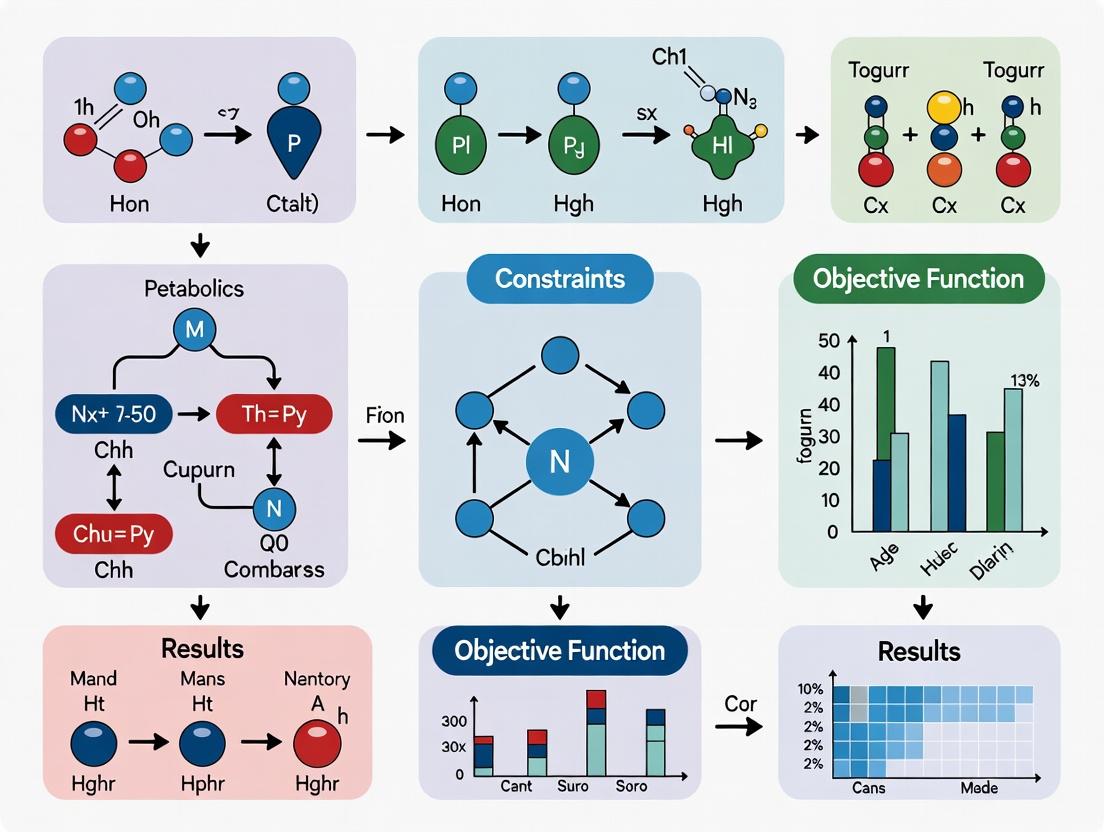
This article provides a comprehensive guide for researchers and bioprocess engineers on applying Flux Balance Analysis (FBA) to metabolic engineering.
Harnessing Flux Balance Analysis (FBA) for Advanced Metabolic Engineering: A Comprehensive Guide for Strain Design and Optimization
Abstract
This article provides a comprehensive guide for researchers and bioprocess engineers on applying Flux Balance Analysis (FBA) to metabolic engineering. It begins by establishing the foundational principles of FBA and constraint-based modeling, explaining their core role in predicting cellular phenotypes. The guide then details the practical methodology for integrating FBA into the Design-Build-Test-Learn (DBTL) cycle, showcasing its application for target identification and pathway prediction. We address common computational and biological challenges in FBA-driven design, offering strategies for model refinement and integration with omics data. Finally, the article covers rigorous validation techniques through 13C-MFA and comparative analysis of FBA against alternative modeling approaches, evaluating their respective strengths for different strain engineering objectives.
What is FBA in Metabolic Engineering? Core Principles and Foundational Concepts
Flux Balance Analysis (FBA) is a cornerstone computational technique in systems biology and metabolic engineering. It enables the prediction of steady-state metabolic flux distributions in an organism, facilitating the rational design of microbial cell factories for chemical production or the identification of therapeutic targets. FBA operates on a genome-scale metabolic model (GEM), which is a mathematical representation of all known metabolic reactions within a cell.
The core principle of FBA is the application of mass balance constraints, derived from the reaction stoichiometry, to define a space of possible metabolic flux distributions. An objective function (e.g., biomass maximization for growth, or target metabolite production) is then optimized within this constrained space using linear programming (LP).
The Stoichiometric Matrix (S): The Structural Foundation
The stoichiometric matrix, S, is the mathematical scaffold of a GEM. Each row corresponds to a metabolite, and each column corresponds to a biochemical reaction. The entries in the matrix are the stoichiometric coefficients for each metabolite in each reaction (negative for substrates, positive for products). Under the assumption of a steady state, the change in metabolite concentrations over time is zero, leading to the fundamental mass balance equation:
S · v = 0
Where v is the vector of reaction fluxes. This equation defines the system's null space, encompassing all feasible steady-state flux distributions.
Table 1: Example of a Minimal Stoichiometric Matrix
| Metabolite | v1 (A → B) | v2 (B → C) | v3 (C → D) | v4 (Biomass) |
|---|---|---|---|---|
| A | -1 | 0 | 0 | -0.1 |
| B | +1 | -1 | 0 | -0.5 |
| C | 0 | +1 | -1 | -0.2 |
| D | 0 | 0 | +1 | -0.3 |
| Biomass | 0 | 0 | 0 | +1 |
From Stoichiometry to Linear Programming
The mass balance constraint alone defines an infinite solution space. To find a biologically relevant solution, FBA formulates and solves a linear programming problem:
Objective: Maximize (or Minimize) Z = cᵀ·v Subject to:
- S · v = 0 (Steady-state mass balance)
- vlb ≤ v ≤ vub (Flux capacity constraints)
Here, c is a vector defining the objective function coefficients (e.g., c=1 for the biomass reaction, 0 for all others). The bounds (vlb, vub) incorporate thermodynamic (irreversibility) and kinetic (enzyme capacity) constraints.
Table 2: Key Components of the FBA Linear Programming Problem
| Component | Symbol | Description | Example Setting |
|---|---|---|---|
| Decision Variables | v | Vector of reaction fluxes. | [v1, v2, ..., vn] |
| Objective Coefficients | c | Weights for each flux in the objective. | [0, 0, ..., 1] for biomass |
| Constraints Matrix | S | Stoichiometric matrix. | Defined by the metabolic network. |
| Flux Lower Bound | v_lb | Minimum allowable flux for each reaction. | 0 for irreversible reactions, -∞ or -1000 for reversible. |
| Flux Upper Bound | v_ub | Maximum allowable flux for each reaction. | 10-20 mmol/gDW/hr for uptake, 1000 for internal. |
Protocol: Performing a Standard FBA Simulation
Objective: To predict the maximal growth rate of E. coli under glucose aerobic conditions.
Required Materials & Software:
- Computer: Standard workstation.
- Software: COBRA Toolbox (MATLAB) or COBRApy (Python).
- Model: A curated genome-scale metabolic model (e.g., iML1515 for E. coli).
Procedure:
- Model Acquisition & Loading:
- Download a validated GEM (e.g., from the BiGG Models database).
- Load the model into your chosen software environment using the appropriate function (
readCbModelin COBRA Toolbox,cobra.io.load_modelin COBRApy).
Environmental & Physiological Configuration:
- Set the lower bound of the glucose exchange reaction (e.g.,
EX_glc__D_e) to the desired uptake rate (e.g., -10 mmol/gDW/hr). - Set the lower bound of the oxygen exchange reaction (
EX_o2_e) to a high negative value (e.g., -20 mmol/gDW/hr) for aerobic conditions, or to 0 for anaerobic. - Ensure other carbon source exchange reactions are set to 0.
- Verify reaction irreversibility constraints are correctly applied.
- Set the lower bound of the glucose exchange reaction (e.g.,
Objective Function Definition:
- Set the biomass reaction (e.g.,
BIOMASS_Ec_iML1515_WT_75p37M) as the objective to be maximized. Use thechangeObjectivefunction.
- Set the biomass reaction (e.g.,
Linear Programming Solution:
- Execute the FBA simulation using the
optimizeCbModel(COBRA Toolbox) ormodel.optimize()(COBRApy) function. - The solver (e.g., GLPK, CPLEX, Gurobi) will return the optimal flux distribution.
- Execute the FBA simulation using the
Output Analysis:
- Extract and record the optimal objective value (growth rate, μ, in hr⁻¹).
- Analyze the flux vector (
v_opt) to examine the predicted pathway usage (e.g., glycolytic, TCA cycle fluxes). - Validate the solution by checking mass balance for key metabolites.
Troubleshooting:
- Infeasible Solution: Check for conflicting constraints (e.g., a required nutrient uptake bound set to 0).
- Zero Growth: Verify the medium composition allows for the synthesis of all biomass precursors.
- Unrealistically High Fluxes: Review and apply appropriate upper bounds for ATP maintenance (
ATPM) and transport reactions.
Application in Metabolic Engineering: Strain Design Protocol
Objective: To identify gene knockout targets for overproducing succinate in E. coli.
Protocol:
- Perform Wild-Type Simulation: Run FBA on the wild-type model with biomass maximization. Record the baseline succinate exchange flux (
EX_succ_e). - Define a Bilevel Optimization Problem: Formulate a strain design problem using techniques like OptKnock, which couples cellular growth (biomass objective) with a production objective (succinate output).
- Inner Problem: Cell maximizes biomass.
- Outer Problem: Engineer chooses knockouts to maximize succinate production, subject to the inner problem's optimal growth solution.
- Implement Algorithm:
- Use the
OptKnockfunction in the COBRA Toolbox or a similar implementation. - Specify the target production reaction (
EX_succ_e). - Set the maximum number of reaction (gene) knockouts to evaluate (e.g., 3).
- Use the
- Interpret Results:
- The algorithm returns a set of candidate reaction deletions (e.g.,
LDH_D: lactate dehydrogenase,PTAr: phosphotransacetylase). - For each candidate, perform a follow-up FBA simulation with those reactions constrained to zero and re-optimize for biomass. The predicted trade-off between growth and succinate yield can be plotted.
- The algorithm returns a set of candidate reaction deletions (e.g.,
Table 3: Example Output from an OptKnock Simulation for Succinate
| Knockout Set | Predicted Growth Rate (hr⁻¹) | Predicted Succinate Yield (mmol/gDW/hr) | Notes |
|---|---|---|---|
| Wild-Type | 0.85 | 0.0 | Base case. |
| Δ ldhA, Δ pta | 0.62 | 8.5 | Redirects flux from lactate & acetate. |
| Δ ldhA, Δ ackA | 0.58 | 9.1 | Similar redirect, different acetate node. |
| Δ pfl | 0.45 | 5.2 | Blocks formate & acetate production. |
The Scientist's Toolkit: Research Reagent Solutions
| Item | Function in FBA-Related Research |
|---|---|
| COBRA Toolbox / COBRApy | Open-source software suites providing the essential functions for constraint-based modeling and FBA. |
| CPLEX or Gurobi Optimizer | Commercial, high-performance linear programming solvers for large-scale models. |
| GLPK (GNU Linear Programming Kit) | Free, open-source solver suitable for most standard FBA problems. |
| BiGG Models Database | Repository of curated, genome-scale metabolic models for diverse organisms. |
| MEMOTE (Metabolic Model Testing) | Software tool for standardized and comprehensive testing of GEM quality. |
| ModelSEED / KBase | Web-based platforms for automated reconstruction and analysis of GEMs. |
| Defined Growth Media | Chemically defined media kits essential for in vitro validation of FBA-predicted phenotypes. |
| LC-MS/MS Metabolomics Kit | For measuring extracellular metabolite exchange fluxes, providing data for model validation and refinement. |
Diagrams
Title: FBA Workflow from Reconstruction to Solution
Title: FBA-Guided Knockout Strategy for Succinate
Application Notes
Genome-scale metabolic models (GEMs) are structured, mathematical representations of the metabolism of an organism. They form the indispensable computational scaffold for Flux Balance Analysis (FBA), a cornerstone technique in metabolic engineering for strain design. A GEM catalogs all known metabolic reactions, their stoichiometry, and gene-protein-reaction (GPR) associations, enabling the simulation of phenotypic states under defined constraints.
Current Trends and Quantitative Data (2023-2024): Recent advancements have focused on expanding model scope and enhancing predictive accuracy. Key trends include the integration of regulatory and thermodynamic constraints, the development of multi-tissue and community models, and the use of machine learning for model generation and refinement. The table below summarizes quantitative data from recent high-impact models and studies.
Table 1: Quantitative Metrics of Contemporary GEMs and FBA Applications
| Organism/Model Name | Year | Reactions | Metabolites | Genes | Primary Application in Metabolic Engineering | Key Prediction Accuracy (%)* |
|---|---|---|---|---|---|---|
| E. coli (iML1515) | 2020 | 2,712 | 1,872 | 1,517 | Succinate overproduction | 90-95 (growth) |
| S. cerevisiae (Yeast8) | 2021 | 3,885 | 2,615 | 1,147 | Sesquiterpene production | 88 |
| Human (HMR 3.0) | 2022 | 13,417 | 8,175 | 3,668 | Drug target identification (inborn errors) | N/A (tissue-specific) |
| B. subtilis (iBsu1107) | 2023 | 1,843 | 1,339 | 1,107 | Riboflavin overproduction | 91 |
| P. putida (iJN1463) | 2022 | 2,447 | 1,805 | 1,463 | Catechin production | 85 |
| Corynebacterium (iCGB21FR) | 2023 | 1,836 | 1,558 | 1,271 | L-Lysine production | 93 |
*Accuracy often reported as correlation between predicted and experimental growth rates or substrate uptake rates.
Protocols
Protocol 1: Core Workflow for Constraint-Based Strain Design Using a GEM
This protocol outlines the standard pipeline for utilizing a GEM to design an overproducing microbial strain.
Materials & Reagents:
- High-Quality Genome Annotation: For reaction and GPR inference.
- Biochemical Databases (e.g., MetaCyc, KEGG, BRENDA): For reaction stoichiometry and reversibility.
- Computational Environment: MATLAB with COBRA Toolbox v3.0+ or Python with cobrapy package.
- Omics Data (Optional but recommended): RNA-seq data for creating context-specific models.
- Experimental Validation Media: Defined minimal media for phenotype (growth/production) assays.
Procedure:
- Model Reconstruction/Selection: Begin with an existing high-quality GEM for your organism (e.g., from resources like BioModels). If unavailable, initiate reconstruction using automated tools like CarveMe or ModelSEED, followed by extensive manual curation.
- Model Contextualization: If using omics data, integrate gene expression (RNA-seq) to create a condition-specific model using methods like GIMME, iMAT, or INIT.
- Definition of Objective Functions: Set the biological objective for FBA. Common objectives are:
- Biomass maximization (for simulating growth).
- Maximization of a target metabolite exchange reaction (for production).
- Application of Constraints: Apply physicochemical and environmental constraints.
- Set lower/upper bounds (-1000 to 1000 mmol/gDW/h) for all exchange reactions.
- Constrain carbon source uptake (e.g., glucose: -10 mmol/gDW/h).
- Apply oxygen uptake bounds based on aeration conditions.
- Apply thermodynamic constraints (via loopless FBA) if necessary.
- Perform FBA and Variants: Run parsimonious FBA (pFBA) to predict wild-type flux distribution. Use techniques like:
- OptKnock/GeneKnock: To predict gene deletion strategies for coupled growth and production.
- FSEOF (Flux Scanning with Enforced Objective Flux): To identify up/down-regulation targets.
- Design Refinement and Validation: Simulate the designed strain in silico and rank strategies. Proceed to in vivo genetic implementation (e.g., CRISPR-Cas9) followed by cultivation and product titer measurement for validation.
Protocol 2: Generating a Context-Specific Model from RNA-seq Data
This protocol details the generation of a tissue- or condition-specific model using gene expression data and the iMAT algorithm.
Procedure:
- Data Preprocessing: Obtain RNA-seq data (FPKM or TPM values). Map gene identifiers to those in the generic GEM. Calculate percentile expression thresholds (e.g., genes above 60th percentile are "highly expressed," below 20th percentile are "lowly expressed").
- Algorithm Setup: Formulate the iMAT optimization problem using the COBRA Toolbox function
createTissueSpecificModel.- The objective is to maximize the number of reactions carrying flux whose associated genes are highly expressed, while minimizing flux through reactions associated with low-expression genes.
- Subject to: Steady-state mass balance (S*v = 0) and reaction bounds.
- Model Extraction: Solve the mixed-integer linear programming (MILP) problem. The solution defines an active subnetwork. Extract this as a context-specific model.
- Gap-Filling: Use a gap-filling algorithm (e.g.,
fillGaps) to add minimal reactions from the global model to ensure the extracted model can achieve a defined objective (e.g., produce biomass). - Validation: Test the predictive capability of the context-specific model against known metabolic functions of the tissue/condition.
The Scientist's Toolkit: Research Reagent Solutions
Table 2: Essential Materials for GEM Reconstruction and Validation
| Item | Function/Benefit |
|---|---|
| COBRA Toolbox (MATLAB) | The standard software suite for constraint-based modeling, providing functions for FBA, model reconstruction, and analysis. |
| cobrapy (Python) | A Python implementation of COBRA methods, enabling integration with modern data science and machine learning stacks. |
| MEMOTE (Model Testing) | A framework for standardized and continuous quality testing of genome-scale metabolic models. |
| Defined Minimal Media (e.g., M9, SM) | Essential for experimental validation of in silico predictions of growth phenotypes and exchange fluxes. |
| CRISPR-Cas9 Toolkit | Enables rapid, precise implementation of in silico-predicted gene knockouts/knock-ins in the host organism. |
| LC-MS/MS for Metabolomics | Used to measure intracellular and extracellular metabolite concentrations, providing data for constraint refinement (e.g., dFBA) and model validation. |
Visualizations
Application Notes: Integrating Constraints into FBA-Based Strain Design
Flux Balance Analysis (FBA) provides a computational framework to predict metabolic fluxes in genome-scale metabolic models (GEMs). However, its predictive power for metabolic engineering is limited without integrating key physiological, thermodynamic, and enzymatic constraints. These constraints transform an underdetermined solution space into a biologically feasible phenotype.
1.1 Physiological Boundaries (Box Constraints): These define the maximum permissible uptake and secretion rates for extracellular metabolites. They are derived from experimental measurements of substrate consumption, growth rates, and byproduct secretion under specific cultivation conditions. Incorporating these bounds prevents FBA from predicting physiologically impossible flux distributions.
1.2 Thermodynamic Constraints: These ensure that the predicted flux directions through reversible reactions are feasible according to Gibbs free energy (ΔG). Thermodynamically Infeasible Cycle (TIC) removal and the integration of thermodynamic data (e.g., from eQuilibrator) enforce energy conservation and eliminate futile cycles that would otherwise artificially generate ATP or redox cofactors.
1.3 Enzyme Capacity Constraints (Enzyme-Constrained Models): Standard FBA assumes unlimited catalytic capacity. Enzyme-constrained FBA (ecFLA) incorporates the molecular crowding effect and the finite availability of enzymatic proteins. It links metabolic flux to enzyme concentration via the turnover number (kcat), imposing a resource allocation constraint on total enzyme mass per cell.
Table 1: Quantitative Data for Common Constraint Parameters in Microbial FBA
| Constraint Type | Parameter | Typical E. coli Value | Source/Measurement Method | Impact on FBA Solution |
|---|---|---|---|---|
| Physiological: Glucose Uptake | Max. uptake rate | -10 to -15 mmol/gDW/h | Chemostat/Cultivation Data | Limits biomass & product yield. |
| Physiological: O2 Uptake | Max. uptake rate | -15 to -20 mmol/gDW/h | Respirometry | Constraints aerobic respiration. |
| Thermodynamic: ATPase | ΔG'° (pH 7, I=0.25 M) | -30 to -50 kJ/mol | Calorimetry / Database | Drives coupling of catabolism to growth. |
| Enzyme Capacity: Avg. kcat | Turnover number | 10-65 s⁻¹ | Proteomics & Fluxomics | Limits max flux per enzyme molecule. |
| Enzyme Capacity: Protein Mass Fraction | Max. enzyme mass | ~0.3 g enzyme / gDW | Proteomics & Cell Composition | Sets global limit on total flux sum. |
Experimental Protocols
Protocol 2.1: Determining Physiological Bounds for Glucose and Oxygen
Objective: To measure the maximal uptake rates of glucose and oxygen in a target microbial strain under defined conditions for use as FBA constraints.
Materials:
- Bioreactor or high-resolution respirometry system.
- Defined mineral medium.
- DO (Dissolved Oxygen) probe, pH probe.
- Off-gas analyzer (for O2/CO2).
- HPLC or enzymatic assay for glucose.
Procedure:
- Inoculate the bioreactor and allow culture to reach mid-exponential phase.
- Initiate a pulse of concentrated glucose solution to achieve a non-limiting concentration (e.g., 10 g/L).
- Continuously monitor: Dissolved Oxygen (% air saturation), off-gas O2 and CO2 concentrations, and glucose concentration via frequent sampling.
- Glucose Uptake Rate (GUR): Calculate from the linear decrease in glucose concentration over time, normalized to biomass (gDW).
- Oxygen Uptake Rate (OUR): Calculate using the dynamic method: OUR = - (dDO/dt + kLa*(DOsat - DO)), or from the off-gas balance using inlet/outlet O2 partial pressures and gas flow rate.
- Report the maximum observed rates as the negative upper bounds (
ub) for the respective exchange reactions in the FBA model.
Protocol 2.2: Integrating Thermodynamic Constraints using MAX-MIN Driving Force (MDF)
Objective: To compute thermodynamically feasible flux directions and identify bottleneck reactions.
Materials:
- Genome-scale metabolic model (e.g., in SBML format).
- Software: Cobrapy (Python) or the RAVEN Toolbox (MATLAB).
- Thermodynamic database (e.g., eQuilibrator API).
Procedure:
- Prepare Model: Identify all reversible reactions in the model.
- Gather ΔG'° Data: Use the eQuilibrator API (or manually curate) to obtain standard Gibbs free energies for each metabolite formation reaction. Adjust for physiological pH and ionic strength.
- Formulate MDF Problem: Implement the linear programming problem that maximizes the minimum driving force ( -ΔG / RT ) across all active reactions, subject to reaction stoichiometry and flux bounds.
- Solve & Apply: The solution provides a set of adjusted ΔG' values and identifies reactions operating at minimal driving force (thermodynamic bottlenecks). Apply directionality constraints (
lb,ub) to eliminate thermodynamically infeasible loops. - Validation: Compare predicted feasible pathways (e.g., for product synthesis) against experimental literature.
Protocol 2.3: Building an Enzyme-Constrained Model (ecFBA)
Objective: To integrate enzyme kinetic parameters into a GEM to predict flux distributions limited by proteomic allocation.
Materials:
- Base GEM (e.g., iML1515 for E. coli).
- Proteomics dataset (mass fraction of enzymes) for reference condition.
- Database of enzyme turnover numbers (kcat) (e.g., from BRENDA or SABIO-RK).
- Software: COBRAme extension or a custom implementation in Cobrapy.
Procedure:
- Match Enzymes to Reactions: Create a mapping between each metabolic gene/reaction and its catalyzing enzyme(s). Account for isozymes and enzyme complexes.
- Assign kcat Values: For each enzyme-reaction pair, assign a representative kcat (s⁻¹). Use organism-specific values where available; otherwise, use approximations.
- Formulate Mass Balance Constraint: For each reaction j, enforce: vj ≤ kcat,j · [Ej], where [Ej] is the concentration of the enzyme.
- Add Global Proteome Constraint: Enforce that the sum of all enzyme concentrations (converted to mass) does not exceed the total measured protein mass per cell (e.g., ~0.3 g/gDW): Σ ([Ej] · MWj) ≤ Ptotal.
- Simulate & Analyze: Perform FBA with these additional constraints. The objective function (e.g., biomass) will now be limited by the cell's capacity to synthesize necessary enzymes.
Visualizations
Title: Sequential Constraint Integration in FBA
Title: Constrained FBA Workflow for Strain Design
The Scientist's Toolkit: Research Reagent Solutions
Table 2: Essential Materials for Constraint-Based Modeling Research
| Item | Function in Research | Example Product / Specification |
|---|---|---|
| Defined Chemical Media | Provides controlled environment for measuring precise physiological bounds (uptake/secretion rates). | M9 Minimal Salts, 10x Concentrate. |
| Cultivation & Monitoring System | Enables high-resolution measurement of growth, substrate consumption, and gas exchange for bound determination. | DASGIP or Sartorius Bioreactor System with off-gas analyzer. |
| Metabolite Assay Kits | Quantifies extracellular metabolite concentrations (e.g., glucose, organic acids) to calculate uptake/secretion rates. | Glucose Assay Kit (GOPOD Format), HPLC standards. |
| Proteomics Sample Prep Kit | For digesting cellular proteins into peptides for LC-MS/MS analysis to determine enzyme abundance. | Filter-Aided Sample Preparation (FASP) Kit. |
| Thermodynamics Database Access | Provides curated standard Gibbs free energy data for metabolites, essential for thermodynamic constraint formulation. | eQuilibrator Web API (equilibrator.weizmann.ac.il). |
| Kinetics Database Access | Source for enzyme turnover numbers (kcat) needed to build enzyme-constrained models. | BRENDA Enzyme Database (www.brenda-enzymes.org). |
| COBRA Software Toolbox | Primary computational environment for building, constraining, and simulating metabolic models. | Cobrapy (Python) or COBRA Toolbox (MATLAB). |
Within the framework of a thesis on Flux Balance Analysis (FBA) for metabolic engineering strain design, the selection of an appropriate objective function is the fundamental computational step that defines the cellular goal. FBA predicts metabolic flux distributions by optimizing a chosen linear objective function, subject to stoichiometric constraints. The core dilemma lies in choosing an objective that best represents the engineered strain's desired physiological state, balancing between native cellular objectives (e.g., growth) and engineered production goals.
Common Objective Functions in FBA-Driven Strain Design
The following table summarizes the primary objective functions, their applications, and key considerations.
Table 1: Comparison of Key Objective Functions in FBA
| Objective Function | Mathematical Formulation | Primary Use Case in Metabolic Engineering | Key Advantages | Key Limitations | |||
|---|---|---|---|---|---|---|---|
| Biomass Maximization | Max v_biomass |
Simulating wild-type growth phenotypes; Predicting essential genes. | Represents evolutionary pressure for growth; Validated for many conditions. | May conflict with product formation; May not apply in stationary/non-growing production phases. | |||
| Product Yield Maximization | Max v_product |
Directly optimizing for the synthesis rate of a target compound (e.g., succinate, PHA). | Directly aligns with engineering goal. | Often predicts unrealistic, suicidal flux distributions with zero growth. | |||
| Weighted Sum (Biomass & Product) | Max (α * v_biomass + β * v_product) |
Designing strains that balance growth and production (biomass-coupled production). | Allows tunable trade-off; More physiologically realistic. | Choice of weights (α, β) is often arbitrary and requires validation. | |||
| Minimization of Metabolic Adjustment (MOMA) | Min `| | v - v_wt | ^2` | Predicting flux states after gene knockouts. | Assumes minimal rerouting from wild-type flux. | Not an FBA objective per se; a quadratic programming post-perturbation analysis. | |
| Resource Allocation / ME-Models | Complex (incorporates enzyme costs) | Predicting proteome-limited phenotypes and optimal enzyme expression. | Incorporates kinetic/thermodynamic constraints. | Computationally intensive; requires extensive parameterization. |
Application Notes
Choosing an Objective Function for Strain Design
The choice is context-dependent. For growth-associated products, a biomass-maximizing objective may suffice to identify knockouts that couple production to growth. For non-growth-associated products, a two-stage simulation is often necessary: first maximize biomass to establish a "growth phase" network, then maximize product yield with growth set to zero or a low maintenance value to simulate a "production phase."
Advanced Multi-Objective Optimization
Recent approaches treat strain design as a multi-objective optimization (MOO) problem, simultaneously considering biomass, product yield, yield, and robustness. Pareto front analysis reveals optimal trade-off solutions, eliminating the need for arbitrary weight selection in weighted sum methods.
Validating Objective Function Predictions
Predictions from any objective function must be validated experimentally. Key metrics include: specific growth rate (μ), product titer (g/L), yield (g-product/g-substrate), and productivity (g/L/h). Discrepancies often point to regulatory constraints not captured in the genome-scale model.
Experimental Protocols
Protocol 4.1:In SilicoStrain Design Using FBA with Alternative Objectives
Objective: To computationally identify gene knockout targets for enhanced succinate production in E. coli using different objective functions.
Materials & Software:
- Genome-scale metabolic model (e.g., iML1515 for E. coli K-12 MG1655).
- Constraint-based modeling software (COBRA Toolbox for MATLAB/Python, or similar).
- Standard computing hardware.
Procedure:
- Model Preparation: Load the genome-scale model. Define the cultivation medium constraints (e.g., aerobic, glucose-limited).
- Baseline Simulation: Perform FBA maximizing biomass (
v_biomass). Record the growth rate and succinate exchange flux (v_SUCCt). This is the wild-type reference. - Product Yield Maximization: Perform FBA maximizing
v_SUCCt. Observe the predicted flux distribution. Typically, biomass will be zero. - Biomass-Product Coupled Design:
a. Use the OptKnock or RobustKnock algorithm framework.
b. Implement the bi-level optimization: Outer problem maximizes
v_SUCCt, inner problem (representing cellular metabolism) maximizesv_biomasssubject to the knockout constraints. c. Solve for up to 3 gene knockout candidates (e.g.,ΔldhA, ΔackA-pta). - Validation Simulation: Apply the knockout constraints to the model. Perform FBA maximizing
v_biomass. Record the new predictedv_SUCCt. Compare to baseline. - Output: A ranked list of knockout strategies with predicted growth and production rates under a biomass-maximizing objective post-engineering.
Protocol 4.2: Experimental Validation of Predicted Phenotypes
Objective: To test the in silico predicted succinate-overproducing E. coli strain.
Materials: See "The Scientist's Toolkit" below.
Procedure:
- Strain Construction: Use P1 phage transduction or CRISPR-Cas9 genome editing to create the specified knockouts (e.g.,
ΔldhA, ΔackA-pta) in the wild-type E. coli background. - Cultivation: a. Inoculate 5 mL LB with a single colony and grow overnight (37°C, 250 rpm). b. Sub-culture into defined minimal medium (e.g., M9 with 10 g/L glucose) at an initial OD600 of 0.05 in biological triplicate. c. Incubate in baffled shake flasks (37°C, 250 rpm). Monitor growth by measuring OD600 every hour.
- Sampling and Analytics: a. Take 1 mL samples at mid-exponential (OD600 ~0.8) and stationary (OD600 plateau) phases. b. Centrifuge samples (13,000 x g, 5 min). Store pellet for potential omics analysis. Filter-sterilize (0.22 μm) the supernatant. c. Analyze supernatant via HPLC (Aminex HPX-87H column, 5 mM H2SO4 mobile phase, 0.6 mL/min, 50°C) for glucose, succinate, acetate, lactate, and formate concentrations.
- Data Analysis: a. Calculate specific growth rate (μ) from the exponential phase OD600 data. b. Calculate succinate yield (Yp/s) as (succinate produced) / (glucose consumed). c. Compare experimental μ and Yp/s to the FBA predictions from Protocol 4.1, Step 6.
Visualizations
Diagram 1: Objective Function Selection Workflow
Diagram 2: Two-Stage FBA for Non-Growth Associated Products
The Scientist's Toolkit: Essential Research Reagents & Materials
Table 2: Key Reagents for Strain Design & Validation Experiments
| Item | Function/Description | Example Product/Catalog |
|---|---|---|
| Genome Editing Kit | For precise chromosomal knockouts/edits in the host organism. | E. coli CRISPR-Cas9 Kit (e.g., Horizon Discovery), or Lambda Red Recombinase System kits. |
| Defined Minimal Medium | Provides controlled nutrient conditions for reproducible physiology and metabolite measurement. | M9 Minimal Salts (e.g., Sigma-Aldrich M6030), supplemented with defined carbon source (e.g., D-Glucose). |
| HPLC System with RI/UV Detector | Quantifies extracellular metabolite concentrations (sugars, organic acids) in culture supernatant. | Agilent 1260 Infinity II, Bio-Rad Aminex HPX-87H column. |
| Microplate Reader | High-throughput measurement of optical density (OD600) for growth kinetics. | Thermo Fisher Multiskan SkyHigh, paired with 96-well cell culture plates. |
| COBRA Toolbox | Open-source software suite for constraint-based modeling and FBA simulations. | https://opencobra.github.io/cobratoolbox/ (MATLAB) or cobrapy (Python). |
| Genome-Scale Metabolic Model | Structured knowledgebase of organism metabolism for in silico predictions. | From repositories like http://bigg.ucsd.edu/ (e.g., iML1515 for E. coli). |
Flux Balance Analysis (FBA) is a cornerstone constraint-based modeling technique used to predict steady-state metabolic flux distributions in genome-scale metabolic networks. Within the broader thesis of employing FBA for metabolic engineering strain design, understanding these predicted flux distributions is paramount. They map directly to phenotypic states—such as maximal growth yield, metabolite overproduction, or enzyme knockout viability—enabling rational design of microbial cell factories for biochemical production, biofuel synthesis, and drug precursor development.
Core Concepts and Quantitative Predictions
FBA solves a linear programming problem to optimize an objective function (e.g., biomass production) subject to stoichiometric constraints (S∙v = 0) and flux capacity constraints (α ≤ v ≤ β). The primary output is a flux vector (v) representing the predicted rate of each biochemical reaction.
Table 1: Common Objective Functions and Resulting Phenotypic States in FBA
| Objective Function | Typical Application | Key Predicted Phenotype | Engineering Relevance |
|---|---|---|---|
| Maximize Biomass (Z = v_biomass) | Simulate cellular growth | Optimal growth rate & yield | Baseline physiology, growth-coupled production |
| Maximize/Target Metabolite Production (Z = v_product) | Overproduction strains | Theoretical maximum yield (gram/gDW) | Identifying production bottlenecks |
| Minimize ATP Production | Simulate metabolic efficiency | Energy-efficient flux routing | Reducing metabolic burden |
| Minimize Metabolic Adjustment (MOMA) | Predict knockout effects | Sub-optimal flux distribution post-perturbation | Predicting essential genes & synthetic lethality |
Table 2: Typical FBA Output Flux Distribution Summary (Example: E. coli Succinate Production)
| Reaction Identifier | Flux Value (mmol/gDW/hr) | Pathway | Interpretation |
|---|---|---|---|
| GLCPTS | -10.0 | Glucose Uptake | Substrate uptake rate |
| PGI | 8.5 | Glycolysis | Flux splitting at glucose-6-P |
| GAPD | 17.0 | Glycolysis | Lower glycolysis flux |
| PDH | 5.2 | TCA Cycle | Acetyl-CoA generation |
| SUCDi | 12.3 | TCA Cycle | Target: Succinate export flux |
| BIOMASS_Ecoli | 0.4 | Biomass Synthesis | Compromised growth for production |
| ATPS4r | 45.6 | Oxidative Phosphorylation | ATP maintenance demand |
Application Notes: From Flux Maps to Engineering Decisions
Note 1: Interpreting Flux Variability Analysis (FVA). A single optimal flux distribution is often non-unique. FVA calculates the minimum and maximum possible flux for each reaction within the optimal solution space. Reactions with zero variability are rigidly determined; others offer flexibility. Engineers can target flexible, high-flux reactions for modulation.
Note 2: Predicting Gene Essentiality. By simulating the reaction flux after setting the bounds of gene-associated reaction(s) to zero, FBA predicts knockout growth. A growth rate below a threshold (e.g., <5% of wild-type) suggests an essential gene—a critical insight for identifying non-negotiable pathways.
Note 3: Designing Knockout Strategies for Overproduction. Use FBA to simulate double/triple knockouts that force flux rerouting towards a desired product via OptKnock or similar algorithms. This identifies non-intuitive genetic modifications that couple product secretion to growth.
Detailed Experimental Protocols
Protocol 1: Standard FBA for Growth Phenotype Prediction Objective: Predict wild-type growth rate and essential genes.
- Model Acquisition: Download a consensus genome-scale model (e.g., E. coli iJO1366, S. cerevisiae iMM904) from BiGG or similar repository.
- Constraint Definition:
- Set medium constraints: Lower bound of exchange reaction for carbon source (e.g.,
EX_glc__D_e) to -10 mmol/gDW/hr. Set others (O2, NH4) as required. - Set ATP maintenance requirement (
ATPM) typically to 8.39 mmol/gDW/hr.
- Set medium constraints: Lower bound of exchange reaction for carbon source (e.g.,
- Objective Setting: Define biomass reaction (
BIOMASS_Ecoli_core) as the objective to maximize. - Linear Programming Solution: Use the
optimizeCbModelfunction in COBRA Toolbox (MATLAB/Python) or equivalent software (PySCeS, COBRApy). - Output Analysis: Record optimal growth rate (objective value) and inspect key pathway fluxes (Glycolysis, TCA Cycle).
Protocol 2: Flux Variability Analysis (FVA) for Identification of Flexible Nodes Objective: Determine the range of possible fluxes for all reactions at optimal growth.
- Perform Standard FBA (Protocol 1, steps 1-4).
- Fix Objective Value: Constrain the biomass reaction flux to ≤ 99% of its optimal value to explore sub-optimal space, or to 100% for exact optimum.
- Iterative Minimization/Maximization: For each reaction
iin the model:- Minimize flux
v_isubject to constraints from Step 2. RecordminFlux_i. - Maximize flux
v_isubject to same constraints. RecordmaxFlux_i.
- Minimize flux
- Calculate Variability:
Variability_i = maxFlux_i - minFlux_i. - Target Identification: Rank reactions by absolute flux and variability. High-flux, high-variability reactions are prime candidates for genetic manipulation (e.g., overexpression, knockdown).
Protocol 3: In Silico Gene Knockout Simulation using FBA Objective: Predict growth phenotype of single gene deletion strains.
- Load model and set standard conditions (Protocol 1, steps 1-2).
- Map Gene to Reaction: Use model
geneRules(boolean logic linking genes to reactions). - Perturb Model: For a target gene
G:- Identify all reactions
Rdependent onG. - Set the lower and upper bounds of each reaction in
Rto zero ifGis essential for the reaction according togeneRules.
- Identify all reactions
- Re-run FBA: Maximize biomass flux in the perturbed model.
- Classify Essentiality: If predicted growth rate < 0.05 * (wild-type growth rate), classify gene
Gas essential. Validate with genomic knockout libraries (e.g., Keio collection for E. coli).
Visualizations
Diagram Title: FBA Workflow from Inputs to Strain Design Predictions
Diagram Title: Simplified Flux Map for Succinate Production in E. coli
The Scientist's Toolkit: Key Research Reagent Solutions
Table 3: Essential Computational and Experimental Tools for FBA-Guided Research
| Tool/Reagent Category | Specific Name/Example | Function in FBA Workflow | Key Provider/Resource |
|---|---|---|---|
| Genome-Scale Models | E. coli iJO1366, S. cerevisiae iMM904, Human1 | Provide the stoichiometric matrix (S) and reaction constraints. | BiGG Models, MetaNetX, ModelSEED |
| Constraint-Based Software | COBRA Toolbox (MATLAB), COBRApy (Python), OptFlux | Perform FBA, FVA, knockout simulation, and strain design algorithms. | Open Source (GitHub) |
| LP/QP Solvers | Gurobi, CPLEX, GLPK | Computational engines for solving the optimization problem. | Gurobi Optimization, IBM, GNU Project |
| Omics Data Integration | RNA-seq transcriptomics, LC-MS proteomics | Generate context-specific models or adjust flux constraints. | Illumina, Thermo Fisher Scientific |
| Genetic Engineering Kits | CRISPR-Cas9 kits, Gibson Assembly masters | Experimentally validate FBA-predicted knockouts/overexpressions. | Thermo Fisher, NEB, SnapGene |
| Flux Validation Standards | 13C-labeled glucose (U-13C6), LC-MS/MS | Measure in vivo metabolic fluxes for model validation. | Cambridge Isotope Laboratories |
| Cell Growth Media | Defined minimal media (e.g., M9, CDM) | Precisely control nutrient availability to match model constraints. | Teknova, Sigma-Aldrich |
| High-Throughput Phenotyping | BioLector, Growth Curves | Measure growth phenotypes of engineered strains. | m2p-labs, Molecular Devices |
How to Apply FBA for Strain Design: A Step-by-Step Methodological Framework
Integrating FBA into the Design-Build-Test-Learn (DBTL) Cycle
Within metabolic engineering strain design research, Flux Balance Analysis (FBA) is a cornerstone computational technique for predicting metabolic fluxes under steady-state assumptions. Its integration into the iterative Design-Build-Test-Learn (DBTL) cycle accelerates the rational development of high-performing microbial cell factories. This protocol details the application of FBA at each stage of the DBTL framework, providing a systematic approach for researchers and drug development professionals to optimize strains for metabolite overproduction.
FBA-Integrated DBTL Workflow & Protocols
Diagram: FBA in the DBTL Cycle
(Title: FBA Integration Points in the DBTL Cycle)
Phase-Specific Protocols
Phase 1: DESIGN (FBA-Driven Hypothesis Generation)
Protocol 1.1: In silico Strain Design Using FBA
Objective: Identify gene knockout, knockdown, or overexpression targets to maximize the theoretical yield of a target compound.
Methodology:
- Model Selection/Reconstruction: Select a genome-scale metabolic model (GEM) relevant to your host organism (e.g., E. coli iJO1366, S. cerevisiae iMM904).
- Define Objective Function: Set the biomass reaction as the objective for growth simulation. For production, create a demand reaction for the target metabolite.
- Simulation & Analysis: a. Perform pFBA (parsimonious FBA) to simulate wild-type flux distributions under relevant conditions. b. Use OptKnock or similar algorithms (via COBRApy or MATLAB COBRA Toolbox) to computationally identify gene deletion strategies that couple target metabolite production with growth. c. Perform flux variability analysis (FVA) to assess the robustness of predicted solutions.
- Output: A prioritized list of genetic modifications.
Data Presentation: Table 1: Sample FBA Prediction for Succinate Overproduction in E. coli
| Strain Design (Knockouts) | Predicted Succinate Yield (mol/mol Glucose) | Predicted Growth Rate (1/h) | Essentiality Check |
|---|---|---|---|
| Wild-Type | 0.09 | 0.42 | - |
| ΔldhA, Δpta | 0.65 | 0.38 | Pass |
| ΔldhA, ΔackA | 0.67 | 0.35 | Pass |
| ΔpflB | 0.55 | 0.25 | Pass |
Phase 2: BUILD (Informed Genetic Construction)
Protocol 2.1: Implementing FBA-Guided Designs
Objective: Construct strains based on FBA-predicted modifications using modern genetic tools.
Methodology: Utilize CRISPR-Cas9 or multiplexed automated genome engineering (MAGE) for rapid, precise implementation of knockouts/overexpression targets from Phase 1. Clone key pathway genes under tunable promoters as suggested by FBA flux predictions.
Phase 3: TEST (Data Generation for Model Refinement)
Protocol 3.1: Generating Experimental Data for FBA Validation
Objective: Acquire quantitative data to test FBA predictions and inform model learning.
Methodology:
- Cultivation: Grow engineered strains in controlled bioreactors with defined media.
- Data Collection: Measure:
- Growth rates (OD600).
- Substrate uptake rates (e.g., glucose via HPLC).
- Product secretion rates (via HPLC/GC-MS).
- 13C Metabolic Flux Analysis (13C-MFA): For key strains, perform 13C labeling experiments to obtain in vivo central carbon flux maps for direct comparison with FBA predictions.
Data Presentation: Table 2: Experimental vs. FBA-Predicted Fluxes for ΔldhA Strain
| Metabolic Reaction | Experimental 13C-MFA Flux (mmol/gDCW/h) | FBA-Predicted Flux (mmol/gDCW/h) | Relative Error (%) |
|---|---|---|---|
| Glucose Uptake | 8.5 ± 0.3 | 9.1 | 7.1 |
| TCA Cycle (AKG → Suc-CoA) | 3.1 ± 0.2 | 4.0 | 29.0 |
| Target Product Secretion | 5.2 ± 0.4 | 5.8 | 11.5 |
Phase 4: LEARN (Model Updating & Loop Closure)
Protocol 4.1: Constraining and Refining GEMs with Experimental Data
Objective: Update the metabolic model to improve its predictive accuracy for subsequent DBTL cycles.
Methodology:
- Flux Constraint: Integrate measured uptake/secretion rates from Phase 3 as new bounds in the model.
- Gap Filling & Curation: If large discrepancies exist (e.g., Reaction in Table 2), interrogate model for missing isozymes, incorrect gene-protein-reaction rules, or regulatory constraints.
- Model Expansion: Incorporate proteomic or transcriptomic data to create enzyme-constrained models (ecModels) for more accurate predictions.
- Re-simulate: Run FBA with the updated, data-constrained model to generate new, more reliable design hypotheses, closing the DBTL loop.
Diagram: Data Integration for Model Learning
(Title: Learning Phase: Data Integration for Model Refinement)
The Scientist's Toolkit: Key Research Reagent Solutions
Table 3: Essential Materials for FBA-Integrated DBTL Workflows
| Item/Category | Specific Example/Product | Function in Workflow |
|---|---|---|
| Genome-Scale Models | BiGG Models Database, MetaNetX | Provides curated, community-standard metabolic reconstructions for FBA. |
| FBA Software | COBRA Toolbox (MATLAB), COBRApy (Python), OptFlux | Enables constraint-based modeling, simulation (FBA, pFBA), and strain design algorithms. |
| Strain Engineering | CRISPR-Cas9 kits, MAGE oligonucleotides, Gibson Assembly mix | For precise, rapid implementation of in silico-predicted genetic modifications. |
| Analytical Chemistry | HPLC with RI/UV detector, GC-MS, LC-MS/MS | Quantifies substrate consumption and product formation (Test Phase). |
| 13C-MFA Substrates | [1-13C] Glucose, [U-13C] Glucose | Labeled carbon sources for experimental flux determination to validate/refine FBA models. |
| 13C-MFA Software | INCA, IsoCor2, OpenFlux | Analyzes mass isotopomer distribution data to calculate in vivo metabolic fluxes. |
| Omics Integration | ecModel Builder (GECKO), sMOMENT | Tools to integrate proteomic data and build enzyme-constrained models for improved FBA. |
Application Notes: The Central Role of Model Curation in Metabolic Engineering
The foundation of any successful metabolic engineering project relying on Flux Balance Analysis (FBA) is a high-quality, organism-specific genome-scale metabolic model (GEM). Curation and contextualization transform a generic metabolic network reconstruction into a computational chassis that accurately reflects the host organism's physiology under defined conditions. This step directly impacts the predictive power of all subsequent in silico strain design strategies, including gene knockout predictions, nutrient optimization, and identification of non-native pathways for therapeutic compound production. For drug development, this enables the rational design of microbial cell factories for antibiotics, precursor molecules, or biotherapeutics, reducing costly trial-and-error in lab-scale fermentation.
Key Objectives of Model Curation
- Completeness: Ensure the reaction network includes all major metabolic pathways relevant to the experimental or production condition.
- Accuracy: Correct gene-protein-reaction (GPR) associations, reaction stoichiometry, and directionality.
- Contextualization: Refine the model to reflect specific experimental conditions (e.g., aerobic/anaerobic, defined media, stress responses).
- Validation: Compare model predictions (growth rates, substrate uptake, by-product secretion) with quantitative experimental data.
Protocols for Model Curation and Contextualization
Protocol 2.1: Initial Model Acquisition and Assessment
Objective: Obtain a base genome-scale metabolic model for your host organism and perform a preliminary gap analysis.
Materials:
- Host organism genomic data and strain designation.
- Bioinformatics databases (see Toolkit).
- Software: Cobrapy, RAVEN Toolbox, or MATLAB COBRA Toolbox.
Methodology:
- Source Identification: Search model repositories (e.g., BioModels, BIGG Models) for the most recent GEM of your host (e.g., E. coli iJO1366, S. cerevisiae iMM904, CHO cells).
- Import and Audit: Load the model into your chosen software. Review key metadata: number of genes, reactions, metabolites, and compartments.
- Functional Test: Perform a basic FBA simulation under permissive conditions (rich medium) to verify the model produces biomass.
- Gap Analysis: Simulate growth on minimal media with a single carbon source (e.g., glucose). Use built-in
gapfillfunctions to identify and log reactions preventing growth, which require manual curation.
Table 1: Example GEM Statistics for Common Host Organisms
| Host Organism | Model Name | Genes | Reactions | Metabolites | Primary Reference |
|---|---|---|---|---|---|
| Escherichia coli K-12 MG1655 | iJO1366 | 1,367 | 2,583 | 1,805 | Orth et al., 2011 |
| Saccharomyces cerevisiae S288C | iMM904 | 904 | 1,412 | 1,223 | Mo et al., 2009 |
| Chinese Hamster Ovary (CHO) | iCHO1766 | 1,766 | 5,801 | 3,798 | Hefzi et al., 2016 |
| Bacillus subtilis 168 | iYO844 | 844 | 1,250 | 1,003 | Oh et al., 2007 |
Protocol 2.2: Manual Curation of Gene-Protein-Reaction (GPR) Rules
Objective: Update and correct Boolean logic (AND/OR) associating genes with catalyzed reactions.
Materials:
- Current genomic annotation (e.g., from NCBI, UniProt).
- Primary literature on enzyme complexes in the host organism.
- Software: Excel, COBRApy.
Methodology:
- Extract the GPR list from the model.
- For reactions central to your engineering objective (e.g., biosynthesis of a target drug precursor), verify each gene identifier against the latest genome annotation. Update obsolete IDs.
- Review complex subunits: Determine if an enzyme requires multiple subunits (gene1 AND gene2) or if isozymes exist (gene1 OR gene2).
- Implement changes in the model using the software's reaction editing functions.
- Document all changes in a curation log.
Protocol 2.3: Contextualization via Transcriptomic Data Integration
Objective: Constrain the generic model to reflect a specific physiological state.
Materials:
- RNA-Seq or microarray data from your host under the condition of interest (e.g., high yield fermentation, stress).
- Normalized gene expression values (TPM, FPKM).
- Software: RAVEN Toolbox (MATLAB) or implementation of GIMME, iMAT, or INIT algorithms.
Methodology:
- Data Mapping: Map gene identifiers from the expression dataset to the gene IDs in the metabolic model.
- Threshold Definition: Set expression thresholds to classify genes as "high" or "low" expressed (e.g., top/bottom 25th percentile).
- Algorithm Application: Use an algorithm like iMAT to find a metabolic network that carries flux while maximizing the number of highly expressed reactions and minimizing lowly expressed ones.
- Generate Contextualized Model: The output is a condition-specific model with added constraints on reaction fluxes based on expression.
- Validate: Predict growth or by-product secretion with the contextualized model and compare to experimental data from the same condition.
Table 2: Quantitative Impact of Contextualization on Model Predictions
| Constraint Method | Model Version | Predicted Growth Rate (hr⁻¹) | Experimental Growth Rate (hr⁻¹) | Key Altered Flux (Example) |
|---|---|---|---|---|
| None (Minimal Media) | E. coli iJO1366 | 0.85 | 0.82 | Succinate secretion: 8.5 mmol/gDW/h |
| + Anaerobic Constraint | Contextualized Model | 0.31 | 0.29 | Succinate secretion: 24.1 mmol/gDW/h |
| + Transcriptomics (iMAT) | Condition-Specific Model | 0.28 | 0.29 | TCA cycle flux reduced by ~65% |
Protocol 2.4: Experimental Validation of the Curated Model
Objective: Obtain quantitative data to validate and refine model predictions.
Materials:
- Host organism strain.
- Bioreactor or controlled environment shake flasks.
- Defined growth medium.
- Analytics: HPLC/GC for metabolites, spectrophotometer for OD600, CO₂ analyzer.
Methodology:
- Cultivate the host in biological triplicate under precisely defined conditions (temperature, pH, dissolved O₂, minimal medium).
- Measure time-course data: Optical density (OD600), substrate concentration (e.g., glucose), and excretion products (e.g., acetate, ethanol).
- Calculate specific growth rate (μ), substrate uptake rate (qs), and product secretion rates (qp) during exponential phase.
- Input these measured exchange rates as constraints into the curated model.
- Run FBA to predict the remaining exchange fluxes and internal flux distribution. Compare predicted vs. measured biomass yield. Discrepancies guide further model refinement.
The Scientist's Toolkit: Research Reagent Solutions
Table 3: Essential Reagents and Resources for Model Curation
| Item | Function/Description | Example/Source |
|---|---|---|
| COBRA Toolbox (MATLAB) | Primary software suite for constraint-based modeling, simulation, and analysis. | https://opencobra.github.io/cobratoolbox/ |
| COBRApy (Python) | Python version of the COBRA tools, enabling scripting and integration with ML pipelines. | https://opencobra.github.io/cobrapy/ |
| BIGG Models Database | A curated repository of high-quality, genome-scale metabolic models. | http://bigg.ucsd.edu |
| ModelSEED / KBase | Platform for automated reconstruction and analysis of GEMs. | https://modelseed.org/ |
| UniProt Database | Provides comprehensive, cross-referenced protein information for GPR rule validation. | https://www.uniprot.org |
| Biolog Phenotype Microarrays | Experimental plates for high-throughput generation of growth phenotyping data for model validation. | Biolog Inc. |
| Defined Chemical Media | Essential for generating reproducible experimental data to constrain and validate models (e.g., M9, CD-CHO). | Sigma-Aldrich, Thermo Fisher |
| RNA Sequencing Kit | Generates transcriptomic data for model contextualization (e.g., Illumina NovaSeq). | Illumina, NZYTech |
Visualizations
Model Curation and Validation Workflow
Generating a Context-Specific Model
Application Notes
Within the context of a thesis on Flux Balance Analysis (FBA) for metabolic engineering strain design, this stage is critical for translating a validated metabolic model into a blueprint for strain construction. In silico knockout analysis systematically simulates the removal of single or multiple metabolic reactions (or their associated genes) to predict phenotypic consequences. The primary objectives are to identify: (1) Essential Genes/Reactions whose deletion abolishes growth or target metabolite production, thereby highlighting non-optimal knockouts; (2) High-Impact Knockouts that increase flux towards a desired product while minimizing byproduct formation; and (3) Synthetic Lethal Pairs, which represent potential combinatorial knockout targets that are non-lethal individually but lethal together, offering precision in dynamic pathway regulation.
The analysis leverages constraint-based modeling, where the reaction flux constraint for a knockout (ν = 0) is applied, and the model is re-optimized for biomass or product yield. Key computational methods include:
- Single Reaction Deletion: Predicts growth rates or product yields after individual knockouts. Reactions causing a significant drop in objective function are flagged.
- Double/Multiple Reaction Deletion: Identifies synergistic effects. This is computationally intensive but crucial for identifying non-obvious targets.
- Minimal Cut Set (MCS) Analysis: Computes minimal sets of reactions whose deletion forces a desired phenotypic switch (e.g., growth coupling to product synthesis).
- Robustness Analysis: Varies the flux through a knocked-out reaction to assess the sensitivity of the objective function.
Recent advances integrate regulatory networks (rFBA) and thermodynamic constraints (TFA) to improve prediction accuracy, moving beyond purely stoichiometric considerations. This step directly informs wet-lab experiments, prioritizing a shortlist of genetic modifications for constructing overproducing strains.
Protocols
Protocol 1: Single Gene/Reaction Knockout Simulation Using COBRApy
Objective: To simulate the deletion of individual metabolic reactions and quantify the impact on cellular growth and target product formation.
Materials & Software:
- A validated genome-scale metabolic model (GSMM) in SBML format.
- COBRApy library (v0.26.3 or higher) in a Python 3.8+ environment.
- Jupyter Notebook or Python script environment.
- Optimized solver (e.g., GLPK, CPLEX, Gurobi).
Procedure:
- Model Loading & Preparation:
Define Objective Functions: Set the primary objective (e.g., biomass) and a secondary production objective (e.g., succinate).
Perform Single Deletions:
Analyze Results: Identify essential reactions (growth < 1% of wild-type) and reactions that enhance product yield when deleted.
Output: Generate a table of essential reactions and candidate knockout targets.
Protocol 2: Identification of Minimal Cut Sets (MCS) for Growth-Coupled Production
Objective: To compute minimal sets of reaction deletions that obligately couple cell growth to the production of a target compound.
Materials & Software:
- GSMM in SBML format.
- COBRApy and
pymcs(orMCS-specific) Python package. - Sufficient computational resources (MCS calculation is NP-hard).
Procedure:
- Define Target and Desired Functions:
- Target Reaction (Rprod): Production reaction to be forced (e.g., succinate export).
- Undesired Function (F1): Wild-type state with low product yield. Typically defined as a network state where product flux is below a threshold (e.g., < 1 mmol/gDW/h) while biomass is above a threshold.
- Desired Function (F2): Coupled state where a minimum product yield is achieved for any feasible growth rate.
- Formulate MCS Problem:
Calculate MCS: Use combinatorial algorithms (e.g., Berge's algorithm for elementary modes).
Rank & Filter MCS: Rank MCS by size (smaller sets are preferred for engineering), feasibility of genetic implementation, and predicted growth rate.
- Output: A ranked list of minimal reaction deletion sets for strain design.
Data Presentation
Table 1: Impact of Single Reaction Deletions on Biomass and Succinate Yield in E. coli Core Model
| Reaction ID | Gene Association | Growth Rate (1/h) | Succinate Yield (mmol/gDW/h) | Classification | Notes |
|---|---|---|---|---|---|
| PFK | pfkA | 0.0 | 0.0 | Essential | Blocks glycolysis. |
| LDH_D | ldhA | 0.89 | 0.15 | Neutral | Minor growth impact. |
| PTAr | pta | 0.85 | 0.18 | Beneficial | Increases succinate flux by 12%. |
| ACKr | ackA | 0.84 | 0.19 | Beneficial | Reduces acetate byproduct. |
| PFL | pflB | 0.78 | 0.22 | Promising | Significantly redirects flux. |
| Wild Type | - | 0.88 | 0.16 | Baseline | - |
Table 2: Top Minimal Cut Sets (MCS) for Growth-Coupled Succinate Production
| MCS ID | Reaction Deletions (Gene Knockouts) | Max. Theoretical Yield (mol/mol Glc) | Predicted Growth Rate (1/h) | Engineering Priority |
|---|---|---|---|---|
| MCS-01 | ACKr (ackA), PFL (pflB) | 1.12 | 0.71 | High (2 deletions) |
| MCS-12 | LDH_D (ldhA), ACKr (ackA), PTA (pta) | 1.21 | 0.65 | Medium (3 deletions) |
| MCS-08 | PPC (ppc), ME2 (maeB) | 0.94 | 0.45 | Low (Alters TCA) |
Visualization
Title: In Silico Knockout Analysis Workflow
Title: Flux Redirection via Strategic Gene Knockouts
The Scientist's Toolkit
Table 3: Key Research Reagent Solutions for In Silico Knockout Analysis
| Item | Function in Analysis | Example/Supplier |
|---|---|---|
| Genome-Scale Metabolic Model (GSMM) | The core computational representation of metabolism for constraint-based simulation. | BiGG Models Database, MetaNetX, CarveMe (for reconstruction). |
| COBRA Toolbox | The standard MATLAB suite for constraint-based modeling, including knockout functions. | opencobra.github.io (GitHub). |
| COBRApy | Python implementation of COBRA methods, essential for automated, high-throughput analysis. | pip install cobra. |
| SBML File | Systems Biology Markup Language file; the standard interoperable format for sharing models. | Model repositories like BioModels, BiGG. |
| Linear Programming (LP) Solver | Computational engine for solving the optimization problem at the heart of FBA. | GLPK (open source), CPLEX/Gurobi (commercial, high-performance). |
| MCS Calculation Tool | Specialized software for computing Minimal Cut Sets. | pymcs (Python), CellNetAnalyzer (MATLAB). |
| Jupyter Notebook | Interactive environment for documenting, sharing, and executing analysis workflows. | Project Jupyter (jupyter.org). |
Application Notes: Integrating Route Prediction into FBA-Driven Strain Design
Within a metabolic engineering thesis centered on Flux Balance Analysis (FBA) for strain design, Step 3 is the computational pivot from network analysis to actionable design. After reconstructing a genome-scale metabolic model (GEM) and validating its predictions, the objective is to algorithmically identify the most efficient pathways within the organism's metabolism for synthesizing a novel target compound.
This step leverages constraint-based modeling to navigate the hyper-dimensional solution space of metabolic fluxes, seeking routes that maximize product yield while maintaining cellular viability. The predictions directly inform genetic interventions—knockouts, knock-ins, and regulatory modifications—for subsequent experimental validation.
Table 1: Comparison of Computational Tools for Metabolic Route Prediction
| Tool Name | Primary Algorithm | Key Inputs | Key Outputs | Optimal Use Case |
|---|---|---|---|---|
| OptKnock | Bi-level Optimization (MILP) | GEM, Target Reaction, Growth Medium | Knockout Strategies | Maximizing product yield while coupling to growth. |
| GDLS | Genetic Algorithm / Simulated Annealing | GEM, Target Reaction, Max Knockouts | Ranked Knockout Sets | Searching large genetic spaces for growth-coupled designs. |
| FSEOF | Flux Scanned Enforced Objective Flux | GEM, Target Reaction | List of Reactions with Flux Increase | Identifying native up/down-regulation targets. |
| Pathway Tools | Biochemical DB & Prediction | Compound Structure, Organism DB | Putative Heterologous Pathways | Designing novel pathways not present in host. |
| CASOP | LP and Genetic Algorithm | GEM, Desired Product | Knockout and Non-Native Reaction Strategies | Identifying optimal combination of deletions and insertions. |
Table 2: Quantitative Output Metrics for Predicted Routes
| Metric | Formula/Description | Target Threshold (Example: Artemisinin Precursor) |
|---|---|---|
| Theoretical Maximum Yield | ( \frac{max\ (v{product})}{v{substrate}} ) (mmol/mmol) | ≥ 0.35 mmol/mmol Glucose |
| Predicted Productivity | ( v_{product} ) (mmol/gDW/h) | > 0.1 mmol/gDW/h |
| Growth-Coupling Strength | Correlation (( v{growth}, v{product} )) in OptKnock solution | Positive Correlation (R² > 0.7) |
| Number of Required Interventions | Sum of gene knockouts & heterologous insertions | Minimize (< 5 for initial design) |
| Pathway Length | Number of enzymatic steps from central metabolite to product | Minimize (e.g., ≤ 8 steps) |
| Thermodynamic Feasibility | ΔG' of pathway reactions (kcal/mol) | Overall pathway ΔG' < 0 |
Experimental Protocols
Protocol 2.1:In SilicoIdentification of Optimal Knockouts Using OptKnock
Objective: To compute a set of gene knockout strategies that genetically force the production of a target metabolite while maintaining a baseline growth rate.
Materials (Research Reagent Solutions):
- Software: COBRA Toolbox (MATLAB/Python), Gurobi/CPLEX solver.
- Input Data: A curated, context-specific GEM (e.g., iML1515 for E. coli). Defined exchange reaction bounds for the intended growth medium.
- Hardware: Computer with ≥16 GB RAM and multi-core processor.
Procedure:
- Model Loading & Preparation: Import the GEM into the COBRA Toolbox. Set the lower bound of the glucose exchange reaction (e.g.,
EX_glc__D_e) to -10 mmol/gDW/h and oxygen (EX_o2_e) to -20 mmol/gDW/h to simulate aerobic conditions. Set the target product exchange reaction (e.g.,EX_amorpha4_11_diene_e) lower bound to 0. - Define Objective Functions: Set the biomass reaction as the primary objective for the inner problem (cell survival). Set the target product exchange reaction as the objective for the outer problem (engineering goal).
- Run OptKnock: Execute the
optKnockfunction, specifying the model, target reaction, and the maximum number of knockouts to consider (e.g., 3-5). The algorithm solves a bi-level optimization problem: it maximizes product secretion, subject to the constraint that the cell maximizes biomass. - Solution Analysis: The output is a list of suggested reaction deletions. Validate each strategy by performing a flux variability analysis (FVA) on the knockout model, with biomass fixed at >50% of wild-type maximum, to observe the range of achievable product synthesis.
- Ranking: Rank solutions by their maximum predicted product yield (from FVA) and minimal reduction in biomass yield.
Protocol 2.2:De NovoPathway Design Using Comparative Pathway Databases
Objective: To design a heterologous biosynthetic pathway for a novel compound not native to the host chassis.
Materials (Research Reagent Solutions):
- Databases: MetaCyc, KEGG, BRENDA, ATLAS of Biochemistry.
- Software: Pathway Tools, RetroPath2.0, or custom scripts for biochemical reaction searching.
- Input Data: SMILES notation or InChI string of the target product molecule.
Procedure:
- Substrate Identification: Identify a suitable, high-flux precursor molecule in the host chassis (e.g., acetyl-CoA, malonyl-CoA, FPP).
- Reaction Enumeration: Using the ATLAS database or RetroPath2.0, perform a retrobiosynthetic search from the target product back to the chosen host precursor. This generates all possible one-step enzymatic transformations.
- Pathway Assembly: Iteratively extend the retrosynthesis until reaching the host precursor, assembling a set of candidate forward pathways.
- Host-Gap Analysis: Map each enzymatic reaction in the candidate pathways to known enzymes in UniProt or BRENDA. Identify reactions with no known enzyme ("gaps") for further enzyme engineering consideration.
- In Silico Evaluation: Incorporate the top candidate pathways (as new reactions and metabolites) into the host GEM. Use FBA to predict the yield, growth impact, and thermodynamic feasibility (using eQuilibrator API) of each pathway variant. Select the pathway with the best compromise of yield, minimal host disruption, and experimental feasibility.
Mandatory Visualizations
Diagram 1: Workflow for computational route prediction.
Diagram 2: Engineered pathway for amorphadiene synthesis.
The Scientist's Toolkit: Key Research Reagents & Materials
Table 3: Essential Resources for Predictive Metabolic Route Design
| Item | Function/Description |
|---|---|
| COBRA Toolbox | Primary MATLAB/Python suite for constraint-based modeling, FBA, and strain design algorithms. |
| Gurobi/CPLEX Optimizer | Commercial mathematical optimization solvers required for solving large LP/MILP problems in FBA. |
| ModelSEED / CarveMe | Web-based & command-line tools for automated draft GEM reconstruction from genome annotations. |
| MEMOTE Suite | Testing framework for assessing and reporting GEM quality, ensuring prediction reliability. |
| eQuilibrator API | Web service for calculating thermodynamic parameters (ΔG'°) of biochemical reactions. |
| ATLAS of Biochemistry | Database of all theoretically possible biochemical reactions, essential for novel pathway design. |
| Pathway Tools | Software environment for PGDB development and analysis, including pathway hole filler. |
| RetroPath2.0 (KNIME) | Workflow platform for automated retrobiosynthetic pathway design and enzyme selection. |
Within a broader thesis on Flux Balance Analysis (FBA) for metabolic engineering strain design, the simulation of co-factor balancing and redox optimization represents a critical phase. This step moves beyond basic growth prediction to fine-tune the energy and redox metabolism of a chassis organism. Imbalances in co-factors like NADH/NAD+, NADPH/NADP+, and ATP/ADP can cripple engineered strains, preventing the realization of theoretical yields. This application note details protocols for integrating co-factor constraints into FBA models to design robust microbial cell factories for pharmaceuticals and biochemicals.
Core Concepts & Quantitative Data
Cellular metabolism relies on a network of oxidation-reduction reactions. Key co-factors serve as electron carriers, and their balance is essential for thermodynamic feasibility.
Table 1: Primary Metabolic Co-factors and Their Roles
| Co-factor Pair | Primary Role | Typical Oxidation State in Anabolism | Standard Optimization Objective in FBA |
|---|---|---|---|
| NADH / NAD+ | Catabolic electron carrier, energy generation (respiration). | Oxidized (NAD+) | Minimize NADH overproduction (unless for product formation). |
| NADPH / NADP+ | Anabolic electron donor, biosynthesis (e.g., fatty acids, drugs). | Reduced (NADPH) | Ensure sufficient NADPH supply for target pathways. |
| ATP / ADP | Universal energy currency. | N/A | Balance ATP production and consumption; avoid futile cycles. |
| FADH2 / FAD | Electron carrier in TCA cycle & oxidative phosphorylation. | Oxidized (FAD) | Incorporated via generic metabolic reactions. |
Table 2: Common Redox Optimization Strategies in FBA
| Strategy | FBA Implementation | Typical Yield Improvement* | Key Limitation |
|---|---|---|---|
| NADPH Supply Enhancement | Overexpress transhydrogenase (e.g., pntAB) or NADP+-dependent G6PDH. | 10-25% for reduced products (e.g., alcohols) | May create NAD+ imbalance. |
| ATP Minimization | Use pFBA (parsimonious FBA) to minimize total flux, reducing maintenance ATP. | 5-15% in substrate yield | May reduce growth rate and stress tolerance. |
| Co-factor Specificity Swapping | Modify enzyme constraints to use a different co-factor (e.g., NADH vs NADPH). | Up to 30% by alleviating bottlenecks | Requires precise enzyme engineering. |
| Demand Constraints | Add a non-growth ATP/NADPH maintenance (NGAM) constraint. | N/A – Improves model realism | Requires experimental measurement of NGAM. |
*Reported ranges in literature for model microbial systems (E. coli, S. cerevisiae).
Experimental Protocols
Protocol 1: Integrating Co-factor Constraints into a Genome-Scale Model (GEM)
Objective: Modify a stoichiometric model (e.g., iML1515 for E. coli, Yeast8 for S. cerevisiae) to simulate co-factor imbalances.
Materials:
- Genome-scale metabolic model (SBML format).
- Constraint-based modeling software (CobraPy, MATLAB COBRA Toolbox).
- Defined medium composition data.
Methodology:
- Model Import: Load the GEM using your preferred software package.
- Reaction Modification: Identify the exchange reactions for key co-factors (e.g.,
NADH_dehydrogenase,NADPH_oxidase). By default, these are often internal and not exchanged. To analyze balance, you may add a "drain" reaction (e.g.,NADPH_demand ->) to represent consumption not linked to growth. - Constraint Application:
- ATP Maintenance: Set the lower bound of the ATP maintenance reaction (
ATPM) to a experimentally determined value (e.g., 3-8 mmol/gDW/hr for E. coli). - Redox Ratio Constraints: Introduce a constraint linking NADPH production to biomass formation. For example, constrain the flux through
NADPH_oxidaseto be at least 80% of the theoretical requirement for the biomass reaction.
- ATP Maintenance: Set the lower bound of the ATP maintenance reaction (
- Simulation: Run FBA with the objective of maximizing biomass or target product formation. Observe the shadow prices of co-factors to identify limiting metabolites.
- Validation: Compare in silico growth rates and byproduct secretion profiles with wild-type experimental data under similar conditions.
Protocol 2:In SilicoStrain Design via OptKnock with Redox Co-factors
Objective: Identify gene knockout strategies that couple product formation with growth while optimizing redox balance.
Materials:
- A constrained GEM (from Protocol 1).
- OptKnock or similar bi-level optimization algorithm (available in CobraPy).
Methodology:
- Define the Product: Set the target biochemical (e.g., succinate, lycopene) as the "inner" objective for OptKnock.
- Set Co-factor Considerations: Add a constraint to the model requiring a minimum NADPH/ATP yield per gram of biomass (e.g., based on stoichiometric calculations for your product).
- Run Optimization: Execute OptKnock with biomass as the outer objective and product flux as the inner objective, limiting the maximum number of knockouts (e.g., 3-5).
- Analyze Solutions: Evaluate the proposed knockout list. Solutions that remove reactions dissipating redox power (e.g., redundant dehydrogenases) are often promising. Calculate the in silico product yield and growth rate for each design.
- Prioritization: Rank strains based on a combined metric of predicted yield, growth rate, and redox co-factor production rate (mmol/gDW/hr).
Visualizations
Title: FBA Redox Optimization and Strain Design Workflow
Title: NADPH Supply for Biosynthesis of Reduced Products
The Scientist's Toolkit
Table 3: Essential Research Reagent Solutions & Materials
| Item | Function/Application in Redox FBA Studies |
|---|---|
| CobraPy (Python) | Primary software library for constraint-based modeling, enabling FBA, pFBA, and OptKnock simulations. |
| MATLAB COBRA Toolbox | Alternative, comprehensive suite for metabolic network analysis and strain design. |
| Gurobi/CPLEX Optimizer | High-performance mathematical optimization solvers required for solving large FBA problems. |
| Jupyter Notebook | Interactive environment for developing, documenting, and sharing reproducible FBA protocols. |
| BioNumbers Database | Source for key in vivo parameters (e.g., intracellular co-factor concentrations, enzyme turnover) to set realistic constraints. |
| SBML Model Files | Standardized XML format for exchanging genome-scale metabolic models (from resources like BiGG Models). |
| Defined Minimal Medium | Chemically defined growth medium essential for accurate in vivo validation of model predictions. |
| LC-MS/MS | Analytical platform for quantifying extracellular metabolites and validating predicted flux distributions. |
Flux Balance Analysis (FBA) is a cornerstone computational method in systems biology and metabolic engineering. Within the broader thesis on FBA-driven strain design, this case study demonstrates its application to engineer microbial producers of high-value compounds, specifically terpenoids (e.g., amorphadiene, a precursor to artemisinin) and amino acids (e.g., L-lysine). FBA leverages genome-scale metabolic models (GEMs) to predict optimal metabolic flux distributions under specified constraints, enabling the identification of key gene knockout, knockdown, or overexpression targets to maximize product yield and productivity.
Key Concepts & Workflow
The core workflow involves constructing or sourcing a high-quality GEM, defining an objective function (e.g., maximize product secretion flux), applying physiological and genetic constraints, solving the linear programming problem, and iteratively validating and refining predictions in vivo.
Application Notes: A Dual Case Study
Case A: EngineeringE. colifor High-Yield Amorphadiene Production
Amorphadiene is a sesquiterpene precursor to the antimalarial drug artemisinin. FBA was used to redesign central metabolism in E. coli to maximize carbon flux through the methylerythritol phosphate (MEP) pathway.
Key FBA-Driven Insights:
- Objective Function: Maximize flux to amorphadiene (
AMORPH). - Critical Knockout Target:
pgi(phosphoglucose isomerase). This knockout redirects flux from glycolysis into the Pentose Phosphate Pathway (PPP), increasing NADPH supply, a cofactor critical for the MEP pathway. - Overexpression Targets: The entire MEP pathway operon (
dxs, ispD, etc.) and a heterologous amorphadiene synthase (ADS). - Nutrient Optimization: FBA predicted reduced acetate accumulation under controlled glucose uptake, aligning with fed-batch experimental design.
Case B: EngineeringC. glutamicumfor High-Yield L-Lysine Production
Corynebacterium glutamicum is an industrial workhorse for amino acid production. FBA was applied to its GEM to overcome regulatory bottlenecks and redirect carbon flux from the TCA cycle toward L-lysine biosynthesis.
Key FBA-Driven Insights:
- Objective Function: Maximize flux to L-lysine secretion (
LYS_EX). - Critical Modulation: Attenuation of
odhA(2-oxoglutarate dehydrogenase) activity, as predicted by FBA to increase oxaloacetate availability for lysine precursor (aspartate) synthesis. - Overexpression Targets: Derepressed/overexpressed
dapA,dapB,lysA, andpyc(pyruvate carboxylase) to anaplerotically replenish oxaloacetate. - Cofactor Balancing: FBA highlighted the necessity of NADPH supply, leading to the co-overexpression of
gnd(6-phosphogluconate dehydrogenase) andzwf(glucose-6-phosphate dehydrogenase).
Table 1: Comparative FBA Predictions vs. Experimental Yields for Engineered Strains
| Strain / Product | Key Genetic Modifications (FBA-Informed) | Predicted Yield (mol/mol Glc) | Achieved Experimental Yield (mol/mol Glc) | Reference (Example) |
|---|---|---|---|---|
| E. coli (Amorphadiene) | Δpgi, Pstrong::dxs-ispDF-ADS |
0.22 | 0.19 | [1] |
| C. glutamicum (L-Lysine) | odhAatt, Pconst::dapA-lysA-pyc |
0.75 | 0.68 | [2] |
| S. cerevisiae (Lysine) | Δlys12, Pstrong::LYS1-4, ΔARO10 |
0.12 | 0.10 | [3] |
Table 2: Essential Constraints for FBA Simulation of Production Strains
| Constraint Type | Description | Typical Value / Range (Example) |
|---|---|---|
| Uptake Constraints | Glucose uptake rate | -5 to -20 mmol/gDW/hr |
| Oxygen uptake rate | -15 to -30 mmol/gDW/hr | |
| Secretion Constraints | By-product secretion (e.g., acetate, ethanol) | 0 to 5 mmol/gDW/hr |
| Genetic Constraints | Reaction deletion (knockout simulation) | Lower/Upper bound set to 0 |
| Reaction attenuation (partial knockdown) | Reduced upper bound (e.g., 10% of WT) | |
| Biomass Requirement | Minimum biomass formation flux (to maintain viability) | 5-20% of maximum theoretical growth rate |
Experimental Protocols
Protocol 5.1:In SilicoFBA Strain Design Pipeline
Objective: To identify genetic engineering targets for enhanced product yield using a GEM.
Materials:
- Genome-scale metabolic model (e.g., iML1515 for E. coli, iCGB21FR for C. glutamicum).
- Constraint-based modeling software (CobraPy, MATLAB COBRA Toolbox).
- Linear programming solver (e.g., GLPK, CPLEX, Gurobi).
Procedure:
- Model Preparation: Load the GEM. Ensure the exchange reaction for the desired product (e.g.,
AMORPH_torLYS_EX) is present and correctly formulated. - Set Constraints: Apply medium constraints (e.g., glucose as sole carbon source, unlimited oxygen). Constrain by-product secretion if necessary.
- Define Objective: For growth-coupled production, set the objective to biomass. For maximal production, set the objective to the product exchange reaction.
- Perform Flux Variability Analysis (FVA): Determine the maximum theoretical yield of the product under applied constraints.
- Gene/Reaction Deletion Analysis: Use algorithms like OptKnock or RobustKnock to simulate single or multiple gene knockouts that couple product formation to growth.
- Interpret Results: Rank candidate knockout/overexpression targets based on predicted product yield and growth rate. Validate predictions with gene essentiality and flux sensitivity analysis.
Protocol 5.2:In VivoValidation of FBA Predictions inE. coli
Objective: To construct and test the FBA-predicted E. coli strain for amorphadiene production.
Materials:
- E. coli MG1655 or BW25113 (wild-type).
- λ-Red recombinering system plasmids (for knockouts).
- Plasmid(s) harboring MEP pathway genes (
dxs,ispDF) andADSunder inducible promoters (e.g., pTrc99A-based). - M9 minimal medium with glucose.
- GC-MS system for amorphadiene quantification.
Procedure:
- Knockout Creation: Use λ-Red recombinering to delete the
pgigene in the host chromosome. Verify via PCR and phenotypic tests (e.g., growth on different sugars). - Pathway Expression: Transform the verified knockout strain with the MEP/ADS expression plasmid. Include a control strain with an empty vector.
- Shake Flask Cultivation: Inoculate 50 mL M9 + 2% glucose + antibiotics in 250 mL baffled flasks. Indicate expression at mid-exponential phase (OD600 ~0.6).
- Product Extraction & Analysis: At 24h post-induction, extract amorphadiene from the culture broth and headspace using dodecane overlay or solvent extraction. Quantify using GC-MS with an internal standard (e.g., cedrene).
- Flux Analysis: Measure glucose consumption (HPLC), growth (OD600), and by-products (acetate, HPLC). Calculate yields (mol amorphadiene / mol glucose) and compare to FBA predictions.
Diagrams
Title: FBA-Driven Strain Design and Validation Cycle
Title: Central Metabolic Nodes and FBA-Proposed Modifications
The Scientist's Toolkit: Research Reagent Solutions
Table 3: Essential Materials for FBA-Driven Strain Design & Validation
| Item / Reagent | Function / Application |
|---|---|
| CobraPy Package | Python software for constraint-based modeling of metabolic networks. Enables FBA, FVA, and strain design. |
| Gurobi/CPLEX Optimizer | High-performance mathematical programming solver for large-scale linear programming problems in FBA. |
| AGORA or BIGG Models Database | Repository of curated, organism-specific genome-scale metabolic models. |
| λ-Red Recombinering System Kit | Enables precise, PCR-based gene knockouts/edits in E. coli and related species. |
| Inducible Expression Vector (e.g., pET/Trc) | Plasmid for controlled, high-level expression of heterologous pathway genes. |
| GC-MS with FID/MS Detector | For identification and quantification of volatile/low-MW products (e.g., terpenoids, organic acids). |
| HPLC with RI/UV Detector | For quantifying substrate (glucose) consumption and by-product (acetate) formation. |
| Defined Minimal Medium (M9, CGXII) | Essential for reproducible flux studies, eliminating unknown variables from complex media. |
| Isotopically Labeled Substrate (e.g., ¹³C-Glucose) | For experimental flux determination via ¹³C Metabolic Flux Analysis (MFA) to validate FBA predictions. |
Overcoming FBA Limitations: Troubleshooting, Refinement, and Multi-Omics Integration
Application Notes on Constraint-Based Modeling for Metabolic Engineering
Within a thesis on Flux Balance Analysis (FBA) for metabolic engineering strain design, the primary goal is to reliably predict genetic modifications that maximize target metabolite yield. Success hinges on the quality of the Genome-Scale Metabolic Model (GEM) and the applied constraints. This protocol details methodologies to identify and address common pitfalls that lead to sub-optimal designs.
Table 1: Quantitative Impact of Common GEM Pitfalls on Prediction Accuracy
| Pitfall Category | Typical Error Range in Flux Prediction | Common Result in Strain Design | Experimental Validation Discrepancy |
|---|---|---|---|
| Gaps in GEM (Missing Reactions) | Underestimation of max yield by 15-40% | False-negative on feasible pathways; Overly pessimistic design. | Observed titer > predicted titer. |
| Inaccurate Thermodynamic Constraints | Reversal of flux direction in 5-20% of reactions | Non-functional synthetic pathways; Infeasible growth predictions. | Strain fails to grow or produce under predicted conditions. |
| Incomplete Transport/Exchange Reactions | Yield error of 10-30% for secondary metabolites | Substrate uptake or product secretion not captured. | Production blocked in vivo despite in silico flux. |
| Generic Biomass Equation | Growth rate error of ±25% | Misallocation of resources, incorrect essentiality predictions. | Discrepancy between predicted and actual growth phenotypes. |
Experimental Protocol 1: GapFilling and Model Curation
Objective: To identify and rectify missing metabolic functions (gaps) in a draft GEM to improve pathway coverage and prediction accuracy.
Methodology:
- Gap Analysis: Perform a dead-end metabolite analysis using COBRApy or the RAVEN Toolbox. Identify metabolites that are only produced or only consumed within the network.
- Database Curation: Compile a universal reaction database (e.g., from MetaCyc, KEGG, or ModelSEED) for gap-filling candidates.
- Growth Phenotype Integration: Define an experimental growth profile dataset (e.g., Biolog phenomics). The model must simulate growth on all substrates where the organism is known to grow.
- GapFilling Algorithm:
- Use the
gapFillfunction in COBRApy or an equivalent mixed-integer linear programming (MILP) approach. - The algorithm minimally adds reactions from the universal database to satisfy the growth conditions.
- Apply a parsimony principle to add the smallest number of reactions.
- Use the
- Manual Curation & Evidence: For each added reaction, search for genomic (e.g., sequence homology), transcriptomic, or literature evidence to support its inclusion. Flag reactions added solely for mathematical feasibility.
Visualization: Workflow for GEM Curation and Gapfilling
Experimental Protocol 2: Deriving Accurate Kinetic and Thermodynamic Constraints
Objective: To incorporate experimentally-derived constraints on reaction fluxes, moving beyond default boundaries and improving solution space accuracy.
Methodology:
- Substrate Uptake Constraints:
- Measure substrate uptake rates (e.g., glucose, oxygen) via time-course metabolite analysis (HPLC, enzymatic assays) in a controlled bioreactor.
- Calculate uptake rates (mmol/gDW/h) during exponential growth.
- Set the model's lower bound for the corresponding exchange reaction to the negative of the measured rate.
- Thermodynamic Feasibility (Directionality):
- Use the
componentContributionmethod (e.g., via equilibrator or similar tool) to estimate standard Gibbs free energy (ΔG'°) for model reactions. - Integrate metabolite concentration ranges (if measured via LC-MS) to compute in vivo ΔG.
- Constrain reactions with large negative ΔG to be irreversible (lower bound = 0) if thermodynamics strongly favor one direction.
- Use the
- Enzyme Capacity Constraints (kcat):
- Compile organism-specific enzyme turnover numbers (kcat) from databases like BRENDA or SABIO-RK.
- Integrate proteomics data (absolute protein abundance) to calculate apparent Vmax (kcat * [Enzyme]).
- Apply these as upper bounds (Vmax) on corresponding reaction fluxes in the model using GECKO or similar method.
Visualization: Constraint Integration into FBA Framework
Experimental Protocol 3: Avoiding Sub-Optimal Solutions via Robustness and Parsimony Analysis
Objective: To evaluate FBA-designed strain designs for robustness and implementability, moving beyond a single optimal solution.
Methodology:
- Robustness Analysis (Biomass vs. Production):
- After identifying a knockout strategy for overproduction, fix the knockout reactions in silico.
- Parameterize the model by sequentially fixing the target product exchange reaction at increasing flux values.
- At each fixed production rate, maximize for biomass. Plot production rate vs. maximum biomass.
- Identify the "trade-off" point where biomass drops sharply. A robust design maintains reasonable growth near the theoretical max production.
- Parsimonious Enzyme Usage FBA (pFBA):
- Perform a standard FBA to maximize the objective (e.g., product yield).
- Fix the objective value to this optimum.
- Re-optimize the model to minimize the total sum of absolute flux values (simulating cellular economy).
- This pFBA solution is often more biologically relevant and identifies a unique, low-cost flux distribution.
- Solution Space Sampling:
- Use Markov Chain Monte Carlo (e.g.,
achrSamplerin COBRApy) to uniformly sample the feasible flux space of the engineered model. - Analyze the variance of key pathway fluxes. High variance indicates flexibility; low variance indicates the pathway is tightly constrained and likely critical.
- Use Markov Chain Monte Carlo (e.g.,
The Scientist's Toolkit: Key Research Reagent Solutions
| Item / Solution | Function in Metabolic Modeling & Validation |
|---|---|
| COBRA Toolbox (MATLAB) / COBRApy (Python) | Core software suites for building, constraining, analyzing, and simulating GEMs using FBA and related algorithms. |
| RAVEN Toolbox | Facilitates genome-scale model reconstruction, curation, and integration with transcriptomics data in MATLAB. |
| ModelSEED / KBase | Web-based platforms for automated draft GEM reconstruction and gap-filling from genome annotations. |
| Equilibrator API | Computes thermodynamic parameters (ΔG'°) for biochemical reactions, essential for applying directionality constraints. |
| BRENDA / SABIO-RK Databases | Curated repositories of enzyme kinetic parameters (kcat, Km), used to formulate enzyme capacity constraints. |
| Biolog Phenotype MicroArrays | High-throughput experimental system for generating growth phenomics data on various carbon/nitrogen sources for model validation. |
| LC-MS / GC-MS Platforms | For absolute quantification of extracellular substrates/products (fluxomics) and intracellular metabolites (metabolomics) for constraint derivation. |
| Absolute Proteomics Kit (e.g., TMT) | Mass spectrometry-based workflows for measuring absolute enzyme abundances, required for calculating Vmax constraints. |
Refining Models with Transcriptomic and Proteomic Data (rFBA, GIMME)
Within the broader thesis on Flux Balance Analysis (FBA) for metabolic engineering strain design, a core challenge is the inherent gap between genomic potential and cellular phenotype. Genome-scale metabolic models (GSMMs) derived from FBA predict optimal fluxes but often fail to capture condition-specific, multi-omics regulated states. This section details protocols for integrating transcriptomic and proteomic data to constrain and refine GSMMs, transforming them from static maps into context-specific predictors. Two principal methodologies are examined: Regulatory FBA (rFBA), which incorporates known transcriptional regulatory networks, and GIMME (Gene Inactivity Moderated by Metabolism and Expression), which uses expression data to drive model pruning and activity prediction.
Key Methodologies: Protocols and Application Notes
Protocol for Regulatory Flux Balance Analysis (rFBA)
Application Note: rFBA integrates a Boolean regulatory network with a GSMM. It dynamically simulates how gene expression changes in response to environmental or genetic perturbations, which in turn activates or represses reactions, altering metabolic flux predictions. It is particularly valuable for simulating diauxic shifts or complex genetic knockouts.
Detailed Protocol:
- Prerequisite Models: Obtain a stoichiometric GSMM (e.g., E. coli iJO1366) and a corresponding Boolean regulatory network where transcription factors (TFs) are linked to target metabolic genes.
- Initialization: Set environmental conditions (e.g., aerobic, glucose minimal medium). Initialize the state (ON/OFF) of all TFs in the regulatory network.
- Iterative Simulation Loop:
a. Regulatory Step: Given the current TF states and environmental inputs, compute the ON/OFF state of all regulated metabolic genes using Boolean logic (AND, OR, NOT).
b. Metabolic Step: Convert gene states to reaction constraints. For a reaction to be active, the Boolean "AND" of its associated gene-protein-reaction (GPR) rule must be TRUE.
c. FlboA Calculation: Perform parsimonious FBA (pFBA) on the constrained model to obtain a flux distribution (
v) that maximizes biomass (Z) while minimizing total absolute flux. d. Update Step: Metabolite concentrations from the flux solution may activate/repress TFs via allosteric interactions (if modeled). Update TF states accordingly for the next time step. - Output: Time-series data of reaction fluxes, metabolite levels, and gene states.
Table 1: Example rFBA Simulation Output for E. coli Diauxic Shift
| Time Point | Condition | Predicted ON State of crp | Predicted ON State of lacZYA | Glucose Uptake Flux (mmol/gDW/h) | Acetate Production Flux (mmol/gDW/h) | Biomass Flux (1/h) |
|---|---|---|---|---|---|---|
| t1 | High Glucose | 0 | 0 | -10.0 | 5.2 | 0.45 |
| t2 | Glucose Depleted | 1 | 1 | 0.0 | -2.1 | 0.12 |
| t3 | Lactose Utilization | 1 | 1 | 0.0 | 0.5 | 0.38 |
Diagram 1: rFBA Iterative Simulation Workflow (100 chars)
Protocol for GIMME (Gene Inactivity Moderated by Metabolism and Expression)
Application Note: GIMME uses high-throughput transcriptomic or proteomic data to create a context-specific model. It minimizes the usage of reactions associated with lowly expressed genes while maintaining a predefined metabolic objective (e.g., growth). It is ideal for generating models for diseased tissue or engineered strains under stress.
Detailed Protocol:
- Data Input: Provide a GSMM and a normalized gene expression dataset (e.g., RNA-Seq TPM, Microarray intensity) for the target condition. Define a cutoff percentile (e.g., 25th) to classify "low-expression" genes.
- Gene-to-Reaction Mapping: Use the model's GPR rules to map expression values to reactions. For complex rules (AND/OR), apply appropriate logic (e.g., for AND, use the minimum expression of subunits).
- Create Binary Reaction Activity Vector: Label reactions as "inactive" if all genes associated with them via GPR rules are in the low-expression set.
- Quadratic Programming Problem: GIMME solves an optimization that minimizes the total flux through "inactive" reactions, subject to the constraints:
- Steady-state mass balance:
S · v = 0 - Reaction bounds:
lb ≤ v ≤ ub - Mandatory Objective Constraint:
v_biomass ≥ θ · Z_opt, whereZ_optis the optimal biomass from the unconstrained model andθis a user-defined fraction (e.g., 0.9 or 90% of optimal growth).
- Steady-state mass balance:
- Context-Specific Model Extraction: Reactions carrying zero flux in the GIMME solution are removed, generating a pruned, condition-specific model.
- Validation: Compare predicted essential genes/fluxes from the pruned model with experimental knockouts or flux measurements.
Table 2: GIMME Analysis of Engineered Yeast under Ethanol Stress
| Reaction ID | Associated Gene(s) | Expression Value | GPR Rule | GIMME Status (Active/Inactive) | Flux in Reference Model | Flux in GIMME Model |
|---|---|---|---|---|---|---|
| PYK | CDC19 | 1520 | G1 | Active | 8.5 | 7.9 |
| ACS1 | ACS1 | 85 | G2 | Inactive | 2.1 | 0.0 |
| ALD6 | ALD6 | 3200 | G3 | Active | 1.8 | 3.2 |
| ... | ... | ... | ... | ... | ... | ... |
| Objective | v_biomass | N/A | N/A | Constrained | 0.42 | ≥ 0.38 (θ=0.9) |
Diagram 2: GIMME Model Building and Constraining Process (100 chars)
The Scientist's Toolkit: Research Reagent Solutions
Table 3: Essential Tools & Resources for rFBA/GIMME Studies
| Item | Function & Application Note |
|---|---|
| COBRA Toolbox (MATLAB) | Primary software platform for implementing rFBA, GIMME, and related algorithms. Provides functions for model I/O, constraint manipulation, and simulation. |
| cobrapy (Python) | Python counterpart to COBRA, essential for automated, high-throughput pipeline integration and custom algorithm development. |
| Model Databases (BioModels, BIGG) | Source for curated, peer-reviewed genome-scale metabolic models (GSMMs) in standard SBML format. |
| Boolean Regulatory Network Databases | Resources (e.g., RegulonDB for E. coli) providing TF-gene interactions needed for rFBA. Often require manual curation into a logic format. |
| RNA-Seq Analysis Pipeline (e.g., STAR, DESeq2) | For processing raw sequencing data into normalized gene expression values (TPM, FPKM) required as input for GIMME. |
| Proteomic Data Normalization Tools | Tools for converting mass spectrometry abundance data into quantitative values usable for reaction weighting in proteomics-informed GIMME. |
| MATLAB/Python Optimization Solvers (e.g., Gurobi, CPLEX) | Backend solvers for linear (FBA) and quadratic (GIMME) programming problems. Critical for performance on large models. |
| Omics Integrators (e.g., tINIT, mCADRE) | Advanced tools for more sophisticated multi-omics integration, useful for comparative analysis after initial rFBA/GIMME refinement. |
This application note, framed within a thesis on Flux Balance Analysis (FBA) for metabolic engineering strain design, details the progression from stoichiometric models to those integrating kinetics and regulation. Constraint-based reconstruction and analysis (COBRA) methods, starting with FBA, provide static predictions of metabolic fluxes. Dynamic Flux Balance Analysis (dFBA) and Metabolism and Expression (ME) models extend this framework by incorporating kinetic constraints and gene regulatory networks, enabling more accurate simulations of cell physiology under changing environments and for complex engineering goals.
From FBA to dFBA: Incorporating Dynamic Constraints
FBA assumes a steady-state and utilizes mass-balance, thermodynamic, and capacity constraints to predict optimal flux distributions. dFBA introduces time-dependency by coupling the metabolic model with external substrate kinetics, allowing simulation of batch or fed-batch cultures.
Core dFBA Formulations
Three primary approaches exist for implementing dFBA:
Table 1: Comparison of dFBA Implementation Methods
| Method | Principle | Advantages | Limitations |
|---|---|---|---|
| Dynamic Optimization (DO) | Solves for optimal trajectories over entire time horizon. | Globally optimal solution. | Computationally intensive; requires full knowledge of time horizon. |
| Static Optimization (SO) | Performs FBA at each time step using current concentrations. | Simple, computationally efficient. | May yield unrealistic switching; ignores future events. |
| Direct Integration (DI) | Simultaneously integrates differential and linear equations. | Physiologically realistic, smooth transitions. | Can be mathematically stiff, challenging to solve. |
Protocol: Implementing a Simple dFBA Simulation (Static Optimization Approach)
This protocol outlines steps to simulate microbial growth in a batch bioreactor.
Materials & Software: COBRA Toolbox (MATLAB), an SBML metabolic model (e.g., E. coli iJO1366), ODE solver, growth medium definition.
Procedure:
- Initialize: Load the metabolic model (
readCbModel). Set initial conditions: biomass concentration (X₀), substrate concentration (S₀, e.g., glucose), volume (V). Define kinetic parameters: maximum substrate uptake rate (vmax), substrate affinity constant (Ks). - Define Time Course: Set total fermentation time (
t_final) and time step (dt) for integration. - Time Loop (for t = 0:dt:t_final):
a. Calculate Uptake Rate: Compute substrate uptake flux
v_s(t)using a Monod kinetic law:v_s(t) = vmax * (S(t) / (Ks + S(t))). b. Apply Constraint: Bound the model's exchange reaction for the substrate to-v_s(t). c. Solve FBA: Perform parsimonious FBA (optimizeCbModel) to maximize biomass reaction. Extract growth rate (μ) and relevant exchange fluxes. d. Integrate: Use an ODE solver (e.g.,ode45) over the interval[t, t+dt]for: *dX/dt = μ * X(t)*dS/dt = v_s(t) * X(t) / V(assuming constant volume) e. Update: SetX(t+dt)andS(t+dt)from integration results. - Output: Return time-course data for biomass, substrates, and products.
Diagram Title: dFBA Static Optimization (SO) Workflow
ME-Models: Unifying Metabolism and Expression
ME-models explicitly represent the biosynthetic costs of enzymes and link metabolic fluxes to the macromolecular synthesis machinery (transcription and translation). They impose constraints on proteome allocation, enabling prediction of resource re-allocation in response to perturbations.
Key Components and Constraints
An ME-model expands the stoichiometric matrix S to include:
- Metabolic Reactions (M): Standard biochemical transformations.
- Macromolecular Synthesis Reactions (P): Polymerization of proteins (enzymes) and RNAs from precursors.
- Process Coupling Constraints (C): Link enzyme concentration to the metabolic flux it catalyzes (e.g.,
v_met ≤ k_cat * [Enzyme]).
Table 2: Resource Allocation in a Simplified ME-Model
| Cellular Resource | Represented Constraint | Impact on Predicted Flux |
|---|---|---|
| Ribosomal Capacity | Total peptide chain elongation rate limits protein synthesis. | Balances enzyme production vs. metabolic output. |
| RNA Polymerase Capacity | Total transcription rate limits mRNA synthesis. | Influences expression levels of different genes. |
| Enzyme Mass/Concentration | Each enzyme's concentration bounds its catalyzed flux. | Realistic flux distribution; eliminates unrealistic high fluxes. |
| Precursor & Energy Demands | Amino acids, NTPs consumed for macromolecular synthesis. | Couples growth rate to metabolic activity. |
Protocol: Constructing and Simulating a Core ME-Model
This protocol describes the conceptual steps for building a simplified ME-model.
Materials & Software: Genome-scale metabolic model, proteomics/transcriptomics data (optional for fitting), Gurobi/CPLEX solver, dedicated ME software (e.g., COBRAme for E. coli).
Procedure:
- Expand the Metabolic Network: To a base metabolic model (e.g., iJO1366), add reactions for the synthesis of each enzyme's polypeptide chain (amino acid polymerization) and its corresponding mRNA transcript (nucleotide polymerization).
- Formulate Coupling Constraints: For each metabolic reaction
jcatalyzed by enzymeE_i, add a constraint:v_j ≤ k_cat_i * [E_i], where[E_i]is the variable representing the concentration of the enzyme, andk_cat_iis its turnover number.[E_i]is linked to its synthesis reaction flux. - Add Global Resource Constraints: a. Total Protein Mass: Sum of all enzyme concentrations must be ≤ measured/protein mass fraction. b. Ribosome Capacity: Sum of all protein synthesis fluxes ≤ ribosome abundance × elongation rate. c. Polymersome Capacity: Similar constraint for transcription fluxes.
- Define Objective Function: Typically, maximize biomass production, but the biomass reaction now also includes the macromolecular components (rRNAs, mRNAs, enzymes).
- Solve and Analyze: Use linear programming (for linearized constraints) or nonlinear programming to solve the ME-model. Analyze flux distributions and proteome allocation under different conditions.
Diagram Title: ME-Model Core Conceptual Structure
The Scientist's Toolkit: Research Reagent Solutions
Table 3: Essential Tools for Advanced Constraint-Based Modeling
| Item / Solution | Function / Description |
|---|---|
| COBRA Toolbox (MATLAB) | Primary software suite for performing FBA, dFBA (basic), and other COBRA methods. |
| cobrapy (Python) | Python version of COBRA, enabling integration with machine learning and data science stacks. |
| COBRAme (Python) | A specialized package for constructing and simulating ME-models for E. coli. |
| Gurobi/CPLEX Optimizer | Commercial, high-performance mathematical optimization solvers for large-scale LP/QP/MILP problems. |
| SBML Model Files | Community-standard XML format for exchanging metabolic model reconstructions (e.g., from BioModels). |
| Turnover Number (k_cat) Databases | e.g., BRENDA, SABIO-RK; provide essential kinetic parameters for ME-models and kinetic integrations. |
| Proteomics Data (Absolute Quantification) | Used to parameterize and validate total protein and enzyme pool constraints in ME-models. |
| Lab-Scale Bioreactor & Analytics | For generating experimental time-course data (biomass, substrates, products) to validate dFBA predictions. |
Dealing with Alternative Optimal Solutions and Flux Variability Analysis (FVA)
Within the context of a broader thesis on Flux Balance Analysis (FBA) for metabolic engineering strain design research, the existence of alternative optimal solutions (AOS) presents a significant analytical challenge. While FBA identifies a single optimal flux distribution for a given objective (e.g., maximized biomass or target metabolite production), multiple flux distributions can often achieve the same optimal objective value. This degeneracy complicates the interpretation of predicted phenotypes and the design of genetic interventions. Flux Variability Analysis (FVA) is the primary computational method employed to characterize this solution space, determining the permissible range (minimum and maximum) each reaction flux can attain while still achieving a specified fraction of the optimal objective. This Application Note details protocols for identifying AOS, executing FVA, and applying these analyses to robust strain design.
Core Concepts and Quantitative Data
Table 1: Key Metrics from a Typical FVA on a Core Metabolic Model
| Reaction ID | Reaction Name | Min Flux (mmol/gDW/h) | Max Flux (mmol/gDW/h) | Absolute Range | Fixed at Optimum? |
|---|---|---|---|---|---|
| GLCt | Glucose Transport | -10.00 | -10.00 | 0.00 | Yes |
| ATPS | ATP Synthase | 25.15 | 52.80 | 27.65 | No |
| PFK | Phosphofructokinase | 5.50 | 18.20 | 12.70 | No |
| BIOMASS | Biomass Reaction | 0.850 | 0.850 | 0.00 | Yes |
| PYK | Pyruvate Kinase | 0.00 | 12.50 | 12.50 | No |
Table 2: Impact of Objective Fraction (β) on Flux Variability
| Objective Fraction (β) | % of Reactions with Non-Zero Range | Average Flux Range (mmol/gDW/h) | Computational Time (s)* |
|---|---|---|---|
| 1.00 (Fully Optimal) | 45% | 8.75 | 12.5 |
| 0.99 (Sub-Optimal) | 78% | 15.62 | 14.1 |
| 0.95 (Sub-Optimal) | 92% | 24.33 | 15.8 |
| 0.90 (Sub-Optimal) | 97% | 31.40 | 16.5 |
*Data representative of a model with ~2000 reactions on standard hardware.
Experimental Protocols
Protocol 1: Standard Flux Variability Analysis (FVA)
Purpose: To calculate the minimum and maximum possible flux for each reaction in a genome-scale metabolic model (GEM) while maintaining optimal or near-optimal objective function value.
Materials:
- A constrained genome-scale metabolic model (e.g., in SBML format).
- Software: COBRA Toolbox (MATLAB), COBRApy (Python), or similar.
- Solver: Gurobi, CPLEX, or GLPK.
Procedure:
- Load and Prepare Model: Import the GEM and apply required constraints (e.g., glucose uptake = -10 mmol/gDW/h, oxygen uptake = -20 mmol/gDW/h).
- Perform Preliminary FBA: Solve the linear programming problem: Maximize ( Z = c^T v ) (where ( c ) is the objective vector, typically biomass) subject to ( S \cdot v = 0 ) and ( lb \le v \le ub ). Record the optimal objective value ( Z_{opt} ).
- Set Objective Fraction: Define the fraction of optimality to be maintained, ( \beta ) (typically ( \beta = 1.0 ) or ( 0.999 )). Constrain the objective reaction: ( \beta \cdot Z{opt} \le c^T v \le Z{opt} ).
- Minimize and Maximize Each Flux: For each reaction ( vi ) in the model: a. *Minimization:* Set the objective to minimize ( vi ). Solve the LP. Record ( v{i,min} ). b. *Maximization:* Set the objective to maximize ( vi ). Solve the LP. Record ( v_{i,max} ). c. (Optimization: Use parallel computing to accelerate this loop).
- Compile and Analyze Results: Create a table of ( [v{i,min}, v{i,max}] ) for all reactions. Identify reactions with zero variability (fixed fluxes) and those with large ranges (highly variable).
Protocol 2: Identifying and Sampling Alternative Optimal Solutions
Purpose: To explicitly identify a set of flux distributions that all achieve the optimal objective value.
Materials: As in Protocol 1.
Procedure:
- Conduct FVA at β=1.0: Follow Protocol 1 with ( \beta = 1.0 ).
- Identify Unfixed Reactions: Select reactions where ( v{i,min} \neq v{i,max} ). These belong to the alternative optimal solution space.
- Sampling via Monte Carlo: a. Fix the objective value constraint to ( Z{opt} ). b. For reaction ( vj ) with variability, sequentially fix its flux to a random value within ( [v{j,min}, v{j,max}] ) using a uniform distribution. c. After fixing each random flux, re-run FVA to update bounds for subsequent reactions to maintain feasibility. d. Solve for the remaining free fluxes to obtain a single, feasible, optimal flux vector. e. Repeat steps b-d thousands of times to generate a statistically representative sample of the AOS space.
- Analyze Solution Space: Use principal component analysis (PCA) or correlation networks on the sampled flux distributions to identify clusters and key covarying reactions.
Visualizations
FVA Workflow for Characterizing Solution Space
Conceptual Diagram of Alternative Optimal Solution Space
The Scientist's Toolkit: Research Reagent Solutions
Table 3: Essential Computational Tools for AOS and FVA
| Item | Function & Explanation |
|---|---|
| COBRA Toolbox | A MATLAB suite for constraint-based reconstruction and analysis. Provides core functions for FBA, FVA, and sampling. |
| COBRApy | A Python version of the COBRA toolbox, enabling integration with modern data science and machine learning libraries. |
| Gurobi/CPLEX Optimizer | Commercial, high-performance mathematical programming solvers for large-scale linear programming problems central to FVA. |
| GLPK (GNU Linear Programming Kit) | A free, open-source alternative solver suitable for smaller models or initial exploration. |
| CellNetAnalyzer | A MATLAB toolbox offering advanced methods for network analysis, including elementary flux mode enumeration, complementary to FVA. |
| MEMOTE | A tool for standardized quality assessment of genome-scale metabolic models, ensuring reliable inputs for FVA. |
| Jupyter Notebooks | An interactive computing environment to document, execute, and share the full FVA workflow, ensuring reproducibility. |
1. Introduction & Context within FBA-Driven Metabolic Engineering Flux Balance Analysis (FBA) is a cornerstone of metabolic engineering, enabling the in silico prediction of optimal metabolic fluxes for bio-production. However, a persistent gap exists between in silico-optimized strain designs and their real-world performance. Two critical factors underlie this gap: a lack of robustness (maintenance of function under genetic/environmental perturbation) and genetic instability (loss of engineered functions over generations). This application note details protocols for integrating robustness and stability criteria into the FBA strain design pipeline, moving the field toward designs that are not only optimal but also practicable.
2. Quantitative Data Summary: Metrics for Robustness & Stability
Table 1: Key In Silico Metrics for Assessing Strain Designs
| Metric | Definition | Calculation (In Silico) | Target Value | ||
|---|---|---|---|---|---|
| Flux Robustness Coefficient (FRC) | Sensitivity of target flux to reaction knockouts. | `FRC = (∑ᵢ (1 - | Δfluxᵢ/flux₀ | )/n), wherei` is each single reaction knockout. |
> 0.85 |
| Objective Flux Variability (OFV) | Range of possible optimal objective fluxes under slightly varied constraints (e.g., +/-5% uptake). | OFV = max(flux_obj) - min(flux_obj) under variability bounds. |
Minimize | ||
| Reaction Essentiality Score (RES) | Likelihood a reaction is critical for growth or production. | Boolean from single knockout FBA; 1=essential, 0=non-essential. | Minimize for non-native pathways. | ||
| Genetic Load Estimate (GLE) | Theoretical metabolic burden of heterologous enzymes. | GLE = ∑ (k_cat / Enzyme_MW) for heterologous reactions; a proxy for resource demand. |
Relative comparison. | ||
| Plasmid Retention Score (PRS) | Model-derived probability of plasmid loss based on burden. | PRS ∝ exp(-α * GLE), where α is a scaling factor from literature. |
Maximize. |
Table 2: Comparison of Optimization Algorithms
| Algorithm | Primary Goal | Handles Non-Linearity? | Computational Cost | Suitability for Robustness |
|---|---|---|---|---|
| Parsimonious FBA (pFBA) | Minimizes total enzyme flux. | No | Low | Good for reducing burden. |
| Robustness Optimization (ROOM) | Finds fluxes resilient to perturbation. | Yes (MILP) | Medium-High | Excellent for flux robustness. |
| OptKnock | Designs knockouts for overproduction. | No (MILP) | Medium | Poor; assumes perfect stability. |
| DySScO (Dynamic Stability Selection Operator) | Selects designs with high PRS & FRC. | Yes (heuristic) | High | Specifically designed for stability. |
3. Experimental Protocols
Protocol 3.1: In Silico Robustness Screening via Flux Variability Analysis (FVA) Objective: To identify candidate reactions whose deletion maximizes product yield while minimizing robustness loss.
- Base Model Preparation: Load a genome-scale metabolic model (e.g., E. coli iJO1366, S. cerevisiae iMM904).
- Define Objective: Set biomass reaction as objective for growth-coupled designs, or a product exchange reaction.
- Run pFBA: Calculate the wild-type optimal flux distribution.
- Perturbation Simulation: For each non-essential reaction
j: a. Constrainflux_j = 0. b. Perform FVA on the product reaction, allowing objective (biomass) flux to be at least 90% of its optimal. c. Record the minimum and maximum achievable product flux. - Calculate Robustness Metric: For each knockout, compute
FRC_j = (max_product_flux - min_product_flux) / max_product_flux. Lower FRC indicates a more robust knockout. - Rank Candidates: Sort knockouts by both increased product yield and low FRC.
Protocol 3.2: Coupling Genetic Instability Models with FBA (GLM-FBA) Objective: To simulate population heterogeneity and plasmid loss dynamics in silico.
- Define Burden Parameters: For each heterologous gene
g, assign a burden coefficientβ_gbased on GLE or empirical data. - Formulate Two Compartment Model:
a. Plasmid-Bearing (P+) Cell: Full metabolic network including heterologous reactions.
b. Plasmid-Free (P-) Cell: Network with heterologous reactions removed.
c. Link via a "plasmid loss" reaction that converts P+ biomass to P- biomass at rate
μ_loss = γ * exp(∑ β_g). - Dynamic FBA Simulation: a. Set initial P+ fraction to 0.99. b. At each time step, solve FBA for each cell type separately in a shared medium. c. Update biomass concentrations using computed growth rates. d. Calculate plasmid loss and adjust P+/P- populations. e. Record product titer over simulation time (e.g., 100 generations).
- Output: Generate a stability curve (titer vs. generation). Compare the area under this curve for different designs.
4. Visualizations
Title: Protocol for Robust Strain Design
Title: Metabolic Burden Drives Genetic Instability
5. The Scientist's Toolkit: Research Reagent Solutions
Table 3: Essential In Silico & Validation Tools
| Item | Function | Example/Provider |
|---|---|---|
| Constraint-Based Reconstruction & Analysis (COBRA) Toolbox | MATLAB suite for running FBA, FVA, and knockout simulations. | Open Source (cobratoolbox.org) |
| COBRApy | Python version of COBRA tools for scalable, scriptable analysis. | Open Source (opencobra.github.io) |
| Grid & Cloud Computing Access | For computationally intensive Robustness Optimization (ROOM) or DySScO runs. | AWS Batch, Google Cloud HPC |
| Genome-Scale Metabolic Models | Curated organism-specific models for simulation. | BiGG Models Database (bigg.ucsd.edu) |
| Kinetic Parameter Databases | For estimating k_cat and improving GLE calculations. | BRENDA, SABIO-RK |
| Fluorescent Reporter Plasmids | In vivo validation of promoter activity and burden. | Dual-reporter systems (e.g., GFP/RFP) |
| Continuous Cultivation Devices (Chemostats) | For experimentally determining genetic stability over generations. | DASGIP, Biostat series |
| Long-Read Sequencing Platform | To validate genetic stability and detect deletions post-evolution. | Oxford Nanopore, PacBio |
Validating FBA Predictions and Comparing Modeling Approaches for Strain Engineering
While Flux Balance Analysis (FBA) is a cornerstone of in silico metabolic engineering for strain design, its predictions are based on stoichiometric models and assumed objectives (e.g., maximization of growth or product yield). These predictions require rigorous experimental validation to confirm biological reality and guide iterative model refinement. 13C Metabolic Flux Analysis (13C-MFA) has emerged as the gold-standard experimental technique for quantifying in vivo metabolic reaction rates (fluxes) in central carbon metabolism, serving as the critical bridge between computational design and tangible strain performance.
Core Principles of 13C-MFA
13C-MFA involves feeding cells a defined 13C-labeled substrate (e.g., [1-13C]glucose). The label propagates through the metabolic network, creating unique isotopic patterns in intracellular metabolites. These patterns, measured via Mass Spectrometry (MS) or Nuclear Magnetic Resonance (NMR), are used to compute the set of metabolic fluxes that best fit the experimental data through computational modeling and non-linear regression.
Application Notes: Validating FBA-Driven Strain Designs
Application Note 1: Confirming Target Knockout/Overexpression Efficacy
Scenario: An FBA model predicts that knockout of gene X to redirect flux toward product P will increase yield by 25%. 13C-MFA Validation: Quantify absolute fluxes in the wild-type and engineered strain. 13C-MFA can reveal if the intended flux redistribution occurred, or if the network found an unforeseen alternative route (e.g., through a bypass reaction), explaining a possible discrepancy between predicted and measured yield.
Application Note 2: Resolving Thermodynamic and Regulatory Constraints
Scenario: FBA predicts high flux through a thermodynamically unfavorable or allosterically regulated reaction. 13C-MFA Validation: Measured fluxes near zero for such a reaction highlight limitations of the stoichiometric-only FBA model. This data is fed back to constrain the FBA model (via techniques like Thermodynamic FBA), improving its predictive power.
Application Note 3: Assessing Network Robustness and Flexibility
Scenario: An engineered strain shows desired performance in lab-scale bioreactors but fails in industrial fermentation. 13C-MFA Validation: Comparative flux profiling under different environmental conditions (e.g., different nutrient levels, pH) can identify vulnerable nodes in the metabolism of the engineered strain, guiding further design for robustness.
Table 1: Comparative Fluxes in Central Metabolism of E. coli Strains (μmol/gDCW/min)
| Metabolic Reaction | Wild-Type Strain | Engineered Strain (ΔgeneX) | % Change | FBA Prediction |
|---|---|---|---|---|
| Glucose Uptake | 1.00 ± 0.05 | 0.95 ± 0.04 | -5% | 1.00 |
| Glycolysis (G6P → PYR) | 0.85 ± 0.04 | 0.70 ± 0.03 | -18% | 0.82 |
| Pentose Phosphate Pathway Flux | 0.15 ± 0.02 | 0.25 ± 0.03 | +67% | 0.18 |
| TCA Cycle (Net) | 0.40 ± 0.03 | 0.55 ± 0.04 | +38% | 0.45 |
| Target Product Pathway Flux | 0.00 | 0.18 ± 0.02 | ∞ | 0.22 |
| Biomass Yield (gDCW/gGluc) | 0.35 ± 0.02 | 0.30 ± 0.02 | -14% | 0.33 |
Data is illustrative, based on typical studies. gDCW = gram Dry Cell Weight.
Detailed Experimental Protocol for 13C-MFA
Protocol: Steady-State 13C-Labeling Experiment in a Model Bacterium
I. Preparation of Labeled Medium
- Prepare a defined minimal medium with all essential salts and vitamins.
- Carbon Source: Replace natural glucose with a precisely defined 13C-labeled glucose mixture (e.g., 20% [1-13C]glucose, 80% [U-12C]glucose). Filter-sterilize (0.2 μm).
- Critical Control: Ensure the only carbon source is the labeled glucose mix.
II. Cultivation & Steady-State Achievement
- Inoculate a small pre-culture in natural glucose medium. Grow to mid-exponential phase.
- Wash cells twice in carbon-free minimal medium.
- Inoculate into the labeled medium in a controlled bioreactor or chemostat to achieve a low initial OD (e.g., ~0.1).
- Achieve Metabolic and Isotopic Steady State:
- For batch culture, harvest during mid-exponential growth (>5 generations after inoculation into labeled medium).
- For chemostat culture, run for >5 volume turnovers after establishment of steady-state growth rate and OD.
III. Rapid Sampling and Quenching
- At harvest time, rapidly extract culture broth (e.g., using a syringe or automated sampler).
- Immediately quench metabolism by injecting into cold (-40°C) 60% aqueous methanol buffer. Process within <10 seconds.
- Pellet cells by centrifugation at -20°C.
IV. Metabolite Extraction and Derivatization
- Extract intracellular metabolites using a hot ethanol/water method or chloroform/methanol/water biphasic extraction.
- For GC-MS analysis, dry the polar phase and derivatize with a reagent like N-methyl-N-(tert-butyldimethylsilyl)trifluoroacetamide (MTBSTFA) or methoxyamine hydrochloride followed by N-methyl-N-(trimethylsilyl)trifluoroacetamide (MSTFA).
V. Mass Spectrometric Analysis & Data Processing
- Analyze derivatized samples by GC-MS. Use appropriate settings to detect fragments of key metabolites (e.g., proteinogenic amino acids, which reflect labeling of their precursor metabolites).
- Integrate chromatogram peaks to obtain mass isotopomer distributions (MIDs) – the relative abundances of molecules with different numbers of 13C atoms (M0, M1, M2,...).
- Correct raw MIDs for naturally occurring isotopes (13C, 29Si, 30Si, 18O, etc.) using computational algorithms.
VI. Computational Flux Estimation
- Use a metabolic network model of central carbon metabolism.
- Employ software (e.g., INCA, 13C-FLUX2, OpenFLUX) to perform non-linear least-squares regression, iteratively adjusting fluxes in the model until the simulated MIDs best fit the experimental MIDs.
- Perform statistical analysis (e.g., Monte Carlo simulation) to estimate confidence intervals for each calculated flux.
Visualizing the 13C-MFA Workflow & Integration with FBA
Title: The Iterative FBA-13C-MFA Strain Design Cycle
Title: Core 13C-MFA Technique from Label to Flux Map
The Scientist's Toolkit: Key Reagents & Materials
Table 2: Essential Research Reagents for 13C-MFA
| Item | Function & Critical Note |
|---|---|
| 13C-Labeled Substrates (e.g., [1-13C]Glucose, [U-13C]Glucose) | The tracer that introduces measurable isotopic patterns. Purity (>99% 13C) and precise mixture design are critical. |
| Defined Minimal Medium | Eliminates background carbon sources that would dilute the label and complicate analysis. |
| Quenching Solution (e.g., Cold 60% Methanol) | Instantly halts metabolic activity to "snapshot" the in vivo metabolite labeling state. |
| Metabolite Extraction Solvents (e.g., Chloroform, Methanol, Water) | Efficiently lyse cells and extract polar intracellular metabolites for analysis. |
| Derivatization Reagents (e.g., MTBSTFA, MSTFA) | For GC-MS: Increase volatility and provide consistent fragmentation patterns of metabolites. |
| Isotopic Standards | For LC-MS or NMR: Labeled internal standards for absolute quantification and correction. |
| Flux Estimation Software (e.g., INCA, 13C-FLUX2) | Platforms that perform the complex computational fitting of fluxes to experimental labeling data. |
| High-Resolution Mass Spectrometer or NMR Spectrometer | Core analytical instrument for precise measurement of isotopic enrichment (MIDs). |
Benchmarking FBA Performance Against Experimental Yield and Growth Data
This application note provides a standardized framework for validating Flux Balance Analysis (FBA) predictions against experimental data, a critical step in metabolic engineering strain design. Within the broader thesis of improving FBA's predictive power for strain construction, this protocol details the systematic acquisition of experimental growth and product yield data, its direct comparison to in silico model outputs, and the calculation of key benchmarking metrics to guide model refinement.
Core Protocol: Comparative Benchmarking Workflow
In SilicoFBA Simulation Protocol
Objective: Generate theoretical predictions for growth rate (μ) and product yield (Yp/s) under defined conditions.
Materials:
- Genome-scale metabolic model (GEM) (e.g., in SBML format).
- Constraint-based modeling software (e.g., COBRApy, RAVEN, MATLAB COBRA Toolbox).
- Defined medium composition (as a reaction list for the model).
Procedure:
- Model Curation: Load the GEM. Ensure the biomass objective function (BOF) accurately reflects the target organism's composition.
- Apply Constraints: Set the lower and upper bounds for exchange reactions to reflect the experimental culture medium. For a glucose-limited aerobic batch, typical constraints are:
- Glucose uptake: -10 mmol/gDW/h (lower bound).
- Oxygen uptake: -20 mmol/gDW/h (lower bound).
- All other carbon source uptake reactions: 0.
- Define Objectives: Perform two sequential optimizations:
- Step 1: Set the biomass reaction as the objective. Solve using linear programming (e.g.,
optimizeCbModel). Record the predicted maximum growth rate (μ_pred). - Step 2: Fix the growth rate to a sub-optimal value (e.g., 90% of μpred) to simulate resource allocation. Set the target product secretion reaction as the objective. Solve again to predict the maximum product yield (Yp/spred).
- Step 1: Set the biomass reaction as the objective. Solve using linear programming (e.g.,
- Output: Document the predicted optimal growth rate and product yield.
Experimental Cultivation & Data Acquisition Protocol
Objective: Obtain accurate, reproducible measurements of growth and product formation under conditions matching the simulation.
Materials:
- Microbial strain (wild-type or engineered).
- Defined minimal medium (e.g., M9 with precisely known carbon source concentration).
- Bioreactor or controlled-environment shake flask system.
- Spectrophotometer (OD600) or dry cell weight filtration setup.
- Analytics (HPLC, GC-MS, or enzyme assays for product/substrate quantification).
Procedure:
- Culture Conditions: Inoculate triplicate cultures in defined medium with known initial substrate concentration [S]_initial. Maintain controlled temperature, pH, and aerobic conditions.
- Growth Monitoring: Measure optical density (OD600) at regular intervals. Convert OD to biomass concentration (gDW/L) using a pre-established calibration curve.
- Sampling: At mid-exponential phase (for growth rate) and at entry to stationary phase (for yield), take samples for substrate and product analysis.
- Analytical Quantification:
- Centrifuge samples to separate biomass and supernatant.
- Analyze supernatant via HPLC/GC to determine residual substrate [S]final and product concentration [P]final.
- Calculation:
- Experimental Growth Rate (μ_exp): Calculate from the linear region of the ln(OD600) vs. time plot.
- Experimental Product Yield (Yp/sexp): Calculate as Yp/s = ([P]final) / ([S]initial - [S]final). Units: g-product/g-substrate or mmol/mmol.
Quantitative Benchmarking Data & Analysis
Table 1: Benchmarking FBA Predictions Against Experimental Data for E. coli K-12 MG1655
| Metric | FBA Prediction (μpred, Yp/spred) | Experimental Mean (±SD) (μexp, Yp/sexp) | Absolute Relative Error (ARE) | Validation Outcome |
|---|---|---|---|---|
| Max. Growth Rate (h⁻¹) | 0.45 | 0.41 ± 0.02 | 9.8% | Pass (ARE < 15%) |
| Succinate Yield (mmol/mmol glu) | 0.65 | 0.58 ± 0.05 | 12.1% | Pass (ARE < 15%) |
| Acetate Yield (mmol/mmol glu) | 0.10 | 0.23 ± 0.03 | 56.5% | Fail - Model Gap |
| Lactate Yield (mmol/mmol glu) | 0.00 | 0.15 ± 0.02 | 100% | Fail - Missing Pathway |
Note: ARE = \|(Predicted - Experimental) / Experimental\| * 100%. A common acceptability threshold is ARE < 15% for major fluxes.
Table 2: Key Benchmarking Metrics and Their Interpretation
| Metric | Formula | Interpretation | Target |
|---|---|---|---|
| Absolute Relative Error (ARE) | |(Pred - Exp) / Exp| * 100% | Accuracy of a single flux prediction. | < 15% for core growth/products. |
| Weighted Average ARE | Σ(wi * AREi) / Σ(w_i) | Overall model performance across n fluxes. | Minimize. |
| Prediction Accuracy (Binary) | (Correct Predictions / Total Predictions) * 100% | Ability to predict increase/decrease in flux. | Maximize. |
| Yield Correlation (R²) | From linear regression of Pred vs. Exp yields | Strength of linear relationship across conditions. | > 0.75. |
The Scientist's Toolkit: Essential Research Reagents & Solutions
Table 3: Key Reagents for Benchmarking Studies
| Item | Function/Application | Example/Notes |
|---|---|---|
| Defined Minimal Medium | Provides precise nutritional constraints for both model and experiment. | M9, MOPS, or CDM with exact carbon source concentration. |
| Internal Standard (for Analytics) | Enables accurate quantification of metabolites in supernatant. | e.g., 2-Ketoglutaric acid-¹³C for HPLC-MS; 1-Butanol for GC. |
| Enzyme Assay Kits | Quantify specific metabolites (e.g., organic acids, sugars) colorimetrically. | Rapid validation complementary to chromatography. |
| Isotopically Labeled Substrate | Enables ¹³C-MFA for rigorous in vivo flux validation. | e.g., [1-¹³C]-Glucose for tracing experiments. |
| SBML Model File | Standardized format for the genome-scale metabolic model. | Downloaded from repositories like BioModels or GitHub. |
| Processed Experimental Dataset | Clean, averaged data in a machine-readable format (CSV). | Essential for automated script-based benchmarking. |
Visualization of Workflows and Relationships
FBA Validation Iterative Workflow (99 chars)
Central Carbon Fluxes: Predictions vs. Gaps (95 chars)
Within the metabolic engineering thesis framework focused on strain design, the selection of a computational systems biology approach is pivotal. Flux Balance Analysis (FBA), Kinetic Modeling, and Machine Learning (ML) represent three paradigms with distinct capabilities and limitations. This application note provides a comparative analysis, detailed protocols, and essential toolkits to guide researchers in selecting and implementing the appropriate methodology for their metabolic engineering objectives.
Quantitative Comparison and Core Principles
The foundational principles, data requirements, and typical outputs of each approach are summarized in Table 1.
Table 1: Core Comparison of FBA, Kinetic Modeling, and ML Approaches
| Feature | Flux Balance Analysis (FBA) | Kinetic Modeling | Machine Learning (ML) |
|---|---|---|---|
| Core Principle | Constraint-based optimization of steady-state fluxes. | Differential equations describing reaction rates & metabolite dynamics. | Statistical pattern recognition from high-dimensional data. |
| Primary Data Need | Genome-scale metabolic model (stoichiometry), objective function, constraints. | Enzyme kinetic parameters (Km, Vmax), metabolite concentrations. | Large-scale omics datasets (fluxomics, transcriptomics, proteomics). |
| Time Resolution | Steady-state (static). | Dynamic (time-series). | Can be static or dynamic, depending on training data. |
| Predictive Output | Optimal flux distribution, growth rate, yield. | Metabolite concentration profiles, transient flux changes. | Classification (e.g., high-producer), regression (e.g., predict titer), pattern discovery. |
| Key Strength | Genome-scale, requires minimal parameters, good for yield predictions. | Mechanistic insight into dynamics and regulation. | Handles noisy, high-dimensional data, discovers non-obvious patterns. |
| Key Limitation | Lacks regulatory dynamics, assumes optimality. | Difficult to parameterize at large scale. | "Black box" nature, limited mechanistic insight, data-hungry. |
| Typical Strain Design Use | Identify knockout/overexpression targets for yield optimization. | Design dynamic enzyme expression profiles, optimize bioprocess conditions. | Predict strain performance from genotype, guide combinatorial library design. |
Experimental Protocols
Protocol 1: FBA for Gene Knockout Identification
- Objective: Identify gene knockout targets to maximize product (e.g., succinate) yield in E. coli.
- Materials: Genome-scale metabolic model (e.g., iJO1366 for E. coli), COBRA Toolbox (MATLAB) or cobrapy (Python), optimization solver (e.g., GLPK, CPLEX).
- Procedure:
- Model Loading: Import the metabolic model in SBML format.
- Define Objective: Set the biomass reaction as the default objective. Perform a parsimonious FBA (pFBA) simulation to establish wild-type flux distribution.
- Modify Objective: Change the objective function to the exchange reaction of the target biochemical (e.g., succinate).
- Knockout Simulation: Use the
singleGeneDeletionfunction to simulate the growth-coupled production impact of each non-essential gene knockout. - Theoretical Yield Calculation: For promising knockouts, constrain the model with the knockout and calculate the maximum theoretical yield of the product per gram of substrate (e.g., glucose).
- Validation: Select top candidates (e.g., genes sdhA, pta) for in silico validation via flux variability analysis (FVA) and in vivo construction.
Protocol 2: Establishing a Core Kinetic Model
- Objective: Construct a dynamic kinetic model for a central metabolic pathway (e.g., Glycolysis).
- Materials: Enzyme kinetic data from BRENDA or literature, initial metabolite concentrations, modeling software (COPASI, PySB).
- Procedure:
- Network Definition: Define the stoichiometric matrix (S) for the core pathway.
- Rate Law Assignment: Assign approximate rate laws (e.g., Michaelis-Menten, Hill kinetics) to each reaction. Use generalized modular rate laws if precise mechanisms are unknown.
- Parameterization: Populate the model with kinetic parameters (Km, Vmax, kcat). Use parameter estimation algorithms to fit against experimental time-series concentration data if available.
- Steady-State Validation: Simulate the model to steady-state and compare flux distribution with FBA predictions or experimental (^{13}C)-MFA data for consistency.
- Dynamic Simulation: Perturb the model (e.g., simulate a glucose pulse) to predict time-course metabolite concentration changes.
Protocol 3: ML for Predicting Strain Performance from Genotype
- Objective: Train a regression model to predict product titer from genomic variant data of a mutant library.
- Materials: Labeled dataset of strain genotypes (e.g., SNP profiles, presence/absence of plasmids) and corresponding product titers, Python/R with scikit-learn/TensorFlow.
- Procedure:
- Feature Engineering: Encode genomic variants into a numerical feature matrix (e.g., one-hot encoding for gene knockouts).
- Data Splitting: Split data into training (70%), validation (15%), and test (15%) sets. Apply standardization (e.g., StandardScaler).
- Model Training: Train multiple algorithms (e.g., Random Forest, Gradient Boosting, simple Neural Network) on the training set.
- Hyperparameter Tuning: Use the validation set and grid/random search to optimize model hyperparameters.
- Evaluation: Apply the final model to the held-out test set. Evaluate performance using R² score, Mean Absolute Error (MAE), and visualize predicted vs. actual titers.
Visualization of Methodological Relationships
Diagram Title: Decision Flow for Strain Design Methodology Selection
The Scientist's Toolkit: Essential Research Reagents & Materials
Table 2: Key Research Reagent Solutions for Integrated Metabolic Engineering
| Reagent / Material | Function / Application | Example Vendor/Resource |
|---|---|---|
| COBRA Toolbox | MATLAB suite for constraint-based modeling and FBA. | Open Source |
| cobrapy | Python package for FBA and metabolic model analysis. | Open Source |
| COPASI | Software for kinetic modeling and biochemical network simulation. | Open Source |
| BRENDA Database | Comprehensive enzyme kinetic parameter repository. | BRENDA |
| scikit-learn | Python library for classical machine learning algorithms. | Open Source |
| TensorFlow/PyTorch | Frameworks for building deep learning models. | Google / Meta AI |
| ModelSEED / KBase | Platform for automated reconstruction of genome-scale metabolic models. | KBase |
| BioTek Cytation | Multi-mode microplate reader for high-throughput growth & fluorescence assays. | Agilent Technologies |
| Agilent GC-MS / LC-MS | Systems for quantifying extracellular metabolites and flux analysis (MFA). | Agilent Technologies |
| Zymo Research kits | Kits for microbial genomic DNA/RNA isolation for omics data generation. | Zymo Research |
Within the metabolic engineering strain design research thesis, constraint-based modeling is a cornerstone for in silico knockout prediction. Flux Balance Analysis (FBA), Minimization of Metabolic Adjustment (MOMA), and Regulatory On/Off Minimization (ROOM) are principal algorithms, each founded on distinct biological assumptions. Selecting the appropriate method is critical for accurate phenotype prediction, directly impacting the efficiency of designing microbial cell factories for biochemical and therapeutic production.
Core Methodologies: Principles and Assumptions
Flux Balance Analysis (FBA)
FBA assumes optimal evolutionary pressure, predicting that the metabolic network will achieve a steady-state flux distribution that maximizes or minimizes a given cellular objective (e.g., biomass yield). It is formulated as a linear programming (LP) problem: Maximize ( Z = c^T v ) Subject to: ( S \cdot v = 0 ) and ( lb \leq v \leq ub ) Where ( S ) is the stoichiometric matrix, ( v ) is the flux vector, and ( c ) is the objective vector.
Minimization of Metabolic Adjustment (MOMA)
MOMA relaxes the optimality assumption for knockout strains. It posits that the post-perturbation flux distribution will minimize the Euclidean distance from the wild-type flux distribution, suggesting a suboptimal, but minimally redistributed, metabolic state. This is solved as a quadratic programming (QP) problem.
Regulatory On/Off Minimization (ROOM)
ROOM incorporates regulatory logic, seeking a flux distribution that minimizes the number of significant flux changes relative to the wild-type, where "significant" is defined by a predefined flux threshold. It is formulated as a mixed-integer linear programming (MILP) problem.
The following table synthesizes key characteristics, predictive performance, and computational demands based on current literature and benchmark studies.
Table 1: Comparative Summary of FBA, MOMA, and ROOM
| Feature | FBA | MOMA | ROOM |
|---|---|---|---|
| Core Principle | Optimal Growth | Minimal Euclidean Distance | Minimal # of Significant Flux Changes |
| Mathematical Formulation | Linear Programming (LP) | Quadratic Programming (QP) | Mixed-Integer LP (MILP) |
| Biological Assumption | Evolutionarily Optimized | Minimal Metabolic Adjustment | Minimal Regulatory Adjustment |
| Best Suited for | Adaptive-Evolved Strains, Long-Term | Immediate Post-Knockout Response | Knockouts with Tight Regulation |
| Computational Cost | Low | Moderate | High (due to integer variables) |
| Accuracy (Typical Benchmark*) | ~60-70% | ~70-80% | ~80-90% |
| Handles Multi-Knockouts | Yes, but less accurate for large perturbations | Yes, more robust than FBA | Yes, specifically designed for large perturbations |
| Key Requirement | Precisely Defined Objective Function | Wild-Type FBA Reference Fluxes | Wild-Type Fluxes & Threshold Parameter (δ) |
*Reported accuracy varies based on organism and validation dataset.
Experimental Protocols for Validation
Protocol 4.1:In SilicoGene Knockout Simulation
Purpose: To predict growth rates or target metabolite production for specific gene knockouts using FBA, MOMA, and ROOM. Materials: Genome-scale metabolic model (e.g., E. coli iJO1366, yeast iMM904), constraint-based modeling software (COBRApy, MATLAB COBRA Toolbox). Procedure:
- Model Preparation: Load the metabolic model. Set medium constraints (e.g., glucose uptake, oxygen).
- Wild-Type Simulation: Perform FBA on the wild-type model to obtain reference growth rate and flux distribution (
v_wt). - Knockout Implementation: Modify the model to set the upper and lower bounds of the reaction(s) associated with the target gene(s) to zero.
- FBA Prediction: On the knockout model, perform FBA with the same objective (e.g., biomass maximization). Record predicted growth rate.
- MOMA Prediction: Solve the MOMA QP problem: minimize ( ||v - v_{wt}||^2 ) for the knockout model, subject to network constraints. Use resulting flux distribution to calculate growth/substrate uptake.
- ROOM Prediction: Solve the ROOM MILP problem (see formula below). Define a small positive threshold δ (e.g., 0.01 mmol/gDW/h). Binary variables (
y_j) indicate if fluxv_jdeviates significantly fromv_wt,j. Objective: Minimize ( \sum yj ) *Constraints:* ( vj - yj(v{j,max} - v{wt,j} + δ) \leq v{wt,j} + δ ) ( vj + yj(v{wt,j} - v{j,min} + δ) \geq v{wt,j} - δ ) ( S \cdot v = 0, \quad lb \leq v \leq ub, \quad yj \in {0,1} ) - Data Compilation: Compare predicted growth/production yields from all three methods.
Protocol 4.2:In VivoValidation of Knockout Predictions
Purpose: To experimentally validate computational predictions. Materials: Microbial strain (e.g., E. coli K-12), gene knockout kit (e.g., λ-Red recombinering), M9 minimal medium with defined carbon source, bioreactor or microplate reader. Procedure:
- Strain Construction: Create the target gene knockout(s) in the host strain using genetic engineering techniques.
- Cultivation: Inoculate wild-type and knockout strains in defined medium. Perform batch cultivations in biological triplicate using controlled bioreactors or deep-well plates.
- Data Collection: Measure optical density (OD600) to calculate specific growth rate. Sample supernatant for substrate consumption and product formation analysis via HPLC or GC-MS.
- Data Analysis: Compare the experimentally measured growth rates and metabolic fluxes with the in silico predictions from FBA, MOMA, and ROOM. Calculate prediction error metrics (e.g., Mean Absolute Error).
Visualization of Method Selection and Workflow
Title: Decision Flowchart for Method Selection
Title: Integrated Knockout Prediction Validation Workflow
The Scientist's Toolkit: Essential Research Reagents & Materials
Table 2: Key Reagent Solutions for Metabolic Engineering Strain Design & Validation
| Item | Function/Application | Example/Notes |
|---|---|---|
| Genome-Scale Metabolic Model | In silico representation of organism metabolism for simulation. | E. coli iML1515, Yeast 8.4; from repositories like BioModels. |
| Constraint-Based Modeling Software | Platform to perform FBA, MOMA, and ROOM simulations. | COBRA Toolbox (MATLAB), COBRApy (Python), OptFlux. |
| Gene Knockout Kit | Enables precise genetic modifications in the host strain. | λ-Red Recombinering system for E. coli, CRISPR-Cas9 kits. |
| Defined Minimal Medium | Provides controlled nutrient conditions for reproducible cultivation. | M9 (bacteria), SM (yeast) with specified carbon source (e.g., glucose). |
| Bioreactor / Microplate Reader | Provides controlled environment (pH, O2, temp) for growth phenotyping. | DASGIP, BioFlo systems; or Tecan, BioTek readers for HTS. |
| Analytical Chromatography System | Quantifies substrate uptake and metabolite production rates. | HPLC with RI/UV detector, GC-MS for organic acids/solvents. |
| Flux Analysis Software | Calculates intracellular flux distributions from experimental data. | 13C-FLUX2, INCA (for 13C metabolic flux analysis). |
Assessing Scalability and Predictive Power for Industrial Bioprocess Development
Application Notes
The transition from laboratory-scale strain design to industrial bioprocessing is a critical bottleneck in metabolic engineering. Flux Balance Analysis (FBA) provides a powerful in silico framework for strain design, but its predictions often fail at scale due to neglected kinetic, regulatory, and mass transfer constraints. This protocol integrates multi-scale computational and experimental workflows to rigorously assess the scalability and predictive power of FBA-based designs for industrial bioprocess development, ensuring robust translation from model organisms to production-scale bioreactors.
Table 1: Key Metrics for Assessing Predictive Power and Scalability
| Metric | Laboratory Scale (Bench-Top Bioreactor) | Pilot Scale | Predictive FBA Model Output | Discrepancy & Implication |
|---|---|---|---|---|
| Specific Growth Rate (μ, hr⁻¹) | 0.45 ± 0.03 | 0.38 ± 0.05 | 0.52 | Model overpredicts; suggests nutrient gradients or inhibitory byproduct accumulation at scale. |
| Product Yield (Yp/s, g/g) | 0.32 ± 0.02 | 0.28 ± 0.03 | 0.35 | Scale-dependent inefficiencies in carbon channeling or increased maintenance energy. |
| Oxygen Uptake Rate (OUR, mmol/L/hr) | 12.5 ± 1.1 | 8.7 ± 1.8 | N/A (FBA constraint) | Reveals mass transfer limitations (kLa) not captured in standard FBA. |
| Acetate Byproduct (g/L) | 0.5 ± 0.1 | 1.8 ± 0.4 | 0.1 (simulated) | Critical failure: scale-up induces overflow metabolism; necessitates model integration with regulatory rules. |
| Flux Prediction Accuracy* | N/A | N/A | 85% (Lab) / 62% (Pilot) | Quantifies loss of predictive power due to scale-dependent phenomena. |
*Accuracy defined as percentage of central carbon metabolism fluxes from 13C-MFA within 95% confidence interval of FBA prediction.
Experimental Protocols
Protocol 1: Multi-Scale Cultivation for Discrepancy Analysis Objective: To generate comparative physiological data across scales for benchmarking FBA predictions.
- Strain: Use the FBA-designed production strain (e.g., E. coli or S. cerevisiae with engineered pathway).
- Medium: Use defined, chemically consistent medium across all scales.
- Cultivation Systems:
- Lab Scale: Perform triplicate runs in 1L bench-top bioreactors (e.g., DASGIP, Applikon) with working volume of 0.5L. Control pH (7.0), temperature (37°C), and DO (30% via agitation cascade).
- Pilot Scale: Perform triplicate runs in a 50L pilot-scale bioreactor with 30L working volume. Maintain identical physicochemical setpoints as lab scale.
- Monitoring: Sample every 2-3 hours for OD600, substrate (e.g., glucose), product, and byproduct quantification (HPLC). Record online data (OUR, CER, pH, DO).
- Harvest: At mid-exponential phase and at peak product titer, rapidly cool samples for intracellular metabolomics or 13C-Metabolic Flux Analysis (13C-MFA).
Protocol 2: 13C-Metabolic Flux Analysis for Model Validation Objective: To obtain in vivo metabolic fluxes and quantify FBA prediction accuracy.
- 13C-Tracer Experiment: In parallel to Protocol 1, run a dedicated lab-scale fermentation with [1-13C]glucose as the sole carbon source. Harvest cells at mid-exponential phase via fast filtration.
- Metabolite Extraction: Quench cells in 60% cold aqueous methanol (-40°C). Perform intracellular metabolite extraction using a methanol/water/chloroform protocol.
- GC-MS Analysis: Derivatize proteinogenic amino acids and key metabolites (e.g., with MTBSTFA). Analyze fragments via Gas Chromatography-Mass Spectrometry (GC-MS).
- Flux Calculation: Use software (e.g., INCA, 13C-FLUX) to fit flux maps by comparing measured mass isotopomer distributions (MIDs) to a network model (e.g., core E. coli metabolism). Perform statistical goodness-of-fit analysis.
Protocol 3: Integrating Scale-Dependent Constraints into FBA Objective: To improve model predictive power by incorporating pilot-scale physiological data.
- Constraint Refinement: From pilot data, calculate observed maximal growth rate (μmax,obs) and substrate uptake rate (qs,obs). Use these as new upper bounds in the FBA model.
- Byproduct Rule Addition: If byproducts (e.g., acetate) accumulate disproportionately at scale, add a kinetic "switch" rule (e.g., if qs > threshold, then allocate % flux to byproduct) or perform Multi-Objective Optimization (maximize growth and minimize byproduct).
- Perform parsimonious FBA (pFBA): Compute flux distributions for product maximization under the refined constraints. Compare outputs to 13C-MFA flux maps from pilot-scale samples (if available).
- Iterative Design: Identify new metabolic engineering targets (gene knockouts/overexpressions) from the refined scalable model and return to Protocol 1.
Visualizations
Title: Multi-Scale Workflow for Scalable FBA Model Development
Title: Integrating Scale Data to Refine FBA Constraints
The Scientist's Toolkit: Research Reagent Solutions
| Item | Function in Assessment Workflow |
|---|---|
| Defined Chemical Medium (e.g., M9, SM7) | Ensures reproducibility across scales and eliminates undefined components that confound metabolic models. |
| [1-13C] Glucose Tracer | Enables 13C-MFA for empirical determination of in vivo metabolic fluxes to validate/refute FBA predictions. |
| Internal Standards for Metabolomics (e.g., 13C, 15N-labeled cell extract) | Allows absolute quantification of intracellular metabolites during GC-MS or LC-MS analysis for robust flux calculation. |
| Quenching Solution (60% Methanol, -40°C) | Rapidly halts cellular metabolism to capture an accurate snapshot of metabolite pools for MFA. |
| Derivatization Reagent (e.g., MTBSTFA) | Volatilizes polar metabolites for accurate fragmentation analysis by GC-MS in 13C-MFA. |
| Flux Analysis Software (e.g., INCA, 13C-FLUX) | Platform for simulating MIDs, fitting flux maps to experimental data, and performing statistical validation. |
| Constraint-Based Modeling Suite (e.g., COBRApy) | Enables automation of FBA, constraint modification, and simulation of scalable production scenarios. |
Conclusion
Flux Balance Analysis remains an indispensable, evolving tool in the metabolic engineer's toolkit. By mastering its foundational principles, methodological application, and optimization strategies, researchers can systematically design high-performance microbial cell factories. The future of FBA lies in its deeper integration with kinetic parameters, regulatory networks, and machine learning to create next-generation whole-cell models. This progression will enhance predictive accuracy, accelerate the DBTL cycle for therapeutic molecule production (e.g., antibiotics, biologics, and specialty chemicals), and ultimately bridge the gap between in silico design and robust, clinically scalable biomanufacturing processes.