Harnessing Agrobacterium and Nicotiana benthamiana: A Transient Expression Protocol for Rapid Protein Therapeutics Production
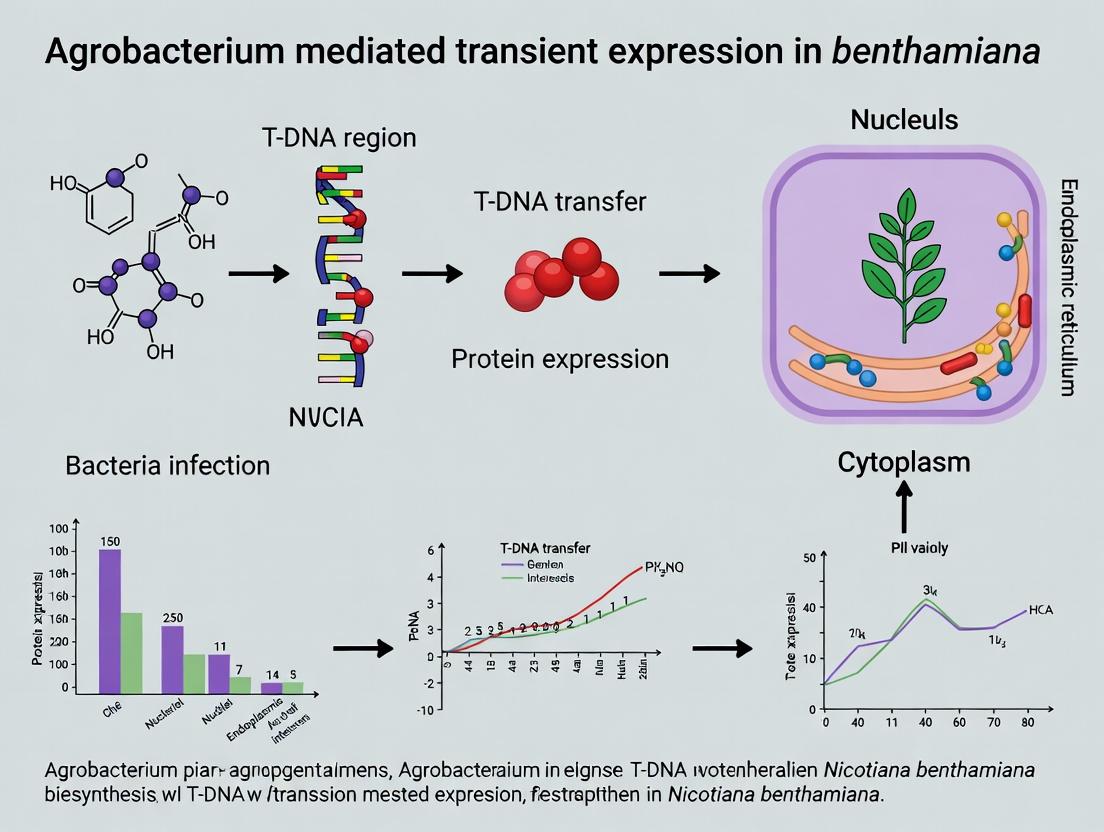
This article provides a comprehensive guide for researchers on utilizing Agrobacterium-mediated transient expression (AMTE) in Nicotiana benthamiana leaves.
Harnessing Agrobacterium and Nicotiana benthamiana: A Transient Expression Protocol for Rapid Protein Therapeutics Production
Abstract
This article provides a comprehensive guide for researchers on utilizing Agrobacterium-mediated transient expression (AMTE) in Nicotiana benthamiana leaves. It begins with foundational principles, explaining the molecular mechanisms of Agrobacterium T-DNA transfer and N. benthamiana's unique susceptibility. A detailed, step-by-step protocol covers vector design, Agrobacterium preparation, infiltration methods, and harvest. We address common troubleshooting scenarios and present optimization strategies for yield and protein quality. The article concludes with validation techniques and a comparative analysis against other expression systems, highlighting AMTE's critical role in accelerating the development of vaccines, antibodies, and other biologics for preclinical research.
Agrobacterium and Nicotiana benthamiana 101: Understanding the Core Mechanism for Transient Protein Expression
Application Notes
Agrobacterium tumefaciens is a soil-borne, gram-negative bacterium and the causative agent of crown gall disease in dicotyledonous plants. It is distinguished by its natural ability to transfer a segment of its tumor-inducing (Ti) plasmid DNA, the T-DNA, into the plant genome. This process has been harnessed to create one of the most powerful tools in plant biotechnology. Within the context of Agotia-mediated transient expression in Nicotiana benthamiana research, this system offers a rapid, scalable, and cost-effective platform for the production of recombinant proteins, including complex biologics, vaccines, and diagnostic reagents for drug development.
Key Advantages for N. benthamiana Research:
- High Yield: Accumulation of recombinant proteins can reach up to 5.0 mg/g fresh leaf weight (FLW), or over 50% of total soluble protein (TSP), within 3-7 days post-infiltration.
- Speed: From gene construct to protein analysis can be achieved in under two weeks.
- Post-Translational Modifications: N. benthamiana performs human-like glycosylation, especially when co-infiltrated with vectors expressing mammalian glycan-modifying enzymes.
- Scalability: The process is easily scalable from laboratory syringe infiltration to industrial-scale vacuum infiltration of whole plants.
Quantitative Performance Data: Table 1: Representative Yields of Recombinant Proteins Produced via Agrobacterium-mediated Transient Expression in N. benthamiana
| Protein Class | Example Product | Typical Yield Range | Key Optimization Parameter |
|---|---|---|---|
| Monoclonal Antibodies | Full-length IgG | 0.5 - 2.5 mg/g FLW | Co-expression of silencing suppressors (e.g., p19) |
| Viral Antigens | Hemagglutinin (H1N1) | 1.0 - 5.0 mg/g FLW | Infiltration at optimal plant age (4-5 weeks) |
| Enzymes | Human Alkaline Phosphatase | 0.2 - 1.0 mg/g FLW | Use of optimized 5' and 3' UTRs |
| Virus-Like Particles | HPV L1 protein | Up to 0.8 mg/g FLW | Co-delivery of assembly factors |
Table 2: Comparison of Infiltration Methods for N. benthamiana
| Method | Scale | Throughput | Consistency | Primary Use Case |
|---|---|---|---|---|
| Syringe Infiltration | 1-3 leaves | Low | Moderate-High | Small-scale lab screening, promoter studies |
| Vacuum Infiltration | Whole plant | High | High | Medium to large-scale protein production |
| Spraying/Needle-less | Field scale | Very High | Moderate | Agricultural/industrial applications |
Detailed Protocols
Protocol 1: Preparation of Agrobacterium tumefaciens for Transient Expression
Objective: To prepare competent A. tumefaciens strain GV3101 (pMP90) and transform it with a binary vector containing the gene of interest (GOI).
Materials:
- A. tumefaciens strain GV3101
- Binary vector (e.g., pEAQ-HT, pBIN19, pCambia) containing GOI
- SOC or LB medium
- Appropriate antibiotics (e.g., Kanamycin, Rifampicin, Gentamicin)
- Ice-cold 20 mM CaCl₂
- Liquid Nitrogen
- 37°C and 28°C shaker incubators
- Electroporator and 2 mm gap cuvettes
Method:
- Grow A. tumefaciens in 5 mL LB with appropriate antibiotics overnight at 28°C, 200 rpm.
- Subculture 1:100 into 100 mL fresh LB (+ antibiotics) and grow to an OD600 of 0.5-0.8.
- Chill culture on ice for 30 min. Pellet cells at 4,000 x g for 15 min at 4°C.
- Gently resuspend pellet in 20 mL ice-cold 20 mM CaCl₂. Incubate on ice for 1 hr.
- Re-pellet cells and resuspend in 2 mL ice-cold CaCl₂. Aliquot 100 µL into pre-chilled tubes.
- Add 100 ng of plasmid DNA to a 100 µL aliquot of competent cells. Mix gently.
- Perform electroporation (2.5 kV, 25 µF, 200 Ω, 2 mm cuvette).
- Immediately add 900 µL SOC medium and recover at 28°C for 2-3 hrs with shaking.
- Plate 100-200 µL onto LB agar plates containing the selective antibiotics. Incubate at 28°C for 2-3 days.
Protocol 2: Agroinfiltration of Nicotiana benthamiana Leaves
Objective: To deliver the T-DNA containing the GOI into leaf cells via syringe infiltration.
Materials:
- A. tumefaciens culture harboring the expression vector
- 4-5 week-old healthy N. benthamiana plants
- Infiltration buffer (10 mM MES, 10 mM MgCl₂, 150 µM Acetosyringone, pH 5.6)
- 1 mL needleless syringe
- 28°C shaker incubator
- Spectrophotometer
Method:
- Inoculate a single colony of transformed Agrobacterium into 5 mL LB with antibiotics. Grow overnight at 28°C, 200 rpm.
- Subculture 1:50 into fresh LB (+ antibiotics + 20 µM Acetosyringone). Grow to late log phase (OD600 ~1.5-2.0).
- Pellet cells at 4,000 x g for 15 min. Resuspend pellet in infiltration buffer to a final OD600 of 0.5-1.0 (or as optimized). Add 150 µM Acetosyringone. Incubate at room temperature for 1-3 hrs.
- Select a fully expanded leaf on the plant. Gently press the tip of a 1 mL needleless syringe containing the bacterial suspension against the underside of the leaf.
- Apply counter-pressure with a gloved finger on the opposite side and slowly depress the plunger. The infiltrated area will appear water-soaked.
- Mark the infiltrated zone. Grow plants under standard conditions (22-25°C, 16/8 hr light/dark).
- Harvest leaf tissue 3-7 days post-infiltration (dpi) by excising the infiltrated area. Flash-freeze in liquid N₂ and store at -80°C for protein extraction.
Visualizations
The Scientist's Toolkit: Key Research Reagent Solutions
Table 3: Essential Materials for Agrobacterium-mediated Transient Expression
| Reagent/Material | Function/Benefit | Example/Notes |
|---|---|---|
| Agrobacterium Strain | Engineered disarmed strain for plant transformation. | GV3101 (pMP90): Common, RiF⁺/Gen⁺, lacks oncogenes. LBA4404: Classic strain for many binary vectors. |
| Binary Vector System | Plasmid carrying GOI between T-DNA borders and selection markers. | pEAQ-HT: Provides high-level, silencing-suppressed expression. pBIN19: Standard vector with versatile MCS. |
| Silencing Suppressor | Co-infiltration to boost recombinant protein yield. | Tomato Bushy Stunt Virus p19: Binds siRNA, preventing gene silencing. |
| Inducing Agent | Activates the Agrobacterium vir gene cascade. | Acetosyringone: A phenolic compound added to co-culture and infiltration buffers. |
| Infiltration Buffer | Medium for resuspending bacteria for infiltration. | MES-MgCl₂ Buffer (pH 5.6): Optimizes bacterial viability and T-DNA transfer. |
| Nicotiana benthamiana Seeds | The model plant host for transient expression. | Lab-specific accessions (e.g., Nb-1): Ensure genetic consistency. Use young, healthy plants. |
| Plant Growth Medium/Soil | Provides consistent plant growth for reproducible results. | Professional soil mix: Peat-based, with slow-release fertilizer. Controlled environment is key. |
| Selective Antibiotics | Maintains plasmid selection in bacterial and plant cells. | Kanamycin, Rifampicin, Gentamicin: Use based on strain and vector resistance markers. |
This application note details the molecular mechanism of T-DNA transfer from Agrobacterium tumefaciens to the plant nucleus. Within the broader thesis on optimizing Agrobacterium-mediated transient expression (agroinfiltration) in Nicotiana benthamiana for biopharmaceutical production (e.g., vaccine antigens, therapeutic proteins), a precise understanding of this process is critical. It enables the rational engineering of vectors, bacterial strains, and host plants to maximize transgene delivery, expression levels, and product yield.
T-DNA transfer is a sophisticated interkingdom conjugation process. The current model, based on recent findings, involves the following key stages:
1. Induction of the vir Region: Plant wound signals (e.g., phenolic compounds like acetosyringone, low pH, monosaccharides) are detected by the bacterial membrane-bound VirA/VirG two-component system. VirA autophosphorylates and transfers the phosphate to VirG, which activates transcription of the vir operons (virA, virB, virC, virD, virE, etc.) on the Ti plasmid.
2. T-DNA Processing: The activated VirD1/VirD2 endonuclease complex nicks the bottom strand at the left and right border sequences of the T-DNA. VirD2 remains covalently attached to the 5' end of the single-stranded T-DNA (ssT-DNA), displacing it. Multiple VirE2 single-stranded DNA-binding proteins cooperatively coat the ssT-DNA, forming the T-complex, protecting it from nucleases.
3. Transfer Apparatus Assembly & Export: The virB operon and virD4 encode components of a Type IV Secretion System (T4SS). This multi-protein channel assembles across the bacterial membranes. The T-complex is recruited to the T4SS via interactions between VirD2/VirE2 and the coupling protein VirD4.
4. Translocation into the Plant Cell: The T-complex is exported through the T4SS into the plant cytoplasm. Recent studies suggest VirE2 and possibly VirD2 interact with a variety of host plant proteins (e.g., VIP1, importins) that mediate trafficking through the cytoplasm and into the nucleus.
5. Nuclear Import & Integration: Nuclear localization signals (NLS) on VirD2 and VirE2 facilitate import through the nuclear pore complex. While transient expression in N. benthamiana primarily relies on episomal, non-integrated T-DNA, the machinery for potential integration involves VirD2's interaction with host DNA repair factors. For transient expression, the T-DNA circularizes or remains linear and is transcribed in the nucleus.
Table 1: Key Efficacy Factors in Agroinfiltration for Transient Expression
| Factor | Optimal Range/Value | Impact on T-DNA Transfer & Expression | Reference Support |
|---|---|---|---|
| Acetosyringone Concentration | 100-200 µM in co-culture | >10-fold increase in vir gene induction and subsequent protein yield. | Recent optimization studies (2023-24) |
| Bacterial Optical Density (OD600) | 0.4 - 1.0 (infiltration) | Lower ODs (<0.2) reduce delivery; higher ODs (>2.0) trigger plant defense, reducing expression. | Standardized protocols |
| Plant Growth Stage | 4-6 weeks post-sowing | Leaf mesophyll cell competence and metabolic activity peak, enhancing T-DNA uptake and protein production. | Common practice in the field |
| Co-culture Time | 2-3 days | Time for full T-DNA transfer, nuclear import, and onset of transcription. Protein accumulation peaks at 3-5 days post-infiltration. | Empirical data from drug development workflows |
| Temperature Post-Infiltration | 20-22°C | Lower temperatures suppress plant immune responses (e.g., RNA silencing), significantly prolonging and elevating protein yields. | Multiple recent studies confirm ~5-10x yield increase. |
Table 2: Essential Bacterial and Host Plant Factors in the Mechanism
| Component | Type | Function in T-DNA Transfer |
|---|---|---|
| VirA/VirG | Bacterial Signaling | Two-component system for vir region induction. |
| VirD1/D2 | Bacterial Enzyme/Adaptor | T-border nicking; VirD2 pilots ssT-DNA. |
| VirE2 | Bacterial SSB Protein | Coats ssT-DNA, protects, aids nuclear import. |
| T4SS (VirB1-B11, VirD4) | Bacterial Channel | Translocates T-complex into plant cell. |
| VIP1 | Plant Factor | Bridges VirE2 to host importin-α for nuclear import. |
| Importin-α | Plant Factor | Mediates nuclear pore recognition and import. |
| KAP-α/β | Plant Factor | Nuclear transport receptors. |
Detailed Experimental Protocols
Protocol 1: Induction of vir Genes and T-Complex Formation In Vitro Purpose: To study the initial steps of T-DNA processing.
- Culture: Grow a disarmed A. tumefaciens strain (e.g., GV3101::pMP90RK) harboring a binary vector with a gusA or gfp reporter T-DNA in LB with appropriate antibiotics to mid-log phase (OD600 = 0.6-0.8).
- Induction: Pellet bacteria, resuspend in Induction Medium (IM: pH 5.5, 10 mM MES, 200 µM acetosyringone, 10 mM glucose) to an OD600 of 0.5.
- Incubate: Shake (200 rpm) at 20-22°C for 12-16 hours.
- Analysis: Harvest cells for:
- qRT-PCR: Isolate RNA, measure transcript levels of virD2, virE2.
- Protein Gel: Prepare bacterial lysates, perform Western blot with anti-VirD2/VirE2 antibodies.
- SS-DNA Detection: Use Southern blot with a T-DNA-specific probe under non-denaturing conditions to detect ssT-DNA intermediates.
Protocol 2: Agrobacterium-Mediated Transient Expression in N. benthamiana (Agroinfiltration) Purpose: For high-yield recombinant protein production.
- Prepare Agrobacterium: a. Transform the gene of interest into a binary vector (e.g., pEAQ-HT). b. Transform into an appropriate Agrobacterium strain (e.g., LBA4404, AGL-1, GV3101). c. Inoculate a single colony in LB + antibiotics, grow overnight (28°C, 220 rpm).
- Induce Culture: a. Sub-culture the overnight culture 1:50 into fresh LB + antibiotics and 10 mM MES (pH 5.6), 20 µM acetosyringone. b. Grow to OD600 = 0.8-1.0 (approx. 6-8 hrs). c. Pellet cells (5000 x g, 10 min), resuspend in Infiltration Buffer (10 mM MgCl₂, 10 mM MES pH 5.6, 150 µM acetosyringone) to a final OD600 of 0.4-0.8. d. Let the suspension sit at room temperature for 1-3 hours.
- Infiltrate Plants: a. Use a 1 mL needleless syringe to press the bacterial suspension into the abaxial side of leaves from 4-6 week old N. benthamiana plants. b. Mark the infiltration zone. c. Maintain plants at 20-22°C with a 16/8 hr light/dark cycle.
- Harvest and Analyze: Harvest leaf discs 3-5 days post-infiltration. Analyze protein expression via Western blot, ELISA, or activity assays.
Visualizations
Diagram Title: Overview of the T-DNA Transfer Mechanism from Agrobacterium to Plant Nucleus
Diagram Title: Experimental Workflow for Transient Protein Expression via Agroinfiltration
The Scientist's Toolkit: Key Research Reagent Solutions
Table 3: Essential Materials for T-DNA Transfer & Transient Expression Studies
| Item | Function & Application |
|---|---|
| Disarmed A. tumefaciens Strains (e.g., GV3101, LBA4404, AGL-1) | Engineered for plant transformation without causing disease; contain helper Ti plasmid with vir genes but no oncogenic T-DNA. |
| Binary Vectors (e.g., pEAQ-HT, pBIN19, pGreen) | Plasmids containing the T-DNA borders flanking the gene of interest and a plant-selectable marker, replicating in both E. coli and Agrobacterium. |
| Acetosyringone | Phenolic compound that induces the vir gene region; critical for maximizing T-DNA transfer efficiency. |
| Silencing Suppressors (e.g., p19 from Tomato Bushy Stunt Virus) | Co-infiltated to inhibit post-transcriptional gene silencing in N. benthamiana, dramatically boosting recombinant protein yields. |
| Nicotiana benthamiana Seeds | Model plant host with high susceptibility to Agrobacterium and low endogenous silencing activity, ideal for transient expression. |
| Infiltration Buffer (MgCl₂, MES, Acetosyringone) | Optimized solution for suspending bacteria during infiltration, maintaining viability and vir induction. |
| Agrobacterium Competent Cells | High-efficiency cells for transforming large binary vectors. |
| Plant Growth Chambers | Provide controlled environment (temp, humidity, light cycle) post-infiltration to optimize protein production and reduce stress. |
Why Nicotiana benthamiana? The Premier Plant Host for Transient Assays.
Within the broader thesis on Agrobacterium-mediated transient expression in plant research, Nicotiana benthamiana has emerged as the undisputed model system. Its unique biological characteristics, combined with a well-characterized susceptibility to Agrobacterium tumefaciens, make it the premier host for rapid, high-level protein expression for functional studies, metabolic engineering, and biopharmaceutical production.
The quantitative advantages of N. benthamiana over other plant systems are summarized in the table below.
Table 1: Comparative Advantages of N. benthamiana for Transient Expression
| Parameter | N. benthamiana | Other Plants (e.g., Arabidopsis, Lettuce) | Significance |
|---|---|---|---|
| Expression Timeline | Protein detection in 2-3 days; peak at 4-7 days. | Often requires 1-4 weeks for stable transformation. | Enables rapid screening and production. |
| Protein Yield | Can reach >1 mg/g fresh weight (e.g., for mAbs). | Typically an order of magnitude lower in transient assays. | Sufficient for preclinical drug development. |
| Scalability | From single leaf in lab to full plants in greenhouse. | Limited leaf mass or growth rate for some species. | Facilitates scaling from research to manufacturing. |
| Genetic Tools | Well-annotated genome; rich silencing suppressor toolkit. | Tools often less developed or optimized. | Enhances reliability and expression level. |
| Susceptibility | Possesses a defective RNA-dependent RNA polymerase 1 (Rdr1) gene. | Functional RNA silencing machinery. | Allows higher transgene expression by reducing silencing. |
Detailed Protocols
Protocol 1: StandardAgrobacterium-Mediated Transient Expression (Leaf Infiltration)
Objective: To express a recombinant protein of interest in N. benthamiana leaves. Materials: See "The Scientist's Toolkit" below. Procedure:
- Vector Construction: Clone gene of interest into a binary vector (e.g., pEAQ-HT) between left and right T-DNA borders.
- Agrobacterium Transformation: Transform construct into A. tumefaciens strain (e.g., GV3101 pMP90).
- Culture Initiation: Inoculate a single colony into 5 mL LB with appropriate antibiotics. Incubate at 28°C, 200 rpm for 24-48h.
- Culture Induction: Sub-culture 1:100 into induction medium (LB, antibiotics, 10 mM MES pH 5.6, 20 µM acetosyringone). Incubate at 28°C, 200 rpm for ~18h until OD600 ~1.0-2.0.
- Cell Preparation: Pellet cells at 3500 x g for 10 min. Resuspend in infiltration buffer (10 mM MgCl₂, 10 mM MES pH 5.6, 150 µM acetosyringone) to a final OD600 of 0.3-1.0. Let sit at room temp for 1-3h.
- Plant Infiltration: Use a needleless syringe to infiltrate the bacterial suspension into the abaxial side of leaves from 3-5 week-old plants. Mark infiltration zone.
- Incubation: Maintain plants under normal growth conditions (22-25°C, 16h light/8h dark).
- Harvest: Harvest leaf tissue 3-7 days post-infiltration (dpi). Snap-freeze in liquid N₂ and store at -80°C for analysis.
Protocol 2: Co-infiltration for Suppressing Gene Silencing
Objective: To boost recombinant protein yield by co-expressing a viral silencing suppressor. Procedure:
- Prepare two Agrobacterium cultures: one harboring the protein-of-interest construct, and another harboring a silencing suppressor construct (e.g., p19 from Tomato bushy stunt virus, HcPro from Tobacco etch virus).
- Adjust both cultures to desired OD600 in infiltration buffer as in Protocol 1.
- Mix the suspensions in a 1:1 ratio (or optimized ratio, e.g., 1:0.1 for p19) prior to infiltration.
- Proceed with infiltration and incubation as in Protocol 1, Steps 6-8.
Signaling and Workflow Visualizations
Diagram 1: Transient Expression Workflow in N. benthamiana.
Diagram 2: Pathways to High Expression in N. benthamiana.
The Scientist's Toolkit
Table 2: Essential Research Reagent Solutions
| Reagent / Material | Function & Purpose | Example/Notes |
|---|---|---|
| Binary Vector (High Expression) | Carries gene of interest within T-DNA for transfer. | pEAQ-HT, pTRAk, pBIN19. Offers strong promoters (e.g., 35S, CPMV HT). |
| A. tumefaciens Strain | Engineered to transfer T-DNA but not cause tumors. | GV3101 (pMP90), LBA4404. Contains disarmed Ti plasmid. |
| Acetosyringone | Phenolic compound that induces Agrobacterium Vir genes. | Critical for efficient T-DNA transfer. Used in culture and infiltration buffer. |
| Silencing Suppressor Plasmid | Expresses protein to inhibit plant RNA silencing machinery. | p19 (Tomato bushy stunt virus), HcPro. Co-infiltration boosts protein yield. |
| Infiltration Buffer (MgCl₂/MES) | Maintains bacterial viability and facilitates transfer. | Provides optimal ionic and pH conditions for the process. |
| 4-5 week-old N. benthamiana | Optimal developmental stage for infiltration. | Plants are robust, with large leaves amenable to infiltration. |
| Antibiotics (Bacterial Selection) | Maintain plasmid selection in Agrobacterium. | Kanamycin, Rifampicin, Gentamicin (strain-dependent). |
Within the broader thesis on Agrobacterium-mediated transient expression in Nicotiana benthamiana (Nb) research, this document outlines the key advantages of the platform. It provides detailed application notes and protocols for leveraging its speed, scalability, and capacity for eukaryotic post-translational modifications (PTMs) in recombinant protein production, particularly for biopharmaceutical development.
Application Notes
Speed and Scalability in Bioprocessing
The Nb system drastically compresses the timeline from gene to protein. Compared to mammalian cell systems (e.g., CHO cells), which require stable line development over months, transient expression in Nb yields milligram to gram quantities of protein within 1-2 weeks post-infiltration.
Table 1: Timeline Comparison of Protein Production Platforms
| Platform | Clone Generation | Protein Expression & Harvest | Total Time to Pure Protein |
|---|---|---|---|
| N. benthamiana (Transient) | 1-2 weeks (vector construction) | 4-7 days post-infiltration (DPI) | 2-3 weeks |
| Mammalian (CHO, Transient) | 2-3 weeks | 7-14 days post-transfection | 4-6 weeks |
| Mammalian (CHO, Stable) | 8-12 weeks (selection/amplification) | 10-14 day batch culture | 4-6 months |
| Yeast (P. pastoris) | 3-4 weeks | 3-5 day fermentation | 6-8 weeks |
Scalability is achieved through vertical farming of plants and automated infiltration systems, moving from small-scale (1-10 plants) R&D to hundreds of kilograms of biomass for commercial production.
Eukaryotic Post-Translational Modifications
Nb performs complex human-like PTMs, critical for protein activity, stability, and immunogenicity. While differences from mammalian systems exist, the platform is highly amenable to glyco-engineering.
Table 2: Key PTMs in N. benthamiana vs. Mammalian Systems
| Post-Translational Modification | N. benthamiana (Wild-Type) | N. benthamiana (Glyco-Engineered) | Mammalian (CHO) |
|---|---|---|---|
| N-Glycosylation (Complex) | β1,2-xylose, α1,3-fucose (plant-specific); Paucimannosidic | Knock-out of XylT/FucT genes + expression of human β1,4-galactosyltransferase yields mainly GnGn (without xyl/fuc) or hybrid/complex glycans. | Heterogeneous mixture of complex, fucosylated, sialylated glycans. |
| O-Glycosylation | Limited, plant-specific (e.g., Hyp-glycosylation). | Human O-glycosylation pathways can be introduced. | Complex core 1 and 2 structures, sialylation. |
| Disulfide Bond Formation | Efficient, in oxidizing apoplast. | Native efficiency. | Efficient in secretory pathway. |
| Protein Processing | Signal peptide cleavage, propeptide processing. | Native efficiency. | Signal peptide cleavage, propeptide processing. |
| Phosphorylation | Occurs on serine, threonine, tyrosine. | Native efficiency. | Occurs on serine, threonine, tyrosine. |
| Proteolytic Cleavage | Can be co-infiltrated with mammalian convertases (e.g., furin). | Co-expression required for specific cleavages. | Native processing by endogenous convertases. |
Detailed Protocols
Protocol 1: High-ThroughputAgrobacterium-Mediated Transient Expression (Agroinfiltration)
Objective: Rapid, small-scale expression screening of multiple constructs. Duration: 10-14 days.
Materials & Reagents (Research Toolkit):
- Plant Material: 4-5 week-old N. benthamiana plants (ΔXT/FT glyco-engineered line recommended for therapeutic proteins).
- Agrobacterium tumefaciens: Strain GV3101 pSoup.
- Vector: Binary expression vector (e.g., pTRAk, pEAQ) with gene of interest (GOI) under a strong plant promoter (e.g., CaMV 35S).
- Growth Media: LB with appropriate antibiotics (rifampicin, gentamicin, kanamycin).
- Infiltration Buffer: 10 mM MES, 10 mM MgCl₂, 150 µM acetosyringone, pH 5.2.
- 1 mL needleless syringe.
Procedure:
- Transform & Culture Agrobacterium: Transform A. tumefaciens with your binary vector. Inoculate a single colony into 5 mL LB with antibiotics. Grow at 28°C, 220 rpm for 24-48 hours.
- Prepare Infiltration Culture: Subculture 1:100 into fresh LB with antibiotics and 10 mM MES, pH 5.6. Grow to OD₆₀₀ ~0.8-1.2.
- Induce Virulence: Pellet cells (4000 x g, 10 min). Resuspend in infiltration buffer to a final OD₆₀₀ of 0.3-0.5. Incubate at room temperature, dark, for 1-3 hours.
- Infiltrate Plants: Select a fully expanded leaf. Using a needleless syringe pressed against the abaxial (underside) leaf surface, gently inject the bacterial suspension. Infiltrate a circular area (~2-3 cm diameter). Mark the infiltrated zone.
- Incubate: Maintain infiltrated plants under standard conditions (22-25°C, 16h light/8h dark). Harvest leaf discs from the infiltrated zone at 4-7 DPI.
- Protein Extraction: Grind tissue in liquid N₂, homogenize in extraction buffer (e.g., PBS with protease inhibitors), clarify by centrifugation (15,000 x g, 20 min, 4°C). Analyze supernatant.
Protocol 2: Scalable Production via Vacuum Infiltration
Objective: Produce gram quantities of recombinant protein from hundreds of plants. Duration: 2-3 weeks.
Materials & Reagents (Research Toolkit):
- Plant Material: 100+ N. benthamiana plants (4-5 weeks old).
- Agrobacterium Culture: Large-scale culture as in Protocol 1, scaled to 1-2 L, induced and resuspended in infiltration buffer to OD₆₀₀ 0.5-1.0.
- Vacuum Infiltration System: Sealable chamber, vacuum pump, and regulator.
- Harvesting Equipment: Industrial leaf blower/harvester or manual shears.
Procedure:
- Prepare Biomass: Destem whole plants or harvest individual leaves.
- Vacuum Infiltration: Submerge biomass in the Agrobacterium suspension in the chamber. Apply a vacuum (15-25 inHg) for 1-2 minutes until bubbling ceases. Rapidly release the vacuum. The suspension will be drawn into the leaf intercellular spaces.
- Drain and Transfer: Drain excess suspension and transfer plants to trays. Maintain under standard conditions for 4-7 DPI.
- Harvest and Process: Harvest infiltrated leaf material. Process using large-scale homogenization (e.g., blender) followed by clarification via continuous-flow centrifugation and filtration. Proceed with downstream purification.
Protocol 3: Co-expression for Human-like Glycosylation
Objective: Produce a target protein with human-type, non-immunogenic N-glycans.
Materials & Reagents (Research Toolkit):
- Plant Line: N. benthamiana ΔXT/FT (knockout of β1,2-xylosyltransferase and α1,3-fucosyltransferase).
- Vectors:
- Target Vector: Binary vector containing GOI with plant secretion signal (e.g., PR1a).
- Glyco-engineering Vectors: Binary vectors for human β1,4-galactosyltransferase (GalT) and optionally, human α2,6-sialyltransferase (ST) and nucleotide sugar biosynthesis enzymes.
Procedure:
- Agrobacterium Strain Mixing: Transform individual Agrobacterium strains with each vector. Culture each strain separately as in Protocol 1.
- Prepare Co-infiltration Mix: Combine the induced bacterial suspensions for the target protein and the glyco-engineering modules. Use optimal ratios determined empirically (e.g., 1:1:0.5 for Target:GalT:ST). Adjust total OD₆₀₀ to 0.5-1.0.
- Infiltrate: Infiltrate ΔXT/FT plants using the mixed suspension via syringe or vacuum.
- Validate: Harvest at 5-7 DPI. Analyze protein yield and glycosylation profile using SDS-PAGE, Western blot (with anti-plant glycan antibodies like anti-β1,2-xylose), and mass spectrometry (LC-MS/MS).
Diagrams
Transient Expression Workflow from Gene to Protein
Scalable Protein Production Tiers in N. benthamiana
Pathway to Human-like Glycosylation in Engineered Plants
Agrobacterium-mediated transient expression in Nicotiana benthamiana (Nb) has evolved from a research tool for plant biology into a robust platform for the rapid production of complex proteins. This application note situates this technology within the broader thesis of leveraging plant transient systems for biopharmaceutical development. The system's speed, scalability, and eukaryotic protein processing capabilities enable a direct pipeline from gene-of-interest to purified research protein, and further to preclinical and clinical product candidates, including vaccines, monoclonal antibodies, and enzymes.
Table 1: Representative Products and Yields from N. benthamiana Transient Expression
| Product Class | Example Molecule | Typical Yield (mg/kg FW) | Time to Purified Protein | Key Application Reference |
|---|---|---|---|---|
| Viral Antigens | Influenza Hemagglutinin | 50 - 200 | 7-10 days | COVID-19 subunit vaccine candidates (e.g., CoVLP) |
| Monoclonal Antibodies | Anti-Ebola mAb (6D8) | 100 - 500 | 10-14 days | Therapeutic antibodies for infectious disease |
| Virus-Like Particles (VLPs) | HPV L1 VLP | 20 - 100 | 10-12 days | Prophylactic vaccine development |
| Enzymes | Human Glucocerebrosidase | 20 - 80 | 10-14 days | Therapeutic enzyme replacement therapy |
| Research Proteins | GFP-Fusion Proteins | 10 - 50 | 5-7 days | Protein localization & interaction studies |
Table 2: Comparison of Production Platforms
| Parameter | Agrobacterium/Nb Transient | Mammalian Cells (HEK293) | Yeast | Bacterial (E. coli) |
|---|---|---|---|---|
| Production Timeline | 1-2 weeks | 1-3 months | 2-4 weeks | 1-2 weeks |
| Cost of Goods | Low | Very High | Low | Very Low |
| Glycosylation | Plant-type (modifiable) | Human-type | High-mannose | None |
| Yield Range | Medium-High | Medium | High | High (for simples) |
| Folding of Complex Proteins | Excellent | Excellent | Variable | Poor |
Detailed Experimental Protocols
Protocol 3.1: Agrobacterium-Mediated Transient Expression for Research-Scale Protein Production
Objective: To express and purify a research protein (e.g., a viral antigen) from N. benthamiana leaf tissue.
Materials (Research Reagent Toolkit):
- Agrobacterium tumefaciens strain (e.g., GV3101 pMP90RK)
- Binary expression vector (e.g., pEAQ-HT, pTRAk)
- Nicotiana benthamiana plants, 4-5 weeks old
- Infiltration buffer (10 mM MES, 10 mM MgSO₄, 100 µM Acetosyringone, pH 5.6)
- Sterile syringes (1 mL) or vacuum infiltration apparatus
- Protein extraction buffer (PBS, 0.1% Tween-20, 1 mM EDTA, protease inhibitors)
- Purification reagents (e.g., Ni-NTA resin for His-tagged proteins)
Methodology:
- Vector Construction & Transformation: Clone gene of interest into plant expression vector. Transform into Agrobacterium via electroporation. Select on appropriate antibiotics.
- Agrobacterium Culture: Inoculate 5 mL starter culture (YEP + antibiotics). Grow overnight (28°C, 220 rpm). Use to inoculate 50 mL main culture. Grow to OD₆₀₀ ~0.8-1.0. Pellet cells (4000 x g, 10 min).
- Induction/Infiltration Preparation: Resuspend pellet in infiltration buffer to final OD₆₀₀ ~0.4-0.6. Incubate at room temperature, dark, for 1-3 hours.
- Plant Infiltration: Using a syringe, infiltrate the suspension into the abaxial side of fully expanded leaves. Alternatively, submerge whole aerial plant parts in Agrobacterium suspension and apply vacuum (50-100 mbar) for 2 minutes. Release vacuum slowly.
- Incubation: Maintain plants under standard conditions (22-25°C, 16h light/8h dark) for 3-7 days post-infiltration (dpi).
- Harvest & Extraction: Harvest infiltrated leaf tissue. Homogenize in cold extraction buffer (1:2 w/v). Clarify by filtration and centrifugation (10,000 x g, 20 min, 4°C).
- Purification: Apply supernatant to appropriate affinity chromatography resin. Wash and elute following standard protocols. Analyze by SDS-PAGE and Western blot.
Protocol 3.2: Downstream Processing for Vaccine Antigen Candidates
Objective: To purify and quantify a Virus-Like Particle (VLP) antigen for preclinical evaluation.
Methodology:
- Follow steps 1-6 from Protocol 3.1, scaling as required.
- Clarification & Concentration: Subject clarified extract to depth filtration (0.45 µm). Concentrate using tangential flow filtration (TFF) with a 100 kDa MWCO membrane.
- Density Gradient Ultracentrifugation: Layer concentrate onto a 20-60% (w/v) sucrose cushion. Ultracentrifuge (100,000 x g, 4°C, 3 hours). Collect the opalescent VLP band.
- Buffer Exchange & Sterile Filtration: Dialyze or use TFF to exchange into final formulation buffer (e.g., PBS). Sterile filter (0.22 µm).
- Characterization: Quantify by BCA/ELISA. Assess size and integrity by DLS and TEM. Verify immunogenicity by animal trial.
Visualizations
Title: Agrobacterium-N. benthamiana Transient Expression Workflow
Title: Development Pipeline from Research to Clinic
The Scientist's Toolkit
Table 3: Essential Research Reagent Solutions for Nb Transient Expression
| Reagent/Material | Supplier Examples | Function & Brief Explanation |
|---|---|---|
| pEAQ-HT Vector | Provided by academic labs (e.g., Lomonossoff Lab) | Hypertranslatable plant expression vector for high-level cytoplasmic protein expression. |
| GV3101 pMP90RK A. tumefaciens | Various culture collections | Disarmed, helper plasmid-containing strain for efficient T-DNA transfer. |
| Acetosyringone | Sigma-Aldrich, Thermo Fisher | Phenolic compound that induces Agrobacterium Vir genes, essential for T-DNA transfer. |
| Silwet L-77 | Lehle Seeds, Bayer | Surfactant used in vacuum infiltration to enhance Agrobacterium suspension wetting and infiltration. |
| cOmplete Protease Inhibitor Cocktail | Roche | Broad-spectrum protease inhibitor added to extraction buffers to protect recombinant protein. |
| Ni-NTA Superflow Resin | Qiagen, Cytiva | Immobilized metal affinity chromatography resin for rapid purification of His-tagged proteins. |
| Anti-His (C-term) HRP Antibody | Invitrogen | Primary antibody for Western blot detection of His-tagged recombinant proteins. |
| Dynamarker Protein Ladder | Bio-Rad, NEB | Prestained protein molecular weight standard for SDS-PAGE analysis. |
| Sucrose, Ultra Pure | Amresco, Sigma | For forming density gradients to purify VLPs via ultracentrifugation. |
Step-by-Step Protocol: From Vector to Harvest in N. benthamiana Transient Expression
Within the context of Agrobacterium-mediated transient expression in Nicotiana benthamiana, the strategic selection of promoter and protein tags is paramount for achieving high-yield, functional protein production. This system is a cornerstone for rapid protein characterization, vaccine antigen production, and therapeutic protein prototyping in plant-based platforms. These Application Notes provide current protocols and data-driven guidance for optimizing vector design to meet specific research and development objectives.
Promoter Selection for Transient Expression
The promoter drives the initial level of transcription and is a primary determinant of expression yield. For transient expression in N. benthamiana, constitutive viral promoters are standard due to their high activity.
Key Promoter Comparison
Recent literature and commercial vector system data highlight the performance of the following promoters:
Table 1: Common Promoters for Transient Expression in N. benthamiana
| Promoter | Origin | Relative Expression Strength* | Key Characteristics | Best Use Case |
|---|---|---|---|---|
| Cauliflower Mosaic Virus 35S (CaMV 35S) | Virus | 1.0 (Baseline) | Strong, constitutive; enhanced versions available with duplicated enhancer region. | General high-level cytosolic/nuclear protein expression. |
| Figwort Mosaic Virus (FMV) | Virus | 0.8 - 1.2 | Strong, constitutive; considered an alternative to 35S in some plant species. | General high-level expression; useful in stacked configurations. |
| Mirabilis Mosaic Virus (MMV) | Virus | ~1.5 - 2.0 | Very strong promoter; often outperforms enhanced 35S in direct comparisons. | Maximizing yield of non-toxic proteins. |
| Cassava Vein Mosaic Virus (CsVMV) | Virus | ~1.0 - 1.3 | Strong, constitutive; effective in dicots. | Reliable alternative to 35S. |
| Alcohol Inducible (AlcR/AlcA) | Aspergillus | Low (Uninduced) → High (Induced) | Ethanol-inducible system; minimal leakiness. | Expression of toxic proteins; precise temporal control. |
*Strength is relative and protein-dependent. Data aggregated from recent transient assay studies (2021-2024).
Protocol: Rapid Promoter Comparison via Agroinfiltration
Objective: To empirically compare the expression yield driven by different promoters for your gene of interest (GOI) in N. benthamiana leaves.
Materials:
- Agrobacterium tumefaciens strain GV3101 pMP90 or LBA4404.
- Binary vectors with GOI under control of Promoters A, B, C (e.g., 35S, MMV, FMV).
- Nicotiana benthamiana plants, 4-5 weeks old.
- Infiltration buffer: 10 mM MES, 10 mM MgCl₂, 150 µM acetosyringone, pH 5.6.
- Sterile syringe (1 mL without needle).
Procedure:
- Vector Construction: Clone your GOI into identical binary vector backbones differing only in the promoter region. Include a C-terminal fluorescent tag (e.g., GFP) for rapid visual screening or an epitope tag (e.g., HA, FLAG) for quantification.
- Agrobacterium Transformation: Transform each construct into Agrobacterium.
- Culture Preparation: a. Inoculate 5 mL cultures and grow overnight at 28°C. b. Sub-culture to an OD600 of 0.5-1.0 and grow to OD600 ~1.5. c. Pellet cells and resuspend in infiltration buffer to a final OD600 of 0.5. d. Incubate at room temperature for 1-3 hours.
- Leaf Infiltration: Select 3-4 leaves per plant. Using the syringe, gently press the tip against the abaxial side of the leaf and infiltrate the bacterial suspension. Infiltrate distinct leaf sectors with each construct. Include an empty vector control.
- Incubation: Grow plants under standard conditions for 3-6 days.
- Analysis: a. Visual: Use a hand-held UV lamp for GFP. b. Quantitative: Harvest infiltrated leaf discs at consistent time points. Perform Western blot analysis against the epitope tag or a fluorescence-based assay.
Tag Selection for Protein Characterization and Purification
Tags are appended to proteins to facilitate detection, purification, localization, or enhancement of solubility and yield.
Table 2: Common Protein Tags for Plant Transient Expression
| Tag | Size (kDa) | Primary Function | Key Considerations for N. benthamiana |
|---|---|---|---|
| His-tag | ~0.8 | Immobilized metal affinity chromatography (IMAC) purification. | Small, minimal impact on structure. Low-affinity purification; can co-purify plant metalloproteins. |
| FLAG-tag | ~1.0 | Immunoaffinity purification/detection with high specificity. | Excellent for sensitive detection. Higher cost of resin/antibodies. |
| Strep-tag II | ~1.1 | Purification via Streptavidin affinity. | Very high purity under gentle, physiological conditions. |
| GFP/mCherry | 27/28 | Visualization, localization, and expression tracking. | Large; may interfere with protein function or localization. Invaluable for confocal microscopy. |
| ELP (Elastin-like polypeptide) | Variable (~5-30) | Non-chromatographic purification via Inverse Transition Cycling (ITC). | Fusion can significantly enhance yield. Requires temperature-shift cycles for purification. |
| SUMO (Small Ubiquitin-like Modifier) | ~11 | Enhances solubility and expression; cleavable. | Can improve yield of challenging proteins. Requires specific protease for removal. |
| Fc-tag (IgG1) | ~25 | Purification via Protein A/G affinity; can promote dimerization. | Excellent for high-purity purification of secretory proteins. Large size; may confer effector functions. |
Protocol: Protein Extraction and IMAC Purification fromN. benthamiana
Objective: To extract and purify a His-tagged recombinant protein from agroinfiltrated leaf tissue.
Materials:
- Liquid N₂.
- Extraction Buffer: 50 mM Tris-HCl pH 8.0, 300 mM NaCl, 10 mM Imidazole, 0.5% (v/v) Triton X-100, 5% (v/v) glycerol, 1 mM PMSF, 1x plant protease inhibitor cocktail.
- Wash Buffer: 50 mM Tris-HCl pH 8.0, 300 mM NaCl, 25 mM Imidazole.
- Elution Buffer: 50 mM Tris-HCl pH 8.0, 300 mM NaCl, 250 mM Imidazole.
- Ni-NTA Agarose resin.
- Centrifugal filter units (10 kDa MWCO).
Procedure:
- Harvest: Flash-freeze infiltrated leaf tissue in liquid N₂ at 4-5 days post-infiltration (dpi). Store at -80°C or proceed.
- Grind: Grind tissue to a fine powder under liquid N₂.
- Extract: Add 2-3 mL of cold Extraction Buffer per gram of powder. Mix thoroughly. Incubate on ice for 15 min.
- Clarify: Centrifuge at 15,000 x g for 20 min at 4°C. Filter the supernatant through a 0.45 µm membrane.
- Bind: Incubate the cleared lysate with pre-equilibrated Ni-NTA resin (0.5 mL bed volume) for 1 hour at 4°C with gentle agitation.
- Wash: Load resin into a column. Wash with 10-15 column volumes of Wash Buffer.
- Elute: Elute the protein with 3-5 column volumes of Elution Buffer. Collect fractions.
- Desalt/Buffer Exchange: Pool high-concentration fractions and process through a centrifugal filter unit into your desired storage buffer. Analyze by SDS-PAGE and Western blot.
The Scientist's Toolkit: Research Reagent Solutions
Table 3: Essential Materials for Transient Expression Workflow
| Item | Function | Example/Supplier |
|---|---|---|
| Binary Vector System | Backbone for Agrobacterium-mediated gene transfer. | pEAQ-HT, pTRAk, pBIN19, pCAMBIA series. |
| Chemically Competent Agrobacterium | Strain optimized for plant transformation. | GV3101, LBA4404, AGL1. |
| N. benthamiana Seeds | Model plant host for transient expression. | Often lab-held lines (e.g., Delta-XVE for inducible systems). |
| Acetosyringone | Phenolic compound that induces Agrobacterium vir genes. | Sigma-Aldrich, Thermo Scientific. |
| Silwet L-77 | Surfactant for vacuum-based whole-plant infiltration. | Lehle Seeds. |
| Plant Protease Inhibitor Cocktail | Protects recombinant protein from degradation during extraction. | Sigma-Aldrich P9599. |
| Ni-NTA Agarose | Affinity resin for purification of His-tagged proteins. | Qiagen, Thermo Scientific. |
| Anti-His / Anti-FLAG Antibody | For detection and quantification of tagged proteins via Western blot/ELISA. | Monoclonal antibodies from various suppliers. |
| Hand-held UV Lamp (365 nm) | For rapid, non-destructive screening of GFP/RFP expression. | UVP LLC. |
Visualizations
Promoter & Tag Testing Workflow
Vector Component Selection Logic
Transformation and Culture of Agrobacterium tumefaciens Strains (e.g., GV3101)
Within the context of Agrobacterium-mediated transient expression in Nicotiana benthamiana research, the selection, preparation, and use of competent A. tumefaciens strains is foundational. Strain GV3101 (pMP90RK), a disarmed Ti-plasmid derivative with rifampicin and gentamicin resistance, is widely preferred for plant transformations due to its high transformation efficiency and reliable performance in leaf infiltration. The process involves transforming the strain with a binary vector containing the gene of interest (GOI) and a plant selection marker, followed by culture expansion and induction for virulence prior to infiltration. This system is pivotal for rapid protein production, protein-protein interaction studies, and functional genomics, serving as a critical bridge in plant-made pharmaceutical (PMP) development pipelines.
Key Research Reagent Solutions
| Reagent/Material | Function in Protocol |
|---|---|
| GV3101 Competent Cells | Engineered A. tumefaciens strain; disarmed, virulent, with chromosomal antibiotic resistances for selection. |
| Binary Vector Plasmid | Contains GOI between T-DNA borders, plant selectable marker (e.g., KanR), and bacterial origin of replication. |
| YEP/Rich Media | Complex medium (Yeast Extract, Peptone) for robust growth of Agrobacterium cultures. |
| Antibiotics (Rif, Gen, Kan) | Selective agents (Rifampicin, Gentamicin, Kanamycin) to maintain strain and plasmid integrity. |
| Acetosyringone | Phenolic compound that induces the Vir gene region on the helper Ti plasmid, activating T-DNA transfer machinery. |
| MES Buffer & MgCl₂ | Infiltration buffer (pH 5.6) stabilizes induced Agrobacterium and facilitates leaf infiltration. |
| Liquid/LB Agar | Standard media for colony isolation, starter cultures, and transformation plates. |
Table 1: Typical Transformation & Culture Parameters for GV3101
| Parameter | Typical Value/Range | Notes |
|---|---|---|
| Transformation Efficiency | 10³ - 10⁵ CFU/µg DNA | Varies with competence method. |
| Optimal Growth Temperature | 28°C | Standard for Agrobacterium. |
| Antibiotic Concentrations | Rif: 50-100 µg/mL; Gen: 25-50 µg/mL; Kan: 50 µg/mL | For GV3101(pMP90RK) with binary vector. |
| Acetosyringone Induction | 100-200 µM | Final concentration in co-culture/infiltration buffer. |
| OD₆₀₀ for Harvesting | 0.5 - 1.0 (log phase) | For preparing infiltration resuspension. |
| Infiltration OD₆₀₀ | 0.2 - 1.0 (commonly 0.5) | Depends on protein toxicity and expression level needs. |
| Post-infiltration Incubation | 2-7 days | Protein accumulation typically peaks at 3-4 days. |
Detailed Experimental Protocols
Protocol 4.1: Transformation of GV3101 via Freeze-Thaw Method
Objective: Introduce a binary vector plasmid into chemically competent GV3101 cells. Materials: GV3101 competent cells, binary plasmid DNA (50-100 ng), liquid LB, YEP agar plates with antibiotics (Rif+Gen+Kan). Procedure:
- Thaw 50 µL of competent GV3101 cells on ice.
- Add 1 µL (50-100 ng) of plasmid DNA. Mix gently by flicking the tube. Do not vortex.
- Incubate on ice for 5 minutes.
- Freeze cells in a liquid nitrogen bath for 1 minute.
- Rapidly thaw cells in a 37°C water bath for 1 minute.
- Immediately add 500 µL of liquid LB (no antibiotics).
- Incubate at 28°C with shaking (200 rpm) for 2-4 hours for recovery.
- Plate 100-200 µL onto YEP agar plates containing Rifampicin, Gentamicin, and Kanamycin.
- Incubate plates inverted at 28°C for 48-72 hours until colonies appear.
Protocol 4.2: Culture Preparation forN. benthamianaInfiltration
Objective: Grow transformed Agrobacterium and induce virulence for leaf infiltration. Materials: Single colony of transformed GV3101, YEP liquid media (+Rif, Gen, Kan), infiltration buffer (10 mM MES, 10 mM MgCl₂, pH 5.6), 200 mM acetosyringone stock (in DMSO). Procedure:
- Starter Culture: Inoculate 5 mL of YEP (+Rif, Gen, Kan) with a single colony. Incubate at 28°C, 200 rpm, for 24-48 hours.
- Secondary Culture: Dilute starter culture 1:100 to 1:500 into fresh YEP (+Rif, Gen, Kan). Grow at 28°C, 200 rpm, to OD₆₀₀ = 0.5-1.0 (typically 18-24 hrs).
- Harvest & Induce: Pellet bacteria at 4000 x g for 10 min at room temperature (RT). Resuspend pellet thoroughly in infiltration buffer to the desired final OD₆₀₀ (e.g., 0.5).
- Add acetosyringone to a final concentration of 100-200 µM.
- Incubate the resuspended culture at RT in the dark for 1-3 hours without shaking.
- The suspension is now ready for infiltration into N. benthamiana leaves using a needleless syringe or vacuum infiltration.
Visualizations
Agrobacterium Transformation & Infiltration Workflow
Acetosyringone-Induced Vir Gene Activation Pathway
Context & Rationale Within the broader framework of Agrobacterium-mediated transient expression, plant growth conditions are a critical, often under-optimized variable directly impacting recombinant protein yield. This protocol details the cultivation parameters necessary to maximize Nicotiana benthamiana biomass, health, and metabolic competency for high-level transient protein expression, a prerequisite for successful scale-up in molecular pharming and drug development pipelines.
1. Optimized Pre-Infiltration Growth Parameters Optimal plant health prior to infiltration with Agrobacterium tumefaciens is non-negotiable for high yield. The following conditions, summarized in Table 1, should be strictly maintained.
Table 1: Pre-Infiltration Growth Conditions for N. benthamiana
| Parameter | Optimal Condition | Impact on Expression |
|---|---|---|
| Light Intensity | 150-250 µmol m⁻² s⁻¹ PAR | Drives photosynthetic capacity; levels >300 can cause stress, <100 reduce vigor. |
| Photoperiod | 16-h light / 8-h dark cycle | Supports robust vegetative growth without premature flowering. |
| Day/Night Temperature | 24-25°C (Day) / 20-22°C (Night) | Maintains optimal metabolic rates; temps >28°C accelerate senescence post-infiltration. |
| Relative Humidity | 60-70% | Promotes stomatal opening for efficient infiltration and steady transpiration. |
| Soil/Substrate | Well-aerated, peat-based mix with perlite | Ensures root health and efficient water/nutrient uptake. |
| Fertigation | Balanced N-P-K with micronutrients, EC ~1.8-2.2 mS/cm | Prevents nutrient deficiency or toxicity; high N pre-infiltration boosts biomass. |
| Plant Age | 4-5 weeks post-germination | Plants have 4-6 fully expanded leaves, optimal for syringe or vacuum infiltration. |
| Watering Regime | Consistent, avoid drought or waterlogging stress | Stress alters hormone signaling (e.g., ABA), negatively impacting transgene expression. |
2. Critical Post-Infiltration Adjustments Conditions after agroinfiltration are equally vital to support the cellular machinery in producing recombinant protein.
Table 2: Post-Infiltration Adjustments for Enhanced Yield
| Parameter | Optimal Adjustment | Rationale |
|---|---|---|
| Temperature | Reduce to 19-22°C | Slows plant growth, reduces protease activity, and prolongs protein stability. |
| Humidity | Increase to 75-80% for 24-48h post-infiltration | Reduces transpirational stress, aiding recovery from infiltration damage. |
| Light Intensity | Maintain 150-200 µmol m⁻² s⁻¹ | Continues to fuel photosynthesis for energy-intensive protein production. |
3. Protocol: Standardized Cultivation for Transient Expression Materials: See "Research Reagent Solutions" below. Procedure:
- Sowing & Germination: Sow seeds on moist substrate. Cover trays with a humidity dome. Place in growth chamber at 24°C under continuous low light (50 µmol m⁻² s⁻¹) for 2-3 days until germination.
- Seedling Stage: Remove dome after germination. Grow seedlings for 10-14 days under conditions in Table 1.
- Transplanting & Vegetative Growth: Transplant individual seedlings into final pots (e.g., 1-gallon). Grow for an additional 3 weeks under Table 1 conditions, ensuring adequate spacing.
- Pre-Infiltration Acclimation: 24-48h before infiltration, ensure plants are well-watered but not waterlogged.
- Post-Infiltration Care: Immediately after agroinfiltration, move plants to conditions specified in Table 2. Maintain for 5-7 days until harvest.
- Harvest: Harvest infiltrated leaf tissue, typically 4-7 days post-infiltration (dpi), based on protein kinetics. Flash-freeze in liquid N₂ and store at -80°C.
4. Visualizing Key Growth-Expression Relationships
Diagram: Growth Phase Impact on Protein Yield
Diagram: Stress Pathway Reducing Protein Yield
5. Research Reagent Solutions
| Category | Item/Reagent | Function & Rationale |
|---|---|---|
| Growth Substrate | Peat-based potting mix | Provides structure, aeration, and water retention for root health. |
| Horticultural Perlite | Amended to substrate (30% v/v) to improve drainage and prevent compaction. | |
| Nutrients | Balanced N-P-K Fertilizer | Base nutrition (e.g., 20-10-20). Supplies essential macronutrients for growth. |
| Micronutrient Solution | Prevents deficiencies of Fe, Mn, B, etc., critical for enzyme function. | |
| Pest/Disease Control | Biological Fungicide | Preventive treatment for Botrytis or powdery mildew in high-humidity environments. |
| Insecticidal Soap | Controls aphids/whiteflies which are vectors for plant pathogens. | |
| Infiltration Aids | Silwet L-77 surfactant | Added to agro-suspension (0.02-0.05%) to reduce surface tension for full tissue wetting. |
Within a broader thesis on optimizing Agrobacterium-mediated transient expression in Nicotiana benthamiana for recombinant protein production (e.g., for pharmaceuticals or vaccines), the choice of infiltration technique is critical. This application note provides a practical, data-driven comparison of syringe infiltration (SI) and vacuum infiltration (VI), two established methods for delivering Agrobacterium cultures into leaf tissue.
Core Protocols
Protocol 1: Syringe Infiltration (SI)
Objective: To deliver Agrobacterium suspension into leaf mesophyll via manual pressure.
Materials:
- Agrobacterium tumefaciens strain (e.g., GV3101) carrying target vector, induced to OD~600~ 0.4-0.8 in infiltration buffer (10 mM MES, 10 mM MgCl~2~, 150 µM acetosyringone).
- Adult N. benthamiana plants (3-4 weeks old).
- 1-mL needleless syringe.
- Marking pen.
Method:
- Prepare Agrobacterium culture by pelleting and resuspending in infiltration buffer to a final OD~600~ typically between 0.2 and 1.0.
- Select a fully expanded leaf. Gently press the tip of the syringe against the abaxial (lower) leaf surface, supporting the leaf from the opposite side with a finger.
- Slowly depress the plunger, infiltrating the bacterial suspension until the liquid front spreads across most of the leaf section (~1-4 cm²).
- Mark the infiltrated zone. Repeat for multiple leaves/plants.
- Harvest tissue 3-7 days post-infiltration (dpi) for analysis.
Protocol 2: Vacuum Infiltration (VI)
Objective: To deliver Agrobacterium suspension into whole plant or leaf tissue via negative pressure.
Materials:
- Agrobacterium culture prepared as for SI.
- Adult N. benthamiana plants.
- Vacuum desiccator or chamber connected to a vacuum pump.
- Beaker or vessel for bacterial suspension.
Method:
- Submerge the above-ground part of a potted N. benthamiana plant (or detached leaves) in the Agrobacterium suspension within the vacuum chamber.
- Seal the chamber and apply a vacuum (e.g., 25-30 inHg) for 60-120 seconds. Bubbles will form on the leaf surfaces as air is drawn from the intercellular spaces.
- Slowly and gradually release the vacuum. The rapid pressure differential forces the bacterial suspension into the intercellular spaces.
- Remove the plant, rinse gently with water, and place in the growth chamber.
- Harvest whole leaves or plants at 3-7 dpi for analysis.
Quantitative Comparison Data
Table 1: Practical Comparison of Syringe vs. Vacuum Infiltration
| Parameter | Syringe Infiltration (SI) | Vacuum Infiltration (VI) |
|---|---|---|
| Throughput | Low to medium (leaf-by-leaf) | High (whole plant or many leaves simultaneously) |
| Expression Area | Defined, discrete patches (1-4 cm²) | Entire submerged leaf area / whole plant |
| Typical Yield (Total Protein) | ~100-500 µg per infiltrated patch* | ~2-10 mg per leaf* |
| Consistency & Uniformity | Variable between manual injections | Generally more uniform across treated tissue |
| Labor Intensity | High | Low (post-setup) |
| Scalability | Poor for large-scale protein production | Excellent for batch processing |
| Plant Stress / Damage | Localized physical damage | Potential for higher physiological stress |
| Optimal Use Case | Promoter/construct screening, small-scale tests | Large-scale protein production for purification |
Yields are highly variable and depend on construct, *Agrobacterium strain, OD, and plant health. Values are illustrative.
Table 2: Experimental Data from Comparative Study
| Infiltration Method | Avg. Expression Level (Relative Units) | Inter-sample Variability (%CV) | Processing Time per 10 plants (min) | Survival Rate 7 dpi (%) |
|---|---|---|---|---|
| Syringe | 100 ± 25 | 25% | 45-60 | 98 |
| Vacuum | 95 ± 15 | 16% | 20 (batch) | 85 |
The Scientist's Toolkit: Key Reagent Solutions
| Item | Function in Agrobacterium-Mediated Transfection |
|---|---|
| Agrobacterium Strain (GV3101, LBA4404) | Disarmed vector for safe and efficient T-DNA transfer into plant cells. |
| Binary Vector (e.g., pEAQ, pBIN) | Carries gene of interest and plant selection marker between T-DNA borders. |
| Acetosyringone | Phenolic compound that induces Agrobacterium Vir genes, essential for T-DNA transfer. |
| Silwet L-77 | Surfactant often added to VI solutions to reduce surface tension and improve wetting/infiltration. |
| Infiltration Buffer (MES/MgCl~2~) | Maintains bacterial viability and provides optimal chemical conditions for infection. |
Workflow and Pathway Visualizations
Within the broader thesis investigating high-yield recombinant protein production via Agrobacterium-mediated transient expression in Nicotiana benthamiana, the post-infiltration incubation phase is a critical determinant of success. This period dictates the efficiency of T-DNA transfer, transgene expression, protein folding, and accumulation. This document provides application notes and detailed protocols for optimizing the key environmental parameters during this phase: duration, temperature, and light.
Table 1: Impact of Incubation Temperature on Protein Yield
| Temperature Regime (°C) | Target Protein | Relative Yield (%) | Key Observations | Primary Reference |
|---|---|---|---|---|
| 22-25 (Standard) | mAb (IgG1) | 100 (Baseline) | Optimal for cell viability & infiltration. | (Pogue et al., 2010) |
| 20-22 (Reduced) | SARS-CoV-2 RBD | 150-220 | Enhances yield of complex proteins; reduces heat stress. | (Lobato Gómez et al., 2021) |
| 27-29 (Elevated) | GFP | ~70 | Can accelerate expression kinetics but increases necrosis. | (Leuzinger et al., 2013) |
| Diurnal Cycle (22°C day/18°C night) | Viral Vector Amplicon | 180 | Mimics natural growth conditions, improves plant health. | (Matsuda et al., 2022) |
Table 2: Optimization of Incubation Duration & Light Intensity
| Parameter | Tested Conditions | Recommended Optimum | Effect on Accumulation Peak | Notes |
|---|---|---|---|---|
| Incubation Duration | 2-7 Days Post-Infiltration (dpi) | 3-5 dpi | Max yield typically 4-6 dpi. | Strain- and construct-dependent. Fast systems peak earlier. |
| Photoperiod | 0/24h, 8/16h, 16/8h, 24/0h (Light/Dark) | 16h Light / 8h Dark | >50% increase vs. constant dark/light. | Maintains plant metabolism and circadian rhythms. |
| Light Intensity | 50 - 300 µmol m⁻² s⁻¹ (PPFD) | 100-150 µmol m⁻² s⁻¹ | Saturates around 150 µmol m⁻² s⁻¹. | Higher intensities cause photoinhibition without yield gain. |
| Light Quality | Standard White, Red-Blue mix | Standard White (Full Spectrum) | No significant yield difference for most proteins. | Red light may marginally boost biomass. |
Experimental Protocols
Protocol 1: Systematic Optimization of Post-Infiltration Incubation Conditions
Objective: To determine the optimal combination of temperature, duration, and light for maximal recombinant protein accumulation in N. benthamiana leaves.
Materials:
- N. benthamiana plants (4-5 weeks old).
- Agrobacterium tumefaciens strain (e.g., GV3101::pMP90) harboring expression vector.
- Induction buffer (10 mM MES, 10 mM MgCl₂, 150 µM acetosyringone, pH 5.6).
- Controlled environment growth chambers with adjustable temperature, light intensity, and photoperiod.
Methodology:
- Inoculum Preparation: Grow Agrobacterium overnight, pellet, and resuspend in induction buffer to a final OD₆₀₀ of 0.4-0.6. Incubate with shaking for 1-3 hours at room temperature.
- Infiltration: Syringe-infiltrate the abaxial side of 3-4 leaves per plant. Mark infiltrated zones.
- Incubation Matrix Setup:
- Place infiltrated plants into different environment chambers programmed with test conditions.
- Temperature: Set chambers to 20°C, 22°C, 25°C, and 28°C.
- Light: For each temperature, maintain a 16/8h light/dark photoperiod at 120 µmol m⁻² s⁻¹.
- Include a "diurnal temperature" regime (e.g., 22°C day/18°C night).
- Sampling: Harvest leaf discs (n=6 per condition) from infiltrated zones at 2, 3, 4, 5, 6, and 7 days post-infiltration (dpi). Flash-freeze in liquid N₂.
- Analysis: Homogenize tissue and quantify target protein via ELISA and/or total soluble protein (TSP) analysis. Assess plant health via visual necrosis scoring.
- Validation: Using the best temperature from Step 3, test light intensities (50, 100, 150, 200 µmol m⁻² s⁻¹) and photoperiods (8/16h, 16/8h, 24/0h).
Protocol 2: Monitoring Expression Kinetics Under Optimized Conditions
Objective: To establish a high-resolution time-course of protein accumulation under the optimized incubation parameters.
Methodology:
- Infiltrate a large batch of plants as in Protocol 1.
- Incubate all plants under the single, optimized condition set determined from Protocol 1.
- Harvest samples at frequent intervals (e.g., every 12 hours from 36 hours to 7 dpi).
- Process samples for:
- Protein Yield: ELISA/Western blot.
- Transcript Levels: qRT-PCR on extracted RNA to correlate mRNA and protein peaks.
- Plant Stress Markers: Measure ion leakage (electrolyte leakage assay) as an indicator of hypersensitive response/necrosis.
The Scientist's Toolkit: Key Research Reagent Solutions
| Item / Reagent | Function in Post-Infiltration Studies | Example / Note |
|---|---|---|
| Controlled Environment Chamber | Precisely regulate temperature, humidity, light intensity, and photoperiod. Essential for variable testing. | Percival, Conviron, or custom growth rooms. |
| Acetosyringone | Phenolic inducer of Agrobacterium vir genes. Critical for efficient T-DNA transfer during initial incubation. | Prepare fresh in DMSO, add to induction buffer. |
| Leaf Disc Punch | Allows for consistent, non-destructive sampling of infiltrated zones over a time course. | Use a cork borer or metal punch (e.g., 1 cm diameter). |
| ELISA Kit (Target-Specific) | Quantifies absolute or relative accumulation of the recombinant protein of interest. | Use matched antibody pairs for monoclonal antibodies or tagged proteins. |
| RNA Isolation Kit (Plant) | For extracting high-quality RNA to analyze transgene expression kinetics via qRT-PCR. | Must effectively remove phenolic compounds from Nicotiana. |
| Electrolyte Leakage Assay Solutions | Quantifies leaf tissue damage and onset of necrosis, a key response to infiltration stress. | Requires conductivity meter and deionized water. |
Visualizations
Diagram 1: Post-infiltration parameter optimization workflow.
Diagram 2: How incubation parameters affect cellular processes and yield.
Within the broader scope of a thesis investigating Agrobacterium-mediated transient expression (agroinfiltration) in Nicotiana benthamiana for recombinant protein production (e.g., pharmaceuticals, vaccines, and industrial enzymes), the harvest and initial processing phase is critical. This stage directly dictates the yield, stability, and quality of the target protein. Optimized protocols for leaf sampling, homogenization, and primary extraction are essential to preserve the integrity of proteins expressed via the plant's cellular machinery, ensuring downstream analytical and purification success.
Table 1: Optimal Harvest Parameters for Transiently Expressed Proteins in N. benthamiana
| Parameter | Typical Optimal Range | Rationale & Impact on Yield |
|---|---|---|
| Days Post-Infiltration (DPI) | 3 - 7 days | Peak protein accumulation is transgene and protein-dependent. Earlier harvest (3-5 DPI) minimizes degradation for unstable proteins. |
| Leaf Selection | 2nd to 4th leaf above infiltrated zone, fully expanded | These leaves represent the peak of metabolic activity and recombinant protein accumulation. |
| Sample Mass | 100 mg - 1 g per extraction replicate | Provides sufficient material for analytical assays (e.g., ELISA, Western Blot) while ensuring efficient homogenization. |
| Processing Temperature | 0-4°C (consistently) | Slows proteolytic and oxidative degradation post-harvest. |
| Processing Delay | < 5 minutes (snap-freeze immediately) | Rapid inactivation of endogenous proteases is crucial to prevent target protein loss. |
Table 2: Common Extraction Buffer Components and Their Functions
| Component | Typical Concentration | Primary Function |
|---|---|---|
| Phosphate Buffered Saline (PBS) | 50-100 mM, pH 7.4 | Isotonic buffer maintaining native protein conformation and solubility. |
| Tris-HCl | 50-100 mM, pH 7.5-8.0 | Alternative buffering system to stabilize pH. |
| NaCl | 100-500 mM | Reduces non-specific protein interactions via ionic strength. |
| EDTA | 1-10 mM | Chelates divalent cations, inhibiting metalloproteases. |
| Glycerol | 10-20% (v/v) | Stabilizes protein structure, reduces adsorption to surfaces. |
| Non-ionic Detergent (e.g., Triton X-100, Tween-20) | 0.1-1% (v/v) | Aids in solubilizing membrane-associated proteins and disrupting vesicles. |
| Protease Inhibitor Cocktail | As per manufacturer | Broad-spectrum inhibition of serine, cysteine, aspartic, and aminopeptidases. |
| PVP or PVPP | 1-2% (w/v) | Binds phenolics and tannins, reducing oxidation and sample browning. |
| DTT or β-mercaptoethanol | 1-10 mM | Reducing agent that breaks disulfide bonds, inhibits oxidases. |
Detailed Experimental Protocols
Protocol 3.1: Standardized Leaf Sampling and Snap-Freezing
Objective: To collect N. benthamiana leaf tissue expressing a recombinant protein via agroinfiltration while minimizing post-harvest degradation.
Materials:
- N. benthamiana plants (e.g., 4-5 week-old) infiltrated with Agrobacterium carrying the gene of interest.
- Liquid nitrogen in a dewar and a smaller, portable container.
- Pre-labeled cryogenic tubes or aluminum foil packets.
- Forceps, scissors, or a cork borer.
- Insulated gloves and lab coat.
Method:
- Timing: At the predetermined optimal DPI (e.g., 5 DPI), prepare all materials on ice or in a cold room.
- Identification: Select the appropriate leaves (typically the 2nd to 4th leaf above the infiltrated zone). Visually inspect for uniform infiltration (visible water-soaking should have cleared).
- Excision: Using sterile forceps and scissors, swiftly excise the leaf. Avoid major veins if a homogenous sample is desired. For quantitative comparison, use a cork borer to take uniform leaf discs.
- Immediate Freezing: Immediately submerge the tissue in liquid nitrogen within the portable container. Hold until boiling stops (fully frozen).
- Storage: Transfer the frozen tissue to a pre-cooled, labeled cryogenic tube. Store at -80°C until extraction.
Protocol 3.2: Cryogenic Grinding and Total Protein Extraction
Objective: To homogenize frozen leaf tissue and extract total soluble protein into a stabilizing buffer.
Materials:
- Snap-frozen leaf tissue (Protocol 3.1).
- Pre-chilled mortar and pestle, or a bead mill homogenizer with metal/ceramic beads.
- Liquid nitrogen.
- Ice-cold extraction buffer (e.g., 100 mM Tris-HCl pH 7.5, 150 mM NaCl, 10% glycerol, 1% PVPP, 0.1% Triton X-100, 1 mM EDTA, 5 mM DTT, plus fresh protease inhibitors).
- Microcentrifuge tubes, pre-chilled.
- Refrigerated centrifuge.
Method:
- Pre-cool: Pre-cool mortar and pestle by adding a small amount of liquid nitrogen and letting it evaporate.
- Grind: Place frozen tissue (~100 mg) into the mortar. Add liquid nitrogen and grind vigorously to a fine, homogeneous powder. Keep tissue frozen at all times during grinding.
- Transfer: While the powder is still cold, use a pre-cooled spatula to transfer it to a chilled microcentrifuge tube containing 1-2 mL of ice-cold extraction buffer.
- Homogenize: Vortex vigorously for 15-30 seconds to fully suspend the powder in the buffer. If using a bead mill, add tissue and buffer directly to the tube with beads and homogenize for 30-60 seconds.
- Clarify: Incubate the homogenate on ice for 10-15 minutes with occasional mixing. Centrifuge at 12,000 - 16,000 × g for 15-20 minutes at 4°C.
- Collection: Carefully collect the supernatant (the total soluble protein extract) into a new, chilled tube. Place immediately on ice for immediate analysis or store at -80°C.
Visualization
Title: Protein Harvest & Extraction Workflow from Agroinfiltrated Leaves
Title: Extraction Buffer Roles in Countering Degradation Pathways
The Scientist's Toolkit: Research Reagent Solutions
Table 3: Essential Materials for Harvest and Extraction
| Item/Category | Specific Example(s) | Function & Rationale |
|---|---|---|
| Cryogenic Storage | Cryogenic vials (2 mL), Liquid nitrogen dewar | Maintains tissue at ultra-low temperatures, halting all enzymatic activity until processing. |
| Homogenization | Pre-chilled mortar & pestle; Bead mill homogenizer with stainless steel beads | Efficiently pulverizes tough plant cell walls to release intracellular content. Cryogenic grinding prevents thawing. |
| Protease Inhibition | Commercial protease inhibitor cocktails (e.g., from Roche, Sigma); PMSF; E-64 | Broad-spectrum protection against plant proteases that rapidly degrade recombinant proteins post-harvest. |
| Phenolic Binding | Polyvinylpolypyrrolidone (PVPP) | Insoluble polymer that binds and removes phenolic compounds, preventing oxidation and sample darkening. |
| Reducing Agents | Dithiothreitol (DTT), β-mercaptoethanol | Maintains a reducing environment, prevents disulfide bond formation in unwanted configurations, inhibits polyphenol oxidases. |
| Detergents | Triton X-100, Tween-20, CHAPS | Solubilizes membrane-associated proteins and helps release proteins from cellular debris. |
| Clarification | Refrigerated microcentrifuge (capable of 16,000 × g) | Removes insoluble cellular debris, cell walls, and membranes to yield a clear lysate for downstream analysis. |
| Rapid Sampling Tools | Sterile cork borers (e.g., 5-8 mm diameter) | Allows for collection of uniform leaf disc samples for accurate quantitative comparisons across treatments. |
Troubleshooting Low Yield and Purity: Optimization Strategies for Robust Protein Production
Agrobacterium-mediated transient expression in Nicotiana benthamiana is a cornerstone of plant biotechnology and recombinant protein production. However, inconsistent or low expression levels remain a significant bottleneck. This Application Note systematically addresses common pitfalls in Agrobacterium culture preparation and leaf infiltration, providing diagnostic protocols and optimized methods to ensure robust, high-yield protein expression.
Within the broader thesis of optimizing transient expression platforms for scalable biopharmaceutical manufacturing, the reliability of the initial bacterial preparation and infiltration steps is paramount. Variability in these early stages can propagate, leading to failed experiments and unreliable data, ultimately hindering drug development pipelines.
Common Pitfalls & Diagnostic Data
The following table summarizes key quantitative parameters linked to low expression and their optimal ranges.
Table 1: Common Pitfalls, Symptoms, and Optimal Parameters
| Pitfall Category | Specific Issue | Typical Symptom/Measurement | Optimal Target Range | Diagnostic Assay |
|---|---|---|---|---|
| Bacterial Culture Health | Incorrect growth phase (OD600) | Low transformation efficiency, clumping | 0.4 - 0.8 (mid-log phase) | Spectrophotometry |
| Inadequate antibiotic selection | Loss of plasmid, contaminating colonies | Full antibiotic concentration maintained | Plating on selective media | |
| Induction & Virulence | Suboptimal acetosyringone concentration | Poor T-DNA transfer | 100 - 200 µM in induction buffer | HPLC / Standardized stock solution |
| Insufficient induction time | Reduced Vir protein activity | 3 - 6 hours at room temp | β-galactosidase reporter assay (if using vir-inducible reporter) | |
| Infiltration Solution | Incorrect pH of MMA/MES buffer | Reduced Agrobacterium viability/ virulence | pH 5.6 - 5.8 | pH meter calibration & measurement |
| High bacterial concentration (OD600) | Phytotoxicity, leaf necrosis | 0.2 - 0.5 (final infiltrated OD) | Dilution series infiltration test | |
| Plant & Environment | Incorrect plant age | Poor protein yield, tissue damage | 4-5 weeks old, pre-flowering | Growth stage logging |
| Suboptimal post-infiltration conditions | Low protein accumulation | 22-25°C, high humidity, 16h light | Environmental chamber monitoring |
Detailed Diagnostic Protocols
Protocol 1: Assessing Agrobacterium Culture Viability and Plasmid Stability
Purpose: To diagnose low expression caused by poor bacterial health or plasmid loss. Materials:
- LB broth with appropriate antibiotics (e.g., Rifampicin, Kanamycin)
- Spectrophotometer
- LB agar plates with and without selection antibiotics Method:
- Grow Agrobacterium culture (e.g., GV3101 pSoup) from a single colony in selective LB broth at 28°C, 200 rpm.
- Monitor OD600 until it reaches ~0.6. Record the exact value.
- Perform a serial dilution (10⁻¹ to 10⁻⁷) in sterile buffer or medium.
- Plate 100 µL of the 10⁻⁵, 10⁻⁶, and 10⁻⁷ dilutions onto two sets of plates: a) LB with antibiotics, b) LB without antibiotics.
- Incubate plates at 28°C for 48 hours.
- Calculate colony-forming units (CFU)/mL. Compare counts between selective and non-selective plates. A >10% loss on selective plates indicates plasmid instability.
- Use cultures only when OD600 is 0.4-0.8 and plasmid retention is >90%.
Protocol 2: Standardized Infiltration Buffer Preparation and Quality Control
Purpose: To ensure consistent induction and infiltration conditions. Materials:
- MES hydrate
- MgCl₂
- Acetosyringone stock (100 mM in DMSO)
- pH meter
- 0.22 µm sterile filter Method (for 1L 10x MMA buffer):
- Dissolve 20.0 g MES and 20.0 g MgCl₂·6H₂O in ~900 mL dH₂O.
- Adjust pH to 5.6 with 1M KOH. This is critical for virulence induction.
- Bring volume to 1 L. Sterilize by 0.22 µm filtration. Store at 4°C.
- Working Infiltration Buffer (Day of Use): Dilute 10x MMA to 1x with sterile dH₂O. Add acetosyringone from fresh 100 mM stock to a final concentration of 150 µM.
- QC Step: Measure and record the pH of the final working solution. Discard if not pH 5.6-5.8.
Protocol 3: Infiltration and Post-Infiltration Environmental Control
Purpose: To standardize the delivery of bacteria and post-infiltration plant handling. Materials:
- Needleless 1 mL syringe or vacuum infiltration apparatus
- 4-5 week-old N. benthamiana plants
- Environmental growth chamber Method:
- Harvest Agrobacterium from induced culture by centrifugation (3000 x g, 10 min).
- Resuspend pellet in prepared working infiltration buffer to the target final OD600 (e.g., 0.3).
- Allow suspension to stand at room temperature for 1-3 hours prior to infiltration.
- Select fully expanded, healthy leaves. Using a needleless syringe, gently press the tip to the abaxial (underside) leaf surface and infiltrate the suspension. A water-soaked patch indicates success.
- Immediately place infiltrated plants in a controlled environment: 22-25°C, >60% humidity, 16h light/8h dark cycle.
- Monitor plants for 48-72 hours for signs of phytotoxicity (necrosis, chlorosis) and adjust bacterial OD600 in future experiments if needed.
The Scientist's Toolkit: Key Research Reagent Solutions
Table 2: Essential Materials for Robust Transient Expression
| Item | Function & Critical Notes |
|---|---|
| Agrobacterium tumefaciens Strain GV3101 (pSoup) | Disarmed helper strain; Ti plasmid provides Vir genes in trans. pSoup plasmid supplies replication functions for many binary vectors. |
| Binary Expression Vector (e.g., pEAQ-HT) | Contains T-DNA borders, plant expression cassette (promoter, gene of interest, terminator), and bacterial selection marker. |
| Acetosyringone | Phenolic compound that induces the Agrobacterium Virulence (Vir) gene region, essential for T-DNA transfer. Use high-purity grade. |
| MES Buffer [2-(N-morpholino)ethanesulfonic acid] | Maintains infiltration buffer at acidic pH (5.6), which is required for optimal Vir gene induction. |
| Silwet L-77 | Surfactant used in vacuum infiltration protocols to reduce surface tension and improve bacterial suspension penetration into leaf intercellular spaces. |
| DMSO (Cell Culture Grade) | High-purity solvent for preparing concentrated, sterile acetosyringone stock solutions. |
| Appropriate Antibiotics (Rifampicin, Kanamycin, etc.) | Selective pressure to maintain both the bacterial chromosomal resistance and the binary vector. Verify compatibility with your strain/vector. |
Visualizing Workflows and Relationships
Title: Workflow & Pitfalls in Transient Expression Protocol
Title: Acetosyringone-Induced Virulence Gene Activation Pathway
By methodically addressing the common pitfalls in Agrobacterium preparation and infiltration—through careful monitoring of culture metrics, stringent buffer preparation, and controlled plant handling—researchers can significantly enhance the reproducibility and yield of transient expression in Nicotiana benthamiana. This systematic approach is foundational for advancing plant-based research and biopharmaceutical development.
Silencing Suppressors (e.g., p19) and Their Role in Boosting Protein Accumulation
In Agrobacterium-mediated transient expression in Nicotiana benthamiana, post-transcriptional gene silencing (PTGS) is a major bottleneck limiting recombinant protein yield. Viral RNA silencing suppressors (RSS), such as Tomato bushy stunt virus p19 protein, are co-expressed to counteract this host defense mechanism. p19 acts as a molecular caliper, specifically binding and sequestering 21-nucleotide double-stranded small interfering RNAs (siRNAs), which are central guides for the RNA-induced silencing complex (RISC). This inhibition of the silencing pathway prevents degradation of the target recombinant mRNA, dramatically increasing its half-life and subsequent translation, leading to significant boosts in protein accumulation.
Key Signaling Pathways in RNA Silencing and Suppression
The following diagram illustrates the host plant RNA silencing pathway and the precise point of inhibition by the p19 suppressor.
Diagram 1: siRNA pathway and p19 suppression mechanism.
Quantitative Impact of p19 on Protein Yield
The co-expression of silencing suppressors like p19 can increase recombinant protein yields by orders of magnitude. The following table summarizes key comparative data from recent studies in N. benthamiana.
Table 1: Impact of p19 on Recombinant Protein Accumulation
| Recombinant Protein (Class) | Expression System | Yield without Suppressor | Yield with p19 Co-expression | Fold Increase | Reference (Key) |
|---|---|---|---|---|---|
| GFP (Reporter) | Agrobacterium infiltration (leaf disc) | 0.1 µg/g FW | 5.2 µg/g FW | 52x | (Voinnet et al., 2003) |
| Human IgG1 (Antibody) | Co-infiltration of heavy & light chains | 0.8 µg/g FW | 26.5 µg/g FW | ~33x | (Norkunas et al., 2018) |
| SARS-CoV-2 RBD (Vaccine antigen) | pEAQ-HT expression vector | 6 µg/g FW | 110 µg/g FW | ~18x | (Maharjan & Choe, 2021) |
| VLP (Virus-like particle) | Co-infiltration of structural proteins | ~5 mg/kg FW | ~80 mg/kg FW | ~16x | (Massa et al., 2021) |
| Enzyme (Therapeutic) | TRBO expression vector | 15 µg/g FW | 180 µg/g FW | 12x | (Bally et al., 2018) |
FW = Fresh Weight; VLP = Virus-Like Particle; RBD = Receptor-Binding Domain.
Experimental Protocols
Protocol 4.1: Co-infiltration ofAgrobacteriumStrains for p19-Assisted Expression
This standard protocol describes the simultaneous infiltration of N. benthamiana leaves with two Agrobacterium tumefaciens strains: one carrying the gene of interest (GOI) and one expressing the p19 silencing suppressor.
Materials: See The Scientist's Toolkit below. Procedure:
- Strain Preparation: Inoculate separate cultures of A. tumefaciens GV3101 (or LBA4404) harboring the GOI construct and the p19 construct (e.g., in pBIN61 or pEAQ-based vector) in LB medium with appropriate antibiotics. Grow overnight at 28°C, 200 rpm.
- Harvest and Resuspension: Pellet bacteria at 3000 x g for 15 min. Resuspend pellets in Infiltration Buffer (10 mM MES, pH 5.6, 10 mM MgCl₂, 150 µM acetosyringone) to a final OD₆₀₀ of 0.5-1.0 for the GOI strain. The p19 strain is typically resuspended to an OD₆₀₀ of 0.2-0.5.
- Mixture Incubation: Mix the two bacterial suspensions in a 1:1 volume ratio. Allow the mixture to incubate at room temperature, protected from light, for 1-3 hours.
- Plant Infiltration: Using a needleless syringe, press the tip against the abaxial side of a 4-6 week old N. benthamiana leaf and slowly infiltrate the bacterial mixture. The infiltrated area should appear water-soaked.
- Plant Growth: Maintain infiltrated plants under standard growth conditions (22-25°C, 16h light/8h dark).
- Harvest: Harvest leaf tissue 3-7 days post-infiltration (dpi), depending on the protein. Snap-freeze in liquid nitrogen and store at -80°C until analysis.
Protocol 4.2: Quantifying Protein Accumulation via ELISA
A direct ELISA protocol for quantifying accumulated recombinant protein in leaf extracts.
Procedure:
- Extract Preparation: Grind 100 mg of infiltrated leaf tissue to a fine powder in liquid N₂. Homogenize in 300 µL of extraction buffer (PBS, pH 7.4, 0.1% Tween-20, 2 mM EDTA, plus protease inhibitors). Centrifuge at 12,000 x g for 20 min at 4°C. Retain the supernatant (total soluble protein, TSP).
- ELISA Plate Coating: Dilute the capture antibody (specific to your protein) in carbonate/bicarbonate coating buffer (50 mM, pH 9.6). Add 100 µL/well to a 96-well plate. Incubate overnight at 4°C.
- Blocking: Wash plate 3x with PBS-T (PBS + 0.05% Tween-20). Block with 200 µL/well of 3% BSA in PBS-T for 2 hours at room temperature (RT).
- Sample & Standard Incubation: Wash 3x. Add serial dilutions of a purified protein standard and diluted plant extracts (e.g., 1:10 to 1:100 in PBS-T/1% BSA) to the plate. Incubate for 2 hours at RT.
- Detection Antibody: Wash 3x. Add 100 µL/well of detection antibody (biotin- or enzyme-conjugated) diluted in blocking buffer. Incubate for 1-2 hours at RT.
- Signal Development: Wash 3x. If using an enzyme conjugate, add substrate (e.g., TMB for HRP). Incubate in the dark for 10-30 min. Stop the reaction with 1M H₂SO₄.
- Quantification: Measure absorbance at the appropriate wavelength (e.g., 450 nm for TMB). Calculate protein concentration in extracts from the standard curve, normalizing to TSP concentration (determined by Bradford assay).
The Scientist's Toolkit: Key Research Reagent Solutions
Table 2: Essential Materials for p19-Enhanced Transient Expression
| Item | Function & Rationale |
|---|---|
| A. tumefaciens Strain GV3101 | Disarmed, virulent strain highly effective for T-DNA delivery into N. benthamiana. |
| p19 Expression Vector (e.g., pBIN61-p19) | Binary vector containing the p19 gene under the CaMV 35S promoter for high-level suppressor expression. |
| High-Efficiency GOI Vector (e.g., pEAQ-HT) | Expression vector designed for high-level protein expression, often used in tandem with p19. |
| Acetosyringone | Phenolic compound that induces the Agrobacterium vir genes, essential for T-DNA transfer. |
| Infiltration Buffer (10 mM MES, 10 mM MgCl₂) | Optimized buffer for bacterial resuspension, stabilizing Agrobacterium and promoting infection. |
| Nicotiana benthamiana Δdcl2/dcl3/dcl4 | RNA silencing-deficient mutant line that often eliminates the need for p19, serving as a superior control host. |
| Anti-p19 Antibody | Used to monitor suppressor expression levels via western blot, confirming successful co-infiltration. |
| siRNA Isolation & Northern Blot Kit | For direct validation of p19 activity by showing reduced levels of free siRNA in co-infiltrated tissue. |
Advanced Workflow: From Design to Analysis
The following diagram outlines the comprehensive experimental workflow for utilizing p19 in transient expression studies.
Diagram 2: Workflow for p19-boosted protein expression.
Optimizing Agrobacterium Optical Density (OD) and Acetosyringone Concentration
Within a broader thesis investigating Agrobacterium-mediated transient expression in Nicotiana benthamiana for recombinant protein and drug development, optimizing transformation efficiency is paramount. Two of the most critical and variable parameters are the optical density (OD600) of the Agrobacterium tumefaciens culture at the time of infiltration and the concentration of the phenolic inducer, acetosyringone. This application note synthesizes current research to provide optimized protocols and data-driven recommendations for maximizing protein yield in N. benthamiana leaves.
Recent studies consistently highlight a non-linear relationship between OD600, acetosyringone concentration, and recombinant protein accumulation. Excessively high OD often leads to hypersensitive response (HR) and tissue necrosis, while low OD results in poor protein yield. Similarly, acetosyringone is essential for vir gene induction but can be phytotoxic at high concentrations.
Table 1: Summary of Optimized Ranges from Recent Literature
| Target Application | Optimal Agrobacterium OD600 | Optimal Acetosyringone Concentration (µM) | Key Findings | Primary Citation (Type) |
|---|---|---|---|---|
| Monoclonal Antibody | 0.3 - 0.5 | 100 - 200 | OD 0.4 with 150 µM yielded peak accumulation; higher OD increased necrosis. | Leveau et al., 2023 (Research Article) |
| Virus-Like Particle (VLP) | 0.5 - 1.0 | 200 | Robust yield at OD 0.8; required co-infiltration with silencing suppressor. | Scholthof et al., 2022 (Protocol) |
| Metabolic Pathway Enzymes | 0.2 - 0.4 | 50 - 100 | Lower bacterial density minimized stress, optimizing multi-gene pathway output. | Chen & Liu, 2024 (Application Note) |
| General Transient Expression | 0.5 (standard) | 150 - 200 | The most commonly cited "standard" condition for diverse constructs. | Multiple Bench Guides |
Table 2: Impact of Parameter Deviation on Experimental Outcomes
| Parameter | Below Optimal Range | Above Optimal Range |
|---|---|---|
| OD600 | Low transformation efficiency; inconsistent/low protein yield. | Hypersensitive response (HR); leaf necrosis; reduced biomass and yield. |
| Acetosyringone | Suboptimal vir gene induction; reduced T-DNA transfer. | Phytotoxicity; chlorosis; non-specific stress responses affecting protein stability. |
Detailed Experimental Protocols
Protocol 1: Preparation of Acetosyringone Stock and Infiltration Buffer
Objective: To prepare stable, sterile stock solutions and the final infiltration medium.
- Materials: Acetosyringone (3',5'-dimethoxy-4'-hydroxyacetophenone), Dimethyl sulfoxide (DMSO), MgCl2, MES buffer, distilled water.
- Procedure:
- 100 mM Acetosyringone Stock: Dissolve 19.62 mg of acetosyringone in 1 mL of 100% DMSO. Vortex until fully dissolved. Filter sterilize (0.22 µm). Aliquot and store at -20°C for up to 6 months.
- Infiltration Buffer (1 L): 10 mM MgCl2, 10 mM MES pH 5.6 (adjust with KOH). Autoclave and store at room temperature.
- Working Infiltration Medium: Add the appropriate volume of 100 mM acetosyringone stock to sterile infiltration buffer to reach the desired final concentration (e.g., 150 µM = 1.5 µL per mL). Prepare fresh on the day of infiltration.
Protocol 2:AgrobacteriumCulture and OD Standardization for Infiltration
Objective: To grow and prepare Agrobacterium cells at a precise density for leaf infiltration.
- Materials: Recombinant A. tumefaciens strain (e.g., GV3101, LBA4404), appropriate antibiotics, YEP or LB medium, spectropho-tometer.
- Procedure:
- Inoculate a single colony into 5-10 mL of liquid medium with antibiotics. Incubate at 28°C, 200 rpm, for 24-48 hours (primary culture).
- Dilute the primary culture 1:50 to 1:100 into a fresh, large volume of medium (with antibiotics, without acetosyringone). Grow at 28°C, 200 rpm, to the target OD600 (typically 0.5-1.0). Critical: Measure OD600 using culture diluted in fresh medium to stay within the spectrophotometer's linear range.
- Harvest cells by centrifugation at 3000-5000 x g for 10-15 min at room temperature.
- Gently resuspend the pellet in freshly prepared Infiltration Medium (with acetosyringone) to the final target OD600 (typically 0.2 to 1.0). Let the suspension sit at room temperature for 1-3 hours to induce the vir genes.
- Infiltrate N. benthamiana leaves (typically 3-4 weeks old) using a needleless syringe or vacuum infiltration. Harvest tissue 3-7 days post-infiltration for analysis.
Visualizations
Title: Acetosyringone-Induced Agrobacterium Virulence Pathway
Title: Workflow for Agrobacterium Prep & Leaf Infiltration
The Scientist's Toolkit
Table 3: Key Research Reagent Solutions for Transient Expression
| Item | Function/Benefit | Typical Specification/Note |
|---|---|---|
| Acetosyringone | Phenolic signal molecule; induces the Agrobacterium vir gene region essential for T-DNA transfer. | Use high-purity grade (>98%). Prepare fresh stock in DMSO; avoid repeated freeze-thaw. |
| MES Buffer | Maintains optimal pH (5.6) of the infiltration medium, which is critical for vir gene induction. | 10 mM final concentration. Filter sterilize. |
| MgCl2 | Provides essential divalent cations; supports bacterial membrane stability in suspension. | 10 mM final concentration in infiltration buffer. |
| Silencing Suppressor (e.g., p19) | Co-infiltrated to inhibit post-transcriptional gene silencing (PTGS), dramatically boosting protein yield. | Expressed from a separate Agrobacterium strain or binary vector. |
| DMSO (Cell Culture Grade) | Solvent for preparing concentrated, sterile acetosyringone stock solutions. | Use sterile, high-purity grade to prevent contamination or toxicity. |
| Nicotiana benthamiana Seeds | The model host plant for transient expression, known for its susceptibility and low silencing background. | Use consistent growth conditions (photoperiod, temperature, soil) for reproducible results. |
Within the broader thesis on advancing Agrobacterium-mediated transient expression in Nicotiana benthamiana, a central challenge is the efficient production of hetero-multi-subunit proteins and macromolecular complexes. These include virus-like particles (VLPs), monoclonal antibodies, and multi-enzyme cascades, which are crucial for structural biology, vaccine development, and metabolic engineering. Co-infiltration—the simultaneous introduction of multiple Agrobacterium tumefaciens strains, each harboring a distinct genetic construct—is the foundational strategy for this co-expression. This Application Note details refined protocols and analytical frameworks for optimizing the assembly and yield of such complexes, directly contributing to the thesis aim of establishing N. benthamiana as a robust, scalable platform for complex biologics.
Table 1: Impact of Strain Ratio and Optical Density on VLP Assembly Yield
| Target Complex (Subunits) | Strain Ratio (A:B:C) | Infiltration OD600 (each strain) | Post-Infiltration Incubation (Days) | Relative Yield (% of Total Soluble Protein) | Assembly Efficiency (% Correct Assembly) |
|---|---|---|---|---|---|
| IgG Antibody (H+L) | 1:1 | 0.5 each | 5-7 | 15-25% | >90% (by ELISA/SEC) |
| HIV-1 Gag VLP | 1 (single construct) | 0.8 | 4-5 | 5-10% | 60-80% |
| Multi-subunit Enzyme (A₂B₂C) | 1:1:1 | 0.3 each | 6 | 2-5% | ~50% (by activity assay) |
| Optimized VLP (A₂B₂C) | 2:1:1 | A:0.5, B:0.25, C:0.25 | 5 | 12-18% | >85% |
Table 2: Effect of Suppressor of Gene Silencing (p19) and Incubation Conditions
| Co-infiltration Additive | Primary Function | Typical OD600 Used | Reported Increase in Target Protein Yield | Recommended Use Case |
|---|---|---|---|---|
| p19 (Tomato Bushy Stunt) | Suppresses post-transcriptional gene silencing | 0.2 | 2- to 10-fold | Standard for all high-yield expressions |
| HC-Pro (TEV) | Suppresses RNA silencing | 0.1 | 2- to 5-fold | Alternative to p19 |
| None | Control | N/A | 1x (Baseline) | Testing endogenous silencing impact |
| Optimal Temp. Range | 22-25°C (Day) / 18-20°C (Night) | N/A | Maximizes yield & minimizes stress | Critical for large complex stability |
Experimental Protocols
Protocol 1: Optimized Co-infiltration for Multi-Subunit Complex Assembly
Objective: To express and assemble a trimeric protein complex (subunits A, B, C) in N. benthamiana leaves.
Materials (Research Reagent Solutions):
- Agrobacterium tumefaciens strains GV3101 or LBA4404 individually transformed with pEAQ-based vectors encoding subunits A, B, and C.
- A. tumefaciens transformed with pBIN61-p19 vector.
- Induction Buffer: 10 mM MES pH 5.6, 10 mM MgSO₄.
- Acetosyringone Stock (100 mM in DMSO).
- Antibiotics for selective growth (e.g., Kanamycin, Rifampicin).
- 4-6 week old N. benthamiana plants, grown under 16h light/8h dark.
- 1-mL needleless syringes.
Methodology:
- Strain Preparation: Inoculate individual Agrobacterium cultures (A, B, C, p19) in LB with appropriate antibiotics. Grow overnight at 28°C, 220 rpm.
- Culture Induction: Pellet cultures at 3,500 x g for 15 min. Resuspend each pellet in fresh Induction Buffer to a final OD600 of 1.0.
- Mixture Formulation: Prepare the co-infiltration mixture in Induction Buffer supplemented with 150 µM acetosyringone (final concentration). Use the optimized ratios from Table 1:
- Subunit A Strain: OD600 = 0.5
- Subunit B Strain: OD600 = 0.25
- Subunit C Strain: OD600 = 0.25
- p19 Strain: OD600 = 0.2
- Final total OD600 should be ~1.2. Incubate mixture at room temperature for 1-3 hours.
- Plant Infiltration: Using a needleless syringe, gently press the tip against the abaxial side of a fully expanded leaf and infiltrate the mixture. Mark the infiltrated area. Perform infiltration in the late afternoon.
- Post-Infiltration Incubation: Maintain plants at 22-25°C under standard light conditions for 5-6 days.
- Harvesting: Harvest infiltrated leaf tissue, flash-freeze in liquid N₂, and store at -80°C until extraction.
Protocol 2: Rapid Analysis of Complex Assembly via Native PAGE and Western Blot
Objective: To quickly assess the in planta assembly state of the co-expressed complex.
Materials: Extraction Buffer (100 mM Tris pH 7.5, 150 mM NaCl, 0.1% Triton X-100, 1x protease inhibitor cocktail), Native PAGE gel (4-20% gradient), NativeMark Unstained Protein Standard, Wet/Tank blotting system.
Methodology:
- Grind frozen tissue to a fine powder. Homogenize in 2 mL/g Extraction Buffer.
- Centrifuge at 15,000 x g for 20 min at 4°C. Retain the soluble supernatant.
- Prepare samples in native sample buffer (without SDS or reducing agents).
- Run Native PAGE at 100-150V for ~90 min at 4°C to maintain complex integrity.
- Transfer proteins to a PVDF membrane using a wet transfer system in cold, native transfer buffer.
- Perform western blot using antibodies specific for a single subunit or a common tag (e.g., His-tag). The presence of higher-order bands, compared to subunit-only controls, indicates successful assembly.
Visualizations
Workflow for Multi-Subunit Complex Co-Infiltration
Intracellular Process of Transient Co-Expression and Assembly
The Scientist's Toolkit: Essential Research Reagents
| Reagent / Material | Primary Function in Co-Infiltration | Key Consideration |
|---|---|---|
| pEAQ-HT Expression Vector | High-level, hypertranslatable expression system for target subunits. | Contains silencing suppressor elements; enables C-terminal tags. |
| pBIN61-p19 Vector | Source of silencing suppressor p19; dramatically boosts protein yield. | Often used at lower OD600 than target strains to balance effect. |
| Acetosyringone | Phenolic compound that induces Agrobacterium Vir genes for T-DNA transfer. | Critical for efficient transformation; must be fresh. |
| GV3101 Agrobacterium Strain | Disarmed, widely used strain with high transformation efficiency in N. benthamiana. | Requires appropriate antibiotic selection (e.g., Rifampicin, Gentamicin). |
| Nicotiana benthamiana (Δdcl2/dcl3/dcl4) | RNA-silencing-deficient mutant plant line. | Can be used instead of p19 co-expression for maximal yields. |
| Native PAGE System | For analyzing assembled complexes under non-denaturing conditions. | Critical for distinguishing monomers from correctly assembled oligomers. |
| MES Induction Buffer (pH 5.6) | Low-pH buffer for Agrobacterium resuspension, mimicking plant wound environment. | Optimizes bacterial induction prior to infiltration. |
Mitigating Plant Stress Responses and Hypersensitive Reactions
Within the framework of Agrobacterium-mediated transient expression in Nicotiana benthamiana, the induction of plant stress and hypersensitive responses (HR) presents a major bottleneck. These defense mechanisms, while protective, can severely limit recombinant protein yield and experimental reproducibility. This Application Note details current strategies and protocols for mitigating these responses to optimize protein production, particularly for biopharmaceutical development.
Key Stressors and Quantitative Impacts
Transient expression triggers multiple defense layers. Quantitative data on their impact on protein yield is summarized below.
Table 1: Impact of Plant Defense Responses on Transient Protein Expression
| Stressor / Response | Typical Reduction in Recombinant Protein Yield | Key Trigger in Transient Expression |
|---|---|---|
| PAMP-Triggered Immunity (PTI) | 40-60% | Agrobacterium flagellin, EF-Tu, LPS |
| Effector-Triggered Immunity (ETI) / HR | 70-95% | Overexpression of certain foreign proteins, R-Avr recognition |
| RNA Silencing | 50-80% | High accumulation of transgene mRNA |
| Endoplasmic Reticulum (ER) Stress | 30-50% | Misfolded protein accumulation, high secretion demand |
| Reactive Oxygen Species (ROS) Burst | 40-70% | NADPH oxidase activation during PTI/ETI |
Protocols for Mitigation
Protocol 3.1: Co-infiltration with Suppressor Proteins
Objective: Suppress RNA silencing and attenuate HR by co-expressing viral suppressor proteins.
Materials:
- Agrobacterium strain GV3101 pSoup
- Binary vectors for gene of interest (GOI) and suppressor (e.g., p19, HC-Pro, p50)
- N. benthamiana plants (4-5 weeks old)
- Infiltration buffer (10 mM MES, 10 mM MgCl₂, 150 µM acetosyringone, pH 5.6)
Procedure:
- Transform Agrobacterium separately with GOI and suppressor vectors.
- Grow cultures overnight in appropriate antibiotics. Resuspend in infiltration buffer to final OD₆₀₀ = 0.5 for each.
- Mix the GOI and suppressor bacterial suspensions at a 1:1 ratio.
- Infiltrate the mixed culture into the abaxial side of 2-3 mature leaves using a needleless syringe.
- Incubate plants under standard conditions (22-24°C, 16h light/8h dark). Monitor for HR symptoms.
- Harvest leaf tissue 3-5 days post-infiltration (dpi) for analysis.
Protocol 3.2: Chemical Modulation of Defense Responses
Objective: Apply pharmacological agents to inhibit specific signaling nodes.
Materials:
- Chemical inhibitors: Diphenyleneiodonium (DPI), Salicylhydroxamic acid (SHAM), Glycine betaine, Taurine, Acetylsalicylic acid (ASA).
- 0.01% (v/v) Silwet L-77 surfactant.
Procedure:
- Prepare a fresh infiltration buffer (as in 3.1).
- Dissolve chemical inhibitor in buffer or DMSO (final DMSO ≤0.1% v/v). Example concentrations:
- DPI (NADPH oxidase inhibitor): 10-100 µM
- Glycine betaine (osmoprotectant): 10-20 mM
- ASA (SA pathway inhibitor): 1-5 mM
- Infiltrate the chemical solution into leaves 1-2 hours before or simultaneously with the Agrobacterium culture (OD₆₀₀=0.5).
- For post-infiltration application, spray leaves thoroughly with inhibitor solution containing 0.01% Silwet L-77 at 1 and 2 dpi.
- Assess protein accumulation and cell death at 4-6 dpi.
Protocol 3.3: Use of Hypersensitive Response-DeficientN. benthamianaLines
Objective: Utilize genetically modified plant lines with compromised HR.
Procedure:
- Source seeds of mutant lines (e.g., EDS1-silenced, SGT1-silenced, NADPH oxidase (RBOH)-knockdown).
- Grow plants under standard conditions.
- Perform Agrobacterium infiltration (OD₆₀₀ = 0.5-1.0) as per standard protocol.
- Compared to wild-type, these lines often allow extended time-windows (up to 7-8 dpi) for protein harvesting before necrosis onset.
Signaling Pathways and Workflows
Diagram Title: Defense Pathways Activated During Transient Expression
Diagram Title: Workflow for Mitigating Stress in Transient Assays
The Scientist's Toolkit: Research Reagent Solutions
Table 2: Essential Reagents for Mitigating Stress in Transient Expression
| Reagent / Material | Primary Function | Example Use Case / Note |
|---|---|---|
| p19 Protein (Tomato Bushy Stunt Virus) | Potent suppressor of RNA silencing; binds siRNA. | Co-infiltration standard; boosts yield 5-10x for many proteins. |
| HC-Pro (Potyvirus) | Suppresses silencing, may alter hormone signaling. | Alternative to p19; can have synergistic effects. |
| Diphenyleneiodonium (DPI) | Inhibits NADPH oxidase (RBOH), blocking ROS burst. | Apply at 10-100 µM during infiltration to delay HR. |
| Glycine Betaine | Osmoprotectant; stabilizes proteins and membranes under stress. | Use at 10-20 mM to reduce general cellular stress. |
| Salicylhydroxamic Acid (SHAM) | Inhibits alternative oxidase (AOX), modulating ROS signaling. | Can alter HR progression; test empirically (0.1-1 mM). |
| Acetylsalicylic Acid (ASA) | Inhibits salicylic acid biosynthesis/signaling. | Suppresses SA-dependent defense (1-5 mM). |
| Agro-infiltration Buffer with Acetosyringone | Induces Agrobacterium virulence genes; essential for T-DNA transfer. | Always include 100-200 µM acetosyringone for high efficiency. |
| N. benthamiana rdr6/eds1/sgt1 mutant lines | Genetically compromised in silencing or HR signaling. | Provides a stable background for "difficult" proteins. |
| Luciferase or GFP Reporter Constructs | Quantifiable marker for transient expression efficiency. | Co-express with GOI to normalize and optimize protocols. |
Enhancing Protein Stability and Yield through Targeted Subcellular Localization
Application Notes
Within the framework of Agrobacterium-mediated transient expression in Nicotiana benthamiana, targeted subcellular localization is a critical strategy for enhancing recombinant protein stability and accumulation. This approach exploits the unique biochemical environments of specific cellular compartments to protect proteins from proteolytic degradation, facilitate proper folding, and concentrate products. The following notes synthesize current research and quantitative outcomes.
Rationale: The default apoplastic secretion pathway often exposes proteins to a hostile environment rich in proteases and oxidative stress, leading to rapid degradation. Re-routing proteins to compartments like the chloroplast, endoplasmic reticulum (ER), or protein bodies can dramatically improve outcomes.
Key Findings Summary: Recent studies demonstrate that appending specific localization signals to a protein of interest can yield increases from 2-fold to over 50-fold compared to apoplastic targeting.
Table 1: Impact of Subcellular Targeting on Protein Accumulation in N. benthamiana
| Target Organelle/Compartment | Targeting Signal | Example Protein(s) | Reported Yield Increase (vs. Apoplast) | Primary Stability Mechanism |
|---|---|---|---|---|
| Endoplasmic Reticulum (ER) Retention | KDEL/HDEL (C-terminal) | IgG mAb, Lectin | 5- to 10-fold | Sequestration in oxidizing lumen, avoidance of extracellular proteases |
| Chloroplast | Chloroplast Transit Peptide (CTP) | GFP, Vaccine antigen | 10- to 40-fold | Proteolytic shelter, high capacity stromal space |
| Protein Bodies (Induced) | Zera (N-terminal proline-rich domain) | Erythropoietin, IFN-α2b | 20- to 50-fold | Aggregation into dense, protease-resistant structures within ER |
| Vacuole | Vacuolar sorting signal (VSS) | Recombinant enzyme | 2- to 5-fold | Storage in stable, acidic compartment |
| Cytoplasm | None (with silencing suppression) | Virus-like particle | 3- to 8-fold | Avoidance of secretory stress, requires cytosolic folding machinery |
Mechanistic Insights: ER retention via KDEL signals leverages the resident chaperones (e.g., BiP) for folding and quality control while preventing forward trafficking to the Golgi and apoplast. Chloroplast targeting benefits from the high protein synthesis capacity of the organelle and a less proteolytic environment. The formation of protein bodies via elastin-like polypeptides (ELPs) or Zera peptides creates dense, insoluble aggregates that are inherently resistant to degradation.
Considerations: The optimal strategy is protein-dependent. Complex, disulfide-bonded proteins benefit from ER retention. Proteins requiring no post-translational modifications may achieve highest yields in chloroplasts. The co-expression of silencing suppressors (e.g., p19) remains essential for all strategies to maximize transcript availability.
Protocols
Protocol 1: Agrobacterium-Mediated Transient Expression with ER Retention Tag
Objective: To express a recombinant protein with a C-terminal KDEL tag for ER retention in N. benthamiana leaves.
Research Reagent Solutions & Essential Materials:
| Item | Function/Explanation |
|---|---|
| pEAQ-HT or pTRAk vector | Binary expression vector with strong promoter (e.g., CaMV 35S) and versatile cloning site. |
| Agrobacterium tumefaciens strain GV3101 | Disarmed strain commonly used for plant transformation. |
| Infiltration Buffer (10 mM MES, 10 mM MgCl₂, 150 µM Acetosyringone) | Buffers the bacterial resuspension; acetosyringone induces Vir genes for T-DNA transfer. |
| 1 mL needleless syringe | For manual pressure infiltration into leaf mesophyll. |
| 4-week-old N. benthamiana plants | Optimal growth stage for robust protein expression. |
| Silencing Suppressor Strain (e.g., carrying p19) | Co-infiltration strain to suppress post-transcriptional gene silencing. |
| cOmplete EDTA-free Protease Inhibitor Cocktail | Added to extraction buffer to prevent protein degradation during processing. |
Methodology:
- Clone your gene of interest (GOI) into a suitable binary vector, ensuring an in-frame fusion with a C-terminal SEKDEL or KDEL tag.
- Transform the construct into Agrobacterium GV3101 by electroporation. Select on plates with appropriate antibiotics (e.g., rifampicin, kanamycin).
- Inoculate a single colony into 5 mL LB with antibiotics. Grow overnight at 28°C, 200 rpm.
- Sub-culture 1 mL into 50 mL fresh LB with antibiotics and 10 mM MES (pH 5.6). Grow to OD₆₀₀ ~0.6-1.0.
- Harvest cells by centrifugation (4000 x g, 10 min). Resuspend pellet in Infiltration Buffer to a final OD₆₀₀ of 0.5-1.0.
- Incubate the suspension at room temperature for 1-3 hours.
- Mix the bacterial suspension containing your GOI 1:1 with a suspension containing the p19 suppressor strain (OD₆₀₀ ~0.5).
- Infiltrate the abaxial side of a fully expanded leaf using a needleless syringe. Apply gentle pressure until the area is water-soaked.
- Incubate plants under normal growth conditions for 3-7 days post-infiltration (dpi).
- Harvest infiltrated leaf tissue, flash-freeze in liquid N₂, and store at -80°C until analysis.
Protocol 2: Chloroplast Targeting Using a Transit Peptide
Objective: To target a recombinant protein to the chloroplast stroma using an N-terminal chloroplast transit peptide (CTP).
Methodology:
- Clone your GOI downstream of a well-characterized CTP (e.g., from Arabidopsis Rubisco small subunit atRbcS2B) in a binary vector.
- Follow steps 2-6 from Protocol 1 to prepare the Agrobacterium suspension.
- Infiltrate N. benthamiana leaves with the suspension (co-infiltration with p19 is still recommended). For chloroplast targeting, a lower OD₆₀₀ (0.2-0.4) can sometimes reduce stress responses.
- Incubate plants for 4-7 dpi. Peak accumulation for chloroplast-targeted proteins often occurs slightly later than for secretory proteins.
- Optional - Chloroplast Isolation: For analysis of compartment-specific localization, homogenize tissue in Grinding Buffer (0.33 M sorbitol, 50 mM HEPES-KOH pH 8.0, 2 mM EDTA). Filter and centrifuge at 1000 x g for 5 min to pellet intact chloroplasts.
Visualizations
Diagram Title: Subcellular Localization Pathways for Enhanced Protein Stability
Diagram Title: Workflow for Transient Expression via Agroinfiltration
Validation, Analysis, and System Comparison: Ensuring Quality and Choosing the Right Platform
Application Notes in the Context ofAgrobacterium-Mediated Transient Expression inNicotiana benthamiana
The production of recombinant proteins, including vaccine candidates, monoclonal antibodies, and therapeutic enzymes, via Agrobacterium tumefaciens-mediated transient expression in N. benthamiana leaves requires robust analytical methods for detection, characterization, and quantification. SDS-PAGE provides a first-pass analysis of protein expression and purity. Western Blot confirms the identity and assesses post-translational modifications (e.g., glycosylation) of the target protein. ELISA is critical for high-throughput, absolute quantification of protein yield in crude extracts, informing process optimization. These methods are indispensable for downstream applications in pharmaceutical development, where yield, specificity, and batch-to-batch consistency are paramount.
Detailed Protocols
Protocol 1: SDS-PAGE of Recombinant Protein fromN. benthamianaLeaf Extract
Purpose: To separate proteins by molecular weight and assess expression level and purity.
Key Reagents & Solutions:
- Extraction Buffer: 100 mM Tris-HCl pH 8.0, 150 mM NaCl, 1% (v/v) IGEPAL CA-630, 1x Complete Protease Inhibitor Cocktail.
- 4x Laemmli Sample Buffer: 200 mM Tris-HCl pH 6.8, 8% SDS, 40% glycerol, 0.08% Bromophenol Blue, 4% β-mercaptoethanol (add fresh).
- Precast Gel: 4-20% gradient polyacrylamide Tris-Glycine gel.
- Running Buffer: 25 mM Tris, 192 mM glycine, 0.1% SDS, pH 8.3.
- Staining: InstantBlue Coomassie Protein Stain.
Methodology:
- Sample Preparation: Homogenize 100 mg of infiltrated leaf tissue in 200 µL ice-cold Extraction Buffer. Centrifuge at 14,000 x g for 15 min at 4°C. Transfer supernatant.
- Denaturation: Mix 25 µL supernatant with 8.3 µL 4x Laemmli Buffer. Heat at 95°C for 5 min.
- Gel Loading: Load 20 µL of denatured sample per well. Include a prestained protein ladder.
- Electrophoresis: Run at constant voltage (150-200V) until dye front reaches bottom (~1 hour).
- Visualization: Incubate gel in InstantBlue stain for 1 hour with gentle agitation. Destain in deionized water. Image using a gel documentation system.
Protocol 2: Western Blot for Recombinant Protein Detection
Purpose: To immunologically confirm the identity and approximate size of the target protein.
Key Reagents & Solutions:
- Transfer Buffer: 25 mM Tris, 192 mM glycine, 20% methanol.
- Blocking Buffer: 5% (w/v) non-fat dry milk in TBST (Tris-buffered saline with 0.1% Tween-20).
- Primary Antibody: Target protein-specific monoclonal or polyclonal antibody.
- Secondary Antibody: HRP-conjugated anti-species IgG.
- Detection: Enhanced chemiluminescence (ECL) substrate.
Methodology:
- Electrophoresis: Perform SDS-PAGE as in Protocol 1.
- Protein Transfer: Assemble a wet transfer stack. Transfer proteins to PVDF membrane at constant 100V for 60-90 min at 4°C.
- Blocking: Incubate membrane in Blocking Buffer for 1 hour at room temperature (RT).
- Primary Antibody Incubation: Dilute primary antibody in Blocking Buffer. Incubate membrane overnight at 4°C.
- Washing: Wash membrane 3 x 5 min with TBST.
- Secondary Antibody Incubation: Incubate with HRP-conjugated secondary antibody (1:5000) in Blocking Buffer for 1 hour at RT.
- Washing: Wash membrane 3 x 5 min with TBST.
- Detection: Apply ECL substrate evenly. Image using a chemiluminescence imager.
Protocol 3: Indirect ELISA for Protein Quantification
Purpose: To quantify the concentration of recombinant protein in crude leaf extracts.
Key Reagents & Solutions:
- Coating Buffer: 0.05 M carbonate-bicarbonate buffer, pH 9.6.
- Capture Reagent: Target-specific antibody or streptavidin for biotinylated proteins.
- Diluent/Blocking Buffer: 1% BSA in PBS with 0.05% Tween-20 (PBST).
- Detection Antibody: Biotinylated or enzyme-conjugated antibody against the target.
- Enzyme Substrate: TMB (3,3',5,5'-Tetramethylbenzidine) for HRP.
- Stop Solution: 2 M H₂SO₄.
Methodology:
- Coating: Coat high-binding 96-well plate with capture antibody (1-10 µg/mL in Coating Buffer). Incubate overnight at 4°C.
- Blocking: Wash plate 3x with PBST. Block with 200 µL/well of 1% BSA/PBST for 2 hours at RT.
- Sample & Standard Incubation: Prepare a dilution series of purified protein standard. Dilute leaf extracts (from Protocol 1, Step 1) in Diluent Buffer. Add to plate, incubate 2 hours at RT. Wash 5x.
- Detection Antibody Incubation: Add detection antibody in Diluent Buffer. Incubate 1-2 hours at RT. Wash 5x.
- Enzyme Conjugate Incubation (if needed): For biotinylated detection antibodies, add streptavidin-HRP. Incubate 30 min. Wash 5x.
- Substrate Development: Add TMB substrate. Incubate in the dark for 5-30 min.
- Stop & Read: Add stop solution. Measure absorbance at 450 nm immediately.
- Analysis: Generate a standard curve from known standards and interpolate sample concentrations.
Data Presentation
Table 1: Comparison of Key Analytical Methods for Protein Analysis
| Method | Principle | Key Output | Sample Throughput | Sensitivity (Typical) | Quantitative? | Time to Result |
|---|---|---|---|---|---|---|
| SDS-PAGE | Size-based separation in denaturing gel. | Band pattern, MW estimate. | Low-Medium | ~10-100 ng/band (Coomassie) | No (Semi-quantitative) | 2-4 hours |
| Western Blot | Immunodetection after separation. | Identity, specificity, PTM analysis. | Low | ~1-10 pg (chemiluminescence) | No (Semi-quantitative) | 1-2 days |
| Indirect ELISA | Solid-phase immunodetection. | Concentration (ng/mL). | High | ~0.1-1 ng/mL | Yes | 4-6 hours |
Table 2: Example Data from Transient Expression of a mAb in N. benthamiana
| Sample (Days Post-Infiltration) | SDS-PAGE: Heavy/Light Chain Band Intensity* | Western Blot: Confirmed Specificity? | ELISA: mAb Concentration (µg/g Fresh Weight) |
|---|---|---|---|
| 3 | + | Yes | 45 ± 12 |
| 5 | +++ | Yes | 312 ± 45 |
| 7 | ++++ | Yes | 580 ± 65 |
| 9 | +++ | Yes (degradation bands) | 420 ± 52 |
| Uninfiltrated Leaf (Control) | - | No | < 0.5 |
*Visual assessment from Coomassie stain: (-) absent, (+) faint, (+++) strong, (++++) very strong.
The Scientist's Toolkit
Table 3: Essential Research Reagent Solutions for Protein Analysis
| Item | Function in Context | Example Product/Note |
|---|---|---|
| Protease Inhibitor Cocktail | Prevents degradation of recombinant protein during extraction. | e.g., EDTA-free cocktail for metal-dependent proteases. |
| PVDF Membrane | High protein-binding membrane for Western blot transfer. | 0.45 µm pore size for most proteins. |
| HRP-Conjugated Secondary Antibody | Enzyme-linked antibody for colorimetric/chemiluminescent detection. | Must match host species of primary antibody. |
| Enhanced Chemiluminescence (ECL) Substrate | Sensitive detection reagent for HRP in Western blot. | Choose based on sensitivity needs (e.g., standard vs. ultra-sensitive). |
| High-Binding ELISA Plates | Polystyrene plates optimized for antibody/antigen adsorption. | 96-well format for standard high-throughput assays. |
| TMB Substrate | Chromogenic substrate for HRP in ELISA; turns blue upon oxidation. | Available as ready-to-use, stable solution. |
| Purified Protein Standard | Known concentration of target protein for generating a standard curve. | Critical for accurate ELISA quantification. |
Visualizations
Workflow for Protein Analysis in Transient Expression
Indirect ELISA Protocol Steps
Within a thesis investigating Agrobacterium-mediated transient expression in Nicotiana benthamiana (Nb) for recombinant protein production, assessing the functionality of the expressed protein is the critical final step. High yield does not guarantee a properly folded, active molecule. This document provides application notes and protocols for definitive functional characterization, focusing on enzymatic activity assays and protein-protein interaction studies, essential for validating biopharmaceuticals, enzymes, or signaling proteins produced in the Nb platform.
Research Reagent Solutions Toolkit
| Reagent / Material | Function in Nb-Protein Analysis |
|---|---|
| pEAQ-based Expression Vectors | Hyper-translatable expression vectors enabling high-level transient protein expression in Nb leaves. |
| GV3101 Agrobacterium Strain | Disarmed strain used to deliver T-DNA encoding the protein of interest into plant cells. |
| Silwet L-77 | Surfactant used to enhance Agrobacterium infiltration into leaf intercellular spaces. |
| cOmplete EDTA-free Protease Inhibitor | Protects extracted recombinant proteins from plant protease degradation during purification. |
| Anti-His/GST/FLAG Magnetic Beads | For rapid pull-down purification and binding studies of tagged proteins from crude extracts. |
| Fluorescent Dye (e.g., Cy3/Cy5) | For labeling proteins or ligands for fluorescence-based binding assays (SPR, BLI). |
| Chromogenic/ Fluorogenic Substrate | Enzyme-specific probe that generates a detectable signal upon catalytic conversion. |
| HEK293T Cell Lysate | Source of mammalian interaction partners for binding studies with plant-produced proteins. |
Protocol 1: Rapid Extraction and Activity Assay for a Transiently Expressed Enzyme
Objective: To quantify the specific activity of an enzyme (e.g., a recombinant kinase or phosphatase) expressed in Nb leaves.
Materials:
- Infiltrated Nb leaves (4-6 days post-infiltration)
- Extraction Buffer: 50 mM Tris-HCl (pH 7.5), 150 mM NaCl, 10% glycerol, 0.1% NP-40, 1 mM DTT, protease inhibitor cocktail.
- Assay Buffer (kinase-specific): 25 mM Tris-HCl (pH 7.5), 10 mM MgCl₂, 1 mM DTT.
- ATP (100 µM), fluorescent peptide substrate.
- Microplate reader capable of fluorescence/absorbance detection.
Methodology:
- Protein Extraction: Homogenize 100 mg of leaf tissue in 500 µL of ice-cold Extraction Buffer. Centrifuge at 15,000 x g for 15 min at 4°C. Retain supernatant (crude extract).
- Total Protein Quantification: Determine concentration of crude extract using Bradford or BCA assay.
- Activity Reaction: In a 96-well plate, mix:
- 10 µg of total protein from crude extract.
- Assay Buffer to 90 µL.
- 10 µL of substrate/cofactor mix (final: 50 µM ATP, 10 µM peptide substrate).
- Measurement: Incubate at 30°C and measure product formation (e.g., fluorescence intensity, absorbance) kinetically every minute for 30 min.
- Data Analysis: Calculate initial velocity (V₀). Specific Activity = (V₀) / (mg of total protein in reaction). Compare to negative control (empty vector extract).
Table 1: Representative Activity Data for a Hypothetical Kinase (NbKIN1)
| Sample | Expression Vector | Total Protein (mg/mL) | V₀ (RFU/min) | Specific Activity (RFU/min/mg) |
|---|---|---|---|---|
| 1 | pEAQ-NbKIN1 | 2.5 | 1250 | 500 |
| 2 | pEAQ-Empty | 2.8 | 28 | 10 |
| 3 | Purified NbKIN1 (Reference) | 0.5 | 600 | 1200 |
Protocol 2: Pull-Down Binding Assay for Protein-Protein Interaction Studies
Objective: To confirm the binding capability of a Nb-produced protein (Bait) to its known mammalian partner (Prey).
Materials:
- Nb crude extract expressing His-tagged Bait protein.
- HEK293T cell lysate expressing FLAG-tagged Prey protein.
- Ni-NTA Magnetic Beads.
- Wash Buffer: 50 mM Tris-HCl (pH 8.0), 300 mM NaCl, 10 mM Imidazole, 0.05% Tween-20.
- Elution Buffer: Wash Buffer with 300 mM Imidazole.
- SDS-PAGE and Western Blot reagents.
Methodology:
- Bait Immobilization: Incubate 500 µL of Nb crude extract with 50 µL of pre-washed Ni-NTA beads for 1 hour at 4°C with rotation.
- Washing: Pellet beads magnetically. Wash 3x with 500 µL Wash Buffer.
- Binding Reaction: Resuspend Bait-bound beads in 200 µL of HEK293T lysate containing the Prey protein. Incubate for 2 hours at 4°C with rotation.
- Washing: Pellet beads, wash 3x with Wash Buffer.
- Elution & Analysis: Elute bound proteins with 50 µL Elution Buffer. Analyze input, flow-through, wash, and elution fractions by SDS-PAGE and Western blot using anti-His and anti-FLAG antibodies.
Table 2: Expected Results from Pull-Down Binding Assay
| Fraction | Anti-His Blot (Bait ~50 kDa) | Anti-FLAG Blot (Prey ~35 kDa) | Interpretation |
|---|---|---|---|
| Input (Nb Extract) | Strong Band | No Band | Bait is present. |
| Input (HEK293T Lysate) | No Band | Strong Band | Prey is present. |
| Elution (Bait + Prey) | Strong Band | Strong Band | Successful interaction. |
| Elution (Bait Only) | Strong Band | No Band | No interaction. |
Visualization: Experimental & Analysis Workflows
Title: Functional Assay Workflow for Nb-Proteins
Title: Binding & Activity in Signaling Pathways
Within the expanding field of plant molecular pharming, Nicotiana benthamiana has emerged as a premier platform for the Agrobacterium-mediated transient expression (AMTE) of recombinant proteins, including vaccines and monoclonal antibodies. A critical aspect of the biotherapeutic development pipeline is the detailed characterization of post-translational modifications, with glycosylation being paramount for protein stability, immunogenicity, and efficacy. Unlike mammalian systems, N. benthamiana produces plant-specific glycans, primarily β1,2-xylose and core α1,3-fucose, and lacks sialic acid. This application note provides detailed protocols for the comprehensive analysis of these N. benthamiana-specific glycosylation patterns, essential for researchers and drug development professionals to ensure product consistency, assess immunogenic risk, and guide glyco-engineering efforts.
Key Glycan Features: Quantitative Profile
The following table summarizes the predominant N. benthamiana glycan structures compared to typical mammalian (CHO) patterns.
Table 1: Comparative Glycan Profile of N. benthamiana vs. Mammalian Systems
| Glycan Feature | N. benthamiana (Typical Range) | Mammalian (CHO Typical) | Analytical Method |
|---|---|---|---|
| Paucimannosidic (MM/GN) | 10-30% | <5% | HILIC-UPLC / MS |
| Complex GnGn-type | 40-70% | Major form | HILIC-UPLC / MS |
| β1,2-Xylose | 60-95% on GnGn | Absent | MS/MS, ELISA |
| Core α1,3-Fucose | 50-90% on GnGn | Absent (has α1,6-Fuc) | MS/MS, ELISA |
| Lewis A Epitope | Trace-15% | Absent | MS, Lectin Blot |
| Sialylation | Absent | Present (variable) | HILIC-UPLC / MS |
| Galactosylation | Low (<10%) | Variable (can be high) | HILIC-UPLC / MS |
Research Reagent Solutions Toolkit
Table 2: Essential Reagents for N. benthamiana Glycan Analysis
| Item | Function & Brief Explanation |
|---|---|
| PNGase F | Glycosidase that releases N-glycans from glycoproteins for analysis. Crucial for deglycosylation under native conditions. |
| Rapid PNGase F | Engineered enzyme for fast (minutes) N-glycan release, ideal for high-throughput screening of transient expression samples. |
| 2-AB Labeling Kit | Labels released glycans with 2-aminobenzamide for sensitive fluorescence detection in UPLC profiling. |
| Xylose/Fucose ELISA Kit | Quantifies immunogenic plant-specific glycans (β1,2-xylose/core α1,3-fucose) using specific antibodies. |
| Lectin Panel (e.g., GNA, AAL) | Conjugated lectins for blotting or microarray to detect specific glycan motifs (e.g., mannose, fucose). |
| Endo H | Glycosidase that cleaves high-mannose and hybrid glycans; useful for monitoring glycan processing state. |
| GlycoWorks RapiFluor-MS Kit | Enables rapid, high-sensitivity glycan labeling for UPLC fluorescence and MS detection. |
| Reverse-Phase C18 Cartridges | For clean-up and desalting of glycopeptide samples prior to LC-MS/MS analysis. |
| Alpha1,3-Fucosidase | Enzyme specifically removing core α1,3-fucose, used for confirmation and glycan remodeling. |
Core Experimental Protocols
Protocol 4.1: N-Glycan Release, Fluorescent Labeling, and HILIC-UPLC Profiling
Objective: To obtain a quantitative profile of total N-glycan populations from a recombinant protein expressed in N. benthamiana.
Materials: Purified glycoprotein, PNGase F (or Rapid PNGase F), 2-AB labeling kit (or RapiFluor-MS), HILIC column (e.g., Waters BEH Glycan), UPLC system with FLD.
Method:
- Denaturation & Deglycosylation: Dilute 10-50 µg of glycoprotein in 50 mM ammonium bicarbonate. Denature with 0.1% SDS and 10 mM DTT at 60°C for 10 min. Add 1% NP-40 and 1-2 µL PNGase F. Incubate at 37°C for 18 hours or 50°C for 10 min (Rapid PNGase F).
- Glycan Clean-up: Pass the reaction mixture through a protein-binding membrane (e.g., PVDF). Collect the flow-through containing released glycans. Dry using a vacuum centrifuge.
- Fluorescent Labeling: Reconstitute dried glycans in 5 µL of labeling solution (2-AB/NaBH3CN in DMSO:acetic acid). Incubate at 65°C for 2 hours.
- Excess Dye Removal: Purify labeled glycans using solid-phase extraction cartridges (e.g., hydrophilic). Elute with water and dry.
- HILIC-UPLC Analysis: Reconstitute in 80% acetonitrile. Inject onto a HILIC-UPLC column. Run a gradient from 70% to 50% acetonitrile in ammonium formate buffer (pH 4.5) over 30 min at 0.4 mL/min. Detect with fluorescence (ex: 330 nm, em: 420 nm).
- Data Analysis: Identify peaks by comparison with external 2-AB-labeled dextran ladder (GU values) and/or known plant glycan standards. Quantify by relative peak area %.
Protocol 4.2: Glycopeptide Analysis by LC-MS/MS for Glycosylation Site Occupancy and Microheterogeneity
Objective: To determine site-specific glycan occupancy and structures at each glycosylation site.
Materials: Purified glycoprotein, trypsin/Lys-C, C18 stage tips, LC-MS/MS system.
Method:
- Proteolytic Digestion: Reduce, alkylate, and digest 5-20 µg of glycoprotein with Trypsin/Lys-C mix (1:25 enzyme:substrate) at 37°C overnight.
- Desalting: Desalt peptides/glycopeptides using C18 stage tips. Elute with 60% acetonitrile/0.1% formic acid and dry.
- LC-MS/MS Analysis: Reconstitute in 2% acetonitrile/0.1% FA. Inject onto a nano-flow C18 column. Use a 90-min gradient (5-35% B). Acquire data in data-dependent acquisition (DDA) mode.
- MS1 for Glycopeptides: Use high-resolution MS1 scanning (e.g., 60,000 resolution). Glycopeptides appear as broad, low-intensity signals with characteristic mass increments.
- Fragmentation: Use higher-energy collisional dissociation (HCD) with stepped normalized collision energy (e.g., 20, 30, 40%) to fragment both peptide backbone and glycan moieties.
- Data Processing: Use specialized software (e.g., Byonic, GlycReSoft) to search data against the protein sequence and a custom database of plant N-glycan compositions. Confirm structures via diagnostic oxonium ions (m/z 204.087 for HexNAc, m/z 366.139 for Hex-HexNAc, m/z 512.197 for Xyl-Hex-HexNAc).
Protocol 4.3: Immunoassay for Quantification of Plant-Specific Glycan Epitopes
Objective: To specifically quantify the immunoreactive β1,2-xylose and core α1,3-fucose content.
Materials: Commercial anti-xylose/anti-fucose (CARO/LM) ELISA kit, purified glycoprotein, microplate reader.
Method:
- Coating: Dilute glycoprotein standard (supplied) and samples in coating buffer. Add 100 µL/well to a 96-well plate. Incubate overnight at 4°C.
- Blocking: Wash plate 3x. Add blocking buffer (e.g., 1% BSA/PBS). Incubate 2 hours at RT.
- Primary Antibody: Add anti-xylose or anti-α1,3-fucose monoclonal antibody. Incubate 1-2 hours at RT.
- Secondary Antibody: Wash 3x. Add HRP-conjugated anti-mouse IgG. Incubate 1 hour at RT.
- Detection: Wash 5x. Add TMB substrate. Incubate 10-15 min. Stop with 1M H2SO4.
- Analysis: Read absorbance at 450 nm. Generate a standard curve from the supplied glycoprotein standard (with known epitope content) and calculate epitope concentration in samples.
Visualization of Workflows and Pathways
Title: Integrated Glycan Analysis Workflow for N. benthamiana
Title: Plant vs. Mammalian Golgi Glycan Processing
Within the broader research on Agrobacterium-mediated transient expression (AMTE) in Nicotiana benthamiana, selecting the optimal recombinant protein production platform is critical. This analysis provides a detailed, data-driven comparison of AMTE with established mammalian (HEK293) and yeast (e.g., Pichia pastoris) systems, focusing on cost, yield, timeline, and applicability for therapeutic and research proteins.
Quantitative System Comparison
Table 1: Key Performance and Cost Metrics
| Parameter | AMTE (N. benthamiana) | Mammalian (HEK293) | Yeast (P. pastoris) |
|---|---|---|---|
| Typical Protein Yield | 0.1 - 2 g/kg fresh leaf weight (FLW) | 0.5 - 5 g/L (transient); 1-10 g/L (stable) | 1 - 15 g/L |
| Time to Milligram Protein (from gene) | 10-14 days | 4-6 weeks (stable); 1-2 weeks (transient) | 2-3 weeks (initial) |
| Capital Equipment Cost | Low (growth chambers) | Very High (bioreactors, CO2 incubators) | High (fermenters) |
| Consumables Cost per mg | Very Low ($0.05 - $0.5) | Very High ($50 - $500) | Low ($1 - $10) |
| Glycosylation Profile | Plant-type (β1,2-xylose, α1,3-fucose). Can be humanized (ΔXT/FT). | Complex, human-like (sialylated). | High-mannose or hypermannosylated. |
| Scalability (for production) | Highly scalable in vertical farms/greenhouses. | Highly scalable but costly in large bioreactors. | Highly scalable in industrial fermenters. |
| HR Requirement (Technical) | Moderate (plant biology, Agrobacterium handling) | High (cell culture, sterile technique) | High (fermentation expertise) |
Table 2: Suitability for Protein Classes
| Protein Class | AMTE | Mammalian HEK293 | Yeast |
|---|---|---|---|
| Monoclonal Antibodies | Excellent (high yield, rapid scale-up) | Excellent (native assembly, Fc function) | Poor (no native glycosylation, folding issues) |
| Viral Antigens (Vaccines) | Excellent (rapid response, low cost) | Good (authentic presentation) | Moderate (need refolding for some) |
| Complex Multimeric Proteins | Good | Excellent (native folding/chaperones) | Variable |
| Metabolite-Producing Enzymes | Excellent (full plant metabolic context) | Limited | Excellent (high metabolic flux) |
Detailed Protocols
Protocol 1: AMTE inN. benthamianafor mAb Production
This protocol is central to the thesis on optimizing AMTE for biopharmaceuticals.
Materials (Research Reagent Solutions):
- Agrobacterium tumefaciens GV3101: Disarmed strain for T-DNA delivery.
- pEAQ-HT Vector: Binary expression vector with hyper-translatable promoter.
- Acetosyringone: Phenolic compound inducing Agrobacterium Vir genes.
- Infiltration Buffer (10 mM MES, 10 mM MgCl2, 150 µM Acetosyringone, pH 5.6): Solution for leaf infiltration.
- N. benthamiana plants (4-5 week-old): Host organism with silenced RNAi machinery for high expression.
- Protein Extraction Buffer (PBS, 0.1% Tween-20, 2 mM EDTA, protease inhibitors): For leaf protein recovery.
Procedure:
- Clone heavy and light chain genes into separate pEAQ-HT vectors.
- Transform vectors into A. tumefaciens GV3101 via electroporation.
- Inoculate 5 mL cultures (YEB + antibiotics) and grow overnight at 28°C.
- Subculture 1:100 into fresh media + antibiotics + 10 mM MES, 20 µM acetosyringone. Grow to OD600 ~0.8.
- Harvest cells by centrifugation (5000 x g, 10 min). Resuspend in infiltration buffer to OD600 0.5 for each construct.
- Mix equal volumes of heavy and light chain bacterial suspensions. Incubate at room temperature for 1-3 hours.
- Infiltrate the abaxial side of young, fully expanded leaves using a needleless syringe.
- Incubate plants under normal growth conditions (22-25°C, 16h light/8h dark) for 5-7 days.
- Harvest infiltrated leaf tissue, flash-freeze in liquid N2, and store at -80°C.
- Grind tissue under liquid N2. Extract protein with 2-3 mL/g extraction buffer. Clarify by centrifugation (15,000 x g, 20 min, 4°C). Purify via Protein A affinity chromatography.
Protocol 2: Transient Expression in HEK293F Cells (PEI-mediated)
Procedure:
- Culture HEK293F cells in FreeStyle 293 Expression Medium to a density of 1.0-1.5 x 10^6 cells/mL.
- Dilute plasmid DNA (e.g., pcDNA3.4) to 40 µg/mL in Opti-MEM I Reduced Serum Medium.
- Dilute linear 25 kDa PEI to 60 µg/mL in Opti-MEM.
- Mix DNA and PEI solutions 1:1 (v:v), vortex immediately, incubate 15-20 min at RT.
- Add DNA-PEI complex dropwise to cells (final: 1 µg DNA/mL, 1.5 µg PEI/mL).
- Incubate on orbital shaker (37°C, 8% CO2, 125 rpm) for 4-6 days.
- Harvest supernatant by centrifugation (4000 x g, 30 min). Filter (0.22 µm). Proceed to purification.
Protocol 3: Intracellular Protein Expression inPichia pastoris(GS115)
Procedure:
- Linearize expression vector (e.g., pPICZ) and transform into P. pastoris GS115 by electroporation.
- Select transformants on YPDS plates with Zeocin.
- Inoculate a single colony in 10 mL BMGY medium. Grow overnight (28-30°C, 250 rpm).
- Harvest cells (3000 x g, 5 min). Resuspend in BMMY medium to OD600 ~1.0.
- Induce expression with 0.5% methanol every 24h for 72-96h.
- Harvest cells by centrifugation. Lyse with glass beads or homogenizer in lysis buffer. Clarify lysate for purification.
Visualizations
Title: AMTE Workflow Timeline
Title: Core Cost-Benefit Decision Factors
The Scientist's Toolkit: Key Research Reagent Solutions
| Item | Function in Context |
|---|---|
| pEAQ-HT Expression Vector | Binary vector for AMTE with strong plant promoters enabling extremely high recombinant protein yields. |
| FreeStyle 293 Expression Medium | Serum-free, animal-component free medium optimized for high-density growth and transient transfection of HEK293 cells. |
| Linear Polyethylenimine (PEI) Max | Cationic polymer for efficient, low-cost transient transfection of mammalian suspension cells like HEK293. |
| pPICZ A/B/C Vectors | P. pastoris expression vectors with AOX1 promoter for methanol-induced secretion or intracellular expression. |
| Acetosyringone | A phenolic compound essential for inducing the Agrobacterium Vir gene region, enabling T-DNA transfer. |
| Protein A/G Affinity Resin | Critical for purification of antibodies and Fc-fusion proteins from all three systems (with appropriate binding buffers). |
| Methanol (HPLC Grade) | Required for induction of the AOX1 promoter in P. pastoris expression systems. |
| Anti-β1,2-xylose / α1,3-fucose Antibodies | Used in ELISA or WB to characterize plant-specific glycosylation on AMTE-produced proteins. |
Benchmarking Against Stable Plant Transformation and Other Transient Systems
Within the broader thesis on Agrobacteracterium-mediated transient expression in Nicotiana benthamiana, this document provides application notes and protocols for rigorously benchmarking this system against alternative protein production platforms. The transient N. benthamiana system is prized for its speed, yield, and flexibility but must be quantitatively compared to stable plant transformation and other transient systems (e.g., mammalian, insect cell) to justify its use for specific applications, especially in therapeutic protein and vaccine development.
Quantitative Benchmarking Data
Table 1: Benchmarking Key Production Platforms
| Platform | Typical Timeline to Protein (weeks) | Typical Yield (mg/kg FW or L) | Scalability | Capital & Operational Cost | Primary Advantages | Primary Limitations |
|---|---|---|---|---|---|---|
| N. benthamiana Transient (Agroinfiltration) | 1.5 - 3 | 10 - 500 mg/kg FW* | High (vertical farming) | Moderate | Speed, scalability, eukaryotic PTMs, low pathogen risk | Batch variability, host proteases, non-human glycosylation |
| Stable Plant Transformation | 20 - 40 | Variable, often lower | Very High (field scale) | Low (post-development) | Stable germline, consistent production, lowest cost at scale | Extremely long development time, regulatory hurdles for GMOs |
| Mammalian HEK293 (Transient) | 2 - 4 | 10 - 100 mg/L | Moderate | Very High | Human-like PTMs/glycosylation, gold standard for therapeutics | High cost, potential for human pathogens, complex media |
| Insect Cell/Baculovirus | 3 - 5 | 10 - 50 mg/L | Moderate | High | Good for complex proteins, higher yields than mammalian often | Glycosylation differs from mammalian, time-consuming virus prep |
| Plant Stable Cell Suspension | 10 - 20 (line dev) + 1-2 | 5 - 50 mg/L | Moderate-High | Moderate | Controlled bioreactor conditions, no seasonal variation | Long cell line development, potential for genetic instability |
*FW = Fresh Leaf Weight. Yields for candidate pharmaceuticals like monoclonal antibodies can exceed 1 g/kg FW with optimized constructs.
Table 2: Qualitative Benchmarking of Key Attributes
| Attribute | N. benthamiana Transient | Stable Transgenic Plants | Mammalian Transient |
|---|---|---|---|
| Glycosylation Profile | GnGn-type, can be humanized (ΔXT/FT) | GnGn-type, can be humanized | Complex, human-type |
| Production Speed | Very Fast | Very Slow | Fast |
| Multimeric Assembly | Excellent (e.g., VLP formation) | Excellent | Excellent |
| Process Flexibility | High (rapid switch between products) | Very Low | Moderate |
| Regulatory Path | Established for some products (e.g., vaccines) | Complex (GM plant regulation) | Well-established |
Detailed Protocols
Protocol 1: Benchmarking Yield and Timeline:Agrobacterium-Mediated Transient Expression inN. benthamiana
Objective: To express and quantify a recombinant protein in N. benthamiana for direct comparison with other systems. Materials: See "Research Reagent Solutions" below. Method:
- Vector Construction (2-3 days): Clone gene of interest into a binary vector (e.g., pTRAk, pEAQ) with strong plant promoter (CaMV 35S) and terminator. Include secretion signal (e.g., PR1a) and epitope tags as needed.
- Agrobacterium Transformation & Culture (3 days): a. Transform electrocompetent A. tumefaciens strain (GV3101 pSoup) with the binary vector. b. Plate on selective LB agar (rifampicin, gentamicin, kanamycin). Incubate at 28°C for 2 days. c. Inoculate a single colony in 5 mL LB with antibiotics, shake at 28°C for 24-48h.
- Preparation for Infiltration (1 day): a. Pellet cultures at 4000 g for 10 min. Resuspend in MMA infiltration buffer (10 mM MES pH 5.6, 10 mM MgCl₂, 100 µM acetosyringone). b. Adjust OD₆₀₀ to 0.5-1.0. Incubate suspension at room temperature for 1-3 hours.
- Plant Infiltration (Day 0): a. Use 4-5 week old N. benthamiana plants. b. Using a needleless syringe, infiltrate the Agrobacterium suspension into the abaxial side of 2-3 fully expanded leaves.
- Incubation & Harvest (Days 5-7): a. Maintain plants under standard conditions (22-25°C, 16h light/8h dark). b. Harvest infiltrated leaf tissue. Weigh for fresh weight (FW). Flash freeze in LN₂ and store at -80°C.
- Protein Extraction & Quantification (1 day): a. Grind tissue under liquid nitrogen. b. Extract protein in 2-3 volumes (w/v) of extraction buffer (e.g., PBS pH 7.4, 0.1% Tween-20, protease inhibitors). c. Clarify by centrifugation (15,000 g, 20 min, 4°C). d. Quantify target protein via ELISA, western blot densitometry, or functional assay. Calculate yield as mg/kg FW.
Protocol 2: Comparative Analysis of Protein Glycosylation
Objective: To compare the N-glycosylation profile of the same protein produced in N. benthamiana (wild-type and glycoengineered lines) vs. mammalian HEK293 cells. Method:
- Protein Production: Express the same monoclonal antibody in (a) wild-type N. benthamiana, (b) N. benthamiana ΔXT/FT (lacking plant-specific glycans), and (c) HEK293F cells.
- Protein A Purification: Purify antibody from all three extracts using Protein A affinity chromatography.
- PNGase F Digestion: Release N-glycans from 50 µg of purified antibody using PNGase F.
- Glycan Labeling: Label released glycans with 2-aminobenzamide (2-AB).
- HPLC Analysis: Separate and analyze labeled glycans by Hydrophilic Interaction Liquid Chromatography (HPLC). Compare chromatograms to identify peaks corresponding to complex human-type (e.g., FA2), high-mannose, and plant-specific (e.g., β1,2-xylose, α1,3-fucose) glycans.
- Data Interpretation: The ΔXT/FT N. benthamiana line should produce predominantly GnGn structures, which can be subsequently converted to human-like glycans in vitro, providing a direct comparison point to the HEK293-produced material.
Visualizations
Title: Benchmarking Workflow for Plant Expression Systems
Title: Agrobacterium T-DNA Delivery Pathways
The Scientist's Toolkit: Research Reagent Solutions
| Item | Function & Rationale |
|---|---|
| Agrobacterium tumefaciens GV3101 (pSoup) | Disarmed strain with helper plasmid for efficient T-DNA transfer; suitable for transient expression. |
| Binary Vectors (e.g., pEAQ-HT, pTRAK) | High-expression vectors with plant promoters and terminers; often include silencing suppressors (e.g., p19). |
| Acetosyringone | Phenolic compound that induces the Agrobacterium Vir genes, critical for efficient T-DNA transfer. |
| MMA Infiltration Buffer | Optimized buffer (MES, MgCl₂) maintains Agrobacterium viability and promotes infiltration into leaf mesophyll. |
| Nicotiana benthamiana ΔXT/FT Line | Glycoengineered plant line lacking β1,2-xylosyltransferase and α1,3-fucosyltransferase for humanized glycosylation. |
| cOmplete Protease Inhibitor Cocktail | Inhibits plant proteases that can degrade recombinant proteins during extraction. |
| Protein A/G Affinity Resin | For one-step purification of antibodies from complex plant extracts. |
| PNGase F | Enzyme to cleave N-linked glycans from proteins for subsequent glycan analysis. |
| 2-Aminobenzamide (2-AB) | Fluorescent tag for labeling released glycans for sensitive detection by HPLC. |
| Leaf Area Meter | For standardizing infiltration zones and correlating biomass to protein yield. |
This document presents application notes and protocols for the production of Virus-Like Particles (VLPs) and monoclonal antibodies (mAbs) using Agrobacterium tumefaciens-mediated transient expression in Nicotiana benthamiana. Within the broader thesis research, this system leverages the plant's cellular machinery as a rapid, scalable, and cost-effective bioreactor, circumventing the limitations of traditional mammalian and microbial systems.
Application Note: SARS-CoV-2 VLP Vaccine Production
Objective: To express and purify SARS-CoV-2 Spike (S) protein-based VLPs in N. benthamiana for use as a vaccine immunogen.
Experimental Results Summary (Quantitative Data):
Table 1: Yield and Immunogenicity Data for SARS-CoV-2 S-VLPs
| Parameter | Value | Conditions/Notes |
|---|---|---|
| Expression Level | 1.2 - 1.8 mg S protein / kg Fresh Weight Leaf Tissue (FWT) | Harvest at 5-7 Days Post Infiltration (DPI), pEAQ-HT vector |
| VLP Diameter | 80 - 120 nm | Confirmed by Dynamic Light Scattering (DLS) |
| Receptor Binding Domain (RBD) Display | ~60 RBD trimers per VLP | Estimated from cryo-EM analysis |
| Mouse Immunization (2 doses) | Neutralizing Antibody Titer: 1:10⁴ - 1:10⁵ | Compared to 1:10³ for recombinant S protein alone |
| Process Scalability | ~400 mg VLP / batch | From 400 kg FWT in a scalable greenhouse run |
Detailed Protocol:
- Vector Construction: Clone codon-optimized SARS-CoV-2 S gene (with transmembrane domain) into the plant transient expression vector pEAQ-HT.
- Agrobacterium Preparation:
- Transform construct into A. tumefaciens strain GV3101.
- Grow single colony in 5 mL LB with appropriate antibiotics (rifampicin, gentamicin, kanamycin) at 28°C, 200 rpm, for 24h.
- Subculture 1:100 into fresh media, grow to OD₆₀₀ ~1.0.
- Pellet cells at 5000 x g for 10 min and resuspend in MMAi buffer (10 mM MES, 10 mM MgCl₂, 200 µM Acetosyringone, pH 5.6) to a final OD₆₀₀ of 0.5.
- Incubate at room temperature for 1-3 hours.
- Plant Infiltration:
- Use 4-6 week old N. benthamiana plants.
- Syringe-infiltrate the Agrobacterium suspension into the abaxial side of leaves.
- Harvest & Extraction:
- Harvest infiltrated leaf tissue at 5-7 DPI.
- Homogenize tissue in 2x v/w extraction buffer (100 mM Tris-HCl, 150 mM NaCl, 10% Glycerol, 1% Triton X-100, protease inhibitors, pH 7.5).
- Clarify lysate by filtration and centrifugation (10,000 x g, 20 min, 4°C).
- Purification:
- Filter supernatant through a 0.45 µm filter.
- Purify VLPs via sucrose density gradient centrifugation (20-60% sucrose, 100,000 x g, 3h, 4°C).
- Collect the opalescent VLP band and dialyze into PBS.
- Optional polishing step: Size Exclusion Chromatography (Superose 6 Increase column).
Application Note: Anti-Ebola Virus Monoclonal Antibody (mAb) Cocktail Production
Objective: To produce a humanized monoclonal antibody (e.g., 13C6) against Ebola virus glycoprotein (GP) for therapeutic use.
Experimental Results Summary (Quantitative Data):
Table 2: Production and Efficacy Data for Plant-Produced Anti-Ebola mAb (13C6)
| Parameter | Value | Conditions/Notes |
|---|---|---|
| Expression Level | 500 - 800 mg / kg FWT | Harvest at 6 DPI, co-infiltration with silencing suppressor p19 |
| Assembly & Purity | >95% assembled IgG | Confirmed by non-reducing SDS-PAGE and SEC-HPLC |
| Binding Affinity (KD) | 4.7 nM (GP) | Similar to mammalian cell-derived counterpart (SPR analysis) |
| In Vivo Efficacy (Mice) | 100% survival at 10 mg/kg dose | Challenge with mouse-adapted Ebola virus |
| Endotoxin Levels | <1 EU/mg | Significantly lower than typical CHO cell products |
Detailed Protocol:
- Vector Construction:
- Clone heavy chain (HC) and light chain (LC) genes of mAb 13C6 into separate binary vectors (e.g., pTRA or pEAQ derivatives).
- Agrobacterium Preparation & Mixing:
- Prepare Agrobacterium cultures for HC, LC, and the p19 silencing suppressor as in Section 2.2.
- Mix the three suspensions in a ratio of HC:LC:p19 = 1:1:0.5 (by OD) prior to infiltration.
- Plant Infiltration & Harvest: Perform as in Section 2.2, steps 3-4.
- Antibody Purification:
- Adjust clarified leaf extract pH to 8.0.
- Load onto a Protein A affinity chromatography column (e.g., MabSelect Sure).
- Wash with 10 column volumes (CV) of PBS, pH 8.0.
- Elute with 5 CV of 0.1 M Glycine-HCl, pH 3.0, and immediately neutralize with 1 M Tris-HCl, pH 9.0.
- Dialyze into PBS and concentrate using a centrifugal filter unit (100 kDa MWCO).
- Perform buffer exchange and final polishing via Size Exclusion Chromatography (Superdex 200 Increase).
Visualization: Workflows and Pathways
Title: Workflow for Plant-Based VLP Vaccine Production
Title: mAb Biosynthesis & Purification in Plant Cells
Title: Case Studies in Broader Thesis Context
The Scientist's Toolkit: Research Reagent Solutions
Table 3: Essential Materials for Transient Expression in N. benthamiana
| Item | Function/Benefit | Example/Notes |
|---|---|---|
| Binary Expression Vector | High-level, stable expression of transgene. | pEAQ-HT (Hyper-Translatable), pTRA series. |
| Agrobacterium Strain | Efficient T-DNA delivery to plant cells. | A. tumefaciens GV3101 (pMP90), LBA4404. |
| Silencing Suppressor | Enhances recombinant protein yield by suppressing RNAi. | Co-express p19 protein from Tomato bushy stunt virus. |
| Acetosyringone | Phenolic inducer of Agrobacterium vir genes, critical for infiltration. | Prepare fresh stock in DMSO, use at 150-200 µM in MMAi. |
| N. benthamiana Seeds | Model plant host with high susceptibility to Agrobacterium. | Often used in a ∆XT/FT glycoengineered background for humanized N-glycans. |
| Protein A/G Affinity Resin | Capture of antibodies (IgG) from crude plant extracts. | MabSelect Sure for high binding capacity and stability. |
| Sucrose Gradient Materials | Isolation of intact VLPs based on buoyant density. | Stepwise or continuous 20-60% sucrose gradients in ultracentrifuge tubes. |
Conclusion
Agrobacterium-mediated transient expression in Nicotiana benthamiana has emerged as an indispensable, rapid, and scalable platform for producing complex eukaryotic proteins. By understanding the foundational biology, implementing the robust methodological protocol, applying systematic troubleshooting, and rigorously validating the output, researchers can reliably generate high yields of functional proteins for drug discovery and preclinical development. Its unparalleled speed from gene to protein—often within a week—positions it uniquely for pandemic responsiveness and high-throughput screening of therapeutic candidates. Future directions include further humanization of glycosylation pathways, development of tailored N. benthamiana knockout lines, and integration with automated, large-scale agroinfiltration systems to solidify its role in the clinical manufacturing pipeline for next-generation biologics.