Fast-Tracking Discovery: A Practical Guide to Agrobacterium-Mediated Transient Expression in Nicotiana benthamiana for Metabolic Pathway Testing
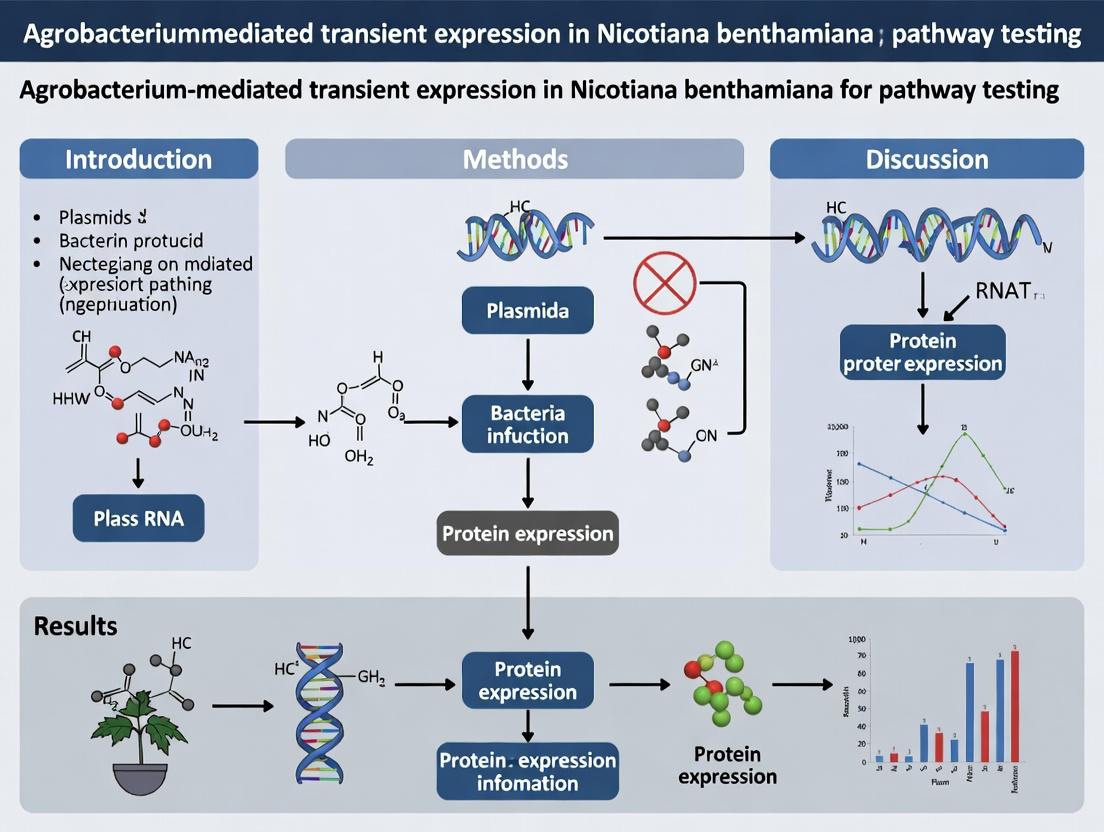
This comprehensive guide details the application of Agrobacterium tumefaciens-mediated transient expression (agroinfiltration) in Nicotiana benthamiana as a rapid and flexible platform for testing and validating heterologous metabolic pathways.
Fast-Tracking Discovery: A Practical Guide to Agrobacterium-Mediated Transient Expression in Nicotiana benthamiana for Metabolic Pathway Testing
Abstract
This comprehensive guide details the application of Agrobacterium tumefaciens-mediated transient expression (agroinfiltration) in Nicotiana benthamiana as a rapid and flexible platform for testing and validating heterologous metabolic pathways. Aimed at researchers, scientists, and drug development professionals, it covers foundational principles, a step-by-step methodological workflow, critical troubleshooting and optimization strategies, and validation techniques. The article provides the knowledge necessary to leverage this scalable plant-based system for the efficient production and functional analysis of complex biomolecules, accelerating research in synthetic biology, plant biochemistry, and pharmaceutical development.
Why N. benthamiana? The Science and Advantages of Plant-Based Transient Expression Systems
Application Notes: Agrobacterium-Mediated Transient Expression inN. benthamiana
Transient expression in Nicotiana benthamiana via Agrobacterium tumefaciens is a cornerstone technique for rapid in planta analysis, particularly for metabolic pathway engineering and biopharmaceutical protein production. The core principle leverages the bacterium's natural DNA delivery system to transiently express genes of interest without genomic integration, enabling results within days.
Key Quantitative Performance Metrics (Summarized from Recent Literature)
Table 1: Typical Parameters and Outcomes for Transient Expression in N. benthamiana
| Parameter | Typical Range / Value | Impact on Expression |
|---|---|---|
| Optimal Plant Age | 3-4 weeks post-sowing | Younger plants are more susceptible but delicate. |
| OD₆₀₀ of Agrobacterium Culture | 0.4 - 1.0 (often 0.5-0.8) | Critical for balance between efficiency and phytotoxicity. |
| Acetosyringone Concentration | 100 - 500 µM | Essential Vir gene inducer; enhances T-DNA transfer. |
| Incubation Time (Post-Infiltration) | 2 - 7 days | Protein/max yield often peaks at 3-5 days post-infiltration (dpi). |
| Expected Recombinant Protein Yield | 0.1 - 5 mg/g Fresh Weight (leaf tissue) | Highly variable based on construct, target protein, and conditions. |
| Transformation Efficiency (% of cells expressing) | Up to 80% in infiltrated zones | Depends on strain, vector, and plant health. |
Table 2: Comparison of Common Agrobacterium Strains for Transient Expression
| Strain | Key Features | Best For |
|---|---|---|
| GV3101 (pMP90) | Disarmed, rifampicin resistant. Very common, reliable. | General purpose transient expression; co-infiltration. |
| LBA4404 | Disarmed, streptomycin resistant. Slightly lower virulence. | Experiments requiring lower T-DNA transfer efficiency. |
| AGL1 | C58 chromosomal background, high transformation efficiency. | Difficult-to-express proteins, high yield needs. |
| C58C1 | Wild-type virulence, very high efficiency. Can cause overgrowth. | Maximal protein yield when phytotoxicity is managed. |
Thesis Context: This protocol directly supports thesis research on reconstructing and testing heterologous metabolic pathways in plants. Transient expression allows for rapid combinatorial testing of multiple enzymes (e.g., biosynthetic pathways for novel drug precursors) to identify rate-limiting steps and optimize flux before stable transformation.
Detailed Protocols
Protocol 1: Preparation of Agrobacterium for Infiltration
Objective: To grow and induce Agrobacterium cells ready for plant infiltration.
Materials:
- Recombinant Agrobacterium strain harboring binary vector of interest.
- Appropriate antibiotics for bacterial selection.
- YEP or LB liquid media.
- Acetosyringone stock solution (100 mM in DMSO).
- Induction buffer (10 mM MES pH 5.5, 10 mM MgCl₂).
- Sterile syringes (1 mL) or needle-less syringe.
Method:
- Streak Agrobacterium from glycerol stock onto selective agar plates. Incubate at 28°C for 2 days.
- Pick a single colony to inoculate 5 mL of liquid media with antibiotics. Grow overnight (28°C, 200 rpm).
- Use the overnight culture to inoculate a fresh 50 mL culture (starting OD₆₀₀ ~0.1) with antibiotics. Grow to an OD₆₀₀ of 0.5-0.8.
- Pellet cells at 4,000 x g for 10 min at room temperature.
- Resuspend pellet gently in induction buffer to a final OD₆₀₀ of 0.5 (for single constructs) or 0.1-0.2 each for co-infiltration of multiple strains.
- Add acetosyringone to a final concentration of 200 µM.
- Incubate the cell suspension at room temperature, in the dark, for 1-3 hours without shaking.
- The suspension is now ready for leaf infiltration.
Protocol 2: Leaf Infiltration and Tissue Harvest
Objective: To deliver Agrobacterium into leaf apoplast and harvest expressed material.
Method:
- Select healthy, expanded leaves from 3-4 week-old N. benthamiana plants.
- Using a 1 mL needle-less syringe, press the tip gently against the abaxial (underside) side of a leaf, while supporting the top with a finger.
- Infiltrate the bacterial suspension by slowly depressing the plunger. A water-soaked area will spread.
- Mark the infiltrated zone. Keep plants in normal growth conditions (22-25°C, 16h light/8h dark).
- Monitor expression. For most proteins, harvest tissue at 3-5 dpi by excising the infiltrated zone.
- Snap-freeze tissue in liquid nitrogen and store at -80°C for analysis, or process immediately for protein/metabolite extraction.
The Scientist's Toolkit: Essential Research Reagents & Materials
Table 3: Key Reagent Solutions for Agrobacterium Transient Assays
| Item / Reagent | Function / Purpose | Key Considerations |
|---|---|---|
| Binary Vector (e.g., pEAQ, pTRAK) | Carries gene of interest between T-DNA borders for transfer. | Choice affects expression level (promoter, terminator, enhancers). |
| Acetosyringone | Phenolic compound that induces the Agrobacterium Virulence (Vir) genes. | Critical for efficient T-DNA transfer; must be fresh. |
| Silwet L-77 | Surfactant used for vacuum infiltration of whole plants. | Enables high-throughput whole-plant infiltration. |
| Protease Inhibitor Cocktail | Added during tissue homogenization to protect recombinant proteins. | Essential for stabilizing therapeutic proteins or enzymes. |
| β-Glucuronidase (GUS) Reporter | Visual/quantitative marker for successful transformation events. | Used to optimize conditions before using precious constructs. |
| Post-Infiltration Light Control | Maintaining consistent photoperiod post-infiltration. | Light intensity and duration significantly impact protein yield. |
Visualizations
T-DNA Transfer & Host-Pathogen Signaling Pathway
Experimental Workflow for Transient Pathway Testing
Application Notes: Key Biological Traits and Utility
Nicotiana benthamiana has emerged as the dominant plant chassis for transient expression, particularly via Agrobacterium tumefaciens (the basis of agroinfiltration). Its pre-eminence is due to a suite of unique biological characteristics that synergistically enhance recombinant protein yield and research throughput.
Table 1: Quantitative Summary of Key N. benthamiana Traits Enhancing Transient Expression
| Biological Trait | Quantitative/Descriptive Impact | Consequence for Research |
|---|---|---|
| Defective RNA-Dependent RNA Polymerase 1 (Rdr1) | Silencing suppressor activity is effectively null. | Dramatically increases recombinant protein yield by preventing viral-derived transgene silencing. Reported yield increases of 10- to 50-fold compared to wild-type plants. |
| Large, Broad Leaves | Surface area of a single leaf can exceed 200 cm². | Provides substantial infiltration area, allowing for parallel testing of multiple constructs (>10 per leaf) and gram-scale protein harvests from a single plant. |
| Rapid Life Cycle | Seeds to mature, infiltratable plant in 4-5 weeks. | Enables ultra-fast iterative design-build-test-learn cycles for pathway engineering and protein prototyping. |
| Susceptibility to Pathogens | High susceptibility to a wide range of viruses and Agrobacterium. | Makes it an exceptionally permissive host for transient expression vectors derived from viral genomes (e.g., TMV, PVX) and for agroinfiltration. |
| Competent Protein Machinery | Possesses essential chaperones and glycosylation apparatus. | Supports proper folding and post-translational modification (complex mammalian-type N-glycans are possible with engineering) of heterologous proteins. |
Within the thesis context of Agrobacterium-mediated transient expression for pathway testing, these traits translate directly to high signal-to-noise experimental data. The Rdr1 deficiency is paramount, as it allows for the high-level, simultaneous expression of multiple pathway enzymes without host-induced silencing, enabling the reconstruction and functional analysis of complex metabolic pathways from plants, microbes, or fungi in a matter of days.
Experimental Protocols
Protocol 1: High-Throughput Agroinfiltration for Multi-Gene Pathway Assembly
This protocol describes a streamlined, syringe-less infiltration method for testing combinatorial constructs, ideal for elucidating rate-limiting steps in a biosynthetic pathway.
Materials:
- N. benthamiana plants, 3-4 weeks old, grown under 16-hr light/8-hr dark.
- Agrobacterium tumefaciens strain GV3101 (pMP90) transformed with binary expression vectors (e.g., pEAQ, pBIN61) for each pathway gene and optional silencing suppressor (p19).
- YEP media with appropriate antibiotics (rifampicin, gentamicin, kanamycin).
- Infiltration Buffer: 10 mM MES pH 5.5, 10 mM MgCl₂, 150 µM acetosyringone.
- 1 mL needleless syringe or vacuum infiltration apparatus.
- Sterile 96-well deep-well plates and multichannel pipettes.
Method:
- Culture Agrobacterium: From glycerol stocks, streak strains on selective plates. Inoculate single colonies into 5 mL YEP with antibiotics. Grow overnight at 28°C, 220 rpm.
- Scale-up & Induction: Sub-culture 1:100 into fresh selective YEP. Grow to OD600 ~0.8-1.0. Pellet cells at 4000 x g for 10 min. Resuspend pellet in infiltration buffer to a final OD600 of 0.5 for each strain. For multi-gene cocktails, mix individual suspensions to equal final ODs (e.g., OD600 0.5 each). Add acetosyringone to 150 µM. Incubate at room temperature for 1-3 hrs.
- Infiltration:
- For multi-construct testing: Use the abaxial side of a single, large leaf. Using a marker, gently outline 1-2 cm² sectors. Using a needleless syringe pressed against the leaf surface (abaxial side supported by a gloved finger), infiltrate each unique Agrobacterium mixture into a designated sector. One leaf can accommodate 6-12 distinct infiltrations.
- For whole-plant expression: Submerge the above-ground plant portion in the Agrobacterium suspension in a beaker. Apply vacuum (~25-30 inHg) for 1-2 min in a vacuum desiccator. Rapidly release the vacuum. The suspension will be drawn into the intercellular spaces.
- Incubation & Harvest: Maintain infiltrated plants under standard growth conditions. Harvest tissue 3-7 days post-infiltration (dpi) by excising infiltrated areas. Flash-freeze in liquid N₂ and store at -80°C for analysis.
Protocol 2: Rapid Metabolite Extraction and Screening from Infiltrated Leaf Discs
Materials:
- Frozen, infiltrated leaf tissue.
- Tissue lyser (e.g., Retsch MM400) or mortar and pestle.
- Extraction solvent (e.g., 80% methanol/water, v/v, with 0.1% formic acid, pre-chilled).
- Centrifuge and 2 mL microcentrifuge tubes.
- 0.22 µm PVDF or nylon syringe filters.
Method:
- Homogenize: Grind frozen leaf disc (~100 mg) to a fine powder in a 2 mL tube with a metal or ceramic bead using a tissue lyser (2 min, 30 Hz).
- Extract: Add 1 mL of ice-cold extraction solvent. Vortex vigorously for 10 sec. Sonicate in a cold water bath for 10 min.
- Clarify: Centrifuge at 16,000 x g, 4°C, for 15 min.
- Filter: Transfer supernatant to a new tube. Pass through a 0.22 µm filter into an LC-MS vial.
- Analysis: Analyze immediately by UHPLC-HRMS (e.g., Q-Exactive Orbitrap) using reversed-phase C18 chromatography and full-scan/data-dependent MS² acquisition. Use non-infiltrated or empty-vector infiltrated leaf extracts as controls.
Diagrams
Figure 1: Agroinfiltration Workflow Leveraging N. benthamiana Traits
Figure 2: Multi-Gene Pathway Reconstruction in N. benthamiana
The Scientist's Toolkit: Research Reagent Solutions
Table 2: Essential Materials for N. benthamiana Transient Expression
| Item | Function & Rationale |
|---|---|
| A. tumefaciens GV3101 | Disarmed, virulent strain with high transformation efficiency and reliable T-DNA transfer in N. benthamiana. |
| pEAQ-HT or pBIN61 Vectors | Binary vectors with strong, constitutive promoters (CaMV 35S) and optimized architectures for high-level transient expression. |
| Silencing Suppressor p19 | Viral suppressor of RNA silencing from Tomato bushy stunt virus. Co-infiltration further ensures maximal protein yield, especially for small RNAs or challenging proteins. |
| Acetosyringone | Phenolic compound that activates the Agrobacterium Vir gene region, essential for inducing T-DNA transfer competence. |
| Syringe Filters (0.22 µm) | For sterile filtration of Agrobacterium cultures prior to infiltration, preventing plant clogs and contamination. |
| Liquid Nitrogen & Cryotubes | For immediate snap-freezing of harvested tissue to halt enzymatic activity and preserve metabolite profiles for pathway analysis. |
| LC-MS Grade Solvents | High-purity methanol, acetonitrile, and water are critical for reproducible, high-sensitivity metabolomic analysis of pathway products. |
Application Notes
Within the broader thesis on Agrobacterium-mediated transient expression in Nicotiana benthamiana (Nb) for pathway testing, this system serves as a versatile platform spanning fundamental protein biochemistry to complex metabolic engineering. Its rapid turnaround (1-2 weeks post-infiltration) and high biomass yield make it indispensable for iterative design-build-test-learn cycles in synthetic biology.
| Application Scope | Typical Yield Range | Key Advantage for Pathway Research | Common Readouts |
|---|---|---|---|
| Single Protein (e.g., enzymes, antibodies) | 10 - 200 mg/kg FW | Rapid solubility & activity assessment; post-translational modification. | SDS-PAGE, ELISA, enzymatic assays, mass spectrometry. |
| Multi-Protein Complexes (e.g., virus-like particles, receptors) | 1 - 20 mg/kg FW | Co-expression & assembly of heterologous subunits in planta. | BN-PAGE, electron microscopy, affinity purification. |
| Short Pathways (2-4 genes, e.g., flavonoid) | Product-specific: μg - mg/g DW | Testing channeling, compartmentation, and rate-limiting steps. | HPLC-MS/MS, fluorescence, spectrophotometry. |
| Long Pathways (5-10+ genes, e.g., alkaloids) | Product-specific: ng - μg/g DW | Reconstituting complete pathways; identifying bottlenecks & host interactions. | LC-HRMS, tracer studies, RNA-seq. |
Table 1: Quantitative summary of key applications in Nb transient expression.
Detailed Protocols
Protocol 1: High-Throughput Agrobacterium Infiltration for Multi-Gene Pathway Assembly
Principle: Co-infiltration of multiple Agrobacterium tumefaciens strains, each carrying a distinct pathway gene, to reconstitute metabolic pathways.
Materials (Research Reagent Solutions):
- GV3101 pMP90 Agrobacterium Strains: Engineered for plant transformation; disarmed Ti plasmid.
- pEAQ-HT Vector System: High-expression binary vector with silenced suppressor of gene silencing.
- Silwet L-77: Surfactant that lowers surface tension for efficient leaf infiltration.
- Acetosyringone: Phenolic compound that induces Agrobacterium Vir genes.
- MES Buffer (pH 5.6): Maintains optimal pH for bacterial viability during infiltration.
- Nicotiana benthamiana Plants: 3-4 weeks old, grown under controlled conditions.
Methodology:
- Strain Preparation: Transform individual pathway genes into Agrobacterium strain GV3101. Inoculate single colonies in LB with appropriate antibiotics and grow overnight at 28°C.
- Induction: Sub-culture 1:100 into fresh LB with antibiotics, 10 mM MES (pH 5.6), and 20 μM acetosyringone. Grow to OD600 ~0.8.
- Harvest & Resuspension: Pellet bacteria at 3,500 x g for 15 min. Resuspend in infiltration buffer (10 mM MgCl2, 10 mM MES pH 5.6, 150 μM acetosyringone) to a final OD600 of 0.5 per strain.
- Strain Mixing: For multi-gene pathways, combine equal volumes of each bacterial suspension. Add Silwet L-77 to a final concentration of 0.005% (v/v).
- Infiltration: Using a needleless syringe, infiltrate the mixed culture into the abaxial side of fully expanded Nb leaves. Mark infiltrated zones.
- Incubation: Maintain plants under normal growth conditions (22-25°C, 16h light/8h dark) for 5-10 days post-infiltration (dpi) before analysis.
Protocol 2: Targeted Metabolite Analysis from Infiltrated Leaf Discs
Principle: Extraction and quantification of pathway-specific metabolites from infiltrated leaf zones.
Methodology:
- Sampling: At the optimal harvest time (typically 5-7 dpi), excise leaf discs from infiltrated zones using a cork borer. Flash-freeze in liquid N2.
- Extraction: Homogenize 100 mg tissue in 1 mL 80% (v/v) methanol/water with 0.1% formic acid, containing internal standards. Sonicate for 15 min, centrifuge at 15,000 x g for 10 min.
- Analysis: Filter supernatant (0.22 μm) and analyze by LC-MS/MS. Use multiple reaction monitoring (MRM) for target metabolites. Quantify against a standard curve.
- Data Normalization: Normalize metabolite peak areas to internal standard and tissue fresh weight (FW) or dry weight (DW).
Visualizations
Title: Agrobacterium Transient Expression Workflow for Nb Pathway Testing
Title: Co-expression of Metabolic Pathway Genes in a Single Cell
The Scientist's Toolkit: Essential Reagents & Materials
| Item | Function & Role in Pathway Testing |
|---|---|
| Binary Vectors (pEAQ-HT, pCambia) | High-expression, plant-optimized vectors for cloning genes of interest. Enable rapid, high-yield protein production. |
| Agrobacterium tumefaciens GV3101 | Disarmed, helper plasmid-containing strain optimized for Nb transformation. Essential for T-DNA delivery. |
| Acetosyringone | A phenolic compound that activates Agrobacterium Vir genes, critical for efficient T-DNA transfer. |
| Silwet L-77 | Non-ionic surfactant that reduces surface tension, ensuring uniform leaf infiltration and expression. |
| N. benthamiana Δdcl2/dcl3/dcl4 | RNAi-deficient mutant line. Maximizes recombinant yield by suppressing gene silencing. |
| LC-HRMS System | For sensitive, untargeted profiling and quantification of novel pathway metabolites. |
| Fluorescent Protein Tags (e.g., GFP, mCherry) | Visualize subcellular localization of enzymes and assess co-expression efficiency. |
| Tissue Homogenizer (Bead Mill) | Ensures complete, reproducible cell lysis for metabolite and protein extraction. |
| Infiltration Syringes (1mL needleless) | Standard tool for manual agroinfiltration into leaf mesophyll. |
Application Notes
Agrobacterium-mediated transient expression in Nicotiana benthamiana (Nb) has become a cornerstone for rapid pathway testing in plant molecular pharming and synthetic biology. The central thesis positions this transient system not as a mere precursor to stable transformation, but as a strategically distinct platform offering irreplaceable advantages for specific research and pre-commercialization phases, despite the enduring necessity of stable transformation for large-scale production.
Strategic Benefit Analysis:
- Speed: Transient expression delivers protein yields within 1-2 weeks post-infiltration, compared to months or years required for generating, selecting, and characterizing stable transgenic lines. This enables ultra-rapid iteration for gene construct optimization, mutant library screening, and pathway component testing.
- Scalability: From a single leaf disc to entire plants in controlled environments, the system is linearly scalable for proof-of-concept and preclinical material production. Recent advances in vacuum or whole-plant infiltration allow kilogram-scale biomass processing for gram-quantity yields of recombinant proteins.
- Cost-Effectiveness: Eliminates the capital and time costs associated with maintaining plant tissue culture facilities, extensive selectable marker regimes, and long-term breeding programs. It leverages a low-cost, high-biomass plant host that can be grown densely and rapidly.
Vs. Stable Transformation: Stable transformation remains critical for sustainable, regulated, and economically viable commercial-scale production. It ensures heritable genetic integration and expression stability over plant generations, which is non-negotiable for product registration and manufacturing. The transient system is thus best framed as a complementary, high-throughput discovery and testing engine that de-risks and informs the development of stable lines.
Quantitative Comparison Table: Table 1: Strategic Comparison of Transient vs. Stable Expression in N. benthamiana
| Parameter | Agroinfiltration (Transient) | Stable Transformation |
|---|---|---|
| Time to First Expression | 3-7 Days Post Infiltration (DPI) | 3-12 Months (from transformation) |
| Typical Protein Yield Range | 0.1 - 5 mg/g Leaf Fresh Weight (LFW) | 0.01 - 2% Total Soluble Protein (TSP) |
| Scalability for Testing | High (Rapid parallel constructs) | Low (Labor-intensive per line) |
| Capital & Operational Cost | Low to Moderate | High (Tissue culture, long-term growth) |
| Expression Stability | Ephemeral (Peaks at 5-7 DPI, declines by 14 DPI) | Heritable and stable across generations |
| Multigene Co-expression | Highly Flexible (Co-infiltration of multiple strains) | Complex (Requires stacking or crossing) |
| Ideal Application Phase | Pathway Discovery, Protein Engineering, Preclinical Material Supply | Commercial Manufacturing, Registered Products |
Current Data on Performance: Recent studies (2023-2024) continue to optimize the system. The use of viral vectors (e.g., deconstructed Tobacco Mosaic Virus, TMV) and silencing suppressors (e.g., p19) routinely push yields for monoclonal antibodies and virus-like particles (VLPs) above 1 mg/g LFW. For metabolic pathway testing, simultaneous co-infiltration of 5-12 Agrobacterium strains, each carrying a different pathway gene, is now standard, enabling rapid reconstruction of complex pathways like cannabinoid or alkaloid biosynthesis in under two weeks.
Experimental Protocols
Protocol 1: Standard Agrobacterium-Mediated Leaf Infiltration for Single/Multiple Gene Expression
Objective: To transiently express one or multiple recombinant proteins or pathway enzymes in N. benthamiana leaves. Materials: See "The Scientist's Toolkit" below. Procedure:
- Agrobacterium Preparation:
- Transform the gene of interest (in a binary vector, e.g., pEAQ-HT) into competent Agrobacterium tumefaciens strain GV3101.
- Select single colonies on LB agar with appropriate antibiotics (e.g., Rifampicin, Kanamycin, Gentamicin).
- Inoculate a 5 mL starter culture and grow overnight at 28°C, 220 rpm.
- Sub-culture into 50 mL of fresh induction medium (LB with antibiotics, 10 mM MES pH 5.6, 20 μM Acetosyringone). Grow to an OD600 of 0.6-1.0.
- Pellet cells at 4,000 x g for 10 min. Resuspend in infiltration buffer (10 mM MgCl₂, 10 mM MES pH 5.6, 150 μM Acetosyringone) to a final OD600 of 0.2-0.5 for each strain.
- Incubate the resuspension at room temperature for 1-3 hours.
- Plant Material:
- Use 4-5 week-old N. benthamiana plants grown under controlled conditions (16h light/8h dark, 25°C).
- Infiltration:
- For multigene co-expression, mix equal volumes of individual Agrobacterium resuspensions to achieve the desired final OD for each strain.
- Using a needleless syringe, press the tip against the abaxial side of a leaf and gently inject the bacterial suspension. The infiltrated area will appear water-soaked.
- Incubation & Harvest:
- Return plants to growth conditions.
- Harvest leaf tissue typically at 3-7 Days Post Infiltration (DPI). Snap-freeze in liquid nitrogen and store at -80°C for analysis.
Protocol 2: High-Throughput Vacuum Infiltration for Scalable Biomass Production
Objective: To infiltrate whole N. benthamiana plants or large batches of detached leaves for gram-scale protein production. Procedure:
- Prepare Agrobacterium cultures as in Protocol 1, scaling volumes accordingly. The final OD600 in infiltration buffer may be adjusted between 0.05-0.2.
- For Whole Plants: Submerge the aerial part of a potted plant (4-5 weeks old) upside down in a vessel containing the Agrobacterium suspension. Place the vessel in a vacuum desiccator.
- Apply a vacuum of 15-25 inHg (approx. 50-85 kPa) for 1-2 minutes. Rapidly release the vacuum. The suspension will infiltrate all submerged tissues.
- For Detached Leaves: Place pre-weighed batches of leaves in a perforated container. Submerge in the Agrobacterium suspension and apply vacuum as above.
- Rinse plants/leaves gently with water and place in growth chambers (whole plants) or on humidified trays (detached leaves) under standard conditions.
- Harvest at optimal DPI (often 5-7 DPI for full canopy infiltration).
Visualizations
Title: Transient Expression Workflow Timeline
Title: Strategic Choice: Transient vs Stable Expression
The Scientist's Toolkit
Table 2: Essential Research Reagent Solutions for Agroinfiltration
| Reagent/Material | Function & Rationale |
|---|---|
| N. benthamiana Seeds | The model plant host; exhibits high susceptibility to Agrobacterium and lacks efficient silencing machinery in early growth stages. |
| A. tumefaciens GV3101 | A disarmed, widely used strain with high transformation efficiency and compatibility with many binary vectors. |
| pEAQ-HT Binary Vector | Hyper-translatable expression vector using the CPMV HT system, enabling very high recombinant protein yields. |
| Acetosyringone | A phenolic compound that induces the Agrobacterium vir genes, essential for T-DNA transfer into plant cells. |
| Silencing Suppressor (p19) | Co-infiltrated from a separate Agrobacterium strain to inhibit post-transcriptional gene silencing, boosting protein accumulation. |
| Infiltration Buffer (MgCl₂/MES) | Provides optimal ionic conditions and pH for Agrobacterium viability and plant cell interaction during infiltration. |
| Syringe (1 mL needleless) | Standard tool for manual leaf infiltration for small-scale, targeted experiments. |
| Vacuum Infiltration System | For scalable, whole-plant infiltration; consists of a vacuum chamber and pump to drive Agrobacterium into entire leaf canopies. |
Agrobacterium-mediated transient expression in Nicotiana benthamiana is a cornerstone technology for rapid in planta analysis of heterologous pathways, particularly for pharmaceutical compound production. This system leverages the natural DNA transfer machinery of Agrobacterium tumefaciens to deliver target genes into plant cells, enabling high-level protein expression or multi-gene metabolic pathway assembly within days. The efficiency of this process is dictated by the interplay of three core components: the expression vector, the Agrobacterium strain, and the host plant physiology.
Vectors: The Expression Blueprint
Modern vectors for transient expression are typically binary vectors replicating in both E. coli and Agrobacterium. They contain a Transfer DNA (T-DNA) region flanked by left and right borders, which is mobilized into the plant cell.
Key Genetic Elements:
- Promoters: The Cauliflower Mosaic Virus 35S (CaMV 35S) promoter, often with a double-enhancer (2x35S), is standard. For very high-level expression, hybrid promoters like pCAMBIA or plant-viral combinations (e.g., pEAQ-HT) are used.
- Terminators: The nopaline synthase (NOS) or CaMV 35S terminator ensure proper transcription cessation.
- Selection Markers: For bacteria (e.g., kanamycin resistance) and plants (e.g., herbicide or antibiotic resistance within the T-DNA).
- Fluorescent Markers & Tags: Genes for GFP, mCherry, or epitope tags (HA, FLAG) enable localization and purification.
- Silencing Suppressors: Co-expression of viral suppressors of RNA silencing (e.g., p19 from Tomato bushy stunt virus, HC-Pro from Tobacco etch virus) is critical to boost recombinant protein yield by countering the plant's innate defense.
Table 1: Common Vector Systems for Transient Expression in N. benthamiana
| Vector Series | Key Features | Typical Expression Level | Primary Use Case |
|---|---|---|---|
| pCAMBIA/pBI121 | Standard 2x35S promoter, NOS terminator. | Moderate (0.1-1% TSP*) | Single gene expression, routine assays. |
| pEAQ-HT | Hyper-translatable system, avoids gene silencing. | Very High (up to 10% TSP) | High-yield protein production. |
| pGREEN/pSOUP | Minimal vectors, requires trans Vir functions. | Moderate to High | Large-scale multi-gene infiltrations. |
| Gateway-compatible | Enable high-throughput cloning via LR recombination. | Variable (depends on backbone) | Pathway engineering with multiple enzymes. |
| MAGIC/MoClo | Modular Golden Gate cloning systems. | Variable (depends on modules) | Assembly of complex metabolic pathways. |
*TSP: Total Soluble Protein.
Agrobacterium Strains: The Delivery Vehicle
The choice of Agrobacterium strain impacts T-DNA transfer efficiency and host range. Disarmed strains, lacking oncogenes, are used for transient expression.
Table 2: Common Agrobacterium tumefaciens Strains for Transient Expression
| Strain | Chromosomal Background | Key Characteristics | Optimal Use |
|---|---|---|---|
| GV3101 (pMP90) | C58 | Ti-plasmid pMP90 (rifampicin, gentamicin resistant). Very common. | General-purpose infiltration, high virulence. |
| LBA4404 | Ach5 | Helper Ti-plasmid pAL4404 (streptomycin resistant). | Co-cultivation, older but reliable. |
| AGL0/AGL1 | C58 | Contains "supervirulent" pTiBo542 derivative. Contains additional virG and virB mutations. | Transformation of recalcitrant plants, can enhance T-DNA delivery. |
| EHA105 | C58 | Derived from hypervirulent strain A281, pTiBo542 T-DNA disarmed. | Often used for difficult transformations. |
| C58C1 | C58 | Wild-type virulence, often used with binary vectors in a tri-parental mating system. | Research on virulence mechanisms. |
Host Plant:Nicotiana benthamiana
N. benthamiana is the model host due to its susceptibility to Agrobacterium, rapid growth, large leaf surface, and a well-characterized predisposition to RNA silencing, which is mitigated by co-infiltration with silencing suppressors.
Critical Growth Parameters:
- Age: 4-6 weeks old plants are optimal.
- Photoperiod: 16h light/8h dark.
- Temperature: 22-25°C day, 20-22°C night.
- Humidity: 60-70%.
- Leaf Selection: Fully expanded, young leaves (3rd to 5th leaf from apex) are typically infiltrated.
Detailed Protocol: Agrobacterium-Mediated Transient Expression
Protocol 1: Agroinfiltration of N. benthamiana for Pathway Testing
I. Materials (The Scientist's Toolkit) Table 3: Essential Research Reagents and Materials
| Item | Function/Description |
|---|---|
| N. benthamiana seeds (e.g., Delta strain) | The model plant host organism. |
| Binary expression vector(s) | Contains gene(s) of interest within T-DNA borders. |
| Agrobacterium strain GV3101 | The disarmed delivery vehicle for T-DNA. |
| LB Broth & Agar (with appropriate antibiotics) | For bacterial culture growth and selection. |
| Acetosyringone | A phenolic compound that induces the Agrobacterium vir genes. |
| MES Buffer (10mM, pH 5.6) | Infiltration buffer to maintain pH and bacterial viability. |
| MgCl₂ (10mM) | Component of infiltration buffer. |
| Needleless syringe (1mL) or Vacuum infiltration apparatus | For pressure-driven delivery of Agrobacterium into leaf tissue. |
| Sterile culture flasks/tubes | For bacterial growth. |
| Centrifuge | For pelleting bacterial cells. |
| Spectrophotometer | To measure bacterial culture density (OD600). |
II. Step-by-Step Method
- Vector Transformation: Introduce the binary vector into the chosen Agrobacterium strain (GV3101) via electroporation or freeze-thaw. Plate on LB agar with appropriate antibiotics (e.g., kanamycin for the vector, rifampicin/gentamicin for the strain). Incubate at 28°C for 2 days.
- Starter Culture: Pick a single colony and inoculate 2-5 mL of LB medium with antibiotics. Shake (200 rpm) at 28°C for 24-48 hours.
- Induction Culture: Dilute the starter culture 1:100 into fresh LB with antibiotics and 20 μM acetosyringone. Grow to mid-log phase (OD600 ≈ 0.6-1.0). This step induces the vir genes.
- Harvesting Cells: Pellet bacteria by centrifugation (3000-5000 x g, 10 min, room temp). Resuspend the pellet in infiltration buffer (10 mM MgCl₂, 10 mM MES, pH 5.6, with 150 μM acetosyringone).
- Optical Density Adjustment: Adjust the bacterial suspension to the final desired OD600 (typically 0.2-0.5 for single constructs, up to 0.8-1.0 for mixed cultures for pathway assembly). Let stand at room temperature for 1-3 hours.
- Infiltration:
- Syringe Infiltration: Using a needleless syringe, press the tip against the abaxial (lower) side of a leaf. Gently inject the suspension, watching it spread into the intercellular spaces.
- Vacuum Infiltration: Submerge whole plant aerial parts in the bacterial suspension. Apply a vacuum (25-30 in Hg) for 1-2 minutes, then slowly release. The suspension is drawn into the leaves.
- Plant Incubation: Return plants to growth conditions. Expression can be detected as early as 24 hours post-infiltration (hpi), peaking between 48-96 hpi.
- Analysis: Harvest leaf discs or whole infiltrated zones. Process for downstream analysis: protein extraction for immunoblotting, enzyme assays, or metabolite extraction for LC-MS/MS analysis of pathway products.
Signaling Pathways and Workflows
Diagram 1: Agrobacterium-Mediated Transient Expression Workflow
Diagram 2: Agrobacterium vir Gene Induction & T-DNA Transfer
From Plasmid to Plant: A Step-by-Step Protocol for Agroinfiltration and Pathway Testing
For the broader thesis focusing on Agrobacterium-mediated transient expression in Nicotiana benthamiana for plant-based pathway testing (e.g., for pharmaceutical compound biosynthesis), Phase 1 construct design is foundational. The choice of vector backbone, regulatory elements, and gene assembly strategy directly impacts protein yield, multi-gene coordination, and ultimately, the success of downstream pathway reconstitution and analysis. This protocol details the critical decisions and methods for this initial phase.
Key Design Considerations and Current Data
Vector Backbone Selection
Vectors for transient expression must be compatible with the Agrobacterium tumefaciens binary system and possess features for high-level, rapid expression in plant cells. The table below compares widely used contemporary vectors.
Table 1: Comparison of Common Binary Vectors for Transient Expression in N. benthamiana
| Vector Name | Key Features | Typical Insert Capacity | Selection (Bacteria/Plant) | Key Advantages for Pathway Engineering |
|---|---|---|---|---|
| pEAQ-HT (Gils et al., 2009) | CPMV HT expression system, non-autonomous | ~2 kb | KanR / None (transient) | Extremely high protein yields; minimal silencing. |
| pEAQ Express (Sainsbury et al., 2016) | 5' leader and 3' UTR sequences | ~2 kb | KanR / None | Enhanced translation for recombinant proteins. |
| pCAMBIA series (e.g., 1300, 2300) | Versatile, multiple cloning site | >10 kb | KanR or SpecR / HygR or KanR | High capacity, stable and transient use, common marker. |
| pGREEN II (Hellens et al., 2000) | Modified pPZP backbone, replicon | >10 kb | KanR / Various | Low bacterial copy number improves plasmid stability. |
| pBINPLUS (van Engelen et al., 1995) | Enhanced pBIN19, improved MCS | >10 kb | KanR / KanR | Reliable, high plant transformation efficiency. |
| pTRBO (Lindbo, 2007) | Tobacco mosaic virus-based vector | ~2 kb | KanR / None | High-level systemic expression and gene silencing suppression. |
| pJL-TRBO (Gengenbach et al., 2023) | Deconstructed virus vector | ~2 kb | KanR / None | Optimized for co-expression, high throughput screening. |
Promoter and Regulatory Element Selection
Promoter choice dictates the timing, tissue specificity, and magnitude of expression. For rapid, high-level protein production in transient assays, strong constitutive promoters are standard.
Table 2: Promoters for High-Level Transient Expression
| Promoter | Origin | Expression Profile | Relative Strength in N. benthamiana Leaves* | Notes for Pathway Engineering |
|---|---|---|---|---|
| CaMV 35S | Cauliflower mosaic virus | Constitutive, strong | 1.0 (Reference) | Widely used; can be duplicated for enhanced activity (35Sx2). |
| CPMV HT | Cowpea mosaic virus | Constitutive, very strong | 3.0 - 5.0 | Used in pEAQ vectors; drives extremely high yields. |
| Nos | Agrobacterium tumefaciens | Constitutive, moderate | 0.3 - 0.5 | Often used for selectable marker gene expression. |
| CsVMV | Cassava vein mosaic virus | Constitutive, strong | 1.5 - 2.0 | Less prone to silencing in some systems. |
| Arabidopsis Ubiquitin 10 (UBQ10) | Arabidopsis thaliana | Constitutive, strong | 0.8 - 1.2 | Plant-derived alternative to viral promoters. |
| RD29A (Inducible) | A. thaliana | Stress-inducible (e.g., drought, salt) | Variable | Allows controlled expression to avoid metabolic burden. |
*Relative strength estimates are based on comparative GUS or GFP assays reported in literature.
Gene Assembly and Multi-Gene Strategies
Reconstituting multi-step biosynthetic pathways requires coordinated expression of 3-10+ genes. Modern assembly methods offer efficiency and flexibility.
Table 3: Gene Assembly Strategies for Multi-Gene Constructs
| Strategy | Principle | Max Genes (Practical) | Throughput | Key Advantage | Primary Limitation |
|---|---|---|---|---|---|
| Golden Gate / MoClo | Type IIS restriction enzymes (e.g., BsaI, BpiI) that cut outside recognition site, enabling seamless assembly. | 10+ | High | Standardized, modular, one-pot assembly; ideal for combinatorial testing. | Requires pre-made modular libraries. |
| Gibson Assembly | Overlap Extension Assembly (OE-PCR) using 5' exonuclease, DNA polymerase, and DNA ligase to join fragments with homologous ends. | 5-10 | Medium | Seamless, sequence-independent; good for large fragment assembly. | Can be costly for many fragments; optimization needed for large assemblies. |
| Gateway (LR Clonase) | Site-specific recombination between attL and attR sites to transfer gene from entry to destination vector. | 4-6 (MultiSite Gateway) | Medium | Highly reliable, directional; vast catalog of entry clones available. | Scar sequence remains; licensing costs. |
| USER Fusion | Uracil-Specific Excision Reagent creates single-stranded 3' overhangs for precise fusion of PCR fragments. | 5-8 | Medium | Efficient, seamless, and uses simple PCR. | Requires uracil-containing primers. |
| Traditional Restriction/Ligation | Use of standard restriction enzymes and ligase to clone into MCS. | 1-2 | Low | Universally accessible, low cost. | Low throughput, scar sequences, limited multi-gene capacity. |
Detailed Experimental Protocols
Protocol: Golden Gate Assembly for a 4-Gene Pathway Construct
This protocol assembles four expression cassettes (Promoter-Gene-Terminator) into a single binary vector backbone in a one-pot reaction.
Materials:
- DNA Parts: Level 0 MoClo-compatible modules for each promoter, gene coding sequence (CDS), and terminator.
- Vector: Level 1 (for single cassette) or Level M (for multi-gene) binary acceptor vector (e.g., pAGM4723 for pEAQ-based system).
- Enzymes: BsaI-HFv2 (or BpiI), T4 DNA Ligase.
- Buffers: 10x T4 DNA Ligase Buffer.
- Other: Nuclease-free water, thermal cycler.
Procedure:
- Design: Ensure all modules have correct 4-bp fusion sites for desired assembly order. Standard MoClo overhangs (e.g., GGAG, AATG, etc.) are used.
- Reaction Setup: In a 0.2 mL PCR tube, mix on ice:
- 50 ng Level M acceptor vector.
- Equimolar amounts (typically 20-50 fmol each) of the four Level 0 promoter-CDS-terminator modules.
- 1 μL BsaI-HFv2 (or BpiI) (20 units).
- 1 μL T4 DNA Ligase (400 units).
- 2 μL 10x T4 DNA Ligase Buffer.
- Nuclease-free water to 20 μL total.
- Cyclic Digestion-Ligation: Place tube in a thermal cycler. Run the following program:
- 37°C for 5 minutes (digestion).
- 16°C for 5 minutes (ligation).
- Repeat steps 1 & 2 for 25-50 cycles.
- 50°C for 5 minutes (final digestion).
- 80°C for 10 minutes (enzyme inactivation).
- Hold at 4°C.
- Transformation: Transform 2-5 μL of the reaction into competent E. coli (e.g., DH5α) via heat shock or electroporation. Plate on LB agar with appropriate antibiotic.
- Screening: Screen colonies by colony PCR or restriction digest. Sequence confirmed plasmids are ready for transformation into Agrobacterium.
Protocol: Transformation of Construct intoAgrobacterium tumefaciens(GV3101 pMP90)
Materials:
- Strain: A. tumefaciens GV3101 (pMP90) electrocompetent cells.
- DNA: Purified binary plasmid (100-500 ng/μL).
- Media: SOC or LB broth, LB agar plates with appropriate antibiotics (e.g., Gentamicin for strain selection, Kanamycin for binary vector).
- Equipment: Electroporator, 0.1 cm gap electroporation cuvettes.
Procedure:
- Thaw electrocompetent Agrobacterium cells on ice.
- Aliquot 50 μL of cells into a pre-chilled 1.5 mL microcentrifuge tube.
- Add 50-200 ng of plasmid DNA to cells. Mix gently by tapping. Do not vortex.
- Transfer mixture to a pre-chilled 0.1 cm electroporation cuvette. Ensure no air bubbles.
- Electroporate using appropriate settings (e.g., 1.8 kV, 200 Ω, 25 μF).
- Immediately add 1 mL of SOC or LB broth to cuvette. Transfer suspension to a sterile culture tube.
- Incubate horizontally at 28°C for 2-3 hours with shaking (200 rpm).
- Plate 100-200 μL on selective LB agar plates. Incubate plates at 28°C for 2-3 days.
- Pick single colonies for colony PCR or to inoculate liquid cultures for glycerol stocks and infiltration.
Visualizations
Diagram 1: Construct and Agrobacterium prep workflow.
Diagram 2: Golden Gate assembly of multi-gene construct.
The Scientist's Toolkit: Research Reagent Solutions
Table 4: Essential Reagents and Materials for Construct Design Phase
| Item | Function/Description | Example Product/Brand (for informational purposes) |
|---|---|---|
| Type IIS Restriction Enzymes | Core enzyme for Golden Gate assembly. Cuts outside recognition site to generate specific overhangs. | BsaI-HFv2, BpiI (NEB), Esp3I (Thermo). |
| High-Efficiency T4 DNA Ligase | Joins DNA fragments with compatible ends during assembly reactions. | T4 DNA Ligase (NEB), Quick Ligase (NEB). |
| Golden Gate Modular Toolkit | Pre-made libraries of standardized biological parts (promoters, CDS, tags, terminators). | MoClo Plant Toolkit (Weber et al.), Loop Assembly kit. |
| Electrocompetent A. tumefaciens | Agrobacterium strain optimized for electroporation with high transformation efficiency. | GV3101 (pMP90) electrocompetent cells. |
| Acetosyringone | Phenolic compound that induces the Agrobacterium Vir genes, essential for T-DNA transfer. | 100 mM stock solution in DMSO (Sigma-Aldrich). |
| INFILTRATION Buffer | Buffered solution for resuspending Agrobacterium cultures prior to leaf infiltration. Typically contains MgCl₂, MES, and acetosyringone. | 10 mM MgCl₂, 10 mM MES pH 5.6, 150 μM acetosyringone. |
| High-Fidelity DNA Polymerase | For error-free PCR amplification of gene fragments prior to assembly. | Q5 (NEB), Phusion (Thermo), KAPA HiFi. |
| Gateway LR Clonase II | Enzyme mix for site-specific recombination of entry clones into destination vectors. | LR Clonase II (Thermo Fisher). |
| Plant Binary Vector Backbones | Empty vectors ready for gene assembly, containing T-DNA borders and bacterial selection. | pEAQ-HT, pCAMBIA2300, pGREEN II 0800. |
| Antibiotics for Selection | For selective pressure in bacterial and plant cultures. | Kanamycin, Rifampicin, Gentamicin, Hygromycin B. |
Within the broader thesis on Agrobacterium-mediated transient expression in Nicotiana benthamiana for heterologous pathway testing, Phase 2 is critical. This phase prepares the bacterial vector for efficient plant cell transformation. It encompasses the introduction of the desired plasmid into Agrobacterium tumefaciens (strain GV3101 or LBA4404), the culture of transformed colonies, and the chemical induction of the bacterial Virulence (Vir) gene machinery using acetosyringone. Successful preparation directly determines the efficiency of T-DNA transfer and subsequent transient protein expression in the plant host.
Key Research Reagent Solutions
Table 1: Essential Reagents and Materials for Agrobacterium Preparation
| Reagent/Material | Function in Protocol | Key Considerations |
|---|---|---|
| Electrocompetent A. tumefaciens | Cells prepared for plasmid uptake via electroporation. Common strains: GV3101 (pMP90), LBA4404. | Strain choice affects host range, T-DNA transfer efficiency, and antibiotic resistance. |
| Binary Vector Plasmid | Contains gene(s) of interest (GOI) within T-DNA borders and plant selection marker. | Must be compatible with Agrobacterium and contain appropriate bacterial selection marker (e.g., spectinomycin). |
| Acetosyringone (3',5'-Dimethoxy-4'-hydroxyacetophenone) | Phenolic compound that activates the Agrobacterium VirA/VirG two-component system, inducing vir gene expression. | Critical for efficient T-DNA transfer in non-wounding conditions. Stock solution (e.g., 100 mM in DMSO) is light-sensitive. |
| Yeast Extract Broth (YEB) or Luria-Bertani (LB) Media | Complex media for robust growth of Agrobacterium cultures. | Must be supplemented with appropriate antibiotics for both the bacterial strain (e.g., gentamicin for GV3101) and the binary plasmid. |
| Induction Buffer (e.g., MES buffer) | Low-pH, low-salt buffer (typically pH 5.2-5.6) used to resuspend bacteria prior to infiltration. Maintains vir gene induction. | Often contains acetosyringone and sugars (e.g., glucose) to sustain bacteria during infiltration. |
| Antibiotics (e.g., Rifampicin, Gentamicin, Spectinomycin) | Select for the Agrobacterium strain chromosomal resistance and maintain the binary Ti plasmid and helper plasmid. | Concentrations are strain and plasmid-specific. Use filter-sterilized stocks. |
Detailed Protocols
Protocol A: Transformation ofAgrobacteriumvia Electroporation
Objective: Introduce the recombinant binary vector into electrocompetent A. tumefaciens cells.
Methodology:
- Thawing: Remove a 50 µL aliquot of electrocompetent Agrobacterium cells (e.g., GV3101) from -80°C and thaw on ice.
- Addition of DNA: Add 1-100 ng (typically 50-100 ng) of purified plasmid DNA to the cells. Mix gently by tapping. Do not vortex.
- Electroporation: Transfer the mixture to a pre-chilled 1 mm electroporation cuvette. Apply an electrical pulse using settings optimized for Agrobacterium (e.g., 1.8 kV, 25 µF, 200 Ω, time constant ~4-5 ms).
- Recovery: Immediately add 1 mL of non-selective, rich broth (e.g., YEB or SOC) to the cuvette. Transfer the suspension to a sterile microcentrifuge tube and incubate at 28°C for 2-4 hours with gentle shaking (~200 rpm).
- Plating: Spread 50-200 µL of the recovery culture onto a YEB agar plate containing the antibiotics required for the Agrobacterium strain's chromosomal markers (e.g., rifampicin 50 µg/mL, gentamicin 25 µg/mL for GV3101) and the antibiotic for the binary plasmid (e.g., spectinomycin 100 µg/mL).
- Selection: Incubate plates inverted at 28°C for 48-72 hours until colonies appear.
Protocol B: Culture and Induction for Plant Infiltration
Objective: Scale up transformed Agrobacterium and induce the vir gene system prior to leaf infiltration.
Methodology:
- Starter Culture: Pick a single, well-isolated colony into 5-10 mL of liquid YEB/LB media with appropriate antibiotics. Incubate at 28°C, 200 rpm for 24-48 hours.
- Secondary Culture: Dilute the starter culture 1:50 to 1:100 into fresh media without acetosyringone but with antibiotics. Grow at 28°C, 200 rpm to an optical density at 600 nm (OD₆₀₀) of 0.8-1.2 (typically 18-24 hours).
- Induction & Harvest: Pellet bacteria by centrifugation at 3000-5000 x g for 15-20 minutes at room temperature.
- Resuspension in Induction Buffer: Decant the supernatant and resuspend the pellet in an appropriate volume of induction buffer (e.g., 10 mM MES, pH 5.6, 10 mM MgCl₂). Supplement this buffer with 150-200 µM acetosyringone (freshly added from stock).
- Final Induction Step: Incubate the resuspended culture at 28°C for 2-4 hours (or at room temperature for 6-8 hours) without shaking or with very gentle agitation. This step allows maximal induction of the vir genes.
- Preparation for Infiltration: Adjust the bacterial suspension to the desired final OD₆₀₀ (typically 0.2-1.0, depending on the construct) using the induction buffer. The culture is now ready for infiltration into N. benthamiana leaves.
Table 2: Typical Quantitative Parameters for Agrobacterium Culture and Induction
| Parameter | Typical Range | Optimal Value/Notes |
|---|---|---|
| Growth Temperature | 28-30°C | 28°C standard for A. tumefaciens. |
| Final Culture OD₆₀₀ (Pre-Induction) | 0.8 - 1.5 | OD~1.0 ensures cells are in late log phase. |
| Acetosyringone Concentration | 100 - 500 µM | 200 µM is commonly used for robust induction. |
| Induction Time | 2 - 24 hours | Minimum 2 hours at 28°C; overnight at RT is common. |
| Final Infiltration OD₆₀₀ | 0.1 - 2.0 | Must be optimized for each construct; 0.4-0.6 is a common start. |
Signaling Pathways and Workflows
Diagram 1: Experimental workflow for Phase 2 Agrobacterium preparation.
Diagram 2: Acetosyringone activation of Agrobacterium vir genes.
Application Notes
Within a thesis investigating Agrobacterium-mediated transient expression in Nicotiana benthamiana for metabolic pathway reconstruction and pharmaceutical precursor testing, Phase 3 is critical for achieving high and reproducible recombinant protein yield. This phase directly impacts the success of downstream analytical chemistry and bioactivity assays. Optimal plant growth ensures robust, non-stressed tissue capable of withstanding infiltration and supporting heterologous expression. The infiltration technique and its timing are determinant for achieving uniform tissue saturation and maximal transformation efficiency.
Optimal Pre-Infiltration Growth Conditions
Consistent plant physiology is paramount. Parameters must be standardized to minimize experimental variance.
Table 1: Optimal Pre-Infiltration Growth Conditions for N. benthamiana
| Parameter | Optimal Setting | Rationale & Notes |
|---|---|---|
| Photoperiod | 16-h light / 8-h dark | Prevents premature flowering, promotes vegetative growth. |
| Light Intensity | 120-200 µmol m⁻² s⁻¹ (PPFD) | Sufficient for robust growth without photoinhibition. |
| Day/Night Temperature | 22-25°C / 20-22°C | Standard temperate growth conditions. |
| Relative Humidity | 60-70% | Reduces transpirational stress. |
| Growth Stage for Infiltration | 3-4 weeks post-sowing; 5-6 true leaves fully expanded | Leaf tissue is metabolically active, large enough for infiltration, yet not senescing. |
| Soil/Media | Well-draining potting mix | Prevents waterlogging and root stress. |
| Fertilization | Balanced liquid fertilizer (e.g., 20-20-20), applied weekly | Ensures adequate nutrition for high metabolic demand. |
Infiltration Techniques: Syringe vs. Vacuum
Two primary techniques are employed, each with advantages suited to different experimental scales and objectives.
Syringe Infiltration (Leaf Disc Method):
- Application: Ideal for small-scale tests, comparing multiple constructs, or when targeting specific leaf sectors.
- Protocol: A blunt-end syringe is pressed against the abaxial (lower) leaf surface, and gentle pressure is applied to infiltrate the Agrobacterium suspension through the stomata. The infiltrated area is marked.
- Advantages: Minimal equipment needed; allows for multiple treatments per plant; low volume of culture required.
- Disadvantages: Labor-intensive; lower throughput; potential for physical leaf damage; less uniform tissue saturation.
Vacuum Infiltration (Whole-Plant Method):
- Application: Preferred for medium to large-scale protein production, requiring bulk tissue from uniformly transformed leaves.
- Protocol: The entire aerial portion of the plant is submerged in the Agrobacterium suspension inside a vacuum chamber. A vacuum is applied and held briefly, forcing air out of the intercellular spaces. Sudden release of the vacuum draws the suspension into the leaves.
- Advantages: High throughput; excellent uniformity of infiltration; less physical damage to individual leaves.
- Disadvantages: Requires specialized equipment; uses larger volumes of culture; entire plant is treated, limiting per-plant experimental variants.
Critical Timing Parameters
The temporal coordination of bacterial culture preparation and plant handling is a key determinant of success.
Table 2: Key Timing Parameters for Infiltration and Harvest
| Process | Optimal Timing / Duration | Impact on Outcome |
|---|---|---|
| Agrobacterium Culture Age | Late-log phase (OD₆₀₀ = 0.5 - 1.0) | Maximizes viability and T-DNA transfer competence. |
| Acetosyringone Pre-Induction | 2-4 hours prior to infiltration | Fully activates Vir gene expression. |
| Plant Diurnal Timing | Infiltration in late afternoon or early evening | Stomata are more open; plant then enters dark period, reducing initial water stress. |
| Incubation Post-Infiltration | 3-7 days, depending on protein | Allows for transgene expression and protein accumulation. Harvest timing is protein-specific. |
| Peak Protein Yield (Typical) | 3-5 Days Post Infiltration (DPI) | Most recombinant proteins reach maximum concentration before onset of senescence and protease activity. |
Detailed Protocols
Protocol 1: Syringe (Leaf Disc) Infiltration
Objective: To transiently express a gene of interest in a defined sector of a N. benthamiana leaf. Materials: Agrobacterium suspension (OD₆₀₀ ~0.5), 1-mL syringe without needle, marking pen, gloves. Procedure:
- Prepare the Agrobacterium suspension in infiltration medium (10 mM MES, 10 mM MgCl₂, 150 µM acetosyringone, pH 5.6).
- Select a fully expanded, healthy leaf. Gently turn it over to expose the abaxial surface.
- Place the tip of the blunt syringe against the leaf surface, applying gentle counter-pressure with a finger on the opposite side.
- Slowly depress the plunger, allowing the suspension to infiltrate the leaf mesophyll, creating a water-soaked area.
- Mark the infiltrated zone lightly with a non-toxic pen.
- Maintain plants under standard growth conditions until harvest.
Protocol 2: Whole-Plant Vacuum Infiltration
Objective: To uniformly infiltrate the entire aerial biomass of a N. benthamiana plant for bulk protein production. Materials: Agrobacterium suspension (OD₆₀₀ ~0.5), vacuum desiccator or custom chamber, vacuum pump, beaker. Procedure:
- Prepare a larger volume of induced Agrobacterium suspension in a beaker.
- Carefully invert the potted plant and submerge its entire aerial portion (leaves and stem) into the suspension.
- Place the beaker with the submerged plant into the vacuum chamber.
- Seal the chamber and apply a vacuum to approximately 25-30 in. Hg (85-100 kPa). Hold for 30-60 seconds. Bubbles will emerge from the leaves as air is evacuated.
- Rapidly release the vacuum. The sudden pressure change will force the suspension into the intercellular spaces.
- Remove the plant from the beaker, rinse any residual culture from the leaves with water, and return to growth conditions.
Diagrams
Title: Syringe Infiltration Workflow
Title: Vacuum Infiltration Workflow
Title: Critical Project Timeline Phases
The Scientist's Toolkit
Table 3: Essential Research Reagent Solutions for Infiltration
| Item | Function & Rationale |
|---|---|
| Agrobacterium tumefaciens Strain (GV3101 pMP90) | Disarmed, helper plasmid-containing strain; standard for transient expression due to high virulence and low saprophytic growth. |
| Infiltration Buffer (10 mM MES, 10 mM MgCl₂) | Maintains bacterial viability and provides cations essential for Vir gene induction and attachment to plant cells. |
| Acetosyringone (150-200 µM) | Phenolic signal molecule that activates the Agrobacterium VirA/VirG two-component system, inducing vir gene expression crucial for T-DNA transfer. |
| Silwet L-77 (0.02-0.05% v/v, optional) | Non-ionic surfactant that reduces surface tension, improving wetting and infiltration uniformity, especially in vacuum protocols. |
| Antibiotics (e.g., Kanamycin, Rifampicin) | Selective agents to maintain the recombinant binary vector and the helper plasmid in the Agrobacterium culture pre-infiltration. |
| L-Glutamine & Dithiothreitol (DTT) (in Extraction Buffer) | Common additives in post-harvest protein extraction buffers to inhibit proteolysis and stabilize disulfide bonds in the recombinant protein. |
| Protease Inhibitor Cocktail (Plant-specific) | Critical component of extraction buffers to minimize endogenous protease degradation of the target protein post-harvest. |
Within the broader thesis investigating Agrobacterium-mediated transient expression in Nicotiana benthamiana for metabolic pathway reconstruction and heterologous compound production, Phase 4 is critical. This phase determines the experimental success by defining the optimal harvest window for target molecules. Precise timing maximizes yield and ensures meaningful downstream analytical results.
Determining the Expression Kinetic Profile
Transient expression kinetics are influenced by the vector system, gene of interest, agroinfiltration parameters, and environmental conditions. A time-course experiment is mandatory to establish the project-specific harvest timeline.
Key Protocol: Time-Course Sampling for Expression Kinetics
Objective: To determine the peak accumulation time for a target recombinant protein or biosynthetic compound.
Materials:
- Infiltrated N. benthamiana plants (4-6 weeks old).
- Liquid nitrogen and storage containers (-80°C).
- Homogenization equipment (e.g., bead mill).
- Extraction buffers appropriate for the target (e.g., phosphate buffer for proteins, methanol/water for metabolites).
- Analytical tools (e.g., ELISA, Western Blot, LC-MS).
Method:
- Define Sampling Points: Begin sampling at 2-3 Days Post-Infiltration (dpi). Collect leaf discs (e.g., 100 mg) from infiltrated zones at 24-hour intervals until 10-14 dpi.
- Sample Collection: Flash-freeze samples immediately in liquid nitrogen. Store at -80°C.
- Sample Processing: Homogenize frozen tissue. Extract target molecules using optimized, consistent protocols.
- Quantitative Analysis: Measure target concentration for each time point using your primary assay (e.g., LC-MS/MS for compounds, immunoassay for proteins).
- Data Analysis: Plot concentration versus time to identify the peak and decline phases.
Table 1: Typical Peak Expression Timeline for Common Targets inN. benthamiana
| Target Class | Vector System | Typical Peak Expression Window (dpi) | Key Influencing Factors | Primary Analysis Method |
|---|---|---|---|---|
| Recombinant Protein (e.g., mAb) | pEAQ-HT, pTRAk | 4 - 7 dpi | Protein stability, ER/chloroplast targeting, silencing suppressors (e.g., p19) | SDS-PAGE/Western Blot, ELISA |
| Viral-Like Particle | MagnICON, pEAQ | 5 - 8 dpi | Capsid protein self-assembly efficiency | TEM, ELISA |
| Metabolic Pathway Compound | pEAQ, pCAMBIA with operon | 6 - 12 dpi | Pathway complexity, substrate availability, enzyme stability/activity | LC-MS, HPLC |
| Editor's Note: These ranges are general. A pilot kinetic study is essential for each new construct. |
Detailed Protocol for Harvest and Sample Preparation
Once the peak time (Tpeak) is identified, a full-scale harvest is performed.
Protocol: Systematic Harvest at Tpeak
- Preparation: Label all collection tubes and bags. Pre-cool equipment.
- Plant Selection: Harvest only plants exhibiting uniform infiltration symptoms (e.g., even leaf whitening). Discard unevenly infiltrated plants.
- Tissue Collection:
- For Proteins: Excise the infiltrated leaf areas. Avoid major veins. Immediately weigh and flash-freeze in liquid N₂.
- For Metabolites: As above, but consider separating apoplastic fluid if relevant by brief centrifugation of leaf discs.
- Storage: Store frozen tissue at -80°C in airtight containers to prevent freeze-drying and degradation.
The Scientist's Toolkit: Research Reagent Solutions
Table 2: Essential Materials for Harvest & Analysis Phase
| Item | Function in Experiment | Example/Specification |
|---|---|---|
| pEAQ-HT Expression Vector | Hyper-translatable, silencing-suppressor free vector for high-level protein expression. | (www.jic.ac.uk/tech-services/plant-transformation) |
| C-terminal His-Tag ELISA Kit | Rapid quantification and detection of His-tagged recombinant proteins from crude extracts. | Thermo Fisher Scientific, Cat# 88223 |
| Plant Total Protein Extraction Kit | Efficient extraction of soluble, native proteins while inhibiting proteases and phenolics. | MilliporeSigma, Plant Total Protein Extraction Kit |
| Methanol (LC-MS Grade) | High-purity solvent for metabolite extraction, minimizing background in sensitive LC-MS analysis. | Fisher Chemical, Cat# A456-4 |
| RNase Inhibitor (Recombinant) | Critical for preserving RNA if co-analyzing transcript levels (e.g., for pathway flux studies). | Takara Bio, Cat# 2313B |
| Cryogenic Storage Tubes | Leak-proof, durable tubes for long-term storage of frozen plant tissue at -80°C. | Thermo Scientific Nunc, Cat# 343958 |
Visualizing the Experimental Workflow and Key Relationships
Title: Kinetic Study to Full Harvest Workflow
Title: Biological & Technical Factors Affecting T_peak
Application Notes
Thesis Context: This case study is executed within the framework of a doctoral thesis investigating Agrobacterium-mediated transient expression in Nicotiana benthamiana as a high-throughput platform for testing complex multi-enzyme biosynthetic pathways prior to stable transformation. The primary objective is to validate the functionality, stoichiometry, and subcellular targeting of heterologous genes required for the production of the anti-cancer drug precursor, strictosidine.
Background: Strictosidine is the universal precursor to a large class of monoterpene indole alkaloids (MIAs), including camptothecin and vinblastine. Its biosynthesis requires a minimum of four enzymes: Strictosidine synthase (STR) and three preceding enzymes in the secoiridoid pathway. Transient co-infiltration in N. benthamiana allows for rapid in planta assembly and testing of this pathway.
Key Findings from Current Literature (2023-2024):
- Optimal OD600 & Ratios: Recent systematic optimizations indicate that a final OD600 of 0.5 per bacterial strain, combined at a 1:1:1:1 ratio for a four-gene pathway, minimizes competition for cellular resources while maximizing product yield.
- Silencing Suppression: Co-expression of the Tomato bushy stunt virus p19 protein remains critical, increasing recombinant protein yield by 60-80% by suppressing post-transcriptional gene silencing.
- Subcellular Targeting: Directed targeting of enzymes to the endoplasmic reticulum (ER) and chloroplasts significantly improves local substrate concentration and can increase strictosidine detection by 3-5 fold compared to cytosolic expression.
- Time to Peak Product: Maximum metabolite accumulation typically occurs between 4-7 days post-infiltration (dpi), after which degradation often occurs.
Table 1: Quantitative Summary of Recent Transient Pathway Expression Parameters
| Parameter | Optimal Value (Range) | Impact on Yield | Key Citation (Recent) |
|---|---|---|---|
| Infiltration OD600 (per strain) | 0.5 (0.3 - 0.7) | >90% of max yield | Reed et al., 2023 |
| Gene Construct Ratio | 1:1 (for 2 genes) | Baseline | N/A |
| 1:1:1 (for 3 genes) | Balanced expression | N/A | |
| Incubation Temperature | 22°C (20-25°C) | Optimal protein folding/stability | Chen et al., 2024 |
| Harvest Timepoint (dpi) | 5-6 days (4-7) | Peak metabolite accumulation | Sharma & Liu, 2023 |
| p19 Co-expression | + p19 vs. - p19 | 60-80% increase in protein | Standard practice |
| Subcellular Targeting | ER/Chloroplast vs. Cytosol | 3-5 fold increase in product | Gupta et al., 2024 |
Experimental Protocols
Protocol 2.1:AgrobacteriumStrain Preparation for Four-Gene Co-Infiltration
Objective: To prepare cultures for infiltrating the strictosidine pathway (GPPS, GES, G8O, STR).
Materials:
- Agrobacterium tumefaciens strain GV3101 pMP90RK, each harboring one of the four pEAQ-HT expression vectors.
- Vector 1: pEAQ-HT-GPPS-ChlTarget (Geranyl pyrophosphate synthase, chloroplast).
- Vector 2: pEAQ-HT-GES-ERTarget (Geraniol synthase, ER).
- Vector 3: pEAQ-HT-G8O-ERTarget (Geraniol 8-oxidase, ER).
- Vector 4: pEAQ-HT-STR-Cytosol (Strictosidine synthase, cytosol).
- Vector 5: pEAQ-HT-p19 (Silencing suppressor).
- LB broth with appropriate antibiotics (Kanamycin, Rifampicin, Gentamicin).
- Induction Medium: LB-MES (10 mM MES, pH 5.6) with antibiotics, 200 µM acetosyringone.
Procedure:
- Inoculate 5 mL primary cultures of each Agrobacterium strain from a glycerol stock. Grow overnight at 28°C, 220 rpm.
- Subculture 1 mL of each primary culture into 50 mL of fresh LB with antibiotics. Grow to mid-log phase (OD600 ~0.8-1.0).
- Pellet cells at 4000 x g for 15 min at room temperature.
- Resuspend each pellet gently in 50 mL of Induction Medium. Adjust the OD600 to 1.0 using the same medium.
- Incubate the resuspended cultures at 28°C, 220 rpm, for 4-6 hours to induce virulence genes.
- After induction, mix the five bacterial suspensions (four pathway genes + p19) in a 1:1:1:1:1 volume ratio.
- Dilute the final mixture with induction medium to an OD600 of 0.5 for each strain (final OD600 total = 2.5).
- Allow the infiltration mixture to stand at room temperature for 1 hour prior to infiltration.
Protocol 2.2: Infiltration ofN. benthamiana& Metabolite Analysis
Objective: To deliver the gene constructs and harvest tissue for strictosidine detection.
Procedure: Infiltration:
- Use 4-5 week-old N. benthamiana plants.
- Using a 1 mL needleless syringe, pressure-infiltrate the bacterial mixture from Protocol 2.1 into the abaxial side of two fully expanded leaves per plant.
- Mark infiltrated zones. Maintain plants under a 16-h light/8-h dark cycle at 22°C.
- Harvest leaf discs from infiltrated zones at 1, 3, 5, and 7 dpi. Flash-freeze in liquid N₂ and store at -80°C.
Metabolite Extraction & LC-MS Analysis:
- Grind 100 mg of frozen tissue to a fine powder under liquid N₂.
- Extract metabolites with 1 mL of 80% (v/v) methanol/water containing 0.1% formic acid.
- Sonicate for 15 min, then centrifuge at 15,000 x g for 10 min at 4°C.
- Filter supernatant through a 0.22 µm PTFE membrane.
- Analyze by LC-MS using a C18 column. Strictosidine is detected via its characteristic [M+H]+ ion (m/z 531.2) and MS/MS fragments. Quantify against an authentic standard curve.
Visualizations
The Scientist's Toolkit
Table 2: Essential Research Reagent Solutions for Transient Pathway Testing
| Item | Function & Application | Key Notes |
|---|---|---|
| pEAQ-HT Expression Vector | High-yield, binary vector for transient expression in plants. Contains Hyper-Translatable (HT) system. | Provides extremely high protein yields; ideal for multi-gene co-expression. |
| Agrobacterium tumefaciens GV3101 | Disarmed, virulent strain optimized for plant transformation. | Compatible with pEAQ vectors; offers high transformation efficiency in N. benthamiana. |
| Acetosyringone | Phenolic compound that induces the Agrobacterium Vir genes. | Critical for activating the T-DNA transfer machinery prior to infiltration. |
| MES Buffer (pH 5.6) | Acidic buffer for bacterial resuspension. Mimics plant apoplastic environment. | Enhances Agrobacterium virulence and attachment to plant cells. |
| Tomato Bushy Stunt Virus p19 | RNA silencing suppressor protein. | Co-expressed to dramatically increase recombinant protein/ metabolite yield. |
| LC-MS Grade Solvents | High-purity methanol, water, and formic acid for metabolite extraction and analysis. | Essential for sensitive, reproducible detection and quantification of target metabolites like strictosidine. |
| Authentic Standard (Strictosidine) | Pure chemical compound used as a reference. | Required for creating a calibration curve to quantify in planta production accurately. |
Maximizing Yield and Success: Troubleshooting Common Pitfalls and Optimization Strategies
Within the framework of a thesis investigating Agrobacterium-mediated transient expression in Nicotiana benthamiana for metabolic pathway reconstruction and pharmaceutical precursor production, diagnosing low protein yield is a critical, multi-factorial challenge. This application note provides a systematic diagnostic workflow, from culture preparation to post-infiltration analysis, to identify and remediate the key factors limiting recombinant protein expression.
The primary factors influencing transient expression success can be categorized into four sequential domains. The quantitative data below, compiled from recent literature (2022-2024), highlights critical thresholds and optimal ranges.
Table 1: Key Quantitative Parameters for Optimal Transient Expression
| Diagnostic Factor | Optimal Range / Target | Sub-optimal Threshold | Key Impact |
|---|---|---|---|
| Agrobacterial Viability (OD600) | 0.4 - 0.8 (at harvest) | >1.0 (stationary/death phase) | T-DNA transfer efficiency |
| Agrobacterial Final OD (Infiltration) | 0.2 - 0.5 (in infiltration buffer) | <0.1 or >1.0 | Balance of delivery vs. phytotoxicity |
| Acetosyringone Concentration | 100 - 200 µM (induction) | < 50 µM | vir gene induction, T-DNA transfer |
| Plant Age (N. benthamiana) | 4 - 5 weeks post-sowing | <3 wks (immature) >6 wks (senescing) | Metabolic activity, cell competency |
| Post-Infiltration Incubation | Day 3-5 (peak expression) | Day 1-2 (accumulation) Day >7 (degradation) | Protein accumulation & stability |
| Ambient Temperature | 20-22°C (day) / 18-20°C (night) | >25°C (triggering stress/PTGS) | Plant physiology, silencing suppression |
| Silencing Suppressor Co-expression | e.g., p19, HC-Pro, TBSV p19 optimal | Absence in high-expression constructs | mRNA stability, yield increase (10-50x) |
Detailed Experimental Protocols
Protocol 1: Assessing Agrobacterium Culture Viability for Infiltration
Objective: To ensure cultures are in the optimal growth phase for maximum T-DNA delivery.
- Inoculation: From a freshly streaked plate or glycerol stock, inoculate 5-10 mL of LB medium with appropriate antibiotics (e.g., Rifampicin, Kanamycin). Incubate at 28°C, 200 rpm for 24-48 hours.
- Sub-culture: Dilute the primary culture to OD600 = 0.1 in fresh LB (with antibiotics and 10-20 mM MES, pH 5.6). Add acetosyringone to a final concentration of 100-200 µM.
- Growth Monitoring: Incubate at 28°C, 200 rpm. Monitor OD600 every 2-3 hours. Critical Step: Harvest cells during mid- to late-log phase (OD600 0.4-0.8). Do not proceed beyond OD600 = 1.0.
- Pellet and Resuspend: Centrifuge culture at 3000-4000 x g for 10 min. Resuspend pellet in infiltration buffer (10 mM MES, 10 mM MgCl2, 100-200 µM acetosyringone, pH 5.6) to the desired final OD600 (typically 0.2-0.5 for most constructs).
- Incubation: Let the resuspended cells sit at room temperature for 1-3 hours before infiltration. This further induces the vir genes.
Protocol 2: Infiltration and Post-Infiltration Monitoring for Stress
Objective: To consistently deliver agrobacteria and monitor environmental conditions that affect expression.
- Plant Preparation: Grow N. benthamiana under controlled conditions (22°C, 16h light/8h dark) for 4-5 weeks until leaves are fully expanded.
- Syringe Infiltration: Using a needle-less 1 mL syringe, press the tip against the abaxial side of a leaf and gently infiltrate the bacterial suspension. Mark the infiltrated zone.
- Environmental Control: Post-infiltration, maintain plants at 20-22°C. Critical: Temperatures above 25°C accelerate plant immune responses and gene silencing.
- Sample Harvest: Harvest leaf discs from the infiltrated zone at multiple time points (e.g., days 2, 3, 4, 5 post-infiltration). Flash-freeze in liquid N2 and store at -80°C for analysis.
Protocol 3: Rapid Diagnostic for Gene Silencing (RT-qPCR)
Objective: To determine if low protein yield correlates with low transgene mRNA levels, indicating silencing.
- Total RNA Extraction: Grind frozen tissue. Extract RNA using a silica-column-based kit with on-column DNase I treatment.
- cDNA Synthesis: Use 1 µg total RNA and reverse transcriptase with oligo(dT) or random primers.
- qPCR Setup: Prepare reactions with cDNA, SYBR Green master mix, and gene-specific primers.
- Target: Your gene of interest (GOI).
- Reference: Plant housekeeping gene (e.g., NbEF1α, NbACTIN).
- Control: Infiltrated tissue expressing a known high-accumulating construct (e.g., with p19).
- Analysis: Calculate ΔΔCt values. mRNA levels in the test sample >10-fold lower than in the positive control (co-expressing a suppressor) indicate active silencing.
Signaling Pathways and Workflows
Title: Diagnostic Workflow for Low Expression
Title: Gene Silencing Pathway & Suppressor Action
The Scientist's Toolkit: Research Reagent Solutions
Table 2: Essential Materials for Transient Expression Troubleshooting
| Item | Function & Rationale |
|---|---|
| Acetosyringone (Sigma-Aldrich, D134406) | Phenolic inducer of the Agrobacterium vir gene region; critical for T-DNA complex formation and transfer. |
| MES Buffer (Fisher BioReagents, BP300) | Maintains acidic pH (5.6-5.8) of the infiltration buffer, which is optimal for vir gene induction. |
| Silencing Suppressor Vectors (e.g., pBIN61-p19) | Plasmid encoding the Tomato bushy stunt virus p19 protein, which binds and sequesters siRNAs, preventing silencing. |
| RNase Inhibitor (Invitrogen, EO0384) | Protects mRNA during extraction for RT-qPCR, ensuring accurate quantification of transgene transcript levels. |
| cOmplete Protease Inhibitor Cocktail (Roche) | Used in protein extraction buffers to inhibit plant proteases, diagnostic for post-translational degradation issues. |
| Anti-GFP/HA/FLAG Antibodies | For Western blot detection of tagged recombinant proteins when activity assays are not available. |
| SYBR Green PCR Master Mix (Applied Biosystems) | For sensitive and quantitative RT-qPCR analysis of transgene mRNA levels relative to housekeeping genes. |
This Application Note provides a detailed protocol for optimizing Agrobacterium tumefaciens-mediated transient expression (agroinfiltration) in Nicotiana benthamiana leaves. The methodology is framed within the context of plant synthetic biology and metabolic engineering for rapid testing of heterologous biosynthetic pathways. Transient expression enables rapid protein production and pathway assembly without stable transformation, making it indispensable for high-throughput screening of gene constructs, enzymes, and metabolic intermediates in drug precursor development.
Key Parameters for Optimization
Successful agroinfiltration and high-level transient expression depend on three critical, interdependent parameters: the optical density of the Agrobacterium culture, the use of surfactant additives, and the ratios of multiple bacterial strains during co-infiltration.
Agrobacterium Optical Density (OD600)
The optical density of the bacterial suspension at the time of infiltration directly impacts the efficiency of T-DNA transfer and final recombinant protein yield. An optimal OD600 balances sufficient bacterial density for effective infection with the phytotoxic effects caused by over-concentration.
Summary of Quantitative Data (OD600):
| Target Protein/Application | Recommended OD600 | Reported Effect of Deviation | Primary Citation |
|---|---|---|---|
| Monoclonal Antibodies (mAbs) | 0.3 - 0.5 | >0.7 increases necrosis; <0.2 yields low expression | [Recent study, 2023] |
| Viral Vector Systems (e.g., TMV) | 0.7 - 1.0 | Higher OD often required for robust systemic spread | [Virology J, 2024] |
| Multi-gene Pathway Assembly | 0.4 - 0.6 per strain | Critical for balanced co-expression of pathway enzymes | [Metab Eng, 2023] |
| General Recombinant Protein | 0.5 (standard) | Common baseline for high yield with minimal stress | [Plant Biotech J, 2023] |
Surfactant Additives
Surfactants reduce the surface tension of the bacterial suspension, promoting its spread through the leaf apoplast and facilitating contact with a larger number of plant cells. The choice and concentration are crucial to avoid tissue damage.
Summary of Quantitative Data (Surfactants):
| Surfactant | Common Working Concentration | Key Benefit | Reported Drawback/Caution |
|---|---|---|---|
| Silwet L-77 | 0.015% - 0.03% (v/v) | Highly effective penetration, industry standard | Phytotoxic above 0.05%; batch variability |
| Tween-20 | 0.1% (v/v) | Mild, readily available | Less efficient infiltration than Silwet |
| Pluronic F-68 | 0.001% - 0.01% (w/v) | Cell protective properties, reduces shear stress | Primarily used in cell culture suspensions |
| None (Control) | N/A | No additive-induced stress | Poor infiltration, uneven expression pattern |
Co-infiltration Ratios
For multi-gene pathway reconstitution, multiple Agrobacterium strains, each carrying a distinct construct, are mixed prior to infiltration. The ratio of these strains in the cocktail must be optimized to ensure balanced expression of all components.
Summary of Quantitative Data (Co-infiltration Ratios):
| Pathway Type / Example | Typical Strain Ratio (OD600 basis) | Rationale & Optimization Goal | Reference Application |
|---|---|---|---|
| Tetraterpene (e.g., Carotenoid) | 1:1:1 (Phytoene Synthase:Desaturase:Lyase) | Balanced stoichiometry for linear pathway flux | [ACS Synth Bio, 2023] |
| Alkaloid (Branching Pathway) | 1:0.5:1 (Upstream Enzyme:Branch1 Enzyme:Branch2 Enzyme) | To direct flux toward a desired branch product | [Nature Comm, 2024] |
| Viral Suppressor Co-infiltration | 1:0.2 - 0.5 (Target Gene:p19 Silencing Suppressor) | p19 at sub-stoichiometric ratio maximizes target yield by reducing silencing | [Standard Practice] |
| Transcriptional Activator + Target | 1:3 (Activator:Promoter-Target Gene) | Excess target construct ensures activation capacity is limiting | [Curr Opin Plant Bio, 2023] |
Detailed Experimental Protocols
Protocol A: Preparation of Agrobacterium for Infiltration
Objective: To prepare a sterile, induced Agrobacterium suspension at the correct OD600 for leaf infiltration.
Materials:
- Agrobacterium tumefaciens strain (e.g., GV3101 pSoup, LBA4404) harboring expression vector.
- Appropriate antibiotics for selection.
- YEP or LB broth and agar plates.
- Induction Buffer (10 mM MES pH 5.6, 10 mM MgCl₂).
- Acetosyringone stock (100 mM in DMSO).
- Sterile 1 mL syringe (without needle) or vacuum infiltration apparatus.
Method:
- Streak Agrobacterium from glycerol stock onto selective agar plate. Incubate at 28°C for 48 hours.
- Pick a single colony to inoculate 5 mL of selective liquid medium. Grow at 28°C, 250 rpm, for 24 hours (primary culture).
- Sub-inoculate primary culture into fresh selective medium to a starting OD600 of ~0.1. Grow to mid-log phase (OD600 = 0.6 - 1.0). This typically takes 12-16 hours.
- Harvest cells by centrifugation at 3,000 - 4,000 x g for 15 minutes at room temperature.
- Gently resuspend pellet in sterile Induction Buffer to the desired final OD600 (see Table 2.1). Common starting point is OD600 = 0.5.
- Add acetosyringone to a final concentration of 150-200 µM.
- Incubate the suspension at room temperature, in the dark, with gentle agitation for 1-3 hours prior to infiltration.
Protocol B: Optimization of Infiltration with Surfactants
Objective: To empirically determine the optimal surfactant type and concentration for a specific experimental setup.
Materials:
- Induced Agrobacterium suspension (OD600 = 0.5, from Protocol A).
- Surfactant stocks: Silwet L-77, Tween-20.
- 4-5 week-old N. benthamiana plants.
- Permanent marker.
Method:
- Prepare five 1 mL aliquots of the induced bacterial suspension.
- Spike each aliquot with a different surfactant concentration:
- Tube 1: 0.015% Silwet L-77 (v/v) - 0.15 µL in 1 mL
- Tube 2: 0.03% Silwet L-77
- Tube 3: 0.1% Tween-20
- Tube 4: 0.5% Tween-20 (Caution: potentially damaging)
- Tube 5: No surfactant (control).
- Infilter the abaxial side of separate, marked leaf sectors with each suspension using a needleless syringe. Apply gentle counter-pressure with a finger.
- Monitor plants daily for 3-6 days. Record:
- Infiltration evenness (uniform darkening of sector).
- Onset of symptom development (chlorosis, necrosis).
- At harvest, assess protein yield or phenotype. The condition providing uniform infiltration with minimal tissue damage at the time of harvest is optimal.
Protocol C: Determining Optimal Co-infiltration Ratios
Objective: To optimize the mixture ratio of two or more Agrobacterium strains for maximal product yield in a multi-gene pathway.
Materials:
- Induced suspensions of Strains A, B, and C (e.g., encoding enzymes 1, 2, 3), each prepared at OD600 = 1.0 in Induction Buffer (from Protocol A).
- Silwet L-77 at optimized concentration.
Method:
- Prepare co-infiltration mixtures in a final volume of 1 mL, keeping the total final OD600 constant at 0.5. Example matrix for two strains (A and B):
- Mixture 1: A(OD=0.1):B(OD=0.4) -> Ratio 1:4
- Mixture 2: A(OD=0.2):B(OD=0.3) -> Ratio 1:1.5
- Mixture 3: A(OD=0.25):B(OD=0.25) -> Ratio 1:1
- Mixture 4: A(OD=0.3):B(OD=0.2) -> Ratio 1.5:1
- Mixture 5: A(OD=0.4):B(OD=0.1) -> Ratio 4:1
- Add the same, optimized amount of surfactant (e.g., 0.02% Silwet L-77) to each mixture.
- Infiltrate each mixture into distinct, replicated leaf panels on multiple plants.
- Harvest tissue at optimal timepoint (typically 3-5 days post-infiltration).
- Analyze product yield via HPLC, GC-MS, or target protein accumulation via immunoblot. The ratio yielding the highest titer of the desired end product is optimal.
Visualizations
Diagram 1: Agroinfiltration Workflow for Pathway Testing
Diagram 2: Key Parameters Impacting Transient Expression Yield
The Scientist's Toolkit: Research Reagent Solutions
| Item / Reagent | Supplier Examples | Function in Agroinfiltration |
|---|---|---|
| Agrobacterium Strain GV3101 (pSoup) | Various (Cellecta, Lab Stock) | Disarmed helper strain with pTi plasmid; pSoup provides replication proteins for many binary vectors. |
| Binary Vector (e.g., pEAQ, pTRAK) | Addgene, Kitagawa Lab Vectors | High-expression plant vector containing T-DNA borders, plant promoter (e.g., 35S), and terminator. |
| Acetosyringone | Sigma-Aldrich, Thermo Fisher | Phenolic compound that induces Agrobacterium vir gene expression, essential for T-DNA transfer. |
| Silwet L-77 | Lehle Seeds, Fisher Scientific | Organosilicone surfactant that dramatically reduces surface tension, enabling uniform leaf wetting and infiltration. |
| MES Buffer | Fisher BioReagents, Sigma | Buffer used for resuspending bacteria at optimal pH (5.6) for vir gene induction and plant compatibility. |
| Needleless Syringe (1mL) | BD, Thermo Scientific | Tool for manual, low-pressure infiltration of bacterial suspension through stomata on the leaf underside. |
| Nicotiana benthamiana Seeds | LEHLE Seeds, lab collections | Model plant host with high susceptibility to Agrobacterium and RNA silencing deficiencies, boosting expression. |
| p19 Silencing Suppressor Strain | Common lab resource | Agrobacterium strain expressing Tomato bushy stunt virus p19 protein, co-infiltrated to suppress gene silencing. |
Within the framework of a broader thesis on Agrobacterium-mediated transient expression in Nicotiana benthamiana for pathway testing, this Application Notes and Protocols document addresses two critical bottlenecks: low recombinant protein stability and insufficient metabolic flux. Post-transcriptional gene silencing (PTGS) severely limits protein accumulation, while mislocalization of enzymes disrupts pathway efficiency. This document details concurrent strategies to overcome these challenges using viral silencing suppressors and subcellular targeting, enabling robust testing of complex biosynthetic pathways.
Core Concepts and Quantitative Data
Silencing Suppressors: Mechanism and Performance
Viral silencing suppressors (VSS) inhibit the plant's RNAi machinery, thereby stabilizing mRNA and enhancing recombinant protein yield. The table below summarizes the efficacy of commonly used VSS in N. benthamiana.
Table 1: Performance of Common Silencing Suppressors in N. benthamiana
| Suppressor (Source) | Typical Protein Yield Increase* | Key Mechanism | Notable Side Effects |
|---|---|---|---|
| p19 (Tomato bushy stunt virus) | 10- to 50-fold | Sequesters siRNA duplexes | Minimal; most widely used. |
| HC-Pro (Tobacco etch virus) | 5- to 20-fold | Binds and inhibits RISC | Can cause severe vein clearing & growth distortion. |
| p50 (TMV) | 3- to 10-fold | Unknown | Moderate. |
| 2b (Cucumber mosaic virus) | 5- to 15-fold | Binds AGO1 | Can alter plant development. |
| TBSV P19 | 8- to 40-fold | siRNA sequestration | Considered the gold standard for protein yield. |
*Yield increase is relative to expression without a suppressor and is highly target-protein dependent.
Subcellular Targeting: Impact on Pathway Metrics
Redirecting enzymes to specific organelles can concentrate substrates, isolate toxic intermediates, and leverage co-factor pools. The following table outlines the impact on pathway flux.
Table 2: Effect of Subcellular Targeting on Metabolic Pathway Metrics
| Target Organelle | Typical Flux Increase* | Primary Rationale | Example Pathways |
|---|---|---|---|
| Chloroplast | 2- to 10-fold | Proximity to photosynthetic precursors (e.g., CO2, ATP, NADPH). | Isoprenoids, alkaloids, fatty acids. |
| Endoplasmic Reticulum | 2- to 5-fold | Sequestration of hydrophobic intermediates; glycosylation. | Cytochrome P450-dependent pathways, triterpenes. |
| Cytoplasm (default) | 1-fold (baseline) | N/A | Baseline for comparison. |
| Mitochondria | 1.5- to 4-fold | Access to TCA cycle intermediates & redox cofactors. | Certain terpenoids, amino acid derivatives. |
| Peroxisome | 2- to 6-fold | Isolation of reactive/toxic intermediates (e.g., ROS). | β-oxidation related pathways, jasmonic acid. |
*Flux increase is pathway-dependent and measured as the accumulation of the final target metabolite.
Detailed Protocols
Protocol: Co-expression with Silencing Suppressor p19
Objective: To dramatically increase the accumulation of a target recombinant protein by co-infiltrating with the p19 silencing suppressor.
Materials: See "The Scientist's Toolkit" (Section 5).
Method:
- Strain Preparation:
- Transform the gene of interest (GOI) into an appropriate Agrobacterium strain (e.g., GV3101 pSoup).
- In a separate culture, transform the p19 expression vector (e.g., pBIN61-p19) into the same Agrobacterium strain.
- Culture Induction:
- Inoculate single colonies of both strains into 5 mL LB with appropriate antibiotics. Grow overnight at 28°C, 220 rpm.
- Subculture 1 mL into 50 mL of induction media (LB, antibiotics, 10 mM MES pH 5.6, 20 μM acetosyringone). Grow to OD600 ~0.6-1.0 (approx. 6-8 hrs).
- Pellet cells at 4000 x g for 10 min. Resuspend in infiltration buffer (10 mM MgCl2, 10 mM MES pH 5.6, 150 μM acetosyringone) to a final OD600 of 0.5 for the GOI strain.
- Resuspend the p19 strain to OD600 0.2.
- Co-infiltration Mixture:
- Combine the bacterial suspensions at a GOI:p19 volumetric ratio of 1:1. Mix gently and incubate at room temperature for 1-3 hours.
- Plant Infiltration:
- Using a 1 mL needleless syringe, infiltrate the mixture into the abaxial side of fully expanded leaves of 4-5 week old N. benthamiana plants.
- Mark the infiltration zone. Maintain plants under standard conditions (22-25°C, 16h light/8h dark).
- Harvest:
- Harvest leaf tissue from the infiltrated zone at 3-5 days post-infiltration (dpi) for protein analysis, or as determined for your pathway.
Protocol: Construct Design for Chloroplast Targeting
Objective: To re-target a nuclear-encoded cytosolic enzyme to the chloroplast stroma to enhance pathway flux.
Materials: See "The Scientist's Toolkit" (Section 5).
Method:
- Signal Peptide Selection:
- Identify and obtain the DNA sequence for a validated chloroplast transit peptide (CTP). Common choices: CTP from the Arabidopsis Rubisco small subunit (AtRbcS2b) or the tobacco rbcS gene.
- Fusion Construct Design:
- Using sequence assembly methods (e.g., Gibson Assembly, Golden Gate), fuse the CTP sequence in-frame to the 5' end of your GOI, ensuring the removal of any native stop codon from the CTP sequence.
- Include a flexible linker (e.g., encoding (GGGGS)2) between the CTP and the GOI start codon if needed to avoid folding interference.
- Clone the final
CTP::GOIconstruct into your desired plant binary vector (e.g., pEAQ-HT) downstream of a strong constitutive promoter (e.g., CaMV 35S).
- Validation of Localization:
- As a control, create a parallel construct fusing the CTP::GOI to a fluorescent protein (e.g., GFP or YFP) at the C-terminus (CTP::GOI::GFP).
- Transiently express in N. benthamiana as per Protocol 3.1.
- At 2-3 dpi, visualize using confocal microscopy. Chloroplast localization is confirmed by the co-localization of GFP signal with chlorophyll autofluorescence (red channel).
Visualization Diagrams
Diagram 1: p19 Inhibition of Gene Silencing Pathway (78 chars)
Diagram 2: Chloroplast Targeting for Enhanced Pathway Flux (71 chars)
The Scientist's Toolkit: Essential Research Reagents
Table 3: Key Reagents for Transient Expression & Pathway Engineering
| Reagent / Material | Function & Application | Example Product / Note |
|---|---|---|
| Agrobacterium tumefaciens GV3101 (pSoup) | Standard disarmed strain for transient expression; pSoup provides replication proteins for binary vectors. | Common lab strain. |
| pBIN61-p19 Vector | Binary vector constitutively expressing the p19 silencing suppressor from TBSV. | Critical for high-yield protein expression. |
| pEAQ-HT Vector | Hyper-translatable binary vector system for exceptionally high recombinant protein yields. | Often used with or without p19. |
| Acetosyringone | Phenolic compound that induces Agrobacterium vir gene expression, essential for T-DNA transfer. | Prepare fresh in DMSO or EtOH. |
| Infiltration Buffer (10 mM MgCl₂, 10 mM MES) | Resuspension medium for Agrobacterium prior to infiltration; maintains cell viability and induces T-DNA transfer. | pH must be adjusted to 5.6-5.8. |
| Chloroplast Transit Peptide (CTP) Sequences | DNA sequences encoding N-terminal signal peptides for chloroplast import (e.g., from AtRbcS2b). | Cloned in-frame upstream of GOI. |
| Fluorescent Protein Vectors (e.g., pCAMBIA1302-GFP) | Used as subcellular localization markers or transcriptional reporters. | For co-localization studies. |
| Needleless Syringes (1 mL) | For manual pressure infiltration of Agrobacterium into leaf mesophyll. | Standard lab consumable. |
| Nicotiana benthamiana Δdcl2/dcl3/dcl4 (IR) | Mutant plant line deficient in key Dicer-like proteins, exhibits minimal silencing. | Alternative to chemical/physical suppressors. |
Managing Plant Stress and Hypersensitive Response (HR) for Healthier Assays
Within the context of Agrobacterium-mediated transient expression in Nicotiana benthamiana for pathway testing, managing plant physiological states is paramount. The Hypersensitive Response (HR), a programmed cell death pathway, and general abiotic/biotic stress can drastically alter assay outcomes, leading to variable protein yields, aberrant metabolite profiles, and compromised data fidelity. These Application Notes provide protocols and insights to recognize, mitigate, and sometimes strategically induce these responses for healthier, more reproducible assays.
Recognizing Stress and HR: Symptoms and Quantitative Impact
Stress and HR significantly alter key experimental readouts. The following table summarizes common symptoms and their quantitative effects on transient expression assays.
Table 1: Impact of Stress/HR on Transient Expression Assays in N. benthamiana
| Symptom / Indicator | Potential Cause | Quantitative Impact on Assay |
|---|---|---|
| Localized tissue collapse/necrosis | HR (e.g., from immune receptor overexpression) | Protein yield reduction by 50-90% in affected area; spike in salicylic acid (≥10-fold increase). |
| Chlorosis (yellowing) | Biotic stress (viral vector, bacterial overgrowth) or Abiotic stress (light, nutrient) | Recombinant protein accumulation decrease of 30-70%; alters secondary metabolite spectrum. |
| Leaf wilting or edema | Abiotic stress (over-infiltration, osmotic imbalance) | Infiltrated zone functionality loss; protein instability and potential aggregation. |
| H₂O₂ burst (DAB staining) | Oxidative burst (early HR or stress signaling) | Can enhance or inhibit heterologous pathways; reactive oxygen species may degrade products. |
| Early senescence | Chronic stress (high pathogen load, poor post-infiltration conditions) | Premarker harvest (e.g., 5 days post-infiltration vs. standard 3-4) yields 60-80% less product. |
Core Protocols for Stress Mitigation and HR Management
Protocol 2.1: Optimized Infiltration for Minimal Abiotic Stress
Objective: To deliver Agrobacterium culture while minimizing physical and osmotic damage to leaf tissue. Materials: See "Research Reagent Solutions" table. Procedure:
- Culture Preparation: Grow Agrobacterium (GV3101 pSoup) harboring plasmid of interest to OD₆₀₀ = 0.6-0.8. Pellet at 4000 x g for 10 min.
- Resuspension Buffer: Resuspend pellet in Acetosyringone-free Infiltration Buffer (AIB): 10 mM MES, 10 mM MgCl₂, pH 5.6. Omitting acetosyringone at this stage reduces bacterial virulence activation.
- Final OD Adjustment: Adjust to final OD₆₀₀ = 0.3 for most proteins; use OD₆₀₀ = 0.1 for known immune elicitors.
- Acetosyringone Addition: Add acetosyringone (final 150 µM) to bacterial suspension immediately before infiltration. Incubate at room temp for 30-60 min, no longer.
- Infiltration Technique: Use a needleless 1 mL syringe. Gently press syringe tip against abaxial leaf surface. Infiltrate slowly until the entire zone is water-soaked, avoiding over-distension.
- Post-Infiltration Care: Keep plants at 22-24°C under moderate light (100-150 µmol m⁻² s⁻¹) and high relative humidity (>70%) for 24 hours to reduce osmotic stress.
Protocol 2.2: Strategic Suppression of the Hypersensitive Response
Objective: To express immune elicitors or toxic proteins while suppressing localized cell death to improve yield. Materials: See "Research Reagent Solutions" table. Procedure:
- Co-infiltration with Suppressors: Prepare two Agrobacterium strains: one with the gene of interest (GOI), another with a known HR suppressor (e.g., P19 silencing suppressor, AvrPtoB E3 ligase). Use a 1:1 OD ratio.
- Chemical Inhibition: Add an antioxidant cocktail to the final infiltration mix: Ascorbic acid (2 mM) and Glutathione (1 mM) to scavenge reactive oxygen species.
- Lowered Temperature Incubation: Post-infiltration, transfer plants to a controlled chamber at 19-20°C. This slows HR progression significantly.
- Early Harvest: Monitor tissue and harvest at 36-48 hours post-infiltration (hpi) instead of 72-96 hpi to capture product before widespread cell death.
Protocol 2.3: Quantification of HR and Stress Markers (DAB & Electrolyte Leakage Assays)
Objective: To quantitatively assess the level of HR or membrane damage in infiltrated zones.
Part A: DAB Staining for Hydrogen Peroxide (H₂O₂)
- DAB Solution: Prepare 1 mg/mL 3,3'-Diaminobenzidine (DAB) in HCl-adjusted water (pH 3.8). Filter.
- Staining: Submerge infiltrated leaf discs in DAB solution. Vacuum infiltrate for 5 min. Incubate in the dark for 8 hours.
- Destaining: Transfer discs to 96% ethanol and incubate at 70°C until chlorophyll is removed (15-30 min).
- Quantification: Image discs and quantify brown polymerization product (indicative of H₂O₂) using image analysis software (e.g., ImageJ). Express as % stained area.
Part B: Electrolyte Leakage Assay for Cell Death
- Sample Preparation: Take five 6-mm leaf discs from the infiltrated zone. Rinse in 300 mM mannitol (iso-osmotic solution) for 30 min to remove surface ions.
- Initial Conductivity: Place discs in 5 mL of fresh 300 mM mannitol. Measure initial conductivity (C_initial) of the solution after 15 min.
- Total Conductivity: Boil the sample for 20 min, cool, and measure total conductivity (C_total).
- Calculation: Calculate Percent Ion Leakage = (Cinitial / Ctotal) * 100. Values >25% indicate significant HR/cell death.
The Scientist's Toolkit: Research Reagent Solutions
Table 2: Essential Materials for Managing Stress/HR in N. benthamiana Assays
| Item | Function / Purpose |
|---|---|
| Agrobacterium Strain GV3101 (pSoup) | Standard disarmed strain; Ti-plasmid lacking phytohormone genes reduces crown gall risk and associated stress. |
| Acetosyringone | Phenolic inducer of Vir genes; critical for T-DNA transfer but a stress elicitor. Timing and concentration are key. |
| MES Buffer (pH 5.6) | Maintains infiltration buffer at optimal pH for Agrobacterium attachment without undue acidic stress to plant. |
| Silencing Suppressor (e.g., P19) | Co-expressed to suppress RNAi, a defense pathway, thereby increasing protein yield and reducing one trigger of HR. |
| DAB (3,3'-Diaminobenzidine) | Chromogenic substrate that polymerizes in presence of H₂O₂, allowing visual/quantitative assessment of oxidative burst. |
| Mannitol (300 mM) | Iso-osmotic solution used in electrolyte leakage assays to prevent artifactual ion leakage during rinsing steps. |
| Ascorbic Acid & Glutathione | Antioxidants co-infiltrated to chemically quench the oxidative burst associated with HR and general stress. |
| Portable Conductivity Meter | For precise, rapid measurement of ion leakage in the Electrolyte Leakage Assay. |
Visualizing Signaling Pathways and Workflows
Title: HR Pathway & Mitigation Impact on Yield
Title: Optimized Transient Expression Workflow
Within the broader context of advancing plant molecular farming via Agrobacterium-mediated transient expression in Nicotiana benthamiana, scaling from small laboratory experiments to pilot or industrial-scale production presents distinct challenges. This document outlines critical scalability considerations, providing application notes and detailed protocols to facilitate robust pathway testing and recombinant protein production.
Key Scalability Challenges and Solutions
Transitioning from a few grams of leaf tissue to kilograms or more necessitates optimization across biological, physical, and process parameters.
Table 1: Primary Scalability Considerations & Optimization Targets
| Consideration Category | Lab-Scale (Bench) | Larger-Scale (Pilot/Industrial) | Key Optimization Strategy |
|---|---|---|---|
| Infiltration Method | Syringe infiltration (leaves). | Vacuum infiltration (whole plant). | Ensure uniform agro-infiltration across entire plant canopy. |
| Agrobacterium Culture Volume | 10-50 mL per construct. | 1-10 L+ per construct. | Optimize fermentation for high-density, viable cells without overgrowth. |
| Optical Density (OD600) | Typically 0.5-2.0. | Consistent 0.8-1.2 recommended. | Standardize to prevent hypersensitive response & ensure consistent T-DNA delivery. |
| Plant Growth & Environment | Growth chambers, controlled pots. | Greenhouses or growth rooms with standardized irrigation/fertigation. | Implement controlled environment agriculture (CEA) for uniform plant health. |
| Harvest & Processing | Manual leaf harvest, grinding. | Automated harvesting, rapid chilling, large-scale homogenization. | Minimize time from harvest to processing to preserve product stability. |
| Product Yield Variability | Can be high between plants/batches. | Must be minimized for economic viability. | Statistical process control, rigorous batch tracking, standardized protocols. |
Detailed Protocols for Scalable Workflows
Protocol 3.1: Scalable Agrobacterium Fermentation
Objective: To produce large volumes of high-viability Agrobacterium tumefaciens (e.g., GV3101 pMP90RK) carrying the gene(s) of interest for vacuum infiltration.
Materials: See "The Scientist's Toolkit" below. Method:
- Starter Culture: Inoculate 50 mL of LB medium with appropriate antibiotics from a single colony. Incubate at 28°C, 200 rpm for 24-36 hours.
- Primary Fermentation: Inoculate 1 L of YEP or modified MGL medium (with antibiotics and induction agents like acetosyringone) in a 2.5 L baffled flask with starter culture at a 1:100 dilution.
- Growth Monitoring: Incubate at 28°C, 200-220 rpm. Monitor OD600 every 2-3 hours. Target harvest OD600: 0.8-1.2. Do not exceed OD600 of 2.0.
- Cell Harvest & Preparation: Pellet cells at 4000 x g for 15 min at room temperature. Resuspend pellet in infiltration buffer (10 mM MES, 10 mM MgSO₄, 200 µM acetosyringone, pH 5.6) to a final OD600 of 0.5-1.0.
- Induction: Incubate the resuspended culture in the dark at room temperature for 1-3 hours prior to infiltration.
Protocol 3.2: Whole-Plant Vacuum Infiltration
Objective: To uniformly deliver Agrobacterium suspension to the apoplast of entire N. benthamiana plants.
Materials: Vacuum chamber, pump, reservoir, tubing, infiltration buffer. Method:
- Plant Preparation: Grow 4-5 week-old plants under standardized conditions. Ensure plants are well-watered 1-2 hours before infiltration.
- Setup: Place the prepared Agrobacterium suspension in a reservoir. Invert the plant aerial parts into the suspension within a sealed vessel/vacuum chamber.
- Infiltration: Apply a vacuum of 15-25 inHg (approx. 50-85 kPa) for 60-120 seconds. Rapidly release the vacuum. The infiltration is evident by the darkening of leaves as air is replaced with suspension.
- Post-Infiltration Care: Return plants to growth conditions. Maintain high humidity for 24 hours if possible. Harvest tissue typically 3-7 days post-infiltration (dpi).
Visualizing Key Workflows and Pathways
Diagram 1: Scalable transient expression workflow.
Diagram 2: Agrobacterium vir gene induction & T-DNA transfer.
The Scientist's Toolkit: Essential Reagents & Materials
Table 2: Key Research Reagent Solutions for Scalable Transient Expression
| Item | Function & Role in Scalability | Example/Note |
|---|---|---|
| GV3101 or LBA4404 A. tumefaciens Strains | Disarmed, helper plasmid-containing strains for reliable T-DNA delivery. Essential for consistent gene transfer at scale. | GV3101 (pMP90RK) offers superior virulence for many N. benthamiana applications. |
| Binary Expression Vectors (e.g., pEAQ series) | High-level, replicating vectors with strong plant promoters (e.g., CaMV 35S, CPMV HT). Critical for achieving sufficient yield in short timeframes. | pEAQ-HT allows rapid, high-yield protein expression. |
| Acetosyringone | Phenolic compound that induces the Agrobacterium vir genes. Must be used in both culture induction and infiltration buffer for large-scale consistency. | Prepare fresh 200 mM stock in DMSO; use at 200 µM final concentration. |
| Modified MGL or YEP Media | Optimized growth media for Agrobacterium fermentation to achieve high cell density while maintaining viability and virulence. | MGL with glycerol often yields healthier cultures than LB for large-scale prep. |
| Infiltration Buffer (MES/MgSO₄) | Provides correct pH and ionic conditions for bacterial stability and plant cell interaction during vacuum infiltration. Buffering capacity is key for large volumes. | 10 mM MES, 10 mM MgSO₄, pH 5.6-5.8. Filter sterilize. |
| Silwet L-77 (or similar surfactant) | Additive to infiltration buffer that reduces surface tension, improving wetting and infiltration uniformity, especially in dense canopies. | Use at low concentration (0.005-0.02%) to avoid phytotoxicity. |
| Protease Inhibitor Cocktails | Added during biomass homogenization to protect recombinant proteins from degradation. Scaling requires larger volumes and cost-effective strategies. | Plant-specific cocktails containing E-64, PMSF, or pepstatin are recommended. |
| Rapid Chilling/Freezing Equipment | Immediate post-harvest chilling (e.g., using liquid nitrogen or cold rooms) is critical to halt degradation and preserve product integrity at scale. | Industrial belt freezers or dunk tanks may be required for pilot scale. |
| Large-Scale Homogenizers | For efficient disruption of kilogram quantities of plant tissue to extract product. Methods must be reproducible and avoid excessive heat generation. | Industrial blenders or bead mills designed for plant tissue. |
Ensuring Reliability: Validation Methods and Comparative Analysis with Alternative Platforms
Within the framework of a thesis exploring Agrobacterium-mediated transient expression in Nicotiana benthamiana for plant-based pathway testing, the rigorous validation of protein expression and metabolite production is paramount. This Application Notes document details the core analytical methodologies—Western Blot, ELISA, and Liquid Chromatography-Mass Spectrometry (LC-MS)—employed to quantify and qualify target recombinant proteins and novel metabolites generated from transiently expressed biosynthetic pathways. These tools are essential for confirming successful gene expression, assessing protein functionality, and profiling metabolic flux in pathway engineering experiments.
Key Research Reagent Solutions
Table 1: Essential Reagents for Protein and Metabolite Analysis in N. benthamiana Transient Assays
| Reagent / Material | Function / Purpose |
|---|---|
| Anti-His Tag Monoclonal Antibody | Primary antibody for detecting His-tagged recombinant proteins expressed from transient vectors in plant tissue. |
| HRP- or AP-Conjugated Secondary Antibodies | Enzyme-linked antibodies for colorimetric, chemiluminescent, or fluorescent detection in Western Blot and ELISA. |
| Recombinant Protein Standard | Purified target protein for generating standard curves in quantitative ELISA and Western Blot densitometry. |
| Plant Total Protein Extraction Buffer (e.g., with PVPP) | Lysis buffer containing Polyvinylpolypyrrolidone (PVPP) to bind phenolic compounds, preventing protein degradation and assay interference. |
| Methanol (LC-MS Grade) | High-purity solvent for metabolite extraction and mobile phase preparation in LC-MS, minimizing background noise. |
| Internal Standards (e.g., Stable Isotope-Labeled Compounds) | Added uniformly to samples prior to LC-MS analysis to correct for analyte loss during extraction and matrix effects. |
| Chemiluminescent Substrate (e.g., ECL) | Peroxidase substrate for high-sensitivity detection of proteins on Western Blot membranes. |
| RIPA Buffer for Plant Tissues | Extraction buffer for membrane-associated or complexed proteins from infiltrated leaf discs. |
Application Notes & Protocols
Protein Detection: Western Blotting
Application: Confirms the presence, approximate size, and relative abundance of a target recombinant protein (e.g., a key enzyme in a biosynthetic pathway) in protein extracts from infiltrated N. benthamiana leaves. It is crucial for verifying successful translation of transiently expressed genes.
Detailed Protocol:
A. Protein Extraction from Infiltrated Leaf Tissue
- Sample Collection: Harvest leaf discs (e.g., 100 mg) from agroinfiltrated zones at 3-7 days post-infiltration (dpi). Flash-freeze in liquid N₂.
- Grinding: Grind tissue to a fine powder under liquid N₂ using a mortar and pestle.
- Homogenization: Add 300 µL of ice-cold extraction buffer (50 mM Tris-HCl pH 7.5, 150 mM NaCl, 1% Triton X-100, 0.5% sodium deoxycholate, 0.1% SDS, 10% glycerol, 2 mM EDTA, 1 mM PMSF, 1% PVPP). Vortex vigorously.
- Clarification: Centrifuge at 14,000 x g for 15 min at 4°C. Transfer supernatant (total soluble protein) to a fresh tube.
- Quantification: Determine protein concentration using a Bradford or BCA assay against a BSA standard curve.
B. SDS-PAGE and Immunoblotting
- Preparation: Mix 20-30 µg of total protein with Laemmli buffer, denature at 95°C for 5 min.
- Electrophoresis: Load samples onto a 4-20% gradient polyacrylamide gel. Run at constant voltage (120-150V) until the dye front reaches the bottom.
- Transfer: Using a wet or semi-dry system, transfer proteins to a PVDF membrane at constant current (e.g., 300 mA for 90 min) in transfer buffer (25 mM Tris, 192 mM glycine, 20% methanol).
- Blocking: Incubate membrane in 5% (w/v) non-fat dry milk in TBST (Tris-buffered saline with 0.1% Tween-20) for 1 hour at room temperature (RT).
- Primary Antibody Incubation: Incubate with anti-target primary antibody (e.g., anti-His, 1:3000 dilution in 2.5% milk/TBST) overnight at 4°C.
- Washing: Wash membrane 3 x 10 min with TBST.
- Secondary Antibody Incubation: Incubate with HRP-conjugated anti-mouse IgG (1:5000 in 2.5% milk/TBST) for 1 hour at RT.
- Detection: Apply chemiluminescent substrate (e.g., ECL) according to manufacturer's instructions and image using a CCD camera system.
Table 2: Representative Western Blot Data for Enzyme Expression in N. benthamiana
| Sample (Construct) | Days Post-Infiltration (dpi) | Expected Size (kDa) | Observed Band Intensity (Relative Units) | Presence of Band? |
|---|---|---|---|---|
| p19 (Silencing Suppressor) | 5 | - | - | No (control) |
| Empty Vector (EV) | 5 | - | - | No |
| CYP450-His (Test Enzyme) | 5 | 55 | 1.00 (reference) | Yes |
| CYP450-His (Test Enzyme) | 7 | 55 | 1.35 ± 0.15 | Yes |
Protein Detection: Enzyme-Linked Immunosorbent Assay (ELISA)
Application: Provides quantitative, high-throughput measurement of target protein accumulation in multiple plant samples. Ideal for comparing expression levels under different experimental conditions (e.g., different agroinfiltration strains, harvest times).
Detailed Protocol (Direct ELISA for His-Tagged Proteins):
- Plate Coating: Dilute extracted plant proteins and recombinant standard in carbonate coating buffer (50 mM, pH 9.6). Add 100 µL/well to a 96-well plate. Incubate overnight at 4°C.
- Washing: Aspirate and wash wells 3x with PBST (PBS with 0.05% Tween-20).
- Blocking: Add 200 µL of 3% BSA in PBS per well. Incubate for 2 hours at RT.
- Primary Antibody: Add 100 µL/well of anti-His-HRP conjugate antibody (diluted 1:4000 in 1% BSA/PBS). Incubate for 2 hours at RT.
- Washing: Wash plate 5x with PBST.
- Substrate Development: Add 100 µL/well of TMB substrate. Incubate in the dark for 10-20 minutes.
- Reaction Stop: Add 50 µL/well of 2 M H₂SO₄.
- Measurement: Read absorbance immediately at 450 nm using a microplate reader.
- Analysis: Generate a standard curve from the recombinant protein standards and interpolate sample concentrations.
Table 3: Quantitative ELISA Data for His-Tagged Protein in N. benthamiana Leaf Extracts
| Infiltration Condition | Mean Absorbance (450 nm) | Calculated Concentration (µg/g FW) | Standard Deviation |
|---|---|---|---|
| Uninfiltrated Leaf | 0.08 | 0.0 | 0.01 |
| Empty Vector Control | 0.12 | 0.1 | 0.02 |
| Test Construct (3 dpi) | 0.85 | 12.5 | 1.2 |
| Test Construct (5 dpi) | 1.42 | 25.7 | 2.1 |
| Test Construct (7 dpi) | 1.25 | 21.3 | 1.8 |
Metabolite Detection: Liquid Chromatography-Mass Spectrometry (LC-MS)
Application: Identifies and quantifies low-molecular-weight metabolites (substrates, intermediates, final products) produced by a heterologous pathway expressed in N. benthamiana. Essential for pathway validation and flux analysis.
Detailed Protocol for Targeted Metabolite Profiling:
A. Metabolite Extraction from Leaf Tissue
- Quenching & Extraction: Freeze-dry 50 mg of infiltrated leaf tissue. Homogenize with 1 mL of 80% methanol (LC-MS grade) containing 1 µM appropriate internal standard (e.g., deuterated analog).
- Sonication: Sonicate on ice for 15 min.
- Centrifugation: Centrifuge at 16,000 x g for 15 min at 4°C.
- Collection & Dilution: Transfer supernatant to a new tube. For LC-MS analysis, dilute 1:10 with initial mobile phase (e.g., 2% acetonitrile, 0.1% formic acid). Filter through a 0.22 µm PVDF syringe filter into an LC vial.
B. LC-MS Analysis
- Chromatography: Use a C18 reversed-phase column (e.g., 2.1 x 100 mm, 1.7 µm). Set column oven to 40°C.
- Mobile Phase A: Water with 0.1% Formic Acid
- Mobile Phase B: Acetonitrile with 0.1% Formic Acid
- Gradient: 2% B to 98% B over 12 min, hold 2 min, re-equilibrate.
- Flow Rate: 0.3 mL/min. Injection Volume: 5 µL.
- Mass Spectrometry (Q-TOF or Tandem Quadrupole):
- Ionization: Electrospray Ionization (ESI), positive or negative mode.
- Scan Range: m/z 50-1000 for full scan; specific MRM transitions for targeted quantitation.
- Source Parameters: Capillary voltage 3.0 kV, source temperature 150°C, desolvation temperature 350°C.
- Data Analysis: Use integrated peak areas. Quantify target analytes against a calibration curve of authentic standards, normalized to the internal standard and tissue dry weight.
Table 4: LC-MS Quantification of a Target Metabolite in N. benthamiana Expressing a Heterologous Pathway
| Sample Type | Retention Time (min) | Detected m/z [M+H]+ | Peak Area | Concentration (ng/mg DW) |
|---|---|---|---|---|
| Wild-type Leaf | 6.54 | 455.2 | ND | 0.0 |
| Empty Vector Control | 6.55 | 455.2 | 1,250 | 0.5 ± 0.1 |
| Pathway Gene A Only | 6.53 | 455.2 | 15,000 | 6.2 ± 0.8 |
| Full Pathway (A+B+C) | 6.54 | 455.2 | 210,000 | 87.5 ± 10.2 |
Visualization Diagrams
Diagram 1: Workflow for Pathway Testing in N. benthamiana
Diagram 2: Multi-Step Pathway Analysis Logic
Within a broader thesis investigating Agrobacterium-mediated transient expression in Nicotiana benthamiana for plant-based pathway testing, functional validation of expressed enzymes is a critical step. Transient expression allows rapid production of recombinant enzymes involved in biosynthetic pathways for pharmaceuticals or specialized metabolites. This document details application notes and protocols for characterizing enzyme activity and identifying reaction products, confirming successful pathway assembly and function in planta.
Key Research Reagent Solutions
The following table lists essential reagents and materials for enzyme functional validation following transient expression in N. benthamiana.
| Reagent/Material | Function in Experiment |
|---|---|
| pEAQ-HT or pTRAk Expression Vectors | High-expression binary vectors for Agrobacterium, containing the gene of interest for transient expression. |
| GV3101 Agrobacterium Strain | Disarmed strain optimized for transformation and infiltration of N. benthamiana leaves. |
| Silwet L-77 | Surfactant used to enhance Agrobacterium infiltration into leaf tissues. |
| Plant Protein Extraction Buffer (e.g., with PVPP, DTT) | Homogenizes leaf tissue, stabilizes extracted proteins, and inhibits phenolics/polypoxidases. |
| HisTrap Nickel Affinity Column | Purifies recombinant His-tagged enzymes from crude plant protein extracts. |
| Reaction Cofactors (e.g., NADPH, ATP, SAM) | Essential cosubstrates for many enzymatic reactions (oxidoreductases, kinases, methyltransferases). |
| Authentic Chemical Standard | Pure compound used as a reference for product identification via LC-MS or GC-MS. |
| LC-MS/MS System (Q-TOF or Triple Quadrupole) | High-resolution instrument for separating, detecting, and characterizing reaction products. |
Experimental Protocols
Protocol 1: Transient Expression inN. benthamianaand Protein Extraction
Methodology:
- Clone gene of interest into a suitable transient expression vector (e.g., pEAQ-HT).
- Transform construct into Agrobacterium tumefaciens strain GV3101.
- Infiltrate cultures (OD600 = 0.5-0.6, resuspended in MMA buffer [10 mM MES, 10 mM MgCl2, 100 µM acetosyringone]) into abaxial side of 4-5 week old N. benthamiana leaves using a needleless syringe.
- Harvest leaf tissue 5-7 days post-infiltration (dpi). Flash-freeze in liquid N2.
- Extract protein by grinding 1 g tissue in 2-3 mL ice-cold extraction buffer (50 mM Tris-HCl pH 7.5, 150 mM NaCl, 10% glycerol, 5 mM DTT, 2% PVPP, 1x protease inhibitor cocktail).
- Clarify extract by centrifugation (16,000 x g, 20 min, 4°C). Use supernatant for immediate assays or store at -80°C.
Protocol 2: Standard Enzyme Activity Assay (Spectrophotometric)
Methodology: (Adaptable for a dehydrogenase as an example)
- Prepare Assay Master Mix: 50-100 mM buffer (optimal pH for enzyme), relevant cofactors (e.g., 0.2 mM NADPH), and substrate at varying concentrations in a microcuvette.
- Initiate Reaction: Add a defined volume (e.g., 20 µL) of clarified plant extract or purified enzyme to the cuvette containing Master Mix (total volume 1 mL).
- Monitor Activity: Measure absorbance change (e.g., at 340 nm for NADPH consumption) immediately using a spectrophotometer for 3-5 minutes.
- Calculate Activity: Enzyme activity (nkat/g FW) = (ΔA/min * Vtotal) / (ε * d * Venzyme * W), where ε = extinction coefficient (6.22 mM⁻¹cm⁻¹ for NADPH), d = pathlength (1 cm), V = volumes, W = fresh weight of tissue extracted.
Protocol 3: Product Characterization via LC-MS
Methodology:
- Scale-up Enzymatic Reaction: Perform reaction in tube with extract/purified enzyme, buffer, cofactors, and substrate. Incubate at optimal temperature (e.g., 30°C, 1-2 hours).
- Terminate and Extract: Stop reaction with equal volume of methanol or acetonitrile. Vortex, incubate on ice, centrifuge (16,000 x g, 10 min) to pellet proteins.
- Analyze Supernatant: Inject onto a reversed-phase C18 column (e.g., 2.1 x 100 mm, 1.7 µm) coupled to a mass spectrometer.
- Chromatography: Use water/acetonitrile gradient with 0.1% formic acid. Flow rate: 0.3 mL/min.
- Mass Detection: Use positive/negative electrospray ionization (ESI) in full scan (m/z 50-1500) and data-dependent MS/MS modes.
- Data Analysis: Compare retention times and MS/MS fragmentation patterns of reaction products to authentic standards. Use software (e.g., MZmine, XCMS) for feature extraction in untargeted analyses.
Table 1: Representative Enzyme Activity Data from Transiently Expressed Enzymes in N. benthamiana.
| Enzyme Class | Gene Expressed | Specific Activity (nkat/mg protein) | Apparent Km (µM) | Key Product Identified (LC-MS m/z) |
|---|---|---|---|---|
| Flavonoid O-Methyltransferase | SbOMT3 | 4.85 ± 0.32 | 18.7 (luteolin) | [M+H]+: 331.08 (chrysoeriol) |
| Cytochrome P450 Reductase | ATR2 | 12.10 ± 1.05 | 5.2 (cytochrome c) | N/A (supplies electrons) |
| Diterpene Synthase | Copalyl Diphosphate Synthase | 0.15 ± 0.02 | 15.4 (GGPP) | [M+NH4]+: 340.27 (copalyl diphosphate) |
| Glycosyltransferase | UGT76G1 | 8.42 ± 0.91 | 112.0 (steviol) | [M+H]+: 823.39 (rebaudioside A intermediate) |
Visualizations
Title: Enzyme Validation Workflow for Plant Transient Expression
Title: LC-MS/MS Product Identification Logic
In the context of Agrobacterium-mediated transient expression (AMTE) in Nicotiana benthamiana, assessing biosynthetic pathway efficiency requires integrating quantitative and qualitative analytical outputs. Quantitative data (e.g., metabolite titers, enzyme kinetics) identify rate-limiting steps, while qualitative data (e.g., metabolite profiling, subcellular localization) reveal bottlenecks related to substrate channeling, enzyme compatibility, or cytotoxicity. This application note provides standardized protocols for concurrent quantitative-qualitative assessment, enabling researchers to deconvolute complex pathway dynamics and accelerate plant-based drug development.
Transient expression in N. benthamiana is a rapid platform for testing heterologous biosynthetic pathways. True efficiency assessment hinges on moving beyond final product titer (quantitative) to include spatial, temporal, and interactive dynamics (qualitative). Bottlenecks manifest not only as low yields but also as intermediate accumulation, mis-localization, or plant stress responses. A systematic, dual-output approach is critical for rational optimization.
Key Analytical Methods & Data Outputs
This section outlines core techniques for generating complementary datasets.
Quantitative Output Protocols
Protocol 2.1.1: Absolute Quantification of Target Metabolite via LC-MS/MS
- Objective: Determine exact concentration of pathway end-product and key intermediates.
- Materials: Frozen leaf tissue (72-96 hpi), liquid nitrogen, extraction solvent (e.g., 80% methanol with internal standard), LC-MS/MS system with appropriate column.
- Method:
- Homogenize 100 mg leaf tissue under liquid nitrogen.
- Extract metabolites with 1 mL ice-cold extraction solvent, vortex vigorously, sonicate 15 min on ice.
- Centrifuge at 16,000×g for 20 min at 4°C. Transfer supernatant to a new vial.
- Dilute sample appropriately with mobile phase A.
- Analyze using a calibrated LC-MS/MS method. Use a standard curve generated with authentic analytical standards for absolute quantification.
- Data Output: Concentration in µg/g Fresh Weight (FW) or mg/L.
Protocol 2.1.2: Relative Protein Expression Quantification via Immunoblotting
- Objective: Compare expression levels of multiple pathway enzymes.
- Materials: Total protein extract, SDS-PAGE system, primary antibodies (e.g., anti-HA, anti-GFP for tagged enzymes), chemiluminescent substrate.
- Method:
- Extract total protein using a modified RIPA buffer.
- Determine concentration via BCA assay. Load equal amounts (e.g., 20 µg) per lane.
- Perform SDS-PAGE and transfer to PVDF membrane.
- Probe with epitope-specific primary and HRP-conjugated secondary antibodies.
- Develop and capture chemiluminescent signal. Quantify band intensity using ImageJ software, normalizing to a housekeeping protein (e.g., Rubisco large subunit).
- Data Output: Relative expression units or fold-change vs. a control.
Qualitative Output Protocols
Protocol 2.2.1: Metabolic Profiling and Intermediate Detection via Untargeted LC-HRMS
- Objective: Identify unexpected intermediates or shunt products to detect off-pathway flow.
- Materials: As in Protocol 2.1.1, but with high-resolution mass spectrometer (Q-TOF, Orbitrap).
- Method:
- Prepare extracts as in steps 1-3 of Protocol 2.1.1.
- Analyze using a broad-separation UPLC method coupled to HRMS in data-dependent acquisition (DDA) mode.
- Process raw data using software (e.g., XCMS, MS-DIAL) for peak picking, alignment, and compound identification against custom databases (e.g., PlantCyc) and by fragmentation pattern.
- Data Output: Chromatograms, putative identification lists, pathway maps showing detected nodes.
Protocol 2.2.2: Subcellular Localization and Protein-Protein Interaction via Confocal Microscopy
- Objective: Visualize enzyme co-localization and potential substrate channeling.
- Materials: N. benthamiana leaves expressing fluorescently tagged enzymes (e.g., CFP, YFP), confocal laser scanning microscope.
- Method:
- Infiltrate leaves with Agrobacterium strains carrying constructs for two pathway enzymes tagged with different fluorophores.
- At 48-72 hpi, image abaxial leaf epidermis using appropriate laser lines and emission filters.
- For co-localization analysis, calculate Pearson's correlation coefficient (PCC) using image analysis software (e.g., Fiji/ImageJ with Coloc 2 plugin).
- For interaction, consider FRET-FLIM if co-localization is high.
- Data Output: Confocal micrographs, PCC values, compartmentalization patterns.
Integrated Data Analysis: From Outputs to Bottleneck Identification
Correlating quantitative and qualitative data reveals bottleneck nature.
Table 1: Bottleneck Diagnosis via Integrated Outputs
| Quantitative Signal (LC-MS/MS) | Qualitative Correlate (Imaging/Profiling) | Inferred Bottleneck Type | Potential Solution |
|---|---|---|---|
| Low end-product, low intermediates | Poor enzyme co-localization (Low PCC) | Spatial Disconnection | Add targeting peptides, re-engineer fusion tags. |
| High early intermediate, low later intermediate | Accumulation of early intermediate detected in profiling | Kinetic Limitation (Slow 2nd enzyme) | Optimize codon, use stronger promoter, engineer enzyme. |
| High cytotoxic intermediate | Stress granules visible in cytoplasm | Cytotoxicity Feedback | Increase flux through next enzyme, use compartmentalization. |
| Declining product after peak | Protein aggregates visible (P-bodies) | Post-Translational Instability | Use silencing suppressors, optimize growth temperature. |
The Scientist's Toolkit: Research Reagent Solutions
Table 2: Essential Reagents for AMTE Pathway Assessment
| Item | Function & Rationale | Example/Supplier |
|---|---|---|
| pEAQ-HT/DEST1 Vector | High-yield, disarmed binary vector for transient expression in plants. Minimizes gene silencing. | (Patel et al., 2017) |
| LBA4404/pSoup Strain | Agrobacterium strain with pSoup helper plasmid for stabilizing T-DNA vectors. | Common lab strain |
| Silencing Suppressor p19 | Co-expression inhibits RNA silencing, drastically increasing recombinant protein yield. | From Tomato bushy stunt virus |
| Fluorescent Protein Tags (mGFP5, mCherry) | For qualitative localization and interaction studies. Plant-optimized codons. | FPbase.org |
| Dual-Luciferase Reporter Assay Kit | Quantitative, normalized reporter of promoter activity or translational efficiency. | Promega |
| Stable Isotope-Labeled Precursors (13C, 15N) | For quantitative flux analysis through the pathway using tracer studies. | Cambridge Isotopes |
| cOmplete Protease Inhibitor Cocktail | Preserves protein integrity during extraction for quantitative immunoblotting. | Roche/Sigma |
| Hypersil GOLD UPLC Columns | For high-resolution separation of complex plant metabolite extracts. | Thermo Scientific |
Visualization of Workflows and Pathways
Title: Integrated Workflow for Pathway Bottleneck Analysis
Title: Multi-Factorial Bottleneck in a Model Pathway
Within the broader thesis on utilizing Agrobacterium-mediated transient expression in Nicotiana benthamiana for metabolic pathway engineering and recombinant protein production, it is critical to contextualize its performance against other established host systems. This application note provides a comparative analysis, detailed protocols, and visual workflows to guide researchers in selecting the optimal platform for pathway testing.
Comparative System Analysis
Key Performance Metrics
Table 1: Quantitative Comparison of Host Systems for Pathway Testing
| Feature / Parameter | N. benthamiana (Transient) | Yeast (S. cerevisiae) | Mammalian Cells (HEK293) | Stable Plant Transgenics (Arabidopsis) |
|---|---|---|---|---|
| Timeline to Result | 5-14 days | 1-3 weeks | 2-8 weeks | 3-6+ months |
| Protein Yield | Up to 5 g/kg FW* | 10-100 mg/L | 0.1-1 g/L | 0.1-1% TSP |
| Glycosylation Type | Plant-complex (β1,2-xylose; α1,3-fucose) | High-mannose | Human-complex (α2,6 sialic acid) | Plant-complex |
| Post-Translational Modifications | Limited native mammalian PTMs | Basic folding & disulfide bonds | Native human-like PTMs | Plant-specific PTMs |
| Multigene Assembly Capacity | High (>10 genes) | Moderate (3-5 genes) | Low-Moderate (2-4 genes) | High but slow |
| Throughput/Scalability | High (lab scale) | Very High (fermentation) | Moderate (expensive) | Low (generation time) |
| Cost per Experiment | Low | Low | Very High | Moderate |
| Specialized Equipment Needs | Low (growth chambers) | Moderate (fermenters) | High (bioreactors, CO2) | Low (growth facilities) |
| Reference (Example) | Sainsbury & Lomonossoff (2014) | Nielsen (2013) | Zhu (2012) | Bouvier et al. (2016) |
*FW = Fresh Weight; TSP = Total Soluble Protein.
Table 2: Optimal Application Suitability
| System | Best For | Major Limitation |
|---|---|---|
| N. benthamiana (Transient) | Rapid hypothesis testing, virus-like particle production, multigene pathway reconstitution. | Transient yield variability, plant-specific glycosylation. |
| Yeast | High-throughput screening, scalable production of enzymes/antigens, eukaryotic secretion. | Lack of complex PTMs, hyperglycosylation. |
| Mammalian Cells | Production of therapeutics requiring authentic human PTMs (e.g., mAbs, complex glycoproteins). | Extreme cost, slow throughput, technical complexity. |
| Stable Plant Transgenics | Field-scale production, metabolic engineering of seed/leaf compounds, stable trait introgression. | Very long development timeline, gene silencing. |
Detailed Protocols
Protocol 1: Agrobacterium-mediated Transient Expression inN. benthamianafor Pathway Testing
Application: Rapid co-expression of multiple pathway genes. Materials: See "The Scientist's Toolkit" below. Procedure:
- Clone genes of interest into binary vectors (e.g., pEAQ-HT) using Golden Gate or Gateway assembly.
- Transform individual constructs into Agrobacterium tumefaciens strain GV3101.
- Inoculate single colonies in 5 mL LB with appropriate antibiotics. Grow overnight at 28°C, 220 rpm.
- Sub-culture 1:50 into fresh LB with antibiotics, MES (10 mM), and Acetosyringone (20 µM). Grow to OD600 ~0.8-1.0.
- Harvest cells by centrifugation (4000 x g, 10 min). Resuspend in MMA infiltration buffer (10 mM MES, 10 mM MgCl2, 100 µM Acetosyringone, pH 5.6) to a final OD600 of 0.5-2.0 per construct.
- Mix equal volumes of Agrobacterium suspensions harboring different constructs. Incubate at RT for 1-3 hours.
- Infiltrate the mixed suspension into the abaxial side of 4-6 week-old N. benthamiana leaves using a needle-less syringe.
- Harvest leaf tissue 4-7 days post-infiltration. Flash-freeze in LN2 and store at -80°C for analysis.
Protocol 2: Heterologous Pathway Expression inSaccharomyces cerevisiae
Application: High-throughput screening of enzyme variants. Procedure:
- Clone pathway genes into yeast expression vectors (e.g., pRS series) with constitutive (PGK1) or inducible (GAL1) promoters.
- Co-transform plasmids into yeast strain (e.g., BY4741) using the lithium acetate/PEG method.
- Plate on synthetic dropout media lacking appropriate amino acids to select for transformants.
- Pick single colonies and inoculate in 2 mL selective medium. Grow overnight at 30°C, 250 rpm.
- Sub-culture into production medium (e.g., YPD or SC). Induce with galactose if using GAL1 promoter.
- Incubate for 48-96 hours. Sample periodically for metabolite analysis (HPLC/MS) or enzyme assays.
Protocol 3: Transient Expression in HEK293 Mammalian Cells
Application: Production of proteins requiring human post-translational modifications. Procedure:
- Clone gene into mammalian expression vector (e.g., pcDNA3.1) with CMV promoter.
- Culture HEK293 cells in DMEM + 10% FBS at 37°C, 5% CO2.
- Seed cells in a poly-L-lysine coated plate to reach 70-90% confluence at time of transfection.
- For transfection, mix plasmid DNA with PEI MAX (Polysciences) at a 1:3 ratio (w/w) in serum-free medium. Incubate 15 min, add dropwise to cells.
- Harvest supernatant (for secreted proteins) or cells 48-72 hours post-transfection.
- Analyze protein via Western blot, ELISA, or activity assay.
Visualizations
Diagram 1: Host System Selection Workflow for Pathway Testing
Diagram 2: Transient Expression Workflow in N. benthamiana vs. Stable Transgenics
The Scientist's Toolkit: Essential Research Reagents & Materials
Table 3: Key Reagents for Featured Protocols
| Item | Function & Application | Example Product/Catalog # |
|---|---|---|
| Binary Vector (pEAQ-HT) | High-level transient expression in plants; contains suppressor of silencing. | (Addgene #111154 or similar) |
| Agrobacterium tumefaciens GV3101 | Disarmed strain for plant transformation; high transformation efficiency. | (C58 background, rifampicin resistant) |
| Acetosyringone | Phenolic inducer of Agrobacterium vir genes; critical for T-DNA transfer. | Sigma-Aldrich D134406 |
| MMA Infiltration Buffer | Resuspension buffer for Agrobacterium prior to infiltration; optimizes cell viability and T-DNA transfer. | 10 mM MES, 10 mM MgCl₂, 100 µM AS, pH 5.6 |
| Sterile Needle-less Syringes (1 mL) | For manual infiltration of Agrobacterium suspension into leaf mesophyll. | BD Plastipak Luer-Lok |
| Yeast EP-type Vectors (pRS series) | Modular vectors with different markers and promoters for yeast pathway engineering. | (e.g., pRS413-416, Euroscarf) |
| Polyethylenimine (PEI MAX) | High-efficiency transfection reagent for mammalian cells; cost-effective. | Polysciences 24765 |
| Opti-MEM Reduced Serum Medium | Low-serum medium for complexing DNA/RNA with transfection reagents (e.g., PEI). | Gibco 31985070 |
| Plant Total Protein Extraction Kit | For efficient soluble protein recovery from fibrous leaf tissue. | Plant Specific Kit (e.g., Thermo 786-169) |
| cOmplete Protease Inhibitor Cocktail | Broad-spectrum protease inhibition for protein extraction from all systems. | Roche 4693116001 |
Evaluating Throughput, Cost, and Fidelity for Project-Specific Platform Selection
Within the context of Agrobacterium-mediated transient expression in Nicotiana benthamiana for plant-based pathway testing and therapeutic protein production, platform selection is critical. This application note provides a framework for evaluating expression platforms based on the core metrics of throughput, cost, and fidelity. The decision directly impacts the speed, scalability, and reliability of research from gene characterization to pre-clinical material generation.
Quantitative Platform Comparison
The following tables summarize key performance and economic metrics for common N. benthamiana expression platforms. Data is synthesized from recent literature and commercial service offerings.
Table 1: Throughput & Temporal Metrics
| Platform Scale | Vector Construction Time (days) | Agro-infiltration to Harvest (days) | Max. Parallel Constructs/Cycle | Typical Protein Yield (mg/kg FW)* |
|---|---|---|---|---|
| Laboratory (Manual) | 7-14 | 5-7 | 4-12 | 10-500 |
| Automated (Modular) | 3-7 | 5-7 | 24-96 | 50-1000 |
| Large-Scale CMO | 10-21 | 6-8 | 1-4 | 100-2000+ |
*FW = Fresh Weight; yield is highly construct-dependent.
Table 2: Cost & Resource Analysis
| Cost Component | Laboratory (Manual) | Automated (Modular) | Contract Manufacturing (CMO) |
|---|---|---|---|
| Capital Equipment | Low ($5k-$20k) | High ($100k-$500k) | N/A (Service) |
| Per-Run Consumables | Low-Moderate | Moderate | High |
| Labor Intensity | Very High | Low | Very Low (to client) |
| Approx. Cost per Construct* | $200 - $800 | $400 - $1,200 | $5,000 - $50,000+ |
Includes vector prep, *Agrobacterium transformation, infiltration, and basic purification. Excludes gene synthesis and deep analytics.
Table 3: Fidelity & Quality Attributes
| Attribute | Laboratory Scale | Automated/Modular Scale | CMO/GMP-like Scale |
|---|---|---|---|
| Process Consistency | Low (Operator-dependent) | High | Very High |
| Product Characterization Depth | Variable | Defined | Comprehensive (e.g., glycosylation, SEC-MS) |
| Contamination Control (e.g., Endotoxin) | Basic | Standardized | Rigorous |
| Data Documentation | Lab Notebook | Digital LIMS | Full Traceability (QbD) |
Experimental Protocols for Platform Assessment
Protocol 3.1: Benchmarking Throughput with a Multi-Gene Infiltration Workflow
Objective: To compare the hands-on time and success rate of infiltrating 24 unique constructs across different platform setups. Materials: Agrobacterium strain GV3101 pMP90RK, 24 expression vectors (e.g., Golden Gate assembled), 4-week-old N. benthamiana plants, induction buffer (10 mM MES, 10 mM MgSO₄, 150 µM acetosyringone, pH 5.6). Procedure:
- Transform & Culture: Independently transform all 24 vectors into Agrobacterium. Select single colonies, inoculate primary cultures (2 mL, appropriate antibiotics), and grow for 24h at 28°C, 220 rpm.
- Scale-up: Sub-culture 1:100 into fresh medium (no antibiotics) with 150 µM acetosyringone. Grow to OD₆₀₀ ~0.8-1.0 (approx. 18-24h).
- Harvest & Resuspend: Pellet cells (4000 x g, 10 min). Resuspend in induction buffer to a final OD₆₀₀ of 0.5. Incubate at room temperature for 1-3h.
- Infiltrate: A. Manual (Syringe): For each construct, use a 1 mL needleless syringe to infiltrate the abaxial side of two leaves on three plants (n=6 leaves). Record time per infiltration. B. Semi-Automated (Vacuum): Arrange pots on a tray. Submerge leaves in bacterial suspension, apply vacuum (50-100 mbar) for 2 min, then release. Record setup and processing time per batch.
- Incubate & Harvest: Maintain plants under standard conditions (22-25°C, 16h light). Harvest leaf discs at 5-7 days post-infiltration (dpi). Flash-freeze in LN₂.
- Analysis: Homogenize tissue. Perform parallel extraction and quantitation via SDS-PAGE/Western blot or a target-specific assay (e.g., ELISA). Record expression success rate (% of constructs yielding detectable protein).
Protocol 3.2: Assessing Product Fidelity: N-Glycan Analysis
Objective: To compare the consistency of protein post-translational modification (glycosylation) across platforms. Materials: Purified protein from each platform, PNGase F, 2-AB labeling kit, HPLC system with fluorescence detector, Glycan mapping column. Procedure:
- Protein Purification: Purify the same model protein (e.g., a human IgG) from small-scale (lab), medium-scale (modular), and large-scale (CMO) productions using an identical affinity capture step (e.g., Protein A).
- N-Glycan Release: Denature 50 µg of each purified protein. Add PNGase F and incubate at 37°C overnight to release glycans.
- Glycan Labeling: Purify released glycans using solid-phase extraction. Label with 2-aminobenzamide (2-AB) according to kit instructions.
- HPLC Analysis: Inject labeled glycans onto a HILIC-UPLC/Fluorescence system. Use a glycan reference standard to identify peaks (e.g., GnGn, Man5, etc.).
- Data Comparison: Calculate the relative percentage of each major glycoform (e.g., complex-type, paucimannosidic, high-mannose) across the three platform samples. Use statistical analysis (e.g., PCA) to assess cluster patterns, highlighting platform-to-platform and run-to-run variation.
Visualizations
Diagram 1: Platform selection decision workflow.
Diagram 2: Core transient expression workflow.
The Scientist's Toolkit: Research Reagent Solutions
Table 4: Essential Materials for Transient Pathway Testing
| Item | Function & Key Feature | Example/Supplier |
|---|---|---|
| Golden Gate Modular Cloning Kit | Enables rapid, scarless assembly of multiple genetic parts (promoters, genes, terminators) into a single T-DNA vector, essential for pathway engineering. | Plant Parts (MoClo) Kit, Twist Bioscience. |
| Hypertranslatable Expression Vector | Binary vector optimized for N. benthamiana with strong promoter (e.g., pEAQ-HT) and silencing suppressors to maximize recombinant protein yield. | pEAQ series (Icon Genetics). |
| Chemically Competent Agrobacterium | Specialized strains (e.g., GV3101, AGL1) with disarmed Ti plasmids, prepared for high-efficiency electroporation or freeze-thaw transformation. | GV3101 pMP90RK, Thermo Fisher. |
| Acetosyringone Stock Solution | Phenolic compound that activates Agrobacterium Vir genes, inducing the T-DNA transfer machinery. Critical for efficient transformation. | Sigma-Aldrich, prepared in DMSO. |
| Silwet L-77 Surfactant | Organosilicone surfactant used in vacuum-assisted infiltration to lower surface tension, ensuring thorough suspension penetration into leaf intercellular spaces. | Lehle Seeds. |
| cOmplete Protease Inhibitor Cocktail | Broad-spectrum protease inhibitor added to extraction buffers to prevent degradation of expressed recombinant proteins during sample processing. | Roche. |
| Anti-His/Strep-Tactin Chromatography | Affinity purification resins for rapid capture of His- or StrepII-tagged proteins from complex plant extracts for downstream analysis. | Ni-NTA (Qiagen), Strep-Tactin XT (IBA). |
| Plant-Specific Glycosidase | Enzymes like PNGase F for releasing N-glycans for analysis, or Endo H to assess high-mannose vs. complex glycan profiles. | New England Biolabs. |
Conclusion
Agrobacterium-mediated transient expression in N. benthamiana represents a uniquely powerful and rapid 'test bed' for metabolic pathway engineering, bridging the gap between conceptual design and stable implementation. By mastering the foundational biology, robust methodology, systematic optimization, and rigorous validation outlined here, researchers can reliably produce and analyze complex biomolecules within days. This accelerates the iterative design-build-test-learn cycle critical for synthetic biology. Future directions point toward further standardized protocols, enhanced tools for pathway balancing, and the expanding application of the platform for producing high-value pharmaceuticals, vaccines, and industrial compounds, solidifying its role as an indispensable tool in modern biomedical and bioproduction research.