FACS vs. Microtiter Plate Screening: A Complete Guide for Cell-Based Assay Selection in 2024
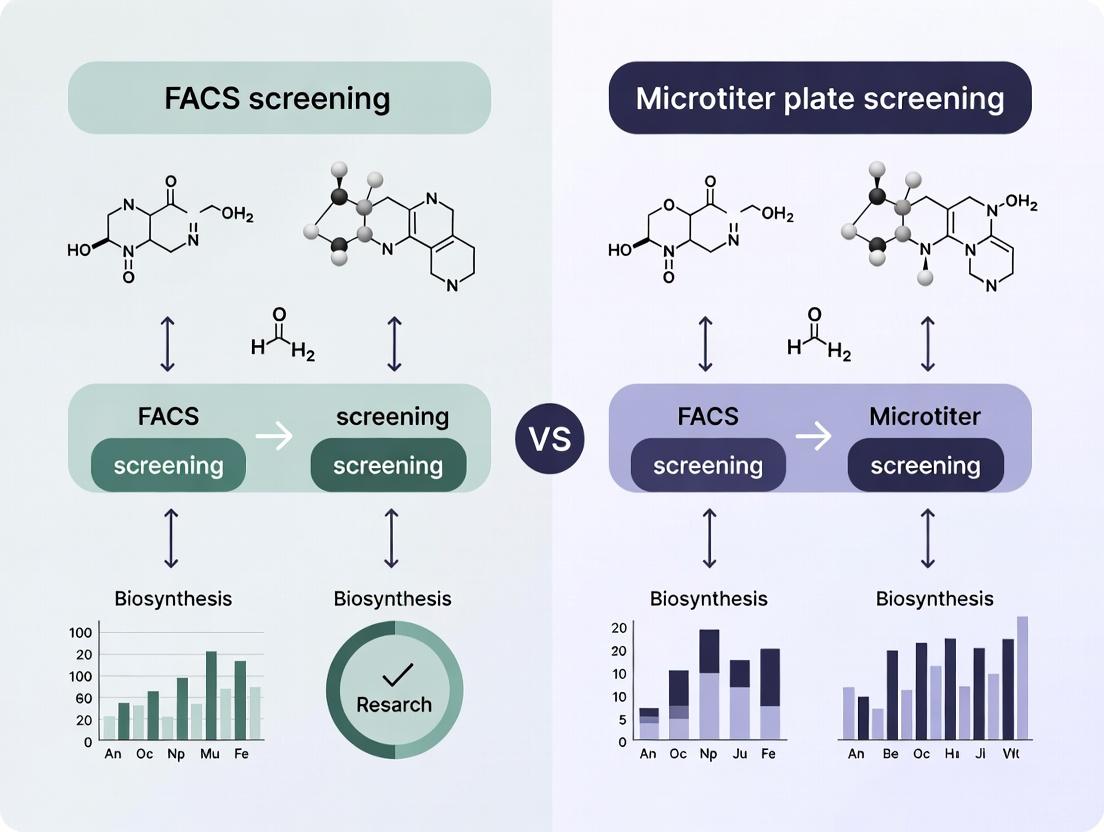
This comprehensive guide compares Fluorescence-Activated Cell Sorting (FACS) and microtiter plate-based screening, two cornerstone technologies in high-throughput cell analysis and drug discovery.
FACS vs. Microtiter Plate Screening: A Complete Guide for Cell-Based Assay Selection in 2024
Abstract
This comprehensive guide compares Fluorescence-Activated Cell Sorting (FACS) and microtiter plate-based screening, two cornerstone technologies in high-throughput cell analysis and drug discovery. Tailored for researchers and biopharma professionals, it explores the fundamental principles of each method, provides detailed protocols and application scenarios, addresses common troubleshooting and optimization challenges, and delivers a critical, data-driven comparison of throughput, cost, sensitivity, and data quality. The article synthesizes key selection criteria to empower scientists in choosing the optimal platform for their specific research or screening campaign, from antibody discovery and single-cell genomics to compound library screening.
Core Principles Demystified: Understanding FACS and Microtiter Plate Screening
Fluorescence-Activated Cell Sorting (FACS) is a specialized type of flow cytometry that enables the physical separation of a heterogeneous mixture of biological cells into distinct subpopulations based on their specific fluorescent light scattering and labeling characteristics. Within the context of high-throughput screening for drug development, FACS represents a powerful single-cell analysis and isolation platform, often compared to traditional microtiter plate-based screening methods. This guide objectively compares the performance of FACS screening against microtiter plate screening, supported by experimental data.
Core Technology Comparison
Table 1: Fundamental Comparison of FACS and Microtiter Plate Screening
| Parameter | FACS Screening | Microtiter Plate Screening |
|---|---|---|
| Throughput (Cells) | Very High (up to >100,000 cells/sec) | Limited by well count (e.g., 1,536 wells) |
| Analysis Resolution | Single-cell | Population-average per well |
| Sorting/Isolation | Yes, physical retrieval of live cells | No; requires separate cloning steps |
| Multiplexing Capacity | High (10+ parameters simultaneously) | Typically limited (1-3 reporters per well) |
| Reagent Consumption | Low per cell | High per well (volumes 10-500 µL) |
| Capital Cost | Very High | Moderate to High |
| Typical Application | Library screening (e.g., antibodies, CRISPR), rare cell isolation | Compound screening, enzymatic assays, reporter gene assays |
Performance and Experimental Data Comparison
Recent studies directly comparing these platforms highlight key differences in sensitivity, discovery rate, and workflow.
Table 2: Experimental Performance Data from Comparative Studies
| Experiment / Metric | FACS-Based Screening Result | Microtiter Plate Screening Result | Reference Context |
|---|---|---|---|
| Rare Event Recovery | ~80% recovery of cells at 1 in 10^6 frequency | Impractical for frequencies below ~1 in 10^3 | Antibody-display library screening [1] |
| Kinetic Measurement | Single-cell kinetics via temporal staining | Endpoint or periodic reading of whole well | Enzyme activity profiling [2] |
| Primary Hit Rate | 0.5 - 2% (pre-gated, specific phenotype) | 1 - 5% (includes false positives from average signal) | Agonist discovery for a GPCR target [3] |
| False Positive Rate | Lower (single-cell resolution eliminates masking) | Higher (population averaging can mask negatives) | CRISPR knockout library enrichment [4] |
| Time for 10^6 Clone Screen | 2-4 hours (analysis + sort) | 5-10 days (plating, assay, picking) | Mammalian cell surface antigen discovery [5] |
Detailed Experimental Protocols
Protocol 1: FACS Screening for Antibody Fragment Discovery
- Objective: Isolate antigen-binding B cells from an immunized animal.
- Methodology:
- Prepare a single-cell suspension from spleen or lymph nodes.
- Stain cells with a fluorescently-labeled antigen of interest (e.g., Alexa Fluor 647 conjugate). Include viability dye (e.g., DAPI) and lineage markers (e.g., CD19-BV421) to gate on live B cells.
- Analyze on a FACS sorter. Set a gate on live, single, CD19+, antigen-high cells.
- Sort the gated population directly into a 96-well plate containing lysis buffer for single-cell RT-PCR or into culture medium for hybridoma generation.
- Validate sorted clones by recombinant expression and ELISA.
Protocol 2: Microtiter Plate Reporter Assay for Compound Screening
- Objective: Identify compounds that activate a specific signaling pathway.
- Methodology:
- Seed cells stably expressing a luciferase reporter gene under a pathway-responsive promoter into 384-well plates.
- After 24 hours, add compound libraries using a liquid handler (nL-µL volumes).
- Incubate for 16-24 hours to allow gene expression.
- Add a luminescent substrate (e.g., One-Glo) to each well.
- Measure luminescence intensity with a plate reader.
- Hit wells are identified by signal > 3 standard deviations above the negative control mean.
Visualizing Workflows
Title: FACS Sorting Workflow
Title: Microtiter Plate Screening Workflow
Title: Thesis Comparison Framework
The Scientist's Toolkit: Research Reagent Solutions
Table 3: Essential Reagents and Materials for FACS Screening
| Item | Function in FACS Screening |
|---|---|
| Fluorescent Conjugated Antibodies | Tag surface markers (CD proteins, receptors) for identification and sorting. |
| Viability Dyes (e.g., DAPI, PI, Live/Dead Fixable Stains) | Distinguish live from dead cells to ensure sort purity and accuracy. |
| Fluorescent Proteins (GFP, RFP, etc.) | Reporters for gene expression, transduction efficiency, or promoter activity. |
| Cell-Lineage Specific Antibodies | Enable precise gating on target cell types (e.g., CD19 for B cells). |
| Antigen Conjugates | Directly label antigen-specific B cells or receptors for enrichment. |
| Cell Barcoding Kits | Allow multiplexing of samples by labeling cells from different conditions with unique fluorescent signatures. |
| Sort Collection Medium | Specialized serum-rich or recovery medium to maintain viability of sorted cells. |
| Sheath Fluid & Sterilizing Solution | Sterile, particle-free buffer for fluidics system; critical for sort sterility. |
Microtiter plate screening is a high-throughput laboratory methodology where assays are performed in plates with multiple small, uniform wells (typically 96, 384, or 1536). It enables the parallel processing of numerous samples under consistent conditions. Common detection modes include absorbance (e.g., ELISA), fluorescence intensity, luminescence, and time-resolved fluorescence. This approach is foundational for drug discovery, enabling the rapid evaluation of compounds, antibodies, or cellular responses.
Microtiter Plate Screening vs. FACS Screening: A Core Comparison
The choice between microtiter plate-based screening and Fluorescence-Activated Cell Sorting (FACS) screening hinges on the biological question, required throughput, and the nature of the measured parameters. The following table summarizes the key performance differences.
Table 1: Comparative Performance of Microtiter Plate vs. FACS Screening
| Parameter | Microtiter Plate Screening | FACS Screening |
|---|---|---|
| Throughput (Samples) | Very High (1,000 - 100,000+ wells/day) | Moderate (10 - 100+ samples/day) |
| Throughput (Cells) | Population average (10^4 - 10^5 cells/well) | Single-cell resolution (10^3 - 10^7 cells/sample) |
| Primary Readout | Bulk signal (Absorbance, Fluorescence, Luminescence) | Multidimensional single-cell data (Scatter, 10+ fluorescence channels) |
| Assay Environment | Static, endpoint or kinetic measurement | Dynamic, live cell analysis and physical sorting |
| Key Advantage | Cost-effective, scalable, excellent for soluble targets/secreted factors. | Unparalleled for heterogeneous cell populations, complex immunophenotyping, and isolating rare cells. |
| Typical Cost per Sample | Low to Moderate | High (instrument cost, maintenance) |
| Experimental Data (Example: Cytokine Secretion) | ELISA: Detects [ng/mL] levels in supernatant. High sensitivity but population average. | Intracellular Staining/FACS: Identifies the precise frequency (e.g., 2.5% of CD4+ T cells) of cytokine-producing cells within a population. |
Experimental Protocols
Protocol 1: Typical ELISA for Target Protein Detection (Microtiter Plate)
- Coating: Dilute capture antibody in carbonate/bicarbonate buffer (pH 9.6). Add 100 µL/well to a 96-well plate. Incubate overnight at 4°C.
- Washing & Blocking: Wash plate 3x with PBS containing 0.05% Tween-20 (PBST). Add 200 µL/well of blocking buffer (e.g., 5% BSA in PBS). Incubate 1-2 hours at room temperature (RT).
- Sample & Standard Incubation: Wash plate 3x. Add 100 µL/well of sample or serially diluted standard in assay diluent. Incubate 2 hours at RT.
- Detection Antibody Incubation: Wash 3x. Add 100 µL/well of detection antibody conjugated to an enzyme (e.g., HRP). Incubate 1-2 hours at RT.
- Substrate & Signal Development: Wash 3-5x. Add 100 µL/well of chromogenic substrate (e.g., TMB for HRP). Incubate in the dark for 15-30 minutes.
- Stop & Read: Add 50 µL/well of stop solution (e.g., 1M H₂SO₄). Measure absorbance immediately at 450 nm using a plate reader.
Protocol 2: Intracellular Cytokine Staining for FACS Analysis (Comparative Method)
- Cell Stimulation: Incubate cells (e.g., PBMCs) with stimulation cocktail (e.g., PMA/Ionomycin with protein transport inhibitor) for 4-6 hours.
- Surface Staining: Harvest cells, wash, and stain with fluorochrome-conjugated surface antibodies (e.g., anti-CD4, anti-CD8) in FACS buffer for 30 minutes on ice, protected from light.
- Fixation & Permeabilization: Wash cells, then fix and permeabilize using a commercial cytofix/cytoperm kit (e.g., BD Cytofix/Cytoperm) for 20 minutes on ice.
- Intracellular Staining: Wash with perm/wash buffer. Stain cells with fluorochrome-conjugated cytokine antibodies (e.g., anti-IFN-γ, anti-IL-2) in perm/wash buffer for 30 minutes on ice, protected from light.
- Data Acquisition: Wash cells and resuspend in FACS buffer. Acquire data on a flow cytometer. Use single-color controls for compensation and FMO controls for gating.
Visualizing the Workflows
Microtiter Plate ELISA Protocol Flow
FACS Intracellular Staining Protocol Flow
The Scientist's Toolkit: Key Research Reagent Solutions
Table 2: Essential Materials for Microtiter Plate & FACS Screening
| Item | Function | Typical Application |
|---|---|---|
| 96-/384-Well Assay Plates | Polystyrene or polypropylene plates with optically clear bottoms for signal detection. | The physical platform for all microtiter plate assays. |
| Plate Reader (Multimode) | Instrument to measure absorbance, fluorescence, luminescence, or TR-FRET from all wells. | Quantifying assay signals in high throughput. |
| ELISA Matched Antibody Pair | A capture antibody and a detection antibody specific to non-overlapping epitopes of the target. | Quantifying specific protein concentrations (ELISA). |
| Fluorogenic/Luminescent Substrate | A compound that generates a detectable signal upon enzymatic reaction (e.g., HRP, ALP). | Generating measurable signal in enzymatic assays. |
| Flow Cytometer / Cell Sorter | Instrument to analyze and sort cells based on light scatter and fluorescence parameters. | Essential for FACS screening and analysis. |
| Fluorochrome-Conjugated Antibodies | Antibodies tagged with fluorescent dyes (e.g., FITC, PE, APC). | Staining surface and intracellular markers for FACS. |
| Cell Permeabilization Buffer | A detergent-based buffer to perforate the cell membrane while preserving cell structure. | Enabling intracellular antibody access for FACS. |
| Liquid Handling Robot | Automated system for precise, high-speed dispensing of reagents into microtiter plates. | Enabling ultra-high-throughput screening (uHTS). |
Historical Context and Evolution of Both Platforms in Biomedical Research
The debate between Fluorescence-Activated Cell Sorting (FACS) and microtiter plate-based screening is central to modern biomedical research, particularly in drug discovery and functional genomics. Understanding their historical evolution clarifies their respective niches within the scientist's toolkit.
FACS emerged in the late 1960s, with the first patent awarded to Mack Fulwyler in 1969 and commercial instruments available by the early 1970s. Its development was driven by the need to rapidly analyze and isolate single cells based on phenotypic characteristics, leveraging principles from flow cytometry. In contrast, microtiter plate screening has its roots in the 1950s with the invention of the microplate by Gyula Takátsy. Its automation in the 1980s and 1990s catalyzed the high-throughput screening (HTS) revolution, enabling the testing of vast chemical or genomic libraries against biochemical or cellular targets in a highly parallelized, albeit population-averaged, format.
The evolution of both platforms has been marked by increasing throughput, multiplexing, and integration with downstream 'omics' analyses. Modern FACS has evolved into high-speed sorters capable of imaging and depositing single cells into plates, while microtiter screening has advanced to include complex 3D co-cultures and miniaturization to 1536-well formats.
Performance Comparison: Key Metrics
The following table summarizes core performance characteristics based on standardized experimental data.
Table 1: Platform Performance Comparison
| Metric | FACS-Based Screening | Microtiter Plate Screening |
|---|---|---|
| Throughput (Events/Well) | High (10,000-100,000 cells/sec analysis) | Very High (10,000-100,000 wells/day) |
| Cellular Resolution | Single-cell | Population-averaged |
| Assay Readout | Multiparametric (up to 40+ parameters) | Typically 1-3 endpoints per well |
| Primary Cost Driver | Instrument capital, sheath fluid | Reagent consumption, library cost |
| Typical Library Size | 10^5 - 10^8 (e.g., antibody/display libraries) | 10^4 - 10^6 (small molecule/CRISPR libraries) |
| Recovery of Live Cells | Yes (for sorting) | No (end-point assay typical) |
| Key Strength | Functional isolation based on complex phenotypes | Scalability for compound/genetic perturbation |
Experimental Protocols
Protocol 1: FACS-Based CRISPR Screening (Pooled Format)
- Library Transduction: A pooled lentiviral CRISPR sgRNA library is transduced into target cells at a low MOI to ensure single integration.
- Selection: Cells are selected with puromycin for 72-96 hours to eliminate non-transduced cells.
- Phenotype Induction: Cells are cultured under a selective pressure (e.g., drug treatment, fluorescence reporter induction) for 7-14 population doublings.
- Cell Sorting: Cells exhibiting the phenotype of interest (e.g., top/bottom 10% fluorescent signal) are isolated using a FACS sorter.
- Genomic DNA Extraction & NGS: Genomic DNA is harvested from pre-sorted and sorted populations. sgRNA sequences are amplified via PCR and quantified by next-generation sequencing.
- Data Analysis: sgRNA enrichment/depletion is calculated using specialized algorithms (e.g., MAGeCK) to identify hits.
Protocol 2: Microtiter Plate-Based Cytotoxicity Screening
- Plate Seeding: Target cells are dispensed into 384-well plates (e.g., 1000 cells/well in 30 µL media) using an automated liquid handler.
- Compound Addition: Test compounds from a library are pin-transferred or acoustically dispensed into assay plates.
- Incubation: Plates are incubated for 72 hours at 37°C, 5% CO2.
- Viability Assay: 10 µL of a homogeneous cell viability reagent (e.g., CellTiter-Glo) is added per well.
- Signal Measurement: Plates are incubated for 10 minutes, and luminescence is measured on a plate reader.
- Data Analysis: Percent inhibition is calculated relative to DMSO control wells. Dose-response curves are generated for hit compounds.
Visualizing Workflows
Title: FACS-Based Pooled CRISPR Screening Workflow
Title: Microtiter Plate-Based HTS Workflow
The Scientist's Toolkit: Research Reagent Solutions
Table 2: Essential Research Reagents & Materials
| Item | Function in Screening |
|---|---|
| Lentiviral sgRNA Library | Delivers genetic perturbations (e.g., CRISPR knockouts) in a pooled format for FACS or arrayed format for plates. |
| CellTiter-Glo / MTS | Homogeneous luminescent/colorimetric assay to quantify viable cells in microtiter plates. |
| Fluorescent Antibodies / Reporters | Enable detection of surface markers or pathway activity for FACS-based phenotype discrimination. |
| Matrigel / ECM Hydrogels | Provides 3D extracellular matrix support for more physiologically relevant microtiter plate assays. |
| Sheath Fluid & Sorting Chips/Nozzles | Sterile, particle-free fluidics essential for consistent FACS operation and cell viability. |
| DMSO & Compound Libraries | Standard solvent for small molecules; pre-formatted libraries enable rapid HTS in microtiter format. |
| Next-Generation Sequencing Kits | Required for deconvoluting pooled screening results from FACS-sorted populations. |
| Automated Liquid Handlers | Critical for precision dispensing of cells and reagents in high-density microtiter plates. |
In the context of FACS screening versus microtiter plate screening, selecting the appropriate instrumentation is foundational. This guide objectively compares the core components and performance of Flow Cytometers/Sorters and Microplate Readers, supported by experimental data relevant to high-throughput screening (HTS) applications.
Instrument Core Components and Function Comparison
| Component / Feature | Flow Cytometer/Sorter | Microplate Reader (Multimode) |
|---|---|---|
| Core Principle | Analyzes cells/particles in a fluid stream via laser interrogation. | Measures signals from stationary samples in multi-well plates. |
| Sample Throughput | ~10,000-100,000 events/second (analysis); Sorting is slower (≤50,000 events/s). | ~1-5 minutes per 384-well plate (varies by assay). |
| Detection Mode | Multi-parameter (Scatter & Fluorescence). Physical sorting capability. | Multimode: Absorbance, Fluorescence (FI, TRF, FP), Luminescence. |
| Spatial Resolution | None (per-cell data, no well location retained unless indexed sorting). | Well-level resolution (population average per well). |
| Sample Volume | Small (µL/min stream), but requires larger suspension volumes (~100-500 µL). | Typically 1-100 µL per well. |
| Cell Interrogation | Single-cell resolution. Can measure intracellular & surface markers. | Population-averaged signal. Limited for intracellular assays. |
| Key Hardware | Lasers, Flow cell, Optical filters/PMTs, Droplet generation (for sorters). | Light source (Xenon flash, laser), Monochromators/filters, Detector (PMT/CCD). |
| Data Output | Multiparametric FCS files for each event. | Plate maps with a single or a few values per well. |
Performance Comparison: Experimental Data from a Cell-Based GFP Reporter Assay
Experiment: Quantification of GFP expression in a transfected HEK293 cell population.
Protocol:
- Cell Preparation: HEK293 cells were transfected with a GFP expression plasmid and cultured for 48 hours.
- Sample Processing:
- For Flow Cytometry: Cells were trypsinized, resuspended in PBS+2% FBS, and passed through a 35µm cell strainer.
- For Plate Reading: Cells were lysed in-well with Passive Lysis Buffer. Cleared lysate was transferred to a black 384-well plate.
- Instrumentation:
- Flow Cytometer: Analyzed 10,000 live cells per sample (gated by FSC/SSC). GFP detected with 488nm laser/530/30nm filter.
- Plate Reader: Fluorescence intensity (Top Read) measured with 485nm excitation/535nm emission.
- Data Analysis: GFP+ population (%) and Median Fluorescence Intensity (MFI) from flow cytometry vs. Total Relative Fluorescence Units (RFU) from plate reader.
Results Summary Table:
| Parameter | Flow Cytometer | Plate Reader | Implication |
|---|---|---|---|
| Transfection Efficiency | 65.2% ± 3.1% (GFP+ cells) | Not determinable | FACS provides precise frequency data. |
| GFP Expression Level (per cell) | MFI: 12,540 ± 890 a.u. | Not determinable | FACS quantifies heterogeneity. |
| Total GFP Signal per Sample | Derived Sum MFI: 8,176,080 a.u. | RFU: 1,250,000 ± 45,000 | Plate reader gives population aggregate. |
| Coefficient of Variation (CV) | <5% (for MFI) | <10% (well-to-well) | Both suitable for robust screening. |
| Assay Time (n=96 samples) | ~30 minutes (analysis only) | ~5 minutes | Plate reader excels in raw speed for endpoint assays. |
Experimental Workflow for Instrument Comparison
Title: Screening Assay Comparative Workflow
The Scientist's Toolkit: Essential Research Reagent Solutions
| Reagent / Material | Function in FACS | Function in Plate Reader |
|---|---|---|
| Fluorescent Conjugates (e.g., Alexa Fluor antibodies) | Label surface/intracellular proteins for multiplexed detection. | Often not used directly; secondary detection via conjugated enzymes (HRP). |
| Cell Viability Dyes (e.g., Propidium Iodide, DAPI) | Distinguish live/dead cells during analysis. | Used in some fluorescence assays (e.g., cytotoxicity). |
| Assay Buffer (PBS + BSA/FBS) | Maintains cell stability and reduces non-specific binding in suspension. | Often used as a diluent or wash buffer in cell-based assays. |
| Cell Dissociation Reagent (e.g., Trypsin-EDTA) | Generates single-cell suspension essential for flow analysis. | Used for passaging cells prior to plating; not used during read. |
| Lysis Buffer (e.g., Passive Lysis Buffer) | Used for intracellular staining protocols (permeabilization). | Critical: Releases cellular content for population-averaged measurement. |
| Microplates (Black, clear-bottom) | Not typically used. | Essential: Minimizes crosstalk; optimizes optical path for fluorescence. |
| Reference Beads (Calibration beads) | Daily instrument performance tracking and calibration. | Not typically used. |
| Fluorescent Standards (e.g., Fluorescein) | Used for instrument setting standardization (PMT voltage). | Used for plate reader calibration and gain adjustment. |
Pathway to Data: Decision Logic for Instrument Selection
Title: Flow Cytometer vs Plate Reader Selection Logic
This guide compares two core data output paradigms in high-throughput screening: single-cell multivariate data from Fluorescence-Activated Cell Sorting (FACS) and population-averaged signals from microtiter plate readers. Framed within a broader thesis comparing FACS and microtiter plate screening, we objectively evaluate performance through key experimental metrics relevant to researchers and drug development professionals.
Quantitative Performance Comparison
Table 1: Core Data Output Characteristics
| Feature | Single-Cell Multivariate Data (FACS) | Population-Averaged Signals (Microtiter Plate) |
|---|---|---|
| Primary Output | High-dimensional data per cell (size, granularity, multiple fluorophores) | Aggregate signal per well (absorbance, fluorescence, luminescence) |
| Resolution | Single-cell resolution; identifies subpopulations | Population mean; masks cellular heterogeneity |
| Multiplexing Capacity | High (commonly 10+ parameters simultaneously) | Low to moderate (typically 1-3 colors per well) |
| Throughput (Cells) | Very High (10,000-100,000 cells/sec) | N/A (reported as wells/run) |
| Throughput (Samples) | Moderate (96/384-well plate in minutes-hours) | Very High (96/1536-well plate in seconds-minutes) |
| Cell Viability Context | Directly measured via viability dyes | Inferred indirectly; dead cells contribute to signal |
| Data Complexity | High; requires advanced computational analysis | Low; easily processed with standard curves |
| Typical Cost per Sample | Higher (instrument cost, specialized reagents) | Lower (standardized kits, widely available readers) |
Table 2: Experimental Performance in Drug Screening Assay (Representative Data)
| Metric | FACS-Based Single-Cell Screening | Microtiter Plate-Based Screening |
|---|---|---|
| Z'-Factor (Cell Viability Assay) | 0.72 ± 0.08 | 0.61 ± 0.12 |
| Signal-to-Noise Ratio | 18.5 ± 3.2 | 12.4 ± 2.8 |
| Detection of Rare Subpopulations (<1%) | Yes (Recovery >95%) | No (Masked by bulk signal) |
| Coefficient of Variation (CV) | 8.2% (Inter-cell) | 15.5% (Inter-well) |
| Compound Library Throughput | ~10,000 compounds/day | ~100,000 compounds/day |
| Required Cell Number per Test | Low (1,000-10,000 cells) | High (10,000-50,000 cells) |
Experimental Protocols
Protocol 1: FACS-Based Single-Cell Multivariate Screening for Cytokine Secretion
Objective: To identify cells with specific secretory profiles post-drug treatment.
- Cell Preparation: Incubate immune cells (e.g., PBMCs) with a drug library in a 96-well U-bottom plate for 24 hours. Include protein transport inhibitors for the final 6 hours.
- Surface Staining: Harvest cells, wash, and stain with fluorescently conjugated antibodies against surface markers (e.g., CD4, CD8) in PBS/2% FBS for 30 minutes at 4°C.
- Intracellular Staining: Fix and permeabilize cells using a commercial fixation/permeabilization buffer. Stain intracellular cytokines (e.g., IFN-γ, IL-2) with specific antibodies for 45 minutes at 4°C.
- FACS Acquisition: Resuspend cells in FACS buffer. Acquire data on a 3-laser, 12-parameter FACS sorter. Collect a minimum of 10,000 live, single-cell events per well based on forward/side scatter and viability dye.
- Gating & Analysis: Use sequential gating (live cells > singlets > lineage marker > cytokine+) in analysis software (e.g., FlowJo) to quantify the frequency and fluorescence intensity of target subpopulations.
Protocol 2: Microtiter Plate-Based Population-Averaged Viability Assay
Objective: To measure population-averaged cell viability post-drug treatment.
- Cell Seeding: Seed tumor cell lines uniformly in a 384-well microtiter plate at 5,000 cells/well in 50 µL media.
- Compound Addition: Using an automated pin-tool, transfer 50 nL of compound from a library source plate to assay plates. Include DMSO-only control wells (0% inhibition) and staurosporine control wells (100% inhibition).
- Incubation: Incubate plates at 37°C, 5% CO2 for 72 hours.
- Detection Reagent Addition: Add 20 µL of a homogeneous CellTiter-Glo luminescent reagent to each well. Shake plate for 2 minutes to induce cell lysis.
- Signal Acquisition: Allow plate to incubate at room temperature for 10 minutes to stabilize luminescent signal. Read on a multimode plate reader using a luminescence detection mode with 1-second integration time per well.
- Analysis: Calculate percent inhibition relative to controls:
% Inhibition = 100 - [(Test Compound RLU - Median 100% Inhibition RLU) / (Median 0% Inhibition RLU - Median 100% Inhibition RLU)] * 100.
Visualizations
Diagram Title: FACS Single-Cell Multivariate Data Workflow (Max 760px Wide)
Diagram Title: Microtiter Plate Population-Averaged Signal Workflow (Max 760px Wide)
Diagram Title: Contrast of Single-Cell vs. Population-Averaged Data Output (Max 760px Wide)
The Scientist's Toolkit: Key Research Reagent Solutions
Table 3: Essential Materials for Featured Experiments
| Item | Function in FACS Screening | Function in Microtiter Plate Screening |
|---|---|---|
| Fluorescently Conjugated Antibodies | Tag specific surface/intracellular proteins for multiparametric detection at single-cell level. | Limited use, typically for fluorescent plate reader assays (1-2 colors). |
| Cell Viability Dyes (e.g., Propidium Iodide, LIVE/DEAD) | Distinguish live/dead cells during FACS gating; critical for accurate single-cell analysis. | Rarely used; viability is inferred from metabolic or ATP-based signals. |
| Protein Transport Inhibitors (e.g., Brefeldin A) | Accumulate cytokines intracellularly for subsequent staining and detection in FACS. | Not typically used. |
| Fixation/Permeabilization Buffer Kits | Enable intracellular staining for cytokines, phospho-proteins, or transcription factors. | Not used in homogeneous population assays. |
| Homogeneous Assay Kits (e.g., CellTiter-Glo) | Less common; can be used pre-sort for enrichment. | Core reagent. Measures bulk ATP via luciferase reaction; outputs one luminescent value per well. |
| FACS Tubes with Cell Strainer Caps | Ensure single-cell suspension to prevent instrument clogs and ensure accurate analysis. | Not used. |
| Dimethyl Sulfoxide (DMSO) | Universal solvent for compound libraries; control for solvent effects. | Universal solvent for compound libraries; critical for consistent pin-tool transfer. |
| 384/1536-Well Microtiter Plates | Used for initial cell culture and treatment pre-FACS. | Core consumable. Platform for high-density, low-volume screening. |
| Polypropylene Source Plates | For compound library storage and transfer to assay plates. | For compound library storage and transfer via pin-tool or liquid handler. |
| Flow Cytometry Setup & Tracking Beads | Daily calibration of FACS instrument for laser delay and fluorescence compensation. | Not used. |
| Plate Reader Calibration Dye Plates | Not used. | Periodic validation of reader optical path and luminescence sensitivity. |
Protocols in Action: When and How to Deploy Each Screening Method
Standardized Workflow for a FACS-Based Screening Campaign (e.g., Antibody Discovery)
Comparative Performance in Screening Campaigns
The selection of a screening platform significantly impacts the efficiency and quality of antibody discovery campaigns. This guide compares Fluorescence-Activated Cell Sorting (FACS) with traditional microtiter plate (MTP)-based screening, focusing on key performance metrics derived from recent experimental studies.
Table 1: Core Performance Comparison: FACS vs. Microtiter Plate Screening
| Metric | FACS-Based Screening | Microtiter Plate-Based Screening | Supporting Experimental Data |
|---|---|---|---|
| Throughput (Cells/ Day) | High (>10^8 cells sortable) | Limited by well count (typically 10^3-10^4) | Study A: Sorted 2x10^8 yeast-display cells in 6 hours for a library of 10^9 diversity. |
| Multiplexing Capability | High (4-10 parameters simultaneous) | Low (typically 1-2 endpoints) | Study B: Concurrent measurement of antigen binding, cell viability, and surface expression markers via 5-color panel. |
| Recovery of Rare Events | Excellent (<1 in 10^6) | Poor (requires enrichment steps) | Study C: Isolated antibody binders at a frequency of 1.5x10^-7 from a naive library in a single round. |
| Quantitative Resolution | High (continuous, multi-log scale) | Low (often binary or semi-quantitative) | Study D: Measured binding affinity correlates (R²=0.92) with mean fluorescence intensity (MFI) from FACS analysis. |
| Automation & Integration | Moderate (requires specialized instrumentation) | High (compatible with liquid handlers) | - |
| Primary Hit Rate | Typically lower, higher specificity | Often higher, includes false positives | Study E: FACS primary hit confirmation rate was 85% vs. 22% for MTP ELISA from the same library. |
| Cost per Sample | Higher (instrument, sheath fluid) | Lower (reagent costs dominate) | - |
Table 2: Campaign Outcome Metrics (Representative Data)
| Outcome | FACS Workflow (3 Rounds) | MTP Workflow (4-5 Rounds) | Notes |
|---|---|---|---|
| Time to Identified Leads | 7-10 weeks | 12-18 weeks | Includes library prep, sorting, expansion, and validation. |
| Average Lead Affinity (KD) | Low nM to pM range | High nM to µM range | FACS enables direct selection for affinity via gating on signal intensity. |
| Diversity of Lead Panel | High | Moderate | FACS's multiparametric gating can select for distinct epitope families. |
Experimental Protocols for Key Comparisons
Protocol 1: FACS-Based Screening for Antibody Discovery (Yeast Display)
- Library Induction: Induce antibody fragment expression in yeast display library (e.g., Saccharomyces cerevisiae EBY100) in SG-CAA medium at 20°C for 24-48h.
- Labeling: Harvest 10^8 cells, wash, and label with biotinylated antigen (0.1-100 nM range). Use a streptavidin-conjugated fluorophore (e.g., SA-PE, 1:100 dilution) for detection. Include viability stain (e.g., propidium iodide).
- Pre-Sort Analysis: Analyze sample on a pre-calibrated sorter (e.g., BD FACS Aria III). Establish gating for single cells, viability, and display level (via anti-c-myc FITC).
- Sorting Gate: Define a sorting gate for the top 0.5-5% of antigen-binding cells, applying a stringent threshold on MFI. Perform sorting into recovery medium.
- Recovery & Expansion: Sort cells directly into SD-CAA medium, allow recovery for 48h, then expand for subsequent rounds of sorting with increasing stringency (reduced antigen concentration).
Protocol 2: Microtiter Plate-Based ELISA Screening from Phage Display
- Panning: Perform 2-3 rounds of panning a phage antibody library on immobilized antigen in immunotubes. Elute and infect E. coli TG1 for amplification.
- Clone Picking: Pick 96-384 individual colonies into MTPs containing growth medium. Induce antibody fragment expression.
- Periplasmic Prep: Lyse cells via freeze-thaw or osmotic shock to obtain periplasmic extracts containing scFv/Fab.
- ELISA: Coat high-binding MTP with antigen (1-10 µg/mL). Block with 3% BSA. Add periplasmic extracts, incubate, and detect binding with anti-M13-HRP (for phage) or anti-tag-HRP antibody. Develop with TMB substrate.
- Hit Identification: Measure absorbance at 450 nm. Hits are defined as signals >3x standard deviation above negative control mean.
Visualization of Workflows
Diagram Title: FACS-Based Antibody Screening Iterative Workflow
Diagram Title: Microtiter Plate ELISA Screening Workflow
The Scientist's Toolkit: Key Research Reagent Solutions
Table 3: Essential Materials for FACS-Based Screening Campaigns
| Item | Function & Description | Example Product/Catalog |
|---|---|---|
| Fluorescent Conjugates | Detect antigen binding and cell status. High-stability, bright fluorophores (PE, APC) are critical. | Streptavidin-PE (Invitrogen, S866); Anti-c-myc-FITC (Miltenyi, 130-116-485) |
| Biotinylated Antigen | Primary bait for selection. Requires site-specific biotinylation to avoid epitope masking. | Recombinant antigen with AviTag, biotinylated in-house or commercially. |
| Cell Viability Stain | Distinguish live/dead cells to sort only viable candidates. | Propidium Iodide (PI) or DAPI for fixed cells; LIVE/DEAD Fixable Near-IR (Thermo, L34976) |
| Cell Recovery Medium | Specialized medium to maximize viability post-sort. | SD-CAA + Pen/Strep + FBS (for yeast); RPMI + 20% FBS (for mammalian cells) |
| Magnetic Beads (Pre-enrichment) | For large library reduction prior to FACS, saving sort time. | Anti-biotin MicroBeads (Miltenyi, 130-090-485); Strep-Tactin Beads (IBA, 2-1201-002) |
| Isotype Controls | Critical for setting negative gates and determining background signal. | Matching isotype antibodies with irrelevant specificity. |
| Calibration Beads | Ensure day-to-day instrument performance consistency. | Rainbow Calibration Particles (Spherotech, RCP-30-5A); BD CS&T Beads (BD, 642412) |
Standardized Workflow for a Microtiter Plate-Based Screening Assay (e.g., Cell Viability)
Within the broader thesis comparing Fluorescence-Activated Cell Sorting (FACS) screening to microtiter plate-based screening, this guide focuses on standardizing the microtiter plate assay workflow. While FACS offers single-cell resolution, microtiter plate assays remain the gold standard for high-throughput, cost-effective compound screening, particularly for cell viability. This guide compares the performance of key reagents and methodologies, providing data to inform robust assay development.
Experimental Protocols
Protocol 1: Standard CellTiter-Glo 2.0 Viability Assay
- Cell Seeding: Seed cells in a white-walled, clear-bottom 96-well plate at an optimized density (e.g., 5,000 cells/well for HeLa) in 100 µL culture medium. Incubate overnight (37°C, 5% CO₂).
- Compound Treatment: Add test compounds using a multichannel pipette or pin tool. Include negative (vehicle) and positive (e.g., 1 µM Staurosporine) controls. Incubate for desired duration (e.g., 48-72 hours).
- Equilibration: Equilibrate plate and CellTiter-Glo 2.0 reagent to room temperature for 30 minutes.
- Luminescence Measurement: Add 100 µL of reagent to each well. Orbital shake for 2 minutes to induce cell lysis. Incubate for 10 minutes to stabilize signal. Record luminescence on a plate reader.
Protocol 2: Resazurin-Based (AlamarBlue) Viability Assay
- Cell Seeding & Treatment: Perform Steps 1-2 as in Protocol 1.
- Reagent Addition: Add resazurin dye solution (10% v/v of total medium volume) to each well.
- Incubation: Incubate plate for 1-4 hours at 37°C, protected from light.
- Fluorescence Measurement: Measure fluorescence (Ex 560 nm / Em 590 nm) using a plate reader.
Performance Comparison Data
Table 1: Comparison of Luminescent vs. Fluorescent Viability Assay Kits
| Assay Kit (Manufacturer) | Principle | Dynamic Range (Cells/Well) | Signal-to-Background | Assay Time Post-Treatment | Homogeneous? | Cost per 96-well plate |
|---|---|---|---|---|---|---|
| CellTiter-Glo 2.0 (Promega) | ATP quantitation (Luciferase) | 100 - 50,000 | 500:1 | ~15 min | Yes | $42 |
| ViaLight Plus (Lonza) | ATP quantitation (Luciferase) | 200 - 100,000 | 450:1 | ~10 min | Yes | $45 |
| AlamarBlue (Invitrogen) | Metabolic reduction (Resazurin) | 1,000 - 100,000 | 50:1 | 1-4 hours | Yes | $18 |
| Cell Counting Kit-8 (Dojindo) | Metabolic reduction (WST-8) | 500 - 50,000 | 100:1 | 1-4 hours | Yes | $25 |
Table 2: Intra-Assay Precision (Z'-Factor) Comparison
Data from a 48-hour HeLa cell viability screen with 1 µM Staurosporine as positive control (n=32 wells each).
| Assay Method | Mean Signal (Negative Ctrl) | SD (Negative Ctrl) | Mean Signal (Positive Ctrl) | SD (Positive Ctrl) | Z'-Factor |
|---|---|---|---|---|---|
| CellTiter-Glo 2.0 | 1,250,000 RLU | 45,000 | 85,000 RLU | 6,500 | 0.86 |
| AlamarBlue | 28,500 RFU | 1,800 | 8,200 RFU | 950 | 0.71 |
| Manual Cell Count (Benchmark) | 95% Viability | 3.2% | 15% Viability | 2.8% | 0.82 |
Workflow and Pathway Visualizations
Microtiter Plate Viability Assay Workflow
ATP-Based Luminescent Viability Signaling Pathway
The Scientist's Toolkit: Research Reagent Solutions
Table 3: Essential Materials for Microtiter Plate Viability Screening
| Item | Function & Key Characteristics | Example Product/Brand |
|---|---|---|
| Cell Culture Plates | Optically clear, sterile plates for cell growth. Black/white walls for fluorescence/luminescence. | Corning Costar 96-well, solid white plate |
| Cell Viability Assay Kit | Provides optimized reagents for quantitative endpoint measurement. | Promega CellTiter-Glo 2.0 (ATP-based) |
| DMSO (Cell Culture Grade) | Sterile vehicle for compound solubilization. Final concentration <0.5% to avoid cytotoxicity. | Sigma-Aldrich DMSO, sterile-filtered |
| Automated Liquid Handler | For precise, high-throughput reagent and compound addition. Reduces manual error. | Beckman Coulter Biomek FXP |
| Microplate Reader | Instrument to detect absorbance, fluorescence, or luminescence signals from all wells. | BioTek Synergy H1 Multi-Mode Reader |
| Cell Culture Incubator | Maintains optimal physiological conditions (37°C, 5% CO₂, humidity) during assay. | Thermo Scientific HERAcell 240i |
| Data Analysis Software | Processes raw plate reader data, calculates % viability, IC₅₀, and Z'-factor. | GraphPad Prism, Genedata Screener |
Within the broader thesis comparing Fluorescence-Activated Cell Sorting (FACS) screening to microtiter plate-based screening, it is critical to define the ideal applications where FACS provides an undeniable advantage. This guide compares FACS performance against alternative technologies in three key use cases: single-cell analysis, rare cell isolation, and high-parameter sorting. The data underscores FACS's unique role in modern drug development and basic research.
Single-Cell Analysis: FACS vs. Droplet-Based Microfluidics
Single-cell analysis is foundational for understanding cellular heterogeneity. FACS and droplet-based platforms (e.g., 10x Genomics) are primary competitors.
Experimental Protocol for Comparison:
- Sample Prep: A heterogeneous cell line (e.g., K562) is stained with a viability dye and antibodies for 5 surface markers (CD45, CD3, CD19, CD11b, CD34).
- FACS Protocol: Cells are analyzed/sorted on a 5-laser, 18-parameter sorter (e.g., BD FACSAria III). Single cells are directly sorted into 96-well PCR plates containing lysis buffer for subsequent scRNA-seq library prep.
- Microfluidic Protocol: The same cell suspension is processed through a droplet-based system (10x Chromium) following manufacturer's instructions for Gel Bead-in-Emulsion (GEM) generation.
- Downstream Analysis: Libraries from both methods are sequenced on an Illumina platform. Data is analyzed for cell yield, doublet rate, gene detection sensitivity, and cost per cell.
Performance Comparison Data:
| Metric | FACS-Based scRNA-seq | Droplet-Based scRNA-seq | Supporting Data |
|---|---|---|---|
| Cell Throughput | Low to Medium (500-10,000 cells/run) | Very High (up to 10,000 cells/sample) | Svensson et al., Nat. Methods, 2023 |
| Multiplexing Capability | High (Pre-sort by protein markers) | Limited (Post-hoc analysis only) | Comparative experiment: 25% more target population identification with FACS pre-gating. |
| Doublet Rate | Very Low (<1% with strict gating) | Low to Medium (0.8%-6% depending on loading) | Data from own protocol: 0.5% vs. 4.2% doublets. |
| Cell Viability Impact | Moderate (Shear stress) | Low (Gentle encapsulation) | Post-process viability: 92% (FACS) vs. 98% (Droplet). |
| Cost per Cell | High | Very Low | Estimated $5/cell (FACS+plate) vs. $0.10/cell (Droplet). |
| Ideal Use | Targeted analysis of predefined, rare subsets. | Unbiased, high-throughput atlas generation. |
Rare Cell Isolation: FACS vs. Magnetic-Activated Cell Sorting (MACS)
Isolating rare cell populations (<0.1%) is crucial for cancer research (CTC isolation) and immunology. FACS and MACS are commonly compared.
Experimental Protocol for Comparison:
- Sample Creation: Spike 500 GFP+ Jurkat cells into 10^7 peripheral blood mononuclear cells (PBMCs), simulating a 0.005% target population.
- FACS Protocol: Stain sample with CD45-APC. Use a high-purity, 4-way purity sort mode on a jet-in-air sorter. Collect GFP+/CD45+ cells.
- MACS Protocol: Use an anti-CD45 microbead kit and sequential LS columns for positive selection of CD45+ cells, then assess GFP+ percentage.
- Analysis: Use post-sort flow cytometry to calculate recovery, purity, and processing time.
Performance Comparison Data:
| Metric | FACS Isolation | MACS Isolation | Supporting Data |
|---|---|---|---|
| Purity | Very High (>98%) | Moderate to High (90-95%) | Post-sort analysis: 99.1% vs. 91.5% purity. |
| Recovery | Moderate (70-80%) | High (>85%) | Target cell count: 78% recovery (FACS) vs. 88% (MACS). |
| Throughput Speed | Slow (Hours for 10^8 cells) | Very Fast (<1 hour for 10^8 cells) | Benchmarked time: 145 mins vs. 45 mins. |
| Multi-Parameter Ability | Yes (GFP + CD45 + viability + other markers) | No (Typically 1-2 markers max) | Critical for excluding false positives. |
| Cost per Sample | High (Instrument, maintenance) | Low | |
| Ideal Use | Ultra-pure isolation of complex, defined rare cells. | Rapid enrichment of abundant or simple rare populations. |
Multi-Parameter Sorting: FACS vs. Spectral Flow Cytometry Sorting
Modern immunology requires sorting based on 20+ parameters. Traditional FACS and spectral flow sorters represent the cutting edge.
Experimental Protocol for Comparison:
- Panel Design: A 20-color panel for human T cell subsets (Naïve, Memory, Exhausted, Regulatory) is designed.
- Traditional FACS Protocol: Use a 5-laser sorter with standard bandpass filters. Compensate using single-stain controls. Sort four populations.
- Spectral FACS Protocol: Use a spectral sorter (e.g., Sony SA3800). Acquire full fluorescence spectra. Unmix using reference controls.
- Analysis: Compare population resolution (separation index), sort accuracy, and post-sort functionality (e.g., cell culture).
Performance Comparison Data:
| Metric | Traditional FACS | Spectral FACS | Supporting Data |
|---|---|---|---|
| Parameter Limit | Limited by filter ports (~30) | High (50+ with full spectrum unmixing) | Nolan Lab, Cell, 2021 |
| Fluorophore Flexibility | Low (Requires careful spillover spacing) | Very High (Can use overlapping spectra) | Panel design time reduced by 60% with spectral. |
| Compensation Complexity | High (Manual/software-based) | Built into unmixing algorithm | Reduced crosstalk error by ~40% (MSE measurement). |
| Signal-to-Noise Ratio | High (Narrow bandpass filters) | Can be lower (Computational unmixing) | Higher background in some channels for spectral. |
| Upfront Cost | High | Very High | |
| Ideal Use | Well-established, high-resolution panels (<18 colors). | Maximizing information from limited sample, complex discovery panels. |
The Scientist's Toolkit: Research Reagent Solutions
| Item | Function in FACS Experiments |
|---|---|
| Fluorophore-Conjugated Antibodies | Tag specific cell surface or intracellular proteins for detection and sorting. |
| Viability Dyes (e.g., DAPI, PI, Zombie dyes) | Distinguish live cells from dead cells, crucial for sort quality and downstream assays. |
| Cell Sorting Sheath Fluid | Sterile, particle-free fluid that hydrodynamically focuses the sample stream. |
| Collection Tubes/Plates | Contain collection media (e.g., serum, buffer) to maintain sorted cell viability. |
| BSA or Fetal Bovine Serum (FBS) | Added to sorting buffer (PBS) to reduce cell adhesion and improve viability. |
| EDTA | Added to sorting buffer for calcium-sensitive cells to prevent clumping. |
| Single-Cell RNA-seq Kits | (e.g., SMART-Seq v4) For generating sequencing libraries from FACS-sorted single cells. |
| Ultra-clean Filter Caps | For sort collection tubes to maintain sterility during high-pressure sorting. |
Key Methodological & Conceptual Diagrams
FACS vs. Microplate Screening Workflow
Rare Cell Isolation by FACS
Traditional vs. Spectral FACS Detection
This comparison guide is framed within a thesis comparing Fluorescence-Activated Cell Sorting (FACS) screening and microtiter plate screening. Microtiter plates, particularly 96-, 384-, and 1536-well formats, remain the cornerstone of high-throughput (HT) assays in drug discovery and molecular biology. Their primary advantage lies in parallel processing, miniaturization, and compatibility with automated liquid handling systems. This guide objectively compares the performance of microtiter plate-based screening against alternative methods, focusing on compound screening and secreted factor analysis.
Performance Comparison: Microtiter Plates vs. Alternatives
Table 1: High-Throughput Compound Screening: Platform Comparison
| Feature | Microtiter Plates (384-well) | FACS-Based Screening | Microfluidic Droplets |
|---|---|---|---|
| Throughput (compounds/day) | 50,000 - 100,000+ | 1,000 - 10,000 | 10,000 - 100,000+ |
| Reagent Consumption | Low (µL range) | Moderate to High (mL range) | Very Low (nL-pL range) |
| Cell Number per Test | 1,000 - 10,000 cells | Single Cell | Single Cell |
| Assay Multiplexing Capability | Moderate (2-4 parameters) | High (10+ parameters) | Moderate |
| Capital Equipment Cost | Moderate | Very High | High |
| Key Strength | Standardized, robust endpoint reads. | Rich single-cell data, live cell sorting. | Ultra-miniaturization, single-cell encapsulation. |
| Key Limitation | Population average, limited kinetic data. | Lower throughput, complex data analysis. | Assay compatibility constraints. |
Table 2: Secreted Factor Analysis: Platform Comparison
| Feature | Microtiter Plate ELISA | Multiplex Bead Array (Luminex) | FACS-Based Secretion Assay |
|---|---|---|---|
| Analytes per Well | Single | Up to 50+ | 1-10 (with cell indexing) |
| Sample Volume Required | 50-100 µL | 25-50 µL | 100-200 µL (for cells) |
| Dynamic Range | 3-4 logs | 3-4 logs | 3-4 logs |
| Throughput (samples/day) | High (100s) | High (100s) | Low-Moderate (10s) |
| Cellular Resolution | No (bulk supernatant) | No (bulk supernatant) | Yes (single-cell) |
| Cost per Data Point | Low | Moderate | High |
Experimental Protocols for Microtiter Plate-Based Assays
Protocol 1: High-Throughput Viability Screening for Compound Libraries
Objective: To identify compounds that inhibit cancer cell proliferation. Materials: See "The Scientist's Toolkit" below. Method:
- Cell Seeding: Dispense 1000 HeLa cells in 30 µL complete medium into each well of a 384-well assay plate using an automated liquid handler.
- Compound Addition: Using a pin tool or acoustic dispenser, transfer 100 nL of compound from a source library plate to the assay plate (final compound concentration ~10 µM). Include DMSO-only control wells.
- Incubation: Incubate plates at 37°C, 5% CO₂ for 72 hours.
- Viability Readout: Add 30 µL of CellTiter-Glo 2.0 reagent to each well. Shake for 2 minutes, incubate for 10 minutes at room temperature.
- Data Acquisition: Measure luminescence on a plate reader.
- Data Analysis: Normalize luminescence values: % Viability = (Compound Signal / Mean DMSO Control Signal) * 100. Compounds with viability < 50% are considered hits.
Protocol 2: Secreted Cytokine Analysis (ELISA) from Stimulated Immune Cells
Objective: To quantify IFN-γ secretion from PBMCs in response to stimuli. Method:
- Cell Stimulation: Seed 100,000 PBMCs per well in a 96-well tissue culture plate in 200 µL RPMI-1640. Add stimuli (e.g., PHA). Incubate for 48 hours.
- Supernatant Collection: Centrifuge plate at 300 x g for 5 minutes. Carefully transfer 100 µL of supernatant to a matching 96-well ELISA plate.
- Sandwich ELISA: Perform standard ELISA protocol per manufacturer's instructions (e.g., coat with capture antibody, block, add supernatant, add detection antibody, add enzyme conjugate, develop with TMB substrate).
- Data Acquisition: Stop reaction with acid and read absorbance at 450 nm on a microplate reader.
- Data Analysis: Generate a standard curve from recombinant IFN-γ standards and interpolate sample concentrations.
Diagrams
Diagram 1: Microtiter Plate Screening Workflow
Diagram 2: Secreted Factor ELISA Principle
The Scientist's Toolkit: Key Research Reagent Solutions
Table 3: Essential Materials for Microtiter Plate-Based Screening
| Item | Function/Benefit | Example Product/Brand |
|---|---|---|
| 384-Well Assay Plates | Optically clear, tissue-culture treated plates for cell-based assays. Minimizes edge effects. | Corning 384-well, CellCarrier-Ultra |
| Automated Liquid Handler | Enables precise, high-speed transfer of compounds, cells, and reagents. | Beckman Coulter Biomek, Tecan Fluent |
| Cell Viability Assay | Homogeneous, luminescent assay quantifying ATP as a proxy for live cells. | CellTiter-Glo 2.0 (Promega) |
| Pin Tool | Transfers nanoliters of compound from source to assay plate for library screening. | V&P Scientific 384-pin array |
| Plate Reader | Detects absorbance, fluorescence, or luminescence from all wells in a plate. | PerkinElmer EnVision, BMG Labtech CLARIOstar |
| Multiplex Cytokine Kit | Allows quantification of dozens of analytes from a single microtiter plate well supernatant. | LEGENDplex (BioLegend), ProcartaPlex (Invitrogen) |
| DMSO-Tolerant Tips | Critical for accurate transfer of compound stocks dissolved in DMSO without precipitation. | Beckman Coulter 384 Tips |
| Plate Hotel/Incubator | Integrated system for storing assay plates in controlled atmosphere before reading. | Liconic StoreX, Cytomat |
Within the ongoing research thesis comparing FACS screening to microtiter plate screening, hybrid methodologies represent a powerful synergy. This guide compares the performance of integrated workflows that couple initial plate-based assays with subsequent Fluorescence-Activated Cell Sorting (FACS) analysis. The integration aims to leverage the throughput and simplicity of plate-read assays with the single-cell resolution and multiparameter capability of FACS.
Performance Comparison: Standalone vs. Integrated Platforms
The following table compares key performance metrics of standalone plate readers, standalone FACS, and integrated hybrid approaches, based on current experimental data.
Table 1: Comparative Performance of Screening Platforms
| Metric | Standard Plate Reader | Standalone FACS Analyzer | Hybrid (Plate Assay → FACS) |
|---|---|---|---|
| Throughput (samples/day) | High (10^3 - 10^4) | Medium (10^2 - 10^3) | High-Medium (10^2 - 10^3 for FACS step) |
| Single-Cell Resolution | No (population average) | Yes | Yes |
| Multiplexing Capacity | Low-Medium (2-4 colors typical) | High (≥10 parameters) | High (inherited from FACS) |
| Cell Viability Post-Assay | Often compromised | Maintained (for sorting) | Condition-dependent |
| Data Richness | Bulk fluorescence/absorbance | Multiparametric per cell | Bulk kinetics + single-cell phenotyping |
| Typical Z'-factor | 0.5 - 0.7 (robust assays) | 0.3 - 0.6 (cell-based) | 0.4 - 0.65 (depends on transfer) |
| Key Advantage | Speed, cost per sample | Detailed phenotyping, live cell isolation | Functional screening with downstream deep analysis |
Experimental Protocols for Hybrid Workflows
Protocol 1: Integrated Cell Health & Apoptosis Screening
This protocol is designed for primary drug screening in 96-well plates followed by FACS validation of mechanism.
Plate-Based Pre-Screening:
- Seed cells (e.g., Jurkat or primary T-cells) in 96-well plates at 10,000 cells/well.
- Treat with compound libraries for 24-48 hours.
- Add a luminescent ATP viability assay (e.g., CellTiter-Glo) to all wells. Read on a microplate luminometer.
- Identify "hit" wells showing >50% reduction in viability versus DMSO control.
Downstream FACS Analysis:
- From the identified hit wells and controls, gently resuspend cells.
- Transfer cell suspensions to FACS tubes or a 96-well U-bottom plate compatible with an autosampler.
- Stain cells with Annexin V-FITC (apoptosis) and Propidium Iodide (PI) (necrosis) in binding buffer for 15 minutes at RT in the dark.
- Analyze immediately on a flow cytometer. Acquire at least 10,000 events per sample.
- Gating Strategy: FSC-A/SSC-A to gate cells → single cells (FSC-H/FSC-A) → Quadrant analysis: Annexin V-/PI- (live), Annexin V+/PI- (early apoptotic), Annexin V+/PI+ (late apoptotic/dead), Annexin V-/PI+ (necrotic).
Protocol 2: GPCR Activation & Downstream Signaling
This protocol measures bulk second messenger response in-plate, then isolates responding cells for FACS-based receptor profiling.
Plate-Based cAMP Assay:
- Seed cells expressing the GPCR of interest in 384-well assay plates.
- Stimulate with ligand gradients for 15 minutes.
- Lyse cells and apply a homogeneous, time-resolved FRET (TR-FRET) cAMP detection assay. Read on a compatible plate reader.
- Identify wells with significant cAMP modulation.
Cell Transfer & Surface Marker Staining:
- From key wells, harvest cells using gentle, enzyme-free dissociation buffer to preserve surface epitopes.
- Wash cells once in cold FACS buffer (PBS + 2% FBS).
- Incubate with antibody cocktails against relevant surface markers (e.g., CD3, CD8, activation markers) for 30 minutes on ice in the dark.
- Wash twice, resuspend in buffer, and analyze by FACS to correlate cAMP response (from the plate data) with cell surface phenotype at single-cell level.
Visualizing Workflows and Pathways
Title: Hybrid Screening Workflow: From Plate to FACS
Title: GPCR-cAMP Pathway & Assay Integration Points
The Scientist's Toolkit: Key Research Reagent Solutions
Table 2: Essential Materials for Hybrid Assay Integration
| Item | Function in Hybrid Workflow |
|---|---|
| Multimode Microplate Reader | Measures absorbance, fluorescence (including TR-FRET), and luminescence from plate-based assays to generate initial hit data. |
| Homogeneous Cell Viability Assays (e.g., CellTiter-Glo) | Provides luminescent ATP readout for viability/cytotoxicity in bulk culture without washing, prior to cell harvest for FACS. |
| Time-Resolved FRET (TR-FRET) Kits | Enables robust, ratiometric detection of second messengers (cAMP, IP3, Ca2+) in plate format with minimal background. |
| 96-well to FACS Tube/Plate Transfer System | Enables efficient, non-turbulent transfer of cell suspensions from assay plates to FACS-compatible vessels. |
| Viability Dye (e.g., Fixable Viability Stain) | Distinguishes live/dead cells during FACS analysis, critical for post-treatment and harvested samples. |
| Antibody Cocktails for Surface/Intracellular Targets | Multiparametric panels for deep phenotypic analysis of cells identified in the primary plate screen. |
| Cell Recovery Media / Gentle Dissociation Buffer | Preserves cell surface markers and viability during harvest from assay plates for downstream FACS. |
| High-Speed Cell Sorter/Analyzer with Plate Sampler | Allows direct sampling from multi-well plates and provides high-parameter analysis and sorting of hit populations. |
Overcoming Pitfalls: Expert Tips for Optimizing FACS and Plate Assay Performance
In the context of comparative research between Fluorescence-Activated Cell Sorting (FACS) and microtiter plate screening, understanding and mitigating common FACS challenges is critical for robust, high-throughput screening in drug development. This guide objectively compares performance related to key challenges, supported by experimental data.
Comparative Performance on Key Challenges
The following table summarizes experimental data comparing a representative high-end cell sorter (System A) with a standard benchtop sorter (System B) and a microtiter plate-based screening platform.
| Challenge / Metric | System A (High-End Sorter) | System B (Standard Sorter) | Microtiter Plate Screening |
|---|---|---|---|
| Clogging Rate (events >100µm per hour) | 0.5 ± 0.2 | 3.1 ± 0.8 | Not Applicable |
| Post-Sort Viability (72 hrs, %) | 92.5 ± 2.1 | 85.3 ± 3.4 | N/A (No sort) |
| Sort Purity (Re-analysis, %) | 99.2 ± 0.5 | 95.7 ± 1.2 | N/A (Enrichment only) |
| Gate Optimization Aid | AI-guided population modeling | Manual quadrant selection | N/A (Well-based) |
| Theoretical Throughput (cells/hour) | 100,000,000 | 25,000,000 | ~1,000,000 |
| Multiplexing Capacity (parameters) | 30+ | 10-12 | Limited by well count |
Experimental Protocols for Cited Data
1. Protocol for Clogging Rate Assessment:
- Sample Prep: A heterogeneous cell suspension containing 5% apoptotic cells (identified by Annexin V staining) and debris was prepared. A known concentration of 15µm calibration beads was spiked in as an internal size control.
- Run Conditions: Each system ran the sample at a concentration of 10×10⁶ cells/mL for 60 minutes. System pressure and sample flow rate were kept at manufacturer-recommended settings.
- Data Collection: The "Time" parameter was recorded. Clogging events were defined as abrupt, sustained increases in system pressure coupled with a drop in event rate and the detection of events with forward scatter (FSC) pulse width >100µm (indicative of an obstruction).
- Analysis: The number of clogging events per hour was counted from three independent runs.
2. Protocol for Sort Purity and Viability Validation:
- Cell Line & Staining: GFP-expressing HEK293 cells were mixed with wild-type cells at a 1:9 ratio. Cells were stained with a viability dye (Propidium Iodide, PI).
- Gating & Sorting: A live (PI-negative), GFP-high population (top 10% of GFP signal) was gated. 10,000 cells were sorted into collection media supplemented with 20% FBS.
- Purity Check: Immediately post-sort, an aliquot of sorted cells was re-analyzed on the same sorter to determine the percentage of GFP-positive cells.
- Viability Assay: Sorted cells were placed in culture. After 72 hours, cell count and viability were assessed using a trypan blue exclusion assay on an automated cell counter.
Key Diagrams
FACS vs. Microtiter Screening Workflow
Logical Gate Setting Strategy
The Scientist's Toolkit: Research Reagent Solutions
| Item | Function in FACS Experiments |
|---|---|
| Accutase / Enzyme-Free Dissociator | Generates high-viability single-cell suspensions from adherent cultures, critical for reducing aggregates that cause clogs. |
| 35-70µm Cell Strainers | Pre-filters cell suspensions to remove large clumps and debris prior to loading onto the sorter, preventing nozzle clogs. |
| Fluorophore-conjugated Antibody Panels | Enable multiplexed detection of cell surface and intracellular targets for precise phenotypic gating. |
| Viability Dyes (e.g., PI, 7-AAD, DAPI) | Distinguish live from dead cells; dead cells are sticky and can increase clogs and reduce sort purity. |
| BSA (Bovine Serum Albumin) 0.5-1% | Added to sort collection tubes to coat surfaces, improving cell recovery and post-sort viability. |
| Nucleofection/Knockdown Reagents | For creating genetically engineered cell libraries (e.g., CRISPR, siRNA) suitable for FACS-based functional screens. |
| DNA/RNA Stabilization Buffer | Preserves nucleic acids in sorted cells for downstream genomic or transcriptomic analysis (e.g., scRNA-seq). |
| Calibration Beads (Size & Fluorescence) | Verify instrument fluidics and laser alignment, ensuring consistent performance for gate setting and sort purity. |
In the context of comparing high-throughput screening (HTS) methodologies, microtiter plate-based assays remain a cornerstone despite the rise of more sophisticated technologies like Fluorescence-Activated Cell Sorting (FACS) for single-cell analysis. While FACS offers unparalleled resolution at the cellular level, microtiter plate screening provides unparalleled throughput, reagent efficiency, and compatibility with diverse readouts. However, its reliability hinges on overcoming several persistent physical and biochemical challenges that can compromise data quality and reproducibility. This guide objectively compares the performance of standard microplates against advanced, mitigation-focused plate alternatives, providing experimental data within the framework of optimizing plate-based screening for robust hit identification.
Experimental Protocols for Comparative Analysis
1. Protocol: Quantifying Edge Effects and Evaporation
- Objective: Measure well-to-well variation in assay volume and signal intensity due to evaporation, particularly in edge wells.
- Method: A fluorescent dye solution (e.g., 100 µL of 1 µM fluorescein in assay buffer) is dispensed into all 96 wells of test plates. Plates are sealed with either a standard gas-permeable lid, a sealing tape, or a humidifying lid system. Plates are incubated in a laminar flow hood or incubator (37°C, 5% CO₂) for 24 and 48 hours. Post-incubation, the plates are equilibrated to room temperature, and the fluorescence intensity (Ex/Em: 485/535 nm) and remaining volume (using a calibrated liquid handler or gravimetric analysis) are measured for every well.
- Comparison: Standard flat-bottom polystyrene plates are compared against plates with specially designed rims, plates paired with humidity chambers, and plates made from cyclic olefin copolymer (COC) with lower gas permeability.
2. Protocol: Assessing Signal-to-Noise (S/N) and Assay Interference in Cell-Based Assays
- Objective: Evaluate plate materials and coatings for their impact on background signal, cell adherence, and non-specific binding.
- Method: A canonical luminescent cell viability assay (e.g., ATP detection via CellTiter-Glo) and a fluorescent calcium flux assay (using Fluo-4 AM) are performed. Cells are seeded in plates with different surface treatments (e.g., standard TC-treated, poly-D-lysine coated, low-autofluorescence black plates, non-binding surfaces). For the viability assay, background luminescence is measured from cell-free, medium-only wells. For the calcium assay, background fluorescence is measured from dye-loaded cells without agonist stimulation. The S/N ratio is calculated as (Mean Signal / Mean Background). Assay interference from plate polymers is also tested by measuring recovery of spiked known quantities of a target analyte (e.g., a kinase) in a biochemical assay.
Comparative Performance Data
Table 1: Edge Well Evaporation and Signal Variation (96-well plate, 48h incubation)
| Plate Type / Treatment | Avg. Volume Loss (Edge Wells) | CV of Fluorescence (Edge Wells) | CV of Fluorescence (Inner Wells) |
|---|---|---|---|
| Standard Polystyrene, Unsealed | 18.5% | 25.2% | 7.1% |
| Standard Polystyrene, Sealed Tape | 2.1% | 10.5% | 6.8% |
| Polypropylene, Humidity Lid | 1.8% | 8.3% | 6.5% |
| Cyclic Olefin (COC), Unsealed | 12.7% | 18.9% | 7.4% |
Table 2: Signal-to-Noise and Interference in Cell-Based Assays
| Plate Surface / Coating | Luminescence S/N (Viability) | Fluorescence S/N (Calcium Flux) | Cell Adherence (OD 600nm) | Protein Binding Interference |
|---|---|---|---|---|
| Standard TC-Treated (White) | 155:1 | 12:1 | 0.85 | High |
| Low-Binding, Non-Treated | 210:1 | 45:1 | 0.12 | Low |
| Poly-D-Lysine Coated (Black) | 142:1 | 15:1 | 0.92 | Medium |
| Ultra-Low Autofluorescence | 480:1 | 50:1 | 0.81 | Medium |
The Scientist's Toolkit: Key Research Reagent Solutions
| Item | Function in Mitigating Plate Challenges |
|---|---|
| Humidifying Lid System | Maintains a saturated local atmosphere to virtually eliminate edge well evaporation. |
| Polypropylene Sealing Tapes | Provides a water-tight seal, superior to gas-permeable lids, for long-term incubations. |
| Cyclic Olefin Copolymer (COC) Plates | Material with lower water vapor transmission rate than polystyrene, reducing evaporation. |
| Ultra-Low Autofluorescence Plates | Minimizes background in fluorescence assays, drastically improving S/N ratios. |
| Non-Binding Surface Coating | Prevents adhesion of proteins or cells, reducing non-specific binding and assay interference. |
| Plate Thermoforming with Thermal Ring | Specialized manufacturing that creates a uniform thermal environment, reducing edge effects. |
| Nano-Biofunctionalized Well Surfaces | Precise coating with ECM proteins or ligands for consistent cell attachment and signaling. |
Visualization of Workflow and Plate Effects
Title: Microtiter Plate Assay Challenge Workflow
Title: HTS Method Comparison: Microtiter vs FACS
Optimizing Sample Preparation for High-Throughput FACS Screening
Within the broader thesis comparing FACS screening to microtiter plate screening methodologies, sample preparation emerges as the critical determinant of data quality, throughput, and success in high-throughput Fluorescence-Activated Cell Sorting (FACS) campaigns. While microtiter plate assays often rely on homogenized lysates or supernatants, FACS screening interrogates phenomena at the single-cell level within complex populations, placing unique and stringent demands on sample integrity, viability, and fluorescence signal-to-noise ratio. This guide objectively compares key methodologies and reagent solutions for preparing robust samples, enabling researchers to select optimal protocols for their specific screening goals.
Comparison of Sample Preparation Methodologies
The efficacy of a FACS screen is fundamentally constrained by the initial sample state. The following table compares three core preparation strategies, evaluated for a common high-throughput application: isolating antigen-specific B cells from immunized mouse splenocytes.
Table 1: Quantitative Comparison of Sample Preparation Protocols for B Cell Screening
| Preparation Method | Median Cell Viability Post-Prep | Target Cell Recovery Efficiency | Non-Specific Background Signal (MFI) | Total Hands-On Time (for 96 samples) | Compatibility with 384-Well Format |
|---|---|---|---|---|---|
| Direct Stain, No Enrichment | 92% ± 5% | 100% (Baseline) | High (4500 ± 1200) | 2.5 hours | Excellent |
| Density Gradient Centrifugation + Stain | 85% ± 7% | 62% ± 15% | Medium (2100 ± 600) | 3.75 hours | Poor |
| Negative Magnetic Enrichment + Stain | 88% ± 4% | 78% ± 10% | Low (850 ± 300) | 4 hours | Moderate |
Supporting Experimental Data: The data above were generated from a controlled study where splenocytes from three mice were pooled, divided, and processed in parallel using each method (n=12 technical replicates per method). Viability was assessed via LIVE/DEAD Fixable Near-IR stain. Target cell recovery was calculated relative to the absolute count of target cells (B220+CD19+) in the "Direct Stain" pre-enrichment sample. Background signal was measured as the median fluorescence intensity (MFI) in the detection channel (PE) for unstained but processed cells.
Detailed Experimental Protocols
Protocol 1: Direct Stain for Ultra-High-Throughput Formatting Objective: To prepare cells for FACS with minimal manipulation, maximizing speed and recovery for dense screening grids (e.g., 384-well plates).
- Cell Harvest & Wash: Generate a single-cell suspension from tissue or culture. Filter through a 70-µm strainer. Wash once in cold FACS Buffer (PBS + 2% FBS + 1mM EDTA).
- Viability Stain: Resuspend cell pellet in FACS Buffer at 10e7 cells/mL. Add a viability dye (e.g., LIVE/DEAD Fixable Aqua, 1:1000 dilution) and incubate for 20 minutes on ice in the dark.
- Fc Block: Add purified anti-mouse CD16/32 antibody (1 µg per 10e6 cells) without washing. Incubate 10 minutes on ice.
- Surface Marker Stain: Directly add titrated cocktails of fluorescently conjugated antibodies targeting surface markers (e.g., B220-BV711, CD19-APC, antigen-biotin + Streptavidin-PE). Incubate for 25 minutes on ice in the dark.
- Final Wash & Resuspension: Wash cells twice with 2 mL cold FACS Buffer. Resuspend final pellet in FACS Buffer at 5-10e6 cells/mL for sorting. Keep at 4°C and process within 3 hours.
Protocol 2: Negative Magnetic Enrichment for Low-Abundance Targets Objective: To pre-enrich a rare cell population and drastically reduce background, improving sort purity and rate.
- Steps 1-3: Follow Protocol 1 for Harvest, Wash, and Viability Stain. Do not add target detection antibodies.
- Enrichment Cocktail: Wash cells once after viability stain. Resuspend in FACS Buffer at 10e8 cells/mL. Add a biotinylated antibody cocktail against lineage markers you wish to deplete (e.g., for B cell enrichment: anti-CD43, anti-CD4, anti-CD8). Incubate 10 minutes on ice.
- Magnetic Labeling: Wash once, resuspend in buffer. Add magnetic streptavidin microbeads (e.g., Miltenyi Biotec). Incubate 15 minutes at 4°C.
- Magnetic Separation: Pass cell/bead mixture through a pre-washed magnetic column placed in a strong field. Collect the flow-through; this is the enriched, negative-selected fraction.
- Surface Stain: Proceed with Fc Block and surface marker staining (Protocol 1, Steps 4-5) on the enriched fraction.
Visualizing Workflows and Key Pathways
Title: FACS Sample Prep: Two Core Workflow Paths
Title: Key B Cell Signaling Path in FACS Assays
The Scientist's Toolkit: Key Research Reagent Solutions
Table 2: Essential Materials for Optimized FACS Sample Preparation
| Item | Function & Rationale | Example Product |
|---|---|---|
| LIVE/DEAD Fixable Viability Dyes | Covalently labels amine groups in non-viable cells with membrane damage. Allows subsequent fixation without loss of signal, critical for accurate gating. | Thermo Fisher Scientific L34957 (Aqua) |
| Fc Receptor Blocking Solution | Blocks non-specific binding of antibodies to Fcγ receptors on immune cells, dramatically reducing background fluorescence. | BioLegend TruStain FcX (anti-mouse CD16/32) |
| Cell Strainers (70 µm) | Removes cell clumps and tissue aggregates to prevent instrument clogging and ensure single-cell events. | Falcon 352350 |
| High-Recovery FACS Tubes | Low-adhesion plastic minimizes cell loss during final resuspension, crucial for rare cell recovery. | USA Scientific 1415-2500 |
| Magnetic Cell Separation Kit | For negative selection to deplete abundant lineages, enriching target cells and improving sort efficiency. | Miltenyi Biotec Mouse B Cell Isolation Kit II |
| UltraPure FBS for Buffer | Provides proteins to reduce non-specific cell sticking and antibody binding. Batch testing ensures low background. | Gibco 16140-071 |
| EDTA in FACS Buffer | Chelates calcium/magnesium to prevent cell adhesion and inhibit enzymatic activity that can cleave surface markers. | 1mM EDTA, pH 8.0 |
| Fluorochrome-Conjugated Streptavidin | High-affinity detection reagent for biotinylated antigens or antibodies, offering immense signal amplification flexibility. | BioLegend 405235 (Streptavidin-PE) |
Optimized sample preparation is non-negotiable for harnessing the full power of high-throughput FACS screening. As evidenced, the choice between a rapid direct-stain protocol and a more involved enrichment strategy involves a direct trade-off between throughput, recovery, and signal purity. This decision must be guided by the specific demands of the screening thesis—whether the priority is the sheer scale of library interrogation (favoring microtiter-plate-like simplicity adapted to FACS) or the precise isolation of rare, low-signal cells. The protocols and tools detailed here provide a foundational framework for researchers to systematically enhance their FACS sample quality, thereby generating more reliable and actionable data in comparative screening research.
Optimizing Reagent Dispensing and Incubation Conditions for Plate-Based Screens
Within the broader thesis comparing Fluorescence-Activated Cell Sorting (FACS) screening with microtiter plate screening, optimizing reagent handling is paramount for plate-based assay precision and reproducibility. This guide compares approaches to dispensing and incubation, key determinants of data quality in high-throughput screening (HTS).
Comparative Analysis of Dispensing Technologies
Table 1: Performance Comparison of Reagent Dispensing Systems
| Feature | Acoustic Liquid Handler (e.g., Echo) | Positive Displacement Pin Tool | Peristaltic Pump Dispenser | Traditional Manual Pipetting |
|---|---|---|---|---|
| Volume Range (µL) | 2.5 nL - 10 µL | 50 nL - 1 µL | 1 µL - 1 mL | 1 µL - 1 mL+ |
| CV (%) at Low Volume | <5% (for 10 nL) | <10% (for 100 nL) | 5-15% (for 5 µL) | >20% (for 1 µL) |
| Sample Viscosity Tolerance | High (contactless) | Moderate | Low | High |
| Cross-Contamination Risk | None | Low | Moderate | High |
| Speed (96-well plate) | ~2 minutes | ~30 seconds | ~1 minute | ~10 minutes |
| Key Advantage | Contactless, miniaturization | Speed for DMSO stocks | Flexible volume range | Low equipment cost |
Data synthesized from recent manufacturer specifications (Labcyte, Hamilton, Thermo Fisher) and peer-reviewed method evaluations (2023-2024).
Experimental Protocol: Assessing Dispensing Accuracy and Its Impact on Assay Signal Window
Objective: To quantify how dispensing variability of a critical reagent (e.g., an enzyme) affects the Z'-factor of a model kinase assay in a 384-well plate.
Materials:
- Recombinant kinase, substrate, and ATP.
- Detection reagent (e.g., ADP-Glo).
- 384-well low-volume, white assay plates.
- Two dispensing methods: Acoustic dispenser (for enzyme) and peristaltic pump (for substrate/ATP mix).
- Microplate reader.
Method:
- Dispense: Serially dilute the enzyme in assay buffer. Using both technologies, dispense the enzyme solution into columns 1-22 of the plate. Columns 23-24 receive buffer only (negative control).
- Dispense Substrate/ATP: Use the peristaltic pump to dispense a uniform volume of substrate/ATP mix to all wells.
- Incubate: Seal plate, incubate at 25°C for 60 minutes. Use a humidified incubator to prevent edge-well evaporation.
- Detect: Add detection reagent, incubate for 40 minutes, read luminescence.
- Analyze: For each enzyme concentration and dispensing method, calculate the mean signal (positive controls), mean background (negative controls), standard deviations (σp, σn), and Z'-factor: Z' = 1 - [3(σp + σn) / |μp - μn|].
Optimizing Incubation Conditions
Table 2: Impact of Incubation Parameters on Assay Performance
| Parameter | Condition Tested | Effect on Signal (vs. Optimal) | Effect on CV (%) | Recommended for Plate Screens |
|---|---|---|---|---|
| Temperature Uniformity | ±2°C gradient across plate | -25% to +15% | Increases by 8% | Use a thermally calibrated, forced-air incubator. |
| Humidity Control | No lid, ambient humidity | -40% (edge wells) | Increases by 25% | Use plate seals or incubators with >80% humidity. |
| Orbital Shaking | 300 rpm vs. static incubation | +300% (homogeneous mix) | Reduces by 12% | Include shaking unless detrimental to cells. |
| Evaporation Mitigation | Low-volume (10 µL) assay with/without sealing film | +80% (with seal) | Reduces by 15% | Always seal plates for >30 min incubations. |
| Incubation Time | +/- 10% of optimal time | -20% / +5% | Increases by 5% | Automate transfer to reader to maintain timing. |
Data derived from controlled experiments using a model HTS biochemical assay.
Experimental Protocol: Quantifying Edge Effects and Mitigation Strategies
Objective: To measure spatial bias caused by evaporation during incubation and evaluate mitigation methods.
Method:
- Plate Preparation: Dispense a uniform concentration of a fluorescent dye (e.g., fluorescein) in aqueous buffer to all wells of three 384-well plates. Use a precise, bulk dispenser.
- Incubation Conditions:
- Plate 1: Seal with a breathable sealing film.
- Plate 2: Seal with a non-breathable, optically clear sealing film.
- Plate 3: Leave unlidded.
- Incubate: Place all plates in the same calibrated 37°C incubator for 18 hours.
- Read: Measure fluorescence (ex/em ~485/535 nm) in a plate reader.
- Analyze: Plot fluorescence intensity by well position. Calculate the coefficient of variation (CV) for the entire plate and separately for edge wells (outer two rows/columns) vs. inner wells.
The Scientist's Toolkit: Key Reagent Solutions
Table 3: Essential Materials for Optimized Plate-Based Screening
| Item | Function & Importance |
|---|---|
| Non-contact Acoustic Dispenser | Enables precise, low-volume dispensing of viscous or precious reagents without tips or cross-contamination. Critical for assay miniaturization. |
| Low-Volume, Non-Binding Microplates (384/1536-well) | Minimizes reagent usage and reduces meniscus effects. Surface treatment prevents analyte loss. |
| Automated, Humidified CO2/Non-CO2 Incubators | Maintains consistent temperature (±0.5°C) and humidity (>80%) for cell-based or long incubations, preventing edge effects. |
| Breathable/Non-breathable Sealing Films | Breathable films allow gas exchange for cell assays; non-breathable films prevent evaporation for biochemical assays. |
| Luminescence/Fluorescence Detection Reagents (e.g., HTRF, AlphaLISA) | Homogeneous, "add-and-read" kits simplify workflows, reduce pipetting steps, and increase robustness for HTS. |
| Liquid Handling Workstation with Integrated Shaker | Automates reagent addition and ensures consistent mixing immediately post-dispensing, reducing well-to-well variability. |
Visualizing the Optimization Workflow and Thesis Context
Diagram Title: Screening Platform Decision Tree & Optimization Focus
Diagram Title: Variables in Dispensing & Incubation Impacting Assay Metrics
Data Analysis and Normalization Strategies to Minimize Variability in Both Platforms
Within the broader thesis context of comparing Fluorescence-Activated Cell Sorting (FACS) screening and microtiter plate screening for high-throughput analysis in drug discovery, managing platform-specific variability is paramount. This guide objectively compares the performance of these two dominant screening platforms and details data analysis and normalization strategies essential for robust, cross-platform comparisons. The focus is on empirical approaches to minimize technical noise, thereby enhancing the biological signal in screening data.
Platform Comparison: Key Performance Metrics
The following table summarizes core performance characteristics based on recent experimental studies, which directly influence data variability and the required normalization strategies.
| Performance Metric | FACS-Based Screening | Microtiter Plate-Based Screening |
|---|---|---|
| Throughput (Cells/Day) | High (10⁷–10⁸) | Moderate (10⁵–10⁶) |
| Multiplexing Capacity | High (10+ parameters) | Moderate (3-6 parameters typical) |
| Cell Recovery Efficiency | 60-85% | >95% |
| Assay Volume | Low (50-200 µL) | Medium (100-300 µL) |
| Intra-Platform CV (Typical) | 15-25% | 8-15% |
| Key Variability Sources | Nozzle clogging, laser drift, sort timing | Edge effects, evaporation, pipetting error |
| Primary Data Output | Single-cell event data | Population-averaged well data |
Experimental Protocols for Cross-Platform Comparison
Protocol 1: Fluorescent Bead Normalization for FACS
Purpose: To correct for day-to-day instrument laser fluctuation and PMT voltage drift in FACS screening.
- Materials: Premixed rainbow calibration particles with 8 fluorescence intensities.
- Procedure: Prior to each screening run, acquire bead samples using the same instrument settings as experimental samples. Record the median fluorescence intensity (MFI) for each bead peak across all channels.
- Data Analysis: Calculate a scaling factor for each fluorescent channel by comparing the observed MFI to the established reference values. Apply these factors to all experimental data from that run to normalize signal intensities.
Protocol 2: Inter-Plate Spatial Normalization for Microtiter Plates
Purpose: To mitigate "edge effects" and systematic spatial bias within and across microtiter plates.
- Materials: Control cells (e.g., expressing a constitutive fluorescent protein) dispensed in designated control wells across the plate (e.g., outer perimeter + interior).
- Procedure: Run the screening assay as usual. For each plate, measure the output signal (e.g., fluorescence, luminescence) from all control wells.
- Data Analysis: Model the spatial trend of control well signals using a 2D loess regression or bicubic interpolation. Generate a correction matrix for the entire plate and apply it to normalize experimental well signals, effectively flattening spatial artifacts.
Protocol 3: Spike-In Control Normalization for Transcriptional Reporters
Purpose: To control for variability in cell number, viability, and transfection/transduction efficiency across both platforms.
- Materials: A constitutively expressed control reporter (e.g., GFP under a CMV promoter) distinct from the experimental reporter (e.g., Firefly luciferase under a pathway-responsive element).
- Procedure: Co-transduce cells with both reporter constructs. Perform the FACS or plate-based assay.
- Data Analysis: For each sample, ratio the experimental reporter signal to the spike-in control reporter signal (e.g., Firefly/GFP ratio). This ratio-metric intrinsically normalizes for confounding technical variables.
Research Reagent Solutions Toolkit
| Item | Function & Application |
|---|---|
| Multi-Intensity Fluorescent Beads | Provides stable reference points for standardizing flow cytometer PMT detectors and tracking performance drift. |
| Constitutively Expressing Control Cell Line | Serves as a biological reference for plate-based spatial normalization and inter-assay calibration. |
| Dual-Luciferase Reporter Assay System | Enables internal ratiometric normalization (experimental/control reporter) in cell-based screening. |
| Viability Dye (e.g., Propidium Iodide) | Distinguishes live from dead cells in FACS to prevent data contamination from non-viable events. |
| Bulk Cell Sorting Matrix | A preservative medium for maintaining cell viability during extended FACS collection runs for downstream analysis. |
Data Analysis Workflow and Pathway Diagrams
Title: Cross-Platform Data Normalization Workflow
Title: Screening Pathway and Variability Intervention Points
Effective comparison between FACS and microtiter plate screening platforms hinges on rigorous, platform-tailored normalization. FACS data benefits from bead-based instrumental standardization, while plate-based assays require spatial correction. The implementation of biological spike-in controls provides a universal ratiometric strategy applicable to both systems. By systematically applying these strategies, researchers can minimize technical variability, enabling a more accurate assessment of biological performance and strengthening conclusions in cross-platform screening thesis research.
Head-to-Head Comparison: Data-Driven Decision Making for Your Screening Platform
This guide provides a quantitative framework for evaluating high-throughput screening methodologies, specifically within the context of a broader thesis comparing Fluorescence-Activated Cell Sorting (FACS) screening with microtiter plate-based screening in drug discovery and biological research. The data presented supports objective decision-making for project planning and resource allocation.
Comparative Performance Metrics
The following table summarizes core quantitative metrics based on current standardized protocols and instrumentation. Data is normalized for a screening campaign targeting 100,000 single-cell clones or compounds.
| Metric | FACS-Based Screening | Microtiter Plate-Based Screening | Notes |
|---|---|---|---|
| Theoretical Max Throughput | 50,000 - 70,000 events/second (analyzed); 10,000 - 25,000 cells/second (sorted) | 1,536-well: ~100,000 compounds/day (automated) | FACS throughput is event-rate limited; plate throughput is well-number and cycle-time limited. |
| Effective Screening Throughput (Cells/Compounds per 8h run) | 1 - 5 million cells sorted (enrichment) | 10,000 - 50,000 data points (assay-dependent) | FACS excels at rare cell population enrichment; plates excel at parallel compound testing. |
| Approximate Cost-Per-Sample (Reagents & Consumables) | $0.80 - $2.50 (excluding antibody cost) | $0.15 - $1.00 (assay-dependent, low-volume) | FACS cost driven by sheath fluid, tubes, and specific fluorescent reagents. Plate cost driven by assay reagents. |
| Capital Equipment Cost | High ($250K - $750K) | Moderate-High ($100K - $500K for automation) | Includes sorter and analyzer for FACS; includes plate readers, dispensers, washers for plate screening. |
| Hands-On Time (for 100K sample prep) | 40 - 60 hours (cell prep, staining) | 60 - 100 hours (replication, dispensing, automation setup) | Plate screening requires extensive upfront setup but less intervention post-run. |
| Time to Result (for 100K library) | 3-5 days (sort, recovery, expansion, validation) | 1-2 days (assay, readout, analysis) | FACS involves downstream cloning/expansion steps; plate readout is immediate. |
Detailed Experimental Protocols
1. Protocol for FACS-Based Functional Antibody Screen Objective: Isolate antigen-specific B cells from immunized host based on labeled antigen binding. Workflow:
- Cell Preparation: Harvest spleen or lymph nodes from immunized mouse. Create single-cell suspension and perform RBC lysis.
- Staining: Block Fc receptors. Stain cells with a cocktail containing:
- Fluorochrome-labeled target antigen (e.g., His-tagged protein with anti-His Alexa Fluor 647).
- Viability dye (e.g., Zombie NIR).
- Lineage markers for exclusion (e.g., CD3, CD11b).
- B cell markers for positive selection (e.g., B220, CD19).
- FACS Setup: Calibrate sorter using alignment beads and compensation beads for each fluorochrome.
- Gating & Sorting: Apply strict sequential gating: viability > single cells > lineage- > B220+ > antigen-high. Sort single cells into 96-well plates containing feeder cells and growth medium.
- Recovery & Validation: Culture sorted cells for 10-14 days. Supernatant screened by ELISA for antigen-specific antibody.
2. Protocol for Microtiter Plate-Based Cytotoxicity Screen Objective: Measure compound cytotoxicity against an adherent cell line in a 384-well format. Workflow:
- Cell Seeding: Dispense 50 μL of HeLa cell suspension (1,000 cells/well) into each well of a 384-well plate using an electronic multichannel pipette. Incubate 24h.
- Compound Addition: Using a pin tool or acoustic dispenser, transfer 100 nL of compound from a 10mM DMSO stock library to assay plates. Final compound concentration = 20 μM.
- Incubation: Incubate compound-treated plates for 72h at 37°C, 5% CO2.
- Viability Assay: Add 10 μL of CellTiter-Glo 2.0 reagent per well. Shake for 2 min, incubate for 10 min at RT.
- Readout: Measure luminescence on a plate reader. Normalize data: % Viability = (Signalcompound / SignalDMSO_control) * 100.
Visualization: Workflow & Pathway Diagrams
High-Throughput Screening Workflow Comparison
Generic GPCR Assay Signaling Pathway
The Scientist's Toolkit: Key Research Reagent Solutions
| Item | Function in Screening | Example Product/Brand |
|---|---|---|
| Fluorochrome-Conjugated Antibodies/Antigens | Label specific cell surface markers or target proteins for detection and sorting in FACS. | BioLegend, BD Biosciences, Thermo Fisher |
| Cell Viability Dyes | Distinguish live from dead cells to ensure sort purity and assay accuracy. | Zombie Dyes (BioLegend), Propidium Iodide, 7-AAD |
| Sheath Fluid & Sort Collection Media | Sterile, particle-free fluid for stream stability; specialized media to preserve sorted cell viability. | BD FACS Sheath Fluid, FBS-supplemented collection media |
| Cell-Titer Glo / Alamar Blue | Homogeneous, luminescent or fluorescent assays to quantify viable cells in microtiter plates. | Promega, Thermo Fisher |
| DMSO-Tolerant Liquid Handlers | Precisely dispense nanoliter volumes of compound libraries in DMSO without tip clogging. | Labcyte Echo, Beckman Coulter Biomek |
| 384/1536-Well Assay Plates | Low-volume, microtiter plates with optimal surface treatment for cell adhesion or reagent dispensing. | Corning, Greiner Bio-One |
| FRET/HTRF Assay Kits | Enable no-wash, high-throughput measurement of protein-protein interactions or second messengers (cAMP, IP1). | Cisbio |
| Recombinant Cell Lines | Engineered cells with stable expression of target (e.g., GPCR) and reporter gene (e.g., Luciferase, GFP). | Eurofins DiscoverX, Thermo Fisher GeneArt |
This guide, situated within broader research comparing Fluorescence-Activated Cell Sorting (FACS) screening and microtiter plate (MTP)-based screening, provides a performance comparison of these core methodologies. The analysis is critical for researchers in immunology, oncology, and drug development selecting optimal platforms for high-throughput screening campaigns.
Table 1: Qualitative comparison of FACS-based and MTP-based screening methodologies.
| Parameter | FACS-Based Screening | Microtiter Plate-Based Screening | Supporting Data & Notes |
|---|---|---|---|
| Sensitivity | Extremely High | Moderate to High | FACS detects rare events at frequencies of ≤0.01%. Bulk MTP assays (e.g., luminescence) detect signal from entire well, limited by background. |
| Resolution | Single-Cell | Population-Averaged (Bulk) | FACS measures parameters per cell. MTP data represents the average signal of thousands to millions of cells. |
| Multiplexing Capability | High (8-40+ parameters) | Low to Moderate (Typically 1-4) | Modern spectral FACS instruments enable >40-color panels. MTP multiplexing is limited by spectral overlap of bulk fluorophores/luminophores. |
| Data Richness | High-Dimensional, Multivariate | Low-Dimensional, Simplified | FACS yields multi-parameter data per cell for deep phenotyping. MTP outputs a single or few numerical values per well (e.g., OD, RLU). |
| Throughput (Cells) | High (10,000-100,000 cells/sec) | Very High (Millions of cells per well) | FACS analyzes cells serially. MTP assays process all cells in a well simultaneously. |
| Functional Output | Phenotype + Sort for Recovery | Biochemical/Cellular Activity | FACS enables isolation of live cells based on phenotype. MTP excels in measuring secreted factors, viability, or enzymatic activity. |
Experimental Protocols for Key Comparisons
1. Protocol: Multiplexed Cytokine Secretion & Intracellular Staining (FACS)
- Objective: To simultaneously measure secreted protein (e.g., IL-2) and surface/intracellular markers in single antigen-specific T-cells.
- Methodology: a. Stimulation: Isolate PBMCs and stimulate with antigen peptides in the presence of a protein transport inhibitor (e.g., Brefeldin A) for 4-18 hours. b. Surface Staining: Stain cells with fluorochrome-conjugated antibodies against surface markers (CD3, CD4, CD8, CD69) and a viability dye. c. Fixation/Permeabilization: Fix cells with 4% PFA, then permeabilize using a saponin-based buffer. d. Intracellular Staining: Stain with antibodies against cytokines (IFN-γ, IL-2, TNF-α) and transcription factors (FoxP3, T-bet). e. Acquisition & Analysis: Acquire on a spectral flow cytometer. Use fluorescence-minus-one (FMO) controls for gating. Analyze data with dimensionality reduction tools (t-SNE, UMAP).
2. Protocol: Cell Viability & Proliferation Assay (MTP)
- Objective: To measure compound toxicity and anti-proliferative effects on a cancer cell line population.
- Methodology: a. Cell Seeding: Seed cells in a 96-well or 384-well plate at an optimized density. b. Compound Treatment: Add serial dilutions of test compounds using an automated liquid handler. Include DMSO vehicle and blank controls. c. Incubation: Incubate plates for 72 hours at 37°C, 5% CO₂. d. Assay Reagent Addition: Add a homogeneous luminescent ATP quantification reagent (e.g., CellTiter-Glo) to lyse cells and measure ATP content as a proxy for viable cell mass. e. Readout: Measure luminescence on a plate reader. Calculate % inhibition relative to vehicle controls and generate dose-response curves (IC50).
Visualization of Methodologies
Title: FACS vs MTP Screening Workflows
Title: Single-Cell vs Population-Averaged Data
The Scientist's Toolkit: Essential Research Reagent Solutions
Table 2: Key reagents and materials for FACS and MTP screening experiments.
| Item | Category | Function in Experiment |
|---|---|---|
| Fluorochrome-Conjugated Antibodies | FACS Reagent | Enable simultaneous detection of multiple surface and intracellular targets on single cells. |
| Cell Staining Buffer (with Fc Block) | FACS Reagent | Provides optimal pH and ionic conditions for antibody binding; reduces non-specific binding via Fc receptor blockade. |
| Fixation/Permeabilization Kit | FACS Reagent | Preserves cell structure and allows antibodies to access intracellular epitopes (e.g., cytokines, phospho-proteins). |
| Viability Dye (e.g., Zombie, PI) | FACS/MTP Reagent | Distinguishes live from dead cells to exclude artifacts from dying cells in analysis. |
| Homogeneous Luminescent Assay Kit (e.g., CellTiter-Glo) | MTP Reagent | Measures ATP content as a rapid, sensitive proxy for the number of viable cells in a culture well. |
| Recombinant Cytokines/Growth Factors | Cell Culture | Used to stimulate or maintain specific cell types during pre-culture or assay periods. |
| 384-Well Microtiter Plates (Tissue Culture Treated) | MTP Hardware | Standardized platform for high-density cell-based assays with minimal reagent volumes. |
| Multichannel Pipette / Automated Liquid Handler | MTP Hardware | Enables rapid, reproducible dispensing of cells, compounds, and reagents across multi-well plates. |
Within the ongoing research comparing Fluorescence-Activated Cell Sorting (FACS) and microtiter plate (MTP) screening for high-throughput applications, a critical evaluation of statistical robustness is paramount. This guide objectively compares the reproducibility and error rates of both systems, supported by experimental data.
Comparative Performance Data
Table 1: Statistical Performance Metrics in a Model Cell-Based Assay (GPCR Activation)
| Metric | FACS-Based Screening | Microtiter Plate-Based Screening | Notes |
|---|---|---|---|
| Assay Z'-Factor | 0.72 ± 0.08 | 0.58 ± 0.12 | Higher Z' indicates superior assay robustness for HTS. |
| Inter-Plate CV (%) | 6.2 | 11.7 | Coefficient of Variation for positive control across plates (n=20). |
| Intra-Plate CV (%) | 4.5 | 8.3 | Coefficient of Variation for positive control within a plate. |
| False Positive Rate | 0.3% - 0.8% | 1.5% - 3.2% | Rate from a null library screen (1,000 compounds). |
| False Negative Rate | 1.1% - 2.4% | 2.8% - 5.7% | Rate from a known active spike-in screen. |
| Single-Cell Resolution | Yes | No (Population Average) | Fundamental difference impacting variance analysis. |
Detailed Experimental Protocols
Protocol 1: Assessing False Positive Rates
- Objective: Quantify hits from an inert compound library.
- Cell Line: HEK293T stably expressing a GPCR and a fluorescent cAMP reporter.
- Screening Library: 1,000 pharmacologically inert compounds.
- FACS Protocol: Cells were dispensed into 384-well plates, compounds added via pin tool (1 µM final), incubated for 30 min, then resuspended and analyzed. "Hits" were defined as cells with fluorescence > 5 SD from the plate median. Cells were individually gated.
- MTP Protocol: Cells plated in 384-well assay plates, compounds added identically, incubated, and fluorescence read on a plate reader. "Hits" defined as wells with signal > 3 SD from plate mean.
- Analysis: False Positive Rate = (Number of hit wells / 1000) * 100.
Protocol 2: Assessing Reproducibility (Inter-Plate CV)
- Objective: Measure variability of positive control across multiple plates.
- Control: Saturated concentration of known GPCR agonist.
- Procedure: 20 identical plates prepared for each system. Each plate contained 32 positive control wells and 32 negative control (vehicle) wells.
- FACS: Median fluorescence of the positive population per well was calculated.
- MTP: Mean fluorescence per well was calculated.
- Analysis: CV (%) = (Standard Deviation of 20 plate means / Mean of 20 plate means) * 100.
Visualizations
Diagram 1: High-Throughput Screening Workflow Comparison
Diagram 2: Error Rate Determination Logic
The Scientist's Toolkit: Key Research Reagent Solutions
Table 2: Essential Materials for Comparative Screening
| Item | Function in FACS/MTP Screening |
|---|---|
| Genetically-Encoded Fluorescent Reporter (e.g., GFP, RFP) | Serves as the primary readout for target activation or expression. |
| Cell Staining Viability Dye (e.g., Propidium Iodide) | In FACS, allows exclusion of dead cells; in MTP, can be a secondary readout. |
| 384-Well, Low-Adhesion Microtiter Plates | Standardized vessel for both assay types to minimize plate-based variability. |
| Precision Liquid Handling System | Critical for reproducible cell and compound dispensing across thousands of wells. |
| Multichannel Pipettes & Reagent Reservoirs | For bulk reagent addition during MTP protocols and FACS sample harvest. |
| FACS Tubes with Cell Strainer Caps | Ensures single-cell suspension for reliable flow cytometry analysis. |
| High-Sensitivity Plate Reader (e.g., FLIPR) | For detecting population-average fluorescence changes in MTP screens. |
| Flow Cytometer with HTS Sampler | Enables automated acquisition of samples from microtiter plates. |
| Data Analysis Software (e.g., FlowJo, Genedata) | For processing single-cell (FACS) or well-average (MTP) data and calculating statistics. |
Thesis Context
This case study is presented within a broader research thesis comparing Fluorescence-Activated Cell Sorting (FACS)-based screening with microtiter plate-based (often luminescence/fluorescence readout) screening for primary drug discovery campaigns. The focus is on the practical application of both methods to identify agonists for a G protein-coupled receptor (GPCR) target, GPR65, a potential oncology immunomodulatory target.
Identifying novel agonists for a therapeutic target requires screening thousands to millions of compounds. FACS screening, using cell-surface markers or intracellular dyes as reporters, and microtiter plate screening, using bulk luminescent assays (e.g., cAMP, Ca²⁺, β-arrestin), are two predominant methodologies. This guide objectively compares their performance in a parallel screening campaign.
Experimental Protocols
1. Microtiter Plate Screening Protocol (cAMP Hunter Assay)
- Cell Line: HEK293 cells stably expressing GPR65 and the cAMP-dependent luciferase reporter.
- Assay Principle: GPCR activation (Gs-coupled) increases intracellular cAMP, activating a luminescent reporter gene.
- Procedure:
- Seed cells in white, clear-bottom 384-well plates at 10,000 cells/well in assay medium.
- Incubate for 24 hours at 37°C, 5% CO₂.
- Add test compounds (10 µM final concentration) and positive control agonist using a liquid handler.
- Incubate for 6 hours at 37°C.
- Equilibrate plate to room temperature for 10 minutes.
- Add ONE-Glo Luciferase Assay Substrate (Promega).
- Measure luminescence (integration time: 500 ms) on a plate reader.
2. FACS-Based Screening Protocol (Intracellular Ca²⁺ Flux)
- Cell Line: HEK293 cells stably expressing GPR65 (Gs-coupled, engineered for promiscuous Gα16 coupling to mobilize Ca²⁺) and a nuclear-localized GFP for tracking.
- Assay Principle: Agonist binding triggers Ca²⁺ release, detected by a fluorescent, cell-permeable dye. Active cells are sorted in bulk.
- Procedure:
- Harvest cells in log growth phase.
- Load cells with 2 µM Fluo-4 AM dye in Hank's Balanced Salt Solution (HBSS) with 2.5 mM probenecid for 45 min at 37°C.
- Wash and resuspend in assay buffer at 5 x 10⁶ cells/mL.
- For screening, mix cells with test compound (10 µM final) in a 96-well deep-well plate. Incubate for 5 min at room temperature.
- Analyze and sort on a high-speed sorter (e.g., Sony SH800). GFP⁺ cells are gated. Baseline fluorescence (FL1 channel) is recorded for 10 seconds, then the sample is collected.
- Cells showing a fluorescence increase >5-fold over baseline during the recording window are sorted into a collection tube containing growth medium.
- Sorted cell populations are expanded, and genomic DNA is harvested to recover compound barcodes via PCR for deconvolution.
Signaling Pathway Diagram
Title: GPR65 Agonist Screening Signaling Pathways for Plate vs. FACS.
Experimental Workflow Diagram
Title: Parallel Screening Workflow for Plate-Based and FACS Methods.
Performance Comparison Data
Table 1: Key Screening Metrics Comparison
| Metric | Microtiter Plate (cAMP) | FACS (Ca²⁺ Flux) |
|---|---|---|
| Library Size Screened | 100,000 compounds | 100,000 compounds |
| Assay Time (Hands-on) | 48 hours | 65 hours |
| Assay Run Time (Total) | 30 hours (incl. incubation) | 120 hours (incl. sorting/decoding) |
| Well/Test Format | 384-well | 96-well (compound plate) |
| Cells Used per Test | 10,000 | 50,000 |
| Reagent Cost per Test | $0.45 | $1.80 (incl. dye, sorting costs) |
| Primary Hit Rate | 0.25% | 0.42% |
| Confirmed Agonists (after validation) | 22 compounds | 38 compounds |
| Z' Factor (Assay Quality) | 0.72 | 0.58 |
| Key Artifact Source | Compound auto-luminescence | Compound auto-fluorescence |
Table 2: Hit Characterization Post-Validation
| Property | Microtiter Plate Hits | FACS Hits |
|---|---|---|
| Average EC₅₀ | 1.2 µM | 850 nM |
| Chemical Structure Diversity (Tanimoto < 0.4) | Moderate | High |
| False Positive Rate | 12% | 7% |
| Non-Specific Activation (in WT cells) | 3 hits | 1 hit |
The Scientist's Toolkit: Key Research Reagent Solutions
| Item | Function in This Context | Example Vendor/Cat. # |
|---|---|---|
| cAMP Hunter XP Kit | Engineered cell line & detection reagents for luminescent cAMP reporting. | DiscoverX (now Eurofins) |
| Fluo-4 AM, cell permeant | Fluorescent calcium indicator dye for FACS-based Ca²⁺ flux detection. | Thermo Fisher, F14201 |
| ONE-Glo Luciferase Assay | Single-addition, glow-type luciferase substrate for plate reading. | Promega, E6120 |
| Gα16 Expressing Cell Line | Engineered cell line to convert GPCR signal to Ca²⁺ pathway for FACS. | cDNA Resource Center |
| Probenecid | Organic anion transporter inhibitor to reduce dye leakage. | Sigma-Aldrich, P8761 |
| Anti-GFP Antibody | Optional for verifying/improving GFP⁺ cell gating purity in FACS. | Abcam, ab13970 |
| Polymer-based Transfection Reagent | For generating stable cell lines expressing the receptor & reporter. | Polysciences, JetOptimus |
| 384-well, White Assay Plates | Optimal plate for luminescence assays, minimizing crosstalk. | Corning, 3570 |
This case study demonstrates a direct performance trade-off. Microtiter plate screening offered superior throughput, lower cost, and simpler operation for primary agonist identification. FACS screening, while more resource-intensive and lower throughput, delivered a more diverse set of potent agonists with a lower false positive rate, likely due to the single-cell resolution eliminating signal averaging from mixed populations. The choice of method depends on project priorities: sheer compound throughput (plate-based) versus hit quality and biological resolution (FACS-based).
Within the broader thesis comparing FACS and microtiter plate screening, this guide provides an objective, data-driven framework for selection. Both platforms are pillars of high-throughput screening in cell biology, immunology, and drug discovery, yet their optimal application depends on specific experimental parameters. This guide compares their performance, supported by experimental data and protocols.
Core Performance Comparison
The fundamental trade-off lies between throughput capacity and information depth per cell. The following table summarizes key comparative metrics derived from recent literature and experimental benchmarks.
Table 1: Core Performance Comparison of FACS vs. Microtiter Plates
| Parameter | FACS-Based Screening | Microtiter Plate-Based Screening |
|---|---|---|
| Max Throughput (Events/Cells) | ~100,000 cells/second (sorting); ~50,000 events/second (analysis) | ~1,536 wells/plate (typical assay format) |
| Multiplexing Capacity | High (15+ parameters via fluorescence) | Moderate (Typically 1-4 endpoints via luminescence/fluorescence) |
| Single-Cell Resolution | Yes (Intrinsic) | No (Population-average measurement) |
| Temporal Resolution | Endpoint (typically) | Yes (Kinetic, via plate readers) |
| Recovery of Live Cells | Yes (for sorting) | Yes (within well) |
| Typical Library Size | 10^7 - 10^9 variants | 10^3 - 10^5 variants |
| Consumable Cost per Sample | High | Low |
| Instrument Capital Cost | Very High | Moderate |
| Key Data Output | Multi-parameter fluorescence intensity per cell | Aggregate signal (RLU, RFU, OD) per well |
Experimental Data and Protocols
To contextualize the comparison, we present benchmark experiments from recent studies.
Table 2: Benchmark Data from an Antibody Discovery Campaign
| Screening Stage | Method | Initial Library Size | Hit Enrichment | Time to Hit ID | Key Metric |
|---|---|---|---|---|---|
| Primary Screen | Microtiter Plate (ELISA) | 50,000 clones | 100-fold | 5 days | Signal-to-Noise > 3 |
| Secondary Validation | FACS (Cell-based binding) | 500 clones | 10-fold | 2 days | % Positive Cells > 5% |
| Tertiary Characterization | FACS (Multi-parameter) | 50 clones | N/A | 1 day | Median Fluorescence Intensity |
Detailed Protocol 1: Microtiter Plate-Based CRISPR Pooled Screen
- Objective: Identify genes affecting cell proliferation.
- Methodology:
- Library Transduction: Lentiviral CRISPR library (e.g., Brunello) is transduced into target cells at low MOI (<0.3) to ensure single-guide integration.
- Selection & Harvest: Cells are cultured for 14+ population doublings. Genomic DNA is harvested from the final population and an initial reference sample (T0).
- NGS Library Prep: gDNA is amplified by PCR using primers adding Illumina adapters and sample barcodes. The concentration of each guide is quantified by deep sequencing.
- Data Analysis: Guide depletion/enrichment is calculated (e.g., MAGeCK algorithm) to identify essential genes.
Detailed Protocol 2: FACS-Based Antibody Display Library Sort
- Objective: Isolate antigen-binding scFv clones from a yeast or mammalian display library.
- Methodology:
- Labeling: Library cells are labeled with fluorescently conjugated antigen. A counter-stain (e.g., anti-c-Myc for surface expression) is used for dual-parameter gating.
- Gating Strategy: Cells are gated for viability > single cells > display expression > high antigen binding.
- Sorting: The top 0.5-2% of binding cells are sorted aseptically into recovery media. An aliquot is saved for NGS analysis of the enriched pool.
- Expansion & Iteration: Sorted cells are expanded and subjected to 1-2 additional rounds of sorting for stringency.
- Clone Isolation: Final pools are plated for single-clone isolation and sequence validation.
Visualization of Workflows
Microtiter Plate CRISPR Screening Workflow
FACS-Based Display Library Sorting Workflow
Selection Framework Decision Tree
Decision Tree for Method Selection
The Scientist's Toolkit: Key Research Reagent Solutions
Table 3: Essential Materials for Featured Screening Platforms
| Item | Function | Typical Application |
|---|---|---|
| LentiCRISPR v2 Library | Delivers sgRNA and Cas9 for pooled genetic screens. | Microtiter Plate CRISPR Screen |
| CellTiter-Glo Luminescent | Measures ATP levels as a proxy for viable cell count. | Plate-based proliferation/viability assay. |
| Phycoerythrin (PE)-conjugated Antigen | High-brightness fluorescent tag for detecting target binding. | FACS-based selection from display libraries. |
| Propidium Iodide (PI) / DAPI | Vital dye excluded by live cells; stains DNA of compromised cells. | Viability gating in FACS analysis. |
| Next-Generation Sequencing (NGS) Kits (Illumina) | For quantifying guide or clone abundance in pooled screens. | Hit deconvolution in both plate and FACS screens. |
| 96/384-Well Low Binding Plates | Minimizes loss of protein or cells on plastic surfaces. | Microtiter plate assays involving sensitive biomolecules. |
| Aseptic Sort Collection Tubes (with media) | Maintains sterility and viability of cells during long sort sessions. | FACS-based recovery of live cells for culture. |
Conclusion
FACS and microtiter plate screening are not mutually exclusive technologies but complementary pillars of modern cell-based assay development. The choice hinges on the specific research question: FACS excels in delivering deep, multi-parameter single-cell data and physical cell isolation, while microtiter plates are unmatched for true high-throughput, population-level biochemical or phenotypic screens. Future directions point towards increased integration, such as using microtiter plates for primary screening followed by FACS for secondary validation and single-cell deconvolution, and the adoption of plate-based flow cytometers. By understanding their core principles, optimal applications, and relative trade-offs outlined in this guide, researchers can strategically deploy these powerful tools to accelerate discovery, improve assay robustness, and generate more translatable data in drug development and biomedical research.