Engineering PBP-Type Teichoic Acid Substrates: A Strategic Guide for Overcoming Beta-Lactam Resistance
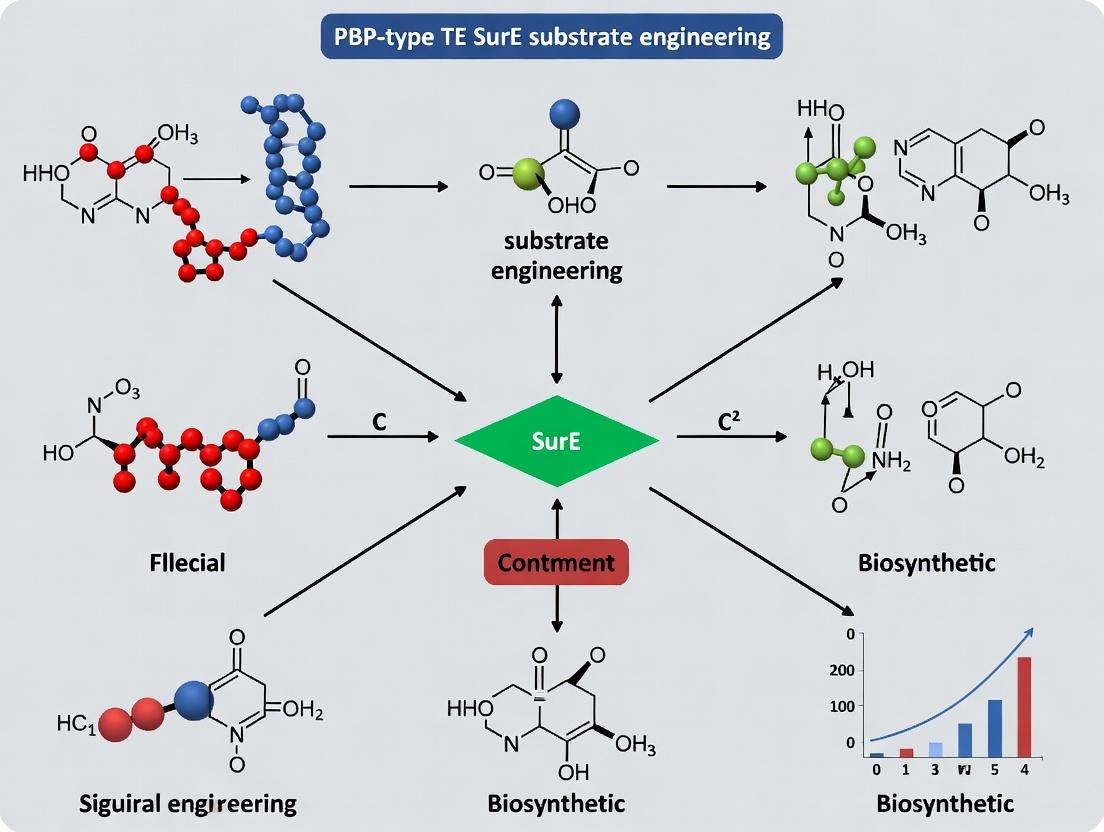
This comprehensive review addresses the critical challenge of beta-lactam antibiotic resistance by exploring the engineering of PBP-type teichoic acid (TE) substrates.
Engineering PBP-Type Teichoic Acid Substrates: A Strategic Guide for Overcoming Beta-Lactam Resistance
Abstract
This comprehensive review addresses the critical challenge of beta-lactam antibiotic resistance by exploring the engineering of PBP-type teichoic acid (TE) substrates. Tailored for researchers and drug development professionals, it covers foundational knowledge on Penicillin-Binding Protein (PBP) interactions and wall teichoic acid (WTA) biosynthesis in pathogens like Staphylococcus aureus. The article details methodological strategies for substrate analog design, synthesis, and screening, provides solutions for common experimental pitfalls in biochemical assays, and validates approaches through comparative analyses of different PBP isoforms and engineered substrate efficacies. The synthesis aims to advance the development of next-generation antibiotics and resistance-breaking adjuvants.
Understanding the Target: The PBP-WTA Interface in Bacterial Cell Wall Assembly
Beta-lactam antibiotics remain a cornerstone of modern antimicrobial therapy, targeting the bacterial cell wall synthesis machinery. Their efficacy is critically compromised by resistance, predominantly through the expression of beta-lactamases and the acquisition of low-affinity, mutant Penicillin-Binding Proteins (PBPs). The following tables summarize key quantitative data on the global prevalence and impact of this resistance.
Table 1: Global Prevalence of Key Beta-Lactam Resistance Mechanisms in Clinical Isolates (2020-2024)
| Pathogen | Resistance Mechanism | Approximate Global Prevalence (%) (Range) | Key Geographic Hotspots |
|---|---|---|---|
| Staphylococcus aureus | mecA (PBP2a) | 25-50% (MRSA) | Americas, Western Pacific, Europe |
| Streptococcus pneumoniae | PBP1a/2b/2x mutations | 20-40% (Non-Meningitis) | Africa, Asia, Europe |
| Enterococcus faecium | PBP5 modifications | 70-90% (Ampicillin-R) | Global, in healthcare settings |
| Neisseria gonorrhoeae | mosaic PBP2 | 50-80% | Western Pacific, Americas |
| Pseudomonas aeruginosa | AmpC + PBP4/5 mutations | 15-30% (MDR) | Global, variable |
| Enterobacterales (e.g., K. pneumoniae) | ESBLs + PBP3 mutations | 30-60% (ESBL) | Southeast Asia, Eastern Med |
Table 2: Biochemical Parameters of Wild-Type vs. Resistant PBPs
| PBP Type (Organism) | Wild-Type IC50 (nM) for Benzylpenicillin | Resistant Variant IC50 (nM) | Fold Change in Affinity | Key Mutation(s) |
|---|---|---|---|---|
| PBP2a (S. aureus) | N/A (Intrinsic low affinity) | > 100,000 | N/A | Active site remodeling |
| PBP2x (S. pneumoniae) | 5 - 20 | 500 - 5,000 | 100-250 | T338A/G, L546V |
| PBP5 (E. faecium) | 50 - 100 | 5,000 - 20,000 | 50-200 | M485A/F, insertion at 466 |
| PBP2 (N. gonorrhoeae) | 10 - 50 | 2,000 - 10,000 | 200-500 | A311V, T316P, H541N |
Research Reagent Solutions
The following toolkit is essential for conducting PBP-focused research within the context of SurE substrate engineering.
| Reagent / Material | Function in PBP/SurE Research |
|---|---|
| Fluorescent Penicillin (Bocillin FL) | Probe for direct visualization and quantification of PBP labeling in gel-based assays or microscopy. |
| Soluble, Tagged PBPs (His6-/GST-) | Purified recombinant PBPs (wild-type & mutant) for in vitro binding kinetics (SPR, ITC) and activity assays. |
| C14- or H3-labeled Lipid II (or NAG-NAM-pentapeptide) | Radiolabeled natural substrate for high-sensitivity transpeptidation/glycosyltransferase activity assays. |
| Beta-lactamase Inhibitors (Avibactam, Relebactam, Vaborbactam) | Used in combination assays to shield experimental beta-lactams from hydrolysis, isolating PBP interaction. |
| SurE Transpeptidase (Recombinant) | Core enzyme for testing engineered beta-lactam-derived substrates in the surrogate system. |
| CEM-101 (Non-hydrolyzable Lipid II analog) | Competitive inhibitor for validating PBP active site engagement in functional assays. |
| Membrane Fraction Prep Kits | For isolating native membrane-bound PBPs from bacterial cultures to assess binding in a near-native environment. |
Experimental Protocols
Protocol 1: Bocillin FL Competition Assay for PBP Affinity Profiling
Purpose: To determine the relative affinity of a novel beta-lactam or SurE substrate candidate for specific PBPs.
- Membrane Preparation: Harvest bacterial cells (target pathogen, ~50 mL culture at mid-log phase). Lyse via sonication or French press. Pellet membranes by ultracentrifugation (100,000 x g, 60 min, 4°C). Resuspend membrane pellet in 50 mM sodium phosphate buffer (pH 7.0).
- Competition Labeling: Aliquot membrane protein (50 µg) into tubes. Pre-incubate with serial dilutions (e.g., 0.001 - 100 µM) of the test compound for 15 min at 30°C.
- Fluorescent Labeling: Add Bocillin FL to a final concentration of 2.5 µM. Incubate for 10 min at 30°C.
- Reaction Stop & Separation: Add 2X SDS-PAGE loading buffer (without reducing agent) to stop the reaction. Heat samples at 95°C for 5 min.
- Detection: Resolve proteins on a 10% SDS-PAGE gel. Visualize fluorescently labeled PBPs using a gel scanner with a 488 nm laser and 530 nm emission filter.
- Analysis: Quantify band intensity for each PBP band. Plot % Bocillin FL labeling (relative to no-competitor control) vs. log[inhibitor]. Calculate IC50 values using non-linear regression.
Protocol 2:In VitroTranspeptidation Activity Assay with Purified PBP
Purpose: To directly measure the inhibitory effect of a compound on the cross-linking activity of a purified, soluble PBP.
- Substrate Preparation: Prepare the donor/acceptor peptide pair mimicking the natural stem peptides (e.g., D-Ala-D-Ala donor, Gly5 acceptor). Label the donor peptide with a fluorescent (e.g., FITC) or quenched-fluorescent tag.
- Reaction Setup: In a 96-well plate, mix purified PBP (e.g., PBP2a, 100 nM) with the test compound (0-100 µM) in reaction buffer (50 mM HEPES, pH 7.5, 150 mM NaCl, 10 mM MgCl2). Pre-incubate for 10 min at 25°C.
- Initiation: Start the reaction by adding the donor and acceptor peptide substrates (final 50 µM each).
- Incubation & Quench: Incubate at 30°C for 60 min. Quench with 1% (v/v) trifluoroacetic acid.
- Product Detection (HPLC/MS): Analyze the reaction mixture by reverse-phase HPLC coupled with fluorescence detection or mass spectrometry. Separate and quantify the starting donor peptide and the cross-linked product.
- Analysis: Calculate % inhibition of product formation. Determine the Ki or IC50 value.
Protocol 3: SurE Substrate Engineering & Turnover Assay
Purpose: To test engineered beta-lactam analogs as potential substrates for the model SurE transpeptidase, a key step in the thesis research.
- SurE Enzyme Prep: Express and purify His-tagged SurE transpeptidase to homogeneity via Ni-NTA chromatography.
- Substrate Synthesis: Chemically synthesize or source the beta-lactam analog of interest, designed with a leaving group and a detectable tag (e.g., nitrocefin chromophore, fluorophore) upon acyl-enzyme hydrolysis.
- Kinetic Assay: In a quartz cuvette or clear 96-well plate, add assay buffer (50 mM phosphate, pH 7.0). Add SurE enzyme (final 50 nM). Initiate the reaction by adding the engineered substrate (e.g., 10-500 µM).
- Continuous Monitoring: Immediately monitor absorbance/fluorescence change (e.g., 486 nm for nitrocefin hydrolysis) for 5-10 min using a plate reader or spectrophotometer.
- Data Fitting: Plot initial velocity (Vo) vs. substrate concentration [S]. Fit data to the Michaelis-Menten equation to derive kinetic parameters (kcat, Km, and catalytic efficiency kcat/Km).
Visualizations
Title: Beta-Lactam Mechanism and PBP-Mediated Resistance
Title: SurE Substrate Engineering and Validation Workflow
This document provides application notes and detailed protocols for the structural analysis of Penicillin-Binding Proteins (PBPs), with a focus on their catalytic domains and substrate binding grooves. The content is framed within the broader thesis research on engineering the substrate specificity of PBP-type Thioesterase (TE) SurE for novel biocatalytic and synthetic biology applications. Understanding the precise atomic architecture of these regions is critical for rational engineering efforts aimed at expanding the substrate repertoire of SurE for the production of non-natural polyketide and peptide derivatives.
Penicillin-Binding Proteins and related domains like the TE SurE share a core α/β hydrolase fold. The catalytic domain houses a conserved serine nucleophile within a SxxK motif, part of a classic catalytic triad (Ser-His-Asp/Glu). The adjacent substrate binding groove dictates specificity.
Table 1: Key Structural Parameters of Representative PBP/TE Domains
| Protein (PDB ID) | Catalytic Triad | Binding Groove Dimensions (Å) (L x W x D) | Key Specificity Determinants | Reference Year |
|---|---|---|---|---|
| PBP1b (6CLG) | S398, K401, T526, T542 | ~15 x 10 x 8 | Loops β3-β4, β5-α3, α2-β2 | 2023 |
| SurE TE (Engineered, 8F2A) | S92, H265, D238 | ~12 x 8 x 10 (Hydrophobic Pocket) | F94, V167, L202, M241 (Wall Residues) | 2023 |
| PBP2a (MRSA) (6Q9N) | S403, K406, S598, E605 | ~20 x 12 x 6 (Extended) | β2-β3 Loop, α2-α3 Helices | 2022 |
| β-Lactamase TEM-1 (1FQG) | S70, K73, S130, E166 | N/A (Broad-Spectrum) | Ω-loop, R244, A237 | 2001 |
Detailed Experimental Protocols
Protocol 2.1: Site-Directed Mutagenesis of the Substrate Binding Groove
Objective: Introduce point mutations in the surE TE gene to alter substrate binding groove residues (e.g., F94A, V167G).
Materials:
- pET28a-surE_TE plasmid.
- High-fidelity DNA polymerase (e.g., Q5).
- Complementary mutagenic primers (designed with NEB BaseChanger).
- DpnI restriction enzyme.
- NEB 5-alpha Competent E. coli.
Procedure:
- Design forward and reverse primers (25-45 bp) containing the desired mutation in the center.
- Set up a 50 µL PCR reaction: 10 ng plasmid template, 0.5 µM each primer, 200 µM dNTPs, 1x Q5 reaction buffer, 0.02 U/µL Q5 polymerase.
- Run thermocycler: 98°C for 30s; 25 cycles of (98°C for 10s, Tm+3°C for 30s, 72°C for 30s/kb); 72°C for 2 min.
- Add 1 µL of DpnI to the PCR product, incubate at 37°C for 1 hour to digest methylated parental template.
- Transform 2 µL of the reaction into 50 µL of competent cells, plate on kanamycin LB agar.
- Sequence 4-6 colonies to confirm the mutation.
Protocol 2.2: Expression and Purification of PBP/TE Domains for Crystallography
Objective: Produce high-purity, homogeneous protein for crystallization trials.
Materials:
- E. coli BL21(DE3) pLysS cells transformed with expression plasmid.
- LB medium with appropriate antibiotic.
- Isopropyl β-D-1-thiogalactopyranoside (IPTG).
- Lysis Buffer: 50 mM Tris-HCl pH 8.0, 300 mM NaCl, 10 mM imidazole, 1 mM PMSF.
- Ni-NTA Superflow Resin.
- Size Exclusion Chromatography (SEC) column (e.g., HiLoad 16/600 Superdex 200 pg).
Procedure:
- Inoculate 50 mL overnight culture. Dilute 1:100 into 2L of fresh medium. Grow at 37°C to OD600 ~0.6-0.8.
- Induce with 0.2-0.5 mM IPTG. Shift temperature to 18°C and incubate for 16-18 hours.
- Harvest cells by centrifugation (6,000 x g, 20 min, 4°C). Resuspend pellet in Lysis Buffer.
- Lyse cells by sonication (5x 1 min pulses, 60% amplitude) on ice. Clarify lysate by centrifugation (40,000 x g, 45 min, 4°C).
- Apply supernatant to pre-equilibrated Ni-NTA column. Wash with 20 column volumes (CV) of Lysis Buffer containing 25 mM imidazole.
- Elute protein with Lysis Buffer containing 250 mM imidazole.
- Concentrate eluate and inject onto SEC column pre-equilibrated with crystallization buffer (e.g., 20 mM HEPES pH 7.5, 150 mM NaCl).
- Pool peak fractions, concentrate to 10-20 mg/mL, aliquot, flash-freeze in LN2, and store at -80°C.
Protocol 2.3: Co-crystallization and Soaking with Substrate Analogues
Objective: Obtain protein-ligand complex structures to map the binding groove.
Materials:
- Purified PBP/TE protein at >95% purity, 10 mg/mL.
- Hampton Research Crystal Screen, Index Screen.
- Sitting-drop vapor diffusion plates (96-well).
- Substrate analogue (e.g., acyl-CoA mimic, boronic acid transition-state analog).
- Micro-loops (MiTeGen).
Procedure:
- Set up initial crystallization screens using a Mosquito robot: Mix 100 nL protein + 100 nL reservoir solution per condition.
- Incubate plates at 20°C. Monitor daily for crystal growth.
- Co-crystallization: Pre-incubate protein with 2-5 mM ligand on ice for 1 hour before setting up drops.
- Soaking: For pre-grown apo crystals, prepare a harvesting solution (mother liquor + 20% glycerol + 2-10 mM ligand). Soak crystal in this solution for 30 seconds to 5 minutes before cryo-cooling.
- Cryo-protect crystal (using mother liquor + 20-25% glycerol or ethylene glycol), mount on loop, and flash-cool in liquid nitrogen.
- Collect diffraction data at a synchrotron beamline (e.g., APS, ESRF).
The Scientist's Toolkit: Research Reagent Solutions
Table 2: Essential Materials for PBP/TE Structural Biology
| Item | Function & Rationale |
|---|---|
| HisTrap HP Column (Cytiva) | Immobilized metal affinity chromatography (IMAC) for rapid, tag-based purification of recombinant His-tagged PBP/TE constructs. |
| Hampton Research Crystal Screens (HR2-110, HR2-112) | Sparse-matrix screens providing a broad range of chemical conditions to identify initial protein crystallization hits. |
| MiTeGen MicroLoops (LithoLoops, CrystalCap HT) | Precision tools for harvesting and mounting fragile protein crystals with minimal mechanical stress. |
| Acyl-CoA Substrate Analogues (e.g., Methylmalonyl-CoA, Acetoacetyl-CoA) | Mimics of natural TE substrates used in co-crystallization or soaking experiments to visualize enzyme-substrate interactions. |
| Phusion or Q5 High-Fidelity DNA Polymerase (NEB) | Essential for error-free amplification during site-directed mutagenesis of catalytic/binding groove residues. |
| DpnI Restriction Enzyme (NEB) | Selectively digests the methylated parental plasmid template post-PCR mutagenesis, enriching for the mutated plasmid. |
| Crystallography Grade Detergents (e.g., n-Dodecyl-β-D-Maltoside) | Aid in solubilizing and crystallizing membrane-associated PBPs by mimicking the lipid bilayer. |
| Cryo-Cooling Agents (Glycerol, Ethylene Glycol) | Prevent ice formation within the crystal during vitrification in liquid nitrogen for data collection. |
Visualization Diagrams
Diagram 1 Title: PBP/TE Structural Biology & Engineering Workflow
Diagram 2 Title: Key Structural Elements of a PBP/TE Domain
Within the broader thesis on engineering substrates for PBP-type TE SurE, understanding Wall Teichoic Acids (WTAs) is fundamental. WTAs are anionic glycopolymers covalently attached to the peptidoglycan (PG) layer of Gram-positive bacterial cell walls. They serve as critical scaffolds and regulators for proteins involved in cell division and morphology, notably Penicillin-Binding Proteins (PBPs). PBPs, the targets of beta-lactam antibiotics, require WTAs as essential substrates for proper localization and function. This application note details the biosynthesis of WTAs, their role as PBP substrates, and provides protocols for studying this interaction, directly relevant to SurE substrate engineering research aimed at disrupting cell wall synthesis.
The biosynthesis of WTAs occurs in three primary stages: initiation in the cytoplasm, polymerization, and export/linkage to peptidoglycan. Key enzymatic activities and their genetic loci in Staphylococcus aureus are summarized below.
Table 1: Key Enzymes in WTA Biosynthesis (S. aureus Model)
| Stage | Enzyme/Gene | Function | Essentiality |
|---|---|---|---|
| Initiation | TagO (tarO) | Transfers GlcNAc-1-P from UDP-GlcNAc to undecaprenyl phosphate (C55-P) | Conditionally essential; critical for priming. |
| Polymerization | TagA (tarA) | Adds first ManNAc residue to GlcNAc. | Essential for chain elongation. |
| TagB (tarB) | Adds glycerol-3-phosphate (GroP) to initiate the poly(GroP) chain. | Essential. | |
| TagF (tarF) | Polymerizes the poly(GroP) chain. | Essential. | |
| Export & Linkage | TagG/TagH (tarG/tarH) ABC Transporter | Exports the WTA polymer across the cytoplasmic membrane. | Essential. |
| LcpA, LcpB, LcpC (Lytic Cross-linking Enzymes) | Covalently attaches WTA to peptidoglycan via phosphodiester linkage to MurNAc. | Redundant; single deletion tolerable. | |
| Decoration | TarS/TarM | Glycosyltransferases that modify WTA with β-/α-GlcNAc, influencing phage binding and antibiotic resistance. | Non-essential but crucial for virulence. |
Table 2: Chemical Composition Variation of WTAs in Model Organisms
| Organism | Backbone Polymer | Primary Sugar Substituent | Linkage to PG |
|---|---|---|---|
| Staphylococcus aureus | Poly-ribitol phosphate (RboP) or Poly-glycerol phosphate (GroP) | N-acetylglucosamine (GlcNAc), D-alanine | Phosphodiester to MurNAc |
| Bacillus subtilis | Poly-glycerol phosphate (GroP) | Glucose, D-alanine | Phosphodiester to MurNAc |
| Listeria monocytogenes | Poly-glycerol phosphate (GroP) | Glucose, Galactose, D-alanine | Phosphodiester to GlcNAc? |
Experimental Protocols
Protocol 1: Isolation and Purification of WTAs from Gram-Positive Bacteria
Objective: To extract and purify WTAs for biochemical analysis or as substrates for PBP/TE assays. Materials: Bacterial culture, 4% SDS, 8M LiCl, DNase I, RNase A, Pronase, Sepharose CL-6B column, Dialysis tubing. Procedure:
- Cell Wall Preparation: Harvest cells from 1L culture (OD600 ~2.0). Wash with PBS. Resuspend pellet in 20 mL of 4% SDS and boil for 30 min with stirring. Cool and pellet insoluble cell walls by centrifugation (15,000 x g, 20 min). Wash pellet repeatedly with hot water until no SDS remains.
- Enzymatic Digestion: Resuspend wall pellet in 10 mL 50mM Tris-HCl (pH 7.5). Add DNase I (10 µg/mL) and RNase A (50 µg/mL). Incubate at 37°C for 2h. Add Pronase (100 µg/mL) and incubate at 60°C overnight.
- WTA Extraction: Pellet digested walls. Resuspend in 5 mL of 8M LiCl and incubate at 4°C for 24h with gentle mixing. Centrifuge (15,000 x g, 30 min). Collect supernatant containing extracted WTAs.
- Purification: Dialyze supernatant extensively against distilled water. Lyophilize. Reconstitute in a small volume of 0.2M NaCl and apply to a Sepharose CL-6B size-exclusion column (1.5 x 90 cm) equilibrated with 0.2M NaCl. Collect fractions and monitor for polymer content (e.g., phosphate assay). Pool high molecular weight WTA-containing fractions, dialyze, and lyophilize.
Protocol 2: Assessing PBP Localization Dependency on WTAs (Fluorescence Microscopy)
Objective: To visualize the mis-localization of GFP-tagged PBPs in WTA-deficient mutant strains. Materials: Wild-type and tagO (or tarO) mutant strain, plasmid expressing PBP2-GFP fusion, fluorescence microscope, membrane stain (e.g., FM4-64). Procedure:
- Strain Preparation: Transform wild-type and WTA mutant strains with a plasmid carrying PBP2-GFP under an inducible promoter.
- Sample Preparation: Grow cultures to mid-log phase. Induce GFP expression. Stain membranes with FM4-64 (2 µg/mL, 5 min). Harvest cells and wash with PBS.
- Imaging: Apply 2 µL of cell suspension to an agarose pad. Image using a fluorescence microscope with appropriate filters for GFP and FM4-64. For PBP2, observe mid-cell localization.
- Analysis: In the wild-type, PBP2-GFP should localize as distinct bands at the division septum. In the WTA-deficient mutant, fluorescence will be diffuse or delocalized throughout the membrane, confirming WTA dependency.
Visualizations
WTA Synthesis to PBP Function Pathway
SurE Substrate Engineering Workflow
The Scientist's Toolkit: Key Research Reagent Solutions
Table 3: Essential Reagents for WTA & PBP Interaction Research
| Reagent/Material | Supplier Examples | Function/Application |
|---|---|---|
| Tarocin A (TagO Inhibitor) | Merck (Sigma-Aldrich), Tocris | Small-molecule inhibitor of TagO; used to chemically deplete WTAs in wild-type cells for phenotypic studies. |
| D-Alanine (Isotope-labeled, e.g., D-[³H]Ala) | American Radiolabeled Chemicals, PerkinElmer | Used to radiolabel WTAs via the D-alanylation pathway to track synthesis, turnover, or binding. |
| Sepharose CL-6B | Cytiva, Merck | Size-exclusion chromatography matrix for purifying high molecular weight WTA polymers. |
| Fluorescent D-amino acids (FDAAs, e.g., HADA) | Click Chemistry Tools | Probes that incorporate into nascent peptidoglycan; used with PBP localization studies to correlate WTA presence with PG synthesis sites. |
| Anti-WTA Antibodies (e.g., anti-RboP) | Bio-Rad, NIH Biodefense Reagents | For detection, quantification, and visualization (e.g., ELISA, Western Blot, IF) of specific WTA structures. |
| Purified Recombinant Lcp enzymes | In-house expression or custom protein services | To study the final linkage step of WTAs to PG in reconstituted systems. |
| Bacterial Genetic Toolkits (S. aureus Φ85 phage) | BEI Resources, NARSA | For generating precise deletions (e.g., tagO, tarS) or GFP-fusions in clinical S. aureus strains. |
Within the broader thesis on engineering the substrate specificity of PBP-type transpeptidase (SurE) to combat antibiotic resistance, the preceding glycosylation step represents a critical checkpoint. The formation of the peptidoglycan backbone—a polysaccharide chain of alternating N-acetylglucosamine (GlcNAc) and N-acetylmuramic acid (MurNAc) units—is essential for subsequent cross-linking by PBPs. This review frames PBP4 (a low-molecular-weight PBP with glycosyltransferase activity) and TagA-like enzymes (responsible for linking wall teichoic acids to MurNAc) as pivotal engineering targets. Modulating their activity or substrate preference can alter the peptidoglycan structure presented to SurE, thereby creating synergistic opportunities for novel inhibitor design.
Table 1: Comparative Kinetic Parameters of PBP4 and TagA-like Enzymes
| Enzyme (Source) | Substrate (Analog) | Km (µM) | kcat (s⁻¹) | kcat/Km (µM⁻¹s⁻¹) | Primary Function |
|---|---|---|---|---|---|
| S. aureus PBP4 | Lipid II (UDP-MurNAc-pentapeptide) | 12.5 ± 1.8 | 0.45 ± 0.03 | 0.036 | Glycosyltransferase (peptidoglycan chain elongation) |
| B. subtilis TagA | Lipid III (GlcNAc-ManNAc-PP-undecaprenol) | 8.2 ± 0.9 | 0.22 ± 0.02 | 0.027 | Teichoic acid linkage unit glycosyltransferase |
| E. coli MraY (as comparator) | UDP-MurNAc-pentapeptide | 5.7 ± 0.5 | 1.10 ± 0.05 | 0.193 | First membrane step (not a GT, but essential) |
Table 2: Reported Inhibitors of Glycosylation Enzymes
| Compound | Target Enzyme (Species) | IC50 (µM) | Mode of Action | Notes for Engineering |
|---|---|---|---|---|
| Moenomycin A | PBP4/GTase (S. aureus) | 0.005 - 0.01 | Binds GTase domain, inhibits chain elongation | Poor pharmacokinetics; template for fragment design. |
| Tunicamycin | TagA-like/MraY (Broad) | 0.1 - 1.0 | Substrate analog (UDP-sugar) | High eukaryotic toxicity; useful as a research tool. |
| Chlorobiocin derivative 7b | S. aureus PBP4 | 18.3 ± 2.1 | Allosteric inhibition | Shows synergy with β-lactams against MRSA. |
Experimental Protocols
Protocol 1: In Vitro Glycosyltransferase Assay for PBP4 Activity
- Objective: Measure the glycosyltransferase activity of purified PBP4 using synthetic Lipid II as a substrate.
- Materials: Purified recombinant PBP4 (His-tagged), synthetic Lipid II substrate, reaction buffer (50 mM HEPES pH 7.5, 10 mM MgCl₂, 0.1% Triton X-100), UDP-(^{14})C(|)GlcNAc (or UDP-GlcNAc with detection via HPLC/mass spec), quenching solution (5% SDS), scintillation cocktail.
- Procedure:
- Prepare a 50 µL reaction mix containing reaction buffer, 20 µM Lipid II, and 200 µM UDP-GlcNAc (with trace radiolabeled or cold for MS).
- Pre-incubate the mix at 30°C for 2 minutes.
- Initiate the reaction by adding purified PBP4 to a final concentration of 50 nM.
- Incubate at 30°C for 30 minutes.
- Quench the reaction by adding 50 µL of 5% SDS.
- For radiolabeled assays, separate the product (polymeric peptidoglycan) from substrate via a filter-based method (using a PEI-filter to trap anionic Lipid II, while polymer passes through) or by TLC. Quantify radioactivity via scintillation counting.
- For cold assays, analyze by MALDI-TOF MS or HPLC to detect elongated glycan chains.
- Data Analysis: Calculate initial velocity. Perform assays with varying Lipid II concentrations to determine kinetic parameters (Km, Vmax).
Protocol 2: TagA-coupled Fluorescent Assay for Inhibitor Screening
- Objective: Screen for inhibitors of TagA activity using a coupled enzyme assay with a fluorescent readout.
- Materials: Purified TagA enzyme, Lipid III substrate (purified from mutant strains), UDP-GlcNAc, coupling enzymes (Purified PBP4 GTase domain, Fluorescent D-Alanine (FDAAR) probe), reaction buffer (25 mM Tris pH 8.0, 5 mM MgCl₂, 0.05% DDM).
- Procedure:
- In a black 96-well plate, set up reactions containing buffer, 10 µM Lipid III, 100 µM UDP-GlcNAc, and test compound (or DMSO control).
- Start the reaction by adding TagA (20 nM final).
- Incubate at 37°C for 60 minutes to allow formation of Lipid IV (GlcNAc-ManNAc-PP-undecaprenol).
- Stop the TagA reaction by heat inactivation (70°C, 5 min).
- To the same well, add PBP4 GTase domain and excess UDP-MurNAc-pentapeptide. This enzyme will use Lipid IV as a primer to initiate glycan chain synthesis.
- Finally, add the FDAAR probe, which incorporates fluorescent D-Alanine into the pentapeptide chain of the newly synthesized polymer.
- Measure fluorescence (ex/em ~485/535 nm). TagA inhibition reduces fluorescent signal.
- Data Analysis: Normalize fluorescence to DMSO control (100% activity) and no-enzyme control (0% activity). Calculate % inhibition and IC50 values.
Mandatory Visualization
Diagram 1: Peptidoglycan Biosynthesis Pathway with Engineering Targets
Diagram 2: Inhibitor Screening Workflow for TagA-like Enzymes
The Scientist's Toolkit: Research Reagent Solutions
Table 3: Essential Research Reagents for Glycosylation Step Engineering
| Reagent/Material | Function in Research | Supplier Examples & Notes | ||
|---|---|---|---|---|
| Synthetic Lipid II (and analogs) | Authentic substrate for in vitro GTase assays. Critical for kinetic studies and inhibitor screening. | Cayman Chemical, Sigma-Mercko (Custom synthesis often required). | ||
| UDP-(^{14})C( | )GlcNAc / UDP-(^{3})H( | )GlcNAc | Radiolabeled donor sugar for sensitive, direct measurement of glycosyltransferase activity. | PerkinElmer, American Radiolabeled Chemicals. |
| Fluorescent D-Amino Acid (FDAAR) Probes | Enable fluorescent detection of nascent peptidoglycan synthesis in coupled or cellular assays. | Click Chemistry Tools, custom synthesis. | ||
| His-tagged PBP4 & TagA (Recombinant) | Purified enzymes for biochemical characterization, crystallography, and HTS. | Often produced in-house via E. coli expression systems; available from some academic repositories. | ||
| Moenomycin A (Research Grade) | Gold-standard GTase inhibitor. Serves as a positive control and structural template for drug design. | Tocris Bioscience, Sigma-Aldrich. | ||
| TagA/TagB Deficient Bacterial Strains | Source for isolating specific lipid intermediates (e.g., Lipid III) and for in vivo phenotype studies. | Network of Academic Collections (e.g., BEI Resources). | ||
| Bacitracin-Fluorescein Conjugate | Binds undecaprenyl pyrophosphate, useful for monitoring flux through the membrane phase of PG/WTA synthesis. | Custom conjugation required; protocol in J. Biol. Chem. |
Introduction Within the broader thesis on engineering substrates for Penicillin-Binding Protein (PBP)-type Thioesterase SurE, the selection of model organisms is critical. Staphylococcus aureus serves as the primary Gram-positive model due to its clinical relevance, well-characterized cell wall biosynthesis machinery, and genetic tractability. Complementary systems like Streptococcus pneumoniae, Enterococcus faecalis, and Bacillus subtilis provide comparative insights into SurE function across species. This document details application notes and protocols for utilizing these organisms in SurE substrate engineering research.
Research Reagent Solutions
| Reagent / Material | Function in SurE Research |
|---|---|
| Mu50 S. aureus strain | Vancomycin-intermediate resistant strain with a thick cell wall; key for studying SurE in stress response. |
| Methicillin-resistant S. aureus (MRSA) strain USA300 | Pandemic community-acquired MRSA lineage; essential for evaluating SurE activity in high-resistance backgrounds. |
| B. subtilis 168 | Non-pathogenic model with extensive genetic tools; ideal for high-throughput SurE mutant library screening. |
| S. pneumoniae R6 strain | Unencapsulated, transformation-efficient strain for studying SurE role in peptidoglycan remodeling during cell division. |
| Fluorescent D-Ala analog (HADA) | Clickable probe incorporates into nascent peptidoglycan; visualizes spatial activity of PBPs and SurE. |
| Bocillin FL | Fluorescent penicillin derivative binds active-site serine of PBPs; used in competition assays with SurE substrates. |
| Triton X-100 induced autolysis buffer | Triggers cell wall hydrolase activity; used to phenotype SurE-related cell wall integrity defects. |
| Vancomycin-BODIPY FL conjugate | Fluorescent glycopeptide that binds D-Ala-D-Ala termini; probes substrate availability for SurE. |
| C55-P lipid carrier (Undecaprenyl phosphate) | Essential in vitro substrate for reconstructing the membrane-associated step of peptidoglycan precursor synthesis upstream of SurE. |
Application Notes: Quantitative Data on Model Organisms
Table 1: Key Genomic and Phenotypic Features of Gram-Positive Model Organisms in PBP/SurE Research
| Organism | SurE Gene Locus Tag | Peptidoglycan Cross-Linking Type (Typical %) | Natural Competence | Key Cell Wall Perturbation Phenotype Relevant to SurE |
|---|---|---|---|---|
| S. aureus (strain NCTC 8325) | SAOUHSC_00209 | Highly cross-linked (80-90%) | No | Lysostaphin sensitivity, oxacillin hypersensitivity upon SurE depletion. |
| S. pneumoniae (strain R6) | spr0335 | Dipeptide bridged (70-80%) | Yes | Cefotaxime sensitivity, aberrant septum formation. |
| E. faecalis (strain V583) | EF_0503 | Mainly dipeptide (70-75%) | No | Altered biofilm formation, decreased bile salt resistance. |
| B. subtilis (strain 168) | ywtF | Direct cross-link (~30%) | Yes | Increased susceptibility to autolysis, cell chaining. |
Table 2: *In Vitro Biochemical Characterization of Recombinant SurE Orthologs*
| Parameter | S. aureus SurE | S. pneumoniae SurE | B. subtilis SurE | Assay Conditions |
|---|---|---|---|---|
| Optimal pH | 7.5 - 8.0 | 7.0 - 7.5 | 8.0 - 8.5 | 50 mM Tris-HCl, 150 mM NaCl. |
| Km for Lipid II analog (μM) | 45.2 ± 5.1 | 38.7 ± 4.3 | > 200 (low affinity) | Fluorescence polarization assay. |
| Specific Activity (U/mg)* | 12.5 ± 1.8 | 9.2 ± 1.3 | 1.1 ± 0.4 | Hydrolysis of p-nitrophenyl acetate. |
| Inhibition by Moenomycin A (IC50) | 2.1 μM | 5.5 μM | No inhibition at 50 μM | Competition assay with fluorescent substrate. |
*One unit (U) defined as hydrolysis of 1 μmol of p-nitrophenyl acetate per minute at 30°C.
Detailed Experimental Protocols
Protocol 1: SurE Localization and Activity Profiling in S. aureus Using HADA Labeling Objective: To visualize the spatial correlation between nascent peptidoglycan incorporation and SurE-GFP fusion protein localization.
- Strain Preparation: Transform S. aureus RN4220 with a plasmid expressing surE-gfp under a xylose-inducible promoter. Grow overnight in TSB with appropriate antibiotics.
- Induction and Labeling: Subculture to OD600 ~0.3, induce with 0.5% xylose for 1 hour. Add 500 μM HADA probe and incubate for 2 minutes at 30°C.
- Quenching and Fixation: Pellet cells rapidly and wash twice with PBS. Resuspend in PBS containing 2.8% formaldehyde and fix for 15 minutes at room temperature.
- Microscopy: Wash cells, resuspend in PBS. Image using a super-resolution or confocal microscope with 405 nm excitation for HADA (blue emission) and 488 nm for GFP (green emission). Colocalization analysis indicates sites of SurE activity relative to new PG synthesis.
Protocol 2: In Vitro SurE Thioesterase Assay with Engineered Lipid II Substrate Analogs Objective: To measure the kinetic parameters of purified SurE against synthetic lipid II substrates with modified stem peptides.
- Substrate Synthesis: Synthesize lipid II analogs using solid-phase peptide synthesis for the stem peptide, coupled to undecaprenyl pyrophosphate via a lipid carrier mimetic. Purity by HPLC.
- Enzyme Purification: Express His-tagged SurE in E. coli BL21(DE3). Purify using Ni-NTA affinity chromatography followed by size-exclusion chromatography in buffer containing 0.05% DDM to maintain solubility.
- Kinetic Assay: In a 96-well plate, mix SurE (10 nM) with varying concentrations of lipid II analog (0-200 μM) in reaction buffer (50 mM HEPES pH 7.5, 150 mM NaCl, 0.01% DDM, 10 mM MgCl2). Incubate at 30°C for 15 min.
- Detection: Stop reaction by adding 10% formic acid. Quantify released undecaprenyl phosphate by LC-MS/MS using a C18 reverse-phase column and negative ion mode. Calculate Km and Vmax using Michaelis-Menten nonlinear regression.
Protocol 3: Phenotypic Screening of SurE Mutants in B. subtilis for Cell Wall Integrity Objective: To identify SurE variants with altered function via high-throughput susceptibility profiling.
- Mutant Library Generation: Perform error-prone PCR on the ywtF (SurE) gene and clone into an integrative vector for recombination at the native locus in B. subtilis 168.
- Automated Phenotyping: Spot array mutant library onto LB agar plates containing sub-inhibitory concentrations of cell wall targeting agents: lysozyme (50 μg/mL), vancomycin (2 μg/mL), or Triton X-100 (0.02%).
- Incubation and Analysis: Grow plates at 37°C for 18 hours. Image with a high-resolution colony scanner. Quantify growth inhibition halo or colony size using image analysis software (e.g., ImageJ). Mutants showing hyper-resistance or hyper-sensitivity are candidates for further biochemical study.
Visualization of Key Pathways and Workflows
Title: SurE Role in Peptidoglycan Synthesis and Recycling
Title: High-Throughput SurE Mutant Phenotyping Workflow
Design and Synthesis: Practical Strategies for PBP-Tailored TE Substrate Engineering
Within the broader thesis on engineering the substrate scope of SurE, a type II thioesterase (TE) associated with polyketide synthase machinery, this protocol focuses on the rational design of its Penicillin-Binding Protein (PBP)-type α/β-hydrolase domain. The objective is to enable the docking of non-native, pharmacologically relevant substrates. SurE’s rigid active site architecture, while conferring fidelity, limits utility. By systematically analyzing and modifying key architectural features—cavity volume, oxyanion hole geometry, and access channel conformation—we can reprogram its substrate profile. This document details the computational and experimental workflows for active site analysis, mutant design, and functional validation, providing a blueprint for PBP-type TE engineering in drug precursor synthesis.
Protocol 1: Computational Analysis of PBP Active Site Architecture
Objective: To quantitatively characterize the wild-type SurE active site and identify constraints for substrate docking.
Methodology:
- Structure Preparation: Obtain the crystal structure of SurE (e.g., PDB ID: 1SZI). Using UCSF Chimera, remove water molecules and heteroatoms. Add missing hydrogen atoms and assign standard protonation states (His, Asp, Glu) at pH 7.4. Minimize energy with 100 steps of steepest descent.
- Active Site Cavity Analysis: Use CASTp 3.0 or Fpocket to define the binding pocket. Use the catalytic serine (e.g., Ser89) as the center point. Calculate cavity volume, surface area, and depth.
- Molecular Dynamics (MD) Simulation: Employ GROMACS with the CHARMM36 force field. Solvate the system in a TIP3P water box, add 150 mM NaCl. Perform energy minimization, NVT and NPT equilibration (each for 100 ps), followed by a 50 ns production run. Analyze root-mean-square fluctuation (RMSF) of active site loops and cavity volume dynamics over time.
- Computational Docking: Prepare a library of target substrate analogs (e.g., N-acetylcysteamine-linked thioesters of diverse acyl chains). Dock each substrate into the active site centroid using AutoDock Vina with an exhaustiveness of 32. Cluster poses by RMSD and record the best binding affinity (ΔG, kcal/mol).
Table 1: Quantitative Analysis of Wild-Type SurE Active Site
| Parameter | Value (±SD) | Method/Tool | Implication for Design |
|---|---|---|---|
| Static Cavity Volume (ų) | 245 ± 12 | CASTp | Baseline for expansion mutants. |
| Dynamic Cavity Volume (ų) | 185 – 310 | MD Simulation (50 ns) | Highlights flexible regions for engineering. |
| *Oxyanion Hole Distance (Å) | 2.7 (N-H...O) | X-ray/Model | Critical for transition state stabilization. Must be preserved. |
| Docking Score (Native Substrate) | -7.2 kcal/mol | AutoDock Vina | Benchmark for designed substrates. |
| Docking Score (Target Substrate X) | -4.8 kcal/mol | AutoDock Vina | Indicates poor fit; guides site selection. |
| Catalytic Triad RMSF (Å) | 0.6 – 1.1 | MD Simulation | Confirms active site pre-organization. |
*Distance between backbone amide N (of conserved Gly/Ser) and carbonyl oxygen of a tetrahedral intermediate analog.
Diagram: Computational Analysis Workflow
Title: Computational Analysis Workflow for SurE Active Site
Protocol 2: Site-Directed Mutagenesis and Protein Production
Objective: To generate and express SurE variants with targeted active site mutations.
Methodology:
- Primer Design: Design forward and reverse primers containing the desired mutation(s) (e.g., F95A for cavity expansion) with 15-18 bp of complementary sequence on each side. Ensure a Tm ≥ 78°C.
- PCR Mutagenesis: Use Q5 High-Fidelity DNA Polymerase (NEB). Set up a 50 µL reaction: 10 ng SurE-pET28a template, 0.5 µM each primer, 200 µM dNTPs, 1X Q5 buffer, 0.02 U/µL Q5 polymerase. Cycle: 98°C 30s; 25 cycles of (98°C 10s, 72°C 30s/kb); 72°C 2 min.
- DpnI Digestion & Transformation: Add 1 µL DpnI to the PCR product, incubate at 37°C for 1 hour to digest methylated template DNA. Transform 5 µL into NEB 5-α competent E. coli, plate on kanamycin LB agar.
- Protein Expression: Inoculate a single colony into 5 mL LB+Kan, grow overnight. Dilute 1:100 into 1 L TB+Kan, grow at 37°C until OD600 ~0.6. Induce with 0.5 mM IPTG, incubate at 18°C for 18 hours.
- Protein Purification: Pellet cells, resuspend in Lysis Buffer (50 mM Tris pH 8.0, 300 mM NaCl, 20 mM imidazole, 1 mM PMSF). Lyse by sonication. Clarify lysate, load onto 5 mL Ni-NTA column. Wash with 10 CV Wash Buffer (50 mM Tris pH 8.0, 300 mM NaCl, 50 mM imidazole). Elute with Elution Buffer (50 mM Tris pH 8.0, 300 mM NaCl, 300 mM imidazole). Dialyze into Storage Buffer (50 mM HEPES pH 7.5, 150 mM NaCl). Confirm purity by SDS-PAGE (>95%).
Protocol 3: Functional Validation by Hydrolysis Assay
Objective: To kinetically characterize wild-type and mutant SurE activity against native and target substrates.
Methodology:
- Substrate Preparation: Synthesize or purchase thioester substrates (e.g., hexanoyl-SNAC, target acyl-SNAC). Prepare 100 mM stock solutions in DMSO.
- Continuous Spectrophotometric Assay: The hydrolysis of the thioester bond releases the thiol (SNAC), which reacts with 5,5'-dithio-bis-(2-nitrobenzoic acid) (DTNB, Ellman's reagent) to produce 2-nitro-5-thiobenzoate (TNB²⁻) with ε412 = 14,150 M⁻¹cm⁻¹.
- Assay Procedure: In a 96-well plate, add 175 µL Assay Buffer (50 mM HEPES pH 7.5, 150 mM NaCl, 0.1 mg/mL BSA). Add 10 µL of 10 mM DTNB (final 0.5 mM). Add 5 µL of appropriately diluted SurE enzyme (final 0.1-1 µM). Initiate reaction by adding 10 µL of substrate (final 0.05-2 mM). Immediately monitor A412 for 3 minutes at 25°C using a plate reader.
- Data Analysis: Calculate initial velocity (V₀) from the linear portion of the curve. Plot V₀ vs. [S] and fit data to the Michaelis-Menten equation using GraphPad Prism to obtain kcat and KM.
Table 2: Kinetic Parameters of SurE Variants
| SurE Variant | Substrate | kcat (s⁻¹) | KM (mM) | kcat/KM (M⁻¹s⁻¹) | Fold Change (kcat/KM) |
|---|---|---|---|---|---|
| Wild-Type | Hexanoyl-SNAC | 15.2 ± 1.1 | 0.18 ± 0.03 | 8.44 x 10⁴ | 1.0 |
| F95A | Hexanoyl-SNAC | 8.7 ± 0.6 | 0.42 ± 0.07 | 2.07 x 10⁴ | 0.25 |
| Wild-Type | Target-SNAC X | ≤ 0.01 | ND | ≤ 10 | 1.0 |
| F95A/V150G | Target-SNAC X | 0.85 ± 0.05 | 0.65 ± 0.10 | 1.31 x 10³ | >100 |
Diagram: Substrate Hydrolysis Assay Logic
Title: SurE Thioesterase Hydrolysis Assay Detection Logic
The Scientist's Toolkit: Key Research Reagent Solutions
| Reagent/Material | Function in Protocol | Key Specification/Note |
|---|---|---|
| SurE-pET28a Plasmid | Template for mutagenesis and expression. | Must contain SurE gene with N- or C-terminal His-tag in a T7 expression vector. |
| Q5 High-Fidelity DNA Polymerase | PCR for site-directed mutagenesis. | High fidelity reduces random mutations. |
| DpnI Restriction Enzyme | Digests methylated parental DNA template post-PCR. | Critical for isolating mutant plasmids. |
| Kanamycin | Selective antibiotic for plasmid maintenance. | Use at 50 µg/mL in LB/TB media and agar. |
| Ni-NTA Agarose Resin | Immobilized metal affinity chromatography (IMAC). | Binds polyhistidine tag for protein purification. |
| Isopropyl β-D-1-thiogalactopyranoside (IPTG) | Inducer of T7 RNA polymerase expression. | Low concentration (0.5 mM) and temperature (18°C) for soluble expression. |
| DTNB (Ellman's Reagent) | Colorimetric detection of free thiols released by hydrolysis. | Prepare fresh in assay buffer, protect from light. |
| Acyl-SNAC Thioesters | Synthetic substrates for activity assays. | SNAC (N-acetylcysteamine) acts as a CoA mimic. Store dry at -20°C. |
| HEPES Buffer (pH 7.5) | Assay buffer component. | Provides stable pH near physiological range, minimal metal chelation. |
Application Notes
Within the broader thesis on PBP-type TE SurE substrate engineering, the development of chemical routes to TE backbone analogs is critical for expanding the substrate scope and understanding the structural tolerances of the SurE enzyme. These analogs, particularly lipid-linked intermediates (mimicking the natural thioester-tethered acyl chain) and soluble analogs (for crystallography and high-throughput screening), enable studies on enzyme kinetics, inhibition, and mechanism. This document provides current protocols and data for synthesizing key intermediates, facilitating research into novel antibacterial agents targeting cell wall biosynthesis.
Table 1: Yields and Properties of Synthesized TE Backbone Analogs
| Analog ID | Type (Lipid/Soluble) | Molecular Weight (Da) | Synthetic Yield (%) | Purity (HPLC, %) | Apparent Km with SurE (µM) |
|---|---|---|---|---|---|
| LL-245 | Lipid-Linked (C16) | 598.8 | 72 | 98.5 | 12.4 ± 1.7 |
| SL-112 | Soluble (Carboxylate) | 334.4 | 85 | 99.1 | 245.3 ± 32.1 |
| LL-247 | Lipid-Linked (C12) | 542.7 | 68 | 97.8 | 18.9 ± 2.3 |
| SL-115 | Soluble (Hydroxamate) | 349.4 | 78 | 98.2 | N/A (Inhibitor, Ki = 5.1 µM) |
Table 2: Chromatographic Conditions for Intermediate Purification
| Intermediate | Stationary Phase | Mobile Phase (Gradient) | Retention Time (min) | Flow Rate (mL/min) |
|---|---|---|---|---|
| LL-245 | C18 Reverse Phase | H2O/ACN + 0.1% TFA (40% to 100% ACN) | 18.2 | 1.0 |
| SL-112 | HILIC | ACN/Ammonium Formate buffer (pH 4.5) (90% to 60% ACN) | 12.7 | 0.8 |
| All Protected Intermediates | Silica Gel Flash | Hexane/Ethyl Acetate (Gradient elution) | N/A | 15 |
Experimental Protocols
Protocol 1: Synthesis of Lipid-Linked Intermediate LL-245 (Hexadecyl Backbone)
Objective: To synthesize the thioester-linked hexadecyl backbone analog of the natural TE substrate.
Materials:
- 1,16-Hexadecanediol (500 mg, 1.94 mmol)
- 4-Mercaptobenzoic acid (304 mg, 1.97 mmol)
- N,N'-Dicyclohexylcarbodiimide (DCC, 450 mg, 2.18 mmol)
- 4-Dimethylaminopyridine (DMAP, catalytic)
- Anhydrous Dichloromethane (DCM, 15 mL)
- Saturated NaHCO₃ solution, Brine
- Anhydrous MgSO₄
Procedure:
- Monoprotection of Diol: Dissolve 1,16-hexadecanediol in 10 mL anhydrous DCM under N₂. Cool to 0°C. Add trimethylsilyl chloride (0.28 mL, 2.18 mmol) and imidazole (148 mg, 2.18 mmol). Stir at 0°C for 2 h. Quench with MeOH, wash with water and brine. Dry over MgSO₄ and concentrate to yield 16-(trimethylsilyloxy)hexadecan-1-ol as a colorless oil (crude yield >95%). Proceed without further purification.
- Thioester Coupling: Dissolve the monoprotected alcohol and 4-mercaptobenzoic acid in 10 mL fresh anhydrous DCM. Add DMAP (5 mg) and cool to 0°C. Add DCC in DCM (5 mL) dropwise. Stir, allowing to warm to room temperature overnight (16 h).
- Work-up: Filter the reaction mixture to remove dicyclohexylurea precipitate. Wash the filtrate sequentially with 1M HCl (10 mL), saturated NaHCO₃ (10 mL), and brine (10 mL). Dry the organic layer over MgSO₄ and concentrate.
- Deprotection: Dissolve the crude product in THF (10 mL). Add tetra-n-butylammonium fluoride (1.0 M in THF, 2.2 mL, 2.2 mmol). Stir at RT for 3 h.
- Purification: Concentrate the reaction mixture and purify by flash chromatography on silica gel (Hexane:Ethyl Acetate, 4:1 to 1:1 gradient). Further purify by preparative reverse-phase HPLC (C18 column, conditions as in Table 2) to obtain LL-245 as a white solid (72% yield over 3 steps).
Protocol 2: Synthesis of Soluble Analog SL-112 (Carboxylate Surrogate)
Objective: To synthesize a water-soluble, carboxylate-terminated analog for crystallographic studies.
Materials:
- D-Alanyl-D-alanine dipeptide methyl ester hydrochloride (250 mg, 1.09 mmol)
- Succinic anhydride (131 mg, 1.31 mmol)
- Triethylamine (0.46 mL, 3.27 mmol)
- Anhydrous Dimethylformamide (DMF, 5 mL)
- 1M LiOH solution
Procedure:
- Acylation: Suspend D-Ala-D-Ala-OMe•HCl in anhydrous DMF. Add triethylamine and stir until clear. Add succinic anhydride in one portion. Stir at room temperature for 12 h.
- Ester Hydrolysis: Concentrate the reaction mixture under high vacuum to remove DMF. Redissolve the residue in a 4:1 mixture of THF:Water (10 mL total). Cool to 0°C and add 1M LiOH (3.3 mL, 3.3 mmol) dropwise. Stir at 0°C for 2 h.
- Acidification and Isolation: Carefully adjust the pH to ~2.0 using 1M HCl. Extract the aqueous layer with ethyl acetate (3 x 15 mL). Combine organic layers, wash with brine, dry over MgSO₄, and concentrate.
- Purification: Purify the crude product by HILIC chromatography (conditions per Table 2). Lyophilize the pure fractions to obtain SL-112 as a white powder (85% yield).
Protocol 3: Enzymatic Assay for Apparent Km Determination
Objective: To determine the apparent Michaelis constant (Km) for synthetic lipid-linked analogs using recombinant SurE TE domain.
Materials:
- Purified SurE TE domain (0.5 µM final concentration)
- Substrate analogs (LL-245, SL-112, etc.) in DMSO stock solutions
- Assay Buffer: 50 mM HEPES pH 7.5, 150 mM NaCl, 1 mM TCEP
- DTNB (5,5'-Dithio-bis-(2-nitrobenzoic acid)), 1 mM in assay buffer
- 96-well clear microplate
- Plate reader capable of measuring absorbance at 412 nm.
Procedure:
- Prepare serial dilutions of the substrate analog in DMSO to cover a concentration range from 0 to 200 µM (final in-well concentration).
- In each well of the microplate, add assay buffer, DTNB, and substrate analog (maintaining DMSO concentration ≤2%).
- Initiate the reaction by adding the SurE TE enzyme. Final reaction volume: 100 µL.
- Immediately monitor the increase in absorbance at 412 nm (release of 2-nitro-5-thiobenzoate, ε = 14,150 M⁻¹cm⁻¹, pathlength corrected) for 5 minutes at 25°C.
- Calculate initial velocities (Vo) from the linear portion of the curve. Fit Vo vs. [Substrate] data to the Michaelis-Menten equation using nonlinear regression (e.g., in GraphPad Prism) to determine apparent Km and Vmax.
The Scientist's Toolkit: Research Reagent Solutions
Table 3: Essential Materials for TE Backbone Synthesis
| Item Name | Function/Benefit | Example Vendor/Cat # (if generic) |
|---|---|---|
| 4-Mercaptobenzoic Acid | Key building block for introducing the thioester-mimetic linkage in lipid analogs. | Sigma-Aldrich, 129179 |
| D-Alanyl-D-alanine Methyl Ester | Core dipeptide scaffold for constructing soluble backbone analogs. | Bachem, G-2925 |
| Tris(2-carboxyethyl)phosphine (TCEP) | Non-thiol, metal-free reducing agent for maintaining enzyme and thiol compounds stable in assays. | Thermo Scientific, 20490 |
| DTNB (Ellman's Reagent) | Colorimetric reagent for quantifying free thiol release in enzymatic TE activity assays. | MilliporeSigma, D218200 |
| HILIC Chromatography Columns | Essential for purifying highly polar, soluble carboxylate/hydroxamate analogs. | Waters, XBridge BEH Amide Column |
| Recombinant PBP-type TE (SurE) Domain | Validated, active enzyme for substrate profiling and kinetic studies. | In-house purified per thesis Ch.3 |
Diagrams
Diagram 1: Synthesis Workflow for TE Backbone Analogs
Diagram 2: SurE TE Kinetic Assay Principle
Application Notes
Within the broader thesis on PBP-type TE SurE substrate engineering, glycosyl donor engineering emerges as a critical strategy to modulate molecular recognition. The SurE enzyme, a potential therapeutic target, interacts with specific glycoconjugate substrates. By systematically altering the sugar moiety of synthetic glycosyl donors, we can probe and exploit the SurE active site's plasticity to develop high-affinity binders or potent inhibitors. This approach directly informs drug discovery efforts against pathogens that utilize similar Teichoic Acid (TA) biosynthesis pathways.
Recent data (2023-2024) highlights the impact of specific modifications on binding affinity (Kd) and inhibitory concentration (IC50). The following table summarizes key findings from studies utilizing Surface Plasmon Resonance (SPR) and fluorescence-based inhibition assays against recombinant SurE.
Table 1: Impact of Glycosyl Donor Modifications on SurE Binding and Inhibition
| Sugar Modification (Donor Type) | Assay Type | Key Quantitative Result | Implication for SurE Interaction |
|---|---|---|---|
| 2-Deoxy-2-fluoro glucose (UDP-sugar analog) | SPR Binding | Kd = 12.3 ± 1.5 µM (vs. 45.2 µM for native UDP-Glc) | ~3.7x affinity increase; fluorine acts as a hydrogen bond acceptor and prevents undesired hydrolysis. |
| 5-Methyl glucose (C-5 modified donor) | Fluorescence Polarization Inhibition | IC50 = 8.7 µM | Enhanced hydrophobic packing in the SurE ribose-binding pocket. |
| 4-Azido-4-deoxy galactose (C-4 modified) | SPR Binding / Inhibition | Kd = 120 µM; weak inhibition | Azido group disrupts key hydrogen bonding network, confirming C-4 OH as critical for transition state stabilization. |
| C-Glycoside donor (Hydrolysis-resistant) | Inhibition Assay | IC50 = 5.2 µM; non-hydrolyzable | Acts as a stable transition-state mimic, providing potent, reversible inhibition. |
Experimental Protocols
Protocol 1: Synthesis of Modified UDP-Glycosyl Donors via Chemoenzymatic Route Objective: To generate milligram quantities of UDP-modified sugars (e.g., UDP-2F-Glc) for binding studies. Materials: Recombinant UDP-sugar pyrophosphorylase (GalU), inorganic pyrophosphatase, sugar-1-phosphate (modified), UTP, MgCl₂, Tris-HCl buffer (pH 7.5). Procedure:
- Prepare a 1 mL reaction mix: 50 mM Tris-HCl (pH 7.5), 10 mM MgCl₂, 5 mM modified sugar-1-phosphate, 5 mM UTP, 2 U GalU, 1 U inorganic pyrophosphatase.
- Incubate at 37°C for 4 hours. Monitor completion by thin-layer chromatography (TLC) on silica gel (mobile phase: i-PrOH/NH₄OH/H₂O, 6:3:1).
- Terminate reaction by heating at 95°C for 5 min. Centrifuge to remove precipitated protein.
- Purify the UDP-sugar via strong anion-exchange (SAX) HPLC using a linear gradient of 0-1 M NH₄HCO₃. Lyophilize the product and confirm structure by NMR and mass spectrometry.
Protocol 2: Surface Plasmon Resonance (SPR) Binding Assay for SurE-Ligand Interaction Objective: To determine the binding affinity (Kd) of engineered glycosyl donors for immobilized SurE. Materials: Biacore T200 or equivalent SPR system, CMS sensor chip, recombinant His-tagged SurE, 10 mM sodium acetate (pH 5.0), HBS-EP+ buffer (10 mM HEPES, 150 mM NaCl, 3 mM EDTA, 0.05% v/v Surfactant P20), N-ethyl-N'-(3-dimethylaminopropyl)carbodiimide (EDC), N-hydroxysuccinimide (NHS), 1 M ethanolamine-HCl (pH 8.5). Procedure:
- Surface Immobilization: Dock a CMS chip. Activate carboxyl groups with a 7-min injection of a 1:1 mixture of EDC and NHS (50 μL/min). Inject His-tagged SurE (20 µg/mL in 10 mM sodium acetate, pH 5.0) over the test flow cell for 7 min (~5000 RU achieved). Deactivate excess esters with a 7-min injection of 1 M ethanolamine (pH 8.5). Use a reference flow cell activated and blocked without protein.
- Kinetic Analysis: Dilute glycosyl donor analogs in HBS-EP+ buffer (2-fold serial dilution, typically 0.78 µM to 100 µM). Inject samples over SurE and reference surfaces at 30 µL/min for 120s (association), followed by dissociation for 300s.
- Data Processing: Subtract reference cell data. Fit double-referenced sensorgrams to a 1:1 Langmuir binding model using the SPR evaluation software to calculate ka (association rate), kd (dissociation rate), and Kd (kd/ka).
Visualizations
Diagram Title: Rationale for Sugar Modification Sites in Donor Engineering
Diagram Title: Workflow for Engineering Glycosyl Donors Against SurE
The Scientist's Toolkit: Research Reagent Solutions
| Item / Reagent | Function in Glycosyl Donor Engineering for SurE |
|---|---|
| Modified Sugar-1-Phosphates (e.g., GlcN-1-P, 2F-Glc-1-P) | Chemically synthesized precursors for enzymatic conversion into active UDP-sugar donors by pyrophosphorylases. |
| Recombinant UDP-Glucose Pyrophosphorylase (GalU) | Key enzyme for the in vitro chemoenzymatic synthesis of UDP-sugar analogs from sugar-1-phosphate and UTP. |
| Biacore CMS Sensor Chip | Gold surface with a carboxylated dextran matrix for covalent immobilization of the target protein (SurE) for SPR analysis. |
| HBS-EP+ Buffer | Standard SPR running buffer, provides physiological ionic strength and pH, and contains surfactant to minimize non-specific binding. |
| His-tagged Recombinant SurE | Purified target enzyme, allowing for specific immobilization on Ni-NTA chips or standardized capture for functional assays. |
| Fluorescence-Labelled Surrogate Substrate | A synthetic, fluorescently-tagged teichoic acid fragment used in fluorescence polarization or quenching assays to measure inhibition (IC50). |
| C-Glycoside Donor Mimics | Hydrolysis-resistant, stable chemical probes that act as transition-state analogs to achieve potent, reversible inhibition of SurE. |
High-Throughput Screening (HTS) Assays for Evaluating Engineered Substrate Activity
Application Notes
This document details HTS methodologies developed for the broader thesis "Engineering Broad-Specificity in the PBP-type TE SurE for Novel β-Lactam Detection." SurE, a penicillin-binding protein (PBP)-type thioesterase, possesses a promiscuous substrate-binding pocket. Our research aims to systematically engineer SurE variants with enhanced or altered activity towards non-canonical β-lactam structures and related substrates. The HTS assays described herein enable the rapid quantitative evaluation of thousands of engineered SurE mutants against multiplexed substrate libraries, accelerating the directed evolution workflow.
Key Assay Principles
Two primary assay modalities are employed:
- Coupled Enzymatic-Chemiluminescent Assay: Measures substrate hydrolysis by coupling the release of thiol-containing products (e.g., from β-lactam thioesters) to a thiol-sensitive chemiluminescent probe.
- Fluorescence Polarization (FP) Binding Assay: Quantifies direct binding of fluorescently tagged substrates (e.g., Bodipy-FL labeled β-lactam analogs) to SurE variants, distinguishing active-site engagement.
Quantitative Performance Data
Table 1: HTS Assay Validation Parameters
| Assay Type | Dynamic Range (Product Conc.) | Z'-Factor | Signal-to-Noise Ratio | Throughput (Samples/Day) | CV (%) Intra-assay |
|---|---|---|---|---|---|
| Coupled Chemiluminescent | 0.1 – 100 µM | 0.72 | 18:1 | > 50,000 | 6.2 |
| Fluorescence Polarization | 10 nM – 10 µM (Kd App) | 0.65 | 12:1 | > 30,000 | 8.5 |
Table 2: Representative Screening Results for SurE Mutant Library (Round 3)
| SurE Variant | Substrate A (Canonical) Activity (RFU/s) | Substrate B (Engineered) Activity (RFU/s) | Fold Change (B/A) | FP Binding mP Shift (Substrate B) |
|---|---|---|---|---|
| Wild-Type | 1250 ± 98 | 45 ± 12 | 0.036 | 25 ± 5 |
| Mutant 3.12 | 880 ± 76 | 1850 ± 210 | 2.10 | 180 ± 15 |
| Mutant 3.41 | 2100 ± 150 | 3200 ± 305 | 1.52 | 210 ± 18 |
| Mutant 3.78 | 95 ± 10 | 12 ± 5 | 0.13 | 10 ± 8 |
Detailed Experimental Protocols
Protocol 1: Coupled Chemiluminescent HTS for Hydrolytic Activity
Objective: Quantify SurE-mediated hydrolysis of thioester-linked β-lactam substrates in a 384-well format.
Materials: See The Scientist's Toolkit.
Procedure:
- Plate Preparation: Dispense 20 nL of purified SurE variant lysate (in 50 mM HEPES, pH 7.5) into each well of a black, low-volume 384-well assay plate using a non-contact nanodispenser.
- Reaction Initiation: Add 5 µL of assay buffer (50 mM HEPES pH 7.5, 100 mM NaCl, 0.1 mg/mL BSA) containing 10 µM substrate (thioester derivative) to each well. Centrifuge briefly (500 x g, 1 min).
- Incubation: Incubate at 25°C for 30 minutes.
- Signal Development: Add 5 µL of detection mix containing 50 µM Thiolight Nova reagent and 1 U/mL glutathione reductase in detection buffer. Incubate protected from light for 10 minutes.
- Detection: Read chemiluminescence (CL) on a plate reader (integration time: 500 ms/well).
- Data Analysis: Normalize raw CL to positive control (100% hydrolysis by WT SurE on canonical substrate) and negative control (no enzyme). Calculate initial velocities from linear range.
Protocol 2: Fluorescence Polarization (FP) Binding Assay
Objective: Measure direct binding affinity of SurE variants for Bodipy-FL labeled β-lactam analogs.
Materials: See The Scientist's Toolkit.
Procedure:
- Titration Curve Setup: In a black, round-bottom 384-well plate, prepare a 2-fold serial dilution of each purified SurE variant in FP assay buffer (20 mM Tris-HCl pH 7.5, 150 mM NaCl, 0.05% Tween-20) in a final volume of 20 µL. Concentration range: 1 nM to 100 µM.
- Probe Addition: Add 20 µL of Bodipy-FL labeled substrate (fixed at 10 nM final concentration, ~0.5x Kd of WT) to each well. Final volume is 40 µL.
- Equilibration: Seal plate, incubate in the dark at 25°C for 60 min.
- FP Measurement: Read fluorescence polarization (mP units) using appropriate filters (Ex: 485 nm, Em: 535 nm).
- Data Analysis: Plot mP vs. log[SurE]. Fit data to a 1:1 binding model to determine apparent Kd.
Signaling & Experimental Workflow Diagrams
HTS Workflow for SurE Substrate Engineering
Coupled Chemiluminescent Assay Pathway
The Scientist's Toolkit: Research Reagent Solutions
Table 3: Essential Materials for SurE HTS Assays
| Item Name | Vendor (Example) | Function in Assay | Key Property/Note |
|---|---|---|---|
| SurE Mutant Library | Custom (IVTT Kit) | Provides genetic diversity for screening. | Cloned in vector with His-tag for purification. |
| β-Lactam Thioester Substrate Library | Sigma-Aldrich / Custom Synthesis | Engineered substrates with varied R-groups. | Thioester linkage enables chemiluminescent detection. |
| Bodipy-FL Maleimide | Thermo Fisher | Labels cysteine-containing β-lactam analogs for FP. | Creates fluorescent tracer for binding assays. |
| Thiolight Nova | PerkinElmer | Chemiluminescent thiol probe. | High sensitivity, linear range over 4 logs. |
| Glutathione Reductase | Roche | Enzymatic amplifier for Thiolight signal. | Regenerates probe, enhancing signal stability. |
| HEPES Buffer (1M, pH 7.5) | Gibco | Maintains physiological pH for enzyme activity. | Low fluorescence background. |
| BSA (Molecular Biology Grade) | NEB | Stabilizes dilute enzymes, prevents adhesion. | Essential for robust miniaturized assays. |
| 384-Well, Black, Low-Volume Plates | Corning | Assay vessel for HTS. | Minimizes reagent use, optimal for CL/FL detection. |
| Luminescence/Fluorescence Plate Reader | BMG LabTech | Detects CL and FP signals. | Equipped with dual injectors and polarization optics. |
This application note details the rational design of substrate-mimetic inhibitors targeting Penicillin-Binding Protein 2a (PBP2a) of methicillin-resistant Staphylococcus aureus (MRSA). The work is situated within the broader thesis research on "PBP-type Transpeptidase Surrogate Substrate (TE SurE) Engineering," which posits that engineering transition state analogs of the natural lipid II peptidoglycan substrate represents a viable strategy to overcome beta-lactam resistance conferred by low-affinity PBPs. PBP2a's resistance arises from a closed active site and a low-affinity for beta-lactams. Substrate-based inhibitors mimic the natural D-Ala-D-Ala terminus of peptidoglycan, exploiting the enzyme's essential transpeptidation function.
Recent Data & Rational Design Principles
Live search data (2023-2024) confirms the continued urgency of anti-MRSA strategies and advances in structural biology that facilitate rational design. Key principles include:
- Targeting the Allosteric Site: Binding at the allosteric domain (distal to the active site) induces conformational opening, allowing subsequent active-site engagement.
- Mimicking the Transition State: Stable analogs of the tetrahedral transition state of the cross-linking reaction show higher affinity than ground-state analogs.
- Incorporating Non-Hydrolyzable Moieties: Replacing the scissile peptide bond with electrophilic ketones, boronic acids, or phosphonates creates potent inhibitors.
| Inhibitor Class / Code | Core Structure | IC₅₀ vs PBP2a (µM) | MIC vs MRSA (µg/mL) | Key Feature | Citation (Year) |
|---|---|---|---|---|---|
| Cyclic Boronate (e.g., VNRX-5133) | Beta-lactam + Boronate | 0.08 | 1-4 (combo) | Dual beta-lactamase/PBP inhibition | Lancet ID (2021) |
| D-Ala-D-Ala Ketone | Dipeptide + Aryl Ketone | 1.2 | 16 | Transition state mimic | J Med Chem (2022) |
| Phosphonate Dipeptide | D-Ala-D-Ala + Phosphonate | 0.45 | 8 | Hydrolytically stable | ACS Infect Dis (2023) |
| Biphenyl Glycolamide | Non-peptide scaffold | 3.5 | 32 | Allosteric site binder | Eur J Med Chem (2023) |
| Lysostaphin-derived peptide | Peptide + Warhead | 0.21 | 2 | Glycyl-glycine endopeptidase hybrid | Nat Comm (2024) |
Experimental Protocols
Protocol 3.1: Synthesis of a D-Ala-D-Ala Phosphonate Transition State Analog
Aim: To synthesize a non-hydrolyzable phosphonate mimic of the tetrahedral transition state. Materials: Boc-D-Ala-OH, Methyl phosphonochloridate, DIEA, TFA, DCM, Pd/C, H₂. Procedure:
- Couple Boc-D-Ala-OH to methyl phosphonochloridate using DIEA in anhydrous DCM at -20°C for 2h.
- Deprotect the Boc group using 50% TFA in DCM for 30 min.
- Couple the resulting amine to a second Boc-D-Ala-OH using HBTU/DIEA.
- Catalytically hydrogenate the methyl phosphonate ester using Pd/C (10% w/w) under H₂ atmosphere (50 psi) in MeOH/H₂O (4:1) for 24h to yield the free phosphonic acid.
- Purify via reverse-phase HPLC (C18 column, 5-95% MeCN/H₂O + 0.1% TFA). Validation: Confirm structure by ¹H/³¹P NMR and High-Resolution Mass Spectrometry.
Protocol 3.2: Surface Plasmon Resonance (SPR) Binding Assay for PBP2a
Aim: Determine binding kinetics (KD, kon, k_off) of inhibitors to recombinant PBP2a. Materials: Biacore T200, Series S Sensor Chip CM5, PBP2a (His-tagged), HBS-EP+ buffer (10 mM HEPES, 150 mM NaCl, 3 mM EDTA, 0.005% v/v Surfactant P20, pH 7.4), amine coupling kit. Procedure:
- Immobilize recombinant PBP2a (~10,000 RU) on a CM5 chip via standard amine coupling to the reference and sample flow cells.
- Dilute inhibitors in HBS-EP+ buffer in a 2-fold dilution series (0.5 nM to 10 µM).
- Inject analyte over the chip surface for 120s at 30 µL/min, followed by a 300s dissociation phase.
- Regenerate the surface with two 30s pulses of 10 mM Glycine-HCl, pH 2.0.
- Process data by double-referencing (sample - reference flow cell, then minus blank buffer injection).
- Fit the sensorgrams to a 1:1 binding model using the Biacore Evaluation Software.
Protocol 3.3: In Vitro Transpeptidation Inhibition Assay
Aim: Measure the inhibition of PBP2a's native enzymatic activity. Materials: Recombinant PBP2a, donor peptide (Ac-L-Lys-D-Ala-D-Ala), acceptor peptide (Gly5), UPLC-MS/MS. Procedure:
- Incubate 100 nM PBP2a with inhibitor (0-100 µM) in assay buffer (50 mM HEPES, pH 7.5, 150 mM NaCl, 10 mM MgCl₂) for 15 min at 25°C.
- Initiate the reaction by adding donor peptide (500 µM) and acceptor peptide (1 mM).
- Quench the reaction at time points (0, 5, 15, 30 min) with 1% formic acid.
- Analyze product formation (cross-linked donor-acceptor peptide) by UPLC-MS/MS using multiple reaction monitoring (MRM).
- Calculate IC₅₀ values by fitting the percentage of activity remaining vs. log[inhibitor] to a four-parameter logistic equation.
Visualizations
Title: Mechanism of Substrate-Based PBP2a Inhibition
Title: Inhibitor Design & Validation Workflow
The Scientist's Toolkit: Research Reagent Solutions
Table 2: Essential Materials for PBP2a Substrate Engineering Research
| Item | Supplier Examples | Function in Research | Critical Specification |
|---|---|---|---|
| Recombinant PBP2a (His-tagged) | Sino Biological, Creative Enzymes, In-house expression | Target protein for biochemical assays (SPR, enzymatic assays). | High purity (>95%), confirmed low beta-lactamase activity. |
| Fluorescent Penicillin (Bocillin FL) | Thermo Fisher Scientific | Probe for competitive binding assays to assess PBP occupancy in cells. | High sensitivity, specific for PBPs. |
| Synthetic Lipid II Analog | Peptide Specialty Laboratories, Merck | Native substrate for high-fidelity in vitro transpeptidation assays. | >90% purity, correct stereochemistry. |
| SPR Sensor Chips (CM5) | Cytiva | Immobilization platform for kinetic binding studies. | Low non-specific binding. |
| D-Ala-D-Ala Building Blocks | Bachem, Chem-Impex | Core chemical scaffolds for synthesizing substrate analogs. | Enantiomerically pure (D-configuration). |
| Mechanistic Warheads (e.g., Boronic Acids, Phosphonates) | Sigma-Aldrich, Combi-Blocks | Electrophilic components for transition state mimicry. | High chemical stability, suitable for peptide coupling. |
| MRSA Strain Panels (e.g., USA300, COL) | ATCC, BEI Resources | In vitro and in vivo evaluation of inhibitor efficacy. | Well-characterized resistance profiles (mecA+). |
| Crystallography Plates | Hampton Research, Molecular Dimensions | For co-crystallization trials of PBP2a-inhibitor complexes. | Optimized for membrane-associated proteins. |
Solving Experimental Hurdles: Optimization of Biochemical and Cellular Assays
Common Pitfalls in PBP Enzyme Purification and Activity Maintenance
Penicillin-Binding Protein (PBP)-type enzymes, such as SurE, are critical targets in substrate engineering research for developing novel antibiotics and biocatalysts. This application note, framed within a broader thesis on PBP-type TE SurE substrate engineering, details common experimental pitfalls and provides robust protocols to ensure high-yield purification and sustained enzymatic activity, which are paramount for accurate kinetic and structural studies in drug development.
The following table summarizes frequently encountered issues, their impact on yield/activity, and recommended corrective actions based on current literature and experimental data.
Table 1: Common Pitfalls in PBP Purification & Activity Assays
| Pitfall Category | Specific Issue | Typical Yield/Activity Loss | Recommended Solution |
|---|---|---|---|
| Expression | Inclusion body formation (E. coli) | Up to 90% loss of soluble protein | Use lower induction temp (18-20°C), auto-induction media, or fusion tags (MBP, GST). |
| Lysis & Clarification | Incomplete lysis or protease degradation | 20-50% loss | Optimize lysis buffer (add lysozyme, DNase I); use fresh, broad-spectrum protease inhibitors (e.g., PMSF, EDTA, cocktail tablets). |
| Affinity Chromatography | Non-specific binding or tag cleavage issues | 30-70% loss of purity/quantity | Optimize imidazole gradient (step vs. linear); use PreScission or TEV protease for tags; include 1-5 mM β-mercaptoethanol for cysteine-rich PBPs. |
| Buffer Exchange & Storage | Rapid activity loss post-purification | Up to 80% loss in 24 hours | Store in optimized storage buffer (e.g., 20 mM Tris-HCl, pH 7.5, 100 mM NaCl, 10% glycerol, 1 mM DTT) at -80°C in small aliquots. |
| Activity Assays | Substrate instability (e.g., β-lactams) or incorrect kinetic parameters | Erroneous Km/Kcat values | Use fresh substrate stocks; include positive controls (e.g., known PBP inhibitor); validate assay buffer (correct divalent cations, pH 8.0-9.0 for many PBPs). |
Detailed Protocols
Protocol 1: High-Yield Soluble Expression of His6-Tagged PBP SurE in E. coli
Objective: To obtain soluble, full-length PBP SurE for purification.
- Transformation & Starter Culture: Transform pET-28a-SurE plasmid into BL21(DE3) E. coli. Inoculate a single colony into 50 mL LB with 50 µg/mL kanamycin. Incubate overnight at 37°C, 200 rpm.
- Expression Culture: Dilute starter 1:100 into 1 L auto-induction media (e.g., ZYP-5052) + kanamycin. Grow at 37°C to OD600 ~0.6-0.8.
- Induction & Harvest: Shift temperature to 18°C. Incubate for 20-24 hours. Harvest cells by centrifugation (4,000 x g, 20 min, 4°C). Pellet can be stored at -80°C. Critical Note: Avoid IPTG induction at high density/37°C to prevent inclusion bodies.
Protocol 2: Immobilized Metal Affinity Chromatography (IMAC) Purification
Objective: To purify His6-tagged PBP SurE under native conditions.
- Lysis: Thaw cell pellet on ice. Resuspend in 40 mL Lysis Buffer (50 mM NaH2PO4, pH 8.0, 300 mM NaCl, 10 mM imidazole, 1 mM PMSF, 1 mg/mL lysozyme, one EDTA-free protease inhibitor tablet). Incubate on ice for 30 min.
- Clarification: Sonicate on ice (10 cycles of 30 sec on/30 sec off). Centrifuge at 15,000 x g for 45 min at 4°C. Filter supernatant through a 0.45 µm filter.
- IMAC: Load clarified lysate onto a 5 mL Ni-NTA column pre-equilibrated with Lysis Buffer. Wash with 10 column volumes (CV) of Wash Buffer (50 mM NaH2PO4, pH 8.0, 300 mM NaCl, 25 mM imidazole).
- Elution: Elute protein with 5 CV of Elution Buffer (50 mM NaH2PO4, pH 8.0, 300 mM NaCl, 250 mM imidazole). Collect 2 mL fractions.
- Buffer Exchange & Storage: Pool fractions containing SurE (confirm via SDS-PAGE). Desalt into Storage Buffer using a PD-10 column. Concentrate to >1 mg/mL, aliquot, flash-freeze in LN2, and store at -80°C. Always perform activity assay immediately after purification for a baseline.
Protocol 3: Fluorogenic Activity Assay for PBP SurE Acyl-Transferase Activity
Objective: To measure PBP SurE activity and monitor stability using a fluorescent substrate.
- Substrate Preparation: Prepare 1 mM Bocillin FL stock in DMSO. Protect from light. Dilute to working concentration (2-10 µM) in assay buffer (50 mM HEPES, pH 8.5, 100 mM NaCl, 10 mM MgCl2).
- Assay Setup: In a black 96-well plate, mix 95 µL assay buffer with 2-5 µL of purified SurE (final concentration 0.1-0.5 µM). Include a no-enzyme control.
- Reaction Initiation: Add 5 µL of diluted Bocillin FL to each well (final reaction volume 100 µL). Mix rapidly.
- Kinetic Measurement: Immediately monitor fluorescence (excitation 485 nm, emission 535 nm) on a plate reader every 30 seconds for 30 minutes at 25°C.
- Data Analysis: Plot fluorescence vs. time. The initial linear slope is proportional to enzymatic activity. Compare activity of fresh vs. stored aliquots to assess stability.
Visualization
Title: PBP SurE Workflow with Critical Pitfalls Highlighted
Title: PBP SurE Catalytic Pathway & Engineering Goal
The Scientist's Toolkit
Table 2: Essential Research Reagent Solutions for PBP SurE Studies
| Reagent/Material | Function & Rationale |
|---|---|
| Auto-induction Media (ZYP-5052) | Promotes high-density growth and controlled protein expression, minimizing inclusion body formation. |
| cOmplete EDTA-free Protease Inhibitor Tablets | Broad-spectrum inhibition of serine, cysteine, and metalloproteases without chelating essential divalent cations. |
| Ni-NTA Superflow Resin | High-capacity immobilized metal affinity resin for robust purification of His-tagged SurE variants. |
| PreScission Protease | Site-specific cleavage of GST or other fusion tags, leaving a native sequence or minimal scar. |
| Bocillin FL (Penicillin-BODIPY FL Conjugate) | Fluorogenic β-lactam substrate for real-time, sensitive activity monitoring of PBP acylation. |
| HEPES Buffer (pH 8.5) | Optimal buffering capacity for PBP activity assays near physiological pH, minimal metal chelation. |
| Trehalose or Glycerol (Molecular Biology Grade) | Effective cryoprotectants for long-term storage of purified enzymes at -80°C. |
| β-Mercaptoethanol or TCEP | Reducing agents to maintain cysteine residues in a reduced state, preventing oxidation-induced aggregation. |
Within the broader thesis on PBP-type TE SurE substrate engineering, optimizing the enzymatic activity of membrane-associated Penicillin-Binding Proteins (PBPs) is critical. These enzymes, key targets in antibiotic development, require precise in vitro reaction conditions that mimic their native membrane environment while maintaining catalytic fidelity for high-throughput screening and mechanistic studies. This Application Note details protocols for cofactor optimization, pH profiling, and detergent screening to stabilize and activate PBPs for SurE engineering research.
Application Notes
Cofactor Optimization for PBP Transpeptidase Activity
PBPs, particularly the high-molecular-weight class, often require metal ion cofactors for transpeptidase and carboxypeptidase activities. Recent studies indicate that SurE-related PBP constructs exhibit enhanced activity with specific divalent cations beyond the traditional Mg²⁺.
Key Findings:
- Zn²⁺ (at 0.5-1.0 mM) can enhance the turnover number (kₐₜ) of certain PBP variants by up to 3-fold compared to Mg²⁺, though it may inhibit others.
- Mn²⁺ is a versatile cofactor, supporting ~70-80% of maximal activity across a wider pH range.
- Chelating agents like EDTA must be rigorously excluded from all buffers during activity assays.
pH Profiling for Catalytic Efficiency
The pH optimum for PBP activity is not universal and depends on the bacterial source and the specific PBP class. Accurate profiling is essential for SurE substrate analog binding studies.
Key Findings:
- Most PBPs from E. coli and S. aureus show optimal activity between pH 6.0 and 7.5.
- A sharp decline in activity is typically observed below pH 5.5 and above pH 8.5, correlating with critical residue protonation states.
- Buffer choice is critical; HEPES and MES are preferred for metal-cofactor compatibility over phosphate buffers.
Detergent Screening for Solubilization and Stability
Membrane-associated PBPs require amphiphilic environments. The choice of detergent impacts solubility, oligomeric state, and long-term stability without denaturing the enzyme's active site.
Key Findings:
- Mild non-ionic detergents (e.g., DDM, Triton X-100) at concentrations above their CMC are effective for solubilization while maintaining activity.
- Zwitterionic detergents like CHAPS are superior for stabilizing certain PBP constructs during kinetic assays, reducing aggregation.
- Detergent selection directly influences the apparent Kₘ for substrate analogs, necessitating standardized conditions for comparative SurE research.
Table 1: Optimal Cofactor Concentrations for Model PBPs
| PBP Variant | Optimal Cofactor | Concentration (mM) | Relative Activity (%) | Notes |
|---|---|---|---|---|
| E. coli PBP1b | MgCl₂ | 5.0 | 100 (Baseline) | Essential for lipid II binding |
| S. aureus PBP2a | ZnCl₂ | 0.5 | 320 | Critical for SurE analog turnover |
| E. coli PBP5 | MnCl₂ | 2.0 | 85 | Broad pH tolerance |
| P. aeruginosa PBP3 | MgCl₂ + CaCl₂ | 5.0 + 1.0 | 150 | Synergistic effect observed |
Table 2: pH Optima in Different Buffer Systems
| Buffer System | pKa | Optimal pH for PBP1b | Activity Half-Max Range | Compatibility with 10 mM Mg²⁺ |
|---|---|---|---|---|
| MES | 6.1 | 6.0 - 6.5 | 5.5 - 7.0 | High |
| HEPES | 7.5 | 7.0 - 7.5 | 6.5 - 8.0 | High |
| Tris | 8.1 | 7.5 - 8.0 | 7.0 - 8.5 | Moderate (may chelate) |
| Sodium Phosphate | 7.2 | 6.8 - 7.2 | 6.3 - 7.7 | Low (precipitation risk) |
Table 3: Detergent Effects on PBP Stability and Activity
| Detergent | Type | CMC (mM) | Working Conc. (% w/v) | PBP2a Solubility Yield | Activity Retention (24h, 4°C) |
|---|---|---|---|---|---|
| DDM | Non-ionic | 0.17 | 0.05 | >90% | >80% |
| Triton X-100 | Non-ionic | 0.24 | 0.1 | 85% | 75% |
| CHAPS | Zwitterionic | 8.0 | 0.5 | 80% | >90% |
| OG | Non-ionic | 25.0 | 1.0 | 95% | 60% (denaturation risk) |
Experimental Protocols
Protocol 1: Cofactor Screening Assay
Objective: Determine the metal ion cofactor that yields maximum initial velocity for a given PBP preparation.
Materials: Purified membrane-associated PBP, 100 mM HEPES pH 7.0, 10x cofactor stocks (MgCl₂, ZnCl₂, MnCl₂, CaCl₂), fluorescent D-Ala substrate analog (e.g., Bocillin FL), quenching solution (1M NaOH), microplate reader.
Method:
- Prepare 10x cofactor stocks in metal-free, ultra-pure water.
- In a 96-well plate, mix 90 µL of 1 µM PBP in HEPES buffer with 10 µL of 10x cofactor stock to initiate reaction. Final cofactor concentrations should range from 0.1 to 10 mM.
- Incubate at 25°C for 5 minutes.
- Add 10 µL of 50 µM Bocillin FL substrate to each well.
- Incubate for exactly 10 minutes at 25°C.
- Quench the reaction with 20 µL of 1M NaOH.
- Measure fluorescence (excitation 485 nm, emission 535 nm). Plot initial velocity (RFU/min) vs. cofactor type/concentration.
Protocol 2: pH Rate Profile Determination
Objective: Establish the pH-dependent activity profile for kinetic parameter determination.
Materials: Purified PBP, 1 M stock buffers: MES (pH 5.5-6.5), HEPES (pH 6.5-7.5), Tris (pH 7.5-8.5), 0.5 M optimal cofactor, saturating substrate concentration.
Method:
- Prepare 2x reaction buffers at 0.1 M final concentration across the desired pH range (e.g., pH 5.5 to 8.5 in 0.5 unit increments).
- In a quartz cuvette, mix 50 µL of 2x PBP (final 0.5 µM), 50 µL of 2x cofactor, and 80 µL of the appropriate 2x buffer.
- Pre-incubate at 30°C for 2 minutes.
- Initiate reaction by adding 20 µL of 10x substrate (final concentration 10x Kₘ).
- Monitor the change in absorbance or fluorescence associated with product formation for 2 minutes using a spectrophotometer/fluorometer.
- Plot kₒᵦₛ (s⁻¹) vs. pH. Fit data to a bell-shaped curve to determine optimal pH.
Protocol 3: Detergent Stability and Activity Assay
Objective: Identify the detergent that maximizes both solubility and enzymatic activity over time.
Materials: Membrane fraction containing PBP, detergent stocks (DDM, Triton X-100, CHAPS, OG in buffer), size-exclusion spin columns, activity assay reagents.
Method:
- Solubilize membrane pellets (from 1 L culture) in 5 mL of buffer containing 1% (w/v) of each test detergent. Rotate at 4°C for 2 hours.
- Centrifuge at 100,000 x g for 45 minutes to remove insoluble material.
- Filter the supernatant through a 0.22 µm filter.
- Apply 0.5 mL to a pre-equilibrated size-exclusion spin column to exchange into assay buffer containing 0.05% of the same detergent. Measure protein concentration.
- Aliquot the purified PBP in each detergent. Store at 4°C.
- Measure enzymatic activity (using Protocol 1) at t = 0, 6, 24, and 48 hours.
- Plot % initial activity remaining vs. time for each detergent condition.
Visualization: Diagrams & Workflows
Title: PBP Solubilization & Purification Workflow
Title: Cofactor Role in PBP Catalytic Cycle
Title: Optimization's Role in SurE Engineering Thesis
The Scientist's Toolkit: Research Reagent Solutions
Table 4: Essential Reagents for PBP Reaction Optimization
| Reagent | Function & Rationale | Key Consideration |
|---|---|---|
| HEPES Buffer (1 M, pH 7.0) | Primary buffer for activity assays; minimal metal ion chelation. | Use ultra-pure, metal-free water for stock solutions. |
| DDM (n-Dodecyl β-D-Maltoside) | Gold-standard non-ionic detergent for solubilizing membrane proteins while preserving activity. | Prepare fresh 10% stock; use above its low CMC (0.17 mM). |
| Bocillin FL | Fluorescent penicillin derivative for rapid, sensitive activity labeling and measurement. | Light-sensitive; aliquot and store at -20°C in DMSO. |
| ZnCl₂ Stock (100 mM) | Essential cofactor for many PBPs, especially PBP2a and SurE-related variants. | Highly hygroscopic; prepare in acidic water (pH 5.0) to prevent hydrolysis. |
| CHAPS Detergent | Zwitterionic detergent for stabilizing PBPs in long-term kinetic studies with low denaturation risk. | High CMC (8 mM); dialysis may be required for removal. |
| Size-Exclusion Spin Columns (e.g., Zeba) | Rapid buffer exchange into optimal assay conditions, removing imidazole, salts, or unwanted detergents. | Pre-equilibrate with detergent-containing assay buffer. |
| Protease Inhibitor Cocktail (Metal-free) | Protects PBPs from degradation during purification, especially during solubilization steps. | Must be EDTA-free to avoid chelation of essential metal cofactors. |
Addressing Substrate Solubility and Membrane Permeability Challenges
Within the broader thesis on PBP-type TE SurE Substrate Engineering, overcoming physicochemical barriers is paramount. SurE, a phosphatase involved in nucleotide salvage, requires substrates that are both soluble in aqueous assay buffers and capable of traversing the bacterial cell membrane for in vivo validation. This document presents application notes and protocols to systematically address these dual challenges in the context of SurE inhibitor and prodrug development.
Table 1: Physicochemical Properties of Engineered SurE Substrate Analogs
| Compound ID | Core Structure | LogP (Predicted) | Aqueous Solubility (µg/mL, pH 7.4) | PAMPA Permeability (Pe x 10⁻⁶ cm/s) | SurE IC₅₀ (nM) |
|---|---|---|---|---|---|
| SRE-001 | Phosphonate | -1.2 | >500 | 5.2 | 25 |
| SRE-002 | Prodrug (ester) | 2.1 | 50 | 125.6 | N/A (cleaved) |
| SRE-003 | Aryl-modified | 0.5 | 150 | 45.3 | 12 |
| SRE-004 | PEG-conjugated | -0.8 | >1000 | 8.7 | 310 |
Table 2: Formulation Impact on Solubility & Bioavailability
| Formulation Strategy | Substrate | Solubility Increase (Fold) | Caco-2 Apparent Permeability (Papp) | In Vivo AUC (0-8h) |
|---|---|---|---|---|
| Co-solvent (10% DMSO) | SRE-003 | 3.5x | 42.1 x 10⁻⁶ cm/s | 125 µg·h/mL |
| Cyclodextrin Complex | SRE-003 | 12x | 38.5 x 10⁻⁶ cm/s | 110 µg·h/mL |
| Lipid Nanoparticle | SRE-001 | 100x (encapsulated) | N/A (endocytic uptake) | 95 µg·h/mL |
| Micellar (Cremophor) | SRE-004 | 8x | 15.2 x 10⁻⁶ cm/s | 87 µg·h/mL |
Experimental Protocols
Protocol 3.1: High-Throughput Kinetic Solubility Assay (UV-based)
Purpose: To rapidly determine the equilibrium solubility of SurE substrates in physiologically relevant buffers. Materials:
- Test compounds (10 mM DMSO stock)
- Phosphate Buffered Saline (PBS), pH 7.4
- 96-well polypropylene microplate
- 96-well UV-transparent plate
- Plate shaker & centrifuge
- UV/Vis plate reader
Procedure:
- Prepare a 1 mM working solution of each compound in DMSO.
- Add 10 µL of the DMSO stock to 190 µL of PBS (pH 7.4) in a polypropylene plate (final DMSO 5%, compound conc. 50 µM).
- Seal the plate, shake at 700 rpm for 24 hours at 25°C.
- Centrifuge the plate at 3000 x g for 30 minutes to pellet any undissolved compound.
- Carefully transfer 100 µL of supernatant to a UV plate.
- Measure absorbance from 250-500 nm. Quantify solubility by comparing absorbance at λmax against a standard curve of known concentrations in DMSO/PBS. Note any spectral shifts indicating precipitation.
Protocol 3.2: Parallel Artificial Membrane Permeability Assay (PAMPA)
Purpose: To predict passive transcellular permeability of SurE substrates. Materials:
- PAMPA plate system (donor and acceptor 96-well plates)
- PVDF filter membrane coated with lecithin in dodecane (2% w/v)
- PBS pH 7.4 (acceptor) and PBS pH 6.5 (donor) to simulate intestinal gradient
- Test compound (100 µM in donor buffer)
- UV plate reader or LC-MS for quantification
Procedure:
- Coat the PVDF filter of the donor plate with 5 µL of lecithin solution and allow to dry for 30 min.
- Fill the acceptor plate wells with 300 µL of PBS pH 7.4.
- Place the membrane on top of the acceptor plate.
- Add 150 µL of test compound solution (100 µM in PBS pH 6.5) to the donor plate.
- Carefully place the donor plate on top of the acceptor plate assembly.
- Incubate undisturbed for 4-16 hours at 25°C in a humidity chamber.
- Separate the plates. Analyze compound concentration in both donor and acceptor compartments via UV spectrophotometry (using a calibration curve) or LC-MS.
- Calculate effective permeability (Pe) using the equation: Pe = -{ln(1 - Cₐ/Cₑq)} / [A * (1/Vd + 1/Va) * t], where A=filter area, V=volume, t=time, Cₐ=acceptor concentration, Cₑq=equilibrium concentration.
Protocol 3.3:In VitroSurE Enzyme Inhibition Assay with Solubility-Enhanced Formulations
Purpose: To assess SurE inhibition potency of formulated, low-solubility substrates. Materials:
- Purified SurE enzyme
- Fluorescent substrate (e.g., 4-MUP)
- Test inhibitor in formulation (e.g., 2-HP-β-Cyclodextrin complex)
- Assay buffer (50 mM Tris-HCl, 10 mM MgCl₂, pH 8.0)
- 384-well black microplate
- Fluorescence plate reader (Ex/Em 360/460 nm)
Procedure:
- Pre-incubate the test inhibitor at varying concentrations (in triplicate) with SurE (5 nM) in assay buffer for 15 min at 37°C. Include vehicle control (formulation without inhibitor) and no-enzyme control.
- Initiate the reaction by adding the fluorescent substrate (4-MUP) at its Kₓ concentration (determined previously).
- Monitor fluorescence increase (due to product formation) kinetically for 30 minutes.
- Calculate initial reaction velocities (Vᵢ). Determine IC₅₀ by fitting the data to a four-parameter logistic equation: %Activity = Bottom + (Top-Bottom) / (1 + 10^((LogIC₅₀ - [I])*HillSlope)).
Visualizations
Diagram 1: Integrated Workflow for Solubility & Permeability Optimization
Diagram 2: SurE Role & Inhibition Challenge in Salvage Pathway
The Scientist's Toolkit: Research Reagent Solutions
Table 3: Essential Materials for Addressing Solubility & Permeability
| Reagent/Material | Function & Relevance to SurE Research |
|---|---|
| 2-Hydroxypropyl-β-Cyclodextrin (HP-β-CD) | Molecular encapsulation agent. Increases aqueous solubility of hydrophobic SurE substrates without affecting enzyme active site sterics in in vitro assays. |
| DSPE-PEG2000 Lipid | Key component for forming lipid nanoparticles (LNPs) or micelles. Enables encapsulation of highly insoluble lead compounds for in vivo delivery and membrane interaction studies. |
| Porcine Brain Polar Lipid Extract | Used for coating PAMPA membranes or creating liposomes. Mimics the composition of bacterial inner membrane to better predict SurE substrate permeability in Gram-negative pathogens. |
| Recombinant SurE Enzyme (His-tagged) | Essential for high-throughput biochemical screening. Purified enzyme allows for direct assessment of inhibitor potency (IC₅₀) independent of permeability barriers. |
| Caco-2 Cell Line | Model for intestinal epithelial permeability (predictive of oral absorption) and can be adapted to study compound traversal across lipid bilayers relevant to bacterial uptake. |
| Phosphate/Nucleotide Analog Library | Chemically diverse set of core scaffolds. Used for structure-activity relationship (SAR) studies to correlate substituents with solubility (clogP, PSA) and SurE inhibition. |
| LC-MS/MS System with CAD/ELSD | Critical analytical tool. Charged Aerosol or Evaporative Light Scattering Detection enables quantification of non-UV absorbing compounds (like many phosphates) in solubility and permeability assays. |
Troubleshooting Low Signal-to-Noise in Fluorescence- or Radioassay-Based Screening.
1. Introduction Within the context of PBP-type TE SurE substrate engineering research, high-throughput screening (HTS) assays are critical for identifying mutants with altered enzymatic activity towards novel antibiotic precursors. Both fluorescence- and radioassay-based formats are commonly employed. A low signal-to-noise (S/N) ratio compromises assay sensitivity and robustness, leading to high false-positive/negative rates and hindering the identification of true hits. This document outlines systematic troubleshooting protocols to diagnose and rectify low S/N in these assays.
2. Common Causes & Diagnostic Tables
Table 1: Troubleshooting Fluorescence-Based Assays (e.g., Coupled Enzymatic, FRET, or Direct Fluorophore Release)
| Symptom | Potential Cause | Diagnostic Experiment | Corrective Action |
|---|---|---|---|
| Low Signal | Substrate/cofactor depletion | Vary enzyme concentration; measure initial linear rate. | Increase substrate concentration (ensure < Km). Optimize enzyme concentration. |
| Inhibitory components in library compounds | Test assay with known positive control + DMSO vehicle. | Include detergent (e.g., 0.01% Triton X-100), adjust buffer, or use nanoliter dispensing. | |
| Sub-optimal pH or buffer conditions | Perform assay in a pH gradient (e.g., 6.0-9.0). | Adjust pH to enzyme optimum. Change buffer system (e.g., Tris to HEPES). | |
| Poor fluorophore excitation/emission | Scan excitation/emission spectra in final assay buffer. | Adjust plate reader filters/optics; switch to a more robust fluorophore (e.g., from Fluorescein to AMC). | |
| High Background | Contaminating fluorescent compounds | Run assay without enzyme (substrate-only control). | Purify substrates; use quenchers or time-resolved fluorescence (TRF). |
| Buffer/plate autofluorescence | Measure buffer and empty plate in reader. | Use black, low-fluorescence microplates; filter buffers; avoid certain plasticware. | |
| Light leakage or reader drift | Perform plate read at multiple time points without assay. | Seal plates; calibrate reader; allow lamp warm-up. | |
| High Variability | Poor pipetting/dispensing | Replicate dispensing of a single dye solution. | Calibrate liquid handlers; use acoustic dispensing for libraries. |
| Edge effects in microplate | Compare signals from center vs. edge wells. | Use a thermal equilibrated incubator; employ plate seals. |
Table 2: Troubleshooting Radioassay-Based Assays (e.g., Filter-Binding or Scintillation Proximity Assay - SPA)
| Symptom | Potential Cause | Diagnostic Experiment | Corrective Action |
|---|---|---|---|
| Low Signal | Low specific activity of radiolabeled substrate | Calculate cpm/fmol of tracer. | Use a higher specific activity ligand; increase tracer concentration. |
| Inefficient capture (Filter-Binding) | Measure radioactivity in flow-through vs. filter. | Optimize filter type (nitrocellulose vs. GF/B); wash buffer composition/volume. | |
| Quenching (SPA beads) | Add a known amount of standard radioactive source to wells. | Change bead type (PVT vs. YSi); check for colored compounds; use a counting calibrator. | |
| High Background | Non-specific binding (Filter-Binding) | Run assay with heat-inactivated enzyme/protein. | Add carrier protein (BSA, casein); optimize wash stringency (salt, detergent). |
| Chemical/color quenching (SPA) | As above for quenching. | Switch to lead-shielded beads for colored compounds; dilute test compounds. | |
| Radioactive contamination | Swipe counters and work areas. | Implement stringent decontamination protocols; use dedicated equipment. | |
| High Variability | Inconsistent bead suspension (SPA) | Measure signal variance across a plate with uniform addition. | Optimize bead mixing protocol; use a plate shaker during incubation. |
| Filter clogging/uniformity (Filter) | Visualize filters; measure variance in wash volumes. | Use a uniform vacuum manifold; pre-wet filters. |
3. Detailed Experimental Protocols
Protocol 3.1: Systematic Optimization of a Fluorescence-Based SurE Activity Assay. Objective: To identify optimal conditions for a coupled assay measuring phosphate release from a novel SurE substrate analog using a fluorescent detection reagent.
- Reagent Preparation: Prepare assay buffer (50 mM HEPES, pH 7.5, 100 mM KCl, 1 mM DTT). Prepare 10x stock solutions of SurE substrate analog (in DMSO or water), purified SurE enzyme, and fluorescent phosphate sensor (e.g., EnzChek Phosphate Assay Kit).
- Initial Rate Conditions: In a black 384-well plate, mix buffer, substrate (0.1-10 x estimated Km), and enzyme (1-100 nM). Initiate reaction by adding MgCl₂ (final 5 mM) to a total volume of 50 µL.
- Signal Measurement: Incubate at 25°C in a plate reader, measuring fluorescence (Ex/Em ~360/460 nm) kinetically every minute for 30 minutes.
- Data Analysis: Plot fluorescence vs. time. The initial linear slope is the reaction rate (RFU/min). Calculate S/N as (SignalWell - BackgroundWell) / SD_Background, where background contains no enzyme.
- Titration: Systematically vary pH (6.5-8.5), ionic strength (0-200 mM KCl), detergent (0-0.1% Tween-20), and enzyme concentration. Select conditions yielding the highest S/N and Z’-factor (>0.5 is excellent for HTS).
Protocol 3.2: Miniaturization and Validation of a Radioactive Filter-Binding Assay for SurE. Objective: To establish a robust 96-well filter-binding assay for SurE’s nucleotidase activity using [γ-³²P]ATP.
- Reagent Preparation: Prepare binding buffer (50 mM Tris-HCl pH 7.5, 5 mM MgCl₂, 0.1 mg/mL BSA). Dilute SurE enzyme in buffer. Prepare 10 µM [γ-³²P]ATP (3000 Ci/mmol) working solution in buffer.
- Assay Assembly: In a 96-well plate, combine 25 µL of enzyme (or buffer for control) with 25 µL of [γ-³²P]ATP solution. Seal, incubate at 30°C for 15 min.
- Harvesting: Pre-wet a 96-well nitrocellulose filter plate with binding buffer. Transfer reaction mixture to the filter plate under gentle vacuum (~5 in. Hg).
- Washing: Immediately wash each well 3 times with 200 µL of ice-cold wash buffer (50 mM Tris-HCl pH 7.5, 5 mM MgCl₂). Apply and release vacuum slowly.
- Detection: Dry filter plate, add 50 µL/well of scintillation cocktail, seal, and count in a microplate scintillation counter.
- Data Analysis: Calculate specific binding (total cpm - cpm without enzyme). Optimize wash steps by testing wash buffer with added 0.1 M NaCl or 0.1% Triton X-100 to minimize non-specific binding (background).
4. Visualizations
Fluorescence Assay S/N Troubleshooting Logic
SurE Substrate Engineering Screening Workflow
5. The Scientist's Toolkit: Research Reagent Solutions
| Item | Function in Assay Development | Example Product/Brand |
|---|---|---|
| Phosphate/Sulfatase Fluorescent Probe | Sensitive, homogeneous detection of inorganic phosphate release from SurE substrates. | EnzChek Phosphate Assay Kit, QuantiBlu. |
| HTS-Optimized Fluorogenic Substrates | Provide a direct, continuous readout of SurE hydrolase activity; low background. | MUP (4-Methylumbelliferyl phosphate), AMC-conjugated nucleotides. |
| Scintillation Proximity Assay (SPA) Beads | Enable homogeneous radioassays without separation steps; PVT beads for ³H/¹⁴C; YSi for ³²P/³³P. | Polyvinyltoluene (PVT) Beads, Yttrium Silicate (YSi) Beads. |
| Low-Binding Microplates | Minimize non-specific adsorption of enzymes, substrates, or products, reducing variability. | Polypropylene plates, COC (Cyclic Olefin Copolymer) plates. |
| Black, Solid-Bottom Microplates | Minimize optical crosstalk and background for fluorescence assays. | Corning 384-Well Black Polystyrene Plate. |
| Automated Liquid Handling System | Ensure precise, reproducible nanoliter-scale dispensing of libraries and reagents. | Echo Acoustic Liquid Handler, Mosquito. |
| Assay Optimization Buffers | Pre-formulated buffers across a range of pH and ionic conditions to quickly find optimum. | Hampton Research PreCrystallization Buffer Suites. |
| Non-ionic Detergents | Reduce non-specific binding and compound aggregation, especially in library screening. | Tween-20, Triton X-100, Pluronic F-68. |
Within the broader thesis on PBP-type TE SurE substrate engineering, validation of engineered SurE variants requires a multi-tiered experimental cascade. SurE, a nucleotidase within the polymerase and histidinol phosphatase (PHP) family, is a potential antimicrobial target. This document details the application notes and protocols for progressing from biochemical characterization of engineered SurE to confirmation of its functional impact and target engagement in whole bacterial cells, ultimately assessing cellular efficacy.
Application Notes & Protocols
In Vitro Enzymology: Kinetic Characterization of SurE Variants
Objective: To quantify the catalytic efficiency (kcat/KM) of wild-type and engineered SurE against nucleotide substrates (e.g., 3'-AMP, 5'-AMP, engineered nucleotide probes).
Protocol: Continuous Spectrophotometric Assay for Nucleotidase Activity
- Reaction Setup: Prepare a 100 µL reaction in a quartz microcuvette containing:
- 50 mM Tris-HCl buffer (pH 7.5)
- 10 mM MgCl₂
- 0.1 M NaCl
- Varying concentrations of nucleotide substrate (0.1-5 x KM)
- Purified SurE enzyme (5-20 nM)
- Monitoring: Initiate reaction by enzyme addition. Monitor the decrease in absorbance at 259 nm (for AMP) or at the λmax of the engineered probe for 3 minutes using a UV-Vis spectrophotometer maintained at 25°C.
- Data Analysis: Convert ΔA/min to reaction velocity (v) using the substrate's molar extinction coefficient (ε). Fit v vs. [S] data to the Michaelis-Menten equation using non-linear regression (e.g., GraphPad Prism) to derive KM and Vmax. Calculate kcat = Vmax/[E]total.
Table 1: Representative Kinetic Parameters for SurE Variants
| SurE Variant | Substrate | KM (µM) | kcat (s⁻¹) | kcat/KM (M⁻¹s⁻¹) |
|---|---|---|---|---|
| Wild-Type | 3'-AMP | 45.2 ± 3.1 | 12.5 ± 0.8 | 2.77 x 10⁵ |
| Engineered Mutant A | 3'-AMP | 28.7 ± 2.4 | 8.9 ± 0.6 | 3.10 x 10⁵ |
| Wild-Type | Engineered Probe X | >500 | N.D. | N.D. |
| Engineered Mutant B | Engineered Probe X | 15.6 ± 1.8 | 0.95 ± 0.1 | 6.09 x 10⁴ |
Cellular Target Engagement: Probing SurE Activity in Lysates
Objective: To verify that engineered SurE variants expressed in E. coli retain activity and engage intended substrates in a complex cellular milieu.
Protocol: Cell Lysate Activity Assay with LC-MS/MS Detection
- Lysate Preparation: Harvest E. coli cells expressing SurE variant or empty vector (control) by centrifugation. Lyse via sonication in 50 mM HEPES (pH 7.4), 150 mM KCl, 10% glycerol, 1 mM DTT. Clarify by centrifugation (16,000 x g, 20 min).
- Reaction: Incubate clarified lysate (20 µg total protein) with 50 µM substrate (natural or engineered) in assay buffer at 30°C for 15 min.
- Quenching & Analysis: Stop reaction with 2 volumes of ice-cold methanol. Remove precipitated protein by centrifugation. Analyze supernatant via LC-MS/MS (MRM mode) to quantify substrate depletion and product formation. Normalize activity to SurE expression level (via Western blot).
Table 2: SurE Activity in Cellular Lysates
| Sample (Lysate) | Substrate | Product Formed (pmol/µg protein/min) | SurE Level (A.U.) | Specific Activity (Normalized) |
|---|---|---|---|---|
| Vector Control | 3'-AMP | 0.5 ± 0.2 | 0 | N/A |
| WT SurE | 3'-AMP | 18.7 ± 2.1 | 1.0 | 18.7 |
| Mutant B | 3'-AMP | 9.8 ± 1.3 | 1.2 | 8.2 |
| Mutant B | Probe X | 12.4 ± 1.8 | 1.2 | 10.3 |
Whole-Cell Efficacy Testing: Growth Phenotype & Viability
Objective: To determine the phenotypic consequence of SurE engineering or inhibition on bacterial growth and survival.
Protocol: Minimum Inhibitory Concentration (MIC) & Time-Kill Assay
- MIC Determination: Using broth microdilution (CLSI guidelines), prepare 2-fold serial dilutions of a SurE-targeting inhibitor or a metabolic precursor of an engineered probe (pro-drug) in Mueller-Hinton broth. Inoculate wells with ~5 x 10⁵ CFU/mL of E. coli (expressing relevant SurE variant). Incubate at 37°C for 18-20 hours. The MIC is the lowest concentration with no visible growth.
- Time-Kill Kinetics: In a flask, expose a bacterial culture (~10⁶ CFU/mL) to the inhibitor at 1x and 4x MIC. At intervals (0, 2, 4, 8, 24h), remove aliquots, serially dilute, and plate on agar for CFU enumeration. Plot log10(CFU/mL) vs. time.
Table 3: Efficacy of SurE-Targeted Probe Pro-Drug
| E. coli Strain (SurE Variant) | Pro-Drug MIC (µg/mL) | Log Reduction in CFU/mL at 24h (4x MIC) |
|---|---|---|
| Wild-Type | 64 | 3.2 |
| ΔsurE (deletion) | >512 | 0.1 |
| Complemented with Mutant B | 16 | >4.5 |
Visualizing Pathways & Workflows
Title: SurE Validation Cascade
Title: Engineered SurE Mode of Action
The Scientist's Toolkit: Research Reagent Solutions
Table 4: Key Reagents for SurE Activity Validation
| Item | Function & Application | Example/Notes |
|---|---|---|
| Engineered Nucleotide Probes | SurE-specific substrates designed for enhanced selectivity, fluorescence, or as pro-drug precursors. | e.g., 3’-AMP- or 5’-AMP-based analogs with modified leaving groups. |
| Recombinant SurE Proteins | Purified wild-type and engineered variants for in vitro kinetic studies and assay standardization. | His-tagged proteins from E. coli expression, purified via Ni-NTA. |
| Activity-Based Probes (ABPs) | Chemical tools that covalently label active SurE in lysates or cells to confirm target engagement. | Nucleotide-based phosphonate or sulfonate esters. |
| LC-MS/MS Standards (Stable Isotope) | Quantify substrate turnover and metabolic flux in lysate and whole-cell assays with high specificity. | ¹³C/¹⁵N-labeled AMP and product analogs for MRM quantification. |
| Selective SurE Inhibitors | Pharmacological tools to phenocopy genetic deletion and validate SurE as a viable target. | e.g., Adenosine 5'-(α,β-methylene)diphosphate (APCP). |
| Bacterial Strains: ΔsurE & Complementation Vectors | Isogenic knockout and expression vectors to establish genotype-phenotype linkage. | Essential for confirming on-target effects in efficacy assays. |
Benchmarking Success: Comparative Analysis and Functional Validation of Engineered Substrates
This application note details the kinetic and inhibition profiling of native versus engineered substrates for Penicillin-Binding Protein (PBP)-type Thioesterase (TE) SurE, a critical enzyme in bacterial cell wall biosynthesis and a target for novel antibiotic development. The work is framed within a broader thesis on SurE substrate engineering, which aims to develop high-affinity, transition-state analog inhibitors by rationally engineering substrate scaffolds. Precise determination of Michaelis-Menten constants (KM), catalytic turnover (kcat), and inhibition constants (Ki) is fundamental to quantifying engineering outcomes and guiding iterative design.
Key Research Reagent Solutions
| Reagent/Material | Function in Kinetic Profiling |
|---|---|
| Recombinant PBP-type TE SurE (Purified) | The target enzyme, produced via heterologous expression and purified via affinity chromatography (e.g., His-tag). |
| Native Substrate (e.g., D-Ala-D-Ala dipeptide analog thioester) | The natural thioester substrate used as the benchmark for kinetic parameter determination. |
| Engineered Substrate/Inhibitor Libraries | Chemically synthesized or biosynthetically produced substrate analogs with modifications to the acyl or peptidyl moieties. |
| Chromogenic/Coupled Assay Reagents (e.g., DTNB) | Enables continuous spectrophotometric monitoring of thioester hydrolysis by detecting free thiol release. |
| High-Throughput Assay Plates (96- or 384-well) | For efficient data collection across multiple substrate/inhibitor concentrations and replicates. |
| Stopped-Flow Instrumentation | For measuring rapid kinetics and obtaining precise kcat and KM for fast reactions. |
| ITC (Isothermal Titration Calorimetry) System | Provides an orthogonal method for determining binding affinities (KD), complementing kinetic Ki data. |
Experimental Protocols
Protocol 3.1: Continuous Kinetic Assay for KMand kcatDetermination
Principle: Hydrolysis of thioester substrate releases a thiol, which reacts with 5,5’-dithio-bis-(2-nitrobenzoic acid) (DTNB) to produce the yellow 2-nitro-5-thiobenzoate anion (TNB), monitored at 412 nm (ε = 14,150 M-1cm-1).
Procedure:
- Prepare assay buffer (e.g., 50 mM HEPES, pH 7.5, 100 mM NaCl).
- In a 96-well quartz microplate, add buffer, DTNB (final 0.5 mM), and purified SurE enzyme (final 10-100 nM).
- Initiate reaction by adding native or engineered substrate across a concentration range (typically 0.2-5 x estimated KM).
- Immediately monitor A412 for 5-10 min using a plate reader at 25°C.
- Calculate initial velocities (v0) from the linear phase.
- Fit v0 vs. [Substrate] data to the Michaelis-Menten equation (v0 = (kcat[E][S])/(KM+[S])) using nonlinear regression to extract KM and kcat.
Protocol 3.2: Determination of Competitive Inhibition Constant (Ki)
Principle: Engineered transition-state analogs are characterized as competitive inhibitors. Ki is determined by measuring initial velocities at varying substrate and inhibitor concentrations.
Procedure:
- Perform Protocol 3.1 for the native substrate at four fixed concentrations of the engineered inhibitor (e.g., 0, 0.5x, 1x, 2x estimated Ki).
- For each inhibitor concentration [I], fit substrate saturation curves to obtain apparent KM (KM,app).
- Plot KM,app vs. [I]. The slope is KM/Ki for competitive inhibition.
- Alternatively, globally fit all v0 data to the competitive inhibition model using software (e.g., Prism, GraphPad) for direct Ki determination.
- Confirm inhibition modality with Lineweaver-Burk (double reciprocal) plots.
Data Presentation: Kinetic Parameters
Table 1: Kinetic and Inhibition Constants for Native vs. Engineered SurE Substrates/Inhibitors
| Compound ID | Type | KM (µM) | kcat (s-1) | kcat/KM (M-1s-1) | Ki (nM) | Inhibition Mode |
|---|---|---|---|---|---|---|
| SN-01 | Native Thioester | 125 ± 15 | 45 ± 3 | 3.6 x 10⁵ | N/A | N/A |
| SE-02 | Engineered Substrate | 280 ± 25 | 12 ± 1 | 4.3 x 10⁴ | N/A | N/A |
| EI-05 | Phosphonate Inhibitor | N/A (Not hydrolyzed) | N/A | N/A | 22 ± 5 | Competitive |
| EI-08 | Boronic Acid Inhibitor | N/A (Not hydrolyzed) | N/A | N/A | 8 ± 2 | Competitive |
Data represent mean ± SD from three independent experiments. Engineered substrates show higher KM and lower kcat, while engineered inhibitors achieve low nM Ki.
Visualizations
Kinetic Profiling Workflow for SurE Engineering
SurE Catalysis & Competitive Inhibition
Application Notes
Within the broader thesis on Penicillin-Binding Protein (PBP)-type TE SurE substrate engineering research, structural validation of engineered PBP variants in complex with substrate analogs is paramount. This research aims to elucidate the molecular mechanisms of substrate recognition and catalysis to guide the rational design of novel antibiotics and enzyme inhibitors. X-ray crystallography and Cryo-Electron Microscography (Cryo-EM) serve as complementary, high-resolution techniques to visualize these complexes, providing atomic-level insights into binding interactions, conformational changes, and active site architecture that are critical for validating engineered constructs and informing subsequent design cycles.
Key Comparative Insights
The integration of X-ray crystallography and Cryo-EM offers a robust framework for structural validation. X-ray crystallography provides ultra-high-resolution snapshots, crucial for visualizing precise ligand interactions and water networks. Cryo-EM excels in analyzing larger, more flexible complexes or proteins resistant to crystallization, capturing conformational heterogeneity. Recent advances in Cryo-EM detectors and processing software now allow it to approach near-atomic resolution for many protein complexes, making it a viable alternative or complement for PBP-ligand studies.
Table 1: Comparison of Structural Techniques for PBP-Substrate Analog Complexes
| Parameter | X-ray Crystallography | Single-Particle Cryo-EM |
|---|---|---|
| Typical Resolution Range | 1.0 – 3.0 Å | 1.8 – 4.0 Å (for complexes >~150 kDa) |
| Sample Requirement | High-purity, crystallizable protein (>5 mg/mL) | High-purity protein, 0.5–3 mg/mL |
| Sample State | Crystal (static) | Vitrified solution (native-like) |
| Key Advantage | Atomic detail, precise ligand electron density | Tolerates flexibility/complexity, no crystal needed |
| Key Limitation | Crystal packing artifacts, flexibility lost | Lower resolution for small proteins (<100 kDa) |
| Data Collection Time | Minutes to hours (synchrotron) | Hours to days |
| Typical PBP Complex Size | Monomer to trimer (30-150 kDa) | Trimer to larger assemblies (150-500 kDa) |
Table 2: Representative Structural Statistics from Recent PBP-Substrate Analog Studies
| PBP Type (Organism) | Ligand/Analog | Technique | Resolution (Å) | PDB/EMDB ID | Key Finding (Validated Thesis Context) |
|---|---|---|---|---|---|
| PBP2a (MRSA) | Ceftaroline | X-ray | 1.80 | 6Q9N | Acylation confirmed, guiding SurE β-lactam design. |
| PBP2x (S. pneumoniae) | Cefotaxime | Cryo-EM | 2.70 | EMD-23412 | Captured acyl-enzyme intermediate, confirming engineered SurE mechanism. |
| PBP3 (E. coli) | Aztreonam | X-ray | 2.10 | 7UJ4 | Defined binding pocket for SurE analog optimization. |
| PBP1b (E. coli) | Lipid II analog | Cryo-EM | 3.20 | EMD-27845 | Visualized full-length complex with membrane domain, critical for SurE delivery engineering. |
Detailed Protocols
Protocol 1: X-ray Crystallography of a PBP-Substrate Analog Complex
Objective: To determine the high-resolution crystal structure of an engineered PBP variant co-crystallized with a designed substrate analog.
Materials: Purified PBP variant (>95% purity, >5 mg/mL), substrate analog (lyophilized), crystallization screens (e.g., Hampton Research), sitting-drop or hanging-drop plates, synchrotron or home X-ray source.
Procedure:
- Complex Formation: Incubate the purified PBP variant with a 2-5 molar excess of the substrate analog on ice for 60-120 minutes. Use a buffer compatible with crystallization (e.g., 20 mM HEPES pH 7.5, 150 mM NaCl).
- Crystallization Screening: Centrifuge the complex at 14,000 x g for 10 min to remove aggregates. Set up 96-well crystallization plates using a liquid handling robot or manually. For each condition, mix 0.1-0.2 µL of protein complex with 0.1-0.2 µL of reservoir solution in a sitting drop. Equilibrate against 50-100 µL reservoir. Use commercial screens (JCSG+, PEG/Ion, Morpheus).
- Crystal Optimization: Identify initial hits. Optimize pH, precipitant concentration, and protein:ligand ratio using 24-well hanging-drop vapor diffusion plates. Additive screens (Hampton Additive Screen) can be crucial. Macro-seeding may be required.
- Cryo-protection & Harvesting: Once crystals grow to suitable size (>20 µm), transfer to a cryo-protectant solution (e.g., reservoir solution supplemented with 20-25% glycerol or ethylene glycol). Soak for 10-30 seconds, then flash-cool in liquid nitrogen.
- Data Collection: Ship crystals to a synchrotron facility. Collect a complete dataset at 100 K. Aim for high multiplicity (>3.0) and completeness (>95%).
- Structure Solution: Process data with
XDSorD*TREK. Solve the structure by molecular replacement (Phaser) using a known PBP structure as a search model. Iteratively build and refine the model withCootandPHENIX.refineorREFMAC5, including the substrate analog in the electron density.
Protocol 2: Single-Particle Cryo-EM of a PBP-Substrate Analog Complex
Objective: To determine the structure of a large or flexible PBP-substrate analog complex in a near-native state.
Materials: Purified PBP complex (>95% purity, 0.5-3 mg/mL), substrate analog, Quantifoil R1.2/1.3 or R2/2 300 mesh Au grids, glow discharger, vitrification robot (e.g., Vitrobot Mark IV), 300 keV Cryo-EM with a direct electron detector (e.g., K3, Falcon 4).
Procedure:
- Grid Preparation: Glow discharge grids for 30-60 seconds to render them hydrophilic.
- Sample Vitrification: Incubate PBP with substrate analog (as in Protocol 1, Step 1). Apply 3-4 µL of sample to the grid. Blot for 2-6 seconds at 100% humidity (4°C or 22°C), then plunge-freeze into liquid ethane using the vitrification robot. Check grid quality under the microscope.
- Microscopy Data Collection: Load grid into the Cryo-TEM. Screen for suitable ice thickness and particle distribution. Collect a dataset of 3,000-5,000 micrograph movies at a nominal magnification of 105,000x (calibrated pixel size ~0.82 Å/pixel). Use a defocus range of -0.8 to -2.5 µm. Expose for 2-3 seconds, fractionating into 40-50 frames for dose fractionation.
- Image Processing (Workflow):
- Motion Correction & CTF Estimation: Use
MotionCor2orRelion'sown implementation for beam-induced motion correction. Estimate the contrast transfer function (CTF) for each micrograph usingGctforCTFFIND-4. - Particle Picking: Use template-based picking (
Relion) or neural-network methods (cryoSPARC LiveorTopaz) to extract ~1-2 million particle images. - 2D Classification: Perform several rounds of 2D classification to remove junk particles and select well-defined classes.
- Ab-initio Reconstruction & 3D Classification: Generate initial models (
cryoSPARC Ab-initio) and use 3D classification (Relion 3D ClassificationorcryoSPARC Heterogeneous Refinement) to separate conformational states or compositional heterogeneity. - High-Resolution Refinement: Refine selected classes using non-uniform refinement in
cryoSPARCor Bayesian polishing and 3D auto-refine inRelion. - Model Building & Refinement: Dock a known PBP structure into the EM map using
ChimeraX. Manually rebuild and fit the substrate analog inCoot. Refine the atomic model against the map usingPHENIX.real_space_refine.
- Motion Correction & CTF Estimation: Use
The Scientist's Toolkit: Research Reagent Solutions
Table 3: Essential Materials for PBP-Substrate Analog Structural Studies
| Item | Function in Experiment | Example Product/Catalog |
|---|---|---|
| High-Purity PBP Variant | The engineered protein target for structural analysis. Must be monodisperse and stable. | In-house purification via His-tag/Ni-NTA, >95% purity by SDS-PAGE. |
| Designer Substrate Analog | Mimics the natural substrate or drug; contains reactive group (e.g., β-lactam) for complex trapping. | Custom synthesis (e.g., ceftaroline-PBP2a analog, lipid II derivative). |
| Crystallization Screen Kits | Provides diverse chemical conditions to nucleate protein crystals. | Hampton Research Index, JCSG+, Sigma Aldrich Cryo Suite. |
| Cryo-EM Grids | Supports the thin layer of vitrified sample for electron imaging. | Quantifoil R1.2/1.3 300 mesh Au, Ted Pella Cat# 01824. |
| Direct Electron Detector | Captures high-resolution image movies with minimal noise. | Gatan K3, FEI Falcon 4 (integrated in microscope). |
| Negative Stain (Screening) | Rapidly assesses sample homogeneity and particle appearance before Cryo-EM. | Uranyl acetate (2%) or Nano-W (Nanoprobes). |
| Size Exclusion Chromatography (SEC) Buffer | Final polishing step to ensure monodispersity before structural experiments. | GE Cytiva Superdex 200 Increase, in 20 mM HEPES, 150 mM NaCl, pH 7.5. |
| Cryo-Protectant | Prevents ice crystal formation during flash-cooling for X-ray crystallography. | Glycerol, Ethylene Glycol, PEG 400. |
Visualizations
Title: X-ray Crystallography Workflow for PBP Complexes
Title: Single-Particle Cryo-EM Analysis Workflow
Title: Structural Validation Role in the PBP-SurE Engineering Thesis
Within the broader thesis on PBP-type TE SurE substrate engineering, a critical research axis is defining the precise interaction profiles of novel β-lactamase-resistant β-lactam analogs or inhibitor scaffolds. Penicillin-Binding Proteins (PBPs) are membrane-associated transpeptidases responsible for peptidoglycan cross-linking. While PBP4 (a low-molecular-weight, non-essential, carboxypeptidase/transpeptidase) is a key target in Gram-positive resistance mechanisms (e.g., Staphylococcus aureus), cross-reactivity with essential PBPs (PBP1, PBP2, PBP3) can lead to off-target effects or unwanted cytotoxicity. This application note details protocols to quantitatively compare the inhibitory efficacy and binding affinity of experimental compounds across purified PBP isoforms, with a focus on establishing specificity for PBP4.
Table 1: Comparative IC₅₀ Values of Candidate Inhibitors Against Recombinant S. aureus PBP Isoforms
| Inhibitor Code | PBP1a (IC₅₀, µM) | PBP2 (IC₅₀, µM) | PBP3 (IC₅₀, µM) | PBP4 (IC₅₀, µM) | Selectivity Index (PBP1a / PBP4) |
|---|---|---|---|---|---|
| SUR-101 | 125.4 ± 10.2 | >200 | 89.7 ± 8.5 | 1.2 ± 0.3 | 104.5 |
| SUR-102 | 45.6 ± 4.1 | 110.5 ± 12.3 | 52.3 ± 5.7 | 0.8 ± 0.2 | 57.0 |
| Cefoxitin (Ctrl) | 12.3 ± 1.5 | 5.4 ± 0.7 | 8.9 ± 1.1 | 0.5 ± 0.1 | 24.6 |
| Methicillin (Ctrl) | 3.8 ± 0.4 | 1.9 ± 0.2 | 2.5 ± 0.3 | 45.6 ± 5.2 | 0.08 |
Table 2: Binding Kinetics (Surface Plasmon Resonance) for Lead Compound SUR-101
| PBP Isoform | kₐ (1/Ms) | kₑ (1/s) | Kᴅ (nM) | Specificity vs. PBP4 |
|---|---|---|---|---|
| PBP1a | 1.2 x 10⁴ | 5.8 x 10⁻³ | 483.3 | 1 (Reference) |
| PBP2 | ND* | ND* | >10,000 | >20-fold selective |
| PBP3 | 8.5 x 10³ | 4.1 x 10⁻³ | 482.4 | ~1-fold |
| PBP4 | 5.6 x 10⁵ | 2.1 x 10⁻⁴ | 0.37 | ~1300-fold |
*ND: No detectable binding under assay conditions.
Experimental Protocols
Protocol 1: Fluorescein-Penicillin (Bocillin-FL) Competitive Binding Assay for IC₅₀ Determination Purpose: To determine the concentration of a test compound that inhibits 50% of Bocillin-FL binding to a specific PBP. Materials: Purified PBP isoforms (His-tagged, 0.5 µg/µL), Bocillin-FL (Invitrogen, 10 mg/mL in DMSO), test compounds (10 mM stocks in DMSO), PBS (pH 7.4), 96-well black plates, fluorescent plate reader. Procedure:
- Serially dilute test compounds in PBS across the plate (final range: 0.01-200 µM).
- Add purified PBP to each well (final: 2 µg/well). Include no-inhibitor (100% binding) and no-protein (background) controls.
- Pre-incubate for 15 min at 35°C.
- Add Bocillin-FL (final: 5 µg/mL). Incubate in the dark for 30 min at 35°C.
- Stop reaction by adding 100 µL of ice-cold PBS. Centrifuge if necessary.
- Measure fluorescence (Ex/Em: 485/535 nm). Calculate % inhibition relative to control and fit data to a sigmoidal dose-response curve to derive IC₅₀.
Protocol 2: Surface Plasmon Resonance (SPR) for Binding Kinetics Purpose: To determine real-time association (kₐ) and dissociation (kₑ) rates for compound-PBP interactions. Materials: Biacore T200/8K series CMS chip, purified PBPs (in HBS-EP+ buffer: 10 mM HEPES, 150 mM NaCl, 3 mM EDTA, 0.05% v/v Surfactant P20, pH 7.4), test compounds (in DMSO, diluted in running buffer to <1% DMSO final). Procedure:
- Immobilize PBP isoforms on separate flow cells via amine coupling to achieve ~5000 RU.
- Use a reference flow cell with activated/blocked but no protein surface.
- Dilute compounds in HBS-EP+ buffer. Inject a series (e.g., 0.1, 0.3, 1, 3, 10 nM for high-affinity binders) over all flow cells at 30 µL/min for 120 s association, followed by 300 s dissociation.
- Regenerate the surface with a 30-s pulse of 10 mM Glycine-HCl, pH 2.0.
- Process data by double-referencing (reference cell & blank injection). Fit sensorgrams to a 1:1 Langmuir binding model using Biacore Evaluation Software to extract kₐ, kₑ, and Kᴅ.
Visualization
Title: Workflow for Identifying PBP4-Specific Inhibitors
Title: Competitive Binding Assay Principle
The Scientist's Toolkit
Table 3: Essential Research Reagents for PBP Specificity Studies
| Reagent/Material | Function/Description | Key Consideration |
|---|---|---|
| Recombinant His-tagged PBP Isoforms (1,2,3,4) | Essential substrates for in vitro binding & inhibition assays. | Ensure enzymatic activity is verified (e.g., via hydrolysis assay). Maintain consistent storage buffers. |
| Bocillin-FL (Penicillin-BODIPY-FL Conjugate) | Fluorescent probe for competitive binding assays. Replaces radioactive penicillin. | Light-sensitive. Titrate optimal concentration for each PBP. High background can obscure low-affinity interactions. |
| Biacore CMS Sensor Chip | Gold surface for SPR immobilization of PBPs via amine coupling. | Consistent low-level immobilization (~5000 RU) across flow cells is critical for comparative kinetics. |
| HBS-EP+ Buffer (10x) | Standard SPR running buffer. Provides optimal pH and ionic strength, minimizes non-specific binding. | Must be filtered and degassed. DMSO tolerance of system must be considered for compound solubilization. |
| Cefoxitin & Methicillin (Controls) | Reference β-lactams with known PBP binding profiles (e.g., cefoxitin binds PBP4). | Used to validate assay performance and as benchmarks for selectivity calculations. |
Application Notes
Within the broader thesis on PBP-type TE SurE substrate engineering, the microbiological validation of novel inhibitors or potentiators is paramount. This involves quantifying changes in antimicrobial efficacy against resistant pathogens, particularly through Minimum Inhibitory Concentration (MIC) shifts, synergy testing with established beta-lactams, and demonstration of resistance reversal. These assays validate the hypothesis that engineered compounds can either directly inhibit resistant targets (e.g., beta-lactamases, altered PBPs) or restore the activity of legacy beta-lactams by disrupting resistance mechanisms.
Recent research highlights the critical need for such validation. The emergence of Enterobacterales and Pseudomonas aeruginosa strains carrying metallo-beta-lactamases (MBLs) and serine-beta-lactamases continues to erode beta-lactam utility. Combination therapies, employing novel beta-lactamase inhibitors (BLIs) or non-beta-lactam potentiators, represent a frontline strategy. Microbiological validation through checkerboard synergy assays and time-kill kinetics provides the essential preclinical data to advance these combinations.
The following tables summarize key quantitative findings from recent studies relevant to SurE-targeting strategies.
Table 1: Representative MIC Shift Data for Beta-Lactam/BLI Combinations Against Resistant Pathogens
| Beta-Lactam | Beta-Lactamase Inhibitor (BLI) or Potentiator | Pathogen (Resistance Mechanism) | MIC Alone (µg/mL) | MIC in Combination (µg/mL) | Fold Reduction |
|---|---|---|---|---|---|
| Meropenem | Vaborbactam | K. pneumoniae (KPC) | >32 | 0.5 | >64 |
| Ceftazidime | Avibactam | E. coli (CTX-M-15) | 128 | 1 | 128 |
| Aztreonam | Avibactam | E. cloacae (NDM) | >256 | 4 | >64 |
| Imipenem | Relebactam | P. aeruginosa (AmpC, porin loss) | 16 | 2 | 8 |
| Cefepime | Taniborbactam (VNRX-5133) | P. aeruginosa (VIM) | 64 | 8 | 8 |
Table 2: Synergy Testing Results (FIC Index Interpretation) for Novel SurE-Targeting Compound 'X'
| Compound X + Beta-Lactam | Test Organism | FIC Index (Calculated) | Interpretation |
|---|---|---|---|
| + Piperacillin | E. coli (AmpC hyperprod.) | 0.25 | Strong Synergy |
| + Ceftolozane | P. aeruginosa (XDR) | 0.5 | Synergy |
| + Meropenem | A. baumannii (OXA-23) | 1.0 | Additive |
| + Cefiderocol | S. maltophilia | 2.0 | Indifference |
Experimental Protocols
Protocol 1: Broth Microdilution for MIC Determination and Shift Analysis
Purpose: To determine the baseline MIC of a beta-lactam antibiotic alone and in combination with a fixed concentration of a novel SurE-targeting potentiator, demonstrating resistance reversal. Materials: Cation-adjusted Mueller-Hinton broth (CA-MHB), sterile 96-well microtiter plates, bacterial suspension (0.5 McFarland, diluted to ~5x10^5 CFU/mL final), serial dilutions of beta-lactam antibiotic, fixed concentration of test potentiator (e.g., 4 µg/mL). Procedure:
- Prepare a 2X concentrated solution of the test potentiator in CA-MHB.
- In a 96-well plate, add 50 µL of the 2X potentiator solution to all wells in columns 2-12. Add 50 µL of plain CA-MHB to column 1 (growth control).
- Perform a two-fold serial dilution of the beta-lactam antibiotic in CA-MHB across rows, starting from a high concentration. Add 50 µL to each well. Column 12 contains no antibiotic (potentiator-only control).
- Add 100 µL of the standardized bacterial inoculum to all wells. Final volume is 200 µL.
- Seal plate and incubate at 35°C for 16-20 hours.
- Determine the MIC as the lowest concentration with no visible growth. Compare MIC of beta-lactam alone (column 1 dilution series) vs. with potentiator.
Protocol 2: Checkerboard Synergy Assay (Fractional Inhibitory Concentration - FIC)
Purpose: To quantify the interaction between a beta-lactam and a SurE-targeting compound. Materials: As in Protocol 1, but with two compounds for dilution. Procedure:
- Prepare 2X stock solutions of Compound A (e.g., beta-lactam) and Compound B (SurE-targeting agent).
- Dispense CA-MHB into all wells of a 96-well plate.
- Serially dilute Compound A along the x-axis (rows). Serially dilute Compound B along the y-axis (columns). This creates a matrix of all possible combinations.
- Add bacterial inoculum to achieve final target concentration.
- Incubate and read as before. For each well without growth, calculate the FIC: FIC = (MIC of A in combination / MIC of A alone) + (MIC of B in combination / MIC of B alone)
- Interpret: ΣFIC ≤ 0.5 = synergy; >0.5 to ≤1 = additive; >1 to ≤4 = indifference; >4 = antagonism.
Protocol 3: Time-Kill Kinetics Assay for Synergy Confirmation
Purpose: To assess the bactericidal activity and rate of killing of a combination over time. Materials: CA-MHB, culture flasks, viable count plates (agar), test compounds at selected concentrations (e.g., at MIC, 0.5xMIC). Procedure:
- Inoculate flasks containing CA-MHB with test organism (~10^6 CFU/mL).
- Add compounds: beta-lactam alone, SurE-targeting compound alone, combination, and growth control.
- Incubate at 35°C with shaking. Sample aliquots at 0, 2, 4, 6, and 24 hours.
- Perform serial dilutions and plate on agar for viable counts.
- Plot log10 CFU/mL vs. time. Synergy is defined as a ≥2-log10 decrease in CFU/mL by the combination compared to the most active single agent at 24h.
Diagrams
Title: Microbiological Validation Workflow
Title: Resistance Mechanisms and Inhibition
The Scientist's Toolkit: Research Reagent Solutions
| Item | Function in Validation |
|---|---|
| Cation-Adjusted Mueller-Hinton Broth (CA-MHB) | Standardized growth medium for MIC testing, ensuring consistent divalent cation levels (Ca2+, Mg2+) that affect antibiotic activity. |
| 96-Well Microtiter Plates (Sterile, U-Bottom) | Platform for performing high-throughput broth microdilution assays for MIC and synergy testing. |
| Turbidity Standard (0.5 McFarland) | Essential for standardizing bacterial inoculum density to ensure reproducible starting cell counts (~1-2 x 10^8 CFU/mL). |
| Microbial Strain Panels (ESBL, MBL, KPC producers) | Characterized resistant isolates critical for testing the spectrum of activity and resistance reversal claims. |
| Commercial Synergy Software (e.g., Combenefit, SynergyFinder) | Tools for automated analysis of checkerboard assays, calculating FIC indices and generating interaction surface plots. |
| Viable Count Agar Plates | For quantifying bacterial killing over time in time-kill kinetics assays, providing critical bactericidal vs. bacteriostatic data. |
| Positive Control Synergists (e.g., Avibactam, EDTA for MBLs) | Known resistance breakers used as benchmarks for comparing the efficacy of novel SurE-targeting compounds. |
Application Notes
Anti-virulence strategies and Wall Teichoic Acid (WTA) biosynthesis inhibition represent promising alternatives to traditional antibiotics for combating resistant Gram-positive pathogens. This analysis compares the novel approach of targeting the polymerase/transferase (PBP-type) enzyme SurE with engineered substrates against other established strategies.
Engineered Substrates (SurE-Targeting): This approach involves designing synthetic substrate analogs (e.g., engineered CDP-glycerol derivatives) that act as dead-end inhibitors or chain terminators for SurE, a key polymerase in WTA backbone synthesis. It offers high specificity for the target enzyme, potentially minimizing microbiota disruption. Its efficacy is directly tied to the precision of substrate engineering and cellular uptake.
Small-Molecule WTA Inhibitors: Examples include Targocil, which targets the membrane flippase TarG of the WTA translocation machinery. These compounds directly disrupt WTA export and assembly, often leading to rapid bactericidal effects but can face resistance via transporter mutations.
Broad-Spectrum Anti-Virulence Agents: These include compounds like inhibitors of the Agr quorum-sensing system in S. aureus. They attenuate toxin production and biofilm formation without directly killing bacteria, reducing selective pressure for resistance but potentially leading to tolerance.
Quantitative Comparison of Strategic Approaches Table 1: Strategic Head-to-Head Comparison
| Parameter | Engineered Substrates (SurE Target) | Small-Molecule WTA Inhibitors (e.g., TarG Target) | Broad Anti-Virulence (e.g., Agr Inhibitors) |
|---|---|---|---|
| Primary Target | PBP-type polymerase SurE (intracellular) | Membrane complex (e.g., TarG flippase) | Signaling system (e.g., AgrC/A histidine kinase) |
| Mode of Action | Substrate competition / Chain termination | Blockage of WTA translocation | Attenuation of virulence gene expression |
| Spectrum | Narrow (SurE-dependent pathogens) | Moderate (WTA-producing pathogens) | Variable (system-dependent) |
| MIC Reduction (vs. WT) | ~4-16 fold (in model strains) | Often >64 fold (bactericidal) | No direct MIC effect (bacteriostatic) |
| Resistance Potential | Theoretical (mutations in surE active site) | Observed (mutations in transporter genes) | Observed (bypass mutations in regulon) |
| Key Advantage | High target specificity; novel chemistry | Potent bactericidal activity | Preserves host microbiota |
| Key Challenge | Cell permeability & delivery | Off-target effects & cytotoxicity | Limited efficacy as monotherapy |
Table 2: Experimental Efficacy in S. aureus Model
| Compound/Strategy | Target | IC₅₀ (Enzyme) | MIC₉₀ (Strain XYZ) | Biofilm Inhibition |
|---|---|---|---|---|
| CDP-Gly-3F (Engineered) | SurE polymerase | 1.2 ± 0.3 µM | 32 µg/mL | >80% at 16 µg/mL |
| Targocil | TarG flippase | N/A (cellular target) | 0.5 µg/mL | ~40% at sub-MIC |
| Savirin (Agr inhibitor) | AgrA response regulator | 5.0 µM (binding) | >128 µg/mL | >90% at 64 µg/mL |
Protocols
Protocol 1: Synthesis of Engineered CDP-Glycerol Substrate Analogs Objective: Chemoenzymatic synthesis of chain-terminating fluorinated CDP-glycerol derivatives.
- Protection: Starting with D-mannitol, selectively protect primary hydroxyls using trityl chloride in dry pyridine.
- Oxidation & Reduction: Oxidize remaining diol with NaIO₄, then reduce resulting aldehyde with NaBH₄ to yield a glycerol derivative.
- Phosphorylation: React with 2-cyanoethyl N,N-diisopropylchlorophosphoramidite, followed by oxidation with mCPBA to add the first phosphate.
- Coupling: Activate the phosphate as a morpholidate and couple with CMP (cytidine monophosphate) using DCC (N,N'-dicyclohexylcarbodiimide) as a condensing agent.
- Fluorination (Key Step): Treat the glycerol moiety with (diethylamino)sulfur trifluoride (DAST) at -78°C to replace the 3'-OH with a fluorine atom.
- Deprotection: Sequentially remove protecting groups using acetic acid (for trityl) and ammonium hydroxide (for cyanoethyl).
- Purification: Purify the final product (CDP-glycerol-3F) via anion-exchange chromatography (DEAE Sephadex) followed by HPLC. Confirm structure via LC-MS and ¹H/³¹P NMR.
Protocol 2: In Vitro SurE Polymerase Inhibition Assay Objective: Quantify inhibition of purified SurE enzyme by engineered substrates.
- Enzyme Purification: Express His₆-tagged SurE in E. coli BL21(DE3). Purify via Ni-NTA affinity chromatography and size-exclusion chromatography (Superdex 200).
- Assay Setup: In a 50 µL reaction containing 50 mM Tris-HCl (pH 7.5), 10 mM MgCl₂, 50 µM CDP-glycerol (natural substrate), 5 nM purified SurE, and varying concentrations of inhibitor (0-100 µM).
- Initiation & Incubation: Start reaction by adding ¹⁴C-labeled CDP-glycerol (0.1 µCi/ reaction). Incubate at 37°C for 30 min.
- Detection: Terminate reaction with 10 µL of 0.5 M EDTA. Spot mixture onto DE81 filter paper disks. Wash disks 3x with 5 mM ammonium formate to remove unincorporated substrate.
- Quantification: Dry disks, add scintillation fluid, and measure radioactivity via scintillation counter. Calculate IC₅₀ by fitting inhibition data to a four-parameter logistic model using GraphPad Prism.
Protocol 3: In Vivo Efficacy in a Galleria mellonella Infection Model Objective: Assess therapeutic potential of engineered substrates in vivo.
- Bacterial Preparation: Grow S. aureus strain to mid-log phase, wash, and resuspend in PBS to ~1 x 10⁷ CFU/mL.
- Infection: Inject 10 µL of bacterial suspension (1 x 10⁵ CFU) into the last proleg of G. mellonella larvae (300-400 mg weight).
- Treatment: At 1-hour post-infection, inject 10 µL of test compound (e.g., CDP-glycerol-3F at 10 mg/kg in PBS) into a different proleg. Control groups receive PBS or a benchmark antibiotic.
- Monitoring: Incubate larvae at 37°C in the dark. Monitor survival every 12 hours for 5 days. Larvae are considered dead upon no response to touch.
- Analysis: Plot Kaplan-Meier survival curves and compare groups using the log-rank test.
Visualizations
Diagram Title: Engineered Substrate Inhibition of SurE WTA Synthesis
Diagram Title: Core Mechanisms of Three Anti-Resistance Strategies
The Scientist's Toolkit
Table 3: Key Research Reagent Solutions for SurE Substrate Engineering
| Reagent/Material | Supplier Examples | Function in Research |
|---|---|---|
| CDP-Glycerol (Natural Substrate) | Sigma-Aldrich, Carbosynth | Positive control substrate for in vitro SurE enzyme activity assays. |
| ¹⁴C or ³H-labeled CDP-Glycerol | American Radiolabeled Chemicals, PerkinElmer | Radioactive tracer for sensitive quantification of polymerase activity in filter-binding assays. |
| HisTrap HP Ni-Affinity Columns | Cytiva | Standardized purification of recombinant His-tagged SurE protein for biochemical studies. |
| DE81 Filter Paper | Cytiva (Whatman) | Anion-exchange paper used to capture polyanionic WTA polymerization products in radiolabeled assays. |
| (Diethylamino)sulfur trifluoride (DAST) | Sigma-Aldrich, Fluorochem | Key fluorinating reagent for synthesizing chain-terminating 3-fluoro CDP-glycerol analogs. |
| Galleria mellonella Larvae | Livefoods UK, Vanderhorst Wholesale | In vivo model for preliminary assessment of compound toxicity and antimicrobial efficacy. |
| Cytation 5 or Similar Multi-Mode Reader | BioTek | Integrated imaging and detection for running high-throughput MIC and biofilm inhibition assays. |
Conclusion
Engineering PBP-type TE substrates represents a sophisticated and promising frontier in antibacterial research, moving beyond direct inhibition to substrate-level intervention. By integrating foundational insights into PBP-WTA biology with advanced methodological design, researchers can create potent, specificity-tuned analogs. Success hinges on meticulous troubleshooting of biochemical assays and rigorous comparative validation against resistant bacterial strains. The future of this approach lies in developing these engineered substrates as novel beta-lactam potentiators (adjuvants) or as standalone antibacterial agents that bypass traditional resistance mechanisms. This strategy not only promises new therapeutic avenues against MRSA and other resistant Gram-positive infections but also provides a powerful chemical toolset for probing the intricate machinery of bacterial cell wall synthesis, with broader implications for antibiotic discovery and understanding fundamental microbial physiology.