Divergent Pathways: Unlocking Nature's Biosynthetic Strategies for Modern Drug Synthesis
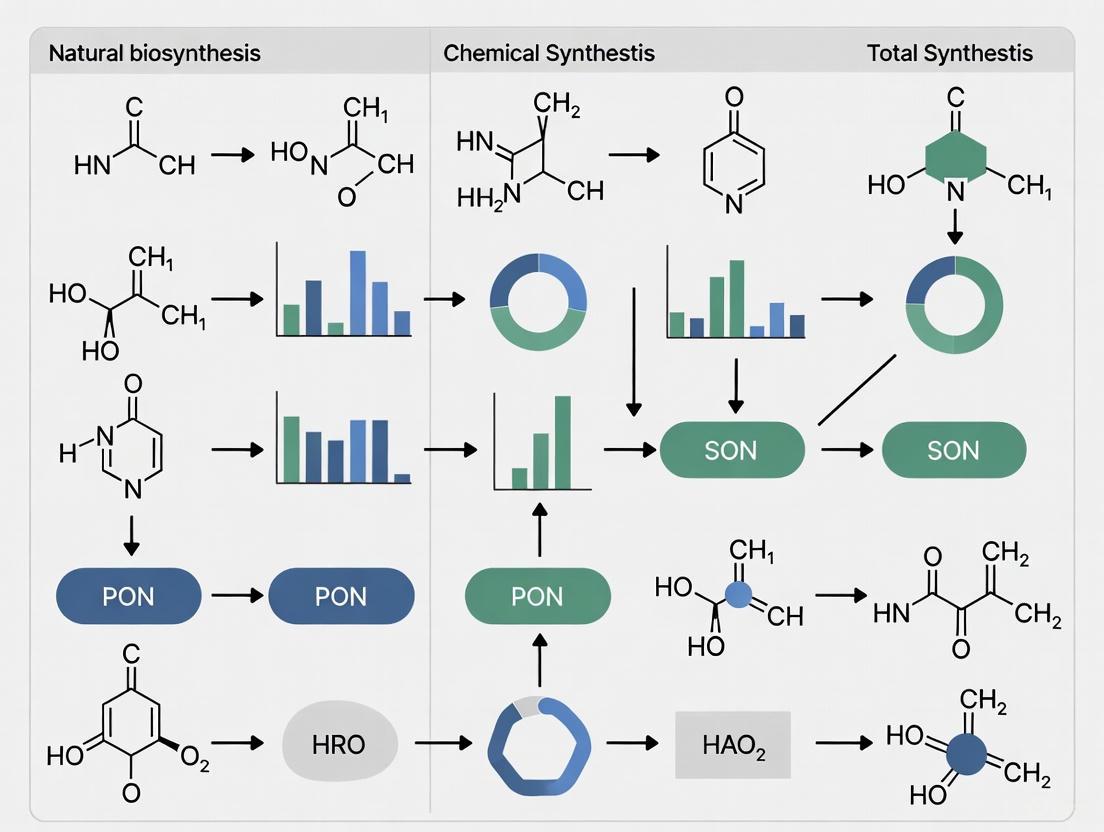
This article explores the parallel and increasingly convergent strategies employed by nature and synthetic chemists in the total synthesis of complex molecules.
Divergent Pathways: Unlocking Nature's Biosynthetic Strategies for Modern Drug Synthesis
Abstract
This article explores the parallel and increasingly convergent strategies employed by nature and synthetic chemists in the total synthesis of complex molecules. It delves into the foundational logic of biosynthetic pathways, characterized by divergent routes from simple building blocks, versus the convergent approaches common in laboratory synthesis. The review highlights cutting-edge methodological integrations, such as hybrid enzymatic-synthetic plans and computational synthesis planning, which overcome limitations inherent to each approach. Through comparative analysis of terpene, polyketide, and pharmaceutical case studies, we evaluate the efficiency, selectivity, and sustainability of these strategies. Aimed at researchers and drug development professionals, this analysis provides a framework for optimizing synthesis routes by leveraging the unique strengths of both biological and chemical catalysis, ultimately pointing toward a more integrated future for molecular construction.
Core Principles: Deconstructing Nature's Divergent Logic versus Chemical Convergent Synthesis
In the realm of total synthesis, a fundamental dichotomy exists between the strategies employed by synthetic chemists and those evolved by nature. While chemists often devise convergent routes with numerous intermediate scaffolds en route to a single product, nature typically operates with divergent pathways that transform a core set of simple building blocks into astonishing structural diversity [1]. This comparative guide examines nature's biosynthetic logic through three foundational precursor classes: acetate (and its activated form, malonyl-CoA), amino acids, and terpene precursors (isopentenyl diphosphate and dimethylallyl diphosphate). Understanding these pathways provides crucial insights for drug development professionals seeking to harness or mimic nature's efficiency in producing complex molecular architectures.
The strategic difference is profound: synthetic chemists frequently create complex routes to navigate around regio- and stereoselectivity challenges, while nature employs enzyme-mediated catalysis to achieve precise control with remarkable efficiency [1]. For instance, a single terpene synthase enzyme can catalyze multiple ring closures, hydride and methyl migrations, and proton abstractions in one active site—transformations that would require numerous steps in a laboratory synthesis [1]. This guide objectively compares the performance of natural biosynthetic strategies against chemical synthetic approaches, providing experimental data and methodologies that highlight both the advantages and limitations of each paradigm.
The Acetate Pathway: Platform for Polyketide Diversity
Natural Biosynthetic Strategy
The acetate pathway, also known as the polyketide pathway, begins with acetyl-CoA and involves the stepwise condensation of two-carbon units, typically derived from malonyl-CoA, to form increasingly longer carbon chains [2]. In nature, this pathway operates at the interface of central metabolism and specialized metabolite synthesis, playing a crucial role in producing both primary metabolites (fatty acids) and secondary metabolites (polyketides) [2] [3]. The fundamental distinction between fatty acid and polyketide biosynthesis lies in the processing of the carbon chain: in fatty acid synthesis, chains are fully reduced after each elongation step, while in polyketide synthesis, the reduction steps may be partially or completely omitted, leading to a diverse array of complex natural products [2].
The pathway's importance extends beyond polyketides, as it also supports flavonoid biosynthesis by providing malonyl-CoA moieties for the C2 elongation reaction catalyzed by chalcone synthase [3]. Research in Arabidopsis thaliana has identified four key enzymes involved in mobilizing carbon resources toward flavonoid biosynthesis: ketoacyl-CoA thiolase (KAT5), enoyl-CoA hydratase (ECH), hydroxyacyl-CoA dehydrogenase (HCD), and acetyl-CoA carboxylase (ACC) [3]. These enzymes form a coordinated system that converts acyl-CoA to malonyl-CoA via acetyl-CoA, demonstrating how primary metabolic resources are directed toward specialized metabolism.
Table 1: Key Enzymes in the Acetate Pathway for Flavonoid Biosynthesis
| Enzyme | Gene ID (Arabidopsis) | Function in Acetate Pathway |
|---|---|---|
| KAT5 | At1g04750 | Catalyzes breakdown of 3-ketoacyl-CoA to produce acetyl-CoA |
| ECH | At1g06550 | Hydrates enoyl-CoA to 3-hydroxyacyl-CoA |
| HCD | At1g65560 | Dehydrogenates 3-hydroxyacyl-CoA to 3-ketoacyl-CoA |
| ACC | At1g36160 | Carboxylates acetyl-CoA to form malonyl-CoA |
Chemical Synthesis Approaches
Unlike nature's building-block approach, chemical synthesis of acetate-derived natural products often employs convergent strategies with numerous intermediate scaffolds. For instance, synthetic routes to staurosporinone demonstrate over ten different synthetic pathways converging to a single product [1]. This approach provides flexibility but typically requires extensive protection/deprotection strategies and generates more waste than enzymatic biosynthesis.
Chemical synthesis excels in creating analog structures not found in nature, which is valuable for drug development when natural compounds have undesirable properties. However, these synthetic approaches often struggle with the stereochemical complexity present in many polyketide natural products, particularly those with multiple chiral centers that are precisely set by enzymatic biosynthesis.
Experimental Protocol: Tracing the Acetate Pathway
Objective: To demonstrate the operation of the acetate pathway in a biological system and identify its products.
Methodology:
- Isotopic Labeling: Introduce (^{13}\text{C})-labeled acetate or malonate to the biological system (cell culture, tissue explants, or enzyme preparation)
- Metabolite Extraction: After incubation, extract metabolites using solvent systems such as methanol/water (1:1, v/v), ethyl acetate, and dichloromethane/methanol (1:1, v/v) at 10:1 (v/w) solvent-to-biomass ratio [4]
- Clean-up Procedure: Purify extracts using SPE Columns C18
- Metabolite Analysis: Analyze using LC-MS/MS to detect (^{13}\text{C}) incorporation patterns
- Data Interpretation: Identify labeled products and determine carbon backbone organization based on labeling patterns
Key Measurements: Incorporation rates of labeled precursors, identification of labeled products, quantification of pathway flux under different conditions.
Terpene Biosynthesis: Nature's Architectural Mastery
Natural Biosynthetic Strategy
Terpenoid biosynthesis represents one of nature's most versatile assembly lines, constructing over 80,000 known structures from two simple C5 building blocks: isopentenyl diphosphate (IPP) and dimethylallyl diphosphate (DMAPP) [4] [5]. These precursors are synthesized through two distinct pathways: the mevalonate (MVA) pathway in the cytoplasm and endoplasmic reticulum, and the methylerythritol phosphate (MEP) pathway in plastids [6]. The MVA pathway consumes three acetyl-CoA molecules, three ATP equivalents, and two NADPH molecules to yield each IPP molecule, with HMG-CoA reductase catalyzing a key rate-limiting step [6].
The architectural diversity of terpenoids emerges through the action of prenyltransferases, which catalyze "head-to-tail" condensation of DMAPP and IPP to form linear precursors including geranyl diphosphate (GPP, C10), farnesyl diphosphate (FPP, C15), and geranylgeranyl diphosphate (GGPP, C20) [5] [6]. Terpene synthases then convert these linear precursors to cyclic or acyclic skeletons through carbocation-mediated reactions that may include ring closures, hydride shifts, methyl migrations, and proton abstractions [1] [5]. A remarkable example is tobacco 5-epi-aristolochene synthase (TEAS), which converts farnesyl diphosphate to 5-epi-aristolochene in a single enzymatic step with a (k{cat}/KM) of 0.3 µM(^{-1}) min(^{-1}) [1].
Table 2: Terpene Skeleton Diversity from Common Precursors
| Precursor | Carbon Atoms | Terpene Class | Representative Enzymes | Example Products |
|---|---|---|---|---|
| DMAPP | C5 | Hemiterpenes | Isoprene synthase | Isoprene |
| GPP | C10 | Monoterpenes | Limonene synthase | Limonene, pinene |
| FPP | C15 | Sesquiterpenes | 5-Epi-aristolochene synthase | Artemisinin, capsidiol |
| GGPP | C20 | Diterpenes | Taxadiene synthase | Taxadiene, casbene |
| (FPP)₂ | C30 | Triterpenes | Squalene synthase | Squalene, sterols |
| (GGPP)₂ | C40 | Tetraterpenes | Phytoene synthase | Carotenoids |
Chemical Synthesis Approaches
Chemical synthesis of terpenoids faces significant challenges due to their chemical complexity, numerous stereocenters, and limited stability to temperature, light, oxygen, or acidic conditions [5]. Unlike nature's single-enzyme transformations, chemical syntheses often employ semisynthetic strategies from more abundant natural products. For example, (+)-5-epi-aristolochene has been prepared semisynthetically from capsidiol, which is available from pepper fruits in high quantities—notably in reverse order to the biosynthetic pathway where capsidiol is derived from 5-epi-aristolochene [1].
Similarly, the semisynthesis of (-)-premnaspirodiene utilized santonin as starting material in a ring-contracting rearrangement reaction similar to the biosynthetic transformation [1]. These approaches highlight how chemists often deconstruct terpene natural products further along the biosynthetic pathway rather than building them from simple precursors as nature does.
Experimental Protocol: Terpene Synthase Characterization
Objective: To characterize the catalytic activity and product profile of a terpene synthase enzyme.
Methodology:
- Enzyme Preparation: Express terpene synthase gene heterologously in E. coli or yeast and purify using affinity chromatography
- Activity Assay: Incubate purified enzyme with appropriate prenyl diphosphate substrate (GPP, FPP, or GGPP) in assay buffer containing Mg(^{2+}) or Mn(^{2+}) cofactors
- Product Extraction: Extract terpene products with pentane or hexane
- Product Analysis: Analyze products using GC-MS with appropriate chiral columns to resolve stereoisomers
- Kinetic Characterization: Determine (KM) and (k{cat}) values using varying substrate concentrations
Key Measurements: Product identification and quantification, stereochemical configuration of products, catalytic efficiency, side product profile.
Amino Acid-Derived Pathways: Nitrogen-Containing Natural Products
Natural Biosynthetic Strategy
While search results provide limited specific details about amino acid-derived natural products, they confirm that amino acids serve as foundational building blocks for numerous specialized metabolites, particularly through the nonribosomal peptide synthetase (NRPS) pathway [1]. Nature employs amino acids as precursors for alkaloids, pigments, antibiotics, and other nitrogen-containing compounds. The shikimate pathway also converts simple carbohydrates to aromatic amino acids, which then serve as precursors for numerous phenolic compounds [3].
The biosynthetic logic parallels terpene and polyketide pathways: nature uses a core set of proteinogenic and non-proteinogenic amino acids that are transformed through enzyme-mediated reactions including decarboxylation, hydroxylation, methylation, and oxidative coupling. These transformations create immense structural diversity while maintaining stereochemical control that is challenging to achieve through laboratory synthesis.
Chemical Synthesis Approaches
Chemical synthesis of amino acid-derived natural products often employs protection strategies for amine and carboxylic acid functionalities, with step-by-step assembly that contrasts with nature's simultaneous activation and coupling in NRPS systems. Solid-phase peptide synthesis has revolutionized the field, but still struggles with complex cyclic structures and non-proteinogenic amino acids that are easily incorporated by enzymatic systems.
Comparative Analysis: Efficiency and Strategic Logic
Building Block Economy
Nature's approach demonstrates superior atom economy by using simple, metabolically accessible building blocks. The terpene pathway is particularly exemplary, creating over 80,000 known structures from just two C5 precursors [5]. Similarly, the acetate pathway constructs both structural lipids and complex polyketides from the same two-carbon unit. This building block economy contrasts with synthetic approaches that often require functionalized starting materials with poor atom economy.
Stereochemical Control
Natural biosynthetic pathways achieve perfect stereochemical control through enzyme-mediated transformations, while chemical synthesis requires carefully designed stereoselective reactions that may require multiple steps and protecting groups. For example, terpene synthases precisely control the stereochemistry of multiple chiral centers in a single enzymatic step [1] [5], whereas chemical synthesis might require separate steps to establish each stereocenter.
Convergent vs. Divergent Strategies
A fundamental strategic difference emerges: chemical synthesis favors convergent approaches where multiple fragments are prepared separately and combined late in the synthesis, while nature employs divergent pathways where a core set of precursors gives rise to multiple products [1]. The convergent approach provides flexibility but generates more synthetic intermediates, while nature's divergent approach maximizes efficiency but with less flexibility in product outcomes.
Table 3: Performance Comparison of Biosynthetic vs. Chemical Synthesis
| Parameter | Biosynthetic Approach | Chemical Synthesis |
|---|---|---|
| Starting Material Complexity | Simple building blocks (acetyl-CoA, IPP, amino acids) | Often complex, pre-functionalized intermediates |
| Stereochemical Control | Perfect control through enzymatic catalysis | Requires designed stereoselective reactions |
| Step Economy | High (e.g., 10+ transformations in one active site) | Lower (multiple separate steps) |
| Structural Diversity Generation | Divergent pathways from core precursors | Convergent routes to specific targets |
| Environmental Impact | Aqueous conditions, biodegradable catalysts | Often organic solvents, metal catalysts |
| Structural Analog Production | Limited by enzyme specificity | Unlimited potential with appropriate route design |
The Scientist's Toolkit: Essential Research Reagents and Methodologies
Table 4: Key Research Reagents for Biosynthetic Studies
| Reagent/Method | Function | Application Examples |
|---|---|---|
| Labeled Precursors ((^{13}\text{C}), (^{14}\text{C}), (^{2}\text{H})) | Metabolic tracing | Pathway elucidation, flux measurements |
| Heterologous Expression Systems (E. coli, yeast) | Enzyme production | Terpene synthase characterization, pathway reconstitution |
| GC-MS with Chiral Columns | Stereochemical analysis | Terpene product profiling, enantiomeric purity |
| LC-MS/MS Systems | Metabolite identification and quantification | Polyketide profiling, pathway intermediate detection |
| Gene Silencing Tools (RNAi, CRISPR-Cas9) | Functional gene characterization | Validation of enzyme functions in pathways |
| Isotopic Labeling Analysis (NMR, MS) | Atomic-level tracking | Biosynthetic mechanism elucidation |
The comparative analysis of biosynthetic building blocks reveals nature's elegant efficiency in constructing complex molecular architectures. For drug development professionals, understanding these pathways provides crucial insights for sourcing complex natural products and designing synthetic approaches that balance efficiency with flexibility. While nature's strategies offer unparalleled efficiency for producing specific scaffolds, chemical synthesis provides access to analogs not accessible through biosynthesis.
Future directions point toward hybrid approaches that combine the efficiency of enzymatic transformations with the flexibility of chemical synthesis. Advances in metabolic engineering and synthetic biology now enable reconstruction of biosynthetic pathways in heterologous hosts, potentially providing sustainable production routes for valuable terpene and polyketide pharmaceuticals [5]. Similarly, enzyme engineering creates opportunities to expand nature's catalytic repertoire while maintaining the efficiency of biological catalysis. For drug development professionals, leveraging both biological and chemical synthetic strategies will be essential for addressing the increasing demand for complex natural product-based therapeutics.
In the challenging field of complex molecule construction, convergent synthesis represents a strategically superior approach compared to traditional linear methods. This paradigm involves synthesizing individual pieces of a complex molecule separately before combining them to form the final product, offering significant advantages in overall efficiency and yield [7]. The fundamental strength of this approach lies in its mitigation of the yield reduction inherent in multi-step syntheses—where overall yield drops precipitously with each additional step in a linear sequence [7]. This strategy has profound implications across chemical disciplines, from natural product synthesis and drug discovery to materials science, and presents fascinating parallels and divergences when compared to nature's biosynthetic machinery.
The core mathematical advantage can be illustrated through a simple yield comparison: in a linear synthesis with four steps each proceeding at 50% yield, the overall yield diminishes to a mere 6.25%. In contrast, a convergent approach where two fragments are synthesized in two steps each (both at 50% yield per step) and then coupled (also at 50% yield) maintains an overall yield of 12.5%—a dramatic improvement [7]. This efficiency paradigm makes convergent synthesis particularly valuable for constructing complex, symmetric molecules where multiple identical segments can be synthesized independently and combined [7].
Nature versus The Chemist: Divergent Strategies in Total Synthesis
Nature's Divergent Biosynthetic Logic
Nature employs a fundamentally different strategic approach in building complex molecules. Biological systems often utilize divergent pathways from a core set of simple building blocks to generate astonishing structural diversity [1]. For example, in monoterpene biosynthesis, a single precursor molecule is transformed into a wide array of distinct natural products including (−)-(4S)-limonene, 3-carene, α-thujene, (−)-endo-fenchol, (−)-β-pinene, and 1,8-cineole through organism-specific enzymatic processing [1]. This biosynthetic logic prioritizes the generation of chemical diversity from common precursors using highly specialized enzymes that can dramatically alter molecular architecture through complex transformations.
The enzymatic machinery in nature often accomplishes multiple complex transformations in single reaction vessels. For instance, tobacco 5-epi-aristolochene synthase (TEAS) converts farnesyl diphosphate to (+)-5-epi-aristolochene through a remarkably coordinated process involving two ring closures, a hydride shift, a methyl migration, and a proton abstraction to form a double bond—all within a single enzymatic active site [1]. This biosynthetic efficiency highlights nature's ability to orchestrate numerous chemical events in tandem, a stark contrast to the stepwise laboratory synthesis typically employed by chemists.
The Chemist's Convergent Approach
Synthetic chemists have developed convergent strategies as a response to the practical constraints of laboratory synthesis. Where nature can employ intricate enzymatic systems to perform multiple transformations simultaneously, chemists must often break down complex targets into more manageable fragments that can be synthesized separately and then combined [7]. This approach allows for more efficient optimization of individual synthetic sequences and circumvents the dramatic yield reduction inherent in lengthy linear syntheses.
Recent advances in computer-aided synthesis planning have further optimized this convergent paradigm. Modern computational tools can now identify potential shared synthetic pathways between multiple target molecules, maximizing convergence into shared key intermediates [8]. Analysis of pharmaceutical industry data reveals that over 70% of all reactions in electronic laboratory notebooks are involved in convergent synthesis pathways, covering over 80% of all projects [8], demonstrating the pervasive adoption of this strategy in practical drug discovery.
Table 1: Comparison of Natural Biosynthesis and Laboratory Synthesis Approaches
| Feature | Natural Biosynthesis | Laboratory Convergent Synthesis |
|---|---|---|
| Strategy | Divergent from common precursors | Convergent from separate fragments |
| Catalysis | Enzyme-mediated | Chemical reagent-mediated |
| Efficiency | High within specialized systems | Improved over linear approaches |
| Scalability | Biological constraints | Engineering considerations |
| Diversity Generation | High from common intermediates | Targeted toward specific molecules |
Quantitative Advantages: Yield and Efficiency Comparisons
The mathematical superiority of convergent synthesis becomes evident when examining yield calculations across multi-step synthetic sequences. The compounding nature of fractional yields in linear syntheses creates an inevitable efficiency bottleneck that convergent strategies directly address.
Table 2: Yield Comparison Between Linear and Convergent Synthesis Approaches
| Synthetic Strategy | Reaction Sequence | Individual Step Yield | Overall Yield |
|---|---|---|---|
| Linear Synthesis | A → B → C → D | 80% per step | 51.2% |
| Linear Synthesis | A → B → C → D | 50% per step | 12.5% |
| Convergent Synthesis | A → B (2 steps); C → D (2 steps); B + D → E | 80% per step | 64.0% |
| Convergent Synthesis | A → B (2 steps); C → D (2 steps); B + D → E | 50% per step | 25.0% |
The tabulated data clearly demonstrates that the yield advantage of convergent synthesis becomes increasingly pronounced as both the number of steps and the individual step yields decrease. This mathematical reality makes convergent approaches particularly valuable for constructing complex molecular architectures requiring numerous synthetic steps, where even optimized reactions may proceed in modest yields due to the structural complexity involved.
Beyond simple yield calculations, convergent synthesis offers practical advantages in intermediate characterization and purification. Complex fragments can be fully characterized and purified before the final coupling steps, ensuring structural integrity and reducing the accumulation of impurities that can occur throughout lengthy linear sequences. This modularity also enables parallelization of synthetic efforts, where different research teams or facilities can focus on optimizing separate fragments before their ultimate combination [9].
Experimental Protocols and Methodologies
Convergent Synthesis in Dendrimer Construction
Dendrimers represent a classic application of convergent synthesis principles, where highly branched, monodisperse macromolecules are constructed through controlled iterative processes. The convergent approach to dendrimer synthesis begins from the periphery and progresses inward toward a reactive core, contrasting with the divergent approach that starts from a central core and extends outward [10].
The experimental protocol for convergent dendrimer synthesis typically involves:
- Separate synthesis of dendritic wedges or fragments with precise control over generation growth
- Activation of the focal point of these wedges for subsequent coupling reactions
- Final coupling of multiple dendritic wedges to a polyfunctional core molecule
- Purification and characterization at each stage to ensure structural fidelity
This approach offers significant advantages for dendrimer synthesis, including reduced structural defects, easier purification of intermediate fragments, and better control over surface functionality. Poly(ether-imide) dendrimers are typically synthesized using this convergent methodology, while other classes like PAMAM and PPI dendrimers are more commonly prepared through divergent approaches [10].
Convergent Strategies in Natural Product Synthesis
The total synthesis of complex natural products represents one of the most demanding applications of convergent synthesis. A representative example can be found in the synthesis of biyouyanagin A, where a photochemical [2+2] cycloaddition serves as the final convergent step to unite two complex fragments [7]. This strategic bond disconnection allows for the independent construction of the two molecular hemispheres before their final union.
Experimental protocols for such convergent natural product syntheses typically involve:
- Retrosynthetic analysis to identify optimal fragment disconnect sites
- Independent optimization of synthetic sequences for each fragment
- Development of coupling conditions compatible with the functional groups present in both fragments
- Final elaboration to the complete natural product structure after fragment union
This approach has been successfully applied to the synthesis of numerous complex natural products, including staurosporinone, for which over ten different synthetic routes have been developed that converge to the single final product [1].
Convergent Synthesis of Functional Materials
The convergent paradigm extends beyond natural product synthesis to functional material development. A representative example includes the creation of conductive liquid metal hydrogels with self-healing properties through convergent synthesis of complex polymer networks [9]. The experimental workflow involves:
Individual synthesis of four specialized precursors in one to two reaction steps each:
- Tannic acid-coated liquid metal nanodroplets (PLM-TA)
- Catechol-functionalized chitosan (PCHI-C)
- Cholesteryl and aldehyde-modified dextran (PDex-ALD-CH)
- PEDOT:Hep (Pcp) conductive polymer
Comprehensive characterization of each precursor before assembly
Convergent assembly through mixing of all components to form dynamic electroconductive biopolymer/liquid metal hybrid hydrogels (DECPLMH)
This convergent strategy allows for the incorporation of materials with vastly different natures into a single functional matrix, combining polysaccharides, conductive biopolymers, and liquid metal nanodroplets [9]. The resulting materials exhibit enhanced adhesiveness, electroconductivity, injectability, and compatibility with 3D printing and in vivo applications.
Diagram 1: Convergent Synthesis Workflow
The Scientist's Toolkit: Research Reagent Solutions
Successful implementation of convergent synthesis strategies requires specialized reagents and building blocks designed for efficient fragment coupling and compatibility with diverse functional groups.
Table 3: Essential Reagents for Convergent Synthesis Methodologies
| Reagent/Building Block | Function in Convergent Synthesis | Application Examples |
|---|---|---|
| Tannic Acid-Coated Liquid Metal Nanodroplets | Functional filler providing conductivity and self-healing properties | Conductive hydrogel formation [9] |
| Catechol-Functionalized Chitosan | Adhesive polymer backbone with catechol groups for cross-linking | Bioadhesive materials [9] |
| Aldehyde-Modified Dextran | Polysaccharide precursor providing aldehyde groups for Schiff base formation | Reversible polymer networks [9] |
| PEDOT:Hep Conductive Polymer | Electroconductive component for signal transmission | Bioelectronic interfaces [9] |
| Dendritic Wedges with Focal Point Reactivity | Pre-assembled branched fragments for dendrimer synthesis | Dendrimer construction [10] |
| Photocycloaddition Capable Partners | Fragments designed for [2+2] or higher-order cycloadditions | Natural product synthesis [7] |
Computational Approaches to Convergent Route Planning
Modern computer-aided synthesis planning (CASP) has revolutionized the identification and optimization of convergent synthetic routes. Advanced algorithms can now navigate chemical space to identify optimal disconnect points and potential shared intermediates across multiple target molecules [8]. These systems employ graph-based processing pipelines to extract convergent routes from reaction databases, identifying complex synthetic pathways where multiple target molecules share common intermediates.
The computational workflow for convergent synthesis planning typically involves:
- Reaction network construction from known synthetic transformations
- Identification of shared intermediates across multiple target molecules
- Retrosynthetic analysis using state-of-the-art machine learning models
- Route optimization based on yield, step count, and convergence metrics
Analysis of pharmaceutical industry data reveals that computational approaches can identify convergent routes for over 80% of test cases, with individual compound solvability exceeding 90% [8]. This computational capability enables the simultaneous planning of synthetic routes for hundreds of molecules, identifying shared convergent pathways that would be difficult to recognize through manual analysis alone.
Diagram 2: Computational Route Planning
The convergent synthesis paradigm represents a fundamental strategic advantage in complex molecule construction, enabling improved efficiency, yield, and modularity compared to traditional linear approaches. While nature employs divergent biosynthetic strategies to generate chemical diversity from common precursors, synthetic chemists have developed convergent methodologies to overcome the practical limitations of laboratory synthesis. The integration of computational planning tools with experimental execution has further enhanced our ability to identify and implement optimal convergent routes to complex targets.
As synthetic challenges continue to grow in complexity, from functional materials to pharmaceutical targets, the principles of convergent synthesis will remain essential for achieving practical synthetic outcomes. The ongoing development of new coupling methodologies, protective group strategies, and computational planning algorithms will further expand the scope and efficiency of this powerful synthetic paradigm, enabling the construction of increasingly complex molecular architectures through the strategic assembly of simpler fragments.
Terpenoids constitute the largest family of natural products, with over 95,000 known compounds exhibiting impressive biological activities, including anticancer, antimalarial, and antifungal properties. [11] The biosynthesis of these complex molecules begins with simple C5 isoprenoid building blocks—isopentenyl diphosphate (IPP) and dimethylallyl diphosphate (DMAPP)—which are assembled into linear prenyl diphosphates such as farnesyl diphosphate (FPP, C15). [11] At the heart of terpenoid structural diversity are terpene cyclases (TCs), enzymes that catalyze the conversion of acyclic precursors into an astonishing array of cyclic skeletons. [11] [12] This case study examines how nature employs a divergent synthetic strategy, using a common FPP intermediate to generate structurally distinct terpene skeletons through the action of different terpene cyclases, and contrasts this approach with the convergent strategies typically employed by synthetic chemists.
In nature, a single precursor molecule can be converted to a huge variety of known terpenes in different organisms. [1] This divergent biosynthetic strategy stands in stark contrast to traditional organic synthesis, where routes to natural products are often characterized by convergent approaches: numerous intermediate scaffolds can be en route to a single product. [1] The comparison between these strategies reveals fundamental differences in synthetic logic, with nature optimizing for diversification from common intermediates, while chemists often focus on converging multiple pathways toward a single target.
Terpene Cyclase Classification and Reaction Mechanisms
Terpene cyclases are categorized into two classes based on their reaction mechanisms and structural features: [11] [13]
Table: Classification of Terpene Cyclases
| Feature | Class I Terpene Cyclases | Class II Terpene Cyclases |
|---|---|---|
| Initiation Mechanism | Metal-dependent ionization of diphosphate ester | Protonation of C=C double bond or epoxide |
| Characteristic Motifs | DDXXD and NSE/DTE motifs | DXDD motif |
| Metal Cofactors | Mg²⁺ or Mn²⁺ (trinuclear cluster) | Not typically metal-dependent for initiation |
| Structural Domains | Catalytic α-domain (class I activity) | Functional β and γ domains (class II activity) |
| Primary Function | Chain elongation (prenyltransferases) and cyclization | Cyclization exclusively |
Class I TCs initiate cyclization by metal-dependent ionization of the diphosphate ester, generating an allylic carbocation. [13] This mechanism is shared by both cyclases and the prenyltransferases that create the linear precursors. In contrast, canonical class II TCs initiate cyclization by protonating a double bond or epoxide of the substrate, leaving any present diphosphate group intact. [11] Class II TCs can also act on terpene moieties previously appended onto non-terpenoids, known as meroterpenoid cyclases (MTCs). [11]
The ensuing cyclization pathways involve complex sequences of carbocation rearrangements—including hydride shifts, methyl shifts, and ring expansions—before termination through deprotonation or nucleophile capture. [11] [12] The terpene cyclases guide these reactive intermediates through specific three-dimensional trajectories within protective active site pockets, enabling the formation of distinct stereochemical outcomes from identical substrates. [12]
Figure 1. Divergent cyclization pathways from FPP. The common FPP intermediate can be converted to various sesquiterpenes through different carbocationic routes.
Experimental Analysis of Terpene Cyclization Pathways
Product Analysis via Gas Chromatography-Mass Spectrometry (GC-MS)
GC-MS analysis serves as the primary method for identifying and quantifying terpene cyclase products. [14] [13] The experimental protocol typically involves:
- Enzyme incubation: Purified terpene cyclase is incubated with substrate (FPP or analogs) in appropriate buffer with essential cofactors (e.g., Mg²⁺ for class I TCs). [14]
- Product extraction: Hydrophobic terpene products are extracted using organic solvents such as tert-butyl methyl ether (TBME). [15]
- Chromatographic separation: Compounds are separated using a non-polar GC column (e.g., DB-5) with temperature gradient programming. [15] [14]
- Mass spectrometric detection: Electron impact ionization generates characteristic fragmentation patterns for compound identification. [14] [13]
This methodology enables researchers to determine the product profile of a terpene cyclase, including major and minor products, which reflects the enzyme's catalytic precision and potential reaction mechanisms.
Steady-State Kinetic Analysis
The catalytic efficiency (kcat/KM) of terpene cyclases is determined through steady-state kinetic assays. [13] For terpene cyclases that generate multiple products, the relative ratios of these products should be comparable to the ratio of kcat/KM values when two cyclases compete for the same substrate. [13] A coupled enzyme fluorescence assay has been developed using the EnzChek Pyrophosphate Assay Kit, which couples pyrophosphate release to a fluorescent signal, enabling continuous monitoring of terpene cyclase activity. [13]
Isotopic Labeling Studies
Mechanistic insights into terpene cyclization pathways are obtained through isotopic labeling experiments. [14] For example, incubation of δ-cadinene synthase with (1RS)-1-²H-FPP resulted in exclusive formation of [5-²H] and [11-²H] δ-cadinene, revealing specific hydride shifts during the cyclization cascade. [14] Similarly, studies with (3RS)-[4,4,13,13,13-²H₅]-nerolidyl diphosphate demonstrated that the (3R)-enantiomer is the active cyclization intermediate. [14]
Table: Product Distribution from δ-Cadinene Synthase with Different Substrates
| Substrate | Products | Percentage | Labeling Pattern in Products |
|---|---|---|---|
| (1RS)-1-²H-FPP | δ-Cadinene | >98% | [5-²H] and [11-²H] δ-Cadinene |
| (3RS)-[4,4,13,13,13-²H₅]-NDP | δ-Cadinene | 62.1% | [8,8,15,15,15-²H₅] δ-Cadinene |
| α-Bisabolol | 15.8% | [6,6,15,15,15-²H₅] α-Bisabolol | |
| β-Bisabolene | 8.1% | [6,6,15,15,15-²H₅] β-Bisabolene | |
| (E)-β-Farnesene | 9.8% | [4,4,13,13-²H₄] (E)-β-Farnesene |
Case Studies: Divergent Cyclization from FPP
TEAS and HPS: Minimal Structural Changes, Dramatic Functional Consequences
The comparison between tobacco 5-epi-aristolochene synthase (TEAS) and henbane premnaspirodiene synthase (HPS) provides a striking example of divergent evolution in terpene cyclases. These enzymes share 75% amino acid identity yet produce dramatically different terpene skeletons from the common FPP substrate. [1]
TEAS converts FPP to 5-epi-aristolochene through a mechanism involving two ring closures, a hydride and a methyl migration, and a proton abstraction. [1] In contrast, HPS catalyzes two ring closures, a methylene shift, and abstraction of a distinct proton to form premnaspirodiene, a spirovetivane with three stereocenters. [1] The divergence occurs after formation of a common bicyclic intermediate, where TEAS initiates a 1,2-methyl shift while HPS triggers a 1,2-shift of the cycloalkyl substituent. [1]
Structural analysis revealed that only nine amino acid substitutions are responsible for this functional divergence. [1] Systematic evaluation of 418 mutant combinations demonstrated that single amino acid mutations do not necessarily cause predictable changes in enzyme activity, revealing a complex catalytic landscape for terpene cyclase function. [1]
δ-Cadinene Synthase: Multiple Products from Alternative Substrates
δ-Cadinene synthase from cotton provides another compelling case of divergent cyclization. This enzyme cyclizes (E,E)-FDP to a single product, δ-cadinene, with >98% fidelity. [14] However, when provided with the potential intermediate (3RS)-nerolidyl diphosphate, the enzyme produces multiple sesquiterpenes including δ-cadinene (62.1%), α-bisabolol (15.8%), β-bisabolene (8.1%), and (E)-β-farnesene (9.8%). [14]
Competitive studies demonstrated that the (3R)-nerolidyl diphosphate enantiomer is the active intermediate that cyclizes to δ-cadinene. [14] The kcat/KM values show that the synthase uses (E,E)-FDP as effectively as (3R)-nerolidyl diphosphate in the formation of δ-cadinene, suggesting a direct cyclization mechanism without a free nerolidyl intermediate. [14]
The Scientist's Toolkit: Essential Research Reagents and Methods
Table: Key Research Reagents and Methods for Terpene Cyclase Studies
| Reagent/Method | Function/Application | Experimental Notes |
|---|---|---|
| Farnesyl Diphosphate (FPP) | Primary substrate for sesquiterpene cyclases | Commercially available or synthesized enzymatically |
| Isotopically Labeled FPP Analogs | Mechanistic studies of cyclization pathways | e.g., (1RS)-1-²H-FPP for tracking hydride shifts |
| Mg²⁺ or Mn²⁺ ions | Cofactors for class I terpene cyclases | Typically used at 10 mM concentration in assays |
| EnzChek Pyrophosphate Assay Kit | Coupled enzyme assay for continuous monitoring | Measures pyrophosphate release fluorometrically |
| GC-MS System | Product identification and quantification | DB-5 capillary column standard for terpene separation |
| His-tagged Enzyme Constructs | Protein purification for biochemical studies | pET28a(+) vector commonly used for bacterial expression |
Implications for Drug Discovery and Synthesis
The divergent strategies employed by nature in terpene biosynthesis offer valuable lessons for drug discovery and development. Understanding how minimal structural changes in enzyme active sites can redirect synthetic pathways provides inspiration for biomimetic catalyst design. [1] The terpene cyclase family demonstrates how nature generates structural diversity from minimal building blocks, a principle that can be applied to create diverse compound libraries for pharmaceutical screening.
Furthermore, the study of terpene cyclases has significant implications for enzyme engineering efforts. The modular domain architecture of terpene cyclases, along with the identification of key active site residues that control product specificity, enables the rational design of novel catalysts for the production of desired terpenoid compounds. [11] [1] As structural and mechanistic understanding of terpene cyclases deepens, the potential for engineering these enzymes to create non-natural terpenoid skeletons with tailored pharmaceutical properties continues to grow.
Figure 2. Comparison of natural biosynthetic and chemical synthetic strategies. Nature employs divergent approaches from common intermediates, while chemists typically use convergent routes to single targets.
This case study illustrates the fundamental synthetic logic underlying nature's approach to terpenoid diversity: divergent pathways from common intermediates controlled by specialized terpene cyclases. Through minimal alterations in active site architecture, nature redirects the reactive carbocationic intermediates derived from FPP down distinct cyclization pathways to generate structural diversity. This stands in contrast to the convergent strategies typically employed in laboratory synthesis, where multiple pathways are developed to reach a single target compound.
The study of terpene cyclases not only reveals nature's synthetic strategies but also provides powerful tools for biocatalytic applications. As our understanding of terpene cyclase structures and mechanisms deepens, the potential to harness these enzymes for sustainable production of valuable terpenoid natural products and pharmaceutical precursors continues to expand, bridging the gap between nature's synthetic prowess and human chemical ingenuity.
In the quest to synthesize complex natural products, chemists and nature employ fundamentally different, yet often complementary, strategies. Nature's approach, honed over billions of years of evolution, relies on template-driven enzymatic assembly—a highly efficient, pre-programmed process utilizing mega-enzymes like polyketide synthases (PKSs) and non-ribosomal peptide synthetases (NRPSs) [16]. These enzymatic assembly lines select and combine building blocks through a series of condensation reactions, often followed by tailored modifications, to produce structurally complex molecules with exquisite stereocontrol. In stark contrast, the synthetic chemist's toolkit is dominated by a logic of stepwise functional group manipulation and strategic bond disconnections, where reactions like electrophilic attacks and rearrangements are deployed to build molecular complexity iteratively [17] [18].
This article objectively compares these paradigms, focusing on the roles of electrophilic substitution and sigmatropic rearrangements as core mechanisms for C-C and C-X bond formation. We present experimental data and protocols to evaluate the efficiency, stereoselectivity, and applicability of these methods in constructing architecturally complex natural products, providing a comparative guide for researchers in drug development and synthetic science.
Core Mechanism 1: Electrophilic Attacks
Electrophilic aromatic substitution (EAS) is a cornerstone reaction for functionalizing aromatic systems, a common scaffold in many natural products and pharmaceuticals. The mechanism is a two-step process involving a rate-determining electrophilic attack followed by deprotonation to restore aromaticity [19].
Mechanism and Regioselectivity
The initial attack of an electrophile (E+) on the aromatic ring generates a resonance-stabilized carbocation intermediate (arenium ion). The subsequent deprotonation reforms the aromatic system, resulting in overall substitution [19]. A critical aspect for synthesis is regiocontrol. Existing substituents on the ring powerfully direct the incoming electrophile to specific positions:
- Ortho/Para Directors: Electron-donating groups (e.g., -OH, -NH₂, -alkyl) activate the ring and direct substitution to the ortho and para positions [19].
- Meta Directors: Electron-withdrawing groups (e.g., -NO₂, -COOH, -C≡N) deactivate the ring and direct substitution primarily to the meta position [19].
This directing effect is powerfully illustrated by the nitration of toluene (an ortho/para director) versus nitrobenzene (a meta director), which yield vastly different product distributions [19].
Experimental Protocol: Electrophilic Bromination using N-Bromosuccinimide (NBS)
Title: Regioselective Bromination of Activated Arenes using NBS and a Lewis Acid Catalyst [20]
Principle: N-Halosuccinimides (NXS), such as NBS, are excellent halogenating reagents due to their stability, low cost, and ease of handling. For moderately reactive arenes, a Lewis acid catalyst (e.g., FeCl₃) activates NBS by coordinating to the carbonyl oxygen, enhancing its electrophilicity [20].
Materials:
- Substrate: Activated arene (e.g., anisole, toluene)
- Reagent: N-Bromosuccinimide (NBS)
- Catalyst: Anhydrous Iron(III) Chloride (FeCl₃)
- Solvent: Anhydrous Acetonitrile (MeCN)
- Work-up: Aqueous sodium thiosulfate solution, organic solvent for extraction
Procedure:
- Reaction Setup: Charge an oven-dried round-bottom flask with a magnetic stir bar. Under a nitrogen atmosphere, add the arene substrate (1.0 mmol) and anhydrous MeCN (5 mL).
- Catalyst Addition: Add anhydrous FeCl₃ (0.1 mmol, 10 mol%) to the stirring solution.
- Reagent Addition: Add NBS (1.1 mmol) portion-wise to the reaction mixture at room temperature.
- Monitoring: Stir the reaction at room temperature and monitor by thin-layer chromatography (TLC) until the starting material is consumed.
- Quenching: Quench the reaction by adding a saturated aqueous sodium thiosulfate solution (5 mL).
- Extraction: Transfer the mixture to a separatory funnel and extract with ethyl acetate (3 x 10 mL).
- Isolation: Combine the organic layers, dry over anhydrous magnesium sulfate, filter, and concentrate under reduced pressure.
- Purification: Purify the crude product by flash column chromatography on silica gel.
Performance Comparison of Electrophilic Halogenation Methods
The following table compares different electrophilic halogenation methods for aromatic compounds, highlighting the reagents and conditions used for substrates of varying reactivity.
| Method / Reagent System | Target Reactivity Class | Key Feature | Reported Yield Range |
|---|---|---|---|
| NBS/FeCl₃ in MeCN [20] | Moderately Reactive Arenes | Broad substrate scope, good regioselectivity | Good Yields |
| NBS in BF₃–H₂O [20] | Electron-Deficient Arenes | Effective for deactivated rings | Good Yields |
| NBS with ZrCl₄ Catalyst [20] | Activated Arenes | Selective monohalogenation | Good Yields |
| NBS in Hexafluoroisopropanol (HFIP) [20] | Activated Arenes & Heterocycles | No added catalyst, high regioselectivity | Good Yields |
| NBS with (PhSO₂)₂NF [20] | Highly Reactive Arenes (Phenols/Anilines) | Fast and clean reaction at low temp | Excellent Yields |
Core Mechanism 2: Rearrangement Reactions
Rearrangement reactions offer unparalleled efficiency in natural product synthesis by enabling rapid skeletal reorganization and the stereoselective construction of congested carbon frameworks in a single step [17] [18].
The Power of [3,3]-Sigmatropic Rearrangements
Among pericyclic reactions, [3,3]-sigmatropic rearrangements—such as the Cope, oxy-Cope, and Claisen rearrangements—are exceptionally valuable. They function as a "well-defined method for the stereoselective construction of carbon–carbon or carbon–heteroatom bonds" while enabling a significant build-up of molecular complexity [17]. Their utility is demonstrated in complex settings:
- In the synthesis of (-)-colombiasin A, a C–H activation step is followed by a facile [3,3]-sigmatropic rearrangement at ambient temperature, efficiently setting a key quaternary stereocenter and establishing the core polycyclic structure [17].
- Tandem sequences incorporating these rearrangements are particularly powerful. For instance, a single operation featuring a tandem oxy-Cope–Claisen–ene reaction was used as the keystone for synthesizing the diterpene wiedermannic acid, constructing multiple rings and stereocenters with high fidelity [17].
- The aza-Cope–Mannich rearrangement strategy has been successfully deployed to assemble the intricate 1-azatricyclic core of alkaloids like FR901483 and didehydrostemofoline [17].
Experimental Protocol: A Tandem Oxy-Cope–Claisen–Ene Reaction
Title: One-Pot Tandem Rearrangement for the Construction of Polycyclic Terpene Cores [17]
Principle: This cascade process begins with an oxy-Cope rearrangement of a 1,5-dien-3-ol system, which is accelerated by the presence of an alkoxide. The resulting 10-membered ring enol ether then undergoes a Claisen rearrangement, followed by a transannular ene reaction to deliver a complex polycyclic product in one pot.
Materials:
- Substrate: 1,5-Dien-3-ol (e.g., compound 9 from isopulegone)
- Base: Potassium hydride (KH)
- Solvent: Anhydrous Tetrahydrofuran (THF)
- Work-up: Aqueous ammonium chloride solution, organic solvent for extraction
Procedure:
- Substrate Preparation: Synthesize the 1,5-dien-3-ol substrate according to literature procedures.
- Deprotonation: In an oven-dried flask under inert atmosphere, dissolve the substrate (1.0 mmol) in anhydrous THF (0.1 M concentration). Cool to 0°C and add KH (1.2 mmol) portion-wise. Stir for 30 minutes at 0°C.
- Heating: Seal the reaction vessel and heat under microwave irradiation at 210°C for 1 hour. Note: Conventional oil bath heating at reflux temperature for an extended period may also be used, but microwave irradiation significantly reduces reaction time.
- Monitoring: Monitor the reaction by TLC or GC-MS for consumption of the starting material.
- Quenching: Carefully quench the reaction with a saturated aqueous NH₄Cl solution (10 mL).
- Extraction and Isolation: Extract the aqueous layer with diethyl ether (3 x 15 mL). Combine the organic extracts, dry over Na₂SO₄, filter, and concentrate.
- Purification: Purify the crude product by flash chromatography on silica gel to yield the polycyclic product.
Comparative Analysis: Nature's Biosynthesis vs. Laboratory Synthesis
The following diagram illustrates the fundamental differences in strategy between natural biosynthesis and laboratory synthesis for complex molecule assembly.
Comparative Efficiency Metrics
The table below provides a performance comparison of key strategies based on data from published syntheses.
| Strategy / Reaction | Representative Natural Product | Key Metric (Yield) | Step Count (Key Step to Core) |
|---|---|---|---|
| Enzymatic Assembly [16] | Various Polyketides (e.g., Erythromycin) | High In Vivo Efficiency | N/A (Template-Directed) |
| Tandem Oxy-Cope/Claisen/Ene [17] | Wiedermannic Acid Analog | 90% Yield (Key Step) | 1 (Key Tandem Sequence) |
| C–H Activation / Cope Rearrangement [17] | (-)-Elisapterosin B | >95% ee | 7 steps (from common intermediate) |
| Aza-Cope–Mannich Cascade [17] | (±)-Didehydrostemofoline | 94% Yield (Key Step) | Early-stage cyclization |
| Anodic Oxidation Cyclization [21] | (+)-Nemorensic Acid | 71% Yield | Key step in 7-step sequence |
The Scientist's Toolkit: Key Reagents and Materials
Successful implementation of these synthetic strategies requires a carefully selected set of reagents and catalysts.
Research Reagent Solutions for Electrophilic and Rearrangement Chemistry
| Reagent / Material | Function / Utility | Key Feature / Application |
|---|---|---|
| N-Halosuccinimides (NXS) [20] | Electrophilic halogen source for aromatic substitution. | Stable, low-cost, easy to handle; used for bromination (NBS), chlorination (NCS), iodination (NIS). |
| Lewis Acids (e.g., FeCl₃, ZrCl₄) [20] | Activates NXS by coordinating to carbonyl oxygen. | Enhances electrophilicity; enables halogenation of moderately reactive arenes. |
| Hexafluoroisopropanol (HFIP) [20] | Solvent for electrophilic halogenation. | Promotes reaction without added catalyst; offers high regioselectivity. |
| 1,5-Dien-3-ol Systems [17] | Substrate for oxy-Cope rearrangement. | The alkoxide form undergoes rapid [3,3]-sigmatropic rearrangement at elevated temperatures. |
| Ketene Dithioacetals [21] | Substrate for anodic oxidation cyclization. | Low oxidation potential enables radical cation formation and intramolecular C-O bond formation. |
| Silyl Enol Ethers [21] | Substrate for anodic oxidation cyclization. | Generates radical cation for umpolung reactivity, trapped by pendant nucleophiles. |
The strategic comparison between Nature's biosynthetic assembly lines and the chemist's reliance on electrophilic attacks and rearrangement reactions reveals a powerful dichotomy. Nature's approach achieves unparalleled efficiency through enzymatic processivity and three-dimensional control within mega-synthases, but can be inflexible and difficult to reprogram for novel analogs [16]. In contrast, laboratory synthesis, while often step-intensive, offers ultimate flexibility through the rational deployment of discrete, high-impact reactions like regioselective electrophilic substitutions and complexity-generating sigmatropic rearrangements [19] [17] [18].
The future of natural product synthesis and diversification lies not in choosing one paradigm over the other, but in their strategic integration. Emerging techniques in combinatorial biosynthesis and enzyme engineering seek to introduce the chemist's logic of modularity and promiscuity into natural systems [22] [16]. Simultaneously, synthetic electrochemistry is providing new, sustainable ways to perform key oxidative and reductive transformations, expanding the chemist's toolkit for complex molecule assembly [21]. This synergistic approach, leveraging the strengths of both biological and chemical logic, promises to accelerate the discovery and development of novel therapeutic agents inspired by nature's architectural genius.
Integrated Toolkits: Combining Enzymatic, Synthetic, and Computational Strategies
The field of total synthesis has long been characterized by two distinct philosophical approaches: the strategies employed by nature and those designed by chemists. Biosynthetic pathways in living organisms are inherently divergent, often starting from a core set of simple building blocks that are transformed into an astonishing diversity of natural products through enzyme-catalyzed reactions [1]. In contrast, traditional organic synthesis, particularly for complex natural products, typically employs convergent approaches where numerous intermediate scaffolds are strategically assembled into a single target molecule [1]. Hybrid synthesis planning represents a paradigm shift that seeks to leverage the unique strengths of both worlds, creating synergistic routes that combine the selectivity and sustainability of enzymatic transformations with the broad scope and robustness of synthetic organic chemistry.
The fundamental challenge in hybrid synthesis planning lies in the historical separation of the computational tools designed for these two domains. Conventional Computer-Aided Synthesis Planning (CASP) tools have been specialized for either fully synthetic [23] or fully enzymatic [23] synthesis planning, creating an artificial divide that limits the exploration of hybrid pathways. This review comprehensively compares emerging algorithms specifically designed to bridge this gap, evaluating their performance, methodologies, and practical applicability for researchers and drug development professionals seeking to implement the most efficient synthesis strategies.
Comparative Analysis of Hybrid Synthesis Planning Algorithms
Algorithm Architectures and Core Methodologies
Table 1: Core Architectural Features of Hybrid Synthesis Planning Algorithms
| Algorithm/Platform | Developer/Institution | Reaction Proposal Method | Enzymatic Templates | Synthetic Templates | Search Strategy | Ranking Methodology |
|---|---|---|---|---|---|---|
| Hybrid Retrosynthetic Search | Various researchers [23] | Template-based (Dual NN) | 7,984 (BKMS database) | 163,723 (Reaxys) | Balanced exploration | Neural network scoring |
| ACERetro (SPScore-guided) | Scientific research team [24] | Template-based | Not specified | Not specified | Asynchronous search | Synthetic Potential Score (SPScore) |
| DORAnet | Northwestern University [25] | Template-based | 3,606 (MetaCyc) | 390 (Expert-curated) | Customizable network expansion | Customizable criteria |
The architectural foundation of hybrid planning algorithms primarily utilizes template-based approaches, where predefined reaction rules—derived from extensive reaction databases—are applied to identify potential retrosynthetic steps [25]. These algorithms differ fundamentally in how they integrate and balance the exploration of enzymatic versus synthetic transformations.
The Hybrid Retrosynthetic Search Algorithm employs two separate neural network models—one trained on 7,984 enzymatic transformations from the BKMS database and another on 163,723 synthetic transformations from Reaxys—that work in concert to prioritize retrosynthetic moves [23]. This dual-model architecture explicitly addresses the statistical dominance of synthetic reactions in combined databases by implementing a balancing mechanism that ensures enzymatic transformations receive adequate consideration during pathway exploration [23].
ACERetro introduces a unified scoring metric called the Synthetic Potential Score (SPScore), developed by training a multilayer perceptron on existing reaction databases to evaluate the potential of both enzymatic and organic reactions for synthesizing a target molecule [24]. This approach enables an asynchronous search algorithm that has demonstrated capability to find hybrid synthesis routes for 46% more molecules compared to previous state-of-the-art tools [24].
DORAnet (Designing Optimal Reaction Avenues Network Enumeration Tool) provides an open-source framework with extensive template libraries—3,606 enzymatic rules derived from MetaCyc and 390 expert-curated chemical/chemocatalytic rules [25]. Its modular, object-oriented architecture prioritizes customizability and scalability, offering researchers full control over reaction rules, expansion strategies, and filtering criteria [25].
Performance Benchmarking and Validation
Table 2: Performance Metrics for Hybrid Synthesis Planning Algorithms
| Performance Metric | Hybrid Retrosynthetic Search | ACERetro | DORAnet |
|---|---|---|---|
| Pathway Discovery Rate | Finds routes when single-mode searches fail [23] | 46% more molecules than previous tools [24] | Frequently ranks known pathways in top 3 [25] |
| Route Efficiency | Designs shorter pathways for some targets [23] | Demonstrated efficient hybrid routes for FDA-approved drugs [24] | Identifies highly-ranked alternative pathways [25] |
| Case Study Validation | (-)-Δ9-THC (dronabinol) and R,R-formoterol [23] | 4 FDA-approved drugs [24] | 51 high-volume industrial chemicals [25] |
| Template Coverage | Adds 4,169 unique enzymatic templates [23] | Not specified | Covers C, H, O, N, S transformations [25] |
Performance validation across these platforms demonstrates their complementary strengths. The Hybrid Retrosynthetic Search algorithm has been shown to discover viable routes to molecules for which purely synthetic or enzymatic searches find none, while also designing shorter pathways for certain targets [23]. Application to pharmaceutical compounds like (-)-Δ9-tetrahydrocannabinol (THC) and R,R-formoterol illustrates how hybrid planning can replace metal catalysis, high step counts, or costly enantiomeric resolution with more efficient hybrid proposals [23].
ACERetro's performance advantage is particularly notable in its benchmarked ability to find routes for nearly half again as many molecules as previous tools [24]. This significant improvement in pathway discovery rate highlights the effectiveness of its SPScore-guided asynchronous search strategy.
DORAnet demonstrates strong practical relevance through its validation against 51 high-volume industrial chemicals, where it frequently ranked known commercial pathways among the top three results while simultaneously uncovering numerous novel hybrid alternatives [25]. This performance indicates robust ranking accuracy alongside innovative pathway discovery.
Experimental Protocols and Methodologies
Data Curation and Template Extraction
The foundation of reliable hybrid synthesis planning rests on comprehensive data curation. For enzymatic reaction data, the BKMS database provides approximately 37,000 enzyme-catalyzed reactions aggregated from BRENDA, KEGG, Metacyc, and SABIO-RK [23]. Processing involves removing biological cofactors, converting reactions to standardized SMILES strings, and performing atom-atom mapping to track correspondence between reactant and product atoms [23]. Through this process, 15,309 unique, single-product, atom-mapped reaction SMILES strings were generated, from which 7,984 unique reaction templates were extracted using RDChiral [23].
For synthetic chemistry, the Reaxys database provides the foundation for template extraction, containing over 10 million reactions with enzymatic transformations representing only a small fraction (~5×10⁴ versus >10⁷ total reactions) [23]. This disparity in data representation necessitates algorithmic balancing mechanisms to prevent synthetic transformations from dominating the search process.
Network Expansion and Pathway Search
The core algorithmic workflow for hybrid synthesis planning follows a retrosynthetic approach, beginning with the target molecule and recursively applying reaction templates to identify plausible precursors until pathways to commercially available starting materials are found. The search space grows exponentially with depth, making brute-force enumeration computationally intractable and necessitating sophisticated prioritization strategies [23].
The Hybrid Retrosynthetic Search algorithm employs a balanced exploration strategy that uses separate neural network models for enzymatic and synthetic transformations to score potential retrosynthetic moves, ensuring both reaction types receive consideration at each decision point [23].
ACERetro implements an asynchronous search strategy guided by the Synthetic Potential Score, which evaluates the likelihood of both enzymatic and synthetic transformations based on molecular structure [24]. This unified scoring enables more efficient navigation of the hybrid chemical space.
DORAnet provides customizable expansion strategies with advanced filtering capabilities, allowing researchers to tailor the search process based on available computational resources and specific research objectives [25]. Its open-source architecture supports implementation of both breadth-first and depth-first search variants with customizable depth limits.
Pathway Ranking and Evaluation Metrics
Pathway ranking constitutes a critical component of hybrid synthesis planning, with different algorithms employing distinct evaluation frameworks:
- The Synthetic Potential Score (SPScore) in ACERetro is generated by a multilayer perceptron trained on reaction databases to prioritize promising reaction types [24]
- Step count and convergence serve as primary efficiency metrics across platforms
- Atom economy and environmental sustainability considerations can be incorporated through customizable ranking criteria [25]
- Precedent support for individual transformations provides practical confidence in proposed steps [23]
Table 3: Key Research Reagents and Computational Resources for Hybrid Synthesis Planning
| Resource Category | Specific Tools/Databases | Function/Role | Key Features |
|---|---|---|---|
| Reaction Databases | BKMS [23], MetaCyc [25], Reaxys [23] | Source of enzymatic and synthetic transformations | BKMS: ~37,000 enzymatic reactions; Reaxys: >10⁷ total reactions |
| Template Libraries | Expert-curated chemical rules [25], Enzymatic rules from MetaCyc [25] | Encode transformation patterns as SMARTS | 390 chemical + 3,606 enzymatic rules in DORAnet |
| Software Tools | RDChiral [23], RDKit [25] | Molecule manipulation and reaction application | SMILES processing, substructure matching, stereochemistry handling |
| Platform Environments | DORAnet [25], ASKCOS [23], RetroBioCat [23] | Integrated synthesis planning | Open-source frameworks with customizable expansion strategies |
Philosophical Context: Nature's Logic Versus Chemical Design
The development of hybrid synthesis planning algorithms represents more than a technical advancement—it embodies a philosophical reconciliation between nature's biosynthetic strategies and human chemical design principles. Natural biosynthetic pathways exhibit characteristics fundamentally different from engineered systems: massive overlapping of functions, standard-free complexity, and context-dependent performance of biological components [26]. Where engineered systems achieve robustness through redundancy, biological systems employ functional degeneracy and promiscuous activities that enable evolutionary innovation [26].
This philosophical distinction manifests practically in pathway design. Nature typically employs divergent strategies where a minimal set of precursors gives rise to extensive structural diversity, as seen in terpene biosynthesis where a single precursor like farnesyl diphosphate is transformed into structurally distinct products like (+)-5-epi-aristolochene and (-)-premnaspirodiene by highly similar enzymes [1]. In contrast, traditional chemical synthesis more commonly employs convergent approaches, as evidenced by the numerous synthetic routes to staurosporinone that converge to a single product [1].
Hybrid synthesis planning represents a middleware position that respects nature's catalytic efficiency while acknowledging the practical scope of synthetic methodology. By algorithmically identifying opportunities where enzymatic selectivity can replace complex synthetic sequences for introducing stereochemistry or achieving challenging regioselectivity, these tools operationalize the strategic integration of both approaches [23]. The case of sitagliptin synthesis exemplifies this principle, where a transaminase selectively catalyzes formation of the chiral amine from chemically derived pro-sitagliptin, replacing traditional resolution methods [23].
Hybrid synthesis planning algorithms represent a significant advancement in chemical synthesis strategy, enabling systematic exploration of routes that combine the unique strengths of enzymatic and synthetic transformations. Through dual-network architectures, unified scoring metrics, and customizable search strategies, these tools facilitate discovery of more efficient, sustainable, and elegant synthetic pathways that might remain hidden when considering either approach in isolation.
The philosophical implications extend beyond practical efficiency to challenge the traditional dichotomy between natural biosynthetic strategies and human chemical design. By algorithmically identifying optimal integration points between these domains, hybrid planning embodies a more nuanced understanding of synthesis that respects both nature's evolutionary logic and chemists' design intelligence.
As these tools continue to evolve, their integration with experimental validation platforms and expansion to encompass broader reaction spaces will further enhance their utility for pharmaceutical development and industrial chemical synthesis. For researchers seeking to implement these approaches, the choice among available algorithms should be guided by specific research needs: DORAnet offers exceptional customizability for specialized applications, ACERetro provides demonstrated performance advantages in pathway discovery, and the Hybrid Retrosynthetic Search algorithm establishes a robust foundation for balanced enzymatic-synthetic integration.
In the realm of molecular construction, chemists and nature often employ divergent strategies to build complex carbon frameworks. While biosynthetic pathways frequently utilize enzyme-catalyzed, divergent routes from a core set of simple building blocks, synthetic chemists often devise convergent approaches that assemble complex targets from readily available precursors through key strategic bond-forming reactions [1]. Among the synthetic chemist's most valuable tools for carbon-carbon (C-C) bond formation is the Hosomi-Sakurai reaction (HSR), also known as the Sakurai allylation. This transformative reaction, discovered in the 1970s, enables the efficient allylation of carbonyl compounds using nucleophilic allylsilanes catalyzed by Lewis acids [27] [28]. The reaction has become indispensable in synthetic organic chemistry, particularly in the total synthesis of biologically active natural products featuring complex polycyclic architectures with multiple stereogenic centers [27].
The Hosomi-Sakurai reaction exemplifies the synthetic chemist's ability to create molecular complexity through carefully designed, atom-economical processes that often differ fundamentally from nature's biosynthetic machinery. Where natural product biosynthesis might employ tail-to-head terpene cyclizations from isopentenyl diphosphate precursors [1], synthetic chemists can employ the HSR to install key homoallylic alcohol functionalities that serve as versatile handles for further molecular elaboration. This article examines the Hosomi-Sakurai reaction as a case study in synthetic strategy, comparing its applications with natural approaches to molecular construction while providing detailed experimental protocols and performance data to guide researchers in synthetic chemistry and drug development.
Reaction Fundamentals: Mechanism and Historical Context
Historical Development and Key Advantages
The Hosomi-Sakurai reaction was first reported in 1976 as a superior alternative to classical allylation methods using organometallic reagents [27] [28]. The original transformation involved the Lewis acid-promoted reaction of allylsilanes with carbonyl compounds to form homoallylic alcohols [29]. This discovery was significant as it introduced allylsilanes as stable, non-toxic, and readily available nucleophiles that could be handled at room temperature without special precautions—unlike their highly reactive allyl-magnesium, -lithium, or -copper counterparts that require moisture-free conditions and specific temperatures [27] [28].
The key advantages of the Hosomi-Sakurai approach include:
- Functional group tolerance and compatibility with various substrates
- High regioselectivity with electrophiles attacking exclusively at the C3 terminus of the allylsilane [30]
- Quantitative yields with minimal byproduct formation [27]
- Operational simplicity with reactions often proceeding rapidly even at -78°C [27]
Reaction Mechanism
The Hosomi-Sakurai reaction proceeds through a well-established mechanism characterized by the β-silicon effect, where silicon stabilizes adjacent carbocations through hyperconjugation [29] [31]. The reaction begins with Lewis acid activation of the carbonyl compound, making the carbon more electrophilic. Nucleophilic attack by the γ-carbon of the allylsilane generates a silyl-stabilized β-carbocation intermediate. Finally, cleavage of the C-Si bond with concomitant double bond formation yields the homoallylic product [30] [32].
Figure 1: Hosomi-Sakurai Reaction Mechanism. The diagram illustrates the key steps: Lewis acid activation, nucleophilic attack forming a silyl-stabilized carbocation, and desilylation to yield the final product.
The β-silicon effect is crucial to the reaction's success, as silicon stabilizes the developing positive charge at the β-position through hyperconjugative interactions between the C-Si σ-bond and the empty p-orbital of the incipient carbocation [31]. This stabilization lowers the energy of the transition state and facilitates carbon-carbon bond formation. The reaction is highly regioselective, occurring exclusively at the γ-position of the allylsilane, remote from the silicon atom [27].
Experimental Implementation: Protocols and Catalyst Evolution
Standard Experimental Protocol
A typical Hosomi-Sakurai allylation follows this well-established procedure [30]:
Materials:
- Aldehyde substrate (1.0 equiv)
- Anhydrous dichloromethane (DCM) as solvent
- Titanium tetrachloride (TiCl₄, 1.0 equiv) as Lewis acid
- Allyltrimethylsilane (1.5 equiv)
Procedure:
- Add the aldehyde (2.90 mmol) to anhydrous DCM (29.0 mL) under nitrogen atmosphere.
- Cool the solution to -78°C using a dry ice/acetone bath.
- Slowly add TiCl₄ (1.0 equiv) via syringe and stir for 5 minutes at -78°C.
- Add allyltrimethylsilane (1.5 equiv) dropwise and continue stirring at -78°C for 30 minutes.
- Monitor reaction completion by TLC.
- Quench by adding saturated aqueous NH₄Cl solution.
- Dilute with DCM and transfer to a separatory funnel.
- Separate the organic layer and extract the aqueous layer with DCM.
- Combine organic extracts, dry over Na₂SO₄, filter, and concentrate.
- Purify the crude product by flash column chromatography.
This protocol typically affords the homoallylic alcohol in high yield (e.g., 89% as reported) [30]. The low temperature (-78°C) is crucial for controlling selectivity and preventing side reactions.
Evolution of Catalytic Systems
The journey of Hosomi-Sakurai reaction catalysts has progressed remarkably from stoichiometric to catalytic quantities, addressing economic and environmental concerns [33]:
First Generation (Stoichiometric):
- Traditional Lewis acids: TiCl₄, BF₃·OEt₂, SnCl₄, AlCl₃
- Required stoichiometric or near-stoichiometric amounts
- Limitations: tight coordination with alcohol oxygen, poor silicon transfer efficiency
Second Generation (Catalytic Metal Triflates):
- Rare earth metal triflates: Sc(OTf)₃, Yb(OTf)₃, La(OTf)₃
- Advantages: catalytic loading, moisture tolerance
- Limitations: high cost, moisture sensitivity
Third Generation (Economical & Sustainable):
- Inexpensive catalysts: I₂, FeCl₃, InCl₃
- Brønsted acids and heterogeneous catalysts
- Advantages: water tolerance, low cost, recyclability
Recent Innovations:
- Silver-catalyzed asymmetric variants for ketones [29]
- Brønsted acid catalyzed reactions of acetals [29]
- o-Benzenedisulfonimide as reusable Brønsted acid catalyst [29]
Table 1: Catalyst Evolution in Hosomi-Sakurai Reactions
| Catalyst Generation | Representative Examples | Typical Loading | Key Advantages | Limitations |
|---|---|---|---|---|
| First Generation | TiCl₄, BF₃·OEt₂, SnCl₄ | Stoichiometric | High reactivity | Moisture sensitivity, waste generation |
| Second Generation | Sc(OTf)₃, Yb(OTf)₃ | 5-30 mol% | Moisture tolerance, catalytic | High cost |
| Third Generation | I₂, FeCl₃, Bi(OTf)₃ | 5-30 mol% | Low cost, green credentials | Variable substrate scope |
| Recent Advances | Ag(I) complexes, TMSOTf | 1-10 mol% | Asymmetric induction, mild conditions | Limited applicability |
Multicomponent Hosomi-Sakurai Reactions
Recent developments have expanded the HSR to multicomponent reactions, incorporating aldehydes, trimethylsilyl ethers, and allyltrimethylsilane to generate homoallyl ethers [34]. This approach is particularly valuable for diversity-oriented synthesis and incorporates bio-based starting materials, aligning with green chemistry principles. However, studies have revealed significant challenges with complex aliphatic aldehydes, where yields remain low compared to activated aromatic aldehydes like 6-bromopiperonal (91% yield) [34]. Catalyst screening has demonstrated the superiority of TMSOTf for these transformations, with alternatives like Bi(OTf)₃ and iodine showing minimal reactivity [34].
Performance Analysis: Comparative Data Across Substrates and Conditions
Substrate Scope and Limitations
The Hosomi-Sakurai reaction demonstrates remarkable versatility across diverse electrophilic substrates while maintaining certain selectivity patterns:
High Reactivity Substrates:
- Acetals and ketals: Convert to homoallyl ethers in high yields [33]
- Aliphatic, alicyclic, and aromatic aldehydes: Form homoallylic alcohols efficiently [27]
- Activated aromatic aldehydes (e.g., 6-bromopiperonal): Excellent yields (91%) [34]
Moderate Reactivity Substrates:
- Ketones: Require more forceful conditions
- α,β-unsaturated aldehydes: React at carbonyl group [30]
- α-Alkoxyaldehydes: Exhibit lower yields due to side reactions [34]
Low Reactivity/Selectivity Challenges:
- α,β-unsaturated ketones: May undergo conjugate addition [30]
- Carbonyl substrates bearing aromatic groups, unprotected alcohols, and thioethers: Limited success in reductive HSR variants [27]
- Non-activated, enolizable aliphatic aldehydes: Competing side reactions [34]
Table 2: Substrate Scope and Performance in Hosomi-Sakurai Reactions
| Substrate Class | Product | Typical Conditions | Reported Yield Range | Key Challenges |
|---|---|---|---|---|
| Acetals/Ketals | Homoallyl ethers | TiCl₄, -78°C | 70-95% | Chemoselectivity with α,β-unsaturated variants |
| Aldehydes (Aromatic) | Homoallylic alcohols | TiCl₄ or TMSOTf, -78°C | 80-95% | Minor side reactions |
| Aldehydes (Aliphatic) | Homoallylic alcohols | TiCl₄ or TMSOTf, -78°C | 50-85% | Enolization, side products |
| Ketones | Tertiary homoallylic alcohols | Forced conditions | 40-90% | Lower electrophilicity |
| α,β-Unsaturated Carbonyls | 1,2- or 1,4-addition products | Lewis acid dependent | 60-90% | Regiocontrol issues |
| Imines/Iminium Ions | Homoallylic amines | Strong Lewis acids | 50-80% | Lower electrophilicity |
Comparative Catalyst Performance
Extensive catalyst screening has revealed significant performance variations across different catalytic systems:
For Activated Aldehydes (e.g., 6-Bromopiperonal) [34]:
- TMSOTf (0.3 equiv): 91% yield
- Bi(OTf)₃ (0.3 equiv): 0% yield, 93% unreacted aldehyde
- Bi(OTf)₃ (1.1 equiv): 2% yield, 90% unreacted aldehyde
- BF₃·Et₂O (1.1 equiv): 0% yield, 66% unreacted aldehyde
- SnCl₄ (1.1 equiv): 0% yield, 37% unreacted aldehyde
- TiCl₄ (1.1 equiv): 0% yield, significant decomposition
For Challenging Aliphatic Aldehydes:
- Standard TMSOTf conditions: Low yields (exact percentages not specified) [34]
- Reduced catalyst loading (0.1 equiv TMSOTf): Incomplete conversion even after 24 hours [34]
These results highlight the critical importance of matching catalyst systems to specific substrate classes, with TMSOTf emerging as particularly effective for multicomponent transformations.
Strategic Applications in Natural Product Synthesis
Comparison with Biosynthetic Approaches
Nature and synthetic chemists employ fundamentally different strategies for constructing complex molecular architectures. In biosynthesis, routes are often divergent, starting from a core set of simple building blocks like isopentenyl diphosphate that are transformed into diverse natural products through enzyme-catalyzed reactions [1]. For example, a single enzyme, tobacco 5-epi-aristolochene synthase (TEAS), converts farnesyl diphosphate to (+)-5-epi-aristolochene through a complex sequence including two ring closures, hydride and methyl migrations, and proton abstraction [1].
In contrast, synthetic approaches using the Hosomi-Sakurai reaction typically follow convergent pathways, strategically assembling complex targets through key C-C bond formations. The HSR serves as a pivotal transformation that installs functionality for subsequent elaboration, exemplified by its applications in total synthesis:
Polycyclic Natural Products:
- Construction of complex polycyclic compounds containing multi-stereogenic centers [27]
- Application in syntheses of terpene and steroid-like structures [31]
Carbocyclization Reactions:
- Intramolecular HSR for forming 5,6-fused ring systems common in terpenoids [31]
- Tandem Claisen-HSR sequences for constructing 5-membered carbocyclic rings [31]
- Spirocyclization strategies, as demonstrated in the synthesis of (+)-ophiobolin A [31]
Stereocontrolled Assembly:
- Creation of three contiguous all-carbon stereocenters in a single step with good stereocontrol [31]
- Diastereoselective cyclizations dependent on Lewis acid and solvent selection [31]
The Researcher's Toolkit: Essential Reagents and Materials
Table 3: Essential Research Reagent Solutions for Hosomi-Sakurai Reactions
| Reagent Category | Specific Examples | Function/Purpose | Handling Considerations |
|---|---|---|---|
| Allylsilane Nucleophiles | Allyltrimethylsilane, Allyltrichlorosilane, Crotylsilanes | Carbon nucleophile for C-C bond formation | Stable, easy to handle, room temperature storage |
| Lewis Acid Catalysts | TiCl₄, BF₃·OEt₂, SnCl₄ (stoichiometric) | Activate carbonyl electrophiles | Moisture-sensitive, require inert atmosphere |
| Metal Triflates | Sc(OTf)₃, Yb(OTf)₃, TMSOTf (catalytic) | Water-tolerant Lewis acid catalysts | Commercial or freshly prepared solutions |
| Solvents | Anhydrous CH₂Cl₂, THF | Reaction medium | Strict anhydrous conditions essential |
| Substrates | Aldehydes, ketones, acetals, iminium ions | Electrophilic reaction partners | Purification often required before use |
| Work-up Reagents | Saturated NH₄Cl, NaHCO₃ | Quench reactions, extract products | Standard aqueous workup procedures |
The Hosomi-Sakurai reaction represents a cornerstone of modern synthetic methodology, enabling efficient, regioselective C-C bond formation under generally mild conditions. Its development from stoichiometric to catalytic systems reflects the evolving priorities of synthetic chemistry toward sustainability and atom economy [33]. While nature biosynthesizes complex terpenes through enzyme-catalyzed cyclizations of polyprenyl precursors [1], synthetic chemists employ the HSR as a strategic disconnection in convergent synthetic routes to architecturally complex targets.
The reaction's versatility in intermolecular couplings, multicomponent reactions, and intricate carbocyclizations [31] underscores its enduring value in synthetic chemistry. For researchers in drug development and natural product synthesis, the Hosomi-Sakurai allylation offers a reliable, well-studied transformation with predictable outcomes across diverse substrate classes. As catalyst development continues to address challenges with sensitive substrates and asymmetric induction, this reaction will maintain its position as an indispensable tool for molecular construction at the interface of synthetic chemistry and biological discovery.
The field of total synthesis has long been characterized by two distinct philosophical approaches: the strategies employed by nature and those developed by synthetic chemists. Biosynthetic pathways to natural products typically utilize a core set of simple building blocks—such as amino acids, sugars, and acetate—diverging through enzymatic transformations to create astonishing structural diversity from limited precursors [1]. In contrast, traditional organic synthesis often relies on convergent approaches where numerous intermediate scaffolds converge to a single target molecule, employing broad-reaching synthetic reactions that frequently require protection/deprotection strategies and metal catalysts [1]. This fundamental difference in approach has historically separated biological and chemical synthesis paradigms.
The emergence of enzymatic retrosynthesis represents a transformative integration of these two worlds, leveraging nature's catalysts within synthetic planning. By incorporating thousands of unique enzymatic transformations into computer-aided synthesis planning (CASP), researchers can now access chemical space previously inaccessible through purely synthetic approaches [23]. This hybrid methodology combines the exceptional selectivity and sustainability of enzyme-catalyzed reactions with the broad scope of synthetic chemistry, creating new disconnection strategies that benefit from the advantages of both biological and chemical synthesis [35].
Computational Framework: Integrating Enzymatic and Synthetic Retrosynthesis
The Template-Based Approach to Enzymatic Reaction Representation
The foundation of enzymatic retrosynthesis planning lies in the algorithmic extraction and application of generalized reaction templates that formally represent enzymatic transformations. Using tools like RDChiral and RDEnzyme, researchers can extract stereochemically consistent reaction templates from atom-mapped enzymatic reaction data [23] [36]. These templates—encoded as SMARTS strings—capture the essential structural changes at the reaction center while preserving stereochemical information [36].
When applied to the BKMS database containing approximately 37,000 enzyme-catalyzed reactions, this template extraction process yielded 7,984 unique enzymatic reaction templates from 15,309 processed reactions [23]. The distribution of these templates reveals a crucial characteristic of enzymatic chemistry: approximately 80% of enzymatic reaction templates have only a single precedent in the database (Figure 2e) [23]. This distribution differs significantly from synthetic reaction templates, where most templates have multiple precedents, and underscores the importance of including rare enzymatic transformations to maximize the diversity of accessible chemistry.
Table 1: Key Characteristics of Enzymatic and Synthetic Reaction Templates
| Characteristic | Enzymatic Templates | Synthetic Templates |
|---|---|---|
| Source Database | BKMS (BRENDA, KEGG, Metacyc, SABIO-RK) | Reaxys |
| Total Template Count | 7,984 | 163,723 |
| Templates with Single Precedent | ~80% | Substantially lower |
| Unique Templates Not in Synthetic Set | 4,169 | - |
| Stereochemical Handling | Explicitly preserved | Variable |
Hybrid Search Algorithms for Route Identification
To leverage both enzymatic and synthetic chemistry, researchers have developed hybrid retrosynthetic search algorithms that balance the exploration of both transformation types [23]. These algorithms typically employ two separate neural network models—one trained on enzymatic transformations and another on synthetic transformations—which work in concert to prioritize potential retrosynthetic steps [23].
The search algorithm navigates the exponential growth of chemical space by recursively generating precursors from a target molecule, applying templates from both enzymatic and synthetic domains, and scoring the resulting pathways based on strategic considerations that balance step count, feasibility, and the integration of selective enzymatic transformations at key points in the synthesis [23]. This approach enables the discovery of hybrid synthesis plans where enzymatic steps create strategic intermediates that feed into synthetic transformations, and vice versa, creating routes that would remain undiscovered using either methodology alone [23].
Experimental Comparison: Performance Evaluation of Retrosynthesis Approaches
Experimental Design and Methodology
To quantitatively evaluate the performance of hybrid enzymatic-synthetic retrosynthesis, researchers have implemented rigorous testing protocols comparing three distinct approaches: fully synthetic search, fully enzymatic search, and hybrid search algorithms [23]. The experimental framework typically involves:
Template Application: Using either separately or in combination, the synthetic template set (163,723 templates from Reaxys) and enzymatic template set (7,984 templates from BKMS) are applied to target molecules [23].
Precursor Generation: For each applicable template, precursors are generated using the RDChiral tool, which ensures stereochemical consistency in the proposed retrosynthetic moves [23].
Pathway Evaluation: Proposed synthetic routes are scored based on multiple criteria including step count, feasibility of proposed reactions, availability of starting materials, and strategic incorporation of selective enzymatic transformations [23].
Validation Cases: The algorithms are tested on pharmaceutically relevant targets such as (-)-Δ9-tetrahydrocannabinol (THC, dronabinol) and R,R-formoterol (arformoterol) to demonstrate practical utility [23].
The key metric for evaluation is the algorithm's ability to identify viable synthetic routes that leverage the unique advantages of both enzymatic and synthetic transformations, particularly in scenarios where purely synthetic or purely enzymatic approaches fail to find solutions [23].
Comparative Performance Data
The hybrid retrosynthesis approach demonstrates significant advantages over single-methodology approaches across multiple performance metrics:
Table 2: Performance Comparison of Retrosynthesis Approaches
| Performance Metric | Synthetic-Only Search | Enzymatic-Only Search | Hybrid Search |
|---|---|---|---|
| Unique Templates Available | 163,723 | 7,984 | 171,692 (combined) |
| Additional Unique Templates | - | - | 4,169 (enzymatic-only) |
| Route Identification to Challenging Targets | Limited for targets requiring selective steps | Limited by enzyme database scope | Expands to previously inaccessible targets |
| Typical Step Count | Often higher due to protection groups | Limited by pathway databases | Shorter routes through selective enzymatic steps |
| Route Elegance | Metal catalysis, resolution steps | Fully biological approach | Replaces metal catalysis and resolution |
The hybrid approach particularly excels in identifying routes to molecules for which synthetic or enzymatic searches find no viable pathways [23]. Additionally, it frequently designs shorter synthetic routes where key enzymatic transformations replace multiple synthetic steps or eliminate the need for costly enantiomeric resolution [23].
Figure 1: Workflow of hybrid enzymatic-synthetic retrosynthesis planning algorithm, combining two specialized reaction models.
Case Studies: Application to Pharmaceutical Targets
(-)-Δ9-Tetrahydrocannabinol (Dronabinol) Synthesis
The application of hybrid retrosynthesis to (-)-Δ9-tetrahydrocannabinol (dronabinol) demonstrates the strategic advantage of combining enzymatic and synthetic approaches. The hybrid algorithm identified routes that replace metal-catalyzed steps with selective enzymatic transformations, particularly for establishing stereocenters that would typically require costly resolution procedures [23]. This replacement potentially simplifies the synthetic sequence while improving the overall sustainability profile of the synthesis.
R,R-Formoterol (Arformoterol) Synthesis
For R,R-formoterol (arformoterol), a long-acting bronchodilator, the hybrid approach enabled the identification of synthetic routes that leverage enzymatic stereoselectivity to install key chiral elements without requiring protection group strategies that characterize traditional synthetic approaches [23]. The enzymatic steps provided superior regioselectivity for functionalization of complex scaffold intermediates, demonstrating how hybrid planning can access more direct synthetic sequences than either method alone [23].
Essential Research Reagent Solutions for Enzymatic Retrosynthesis
The implementation of enzymatic retrosynthesis requires specialized computational tools and databases that enable the representation, application, and prioritization of enzymatic transformations.
Table 3: Key Research Reagent Solutions for Enzymatic Retrosynthesis
| Tool/Database | Type | Primary Function | Key Features |
|---|---|---|---|
| RDChiral [23] [36] | Software Tool | Template extraction and application | Stereochemical consistency, SMARTS pattern matching |
| RDEnzyme [36] | Software Tool | Enzymatic template handling | Specialized for enzymatic reaction patterns |
| BKMS Database [23] | Reaction Database | Enzymatic reaction repository | ~37,000 reactions from BRENDA, KEGG, MetaCyc, SABIO-RK |
| Reaxys [23] | Reaction Database | Synthetic reaction repository | Millions of reactions including enzymatic examples |
| ASKCOS [23] | CASP Platform | Synthetic retrosynthesis planning | Template-based with 163,723 synthetic templates |
| Enzyformer [37] | Predictive Model | Enzymatic retrosynthesis prediction | Two-stage pretraining for improved accuracy |
| GSETransformer [38] | Predictive Model | Biosynthesis prediction | Graph-sequence enhanced transformer for natural products |
Emerging Frontiers and Future Directions
Advanced Computational Architectures
Recent advances in enzymatic retrosynthesis planning include the development of sophisticated neural architectures such as the Graph-Sequence Enhanced Transformer (GSETransformer), which combines graph neural networks with sequence-based transformers to better capture molecular topology and stereochemistry in natural product biosynthesis [38]. Similarly, Enzyformer employs a two-stage pretraining strategy that captures both the syntax of molecular representations (SMILES) and the transformation rules of organic reactions, demonstrating 7.5% improvement in top-1 accuracy and 11.7% improvement in top-10 accuracy for retrosynthesis prediction compared to baseline models [37].
Scaffold-Hopping Strategies
An innovative application of enzymatic retrosynthesis is the development of enzyme-enabled scaffold hopping strategies, where a single starting material can be divergently transformed into multiple structurally diverse terpenoids through strategic enzymatic oxidation and chemical reorganization [39]. This approach challenges traditional retrosynthetic logic by demonstrating how a shared enzymatic intermediate can serve as a nexus for molecular diversity, significantly enhancing synthetic efficiency [39].
Figure 2: Enzyme-enabled scaffold hopping strategy for divergent synthesis of terpenoid natural products from a common precursor.
Enzymatic retrosynthesis represents a paradigm shift in synthetic planning, fundamentally expanding accessible chemical space through the integration of thousands of unique enzymatic templates with conventional synthetic approaches. The 4,169 enzymatic transformations not covered by synthetic templates provide strategic disconnections that enable more direct, sustainable, and selective synthetic routes to complex targets [23].
The continued development of hybrid algorithms that balance enzymatic and synthetic transformation spaces holds particular promise for pharmaceutical development, where the combination of enzyme-catalyzed stereoselective steps with broad-scope synthetic transformations can streamline the synthesis of complex drug molecules while reducing environmental impact [23] [35]. As computational methods advance and enzymatic databases grow, the integration of nature's synthetic strategies with those of chemists will likely become increasingly central to total synthesis research, potentially transforming how we approach the construction of complex molecules.
In the pursuit of complex molecules, particularly natural products with potent biological activities, synthetic chemists and nature employ fundamentally different strategies. Organic synthesis traditionally favors convergent approaches, building complex targets from multiple, often simpler, intermediate scaffolds. In stark contrast, biosynthetic pathways frequently utilize a core set of simple building blocks—such as amino acids, sugars, and acetate—diverging through linear, enzyme-catalyzed cascades to create astonishing structural diversity [1]. This comparison is not merely academic; it frames a critical challenge in modern drug development: the escalating step-count and diminishing atom economy of traditional synthetic routes. This guide explores how integrating enzymatic steps—harnessing nature's catalysts in a chemist's laboratory—provides a powerful strategy to overcome these barriers, creating shorter, more efficient, and sustainable synthetic pathways for researchers and drug development professionals.
Quantitative Comparison: Enzymatic vs. Traditional Synthetic Routes
The efficiency of enzymatic integration is best demonstrated through direct comparison of documented synthetic routes to commercially significant molecules. The following table summarizes key examples where enzymatic steps have substantially streamlined synthesis.
Table 1: Quantitative Comparison of Enzymatic vs. Traditional Synthetic Routes
| Target Molecule | Traditional Synthetic Steps | Chemoenzymatic Steps | Key Enzymatic Transformation(s) | Impact on Process Efficiency |
|---|---|---|---|---|
| Belzutifan Intermediate [40] | 5 chemical steps | 1 enzymatic step | Direct enzymatic hydroxylation by engineered α-ketoglutarate-dependent dioxygenase (α-KGD) | Replaced multiple steps, high enantioselectivity, avoided complex cofactors. |
| Abrocitinib Intermediate (cis-cyclobutyl-N-methylamine) [40] | 2 steps (transaminase + chemical alkylation) | 1 enzymatic step | Single reductive amination with a Reductive Aminase (RedAm) | >200-fold activity increase vs. wild-type; produced 230 kg batch, PMI improvement. |
| MK-1454 (STING Activator) [40] | 9 synthetic steps | 3 concatenated biocatalytic steps | Cascade with engineered kinases and a cyclic dinucleotide synthase (cGAS) | Significant reduction in steps, less waste, improved Process Mass Intensity (PMI). |
| Islatravir & Molnupiravir [40] [23] | Not specified in results | Streamlined enzymatic cascade | Regio- and stereoselective installation by purine nucleoside phosphorylase and phosphopentomutase | Exceptional step efficiency and atom economy compared to prior routes. |
| Sitagliptin [23] [41] | Traditional metal-catalyzed asymmetric synthesis | 1 biocatalytic step | Engineered transaminase for chiral amine synthesis | Higher selectivity, replaced metal catalyst, greener conditions. |
The data consistently shows that enzymatic steps can consolidate multiple chemical transformations, often achieving in a single reaction what previously required a sequence of protection, activation, coupling, and deprotection steps. This directly addresses the step-count barrier, reducing material loss, purification needs, and overall time.
Detailed Experimental Protocols & Workflows
Protocol 1: Enzymatic Reductive Amination for Chiral Amine Synthesis
Chiral amines are ubiquitous in pharmaceuticals, and their synthesis via reductive amination exemplifies the enzymatic advantage [40] [41].
- Objective: To synthesize enantioenriched cis-cyclobutyl-N-methylamine from a ketone precursor in a single step.
- Materials:
- Enzyme: Engineered Imine Reductase (IRED) or Reductive Aminase (RedAm) [40].
- Substrates: Ketone (e.g., carbonyl-containing cyclobutane, 50 g/L loading), methylamine.
- Cofactors: NADPH.
- Buffer: Phosphate or Tris buffer (pH 7.0-8.5).
- Cofactor Regeneration System: e.g., Glucose dehydrogenase (GDH) and glucose [41].
- Procedure:
- Prepare a reaction mixture containing buffer, ketone substrate (3), methylamine, NADPH (catalytic amount), the engineered RedAm, and the cofactor regeneration system.
- Incubate the reaction with stirring at 30-37°C, monitoring conversion by HPLC or GC.
- Upon completion (>43% conversion, 98% ee), separate the enzyme by centrifugation or filtration.
- Isolate the amine product (4) via extraction and purify as the succinate salt, achieving a 73% isolated yield on a 230 kg scale [40].
- Critical Notes: Directed evolution was crucial to enhance the enzyme's activity and selectivity. Process optimization, including enzyme immobilization for reusability, is key for industrial application [41].
Protocol 2: Multi-Enzyme Cascade for Nucleotide Analog Synthesis
Cascade reactions mimic nature's efficiency by combining multiple enzymes in a single pot [40].
- Objective: One-pot synthesis of complex cyclic dinucleotide MK-1454 from simple nucleotide precursors.
- Materials:
- Enzymes: A set of three engineered kinases and an engineered cyclic GMP-AMP synthase (cGAS).
- Substrates: Nucleotide monophosphates.
- Cofactors: ATP, Mg²⁺, Zn²⁺, Co²⁺.
- Buffer: Optimized aqueous buffer.
- Procedure:
- Combine all enzymes, substrates, and cofactors in a single reactor.
- The kinase cascade sequentially phosphorylates the nucleotides to activated thiotriphosphates (9 and 10).
- The cGAS enzyme, activated by Zn²⁺ and Co²⁺, cyclizes the activated nucleotides with high diastereoselectivity to form the final product, MK-1454.
- The process requires no intermediate purification, dramatically improving atom economy and reducing waste [40].
- Critical Notes: Protein engineering was essential to make naturally occurring enzymes robust and efficient enough for this synthetic cascade. The bimetallic system is critical for stereocontrol.
Visualizing the Strategic Advantage
The following diagram illustrates the profound difference in logic between a traditional convergent synthesis and a streamlined chemoenzymatic approach, using the synthesis of a complex nucleotide as an example.
Diagram 1: Convergent chemical synthesis versus linear enzymatic cascade. The red path shows a traditional multi-step, multi-branch synthesis requiring intermediate purification. The green path shows a streamlined enzymatic cascade, where multiple transformations occur in a single pot, directly converting simple precursors to the final API.
The Scientist's Toolkit: Essential Reagents for Enzymatic Synthesis
Successful implementation of enzymatic routes requires a specific set of tools and reagents. The following table details key solutions for this hybrid approach.
Table 2: Key Research Reagent Solutions for Enzymatic Synthesis
| Reagent / Material | Function in Chemoenzymatic Synthesis | Example Application |
|---|---|---|
| Engineered Transaminases (ω-TA) [41] | Catalyzes the transfer of an amino group to a ketone to form a chiral amine with high enantioselectivity. | Synthesis of the chiral amine in Sitagliptin and other API intermediates. |
| Engineered Reductive Aminases (RedAm) [40] | Directly catalyzes the reductive amination of ketones with amines, often avoiding kinetic resolution. | Single-step synthesis of cis-cyclobutyl-N-methylamine. |
| Imine Reductases (IRED) [40] | Reduces imines to amines, useful for chiral amine synthesis and cascade reactions. | Stereoselective reductive amination on ton scale for chiral amine APIs. |
| Cofactor Regeneration Systems (e.g., GDH/Glucose) [41] | Recycles expensive cofactors (NAD(P)H) using a cheap sacrificial substrate, making processes economical. | Essential for scalable reductive aminations and oxidations. |
| Fe(II)/2OG-Dependent Dioxygenases [40] [42] | Catalyzes oxidative reactions, including challenging C-H functionalizations and complex rearrangements. | Oxidative allylic rearrangement in the chemo-enzymatic synthesis of cotylenol. |
| Terminal Deoxynucleotidyl Transferase (TdT) [43] | Template-independent DNA polymerase used for enzymatic DNA synthesis, crucial for synthetic biology. | Production of long, high-fidelity DNA oligos for gene assembly and therapeutic development. |
Computational Synthesis Planning: Designing Hybrid Routes
The identification of optimal points for enzyme integration is now augmented by computational tools. Traditional Computer-Aided Synthesis Planning (CASP) tools were siloed, covering either synthetic or enzymatic reactions, but not both [23]. Newer hybrid search algorithms use neural network models trained on both enzymatic (e.g., ~8,000 templates from BKMS database) and synthetic (~164,000 templates from Reaxys) transformations to propose retrosynthetic plans that intelligently balance both approaches [23]. These tools can:
- Discover novel routes to molecules for which purely synthetic or enzymatic searches find no path.
- Design shorter pathways where enzymatic steps replace multiple synthetic steps, as demonstrated for dronabinol and arformoterol [23].
- Prioritize promising reaction types using metrics like the Synthetic Potential Score (SPScore), leading to more efficient and robust route planning [24].
This computational fusion mirrors the physical one, enabling a more systematic and less intuitive adoption of nature's strategies by chemists.
The strategic integration of enzymatic steps into synthetic routes represents a paradigm shift, moving beyond the traditional chemist-versus-nature dichotomy. As the case studies and data demonstrate, enzymes offer unmatched regio- and stereoselectivity, enable telescoped cascade reactions in a single pot, and provide access to greener and more atom-economical processes. While challenges in enzyme stability, substrate scope, and cost remain, continued advances in protein engineering (e.g., directed evolution and computational redesign) and process optimization are rapidly eroding these barriers [40] [41]. For researchers in drug development, embracing this hybrid, chemo-enzymatic approach is no longer a niche pursuit but a critical strategy for overcoming the step-count barriers that impede the efficient and sustainable synthesis of the next generation of complex therapeutic molecules.
Overcoming Synthesis Hurdles: Predictive Modeling and Reaction Engineering
The pursuit of complex molecules, a central endeavor in chemistry and drug development, has long been characterized by two seemingly divergent philosophies: the elegant, biosynthetic logic of nature and the rational, retrosynthetic analysis of the organic chemist. Nature excels at divergent synthesis, employing core sets of simple building blocks and enzymatic machinery to generate vast arrays of complex natural products through specialized biosynthetic gene clusters (BGCs) [1] [44]. In contrast, traditional laboratory synthesis has often relied on convergent, stepwise approaches to deconstruct a target molecule into simpler, commercially available precursors [1]. For decades, a "guess and check" element persisted in the laboratory, with chemists depending on intuition and iterative experimentation to optimize reactions and pathways.
Today, a paradigm shift is underway. The integration of advanced computational workflows is bridging the gap between these two strategies, systematically replacing intuition with data-driven prediction. This guide objectively compares the emerging computational tools that are moving complex molecule synthesis beyond guess-and-check, empowering researchers to design molecules and synthetic routes with unprecedented speed and accuracy.
Comparative Analysis of Computational Platforms
The following section provides a data-driven comparison of leading computational methodologies, highlighting their performance in key tasks relevant to the synthesis of complex molecules.
Table 1: Performance Comparison of Core Computational Techniques
| Computational Technique | Primary Function | Reported Accuracy/Performance | Key Advantages | Inherent Limitations |
|---|---|---|---|---|
| Coupled-Cluster Theory (CCSD(T)) [45] | Gold-standard electronic structure calculation | Chemically accurate; closely matches experimental results [45] | High-fidelity prediction of molecular properties and excited states [45] | Computationally prohibitive for large molecules (>10 atoms) without ML acceleration [45] |
| Density Functional Theory (DFT) [45] | Quantum mechanical calculation of molecular energy | Lower and less consistent accuracy than CCSD(T) [45] | Well-established; faster than CCSD(T); applicable to larger systems [45] | Provides only total energy information without multi-property insight [45] |
| Multi-task Graph Neural Networks (e.g., MEHnet) [45] | Machine learning for multi-property prediction | Outperforms DFT; matches CCSD(T) accuracy at lower cost [45] | Single model evaluates multiple properties; generalizes to larger molecules [45] | Requires training data from high-level computations (e.g., CCSD(T)) [45] |
| AI-Powered Retrosynthesis (e.g., IBM RXN, AiZynthFinder) [46] | De novo design of synthetic routes | Rapidly generates viable pathways; identifies unconventional routes [46] | High speed and integration with large reaction databases; user-friendly interfaces [46] | Pathway feasibility may require experimental or computational validation |
| Biosynthetic Gene Cluster Mining (e.g., antiSMASH) [44] | Identification of natural product pathways in genomes | High-confidence identification of known BGC classes [44] | Directly elucidates nature's synthetic blueprint; enables genome mining [44] | Limited to predicting natural scaffolds; low novelty in molecule discovery [44] |
Table 2: High-Throughput Screening (HTS) & Validation Platforms
| Screening/Validation Platform | Core Methodology | Experimental Data Output | Integration with Computational Workflows |
|---|---|---|---|
| Ultra-Large Virtual Screening [47] | Docking billions of compounds against protein targets | Identifies high-affinity ligand hits with sub-nanomolar potency [47] | Primes and validates AI/ML models; filters chemical space before physical screening [47] |
| DNA-Encoded Libraries (DEL) [47] | Affinity selection of small molecules tagged with DNA barcodes | Identifies binders to purified protein targets from vast libraries [47] | Machine learning on DEL data improves hit-finding efficiency and compound selection [47] |
| Microtiter Plate-Based HTS [48] | Parallel synthesis and testing of >100 polymer formulations | Fluorescence-based binding assays (e.g., KD = 10-12 M) [48] | Provides rapid experimental feedback to optimize computational design cycles [48] |
Experimental Protocols for Validating Computational Predictions
Protocol: Validating a Multi-Task Machine Learning Model for Electronic Properties
This protocol is based on the experimental validation of the MEHnet model as described in the recent literature [45].
- Objective: To benchmark the accuracy of a machine learning model in predicting the electronic properties of known hydrocarbon molecules against Density Functional Theory (DFT) calculations and established experimental data.
- Computational Workflow:
- Training Data Generation: Perform high-level CCSD(T) calculations on a dataset of small molecules (typically ≤10 atoms) to generate reference data for properties like dipole moment, polarizability, and excitation gap [45].
- Model Training: Train an E(3)-equivariant graph neural network, where atoms and bonds are represented as nodes and edges, using the CCSD(T) data. Incorporate physics principles directly into the model's loss function [45].
- Prediction & Validation:
- Input the structures of known hydrocarbon molecules (e.g., from PubChem) into the trained model.
- Output the predicted electronic properties.
- Compare the model's predictions against both independent DFT calculations and experimentally determined values from the published literature [45].
- Key Metrics: Mean Absolute Error (MAE) relative to CCSD(T) benchmarks; correlation coefficient (R²) with experimental values.
Protocol: High-Throughput Screening of Computationally Designed Polymers
This protocol is adapted from a study on synthesizing molecularly imprinted polymer nanoparticles (MIPs) [48].
- Objective: To experimentally identify an optimal polymer formulation for selective molecular targeting from hundreds of computationally proposed monomer combinations.
- Experimental Workflow:
- Computational Design: Use cheminformatics tools (e.g., RDKit) to generate a diverse virtual library of functional monomer combinations targeting a specific epitope (e.g., an EGFR epitope) [46] [48].
- Parallel Synthesis:
- Utilize a 96-well or 384-well microtiter plate format.
- In each well, conduct polymer synthesis via free-radical polymerization using a different combination of functional monomers, cross-linkers, and the target template molecule [48].
- Binding Affinity Assay:
- Remove the template to create molecular recognition sites.
- Incubate the synthesized MIP nanoparticles with a fluorescently-labeled version of the target.
- Use a plate reader to quantify fluorescence intensity to determine binding affinity and specificity [48].
- In Vivo Validation: Validate top-performing MIPs using fluorescent imaging in animal models to confirm tumor-specific localization [48].
- Key Metrics: Dissociation constant (KD); selectivity against non-target proteins; limit of detection for target cells in a complex matrix like whole blood [48].
Visualizing Workflows: From Data to Molecules
The following diagrams, generated with Graphviz, illustrate the logical flow of two dominant computational strategies.
Diagram 1: ML-Driven Electronic Property Prediction
Diagram 2: Genome Mining & Biosynthesis
The Scientist's Toolkit: Essential Research Reagents & Software
This table details key computational and experimental resources that form the foundation of modern, data-driven synthesis research.
Table 3: Essential Reagents & Software for Computational Synthesis
| Tool/Reagent Name | Function/Biological Role | Utility in Workflow |
|---|---|---|
| antiSMASH [44] | Algorithmic identification of Biosynthetic Gene Clusters (BGCs) in genomic data. | Elucidates nature's synthetic pathways for natural product discovery and engineering. |
| Coupled-Cluster Theory (CCSD(T)) [45] | Gold-standard quantum chemistry method for calculating molecular electronic structure. | Generates high-accuracy training data for machine learning models. |
| E(3)-Equivariant Graph Neural Network [45] | Machine learning architecture that respects geometric symmetries in 3D space. | Core model for accurate, multi-property prediction of molecular behavior. |
| IBM RXN / AiZynthFinder [46] | AI-powered platforms for retrosynthetic analysis and reaction prediction. | Designs viable synthetic routes for target molecules, de-risking experimental execution. |
| Functional Monomer Library [48] | Diverse set of vinyl monomers (e.g., acrylic acid, acrylamides) for polymer synthesis. | Enables high-throughput experimental screening of computationally designed polymers (e.g., MIPs). |
| ZINC20 / Enamine REAL [47] | Ultra-large, commercially available virtual libraries of drug-like compounds (billions+). | Provides the chemical space for virtual screening and AI-driven ligand discovery. |
| RDKit [46] | Open-source cheminformatics toolkit for molecular informatics and machine learning. | Handles fundamental tasks like molecular representation, descriptor calculation, and filtering. |
The strategic divide between nature's biosynthetic logic and the chemist's retrosynthetic planning is rapidly closing. Computational workflows are no longer auxiliary tools but are becoming the central nervous system of discovery in complex molecule synthesis. By leveraging the quantum-level accuracy of methods like CCSD(T) accelerated by machine learning, the predictive power of AI in route planning, and the high-throughput validation of robotic platforms, researchers can now navigate chemical space with a precision that was previously unimaginable [45] [46] [47].
This transition from "guess and check" to "predict and validate" democratizes the ability to tackle ambitious synthetic targets, from novel polymers and battery materials to life-saving pharmaceuticals. The future of synthesis lies in a convergent strategy—one that seamlessly integrates the core logic of nature's enzymes with the expansive reasoning of the chemist, all guided by the predictive power of computation.
In the pursuit of molecular complexity, nature and synthetic chemists employ fundamentally different strategies. Nature often relies on enzyme-catalyzed reactions characterized by exquisite selectivity operating under mild, sustainable conditions, while traditional synthesis leverages the broad reactivity of man-made catalysts and reagents, often requiring stringent controls to achieve similar selectivity. This dichotomy becomes particularly pronounced when considering rare chemical transformations—those enzymatic reactions with limited precedent in biochemical databases. These low-precedent templates represent both a challenge and an opportunity for drug development professionals seeking to access innovative chemical space.
The manual, intuition-driven process of identifying synthetic routes that combine enzymatic and synthetic steps presents a significant bottleneck in organic synthesis [23]. This challenge is exacerbated for rare enzymatic transformations, which constitute nearly 80% of known enzymatic reaction templates but have only single precedent examples in major databases [23]. This article systematically compares computational and experimental strategies for leveraging these rare transformations, providing researchers with actionable methodologies for integrating nature's synthetic ingenuity with chemical synthesis.
The Data Scarcity Challenge: Quantifying the Rare Transformation Problem
Prevalence of Low-Precedent Enzymatic Templates
The fundamental challenge in working with enzymatic transformations is the stark contrast between the breadth of synthetic organic chemistry and the limited but highly specific repertoire of enzymatic reactions. Analysis of major biochemical databases reveals the extent of this data scarcity issue:
Table 1: Comparative Analysis of Enzymatic vs. Synthetic Reaction Templates
| Database | Total Templates | Templates with 1 Precedent | Percentage of Rare Templates | Unique Templates Not in Synthetic Databases |
|---|---|---|---|---|
| BKMS (Enzymatic) | 7,984 | ~6,387 | ~80% | 4,169 |
| Reaxys (Synthetic) | 163,723 | Not specified | Not specified | Baseline |
This data reveals a critical insight: requiring templates to have multiple precedents would exclude approximately 80% of enzymatic transformations from retrosynthetic analysis [23]. This limitation would fundamentally constrain the exploration of nature's synthetic strategies, as the majority of enzymatic transformations are sparsely represented in current databases.
Strategic Implications for Drug Development
For researchers in pharmaceutical development, this data scarcity creates tangible challenges:
- Limited retrosynthetic pathways in computer-aided synthesis planning (CASP) tools that rely exclusively on high-precedent transformations
- Underutilization of nature's strategic approaches to complex stereochemical and regiochemical problems
- Reduced innovation in accessing underexplored chemical space relevant to drug discovery
- Barriers to sustainable synthesis as enzymatic approaches often provide greener alternatives to traditional synthetic methods
Computational Strategies: Data-Driven Approaches for Rare Transformation Integration
Hasse Diagram-Based Template Organization
The EHreact algorithm addresses the rare transformation challenge through a novel approach to template organization and application. This open-source software tool employs Hasse diagrams—tree-like structures based on common substructures in imaginary transition states—to organize reaction templates at multiple specificity levels [49].
Table 2: Computational Tools for Leveraging Rare Enzymatic Transformations
| Tool/Algorithm | Core Methodology | Handling of Rare Templates | Application Context |
|---|---|---|---|
| EHreact | Hasse diagrams of imaginary transition structures | Groups templates by common substructures; estimates enzyme promiscuity | Predicting enzyme activity on novel substrates |
| Hybrid CASP | Dual neural networks (enzymatic + synthetic templates) | Maintains all templates regardless of precedent count | Multi-step retrosynthetic planning |
| MLP Template Prioritizer | Machine learning classification of templates | Trained on full dataset including rare reactions | Ranking retrosynthetic suggestions |
The EHreact workflow transforms this conceptual approach into a practical methodology for activity prediction:
Experimental Protocol: Hasse Diagram Implementation for Activity Prediction
Objective: Predict the likelihood of a specific enzyme processing a novel substrate using EHreact's template tree approach.
Methodology:
- Input Preparation: Collect known reactions catalyzed by the enzyme of interest as balanced, atom-mapped reaction SMILES with explicit hydrogens. For non-atom-mapped reactions, preprocess with Reaction Decoder Tool (RDT) [49].
- Imaginary Transition Structure (ITS) Generation: Transform each reaction into its ITS representation, identifying all changing atoms and bonds based on alterations in charge, hybridization, radical electrons, aromaticity, or bond order [49].
- Template Tree Construction: Using the reactive center as a seed, expand templates stepwise based on known substrate structures, organizing them into a Hasse diagram based on common substructures.
- Substrate Scoring: Calculate the probability of a new substrate being processed by comparing its structure to conserved substructures within the template tree, considering overall similarity and diversity measures.
Technical Considerations:
- Stereochemistry is handled at the scoring level rather than template level to accommodate variations in enzyme selectivity and incomplete stereochemical data in databases
- Multiple seeds or reaction centers can be specified for enzymes catalyzing mutually exclusive transformations
- The algorithm can operate in single-substrate mode when reaction products are unknown by focusing on maximum common substructures
Case Studies: Successful Implementation of Hybrid Strategies
Mycotoxin Detoxification Through Cross-Kingdom Enzymatic Strategies
Recent research on deoxynivalenol (DON) detoxification exemplifies nature's strategic approach to complex molecular problems using specialized enzymatic transformations. This cross-kingdom analysis reveals distinct yet complementary strategies:
Table 3: Cross-Kingdom Enzymatic Strategies for Mycotoxin Detoxification
| Organism Type | Enzyme System | Transformation Type | Mechanistic Approach | Toxicity Reduction |
|---|---|---|---|---|
| Bacteria (Devosia sp.) | DepA/DepB pathway | Stereospecific epimerization | Two-step oxidation/reduction at C3 position | Several hundred-fold decrease |
| Fungi (Epichloë sp.) | Fhb7 (GST) | Glutathione conjugation | Epoxide ring opening | Substantial reduction |
| Plants (Cotton) | SPG glyoxalase | Isomerization | Zn-dependent isomerization to iso-DON | Significant reduction |
This comparative analysis demonstrates nature's evolutionary ingenuity in developing diverse solutions to the same molecular challenge [50]. Each kingdom employs distinct enzymatic strategies with unique mechanistic approaches yet achieves the common goal of detoxification through modification of key functional groups on the DON molecule.
Experimental Protocol: Computational Analysis of Enzymatic Mechanisms
Objective: Characterize structural and evolutionary mechanisms of enzymatic detoxification systems.
Methodology:
- Sequence Alignment and Phylogenetics: Retrieve protein sequences from UniProt database, perform BlastP against NCBI non-redundant database (E-value threshold 1×10⁻⁵), construct phylogenetic trees using Maximum Likelihood method in MEGA software with 1000 bootstrap replicates [50].
- Residue Conservation Analysis: Identify functionally critical residues using ConSurf algorithm, calculating conservation scores via empirical Bayesian method based on sequence alignments and phylogenetic relationships [50].
- Molecular Modeling and Docking: Generate three-dimensional protein models, perform docking simulations with substrate molecules to characterize binding interactions and catalytic mechanisms.
- Coevolutionary Analysis: Identify coevolving residue pairs using Mutual Information algorithm implemented in MISTIC2 platform to detect potential allosteric networks and structural dependencies [50].
Applications: This integrated bioinformatics approach reveals key adaptive features that enable efficient substrate recognition and detoxification across diverse enzyme families, informing enzyme engineering and inhibitor design efforts.
Emerging Approaches: Genome Mining and Data-Driven Enzyme Discovery
Expanding the Rare Transformation Toolkit
Genome mining represents a paradigm shift in accessing nature's synthetic repertoire, moving from traditional activity-guided approaches to data-driven enzyme discovery:
This approach has unlocked previously inaccessible enzymatic transformations with unusual stereoselectivities, significantly expanding the synthetic chemist's toolbox [51]. Comparative analyses indicate that minor variations in enzyme sequences and active site architectures can lead to diverse stereochemical outcomes, enabling access to novel chiral entities difficult to obtain through conventional synthetic methods.
The Scientist's Toolkit: Essential Research Reagent Solutions
Table 4: Key Research Reagents and Computational Tools for Rare Transformation Research
| Tool/Reagent | Function/Application | Specific Utility for Rare Transformations |
|---|---|---|
| EHreact Software | Template tree generation and activity prediction | Estimates enzyme promiscuity from limited data; handles rare templates |
| Reaction Decoder Tool (RDT) | Automatic atom-mapping of biochemical reactions | Essential preprocessing for template extraction |
| BKMS Database | Repository of enzymatic transformations | Source of rare enzymatic templates (15,309 reactions) |
| RDChiral | Template extraction from atom-mapped reactions | Generates generalized SMARTS strings from precedents |
| ConSurf Server | Evolutionary conservation analysis | Identifies critical functional residues from sequence data |
| MISTIC2 Platform | Coevolutionary analysis | Detects structurally important residue networks |
| MEGA Software | Phylogenetic analysis | Reconstructs evolutionary relationships among enzyme families |
The strategic leverage of low-precedent enzymatic templates represents a frontier in synthesis research, offering solutions to persistent challenges in stereochemical control, regioselectivity, and sustainable synthesis. The computational and experimental methodologies detailed herein provide researchers with practical frameworks for moving beyond the limitations of high-precedent transformations.
As the field advances, the integration of nature's strategic approaches with synthetic chemistry through hybrid algorithms [23], genome mining [51], and sophisticated template management systems [49] will continue to expand the accessible chemical space for drug discovery. These approaches democratize access to nature's synthetic ingenuity, enabling researchers to incorporate rare enzymatic transformations into strategic synthetic planning rather than treating them as curiosities.
The future of synthesis lies not in choosing between nature's strategies and those of synthetic chemists, but in developing sophisticated interfaces that leverage the unique strengths of both approaches. As databases grow and algorithms become more sophisticated, the current challenges presented by rare transformations will evolve into opportunities for innovation at the chemistry-biology interface.
In the meticulous art of total synthesis, controlling stereochemistry represents a fundamental divide between the strategies employed by nature and those developed by chemists. Nature's approach, perfected through evolution, relies on enzymatic catalysis to achieve perfect stereospecificity under mild, environmentally benign conditions. [52] [53] In stark contrast, traditional synthetic chemistry has often relied on a powerful yet cumbersome tool: diastereomeric resolution. This process involves separating enantiomers from a racemic mixture by converting them into diastereomers, which possess different physical properties and can be separated. [54] [55] While effective, this method is inherently inefficient, with a maximum theoretical yield of 50% for the desired enantiomer, often requires multiple crystallizations to achieve high enantiomeric excess, and generates significant waste in the form of the undesired isomer. [55] The pharmaceutical industry's push for sustainable manufacturing and the strict regulatory requirements for enantiopure drugs have intensified the search for more efficient solutions. [56] [55] This guide objectively compares the traditional resolution method with the emerging paradigm of enzymatic catalysis, providing experimental data and protocols to help researchers navigate this critical strategic shift.
Quantitative Comparison: Resolution vs. Enzymatic Catalysis
The strategic choice between resolution and enzymatic methods is underpinned by quantifiable differences in efficiency, cost, and performance. The tables below synthesize key comparative data.
Table 1: Overall Performance and Economic Comparison
| Feature | Classical Chemical Resolution | Enzymatic Catalysis |
|---|---|---|
| Theoretical Maximum Yield | 50% (without recycling) [55] | 50-100% (up to 100% in Dynamic Kinetic Resolution) [55] |
| Typical Operational Cost | High (multiple steps, solvent use, recycling needed) | 30% cost reduction reported for some pharmaceutical intermediates [56] |
| Environmental Impact | High waste generation, energy-intensive | Mild conditions, reduced waste, biodegradable catalysts [23] |
| Stereoselectivity (Typical E Value) | Can be high after optimization | Can exceed E >200 for optimized systems [57] |
| Process Development Time | Long (optimizing resolving agents, crystallizations) | Shortened by machine learning and directed evolution [52] |
Table 2: Comparative Experimental Data for Benzylic sec-Alcohol Synthesis
| Condition | Conversion (%) | eeP (%) | Enantiomeric Ratio (E) |
|---|---|---|---|
| Pisa1 enzyme (rac-4a, no co-solvent) | 60 | 60 | 12 [57] |
| Pisa1 enzyme (rac-4a, 20% DMSO) | 50 | 93 | 96 [57] |
| Autohydrolysis (rac-4a, no enzyme) | 13 | - (non-selective) | - [57] |
| Pisa1 enzyme (rac-6a, 20% DMSO) | 50 | 99 | >200 [57] |
Experimental Protocols for Key Comparisons
Protocol 1: Enzymatic Kinetic Resolution of a sec-Benzylic Sulfate Ester
This protocol outlines the enzymatic hydrolysis of racemic benzylic sulfate esters using the inverting alkylsulfatase Pisa1, demonstrating how reaction conditions can be optimized to suppress non-enzymatic background hydrolysis and achieve high enantioselectivity. [57]
- Primary Materials: Racemic benzylic sulfate ester substrate (e.g., rac-4a: 1-(3′-chlorophenyl)ethyl sulfate), recombinant alkylsulfatase Pisa1 from Pseudomonas sp. DSM 6611, Tris-HCl buffer (100 mM, pH 8.0), dimethyl sulfoxide (DMSO). [57]
- Procedure:
- Prepare a reaction mixture in Tris-HCl buffer (100 mM, pH 8.0) containing the racemic sulfate ester substrate (e.g., 5 mg/mL) and 20% (v/v) DMSO as a co-solvent.
- Initiate the reaction by adding the Pisa1 enzyme (e.g., 0.13 mg per mL of reaction volume).
- Incubate the reaction mixture at 30°C with agitation for a predetermined time (e.g., 24 hours).
- Monitor reaction conversion by extracting samples and analyzing the remaining sulfate ester and the formed alcohol using chiral GC or HPLC.
- Terminate the reaction and separate the products. The remaining enantiomerically enriched sulfate ester can be hydrolyzed under acidic conditions (retaining configuration) to obtain the enantiopure alcohol for analysis. [57]
- Key Observations: The addition of DMSO as a co-solvent is critical for reducing the polarity of the medium, which suppresses the non-enzymatic autohydrolysis that proceeds via a racemizing carbenium ion intermediate. This suppression dramatically enhances the apparent enantioselectivity (E value) of the enzymatic resolution. [57]
Protocol 2: Machine Learning-Assisted Engineering of Stereoselective Enzymes
This protocol describes a computational workflow for engineering enzymes with improved stereoselectivity, representing a cutting-edge alternative to traditional methods.
- Primary Materials: Dataset of enzyme sequences and corresponding stereoselectivity measurements (e.g., enantiomeric excess - ee, or E value), computational resources, machine learning frameworks (e.g., PyTorch, TensorFlow), molecular modeling software. [52] [58]
- Procedure:
- Data Curation and Standardization: Assemble a robust dataset of enzyme variants. Standardize stereoselectivity measurements, preferably to relative activation energy differences (ΔΔG‡), to unify data from different sources. [52]
- Feature Engineering: Generate feature sets for the ML model. This can include protein sequence embeddings from a protein language model, graph-based structural embeddings from 3D structures, and physicochemical property descriptors. [52]
- Model Training and Prediction: Train a multimodal ML architecture (e.g., a multi-layer perceptron or transformer) to predict the stereoselectivity of unseen enzyme variants. Use interpretable AI tools to identify key residues controlling stereoselectivity. [52] [58]
- Multi-objective Optimization: Employ the model to virtually screen candidate variants, balancing stereoselectivity with other key properties like activity and stability. [52]
- Experimental Validation: Synthesize and test the top-predicted enzyme variants in the laboratory to confirm improved performance.
- Key Observations: ML models can generalize across enzyme families and substrates, dramatically reducing the number of experimental iterations needed. The scarcity of high-quality, balanced stereoselectivity data remains a major challenge, which can be mitigated by leveraging low-fidelity data for pre-training and optimizing upfront variant sampling. [52]
Visualizing the Strategic Workflows
The following diagrams illustrate the core logical and experimental relationships between the traditional and enzymatic strategies.
Decision Workflow for Stereochemical Control
Experimental Enzyme Engineering Cycle
The Scientist's Toolkit: Essential Research Reagents & Solutions
Successful implementation of enzymatic catalysis requires a specific set of tools and reagents. The following table details key solutions for research in this field.
Table 3: Key Research Reagent Solutions for Enzymatic Catalysis
| Reagent / Solution | Function / Description | Example Application |
|---|---|---|
| Enzyme Carrier Resin | A solid support matrix that immobilizes enzymes, enhancing their stability, allowing for easy separation from products, and enabling reuse. [59] | Biocatalysis and biotransformation processes in pharmaceutical production. [59] |
| Chiral Stationary Phases (CSPs) | Chromatography media (e.g., derivatized polysaccharides) used in HPLC to separate and analyze enantiomers, crucial for determining enantiomeric excess (ee). [55] | Analytical and preparative separation of enantiomers to determine the success of a kinetic resolution or asymmetric synthesis. [55] |
| Engineered Transaminases | Specialized enzymes that catalyze the transfer of an amino group to a ketone, producing chiral amines with high enantioselectivity. [56] | Synthesis of chiral amine pharmaceuticals, such as the antidiabetic drug sitagliptin, replacing metal catalysis and costly resolutions. [23] |
| Lipases (e.g., from Candida rugosa) | Versatile enzymes that catalyze the enantioselective hydrolysis of esters, widely used in kinetic resolutions. [55] | Resolution of profen drugs (e.g., ibuprofen) and other chiral acids/alcohols. [55] |
| Molecular Transformer Model | A machine learning model (sequence-to-sequence) trained on reaction data to predict the outcome of enzymatic reactions, including stereochemistry. [58] | In silico planning of hybrid synthetic routes that incorporate enzymatic steps for stereochemical control. [23] [58] |
The quantitative data, experimental protocols, and visual workflows presented in this guide objectively demonstrate the compelling advantages of enzymatic catalysis over classical diastereomeric resolution. While resolution remains a valuable and sometimes necessary tool, its inherent 50% yield ceiling and waste generation represent the limitations of a "brute force" chemical approach. Enzymatic catalysis, mirroring nature's strategy, offers a pathway to superior efficiency, sustainability, and cost-effectiveness. The integration of machine learning and enzyme engineering is accelerating this paradigm shift, moving the field from a reliance on separation to the elegant design of stereoselective synthesis. For researchers in total synthesis and drug development, mastering and adopting these biocatalytic tools is no longer optional but essential for staying at the forefront of synthetic innovation.
Terpenoids represent nature's most diverse class of natural products, with over 100,000 identified compounds playing crucial roles from intracellular signaling to ecological defense mechanisms [60] [61]. These complex molecules, including pharmaceuticals like artemisinin and taxol, share a common biosynthetic origin but achieve remarkable structural diversity through enzymatic transformations [1] [11]. At the heart of terpenoid diversification are terpene cyclases (TCs) – sophisticated biological catalysts that convert linear isoprenoid diphosphates into intricate cyclic skeletons with exquisite stereochemical precision [60] [11].
The fundamental dichotomy between natural biosynthesis and laboratory synthesis becomes particularly evident in terpene construction. Nature employs divergent biosynthesis, where a core set of simple building blocks (isopentenyl diphosphate [IPP] and dimethylallyl diphosphate [DMAPP]) are transformed into vastly different molecular architectures through enzyme-mediated pathways [1]. In contrast, synthetic chemists often rely on convergent approaches, constructing complex targets from multiple intermediate scaffolds through sequential synthetic steps [1]. While natural biosynthesis prioritizes efficiency and diver sity generation, chemical synthesis emphasizes flexibility and controlled construction.
Protein engineering represents a powerful fusion of these philosophies, applying chemical precision to biological systems. By employing strategic single-amino acid mutations, researchers can fundamentally redirect catalytic outcomes, creating engineered biocatalysts that combine the efficiency of nature's approach with the controllability demanded by synthetic applications. This review examines how minimal alterations to terpene cyclase active sites can dramatically alter product profiles, providing researchers with precise tools for natural product synthesis and diversification.
Structural and Mechanistic Foundations of Terpene Cyclization
Classification and Catalytic Mechanisms
Terpene cyclases are categorized based on their structural features and catalytic mechanisms. Class I TCs typically feature DDxxD and NSE/DTE motifs that coordinate a trinuclear metal cluster (Mg²⁺ or Mn²⁺), initiating cyclization through diphosphate ionization [11] [61]. Class II TCs employ a DxDD motif that protonates a terminal double bond or epoxide, leaving the diphosphate group intact [62] [11]. These enzymes generally adopt α-helical folds with variations including α, β, and γ domains in different combinations [11].
The catalytic process involves generating reactive carbocation intermediates that undergo complex cyclization cascades, including ring formations, hydride shifts, methyl migrations, and various termination mechanisms [1] [11]. This carbocation-driven process creates structural diversity but presents significant engineering challenges due to the high reactivity and transient nature of these intermediates.
Structural Basis for Engineering
Class II terpene cyclases typically function at the cleft between β and γ domains, with the catalytic DxDD motif positioned in the β domain [11]. Recent structural studies of noncanonical TCs, including the drimenol synthase from Aquimarina spongiae (AsDMS), reveal how domain organization and electrostatic channeling enable efficient catalysis [62]. The AsDMS structure demonstrates a dimeric assembly that positions TCβ and haloacid dehalogenase (HAD)-like domains to facilitate substrate transfer [62].
Understanding these structural features enables targeted mutagenesis approaches. The active site architecture, including aromatic residues that stabilize carbocation intermediates and "gatekeeper" residues controlling substrate access, provides strategic mutation points for altering product specificity without completely disrupting catalytic function [60] [11].
Case Studies: Redirecting Catalytic Outcomes Through Strategic Mutagenesis
Sesquiterpene Cyclase Engineering
A seminal example of terpene cyclase engineering comes from the comparison of tobacco 5-epi-aristolochene synthase (TEAS) and henbane premnaspirodiene synthase (HPS) – enzymes with 75% sequence identity that produce different sesquiterpene skeletons from the same farnesyl diphosphate (FPP) substrate [1].
TEAS converts FPP to (+)-5-epi-aristolochene through two ring closures, a hydride shift, a methyl migration, and proton abstraction [1]. HPS, despite high sequence similarity, catalyzes a different cascade resulting in (-)-premnaspirodiene with three stereocenters [1]. The divergence occurs at the intermediate 13 stage, where TEAS initiates a 1,2-methyl shift while HPS triggers a 1,2-shift of the cycloalkyl substituent [1].
Through crystallographic studies and molecular modeling, researchers identified nine amino acid residues responsible for determining catalytic outcome [1]. Systematic evaluation of 418 mutant combinations revealed that substituting these nine HPS residues into TEAS introduced HPS activity, and vice versa [1]. This comprehensive study demonstrated that single mutations could produce unpredictable changes in enzyme activity, highlighting the complex catalytic landscape of terpene cyclases.
Noncanonical Terpene Cyclase Engineering
Recent discoveries of noncanonical terpene cyclases have expanded engineering possibilities. The identification of TriDTCs (Trichoderma diterpene cyclases) revealed an unprecedented enzyme family lacking known catalytic motifs [60]. These enzymes employ a unique DxxDxxxD aspartate triad for cyclization initiation and critical "gatekeeper" residues for activity [60].
Structural simulations and mutational experiments identified a critical valine residue modulating product specificity in TriDTCs [60]. Comparative analysis with fungal albicanol synthase enabled rational protein engineering that converted AsDMS activity from drimenol synthase to albicanol synthase through targeted mutations [62]. This demonstrates how structural insights enable dramatic functional alterations through minimal changes.
Table 1: Representative Single-Amino Acid Mutations in Terpene Cyclases and Their Catalytic Outcomes
| Enzyme | Wild-type Product | Mutation | Alternative Product | Key Mechanistic Change |
|---|---|---|---|---|
| TEAS → HPS | (+)-5-epi-aristolochene | 9 residues | (-)-premnaspirodiene | Altered carbocation rearrangement |
| AsDMS | Drimenol | Multiple mutations | Albicanol | Redirected cyclization mechanism |
| LPS variants | Multiple diterpenes | Combinatorial mutations | Levopimaradiene (2600× increase) | Enhanced selectivity/specificity |
| ISPS mutants | Isoprene | F340L/A570T | Isoprene (3× yield) | Improved catalytic efficiency |
Engineering for Industrial Applications
Beyond altering product profiles, protein engineering addresses practical challenges in terpene biosynthesis. Enzyme promiscuity in terpene synthases often generates undesirable byproducts, increasing purification costs [63]. Levopimaradiene synthase (LPS) exemplifies this challenge, producing abietadiene, sandaracopimaradiene, and neoabietadiene as side products [63].
Combinatorial mutation engineering identified LPS variants with dramatically improved selectivity for levopimaradiene (LP), achieving a 2600-fold productivity increase and approximately 700 mg/L LP in bench-scale bioreactors [63]. Similarly, engineering of isoprene synthase (ISPS) using error-prone PCR and screening based on DMAPP toxicity yielded a double mutant (A570T/F340L) with threefold higher isoprene production than wild-type [63].
Table 2: Quantitative Outcomes of Terpene Cyclase Engineering for Industrial Production
| Engineering Target | Engineering Strategy | Productivity Outcome | Screening Method |
|---|---|---|---|
| Isopentenyl diphosphate isomerase (IDI) | Directed evolution + site-saturation mutagenesis | 2.53× higher activity; 2.8× lycopene yield (1.2 g/L) | Lycopene color screening |
| Levopimaradiene synthase (LPS) | Combinatorial mutation engineering | 2600× productivity increase; 700 mg/L in bioreactor | Metabolic flux analysis |
| Isoprene synthase (ISPS) | Error-prone PCR + DMAPP toxicity screening | 3× higher isoprene production | DMAPP toxicity resistance |
| Fungal albicanol synthase | Rational design via comparative analysis | Converted drimenol synthase to albicanol synthase | Structural simulation |
Experimental Approaches for Terpene Cyclase Engineering
High-Throughput Screening Methodologies
Advancing terpene cyclase engineering requires robust screening methods to identify improved variants from mutant libraries:
- Lycopene-dependent color screening: A high-throughput method developed for isopentenyl diphosphate isomerase (IDI) evolution identified a triple-mutant (L141H/Y195F/W256C) with 2.53-fold higher catalytic activity than wild-type [63].
- DMAPP toxicity screening: Utilizing the cytotoxicity of accumulated DMAPP to identify enhanced isoprene synthases, enabling screening of error-prone PCR libraries [63].
- Metabolic flux analysis: Tracking carbon flow through engineered pathways to identify bottlenecks and optimize productivity, particularly effective for diterpenoid pathways [63].
These methods enable researchers to efficiently navigate the complex mutational landscape of terpene cyclases, where single mutations can have unpredictable effects on catalytic outcomes [1] [63].
Structure-Guided Engineering Workflow
A systematic approach to terpene cyclase engineering integrates multiple methodologies:
Research Reagent Solutions for Terpene Cyclase Engineering
Table 3: Essential Research Reagents and Resources for Terpene Cyclase Studies
| Reagent/Resource | Function/Application | Representative Examples |
|---|---|---|
| Engineered E. coli expression systems | Heterologous terpene production | pBbA5c-MevT-MBIS + pCDF-Duet1-crtE for GGPP/FPP provision [60] |
| Aspergillus oryza NSAR1 | Alternative fungal expression host | Heterologous expression of fungal terpene cyclases [60] |
| Synthetic gene clusters | Reconstitution of complete pathways | Assembled operons for total biosynthesis [1] |
| Isotopically-labeled substrates | Mechanistic studies | ¹³C- and ²H-labeled GGPP for pathway tracing [60] |
| Crystallography reagents | Structural studies | Mg²⁺ cofactors, substrate analogs [1] [62] |
The strategic engineering of terpene cyclases through single-amino acid mutations represents a powerful convergence of natural biosynthetic principles and synthetic chemical logic. By understanding and manipulating the precise structural elements that govern catalytic outcomes, researchers can now redirect nature's synthetic machinery toward specific valuable products with enhanced efficiency and selectivity.
This approach bridges the traditional divide between natural biosynthesis and chemical synthesis, offering a third way that combines the efficiency and sustainability of biological systems with the precision and controllability of chemical approaches. As structural characterization of terpene cyclases advances – including recent discoveries of noncanonical enzymes and giant virus terpene synthases – the toolkit for engineering these remarkable catalysts will continue to expand [62] [60] [61].
Future directions will likely leverage AlphaFold predictions for enzyme modeling, machine learning algorithms to predict mutational effects, and automated screening platforms to rapidly identify optimal variants [62] [61]. These developments promise to accelerate the engineering of terpene cyclases for pharmaceutical applications, agricultural products, and industrial biotechnology, ultimately enhancing our ability to harness nature's synthetic prowess while directing it toward specific human needs.
Benchmarking Success: Efficiency, Selectivity, and Sustainability in Synthesis
The pursuit of complex organic molecules, particularly natural products with therapeutic potential, can follow two fundamentally different paths: total chemical synthesis in the laboratory or total biosynthesis using biological systems. This guide provides an objective comparison of these approaches, focusing on the critical performance metrics of step count, yield, and selectivity. The strategies employed by synthetic chemists—characterized by convergent approaches and extensive use of protecting groups—often diverge significantly from nature's biosynthetic logic, which typically involves divergent pathways from a core set of simple building blocks [1]. Within synthetic biology, computational tools now leverage biological big-data from compound, reaction, and enzyme databases to design and optimize biosynthetic pathways, accelerating the engineering of microbial production platforms [64]. This analysis quantitatively compares these methodologies to inform researchers and drug development professionals in selecting optimal production strategies for specialized metabolites.
Methodology for Comparative Route Analysis
Quantitative Metrics for Route Evaluation
- Step Count Analysis: The number of linear steps required to convert starting materials into the target molecule was compared for both biosynthetic and synthetic routes. For biosynthesis, each enzymatic transformation was counted as a discrete step, excluding cofactor regeneration steps [65]. For chemical synthesis, all reaction steps, including protection and deprotection sequences, were included in the step count.
- Yield Calculation: For chemical synthesis, overall yield was calculated as the product of yields for each step in the linear sequence. For biosynthetic routes, yield was determined as the molar amount of product obtained per molar amount of primary carbon substrate, based on reported fermentation titers [66].
- Complexity Metrics: Molecular complexity was quantified using three parameters: molecular weight (MW), the fraction of sp3 hybridized carbon atoms (Fsp3), and the complexity index (Cm). These metrics were calculated for intermediates along both routes to track efficiency in complexity generation [65].
- Similarity Scoring: For route strategy comparison, a similarity metric combining atom similarity (S~atom~) and bond similarity (S~bond~) was employed. This algorithm analyzes which bonds are formed during synthesis and how atoms of the final compound are grouped throughout the synthetic sequence [67].
Experimental Data Collection
Data were extracted from published total syntheses and heterologous pathway reconstructions for fungal specialized metabolites. Biosynthetic pathways were verified through heterologous expression in model hosts such as Aspergillus oryzae and Saccharomyces cerevisiae [65] [66]. Chemical synthesis routes were validated through experimental reproduction in the literature. The analysis focused on compounds with both fully elucidated biosynthetic pathways and reported total syntheses to enable direct comparison.
Quantitative Comparison of Representative Routes
Case Study: Sporothriolide
Sporothriolide, a fungal metabolite with potent antifungal activity, provides an illustrative example for direct comparison of biosynthetic and synthetic production routes [65].
Table 1: Quantitative Comparison of Sporothriolide Production Routes
| Parameter | Biosynthetic Route | Chemical Synthesis Route |
|---|---|---|
| Total Steps | 7 enzymatic steps [65] | 7 chemical steps [65] |
| Overall Yield | Not quantified (in vivo) | 21% overall yield [65] |
| Key Stereocenters | Established by alkyl citrate synthase SpoE [65] | Sharpless asymmetric dihydroxylation [65] |
| Starting Materials | Acetyl-CoA, malonyl-CoA, oxaloacetate [65] | Mixed anhydride of 9, lithium oxazolidinone salt 18, nitroalkene 19 [65] |
| Protecting Groups | Not required | TES ether protection/deprotection [65] |
| Route Flexibility | Low - difficult to diversify [65] | High - amenable to analog synthesis [65] |
General Trends in Route Efficiency
Analysis of multiple fungal metabolites reveals consistent patterns in the efficiency of biosynthetic versus synthetic approaches:
Table 2: Overall Efficiency Trends in Biosynthetic vs. Synthetic Routes
| Efficiency Metric | Biosynthesis | Chemical Synthesis |
|---|---|---|
| Steps to Complexity | Rapid complexity gain in few steps [65] | Gradual complexity build-up [65] |
| Carbon Efficiency | Inherently efficient (single process) [65] | Often carbon-intensive [65] |
| Stereoselectivity | Enzyme-controlled (inherent) [1] | Requires designed chiral auxiliaries/catalysts [65] |
| Predictive Modeling | Yield decreases ~30% per enzymatic step [66] | Step yield varies widely (20-95%) [65] |
Experimental Protocols for Route Implementation
Protocol for Biosynthetic Route Reconstruction
Heterologous Pathway Expression in Fungal Hosts:
- Gene Identification: Identify target biosynthetic gene cluster from producer organism through genome sequencing and bioinformatic analysis (e.g., antiSMASH) [65].
- Vector Construction: Clone biosynthetic genes into fungal expression vectors under strong inducible promoters (e.g., P~gpdA~ in Aspergillus species).
- Host Transformation: Introduce expression constructs into heterologous host (Aspergillus oryzae or Saccharomyces cerevisiae) via protoplast transformation or Agrobacterium-mediated transformation.
- Culture Screening: Screen transformants for metabolite production via analytical chromatography (HPLC-MS).
- Fermentation Optimization: Optimize culture conditions (carbon source, nitrogen source, pH, aeration) for maximal titer [66].
- Metabolite Extraction: Harvest culture broth, extract with organic solvents (ethyl acetate or methanol), and purify target compound via chromatography.
Protocol for Chemical Synthesis Route
Multi-step Organic Synthesis Implementation:
- Route Planning: Perform retrosynthetic analysis of target molecule, identifying key bond disconnections and strategic transformations.
- Starting Material Preparation: Source or synthesize required building blocks, ensuring compatibility of functional groups and stereochemistry.
- Reaction Sequence Optimization: Systematically optimize each synthetic step for yield, selectivity, and purity before proceeding to subsequent steps.
- Intermediate Purification: Purify all synthetic intermediates via flash chromatography, recrystallization, or distillation.
- Analytical Validation: Characterize all intermediates and final product using NMR (^1H, ^13C), HRMS, and IR spectroscopy.
- Global Deprotection: Remove all protecting groups in the final steps to reveal target molecule functionality.
Visualization of Strategic Approaches
Comparative Route Strategy Diagram
Molecular Complexity Trajectory Diagram
The Scientist's Toolkit: Essential Research Reagents
Table 3: Key Reagents and Resources for Route Development
| Reagent/Resource | Function | Application Context |
|---|---|---|
| Heterologous Host Systems | Aspergillus oryzae, Saccharomyces cerevisiae | Biosynthetic pathway reconstruction and expression [65] [66] |
| Expression Vectors | Plasmid systems with strong fungal promoters | Genetic manipulation of biosynthetic pathways [65] |
| Chiral Auxiliaries | Oxazolidinones, binaphthols | Stereochemical control in chemical synthesis [65] |
| Asymmetric Catalysts | Sharpless dihydroxylation catalysts, chiral Lewis acids | Enantioselective transformations [65] |
| Protecting Groups | TES, TBS, Boc, Fmoc, Cbz | Temporary protection of reactive functional groups [65] |
| Enzyme Databases | BRENDA, UniProt, PDB | Identification and characterization of biosynthetic enzymes [64] |
| Retrosynthesis Software | AiZynthFinder, ASKCOS | Planning and evaluation of synthetic routes [67] |
| Compound Databases | PubChem, ChEBI, ChemSpider | Structural information and property prediction [64] |
This comparative analysis demonstrates that biosynthetic and chemical synthetic approaches offer complementary advantages for producing complex natural products. Biosynthetic routes excel in step economy and inherent selectivity, rapidly generating molecular complexity through enzymatic transformations with minimal functional group protection [65]. In contrast, chemical synthesis provides superior flexibility for analog generation and optimization, despite typically requiring more steps and protection/deprotection sequences [65] [68]. The choice between these strategies depends critically on project goals: biosynthetic approaches may be preferable for sustainable production of single target compounds, while chemical synthesis offers advantages for medicinal chemistry campaigns requiring extensive structure-activity relationship exploration. Future advances in synthetic biology and cheminformatics promise to further blur the boundaries between these approaches, enabling hybrid strategies that leverage the strengths of both nature's biosynthetic logic and chemists' synthetic creativity [64] [67].
The synthesis of complex Active Pharmaceutical Ingredients (APIs) represents a critical crossroads where the strategies employed by nature diverge fundamentally from those developed by synthetic chemists. This dichotomy is particularly evident in the manufacturing routes of sophisticated molecules such as dronabinol (synthetic Δ9-tetrahydrocannabinol) and arformoterol ((R,R)-formoterol) [23]. Where nature employs specific enzymatic transformations to achieve remarkable selectivity with minimal byproducts, synthetic chemists have traditionally leveraged the broader toolbox of organic chemistry to construct complex scaffolds efficiently from readily available precursors [1]. This case study examines the route scrutiny for these two APIs through the lens of this fundamental divide, comparing the efficiency, selectivity, and sustainability of competing synthetic approaches while providing experimental frameworks for their evaluation.
The strategic importance of route design in pharmaceutical development cannot be overstated, as the selected synthetic pathway ultimately determines the viability, cost structure, and environmental footprint of API manufacturing [69]. As the cannabinoid and complex β-agonist therapeutic classes continue to expand, with the global arformoterol market alone projected to reach $850 million by 2025 [70], the optimization of these synthetic routes carries significant economic and therapeutic implications.
Synthesis of Dronabinol: Natural Inspiration Versus Synthetic Innovation
Biosynthetic Precedent and Strategic Advantages
Nature's approach to cannabinoid biosynthesis exemplifies convergent strategy and enzymatic precision. The biosynthetic pathway to Δ9-THC begins with cannabigerolic acid (CBGA), which undergoes oxidative cyclization catalyzed by THCA synthase. This enzyme utilizes a flavin adenine dinucleotide (FAD) cofactor to promote stereoselective cyclization through a quinone intermediate, yielding (−)-Δ9-trans-tetrahydrocannabinolic acid, which decarboxylates to the active Δ9-THC [71].
The enzymatic approach provides several strategic advantages:
- Exceptional stereoselectivity: THCA synthase produces exclusively the (−)-trans isomer
- Single-step cyclization: Complex ring system formed in one enzymatic transformation
- Mild conditions: Reactions proceed under physiological conditions
- Inherent sustainability: Biodegradable catalysts and aqueous reaction media
Synthetic Approaches and Experimental Protocols
Synthetic chemists have developed numerous routes to dronabinol, each with distinct strategic implications:
Classical Condensation Approach
The Taylor synthesis (1966) employs a direct acid-catalyzed condensation between olivetol and citral [71]:
- Experimental protocol: Dissolve olivetol (1.0 equiv) and citral (1.2 equiv) in dry benzene under inert atmosphere. Cool to 5-10°C and add BF₃·Et₂O (0.1 equiv) dropwise with stirring. Maintain temperature below 10°C for 4 hours. Quench with saturated NaHCO₃ solution, extract with ethyl acetate, dry over Na₂SO₄, and concentrate under reduced pressure. Separate isomers by flash chromatography.
- Key limitations: Poor stereocontrol, yielding mixtures of Δ⁹-cis-THC, Δ⁹-trans-THC, and Δ⁸-THC isomers in approximately 5:1 ratio with total yield of 19% [71].
Modern Asynthetic Synthesis
The Evans asymmetric synthesis employs chiral auxiliaries for stereocontrol [72]:
- Experimental protocol: Conduct Diels-Alder reaction between acryloyl oxazolidinone (diene) and 1-acetoxy-3-methyl butadiene using cationic bis(oxazoline)Cu(II) catalyst (5 mol%) in dichloromethane at -40°C for 16 hours. After workup, treat cycloadduct with LiOBn followed by methylmagnesium bromide to generate p-menth-1-ene-3,8-diol. Condense with olivetol using p-TsOH in benzene with azeotropic water removal to yield (+)-trans-Δ⁹-THC in 57% overall yield [72].
Hybrid Enzymatic-Synthetic Approach
Computational synthesis planning has identified hybrid routes that combine enzymatic and synthetic steps [23]:
- Experimental workflow: Utilize retrosynthetic search algorithm with two neural network models covering 7,984 enzymatic and 163,723 synthetic transformations. Balance exploration of enzymatic and synthetic steps to identify optimal hybrid pathways. Implement enzymatic steps using purified enzymes or whole-cell biocatalysts in aqueous buffers, followed by traditional synthetic steps in appropriate organic solvents.
Table 1: Comparative Analysis of Dronabinol Synthesis Methods
| Method | Key Steps | Overall Yield | Stereoselectivity | Environmental Factor |
|---|---|---|---|---|
| Biosynthesis | Enzymatic cyclization of CBGA | ~90% in plant | >99% (-)-trans | Excellent |
| Classical Condensation | Lewis acid-mediated condensation | 12-19% | Poor (5:1 cis:trans) | Poor |
| Asymmetric Synthesis | Chiral Diels-Alder + condensation | 57% | >95% desired isomer | Moderate |
| Hybrid Approach | Combined enzymatic/synthetic steps | ~40% (projected) | >90% desired isomer | Good |
Route Scrutiny and Comparative Evaluation
The hybrid synthesis approach demonstrates particular promise for dronabinol manufacturing, as it potentially replaces metal catalysis and costly enantiomeric resolution with more sustainable biocatalytic steps [23]. The hybrid route identified through computational synthesis planning can reduce step count by approximately 30% compared to fully synthetic approaches while maintaining excellent stereocontrol.
Synthesis of Arformoterol: Stereochemical Challenges and Solutions
Therapeutic Context and Synthetic Significance
Arformoterol ((R,R)-formoterol) represents a therapeutically significant long-acting β₂-adrenergic agonist (LABA) used in maintenance therapy for chronic obstructive pulmonary disease (COPD) and asthma [70]. The molecule contains two chiral centers, with the (R,R)-enantiomer demonstrating superior pharmacological activity compared to its stereoisomers. This stereochemical complexity presents substantial synthetic challenges that have been addressed through diverse strategic approaches.
Synthetic Strategies and Experimental Methodologies
Traditional Resolution Approach
Early synthetic routes to formoterol employed resolution of racemic mixtures:
- Experimental protocol: Prepare racemic formoterol base and convert to diastereomeric salts with chiral acids such as dibenzoyl-L-tartaric acid. Recrystallize from ethanol/water system. Liberate free base from resolved salt and purify by column chromatography. Overall yields typically below 20% with enantiomeric excess of 95-98%.
Catalytic Asymmetric Synthesis
Modern approaches employ catalytic asymmetric methods:
- Experimental protocol: Conduct asymmetric hydrogenation of prochiral ketone intermediate using chiral Ru-BINAP catalyst (1 mol%) under 50 atm H₂ pressure in methanol at room temperature for 24 hours. Filter catalyst and concentrate to obtain enantiomerically enriched alcohol intermediate (typically >90% ee). Proceed through coupling reactions to install formamide group and complete synthetic sequence.
Computational Hybrid Synthesis
Recent computational approaches have identified hybrid enzymatic-synthetic routes to arformoterol [23]:
- Experimental protocol: Utilize retrosynthetic planning algorithm with expanded template set covering thousands of enzymatic transformations. Implement enzymatic steps for chiral center introduction followed by synthetic steps for scaffold elaboration. The hybrid approach enables replacement of metal-catalyzed steps with biocatalytic transformations, reducing environmental impact and improving stereoselectivity.
Table 2: Arformoterol Synthesis Method Comparison
| Method | Chiral Control Strategy | Estimated Yield | Enantiomeric Excess | Key Limitations |
|---|---|---|---|---|
| Racemic Resolution | Diastereomeric salt formation | 15-20% | 95-98% | Yield limitation, wasteful |
| Asymmetric Catalysis | Chiral Ru-BINAP hydrogenation | 45-55% | 90-95% | Catalyst cost, metal contamination |
| Hybrid Synthesis | Enzymatic stereocontrol + synthetic steps | ~40% (projected) | >99% (enzymatic steps) | Optimization required |
Industrial Context and Manufacturing Considerations
The global arformoterol market exhibits strong growth potential, driven by increasing prevalence of COPD and asthma worldwide [70]. Key manufacturers including Sunovion Pharmaceuticals and Cipla are actively engaged in research and development to improve existing formulations and introduce innovative delivery systems. The competitive landscape fuels market growth through introduction of advanced therapies and greater accessibility, with combination therapies representing a particularly expanding segment [70].
Experimental Protocols: Comparative Route Evaluation
General Methodologies for Route Assessment
Stereochemical Purity Analysis
- HPLC method: Utilize chiral stationary phase (Chiralpak AD-H column), hexane:isopropanol (90:10) mobile phase at 1.0 mL/min, UV detection at 220 nm
- Calculation: Determine enantiomeric excess (ee) = [(major - minor)/(major + minor)] × 100%
Process Green Metrics Evaluation
- Atom economy = (MW product/Σ MW reactants) × 100%
- Process mass intensity = Total mass in process (kg)/Mass of product (kg)
- E-factor = Total waste (kg)/Product (kg)
Environmental Impact Assessment
- Solvent selection guide: Prefer biodegradable, recyclable solvents (water, ethanol, 2-MeTHF)
- Energy consumption analysis: Compare reaction temperatures, pressures, and durations
- Waste stream analysis: Characterize and quantify liquid, solid, and gaseous wastes
Specific Experimental Protocols
Hybrid Synthesis Screening Protocol
Biocatalytic step optimization:
- Screen enzymatic transformations in parallel using automated liquid handling
- Variations: pH (5.0-9.0), temperature (25-45°C), cofactor concentration (0.1-1.0 mM)
- Analyze conversion by UPLC-MS at 0, 2, 4, 8, 12, and 24 hours
Chemical step integration:
- Direct processing of biocatalytic reaction mixtures versus isolation
- Solvent exchange protocols for aqueous to organic phase transition
- Compatibility assessment of enzyme residues with synthetic catalysts
Process intensification:
- Evaluate continuous flow processing for high-pressure or exothermic steps
- Implement in-line purification (catch-and-release, scavenger resins)
- Develop analytical PAT (Process Analytical Technology) for real-time monitoring
The Scientist's Toolkit: Essential Research Reagents and Materials
Table 3: Key Research Reagents for Hybrid Synthesis Approaches
| Reagent/Catalyst | Function | Application Examples |
|---|---|---|
| Chiral Ru-BINAP complexes | Asymmetric hydrogenation | Arformoterol chiral intermediate synthesis |
| Lipases (Candida antarctica) | Kinetic resolution, ester hydrolysis | Chirality introduction through biocatalysis |
| Transaminases | Chiral amine synthesis | Sitagliptin intermediate; potential arformoterol application |
| THCA synthase | Oxidative cyclization | Dronabinol biosynthesis |
| Boron trifluoride etherate | Lewis acid catalyst | Classical THC condensation |
| Chiral solvating agents | Stereochemical purity analysis | NMR determination of enantiomeric excess |
| Immobilized enzymes | Reusable biocatalysts | Continuous flow hybrid synthesis |
| Dibenzoyl-L-tartaric acid | Chiral resolving agent | Traditional racemate resolution |
Visualization of Synthetic Strategies and Workflows
Computational Retrosynthetic Analysis Workflow
Diagram Title: Computational Hybrid Synthesis Workflow
Biosynthetic vs. Synthetic Strategic Comparison
Diagram Title: Biosynthetic vs. Synthetic Strategy Comparison
The route scrutiny for dronabinol and arformoterol demonstrates a growing convergence between nature's biosynthetic strategies and the synthetic chemist's toolbox. Where nature excels in stereochemical precision and sustainable reaction conditions, synthetic chemistry provides unprecedented flexibility and breadth of transformation. The emerging paradigm of hybrid synthesis, which strategically combines enzymatic and synthetic steps, represents a powerful approach to API manufacturing that leverages the strengths of both worlds [23].
For dronabinol, hybrid routes identified through computational synthesis planning offer the potential to replace metal catalysis and costly resolution processes with more elegant biocatalytic solutions. Similarly, arformoterol synthesis benefits from enzymatic introduction of chiral centers followed by synthetic elaboration of the molecular scaffold. This synergistic approach reduces step counts, improves sustainability metrics, and maintains excellent stereocontrol throughout the synthetic sequence.
As computational tools continue to evolve, integrating increasingly comprehensive databases of both enzymatic and synthetic transformations, the capacity for identifying optimal hybrid routes will expand significantly. The future of API synthesis lies not in choosing between nature's strategies and those of chemists, but in their intelligent integration—creating sustainable, efficient, and stereoselective manufacturing processes that address the growing therapeutic demands of global healthcare.
The pursuit of complex molecules, particularly those found in nature, has long followed two distinct philosophical and methodological paths: the synthetic strategies employed by organic chemists and the biosynthetic pathways engineered by nature. For decades, the primary metrics for evaluating these approaches have centered on yield, step count, and structural complexity. However, in an era of increasing environmental awareness and the urgent need to reduce carbon emissions, the field must adopt a new set of criteria focused on sustainability impact [65]. The deployment of artificial intelligence servers, while offering potential optimization benefits, itself generates substantial environmental footprints, with projections indicating AI servers in the United States could produce 24-44 Mt CO2-equivalent annually by 2030 [73]. This backdrop underscores the critical need for sustainable methodologies in chemical synthesis.
Traditional chemical synthesis, while highly flexible and capable of producing virtually any desired compound, often features prohibitively high step counts and is highly carbon intensive, especially for structurally complex natural products with fused polycyclic skeletons and multiple stereocenters [65]. In contrast, biological production through biosynthesis can be inherently more energy- and carbon-efficient because it typically involves a single fermentation process followed by extraction and purification [65]. Yet, this approach lacks the flexibility of chemical synthesis and struggles to produce novel analogues not found in nature.
This analysis establishes a comprehensive framework of sustainability metrics to objectively evaluate hybrid pathways that combine chemical and biological strategies, providing researchers with quantitative tools to assess and improve the environmental profile of their synthetic approaches.
Metrics Framework: Quantifying Sustainability in Synthesis
Core Environmental Impact Indicators
Evaluating the sustainability of synthetic pathways requires multidimensional metrics that capture resource consumption, waste generation, and environmental impact. Based on life cycle assessment principles and green chemistry parameters, the following indicators provide a comprehensive assessment framework [74]:
- Environmental Factor (E-factor): This crucial metric measures waste generation by calculating the mass of waste produced per mass of product (in kg). The pharmaceutical industry typically demonstrates the highest E-factors, ranging from 25-100, indicating substantial room for improvement [74].
- Atom Economy: This principle evaluates the efficiency of a synthesis by comparing the molecular weight of the target product to the sum of the molecular weights of all reactants, expressed as a percentage. Higher values indicate more efficient incorporation of starting materials into the final product [74].
- Carbon Intensity: With growing concerns about climate impact, this metric quantifies carbon emissions (in kg CO₂-equivalent) per unit of product, encompassing energy consumption across the synthetic pathway [73] [75].
- Step Economy: While traditionally focused on synthetic efficiency, step count directly correlates with cumulative resource consumption, waste generation, and energy use [65].
Molecular Complexity Considerations
Recent advances in informatics have introduced quantitative measures of molecular complexity that help contextualize the environmental metrics. These include molecular weight (MW), the fraction of sp³ hybridized carbon atoms (Fsp³), and the complexity index (Cm) [65]. When combined with sustainability metrics, these parameters allow for a normalized comparison between pathways targeting molecules of differing structural complexity.
Experimental Protocols for Sustainability Assessment
Life Cycle Assessment Methodology
To generate comparable sustainability metrics across different synthetic pathways, researchers should implement standardized Life Cycle Assessment protocols:
- Goal and Scope Definition: Clearly define system boundaries to include all stages from raw material extraction (cradle) to final product isolation (gate). Functional unit should be standardized (e.g., per gram of final purified product) [75].
- Life Cycle Inventory Assembly: Collect detailed data on all material inputs, energy consumption, and waste outputs for each synthetic step. Primary data should be supplemented with reputable databases like Ecoinvent when direct measurement is impractical [75].
- Impact Calculation: Utilize specialized software such as SimaPro or openLCA to convert inventory data into environmental impact categories including global warming potential, water consumption, and resource depletion [75].
- Interpretation: Analyze results to identify environmental hotspots within the synthetic pathway and prioritize areas for improvement [75].
Comparative Pathway Analysis Protocol
When comparing biological, chemical, and hybrid routes to the same target molecule:
- Route Mapping: Document all intermediates and reaction conditions for each pathway, including protection/deprotection steps in chemical synthesis and enzymatic transformations in biosynthesis [65].
- Complexity Tracking: Calculate molecular complexity parameters (MW, Fsp³, Cm) for each intermediate to visualize how structural complexity evolves throughout the pathway [65].
- Metric Application: Apply sustainability metrics (E-factor, atom economy, carbon intensity) to each route, normalizing for final product yield and purity.
- Distance-to-Target Analysis: Plot the "chemical distance" of each intermediate from the final target to visualize pathway efficiency, with more direct routes generally indicating superior sustainability profiles [65].
Figure 1: Workflow for comprehensive sustainability assessment of synthetic pathways, incorporating LCA principles and comparative analysis.
Comparative Analysis: Biosynthetic vs. Chemical Synthetic Pathways
Case Study: Sporothriolide
A quantitative comparison of the biosynthetic and total chemical synthesis routes to the antifungal natural product sporothriolide reveals stark contrasts in sustainability performance [65]:
- Biosynthetic Route: The native fungal pathway employs seven enzymatic steps from primary metabolites (acetyl-CoA, malonyl-CoA, oxaloacetate) through a streamlined sequence including alkyl citrate formation, dehydration, decarboxylation, oxygenation, and spontaneous cyclization [65].
- Chemical Synthesis: The laboratory synthesis also requires seven steps but involves multiple protection/deprotection sequences, chiral auxiliaries, and stoichiometric reagents including lithium oxazolidinone salts, nitroalkene Michael acceptors, and ruthenium tetroxide oxidants [65].
Table 1: Sustainability metrics comparison for sporothriolide production pathways
| Metric | Biosynthetic Route | Chemical Synthesis | Advantage Ratio |
|---|---|---|---|
| Step Count | 7 enzymatic steps | 7 chemical steps | 1:1 |
| Protecting Groups | 0 | 3 (TES, etc.) | N/A |
| Chiral Controllers | 0 (enzyme-controlled) | 2 (oxazolidinone, Sharpless) | N/A |
| Overall Yield | Not quantified (in vivo) | 21% | N/A |
| Structural Complexity Gain/Step | Higher (direct complexity generation) | Lower (frequent protection/deprotection) | ~2.5:1 |
The most revealing distinction emerges from complexity-distance analysis, which shows the biosynthetic route maintains a consistently shorter "chemical distance" to the final target throughout the pathway, with most intermediates structurally resembling the final product more closely than in the chemical route [65].
Terpene Synthesis Case Study
The synthesis of sesquiterpenes (+)-5-epi-aristolochene and (−)-premnaspirodiene demonstrates nature's exceptional efficiency, with a single enzyme (tobacco 5-epi-aristolochene synthase) converting farnesyl diphosphate to the complex terpene scaffold in one step [1]. This transformation accomplishes two ring closures, a hydride shift, a methyl migration, and a proton abstraction with a remarkable kcat/KM of 0.3 µM−1 min−1 [1].
In contrast, chemical approaches to these terpenes typically employ semisynthetic strategies starting from more complex natural products, effectively reversing the biosynthetic order. For instance, the synthesis of (+)-5-epi-aristolochene begins with capsidiol (its biosynthetic product), requiring multiple steps including O-acetylation, reduction, and functional group manipulation [1]. This inverse relationship highlights a fundamental philosophical difference: biosynthesis builds complexity through iterative simplicity, while chemical synthesis often deconstructs complexity to reconstruct it differently.
The Hybrid Approach: Integrating Biological and Chemical Strategies
Semi-Synthesis as a Bridge
Hybrid pathways that leverage biosynthetic methods for core scaffold generation and chemical synthesis for diversification represent the most promising approach for sustainable production of complex molecules. The commercial production of paclitaxel and artemisinin successfully employs this strategy, using biological systems to generate key intermediates that chemical synthesis then elaborates into final active compounds [65].
This semi-synthetic approach balances the strengths of both methodologies: harnessing the inherent catalytic efficiency and stereoselectivity of enzymes for constructing complex chiral centers while utilizing the flexibility and diversification capacity of chemical synthesis to generate structural analogues and optimize pharmaceutical properties [76].
Green Chemistry Principles in Hybrid Design
Effective hybrid pathway design should incorporate the 12 principles of green chemistry, particularly [74]:
- Prevention of Waste: Designing pathways that minimize byproduct formation through atom-economical transformations.
- Use of Renewable Feedstocks: Employing biologically-derived starting materials rather than petrochemical feedstocks.
- Energy Efficiency: Conducting reactions at ambient temperature and pressure when possible, leveraging enzymatic transformations.
- Catalysis: Preferring catalytic rather than stoichiometric processes, with enzymatic catalysis offering particular advantages in selectivity.
Table 2: Environmental impact reduction through green chemistry principles
| Green Chemistry Principle | Traditional Approach | Hybrid Alternative | Environmental Benefit |
|---|---|---|---|
| Waste Prevention | Stoichiometric reagents | Enzymatic catalysis | E-factor reduction 25-100 → <5 |
| Renewable Feedstocks | Petrochemical derivatives | Plant biomass/sugars | Fossil energy consumption reduction ~50% [75] |
| Safer Solvents | Chlorinated solvents | Water, ionic liquids, solvent-free | Toxicity reduction, ozone protection |
| Energy Efficiency | High T/P, inert atmosphere | Ambient T/P, aqueous media | Energy consumption reduction ~60% |
The Scientist's Toolkit: Research Reagent Solutions
Implementing sustainable hybrid pathways requires specialized reagents and materials that bridge biological and chemical synthesis:
- Enzyme Kits for Common Transformations: Commercially available kits containing purified enzymes for hydroxylation, glycosylation, and cyclization reactions, enabling rapid biocatalytic steps without genetic engineering [1].
- Engineered Host Organisms: Optimized microbial chassis (e.g., Aspergillus oryzae, S. cerevisiae) with streamlined metabolism for high-yield production of complex natural product scaffolds [65].
- Green Solvents: Alternative solvents including ionic liquids (non-volatile, non-aqueous, polar), supercritical CO₂, and biodegradable solvents that reduce environmental impact compared to traditional organic solvents [74].
- Mechanochemical Equipment: High-energy ball mills for solvent-free reactions, enabling transformations without solvent waste and with improved energy efficiency [74].
- Immobilized Enzyme Systems: Enzymes immobilized on solid supports, allowing catalytic reuse and integration with flow chemistry systems for continuous processing [74].
- Sustainable Chiral Auxiliaries: Recyclable chiral controllers that minimize waste in stereochemical establishment, complementing biocatalytic asymmetric transformations [65].
Figure 2: Integrated hybrid pathway design showing interface between biosynthetic and chemical synthesis modules with sustainability advantages.
The comparative assessment of biological, chemical, and hybrid pathways using sustainability metrics reveals a clear imperative for the field of complex molecule synthesis: integration of strategies is essential for reducing environmental impact. While biological routes typically demonstrate superior atom economy, lower E-factors, and more direct complexity generation, chemical synthesis provides irreplaceable flexibility for structural diversification and optimization.
The most sustainable future lies in intelligent hybrid systems that apply rigorous sustainability metrics to guide pathway design, leveraging enzymatic transformations for biosynthetically-complex steps and selective chemical methods for diversification and functionalization. As the environmental costs of traditional synthesis become increasingly untenable, researchers must adopt these integrated approaches and the quantitative metrics needed to validate their environmental advantages.
Future advances will likely focus on expanding the toolkit of engineered biocatalysts for a wider range of transformations and developing even more efficient green chemistry methods that minimize energy consumption and waste generation. Through continued refinement of these hybrid approaches and the sustainability metrics used to evaluate them, researchers can achieve the dual goals of molecular innovation and environmental responsibility.
The quest to synthesize complex molecules reveals a fundamental strategic divergence between biological and traditional chemical approaches. Nature employs enzyme-catalyzed reactions within biosynthetic pathways to achieve remarkable efficiency and selectivity, while synthetic chemists have historically relied on stepwise construction using traditional organic synthesis. This comparative analysis quantifies how enzymatic strategies dramatically expand the accessible chemical space—the theoretical universe of all possible organic molecules—by enabling synthetic pathways to regions previously inaccessible to conventional methods.
The pharmaceutical industry's growing adoption of biocatalysis underscores this paradigm shift. Enzymes provide exquisite selectivities and sustainable profiles that can replace multiple synthetic steps in active pharmaceutical ingredient (API) manufacturing [40]. By examining quantitative metrics of catalytic proficiency, structural diversity, and synthetic efficiency, this guide objectively demonstrates the unique advantages enzymatic reactions provide in accessing novel molecular architectures compared to traditional synthetic approaches.
Quantitative Comparison of Synthetic Proficiency
Catalytic Efficiency and Rate Acceleration
Enzymatic reactions achieve extraordinary rate enhancements that enable synthetic pathways difficult or impossible with traditional chemistry. The table below summarizes key quantitative differences:
Table 1: Quantitative Metrics of Catalytic Proficiency
| Metric | Enzymatic Reactions | Traditional Synthesis | Data Source |
|---|---|---|---|
| Typical kcat/KM | ~10⁷ M⁻¹s⁻¹ (many approach diffusional limit) | Varies widely; often orders of magnitude lower | [77] |
| Rate Acceleration (kcat/kaq) | Up to 10¹⁷-fold (e.g., OMP decarboxylase) | Not applicable (reference is uncatalyzed rate) | [77] |
| Stereocontrol | Typically >99% enantiomeric excess | Often requires chiral auxiliaries/promoters | [40] |
| Step Efficiency | Multiple transformations in single enzyme (e.g., terpene cyclases) | Generally one transformation per step | [1] |
| Chemical Space Access | High divergence from single precursor (>99% novelty between systems) | High convergence to single product | [78] |
The most proficient enzymes, such as orotidine 5′-monophosphate decarboxylase (ODC), achieve rate accelerations of 17 orders of magnitude over uncatalyzed reactions in aqueous solution [77]. This extraordinary catalytic power stems primarily from the enzyme's ability to significantly lower the free energy of activation through optimized electrostatic preorganization and transition state stabilization [77].
Strategic Divergence in Pathway Design
Biosynthetic and traditional synthetic approaches follow fundamentally different strategic logics, as quantified in the table below:
Table 2: Strategic Comparison of Synthesis Approaches
| Characteristic | Biosynthetic Pathways | Traditional Total Synthesis | Representative Examples |
|---|---|---|---|
| Pathway Architecture | Divergent (single precursor → multiple products) | Convergent (multiple intermediates → single product) | Terpene biosynthesis [1] |
| Catalytic Complexity | Multiple transformations in single enzyme | Generally single transformation per step | TEAS: 2 ring closures, hydride/methyl migrations, proton abstraction [1] |
| Building Blocks | Limited core set (amino acids, sugars, acetate, etc.) | Diverse commercial/designed intermediates | IPP, DMAPP → thousands of terpenes [1] |
| Stereochemical Control | Intrinsic to enzyme active site | Requires designed control elements | IREDs/RedAms for chiral amines [40] |
| Structural Diversity | High scaffold diversity from common precursors | Multiple routes to same target molecule | 10+ synthetic routes to staurosporinone [1] |
Nature employs a divergent strategy where a limited set of simple building blocks generates astonishing structural diversity. For example, terpene biosynthesis transforms precursors like farnesyl diphosphate into tens of thousands of natural products with varied rings and stereocenters through enzyme-specific folding and catalytic patterning [77] [1]. In contrast, synthetic approaches to molecules like staurosporinone demonstrate convergent strategy, with over ten different synthetic routes developed to reach the same target molecule [1].
Experimental Methodologies for Quantifying Chemical Space Expansion
Measuring Catalytic Proficiency and Selectivity
Enzyme Kinetics Assays:
- Protocol: Determine kcat and KM values under steady-state conditions using varying substrate concentrations (typically 0.1-10× KM)
- Detection Methods: Spectrophotometric, fluorometric, or HPLC-based product quantification
- Temperature Control: Maintain at 25°C or physiological temperature (±0.1°C)
- Buffer Conditions: Use appropriate pH buffers with essential cofactors (Mg²⁺ for terpene cyclases) [1]
- Data Analysis: Fit to Michaelis-Menten equation using nonlinear regression; calculate kcat/KM as specificity constant
Stereoselectivity Measurements:
- Protocol: Incubate enzyme with prochiral or racemic substrates under optimized conditions
- Analysis: Chiral HPLC or GC to determine enantiomeric excess (ee)
- Typical Conditions: For imine reductases (IREDs), monitor NADPH depletion at 340 nm [40]
- Engineering Framework: Directed evolution campaigns typically involve multiple rounds of mutagenesis and screening for improved selectivity [40]
Chemical Space Analysis Methodologies
Species Estimation Techniques:
- Sampling Approach: Generate large molecule sets (≥1 billion compounds) and assess uniqueness
- Statistical Estimators: Apply Chao1, ACE, and Good-Turing species estimators from ecology
- Extrapolation Method: Model unique fraction as logarithmic function of sample size
- Scaffold Analysis: Compute Murcko scaffolds (ring systems + linkers) to assess core structural diversity [79]
Chemical Space Overlap Assessment:
- Tool: SpaceCompare application (avoids explicit enumeration of combinatorially large spaces)
- Comparison Metric: Calculate percentage of molecules shared between distinct chemical spaces
- Validation: Apply to commercial chemical spaces (REAL Space, CHEMriya, Galaxi) and public databases [78]
- Interpretation: Overlap typically <<1% indicates highly unique composition per space [78]
Chemical Space Quantification Workflow
Industrial Scale Biocatalytic Implementation
Process Optimization Parameters:
- Total Turnover Number (TTN): Engineer enzymes for >10,000 TTN for economic viability
- Substrate Loading: Optimize to 50 g/L or higher for manufacturing scale
- Reaction Engineering: Develop cofactor recycling systems for NADPH-dependent enzymes
- Space-Time Yield: Maximize product output per reactor volume per time
- Waste Reduction: Track Process Mass Intensity (PMI) - e.g., improved from 355 to 178 through enzyme engineering [40]
Cascade Reaction Development:
- One-Pot Systems: Combine multiple enzymes in single vessel without intermediate isolation
- Examples: Merck's MK-1454 synthesis (9 steps → 3 enzymatic steps) [40]
- Kinetic Balancing: Optimize enzyme ratios to prevent intermediate accumulation
- Computational Design: Use molecular modeling to engineer enzyme interfaces and compatibility
The Research Toolkit: Essential Reagents and Solutions
Table 3: Key Research Reagents for Enzymatic Synthesis Studies
| Reagent/Category | Function/Application | Examples/Specifications |
|---|---|---|
| Terpene Cyclases | Cyclization of linear isoprenoid diphosphates | Tobacco 5-epi-aristolochene synthase (TEAS), Henbane premnaspirodiene synthase (HPS) [1] |
| Imine Reductases (IREDs) | Stereoselective reductive amination for chiral amine synthesis | Engineered for kinetic resolution, >38,000-fold TTN improvement [40] |
| Reductive Aminases (RedAms) | Direct amine installation from carbonyl precursors | cis-Cyclobutyl-N-methylamine synthesis (73% yield, >200-fold improvement) [40] |
| α-Ketoglutarate-Dependent Dioxygenases | Selective C-H hydroxylation with cofactor recycling | Belzutifan intermediate synthesis, replaces 5 synthetic steps [40] |
| Non-Heme Iron Enzymes | C-H functionalization for azidation/amination | Benzylic azidation using sodium azide [40] |
| PLP-Dependent Enzymes | Synthesis of non-canonical amino acids | Photoredox-PLP system for radical-mediated C-C bond formation [40] |
| Building Blocks | Core precursors for diversity-oriented synthesis | Isopentenyl diphosphate (IPP), Dimethylallyl diphosphate (DMAPP) [1] |
Comparative Analysis of Representative Case Studies
Sesquiterpene Synthesis: Enzymatic vs. Semisynthetic Approaches
The sesquiterpenes (+)-5-epi-aristolochene and (−)-premnaspirodiene provide excellent case studies for comparing synthetic strategies:
Biosynthetic Route (TEAS/HPS):
- Catalyst: Single enzyme (5-epi-aristolochene synthase)
- Reaction Complexity: Two ring closures, hydride/methyl migration, proton abstraction in single active site
- Kinetic Parameters: kcat/KM = 0.3 µM⁻¹ min⁻¹ [1]
- Selectivity: Perfect stereochemical control inherent to enzyme folding
- Mechanistic Insight: X-ray crystallography reveals Mg²⁺ binding sites for substrate positioning [1]
Traditional Semisynthetic Approach:
- Step Count: Multiple steps from natural product isolates
- Starting Material: Capsidiol from pepper fruits for (+)-5-epi-aristolochene [1]
- Key Reaction: Thiocarbonylimidazole derivatization followed by conversion
- Overall Yield: 54% from advanced intermediate [1]
- Strategic Limitation: Reverse of biosynthetic pathway with inherent inefficiency
Strategic Divergence in Sesquiterpene Synthesis
Pharmaceutical API Manufacturing: Biocatalytic Efficiency
Belzutifan Intermediate Synthesis:
- Traditional Route: 5 synthetic steps
- Biocatalytic Route: Single enzymatic hydroxylation using engineered α-ketoglutarate-dependent dioxygenase [40]
- Advantages: High enantioselectivity, fewer steps, reduced waste
Abrocitinib Intermediate Synthesis:
- Previous Process: Transaminase + chemical methylation
- Improved Process: Single RedAm-catalyzed reductive amination
- Scale: >230 kg produced, >3.5 megatons total [40]
- Yield Improvement: >200-fold increase over wild-type enzyme [40]
The quantitative evidence demonstrates that enzymatic reactions provide unparalleled advantages for expanding accessible chemical space in synthetic chemistry. The uniqueness quotient—measured through catalytic proficiency, scaffold diversity, and synthetic efficiency—strongly favors biological approaches for accessing structurally novel regions of molecular space.
Enzymatic strategies achieve this expansion through divergent biosynthesis, where minimal structural changes to enzyme active sites (e.g., 9 amino acid substitutions in TEAS/HPS) generate dramatic product diversity [1]. The observed negligible overlap (<1%) between enzymatically-accessible chemical spaces further confirms that biological catalysis provides unique entry points to structural novelty compared to traditional synthetic approaches [78].
For drug discovery researchers, these findings highlight the imperative to integrate enzymatic approaches into synthetic planning. The combination of enzyme cascades, directed evolution, and biocatalytic retrosynthesis represents the most promising path forward for efficiently exploring the vast, untapped regions of chemical space estimated to contain >10²⁶ synthesizable molecules [79]. As the field advances, the integration of nature's catalytic strategies with synthetic ingenuity will continue to push the boundaries of accessible molecular diversity.
Conclusion
The strategic integration of nature's biosynthetic principles with the powerful toolkit of synthetic chemistry represents a paradigm shift in total synthesis. By moving beyond purely synthetic or enzymatic approaches, hybrid strategies offer more efficient, stereoselective, and sustainable routes to complex molecules, as evidenced by successful applications in pharmaceutical synthesis like dronabinol and arformoterol. The future of synthesis lies in intelligent computational planning that seamlessly balances these two worlds, leveraging nature's divergent logic and catalytic precision alongside the broad scope and flexibility of synthetic reactions. For biomedical research, this convergence promises to accelerate drug development by providing more direct access to novel chemical entities and complex natural product analogs, ultimately enabling the discovery and production of next-generation therapeutics with previously insurmachable synthetic challenges.
References
- 1. Total (Bio)Synthesis: Strategies of Nature and of Chemists [https://pmc.ncbi.nlm.nih.gov/articles/PMC3109256/]
- 2. Acetate pathway [https://en.wikipedia.org/wiki/Acetate_pathway]
- 3. The Acetate Pathway Supports Flavonoid and Lipid ... [https://pmc.ncbi.nlm.nih.gov/articles/PMC6997690/]
- 4. Genetic and biochemical diversity of terpene biosynthesis ... [https://www.frontiersin.org/journals/microbiology/articles/10.3389/fmicb.2025.1582103/full]
- 5. Engineering terpene synthases and their substrates for the ... [https://pubs.rsc.org/en/content/articlehtml/2025/cc/d4cc05785f]
- 6. Advances in the Biosynthesis of Plant Terpenoids [https://pmc.ncbi.nlm.nih.gov/articles/PMC12114759/]
- 7. Convergent synthesis [https://en.wikipedia.org/wiki/Convergent_synthesis]
- 8. Improving route development using convergent ... [https://pmc.ncbi.nlm.nih.gov/articles/PMC11869726/]
- 9. Convergent synthesis of diversified reversible network ... [https://www.nature.com/articles/s41467-021-22675-2]
- 10. Convergent synthesis – Knowledge and References [https://taylorandfrancis.com/knowledge/Engineering_and_technology/Chemical_engineering/Convergent_synthesis/]
- 11. Class II terpene cyclases: structures, mechanisms, and ... [https://pmc.ncbi.nlm.nih.gov/articles/PMC10954422/]
- 12. Learning nature's rules for terpene cyclases - PMC [https://pmc.ncbi.nlm.nih.gov/articles/PMC61064/]
- 13. Methods for the preparation and analysis of the diterpene ... [https://www.sciencedirect.com/science/article/abs/pii/S0076687923003865]
- 14. The Cyclization of Farnesyl Diphosphate and Nerolidyl ... [https://pmc.ncbi.nlm.nih.gov/articles/PMC88832/]
- 15. Farnesyl Diphosphate Synthase: The Art of Compromise ... [https://pmc.ncbi.nlm.nih.gov/articles/PMC2516916/]
- 16. Harnessing natural product assembly lines: structure ... [https://pmc.ncbi.nlm.nih.gov/articles/PMC4753117/]
- 17. [3,3]-Sigmatropic rearrangements: recent applications in the ... [https://pmc.ncbi.nlm.nih.gov/articles/PMC4103198/]
- 18. Natural product total synthesis using rearrangement ... [https://pubs.rsc.org/en/content/articlelanding/2022/qo/d2qo01040b]
- 19. Electrophilic Aromatic Substitution Mechanism [https://www.masterorganicchemistry.com/2017/11/09/electrophilic-aromatic-substitution-the-mechanism/]
- 20. Recent advances in the electrophilic halogenation of ... [https://www.sciencedirect.com/science/article/abs/pii/S0040403924005148]
- 21. Electrochemically Enabled Total Syntheses of Natural Products [https://pmc.ncbi.nlm.nih.gov/articles/PMC10723087/]
- 22. Engineering modular enzyme assembly: synthetic interface ... [https://pubs.rsc.org/en/content/articlelanding/2025/np/d5np00027k]
- 23. Merging enzymatic and synthetic chemistry with ... [https://www.nature.com/articles/s41467-022-35422-y]
- 24. Chemoenzymatic synthesis planning guided by synthetic ... [https://www.sciencedirect.com/org/science/article/pii/S2635098X2500155X]
- 25. Discovery of hybrid chemical synthesis pathways with DORAnet [https://pubs.rsc.org/en/content/articlehtml/2025/dd/d5dd00229j]
- 26. Nature versus design: synthetic biology or how to build a ... [https://pubs.rsc.org/en/content/articlehtml/2016/ib/c5ib00239g]
- 27. Application of Hosomi-Sakurai allylation reaction in total ... [https://www.frontiersin.org/journals/chemistry/articles/10.3389/fchem.2025.1527387/full]
- 28. Application of Hosomi-Sakurai allylation reaction in total ... [https://pmc.ncbi.nlm.nih.gov/articles/PMC11986726/]
- 29. Hosomi-Sakurai Reaction [https://www.organic-chemistry.org/namedreactions/hosomi-sakurai-reaction.shtm]
- 30. Sakurai Allylation [https://nrochemistry.com/sakurai-allylation/]
- 31. The Hosomi-Sakurai allylation in carbocyclization reactions [https://www.sciencedirect.com/science/article/abs/pii/S004040392300093X]
- 32. Sakurai reaction [https://en.wikipedia.org/wiki/Sakurai_reaction]
- 33. The remarkable journey of catalysts from stoichiometric to ... [https://pubs.rsc.org/en/content/articlehtml/2017/ra/c6ra27813b]
- 34. Multicomponent Hosomi–Sakurai reaction on chiral, bio ... [https://pubs.rsc.org/en/content/articlehtml/2025/ra/d5ra03165f?page=search]
- 35. Chemoenzymatic synthesis | Communications Chemistry [https://www.nature.com/articles/s42004-025-01451-z]
- 36. Similarity based enzymatic retrosynthesis - PMC [https://pmc.ncbi.nlm.nih.gov/articles/PMC9132021/]
- 37. a Two-Stage Pretrained Model for Enzymatic Retrosynthesis [https://chemrxiv.org/engage/chemrxiv/article-details/68f74e37aec32c65683b9ff3]
- 38. Graph-sequence enhanced transformer for template-free ... [https://www.sciencedirect.com/science/article/pii/S2666389925001072]
- 39. Rice chemists leap across terpenoid landscapes with ... [https://news.rice.edu/news/2025/rice-chemists-leap-across-terpenoid-landscapes-enzyme-enabled-scaffold-hopping]
- 40. Catalyzing the Future: Recent Advances in Chemical Synthesis using Enzymes - PMC [https://pmc.ncbi.nlm.nih.gov/articles/PMC11588546/]
- 41. Enzymatic Routes for Chiral Amine Synthesis: Protein ... [https://pubmed.ncbi.nlm.nih.gov/38948006/]
- 42. Chemo-enzymatic total synthesis: current approaches toward the integration of chemical and enzymatic transformations - PMC [https://pmc.ncbi.nlm.nih.gov/articles/PMC11285072/]
- 43. Enzymatic DNA synthesis: Moving beyond limits [https://www.ddw-online.com/enzymatic-dna-synthesis-moving-beyond-limits-36071-202508/]
- 44. Computational approaches to natural product discovery [https://pmc.ncbi.nlm.nih.gov/articles/PMC5024737/]
- 45. New computational chemistry techniques accelerate the ... [https://nse.mit.edu/computational-chemistry-predicting-molecules-materials/]
- 46. Why Cheminformatics is Important for Organic Chemists in ... [https://neovarsity.org/blogs/cheminformatics-for-organic-chemists]
- 47. Computational approaches streamlining drug discovery [https://www.nature.com/articles/s41586-023-05905-z]
- 48. A High-Throughput Screening Strategy for Synthesizing ... [https://pubmed.ncbi.nlm.nih.gov/39021323/]
- 49. EHreact: Extended Hasse Diagrams for the Extraction and ... [https://pmc.ncbi.nlm.nih.gov/articles/PMC8549070/]
- 50. Cross-Kingdom Enzymatic Strategies for Deoxynivalenol Detoxification: Computational Analysis of Structural Mechanisms and Evolutionary Adaptations [https://www.mdpi.com/2076-2607/13/10/2384]
- 51. Enzyme Discovery via Genome Mining Unlocks Stereodivergence [https://bioengineer.org/enzyme-discovery-via-genome-mining-unlocks-stereodivergence/]
- 52. Machine learning-assisted protein engineering for ... [https://www.sciencedirect.com/science/article/abs/pii/S2667109325001800]
- 53. Chemical and Enzymatic Synthesis of Glycans and ... - NCBI [https://www.ncbi.nlm.nih.gov/books/NBK1956/]
- 54. 7.7: Resolution [https://chem.libretexts.org/Courses/Providence_College/Organic_Chemistry_I/07%3A_Stereochemistry/7.07%3A_Resolution]
- 55. Part 6: Resolution of Enantiomers [https://chiralpedia.com/blog/part-6-resolution-of-enantiomers/]
- 56. Catalysts & Enzymes Market [https://www.24chemicalresearch.com/reports/255023/catalysts--enzymes-market]
- 57. Stereochemistry and Mechanism of Enzymatic and Non- ... [https://pmc.ncbi.nlm.nih.gov/articles/PMC4163651/]
- 58. Predicting enzymatic reactions with a molecular transformer [https://pubs.rsc.org/en/content/articlehtml/2021/sc/d1sc02362d]
- 59. Catalysts & Enzymes Market Report | Global Forecast From ... [https://dataintelo.com/report/global-catalysts-enzymes-market]
- 60. Noncanonical terpene cyclases for the biosynthesis of ... [https://www.nature.com/articles/s41467-025-63055-4]
- 61. A Giant Step for Terpene Biosynthesis - PMC [https://pmc.ncbi.nlm.nih.gov/articles/PMC12584058/]
- 62. Structural insights into a bacterial terpene cyclase fused with ... [https://pubs.rsc.org/en/content/articlelanding/2025/sc/d5sc04719f]
- 63. Toward improved terpenoids biosynthesis: strategies to ... [https://pmc.ncbi.nlm.nih.gov/articles/PMC10992668/]
- 64. computational methods for biosynthetic pathway design [https://pmc.ncbi.nlm.nih.gov/articles/PMC12159830/]
- 65. Comparing total chemical synthesis and total biosynthesis ... [https://pubs.rsc.org/en/content/articlehtml/2025/np/d4np00015c]
- 66. Statistics-based model for prediction of chemical biosynthesis ... [https://microbialcellfactories.biomedcentral.com/articles/10.1186/1475-2859-10-45]
- 67. A simple similarity metric for comparing synthetic routes [https://pubs.rsc.org/en/content/articlehtml/2025/dd/d4dd00292j]
- 68. Natural Product Synthesis: Bridging the Gap between ... [https://www.openaccessjournals.com/articles/natural-product-synthesis-bridging-the-gap-between-chemistry-and-nature-16813.html]
- 69. Route design, the foundation of successful chemical ... [https://www.sciencedirect.com/science/article/abs/pii/S0968089618306825]
- 70. Arformoterol 2025-2033 Analysis: Trends, Competitor ... [https://www.datainsightsmarket.com/reports/arformoterol-1206852]
- 71. Frontiers | Synthetic approaches to cis-THC, a promising ... [https://www.frontiersin.org/journals/natural-products/articles/10.3389/fntpr.2023.1225627/full]
- 72. A review on the syntheses of Dronabinol and Epidiolex as ... [https://link.springer.com/article/10.1007/s13738-021-02212-0]
- 73. Environmental impact and net-zero pathways for ... [https://www.nature.com/articles/s41893-025-01681-y]
- 74. Greener synthesis of chemical compounds and materials - PMC [https://pmc.ncbi.nlm.nih.gov/articles/PMC6894553/]
- 75. Assessing the Socioeconomic and Environmental Impact of ... [https://www.mdpi.com/2071-1050/17/17/7592]
- 76. The quest for supernatural products: the impact of total ... [https://pubs.rsc.org/en/content/articlelanding/2020/np/d0np00060d]
- 77. Mechanisms and Free Energies of Enzymatic Reactions - PMC [https://pmc.ncbi.nlm.nih.gov/articles/PMC4477011/]
- 78. Chemical Space Overlap: Why we need Chemical Spaces [https://www.biosolveit.de/2022/02/07/chemical-space-overlap-do-we-need-several-chemical-spaces/]
- 79. Exploring the chemical space [https://www.anyolabs.com/articles/exploring_the_chemical_space]