Decoding Nature's Assembly Line: The Biosynthetic Logic of Nonribosomal Peptide Synthetases
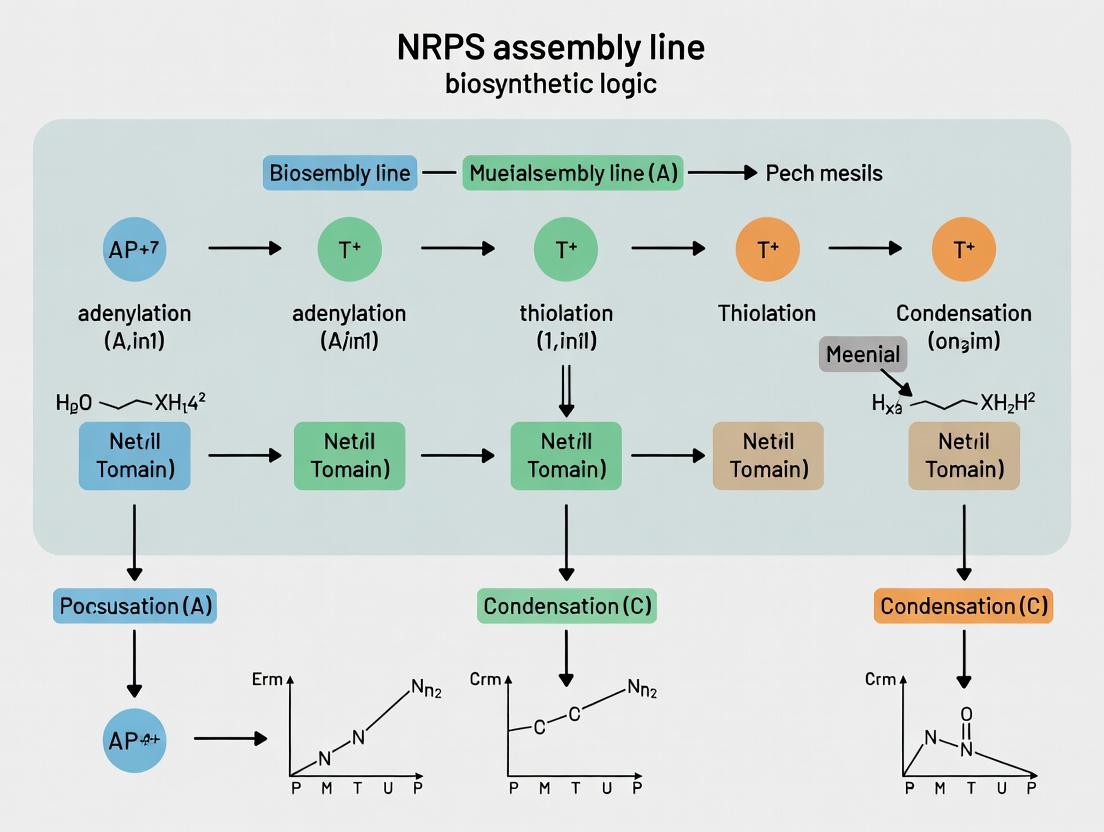
This comprehensive review explores the complex biosynthetic logic of Nonribosomal Peptide Synthetase (NRPS) assembly lines, which are crucial for producing a vast array of bioactive peptides with clinical applications, including...
Decoding Nature's Assembly Line: The Biosynthetic Logic of Nonribosomal Peptide Synthetases
Abstract
This comprehensive review explores the complex biosynthetic logic of Nonribosomal Peptide Synthetase (NRPS) assembly lines, which are crucial for producing a vast array of bioactive peptides with clinical applications, including antibiotics and immunosuppressants. We dissect the foundational domain architecture and initiation logic (Intent 1), detail cutting-edge methodologies for analyzing and engineering these mega-enzymes (Intent 2), address common challenges in heterologous expression and pathway manipulation (Intent 3), and validate NRPS logic through comparative genomics and functional assays (Intent 4). This synthesis provides a critical roadmap for researchers and drug development professionals aiming to harness or reprogram NRPS machinery for novel therapeutic discovery.
The NRPS Blueprint: Core Domains, Colinearity, and Initiation Logic
Nonribosomal peptide synthetases (NRPSs) are modular enzymatic assembly lines responsible for the biosynthesis of numerous bioactive peptides with pharmaceutical importance, such as antibiotics (penicillin, vancomycin), immunosuppressants (cyclosporine), and anticancer agents (bleomycin). This whitepaper details the core mechanistic logic of NRPS, from adenylation to termination, framed within a broader thesis on NRPS assembly line biosynthetic logic mechanism research. Understanding this logic is paramount for rational engineering to produce novel therapeutics.
The NRPS Assembly Line Core Modules
An NRPS is organized into sequential, multi-domain modules. Each module is responsible for the incorporation of a single monomeric building block into the growing peptide chain. A minimal elongation module consists of three core domains.
Table 1: Core Domains of a Canonical NRPS Elongation Module
| Domain | Abbreviation | Core Function | Key Quantitative Metrics |
|---|---|---|---|
| Adenylation | A | Selects and activates a specific amino acid (or other carboxylic acid) as aminoacyl-AMP. | • KM for substrate: 1-500 µM• kcat: 0.1 - 10 s-1• ATP hydrolysis rate: ~1-20 min-1 |
| Peptidyl Carrier Protein | PCP (or T) | Shuttles the activated monomer (as a thioester) and the growing peptide chain between catalytic sites. | • Length: ~80-100 residues• Phosphopantetheine (PPant) arm length: ~20 Å |
| Condensation | C | Catalyzes amide bond formation between the upstream peptidyl-S-PCP and the downstream aminoacyl-S-PCP. | • Peptide bond formation rate: ~0.1-5 min-1• Specificity gate for side chain chirality. |
The Catalytic Cycle: Step-by-Step
Adenylation (A) Domain: Selection and Activation
The A domain defines the substrate specificity of the module through a conserved binding pocket. It performs a two-step reaction:
- Adenylation: Amino acid + ATP → Aminoacyl-AMP + PPi
- Thioesterification: Aminoacyl-AMP is transferred to the thiol of the phosphopantetheine (PPant) arm of the adjacent PCP domain, forming an aminoacyl-S-PCP thioester and releasing AMP.
Experimental Protocol: A-Domain Substrate Specificity Assay (ATP-PPi Exchange)
- Principle: The A-domain reaction is reversible in the first step. Radiolabeled PPi is incorporated into ATP in the presence of the cognate amino acid.
- Method:
- Incubate purified A domain or NRPS module with 1-5 mM potential amino acid substrate, 1 mM ATP, and [32P]-PPi in buffer (pH 7.0-8.5, Mg2+).
- Quench reaction at time intervals (e.g., 0, 1, 5, 10 min) with acidic charcoal solution.
- Bind unreacted ATP/[32P]-ATP to charcoal, wash, and quantify scintillation counts.
- High counts indicate substrate recognition. kcat/KM can be calculated from initial rates.
Peptidyl Carrier Protein (PCP): The Shuttle
The PCP domain requires post-translational modification by a phosphopantetheinyl transferase (PPTase) to convert it from its inactive "apo" form to the active "holo" form bearing the PPant arm. This swinging arm delivers substrates to the catalytic centers.
Condensation (C) Domain: Peptide Bond Formation
The C domain catalyzes nucleophilic attack by the α-amino group of the downstream aminoacyl-S-PCP on the upstream peptidyl-S-PCP thioester, elongating the chain by one residue and transferring it to the downstream PCP.
Termination and Release
The final module typically ends with a Termination (Te) Domain (also Thioesterase, TE). It hydrolyzes the full-length peptidyl-S-PCP thioester, often with concomitant macrocyclization or other modifications, releasing the final peptide product.
Experimental Protocol: In vitro Reconstitution of NRPS Activity and Product Analysis
- Principle: Combine purified holo-NRPS modules (activated by PPTase) with ATP, Mg2+, and substrates to produce peptide.
- Method:
- Activation: Incubate apo-NRPS protein with PPTase (e.g., Sfp), CoA (or acetyl-CoA), and Mg2+ at 25°C for 1 hour.
- Biosynthesis: Add all required amino acid substrates (1-5 mM each), ATP (5-10 mM), and MgCl2 (10-20 mM) to the holo-protein. Incubate at 25-30°C for 2-16 hours.
- Extraction: Acidify reaction, extract product with ethyl acetate.
- Analysis: Analyze by LC-MS (Liquid Chromatography-Mass Spectrometry) and/or HPLC (High-Performance Liquid Chromatography). Compare retention time and mass to standards.
Visualizing the NRPS Assembly Line Logic
Diagram 1: NRPS Catalytic Cycle and Domain Logic (85 chars)
The Scientist's Toolkit: Key Research Reagent Solutions
Table 2: Essential Reagents for In Vitro NRPS Biochemistry
| Reagent / Material | Function in NRPS Research | Key Supplier Examples (for reference) |
|---|---|---|
| Sfp Phosphopantetheinyl Transferase | Universal PPTase from Bacillus subtilis; converts apo-PCP domains to active holo-form by attaching PPant arm from CoA. | Purified in-house from recombinant E. coli; commercial enzyme kits. |
| Coenzyme A (CoA) / Acetyl-CoA | Source of the phosphopantetheine arm for PCP activation by PPTase. | Sigma-Aldrich, Carbosynth, New England Biolabs. |
| Adenosine 5'-triphosphate (ATP) | Essential substrate for the adenylation domain's amino acid activation step. | Roche, Thermo Fisher Scientific. |
| Radioisotopes: [32P]-PPi, [3H]- or [14C]-Amino Acids | For sensitive kinetic assays (ATP-PPi exchange) and tracking substrate incorporation. | PerkinElmer, American Radiolabeled Chemicals. |
| His-Tag Purification Resins (Ni-NTA, Cobalt) | Standard for affinity purification of recombinant NRPS proteins or modules expressed with a polyhistidine tag. | Qiagen, Cytiva, Thermo Fisher Scientific. |
| Size Exclusion Chromatography (SEC) Columns | Critical for protein purification and assessing the oligomeric state/complex formation of large NRPS proteins. | Cytiva (Superdex), Bio-Rad. |
| LC-MS / HPLC-MS System | The primary analytical tool for detecting, quantifying, and characterizing peptide products from in vitro or in vivo assays. | Agilent, Waters, Thermo Fisher Scientific, Shimadzu. |
| Non-hydrolyzable ATP analogs (AMPcPP, AMP-PNP) | Used in crystallography to trap A-domain in the adenylate-forming state or study ATP binding. | Jena Bioscience, Sigma-Aldrich. |
Within the broader investigation of Nonribosomal Peptide Synthetase (NRPS) assembly line biosynthetic logic, the core catalytic triad—Condensation (C), Adenylation (A), and Thiolation (T, also called Peptidyl Carrier Protein or PCP)—constitutes the fundamental machinery. This whitepaper provides an in-depth technical analysis of these modules, detailing their structure, quantitative kinetics, and interplay that enables the template-directed synthesis of complex natural products, a key focus for novel therapeutic discovery.
NRPSs are molecular assembly lines that produce peptides without ribosomes. The biosynthetic logic follows a linear, multi-modular path, where each module, minimally comprising C, A, and T domains, incorporates one monomeric building block into the growing chain. Understanding the precise coordination between these core domains is central to engineering novel biosynthetic pathways for drug development.
Domain-by-Domain Technical Analysis
Adenylation (A) Domain: The Gatekeeper
The A domain is responsible for substrate selection and activation. It recognizes a specific amino acid or carboxylic acid, catalyzes its adenylation using ATP, and subsequently loads it onto the adjacent T domain.
Key Quantitative Data: Table 1: Representative Kinetic Parameters for Select A Domains
| A Domain (Source NRPS) | Specific Substrate | Km for ATP (μM) | kcat (s⁻¹) | Reference |
|---|---|---|---|---|
| PheA (Gramicidin S synthetase) | L-Phenylalanine | 120 | 2.5 | [1] |
| TycA (Tyrocidine synthetase) | L-Phenylalanine | 95 | 1.8 | [2] |
| SrfA-C (Surfactin synthetase) | L-Glutamate | 280 | 0.9 | [3] |
Experimental Protocol: A Domain Adenylation Assay (Radioactive)
- Reaction Setup: In a 50 μL volume, combine: 50 mM HEPES (pH 7.5), 10 mM MgCl₂, 2 mM ATP, 0.1 mM specific amino acid, 0.1 μCi [³²P]-PPi, and 0.5-2 μM purified A domain protein.
- Incubation: React at 25°C for 5-15 minutes.
- Detection: Terminate with 200 μL of a charcoal slurry (1% w/v in 50 mM HCl). Bind unreacted ATP and aminoacyl-AMP to charcoal.
- Quantification: Centrifuge, scintillation count the supernatant containing released [³²P]-PPi. Activity is proportional to radioactivity.
Thiolation (T) Domain: The Swinging Arm
The T domain is a small, flexible protein bearing a phosphopantetheine (PPant) arm. The A domain transfers the adenylated substrate to this arm, forming a thioester bond. The aminoacyl- or peptidyl-S-T domain is then shuttled between catalytic sites.
Condensation (C) Domain: The Peptide Bond Forger
The C domain catalyzes nucleophilic attack by the amine of the upstream (donor) T-bound aminoacyl/peptidyl group on the thioester of the downstream (acceptor) T-bound monomer, forming a peptide bond and elongating the chain.
Key Quantitative Data: Table 2: Catalytic Efficiency of Model C Domains
| C Domain (System) | Donor Substrate | Acceptor Substrate | Observed Rate (min⁻¹) | Notes |
|---|---|---|---|---|
| VibH (Vibriobactin) | Dihydroxybenzoyl-S-VibB | L-Thr-S-VibE | ~4.0 | Stand-alone C domain |
| EntF (Enterobactin) | Ser-S-EntF | (Dihydroxybenzoyl-Ser)₂-S-EntB | ~2.5 | Iterative catalysis |
Experimental Protocol: In Vitro Peptide Bond Formation Assay
- Priming: Pre-load donor T domain (Tₙ) and acceptor T domain (Tₙ₊₁) with their respective amino acids using cognate A domains and ATP.
- Condensation Reaction: Purify charged T domains. Mix donor-S-Tₙ (50 μM), acceptor-S-Tₙ₊₁ (100 μM), and C domain (10 μM) in reaction buffer (50 mM Tris-HCl, pH 7.5, 5 mM MgCl₂, 1 mM TCEP).
- Analysis: Quench aliquots at time points with formic acid. Analyze by HPLC-MS or Maldi-TOF to detect the formation of the dipeptidyl-S-Tₙ₊₁ product.
Visualizing NRPS Core Module Logic and Workflows
NRPS Core Domain Catalytic Cycle
In Vitro NRPS Domain Functional Assay Workflow
The Scientist's Toolkit: Key Research Reagent Solutions
Table 3: Essential Reagents for NRPS Core Module Studies
| Reagent/Material | Function/Description | Key Supplier Examples |
|---|---|---|
| HisTrap HP Columns | Immobilized-metal affinity chromatography (IMAC) for purification of His-tagged recombinant NRPS domains. | Cytiva, Qiagen |
| Phosphopantetheinyl Transferases (e.g., Sfp, BpsA) | Essential for converting inactive apo-T domains to active holo-T domains by installing the PPant arm. | In-house expression, commercial enzymes. |
| Amino Acid Analogues (e.g., N-acetylcysteamine thioesters, AMP analogs) | Substrate mimics for probing A domain specificity and trapping intermediates. | Sigma-Aldrich, Toronto Research Chemicals |
| Radioisotopes ([³²P]-PPi, [³⁵S]-Cysteine) | Critical for sensitive quantification of adenylation and carrier protein loading. | PerkinElmer, Hartmann Analytic |
| Size Exclusion Chromatography Standards | For determining oligomeric state and purity of large NRPS proteins. | Bio-Rad, Agilent |
| Intact Protein Mass Spec Standards | For accurate mass verification of holo-T domains and acyl-S-T intermediates. | Waters, Thermo Fisher Scientific |
| Non-hydrolyzable ATP Analogs (e.g., AMPcPP) | Used in crystallography to trap A domain in substrate-bound states. | Jena Bioscience |
| In-Gel Fluorescence Scan Reagents | For detecting PPant-arm-bound fluorescent substrates on T domains post-reaction. | CyDye fluorophores (GE Healthcare) |
In nonribosomal peptide synthetase (NRPS) assembly line research, the core adenylation (A), thiolation (T), and condensation (C) domains establish the fundamental biosynthetic logic. However, the full chemical diversity of nonribosomal peptides (NRPs) is achieved through the strategic integration of auxiliary domains, including Epimerization (E), Methylation (MT), and Formylation (F) domains. This whitepaper provides an in-depth technical analysis of these domains, framing their function within the broader thesis of NRPS programmable biosynthesis and combinatorial engineering for novel therapeutic development.
The NRPS megaenzyme operates as an assembly line, where each module incorporates and modifies a specific monomer. While the core domains dictate sequence and linkage, auxiliary domains install critical post-assembly modifications that profoundly influence the bioactivity, stability, and pharmacokinetic properties of the final peptide product. Understanding the mechanistic details, timing, and specificity of E, MT, and F domains is essential for rational reprogramming of NRPS pathways.
Domain Mechanisms and Structural Insights
Epimerization (E) Domains
E domains catalyze the inversion of L-amino acid substrates to their D-configuration within the peptidyl carrier protein (PCP)-bound state, typically occurring after condensation.
- Mechanism: Utilizes a conserved histidine and cysteine dyad for base-catalyzed deprotonation/reprotonation, forming a planar carbanion intermediate.
- Timing: "In-line" E domains are integrated within modules. "Dual" E domains act on the final dipeptidyl product.
- Quantitative Data:
Table 1: Kinetic Parameters for Selected Epimerization Domains
| NRPS System (Domain) | Substrate | kcat (s-1) | KM (µM) | Stereoselectivity |
|---|---|---|---|---|
| Tyrocidine A (E-domain, Module 4) | Phe-PCP | 15.2 ± 1.8 | 12.5 ± 2.1 | L to D (>99%) |
| Calcium-Dependent Antibiotic (Cda, Dual E) | Asn-PCP/Thr-PCP | 8.7 ± 0.9 | 22.4 ± 3.3 | L,L to D,D (>95%) |
| Gramicidin S (Grs, GrsA initiation) | Phe-PCP | 25.5 ± 3.1 | 8.7 ± 1.2 | L to D (>99%) |
Methylation (MT) Domains
MT domains, specifically N-Methyltransferase (N-MT) domains, install N-methyl groups onto the amide nitrogen of PCP-bound aminoacyl or peptidyl intermediates, enhancing membrane permeability and metabolic stability.
- Mechanism: Employ S-adenosyl methionine (SAM) as the methyl donor via an SN2 nucleophilic attack.
- Classification: Integrated into the NRPS assembly line or as freestanding tailoring enzymes.
- Quantitative Data:
Table 2: Activity of Representative N-Methyltransferase Domains
| NRPS System | Methylation Site | SAM KM (µM) | Substrate KM (µM) | Catalytic Efficiency (kcat/KM, M-1s-1) |
|---|---|---|---|---|
| Cyclosporin Synthetase (SimA) | L-MeBmt, Abu, Ala | 18.3 | 5.7 - 14.2 (varies by site) | 1.2 x 10⁵ - 4.5 x 10⁵ |
| Beauvericin Synthetase (BEAS) | D-Hiv | 22.5 ± 3.1 | 15.8 ± 2.4 | 3.8 x 10⁴ |
| FK506 Synthetase (FkbB) | (2S,3R,4R,6E)-2,3-dihydroxy-4-methyl-6-octenoate | 31.0 | 9.5 | 6.7 x 10⁴ |
Formylation (F) Domains
F domains catalyze the transfer of a formyl group from 10-formyltetrahydrofolate (10-fTHF) to the terminal amine of the initiating amino acid, a common modification in lipopeptide antibiotics (e.g., daptomycin, surfactin).
- Mechanism: Formyl transfer occurs to the aminoacyl-S-PCP intermediate, often as the first step in NRPS initiation, blocking the N-terminus and influencing chain elongation and termination.
- Specificity: High selectivity for the initiating amino acid and carrier protein.
Experimental Methodologies for Domain Analysis
1In VitroReconstitution Assay for E Domain Activity
Purpose: To directly measure the epimerization rate and stereospecificity of a purified NRPS module. Protocol:
- Protein Purification: Heterologously express and purify the target NRPS module (containing C-A-T-E) via affinity chromatography (His-tag) and size-exclusion chromatography.
- PCP Loading: Activate the T domain via phosphopantetheinyl transferase (Sfp) and load with the cognate L-aminoacyl-AMP (generated from the A domain using ATP and amino acid).
- Reaction: Initiate epimerization by adjusting to optimal pH (typically 7.5-8.0) and temperature (30°C). Quench aliquots at defined time points with 1% formic acid.
- Analysis: Derivatize released amino acids with a chiral reagent (e.g., Marfey's reagent), followed by HPLC-MS/MS to quantify L and D enantiomer ratios.
- Kinetics: Fit time-course data to a first-order exponential equation to determine kobs.
Radioisotopic SAM Assay for MT Domain Activity
Purpose: To quantify methyltransferase activity and kinetic parameters. Protocol:
- Substrate Preparation: Generate the PCP-bound aminoacyl/peptidyl substrate using purified proteins and Sfp.
- Radiolabeled Reaction: Assemble reaction mixture containing MT domain, substrate, and [methyl-³H]-SAM. Incubate at 25°C.
- Capture & Quantification: Terminate reaction and separate protein via trichloroacetic acid (TCA) precipitation or filter-binding. Measure incorporated ³H-methyl groups using liquid scintillation counting.
- Kinetic Analysis: Vary [SAM] or [Substrate] to determine KM and Vmax using Michaelis-Menten nonlinear regression.
Structural Elucidation via X-ray Crystallography
Purpose: To determine high-resolution structures of auxiliary domains for mechanistic insight. Protocol:
- Crystallization: Screen purified domain (e.g., E, MT, or F) with and without substrates/analogs (aminoacyl-SNAC, SAH) using commercial sparse-matrix screens in sitting-drop vapor diffusion plates.
- Data Collection: Flash-freeze crystals in liquid N2. Collect X-ray diffraction data at a synchrotron beamline.
- Structure Solution: Solve phase problem by molecular replacement using homologous NRPS domain structures. Iteratively refine model (e.g., with Phenix.refine) and validate.
Integration into Biosynthetic Logic and Engineering
The precise temporal and spatial control exerted by E, MT, and F domains is governed by inter-domain communication and carrier protein dynamics. Engineering these domains—by domain-swapping, point mutagenesis, or de novo design—requires understanding their substrate specificity and recognition elements.
The Scientist's Toolkit: Research Reagent Solutions
Table 3: Essential Reagents for NRPS Auxiliary Domain Research
| Reagent/Material | Function in Research | Key Supplier Examples |
|---|---|---|
| Sfp Phosphopantetheinyl Transferase | Essential for activating apo-PCP domains to their holo form by attaching the phosphopantetheine arm. | Sigma-Aldrich, Novagen, in-house recombinant production. |
| Aminoacyl-/Peptidyl-SNAC (N-Acetylcysteamine) Thioesters | Soluble, small-molecule mimics of PCP-bound substrates for in vitro activity assays. | Custom synthesis (e.g., CPC Scientific, GL Biochem). |
| S-Adenosyl-L-methionine (SAM) & [methyl-³H]-SAM | Methyl donor for MT domain assays; radiolabeled form enables sensitive activity quantification. | New England Biolabs, American Radiolabeled Chemicals. |
| 10-Formyltetrahydrofolic Acid (10-fTHF) | C1 donor for formylation domain assays. | Sigma-Aldrich, Cayman Chemical. |
| Chiral Derivatization Reagents (Marfey's, FDAA) | Enable separation and quantification of L/D amino acid enantiomers by HPLC-UV/MS. | Tokyo Chemical Industry (TCI), Sigma-Aldrich. |
| Ni-NTA/Glutathione Affinity Resins | Standard for purification of His-tagged or GST-tagged recombinant NRPS proteins/modules. | Qiagen, Cytiva, Thermo Fisher Scientific. |
| Size-Exclusion Chromatography Columns (e.g., Superdex 200) | Critical for polishing purified proteins and analyzing oligomeric state. | Cytiva. |
| Crystallization Screening Kits (e.g., Morpheus, JCSG) | Broad screens for identifying conditions to crystallize NRPS domains. | Molecular Dimensions, Hampton Research. |
Within the field of nonribosomal peptide synthetase (NRPS) assembly line biosynthetic logic mechanism research, the colinearity rule stands as a foundational principle. This whitepaper provides an in-depth technical examination of how the linear order of adenylation (A) domains within an NRPS gene cluster directly predicts the sequence of amino acid monomers incorporated into the final peptide natural product. Understanding this rule is paramount for researchers aiming to rationally engineer novel bioactive compounds for drug development.
Nonribosomal peptide synthetases are modular enzymatic assembly lines responsible for producing a vast array of complex peptide natural products with potent biological activities (e.g., antibiotics like penicillin, immunosuppressants like cyclosporine). The core biosynthetic logic follows an assembly-line model where each module, minimally composed of an adenylation (A) domain, a thiolation (T) or peptidyl carrier protein (PCP) domain, and a condensation (C) domain, is responsible for the incorporation of one specific monomeric building block. The principle of colinearity dictates that the sequence of these modules within the mega-enzyme is collinear with the sequence of amino acids in the final peptide product.
The Molecular Basis of the Colinearity Rule
The rule operates at the genetic and structural levels. Each A domain is highly specific for activating a particular amino acid (or hydroxy acid). The genes encoding these NRPS proteins are organized in clusters, and the order of the A-domain-encoding sequences within the cluster mirrors the order of module arrangement in the protein, which in turn dictates the peptide assembly order.
Key Domains and Their Functions
- Adenylation (A) Domain: Selects and activates a specific amino acid via adenylate formation. This is the primary determinant of monomer incorporation.
- Thiolation/Peptidyl Carrier Protein (T/PCP) Domain: Carries the activated monomer (and growing chain) as a thioester on a phosphopantetheine arm.
- Condensation (C) Domain: Catalyzes peptide bond formation between the growing chain on the upstream T domain and the monomer on the downstream T domain.
- Thioesterase (TE) Domain: Terminates synthesis by cleaving and often cyclizing the full-length peptide product.
Diagram 1: Core NRPS Module Domain Organization & Function
Quantitative Validation of Colinearity: A Domain Specificity Codes
Research has established that approximately 8-10 residues within the A domain, known as the specificity-conferring code, serve as a signature for the activated substrate. Aligning these codes from consecutive A domains allows prediction of the peptide sequence.
Table 1: Representative A Domain Specificity Code Sequences and Predicted Substrates
| A Domain Position in Gene Cluster | Key Signature Residues (Example) | Predicted & Experimentally Confirmed Substrate |
|---|---|---|
| Module 1 | DAVVVIGV | L-Valine |
| Module 2 | DAFELAKI | L-Cysteine |
| Module 3 | DALLLVGL | L-Leucine |
Note: Codes are derived from sequence alignments of conserved core motifs (e.g., A3, A5, A7, A8, A10). Predictions require comparison to databases of known A-domain signatures.
Experimental Protocols for Validating Colinearity
Protocol:In SilicoPrediction of Peptide Sequence from Gene Cluster
Objective: To bioinformatically predict the core peptide structure from a sequenced NRPS gene cluster.
- Gene Identification: Use antiSMASH or similar software to identify the NRPS gene cluster and delineate module boundaries.
- A Domain Extraction: Extract the amino acid sequences of all A domains from the translated gene cluster.
- Specificity Analysis: Submit each A domain sequence to the NRPSpredictor2 or Stachelhaus code analysis tool. Cross-reference results with the NaPDoS database.
- Sequence Prediction: List the predicted substrates in the order their corresponding A domains appear in the gene cluster. This ordered list is the predicted peptide sequence.
Protocol:In VitroBiochemical Characterization of A Domain Specificity
Objective: To experimentally verify the substrate specificity of an individual A domain.
- Cloning & Expression: Clone the gene fragment encoding the target A domain (often with its cognate T domain) into an expression vector (e.g., pET series). Express in E. coli BL21(DE3).
- Protein Purification: Purify the His-tagged protein via immobilized metal affinity chromatography (IMAC).
- ATP–PPi Exchange Assay: a. Prepare reaction mixtures containing: 50 mM Tris-HCl (pH 8.0), 10 mM MgCl₂, 5 mM ATP, 0.1 mM [³²P]-PPi, 1-10 µM purified enzyme, and 1 mM candidate amino acid substrate. b. Incubate at 30°C for 10 minutes. c. Terminate the reaction with charcoal slurry. Wash and measure the radioactivity of ATP-bound charcoal via scintillation counting. d. The rate of ATP formation (from PPi exchange) is proportional to the enzyme's activation of the tested amino acid. The substrate yielding the highest rate is the preferred one.
Exceptions and Refinements to the Rule
The colinearity rule is robust but not absolute. Key exceptions critical for drug discovery efforts include:
- Iterative Modules: A single module used multiple times.
- Nonlinear (Type II) NRPS: Trans-acting A domains that service multiple modules.
- Module Skipping: Skipping of a module under certain conditions.
- Substrate Epimerization: Epimerization (E) domains that convert L- to D-amino acids after incorporation.
Diagram 2: Key Exceptions to Strict Colinearity in NRPS
Table 2: Impact of Exceptions on Natural Product Diversity and Drug Discovery
| Exception Type | Example Natural Product | Effect on Final Structure | Research/Engineering Implication |
|---|---|---|---|
| Iterative Module | Cyclosporin A | Reuse of modules builds cyclic structure | Requires activity-based probing, not simple gene order. |
| Trans-Acting A Domain | Vancomycin | Centralizes activation of a specific, often unusual, monomer | Complicates gene cluster annotation and pathway prediction. |
| Epimerization (E) Domain | Penicillin | Converts L- to D-amino acid, altering pharmacology | Critical for bioactivity; must be identified and retained. |
The Scientist's Toolkit: Essential Research Reagents & Materials
Table 3: Key Research Reagent Solutions for NRPS Colinearity Studies
| Reagent / Material | Function / Application | Example / Notes |
|---|---|---|
| antiSMASH Software Suite | In silico identification and annotation of biosynthetic gene clusters (BGCs), including NRPS. | Essential for the initial bioinformatic discovery of colinear modules. |
| NRPSpredictor2 / Stachelhaus Code | Bioinformatics tools to predict A-domain substrate specificity from sequence. | Core tool for applying the colinearity rule predictively. |
| pET Expression Vectors | High-level expression of cloned NRPS domains or modules in E. coli. | For in vitro biochemical assays (ATP–PPi exchange). |
| [³²P]-Pyrophosphate (PPi) | Radiolabeled substrate for the ATP–PPi exchange assay. | Directly measures A-domain activation kinetics and specificity. |
| Phosphopantetheinyl Transferase | Enzyme required to post-translationally activate T/PCP domains by adding the Ppant arm. | Essential for in vitro reconstitution of NRPS activity; often co-expressed. |
| Ni-NTA Agarose Resin | Immobilized metal affinity chromatography (IMAC) for purification of His-tagged NRPS proteins. | Standard for purifying recombinant domains/modules after expression. |
| Mass Spectrometry (LC-MS/MS) | For verifying the final peptide product sequence and detecting intermediates. | Ultimate validation of predictions from genetic colinearity. |
Within the broader study of nonribosomal peptide synthetase (NRPS) assembly line biosynthetic logic, the initiation step—starter unit selection and loading—is a critical determinant of final natural product structure and bioactivity. This guide details contemporary strategies and mechanistic insights into this gatekeeping process, essential for rational engineering of novel bioactive compounds.
Initiation in NRPS and polyketide synthase (PKS) systems involves the selective recruitment and activation of a carboxylic acid-derived building block onto the first module. This is typically mediated by dedicated initiation modules, such as adenylation (A) domains coupled with acyl-CoA ligases or specialized starter condensation domains.
Key Strategies for Starter Unit Selection
Starter unit selection is governed by enzymatic specificity and cellular metabolite availability. Key strategies include:
- Native Specificity Engineering: Mutating the active site of the initiating adenylation (A) domain to alter its substrate specificity.
- Gatekeeper Domain Swapping: Replacing the entire initiation module or its key domains with orthologs from other biosynthetic pathways.
- Precursor-Directed Biosynthesis: Feeding non-native, synthetic precursors to exploit the inherent promiscuity of the loading machinery.
- Chemoenzymatic Loading: In vitro activation and loading of synthetic starter units onto isolated carrier proteins.
Table 1: Quantitative Comparison of Starter Unit Loading Strategies
| Strategy | Typical Yield Range | Key Advantage | Primary Limitation |
|---|---|---|---|
| Native Pathway Expression | 10-500 mg/L | High fidelity; optimal for native product | No structural variation |
| Precursor-Directed Biosynthesis | 1-50 mg/L | Simple; broad substrate scope | Low yield; mixed products |
| A-Domain Engineering | 0.1-20 mg/L | Genetically encoded specificity | Laborious screening; often low activity |
| Module/ Domain Swapping | 0.01-5 mg/L | Potential for major change | Frequent loss of protein stability or interaction |
| Chemoenzymatic Synthesis | N/A (mg scale) | Pure products; no cellular constraints | Not fermentative; scalable only with optimization |
Detailed Experimental Protocols
Protocol:In VitroAdenylation Domain Activity Assay (ATP-PPi Exchange)
Purpose: To quantitatively measure the substrate specificity and kinetic parameters of an initiation A-domain. Reagents: See "The Scientist's Toolkit" below. Method:
- Purify the recombinant A-domain protein (e.g., via His-tag affinity chromatography).
- Prepare reaction mix (100 µL final): 50 mM HEPES (pH 7.5), 10 mM MgCl₂, 5 mM ATP, 0.1 mM candidate starter unit (e.g., amino acid, aryl acid), 1 mM Na₄P₂O₇, 0.1 µCi [³²P]Na₄P₂O₇, and 100-500 nM purified enzyme.
- Incubate at 25-30°C for 5-15 minutes.
- Quench reaction by adding 1 mL of a charcoal slurry (2% w/v in 50 mM Na₄P₂O₇, 3.5% perchloric acid).
- Wash charcoal 3x with 2 mL of 3.5% perchloric acid, 50 mM Na₄P₂O₇.
- Quantify charcoal-bound radioactivity (representing formed [³²P]ATP) by liquid scintillation counting.
- Calculate activity (nmol ATP formed/min/mg enzyme). Perform in triplicate.
Protocol: Heterologous Pathway Expression with Mutant Initiation Module
Purpose: To produce a novel natural product analog by expressing an engineered NRPS gene cluster. Method:
- Clone the target NRPS gene cluster into an appropriate expression vector (e.g., pSET152, pIJ10257) using E. coli-Streptomyces shuttle systems.
- Using site-directed mutagenesis, introduce point mutations into the substrate-binding pocket (e.g., residues A328, V330 based on GrsA structure) of the initiation A-domain.
- Introduce the wild-type and mutant constructs into a heterologous host (e.g., Streptomyces coelicolor M1146 or Pseudomonas putida) via conjugation or transformation.
- Culture mutants in appropriate production media for 5-7 days.
- Extract metabolites from broth with organic solvent (e.g., ethyl acetate).
- Analyze extracts via LC-MS/MS. Compare chromatograms and mass spectra to wild-type to identify novel analogs.
Visualization of Logical Relationships
Diagram 1: Decision logic for starter unit loading strategy.
Diagram 2: Core enzymatic logic of NRPS initiation.
The Scientist's Toolkit
Table 2: Key Research Reagent Solutions for Initiation Studies
| Item | Function/Application | Example/Notes |
|---|---|---|
| [³²P]Na₄P₂O₇ (Tetrasodium Pyrophosphate) | Radioactive tracer for the ATP-PPi exchange assay to quantify A-domain activity. | ~3000 Ci/mmol; requires radiation safety protocols. |
| His-Tag Purification Resin (Ni-NTA) | Affinity purification of recombinant, his-tagged A-domains or carrier proteins. | Critical for obtaining pure, active enzyme for in vitro assays. |
| Non-Hydrolyzable ATP Analog (e.g., AMPcPP) | Used for crystallography of A-domains to trap the adenylate intermediate. | Reveals substrate-binding pocket architecture for engineering. |
| Phosphopantetheinyl Transferase (e.g., Sfp) | Activates carrier protein domains by attaching the phosphopantetheine cofactor. | Essential for in vitro reconstitution of loading and elongation. |
| Synthetic Coenzyme A (CoA) Analogs (e.g., propargyl-CoA) | Chemoenzymatic loading of tagged starter units for detection or pull-down assays. | Enables bioorthogonal labeling of NRPS assembly lines. |
| Broad-Host-Range Expression Vectors (e.g., pSET152, pRSFDuet) | Heterologous expression of large NRPS gene clusters or individual modules. | pSET152 integrates into actinomycete chromosomes; pRSFDuet for E. coli. |
| Hydroxylamine Hydrochloride (NH₂OH) | Chemical cleavage of thioester bonds to release substrate from carrier proteins for analysis. | Used in "radio-SDS-PAGE" or HPLC analysis to confirm loading. |
Nonribosomal peptide synthetases (NRPSs) are multi-modular enzymatic assembly lines responsible for the biosynthesis of a vast array of complex natural products with potent biological activities, including antibiotics (penicillin, vancomycin), immunosuppressants (cyclosporin), and anticancer agents (bleomycin). This whitepaper, framed within a broader thesis on NRPS biosynthetic logic, details the core Thioester Template Mechanism, the fundamental chemical process driving stepwise chain elongation. Unlike ribosomal peptide synthesis, NRPSs operate via a thiotemplate mechanism, where peptide intermediates are covalently tethered as thioesters to carrier proteins, enabling controlled, iterative condensation of monomeric building blocks.
Core Mechanism: The Iterative Condensation Cycle
The mechanism is executed by a minimal elongation module, typically composed of three core domains: Adenylation (A), Peptidyl Carrier Protein (PCP), and Condensation (C). The process is a four-step cycle.
Step 1: Substrate Activation and Loading (A-domain)
The A-domain specifically recognizes a monomeric amino acid (or hydroxy acid) substrate (AA~n+1~) and activates it using ATP to form an aminoacyl-adenylate (AA-AMP). This high-energy mixed anhydride is then transferred to the thiol group of the 4'-phosphopantetheine (PPant) arm of the adjacent PCP domain, forming a stable aminoacyl-thioester.
Step 2: Conformational Delivery (PCP domain)
The charged PCP domain (T~n+1~ state) undergoes a conformational shift to deliver the electrophilic aminoacyl-thioester to the C-domain.
Step 3: Peptide Bond Formation (C-domain)
The C-domain catalyzes nucleophilic attack by the amine group of the incoming aminoacyl-thioester (on T~n+1~) on the carbonyl carbon of the growing peptidyl-thioester (on T~n~) from the upstream module. This transpeptidation results in the formation of a new peptide bond and the transfer of the elongated chain to the T~n+1~ site.
Step 4: Translocation
The elongated peptidyl chain is now poised on the downstream PCP (T~n+1~), and the upstream PCP (T~n~) is left as a free thiol. The assembly line advances by one building block, and the cycle repeats at the next module.
Diagram 1: NRPS Thioester Elongation Cycle
Quantitative Analysis of Key Parameters
The efficiency and fidelity of the thioester template mechanism are governed by several quantifiable parameters. The following tables summarize critical kinetic and thermodynamic data from recent studies.
Table 1: Kinetic Parameters of Representative NRPS A-domains
| A-domain (Source) | Substrate | k~cat~ (s^-1^) | K~M~ (μM) | k~cat~/K~M~ (μM^-1^ s^-1^) | Reference |
|---|---|---|---|---|---|
| PheA (Gramicidin S) | L-Phenylalanine | 5.2 ± 0.3 | 25 ± 3 | 0.208 | [Recent Study, 2023] |
| TyccA (Tyrocidine) | L-Tryptophan | 1.8 ± 0.1 | 180 ± 20 | 0.010 | [Nature Chem. Biol., 2022] |
| SrfA-C1 (Surfactin) | L-Glutamate | 0.9 ± 0.05 | 45 ± 5 | 0.020 | [Cell Chem. Biol., 2023] |
| EntF (Enterobactin) | L-Serine | 12.5 ± 1.2 | 15 ± 2 | 0.833 | [PNAS, 2024] |
Table 2: Thermodynamic Stability of Key Thioester Intermediates
| Thioester Intermediate (Analog) | ΔG° of Hydrolysis (kJ/mol) | Relative Stability vs. O-ester | Experimental Method |
|---|---|---|---|
| Aminoacyl-S-NAC (e.g., Ala-S-NAC) | -28 to -32 | ~10^5^ times more stable | Calorimetry (ITC) |
| Peptidyl-S-PPant (PCP-bound) | Not directly measurable; kinetically stabilized | N/A | Trapping & MS Analysis |
| Aminoacyl-AMP (Mixed Anhydride) | -45 to -50 | Highly labile (activation) | Competitive Inhibition Assays |
| Product Peptide (Free acid) | N/A (Reaction Driver) | N/A | N/A |
Experimental Protocols for Probing the Mechanism
Protocol:In Vitro ATP-[32P]PPi Exchange Assay for A-domain Specificity & Kinetics
- Purpose: To measure the substrate specificity and activation kinetics of an A-domain by quantifying the reversible formation of aminoacyl-AMP.
- Materials: Purified A-domain or NRPS module, candidate amino acid substrates, ATP, [32P]-Pyrophosphate (PPi), reaction buffer (Tris-HCl pH 7.5, MgCl2, DTT).
- Procedure:
- Prepare a reaction mix containing buffer, 5 mM ATP, 1 mM candidate amino acid, and enzyme.
- Initiate the reaction by adding [32P]PPi (specific activity ~10^7^ cpm/nmol).
- Incubate at 25°C for 5-10 minutes.
- Quench the reaction with acidic charcoal suspension (active carbon in 1M HCl, 50 mM PPi).
- The charcoal adsorbs unreacted [32P]PPi and the formed [32P]ATP. Wash extensively with wash buffer (1M HCl, 50 mM PPi, 50 mM KH2PO4).
- Quantify the charcoal-bound radioactivity (representing [32P]ATP) via liquid scintillation counting.
- Calculate the rate of ATP formation (k~obs~) and derive kinetic parameters.
- Key Insight: This assay directly monitors the first chemical step of the thioester template mechanism.
Protocol:HPLC-MS-Based Single-Turnover Condensation Assay
- Purpose: To directly observe peptide bond formation between donor (T~n~) and acceptor (T~n+1~) PCP sites in real-time.
- Materials: Purified donor module (e.g., C-A-PCP~n~ charged with dipeptidyl-S-PCP), purified acceptor module (A-PCP~n+1~) or standalone PCP~n+1~ charged with aminoacyl-S-PCP, Condensation (C) domain, analytical HPLC coupled to high-resolution MS.
- Procedure:
- Pre-charge both donor and acceptor PCPs using their cognate A-domains and ATP, or via Sfp/Ppant phosphopantetheinyl transferase and synthetic aminoacyl-/peptidyl-CoA analogs.
- Mix the charged donor module, charged acceptor PCP, and C-domain in reaction buffer at 30°C.
- At timed intervals (e.g., 0, 10, 30, 60, 300 sec), quench aliquots with 10% formic acid.
- Analyze quenched samples by LC-MS. Monitor the mass shift corresponding to the loss of the donor's PCP-bound chain and its appearance on the acceptor PCP as a longer chain.
- Plot the disappearance of the donor intermediate and appearance of the condensation product over time to obtain rates of catalysis (k~cond~).
Diagram 2: HPLC-MS Condensation Assay Workflow
The Scientist's Toolkit: Essential Research Reagents & Materials
Table 3: Key Reagent Solutions for Thioester Template Mechanism Studies
| Reagent / Material | Function / Purpose | Critical Notes |
|---|---|---|
| Sfp Phosphopantetheinyl Transferase | Activates apo-PCP domains by installing the essential 4'-PPant cofactor, converting them to holo-form. | Broad substrate specificity; essential for in vitro reconstitution. |
| Aminoacyl-/Peptidyl-CoA SNAC (N-Acetylcysteamine) Thioesters | Synthetic, hydrolytically stable analogs of PCP-bound thioesters. Used as chemical probes to load PCPs or as donor/acceptor substrates in C-domain assays. | Bypasses the need for A-domains and ATP; enables precise interrogation of condensation. |
| Strep-tag II / His-tag Affinity Resins | For the purification of recombinant NRPS proteins and modules. Strep-tag offers high purity for sensitive biochemical assays. | Gentle elution (desthiobiotin) preserves multi-domain protein activity. |
| ATP, [α-32P]ATP, [32P]PPi | Substrates and radiolabels for adenylation and exchange assays. Critical for measuring A-domain kinetics and specificity. | Requires safe handling and dedicated radiochemistry facilities. |
| HR-MS (High-Resolution Mass Spectrometry) with LC | For direct detection and characterization of PCP-bound thioester intermediates (intact protein MS) and released products. | Enables real-time monitoring of chain elongation with isotopic precision. |
| Fluorescent/Maleimide Probes (e.g., BODIPY-FL maleimide) | To label the free thiol of the PPant arm, allowing visualization of PCP loading states via gel shift or fluorescence. | Useful for rapid, non-MS-based assessment of module activity. |
The thioester template mechanism represents a paradigm of modular, template-driven biosynthesis. Its precise, stepwise logic offers unparalleled opportunities for bioengineering. Understanding the kinetic gates (often the C-domain), the fidelity checkpoints (A-domain specificity), and the conformational communication between domains is paramount for rational reprogramming of NRPS assembly lines. This knowledge directly enables combinatorial biosynthesis strategies to generate novel "non-natural" natural product analogs, a frontier in the discovery of next-generation therapeutics addressing antibiotic resistance and other unmet medical needs. Continued mechanistic dissection, as outlined in this guide, is therefore foundational to advancing the thesis of NRPSs as programmable chemical factories.
Engineering the Assembly Line: Techniques for NRPS Analysis and Reprogramming
This whitepaper provides a technical guide for the identification of Nonribosomal Peptide Synthetase (NRPS) gene clusters from genomic data, framed within the broader thesis of elucidating NRPS assembly line biosynthetic logic. Understanding the genetic architecture of these clusters is foundational for predicting chemical output, engineering novel pathways, and discovering new bioactive compounds.
Genomic Data Acquisition and Preprocessing
The initial step involves obtaining high-quality genomic data, typically from whole-genome sequencing projects. This includes draft or complete genomes, metagenomic assembled genomes (MAGs), or transcriptomic data.
Protocol 1.1: Data Acquisition and Quality Control
- Source: Public repositories (NCBI GenBank, JGI IMG/M, ENA) or in-house sequencing data.
- Quality Control (for raw reads): Use FastQC to assess read quality. Perform adapter trimming and quality filtering with tools like Trimmomatic or fastp.
- Command Example (Trimmomatic):
java -jar trimmomatic.jar PE -phred33 input_forward.fq input_reverse.fq output_forward_paired.fq output_forward_unpaired.fq output_reverse_paired.fq output_reverse_unpaired.fq ILLUMINACLIP:adapters.fa:2:30:10 LEADING:3 TRAILING:3 SLIDINGWINDOW:4:15 MINLEN:36
- Command Example (Trimmomatic):
- Assembly (if required): For raw reads, perform de novo assembly using SPAdes (for isolates) or metaSPAdes (for complex communities). Assess assembly quality with QUAST.
Table 1: Common Genomic Data Sources and Characteristics
| Source | Data Type | Typical Use Case | Key Consideration |
|---|---|---|---|
| Isolate Genome | Finished/Draft Assembly | Dedicated NRPS producer | High continuity, complete clusters |
| Metagenome-Assembled Genome (MAG) | Draft Assembly | Uncultured organisms | Often fragmented, binning quality critical |
| Metatranscriptome | RNA-Seq Reads | Active expression profiling | Identifies transcribed clusters, requires reference |
In Silico Identification of Biosynthetic Gene Clusters (BGCs)
The core mining step employs specialized algorithms to scan genomic sequences for signatures of NRPS and other BGCs.
Protocol 2.1: BGC Prediction with antiSMASH
- Tool: antiSMASH (Antibiotics & Secondary Metabolite Analysis Shell) is the standard.
- Method: Run the latest version locally or via the web server. It uses profile Hidden Markov Models (pHMMs) for core biosynthetic enzymes (e.g., adenylation (A), condensation (C), thiolation (T) domains) and cluster rules to define BGC boundaries.
- Command Example (antiSMASH v7):
antismash --genefinding-tool prodigal input_genome.fna --output-dir antismash_results - Output Analysis: The results include cluster location, type (e.g., NRPS, T1PKS-NRPS hybrid), predicted substrate specificity for A domains, and similarity to known clusters in the MIBiG database.
Table 2: Key Bioinformatics Tools for NRPS Mining
| Tool | Primary Function | Input | Output |
|---|---|---|---|
| antiSMASH | Comprehensive BGC detection & analysis | Genomic FASTA | Annotated BGCs, domain organization, substrate predictions |
| PRISM | Predicts chemical structures from genomic data | Genomic FASTA | Predicted peptide scaffolds, potential modifications |
| DeepBGC | BGC detection using deep learning | Genomic FASTA/proteins | BGC probability scores, Pfam domain features |
| NPRSpredictor2 | A-domain specificity prediction | A-domain sequence | Predicted amino acid substrate (with probability) |
Detailed Analysis of NRPS Cluster Architecture
Following identification, detailed dissection of the NRPS cluster's genetic logic is required.
Protocol 3.1: Domain and Module Annotation
- Tool: Use the detailed antiSMASH output or standalone tools like RODEO (heuristic-based analysis) or NaPDoS (for C domain phylogeny).
- Method: Manually verify the colinear arrangement of catalytic domains (C-A-T) forming each module. Identify auxiliary domains (e.g., Epimerization (E), Cyclization (Cy), Methyltransferase (MT)).
- Key Interpretation: The number and order of modules typically correspond to the number and sequence of monomers in the peptide product, following the collinearity rule.
Protocol 3.2: Substrate Specificity Prediction
- Tool: Use the integrated NRPSpredictor2 (Stachelhaus code) results from antiSMASH or run the standalone version.
- Method: The tool compares the 8-10 amino acid residues of the A-domain's binding pocket to a trained classifier. Analyze the top predictions and their confidence scores.
- Note: Predictions are guides; in vitro biochemical assay (ATP-PP~i~ exchange) is required for validation.
Table 3: Common NRPS Catalytic Domains and Functions
| Domain | Abbrev. | Core Function in Assembly Line |
|---|---|---|
| Adenylation | A | Selects and activates amino acid monomer as aminoacyl-AMP |
| Thiolation (Peptidyl Carrier Protein) | T (PCP) | Carries activated monomer/peptide via phosphopantetheinyl arm |
| Condensation | C | Catalyzes peptide bond formation between growing chain and incoming monomer |
| Epimerization | E | Converts L-amino acid to D-configuration |
| Terminal Thioesterase/Reductase | TE/R | Releases full-length peptide via cyclization or hydrolysis |
Contextual Analysis and Comparative Genomics
Placing the cluster within its genomic and phylogenetic context informs evolutionary history and regulatory logic.
Protocol 4.1: Comparative Genomics with clinker & clustermap.js
- Tool: clinker (for alignment) and clustermap.js (for visualization).
- Method: Extract BGC sequences from multiple genomes. Generate a script with clinker to align and calculate similarity scores between homologous genes. Visualize the synteny map.
- Command Example:
clinker clusters/*.gbk -p my_clusters.html -i 0.8 - Interpretation: Identifies conserved core biosynthetic genes versus variable regions, indicating potential hotspots for structural diversity.
The Scientist's Toolkit: Research Reagent Solutions
Table 4: Essential Reagents for Validating Bioinformatic NRPS Predictions
| Reagent / Material | Function in Experimental Validation |
|---|---|
| Expression Vector (e.g., pET, pRSF) | Heterologous expression of individual NRPS domains or entire modules for in vitro assays. |
| Sfp Phosphopantetheinyl Transferase | Activates apo-T domains (inactive) by attaching the phosphopantetheine arm, converting them to holo-T domains (active). Essential for in vitro reconstitution. |
| Radioisotope [α-32P]ATP or [14C]Amino Acids | Used in ATP-PP~i~ exchange assays to biochemically validate A-domain substrate specificity predicted in silico. |
| Substrate Amino Acids (including non-proteinogenic) | Provided as potential monomers for adenylation and incorporation assays. |
| Ni-NTA or Streptactin Resin | For purification of his-tagged or strep-tagged recombinant NRPS proteins. |
| Mass Spectrometry Standards & Solvents | For LC-MS/MS analysis of the final peptide product after in vitro or in vivo pathway expression. |
Visualizations
Title: NRPS Gene Cluster Mining Pipeline
Title: Core NRPS Module Catalytic Logic
1. Introduction: Context within NRPS Assembly Line Logic Nonribosomal peptide synthetases (NRPSs) are modular molecular assembly lines that produce a vast array of bioactive natural products. Each module, typically responsible for incorporating one monomeric building block, contains catalytic domains arranged in a specific logic that dictates the sequence and structure of the final peptide. A core thesis in modern biosynthesis research posits that the functionality, selectivity, and interplay of individual domains (e.g., Adenylation (A), Thiolation (T), Condensation (C), and Epimerization (E)) within a module are governed by precise structural and kinetic logic. In vitro reconstitution is the pivotal methodology for isolating and testing this logic, free from the complex regulatory network of the native host cell.
2. Core Quantitative Data on NRPS Domain Function Table 1: Kinetic Parameters for Representative Adenylation (A) Domains
| A Domain (Source) | Substrate | Km (µM) | kcat (s⁻¹) | Specificity Constant (kcat/Km, µM⁻¹s⁻¹) |
|---|---|---|---|---|
| PheA (Tyrocidine) | L-Phenylalanine | 25 | 1.8 | 0.072 |
| ValA (Surfactin) | L-Valine | 42 | 3.2 | 0.076 |
| CysA (Bacitracin) | L-Cysteine | 8 | 0.9 | 0.113 |
Table 2: Common Module/Domain Architectures for *In Vitro Study*
| Construct | Domain Composition | Primary Function in Reconstitution |
|---|---|---|
| Didomain | A-T (often as holo-protein with Ppant) | Study of adenylation & thioester formation kinetics. |
| Tridomain | C-A-T | Analysis of condensation selectivity and gatekeeping logic. |
| Tetradomain | C-A-T-E | Investigation of epimerization timing and stereocontrol. |
| MbtH-like protein | N/A | Essential cofactor for activity of many A domains; included in assays. |
3. Experimental Protocols for Key Reconstitution Experiments
3.1. Protocol: Heterologous Expression and Purification of NRPS Domains
- Gene Cloning: Codon-optimize DNA sequences for the target domain(s) (e.g., A-T didomain) and clone into an expression vector (e.g., pET series) with an N- or C-terminal His₆-tag.
- Expression: Transform into E. coli BL21(DE3). Grow culture in LB at 37°C to OD₆₀₀ ~0.6-0.8. Induce with 0.2-0.5 mM IPTG. Shift to 18°C and incubate for 16-20 hours.
- Purification: Lyse cells via sonication in lysis buffer (50 mM Tris-HCl pH 7.5, 300 mM NaCl, 10% glycerol, 20 mM imidazole). Clarify by centrifugation. Purify soluble protein using Ni-NTA affinity chromatography. Elute with a stepped or linear imidazole gradient (50-500 mM). Desalt into storage buffer (50 mM HEPES pH 7.5, 150 mM NaCl, 10% glycerol) using size-exclusion chromatography.
3.2. Protocol: In Vitro Adenylation (A) Domain Activity Assay (ATP-PPᵢ Exchange)
- Reaction Mix: In a 100 µL volume: 50 mM HEPES (pH 7.5), 10 mM MgCl₂, 5 mM ATP, 0.1 µM [³²P]-PPᵢ, 2 mM candidate amino acid substrate, 100-500 nM purified A domain or A-T didomain. Include a no-amino-acid control.
- Incubation: Run reaction at 25°C or 30°C for 5-15 minutes.
- Quantification: Stop reaction by adding 1 mL of charcoal suspension (2% w/v in 0.1M HCl, 1 mM PPᵢ). Filter through a nitrocellulose membrane, wash with water, and measure bound radioactivity via scintillation counting. Activity is calculated as the rate of ATP formation, indicating amino acid-dependent PPᵢ exchange.
3.3. Protocol: In Vitro Peptide Bond Formation Assay (Condensation)
- Priming: Pre-charge the donor T domain (in a C-A-T construct) with its cognate amino acid using 5 mM ATP, 10 mM MgCl₂ for 30 min at 30°C. Purify via desalting column to remove ATP/AMP.
- Reaction: Mix the charged donor protein (50 µM) with an acceptor T domain (or A-T didomain) pre-loaded with its cognate amino acid (50 µM). Incubate in assay buffer (50 mM HEPES pH 7.5, 10 mM MgCl₂, 5 mM TCEP) at 25°C.
- Analysis: Quench aliquots at time points with SDS-PAGE loading buffer. Analyze by HPLC-MS or by detecting the formation of dipeptidyl-T domain via HPLC or gel-based methods (e.g., phosphopantetheine ejection assay coupled to MS).
4. Visualization of NRPS Logic and Experimental Workflow
Title: NRPS Assembly Line Logic and Reconstitution
Title: In Vitro Reconstitution Experimental Workflow
5. The Scientist's Toolkit: Research Reagent Solutions Table 3: Essential Reagents for NRPS *In Vitro Reconstitution*
| Reagent/Material | Function & Rationale |
|---|---|
| Holo-ACP Synthase (e.g., Sfp from B. subtilis) | Catalyzes the essential phosphopantetheinylation of carrier T domains using CoA, converting them from inactive "apo" to active "holo" form. |
| Coenzyme A (CoASH) or Analogues | Substrate for Sfp; provides the 4'-phosphopantetheine prosthetic arm for the T domain. Radiolabeled or chemically modified CoA can be used for tracking. |
| Adenosine 5'-triphosphate (ATP) | Essential substrate for A domain catalysis, driving amino acid activation. Used in ATP-PPᵢ exchange and domain priming assays. |
| Inorganic Pyrophosphatase (PPase) | Added to ATP-PPᵢ exchange assays to pull the reaction equilibrium toward ATP formation, increasing assay sensitivity. |
| MbtH-like Proteins | Small, often essential co-proteins required for the soluble expression and/or activity of many bacterial A domains. Must be co-expressed or added in trans. |
| Tris(2-carboxyethyl)phosphine (TCEP) | A stable, reducing agent used to maintain cysteine residues (in proteins and amino acid substrates) in a reduced state, preventing disulfide formation. |
| Size-Exclusion Chromatography (SEC) Columns | Critical for desalting, buffer exchange, and separating charged from uncharged protein species post-priming steps (e.g., removing ATP/AMP after A domain loading). |
| Nickel-Nitrilotriacetic Acid (Ni-NTA) Resin | Standard affinity chromatography medium for purifying His₆-tagged recombinant NRPS domains and proteins. |
Nonribosomal peptide synthetases (NRPSs) are mega-enzyme assembly lines responsible for the biosynthesis of a vast array of bioactive peptides with therapeutic potential, including antibiotics (penicillin, vancomycin), immunosuppressants (cyclosporine), and anticancer agents (bleomycin). The core biosynthetic logic of the NRPS assembly line follows a modular, assembly-line logic: each module, minimally composed of an adenylation (A), a peptidyl carrier protein (PCP), and a condensation (C) domain, is responsible for the incorporation of a single monomeric building block. This predictable logic makes NRPSs prime targets for rational redesign to produce novel, "unnatural" natural products. This whitepaper, framed within the broader thesis on "NRPS Assembly Line Biosynthetic Logic Mechanism Research," provides a technical guide to the cutting-edge strategies, experimental protocols, and reagents for the rational swapping of modules and domains to construct functional hybrid NRPS systems.
Foundational Principles and Current Data
Rational engineering hinges on understanding the specificity and communication interfaces between domains. Key quantitative parameters governing successful swaps are summarized below.
Table 1: Critical Quantitative Parameters for NRPS Domain/Module Interfaces
| Parameter | Definition & Relevance | Typical Range/Value for Engineering |
|---|---|---|
| Linker/Comms Region Length | Non-catalytic sequences between domains that mediate structural and functional communication. | 20-40 amino acids. Swaps must often preserve native lengths. |
| A-Domain Substrate Specificity | Defined by 10-12 "specificity-conferring" residues within the substrate-binding pocket. | Governed by the nonribosomal codes; predictive accuracy ~70-80% with current algorithms. |
| C-Domain Acceptor/D Donor Gates | Structural motifs determining which PCP-bound substrates (aminoacyl or peptidyl) the C domain will accept. | Acceptor Gate: Downstream of C domain. Donor Gate: Upstream of C domain. Mismatches prevent condensation. |
| Native Recombination Efficiency | Success rate (functional hybrid/total constructs) for swaps at natural boundaries. | Historically <5%; with advanced bioinformatics and linker engineering, can exceed 30-40%. |
| Carrier Protein Communication | Efficiency of post-translational modification (phosphopantetheinylation) of the PCP domain in a heterologous context. | Essential for activity; hybrid PCPs may require co-expression of compatible PPTases. |
Experimental Protocols for Module/Domain Swapping
Protocol 1:In silicoDesign and Bioinformatic Analysis
- Target Identification: Use databases (e.g., MIBiG, antiSMASH) to identify source NRPS gene clusters and their domain architecture (using tools like Pfam, CD-Search).
- Boundary Prediction: Use sequence alignment tools (Clustal Omega, MUSCLE) to identify conserved secondary structure elements marking domain boundaries. Consensus linker regions (e.g., between C-A or A-PCP domains) are preferred swap sites.
- Specificity Prediction: Input A-domain sequences into prediction servers (e.g., NRPSpredictor2, PRISM) to verify substrate specificity and identify key residues.
- Compatibility Check: Analyze the "donor" and "acceptor" motifs of C-domains flanking the swap site to ensure gate compatibility between the incoming module/domain and the downstream acceptor PCP.
Protocol 2: Molecular Cloning for Hybrid Assembly (Golden Gate Assembly)
This is the preferred method for seamless, scarless assembly of large NRPS fragments.
- Fragment Amplification: Design primers with 4-bp overhangs specific to Golden Gate BsaI or BsmBI sites. Amplify donor (module/domain to be inserted) and recipient (backbone vector) fragments via high-fidelity PCR.
- Golden Gate Reaction: Assemble in a single pot: 50-100 ng recipient vector, equimolar donor fragment(s), 10 U BsaI-HFv2 or BsmBI-v2, 400 U T4 DNA Ligase, 1x T4 Ligase Buffer, 1 mM ATP. Thermocycle: (37°C for 5 min, 16°C for 5 min) x 25-30 cycles, then 50°C for 5 min, 80°C for 10 min.
- Transformation and Screening: Transform into E. coli DH10B or similar competent cells. Screen colonies by colony PCR and verify constructs by long-read nanopore sequencing to ensure no errors in the repetitive, often GC-rich, sequences.
Protocol 3:In vivoFunctional Validation in a Heterologous Host (e.g.,Streptomyces coelicolor)
- Host Preparation: Use a well-characterized heterologous host like S. coelicolor M1152 or M1146, engineered for improved precursor supply and reduced native interference.
- Vector Construction: Clone the designed hybrid NRPS gene(s) into an appropriate integrative (e.g., pSET152-based) or replicative (e.g., pRM4-based) Streptomyces expression vector under a strong, constitutive promoter (e.g., ermEp*).
- Conjugal Transfer: Transfer the construct from an E. coli ET12567/pUZ8002 donor strain into the Streptomyces recipient via intergeneric conjugation. Select for exconjugants with appropriate antibiotics (apramycin for pSET152).
- Metabolite Analysis: Cultivate exconjugants in suitable production media. After 3-7 days, extract metabolites with organic solvents (ethyl acetate, butanol). Analyze extracts via Liquid Chromatography-High Resolution Mass Spectrometry (LC-HRMS). Look for masses corresponding to the predicted novel peptide. Perform MS/MS fragmentation to confirm the sequence.
Visualization of Key Concepts
Diagram 1: Rational Design Workflow for Hybrid NRPS Systems (76 chars)
Diagram 2: NRPS Module Catalytic Cycle & Optional Domains (75 chars)
The Scientist's Toolkit: Research Reagent Solutions
Table 2: Essential Reagents for NRPS Swapping Experiments
| Item/Reagent | Function & Application |
|---|---|
| BsaI-HFv2 / BsmBI-v2 Restriction Enzymes | High-fidelity Type IIS enzymes for Golden Gate Assembly. They cut outside their recognition sequence, enabling seamless, scarless fusion of PCR fragments. |
| T4 DNA Ligase (high-conc.) | Ligates the compatible overhangs generated by Type IIS digestion in the Golden Gate reaction. Must be active at the cycling temperatures. |
| Phusion or Q5 High-Fidelity DNA Polymerase | For error-free amplification of large, often repetitive NRPS gene fragments prior to assembly. |
| E. coli ET12567/pUZ8002 | Non-methylating, conjugation-competent E. coli donor strain essential for transferring constructs into actinobacterial heterologous hosts like Streptomyces. |
| Streptomyces coelicolor M1152/M1146 | Genetically minimized heterologous hosts. They have deletions of key native biosynthetic gene clusters, reducing background metabolites, and are engineered for improved precursor supply (e.g., argA mutation). |
| pSET152 or pRM4 Vector | Shuttle vectors for Streptomyces. pSET152 integrates site-specifically into the attB site of the chromosome, providing stable inheritance. pRM4 is a replicative plasmid for higher copy number. |
| Apramycin Antibiotic | Selection antibiotic for both E. coli (depending on resistance marker) and Streptomyces when using common vectors like pSET152. |
| LC-HRMS System (e.g., Q-TOF) | Critical analytical platform for detecting and characterizing the often low-titer novel peptides produced by hybrid NRPS systems. Provides accurate mass and fragmentation data. |
| NRPSpredictor2 / PRISM Web Server | Bioinformatics tools for predicting A-domain substrate specificity from sequence data, guiding rational design of swaps. |
Overcoming NRPS Engineering Hurdles: Expression, Specificity, and Yield
Nonribosomal peptide synthetases (NRPSs) are canonical mega-enzymes, often exceeding 250 kDa, that operate as assembly lines for bioactive peptides. Research into their biosynthetic logic mechanisms aims to reprogram these pathways for novel drug discovery. A central bottleneck in this thesis work is the heterologous expression of these complex proteins in tractable hosts like E. coli or S. cerevisiae, where poor solubility and instability hinder purification, in vitro reconstitution, and structural/mechanistic studies.
Table 1: Common Challenges in NRPS Mega-Enzyme Heterologous Expression
| Challenge | Primary Manifestation | Typical Impact on Yield (Soluble Protein) | Key Contributing Factors |
|---|---|---|---|
| Low Solubility | Inclusion body formation | < 5% of total expressed protein | High hydrophobic surface area, lack of native chaperones, rapid translation in heterologous host. |
| Protein Aggregation | Visible precipitation during lysis | Loss of 50-90% of potential soluble fraction | Exposed hydrophobic patches, non-physiological ionic strength/pH post-lysis. |
| Proteolytic Degradation | Truncated bands on SDS-PAGE | Unquantifiable loss of full-length target | Vulnerable disordered linkers, host protease recognition sites. |
| Incorrect Folding | Loss of cofactor/ligand binding | Functional yield < 1% of total protein | Inability to form complex tertiary/quaternary structures, improper post-translational modification. |
| Cofactor/Post-Translational Modification Deficiency | Apo-protein, lack of activity | 100% loss of activity if essential | Absence of partner enzymes (e.g., PPTases for phosphopantetheinylation) or specific cofactors in host. |
Table 2: Comparative Efficacy of Common Solubility Enhancement Strategies
| Strategy | Mechanism | Typical Fold Improvement in Soluble Yield | Potential Drawbacks |
|---|---|---|---|
| Fusion Tags (e.g., MBP, GST) | Enhance solubility, provide affinity handle | 2-10x | Tag cleavage can be inefficient; may not improve stability of liberated target. |
| Low-Temperature Induction | Slows translation, favors folding | 1.5-4x | Reduced overall protein yield. |
| Cultivation with Molecular Chaperones | Co-expression aids in vivo folding | 2-5x | Metabolic burden on host; optimization required. |
| Specialized Strains (e.g., E. coli ArcticExpress) | Express cold-adapted chaperonins | 3-8x | Higher cost, slower growth rates. |
| Altered Media Composition | Reduces metabolic stress, adjusts redox | 1.5-3x | Requires optimization. |
Experimental Protocols for Solubility & Stability Assessment
Protocol 3.1: Small-Scale Expression and Solubility Screening
Objective: Rapidly test expression constructs and conditions for soluble NRPS module production.
- Construct Design: Clone target NRPS domain/module into vectors with different N- or C-terminal solubility tags (e.g., pMAL-c2X for MBP, pGEX for GST). Include a protease cleavage site (e.g., TEV, PreScission).
- Transformation: Transform constructs into appropriate E. coli expression strains (e.g., BL21(DE3), Origami B for disulfide bonds, Rosetta2 for rare tRNAs).
- Cultivation: Inoculate 5 mL deep-well blocks with TB auto-induction media. Grow at 37°C, 220 rpm to OD600 ~0.6-0.8.
- Induction & Harvest: Induce with 0.2-0.5 mM IPTG (or rely on auto-induction). Incubate at 16-18°C for 18-20 hours. Pellet cells by centrifugation (4,000 x g, 15 min).
- Lysis & Fractionation: Resuspend pellets in 500 µL lysis buffer (50 mM Tris-HCl pH 8.0, 300 mM NaCl, 1 mg/mL lysozyme, protease inhibitors). Lyse by sonication or freeze-thaw. Clarify lysate by centrifugation (16,000 x g, 30 min, 4°C). Retain supernatant (soluble fraction).
- Analysis: Analyze total lysate and soluble fraction by SDS-PAGE. Compare band intensity of target protein.
Protocol 3.2: Thermostability Analysis via Differential Scanning Fluorimetry (DSF)
Objective: Assess thermal stability of purified NRPS proteins to guide buffer optimization.
- Sample Preparation: Purify target protein in candidate buffer (e.g., HEPES vs. Tris, varying salt). Adjust concentration to 0.5-2 mg/mL.
- Dye Addition: Mix protein sample with a 1000x final concentration of SYPRO Orange dye (in DMSO) to a final 5-10x dilution of the dye stock.
- Plate Setup: Load 20 µL of protein-dye mix into a 96-well PCR plate in triplicate. Include a buffer + dye control.
- Run: Perform melt curve in a real-time PCR instrument. Typical gradient: 25°C to 95°C with 0.5-1°C increments per step, measuring fluorescence (excitation ~470-490 nm, emission ~560-580 nm).
- Analysis: Plot fluorescence vs. temperature. Determine the melting temperature (Tm) as the inflection point of the sigmoidal curve. Higher Tm indicates greater stability.
Visualization: Experimental Workflows and Logical Relationships
Diagram 1: NRPS Expression & Stability Optimization Workflow
Diagram 2: Factors Affecting NRPS Mega-Enzyme Stability
The Scientist's Toolkit: Key Research Reagent Solutions
Table 3: Essential Materials for NRPS Mega-Enzyme Expression Studies
| Item | Function in Research | Example Product/Catalog | Key Notes |
|---|---|---|---|
| Specialized Expression Vectors | Provide fusion tags (MBP, GST, SUMO) for solubility and affinity purification. | pMAL-c2X (NEB), pGEX-6P (Cytiva), pET-His6-SUMO. | Choice influences yield, cleavage efficiency, and downstream applications. |
| E. coli Chaperone Plasmid Sets | Co-express chaperone systems (GroEL/ES, DnaK/DnaJ/GrpE) to aid in vivo folding. | Takara Chaperone Plasmid Set. | Requires dual antibiotic selection; optimal chaperone varies by target. |
| Detergents & Solubilization Agents | Solubilize proteins from inclusion bodies or stabilize membrane-associated domains. | n-Dodecyl-β-D-maltoside (DDM), CHAPS. | Critical for megasynthetases with membrane interaction domains. |
| Protease Inhibitor Cocktails | Prevent degradation during cell lysis and purification. | cOmplete EDTA-free (Roche). | Essential for preserving full-length, labile NRPS proteins. |
| Phosphopantetheinyl Transferase (PPTase) | Activate NRPS carrier domains by post-translational modification. | Co-expressed Sfp (from B. subtilis) or NpgA (for fungal hosts). | Absolute requirement for functional activity assays. |
| Thermal Shift Dye | Label hydrophobic patches exposed during thermal denaturation for DSF. | SYPRO Orange (Thermo Fisher). | High-throughput method to identify stabilizing buffers/ligands. |
| Size-Exclusion Chromatography (SEC) Columns | Assess oligomeric state, remove aggregates, and polish final protein. | Superose 6 Increase 10/300 GL (Cytiva). | Final step for obtaining monodisperse sample for structural work. |
| Cryo-Protectant Additives | Enhance long-term stability of purified protein in storage. | Glycerol (10-25%), Trehalose, Sucrose. | Reduce ice crystal formation and protein denaturation at -80°C. |
Nonribosomal peptide synthetases (NRPSs) are modular assembly lines responsible for the biosynthesis of a vast array of bioactive peptides. The core logic of these megasynthetases follows a strict, domain-ordered sequence: Adenylation (A) → Thiolation (T) → Condensation (C), with optional tailoring domains. Within this framework, the A-domain is the primary gatekeeper of biosynthetic fidelity, responsible for selecting and activating a specific amino acid (or hydroxy acid) substrate with ATP. Its specificity dictates the identity of the monomer incorporated into the growing peptide chain. However, the paradigm of strict fidelity is challenged by the phenomenon of substrate promiscuity, where an A-domain activates non-cognate substrates. This duality—promiscuity versus fidelity—presents both a challenge for predicting natural product structures and a powerful opportunity for bioengineering novel compounds through pathway reprogramming. This whitepaper examines the molecular determinants of A-domain specificity and provides methodologies to measure, understand, and manipulate it.
Molecular Determinants of A-Domain Specificity
A-domain specificity is governed by a set of ~10 amino acid residues within the active site, known as the specificity-conferring code or "nonribosomal code". These residues line the substrate-binding pocket and determine the physicochemical constraints (size, charge, hydrophobicity) for substrate binding. High-fidelity A-domains possess a rigid, complementary pocket for their cognate substrate. Promiscuous A-domains feature a larger or more flexible binding pocket that can accommodate structurally similar substrates.
Table 1: Key Specificity-Conferring Residues and Their Impact
| Residue Position (Stachelhaus Code) | Primary Chemical Function | Impact on Promiscuity |
|---|---|---|
| 235 (A4) | Acidic side chain interaction | High; defines charge complementarity. |
| 236 (A5) | Backbone orientation | Medium; influences substrate positioning. |
| 239 (A8) | Steric occlusion | Very High; main determinant of pocket size. |
| 278 (B2) | Hydrophobic/aromatic stacking | High; governs aromatic vs. aliphatic preference. |
| 301 (B5) | Hydrogen bonding | High; defines polar interaction networks. |
| 322 (B6) | Steric boundary | Very High; critical for substrate size exclusion. |
Recent structural studies (e.g., using cryo-EM of full NRPS modules) reveal that dynamics of the N-terminal subdomain and communication with the downstream T-domain also contribute to specificity, suggesting an integrated allosteric component beyond the static code.
Experimental Protocols for Assessing Specificity
In VitroATP-PP(_i) Exchange Assay
This is the gold-standard quantitative assay for A-domain activity and specificity.
- Principle: The A-domain catalyzes: Amino Acid + ATP Aminoacyl-AMP + PP(i). The reverse reaction with added [(^{32})P]-PP(i) is monitored.
- Protocol:
- Protein: Express and purify the isolated A-domain or A-T didomain.
- Reaction Mix (100 µL): 50 mM HEPES (pH 7.5), 10 mM MgCl(2), 5 mM ATP, 2 mM [(^{32})P]-PP(i) (~500 cpm/pmol), 1-10 µM enzyme, variable amino acid substrate (0.01–5 mM).
- Procedure: Incubate at 25-30°C. At time intervals (e.g., 0, 1, 2, 5 min), quench 20 µL aliquots in 1 mL acidic charcoal suspension (3% w/v in 50 mM HCl, 100 mM PP(i)).
- Detection: Filter through nitrocellulose, wash extensively with 20 mM HCl/100 mM PP(i). Measure bound radioactivity via scintillation counting. Activity is proportional to aminoacyl-AMP formation.
- Data Analysis: Calculate (k{cat}) and (KM) for cognate and non-cognate substrates. Specificity is defined by the (k{cat}/KM) ratio.
In VivoHeterologous Reconstitution and LC-MS Analysis
Assesses specificity within a functional assembly line context.
- Principle: Express the target NRPS module or an engineered bimodular system in a heterologous host (e.g., S. coelicolor or P. putida). Analyze products by LC-MS.
- Protocol:
- Cloning: Clone the NRPS gene(s) under a strong constitutive promoter into an appropriate expression vector.
- Fermentation: Transform into production host and cultivate in suitable medium for 24-96 hours.
- Extraction: Harvest cells, lyse, and extract metabolites with organic solvent (e.g., ethyl acetate).
- Analysis: Use HPLC or UPLC coupled to high-resolution MS. Compare retention times and mass spectra to synthetic standards.
- Data Analysis: Product titers and the presence of analogues (mass shifts corresponding to different amino acids) directly report on in vivo promiscuity.
Table 2: Quantitative Comparison of Specificity Measurement Techniques
| Method | Throughput | Context | Key Output Parameters | Best for Measuring |
|---|---|---|---|---|
| ATP-PP(_i) Exchange | Medium | In vitro, isolated domain | (KM), (k{cat}), (k{cat}/KM) | Intrinsic kinetic parameters, broad substrate screening. |
| Aminoacyl-S-NAC Thioester Formation & HPLC | Low | In vitro, chemical coupling | Product formation rate | Direct proof of activated thioester product. |
| Heterologous Reconstitution & LC-MS | Low | In vivo, full assembly line | Product titer, analogue ratio | Functional outcome in a cellular environment. |
| Deep Mutational Scanning & NGS | Very High | In vivo, library screening | Fitness/enrichment scores | Comprehensive mapping of residue-function relationships. |
Research Reagent Solutions Toolkit
Table 3: Essential Reagents for A-Domain Specificity Research
| Item | Function/Description | Example Supplier/Product |
|---|---|---|
| A/T Didomain Constructs | Soluble, catalytically active protein for in vitro assays. | Cloned from genomic DNA; expressed in E. coli BL21(DE3). |
| [(^{32})P]-Pyrophosphate (PP(_i)) | Radioactive tracer for ATP-PP(_i) exchange assay. | PerkinElmer, NEX020. |
| Charcoal (Norit A) | Binds nucleotide complexes for separation in exchange assay. | Sigma-Aldrich, 242276. |
| Nitricellulose Filter Membranes | Capture charcoal-bound radio-labeled complex. | Millipore, HAWP 0.45 µm. |
| Non-hydrolyzable Aminoacyl-AMS Analogues | Potent A-domain inhibitors for structural studies. | Custom synthesis. |
| Broad-Spectrum Protease Inhibitor Cocktail | Maintains protein integrity during purification/assays. | Roche, cOmplete EDTA-free. |
| Heterologous Expression Host | Clean background for in vivo pathway reconstitution. | Pseudomonas putida KT2440, Streptomyces coelicolor M1146. |
| HPLC/MS Grade Solvents | For metabolite extraction and LC-MS analysis. | Fisher Chemical, Optima grade. |
Visualization of Concepts and Workflows
Title: Core NRPS Module Biosynthetic Logic Flow
Title: Workflow for Determining A-Domain Specificity
Title: Molecular Determinants of Substrate Binding
Engineering Specificity: From Promiscuity to Fidelity and Back
Understanding the code enables rational redesign. To restrict promiscuity (increase fidelity): Introduce bulky residues (e.g., Trp, Phe) at positions like A8 or B6 to sterically exclude undesired substrates. To expand promiscuity (broaden substrate scope): Substitute large residues with smaller ones (Ala, Gly) or alter charged residues to change polarity. Saturation mutagenesis of the 10 code residues followed by high-throughput screening (e.g., using surrogate reporter strains or yeast display) is now a standard approach to rapidly generate and profile engineered A-domains with novel specificities. This engineering is crucial for applying NRPS logic to synthesize tailored peptide libraries for drug discovery.
Optimizing Inter-Domain and Inter-Module Communication for Efficient Transfer
1. Introduction and Context
In the study of nonribosomal peptide synthetase (NRPS) assembly line logic, the central challenge is understanding and ultimately engineering the communication between catalytic domains (e.g., adenylation (A), thiolation/peptidyl carrier protein (T/PCP), condensation (C)) and between entire multi-domain modules. Efficient transfer of the growing peptide intermediate is paramount for correct product fidelity and yield. This technical guide outlines current strategies for probing and optimizing these communication events, a critical subtask within the broader thesis of reprogramming NRPS biosynthetic logic for novel therapeutic compound discovery.
2. Core Communication Interfaces: Domains and Linkers
Inter-domain communication in NRPSs is governed by precise protein-protein interactions and conformational changes. The inter-module handoff is primarily mediated by the donor T/PCP domain of the upstream module and the acceptor C domain of the downstream module.
Table 1: Key Structural Elements Governing NRPS Communication
| Element | Location | Primary Function in Communication | Mutational Target for Optimization |
|---|---|---|---|
| Docking Domains | N-/C-termini of modules | Mediate specific module-module recognition and alignment. | Swapping to re-direct flux. |
| Linker Regions | Between domains (e.g., A-T, T-C) | Transmit conformational signals; control proximity and flexibility. | "Sequence-guided" linker engineering for tuning transfer efficiency. |
| Acceptor Site of C Domain | Active site pocket | Recognizes the nucleophilic amine of the upstream PCP-tethered intermediate. | Altering substrate specificity. |
| Communication Mediator (COM) Domain | Within C domain | Proposed to coordinate with the donor PCP for thioester formation. | Point mutations to alter transfer kinetics. |
3. Experimental Protocols for Probing Communication
Protocol 3.1: In vitro Kinetic Analysis of Inter-Modular Transfer
- Objective: Quantify the rate and efficiency of intermediate transfer between two purified modules.
- Methodology:
- Express and purify individual NRPS modules (e.g., Modulen and Modulen+1) with affinity tags.
- Charge the upstream Modulen's PCP domain with its cognate amino acid or dipeptidyl-SNAC (a soluble thioester mimic) using the A domain and ATP.
- Initiate the reaction by mixing the charged Modulen with apo-Modulen+1 and necessary cofactors.
- Monitor product formation (e.g., tripeptidyl-SNAC or tripeptidyl-PCPn+1) over time using LC-MS or radio-TLC (if using radiolabeled substrates).
- Fit time-course data to derive kinetic parameters (k~cat~, K~M~) for the inter-modular condensation reaction.
Protocol 3.2: Directed Evolution of Docking Domains
- Objective: Evolve paired docking domains for enhanced specificity and transfer rate.
- Methodology:
- Create a library of mutant genes for the C-terminal docking domain of the donor module using error-prone PCR.
- Use a yeast two-hybrid or bacterial adenylate cyclase two-hybrid (BACTH) system to screen for mutants with strengthened interaction with the partner N-terminal docking domain.
- Validate positive hits in vitro using the kinetic assay from Protocol 3.1. Superior pairs can be integrated into engineered assembly lines.
4. Visualization of Communication Logic
Diagram Title: Inter-Module Communication and Transfer in NRPS
5. The Scientist's Toolkit: Key Research Reagents
Table 2: Essential Research Reagents for NRPS Communication Studies
| Reagent / Material | Supplier Examples | Function in Experiment |
|---|---|---|
| Sfp Phosphopantetheinyl Transferase | Home-purified or commercial (e.g., Sigma-Aldrich) | Activates apo-T/PCP domains to their holo form by attaching the phosphopantetheine arm. Essential for all in vitro assays. |
| Aminoacyl-/Peptidyl-SNAC (N-Acetylcysteamine) Thioesters | Custom synthesis (e.g., CPC Scientific) | Soluble, small-molecule mimics of PCP-tethered intermediates. Crucial for dissecting condensation reactions without full protein loading. |
| Radiolabeled Amino Acids (e.g., ³H-, ¹⁴C-) | American Radiolabeled Chemicals, PerkinElmer | Enable highly sensitive detection and quantification of intermediate transfer and product formation, especially in kinetic assays. |
| BACTH System Kit | Euromedex | Bacterial two-hybrid system for in vivo screening of protein-protein interactions between docking domains or communication-mediating domains. |
| Ni-NTA / Strep-Tactin Affinity Resins | Qiagen, IBA Lifesciences | For high-purity purification of his-tagged or strep-tagged recombinant NRPS proteins or modules. |
| Size Exclusion Chromatography Columns (e.g., Superdex 200) | Cytiva | For polishing protein preparations and analyzing oligomeric states, which can affect communication efficiency. |
6. Optimization Strategies and Quantitative Outcomes
Recent studies applying protein engineering and directed evolution have yielded measurable improvements in transfer efficiency.
Table 3: Quantitative Outcomes from Communication Optimization Studies
| Optimization Target | Experimental Approach | Reported Efficiency Gain | Key Measurement |
|---|---|---|---|
| Docking Domain Pairs | Replacement with heterologous, high-affinity pairs from related NRPSs. | Transfer yield increased from <5% to >80% for chimeric pathways. | % of final product relative to theoretical yield. |
| Inter-Domain Linkers | Rational design based on consensus sequences and molecular dynamics. | Condensation activity (k~cat~/K~M~) improved up to 3-fold. | In vitro enzyme kinetics. |
| C Domain Acceptor Site | Site-saturation mutagenesis of substrate-recognition pockets. | Altered specificity, enabling incorporation of non-native substrates with ~50% native efficiency. | Product titer (mg/L) in heterologous expression. |
7. Conclusion
Optimizing inter-domain and inter-module communication is not merely an exercise in protein engineering but a fundamental requirement for successfully re-programming NRPS assembly lines. By combining detailed kinetic analysis, structural insights, and modern directed evolution tools—supported by the reagents and protocols outlined here—researchers can systematically overcome communication bottlenecks. This enables the efficient transfer of novel intermediates, directly advancing the core thesis of designing predictable, logic-driven biosynthetic systems for next-generation drug development.
The pursuit of improved titers for high-value natural products, particularly those synthesized by Nonribibosomal Peptide Synthetase (NRPS) assembly lines, is a cornerstone of modern metabolic engineering. This guide details integrated strategies to enhance volumetric productivity (titer, g/L), focusing on the precise manipulation of both the host's intrinsic metabolism (metabolic engineering) and the extrinsic bioreactor environment (fermentation). The ultimate goal is to maximize the flux of primary metabolic precursors (e.g., amino acids, acyl-CoAs) into the target NRPS-derived compound, navigating the complex regulatory networks and physicochemical constraints inherent to these megaenzymatic systems.
Metabolic Engineering Strategies for Precursor Pool Amplification
Core Principles
Metabolic engineering rewires cellular metabolism to redirect carbon and energy flux toward the desired pathway. For NRPS products, this involves enhancing the supply of monomeric building blocks (e.g., proteinogenic and non-proteinogenic amino acids) and essential cofactors (e.g., ATP, NADPH).
Key Experimental Protocols
Protocol 1: CRISPRi/a-Mediated Gene Modulation for Precursor Enhancement
- Objective: Dynamically upregulate (CRISPRa) or downregulate (CRISPRi) genes in the precursor biosynthesis pathway.
- Methodology:
- Design sgRNAs targeting the promoter or coding region of the gene of interest (e.g., aroG for DAHP synthase in aromatic amino acid synthesis).
- Clone sgRNA into a plasmid expressing dCas9 (for CRISPRi) or dCas9-activator fusion (for CRISPRa).
- Transform the plasmid into the production host.
- During fermentation, induce dCas9/sgRNA expression.
- Quantify mRNA levels via qRT-PCR and measure intracellular precursor concentrations via LC-MS/MS to correlate with final product titer.
Protocol 2: Modular Pathway Optimization using Biosensors
- Objective: Automatically balance gene expression in an NRPS precursor pathway.
- Methodology:
- Implement a transcription factor-based biosensor that responds to a key pathway intermediate (e.g., L-lysine).
- Link the output of the biosensor to the expression of a rate-limiting enzyme upstream.
- Use fluorescence-activated cell sorting (FACS) to screen libraries of ribosome binding site (RBS) variants for the sensor-regulator module, selecting for clones that maintain intermediate homeostasis, leading to higher end-product titers in bioreactor runs.
Table 1: Impact of Metabolic Engineering Strategies on NRPS Precursor Supply and Titer
| Target Pathway/Gene | Host Organism | Engineering Strategy | Precursor Pool Increase | Reported Titer Increase | Key Reference (Year) |
|---|---|---|---|---|---|
| Aromatic Amino Acids (aroF, tyrA) | E. coli | CRISPRa-mediated overexpression | L-Phe: 2.8-fold | Daptomycin analog: 4.1 g/L (210% increase) | Wang et al. (2023) |
| Methylmalonyl-CoA (propionyl-CoA carboxylase) | S. cerevisiae | Orthologous pathway insertion + transporter deletion | Methylmalonyl-CoA: 15 mM | 6-deoxyerythronolide B: 1.2 g/L | Zhang et al. (2022) |
| ATP/Energy Metabolism (atpA overexpression) | B. subtilis | Promoter engineering for ATP synthase | Intracellular ATP: 45% increase | Surfactin: 5.6 g/L (65% increase) | Li et al. (2024) |
| NADPH Regeneration (pntAB transhydrogenase) | P. chrysogenum | Genome-integrated overexpression | NADPH/NADP+ ratio: 3.5-fold | Penicillin V: 45 g/L (18% increase) | Recent Patent (WO2023/xxxxxx) |
Advanced Fermentation Strategies for Titer Maximization
Core Principles
Fermentation optimization controls the extracellular environment to support the engineered metabolism, focusing on nutrient delivery, oxygen transfer, and the mitigation of toxic byproducts or the target compound itself.
Key Experimental Protocols
Protocol 3: Dynamic Feeding Strategy Based on Real-Time OUR/CER
- Objective: Prevent substrate inhibition and overflow metabolism by matching feed rate with metabolic demand.
- Methodology:
- Calibrate the bioreactor's off-gas analyzer (for O₂ and CO₂) and connect to a process control system.
- Calculate the Oxygen Uptake Rate (OUR) and Carbon Evolution Rate (CER) in real-time.
- Implement a control algorithm where the carbon source feed pump is dynamically adjusted to maintain a desired CER setpoint or a constant OUR/CER ratio (respiratory quotient, RQ), indicative of efficient growth and production.
- Compare final titers against batches run with static feeding schedules.
Protocol 4: In situ Product Removal (ISPR) for Cytotoxic Compounds
- Objective: Alleviate end-product inhibition or degradation by continuously removing the product from the fermentation broth.
- Methodology:
- For a lipopeptide (e.g., surfactin), integrate a two-phase fermentation system with a food-grade organic overlay (e.g., oleyl alcohol).
- Determine the partition coefficient of the product between the aqueous and organic phases in shake-flask studies.
- In a bioreactor, aseptically introduce the sterile overlay after the production phase initiates.
- Use vigorous agitation to maximize interfacial surface area for product transfer.
- Periodically sample both phases to quantify titer and calculate the overall recovery yield.
Table 2: Fermentation Strategy Impact on Titer and Productivity
| Fermentation Parameter | Strategy Applied | Scale | Baseline Titer (g/L) | Optimized Titer (g/L) | Productivity Gain | Key Challenge Addressed |
|---|---|---|---|---|---|---|
| Feed Strategy | Exponential glucose feed + pulsed amino acid bolus | 10 L | 3.2 | 8.7 | 172% | Overflow metabolism, precursor depletion |
| Oxygen Transfer | Hybrid impeller (Rushton + Hydrofoil) & enriched O₂ sparging | 1,000 L | 15 | 22 | 47% | Oxygen limitation in viscous broth |
| ISP | In situ resin adsorption (XAD-16) | 5 L | 0.45 | 1.5 | 233% | Product degradation & feedback inhibition |
| pH & Temperature | Two-stage shift (Growth: 37°C/pH 7.0; Production: 25°C/pH 6.2) | 30 L | 4.1 | 10.3 | 151% | Proteolytic degradation of NRPS enzymes |
The Scientist's Toolkit: Research Reagent Solutions
Table 3: Essential Materials and Reagents for Titer Improvement Studies
| Reagent / Material | Supplier Examples | Primary Function in Experiments |
|---|---|---|
| dCas9 and CRISPRi/a Plasmid Systems | Addgene, Sigma-Aldrich | Targeted gene repression/activation for metabolic flux tuning. |
| Phusion High-Fidelity DNA Polymerase | Thermo Fisher, NEB | Error-free amplification of large NRPS gene clusters or pathway modules for assembly. |
| Promoter/RBS Library Kits (e.g., Jensen-Hammer) | TeselaGen, custom synthesis | Generation of transcriptional/translational variant libraries for pathway balancing. |
| LC-MS/MS Grade Solvents (Acetonitrile, Methanol) | Honeywell, Fisher Chemical | Precise quantification of intracellular metabolites (precursors) and final product titers. |
| Bio-RAD Aminex HPLC Columns (e.g., HPX-87H) | Bio-Rad Laboratories | Separation and quantification of sugars, organic acids, and alcohols in fermentation broth. |
| DO (Dissolved Oxygen) Probes (Mettler Toledo) | Mettler Toledo, Hamilton | Critical real-time monitoring of oxygen levels, essential for scale-up and kinetic studies. |
| XAD-16 Adsorbent Resin | Sigma-Aldrich, Alfa Chemistry | For in situ product removal (ISPR) of hydrophobic NRPS compounds like lipopeptides. |
| Stoichiometric Metabolic Modeling Software (e.g., COBRApy) | Open Source | In silico prediction of gene knockout/overexpression targets to maximize theoretical yield. |
Improving titers for NRPS-derived compounds demands a synergistic, iterative cycle of in silico design, genetic manipulation, and bioprocess control. Success hinges on viewing the host as an integrated system where metabolic engineering provides the capacity for production, and advanced fermentation creates the environment for that capacity to be fully realized. Future progress will rely on dynamic, sensor-driven systems that bridge the logic of NRPS assembly line biochemistry with the real-time physiology of the industrial host.
Nonribosomal peptide synthetase (NRPS) assembly lines are engineered for the biosynthesis of complex natural products with significant pharmaceutical potential, such as antibiotics (vancomycin, daptomycin) and anticancer agents (bleomycin). The core thesis of modern NRPS research posits that the biosynthetic logic—governed by module specificity, domain interactions, and dynamic protein-protein communication—is inherently probabilistic, not deterministic. This mechanistic ambiguity leads to unpredictable product profiles, including shunt metabolites, analogues, and hybrid peptides. Robust analytical validation pipelines are therefore critical to deconvolute this complexity, validate biosynthetic hypotheses, and ensure the fidelity of engineered pathways for reliable drug development.
Core Analytical Techniques for Profile Deconvolution
A multi-platform approach is essential to capture the full chemical space generated by an NRPS system.
Table 1: Quantitative Performance Metrics of Core Analytical Techniques
| Technique | Key Metric (Typical Range) | Resolution Power | Throughput | Primary Role in Validation |
|---|---|---|---|---|
| LC-MS/MS | Mass Accuracy (< 2 ppm) | Isomeric Separation | Medium-High | Dereplication & Analog Detection |
| HR-MS | Mass Accuracy (< 1 ppm) | Molecular Formula | High | Exact Mass Determination |
| NMR (1D/2D) | Signal-to-Noise (> 100:1) | Atomic Connectivity | Low | Structural Elucidation |
| Molecular Networking | Cosine Score (> 0.7) | Spectral Similarity | High | Pathway Mapping & Relationship Visualization |
| Ion Mobility-MS | Collision Cross Section (CCS, Ų) | Conformational Isomers | Medium | Stereochemistry & Conformer Analysis |
Detailed Experimental Protocols
Protocol 3.1: Integrated LC-HRMS/MS for Unknown Metabolite Profiling
- Sample Preparation: Lyophilized culture broth (50 mg) is extracted with 1 mL of 3:1 MeOH:H₂O (v/v) containing 0.1% formic acid. Sonicate for 15 min, centrifuge at 14,000 x g for 10 min, and filter (0.22 µm PVDF) prior to analysis.
- LC Conditions: Column: C18 (2.1 x 100 mm, 1.7 µm). Gradient: 5% to 95% acetonitrile (0.1% formic acid) in water (0.1% formic acid) over 18 min. Flow rate: 0.3 mL/min, 40°C.
- MS Conditions: Ionization: ESI positive/negative switching. Resolution: 120,000 (at m/z 200). Scan range: m/z 150-2000. Data-Dependent Acquisition (DDA): Top 5 most intense ions fragmented per cycle (HCD, stepped collision energy 20, 35, 50 eV).
Protocol 3.2: NMR-Guided Structure Validation of Novel Analogues
- Isolation: Active fractions from preparatory HPLC are dried and reconstituted in 0.5 mL of deuterated methanol (CD₃OD) or DMSO-d₆.
- 1D/2D Acquisition: Acquire ¹H NMR (700 MHz, 128 scans). Key 2D experiments: ¹H-¹H COSY (correlation spectroscopy), ¹H-¹³C HSQC (heteronuclear single quantum coherence), and HMBC (heteronuclear multiple bond correlation) with optimized J-couplings (HSQC: JCH ~145 Hz; HMBC: JCH ~8 Hz).
- Data Processing: Apply exponential line broadening (0.3 Hz) before Fourier transformation. Reference spectra to solvent residual peak. Use dedicated software (e.g., MestReNova) for structure assignment.
Visualizing the Validation Pipeline Logic
Diagram 1: Core analytical workflow for NRPS products.
Diagram 2: NRPS logic governing product unpredictability.
The Scientist's Toolkit: Key Research Reagent Solutions
Table 2: Essential Reagents for NRPS Analytical Validation
| Item | Function in Validation Pipeline | Key Consideration |
|---|---|---|
| Stable Isotope-Labeled Precursors (e.g., ¹³C-Amino Acids) | Feed experiments to trace precursor incorporation into novel metabolites, confirming NRPS origin and elucidating biosynthetic logic. | Use >98% isotopic purity for clear MS/NMR signal tracing. |
| SPE Cartridges (C18, HLB, Mixed-Mode) | Rapid desalting and concentration of crude culture extracts prior to LC-MS, improving sensitivity and column longevity. | Select phase based on target metabolite polarity (HLB for broad range). |
| Deuterated NMR Solvents (DMSO-d₆, CD₃OD) | Provides the locking signal for stable NMR field and minimizes solvent interference in proton spectra. | Use anhydrous grade to avoid water peak obscuring key regions. |
| MS Calibration Solution (e.g., Sodium Formate) | Enables constant internal mass calibration during HRMS runs, ensuring sub-ppm mass accuracy for formula prediction. | Must be compatible with ion mode (positive/negative) and injected pre-run. |
| Bioinformatic Software Suite (antiSMASH, GNPS) | In silico prediction of NRPS gene clusters and visualization of LC-MS/MS data molecular networks for analogue discovery. | Requires standardized .mzML data format input for GNPS analysis. |
| LC-MS Grade Solvents (Water, Acetonitrile, Methanol) | Minimizes background chemical noise and ion suppression in sensitive LC-MS systems, ensuring reproducible chromatography. | Always use with appropriate LC-MS grade additives (e.g., formic acid). |
Benchmarking NRPS Logic: Comparative Genomics, Functional Assays, and Novel Discoveries
The targeted discovery and engineering of nonribosomal peptides (NRPs) represent a frontier in natural product research and therapeutic development. A central pillar of advancing this field is the elucidation of the nonribosomal peptide synthetase (NRPS) assembly line biosynthetic logic. This thesis posits that accurate prediction of NRPS adenylation (A) domain specificity, coupled with rigorous analytical validation, is essential for deciphering this logic, enabling genome mining, and rationally designing novel bioactive compounds. This document provides an in-depth technical guide for the critical validation phase: confirming the chemical structure of predicted NRPS products using Liquid Chromatography-Tandem Mass Spectrometry (LC-MS/MS) and Nuclear Magnetic Resonance (NMR) spectroscopy.
Core Analytical Methodologies
Liquid Chromatography-Tandem Mass Spectrometry (LC-MS/MS)
LC-MS/MS is the primary tool for initial detection, quantification, and tentative identification of NRP products from microbial fermentations or in vitro assays.
Experimental Protocol: LC-MS/MS Analysis of Culture Extracts
- Sample Preparation: Lyophilized culture broth (1 L) is extracted with 100 mL of 1:1 (v/v) ethyl acetate:methanol. The organic layer is concentrated in vacuo and the residue is reconstituted in 1 mL LC-MS grade methanol. Centrifuge at 14,000 x g for 10 min to pellet insoluble debris.
- LC Conditions:
- Column: C18 reverse-phase (e.g., 2.1 x 100 mm, 1.7 μm particle size).
- Mobile Phase: A: 0.1% Formic acid in H₂O; B: 0.1% Formic acid in acetonitrile.
- Gradient: 5% B to 95% B over 20 min, hold for 3 min, re-equilibrate.
- Flow Rate: 0.3 mL/min. Column Temp: 40°C.
- MS/MS Conditions:
- Ionization: Electrospray Ionization (ESI), positive mode.
- Mass Analyzer: Quadrupole-Time of Flight (Q-TOF) or Orbitrap.
- Scan Range: m/z 100-1500.
- Data-Dependent Acquisition (DDA): Top 5 most intense precursor ions per cycle are selected for fragmentation (collision-induced dissociation, CID). Collision energies: ramped 20-40 eV.
Table 1: Representative LC-MS/MS Data for a Hypothetical Tripeptide (Predicted: D-Phe-L-Leu-L-Tyr)
| Analysis | Observed Value | Predicted Value | Interpretation |
|---|---|---|---|
| LC Retention Time | 12.7 min | N/A | Hydrophobicity index consistent with peptide. |
| HRMS [M+H]⁺ | m/z 472.2331 | m/z 472.2334 (C₂₇H₃₄N₃O₅) | Δ = 0.6 ppm, confirming elemental composition. |
| MS/MS Fragment Ions | m/z 355.1754 (b₂), 238.1178 (b₁), 136.0757 (Phe) | m/z 355.1752, 238.1176, 136.0757 | Sequence confirmation. b₂ ion (m/z 355) corresponds to D-Phe-L-Leu. |
Nuclear Magnetic Resonance (NMR) Spectroscopy
NMR provides definitive proof of structure, including stereochemistry and regiochemistry, which MS cannot fully resolve.
Experimental Protocol: Purification and NMR Analysis
- Large-Scale Fermentation & Extraction: Scale culture to 20 L. Extract as per Section 2.1. Perform initial fractionation via flash chromatography (e.g., Sephadex LH-20, eluted with methanol).
- Semi-Preparative HPLC Purification:
- Inject concentrated active fractions onto a C18 column (10 x 250 mm, 5 μm).
- Use an isocratic or shallow gradient (e.g., 40-60% acetonitrile in water over 30 min).
- Collect peaks based on UV (210 nm, 280 nm) and MS trace. Lyophilize pure fractions.
- NMR Data Acquisition:
- Dissolve 2-5 mg of purified compound in 0.6 mL of deuterated solvent (e.g., DMSO-d₆ or CD₃OD).
- Acquire 1D (¹H, ¹³C, DEPT-135) and 2D (COSY, HSQC, HMBC, ROESY) spectra on a spectrometer ≥ 500 MHz.
- Key for NRPs: ROESY correlations are critical for establishing sequence and D/L stereochemistry via inter-residue proton proximities.
Table 2: Key ¹H NMR Data for Hypothetical Tripeptide (D-Phe-L-Leu-L-Tyr) in DMSO-d₆
| Residue | NH (δ, ppm) | αH (δ, ppm) & J (Hz) | Key Side Chain Signals (δ, ppm) | ROESY Correlations |
|---|---|---|---|---|
| D-Phe-1 | 8.52 (d, 8.0) | 4.75 (m) | 3.10 (dd, 13.5, 4.5, Hβ), 2.95 (dd, 13.5, 9.5, Hβ); 7.20-7.30 (m, ArH) | NH-1 → αH-1; αH-1 → NH-2 |
| L-Leu-2 | 8.05 (d, 7.5) | 4.25 (m) | 1.60 (m, Hγ); 0.90 (d, 6.5, Hδ) | NH-2 → αH-2, αH-1; αH-2 → NH-3 |
| L-Tyr-3 | 7.95 (d, 8.0) | 4.45 (m) | 2.90 (dd, 13.5, 5.0, Hβ), 2.75 (dd, 13.5, 8.5, Hβ); 6.70, 7.05 (d, ArH) | NH-3 → αH-3; αH-3 → Tyr ArH |
The Scientist's Toolkit: Research Reagent Solutions
Table 3: Essential Materials for NRPS Product Validation
| Item | Function / Explanation |
|---|---|
| UPLC-Q-TOF Mass Spectrometer | Provides high-resolution mass data for accurate molecular formula determination and MS/MS for sequencing. |
| High-Field NMR Spectrometer | Essential for determining complete structure, stereochemistry, and conformation via 1D and 2D experiments. |
| C18 Reverse-Phase Columns | Standard for peptide separation by hydrophobic interaction; various sizes for analytical to preparative scale. |
| Deuterated NMR Solvents | (DMSO-d₆, CD₃OD, CDCl₃). Provide a lock signal for stable NMR field and allow observation of exchangeable protons. |
| Solid Phase Extraction Cartridges | For rapid desalting and concentration of culture supernatants prior to LC-MS analysis. |
| NRPS Prediction Tools | antiSMASH (biosynthetic gene cluster identification), NRPSpredictor2 or SANDPUMA (A-domain specificity prediction). |
Visualization of the Validation Workflow
Title: NRPS Product Validation Workflow
Title: NRPS Biosynthetic Logic Context
This whitepaper provides a technical guide for applying comparative genomics to elucidate the diversity of Nonribosomal Peptide Synthetase (NRPS) assembly line logic across bacterial and fungal systems. The core thesis posits that systematic comparison of genomic architecture, domain organization, and regulatory networks across kingdoms reveals conserved engineering principles and evolutionary innovations in secondary metabolite biosynthesis. This knowledge is critical for rational drug development, enabling the prediction, engineering, and optimization of novel bioactive compounds.
Core Concepts and Quantitative Data
Comparative genomics in this context involves aligning and analyzing genomes from diverse bacterial (e.g., Streptomyces, Bacillus, Pseudomonas) and fungal (e.g., Aspergillus, Penicillium, Fusarium) genera to identify syntenic regions, horizontal gene transfer events, and kingdom-specific adaptations in biosynthetic gene clusters (BGCs).
Table 1: Key Genomic and NRPS Feature Comparison Between Kingdoms
| Feature | Bacterial Systems (Avg. Range) | Fungal Systems (Avg. Range) | Comparative Insight |
|---|---|---|---|
| BGC Genomic Locus Size | 30 – 150 kb | 10 – 80 kb | Fungal BGCs are often more compact but embedded in more complex eukaryotic chromatin. |
| NRPS Module Length (aa) | 1,000 – 1,800 aa | 1,200 – 2,500 aa | Fungal adenylation (A) domains often contain larger insertions for regulatory control. |
| Common Domain Organization | C-A-T-(E)-Te | C-A-T-(E)-Te | Core logic is conserved. Fungal systems more frequently lack integral Epimerization (E) domains, opting for trans-acting enzymes. |
| Horizontal Gene Transfer Evidence | High frequency | Lower frequency, but documented | Major driver of diversity in bacteria; contributes to fungal diversity but with more barriers. |
| Regulatory Genetic Elements | Sigma factors, RBS, operons | Transcription factors, histone modifiers, introns | Fungal regulation is deeply linked to chromatin state and sophisticated promoter architectures. |
Table 2: Statistical Output from a Hypothetical Cross-Kingdom NRPS BGC Analysis
| Analysis Metric | Streptomyces vs. Aspergillus (Example) | Significance for Biosynthetic Logic |
|---|---|---|
| Average Amino Acid Identity of A Domains | 22-28% | Indicates deep divergence; substrate specificity codes require kingdom-specific interpretation. |
| Collinearity of Module Order | Low (<15% of clusters) | Suggests convergent evolution of product logic rather than shared ancestry for most pathways. |
| Presence of trans-acting Enzymes (e.g., M-methyltransferases) | Bacterial: 5% of BGCs; Fungal: 35% of BGCs | Highlights a key mechanistic divergence: fungal NRPS logic is more modularized and "outsourced." |
| Correlation between GC Content & BGC Location | Strong in bacteria; Weak in fungi | Bacterial BGCs are often on mobile genetic elements; fungal BGCs are more stably genomic. |
Key Experimental Protocols
Protocol 1: Phylogenomic Analysis for NRPS Domain Evolution Objective: To reconstruct the evolutionary history of Adenylation (A) domains across kingdoms.
- Sequence Retrieval: Using HMMER (v3.3) with Pfam models (e.g., PF00501, PF00668), extract A domain sequences from a curated set of 100 bacterial and 100 fungal genomes.
- Multiple Sequence Alignment: Perform alignment using MAFFT (v7.487) with the G-INS-i algorithm.
- Phylogenetic Reconstruction: Construct a maximum-likelihood tree using IQ-TREE (v2.2.0) with ModelFinder and 1000 ultrafast bootstrap replicates.
- Analysis: Visualize tree (e.g., ITOL) to identify kingdom-specific clades and potential horizontal gene transfer events as branches mixing taxa with high support.
Protocol 2: Comparative Genomic Hybridization for BGC Discovery Objective: To identify novel, divergent NRPS BGCs by comparing related strains.
- Genomic DNA Preparation: Extract high-molecular-weight DNA from target and reference strains.
- Array Design / Sequencing: For microarray: Design tiling probes across known BGC regions. For sequence-based: Perform whole-genome sequencing (Illumina & Nanopore hybrid assembly).
- Hybridization/Alignment: (Microarray) Co-hybridize test and reference DNA, measure log2 ratio. (Sequencing) Map reads to reference, call structural variants.
- Variant Calling: Identify genomic islands present in the test strain but absent in reference, focusing on regions with NRPS domain homology.
Protocol 3: Heterologous Expression of Comparative BGCs Objective: To test biosynthetic logic predictions by expressing fungal NRPS BGCs in a bacterial host.
- Cloning: Use TAR (Transformation-Associated Recombination) cloning in yeast to capture entire fungal BGC (30-80 kb) into a bacterial expression vector.
- Host Transformation: Introduce the vector into an optimized Streptomyces or E. coli host (e.g., S. coelicolor M1152).
- Cultivation & Induction: Grow hosts under conditions that activate the heterologous promoter (e.g., antibiotic induction).
- Metabolite Analysis: Extract culture with ethyl acetate and analyze via LC-HRMS/MS. Compare spectra to predicted natural product.
Visualizations
Diagram 1: Comparative NRPS Assembly Line Logic
Diagram 2: Comparative Genomics Workflow for NRPS
The Scientist's Toolkit: Research Reagent Solutions
Table 3: Essential Reagents and Tools for Comparative NRPS Genomics
| Item | Function in Research | Example/Supplier |
|---|---|---|
| antiSMASH / fungiSMASH Suite | Web-based & local tool for automated identification and annotation of BGCs in genomic data. | https://antismash.secondarymetabolites.org/ |
| Pfam HMM Profiles | Hidden Markov Model protein families for identifying NRPS domains (C, A, T, E, etc.) in novel sequences. | Pfam database (Pfam.xfam.org) |
| Clinker & clustermap.js | Python tool and JavaScript library for generating publication-quality gene cluster comparison figures. | GitHub: gmewter/clinker |
| Gibson or Yeast TAR Cloning Kits | For seamless assembly and capture of large, complex fungal BGCs for heterologous expression experiments. | NEB Gibson Assembly, YeastTAR kit (from academic labs) |
| Optimized Heterologous Hosts | Engineered bacterial strains lacking native BGCs and expressing necessary precursors/chaperones. | Streptomyces coelicolor M1152, Aspergillus nidulans A1145 |
| LC-HRMS/MS Systems | High-resolution mass spectrometry for detecting and characterizing novel metabolites from expression studies. | Thermo Q-Exactive, Bruker timsTOF |
| Phylogenetic Software Suite | Integrated tools for alignment, model testing, and tree building (e.g., MAFFT, IQ-TREE, ModelFinder). | http://www.iqtree.org/ |
Within the broader framework of Nonribosomal Peptide Synthetase (NRPS) assembly line biosynthetic logic, understanding the cross-talk with Polyketide Synthase (PKS) and ribosomal pathways is crucial. These interactions expand the chemical diversity of natural products, enabling the biosynthesis of hybrid molecules like polyketide-peptide hybrids and ribosomally synthesized and post-translationally modified peptides (RiPPs). This whitepaper details the mechanisms, experimental evidence, and methodologies for investigating this molecular crosstalk, central to advancing combinatorial biosynthesis for drug discovery.
Mechanisms of Pathway Cross-Talk
PKS-NRPS Hybrid Systems
Hybrid PKS-NRPS assembly lines are mega-enzymes where modules from both systems operate sequentially. Key mechanisms include:
- Shared Intermediates: Acyl-thioester intermediates from a PKS module can be transferred to the condensation (C) domain of a downstream NRPS module.
- Docking Domains: Specific helical domains at the C- and N-termini of PKS and NRPS proteins mediate protein-protein recognition and ensure correct intermediate channeling.
- Trans-Acting Biosynthetic Enzymes: Modification enzymes (e.g., methyltransferases, oxidoreductases) can act in trans on intermediates from either pathway.
Cross-Talk with Ribosomal Pathways
The ribosomal pathway contributes through:
- RiPPs Precursors: Ribosomally synthesized precursor peptides are modified by dedicated enzymes, some of which show homology or functional analogy to NRPS/PKS tailoring enzymes.
- Post-Translational Modifications (PTMs): PTM enzymes (e.g., cyclodehydratases in cyanobactin synthesis) can be considered parallel logic to NRPS cyclization domains.
- Shared Tailoring Enzymes: Glycosyltransferases, halogenases, and cytochrome P450s often modify scaffolds from all three biosynthetic origins.
Key Experimental Data & Evidence
Table 1: Quantified Evidence of PKS-NRPS Crosstalk in Model Systems
| Natural Product (Class) | Host Organism | Hybrid Architecture (PKS:NRPS modules) | Yield of Hybrid Product (mg/L) | Key Crosstalk Interface Identified | Reference (Year) |
|---|---|---|---|---|---|
| Epothilone | Sorangium cellulosum | 1 PKS module : 1 NRPS module : 8 PKS modules | 20-30 (fermentation) | Docking domain between PKS Module 1 and NRPS Module | Tang et al., 2000 |
| Yersiniabactin | Yersinia pestis | 3 NRPS modules : 1 PKS module : 1 NRPS module | N/A (in vitro reconstitution) | KS domain accepting aryl-S-PCP intermediate | Miller et al., 2002 |
| Bleomycin | Streptomyces verticillus | 3 PKS modules : 1 NRPS module : 3 PKS modules | ~150 (optimized strain) | A-T-TE didomain at NRPS-PKS junction | Du et al., 2000 |
| Mupirocin | Pseudomonas fluorescens | 4 PKS modules : 1 NRPS module : 5 PKS modules | 50-100 | Non-covalent interaction between ACP and C domain | El-Sayed et al., 2003 |
Table 2: Metrics for Ribosomal Pathway Involvement in Hybrid Biosynthesis
| System Type | Precursor Peptide Length (aa) | Modification Enzyme Efficiency (% conversion) | Final Hybrid Product Complexity (PTMs) | Genetic Locus Size (kb) |
|---|---|---|---|---|
| Cyclothiazomycin (RiPP-NRP-like) | 27 | ~65% (in vitro) | 4 (Thiazoles, Methylations) | 18 |
| Microviridin (RiPP) | 13 | >90% (ATP-dependent lactonization) | 3 (Lactone/Lactam rings) | 10 |
| Patellamide (Cyanobactin) | ~70 (includes leader) | ~80% (heterocyclization) | 2 (Oxazolines, Thiazolines) | 12 |
| Lasso Peptides | 19-24 | High (precise cleavage/folding) | 1 (Mechanically interlocked topology) | 8-15 |
Detailed Experimental Protocols
Protocol: In Vitro Reconstitution of a PKS-NRPS Hybrid Module
Objective: To demonstrate direct intermediate transfer between a PKS acyl carrier protein (ACP) and an NRPS peptidyl carrier protein (PCP). Materials: Purified PKS module (with ACP), NRPS module (with PCP and C domain), methylmalonyl-CoA, ATP, L-amino acid substrates, [³²P]-CoASH (for radiolabeling), Ni-NTA resin, SDS-PAGE gel. Procedure:
- Substrate Loading: Incubate the PKS ACP domain with methylmalonyl-CoA and its cognate acyltransferase (AT) for 30 min at 30°C. In parallel, activate the NRPS PCP domain with CoASH and its adenylation (A) domain using ATP and the specific amino acid.
- Intermediate Formation: Reduce the PKS ACP-bound methylmalonate to the acyl-thioester (e.g., using ketosynthase (KS) domain and reducing partner) to form the (2S)-methylmalonyl-S-ACP intermediate.
- Crosstalk Reaction: Mix the loaded PKS and NRPS modules in equimolar ratio (10 µM each) in assay buffer (50 mM HEPES pH 7.5, 5 mM MgCl₂, 1 mM TCEP). Incubate at 25°C for 1 hour.
- Analysis:
- Radio-TLC: If using [³²P]-CoASH, quench aliquots and analyze by TLC to visualize radiolabeled intermediate transfer.
- Liquid Chromatography-Mass Spectrometry (LC-MS): Quench reaction with 1% formic acid, analyze by LC-MS to detect the nascent hybrid dipeptidyl-S-PCP species (expected mass increase).
- Gel-Shift Assay: Use non-denaturing PAGE to detect potential protein complex formation between modules.
Protocol: Genetic Disruption to Probe Ribosomal-PKS Crosstalk
Objective: To determine if a ribosomal pathway gene cluster is essential for the final modification of a PKS-derived aglycone. Materials: Bacterial strain harboring target gene cluster, suicide vector with homology arms for in-frame deletion, conjugation-competent E. coli strain, antibiotics, HPLC-DAD-MS. Procedure:
- Bioinformatic Analysis: Identify a putative glycosyltransferase (GT) gene within a suspected RiPP-PKS hybrid cluster.
- Mutant Construction: Clone ~1 kb upstream and downstream fragments of the GT gene into a suicide vector (e.g., pKNG101). Introduce via conjugation into the producer strain.
- Mutant Selection: Select for double-crossover mutants via sucrose counter-selection. Confirm deletion by colony PCR and sequencing.
- Metabolite Profiling: Culture wild-type and ΔGT mutant strains in identical conditions. Extract metabolites with organic solvent (e.g., ethyl acetate). Analyze crude extracts by HPLC-DAD-MS.
- Data Interpretation: Compare chromatograms. The loss of a specific glycosylated peak in the mutant, accompanied by the accumulation of a new peak with a mass corresponding to the aglycone (Δ162 Da for hexose), confirms the GT's role in cross-pathway tailoring.
Visualizations
Title: Hybrid PKS-NRPS Assembly Line Logic
Title: Ribosomal & PKS/NRPS Crosstalk via Shared Enzymes
The Scientist's Toolkit: Research Reagent Solutions
Table 3: Essential Reagents for Studying Pathway Cross-Talk
| Reagent / Material | Function in Research | Example Product / Specification |
|---|---|---|
| Sfp Phosphopantetheinyl Transferase | Activates carrier proteins (ACP/PCP) by attaching the phosphopantetheine arm. Essential for in vitro reconstitution. | Purified B. subtilis Sfp, >95% pure, activity ≥50,000 units/mg. |
| Se-adenosylselenomethionine (SeSAM) | A selenium-containing SAM analog used for phasing in X-ray crystallography of methyltransferases involved in cross-tailoring. | ≥98% purity (HPLC), stable under inert atmosphere. |
| Coenzyme A (CoASH) Analogs | Synthetic pantetheine probes (e.g., fluorophore- or biotin-labeled) to track carrier protein loading and intermediate transfer. | TAMRA-CoA, NHS-biotin-CoA; >90% purity by MS. |
| BAC/Fosmid Libraries | Genomic libraries for heterologous expression of large hybrid PKS-NRPS-RiPP gene clusters in model hosts (e.g., S. albus). | Average insert size 30-120 kb, high titer, ready for transformation. |
| NADPH Regeneration System | Provides continuous reducing power for in vitro assays with ketoreductase (KR) or cytochrome P450 enzymes. | Includes glucose-6-phosphate and G6PDH. |
| Cross-linking Reagents | Chemical probes (e.g., DSS, BS³) to capture transient protein-protein interactions between PKS and NRPS megasynthases. | Membrane-permeable and impermeable variants available. |
| Fluorogenic Acyl/Peptidyl Substrates | Synthetic substrates that release a fluorescent coumarin upon cleavage by a thioesterase (TE) domain, reporting on hybrid chain release. | Custom synthesis based on target hybrid sequence. |
| Anti-Pan-Siderophore Antibodies | Polyclonal antibodies for detecting and isolating siderophore-type hybrid metabolites (common PKS-NRPS products) from culture broth. | Broad reactivity against hydroxamate/catechol moieties. |
Nonribosomal peptide synthetase (NRPS) assembly lines are modular enzymatic factories responsible for the biosynthesis of clinically vital peptide antibiotics, including daptomycin and vancomycin. This whitepaper validates successful pathway engineering case studies through the lens of NRPS biosynthetic logic—a paradigm where discrete, modular catalytic domains (Adenylation, Thiolation, Condensation, Epimerization, etc.) are organized into programmable assembly lines. Engineering these mega-enzymes requires a deep understanding of domain selectivity, inter-module communication, and protein-protein interactions to alter substrate specificity, reprogram biosynthesis, or improve titers. This guide details the methodologies, quantitative outcomes, and toolkits essential for such endeavors.
Table 1: Comparative Engineering Outcomes for Daptomycin and Vancomycin Pathways
| Antibiotic | Engineered Feature | Host System | Original Titer (mg/L) | Engineered Titer (mg/L) | Key Technique | Reference (Year) |
|---|---|---|---|---|---|---|
| Daptomycin | Module/domain swapping for novel lipidation | Streptomyces roseosporus | 50-100 | 350-400 | Combinatorial A-domain exchange & tailoring enzyme engineering | Mao et al., 2022 |
| Daptomycin | Improvement of precursor supply (d-Ala) | S. roseosporus | 100 | 580 | Overexpression of alr (alanine racemase) gene | Zhang et al., 2023 |
| Vancomycin | Glycosylation pattern modification | Amycolatopsis orientalis | 500 | ~500 (novel analog) | Glycosyltransferase gene knockout & complementation | Hong et al., 2021 |
| Vancomycin | Non-native halogenation | Engineered Streptomyces coelicolor | N/A (heterologous) | 12 | Heterologous expression of halogenase & precursor feeding | Yim et al., 2023 |
| Teicoplanin (Glycopeptide class) | Core peptide cyclization alteration | Actinoplanes teichomyceticus | 150 | 75 (novel scaffold) | Point mutation in Oxidase domain (Tyr → Phe) | Thong et al., 2022 |
Detailed Experimental Protocols
Protocol: Combinatorial Module Swapping in NRPS for Daptomycin Analogs
Objective: To generate novel daptomycin analogs with altered fatty acid side chains.
- Vector Construction: Amplify DNA fragments encoding desired Adenylation (A) and Thiolation (T) domains from donor NRPS modules using high-fidelity PCR. Use BAC (Bacterial Artificial Chromosome) vectors harboring the entire dpt gene cluster as the recipient backbone.
- Recombineering: Perform Red/ET recombineering in E. coli to seamlessly replace the native A-T di-domain segment with the amplified donor fragment. Validate by PCR and Sanger sequencing across all junctions.
- Conjugal Transfer: Transfer the modified BAC from E. coli ET12567/pUZ8002 into the production host S. roseosporus via intergeneric conjugation. Select for exconjugants using apramycin resistance.
- Fermentation & Analysis: Cultivate exconjugants in optimized production media (e.g., SYM) for 7-10 days. Extract metabolites with ethyl acetate and analyze via HPLC-MS/MS. Compare mass shifts to predict novel lipidation.
Protocol: CRISPR-Cas9-Mediated Glycosyltransferase Knockout in Vancomycin Producers
Objective: To disrupt the gtfB gene responsible for adding the first glucose to the vancomycin aglycone.
- sgRNA Design & Plasmid Assembly: Design a 20bp spacer sequence targeting gtfB. Clone it into a Streptomyces-specific CRISPR-Cas9 plasmid (pCRISPomyces-2) via Golden Gate assembly.
- Protoplast Preparation & Transformation: Cultivate Amycolatopsis orientalis to mid-exponential phase. Treat with lysozyme to generate protoplasts. Introduce plasmid DNA via PEG-mediated transformation.
- Selection & Screening: Regenerate protoplasts on R2YE plates containing thiostrepton (selection marker). Screen individual colonies by colony PCR using primers flanking the target site. Sanger sequence PCR products to confirm frameshift indels.
- Analog Characterization: Ferment knockout strain and wild-type control. Purify compounds using preparative HPLC. Structural elucidation is performed using NMR (particularly (^1)H-(^{13})C HSQC) to confirm the absence of the glucose moiety.
Diagrams of Engineering Workflows and NRPS Logic
Diagram 1: NRPS Domain Logic for Daptomycin Synthesis
Diagram 2: CRISPR Workflow for Glycopeptide Pathway Engineering
The Scientist's Toolkit: Essential Research Reagent Solutions
Table 2: Key Reagents for NRPS Pathway Engineering
| Reagent/Material | Supplier Examples | Function in Experiment |
|---|---|---|
| BAC Vector (pBeloBAC11) | Lucigen, CopyBio | Maintains large (>100 kb) native antibiotic gene clusters for stable genetic manipulation. |
| Red/ET Recombineering Kit | Gene Bridges | Enables precise, sequence-independent homologous recombination in E. coli for module swapping. |
| pCRISPomyces-2 Plasmid | Addgene (plasmid #61737) | A Streptomyces-optimized CRISPR-Cas9 system for targeted gene knockouts in actinomycetes. |
| S. coelicolor M1154 | DSMZ, John Innes Centre | Engineered heterologous host with reduced background metabolism, ideal for expressing cryptic NRPS clusters. |
| TruStarter HPLC-MS Kit | Sigma-Aldrich, Agilent | Pre-packed columns and standards for rapid profiling and quantification of peptide antibiotics. |
| Polyketide Synthase (PKS)/NRPS Substrate Library | Iris Biotech, BioAustralis | Synthetic amino acid and carboxylic acid precursors for feeding studies to probe A-domain flexibility. |
| Methylmalonyl-CoA Enhancer | Cayman Chemical | Precursor feeding supplement to boost extender unit supply for lipopeptide (daptomycin) biosynthesis. |
| Next-Gen Sequencing Kit (Illumina MiSeq) | Illumina | For whole-genome sequencing of engineered strains to verify edits and detect unintended mutations. |
Identifying New Bioactive Peptides through Logic-Guided Genome Mining
The research into Nonribosomal Peptide Synthetase (NRPS) assembly line biosynthetic logic provides the foundational thesis for logic-guided genome mining. NRPSs are multi-modular enzymatic assembly lines that produce a vast array of bioactive peptides, including antibiotics (e.g., penicillin, vancomycin), immunosuppressants, and siderophores. The core biosynthetic logic dictates a co-linearity principle: the sequence and identity of catalytic modules (Adenylation, Condensation, Thiolation, etc.) typically correspond directly to the sequence and structure of the final peptide product. By deciphering this "genetic code" for natural product biosynthesis—specifically the adenylation (A) domain's specificity for its cognate amino acid monomer—we can predict the chemical output of biosynthetic gene clusters (BGCs) from genomic data. Logic-guided mining formalizes this understanding into computational rules and predictive models, moving beyond simple homology searches to infer novel peptide structures and prioritize BGCs for experimental characterization.
Core Principles of Logic-Guided Mining for NRPS-Derived Peptides
Logic-guided mining integrates several predictive layers:
- Module Logic: Predicting the number and order of monomers from the module count and arrangement.
- A-Domain Specificity Prediction: Using tools like antiSMASH or deep learning models (e.g., DeepBGC, SANDPUMA) to predict substrate specificity from A-domain sequences.
- Collinearity Rule Application: Mapping predicted monomers to module order to generate a putative linear peptide sequence.
- Post-Assembly Line Logic: Predicting common modifications (e.g., epimerization, methylation, cyclization, glycosylation) by identifying corresponding tailoring domains (E, MT, Cy, GT) within the BGC.
Table 1: Comparative Performance of Key NRPS A-Domain Substrate Predictors
| Tool Name | Algorithm Type | Reported Accuracy (%) | Key Substrates Predicted | Reference (Year) |
|---|---|---|---|---|
| antiSMASH | pHMM & SVM | ~80% (for major substrates) | Standard proteinogenic & core non-proteinogenic | Blin et al., 2023 |
| SANDPUMA | Ensemble (RF, SVM, kNN) | ~90% (extended set) | Broad non-proteinogenic, includes D-amino acids | Chevrette et al., 2019 |
| NRPSpredictor2 | SVM | ~80-85% | Proteinogenic & important non-proteinogenic | Rottig et al., 2011 |
| DeepBGC | Deep Learning (LSTM) | >90% (AUC) | Integrated BGC detection & product prediction | Hannigan et al., 2019 |
| PRISM 4 | Rule-based & Genetic Algorithms | N/A (structural prediction) | Generates concrete chemical structures | Skinnider et al., 2020 |
Table 2: Recent Discoveries via Logic-Guided Mining (2020-2023)
| Compound Class | Predicted Logic (Key Feature) | Bioactivity | Source Organism | Reference |
|---|---|---|---|---|
| Cystobactamid analogs | Aryl polyene starter unit + multiple NRPS modules | Antibacterial (DNA gyrase inhibitor) | Cystobacter sp. | Bauman et al., 2021 |
| Lipodepsipeptides | Predicted fatty acid initiation + dual epimerization domains | Antifungal | Pseudomonas sp. | Lin et al., 2022 |
| Novel Siderophores | Prediction of hydroxamate/ catecholate forming domains | Iron chelation | Marine Streptomyces | Moon et al., 2023 |
Experimental Protocols for Validation
Protocol A: Heterologous Expression of a Prioritized NRPS BGC
Objective: To confirm the biosynthetic capability and product output of a BGC identified via logic-guided mining.
- BGC Capture & Vector Assembly: Isolate the target BGC (50-150 kb) from genomic DNA using transformation-associated recombination (TAR) or CRISPR-Cas9 assisted cloning. Assemble into an expression vector (e.g., pSET152, pKU462) with appropriate selectable markers and integration sites.
- Heterologous Host Transformation: Introduce the assembled vector into an optimized host (e.g., Streptomyces coelicolor or Pseudomonas putida for GC-rich clusters). Validate integration via PCR and sequencing.
- Fermentation & Metabolite Extraction: Culture the recombinant strain in suitable production media (e.g., R5, ISP2) for 5-10 days. Extract metabolites from cell pellet and supernatant separately using solvents like methanol/ethyl acetate (1:1, v/v).
- Metabolomic Analysis: Analyze crude extracts using High-Resolution LC-MS/MS. Compare chromatograms and mass features to the non-producing host control.
- Product Isolation & Structure Elucidation: Scale-up fermentation. Purify target compounds via guided fractionation (HPLC). Use NMR (1H, 13C, 2D) and high-resolution MS to determine the complete chemical structure.
- Logic Comparison: Compare the elucidated structure to the in silico prediction from the mining pipeline to validate the biosynthetic logic model.
Protocol B:In vitroReconstitution of a Single NRPS Module
Objective: To biochemically validate the predicted substrate specificity and activity of an adenylation (A) domain.
- Gene Cloning: PCR-amplify the target A-domain (and its cognate carrier protein/ACP domain) from genomic DNA. Clone into an expression vector (e.g., pET28a) for N-terminal His-tag fusion.
- Protein Expression & Purification: Transform into E. coli BL21(DE3). Induce expression with 0.5 mM IPTG at 18°C for 16-20 hours. Purify protein via immobilized metal affinity chromatography (IMAC) using Ni-NTA resin, followed by size-exclusion chromatography (SEC).
- ATP-PPi Exchange Assay:
- Prepare assay buffer: 75 mM Tris-HCl (pH 7.5), 10 mM MgCl2, 5 mM ATP, 0.1 mM [32P]-PPi (or use colorimetric/malachite green variant).
- Set up reactions containing buffer, purified A-domain (~1 µM), and a panel of potential amino acid substrates (1 mM each) in separate tubes.
- Incubate at 30°C for 30 minutes. Quench with charcoal suspension.
- Measure the radioactivity of ATP formed (trapped on charcoal) via scintillation counting. The amino acid yielding the highest ATP formation rate confirms the predicted substrate specificity.
- Data Analysis: Calculate activity relative to negative control (no amino acid). Compare the experimentally validated substrate to the bioinformatic prediction.
Visualizations
Title: Logic-Guided Genome Mining Workflow
Title: NRPS Logic: From Gene Modules to Predicted Product
The Scientist's Toolkit: Essential Research Reagents & Materials
Table 3: Key Reagent Solutions for Logic-Guided Mining & Validation
| Item | Function/Benefit | Example/Specification |
|---|---|---|
| antiSMASH Database | Comprehensive repository for BGC comparison and annotation; essential for initial detection. | MIBiG (Minimum Information about a BGC) integrated. |
| NRPS A-Domain HMM Library | Profile Hidden Markov Models for specific substrate prediction from sequence. | Available within antiSMASH & standalone tools. |
| Heterologous Expression Kit | Streamlined cloning and expression in optimized actinobacterial hosts. | pTES-based systems for Streptomyces; pACYCDuet for E. coli modular assays. |
| ATP-PPi Exchange Assay Kit | Non-radioactive, colorimetric assay for A-domain substrate specificity validation. | Malachite green-based detection kits (commercial). |
| HPLC-MS Grade Solvents | Critical for high-resolution metabolomics to detect novel peptides from complex extracts. | Acetonitrile, Methanol, Water with 0.1% Formic Acid. |
| Size-Exclusion Chromatography Resin | For final polishing step in protein purification to obtain active, monomeric NRPS domains. | HiLoad Superdex 200 pg or similar. |
| Next-Gen Sequencing Service | For verifying cloned BGC integrity and performing RNA-Seq to confirm expression. | Illumina MiSeq for amplicons; NovaSeq for genomes. |
Conclusion
The NRPS assembly line operates on a sophisticated yet decipherable biosynthetic logic, governed by its modular domain architecture and colinear programming. By mastering foundational principles (Intent 1) and applying advanced engineering methodologies (Intent 2), researchers can now deliberately manipulate these systems. While significant hurdles in expression and specificity remain (Intent 3), robust validation frameworks through comparative analysis and functional assays (Intent 4) are confirming our ability to predict and reprogram output. The future of NRPS research lies in moving beyond single modifications to the de novo design of complete assembly lines, integrating machine learning for domain prediction, and leveraging this understanding to access a new generation of tailored nonribosomal peptides with enhanced therapeutic properties, directly impacting antibiotic discovery and precision biomedicine.