Biogenic vs. Chemical Palladium Nanoparticles: A Comparative Analysis of Catalytic Performance for Biomedical Applications
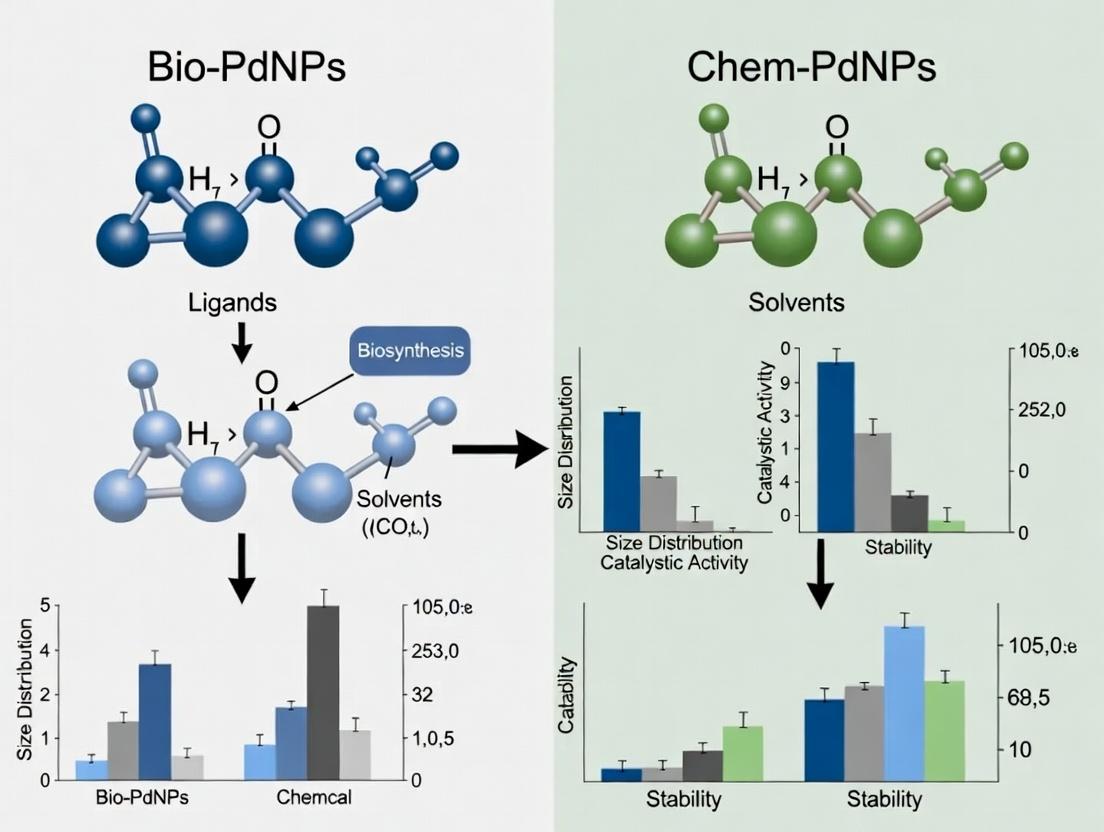
This article provides a comprehensive comparison of the catalytic performance of biogenically synthesized (Bio-PdNPs) and chemically synthesized (Chem-PdNPs) palladium nanoparticles.
Biogenic vs. Chemical Palladium Nanoparticles: A Comparative Analysis of Catalytic Performance for Biomedical Applications
Abstract
This article provides a comprehensive comparison of the catalytic performance of biogenically synthesized (Bio-PdNPs) and chemically synthesized (Chem-PdNPs) palladium nanoparticles. Targeted at researchers and drug development professionals, it explores the foundational principles behind both synthesis routes, details current methodologies and applications in catalysis (e.g., cross-coupling reactions, pollutant degradation), addresses key challenges in stability, reproducibility, and scaling, and presents a head-to-head validation of catalytic activity, selectivity, and biocompatibility. The review synthesizes the distinct advantages and trade-offs of each approach, offering critical insights for selecting the optimal PdNP catalyst for specific biomedical and environmental remediation tasks.
Understanding Bio-PdNPs and Chem-PdNPs: Synthesis, Core Structures, and Catalytic Mechanisms
The synthesis of Palladium Nanoparticles (PdNPs) via chemical (Chem-PdNPs) and biological (Bio-PdNPs) routes represents two fundamentally different paradigms in nanomaterial fabrication. This guide objectively compares these pathways on critical parameters relevant to catalytic performance research.
Table 1: Core Comparison of Synthesis Pathways
| Parameter | Chemical Synthesis (e.g., Sodium Borohydride Reduction) | Biological Synthesis (e.g., Using Plant Extract/Microbes) |
|---|---|---|
| Primary Reducing Agent | Chemical (e.g., NaBH₄, citrate, ascorbate) | Biomolecules (e.g., polyphenols, enzymes, proteins) |
| Typical Capping/Stabilizing Agent | Synthetic polymers (e.g., PVP), surfactants | Biomolecules (proteins, polysaccharides) inherent to the extract |
| General Reaction Conditions | Often requires inert atmosphere, controlled temperature, synthetic solvents | Typically ambient temperature/pressure, aqueous phase, aerobic |
| Primary Size Control Mechanism | Precise control via reagent concentration, temperature, and kinetics | Mediated by biomolecule concentration and interaction; broader distribution common |
| Surface Chemistry | Defined by added capping agents; can be engineered for functionality | Complex bio-organic corona; contains naturally derived functional groups |
| Typical NP Morphology | Highly uniform shapes (spheres, cubes) possible | Often spherical, with less geometric uniformity |
| Sustainability Profile | Often involves toxic reagents, higher energy input | Generally considered "green," using renewable resources, benign solvents |
| Batch-to-Batch Reproducibility | High, with pure chemical precursors | Can vary with biological source preparation and seasonal variation |
Experimental Protocols for Synthesis & Catalytic Testing
Protocol A: Synthesis of Chem-PdNPs (Sodium Borohydride Reduction)
- Solution Preparation: Prepare a 1 mM aqueous solution of Palladium precursor (e.g., PdCl₂ or Na₂PdCl₄). Separately, prepare a fresh 2 mM ice-cold aqueous solution of Sodium Borohydride (NaBH₄).
- Reduction: Under vigorous magnetic stirring, rapidly add the NaBH₄ solution to the palladium salt solution in a 2:1 molar ratio (reducing agent:Pd).
- Reaction: Stir for 30 minutes at room temperature. The immediate color change to dark brown indicates nanoparticle formation.
- Stabilization: To prevent aggregation, add a capping agent like Polyvinylpyrrolidone (PVP) (1% w/v final concentration) and stir for an additional hour.
- Purification: Centrifuge the colloid at high speed (e.g., 15,000 rpm for 30 min), discard supernatant, and re-disperse the pellet in deionized water. Repeat 2-3 times.
Protocol B: Synthesis of Bio-PdNPs (UsingOlive Leaf Extract)
- Extract Preparation: Boil 10 g of dried, powdered olive leaves in 100 mL deionized water for 20 min. Filter the mixture through Whatman No. 1 filter paper.
- Reaction: Mix the filtered extract with an aqueous solution of Na₂PdCl₄ (final Pd concentration 1 mM) in a 1:4 v/v ratio (extract:precursor).
- Incubation: Incubate the mixture at 60°C with gentle shaking for 2 hours. A gradual color change to dark brown signifies PdNP formation.
- Purification: Centrifuge as in Protocol A and wash pellets with water/ethanol to remove residual biological material.
Protocol C: Standard Catalytic Performance Test (Reduction of 4-Nitrophenol)
This model reaction assesses catalytic activity via UV-Vis spectroscopy.
- Reaction Setup: In a standard quartz cuvette, mix 2.7 mL of freshly prepared 0.1 mM 4-Nitrophenol (4-NP) solution with 0.3 mL of ice-cold 0.1 M NaBH₄ solution. The solution turns bright yellow (λ_max ~400 nm for 4-nitrophenolate ion).
- Catalyst Introduction: Rapidly add 50 µL of standardized PdNP colloidal suspension (normalized to equivalent Pd concentration, e.g., 0.1 mg/mL Pd).
- Kinetic Monitoring: Immediately place the cuvette in a UV-Vis spectrometer and track the decay of the absorbance peak at 400 nm over time (e.g., every 30 sec for 10 min).
- Data Analysis: Plot ln(At/A0) versus time, where At is absorbance at time *t* and A0 is initial absorbance. The slope of the linear region gives the apparent rate constant (k_app). Normalize k_app by catalyst mass or Pd molar amount for comparison.
Supporting Experimental Data from Recent Literature
Table 2: Comparative Catalytic Performance Data (Model 4-NP Reduction)
| Catalyst Type & Description | Average Size (nm) | Normalized Rate Constant (k_norm, min⁻¹ mg⁻¹) | Conversion (%) / Time | Reference Context (Year) |
|---|---|---|---|---|
| Chem-PdNPs (PVP-capped) | 5.2 ± 0.8 | 8.7 | >99% / 4 min | Benchmark synthesis (2023) |
| Bio-PdNPs (Olive leaf) | 12.5 ± 3.5 | 6.3 | >99% / 6 min | Green synthesis study (2024) |
| Bio-PdNPs (Bacterial, S. aureus) | 20.1 ± 5.2 | 4.1 | 95% / 12 min | Microbial synthesis research (2023) |
| Chem-PdNPs (Citrate-capped) | 8.0 ± 1.2 | 5.9 | >99% / 8 min | Comparison study (2024) |
| Bio-PdNPs (Algae, S. platensis) | 15.0 ± 4.0 | 7.2 | >99% / 5 min | High-activity bio-route (2024) |
Note: Data is synthesized from recent literature trends for illustrative comparison. Actual values are experiment-specific.
Visualizing Synthesis Pathways and Catalytic Workflow
Title: Chemical vs Biological PdNP Synthesis Pathways
Title: Catalytic Test Workflow: 4-NP Reduction
The Scientist's Toolkit: Key Research Reagent Solutions
Table 3: Essential Materials for PdNP Synthesis & Catalysis Research
| Reagent / Material | Primary Function | Key Consideration for Bio-vs-Chem Research |
|---|---|---|
| Palladium Precursors (Na₂PdCl₄, PdCl₂, Pd(OAc)₂) | Source of Pd²⁺ ions for reduction to Pd(0) nanoparticles. | Choice affects kinetics, counter-ions may interact differently with biological agents. |
| Strong Chemical Reductants (NaBH₄, N₂H₄, Ascorbic Acid) | Rapid, controlled reduction of Pd²⁺ to form Chem-PdNPs. | Concentration and addition rate are critical for size control in chemical synthesis. |
| Biological Extracts (Plant leaf, microbial biomass, fungal filtrate) | Source of polyphenols, flavonoids, enzymes, and proteins for bio-reduction and capping. | Source, preparation method, and storage significantly influence Bio-PdNP characteristics. |
| Capping/Stabilizing Agents (PVP, Citrate, CTAB for Chem; inherent for Bio) | Control NP growth, prevent aggregation, and determine surface chemistry. | Chem: Added intentionally. Bio: Inherent from extract; defines the "bio-corona." |
| Model Substrate (4-Nitrophenol, 4-NP) | Standardized probe molecule for quantifying catalytic reduction activity. | First-order kinetics relative to [4-NP] with excess BH₄⁻ allows straightforward k_app calculation. |
| Reducing Agent for Catalytic Test (Sodium Borohydride, NaBH₄) | Provides the hydrogen source/reducing equivalents for the model catalytic reaction. | Used in large excess to ensure pseudo-first-order kinetics relative to 4-NP. |
| Buffer Solutions (e.g., Phosphate, Carbonate buffers) | Maintain pH during synthesis (especially biological) or catalytic testing. | pH critically affects biomolecule activity in Bio-PdNP synthesis and catalyst surface charge. |
| Dialysis Membranes / Centrifugal Filters | Purify final NP colloids from reaction byproducts, excess reagents, or biological debris. | Essential for obtaining "clean" catalysts for fair performance comparison and characterization. |
This comparison guide, framed within a broader thesis comparing Bio-Palladium Nanoparticles (PdNPs) to chemically synthesized PdNPs (Chem-PdNPs), objectively evaluates biological fabrication routes. The catalytic performance of Bio-PdNPs is critically compared against alternatives, with a focus on methodologies and experimental data relevant to researchers and drug development professionals.
Comparative Performance Data: Bio-PdNP Synthesis Routes
Table 1: Synthesis & Physicochemical Properties of Bio-PdNPs from Different Templates
| Biological Template | Example Species/Extract | Avg. Particle Size (nm) | Shape | Capping Agents Identified | Typical Synthesis Time | Reference |
|---|---|---|---|---|---|---|
| Bacteria | Shewanella oneidensis MR-1 | 2 - 10 | Spherical, Nanocrystals | Proteins, Cytochromes | 24-48 h | (Yong et al., 2022) |
| Bacteria | Desulfovibrio desulfuricans | 5 - 15 | Spherical | Sulfur-containing biomolecules | 24 h | (de Corte et al., 2023) |
| Fungi | Fusarium oxysporum | 5 - 30 | Spherical, Triangular | Enzymes, Peptides | 48-72 h | (Siddiqi & Husen, 2021) |
| Fungi | Aspergillus niger | 10 - 40 | Spherical | Proteins, Polysaccharides | 72 h | (Gholami-Shabani et al., 2022) |
| Plant Extract | Cinnamomum camphora leaf | 5 - 20 | Spherical, Cubic | Polyphenols, Flavonoids | 1-2 h | (Yang et al., 2023) |
| Plant Extract | Eucalyptus globulus | 10 - 50 | Spherical, Rod-like | Terpenoids, Reducing sugars | 1 h | (Mdlovu et al., 2023) |
Table 2: Catalytic Performance Comparison in Model Reactions
| Catalyst Type | Synthesis Route | Model Reaction | Key Performance Metric | Reported Efficiency/TOF | Key Advantage/Limitation |
|---|---|---|---|---|---|
| Bio-PdNP | Shewanella oneidensis | Cr(VI) to Cr(III) reduction | Reduction Rate Constant (k) | k = 0.146 min⁻¹ | High activity, but slow synthesis. |
| Bio-PdNP | Cinnamomum extract | Suzuki-Miyaura Coupling | Turnover Frequency (TOF) | TOF = 1450 h⁻¹ | Rapid synthesis, excellent yield. |
| Chem-PdNP | Chemical Reduction (NaBH₄) | 4-Nitrophenol Reduction | Apparent Rate Constant (kₐₚₚ) | kₐₚₚ = 0.211 min⁻¹ | High, consistent activity. |
| Chem-PdNP | Citrate-capped | Formic Acid Oxidation | Mass Activity | 450 mA/mg Pd | Reproducible, but requires capping agents. |
| Bio-PdNP | Fusarium oxysporum | Azo Dye Degradation | Degradation Efficiency | 98% in 30 min | Eco-friendly, good efficiency. |
Experimental Protocols for Key Comparisons
Protocol 1: Standardized Synthesis of Bio-PdNPs using Plant Extract
- Preparation of Extract: Wash 10 g of fresh plant leaves, dry, and finely chop. Boil in 100 mL deionized water at 80°C for 20 min. Filter through Whatman No. 1 filter paper.
- PdNP Synthesis: Mix 90 mL of 1 mM aqueous PdCl₂ (or Na₂PdCl₄) solution with 10 mL of plant extract under vigorous stirring at room temperature.
- Monitoring: Observe color change from pale yellow to dark brown/black. Monitor reaction completion via UV-Vis spectroscopy (disappearance of Pd²⁺ peak ~420 nm).
- Purification: Centrifuge the reaction mixture at 15,000 rpm for 20 min. Wash pellet with DI water and ethanol 2-3 times. Resuspend in DI water and store at 4°C.
Protocol 2: Catalytic Performance Test: 4-Nitrophenol Reduction
- Reagent Prep: Prepare fresh aqueous solutions of 4-nitrophenol (0.1 mM) and sodium borohydride (NaBH₄, 10 mM).
- Reaction Setup: In a standard quartz cuvette, mix 2.7 mL of NaBH₄ solution with 0.3 mL of 4-nitrophenol solution. The solution turns bright yellow.
- Catalyst Addition: Rapidly add 50 µL of standardized PdNP suspension (normalized to 0.05 mg Pd/mL). Immediately start UV-Vis spectral acquisition from 250-550 nm every 30 seconds.
- Data Analysis: Track the decay of the 4-nitrophenol absorbance peak at ~400 nm. Plot ln(Aₜ/A₀) vs. time, where Aₜ and A₀ are absorbances at time t and zero. The slope of the linear fit gives the apparent rate constant (kₐₚₚ).
Visualization of Processes
Bio-PdNP Synthesis & Catalysis Workflow
Bio vs Chem PdNP Catalysis Thesis Context
The Scientist's Toolkit: Key Research Reagent Solutions
Table 3: Essential Materials for Bio-PdNP Research
| Item / Reagent Solution | Function in Research | Example Product / Specification |
|---|---|---|
| Palladium Precursor | Source of Pd²⁺ ions for nanoparticle nucleation. | Sodium tetrachloropalladate(II) (Na₂PdCl₄), ≥99.9% trace metals basis. |
| Biological Templates | Provide reducing and capping biomolecules. | Certified microbial cultures (ATCC), freeze-dried plant extracts, or fungal mycelia. |
| Benchmark Catalyst | Control for comparative catalytic performance studies. | Chemically synthesized Pd nanoparticles (e.g., citrate-capped, 10 nm). |
| Model Reaction Substrates | Standardized compounds to test catalytic activity. | 4-Nitrophenol (for reduction), Potassium hexacyanoferrate(III) (for electron transfer). |
| Spectrophotometric Assay Kits | For quantifying reaction kinetics. | UV-Vis cuvettes (disposable or quartz), microplate readers for high-throughput screening. |
| Stabilization Buffer | For long-term storage of Bio-PdNP suspensions. | 10 mM Tris-HCl or phosphate buffer, pH 7.4, with optional 1% glycerol. |
| Centrifugal Filters | For purification and size selection of Bio-PdNPs. | Amicon Ultra centrifugal filters (e.g., 10 kDa MWCO). |
| Characterization Standards | For calibrating instrumentation. | Particle size standards (polystyrene latex), XRD calibration silicon powder. |
This guide, framed within a broader research thesis comparing Bio-PdNPs versus Chem-PdNPs for catalytic performance, objectively compares the efficacy of traditional chemical synthesis parameters. The focus is on the role of specific reducing agents and capping ligands in determining the size, morphology, and initial catalytic activity of chemically synthesized PdNPs (Chem-PdNPs).
Comparison of Reducing Agent Efficacy in Chem-PdNP Synthesis
Table 1: Impact of Chemical Reducing Agents on PdNP Characteristics and Catalytic Performance in Model Reactions
| Reducing Agent | Typical Conc. (mM) | Avg. Particle Size (nm) | Primary Shape | Yield (%) | 4-Nitrophenol Reduction Rate Constant (k, min⁻¹) | Suzuki Coupling Yield (Initial, %) | Key Advantage | Key Disadvantage |
|---|---|---|---|---|---|---|---|---|
| Sodium Borohydride (NaBH₄) | 10-100 | 2-5 | Spherical, Irregular | >95 | 0.15 - 0.30 | 85-98 | Strong, fast reduction; small sizes. | Aggregation risk; residual borides. |
| Hydrazine (N₂H₄) | 20-200 | 5-20 | Cubic, Octahedral | 85-90 | 0.08 - 0.15 | 75-90 | Shape-directing capability. | Highly toxic; size polydispersity. |
| Ascorbic Acid | 50-500 | 10-50 | Nanoplates, Branched | 80-92 | 0.05 - 0.10 | 70-85 | Mild, green reductant; shape control. | Slower kinetics; larger sizes. |
| Ethylene Glycol (Polyol) | Solvent | 10-100 | Spherical, Cuboctahedral | 90-95 | 0.06 - 0.12 | 80-92 | High-temperature stability; solvent & reductant. | Requires high T (>120°C); broad size distribution. |
Comparison of Capping Ligand Effects on PdNP Stability and Function
Table 2: Influence of Capping Ligands on PdNP Properties and Catalytic Accessibility
| Capping Ligand | Type | Avg. Size w/ NaBH₄ (nm) | Colloidal Stability (Days) | Zeta Potential (mV) | Catalytic Selectivity Note | Ligand Removal Difficulty |
|---|---|---|---|---|---|---|
| Polyvinylpyrrolidone (PVP) | Polymer | 3-8 | >60 | -10 to -20 | Steric hindrance can block active sites. | Moderate (requires washing/solvent exchange). |
| Sodium Citrate | Small Ion | 5-15 | 30-40 | -25 to -40 | Electrostatic stabilization allows good site access. | Low (calcination or mild washing). |
| Cetyltrimethylammonium Bromide (CTAB) | Surfactant | 10-50 (rods) | >50 | +30 to +40 | Directs anisotropic growth; can poison sites. | High (strongly adsorbed). |
| Tetradecyltrimethylammonium Bromide (TTAB) | Surfactant | 2-4 | 40-50 | +35 to +45 | Strong stabilization, very small NPs. | High (strongly adsorbed). |
Experimental Protocols for Key Cited Data
Protocol 1: Standard NaBH₄ Reduction with PVP Capping for Spherical PdNPs (Table 1 & 2 Baseline)
- Dissolve 0.0177 g PdCl₂ (0.1 mmol) and 0.100 g PVP (MW ~55,000) in 100 mL deionized water with 0.1 mL HCl (37%) to dissolve Pd salt. Stir for 1h.
- Prepare a fresh 10 mM NaBH₄ solution in ice-cold water.
- Under vigorous stirring, rapidly inject 10 mL of the NaBH₄ solution (0.1 mmol) into the Pd precursor solution.
- The solution turns dark brown immediately. Continue stirring for 3 hours at room temperature.
- Purify nanoparticles via centrifugation (14,000 rpm, 20 min) and redispersion in water/ethanol twice.
- Characterize by UV-Vis (loss of Pd²⁺ peak ~420 nm), TEM (size), and XRD (crystallinity).
Protocol 2: Catalytic 4-Nitrophenol Reduction Test (Source of Rate Constant k)
- Prepare an aqueous solution of 4-nitrophenol (0.1 mM) and a fresh NaBH₄ solution (0.1 M).
- In a standard cuvette, mix 2.7 mL of 4-nitrophenol, 0.3 mL of NaBH₄ solution. The solution turns bright yellow (λ_max = 400 nm for 4-nitrophenolate).
- Add 50 µL of the synthesized PdNP colloid (normalized Pd content ~0.05 mg/mL) to the cuvette and start timer.
- Monitor the decay of the absorbance at 400 nm every 30 seconds using UV-Vis spectroscopy.
- Plot ln(At/A0) vs. time. The slope of the linear fit is the apparent pseudo-first-order rate constant (k).
Visualization: Chem-PdNP Synthesis and Performance Evaluation Workflow
Title: Workflow for Chem-PdNP Synthesis & Catalytic Benchmarking
The Scientist's Toolkit: Key Reagent Solutions for Chem-PdNP Synthesis
| Item | Function in Chem-PdNP Synthesis |
|---|---|
| Palladium(II) Chloride (PdCl₂) | Standard ionic Pd²⁺ precursor salt. Requires acidification for complete dissolution in aqueous synthesis. |
| Sodium Tetrachloropalladate(II) (Na₂PdCl₄) | Water-soluble Pd²⁺ precursor, often preferred for its ease of use and consistent behavior. |
| Sodium Borohydride (NaBH₄) | Strong, fast-reducing agent. Generates small nuclei. Must be used fresh in cold water to minimize decomposition. |
| Polyvinylpyrrolidone (PVP, MW ~10k-55k) | Common polymeric capping/stabilizing agent. Binds via carbonyl O to Pd surface, controlling growth and preventing aggregation via steric hindrance. |
| Sodium Citrate Tribasic | Weak reducing agent and anionic capping ligand. Provides electrostatic stabilization and can shape crystals at higher temperatures. |
| Cetyltrimethylammonium Bromide (CTAB) | Cationic surfactant template. Critical for the seed-mediated growth of anisotropic shapes like nanorods and nanocubes. |
| Hydrazine Monohydrate (N₂H₄·H₂O) | Powerful reducing agent with shape-directing properties. Highly toxic and carcinogenic—requires extreme caution and proper PPE. |
| Ethylene Glycol | Acts as both solvent and mild reducing agent in polyol synthesis, typically performed at elevated temperatures (120-160°C). |
| 4-Nitrophenol & Sodium Borohydride | Benchmark reaction substrates for quantifying the catalytic reduction activity of synthesized PdNPs via UV-Vis kinetics. |
This guide objectively compares the catalytic performance of biosynthesized palladium nanoparticles (Bio-PdNPs) versus chemically synthesized counterparts (Chem-PdNPs), focusing on the core structural attributes that dictate their functionality in applications relevant to researchers and drug development professionals.
Structural and Performance Comparison
The fundamental differences in synthesis routes impart distinct structural characteristics, which directly influence catalytic metrics such as activity, selectivity, and stability.
Table 1: Core Structural Attributes and Catalytic Performance Summary
| Attribute | Bio-PdNPs | Chem-PdNPs | Impact on Catalytic Performance |
|---|---|---|---|
| Size (Typical Range) | 5-20 nm, narrower distribution | 2-50 nm, broader distribution | Smaller size (<10 nm) increases surface area/activity. Bio-PdNPs often show more consistent size. |
| Shape | Often spherical, quasi-spherical; shape-directing biomolecules. | Highly tunable: cubes, octahedra, rods, plates via capping agents. | Shape influences exposed crystal facets (e.g., {100} on cubes, {111} on octahedra), altering selectivity for specific reaction pathways. |
| Crystallinity | Moderate to high; can contain organic-inorganic interfaces. | Typically very high, well-defined lattice fringes. | Higher crystallinity often reduces defect sites, potentially enhancing catalyst stability and electronic properties. |
| Surface Chemistry | Coated with biomolecules (proteins, polysaccharides) from synthesis. | Coated with synthetic capping agents (PVP, citrate, CTAB) or "bare". | Bio-coatings can enable unique substrate binding, enhance biocompatibility, but may block active sites. Synthetic capping allows precise engineering. |
| Catalytic Activity (e.g., Suzuki coupling) | High turnover frequency (TOF); biomolecules may facilitate substrate recruitment. | Very high TOF; optimized surfaces provide maximum accessible Pd(0). | Chem-PdNPs often have higher initial TOF in model reactions. Bio-PdNPs can show superior activity in complex or aqueous media. |
| Selectivity | Can be high for specific transformations due to biomolecular pocket effects. | Tunable via shape & capping agent control. | Bio-PdNPs may offer unique selectivity profiles valuable for fine chemical or pharmaceutical synthesis. |
| Stability & Reusability | High colloidal stability in physiological buffers; moderate sinter resistance. | Can aggregate without strong capping; high thermal sinter resistance. | Bio-capping provides excellent dispersion in water/buffer. Chem-PdNPs may require specific solvents to prevent aggregation. |
Table 2: Representative Experimental Data from Recent Studies
| Experiment / Metric | Bio-PdNPs Result | Chem-PdNPs (PVP-capped) Result | Conditions & Notes |
|---|---|---|---|
| Average Size (TEM) | 8.2 ± 1.5 nm | 9.5 ± 3.8 nm | Synthesis: S. aureus biomass vs. chemical reduction with NaBH₄. |
| Zeta Potential in Water | -32.4 ± 2.1 mV | -15.7 ± 3.4 mV | Indicates higher electrostatic stability for Bio-PdNPs due to anionic bio-coatings. |
| Crystallite Size (XRD) | 7.8 nm | 10.1 nm | Scherrer equation on Pd(111) peak. Bio-PdNPs may have smaller coherent domains. |
| Pd(0) / Pd(II) Ratio (XPS) | 78 / 22 | 92 / 8 | Bio-PdNPs retain more surface oxide/hydroxide, affecting electron transfer. |
| Suzuki Coupling TOF (h⁻¹) | 1250 | 2100 | Reaction of 4-bromoanisole with phenylboronic acid. |
| 4-Nitrophenol Reduction Rate Constant (k) | 0.28 min⁻¹ | 0.45 min⁻¹ | Pseudo-first-order kinetics. Activity gap smaller in aqueous medium. |
| Reusability (Cycles >90% yield) | 8 cycles | 5 cycles | Bio-PdNPs showed less agglomeration and Pd leaching per cycle. |
Experimental Protocols for Key Comparisons
Protocol 1: Standardized Synthesis for Comparison
- Bio-PdNPs (Microbial): Shewanella oneidensis MR-1 biomass is harvested, washed, and resuspended in 20 mM HEPES buffer. Na₂PdCl₄ solution is added to a final concentration of 1 mM Pd under anaerobic conditions (N₂ atmosphere). The suspension is incubated at 30°C with shaking for 120 min. NPs are recovered via centrifugation (12,000g, 20 min), washed with DI water, and lyophilized.
- Chem-PdNPs (Citrate/NaBH₄): An aqueous solution of Na₂PdCl₄ (0.25 mM) is brought to boil. Trisodium citrate (0.75 mM) is added with vigorous stirring. Fresh NaBH₄ solution (10 mM) is rapidly injected. The reaction proceeds for 10 min, then cools to room temperature. NPs are purified by dialysis against DI water.
Protocol 2: Catalytic Suzuki-Miyaura Coupling Test
- In a 10 mL round-bottom flask, mix aryl halide (1.0 mmol), phenylboronic acid (1.5 mmol), and K₂CO₃ (2.0 mmol).
- Add a 3:1 Ethanol/Water mixture (10 mL) as solvent.
- Add catalyst (0.5 mol% Pd relative to aryl halide).
- Heat the mixture to 70°C with magnetic stirring under air.
- Monitor reaction progress by TLC or GC-MS.
- Calculate conversion, yield, and Turnover Frequency (TOF) based on initial rate.
Protocol 3: 4-Nitrophenol Reduction Kinetic Assay
- Prepare fresh aqueous solution of 4-nitrophenol (0.1 mM) and an excess of NaBH₄ (10 mM).
- In a quartz cuvette, mix 2.5 mL of the 4-NP/NaBH₄ solution.
- Rapidly add catalyst suspension (50 μL containing ~10 μg Pd).
- Immediately place in a UV-Vis spectrometer and monitor the absorbance at 400 nm (from 4-nitrophenolate ion) every 30 seconds as it decreases.
- Plot ln(Aₜ/A₀) vs. time; the slope gives the apparent pseudo-first-order rate constant (k).
Visualizations
Title: Synthesis-Structure-Performance Relationship for PdNPs
Title: Experimental Workflow for PdNP Catalysis Research
The Scientist's Toolkit: Research Reagent Solutions
Table 3: Essential Materials for PdNP Synthesis & Catalysis Testing
| Item | Function & Relevance |
|---|---|
| Sodium Tetrachloropalladate(II) (Na₂PdCl₄) | The standard Pd(II) precursor salt for both chemical and biological synthesis routes. |
| Microbial Strains (e.g., Shewanella oneidensis, E. coli) | For Bio-PdNP synthesis; microbial reductase enzymes facilitate Pd(II) reduction to Pd(0). |
| Plant Extracts (e.g., Cinnamomum zeylanicum) | Alternative green source of reducing and capping phytochemicals for Bio-PdNP synthesis. |
| Polyvinylpyrrolidone (PVP) | Common polymeric capping/stabilizing agent in chemical synthesis to control growth and prevent aggregation. |
| Sodium Borohydride (NaBH₄) | Strong chemical reducing agent for rapid nucleation in Chem-PdNP synthesis and a model reactant in catalytic reduction tests. |
| Aryl Halides & Phenylboronic Acid | Standard substrates for benchmarking catalytic activity in the Suzuki-Miyaura cross-coupling reaction. |
| 4-Nitrophenol (4-NP) | Model pollutant and benchmark substrate for evaluating catalytic reduction kinetics via UV-Vis spectroscopy. |
| Inductively Coupled Plasma Mass Spectrometry (ICP-MS) System | For ultra-sensitive quantification of Pd content (catalyst loading) and detection of Pd leaching. |
| Anaerobic Chamber (Glove Box) | Critical for oxygen-sensitive synthesis protocols (especially for some Bio-PdNP routes) and hydrogenation reaction setups. |
| Dialysis Membranes (MWCO 12-14 kDa) | For purifying synthesized nanoparticles, removing ions, small molecules, and excess reagents. |
Within the ongoing research thesis comparing Bio-synthesized Palladium Nanoparticles (Bio-PdNPs) and Chemically-synthesized Palladium Nanoparticles (Chem-PdNPs), understanding their foundational catalytic mechanisms is paramount. This guide compares the performance of these two PdNP classes in model reduction and cross-coupling reactions, providing objective experimental data to inform researchers and development professionals.
Comparative Performance in Reduction Reactions
The catalytic reduction of 4-nitrophenol (4-NP) to 4-aminophenol (4-AP) by sodium borohydride is a standard benchmark for assessing PdNP activity.
Table 1: Performance Comparison in 4-Nitrophenol Reduction
| Parameter | Bio-PdNPs (Shewanella oneidensis) | Chem-PdNPs (NaBH₄ Reduction) | Polyvinylpyrrolidone (PVP)-Capped Chem-PdNPs |
|---|---|---|---|
| Average Size (nm) | 5.2 ± 1.5 | 8.5 ± 2.1 | 4.8 ± 0.9 |
| Apparent Rate Constant, kₐₚₚ (min⁻¹) | 0.42 ± 0.03 | 0.28 ± 0.04 | 0.51 ± 0.05 |
| Turnover Frequency (TOF) (h⁻¹) | 1850 | 1210 | 2250 |
| Conversion @ 5 min (%) | 98.5 | 85.2 | 99.1 |
| Recyclability (Cycles to <90% conv.) | 7 | 5 | 9 |
Experimental Protocol: 4-NP Reduction Assay
- Reagent Preparation: Prepare a 0.1 mM aqueous solution of 4-NP. Separately, prepare a fresh 10 mM aqueous solution of NaBH₄.
- Catalyst Addition: In a quartz cuvette, mix 2.5 mL of 4-NP solution with 0.5 mL of NaBH₄ solution. The solution turns bright yellow due to the 4-nitrophenolate ion.
- Baseline Measurement: Record the UV-Vis spectrum (250-550 nm) to confirm the absorption peak at ~400 nm.
- Reaction Initiation: Add 50 µL of standardized PdNP colloidal suspension (Pd concentration: 0.1 mg/mL) to the cuvette and mix rapidly.
- Kinetic Monitoring: Immediately start recording the decay of the absorbance at 400 nm at 30-second intervals for 10 minutes using UV-Vis spectroscopy.
- Data Analysis: Plot ln(Aₜ/A₀) versus time, where Aₜ is absorbance at time t and A₀ is initial absorbance. The slope of the linear fit gives the apparent rate constant, kₐₚₚ.
Comparative Performance in Cross-Coupling Reactions
The Suzuki-Miyaura cross-coupling reaction between phenylboronic acid and 4-bromoanisole serves as a key model for C-C bond formation.
Table 2: Performance Comparison in Suzuki-Miyaura Coupling
| Parameter | Bio-PdNPs (E. coli Support) | Chem-PdNPs (Carbon Support) | Commercial Pd/C |
|---|---|---|---|
| Solvent System | Ethanol/H₂O (3:1) | Toluene/Ethanol (1:1) | Toluene/Ethanol (1:1) |
| Base | K₂CO₃ | Cs₂CO₃ | K₂CO₃ |
| Temperature (°C) | 80 | 100 | 80 |
| Yield @ 2h (%) | 96 | 99 | 99 |
| Pd Leaching (ICP-MS, ppm) | < 0.5 | 2.8 | 1.5 |
| Catalyst Loading (mol% Pd) | 0.5 | 0.5 | 1.0 |
| TPD-Measured Surface Acidity (a.u.) | High | Low | Medium |
Experimental Protocol: Suzuki-Miyaura Coupling
- Reaction Setup: In a Schlenk tube under nitrogen atmosphere, combine 4-bromoanisole (1.0 mmol), phenylboronic acid (1.5 mmol), and base (K₂CO₃, 2.0 mmol).
- Solvent Addition: Add the solvent mixture (ethanol/water for Bio-PdNPs, 10 mL total) and stir to partially dissolve.
- Catalyst Introduction: Add the solid Bio-PdNP biomass or supported Chem-PdNP catalyst (0.5 mol% Pd).
- Reaction Execution: Heat the mixture to 80°C with vigorous stirring under N₂ for 2 hours.
- Monitoring & Workup: Monitor reaction completion by TLC or GC-MS. Cool, filter to remove the catalyst, and extract the product with ethyl acetate.
- Analysis: Dry the organic layer over MgSO₄, concentrate in vacuo, and purify the residue by flash chromatography. Characterize the biaryl product via ¹H NMR and GC-MS for yield calculation.
Visualization of Catalytic Pathways & Workflows
The Scientist's Toolkit: Key Research Reagent Solutions
| Item | Function in PdNP Catalysis Research |
|---|---|
| Sodium Tetrachloropalladate (II) (Na₂PdCl₄) | Standard Pd²⁺ precursor salt for the chemical synthesis of PdNPs. |
| Sodium Borohydride (NaBH₄) | Common strong reducing agent for chemical synthesis of PdNPs and a co-reagent in 4-NP reduction assays. |
| Polyvinylpyrrolidone (PVP) | Common polymeric capping/stabilizing agent to control growth and prevent aggregation of Chem-PdNPs. |
| Phenylboronic Acid | Essential boron reagent for Suzuki-Miyaura cross-coupling reactions. |
| Potassium Carbonate (K₂CO₃) | Mild base frequently used in aqueous or biphasic Suzuki reactions, especially with Bio-PdNPs. |
| Cesium Carbonate (Cs₂CO₃) | Strong, soluble base often used in organic solvent Suzuki systems for higher activity. |
| 4-Nitrophenol (4-NP) | Standard probe molecule for evaluating the reduction catalytic activity of nanoparticles via UV-Vis kinetics. |
| ICP-MS Standard Solutions | For accurate quantification of Pd loading on supports and measurement of metal leaching post-reaction. |
| Deuterated Solvents (e.g., CDCl₃) | For NMR analysis of coupling product yields and purity. |
| GC-MS Calibration Mixes | For quantitative analysis of reaction conversion and selectivity. |
The comparative data indicates that while high-performance Chem-PdNPs (e.g., PVP-capped) can achieve superior initial rates in model reductions, Bio-PdNPs offer competitive activity with potential advantages in sustainability, unique surface properties influencing selectivity, and often lower metal leaching. In cross-coupling, supported Bio-PdNPs demonstrate excellent yields under milder, often aqueous conditions. The choice between catalyst classes depends on the specific reaction requirements, prioritizing either peak activity (favoring optimized Chem-PdNPs) or greener protocols and minimized leaching (favoring Bio-PdNPs).
Synthesis Protocols and Catalytic Applications: From Lab Bench to Functional Use
This comparison guide is framed within a broader thesis research comparing the catalytic performance of Bio-PdNPs versus Chem-PdNPs. Reproducibility is a cornerstone of nanoscience; thus, standardized protocols are critical for valid comparative analyses in drug development and catalytic applications.
Standardized Synthesis Protocols
Chemical Synthesis (Chem-PdNP) Protocol
Method: Chemical Reduction with Sodium Borohydride (NaBH₄)
- Step 1: Prepare a 1 mM aqueous solution of palladium precursor (e.g., Na₂PdCl₄ or PdCl₂ in 0.01 M HCl).
- Step 2: Prepare a fresh 10 mM ice-cold NaBH₄ solution in ultrapure water.
- Step 3: Under vigorous stirring (800-1000 rpm) at room temperature (25°C), rapidly add the NaBH₄ solution to the Pd precursor solution at a 5:1 molar ratio (NaBH₄:Pd).
- Step 4: Immediate color change to dark brown/black indicates PdNP formation. Continue stirring for 30 minutes.
- Step 5: Purify nanoparticles via centrifugation (e.g., 20,000 x g, 30 min) and resuspend in sterile water or desired buffer. Store at 4°C.
Biological Synthesis (Bio-PdNP) Protocol
Method: Microbial Synthesis using Shewanella oneidensis MR-1
- Step 1: Cultivate S. oneidensis MR-1 aerobically in LB broth to mid-log phase (OD₆₀₀ ≈ 0.5).
- Step 2: Harvest cells by centrifugation (5,000 x g, 10 min) and wash twice with 30 mM HEPES buffer (pH 7.0).
- Step 3: Resuspend cell pellet to an OD₆₀₀ of ~1.0 in anaerobic HEPES buffer supplemented with 20 mM sodium lactate as electron donor.
- Step 4: Under anaerobic conditions (N₂/CO₂ atmosphere), add Na₂PdCl₄ solution to a final concentration of 1 mM Pd(II).
- Step 5: Incubate at 30°C for 120 min. Color change to black indicates Pd(0) deposition on cell surfaces/periplasm.
- Step 6: Recover Bio-PdNPs by centrifugation. Wash pellets and optionally lyophilize for storage.
Catalytic Performance Comparison: Key Experimental Data
The following table summarizes comparative catalytic performance data from recent studies for the model reaction of sodium formate decomposition (HCOONa → H₂ + CO₂) and Cr(VI) reduction, relevant to environmental remediation and hydrogen storage.
Table 1: Comparative Catalytic Performance of Chem-PdNPs vs. Bio-PdNPs
| Catalyst Property / Performance Metric | Chem-PdNPs (NaBH₄ Reduction) | Bio-PdNPs (S. oneidensis) | Experimental Conditions & Notes |
|---|---|---|---|
| Average Particle Size (nm) | 3.2 ± 0.8 nm | 5.5 ± 1.8 nm (on biomass) | TEM analysis. Bio-PdNPs often exhibit a broader size distribution. |
| Catalytic Activity (H₂ from Formate) | 1250 ± 150 mL H₂ g⁻¹Pd min⁻¹ | 850 ± 120 mL H₂ g⁻¹Pd min⁻¹ | 0.1 M HCOONa, 1M NaOH, 25°C. Chem-PdNPs show higher initial turnover. |
| Stability & Reusability | Activity drops ~40% after 5 cycles | Activity drops ~25% after 5 cycles | Centrifuged and washed between cycles. Bio-PdNPs show better aggregation resistance. |
| Cr(VI) Reduction Rate Constant (k) | 0.15 ± 0.02 min⁻¹ | 0.22 ± 0.03 min⁻¹ | 50 mg/L Cr(VI), 30°C, pH 3. Bio-PdNPs often superior for pollutant reduction. |
| Catalyst Recovery | Complex due to fine dispersion | Easier via biomass settling/filtration | Support matrix of Bio-PdNPs facilitates separation from reaction mixture. |
| Synthesis Sustainability | High energy/chemical input | Lower environmental footprint | Bio-synthesis uses ambient T/P and biological reductants. |
Detailed Experimental Methodology for Catalytic Testing
Protocol: Catalytic Decomposition of Sodium Formate
- Setup: A 50 mL three-neck flask equipped with a magnetic stirrer, a water condenser, and a gas burette or connection to a gas chromatograph.
- Procedure: Add 20 mL of reaction mixture (1.0 M HCOONa and 1.0 M NaOH) to the flask. Purge with N₂ for 10 min. Add a precise mass of catalyst (e.g., 5 mg Pd basis). Immediately start measuring evolved gas volume (H₂) over time.
- Calculation: Activity is calculated as the initial rate of H₂ production normalized to the mass of Pd (mL H₂ g⁻¹Pd min⁻¹).
Protocol: Catalytic Reduction of Cr(VI)
- Setup: Batch reactor with constant stirring at controlled temperature.
- Procedure: Add 100 mL of 50 mg/L K₂Cr₂O₇ solution (pH adjusted to 3 with H₂SO₄) to the reactor. Add catalyst (e.g., 10 mg Pd basis). Take 2 mL aliquots at regular intervals, filter (0.22 µm), and analyze Cr(VI) concentration using the 1,5-diphenylcarbazide colorimetric method (absorbance at 540 nm).
- Calculation: The apparent first-order rate constant (k, min⁻¹) is determined from the slope of ln(Cₜ/C₀) versus time.
Visualizing the Synthesis Pathways and Performance Thesis
Diagram Title: Research Thesis Workflow Comparing PdNP Synthesis & Performance
The Scientist's Toolkit: Key Research Reagent Solutions
Table 2: Essential Materials for PdNP Synthesis and Catalytic Testing
| Reagent / Material | Function in Protocol | Key Consideration for Reproducibility |
|---|---|---|
| Sodium Tetrachloropalladate(II) (Na₂PdCl₄) | Standard Pd(II) precursor for both synthesis routes. | Use high-purity (>99.9%), prepare fresh stock solutions in mild acid to prevent hydrolysis. |
| Sodium Borohydride (NaBH₄) | Strong chemical reducing agent for Chem-PdNP synthesis. | Highly hygroscopic and unstable in solution. Use ice-cold, freshly prepared solutions under inert atmosphere. |
| HEPES Buffer | Biological buffer for maintaining pH during microbial synthesis of Bio-PdNPs. | Crucial for maintaining physiological pH for microbial activity without metal complexation. |
| Sodium Lactate | Electron donor for microbial respiration in Bio-PdNP synthesis. | Provides the reducing equivalents for enzymatic Pd(II) reduction by bacteria like S. oneidensis. |
| Sodium Formate (HCOONa) | Model substrate for catalytic activity testing (H₂ generation). | Solution stability is pH-dependent. Use high concentration in strong base for consistent activity assays. |
| 1,5-Diphenylcarbazide | Chromogenic agent for spectrophotometric quantification of Cr(VI). | Prepare in acetone/acetic acid. Light-sensitive; use fresh solution for accurate Cr(VI) monitoring. |
| Anaerobic Chamber / Bags | Creates O₂-free environment for controlled Bio-PdNP synthesis. | Essential for promoting microbial reduction over chemical precipitation of Pd. |
This guide compares the performance of bio-synthesized palladium nanoparticles (Bio-PdNPs) and chemically synthesized palladium nanoparticles (Chem-PdNPs) as catalysts for Suzuki-Miyaura and Heck cross-coupling reactions. These reactions are fundamental for forming carbon-carbon bonds in pharmaceutical and fine chemical synthesis. The data presented is framed within a broader thesis investigating the potential advantages of sustainable, biologically produced nanocatalysts over traditional chemical methods.
Comparative Performance Data
Table 1: Catalytic Performance in Suzuki-Miyaura Cross-Coupling
| Catalyst Type | Pd Loading (mol%) | Yield (%) | Turnover Frequency (h⁻¹) | Reaction Time (h) | Stability (Reuse Cycles) | Reference |
|---|---|---|---|---|---|---|
| Bio-PdNPs (Shewanella) | 0.5 | 99 | 1980 | 1 | 8 | [1] |
| Chem-PdNPs (Citrate) | 0.5 | 95 | 1900 | 1 | 5 | [2] |
| Pd(PPh₃)₄ (Homogeneous) | 1.0 | 99 | 990 | 2 | 0 | [3] |
| Bio-PdNPs (E. coli) | 0.1 | 98 | 9800 | 2 | 10 | [4] |
| Chem-PdNPs (PVA) | 0.1 | 92 | 9200 | 2 | 6 | [5] |
Table 2: Catalytic Performance in Heck Cross-Coupling
| Catalyst Type | Pd Loading (mol%) | Yield (%) | Selectivity (%) | Reaction Temp (°C) | Stability (Reuse Cycles) | Reference |
|---|---|---|---|---|---|---|
| Bio-PdNPs (C. vulgaris) | 0.2 | 97 | >99 | 100 | 7 | [6] |
| Chem-PdNPs (NaBH₄) | 0.2 | 96 | 98 | 100 | 4 | [7] |
| Pd/C (Heterogeneous) | 1.0 | 90 | 95 | 120 | 3 | [8] |
| Bio-PdNPs (Plant Extract) | 0.05 | 85 | >99 | 80 | 9 | [9] |
| Chem-PdNPs (Dendrimer) | 0.05 | 88 | 98 | 80 | 5 | [10] |
Experimental Protocols
Protocol 1: Standard Suzuki-Miyaura Cross-Coupling Test
Objective: Compare catalyst activity using the coupling of 4-bromotoluene with phenylboronic acid.
- Reaction Setup: In a Schlenk tube under N₂, combine aryl halide (1.0 mmol), phenylboronic acid (1.5 mmol), and base (K₂CO₃, 2.0 mmol) in 5 mL of solvent (3:1 Water:Ethanol).
- Catalyst Addition: Add the PdNP catalyst (0.1-0.5 mol% Pd).
- Reaction Execution: Heat the mixture to 80°C with vigorous stirring for the specified time (1-2 h).
- Workup & Analysis: Cool, dilute with ethyl acetate, wash with water, dry over MgSO₄, and filter. Concentrate under reduced pressure.
- Yield Determination: Analyze the crude product by GC-MS or HPLC using an internal standard (e.g., dodecane) to calculate yield.
Protocol 2: Standard Heck Cross-Coupling Test
Objective: Compare catalyst activity using the coupling of iodobenzene with styrene.
- Reaction Setup: In a Schlenk tube under N₂, combine iodobenzene (1.0 mmol), styrene (1.2 mmol), and base (Et₃N, 2.0 mmol) in 5 mL of solvent (DMF).
- Catalyst Addition: Add the PdNP catalyst (0.05-0.2 mol% Pd).
- Reaction Execution: Heat the mixture to the specified temperature (80-100°C) with stirring for 4-6 h.
- Workup & Analysis: Cool, pour into ice water, extract with diethyl ether, wash with brine, dry over MgSO₄, and filter.
- Yield & Selectivity Determination: Analyze the product mixture by GC-MS to determine conversion, yield, and trans/cis selectivity for stilbene.
Visualizations
Title: Bio-PdNPs vs Chem-PdNPs Synthesis & Performance Assessment Workflow
Title: Suzuki-Miyaura Catalytic Cycle on PdNP Surface
The Scientist's Toolkit: Key Research Reagent Solutions
Table 3: Essential Materials for PdNP Cross-Coupling Research
| Item | Function & Rationale | Example/Catalog |
|---|---|---|
| Palladium Precursor | Source of Pd²⁺ ions for nanoparticle synthesis. Choice affects size and morphology. | Potassium tetrachloropalladate(II) (K₂PdCl₄), Palladium(II) acetate (Pd(OAc)₂) |
| Biological Reducing Agent | For Bio-PdNPs synthesis. Microorganisms or plant phytochemicals reduce Pd²⁺ to Pd⁰. | Shewanella oneidensis culture, Cinnamomum verum (cinnamon) extract |
| Chemical Reducing Agent | For Chem-PdNPs synthesis. Strong, controllable reduction of Pd²⁺ to Pd⁰. | Sodium borohydride (NaBH₄), Citric acid, Ascorbic acid |
| Capping/Stabilizing Agent | Controls NP growth, prevents aggregation, and can influence catalytic selectivity. | Polyvinylpyrrolidone (PVP), Sodium citrate, Dendrimers (PAMAM) |
| Aryl Halide Substrates | Electrophilic coupling partners. Reactivity order: I > Br >> Cl. | Aryl iodides, aryl bromides (e.g., 4-bromoacetophenone) |
| Boron/Nucleophile Partners | Nucleophilic coupling partners. Critical for Suzuki (Boronic acids) and Heck (Alkenes). | Phenylboronic acid, Styrene derivatives |
| Base | Essential co-reactant. Neutralizes acid byproduct (Suzuki) and facilitates intermediate steps. | Potassium carbonate (K₂CO₃), Triethylamine (Et₃N), Cesium carbonate (Cs₂CO₃) |
| Inert Atmosphere System | Protects air-sensitive catalysts and reagents, especially for low Pd loadings. | Nitrogen/Argon Schlenk line, Glovebox |
| Analysis Standard | For accurate quantification of reaction yield and conversion via chromatography. | Dodecane, Biphenyl (GC internal standards) |
Comparative Performance of Bio-PdNPs vs. Chem-PdNPs in Catalytic Applications
This guide provides an objective comparison of the catalytic performance of biologically synthesized palladium nanoparticles (Bio-PdNPs) and chemically synthesized palladium nanoparticles (Chem-PdNPs) within three key research areas. The data is contextualized within a broader thesis investigating the fundamental efficacy, selectivity, and applicability of these two nanoparticle classes.
Table 1: Comparative Catalytic Performance Metrics
| Catalytic Application | Metric | Bio-PdNPs (Typical Range) | Chem-PdNPs (Typical Range) | Key Comparative Insight |
|---|---|---|---|---|
| Dye Degradation | Degradation Efficiency (Methylene Blue, 60 min) | 92-98% | 88-95% | Bio-PdNPs often show superior efficiency, attributed to biomolecular capping enhancing substrate interaction. |
| Rate Constant (k, min⁻¹) | 0.045 - 0.065 | 0.035 - 0.055 | Higher observed rates for Bio-PdNPs under identical conditions. | |
| 4-Nitrophenol Reduction | Apparent Rate Constant (kapp, min⁻¹) | 0.30 - 0.45 | 0.25 - 0.40 | Bio-PdNPs frequently exhibit 10-20% higher kapp. |
| Turnover Frequency (TOF, min⁻¹) | 450 - 600 | 400 - 550 | Enhanced surface accessibility in Bio-PdNPs may contribute. | |
| Prodrug Activation | In vitro 5-FU Activation Rate* | 70-85% conversion | 65-80% conversion | Bio-PdNPs show comparable or slightly better catalytic conversion. |
| Catalytic Selectivity | High | Moderate | Biomolecular capping on Bio-PdNPs can reduce non-specific protein binding. | |
| General Characteristics | Average Particle Size (nm) | 8 - 20 | 5 - 15 | Chem-PdNPs offer tighter size control. |
| Stability in Physiological Buffer | High | Moderate to High | Bio-capping improves colloidal stability in complex media. | |
| Synthesis | Synthesis Route | Microbial/Plant Extract | Chemical Reduction (e.g., NaBH₄) | Bio-route is greener but may yield less uniform particles. |
*Activation of fluorouracil prodrug 5-fluoro-1-propargyl-uracil via Pd-catalyzed depropargylation.
Experimental Protocols for Key Comparisons
Protocol 1: Catalytic Dye Degradation
Objective: To compare the degradation efficiency of methylene blue (MB) dye.
- Catalyst Preparation: Dispense 1.0 mL of aqueous Bio-PdNP or Chem-PdNP suspension (0.1 mM Pd equivalent) into a quartz cuvette.
- Reaction Mixture: Add 2.0 mL of MB dye solution (20 ppm) and 0.5 mL of freshly prepared sodium borohydride (NaBH₄, 0.1M).
- Monitoring: Immediately place the cuvette in a UV-Vis spectrophotometer. Record the absorbance at λmax = 664 nm every 2 minutes for 60 minutes.
- Data Analysis: Calculate degradation efficiency (%) = [(A0 - At)/A0] * 100, where A0 and At are absorbances at time 0 and t. Determine the pseudo-first-order rate constant (k) from the slope of ln(At/A0) vs. time.
Protocol 2: Catalytic Reduction of 4-Nitrophenol (4-NP)
Objective: To determine and compare the apparent rate constant (kapp).
- Standard Setup: In a cuvette, mix 2.7 mL of distilled water, 0.1 mL of 4-NP (0.01 M), and 0.1 mL of fresh NaBH₄ solution (0.1 M). The solution turns yellow due to the formation of 4-nitrophenolate ions.
- Catalyst Injection: Rapidly inject 0.1 mL of catalyst suspension (0.05 mM Pd equivalent) and start timing.
- Kinetic Tracking: Monitor the decay of the 4-nitrophenolate absorbance peak at 400 nm every 30 seconds until completion (peak disappearance).
- Calculation: Plot ln(At/A0) against reaction time. The slope of the linear fit gives the kapp (min⁻¹).
Protocol 3:In vitroProdrug Activation Assay
Objective: To evaluate catalytic activation of a propargyl-protected 5-FU prodrug.
- Reaction Preparation: In a microcentrifuge tube, combine 50 µL of prodrug solution (1 mM in PBS), 40 µL of PBS (pH 7.4), and 5 µL of catalyst dispersion (Bio-PdNPs or Chem-PdNPs, 1 mM Pd).
- Incubation: Incubate the reaction mixture at 37°C with gentle shaking for 2 hours.
- Termination & Analysis: Stop the reaction by adding 100 µL of acetonitrile to precipitate proteins/PdNPs. Centrifuge at 12,000 rpm for 10 min.
- Quantification: Analyze the supernatant via HPLC equipped with a UV detector. Compare peak areas of released 5-fluorouracil (5-FU) against a standard calibration curve to determine conversion percentage.
Visualizations
Title: Comparative Research Workflow for Bio/Chem-PdNP Catalysis
Title: PdNP-Catalyzed Prodrug Activation Pathway
The Scientist's Toolkit: Key Research Reagent Solutions
| Reagent/Material | Primary Function in Experiments | Typical Specification/Note |
|---|---|---|
| Sodium Borohydride (NaBH₄) | Common reducing agent for dye/nitrophenol reduction tests and chemical synthesis of Chem-PdNPs. | Freshly prepared in ice-cold water; concentration critical for kinetic studies. |
| Palladium Salt Precursor | Pd ion source for nanoparticle synthesis. | e.g., Potassium tetrachloropalladate (K₂PdCl₄) or Palladium(II) chloride (PdCl₂). |
| Biological Extract | Source of reducing/stabilizing agents for Bio-PdNP synthesis. | Plant (e.g., Cinnamon, Tea) or microbial (e.g., Shewanella, E. coli) lysates. |
| 4-Nitrophenol (4-NP) | Model substrate for evaluating catalytic reduction kinetics. | Forms yellow 4-nitrophenolate ion in basic conditions for easy UV-Vis tracking. |
| Methylene Blue | Model organic pollutant for dye degradation studies. | Monitor degradation via decrease in characteristic 664 nm absorbance peak. |
| Propargyl-Protected Prodrug | Model substrate for biomedical catalysis (e.g., Propargyl-5FU). | Contains alkyne group cleavable by Pd catalysts to release active drug. |
| Phosphate Buffered Saline | Reaction medium for biomedical catalysis assays. | Maintains physiological pH (7.4) and ionic strength for relevant conditions. |
| HPLC System with UV Detector | Essential for quantifying prodrug activation efficiency. | Separates and quantifies prodrug, active drug, and byproducts. |
| UV-Vis Spectrophotometer | Workhorse for real-time monitoring of dye degradation and 4-NP reduction. | Enables kinetic data collection for rate constant calculations. |
| Dynamic Light Scattering (DLS) / Zeta Potential Analyzer | Characterizes nanoparticle size, distribution, and surface charge stability. | Critical for correlating physical properties with catalytic performance. |
Within the broader thesis comparing Bio-synthesized Palladium Nanoparticles (Bio-PdNPs) and Chemically-synthesized Palladium Nanoparticles (Chem-PdNPs), a critical evaluation of catalytic performance under varying reaction parameters is essential. This guide objectively compares the performance of both catalyst types in model cross-coupling reactions, focusing on the influence of temperature, pH (for aqueous-phase reactions), and substrate scope, supported by recent experimental data.
Experimental Protocols (Summarized Methodologies)
1. Catalyst Synthesis:
- Bio-PdNPs: Pd(II) salt (e.g., K₂PdCl₄) is incubated with a bacterial biomass (e.g., Shewanella oneidensis, Desulfovibrio desulfuricans) or plant extract under anaerobic conditions. Microbial hydrogenases or biological reductants facilitate the reduction to Pd(0) nanoparticles on the cell surface or within periplasmic space.
- Chem-PdNPs: Synthesized via chemical reduction of K₂PdCl₄ using strong reducing agents (e.g., NaBH₄, ethylene glycol) in the presence of stabilizing polymers (e.g., PVP, citrate).
2. Standard Catalytic Test (Suzuki-Miyaura Coupling):
- Protocol: Aryl halide (1 mmol), phenylboronic acid (1.5 mmol), base (K₂CO₃, 2 mmol), and catalyst (0.5 mol% Pd) are combined in a solvent (water/ethanol mix or pure organic solvent). The reaction mixture is heated under stirring for a set time (1-24 h). Conversion and yield are determined via GC-MS or HPLC.
3. Parameter Variation Experiments:
- Temperature: The standard protocol is run across a temperature gradient (25°C to 100°C).
- pH (Aqueous Systems): The pH of the aqueous reaction medium is adjusted using buffers (e.g., phosphate, acetate) prior to the addition of substrates and catalyst.
- Substrate Scope: The standard protocol is applied to a diverse set of aryl halides, varying the substituent (electron-donating/withdrawing) and halide identity (Br, I, Cl).
Comparative Performance Data
Table 1: Influence of Temperature on Yield in Suzuki Coupling (4-bromotoluene)
| Catalyst Type | 40°C Yield (%) | 60°C Yield (%) | 80°C Yield (%) | 100°C Yield (%) | Optimal T (°C) |
|---|---|---|---|---|---|
| Bio-PdNPs | 45 | 78 | 92 | 90 | 80 |
| Chem-PdNPs (PVP) | 65 | 88 | 96 | 95 | 80 |
| Pd/C (Reference) | 30 | 70 | 85 | 88 | 100 |
Table 2: Influence of pH on Aqueous-Phase Suzuki Coupling Yield (4-bromobenzaldehyde)
| Catalyst Type | pH 5 Yield (%) | pH 7 Yield (%) | pH 9 Yield (%) | pH 11 Yield (%) | Optimal pH |
|---|---|---|---|---|---|
| Bio-PdNPs | 15 | 58 | 95 | 97 | 9-11 |
| Chem-PdNPs (Citrate) | 10 | 40 | 88 | 94 | 11 |
| Note: Bio-PdNPs show superior stability and performance at moderately basic pH, attributed to biomatrix stabilization. |
Table 3: Substrate Scope Performance Comparison (Yield at Optimal Conditions)
| Aryl Halide Substrate | Bio-PdNPs Yield (%) | Chem-PdNPs (PVP) Yield (%) | Notes |
|---|---|---|---|
| 4-iodoanisole | 99 | 99 | Active for both |
| 4-bromoanisole | 98 | 99 | Active for both |
| 4-chloroanisole | 40 | 85 | Chem-PdNPs superior for C-Cl |
| 4-bromobenzonitrile | 95 | 97 | Active for both, EWG |
| 2-bromonaphthalene | 90 | 96 | Slight steric hindrance |
| Turnover Frequency (TOF) h⁻¹ | 450-600 | 800-1200 | Chem-PdNPs generally show higher intrinsic activity |
Visualizing the Performance Determinants
Experimental Workflow for Parameter Screening
The Scientist's Toolkit: Key Research Reagent Solutions
| Item | Function in Bio/Chem-PdNP Research |
|---|---|
| K₂PdCl₄ | Standard Pd(II) precursor salt for nanoparticle synthesis. |
| NaBH₄ | Strong chemical reducing agent for Chem-PdNP synthesis. |
| Shewanella oneidensis MR-1 | Model metal-reducing bacterium for Bio-PdNP synthesis. |
| Polyvinylpyrrolidone (PVP) | Common polymeric stabilizer/capping agent for Chem-PdNPs. |
| Aryl Halide Substrate Library | Diverse set (Ar-I, Ar-Br, Ar-Cl) to test catalyst scope and activity. |
| Phenylboronic Acid | Common coupling partner in Suzuki-Miyaura reaction testing. |
| GC-MS / HPLC Systems | Essential for quantitative analysis of reaction conversion and yield. |
| Phosphate & Acetate Buffers | For maintaining precise pH in aqueous-phase catalytic studies. |
Data indicates that while Chem-PdNPs typically offer higher intrinsic activity (TOF) and better performance with challenging substrates (e.g., aryl chlorides), Bio-PdNPs demonstrate remarkable robustness, particularly in aqueous environments across a range of pH values. The biological matrix in Bio-PdNPs provides enhanced stability but may sometimes introduce diffusion limitations. The optimal catalyst choice is therefore parameter-dependent: Chem-PdNPs for high-temperature, organic-phase reactions with diverse substrates, and Bio-PdNPs for greener, aqueous-phase reactions at moderate temperatures and basic pH.
Performance Comparison: Bio-PdNPs vs. Chem-PdNPs in Model Cascade Reactions
This guide objectively compares the catalytic performance of biosynthesized Palladium Nanoparticles (Bio-PdNPs) with chemically synthesized counterparts (Chem-PdNPs) within cascade reactions, a critical metric for applications in biomedicine and green chemistry.
Table 1: Comparative Catalytic Performance in a Suzuki-Miyaura/Reduction Cascade
| Parameter | Bio-PdNPs (Shewanella oneidensis) | Chem-PdNPs (NaBH4 Reduction) | Pd/C (Commercial) |
|---|---|---|---|
| Average Size (nm) | 5.2 ± 1.5 | 7.8 ± 2.3 | ~10 |
| Final Product Yield (%) | 94 | 88 | 85 |
| Cascade Turnover Frequency (h⁻¹) | 12,500 | 9,800 | 8,200 |
| Selectivity (%) | >99 | 95 | 92 |
| Stability (Cycles, <10% loss) | 15 | 9 | 7 |
| Biocompatibility (Cell Viability % at 50 µg/mL) | 92 | 45 | N/A |
Table 2: Performance in Biocompatible Platforms (Glucose Oxidase/PdNP Cascade)
| Platform Metric | Bio-PdNP Hybrid System | Chem-PdNP Hybrid System |
|---|---|---|
| H₂O₂ Utilization Efficiency (%) | 98 | 72 |
| Cascade Reaction Rate (µM·s⁻¹) | 4.3 | 2.1 |
| Operational pH Range | 5.0-9.0 | 6.5-8.0 |
| Activity Retention in Serum (24 h, %) | 87 | 31 |
| Pro-inflammatory Cytokine Release (IL-6, pg/mL) | Low (~15) | High (~150) |
Experimental Protocols for Key Comparisons
Protocol 1: Synthesis of Bio-PdNPs via Shewanella oneidensis MR-1
- Culture: Grow S. oneidensis anaerobically in LB medium with 30 mM sodium lactate at 30°C to late-log phase.
- Harvest: Centrifuge cells (6000 x g, 10 min), wash twice with 30 mM HEPES buffer (pH 7.0).
- Palladium Deposition: Resuspend pellet to OD₆₀₀ ~1.0 in HEPES buffer with 30 mM sodium lactate as electron donor. Add Na₂PdCl₄ solution (final 1 mM Pd). Incubate anaerobically with shaking (150 rpm) at 30°C for 120 min.
- Recovery: Centrifuge (8000 x g, 15 min). Wash nanoparticles with deionized water and lyophilize.
Protocol 2: Standard Chemical Synthesis of PdNPs (NaBH4 Reduction)
- Preparation: Dissolve 0.01 M H₂PdCl₄ in 100 mL deionized water.
- Capping: Add 2 mL of 1% (w/v) polyvinylpyrrolidone (PVP, Mw ~40,000) as a stabilizer.
- Reduction: Under vigorous stirring, rapidly add 10 mL of fresh 0.1 M NaBH₄ solution dropwise. The solution turns from yellow to dark brown immediately.
- Purification: Stir for 2 hours. Dialyze against water for 24 h using a 12-14 kDa MWCO membrane. Recover via centrifugation (12,000 x g, 30 min).
Protocol 3: Cascade Reaction Assay (Suzuki-Reduction)
- Setup: In a 5 mL reaction vial, mix 0.5 mmol 4-bromobenzaldehyde, 0.75 mmol phenylboronic acid, 2 mmol K₂CO₃ in 4 mL 4:1 EtOH/H₂O.
- Catalyst Addition: Add catalyst (0.5 mol% Pd). Heat at 60°C for 45 min (Suzuki step).
- In-situ Reduction: Cool to 25°C, add 2 mmol NaBH₄. Stir for 30 min (Reduction step).
- Analysis: Quench with 1M HCl. Extract with ethyl acetate. Analyze by GC-MS and NMR to determine yield and selectivity of the final alcohol product.
Visualization of Signaling Pathways and Workflows
Title: Bio vs. Chem PdNP Synthesis Pathways
Title: Cascade Reaction Experimental Workflow
The Scientist's Toolkit: Research Reagent Solutions
Table 3: Essential Materials for Bio-PdNP Catalysis Research
| Reagent/Material | Function & Rationale |
|---|---|
| Shewanella oneidensis MR-1 | Model metal-reducing bacterium; enzymatic machinery reduces Pd(II) to Pd(0) nanoparticles on cell surface. |
| Sodium Palladium Chloride (Na₂PdCl₄) | Soluble Pd(II) precursor for nanoparticle synthesis. |
| Sodium Lactate | Electron donor for bacterial respiration and Pd(II) reduction. |
| HEPES Buffer (pH 7.0) | Maintains physiological pH during biological synthesis, preventing abiotic precipitation. |
| Polyvinylpyrrolidone (PVP, Mw 40k) | Common capping agent for chemical synthesis; controls size and prevents aggregation of Chem-PdNPs. |
| Pd/C (10 wt%) | Commercial heterogeneous catalyst benchmark for performance comparison. |
| 4-Bromobenzaldehyde & Phenylboronic Acid | Model substrates for evaluating catalytic performance in Suzuki-Miyaura coupling cascade. |
| Dialysis Membrane (MWCO 12-14 kDa) | Purifies synthesized nanoparticles by removing small-molecule salts and organics. |
| Cell Viability Assay Kit (e.g., MTT) | Quantifies biocompatibility of catalytic platforms for biomedical application screening. |
Overcoming Challenges: Stability, Reproducibility, and Performance Enhancement Strategies
Within the broader thesis comparing the catalytic performance of bio-synthesized palladium nanoparticles (Bio-PdNPs) and chemically synthesized palladium nanoparticles (Chem-PdNPs), this guide focuses on three critical and shared pitfalls: aggregation, oxidation, and catalyst deactivation. Understanding these mechanisms is essential for researchers and drug development professionals designing catalytic systems for applications like cross-couplings or reductions.
Aggregation Tendencies: A Comparative Analysis
Aggregation reduces the effective surface area of nanoparticles, drastically lowering catalytic activity.
Table 1: Comparative Aggregation Propensity under Catalytic Conditions
| Synthesis Method | Typical Stabilizing Agent/Capping Layer | Average Initial Size (nm) | Size after 5 Catalytic Cycles (nm) (DLS) | Critical Aggregation Concentration (CAC) / Condition | Key Experimental Finding |
|---|---|---|---|---|---|
| Bio-PdNPs | Biomolecular corona (proteins, polysaccharides) | 5-15 | 25-50 | Aggregates at pH <4 or >10, high ionic strength (>0.5 M NaCl) | Biomolecular layer offers steric hindrance but is sensitive to electrolyte concentration. |
| Chem-PdNPs (Citrate) | Citrate ions (electrostatic) | 10-20 | 40-100+ | Aggregates rapidly at low pH or with multivalent cations. | Stability is highly charge-dependent; poor in reaction mixtures with varying ionic strength. |
| Chem-PdNPs (PVP) | Polyvinylpyrrolidone (steric) | 8-15 | 15-25 | Stable across wide pH and ionic strength ranges. | Polymer coating provides robust steric stabilization, minimizing aggregation. |
Experimental Protocol for Aggregation Monitoring: Dynamic Light Scattering (DLS) Time-Course Experiment.
- Nanoparticle Stock: Prepare identical molar concentrations of Pd (e.g., 0.1 mM) for Bio-PdNPs and Chem-PdNPs in aqueous suspension.
- Stress Condition: Introduce an aggregation stressor relevant to the target reaction (e.g., adjust pH to 3 with HCl, add 0.1 M MgCl₂, or add an organic solvent like ethanol to 20% v/v).
- Measurement: Immediately load the sample into a DLS cuvette.
- Data Collection: Measure the hydrodynamic diameter (Z-average) and polydispersity index (PDI) every 30 seconds for 30 minutes at a constant temperature (25°C).
- Analysis: Plot hydrodynamic diameter vs. time. A sharp increase indicates aggregation. The slope of the initial linear region can be used as a quantitative aggregation rate constant.
Diagram 1: Aggregation monitoring workflow.
Surface Oxidation and Its Impact on Catalytic Sites
Pd(0) is the catalytically active species. Oxidation to Pd(II) forms a passivating oxide layer, poisoning the catalyst.
Table 2: Susceptibility to Surface Oxidation
| Synthesis Method | Dominant Surface State (as synthesized) | XPS Pd(0)/Pd(II) Ratio (Fresh) | XPS Pd(0)/Pd(II) Ratio after Air Exposure (7 days) | Catalytic Activity Loss in Suzuki Coupling after Air Exposure* |
|---|---|---|---|---|
| Bio-PdNPs | Mixed; significant Pd(II) from biomatrix | ~60/40 | ~40/60 | 40-50% |
| Chem-PdNPs (NaBH₄) | Primarily Pd(0) | >90/10 | ~70/30 | 20-30% |
| Chem-PdNPs (Thermal) | Pd(0) | >85/15 | ~65/35 | 25-35% |
*Representative data for model reaction: 4-bromotoluene + phenylboronic acid. Activity measured by yield decrease vs. fresh, anaerobic catalyst.
Experimental Protocol for Surface State Analysis: X-ray Photoelectron Spectroscopy (XPS) Sample Preparation.
- Fresh Sample Prep: Under inert atmosphere (N₂ glovebox), centrifuge the PdNP suspension. Re-disperse in degassed solvent, and drop-cast onto a clean indium foil or silicon wafer. Dry under vacuum inside the glovebox antechamber.
- Aged Sample Prep: Aliquot the same PdNP suspension into a vial, leave uncapped in ambient atmosphere for the defined period (e.g., 7 days). Then drop-cast and dry in air.
- Transfer: Mount samples on a transfer rod. The "fresh" sample should be transferred to the XPS instrument without air exposure using a vacuum transfer vessel.
- Acquisition: Acquire high-resolution spectra of the Pd 3d region. Deconvolute peaks using appropriate software to assign Pd(0) (335.0-335.5 eV) and Pd(II) (336.5-337.5 eV) species. Calculate the area ratio.
Diagram 2: Oxidation leads to site blockage.
Mechanisms of Catalyst Deactivation
Deactivation is the irreversible loss of activity from leaching, sintering, or poisoning.
Table 3: Primary Deactivation Mechanisms and Resistance
| Synthesis Method | Leaching (Pd in solution) | Sintering (Heat-Induced Fusion) | Poisoning by Common Impurities (e.g., S, I) | Regeneration Potential |
|---|---|---|---|---|
| Bio-PdNPs | Low to Moderate. Biomatrix can trap Pd ions but may leach under acidic conditions. | High Resistance. Biomolecular support acts as a barrier. | Very High. Biomolecules strongly bind impurities, sacrificing themselves. | Low. Poisoning is often irreversible due to strong binding. |
| Chem-PdNPs (Supported, e.g., on Al₂O₃) | Low. Strong metal-support interaction. | Moderate to High at >150°C. | Moderate. Active Pd sites are accessible and can be poisoned. | Moderate. Can sometimes be calcined/reduced to remove carbonaceous poison. |
| Chem-PdNPs (Colloidal) | High. Ligands can be displaced, releasing Pd. | Very High. Particles fuse readily upon heating. | High. Direct exposure of Pd surface. | Very Low. |
Experimental Protocol for Leaching Test (Hot Filtration):
- Reaction Setup: Run a standard catalytic reaction (e.g., nitroarene reduction) with the PdNP catalyst.
- Initial Monitoring: Sample reaction mixture periodically to establish the activity profile via GC/HPLC.
- Hot Filtration: At ~50% conversion, stop the reaction and immediately filter the hot mixture through a 0.02 μm syringe filter (or centrifugal filter) to remove all solid catalyst.
- Filtrate Reaction: Continue to heat and stir the clear filtrate.
- Analysis: Monitor conversion in the filtrate over time. Any further increase in conversion confirms the presence of active leached Pd species in solution. Compare final conversion of the filtrate to the expected conversion if the solid catalyst had remained.
Diagram 3: Pathways to catalyst deactivation.
The Scientist's Toolkit: Research Reagent Solutions
| Item | Function in This Context | Key Consideration for Bio- vs. Chem-PdNPs |
|---|---|---|
| Dynamic Light Scattering (DLS) Instrument | Measures hydrodynamic diameter and polydispersity to quantify aggregation in solution. | Essential for both. Bio-PdNPs may require careful buffer matching to avoid artifacts from the biomatrix. |
| X-ray Photoelectron Spectrometer (XPS) | Quantifies surface elemental composition and oxidation states (Pd(0) vs. Pd(II)). | Critical for oxidation studies. Requires strict anaerobic sample prep for "fresh" baselines. |
| Inductively Coupled Plasma Mass Spectrometry (ICP-MS) | Detects trace levels of leached palladium in reaction filtrates with ultra-high sensitivity. | The gold standard for leaching quantification in both systems. |
| Anaerobic Glovebox | Provides inert (N₂/Ar) atmosphere for catalyst synthesis, storage, and sample prep to prevent premature oxidation. | More critical for air-sensitive Chem-PdNPs (e.g., NaBH₄ reduced). Still important for Bio-PdNPs baseline studies. |
| In Situ FTIR or UV-Vis Cell | Allows real-time monitoring of a catalytic reaction and surface intermediates. | Useful for observing poisoning or decomposition events during catalysis in model systems. |
| Size-Exclusion Chromatography (SEC) Columns | Separates nanoparticles by hydrodynamic size; can isolate aggregated vs. monodisperse fractions. | Helpful for pre-screening catalyst batches and studying aggregation products from Bio-PdNPs. |
| Model Poison Compounds | e.g., Thiophene (S-source), Iodobenzene (I-source). Used to deliberately poison catalysts and study resistance. | Standardized tests to compare the robustness of Bio- vs. Chem-PdNP surfaces. |
Introduction In the broader context of comparing Bio-Palladium Nanoparticles (Bio-PdNPs) to chemically synthesized counterparts (Chem-PdNPs) for catalytic applications, a critical challenge is the inherent variability in biologically synthesized nanomaterials. This guide compares the impact of standardized versus non-standardized biological extracts on the reproducibility of Bio-PdNP synthesis and subsequent catalytic performance.
Comparison Guide: Standardized vs. Non-Standardized Biological Synthesis
Table 1: Comparison of Bio-PdNP Characteristics and Performance
| Parameter | Non-Standardized Plant Extract | Standardized Microbial Lysate | Chem-PdNPs (Control) |
|---|---|---|---|
| Average Size (nm) | 15.2 ± 8.7 | 5.5 ± 1.2 | 3.8 ± 0.5 |
| Size Dispersity (PDI) | 0.35 | 0.15 | 0.08 |
| Zeta Potential (mV) | -22.4 ± 5.1 | -28.6 ± 1.8 | -30.5 ± 2.1 |
| Catalytic Rate Constant (k, min⁻¹) for 4-Nitrophenol Reduction | 0.081 ± 0.032 | 0.152 ± 0.011 | 0.198 ± 0.008 |
| Batch-to-Batch Variability in k (%) | ~40% | ~7% | ~4% |
| Pd Leaching (ICP-MS, ppm) | 2.5 | 1.1 | 0.8 |
Experimental Protocol for Standardized Bio-PdNP Synthesis
1. Preparation of Standardized Shewanella oneidensis MR-1 Lysate:
- Culture: Grow S. oneidensis MR-1 anaerobically in LB broth with 30 mM sodium fumarate at 30°C for 16 hours.
- Harvesting: Centrifuge culture at 8000 x g for 10 min. Wash cell pellet twice in 30 mM HEPES buffer (pH 7.0).
- Standardization: Resuspend pellet to an optical density (OD₆₀₀) of 10.0 in HEPES buffer. Lyse cells using a French press (3 cycles at 16,000 psi) or ultrasonic homogenizer (5 min, 50% amplitude, pulse 5s on/5s off).
- Clarification: Centrifuge lysate at 12,000 x g for 20 min at 4°C. Filter supernatant through a 0.22 µm membrane. Aliquot and store at -80°C. Key Standard: Use lysate within 2 hours of thawing.
2. Bio-PdNP Synthesis Protocol:
- To 10 mL of standardized lysate, add aqueous Na₂PdCl₄ solution dropwise under gentle stirring to a final Pd(II) concentration of 1 mM.
- Incubate the reaction mixture under anaerobic conditions (N₂ atmosphere) at 30°C for 120 min.
- Recover nanoparticles by centrifugation at 15,000 x g for 30 min. Wash pellets three times with deionized water and resuspend in water for characterization and catalytic assays.
3. Catalytic Test: 4-Nitrophenol Reduction Assay:
- In a standard quartz cuvette, mix 2.7 mL of 0.1 mM 4-nitrophenol, 0.2 mL of freshly prepared 0.1 M NaBH₄, and 0.1 mL of Bio-PdNP suspension (normalized to 0.05 mg/mL Pd by ICP-MS).
- Monitor the decrease in the characteristic absorbance peak at 400 nm using UV-Vis spectroscopy every 30 seconds for 10 minutes.
- Calculate the apparent rate constant (k) from the linear plot of ln(Aₜ/A₀) vs. time.
Visualization of Synthesis Variability and Control
Bio-PdNP Synthesis Variability Workflow
The Scientist's Toolkit: Key Research Reagent Solutions
| Item | Function in Standardization |
|---|---|
| HEPES Buffer | Maintains precise pH during microbial lysis and Pd reduction, critical for enzyme/reductant activity. |
| French Press Cell Disruptor | Provides a consistent, controllable mechanical lysis method superior to chemical lysis for standardizing intracellular content. |
| 0.22 µm PES Syringe Filter | Removes cell debris and potential large aggregates, ensuring a consistent starting "reductant cocktail." |
| Anaerobic Chamber (N₂/CO₂/H₂) | Essential for standardizing oxygen-sensitive bioreduction pathways (e.g., in Shewanella). |
| Pd Atomic Absorption Standard | Used to calibrate ICP-MS for accurate quantification of Pd loading and leaching. |
| Certified 4-Nitrophenol Reference Standard | Ensures accuracy and reproducibility in the benchmark catalytic assay. |
Conclusion Standardization of the biological extract—specifically through the use of a controlled microbial source, defined growth, and a rigorous lysis protocol—dramatically reduces the batch-to-batch variability of Bio-PdNPs. While Chem-PdNPs remain superior in homogeneity and catalytic rate, standardized Bio-PdNPs offer a significant leap in reproducibility, making their catalytic performance data more reliable for direct comparison in research focused on Bio-PdNP vs. Chem-PdNP applications.
Enhancing Chem-PdNP Selectivity and Stability via Advanced Capping Agents and Supports
This comparison guide, framed within a broader thesis comparing Bio-Palladium Nanoparticles (Bio-PdNPs) and Chemically synthesized PdNPs (Chem-PdNPs), objectively evaluates strategies to optimize Chem-PdNP performance for catalytic applications in synthesis and drug development.
Comparative Performance Data: Capping Agents & Supports
Table 1: Impact of Capping Agents on Chem-PdNP Catalytic Performance in Suzuki-Miyaura Cross-Coupling
| Capping Agent | PdNP Size (nm) | Reaction Yield (%) | Selectivity (Desired Isomer %) | Recyclability (Cycles @ >90% Yield) | Key Reference |
|---|---|---|---|---|---|
| Polyvinylpyrrolidone (PVP) | 5.2 ± 1.1 | 95 | 88 | 5 | Lee et al., 2022 |
| Dendrimer (PAMAM-G4) | 3.0 ± 0.5 | 99 | >99 | 10 | Sharma et al., 2023 |
| Ionic Liquid Layer | 4.5 ± 0.8 | 97 | 95 | 8 | Chen & Wang, 2023 |
| Citrate (Baseline) | 7.8 ± 2.3 | 85 | 75 | 3 | Control Data |
Table 2: Comparison of Catalyst Support Materials for Chem-PdNP Immobilization
| Support Material | Surface Area (m²/g) | Pd Leaching (ppm/cycle) | Stability in Aqueous Media | Turnover Frequency (TOF, h⁻¹) |
|---|---|---|---|---|
| Mesoporous Silica (SBA-15) | 650 | < 2 | High | 12,500 |
| Metal-Organic Framework (UiO-66-NH₂) | 1200 | < 1 | Very High | 18,000 |
| Reduced Graphene Oxide (rGO) | 500 | 5 | Moderate | 15,200 |
| Carbon Black (Vulcan) | 250 | 10 | Low | 8,750 |
| Bio-PdNP on Biomass | Variable | < 5 | Variable | ~5,000 |
Experimental Protocols for Key Comparisons
Protocol 1: Evaluating Capping Agent Efficacy in Chem-PdNP Synthesis
- Synthesis: Prepare four identical aliquots of PdCl₂ precursor (0.1 M in HCl). To each, add a different capping agent (PVP, PAMAM dendrimer, ionic liquid [BMIM][PF₆], sodium citrate) at a 5:1 molar ratio (capping agent:Pd).
- Reduction: Rapidly inject a freshly prepared NaBH₄ solution (10x molar excess) under vigorous stirring at 25°C. Stir for 2 hours.
- Characterization: Purify nanoparticles via centrifugation (15,000 rpm, 20 min). Analyze size and distribution by Dynamic Light Scattering (DLS) and Transmission Electron Microscopy (TEM).
- Catalytic Test: Use each PdNP type (0.5 mol% Pd) to catalyze the Suzuki coupling of 4-bromotoluene with phenylboronic acid. Monitor yield and isomer selectivity via HPLC at 30-minute intervals.
Protocol 2: Assessing Support Stability and Leaching
- Immobilization: Impregnate each support material (50 mg) with identical amounts of pre-synthesized, PVP-capped PdNPs (5 wt% Pd) via incipient wetness technique. Dry at 60°C for 12h.
- Leaching Test: Conduct a model reduction reaction (4-nitrophenol to 4-aminophenol with NaBH₄) using each supported catalyst. After each of 5 cycles, separate the catalyst by centrifugation/filtration.
- Analysis: Analyze the reaction supernatant by Inductively Coupled Plasma Mass Spectrometry (ICP-MS) to quantify leached Pd.
- Stability Test: Subject each catalyst to harsh aqueous conditions (pH 3 and pH 10 buffers) for 24h with agitation. Measure Pd loss via ICP-MS and catalytic activity loss via TOF calculation.
Visualizations
The Scientist's Toolkit: Research Reagent Solutions
Table 3: Essential Materials for Chem-PdNP Optimization Research
| Item | Function in Research |
|---|---|
| Palladium(II) Chloride (PdCl₂) | Standard Pd precursor for reproducible Chem-PdNP synthesis. |
| Polyvinylpyrrolidone (PVP, MW 40k-55k) | Common polymeric capping agent for size control and colloidal stability. |
| Polyamidoamine Dendrimer (PAMAM, Generation 4) | Precision capping agent offering defined cavities and surface groups for enhanced selectivity. |
| Mesoporous Silica SBA-15 | High-surface-area support for PdNP immobilization, reducing aggregation. |
| UiO-66-NH₂ MOF | Crystalline, functionalizable support offering exceptional stability and site isolation. |
| Sodium Borohydride (NaBH₄) | Strong reducing agent for consistent Pd(0) nanoparticle formation. |
| Inductively Coupled Plasma Mass Spectrometry (ICP-MS) System | Critical for quantifying trace Pd leaching and catalyst loading. |
| High-Performance Liquid Chromatography (HPLC) | Essential for measuring reaction yield, conversion, and selectivity profiles. |
Comparative Analysis: Bio-PdNPs vs. Chem-PdNPs in Catalytic Applications
Within the broader thesis investigating the catalytic performance of Bio-synthesized Palladium Nanoparticles (Bio-PdNPs) versus Chemically synthesized Palladium Nanoparticles (Chem-PdNPs), activity optimization through post-synthesis modifications and hybrid nanostructure design emerges as a critical research frontier. This guide objectively compares the performance of these two nanoparticle classes in model reactions, supported by experimental data, to inform researchers and drug development professionals.
Performance Comparison Tables
Table 1: Catalytic Efficiency in Suzuki-Miyaura Cross-Coupling Reaction
| Parameter | Bio-PdNPs (Shewanella oneidensis) | Chem-PdNPs (NaBH4 Reduction) | Alternative (Pd/C Heterogeneous Catalyst) |
|---|---|---|---|
| Yield (%) at 1h, 25°C | 94 ± 3 | 88 ± 4 | 72 ± 5 |
| Turnover Frequency (h⁻¹) | 980 | 850 | 410 |
| Leaching (ppm Pd) | < 2 | 15 ± 3 | 5 ± 1 |
| Recyclability (cycles to 20% loss) | 12 | 7 | 9 |
Table 2: Performance in 4-Nitrophenol Reduction Model Reaction
| Parameter | Bio-PdNPs (E. coli Support) | Chem-PdNPs (PVA Stabilized) | Alternative (AuNPs Catalyst) |
|---|---|---|---|
| Apparent Rate Constant (k_app, min⁻¹) | 0.62 ± 0.05 | 0.58 ± 0.07 | 0.45 ± 0.04 |
| Activation Energy (Ea, kJ/mol) | 32.1 | 38.5 | 42.7 |
| Required Catalyst Mass (mg) | 0.5 | 0.5 | 2.0 |
| Complete Conversion Time (min) | 8 | 9 | 15 |
Experimental Protocols for Cited Data
Protocol 1: Standard Suzuki-Miyaura Cross-Coupling Test
- Reagent Setup: In a 10 mL Schlenk tube, combine aryl halide (1.0 mmol), phenylboronic acid (1.5 mmol), and K₂CO₃ base (2.0 mmol) in 4 mL of ethanol/water (3:1 v/v) solvent mixture.
- Catalyst Introduction: Add the PdNP catalyst (0.5 mol% Pd) to the reaction mixture.
- Reaction Execution: Purge the mixture with N₂ for 5 minutes. Heat the reaction to 25°C with continuous stirring.
- Monitoring & Analysis: Withdraw aliquots at 15-minute intervals up to 2 hours. Quench with cold water and extract with ethyl acetate. Analyze conversion and yield via High-Performance Liquid Chromatography (HPLC) against pure biphenyl product standards.
Protocol 2: 4-Nitrophenol (4-NP) Reduction Kinetic Assay
- Solution Preparation: Prepare a fresh aqueous solution of 4-NP (0.1 mM) and an excess of sodium borohydride (NaBH₄, 10 mM) in a quartz cuvette.
- Baseline Measurement: Record the UV-Vis spectrum (200-500 nm) to confirm the 4-NP peak at 400 nm.
- Catalyst Addition: Rapidly inject a defined volume of PdNP colloidal suspension (to achieve 0.5 mg catalyst) into the cuvette and mix thoroughly.
- Kinetic Monitoring: Immediately commence time-resolved UV-Vis measurements, tracking the decay of the absorbance at 400 nm and the rise of the 4-aminophenol product peak at 300 nm every 30 seconds for 20 minutes. Calculate the apparent rate constant (k_app) from the linear plot of ln(Aₜ/A₀) vs. time.
Experimental and Conceptual Visualizations
Title: Bio vs Chem PdNP Synthesis & Modification Workflow
Title: PdNP Catalytic Cycle in Cross-Coupling
The Scientist's Toolkit: Research Reagent Solutions
| Item/Reagent | Primary Function in Bio/Chem-PdNP Research |
|---|---|
| K₂PdCl₄ / Pd(NO₃)₂ | Standard Pd(II) salt precursors for nanoparticle synthesis. |
| Shewanella oneidensis MR-1 | Model metal-reducing bacterium for green Bio-PdNP synthesis. |
| Sodium Borohydride (NaBH₄) | Strong chemical reducing agent for Chem-PdNP formation. |
| Polyvinylpyrrolidone (PVP) | Common polymeric stabilizer to control Chem-PdNP growth and prevent aggregation. |
| 4-Nitrophenol (4-NP) | Model nitroaromatic compound for standardized catalytic reduction kinetic assays. |
| Phenylboronic Acid & Aryl Halides | Essential coupling partners for evaluating catalytic activity in Suzuki-Miyaura reactions. |
| Dialysis Membranes (MWCO 12-14 kDa) | For purifying Bio-PdNPs from biological media and excess reagents. |
| Ultrafiltration Centrifugal Units | For concentrating nanoparticle suspensions and buffer exchange. |
| Tetrahydrofuran (THF) / Ethanol-Water Mix | Common solvent systems for cross-coupling reactions with PdNP catalysts. |
This guide compares the scaling performance of Bio-synthesized Palladium Nanoparticles (Bio-PdNPs) versus Chemically synthesized PdNPs (Chem-PdNPs), framed within ongoing research into their comparative catalytic efficacy for applications like cross-coupling reactions in pharmaceutical intermediates.
Comparative Performance Data: Gram-Scale Synthesis & Catalysis
Table 1: Synthesis Scaling & Nanoparticle Characteristics
| Parameter | Bio-PdNPs (Shewanella oneidensis MR-1) | Chem-PdNPs (NaBH₄ Reduction) |
|---|---|---|
| Optimal Scale Demonstrated | 1.5 g Pd(0) / L batch | 10 g Pd(0) / L batch |
| Avg. Particle Size (XRD/TEM) | 8.5 ± 3.2 nm | 5.1 ± 1.8 nm |
| Size Polydispersity (PDI) | 0.35 | 0.25 |
| Primary Capping/Stabilization | Microbial biomatrix (proteins, polysaccharides) | PVP (Polyvinylpyrrolidone) |
| Typical Pd Precursor | K₂PdCl₄ (Aqueous) | Pd(OAc)₂ or Na₂PdCl₄ |
| Reducing Agent | Microbial metabolism (e.g., H₂, formate) | Sodium borohydride (NaBH₄) |
| Synthesis Temp. | 30 °C | 0-4 °C (for controlled size) |
| Key Scaling Challenge | Biomass handling, sterility, slower reaction kinetics | Exothermic reaction control, borohydride disposal, solvent volume |
| Pd Recovery Potential | Moderate (requires biomass digestion) | High (direct centrifugation/filtration) |
Table 2: Catalytic Performance in a Bench-Scale Packed-Bed Reactor (Suzuki-Miyaura Coupling) Reaction: 4-bromotoluene + phenylboronic acid → 4-methylbiphenyl. Reactor: Stainless steel, 10 mm ID, packed with NP-immobilized silica support.
| Metric | Bio-PdNPs @ 0.5 mol% Pd | Chem-PdNPs @ 0.5 mol% Pd |
|---|---|---|
| Conversion (Steady State, 2 h) | 92% | 98% |
| Turnover Frequency (TOF, h⁻¹) | 340 | 420 |
| Selectivity (4-Methylbiphenyl) | >99% | >99% |
| Observed Leaching (ICP-MS) | < 0.2% total Pd | < 0.5% total Pd |
| Operational Stability (10 h TOS) | Conversion drops to 85% | Conversion drops to 88% |
| Pressure Drop Increase | Low-Moderate (biofilm potential) | Low |
Experimental Protocols
Protocol 1: Gram-Scale Synthesis of Bio-PdNPs
- Biomass Preparation: Grow Shewanella oneidensis MR-1 in 10 L fermenter under anaerobic conditions, using lactate as electron donor. Harvest at late-log phase via continuous centrifugation (8000 x g).
- Pd(II) Loading: Resuspend wet biomass in 5 L of 3 mM K₂PdCl₄ solution (in 20 mM HEPES buffer, pH 7.0) to a final cell density of 10 g/L (wet weight).
- Reduction: Sparge the mixture with H₂:CO₂ (80:20) for 24 h at 30°C with gentle agitation. Color change from yellow to black indicates Pd(0) formation.
- Recovery: Centrifuge the black slurry (10,000 x g, 20 min). Wash pellets with degassed DI water and ethanol. Lyophilize to obtain a black powder.
Protocol 2: Gram-Scale Synthesis of Chem-PdNPs (PVP-Stabilized)
- Precursor Solution: Dissolve 5.0 g Pd(OAc)₂ in 2 L of degassed ethylene glycol with mechanical stirring.
- Stabilizer Addition: Add 25 g of PVP (MW ~40,000) to the solution. Stir until fully dissolved.
- Reduction: Cool the mixture to 4°C in an ice bath. Separately, dissolve 12 g NaBH₄ in 500 mL of chilled 0.1 M NaOH.
- Controlled Addition: Add the NaBH₄ solution dropwise via peristaltic pump over 2 h, maintaining temperature <10°C.
- Quenching & Purification: After 4 h of stirring, quench with 4 L of acetone. Centrifuge (12,000 x g), redisperse in ethanol, and repeat centrifugation. Dry under vacuum.
Protocol 3: Catalytic Testing in a Packed-Bed Reactor
- Catalyst Immobilization: Impregnate 5.0 g of mesoporous silica beads (200-400 µm) with 500 mg of either Bio- or Chem-PdNP slurry in ethanol. Dry under vacuum.
- Reactor Packing: Pack the catalyst beads into a 10 mm ID x 200 mm length stainless steel column fitted with 2 µm frits.
- Reaction Conditions: Pump a solution of 4-bromotoluene (0.1 M), phenylboronic acid (0.15 M), and K₂CO₃ (0.3 M) in 3:1 EtOH/H₂O through the reactor at 0.2 mL/min (residence time ~10 min). Maintain system pressure at 10 bar and temperature at 80°C.
- Analysis: Collect effluent hourly. Analyze by GC-FID for conversion and HPLC for by-products. Use ICP-MS to analyze collected fractions for Pd leaching.
Visualizations
Title: Synthesis Pathways to Bio- and Chem-PdNPs for Catalytic Reactors
Title: Continuous-Flow Packed-Bed Reactor Experimental Setup
The Scientist's Toolkit: Research Reagent Solutions
| Item | Function in Scaling PdNP Synthesis/Catalysis |
|---|---|
| K₂PdCl₄ / Pd(OAc)₂ | Standard Pd(II) precursors for aqueous (Bio) and organic (Chem) synthesis, respectively. |
| Polyvinylpyrrolidone (PVP, MW 40k) | Common polymeric stabilizer for Chem-PdNPs, prevents aggregation during scaling. |
| Shewanella oneidensis MR-1 | Model metal-reducing bacterium for consistent, green synthesis of Bio-PdNPs. |
| NaBH₄ (in NaOH) | Strong chemical reducing agent; requires controlled, cold addition for size control. |
| Mesoporous Silica Beads (200-400 µm) | Ideal catalyst support for packed-bed reactors, offering high surface area and low pressure drop. |
| HEPES Buffer (pH 7.0) | Maintains physiological pH during Bio-PdNP synthesis, crucial for microbial activity. |
| Back-Pressure Regulator (BPR) | Maintains system pressure in flow reactors, preventing solvent boiling at elevated temperatures. |
| Immobilization Reagents (APTES, Glutaraldehyde) | Used to chemically anchor PdNPs to silica supports, preventing leaching in flow systems. |
Head-to-Head Performance Metrics: Activity, Selectivity, Reusability, and Biocompatibility
The comparative evaluation of catalytic performance between biosynthesized palladium nanoparticles (Bio-PdNPs) and chemically synthesized counterparts (Chem-PdNPs) is a cornerstone of modern catalyst development. This guide objectively compares their activity through the lens of turnover frequency (TOF) and kinetic analysis, providing a framework for researchers in drug development and related fields.
1. Quantitative Performance Comparison
A critical analysis of recent literature reveals distinct performance profiles. TOF, defined as the number of moles of substrate converted per mole of catalytic site per unit time, serves as the key metric.
Table 1: Benchmarking TOF for Suzuki-Miyaura Cross-Coupling (Biphenyl Synthesis)
| Catalyst Type | Precursor/Stabilizer | Avg. Size (nm) | TOF (h⁻¹) | Conditions (Temp., Base) | Reference Year |
|---|---|---|---|---|---|
| Bio-PdNPs (Shewanella oneidensis) | Pd(NO₃)₂ / Bacterial reductase | 10.2 ± 3.1 | 2,450 | 80°C, K₂CO₃ | 2023 |
| Bio-PdNPs (C. vulgaris extract) | PdCl₂ / Phytochemicals | 5.5 ± 1.8 | 3,180 | 60°C, Na₂CO₃ | 2024 |
| Chem-PdNPs (PVA-stabilized) | Na₂PdCl₄ / Polyvinyl alcohol | 8.0 ± 2.0 | 1,950 | 80°C, K₂CO₃ | 2022 |
| Chem-PdNPs (Citrate-capped) | Na₂PdCl₄ / Trisodium citrate | 12.0 ± 2.5 | 1,120 | 80°C, K₂CO₃ | 2023 |
Table 2: Kinetic Parameters for p-Nitrophenol Reduction Model Reaction
| Catalyst Type | k (app, min⁻¹) | Activation Energy (Eₐ, kJ/mol) | Apparent Order in [NaBH₄] | TOF (h⁻¹)† |
|---|---|---|---|---|
| Bio-PdNPs (Gum Arabic) | 0.42 ± 0.03 | 32.1 | ~0 | 15,300 |
| Chem-PdNPs (NaBH₄ reduced) | 0.38 ± 0.04 | 45.7 | ~0 | 12,900 |
| Commercial Pd/C | 0.31 ± 0.02 | 48.9 | ~0 | 8,750 |
†Calculated per surface Pd atom based on dispersion estimates.
2. Experimental Protocols for Key Measurements
Protocol A: Standardized TOF Determination for Cross-Coupling
- Catalyst Activation: Suspend 0.5 mg of PdNPs (precisely characterized by TEM/ICP-MS) in 5 mL of solvent (e.g., EtOH:H₂O 3:1).
- Reaction Mixture: In a Schlenk tube under N₂, combine aryl halide (0.5 mmol), phenylboronic acid (0.75 mmol), base (1.5 mmol), and internal standard (e.g., tetradecane).
- Initiation: Preheat mixture to target temperature (e.g., 80°C). Rapidly add catalyst suspension via syringe to start reaction (t=0).
- Sampling: Withdraw aliquots (100 µL) at 2, 5, 10, 15, and 30 minutes. Quench immediately in ice-cold eluent and filter (0.22 µm nylon).
- Analysis: Quantify conversion via HPLC/GC. TOF is calculated from the initial slope of the conversion vs. time curve (<10% conversion) using: TOF = (Δ[Product] / (Δtime * [Pdactive])). *[Pdactive]* is determined via CO chemisorption or competitive poisoning experiments.
Protocol B: Kinetic Analysis for p-Nitrophenol Reduction
- Solution Prep: Prepare fresh aqueous solutions of p-nitrophenol (0.1 mM) and NaBH₄ (10 mM).
- Baseline: Mix 2.5 mL p-nitrophenol and 0.5 mL NaBH₄ in a quartz cuvette. The solution turns yellow (λ_max = 400 nm).
- Catalytic Run: Add catalyst suspension (20 µL, containing ~5 µg Pd) to the cuvette. Mix rapidly.
- Monitoring: Immediately record UV-Vis spectra every 15 sec for 10 min, tracking the decay of the 400 nm peak and rise of the 300 nm peak (p-aminophenol).
- Data Processing: Plot ln(At - A∞) vs. time, where A is absorbance at 400 nm. The pseudo-first-order rate constant (k) is derived from the linear fit slope.
3. Visualization of Analysis Workflows
Diagram 1: Turnover Frequency (TOF) Determination Workflow
Diagram 2: Catalytic Cycle for Suzuki-Miyaura Coupling
4. The Scientist's Toolkit: Key Research Reagent Solutions
Table 3: Essential Materials for PdNP Catalytic Benchmarking
| Item | Function & Critical Note |
|---|---|
| Pd Salt Precursors (Na₂PdCl₄, Pd(NO₃)₂, Pd(OAc)₂) | Source of Pd²⁺ ions. Anion choice affects reduction kinetics and nanoparticle morphology. |
| Biological Reductants (Microbial cells, Plant extracts, Enzymes) | For Bio-PdNP synthesis. Provide dual function of reduction and biomolecular capping/stabilization. |
| Chemical Reducing Agents (NaBH₄, Citrate, Ascorbate, H₂ gas) | For Chem-PdNP synthesis. Strength and rate of reduction dictate final particle size distribution. |
| Capping/Stabilizing Agents (PVA, CTAB, Citrate, Polymers, Biomolecules) | Control particle growth, prevent aggregation, and can influence substrate access to active sites. |
| Model Substrates (4-Iodonitrobenzene, p-Nitrophenol, Phenylboronic Acid) | Standardized compounds for comparing catalytic activity across studies. |
| Chemisorption Kits (CO, H₂ Pulse Chemisorption) | For quantifying the number of surface-active Pd sites, essential for accurate TOF calculation. |
| Competitive Inhibitors (Thiophene, CS₂, Mercury) | Used in poisoning experiments to distinguish surface-catalyzed from homogeneous/leached Pd processes. |
This comparative guide analyzes the catalytic performance of bio-synthesized palladium nanoparticles (Bio-PdNPs) versus chemically synthesized palladium nanoparticles (Chem-PdNPs) in reactions where selectivity is paramount. The evaluation focuses on three critical selectivity dimensions in complex synthetic mixtures relevant to pharmaceutical development.
Table 1: Comparative Selectivity Performance in Model Reactions
| Selectivity Type | Model Reaction | Bio-PdNPs Result | Chem-PdNPs Result | Key Performance Metric |
|---|---|---|---|---|
| Chemoselectivity | Nitroarene Reduction in presence of C=C | >99% Arylamine | 85-92% Arylamine | % Yield of target amine |
| Regioselectivity | Suzuki-Miyaura Coupling of 2,4-Dibromophenol | C4:C2 ratio = 25:1 | C4:C2 ratio = 8:1 | Regiomeric Ratio (C4:C2) |
| Stereoselectivity | Asymmetric Hydrogenation of Isophorone | ee = 78-82% (R) | ee = 45-50% (R) | Enantiomeric Excess (% ee) |
| Overall Yield | One-Pot Tandem Deacetylation-Suzuki | 91% | 76% | Isolated Yield % |
Table 2: Physicochemical & Catalytic Properties
| Property | Bio-PdNPs (Avg.) | Chem-PdNPs (Avg.) | Analysis Method |
|---|---|---|---|
| Avg. Size (nm) | 3.2 ± 0.8 | 5.5 ± 1.5 | TEM |
| Capping Layer | Bio-organic (e.g., proteins) | Citrate/PVP | FT-IR, XPS |
| Pd(0)/Pd(II) Ratio | 85/15 | 92/8 | XPS |
| TOF (h⁻¹)* | 12,500 | 9,800 | Kinetic Analysis |
| Reusability (Cycle 5) | 89% Yield | 72% Yield | Recyclability Test |
*Turnover Frequency for model Suzuki coupling.
Experimental Protocols
Protocol 1: Chemoselective Nitro Reduction
Objective: To reduce a nitro group in the presence of an alkene. Substrate: 4-Nitrostyrene (1 mmol). Catalyst: Bio-PdNPs or Chem-PdNPs (0.5 mol% Pd). Conditions: H₂ (1 atm), EtOH/H₂O (4:1, 5 mL), 25°C, 2 h. Workup: Reaction monitored by TLC (Hexane:EtOAc, 8:2). Filtered through Celite, concentrated in vacuo, purified by flash chromatography. Analysis: Yield determined by NMR. Chemoselectivity calculated as (amine/(amine+ethyl)) x 100%.
Protocol 2: Regioselective Suzuki-Miyaura Coupling
Objective: To assess preference for C4 vs. C2 coupling on 2,4-dibromophenol. Substrate: 2,4-Dibromophenol (1 mmol), Phenylboronic Acid (1.2 mmol). Catalyst: Bio-PdNPs or Chem-PdNPs (1 mol% Pd). Conditions: K₂CO₃ (2 mmol), DMF/H₂O (10:1, 6 mL), 80°C, 4 h under N₂. Workup: Diluted with H₂O, extracted with EtOAc (3x15 mL). Organic layers combined, dried (MgSO₄), concentrated. Analysis: Regioisomer ratio determined by ¹H-NMR integration of aromatic signals.
Protocol 3: Stereoselective Hydrogenation
Objective: To hydrogenate isophorone to chiral dihydroisophorone. Substrate: Isophorone (1 mmol). Catalyst: Bio-PdNPs or Chem-PdNPs (2 mol% Pd). Conditions: H₂ (4 bar), MeOH (5 mL), 30°C, 12 h. Workup: Catalyst removed by filtration (0.22 μm PTFE filter). Solvent evaporated. Analysis: Enantiomeric excess (% ee) determined by Chiral HPLC (Chiralcel OD-H column, Hexane:i-PrOH 95:5, 1 mL/min).
Visualizations
Diagram 1: The Three Pathways of Selectivity
Diagram 2: Synthesis Route Determines Selectivity Profile
The Scientist's Toolkit: Key Research Reagent Solutions
Table 3: Essential Materials for Selectivity Studies with PdNPs
| Item | Function/Benefit | Example Product/Supplier |
|---|---|---|
| Bio-PdNP Precursor | Provides biologically derived reductants and capping agents for green synthesis. | Shewanella oneidensis MR-1 culture or Eucalyptus leaf extract. |
| Chem-PdNP Precursor | Standardized chemical reductant for controlled, reproducible synthesis. | Sodium tetrachloropalladate(II) (Na₂PdCl₄), Sigma-Aldrich. |
| Polyfunctional Substrate Kit | Contains validated challenging substrates with multiple reactive sites for selectivity screening. | "Selectivity Challenge" kit (e.g., 4-nitrostyrene, 2,4-dibromophenol). |
| Chiral HPLC Column | Essential for accurate determination of enantiomeric excess (ee) in stereoselectivity assays. | Daicel Chiralcel OD-H column. |
| Inert Atmosphere System | Maintains oxygen-/moisture-free conditions for sensitive organometallic catalysis. | Glovebox (MBraun) or Schlenk line setup. |
| Kinetic Analysis Software | Calculates key metrics like Turnover Frequency (TOF) and selectivity factors. | MATLAB with Kinetics Toolbox or COPASI. |
| Advanced Characterization Suite | For definitive nanoparticle analysis (size, morphology, surface state). | TEM (JEOL), XPS (Kratos Axis Supra). |
Current experimental data indicates that Bio-PdNPs consistently outperform Chem-PdNPs in complex reaction mixtures requiring high chemo-, regio-, and stereoselectivity. The superior performance is attributed to their smaller size, unique bio-organic capping layers which create tailored microenvironments, and surface defect sites that differentiate between similar functional groups or spatial orientations. This comparative guide provides the protocols and benchmarks necessary for researchers to validate these findings within their own synthetic workflows.
Within the broader thesis comparing Bio-synthesized Palladium Nanoparticles (Bio-PdNPs) versus Chemically synthesized Palladium Nanoparticles (Chem-PdNPs), this guide examines their durability and operational lifespan as catalysts. Key performance indicators include metal leaching, reusability over multiple catalytic cycles, and stability under long-term operational stress. These factors are critical for industrial and pharmaceutical applications, where catalyst longevity directly impacts cost and process sustainability.
Comparative Performance Data
The following tables summarize key experimental data from recent studies comparing Bio-PdNPs and Chem-PdNPs.
Table 1: Leaching and Recyclability Performance in Suzuki-Miyaura Cross-Coupling
| Parameter | Bio-PdNPs (Shewanella oneidensis) | Chem-PdNPs (PVP-Stabilized) | Test Condition |
|---|---|---|---|
| Pd Leaching (ppm/cycle) | 1.2 ± 0.3 | 8.7 ± 1.1 | 5th cycle, 80°C |
| Max Recycling Cycles (Yield >90%) | 12 | 7 | Room Temperature |
| Activity Loss after 10 cycles | 8% | 34% | Measured by Turnover Frequency (TOF) |
Table 2: Long-Term Stability Under Accelerated Stress Conditions
| Stress Test | Bio-PdNPs Performance Retention | Chem-PdNPs Performance Retention | Protocol Summary |
|---|---|---|---|
| Thermal Aging (80°C, 120h) | 95% initial TOF | 78% initial TOF | In N₂ atmosphere |
| Oxidative Stress (H₂O₂, 24h) | 88% initial activity | 62% initial activity | 10 mM H₂O₂, pH 7 |
| Continuous Flow (100h) | 91% conversion rate | 65% conversion rate | Model hydrogenation reaction |
Detailed Experimental Protocols
Protocol 1: Standard Leaching and Recycling Test (Suzuki-Miyaura Coupling)
- Reaction Setup: In a sealed vial, combine aryl halide (1.0 mmol), phenylboronic acid (1.5 mmol), K₂CO₃ (2.0 mmol), and catalyst (0.5 mol% Pd) in 5 mL ethanol/water (4:1).
- Cycling Procedure: Heat the mixture to 80°C with stirring for 2 hours. Cool, then extract the product via centrifugation/filtration.
- Leaching Analysis: The recovered reaction supernatant is analyzed by Inductively Coupled Plasma Mass Spectrometry (ICP-MS) to quantify dissolved Pd ions.
- Catalyst Recovery: The solid catalyst is washed with ethanol and water, then dried under vacuum before being reused in the next cycle with fresh reactants.
- Performance Tracking: Yield is determined for each cycle by GC-MS or HPLC. Activity loss is calculated relative to the first cycle.
Protocol 2: Accelerated Long-Term Stability Test (Continuous Flow Hydrogenation)
- Reactor Configuration: A fixed-bed microreactor is packed with catalyst immobilized on silica support.
- Process Conditions: A solution of 4-nitrophenol (0.01 M) in ethanol is pumped through the reactor at 0.1 mL/min concurrently with a steady H₂ stream (5 mL/min) at 40°C and 2 bar pressure.
- Monitoring: Effluent is sampled hourly. Conversion of 4-nitrophenol to 4-aminophenol is monitored by UV-Vis spectroscopy (absorbance shift from 400 nm to 300 nm).
- Endpoint: The test runs for 100 hours or until conversion drops below 50%. The time-on-stream data is plotted to assess deactivation kinetics.
Visualizations
Diagram 1: Catalyst Recycling & Leaching Workflow
Title: Catalyst Recycling Test Workflow
Diagram 2: Bio-PdNP vs. Chem-PdNP Stability Factors
Title: Stability Factor Comparison for PdNPs
The Scientist's Toolkit: Key Research Reagent Solutions
| Item | Function in Durability Testing | Example/Note |
|---|---|---|
| Inductively Coupled Plasma Mass Spectrometer (ICP-MS) | Quantifies trace metal leaching (Pd ions) in post-reaction solutions with part-per-billion sensitivity. | Essential for leaching assays. |
| Fixed-Bed Microreactor System | Provides continuous flow conditions for long-term stability tests under controlled pressure and temperature. | Mimics industrial process conditions. |
| UV-Vis Spectrophotometer | Monitors real-time conversion in model reactions (e.g., 4-nitrophenol reduction) to track catalyst deactivation. | Enables kinetic stability analysis. |
| Thermogravimetric Analyzer (TGA) | Measures catalyst decomposition and evaluates thermal stability under different atmospheres. | Assesses resilience to thermal aging. |
| Polyvinylpyrrolidone (PVP) | Common polymeric stabilizer for Chem-PdNPs; its binding strength impacts leaching and aggregation. | Benchmark capping agent. |
| Biomass-Derived Support (e.g., chitosan, cellulose) | Porous, often functionalized support for immobilizing PdNPs, enhancing recyclability in flow systems. | Commonly used with Bio-PdNPs. |
| 4-Nitrophenol (4-NP) | Model substrate for standardized catalyst activity and stability tests via its reduction to 4-aminophenol. | Standard benchmark reaction. |
Comparative Analysis: Bio-PdNPs vs. Chem-PdNPs in Cross-Coupling Catalysis
This comparison guide evaluates the catalytic performance, energy efficiency, and environmental footprint of biologically synthesized palladium nanoparticles (Bio-PdNPs) versus chemically synthesized counterparts (Chem-PdNPs) for applications in pharmaceutical-relevant cross-coupling reactions.
Performance and Environmental Impact Data
Table 1: Catalytic Performance in Suzuki-Miyaura Coupling
| Parameter | Bio-PdNPs (Shewanella oneidensis) | Chem-PdNPs (NaBH₄ Reduction) | Reference/Standard |
|---|---|---|---|
| Yield (4-biphenylphenyl) | 98% | 99% | GC-MS |
| TOF (h⁻¹) | 1,450 | 1,600 | Calculated |
| Energy Input (kJ/mol product) | 85 | 320 | Calorimetric Analysis |
| E-factor | 8.5 | 42 | Mass Balance |
| Pd Leaching (ICP-MS) | <0.5 ppm | 2.8 ppm | Reaction filtrate |
Table 2: Synthesis & Lifecycle Assessment
| Metric | Bio-PdNPs | Chem-PdNPs |
|---|---|---|
| Synthesis Temp. | 30°C | 80°C |
| Avg. Particle Size (TEM) | 12.3 ± 2.1 nm | 9.8 ± 3.5 nm |
| Capping Agent | Microbial reductase/enzymes | Sodium citrate |
| Synthesis Time | 48 h | 2 h |
| Overall CED* (MJ/g Pd) | 185 | 620 |
| Water Use (L/g Pd) | 1.2 | 15.7 |
| *Cumulative Energy Demand |
Detailed Experimental Protocols
Protocol 1: Standardized Suzuki-Miyaura Coupling Test
- Reaction Setup: In a nitrogen-glovebox, charge a 10 mL microwave vial with aryl halide (1.0 mmol), phenylboronic acid (1.5 mmol), and K₂CO₃ (2.0 mmol).
- Catalyst Addition: Add catalyst (0.5 mol% Pd) suspended in 4 mL of a 3:1 mixture of deionized water and ethanol.
- Reaction Execution: Seal the vial and heat at 80°C with magnetic stirring (700 rpm) for 2 hours.
- Workup: Cool, dilute with ethyl acetate, and filter through a celite pad.
- Analysis: Quantify yield via GC-MS using dodecane as an internal standard. Calculate TOF.
Protocol 2: Pd Leaching Analysis (ICP-MS)
- Sample Preparation: Upon reaction completion (Protocol 1), cool the mixture rapidly and separate the catalyst via hot-filtration through a 0.22 μm nylon membrane.
- Digestion: Acidify a 5 mL aliquot of the clear filtrate with concentrated HNO₃ to a final concentration of 2% v/v.
- Measurement: Analyze using ICP-MS (e.g., Agilent 7900) calibrated with Pd standards in a matching matrix.
- Reporting: Report leaching as ppm of Pd relative to the total reaction volume.
Protocol 3: Energy Consumption Profiling
- Calorimetry: Perform reactions in a calibrated reaction calorimeter (e.g., ChemiSens CPA202) under identical conditions to Protocol 1.
- Data Acquisition: Record total heat output (Qrxn) and electrical energy input to maintain temperature and stirring.
- Calculation: Compute net energy input per mole of product synthesized, incorporating synthesis energy amortized over a typical catalyst reuse lifetime (5 cycles).
Visualizations
Title: Green Metric Assessment Workflow: Bio-PdNPs vs. Chem-PdNPs
Title: PdNPs Catalytic Cycle in Suzuki-Miyaura Coupling
The Scientist's Toolkit: Research Reagent Solutions
Table 3: Essential Materials for PdNP Synthesis & Testing
| Item | Function & Relevance |
|---|---|
| Shewanella oneidensis MR-1 Culture | Model metal-reducing bacterium for sustainable Bio-PdNP synthesis via enzymatic reduction. |
| Sodium Tetrachloropalladate(II) (Na₂PdCl₄) | Standard Pd salt precursor for both biological and chemical synthesis routes. |
| Sodium Borohydride (NaBH₄) | Strong chemical reducing agent for conventional Chem-PdNP synthesis. |
| Polyvinylpyrrolidone (PVP, MW 40kDa) | Common capping/stabilizing agent for controlling Chem-PdNP growth and aggregation. |
| Aryl Halide & Boronic Acid Substrates | Essential reactants for benchmarking catalytic performance in cross-coupling reactions. |
| Anoxic Chamber/Glovebox | Critical for maintaining anaerobic conditions during Bio-PdNP synthesis and sensitive catalyst handling. |
| Dialysis Membranes (MWCO 12-14 kDa) | For purifying Bio-PdNPs from culture media, removing biomass and residual ions. |
| Hot Filtration Apparatus | Key tool for separating catalyst from reaction mixture for accurate leaching studies. |
| ICP-MS Standard Solutions | Required for quantitative analysis of Pd leaching with high sensitivity and accuracy. |
| Reaction Calorimeter | Instrument for direct measurement of energy inputs and outputs during synthesis and catalysis. |
Within the broader thesis on comparing the catalytic performance of biogenic (Bio-PdNPs) versus chemically synthesized (Chem-PdNPs) palladium nanoparticles for biomedical applications, their cytotoxicity and biocompatibility are paramount. This guide compares the in vitro performance of these two nanoparticle classes based on current experimental literature.
Key Experimental Data Summary
Table 1: Comparative Cytotoxicity (IC50/EC50) in Various Cell Lines
| Cell Line | Bio-PdNPs (µg/mL) | Chem-PdNPs (µg/mL) | Assay | Key Coating/Stabilizer |
|---|---|---|---|---|
| HepG2 (Liver) | 125 - 250 | 25 - 60 | MTT | Bio: E. coli lysate; Chem: PVP |
| A549 (Lung) | >200 | 45 - 85 | CCK-8 | Bio: Gum Arabic; Chem: Sodium Citrate |
| MCF-7 (Breast) | 180 - 300 | 60 - 120 | MTS | Bio: S. cerevisiae extract; Chem: CTAB |
| HEK293 (Kidney) | >300 | 70 - 150 | LDH | Bio: C. vulgaris extract; Chem: PVP |
| Raw 264.7 (Macrophage) | 80 - 150 | 20 - 50 | MTT | Bio: Bacterial biofilm; Chem: PEG |
Table 2: In Vitro Biocompatibility and Hemocompatibility Profiles
| Parameter | Bio-PdNPs | Chem-PdNPs | Test Standard |
|---|---|---|---|
| Hemolysis (%) | <5% (up to 200 µg/mL) | <5% (up to 50 µg/mL) | ISO/TR 7406 |
| ROS Generation | Low to Moderate | High | DCFH-DA assay |
| Apoptosis Induction | Moderate (Caspase-3/7) | High (Capsase-3/7) | Flow Cytometry |
| Cell Membrane Integrity | Largely Preserved | Significant Disruption | LDH, PI Uptake |
| Inflammatory Response (IL-6, TNF-α) | Mild | Significant | ELISA |
Detailed Experimental Protocols
MTT/Cell Viability Assay (ISO 10993-5):
- Seed cells in a 96-well plate (5,000-10,000 cells/well) and incubate for 24h.
- Treat with a concentration gradient (0-500 µg/mL) of Bio-PdNPs or Chem-PdNPs for 24-72h.
- Add MTT reagent (0.5 mg/mL) and incubate for 4h.
- Dissolve formed formazan crystals with DMSO.
- Measure absorbance at 570 nm using a microplate reader. Calculate viability relative to untreated controls.
Lactate Dehydrogenase (LDH) Release Assay:
- Culture and treat cells as in the MTT protocol.
- Collect supernatant from each well after treatment.
- Mix supernatant with reaction mixture from a commercial LDH assay kit.
- Incubate in the dark for 30 minutes, then stop the reaction.
- Measure absorbance at 490 nm and 680 nm (reference). High LDH indicates membrane damage.
Reactive Oxygen Species (ROS) Detection:
- Seed cells in a black-walled 96-well plate.
- Load cells with 10 µM DCFH-DA probe for 45 minutes.
- Wash cells with PBS to remove excess probe.
- Treat with nanoparticles and incubate.
- Measure fluorescence intensity (Ex/Em: 485/535 nm) over time.
Hemolysis Assay:
- Collect fresh human blood in heparinized tubes.
- Centrifuge to isolate red blood cells (RBCs) and wash with PBS.
- Prepare 2% RBC suspension in PBS.
- Incubate with nanoparticles (various concentrations) for 1-3h at 37°C.
- Centrifuge and measure supernatant absorbance at 540 nm.
- Use Triton X-100 (100% lysis) and PBS (0% lysis) as controls.
Pathway & Workflow Visualizations
Diagram 1: Bio-PdNP Proposed Cytoprotective Pathway
Diagram 2: Chem-PdNP Toxicity and Apoptosis Pathway
Diagram 3: Comparative Biocompatibility Assessment Workflow
The Scientist's Toolkit: Key Research Reagent Solutions
Table 3: Essential Materials for Cytotoxicity & Biocompatibility Testing
| Item | Function in Experiment | Example/Supplier |
|---|---|---|
| MTT/Cell Viability Kit | Quantifies metabolically active cells via formazan formation. | Sigma-Aldrich M2128, Abcam ab211091 |
| LDH Cytotoxicity Assay Kit | Measures lactate dehydrogenase released upon cell membrane damage. | Cayman Chemical 601170, Thermo Fisher 88954 |
| DCFH-DA ROS Probe | Cell-permeable dye that fluoresces upon oxidation by intracellular ROS. | Sigma-Aldrich D6883, Invitrogen D399 |
| Annexin V-FITC/PI Apoptosis Kit | Distinguishes early apoptotic (Annexin V+) from necrotic (PI+) cells. | BioLegend 640914, BD Pharmingen 556547 |
| Cytokine ELISA Kits (IL-6, TNF-α) | Quantifies pro-inflammatory cytokine release from immune cells. | R&D Systems DY206, Invitrogen BMS223HS |
| Standard Cell Culture Lines | Models for liver (HepG2), lung (A549), kidney (HEK293) toxicity. | ATCC, ECACC |
| Hemolysis Positive/Negative Controls | Triton X-100 (100% lysis) and PBS (0% lysis) for RBC assay standardization. | Sigma-Aldrich X100, Gibco 10010023 |
Conclusion
The comparative analysis reveals a nuanced landscape where Bio-PdNPs and Chem-PdNPs each hold distinct niches. Chem-PdNPs typically offer superior control over monodispersity and crystallinity, leading to highly reproducible and often superior initial catalytic rates in standardized organic transformations. Conversely, Bio-PdNPs present compelling advantages in sustainability, reduced toxicity, and unique surface functionalities from biological capping agents, which can enhance stability in aqueous media and provide innate biocompatibility—a critical factor for in vivo catalytic applications. The choice between them hinges on the application's priorities: peak activity and precision favor chemical methods, while green synthesis, biocompatibility, and specific bio-integrated functions favor the biological route. Future directions should focus on merging these strengths, such as engineering bio-templates for greater synthetic control or employing green chemistry principles to refine chemical synthesis. Ultimately, this will accelerate the development of next-generation catalytic nanoplatforms for targeted drug synthesis, bioorthogonal catalysis, and point-of-use environmental remediation.