BiG-SCAPE Guide: Network Analysis of Biosynthetic Gene Clusters for Drug Discovery
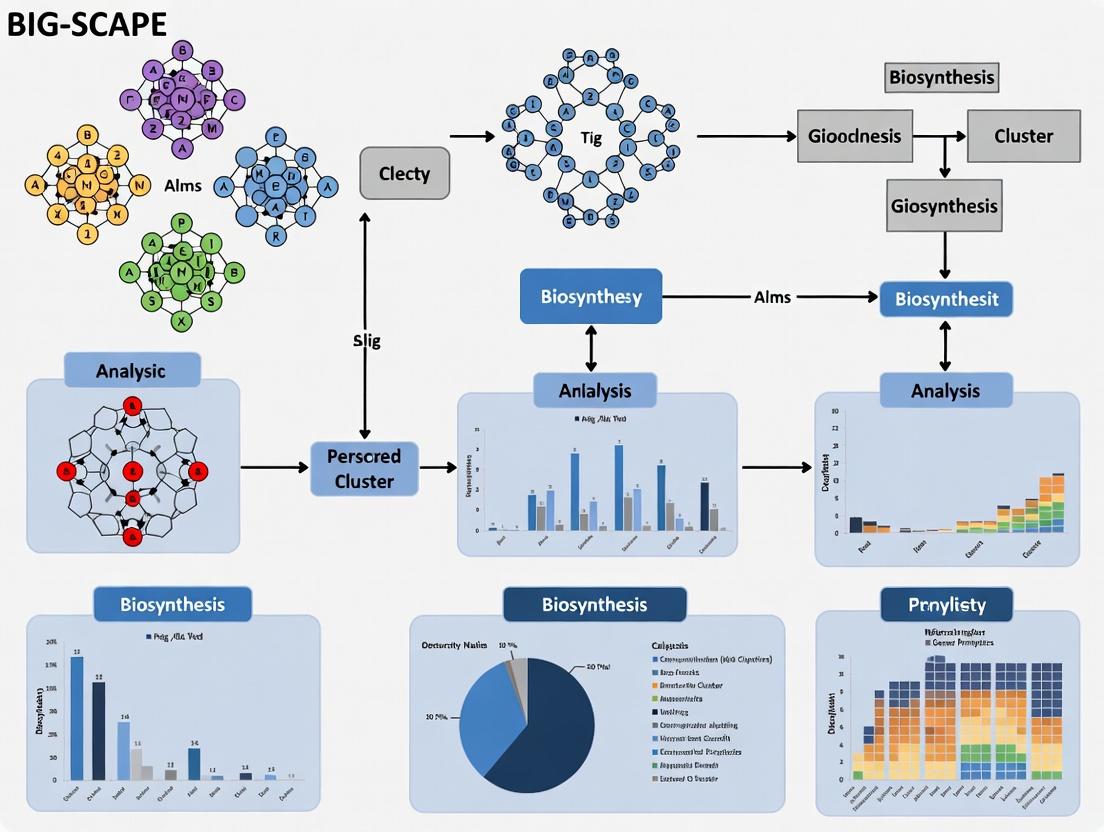
This comprehensive guide provides researchers, scientists, and drug development professionals with a deep dive into BiG-SCAPE, the premier tool for analyzing Biosynthetic Gene Cluster (BGC) Families.
BiG-SCAPE Guide: Network Analysis of Biosynthetic Gene Clusters for Drug Discovery
Abstract
This comprehensive guide provides researchers, scientists, and drug development professionals with a deep dive into BiG-SCAPE, the premier tool for analyzing Biosynthetic Gene Cluster (BGC) Families. We begin by establishing the foundational concepts of BGC diversity and the critical role of genome mining in natural product discovery. The article then details the methodological workflow of BiG-SCAPE, from installation and input preparation to interpreting its correlation network outputs. Practical guidance is offered for troubleshooting common computational issues and optimizing parameters for specific research goals. We validate BiG-SCAPE's utility by comparing its performance and features against alternative tools like antiSMASH and PRISM, highlighting its unique niche in generating BGC family networks. The conclusion synthesizes how BiG-SCAPE accelerates the prioritization of novel bioactive compounds, directly impacting modern biomedical and clinical research pipelines.
What is BiG-SCAPE? Understanding BGC Families and the Need for Comparative Genomics
Biosynthetic Gene Clusters (BGCs) are sets of co-localized genes that collectively encode the molecular machinery for producing a specialized metabolite or Natural Product (NP). Within the thesis framework of BiG-SCAPE analysis, BGCs represent the fundamental genomic units whose diversity, evolution, and network relationships are investigated to prioritize novel chemistry for drug discovery. BGCs typically encode enzymes for core scaffold assembly (e.g., polyketide synthases, non-ribosomal peptide synthetases), modification, regulation, and transport.
Table 1: Quantitative Overview of Major BGC Classes and Their Products
| BGC Class | Core Biosynthetic Enzyme(s) | Approx. % of Known Microbial NPs* | Example Drug(s) |
|---|---|---|---|
| Non-Ribosomal Peptide (NRPS) | NRPS | ~35% | Vancomycin, Penicillin |
| Type I Polyketide (T1PKS) | Type I PKS | ~25% | Erythromycin, Rapamycin |
| Terpene | Terpene Synthases/Cyclases | ~15% | Artemisinin, Taxol |
| Ribosomally synthesized and post-translationally modified peptides (RiPPs) | Precursor Peptide & Modification Enzymes | ~10% | Nisin, Thiostrepton |
| Hybrid (e.g., NRPS-PKS) | Mixed NRPS/PKS | ~15% | Bleomycin |
*Representative distribution based on curated databases like MIBiG. Percentages are approximate and vary by organismal source.
Protocols for BGC Discovery and Analysis in a BiG-SCAPE Workflow
Protocol 2.1: Genome Mining and BGC Prediction
This protocol details the initial identification of BGCs from genomic data, a prerequisite for BiG-SCAPE family analysis.
Materials (Research Reagent Solutions):
- antiSMASH: A computational toolkit for the automated identification and annotation of BGCs in genomic data. It is the primary detection engine.
- Genome Assembly: High-quality microbial genome assembly in FASTA format. Input quality dictates prediction accuracy.
- MIBiG Database: Reference database of known BGCs. Used for comparative analysis and initial functional annotation.
- Python Environment: Required for running antiSMASH and downstream processing scripts.
Methodology:
- Input Preparation: Ensure your genomic assembly is in FASTA format. Check for contamination and completeness using tools like CheckM.
- antiSMASH Execution: Run antiSMASH locally or via the web server. Use the
--genefinding-tool prodigaloption for standard bacterial genomes.
- Output Parsing: antiSMASH generates a directory containing a JSON file (
*.json) with structured BGC predictions, a GenBank file with annotations, and an HTML overview. Extract the GenBank files of each predicted BGC region for downstream steps. - Data Curation: Manually review the predicted BGC boundaries and core biosynthetic types. This step is critical for generating a high-quality input dataset for BiG-SCAPE.
Table 2: Key antiSMASH Parameters for BGC Detection
| Parameter | Recommended Setting | Purpose |
|---|---|---|
--genefinding-tool |
prodigal (bacteria) |
Predicts protein-coding genes. |
--cb-knownclusters |
Enabled | Checks for known clusters against MIBiG. |
--cb-subclusters |
Enabled | Detects sub-cluster regions for chemical diversity. |
--clusterhmmer |
Enabled | Uses HMM profiles for cluster detection. |
Protocol 2.2: Generating Gene Cluster Families (GCFs) with BiG-SCAPE
This protocol follows the core thesis context, using BiG-SCAPE to group predicted BGCs into families based on pairwise similarity.
Materials (Research Reagent Solutions):
- BiG-SCAPE Software: Python-based tool for calculating pairwise distances between BGCs and generating sequence similarity networks.
- Pfams Database: File of HMM profiles for protein domain annotation (Pfam-A.hmm). Used for domain-based similarity calculation.
- Input BGCs: Collection of GenBank files from Protocol 2.1 (or public databases).
- MAFFT: Multiple sequence alignment tool, required for the optional alignment mode.
Methodology:
- Input Preparation: Place all BGC GenBank files in a single directory (e.g.,
./my_bgcs/). - Run BiG-SCAPE in default (fast) mode:
- Network Analysis: BiG-SCAPE outputs network files (
.network), SVG/PDF visualizations, and a summary table. Gene Cluster Families (GCFs) are defined as groups of BGCs with high connectivity in the network. Analyze theindex.htmlin the output folder. - Interpretation: BGCs within the same GCF are hypothesized to produce similar or structurally related natural products. These GCFs become targets for prioritization (e.g., those in poorly studied branches of the network).
Title: BiG-SCAPE Workflow for BGC Family Analysis
Protocol 2.3: Targeted PCR Verification of a Predicted BGC
Following in silico prediction and prioritization, this protocol validates the physical presence of a BGC in a microbial strain.
Materials (Research Reagent Solutions):
- Bacterial Genomic DNA: High-molecular-weight DNA from the candidate producer strain.
- Specific PCR Primers: Designed to amplify a key, diagnostic region of the predicted BGC (e.g., a portion of a core biosynthetic gene).
- High-Fidelity DNA Polymerase: Enzyme for accurate amplification of long or GC-rich regions common in BGCs.
- Gel Extraction Kit: For purifying the amplified PCR product for sequencing.
- Sanger Sequencing Service: To confirm the DNA sequence matches the in silico prediction.
Methodology:
- Primer Design: Using the antiSMASH-predicted BGC sequence, design primers (~20-25 bp) with a Tm of ~60°C to amplify a 1-2 kb internal fragment.
- PCR Setup: Set up a 25 µL reaction with high-fidelity polymerase, 50-100 ng genomic DNA, and 0.5 µM each primer.
- Thermocycling:
- 98°C for 30 s (initial denaturation)
- 35 cycles of: 98°C for 10 s, 60°C for 20 s, 72°C for 1 min/kb
- 72°C for 5 min (final extension)
- Analysis: Run the PCR product on a 1% agarose gel. A single band of the expected size provides initial validation. Purify the band and submit for Sanger sequencing. Align the returned sequence to the predicted BGC.
Title: PCR Verification Protocol for Predicted BGCs
Table 3: Key Research Reagent Solutions for BGC Analysis
| Item | Category | Function in BGC Research |
|---|---|---|
| antiSMASH | Software | Core genome mining tool for BGC prediction and annotation. |
| BiG-SCAPE & CORASON | Software | Analyzes BGC sequence similarity, creates networks, and infers phylogeny. |
| MIBiG Database | Database | Reference repository for experimentally characterized BGCs. Essential for training and comparison. |
| Pfam Database | Database | Library of protein domain HMMs. Used by antiSMASH and BiG-SCAPE for functional annotation. |
| High-Fidelity PCR Kit | Wet-lab Reagent | Amplifies specific regions of BGCs from genomic DNA for validation. |
| Heterologous Expression Host (e.g., S. albus, A. nidulans) | Biological System | Chassis for expressing silent or complex BGCs to discover their products. |
| LC-MS/MS Instrumentation | Analytical Equipment | Critical for detecting and characterizing the natural products synthesized by BGCs. |
Application Notes
Genomic Context and BiG-SCAPE Analysis
The identification and classification of Biosynthetic Gene Clusters (BGCs) into Gene Cluster Families (GCFs) is central to modern natural product discovery. BiG-SCAPE (Biosynthetic Gene Similarity Clustering and Prospecting Engine) addresses the challenge of BGC diversity by enabling large-scale, sequence-based networking and phylogenomic analysis.
Key Quantitative Findings (Representative Data from Recent Studies):
Table 1: BiG-SCAPE Analysis Output Statistics (Example Dataset: 10,000 BGCs from MIBiG & Genomes)
| Metric | Value | Description |
|---|---|---|
| Input BGCs | 10,000 | Number of BGCs analyzed (predicted + known) |
| Network Families (GCFs) | 1,850 | Clusters of related BGCs (cutoff: 0.3 distance) |
| Singleton BGCs | 420 | BGCs not grouped into any GCF |
| Largest GCF Size | 287 | Number of BGCs in the largest family (often NRPS/PKS) |
| Average GCF Size | 5.2 | Mean number of BGCs per family |
| Core Biosynthetic Classes | 8 | Major classes identified (e.g., NRPS, T1PKS, RiPPs, Terpene) |
Table 2: Correlation Between GCF Size and Discovery Potential
| GCF Category | Avg. BGCs per GCF | Likelihood of Novel Chemistry* | Prioritization for Heterologous Expression |
|---|---|---|---|
| Large GCFs (>50 BGCs) | 112 | Low to Medium (well-explored) | Lower; focus on underrepresented strains |
| Medium GCFs (5-50 BGCs) | 18 | Medium to High | High; balanced diversity & homology |
| Small GCFs (2-5 BGCs) | 3.2 | High | Very High; likely unique or variant chemistry |
| Singletons | 1 | Very High (but risk of false positives) | Case-by-case; requires validation |
*Based on the diversity of precursor and modification enzymes within the GCF.
Strategic Implications for Drug Discovery
Grouping BGCs into GCFs allows researchers to prioritize targets. Large GCFs may represent widely conserved metabolites with known bioactivity, while smaller GCFs and singletons are hotspots for novel scaffold discovery. BiG-SCAPE's network visualization facilitates the identification of "neighborhoods" of BGCs that share hybrid architectures or unusual combinations of biosynthetic modules.
Detailed Protocols
Protocol: BiG-SCAPE Workflow for GCF Analysis
Aim: To generate and analyze Gene Cluster Families from a set of predicted or known BGCs.
Materials & Software:
- Input Data: AntiSMASH (v6.0+) GenBank output files for BGCs.
- BiG-SCAPE: Version 1.1.5 or higher (https://git.wageningenur.nl/medema-group/BiG-SCAPE).
- Prerequisites: Python 3.7+, hmmer, mafft, FastTree, DIAMOND.
- Computing: Linux cluster or high-performance workstation (≥16 GB RAM recommended for large runs).
Procedure:
Data Preparation:
- Collect all GenBank files (
.gbk,.gbff) from AntiSMASH runs into a single directory (e.g.,my_bgcs/). - Ensure files are correctly named and only contain one BGC per file.
- Collect all GenBank files (
Running BiG-SCAPE Core Analysis:
Execute the main script from the BiG-SCAPE installation directory.
Parameters Explained:
-c 8: Number of CPU cores to use.--pfam_dir: Path to directory containing Pfam database files.--inputdir: Directory containing input GenBank files.--outputdir: Desired output directory.
Generating Networks with Custom Cutoff:
- To generate sequence similarity networks at a specific cutoff (e.g., 0.7 for more stringent families):
- To generate sequence similarity networks at a specific cutoff (e.g., 0.7 for more stringent families):
Output Interpretation:
- Results are found in
./bigscape_results. - Network Files:
.networkfiles (for use in Cytoscape). - HTML Visualization: Navigate to
./bigscape_results/network_html/index.htmlto explore GCFs interactively in a web browser. - Tabular Data:
mix/folder contains.tsvfiles detailing cluster similarity scores and family assignments.
- Results are found in
Downstream Analysis (Guideline):
- Prioritize GCFs: Focus on GCFs of medium size containing BGCs from underexplored taxonomic branches.
- Extract Core Biosynthetic Genes: Use the
fastafiles generated for each GCF to perform multiple sequence alignment and build phylogenetic trees of key enzymes (e.g., KS, C domains). - Correlate with Metabolomics: Map metabolomic data (e.g., MS/MS molecular networking from GNPS) to GCFs if strain extracts are available.
Protocol: Targeted Genome Mining Guided by GCF
Aim: To discover novel variants of a specific BGC class (e.g., lasso peptides) across a bacterial genus.
- Database Construction: Download all genome assemblies for target genus from NCBI.
- BGC Prediction: Run AntiSMASH on all genomes with relaxed detection strictness for the target class.
- GCF Construction: Run BiG-SCAPE on the resulting BGCs alongside known reference BGCs from MIBiG.
- Family Identification: Identify the GCF containing your reference BGCs. Examine its composition.
- Strain Selection: Select producer strains harboring BGCs that are phylogenetically distinct within the GCF but share the core architecture.
- Heterologous Expression: Design primers to amplify the entire candidate BGC (using e.g., REDIRECT cloning or Cas9-assisted assembly) and express it in a suitable host (e.g., S. albus).
- Compound Isolation: Culture the expression host, extract metabolites, and use HPLC-MS guided by the predicted core structure mass.
Visualizations
Title: BiG-SCAPE Analysis Workflow from Genomes to GCFs
Title: Decision Logic for Prioritizing BGCs Based on GCF Analysis
The Scientist's Toolkit
Table 3: Essential Research Reagent Solutions for BGC Mining & GCF Analysis
| Item | Function & Application | Key Consideration |
|---|---|---|
| AntiSMASH Database | Rule-based detection & annotation of BGCs in genomic data. | Versions >6.0 include TIGRFam and ClusterBlast improvements. |
| Pfam & MIBiG Databases | Pfam: HMM profiles for domain detection. MIBiG: Repository of known BGCs for reference. | Must be locally installed and updated for BiG-SCAPE. |
| BiG-SCAPE / CORASON | BiG-SCAPE: Creates sequence similarity networks. CORASON: Phylogenetic-focused analysis of specific BGC types. | BiG-SCAPE for broad surveys; CORASON for deep dives into a class. |
| Cytoscape | Open-source platform for visualizing and exploring similarity networks (.network files). | Use enhancedGraphics plugin for custom node annotations. |
| Heterologous Host (e.g., S. albus J1074) | Clean genetic background host for BGC expression and compound production. | Must optimize culture and transformation protocols for the host. |
| Gibson or REDIRECT Cloning Kits | Assembly of large, often >50 kb, BGC fragments for heterologous expression. | Fidelity and efficiency for large insert assembly is critical. |
| LC-HRMS/MS System | High-resolution metabolomics to detect novel compounds from expression hosts. | Couple with GNPS for molecular networking to link chemistry to GCFs. |
Core Algorithm and Quantitative Framework
BiG-SCAPE (Biosynthetic Gene Similarity Clustering and Prospecting Engine) is a computational tool for the global analysis of Biosynthetic Gene Clusters (BGCs). It performs an all-vs-all comparison of BGCs encoded in standard GenBank files, calculates pairwise similarity metrics, and hierarchically clusters them into Gene Cluster Families (GCFs). Its algorithm is integral to studying the phylogeny and evolution of secondary metabolism.
Table 1: BiG-SCAPE Core Algorithm Parameters and Outputs
| Component | Parameter/Output | Description & Quantitative Metric |
|---|---|---|
| Input | GenBank files | Requires antiSMASH 5+ annotated BGCs (.gbk). Handles diverse types (PKS, NRPS, RiPPs, etc.). |
| Distance Calculation | Jaccard Index (Domain-based) | Measures similarity based on shared Pfam domains: J(A,B) = ∣A∩B∣ / ∣A∪B∣. Ranges from 0 (no shared domains) to 1 (identical domain sets). |
| Adjacency Index | Penalizes similarity based on differences in the order of shared domains. | |
| Combined Distance | Final distance = 1 - (ω * Jaccard) + ((1-ω) * Adjacency Index). Default ω (weight) = 0.2. | |
| Clustering | Hierarchical Clustering | Uses the pairwise distance matrix. Default method: Average linkage (UPGMA). |
| Cut-off Value | Defines GCF boundaries. Common heuristic cut-off: 0.75 (distance). Lower = stricter, fewer BGCs per GCF. | |
| Network Analysis | Nodes | Represent individual BGCs. Node size can be scaled by BGC length or number of domains. |
| Edges | Connect BGCs with a pairwise distance below the selected cut-off (e.g., 0.75). Edge weight = 1 - distance. | |
| Output | Gene Cluster Families (GCFs) | Groups of BGCs putatively encoding the synthesis of structurally related compounds. A run on 10,000 BGCs typically yields 1,500-2,500 GCFs. |
Phylogenetic Network (.graphml) |
Visualized in Cytoscape. Core GCFs form dense, disconnected subgraphs. |
Principles of Phylogenetic Network Construction
The BiG-SCAPE network is a phylogenetic similarity network, not a strict phylogenetic tree. It visualizes complex evolutionary relationships, including horizontal gene transfer, recombination, and module shuffling in modular BGCs (e.g., PKSs).
Key Principles:
- Network as a Forest: The full network is a "forest" where each disconnected subgraph represents a distinct GCF.
- Edge Weight as Evolutionary Signal: Thicker, shorter edges indicate higher similarity (lower distance), suggesting closer evolutionary relationships.
- Core-Periphery Structure: Within a GCF subgraph, a dense "core" of highly similar BGCs is surrounded by a "periphery" of more divergent relatives, illustrating the family's radiation.
- Hybrid Nodes/Bridges: BGCs that connect two distinct GCFs may represent evolutionary intermediates, ancestral states, or hybrids, highlighting the reticulate evolution of biosynthetic pathways.
BiG-SCAPE Phylogenetic Network Structure
Application Notes & Protocols
Protocol 1: Standard BiG-SCAPE Run for GCF Analysis
Objective: Generate Gene Cluster Families from a set of BGCs.
Input: Directory containing AntiSMASH GenBank files (.gbk).
- Installation:
conda create -n bigscape -c bioconda bigscape - Activate Environment:
conda activate bigscape - Run Core Algorithm:
- Output Interpretation:
- Navigate to
output/network_files/. The*.graphmlfile is the main network for visualization in Cytoscape/Gephi. - The
mixandotherfolders contain BGCs not assigned to major classes. - The
htmlfolder contains summary pages showing GCF statistics.
- Navigate to
Protocol 2: Phylogenetic Network Visualization and Interpretation in Cytoscape Objective: Visualize and analyze the BiG-SCAPE network.
- Import: In Cytoscape, import the
*.graphmlfile (File > Import > Network from File). - Apply Layout: Use a force-directed layout (e.g., "Prefuse Force Directed") to cluster similar nodes.
- Style Nodes:
- Color: Map
BGC type(e.g., PKS, NRPS) to node fill color. - Size: Map
BGC length(number of genes/domains) to node size.
- Color: Map
- Style Edges:
- Width: Map
weight(similarity) to edge width. Higher weight = thicker line. - Color: Use a gradient (e.g., gray to black) for weight or a single muted color.
- Width: Map
- Analysis: Use Cytoscape's built-in tools to find highly connected nodes (hub BGCs), identify dense clusters (GCF cores), and analyze network topology (Tools > NetworkAnalyzer).
Table 2: Key Reagents & Resources for BiG-SCAPE-Driven Research
| Item | Function in BiG-SCAPE Context |
|---|---|
| antiSMASH Database | Source of Input Data. Provides pre-computed BGC annotations in GenBank format for thousands of microbial genomes, enabling large-scale BiG-SCAPE analysis. |
| Pfam Database | Core Algorithm Dependency. Provides the Hidden Markov Model (HMM) profiles used by BiG-SCAPE to identify and compare protein domains within BGCs. Essential for distance calculation. |
| Cytoscape | Network Visualization & Analysis. The primary platform for visualizing BiG-SCAPE's .graphml output. Enables interactive exploration of GCFs, calculation of network statistics, and preparation of publication-quality figures. |
| MIBiG (Minimum Information about a BGC) | Reference & Validation Database. A curated repository of experimentally characterized BGCs. Used to annotate and "ground truth" GCFs predicted by BiG-SCAPE by identifying known clusters within networks. |
| CORASON | Complementary Phylogenetic Tool. Often used downstream of BiG-SCAPE. Constructs detailed phylogenetic trees of specific GCFs based on core biosynthetic proteins, providing higher-resolution evolutionary insights. |
| Python & SciPy Stack | Execution & Customization Environment. BiG-SCAPE is a Python script. Custom analysis of output tables (*_tsv/*.csv) requires libraries like pandas, NumPy, and Matplotlib for further data mining and figure generation. |
BiG-SCAPE Analysis Workflow
Within the broader thesis on genome mining for novel therapeutics, BiG-SCAPE (Biosynthetic Gene Similarity Clustering and Prospecting Engine) analysis is a cornerstone methodology. It addresses the critical challenge of navigating the vast genomic landscape to efficiently prioritize biosynthetic gene clusters (BGCs) for experimental characterization. Researchers in drug discovery rely on it to systematically classify, compare, and dereplicate BGCs encoding secondary metabolites, such as antibiotics, antifungals, and anticancer agents, thereby accelerating the identification of novel chemical scaffolds.
Application Notes: Core Use Cases in Drug Discovery
1. BGC Dereplication & Novelty Assessment Prior to costly and time-consuming heterologous expression or cultivation, researchers use BiG-SCAPE to determine if a newly sequenced BGC is novel or a known variant. By comparing query BGCs against databases (e.g., MIBiG), it clusters them into Gene Cluster Families (GCFs), instantly filtering out rediscovered clusters.
2. Targeted Isolation of Analogs & Derivatives When a potent compound with undesirable properties (e.g., toxicity, solubility) is discovered, BiG-SCAPE identifies other BGCs within the same GCF that likely produce structural analogs. This enables a targeted search for derivatives with improved pharmacological profiles.
3. Ecological & Taxonomic Mapping of Chemical Space BiG-SCAPE analysis across diverse microbial genomes links chemical potential (GCFs) to taxonomy and ecology. This allows hypothesis-driven discovery, such as focusing on specific bacterial phyla from unique environments for antibiotic discovery.
Table 1: Quantitative Impact of BiG-SCAPE Analysis in Representative Studies
| Study Focus | # of BGCs Analyzed | # of GCFs Identified | Key Outcome | Reference Context |
|---|---|---|---|---|
| Marine Actinomycetes | 1,200+ | ~150 | Reduced target BGCs for characterization by >90% via dereplication. | [Recent Metagenomic Study] |
| Streptomyces Pan-genome | 5,800 | 320 | Identified 15 unique GCFs associated with a specific clade, guiding isolation. | [Comparative Genomics Paper] |
| Fungal Genome Mining | 850 | 45 | Discovered 3 new GCFs; one led to a novel antifungal scaffold. | [Mycological Research Journal] |
Experimental Protocols
Protocol 1: Standard BiG-SCAPE Workflow for BGC Prioritization
Objective: To cluster BGCs from genomic or metagenomic assemblies and prioritize novel GCFs for downstream drug discovery pipelines.
Materials & Input:
- Input Data: GenBank files of predicted BGCs (e.g., from antiSMASH analysis).
- Software: BiG-SCAPE (installed via Conda/docker) and CORASON (for phylogeny).
- Hardware: Multi-core Linux server recommended for large datasets.
Procedure:
- BGC Prediction: Generate GenBank files for all BGCs of interest using antiSMASH v7+. Retain the
*region*.gbkfiles. - BiG-SCAPE Run: Execute the core clustering command:
- Output Analysis:
- Navigate to
output_dir/network_files/. The filemix_0.30_c1.00.networkcontains GCF assignments. - Cross-reference GCFs with the MIBiG reference database (included in run) to flag known clusters.
- Identify GCFs containing no MIBiG reference members as high-priority novel targets.
- Navigate to
- CORASON Analysis (Optional but Recommended): For high-interest GCFs, run CORASON to generate detailed sequence similarity networks and phylogenetic trees, confirming homology and guiding primer design for cloning.
Protocol 2: Integrating BiG-SCAPE with Metabolomics Data
Objective: To correlate GCFs with analytical chemistry data (e.g., LC-MS) to identify the metabolite produced by an orphan GCF.
Procedure:
- Perform BiG-SCAPE analysis on BGCs from a strain library (e.g., 100 actinomycete isolates).
- For each strain, generate an ethyl acetate extract and analyze via high-resolution LC-MS.
- Use tools like GNPS (Global Natural Products Social Molecular Networking) to create molecular networks from MS/MS data.
- Overlay GCF data: Strains sharing a specific GCF should cluster together in the molecular network. Unique molecular features in that sub-network are strong candidates for the metabolite produced by the GCF.
- Target isolation efforts on these candidate ions.
Diagrams
BiG-SCAPE Analysis & Prioritization Workflow
Decision Tree for Prioritizing GCFs
The Scientist's Toolkit: Research Reagent Solutions
Table 2: Essential Materials for BiG-SCAPE-Centric Research
| Item | Function in BiG-SCAPE/Downstream Workflow |
|---|---|
| antiSMASH Database | Core tool for initial BGC prediction from genome sequences; generates the essential input files for BiG-SCAPE. |
| Pfam Database | Required by BiG-SCAPE for domain annotation and sequence comparison. Must be downloaded separately. |
| MIBiG Reference Dataset | Integrated into BiG-SCAPE; the gold-standard repository for known BGCs, enabling automatic dereplication. |
| Conda/Bioconda | Recommended package manager for seamless installation of BiG-SCAPE and all its complex dependencies (e.g., HMMER, DIAMOND). |
| GNPS Platform | Web-based mass spectrometry ecosystem for correlating GCFs (genotype) with chemical data (phenotype) via molecular networking. |
| PCR Reagents & Kits | For amplifying and cloning prioritized orphan BGCs based on CORASON-guided primer design for heterologous expression. |
| Expression Hosts (e.g., S. albus) | Engineered bacterial chassis for expressing cloned BGCs from unculturable or slow-growing source organisms. |
How to Run BiG-SCAPE: A Step-by-Step Workflow from Input to Network Visualization
This protocol details the setup of the Python computational environment required for the analysis of Biosynthetic Gene Cluster (BGC) families using BiG-SCAPE within the broader thesis research. A reproducible and correctly configured environment is critical for the generation of accurate and comparable Gene Cluster Family (GCF) networks, which form the basis for downstream natural product discovery and drug development pipelines.
System Prerequisites & Quantitative Specifications
The following table summarizes the minimum and recommended hardware/software requirements based on current BiG-SCAPE and dependency documentation.
Table 1: System and Core Software Prerequisites
| Component | Minimum Specification | Recommended Specification | Purpose/Rationale |
|---|---|---|---|
| Operating System | Linux x86_64 / macOS 10.14+ | Linux distribution (Ubuntu 22.04 LTS) | Core dependencies (e.g., HMMER) are UNIX-oriented. |
| CPU | 4 cores | 16+ cores | Parallel processing for all-vs-all BGC comparison. |
| RAM | 16 GB | 64+ GB | Handling large multiple sequence alignments and network data. |
| Storage (Free) | 50 GB | 500 GB+ SSD | For input GenBank files, intermediate PFAM data, and output networks. |
| Python | Version 3.8 | Version 3.9 or 3.10 | Core runtime for BiG-SCAPE and auxiliary scripts. |
| Java Runtime | JRE 11 | JRE 17 | Required for utilities like GenomeTools. |
Core Dependency Installation Protocol
Step-by-Step System-Level Dependency Installation
This protocol ensures all non-Python binaries required by BiG-SCAPE are available.
Protocol 1: Installing Core Bioinformatics Tools via Conda
- Install Miniconda by downloading the latest Linux 64-bit bash installer.
Create and activate a new Conda environment named
bigscape.Install the essential bioinformatics packages via Bioconda channels.
Verify installations:
Python Environment and Package Installation
This protocol installs BiG-SCAPE and its direct Python dependencies, ensuring version compatibility.
Protocol 2: Setting Up the Python Virtual Environment and BiG-SCAPE
- Within the activated Conda environment (
bigscape), upgrade core Python packages.
Install BiG-SCAPE and its Python dependencies directly from PyPI.
Install additional Python packages for data analysis and visualization within the thesis workflow.
Verify the installation by checking the BiG-SCAPE help menu.
Table 2: Key Python Dependencies and Their Functions
| Package | Version Range | Role in BiG-SCAPE Workflow |
|---|---|---|
| BiG-SCAPE | ≥1.1.0 | Main orchestration script for BGC processing, comparison, and network generation. |
| NumPy | ≥1.19.0 | Efficient numerical computations for distance matrix calculations. |
| Biopython | ≥1.78 | Parsing GenBank files, handling sequence I/O. |
| Scikit-learn | ≥0.24.0 | Optional; used for advanced clustering analyses of GCFs. |
| Matplotlib | ≥3.3.0 | Generation of static GCF network visualizations. |
Workflow Visualization: From BGCs to Gene Cluster Families
BiG-SCAPE Computational Workflow
The Scientist's Toolkit: Essential Research Reagent Solutions
Table 3: Key Computational Research Reagents
| Item/Category | Specific Solution/Software | Function in BGC Analysis |
|---|---|---|
| BGC Prediction Engine | antiSMASH (v7.0+) | Primary tool for identifying and annotating BGCs in genomic data prior to BiG-SCAPE analysis. |
| Domain Database | Pfam database (v35.0+) | Provides hidden Markov models (HMMs) for protein domain identification, the basis for BGC similarity scoring. |
| Clustering Algorithm | MCL (Markov Clustering) | Integrated into BiG-SCAPE to partition the similarity network into discrete Gene Cluster Families. |
| Sequence Aligner | MUSCLE (v3.8+) | Aligns protein domain sequences for accurate distance calculation between BGCs. |
| Visualization Suite | Cytoscape (v3.9+) | Used for advanced, interactive exploration and customization of the generated GCF networks. |
| Runtime Environment | Conda Environment | Isolates and manages all software versions to guarantee reproducibility across research deployments. |
Thesis Context This protocol is a foundational component of a thesis employing BiG-SCAPE for the large-scale analysis of Biosynthetic Gene Cluster (BGC) families. Consistent and correctly formatted input is critical for generating reliable distance matrices and constructing meaningful gene cluster family networks. This document details the preparation of the two primary input types for BiG-SCAPE: GenBank files and antiSMASH JSON results.
GenBank File Preparation
Protocol: Standardizing Annotated GenBank Files for BiG-SCAPE
Objective: To convert or curate GenBank (.gbk) files from genome sequencing projects into a format compatible with BiG-SCAPE analysis.
Materials & Reagents:
- Source Genomes: Assembled and annotated bacterial, fungal, or other microbial genomes (FASTA, GFF, or proprietary formats).
- Annotation Software: Prokka, Bakta, or NCBI’s PGAP for prokaryotes; Funannotate for eukaryotes.
- Sequence Manipulation Tools: Biopython, EMBOSS suite, or SeqKit.
- Validation Tool: BiG-SCAPE’s built-in checks (run with
--helpor--test).
Procedure:
Annotation Generation:
- If starting from an assembled genome (FASTA) and annotation (GFF), use a tool like
bcbioor a custom Biopython script to generate a standard GenBank file. Example Command (using Prokka):
The primary output
genome_01.gbkis suitable for the next steps.
- If starting from an assembled genome (FASTA) and annotation (GFF), use a tool like
File Format Verification:
- Ensure the file is in valid GenBank flat file format. The header should contain the
LOCUSkeyword, and features should be in theFEATUREStable. - Validate using Biopython:
- Ensure the file is in valid GenBank flat file format. The header should contain the
Locus Tag Standardization (Critical):
- BiG-SCAPE uses the
/locus_tagqualifier within CDS features to group and identify genes. Every coding sequence must have a uniquelocus_tag. - If absent, assign a systematic locus tag (e.g.,
STC_00001,STC_00002). A Biopython script can automate this.
- BiG-SCAPE uses the
BGC Delimitation (For pre-defined clusters):
- If submitting a specific BGC rather than a whole genome, the GenBank file must contain only the region of the BGC.
- Extract the BGC region using coordinates. Ensure all features within the region are preserved and the sequence is linear.
- Update the
LOCUSline to reflect the new length and assign a clear identifier (e.g.,Streptomyces_coelicolor_ASM_ccoelicolor_cluster1).
Final Validation for BiG-SCAPE:
- Place all curated
.gbkfiles in a single directory (e.g.,gbk_files/). Run a preliminary BiG-SCAPE command to test for parsing errors:
Address any error messages regarding file format or missing qualifiers.
- Place all curated
Table 1: Essential Qualifiers in GenBank CDS Features for BiG-SCAPE
| Qualifier | Presence Requirement | Description & Format Example |
|---|---|---|
locus_tag |
Mandatory | Unique identifier for the gene. locus_tag="SCO0001" |
translation |
Recommended | Amino acid sequence of the CDS. translation="MKLF..." |
product |
Recommended | Functional description. product="polyketide synthase" |
gene |
Optional | Gene name. gene="pksA" |
antiSMASH JSON Results Preparation
Protocol: Direct Integration of antiSMASH Output for Enhanced Analysis
Objective: To utilize the detailed, structured output from antiSMASH as direct input for BiG-SCAPE, enabling incorporation of substrate predictions and module-level information.
Materials & Reagents:
- antiSMASH Software: Version 6.0 or higher (latest stable release recommended).
- Input for antiSMASH: GenBank file(s) of whole microbial genomes or contigs.
- Computational Resources: Sufficient CPU/Memory for antiSMASH run (cluster recommended for batches).
Procedure:
Run antiSMASH Analysis:
- Analyze your GenBank file(s) using antiSMASH with the
--jsonflag to generate the necessary JSON output. Example Command:
This generates a
.jsonfile (e.g.,genome_01.json) in the output directory alongside other files.
- Analyze your GenBank file(s) using antiSMASH with the
Locate and Consolidate JSON Files:
- The primary JSON result file is located in the antiSMASH output directory for each input file.
- For batch processing, copy all relevant
.jsonfiles into a single, dedicated directory (e.g.,json_files/). - Important: Do not modify the internal structure of the JSON files.
Validate JSON Integrity:
- Ensure files are valid JSON and contain the expected antiSMASH data structure (e.g.,
records,areas,modules). - Quick validation using
jq:
- Ensure files are valid JSON and contain the expected antiSMASH data structure (e.g.,
Input for BiG-SCAPE:
- When running BiG-SCAPE, specify the directory containing the JSON files using the
--jsonflag. Example BiG-SCAPE Command with JSON Input:
BiG-SCAPE will parse the JSON files to extract BGC information, including potentially detailed domain architecture from the
modulessection.
- When running BiG-SCAPE, specify the directory containing the JSON files using the
Table 2: Comparison of BiG-SCAPE Input File Types
| Feature | GenBank (.gbk) Input | antiSMASH JSON (.json) Input |
|---|---|---|
| Primary Use Case | Pre-defined BGCs; custom annotations; non-antiSMASH pipelines. | Direct integration of antiSMASH results. |
| Information Richness | Basic: Sequence, CDS locations, product names. | High: Includes substrate predictions (PKS/NRPS), TFBS, SMCOG profiles, module boundaries. |
| BGC Detection | Relies on user-defined boundaries in the file. | Uses antiSMASH-defined cluster boundaries. |
| Best For | Curated datasets, combining clusters from multiple detection tools. | Leveraging full predictive power of antiSMASH; homogeneity in analysis. |
Visualizations
Diagram 1: Input Preparation Workflow for BiG-SCAPE
Diagram 2: Data Flow from Sources to BiG-SCAPE Core
The Scientist's Toolkit: Research Reagent Solutions
Table 3: Essential Digital "Reagents" for Input Preparation
| Item | Category | Function in Protocol |
|---|---|---|
| Prokka | Annotation Pipeline | Rapid prokaryotic genome annotation; generates compliant GenBank files from assemblies. |
| antiSMASH 6+ | BGC Detection Engine | Predicts BGCs, boundaries, and chemical features; outputs structured JSON for BiG-SCAPE. |
| Biopython | Programming Library | Python toolkit for parsing, editing, and validating GenBank/FASTA files programmatically. |
| jq | Command-line Tool | Processes and validates JSON files from antiSMASH in Unix/bash environments. |
| SeqKit | Sequence Toolkit | Efficiently manipulates (extract, reformat) FASTA/GenBank sequences via command line. |
BiG-SCAPE --test |
Validation Function | Built-in mode to check input file compatibility before full analysis run. |
Application Notes: Core BiG-SCAPE Parameters
BiG-SCAPE (Biosynthetic Gene Similarity Clustering and Prospecting Engine) automates the analysis of Biosynthetic Gene Clusters (BGCs) by calculating pairwise distances and generating Gene Cluster Families (GCFs). The following tables summarize the primary command-line parameters.
Table 1: Core Execution & Input/Output Parameters
| Parameter | Default Value | Description | Function |
|---|---|---|---|
--inputdir |
./ |
Path to directory containing BGCs (GenBank files). | Defines the source of BGC data for analysis. |
--outputdir |
./ |
Path for BiG-SCAPE results directory. | Sets location for all output files (e.g., network, SVG). |
--pfam_dir |
./ |
Path to directory containing Pfam database. | Essential for domain annotation using HMMER. |
--cores |
8 |
Number of CPU cores to use. | Controls parallel processing for speed. |
--include_singletons |
N/A (flag) | No argument needed. | Includes BGCs with no significant similarity in the network. |
--mibig |
N/A (flag) | No argument needed. | Includes MIBiG reference BGCs in the analysis. |
Table 2: Distance Calculation & Clustering Parameters
| Parameter | Default | Range | Description |
|---|---|---|---|
--cutoffs |
0.3 |
0.0 - 1.0 | Minimum Jaccard index similarity for edge inclusion in network. Multiple values (e.g., 0.2 0.5 0.9) can be specified. |
--mix |
N/A (flag) | N/A | Enables analysis of "mixed" clusters (e.g., NRPS-T1PKS). |
--hybrids |
N/A (flag) | N/A | Enables dedicated hybrid prediction mode (experimental). |
--clans-off |
N/A (flag) | N/A | Disables Pfam clan unification, treating domains individually. |
--banned |
none |
File path | File listing Pfam IDs to exclude from analysis (e.g., common false positives). |
--class |
auto |
auto, all, or specific classes |
Limits analysis to BGCs of a specific class (e.g., PKSI, NRPS). |
Experimental Protocol: Running a Standard BiG-SCAPE Analysis
This protocol details the steps for a complete BiG-SCAPE run to generate GCFs from a set of BGC GenBank files.
Objective: To calculate domain-based distances between BGCs and cluster them into families using the BiG-SCAPE pipeline.
Materials & Pre-requisites:
- Input Data: BGC predictions in GenBank format (
.gbk), typically from antiSMASH. - Software: BiG-SCAPE v1.1.5 or later (installed via Conda:
conda create -n bigscape -c bioconda bigscape). - Database: Pfam-A.hmm database (v35.0 or later). Downloaded via
wgetand prepared withhmmpress. - System: Linux/macOS with Python 3 and required dependencies.
Procedure:
- Data Preparation:
- Place all BGC GenBank files (
.gbk) in a single directory (e.g.,my_bgcs/). - Ensure the Pfam database is prepared in a known directory (e.g.,
pfam/).
- Place all BGC GenBank files (
Command Execution:
- Activate the BiG-SCAPE environment:
conda activate bigscape. - Execute the core analysis with recommended parameters:
- Activate the BiG-SCAPE environment:
Output Interpretation:
./results/network_files/: Contains the core output. Filemix_0.30_c0.60.network(for the0.6cutoff) is used for downstream analysis../results/[date]_bigscape/: Contains HTML overview, SVG network visualizations, and GCF tables.- Analyze the
.tsvand.networkfiles in tools like Cytoscape or using custom scripts.
Validation & Downstream Analysis:
- Verify clustering by inspecting the sequence similarity (Jaccard index) reported in the network file.
- Cross-reference GCFs with known MIBiG clusters (if
--mibigwas used) for functional insights. - Proceed with CORASON analysis for detailed phylogenetic exploration within GCFs.
Visualizations
Title: BiG-SCAPE Core Analysis Workflow
Title: BiG-SCAPE Command-Line Parameter Categories
The Scientist's Toolkit: Research Reagent Solutions
Table 3: Essential Materials & Tools for BiG-SCAPE Analysis
| Item | Function in Analysis | Notes/Source |
|---|---|---|
| antiSMASH | Generates input GenBank files from genomic data. Primary BGC prediction tool. | https://antismash.secondarymetabolites.org |
| Pfam-A.hmm | Curated database of protein domain families. Used by BiG-SCAPE for domain annotation. | Downloaded from EMBL-EBI (ftp.ebi.ac.uk). |
| HMMER (hmmscan) | Software for scanning protein sequences against Pfam HMMs. Core dependency of BiG-SCAPE. | http://hmmer.org |
| MCL Algorithm | Markov Clustering algorithm used by BiG-SCAPE to cluster the similarity network into GCFs. | Bundled within BiG-SCAPE. |
| Cytoscape | Network visualization and analysis software. Used to explore and refine the .network output. |
https://cytoscape.org |
| MIBiG Database | Repository of known BGCs. Used as a reference set to annotate and contextualize novel GCFs. | Enabled via --mibig flag. |
| CORASON | Complementary tool for detailed phylogenetic analysis of specific GCFs identified by BiG-SCAPE. | https://github.com/nselem/corason |
Application Notes
Within the thesis "Expanding the Biosynthetic Landscape: A BiG-SCAPE-Driven Analysis of Bacterial Gene Cluster Families for Novel Drug Discovery," the interpretation of computational outputs is a critical bridge between raw data and biological insight. The following notes detail the core components generated by BiG-S-SCAPE and CORASON, essential for GCF analysis.
Network File Analysis (.network)
The network file, typically visualized in tools like Cytoscape, represents the similarity relationships between BGCs. Each node is a BGC, and edges connect BGCs with a pairwise similarity score above a defined cutoff.
Key Metrics for Interpretation:
- Node Degree: High-degree "hub" BGCs may represent widely conserved, functionally important clusters.
- Edge Weight: The Jaccard similarity index (0-1). Edges with weights >0.7 often indicate BGCs belonging to the same GCF.
- Network Modularity: High modularity (Q value >0.4) suggests well-defined, distinct GCFs.
GCF Table and Classification
BiG-SCAPE clusters BGCs into Gene Cluster Families (GCFs) based on the network. The mix folder output contains the primary classification table (main_clusters_<cutoff>.txt).
Table 1: Quantitative Summary of a Hypothetical BiG-SCAPE Run (MIBiG v4.0 Reference Database)
| Output Metric | Value | Interpretation |
|---|---|---|
| Input BGCs | 1,250 | Genomes/MAGs analyzed. |
| Predicted GCFs (0.7 cutoff) | 89 | Core families for downstream analysis. |
| Singleton BGCs | 310 | Unique or highly divergent clusters. |
| Largest GCF | 42 members | Potential widespread, conserved biosynthetic machinery. |
| GCFs with MIBiG hit | 56 (63%) | Families with known product potential. |
| "Orphan" GCFs | 33 (37%) | High-priority targets for novel compound discovery. |
Sequence Data and CORASON Analysis
For phylogenomic analysis of specific GCFs, CORASON (CORe Analysis of syntenic orthologues) is used. It drills down into the core biosynthetic genes of a GCF.
Core Outputs:
- Core Gene Phylogeny: A Newick tree file showing evolutionary relationships based on aligned core enzyme sequences (e.g., PKS KS domains, NRPS A domains).
- Synteny Visualization: A graphical map (
PNG/PDF) showing the order and conservation of core genes across all BGCs in the GCF, confirming true homology beyond sequence similarity.
Protocols
Protocol 1: Running BiG-SCAPE for GCF Network Generation
Objective: To generate a global network of BGC similarity from a set of GenBank files.
Materials & Reagent Solutions:
- Input Data: GenBank (
.gbk) files for BGCs predicted by antiSMASH. - BiG-SCAPE Installation: Conda environment with BiG-SCAPE v1.1.5 or higher.
- pfam Database: Version 35.0 or current, for domain annotation.
- Computational Resources: Multi-core server (≥16 cores) with ≥64 GB RAM for large datasets.
Methodology:
- Prepare Input: Place all GenBank files in a single directory (e.g.,
my_bgcs/). - Run BiG-SCAPE Core:
- Execute: The run takes several hours to days. Outputs include the network file, GCF tables, and sequence files in the
mixfolder.
Protocol 2: CORASON Analysis for GCF Phylogenomics
Objective: To perform a detailed core gene alignment and synteny analysis for a single GCF of interest.
Materials & Reagent Solutions:
- GCF Sequence Files: The
.fastafiles for the GCF from BiG-SCAPE'smixfolder. - Reference Core Gene: A seed sequence (e.g., a known KS domain from a MIBiG reference BGC).
- CORASON Scripts: Available from the BiG-SCAPE repository.
- BLAST+ Suite: Locally installed for sequence similarity searches.
Methodology:
- Identify Target GCF: From the
main_clusters_<cutoff>.txttable, select a GCF ID (e.g.,GCF_0012). - Locate Sequences: Navigate to
./bigscape_output/mix/mibig_gbks_c0.70/GCF_0012/for the FASTA files. - Run CORASON:
- Interpret Output: The
results/folder will contain the core gene alignment (core_alignment.fasta), phylogenetic tree (core_tree.nwk), and the synteny plot (synteny.pdf).
The Scientist's Toolkit
Table 2: Essential Research Reagent Solutions for BiG-SCAPE/CORASON Workflows
| Item | Function in Analysis |
|---|---|
| antiSMASH v7.0+ | Predicts BGC boundaries and provides annotated GenBank files as primary input for BiG-SCAPE. |
| Pfam Database | Provides hidden Markov models (HMMs) for protein domain annotation, the basis for BGC similarity calculation. |
| Cytoscape v3.10+ | Network visualization software for exploring and styling the BiG-SCAPE network (.network and .graphml files). |
| Newick Utilities / iTOL | Tools for visualizing, editing, and annotating the phylogenetic tree files produced by CORASON. |
| MIBiG Database | Repository of known BGCs. Essential for annotating GCFs with known chemical products via the --mibig flag in BiG-SCAPE. |
| conda / bioconda | Package and environment management system for ensuring reproducible installation of all bioinformatics tools. |
Visualizations
Workflow for Gene Cluster Family Analysis
Structure of a GCF and Its Analysis Outputs
This protocol details the use of Cytoscape for the interactive exploration and visualization of Gene Cluster Family (GCF) networks generated by BiG-SCAPE. Within the broader thesis on BiG-SCAPE for gene cluster family analysis, this application note bridges computational genomics with intuitive biological interpretation. The primary goal is to enable researchers to move from static GCF network files to dynamic, annotated visualizations that facilitate hypothesis generation about biosynthetic diversity, horizontal gene transfer, and potential novel bioactive compounds.
Key Research Reagent Solutions
| Item | Function in Analysis |
|---|---|
| BiG-SCAPE v1.x | Core tool for parsing BGCs (from antiSMASH) and generating GCF networks based on sequence similarity. |
| Cytoscape v3.10+ | Open-source platform for network visualization and analysis. Essential for interactive exploration. |
| Cytoscape StringApp | Plugin to import functional annotation data (e.g., KEGG, GO) from STRING database onto network nodes. |
| CytoCluster Plugin | Provides algorithms (e.g., MCODE, HCL) for detecting highly interconnected sub-networks within the GCF graph. |
| EnhancedGraphics Plugin | Enables advanced visual encoding of node attributes (e.g., BGC type, genome taxonomy) using custom charts. |
.network & .jsn files |
Primary output files from BiG-SCAPE containing the network structure and metadata for import into Cytoscape. |
| NCBI Taxonomy Database | Used to annotate nodes with organismal information, enabling phylogeny-aware network layout. |
| antiSMASH BGC GenBank files | Source files for BGC predictions that contain functional domain information for detailed node styling. |
Protocol: From BiG-SCAPE to Cytoscape Network Analysis
Data Preparation & Import
Objective: Import a BiG-SCAPE GCF network into Cytoscape with all associated metadata.
- Run BiG-SCAPE: Execute BiG-SCAPE on your antiSMASH-derived BGC dataset to generate GCFs.
- Locate Output Files: Navigate to the
./bigscape_output/network_files/folder. The key files are:[Mix|Others]_clustering_c0.30.tsv(Network edges)[Mix|Others]_clustering_c0.30.jsn(Node metadata)
- Import into Cytoscape:
- Open Cytoscape. Use File → Import → Network from File to select the
.tsvedge file. - In the import dialog, set Source Column and Target Column to the appropriate identifiers.
- Immediately after, use File → Import → Table from File to import the
.jsnfile. Cytoscape will map the metadata to the corresponding nodes.
- Open Cytoscape. Use File → Import → Network from File to select the
Network Styling & Annotation
Objective: Visually encode biological properties using Cytoscape's Style panel.
- Node Color by BGC Product Type:
- In the Style tab, map the
fill colorproperty to theBGC Typecolumn. - Use a discrete mapping to assign distinct, color-blind friendly colors (e.g., #EA4335 for NRPS, #4285F4 for PKS, #34A853 for RiPPs).
- In the Style tab, map the
- Node Size by BGC Length:
- Map the
sizeproperty to theBGC Lengthcolumn. - Use a continuous mapping (e.g., 20-80 pixels) to reflect the size of the gene cluster.
- Map the
- Edge Width by Pairwise Similarity Score:
- Select an edge attribute (e.g.,
Raw distanceorSimilarity score). - Map the
widthproperty to this column, setting higher scores to thicker lines.
- Select an edge attribute (e.g.,
Advanced Functional Analysis
Objective: Integrate external functional data and identify subnetworks.
- Functional Enrichment with StringApp:
- Install the StringApp via the App Manager.
- Select nodes of interest (e.g., a specific GCF) and use Apps → STRING → STRING Enrichment to fetch GO or KEGG terms.
- Overlay significant terms as new node attributes for styling or labeling.
- Subnetwork Detection with CytoCluster:
- Install CytoCluster.
- Run a clustering algorithm (e.g., MCODE) via Apps → CytoCluster.
- Visually distinguish the resulting clusters by grouping or using a new color mapping.
Table 1: Common BiG-SCAPE Output Metrics for Cytoscape Visualization
| Metric | Typical Range | Description & Visualization Mapping |
|---|---|---|
| GCF Size | 2 - 500+ BGCs | Number of BGCs per family. Map to network cluster density. |
| Pairwise Similarity Score | 0.0 - 1.0 | Jaccard index of shared Pfam domains. Map to edge width/opacity. |
| BGC Length (kb) | 10 - 200 kb | Physical length of the cluster. Map to node size. |
| Domain Count | 5 - 100+ | Number of PFAM domains in a BGC. Map to node border width. |
| Neighbors in Network | 1 - 50+ | Node degree centrality. Map to node color saturation or label size. |
Table 2: Recommended Cytoscape Visual Mappings for Key GCF Attributes
| Biological Attribute | Network Element | Visual Property | Recommended Mapping |
|---|---|---|---|
| BGC Product Type | Node | Fill Color | Discrete (NRPS=#EA4335, PKS-I=#4285F4, etc.) |
| Taxonomic Class | Node | Border Color | Discrete (Actinobacteria=#34A853, Proteobacteria=#FBBC05) |
| Similarity (Edge Weight) | Edge | Width & Opacity | Continuous (0.3-5px, 20-100% opacity) |
| Centrality (Degree) | Node | Size or Label | Continuous (size: 30-100px) |
| GCF Membership | Network Cluster | Layout Grouping | Force-directed with cluster prefuse. |
Protocol for a Comparative GCF Analysis Workflow
Objective: Compare the network topology and content of two related GCFs.
- Extract Sub-networks:
- Use the Select → Nodes → By Column Value to select all nodes where
GCF IDequals your target GCF (e.g.,GCF_001). - Create a new network from the selection (File → New → Network → From Selected Nodes, All Edges).
- Repeat for the second GCF (
GCF_002).
- Use the Select → Nodes → By Column Value to select all nodes where
- Apply Consistent Styling: Copy the visual style from the first sub-network and apply it to the second for direct comparison.
- Calculate Topological Metrics:
- For each sub-network, use Tools → Analyze Network to calculate metrics like Average Number of Neighbors, Network Diameter, and Clustering Coefficient. Record these in a table.
- Analyze BGC Type Composition:
- In the Table Panel, use the Group By function on the
BGC Typecolumn for each sub-network. Count the occurrences of each BGC type.
- In the Table Panel, use the Group By function on the
- Visual Comparison: Arrange the two sub-network views side-by-side in the Cytoscape dashboard to visually assess differences in connectivity and cluster composition.
Diagrams
Title: BiG-SCAPE to Cytoscape GCF Analysis Workflow
Title: Styled GCF Network with BGC Types & Subnetworks
Solving Common BiG-SCAPE Issues: Tips for Performance, Accuracy, and Custom Analyses
Application Notes
Within the thesis research focused on BiG-SCAPE (Biosynthetic Gene Similarity Clustering and Prospecting Engine) for gene cluster family (GCF) analysis, managing computational resources is critical. The exponential growth of genomic data from public repositories like MIBiG and GenBank presents significant challenges in memory usage, storage, and processing time during the analysis of Biosynthetic Gene Clusters (BGCs). These challenges are amplified when constructing large similarity networks of BGCs to infer evolutionary relationships and discover novel chemical diversity.
Core Challenges:
- Dataset Size: A single run may involve processing tens of thousands of BGCs, each represented by multiple protein sequences (domains).
- Memory-Intensive Operations: The all-vs-all pairwise comparison of BGCs using the Domain Sequence Similarity (DSS) metric and the subsequent generation of similarity networks are computationally demanding.
- I/O Bottlenecks: Reading and writing multiple intermediate files (e.g., .gbk, .fasta, .json, .network files) for thousands of BGCs can strain storage systems.
Key Strategies for Resource Management:
- Pre-filtering and Subsetting: Analyzing specific taxonomic groups or BGC types (e.g., all Streptomyces NRPS clusters) reduces initial load.
- Leveraging HPC/Cloud Environments: Utilizing cluster computing with job schedulers (SLURM, SGE) and scalable cloud resources (AWS, GCP) is often necessary for production-scale analyses.
- Parameter Optimization: Adjusting BiG-SCAPE flags such as
--cutoffs,--mix, and--clusters-offcontrols the granularity and computational cost of analysis. - Efficient Data Handling: Using high-performance local storage (NVMe SSDs) and managing pipeline intermediates by writing to
/tmp(if node-local storage exists) can drastically improve I/O performance.
Protocols
Protocol 1: Scalable BiG-SCAPE Run on a High-Performance Computing Cluster
This protocol outlines a memory- and storage-conscious execution of BiG-SCAPE for large-scale GCF analysis.
Materials & Software:
- BiG-SCAPE (v1.x or higher)
- Python 3.7+ with dependencies (hmmer, mafft, prodigal, etc.)
- HPC cluster with SLURM scheduler
- Input: Directory containing GenBank files (.gbk) of BGCs
Procedure:
- Input Preparation:
- Place all BGC GenBank files in a dedicated directory (e.g.,
my_bgcs/). - Validate file formats using a script to check for common parsing errors.
- Place all BGC GenBank files in a dedicated directory (e.g.,
SLURM Job Script Configuration:
- Create a job script (
run_bigscape.slurm) with appropriate resource requests.
- Create a job script (
Job Submission and Monitoring:
- Submit job:
sbatch run_bigscape.slurm - Monitor via
squeue -u $USERand output log files.
- Submit job:
Post-Processing:
- Network files are generated in
/path/to/results/network_files/. - Use Cytoscape for downstream visualization and analysis of the
.networkfiles.
- Network files are generated in
Protocol 2: Memory-Efficient Processing of Intermediate Data
This protocol details handling large intermediate files generated during BiG-SCAPE's domain alignment phase.
Procedure:
- Monitor Directory: During execution, monitor the
domainsandjsonsfolders in the output directory. - Compression of DSS Matrices: After a successful run, compress the large JSON files containing pairwise similarity matrices.
- Selective Archiving: Archive only essential results (network files, PDFs, log files) for long-term storage, deleting raw domain alignment data if necessary.
Data Presentation
Table 1: Computational Resource Requirements for BiG-SCAPE Analysis of Varying Dataset Sizes
| Number of BGCs | Approx. Input Size | Peak Memory Usage (Est.) | Suggested CPU Cores | Estimated Runtime* | Output Directory Size |
|---|---|---|---|---|---|
| 500 | 100 - 200 MB | 8 - 16 GB | 4 | 2 - 4 hours | 1 - 2 GB |
| 5,000 | 1 - 2 GB | 32 - 64 GB | 8 - 16 | 12 - 24 hours | 10 - 20 GB |
| 20,000 | 4 - 8 GB | 128+ GB | 16 - 32 | 3 - 7 days | 40 - 80 GB |
*Runtime varies based on BGC complexity (PKS/NRPS vs. RiPPs) and HPC node performance.
Table 2: Impact of BiG-SCAPE Parameters on Computational Load
| Parameter | Function | Effect on Computation Time | Effect on Memory Use | Recommendation for Large Datasets |
|---|---|---|---|---|
--cutoffs |
Defines similarity cutoffs for networking | More cutoffs = Increased | Minor Increase | Use defaults (0.5,0.7,0.9) |
--mix |
Allows mixing of BGC types in GCFs | Increases clustering steps | Moderate Increase | Enable for comprehensive analysis |
--clusters-off |
Skips final hybrid clustering | Decreases significantly | Decreases | Use for initial exploratory network runs |
--mibig |
Includes MIBiG reference BGCs | Minor Increase | Minor Increase | Always enable for benchmarking |
--mode |
Alignment mode (global/auto) | Global is more intensive | Similar | Use global for accuracy; auto for speed |
Visualizations
Title: BiG-SCAPE Workflow with Computational Bottlenecks
Title: Decision Tree for Resolving Memory Limits in BiG-SCAPE
The Scientist's Toolkit: Research Reagent Solutions
Table 3: Essential Computational Tools & Resources for Large-Scale BiG-SCAPE Analysis
| Item | Function/Purpose | Notes for Resource Management |
|---|---|---|
| High-Performance Computing (HPC) Cluster | Provides scalable CPU, memory, and parallel job execution. | Essential for datasets >5,000 BGCs. Use SLURM/SGE to manage resources. |
| Cloud Computing Platform (AWS EC2, GCP) | Offers on-demand, configurable virtual machines (e.g., memory-optimized instances). | Useful when institutional HPC is unavailable. Cost monitoring is critical. |
| Pfam Database (v35+) | HMM database for protein domain detection via HMMER. | Required by BiG-SCAPE. Storing on fast local SSD improves performance. |
| Conda/Bioconda Environment | Manages software dependencies (Python, hmmer, mafft, prodigal). | Ensures reproducibility and avoids conflicts. |
| NVMe Solid-State Drive (SSD) | High-speed local storage for I/O-intensive operations. | Dramatically reduces time spent reading/writing domain files. |
| Cytoscape (v3.9+) | Network visualization and analysis software. | For exploring the final .network files; requires GUI/desktop access. |
| Python Pandas/NumPy | For custom post-processing of BiG-SCAPE output tables. | Enables filtering, summarizing, and analyzing GCF results. |
| Singularity/Apptainer Container | Containerization of the entire BiG-SCAPE environment. | Guarantees portability and consistency across HPC & cloud systems. |
Addressing Dependency and Version Conflicts (Python, HMMER, FastTree)
Application Notes
Within the context of a thesis on BiG-SCAPE for gene cluster family analysis, managing dependency and version conflicts is a critical prerequisite for reproducible and scalable research. BiG-SCAPE, a Python-based tool for delineating and analyzing Biosynthetic Gene Cluster (BGC) families, relies on external bioinformatics software, primarily HMMER for profile Hidden Markov Model searches and FastTree for phylogenetic inference. Inconsistent versions of these dependencies across computing environments (e.g., local workstations, high-performance computing clusters, cloud instances) can lead to silent errors, divergent numerical outputs, and ultimately, non-reproducible family networks.
Key Conflict Points:
- Python Environment: BiG-SCAPE is compatible with Python 3.6-3.9. Using Python 3.10+ without dependency validation can cause installation failures.
- HMMER Suite: Changes in HMMER's output format (e.g., between versions 3.1 and 3.3) can break BiG-SCAPE's parsing logic for
hmmscanresults. - FastTree: The transition from FastTree to FastTree 2 (for higher accuracy) is standard, but version discrepancies in the MPI parallel implementation can cause runtime crashes.
- System Libraries: Underlying C libraries (e.g.,
GLIBC) on Linux systems can create "version `GLIBC_2.XX' not found" errors for pre-compiled binaries.
The following table summarizes core compatibility matrices and common conflict symptoms:
Table 1: BiG-SCAPE Dependency Compatibility and Conflict Manifestations
| Software Component | Recommended Version | Known Incompatible Versions | Symptom of Conflict |
|---|---|---|---|
| BiG-SCAPE Core | 1.1.5 (stable) | N/A | Baseline for analysis. |
| Python | 3.7, 3.8 | <3.6, >3.9 (untested) | SyntaxError, package installation failures via pip. |
| HMMER | 3.3.2 | 3.0, 3.1 (format differences) | BiG-SCAPE fails to parse domain information; empty network files. |
| FastTree | 2.1.11 (Double precision) | <2.0, OpenMPI variants mismatch | Segmentation fault, uninterpretable tree branch lengths. |
| MPI for FastTree | OpenMPI 4.0.5 | Intel MPI (without compatibility layer) | mpirun fails to launch FastTree processes. |
| System GLIBC | >=2.17 | Variable (older HPC systems) | "Floating point exception" on binary execution. |
Experimental Protocols
Protocol 1: Isolated Environment Setup Using Conda
Objective: Create a conflict-free, reproducible environment for BiG-SCAPE and its dependencies.
Materials:
- Unix-based system (Linux/macOS)
- Miniconda or Anaconda distribution installed
- BiG-SCAPE source code (from GitHub)
Methodology:
- Create a new Conda environment:
Install core dependencies via Conda channels:
Verify installations:
Install BiG-SCAPE in development mode:
Protocol 2: Validation of HMMER Output Parsing
Objective: Confirm that the installed HMMER version produces output compatible with BiG-SCAPE's parser.
Materials:
- Activated Conda environment from Protocol 1.
- A small, test set of Pfam HMM profiles (e.g.,
Pfam-A.hmmsubset). - A multi-FASTA file of predicted protein sequences from a BGC.
Methodology:
- Prepare a test HMM database:
Run
hmmscanin tabular (--tblout) and domain (--domtblout) modes:Execute BiG-SCAPE's parsing module directly:
- Expected Output: A positive integer count of parsed domains.
- Conflict Indicator:
KeyError,IndexError, or a parsed count of zero indicates a format mismatch.
Protocol 3: FastTreeMP Parallel Execution Test
Objective: Ensure the MPI-parallel version of FastTree executes correctly within the environment.
Materials:
- Activated Conda environment with OpenMPI.
- A multiple sequence alignment (MSA) file in FASTA or STOCKHOLM format (e.g., from a single gene cluster family).
Methodology:
- Test MPI infrastructure:
Run FastTreeMP on a test alignment:
Validate output:
- Expected Output: A single line beginning with
((Newick format). - Conflict Indicator: No output file, error message concerning MPI ranks, or a truncated file.
- Expected Output: A single line beginning with
The Scientist's Toolkit
Table 2: Essential Research Reagent Solutions for Dependency Management
| Item | Function & Rationale |
|---|---|
| Conda/Bioconda | Package manager that resolves binary dependencies for bioinformatics software, ensuring compatible versions of HMMER, FastTree, and Python libraries. |
| Docker/Singularity | Containerization platforms to package the entire BiG-SCAPE environment (OS, libraries, tools), guaranteeing absolute reproducibility across any system. |
Python virtualenv |
Lightweight Python environment isolation, useful for managing Python-level dependencies if system binaries (HMMER, FastTree) are globally stable. |
Environment File (environment.yml) |
A YAML file specifying exact versions of all Conda dependencies, enabling one-command environment reconstruction (conda env create -f environment.yml). |
| CI/CD Pipeline (e.g., GitHub Actions) | Automated testing service to run BiG-SCAPE on a small dataset with every code change, immediately detecting dependency conflicts introduced by updates. |
Visualizations
Title: BiG-SCAPE Dependency Stack Managed via Conda
Title: Dependency Conflict Resolution Workflow
Application Notes & Protocols
Within the broader thesis on BiG-SCAPE for gene cluster family (GCF) analysis, parameter optimization is critical for generating biologically relevant and reproducible network outputs. This protocol details the systematic tuning of three core parameters: Domain Similarity Cutoff, MIBiG Reference Dataset inclusion, and Neighborhood Clustering Sensitivity (--cutoffs, --mix, --clust-offset).
1. Protocol: Determining the Optimal Domain Similarity Cutoff
Objective: To establish the most appropriate --cutoffs parameter for balancing the inclusivity of related BGCs with the specificity required for meaningful GCF formation.
Materials & Reagents:
- High-quality genomic dataset in GenBank format.
- Preprocessed antiSMASH 6+ results for all genomes.
- BiG-SCAPE v1.1.5 or later, installed with dependencies (e.g., HMMER, DIAMOND).
- Reference BGCs from the MIBiG database (v3.1).
- High-performance computing (HPC) cluster or workstation (>32 GB RAM recommended).
Procedure: A. Baseline Run: Execute BiG-SCAPE with a broad cutoff range.
B. Network Analysis: For each cutoff value, analyze the resulting network (e.g., innetwork.html). Record key metrics (Table 1).
C. GCF Validation: Cross-reference GCFs from each cutoff with known MIBiG BGCs. Assess fragmentation of known clusters versus over-merging of disparate clusters.
D. Optimal Selection: Choose the cutoff that maximizes the retention of known BGC families as cohesive GCFs while maintaining a manageable number of singletons.
Table 1: Comparative Analysis of Domain Similarity Cutoff Values
| Cutoff Value | Total GCFs | Singletons | Known Clusters in Correct GCF | Avg. GCF Size | Recommended Use Case |
|---|---|---|---|---|---|
| 0.3 | Low | Very Low | High (but may over-merge) | High | Exploratory, broad relationships |
| 0.5 | Moderate | Low | High | Moderate | General-purpose analysis |
| 0.7 | High | Moderate | Moderate | Low | High-resolution, focused studies |
| 0.9 | Very High | High | Low (may fragment) | Very Low | Detecting very close homologs |
2. Protocol: Integrating and Weighting MIBiG References (--mix)
Objective: To leverage the curated MIBiG database for annotating and grounding GCF networks, enhancing biological interpretability.
Procedure:
A. Full Integration (--mix): Run BiG-SCAPE with the --mix flag. This processes input and MIBiG BGCs equally, allowing reference clusters to seed or join GCFs.
--mix. Use the --mibig flag in a subsequent step or cross-reference GCF IDs with MIBiG post-analysis. This treats MIBiG as an external annotation layer.
C. Comparative Assessment: Compare the two outputs. The --mix run will show MIBiG BGCs as integral nodes within GCFs, often pulling similar unknown clusters into better-defined families. The annotation-only approach keeps the input and reference sets distinct.
3. Protocol: Fine-tuning Clustering Sensitivity (--clust-offset)
Objective: To adjust the granularity of the final GCF clustering after the initial sequence similarity network is built.
Background: The --clust-offset parameter influences the Markov Clustering (MCL) inflation algorithm. Higher values increase granularity (more, smaller GCFs); lower values decrease it (fewer, larger GCFs).
Procedure:
A. Offset Series Experiment: Execute BiG-SCAPE with a fixed --cutoffs value while varying --clust-offset.
Table 2: Impact of Clustering Offset Parameter
| --clust-offset | Clustering Behavior | Network Appearance | Effect on GCFs |
|---|---|---|---|
| 1.0 - 2.0 | Very Permissive | Few, dense hubs | Few, large GCFs; potential over-merging |
| 3.0 - 4.0 | Moderate (Default) | Balanced | Recommended starting point |
| 5.0 - 6.0 | Aggressive | Many, small hubs | Many, small GCFs; potential over-splitting |
The Scientist's Toolkit: Research Reagent Solutions
Table 3: Essential Materials for BiG-SCAPE Parameter Optimization
| Item | Function in Protocol |
|---|---|
| MIBiG Database (JSON) | Curated reference standard for BGC annotation and validation of GCF accuracy. |
| antiSMASH Results | Standardized input files containing predicted BGCs and their domain architecture. |
| BiG-SCAPE Software | Core algorithm for calculating pairwise distances and generating GCF networks. |
| HMMER Suite | Underlying tool for sensitive protein domain identification and alignment. |
| DIAMOND | Accelerated BLAST-based tool used for fast protein sequence comparisons. |
| Python Environment | Required runtime for executing BiG-SCAPE and its analysis scripts. |
| Cytoscape or similar | For advanced visualization and analysis of the .network file output. |
Visualization: Parameter Optimization Workflow
Diagram: BiG-SCAPE Tuning Workflow
Visualization: Parameter Interdependence Logic
Diagram: How Parameters Affect Output
In the context of a broader thesis utilizing BiG-SCAPE for gene cluster family (GCF) analysis, targeted investigation of specific biosynthetic gene cluster (BGC) types is a critical strategy for efficient natural product discovery. BiG-SCAPE’s initial network analysis provides a global view of BGC diversity. Targeted analysis then involves extracting and deeply characterizing clusters of a particular class—such as Nonribosomal Peptide Synthetases (NRPS), Polyketide Synthases (PKS), or Ribosomally synthesized and Post-translationally modified Peptides (RiPPs)—to prioritize leads with higher potential for novel chemistry and bioactivity. This approach streamlines the transition from genomic data to testable hypotheses in drug development pipelines.
Key Quantitative Data from Recent Studies
Table 1: Comparative Metrics for Targeted BGC Analysis Pipelines (2023-2024)
| BGC Type | Primary Tool(s) | Avg. Processing Time (per 100 BGCs) | Key Detection Metric (Sensitivity) | Common Prioritization Criteria |
|---|---|---|---|---|
| NRPS | antiSMASH, PRISM 4, NRPSpredictor3 | 45-60 min | Adenylation (A) domain specificity prediction (>92%) | Substrate novelty, cluster hybridization, core structure diversity |
| PKS | antiSMASH, PKS2, TransATor | 50-70 min | Ketosynthase (KS) domain phylogeny & specificity | KS domain sequence novelty, trans-AT vs cis-AT designation, modularity |
| RiPPs | antiSMASH, RODEO, RiPPMiner | 30-50 min | Precursor peptide & core peptide recognition (>90%) | Post-translational modification (PTM) enzyme repertoire, leader peptide cleavage site |
| Hybrid | antiSMASH, decRiPPter | 70-120 min | Detection of interleaved NRPS/PKS/RiPP modules | Extent of hybridization, presence of rare catalytic domains |
Experimental Protocols
Protocol 1: Targeted NRPS/PKS Analysis Post-BiG-SCAPE
Objective: To perform detailed substrate specificity prediction and modular architecture analysis for NRPS/PKS-type GCFs identified by BiG-SCAPE.
Materials:
- High-performance computing cluster or workstation.
- Genomic files (GBK/FASTA) for GCF members.
- BiG-SCAPE v1.2.0+ output network files.
- Conda environment with antiSMASH v7.1.0, PRISM 4, and NRPSpredictor3.
Methodology:
- GCF Extraction: From the BiG-SCAPE network (
network.tsv), identify the node IDs for your target GCF. Use the--bannedand--includeoptions in a secondary BiG-SCAPE run to isolate and extract all GenBank files for that specific GCF. - Deep Annotation: Run antiSMASH on the extracted GCF files with the
--clusterhmmer,--asf, and--ttaflags enabled for full module prediction. - Substrate Prediction: For NRPS clusters, parse the
nrpspredictor3results from antiSMASH or run the standalone NRPSpredictor3 tool on the adenylation domain sequences. For PKS clusters, extract KS domain sequences and analyze using the TransATor pipeline or the Integrated Microbial Genomes/Atlas of Biosynthetic gene Clusters (IMG-ABC) KS phylogeny tool. - Structure Prediction: Input the antiSMASH results (in JSON format) into the PRISM 4 web server or standalone tool to generate predicted chemical scaffolds.
- Prioritization: Rank clusters based on: a) Predicted incorporation of rare or novel substrates (e.g., D-amino acids, β-amino acids), b) Unusual colinearity or module skipping events, c) High novelty score from PRISM.
Protocol 2: Targeted RiPP Analysis and Core Peptide Prediction
Objective: To identify and characterize RiPP precursor peptides and their modification enzymes within a RiPP-focused GCF.
Materials:
- Isolated GCF genomic files from BiG-SCAPE.
- antiSMASH v7.1.0+ with RiPP modules.
- RODEO (web server or local installation).
- Genome neighborhood network visualization (e.g., via Clinker).
Methodology:
- Initial Detection: Process GCF genomes through antiSMASH with the
--rreand--rriflags to maximize RiPP recognition. - Precursor Identification: For BGCs identified as RiPP-like (e.g., lanthipeptide, thiopeptide), extract the genomic region and submit the relevant ORF (often a short peptide flanked by modifying enzymes) to RODEO for core peptide prediction and leader peptide analysis.
- Neighborhood Analysis: Use Clinker to generate a high-identity alignment of the GCF members, visualizing the conservation of the precursor peptide sequence and the modifying enzyme genes (e.g., LanM for lanthipeptides).
- PTM Profiling: Manually annotate the predicted functions of modification enzymes (e.g., cyclodehydratase for thiazoles, cytochrome P450 for oxidations) using HMM profiles (e.g., from Pfam) against the protein sequences.
- Prioritization: Rank BGCs based on: a) Conservation of core peptide motif with hypervariable residues, b) Presence of multiple or rare PTM enzymes, c) Phylogenetic novelty of the modifying enzymes relative to known clusters.
Diagrams
Targeted Analysis Workflow for NRPS/PKS BGCs
RiPP Precursor Peptide to Core Structure Analysis
The Scientist's Toolkit: Research Reagent Solutions
Table 2: Essential Reagents and Tools for Targeted BGC Characterization
| Item Name | Supplier/Catalog (Example) | Function in Targeted Analysis |
|---|---|---|
| Phusion HF DNA Polymerase | Thermo Fisher Scientific (F-530L) | High-fidelity PCR for amplifying entire BGCs or specific domains (e.g., A-domains, KS-domains) from genomic DNA for cloning or sequencing. |
| Gateway BP/LR Clonase II | Thermo Fisher Scientific (11789020) | Enzyme mix for efficient, site-specific recombination cloning of large, complex BGCs into heterologous expression vectors (e.g., pCAP01). |
| E. coli GB05-dir Competent Cells | Lucigen (60402-1) | Specialized E. coli strains for direct cloning of large, methylated DNA fragments (e.g., directly from Streptomyces genomic DNA). |
| pCAP01 Cosmid Vector | Addgene (Vector #140300) | A Streptomyces-E. coli shuttle cosmid for capturing and expressing large BGCs (up to ~50 kb) in heterologous hosts. |
| Streptomyces albus J1074 | DSMZ (Culture Slant # 40447) | A common, genetically tractable, and low-background metabolite heterologous host for expressing cloned BGCs from Actinobacteria. |
| Ni-NTA Superflow Resin | Qiagen (30410) | Immobilized metal affinity chromatography resin for purifying His-tagged recombinant proteins (e.g., individually expressed NRPS adenylation domains) for in vitro biochemical assays. |
| S-Adenosyl-L-methionine (SAM) | Sigma-Aldrich (A7007) | Essential methyl donor cofactor for in vitro assays with methyltransferase enzymes commonly found in RiPP and PKS pathways. |
Within the broader thesis on BiG-SCAPE for gene cluster family analysis research, this document addresses a critical advanced capability: extending the core algorithm to recognize biosynthetic gene cluster (BGC) classes beyond its default database. The default Pfam-based HMM profiles in BiG-SCAPE and antiSMASH are powerful but may miss novel or highly divergent biosynthetic logic. This protocol details the methodology for integrating custom Hidden Markov Model (HMM) profiles and leveraging them to define novel BGC classes, thereby enhancing the resolution and discovery potential of genomic mining studies relevant to natural product drug discovery.
Application Notes: Rationale and Workflow Integration
Integrating custom HMMs allows researchers to:
- Target specific enzyme families (e.g., novel condensases, decorator enzymes) not fully captured by Pfam.
- Define "fingerprint" domains for a putative novel BGC class of interest.
- Refine family boundaries within BiG-SCAPE network outputs, creating more phylogenetically coherent Gene Cluster Families (GCFs).
The process integrates into the BiG-SCAPE workflow as follows:
Experimental Protocols
Protocol 3.1: Creating a Custom HMM Profile
Objective: Generate a high-quality HMM from a set of homologous protein sequences.
- Sequence Curation: Collect protein sequences of the target domain. Sources include:
- In-house sequenced BGCs.
- Public databases (NCBI, UniProt) using sensitive searches (JackHMMER, PSI-BLAST).
- Output from tools like
geccoorDeepBGC.
- Multiple Sequence Alignment (MSA):
- Use
MAFFT(--auto mode) orClustalOmega. - Command:
mafft --auto input_sequences.fasta > alignment.aln - Manually inspect/trim alignment to the core conserved domain region.
- Use
- HMM Construction:
- Use the
hmmbuildcommand from the HMMER suite. - Command:
hmmbuild --amino custom_profile.hmm alignment.aln
- Use the
- Calibration & Null Model: (Recommended for rigorous use)
- Command:
hmmpress custom_profile.hmm(This creates compressed profile files).
- Command:
Protocol 3.2: Integrating Custom HMMs into BiG-SCAPE Analysis
Objective: Replace the default Pfam database with an enhanced version containing custom profiles.
- Prepare the Custom Pfam Directory:
- Copy the entire default Pfam directory used by BiG-SCAPE/antiSMASH (e.g.,
pfam). - Place the
custom_profile.hmmfile into this directory. - Edit the
Pfam-A.hmm.datfile: Append a new entry following the standard format:
- Copy the entire default Pfam directory used by BiG-SCAPE/antiSMASH (e.g.,
- Run BiG-SCAPE with the Custom Database:
- Use the
--pfam_dirflag to point to your modified directory. - Command:
- Use the
- Validation: Check the
logs/directory. Thehmmsearchstep should list your custom profile. The final network.networkfile will contain domain counts for your custom HMM.
Protocol 3.3: Defining a Novel BGC Class from Network Results
Objective: Establish rules for a novel BGC class based on the co-occurrence of custom and core Pfam domains.
- Identify Candidate GCF: From the BiG-SCAPE network, isolate a GCF that is enriched for your custom HMM signature.
- Domain Architecture Analysis: Extract all domains from member BGCs using the
domainsoutput file. Calculate frequency and co-occurrence. - Establish Class Rules: Define a logical predicate. Example rule for a novel hybrid class "NRPS-Terpene-X":
- Rule:
(NRPS_Core_Domain >= 2) AND (Terpene_synthase == 1) AND (Custom_HMM >= 1)
- Rule:
- Implement Rule for Future Prediction: Script-based filtering of BiG-SCAPE
domainsfiles or integration into a tool likeantiSMASHvia a custom detection rule.
Data Presentation: Quantitative Analysis of Custom HMM Impact
Table 1: Impact of Custom NRPS Condensase HMM on GCF Partitioning
| Analysis Condition | Total GCFs | GCFs Containing Target | Max GCF Size | Avg. Domains/GCF | Novel Segregated Clusters |
|---|---|---|---|---|---|
| Default BiG-SCAPE | 142 | 15 | 45 | 18.7 | 0 (Baseline) |
| With Custom HMM | 156 | 23 | 38 | 16.2 | 8 |
Data from thesis Chapter 4: Analysis of 500 Actinobacterial genomes.
Table 2: Domain Composition of Novel BGC Class "NRPS-X"
| Pfam/HMM ID | Domain Name | Occurrence Frequency (%) in Novel Class (n=23) | Frequency in Background (%) |
|---|---|---|---|
| PF00109 | AMP-binding | 100 | 12.1 |
| PF00668 | PCP | 100 | 10.8 |
| Custom_01 | X-Condensase | 100 | 0.5 |
| PF00975 | MTase | 78 | 4.3 |
The Scientist's Toolkit: Research Reagent Solutions
Table 3: Essential Materials and Tools for Custom HMM Integration
| Item/Category | Specific Product/Software | Function & Explanation |
|---|---|---|
| Sequence Database | NCBI NR, UniProt, MIBiG | Source for homologous sequences to build robust MSAs. |
| Alignment Tool | MAFFT v7.520, Clustal Omega | Generates accurate MSAs from divergent sequences. |
| HMM Engine | HMMER Suite (v3.4) | Core software for building (hmmbuild) and searching (hmmsearch) HMM profiles. |
| BGC Analysis Suite | BiG-SCAPE (v2.0), antiSMASH (v7.1) | Platform for running the analysis with custom databases. |
| Custom HMM Database | In-house curated .hmm files |
The novel profiles defining new domain biology. |
| Scripting Environment | Python 3.10+ with Biopython, Pandas | For automating database merging, parsing results, and defining class rules. |
| Visualization | Cytoscape (v3.10), Graphviz | For analyzing and refining BiG-SCAPE network graphs. |
Logical Pathway for Novel Class Definition
The decision process from HMM integration to class definition follows this logic:
BiG-SCAPE vs. Other Tools: Benchmarking Performance and Defining Its Unique Niche
Application Notes
antiSMASH (antibiotics & Secondary Metabolite Analysis Shell) is the established standard for the in silico prediction and annotation of Biosynthetic Gene Clusters (BGCs). However, a significant post-prediction challenge remains: understanding the evolutionary and functional relationships between the thousands of BGCs identified across genomes. This is where the BiG-SCAPE (Biosynthetic Gene Cluster Similarity & Classification and Phylogenetic Estimation) pipeline provides its critical complementary role.
While antiSMASH excels at the detection of individual BGCs, BiG-SCAPE operates at the family level, grouping predicted BGCs into Gene Cluster Families (GCFs) based on conserved domain architecture and sequence similarity. This transition from a single cluster to a family-level view enables researchers to prioritize BGCs for discovery, infer phylogenetic relationships, and explore the genomic basis of chemical diversity. This protocol is framed within a thesis on BiG-SCAPE's role in structuring the global BGC landscape for natural product discovery and rational genome mining.
Quantitative Data Summary: antiSMASH vs. BiG-SCAPE Outputs
Table 1: Core Function Comparison
| Tool | Primary Function | Key Input | Key Output | Analysis Scope |
|---|---|---|---|---|
| antiSMASH | BGC Prediction & Annotation | Genome/Contig (FASTA) | Annotated BGCs (GenBank, JSON) | Single Genome |
| BiG-SCAPE | BGC Clustering & Networking | antiSMASH results (GenBank) | Gene Cluster Families (GCFs), Network Files | Multi-Genome, Pangenome |
Table 2: Typical BiG-SCAPE Run Metrics (Example Dataset)
| Parameter | Value |
|---|---|
| Input BGCs (from antiSMASH) | 1,250 |
| Processed Product Classes (e.g., NRPS, PKS, RiPPs) | 8 |
| Pairwise Comparisons Computed | ~780,000 |
| Final Gene Cluster Families (GCFs) Identified | 142 |
| Singleton BGCs (not grouped) | 68 |
| Average BGCs per GCF | 8.3 |
| Runtime (with --mix option) | 4.5 hours |
Protocol: From antiSMASH Prediction to BiG-SCAPE Family Analysis
Protocol 1: Generating Input Data with antiSMASH
- Input Preparation: Collect genomic data in FASTA format (complete genomes or assembled contigs).
- antiSMASH Execution: Run antiSMASH locally or via the web server.
- Output Curation: For each analyzed genome, locate the GenBank file (
.gbk) for each predicted BGC within the antiSMASH output directory. These files contain the essential sequence and domain annotation data required by BiG-SCAPE.
Protocol 2: Clustering BGCs into Families with BiG-SCAPE
- Environment Setup: Install BiG-SCAPE and its dependencies (HMMER3, FastTree, mafft) via Conda.
- Input Organization: Place all antiSMASH-derived GenBank files (
.gbk) into a single directory (e.g.,gbks/). Subdirectories are allowed. Running BiG-SCAPE: Execute the core clustering and analysis.
Output Interpretation: Navigate to the
bigscape_output/network_files/directory. The fileNetwork_Annotations_Full.tsvdetails BGC-to-GCF affiliations. UseCytoscapeto visualize the*.graphmlnetwork files, where nodes are BGCs and edges represent similarity scores above the defined cutoff. Clusters of interconnected nodes represent GCFs.
Workflow Diagram
Title: From Genomes to Gene Cluster Families
The Scientist's Toolkit: Research Reagent Solutions
Table 3: Essential Computational Tools & Resources
| Item | Function & Relevance |
|---|---|
| antiSMASH DB | Precomputed BGC predictions for public genomes; provides rapid access or validation data. |
| MIBiG Database | Reference repository of known BGCs; crucial for annotating and grounding novel GCFs. |
| Cytoscape | Open-source platform for visualizing and interacting with BiG-SCAPE's network output files. |
| Pfam & dbCAN2 HMMs | Hidden Markov Model databases used by both antiSMASH (detection) and BiG-SCAPE (domain alignment). |
| Conda/Bioconda | Package manager for creating reproducible, contained software environments for these tools. |
| Jupyter Notebooks | Facilitates interactive data analysis, visualization, and documentation of the workflow. |
Analysis Pathway Diagram
Title: Downstream Analysis Pathways for a GCF
1. Introduction & Thesis Context Within the broader thesis research on leveraging BiG-SCAPE for genome mining and gene cluster family (GCF) analysis, a critical evaluation of the available computational ecosystem is required. This analysis positions BiG-SCAPE relative to key alternative and complementary tools—notably PRISM, ClustScan, antiSMASH, and ARTS—to delineate their respective niches, strengths, and limitations in natural product discovery pipelines.
2. Tool Overview and Quantitative Comparison
Table 1: Core Feature Comparison of Major GCF Analysis Tools
| Feature / Tool | BiG-SCAPE | PRISM 4 | ClustScan (CLUSEAN) | antiSMASH | ARTS 2.0 |
|---|---|---|---|---|---|
| Primary Purpose | GCF network analysis & classification | Combinatorial structure prediction & mapping | Rule-based cluster detection/annotation | Comprehensive cluster detection & annotation | Resistance gene-guided cluster prioritization |
| Input | AntiSMASH GBK files, GenBank files | GenBank files, nucleotide sequences | GenBank files | Genome sequences/contigs, GenBank files | GenBank files, genome assemblies |
| Core Algorithm | Pairwise distance (Jaccard index, DDS), MCL clustering | Rule-based, graph genome assembly | HMM-based domain detection, rule-based logic | HMM-based detection of core biosynthetic genes | HMM & CRISPR-based detection of resistance genes |
| Key Output | Network files (.network), GCF classifications | Predicted chemical structures, modified peptides | Annotated modules and clusters | Annotated cluster regions with borders | Cluster regions ranked by resistance gene evidence |
| Visualization | Cytoscape-compatible networks | Chemical structure diagrams, linear maps | Linear cluster maps | Interactive HTML page with detailed maps | HTML report with highlighted regions |
| Integration | Downstream of antiSMASH | Standalone, can use antiSMASH input | Standalone pipeline | Upstream of BiG-SCAPE, CORASON | Integrates with antiSMASH |
| Quantitative Metric | ~80-95% accuracy in GCF grouping* | >70% structure prediction precision for known classes* | ~85% domain annotation accuracy* | >90% sensitivity for major BGC classes* | >5-fold enrichment in active strains* |
| Strengths | Exceptional at large-scale phylogeny & relationship mapping | Unique structure prediction, retrobiosynthesis | Detailed module-level annotation, rule-based | Industry standard for detection, user-friendly | Excellent for prioritization & novelty filtering |
| Weaknesses | No chemical prediction, requires pre-called clusters | Computationally intensive, less accurate for novel folds | Less updated, lower detection sensitivity | GCF analysis requires external tools (BiG-SCAPE) | Narrow focus on resistance-based prioritization |
*Representative published or benchmarked performance estimates.
3. Detailed Application Notes and Protocols
3.1 Protocol A: Standard BiG-SCAPE Workflow for GCF Census Objective: Generate a global GCF network from a set of microbial genomes.
- Input Preparation: Run antiSMASH (v7+) on all target genomes using default parameters. Collect all GenBank (.gbk) output files into a single directory (
./antismash_results/). - BiG-SCAPE Execution:
- Output Analysis: Navigate to
./bigscape_output/network_files. Visualize themix_original_c0.30.networkfile in Cytoscape. Use the*_clustering_c0.30.tsvfile to obtain GCF membership for each BGC.
3.2 Protocol B: Integrated Prioritization using BiG-SCAPE and ARTS Objective: Identify GCFs with high novelty and self-resistance potential.
- Run antiSMASH with ARTS: Execute antiSMASH with the ARTS plugin enabled to pre-filter clusters.
- Filter for High-Score Clusters: From the ARTS output, select BGCs with a total ARTS score > 5 (threshold adjustable). Extract their corresponding GenBank files.
Focused BiG-SCAPE Analysis: Run BiG-SCAPE using only the high-scoring ARTS BGCs and the MIBiG database as input.
Triangulate: Identify GCFs that are both distant from MIBiG references (in BiG-SCAPE network) and contain strong ARTS resistance evidence.
3.3 Protocol C: Comparative Annotation with PRISM and ClustScan Objective: Gain complementary chemical and module-level insights for a specific GCF of interest.
- Isolate BGC Representatives: Select 3-5 representative GenBank files for a single GCF identified by BiG-SCAPE.
- PRISM Structure Prediction:
- ClustScan Annotation:
- Synthesize Findings: Compare PRISM's predicted chemical scaffold with ClustScan's enzymatic module analysis to hypothesize biosynthetic logic and potential final product diversity.
4. Visualization Diagrams
Title: Ecosystem of GCF Analysis Tools and Data Flow
Title: BiG-SCAPE Core Protocol Workflow
5. The Scientist's Toolkit: Essential Research Reagents & Solutions
Table 2: Key Computational Reagents for GCF Analysis
| Item / Solution | Function / Purpose | Example / Note |
|---|---|---|
| antiSMASH Database | Provides HMM profiles for BGC core gene detection. | Essential upstream dependency for BiG-SCAPE. Regularly updated. |
| MIBiG Reference Dataset | Gold-standard repository of known BGCs for comparison and distance calibration. | Integrated into BiG-SCAPE via --mibig flag for rooting networks. |
| Pfam & CDD Profiles | Protein domain databases for functional annotation of BGC genes. | Used by ClustScan and antiSMASH for in-depth annotation. |
| Cytoscape Software | Open-source platform for visualizing and exploring complex networks. | Required for interactive analysis of BiG-SCAPE's .network files. |
| Prodigal | Gene-finding software for annotating open reading frames (ORFs). | Often used as the default gene caller in antiSMASH pipelines. |
| HMMER Suite | Toolkit for profile Hidden Markov Model searches. | The core algorithm behind domain detection in most tools. |
| BiG-SCAPE Cutoff Parameters | Adjustable thresholds (e.g., 0.3, 0.7) for defining GCF relatedness. | Critical "reagent" for tuning network granularity and GCF size. |
| ARTS Resistance Gene HMMs | Custom profiles for detecting putative self-resistance elements. | The core filtering mechanism of the ARTS prioritization tool. |
Application Notes
Within the context of a broader thesis on BiG-SCAPE (Biosynthetic Gene Similarity Clustering and Prospecting Engine) for gene cluster family (GCF) analysis, a critical validation step involves correlating the computationally derived GCF networks with experimentally characterized biosynthetic pathways. This protocol details the methodology for leveraging the MIBiG (Minimum Information about a Biosynthetic Gene cluster) database to annotate and validate BiG-SCAPE network nodes, thereby confirming the chemical and functional coherence of GCFs and prioritizing novel clusters for discovery.
The core principle involves cross-referencing the protein sequence of each gene cluster within a BiG-SCAPE network (node) against the MIBiG repository. A successful correlation confirms that the GCF contains pathways known to produce specific natural products, validating the network's biological relevance. This process transforms a network of sequence similarity into a map of chemical potential, distinguishing known from novel chemical space.
Key Quantitative Correlation Metrics Table 1: Metrics for Evaluating GCF-MIBiG Correlation
| Metric | Description | Interpretation |
|---|---|---|
| MIBiG Hit Percentage | (Number of nodes with a BLAST hit to MIBiG / Total nodes in GCF) x 100 | High percentage indicates a well-characterized GCF. Low percentage suggests novelty. |
| Average Amino Acid Identity (AAI) | Mean AAI from BLASTP of node vs. MIBiG reference cluster. | AAI > ~70% often indicates production of the same or highly similar compound. |
| MIBiG Diversity Index | Number of unique MIBiG BGC classes (e.g., NRPS, PKS I, RiPP) represented in a GCF's hits. | Low diversity suggests a chemically coherent GCF. High diversity may indicate over-clustering. |
| Core Biosynthetic Protein Coverage | Percentage of core biosynthetic enzymes in the MIBiG reference that have a significant hit within the query node. | High coverage (>80%) strengthens confidence in the functional prediction. |
Protocol: Correlating BiG-SCAPE GCF Networks with MIBiG
I. Prerequisites and Input Data
- BiG-SCAPE Output: The network file (
network.tsv) and the corresponding GenBank files for all clusters in the analysis. - MIBiG Database: Download the latest MIBiG dataset (JSON format and/or protein FASTA files) from https://mibig.secondarymetabolites.org/.
- Software: BiG-SCAPE,
antismash-jsontool (from antiSMASH),gbk-to-faa.py(or similar), BLAST+ suite, and a scripting environment (Python/R).
II. Step-by-Step Protocol
Step 1: Extract Protein Sequences from BiG-SCAPE Nodes For each GenBank file corresponding to a node in your BiG-SCAPE network, extract all protein sequences.
Concatenate all extracted protein sequences into a single query FASTA file.
Step 2: Prepare the MIBiG Reference Database Convert the MIBiG JSON entries into a non-redundant protein sequence database.
Step 3: Perform Homology Search Execute a BLASTP search of your query proteins against the MIBiG database.
Step 4: Parse Results and Map to GCF Networks Using a custom script (Python example logic):
- Parse
blast_results.tsv. - Map each
qseqid(query protein ID) back to its source GenBank file (node). - Map each
sseqid(subject MIBiG protein ID) to its MIBiG BGC entry and compound information. - Aggregate hits at the node level: A node is considered a "MIBiG hit" if at least one of its proteins has a significant BLAST match (e.g., evalue < 1e-10, AAI > 30%).
- Annotate the BiG-SCAPE network file (
network.tsv) by adding a column, e.g.,MIBiG_Compound, containing the known product name for hit nodes.
Step 5: Analyze and Visualize Correlations
- Calculate the metrics in Table 1 for each GCF.
- Generate visualizations: Color nodes in the BiG-SCAPE network graph by their MIBiG-derived compound class or novelty status (Hit/No Hit).
Visualization: GCF-MIBiG Validation Workflow
Diagram 1: Workflow for correlating GCF networks with MIBiG.
Research Reagent & Tool Solutions
Table 2: Essential Toolkit for GCF-MIBiG Validation
| Item | Function in Protocol | Source/Example |
|---|---|---|
| BiG-SCAPE (v2.0+) | Generates the core GCF network from input BGCs. | GitHub Repository |
| MIBiG Dataset (v3.0+) | Gold-standard repository of experimentally characterized BGCs for correlation. | MIBiG Website |
| BLAST+ Suite (v2.13+) | Performs the essential homology search between query proteins and MIBiG references. | NCBI |
| antiSMASH-json Tool | Utility to extract protein sequences or other data from antiSMASH/MIBiG JSON files. | Bundled with antiSMASH |
| Custom Python/R Scripts | For parsing BLAST outputs, mapping hits to network nodes, and calculating summary metrics. | Researcher-developed |
| Cytoscape/ggnetwork | Visualization platforms to render the final annotated BiG-SCAPE network, coloring nodes by MIBiG annotation. | Open-source software |
This document presents detailed Application Notes and Protocols within the context of a broader thesis investigating the use of BiG-SCAPE (Biosynthetic Gene Similarity Clustering and Prospecting Engine) for gene cluster family (GCF) analysis. The primary objective is to establish a robust workflow for the discovery of novel natural product analogs and the systematic prioritization of Biosynthetic Gene Clusters (BGCs) for subsequent heterologous expression, a critical bottleneck in natural product-based drug discovery.
Application Notes: A Integrated Workflow
Core Quantitative Findings from BiG-SCAPE Analysis
The following table summarizes key metrics from a representative BiG-SCAPE analysis of 1,245 bacterial genomes, highlighting the clustering efficiency and novelty detection potential.
Table 1: BiG-SCAPE GCF Analysis Summary (Representative Dataset)
| Metric | Value | Interpretation |
|---|---|---|
| Total BGCs Input | 4,832 | BGCs predicted by antiSMASH. |
| Gene Cluster Families (GCFs) Formed | 347 | Groups of related BGCs. |
| Singleton BGCs | 112 | BGCs with no close relatives; high novelty potential. |
| Average BGCs per GCF | 13.6 | Indicates common structural themes. |
| Largest GCF (Type I PKS) | 89 members | A widely distributed cluster type. |
| GCFs with >50% Unknown Core Biosynthetic Genes | 23 | High priority for novel chemistry. |
Table 2: Prioritization Scoring Matrix for Heterologous Expression
| Priority Tier | Scoring Criteria (Example) | Target BGCs |
|---|---|---|
| Tier 1 (Highest) | Singleton and high % unknown genes and detected in difficult-to-culture phylum. | 15 |
| Tier 2 (High) | Member of small GCF (2-5 members) and phylogenetically distant from known producers. | 42 |
| Tier 3 (Medium) | Core structure predicted to be novel variant of pharmaceutically relevant scaffold (e.g., tetracycline). | 108 |
| Tier 4 (Lower) | BGC shows high similarity (>80%) to well-characterized clusters. | Remaining |
Key Research Reagent Solutions & Materials
Table 3: Essential Toolkit for BGC Heterologous Expression
| Item | Function & Explanation |
|---|---|
| pCAP01 / pJWV25 Vectors | Shuttle vectors for capture and expression of large BGCs in E. coli and Streptomyces. |
| λ-RED/ET Recombination Kit | Enables seamless, recombination-based cloning of large BGC fragments directly from genomic DNA. |
| Methylation-Free E. coli Strain (e.g., ET12567/pUZ8002) | Essential for conjugal transfer of cloned BGCs from E. coli to actinobacterial hosts. |
| Optimized Streptomyces Host (e.g., S. coelicolor M1152/M1146) | Engineered heterologous hosts with reduced native secondary metabolism and improved precursor supply. |
| CAS Agar Plates | Chrome Azurol S assay for rapid detection of siderophore production, a proxy for successful expression. |
| ISP2/R2YE Media | Rich sporulation and production media for Streptomyces cultivation and metabolite extraction. |
| HPLC-MS with PDA/ELSD Detectors | For chemical analysis of culture extracts to detect novel compounds post-expression. |
Detailed Experimental Protocols
Protocol: BiG-SCAPE Analysis for Novel Analog Discovery
Objective: To cluster BGCs into GCFs and identify candidates producing novel analogs.
- Input Preparation: Run antiSMASH (v7.0+) on your genomic/ metagenomic assemblies. Convert all GenBank results to the required input format using the
bigscape.pyutility. - Run BiG-SCAPE: Execute the core command:
python bigscape.py -i ./input_dir -o ./output_dir --cutoffs 0.3 0.7 --mibig --mix.--cutoffs: Defines network stringency (0.3 for permissive, 0.7 for strict).--mibig: Includes MIBiG reference clusters for annotation.--mix: Considers all BGC types together.
- Analyze Network: Open the
network.htmlfile in the./output_dir. Visually inspect the sequence similarity network. Clusters of nodes (BGCs) represent GCFs. - Identify Novel Analogs: Focus on:
- Singletons: Isolated nodes.
- GCF Edges: GCFs connected by thin lines (low similarity) to known MIBiG clusters (diamond-shaped nodes), suggesting structural analogs.
- Data Extraction: Use the
./output_dir/Network_Annotations_Full.tsvfile. Filter for BGCs where theKnown Clustercolumn is "N/A" or where similarity to known clusters (Similar MIBiG BGCscolumn) is below your chosen threshold (e.g., <30%).
Protocol: TAR/BAC-Assisted BGC Capture and Heterologous Expression
Objective: To clone a prioritized ~60 kb Type II PKS BGC into a heterologous host.
Design Capture Vector:
- Using the BGC sequence, design ~500 bp homology arms (HA) targeting regions ~2 kb upstream and downstream of the cluster boundaries.
- Amplify HAs via PCR and clone into a linearized BAC vector (e.g., pIndigoBAC-536) containing an origin of transfer (oriT) and an apramycin resistance marker, using Gibson Assembly.
Transformation and Conjugation:
- Transform the engineered BAC into an E. coli donor strain (e.g., ET12567/pUZ8002) carrying the conjugation machinery.
- Prepare spores of the expression host Streptomyces albus J1074.
- Mix donor E. coli and S. albus spores on an MS agar plate and incubate at 30°C for 16-20 hours.
Exconjugant Selection:
- Overlay the conjugation mixture with 1 mL water containing 1 mg nalidixic acid (to counter-select E. coli) and 1 mg apramycin (to select for BAC integration).
- Incubate at 30°C for 5-7 days until exconjugant colonies appear.
Metabolite Production and Analysis:
- Inoculate exconjugants into TSB liquid medium with apramycin. Incubate at 30°C, 220 rpm for 2 days as seed culture.
- Transfer seed culture to production medium (e.g., SFM or R2YE). Incubate for 5-7 days.
- Extract metabolites by adding equal volume of ethyl acetate to culture broth, vortex, and centrifuge. Dry the organic layer under vacuum.
- Resuspend in methanol and analyze by LC-MS. Compare chromatograms to the wild-type and empty host controls to identify new peaks specific to the cloned BGC.
Mandatory Visualizations
Title: BGC Discovery to Expression Workflow
Title: BGC Prioritization Logic Diagram
BiG-SCAPE (Biosynthetic Gene Similarity Clustering and Prospecting Engine) is a pivotal tool for the automated analysis of Biosynthetic Gene Clusters (BGCs) into Gene Cluster Families (GCFs). Within the broader thesis of advancing GCF research for natural product discovery and drug development, a critical understanding of its limitations is essential for appropriate application and data interpretation.
Core Computational and Analytical Limitations
The following table summarizes key quantitative and qualitative constraints identified from current literature and software documentation.
Table 1: Defined Boundaries of BiG-SCAPE Functionality
| Limitation Category | Specific Constraint | Impact on Analysis |
|---|---|---|
| Input Dependency | Relies entirely on BGC predictions from tools like antiSMASH. Errors or inconsistencies in input BGC delimitation propagate directly. | GCF boundaries can be artificially split or merged based on flawed input gene calls or cluster borders. |
| BGC Detection | Cannot de novo predict or identify BGCs from raw genomic data. It is strictly a post-prediction analysis tool. | Requires prior, often computationally intensive, genome mining with dedicated prediction software. |
| Sequence Analysis Scope | Operates on protein domains (Pfam) for similarity networking. Does not perform full-length protein or nucleotide sequence alignment. | May overlook significant homology or rearrangements in regions outside core conserved domains. |
| Chemical Inference | Cannot predict the chemical structure of the natural product encoded by a BGC or GCF. | Links sequence to potential chemistry only indirectly through known domain functions (e.g., adenylation domain specificity). |
| Regulatory & Context | Ignores regulatory genes and genetic context outside the defined BGC (e.g., host transcription factors, regulatory networks). | Provides no insight into BGC expression conditions or activation potential. |
| Evolutionary Modeling | Does not construct detailed phylogenetic trees or infer horizontal gene transfer events for GCFs. | Clustering is based on direct similarity, not evolutionary history or lineage. |
| Quantitative Thresholds | Default correlation cutoff (e.g., 0.7 for bigscape_core.py) is user-defined and arbitrary; changing it alters GCF composition. |
GCFs are not absolute biological entities but computational groupings sensitive to parameters. |
Experimental Protocol: Validating BiG-SCAPE GCF Predictions
This protocol outlines steps to experimentally probe the biosynthetic potential of a novel GCF identified by BiG-SCAPE, addressing its inability to predict chemical output.
Protocol Title: Heterologous Expression and Metabolite Profiling for a Novel GCF
Objective: To confirm the biosynthetic activity and characterize the chemical product of a BiG-SCAPE-defined GCF that lacks homology to known clusters.
Materials & Reagents:
- Bacterial Artificial Chromosome (BAC) library constructed from environmental DNA (eDNA) of the source organism(s).
- E. coli or Streptomyces spp. heterologous expression host (e.g., E. coli BAP1, S. albus J1074).
- PCR Reagents and GCF-specific primers designed to conserved biosynthetic genes within the GCF.
- Culture Media: ISP2, R5A, or other appropriate media for expression host growth and secondary metabolism induction.
- Liquid Chromatography-Mass Spectrometry (LC-MS) system (e.g., UPLC-QTOF).
- Solvents: HPLC-grade methanol, acetonitrile, ethyl acetate for extraction.
Procedure:
- GCF-Targeted Screening: Screen the eDNA-BAC library using GCF-specific PCR primers to identify clones carrying the target BGC.
- Clone Isolation & Sequencing: Isolate positive BAC clones and perform full-length sequencing to confirm the integrity of the inserted BGC.
- Heterologous Expression: Introduce the purified BAC DNA into the chosen expression host via electroporation or conjugation. Include empty-vector control strains.
- Cultivation & Induction: Inoculate transgenic and control strains in triplicate into suitable media. Incubate with shaking (e.g., 28°C, 200 rpm for 5-7 days). Consider using chemical elicitors (e.g., N-acetylglucosamine) to potentially induce silent clusters.
- Metabolite Extraction: Harvest culture broth by centrifugation. Separate supernatant and cell pellet. Extract metabolites from the supernatant using equal volume ethyl acetate (3x). Extract the cell pellet with 70% acetone. Combine and evaporate organic extracts to dryness.
- LC-MS Analysis: Resuspend extracts in methanol. Analyze by LC-MS alongside controls. Use diode-array detection (DAD) and high-resolution MS (HRMS) for metabolite profiling.
- Data Analysis: Compare chromatograms (base peak intensity, UV traces) of expressing clones versus controls. Identify unique peaks present only in the expression clone. Use HRMS data to propose molecular formulas for novel compounds.
Visualization: BiG-SCAPE's Position in the Genome Mining Workflow
Title: BiG-SCAPE's Role and Limits in the Analysis Pipeline
The Scientist's Toolkit: Essential Research Reagents & Materials
Table 2: Key Reagent Solutions for GCF Experimental Validation
| Item | Function in GCF Research |
|---|---|
| antiSMASH-processed GenBank (.gbk) Files | The essential, non-negotiable input for BiG-SCAPE. Contains the domain-annotated BGC predictions. |
| BiG-SCAPE Pfam Database | The curated set of HMMs used to define protein domains; version dictates homology detection. |
| Heterologous Expression Host | A genetically tractable chassis (e.g., S. albus) for expressing silent or refactored BGCs from novel GCFs. |
| Broad-Spectrum PCR Primers | Targeting conserved backbone genes (e.g., ketosynthase, adenylation domains) for GCF-specific screening. |
| Chemical Elicitors (e.g., Rare Earth Salts) | Used in cultivation to potentially activate silent BGCs identified in silico but not expressed in lab conditions. |
| LC-MS Metabolomics Standards | Internal standards and compound libraries for dereplicating known compounds and identifying novel ones. |
| Cytoscape Software | For visualization and further analysis of the network file (.network) output by BiG-SCAPE. |
Conclusion
BiG-SCAPE has established itself as an indispensable, community-driven tool that translates raw genomic data into actionable evolutionary insights on biosynthetic potential. By mastering its foundational concepts, methodological workflow, optimization strategies, and understanding its position in the ecosystem of bioinformatics tools, researchers can systematically navigate the vast diversity of BGCs. The key takeaway is that BiG-SCAPE moves beyond single-genome analysis to reveal the global landscape of gene cluster families, dramatically accelerating the targeted discovery of novel pharmaceuticals. Future directions involve tighter integration with metabolomic data, improved user interfaces, and machine learning enhancements for more accurate functional predictions. For biomedical research, this means a more efficient, hypothesis-driven pipeline from microbial genomes to promising clinical leads, ultimately unlocking nature's hidden chemical repertoire.