Automated Solutions for Catalyst Decomposition: A Comprehensive Guide for Drug Development Researchers
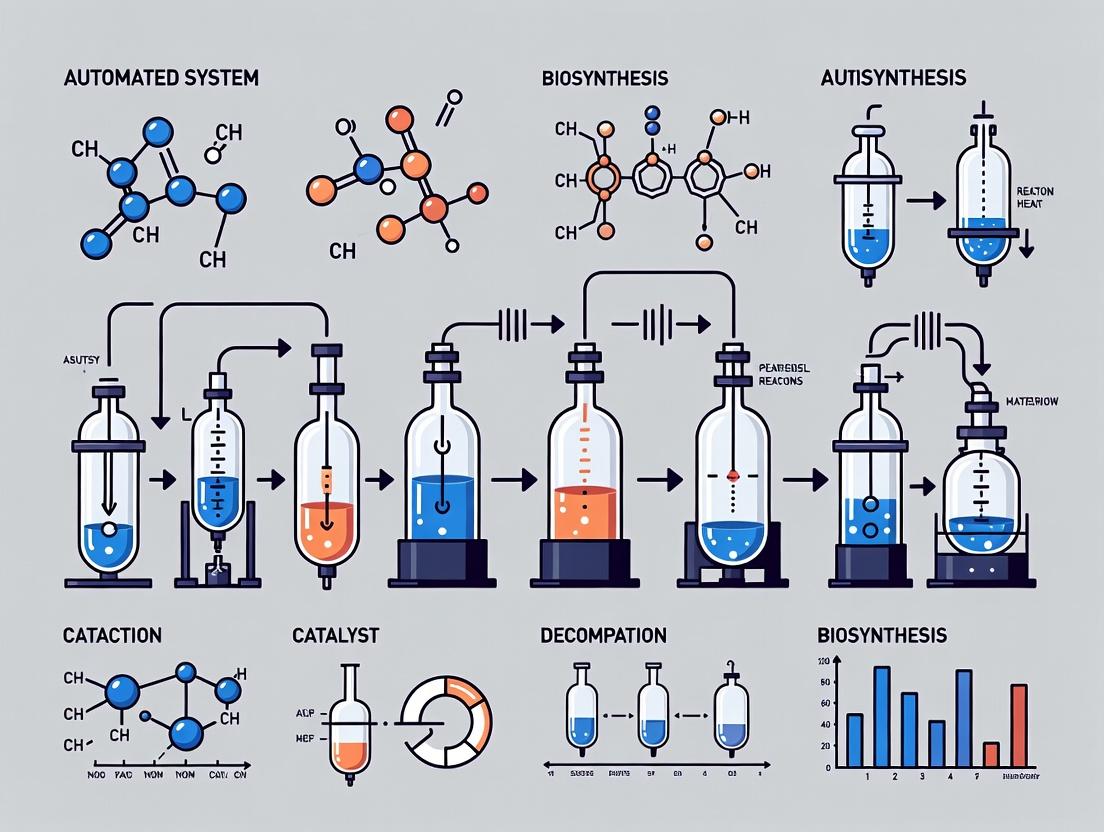
This article provides a detailed exploration of automated systems designed to address catalyst decomposition in pharmaceutical synthesis.
Automated Solutions for Catalyst Decomposition: A Comprehensive Guide for Drug Development Researchers
Abstract
This article provides a detailed exploration of automated systems designed to address catalyst decomposition in pharmaceutical synthesis. We cover the fundamental causes and consequences of catalyst breakdown, present current automated methodologies for detection and mitigation, discuss troubleshooting and optimization strategies, and compare validation approaches. Tailored for researchers, scientists, and drug development professionals, this guide synthesizes the latest advancements to improve reaction yield, reduce costs, and accelerate the drug discovery pipeline.
Understanding Catalyst Decomposition: The Root Causes and Critical Impact on Pharmaceutical Synthesis
FAQs & Troubleshooting
Q1: My catalytic reaction yield drops significantly after the first few cycles. What are the primary mechanisms of catalyst decomposition I should investigate first? A: The most common mechanisms in medicinal chemistry contexts are:
- Oxidative Degradation: Especially for Pd, Ni, and Cu catalysts exposed to air or oxidants.
- Reductive Elimination Failure: Leading to the formation of stable, inactive catalyst aggregates.
- Ligand Decomposition: Oxidation, demetallation, or hydrolysis of phosphine/N-heterocyclic carbene (NHC) ligands.
- Formation of Solvent or Substrate Adducts: Catalyst coordination to heteroatoms in substrates (e.g., amines, thiols) forming stable off-cycle species.
Q2: How can I quickly diagnose if nanoparticle formation (aggregation) is causing my homogeneous catalyst to decompose? A: Perform the following diagnostic tests:
- Mercury Drop Test: Add elemental mercury (Hg(0)) to the reaction. Mercury amalgamates with metal surfaces, poisoning heterogeneous catalysts. A significant rate drop indicates active nanoparticle formation.
- Polymer Poison Test: Add a polymer-bound scavenger (e.g., polyvinylpyridine for Pd). It will selectively poison surface sites on nanoparticles, not single-site homogeneous complexes.
- Transmission Electron Microscopy (TEM): Sample aliquot directly from the reaction mixture, dilute, and image.
Table 1: Diagnostic Tests for Catalyst Aggregation
| Test | Procedure | Positive Result Indicates | Key Consideration |
|---|---|---|---|
| Mercury Drop | Add ~100 equiv Hg(0) relative to catalyst. | Rate/Yield decrease >80% | Works for Pd, Pt, Au, Ni. |
| Polymer Poison | Add solid scavenger (10 mg/mL). | Rate/Yield decrease >50% | Use appropriate polymer for metal. |
| Hot Filtration | Filter reaction at temp, test filtrate activity. | Filtrate is inactive | Confirm filtration does not introduce air. |
Q3: What are the best analytical techniques for tracking ligand decomposition during a reaction? A: Utilize a combination of in-situ and ex-situ spectroscopic methods.
- In-situ NMR (¹H, ³¹P): Monitor ligand integrity in real-time. ³¹P NMR is ideal for phosphine ligands.
- High-Resolution Mass Spectrometry (HRMS): Analyze reaction aliquots for molecular ions of degraded ligand species.
- X-ray Photoelectron Spectroscopy (XPS): For surface analysis of recovered catalysts, identifying phosphine oxide formation.
Q4: My automated screening system flags a reaction for potential decomposition. What is a systematic workflow to confirm and identify the pathway? A: Follow this protocol to integrate with automated systems research.
Protocol 1: Systematic Decomposition Pathway Analysis Objective: Confirm catalyst decomposition and identify primary pathway. Materials: See "Research Reagent Solutions" below. Method:
- Quench & Isolate: Under inert atmosphere, quench a reaction aliquot with a suitable solvent (e.g., MeOH for organometallics). Centrifuge.
- Analyze Soluble Fraction (HRMS, NMR): Identify leached metal ions, free ligand, and organic byproducts.
- Analyze Insoluble Residue (XRD, XPS, TEM): Characterize bulk and nanoscale solid residues for metal(0) or oxide phases.
- Control Experiment (No Substrate): Heat catalyst/ligand in solvent. Tests intrinsic stability.
- Substrate Poisoning Test: Run reaction with a known catalyst poison (e.g., CO, cyanide).
Title: Catalyst Decomposition Diagnostic Workflow
Research Reagent Solutions Table 2: Essential Reagents for Decomposition Studies
| Reagent/Material | Function in Troubleshooting |
|---|---|
| Triphenylphosphine (PPh₃) | Standard ligand for stability comparison; can be used as a sacrificial ligand to stabilize metals. |
| Mercury (Hg(0)) | Diagnostic poison for heterogeneous nanoparticle activity (Amalgamation test). |
| Poly(4-vinylpyridine) | Solid-phase poison for surface sites on nanoparticles. |
| Deuterated Solvents (e.g., C₆D₆, d⁸-THF) | For in-situ NMR monitoring of reaction species. |
| Tetramethylethylenediamine (TMEDA) | Chelating agent to solubilize and detect leached metal ions in NMR. |
| Silica Gel TLC Plates | Rapid monitoring of ligand oxidation (increased polarity). |
| Molecular Sieves (3Å or 4Å) | To exclude water, testing hydrolytic decomposition pathways. |
Q5: How can I stabilize a catalyst against reductive elimination-driven decomposition? A: Implement ligand design and reaction engineering strategies.
- Use Bulky, Chelating Ligands: Ligands like XPhos (bis-2-diphenylphosphinophenyl ether) or bidentate NHCs prevent the formation of dimeric or multimeric decomposition intermediates.
- Add Catalyst Stabilizers: Include low concentrations of sacrificial alkenes (e.g., norbornene) or oxygen scavengers (e.g., tris(trimethylsilyl)phosphite).
- Optimize Reaction Order: Use slow addition of the limiting reagent to maintain low concentration of reactive species.
Title: Reductive Elimination Failure Pathway & Mitigation
Troubleshooting Guides & FAQs
Q1: My catalytic reaction yield has dropped significantly after 5 cycles. What is the most likely cause? A1: Chemical leaching is the most common culprit. Metal ions or active complexes can dissolve into the reaction medium, especially under harsh chemical conditions (e.g., low pH, oxidizing agents). Perform ICP-MS analysis of your post-reaction filtrate to quantify metal loss. Compare against the data in Table 1.
Q2: My heterogeneous catalyst pellets are physically crumbling in my flow reactor. How do I diagnose this? A2: This indicates mechanical breakdown, often from pressure, abrasion, or swelling. Perform a crush strength test on fresh and used pellets (ASTM D4179). Examine the fines via sieving analysis. Implement an attrition resistance protocol (see Experimental Protocol 2).
Q3: My catalyst's selectivity shifts towards unwanted byproducts over time. What driver should I suspect? A3: Thermal degradation is a primary suspect. Sintering or aggregation of active nanoparticles at elevated temperatures alters active site geometry and distribution. Perform TEM analysis on fresh and spent catalysts to measure particle size distribution (see Table 2). This is critical for automated systems where temperature control loops may fail.
Q4: How can I distinguish between chemical poisoning and thermal sintering as the cause of deactivation? A4: Use a combination of characterization techniques. Chemisorption (e.g., CO pulse chemisorption) will show a loss of active surface area in both cases. However, TEM will confirm particle growth (sintering), while XPS or EDX can detect surface adsorbates (poisoning). Follow Experimental Protocol 1.
Q5: In my automated parallel catalyst screening system, how do I monitor for real-time deactivation? A5: Integrate inline analytics. Use FTIR or UV-Vis flow cells to monitor for ligand leaching (chemical). Implement pressure sensors upstream and downstream to detect bed compaction or particle fragmentation (mechanical). Correlate temperature fluctuations with yield data from each reactor cell (thermal).
Experimental Protocols
Experimental Protocol 1: Differentiating Chemical Poisoning from Thermal Sintering Objective: Determine the primary deactivation mechanism for a supported metal catalyst. Materials: Spent catalyst sample, reference fresh catalyst, TEM grid, chemisorption analyzer, XPS instrument. Method:
- Weigh ~0.1 g of spent catalyst.
- CO Chemisorption: Reduce sample in H₂ at standard conditions (e.g., 350°C, 2h). Cool in He. Perform pulsed CO chemisorption at 35°C. Calculate metal dispersion (D).
- TEM Imaging: Ultrasonically disperse catalyst in ethanol. Deposit on a TEM grid. Acquire images at 200 kV. Measure particle diameters for ≥200 particles using image analysis software (e.g., ImageJ). Calculate average size and distribution.
- XPS Analysis: Mount powder on conductive tape. Acquire survey and high-resolution spectra of the active metal and key support elements. Look for shifts in binding energy indicating metal-oxygen species or new surface species (e.g., S, Cl).
- Data Interpretation: A large drop in D with a significant increase in TEM particle size indicates sintering. A drop in D with constant particle size but new XPS peaks indicates surface poisoning.
Experimental Protocol 2: Attrition Resistance Test for Mechanical Integrity Objective: Quantify the mechanical stability of catalyst pellets or beads under simulated reactor conditions. Materials: Attrition test apparatus (modified fluidized bed with high-velocity air jet), sieve set, balance. Method:
- Sieve 50.0 g of fresh catalyst to obtain a narrow particle size fraction (e.g., 150-250 µm).
- Load sample into the attrition column.
- Subject the catalyst to a high-velocity air jet (e.g., 0.5-1.0 MPa) for a fixed period (e.g., 1-5 hours). The air flow fluidizes and collides particles.
- Collect all material. Carefully separate any fines generated (e.g., particles < 100 µm) by sieving.
- Weigh the remaining catalyst mass (parent fraction).
- Calculate the Attrition Index (AI): AI (%) = [(Initial Mass - Final Parent Mass) / Initial Mass] x 100%.
- Repeat with spent catalyst for comparison.
Table 1: Common Catalyst Deactivation Drivers and Quantitative Signatures
| Driver | Primary Evidence | Typical Measurement Technique | Quantifiable Metric (Example Range) |
|---|---|---|---|
| Chemical (Leaching) | Loss of active metal in solution | ICP-MS | [Metal] in filtrate (ppm): Low (<5), Severe (>50) |
| Chemical (Poisoning) | Strong adsorption on active sites | XPS, Chemisorption | Surface atomic % of poison (e.g., S: 0.1-2%) |
| Thermal (Sintering) | Particle size increase | TEM, Chemisorption | Mean Particle Size Increase (%): 20-500% |
| Mechanical (Attrition) | Fines generation, pressure drop | Sieve Analysis, Attrition Test | Attrition Index (% mass loss/hr): 0.1-5% |
| Thermal (Phase Change) | Crystallinity change, new phases | XRD, Raman | Crystalline Size (nm) or New Phase Identification |
Table 2: Deactivation Thresholds for Common Catalyst Systems
| Catalyst System | Typical Operating Temp. (°C) | Chemical Leaching Risk (pH/Solvent) | Sintering Onset Temp. (°C) | Critical Crush Strength (N/mm) |
|---|---|---|---|---|
| Pd/C (Heterogeneous) | 50-150 | High in acidic/oxidizing media | ~200-250 | ≥ 3 |
| Enzyme (Immobilized) | 25-40 | Denaturation in organic solvents | N/A (denatures) | Varies by support |
| Zeolite (H⁺ form) | 300-500 | Ion exchange, dealumination in steam | >600 | ≥ 10 |
| Homogeneous Ru Complex | 80-120 | Ligand decomposition, oxidation | N/A | N/A |
Visualizations
Title: Drivers of Catalyst Decomposition
Title: Catalyst Failure Diagnosis Workflow
The Scientist's Toolkit: Research Reagent Solutions
| Item | Function in Catalyst Stability Research |
|---|---|
| Inductively Coupled Plasma Mass Spectrometry (ICP-MS) Standard Solutions | Calibrate the instrument to quantify trace metal leaching from catalysts into solution with parts-per-billion sensitivity. |
| Chemisorption Gases (e.g., CO, H₂, O₂) | Probe active surface area and metal dispersion before/after reaction to quantify site loss from sintering or poisoning. |
| Temperature-Calibrated Furnace/Tube Reactor | Provide precise, programmable thermal environments for accelerated aging studies and sintering onset temperature determination. |
| Attrition Testing Apparatus | Simulate mechanical stress from fluidization or stirring to measure catalyst fracture and fines generation rates. |
| Reference Catalyst Materials (e.g., EUROCAT) | Benchmarked materials with known properties for validating deactivation protocols and analytical methods. |
| In-situ Spectroscopy Cells (FTIR, Raman) | Allow real-time observation of catalyst surface species and structural changes under operational conditions. |
| High-Resolution TEM Grids | Support ultra-fine catalyst powders for imaging to measure nanoparticle size distribution and morphology changes. |
| Programmable Automated Reactor System | Enable high-throughput, reproducible testing of multiple catalysts under controlled stress conditions (chemo, thermal, mechanical). |
Technical Support Center: Automated Catalyst Stability & Reaction Optimization
FAQs & Troubleshooting Guides
Q1: Our automated catalyst screening system is yielding inconsistent reaction outputs (low yield, variable purity) between identical runs. What could be the cause? A: Inconsistency in automated runs typically points to catalyst decomposition or system calibration drift.
- Primary Troubleshooting Steps:
- Baseline Manual Validation: Perform the reaction manually in triplicate using fresh catalyst from the same batch. This isolates the issue to the automated system.
- System Prime & Purge: Execute a full solvent purge and prime cycle to eliminate residual moisture or cross-contamination from previous runs.
- In-Line Analysis Calibration: Recalibrate any integrated HPLC or FTIR probes using fresh standard solutions. Sensor drift is common.
- Catalyst Stock Solution Stability: Prepare a fresh catalyst stock solution. Decomposition can occur in solution over time, especially under storage conditions. Analyze the old vs. new stock via LC-MS for catalyst integrity.
Q2: We suspect our transition-metal catalyst is decomposing under reaction conditions, forming nanoparticles that poison the reaction. How can we diagnose this in an automated flow reactor? A: Catalyst decomposition is a primary failure mode impacting yield and timeline. Implement this diagnostic protocol.
- Diagnostic Protocol:
- In-Line UV-Vis Spectroscopy: Monitor for the appearance of broad absorbance bands or loss of sharp catalyst-specific peaks, indicating nanoparticle formation.
- Post-Reaction Analysis Trap: Install a 0.2 µm filter or a solid-phase extraction cartridge post-reactor. Capture and analyze the retained solids via SEM/EDS or XPS for metal particles.
- "Reaction Quench & Test" Workflow: Program the automated system to periodically quench a sample segment into a stabilizing agent (e.g., a ligand solution) to "freeze" the catalyst state for offline analysis.
Q3: A failed catalytic step has rendered our key chiral intermediate with low enantiomeric purity (ee). Can we salvage the batch, or must we restart? A: The decision tree is critical for timeline management.
- Salvage Assessment Workflow:
- Quantify the Damage: Precisely determine the %ee and identify the major impurity enantiomer.
- Crystallization Screening: Perform a high-throughput screening (using an automated liquid handler) to identify a chiral resolving agent that can preferentially crystallize the desired enantiomer from the mixture.
- Cost-Benefit Analysis: Calculate the time and material cost of salvage (re-purification) versus the cost of total resynthesis from an earlier stage, factoring in project timeline penalties.
Experimental Protocol: Diagnosing Catalyst Decomposition in Automated Carbon-Carbon Coupling Reactions
Objective: To identify and quantify the onset of palladium catalyst decomposition in an automated Suzuki-Miyaura coupling workflow.
Materials:
- Automated flow reactor system with syringe pumps, heating loop, and back-pressure regulator.
- In-line UV-Vis flow cell.
- Offline LC-MS system.
- Substrate Solutions: Aryl halide (0.1 M in degassed THF), Boronic acid (0.12 M in degassed THF), Base (0.15 M aqueous K2CO3).
- Catalyst Solution: Pd(PPh3)4 (1.0 mM in degassed THF). Prepare fresh daily under inert atmosphere.
Methodology:
- System Equilibration: Purge all lines with degassed THF. Load catalyst and substrate solutions.
- Control Run: Initiate reaction at setpoint T=80°C, flow rate=0.5 mL/min. Collect output fractions (0-30 min) for LC-MS analysis of yield and purity.
- Stress Test Run: Increase temperature setpoint to 100°C to accelerate potential decomposition. Initiate reaction.
- In-Line Monitoring: Record UV-Vis spectra (300-600 nm) continuously via the flow cell.
- Sampling: Collect output fractions every 10 minutes for 2 hours. Analyze each for:
- Product yield (HPLC-UV).
- Presence of Pd nanoparticles (visual inspection for darkening, followed by 0.2 µm filtration and SEM of residue).
- Catalyst integrity (LC-MS of quenched samples).
- Data Correlation: Plot yield/purity against time and observed UV-Vis spectral changes.
Quantitative Impact Data Summary
Table 1: Consequences of Catalyst Failure on Key Development Metrics
| Failure Mode | Typical Yield Drop | Purity Impact | Project Timeline Delay |
|---|---|---|---|
| Catalyst Decomposition | 40-70% | Increased metal impurities (>500 ppm) | 3-6 weeks |
| Ligand Degradation | 20-50% | Side product formation (5-15%) | 2-4 weeks |
| Inconsistent Automation | Variable (10-60%) | Batch-to-batch variability | 1-3 weeks (rework) |
| Chiral Catalyst Poisoning | 10-30% | Enantiomeric excess drop (20-40% ee) | 4-8 weeks (salvage/resyn) |
Table 2: Research Reagent Solutions for Catalyst Stability Studies
| Reagent / Material | Function | Key Consideration |
|---|---|---|
| Pd(PPh3)4 / Pd(dppf)Cl2 | Common cross-coupling catalyst. | Air/moisture sensitive. Requires degassed solvents and inert atm. |
| Buchwald Ligands (SPhos, XPhos) | Bulky, electron-rich ligands that stabilize Pd centers, preventing decomposition. | Ligand-to-Pd ratio is critical for stability. |
| Deoxygenated Solvents (THF, Dioxane) | Reaction medium. Removal of O2 prevents catalyst oxidation. | Use with proper Schlenk techniques or solvent purification systems. |
| In-Line UV-Vis Flow Cell | Real-time monitoring of catalyst integrity and nanoparticle formation. | Must be calibrated and compatible with reactor pressure. |
| 0.2 µm In-Line Filter | Captures precipitated catalyst or nanoparticles for post-analysis. | Can cause pressure buildup if clogged; use pre-filters. |
| Solid-Phase Scavenger Cartridges | Post-reaction removal of metal impurities from product streams. | Choice of resin (e.g., silica-thiol) depends on metal type. |
Visualization: Catalyst Degradation Diagnostic Workflow
Diagram Title: Catalyst Failure Diagnostic Decision Tree
Visualization: Automated Catalyst Screening & Decomposition Feedback Loop
Diagram Title: Automated Catalyst Stability Feedback System
Technical Support Center: Troubleshooting & FAQs
FAQ 1: Why is my palladium catalyst turning black and precipitating during a Suzuki-Miyaura coupling?
Answer: This indicates the formation of inactive palladium black (metallic Pd(0) nanoparticles/aggregates), a primary deactivation pathway. Common causes are:
- Ligand Depletion: The stabilizing phosphine or NHC ligand may be oxidizing or decomposing.
- Oxygen Presence: Trace O₂ in the reaction mixture can accelerate Pd(0) aggregation.
- High Temperature: Excessive heat destabilizes the active Pd(0)L₂ complex.
- Low Substrate Concentration: Insufficient oxidative addition substrate leaves Pd(0) unprotected.
Troubleshooting Guide:
- Prevent: Rigorously degas solvents and sparge with inert gas (N₂/Ar). Use a slight excess of stable ligand (e.g., SPhos). Ensure substrates are added to the catalyst, not vice versa.
- Diagnose: Monitor reaction color; a persistent darkening early in the reaction signals this issue.
- Mitigate: Add catalyst as a stable pre-formed complex. Consider continuous flow systems to maintain low active catalyst concentration.
FAQ 2: My hydrogenation reaction with a homogeneous catalyst slows dramatically or stops prematurely. What could cause this?
Answer: This often points to catalyst decomposition via "Death Pathways" rather than simple poisoning.
- For Ru/Pincer Complexes: Ligand dearomatization or C-H activation can form inactive hydride-bridged dimers.
- For Pd/C in Heterogeneous Hydrogenation: Leaching of Pd into solution followed by re-precipitation as large, inactive aggregates reduces active surface area.
- For Asymmetric Hydrogenation Catalysts: Chiral ligand degradation under H₂ pressure leads to loss of enantioselectivity and activity.
Troubleshooting Guide:
- Identify: Use mercury poisoning test to check for heterogeneous vs. homogeneous active species. Analyze post-reaction mixture via ICP-MS for metal leaching or HPLC for ligand integrity.
- Prevent: For homogeneous systems, strictly control H₂ pressure and temperature within the catalyst's stability window. For heterogeneous, use stabilized catalysts with metal nanoparticles trapped in porous supports.
FAQ 3: During a Heck reaction, I observe extensive formation of inactive Pd(0) mirror on the reactor walls. How can I prevent this?
Answer: The Pd(0) mirror forms due to reductive elimination generating "naked" Pd(0) that plates out. This is a classic decomposition scenario in ligand-free or weakly coordinated systems.
Troubleshooting Guide:
- Modify Conditions: Introduce a catalytic amount of a stabilizing ligand (e.g., PPh₃) or a halide salt (e.g., TBAB) to solubilize Pd(0).
- Use an Oxidant: In oxidative Heck reactions, use an oxidant (e.g., Ag₂CO₃, O₂) to re-oxidize Pd(0) to Pd(II), maintaining the catalytic cycle.
- Catalyst System: Switch to a robust, well-defined precatalyst like Pd(II)-NHC complexes that release active species slowly.
Summarized Quantitative Data on Catalyst Decomposition
Table 1: Common Catalyst Decomposition Pathways & Mitigation Efficacy
| Decomposition Scenario | Typical Catalyst System | Half-Life (t₁/₂) Under Stress | Mitigation Strategy | % Activity Recovery Post-Mitigation |
|---|---|---|---|---|
| Pd(0) Aggregation (Black Precipitation) | Pd(PPh₃)₄ in Suzuki Coupling | ~2 hours at 80°C | Addition of 2 mol% SPhos ligand, Degassing | >90% |
| Ligand Oxidation/Dearomatization | Ru-MACHO for Hydrogenation | ~5 hours at 50°C, 50 bar H₂ | Use of stabilized ligand backbones (e.g., Ru-MACHO-BH) | ~85% |
| Pd Leaching & Aggregation | Pd/C (5 wt%) in Nitro Reduction | Variable; up to 15% Pd leached | Use of N-doped Carbon Support | 95% (Leaching <1%) |
| Chiral Ligand Degradation | Rh-Josiphos in Asymmetric Hydrogenation | ~10 hours at 60°C | Lower H₂ pressure (10 bar), Add antioxidant (BHT) | ~75% |
Experimental Protocols for Key Diagnostic Experiments
Protocol 1: Mercury Poisoning Test for Homogeneous vs. Heterogeneous Catalysis Purpose: To determine if the active catalytic species is molecular (homogeneous) or particulate (heterogeneous). Methodology:
- Set up the standard catalytic reaction (e.g., hydrogenation or cross-coupling).
- After the reaction is initiated and confirmed to be proceeding, split into two parallel vessels.
- To the test vessel, add a large excess of elemental mercury (Hg(0)) (e.g., 1000:1 Hg:Catalyst molar ratio). The control vessel continues untreated.
- Monitor reaction progress in both vessels (e.g., by gas uptake, GC, HPLC).
- Interpretation: A complete or near-complete cessation of reaction in the test vessel indicates a heterogeneous mechanism (Hg amalgamates with metal nanoparticles). Continued reaction suggests a homogeneous mechanism.
Protocol 2: ICP-MS Analysis for Metal Leaching Purpose: To quantify leaching of supported metal catalysts (e.g., Pd/C, Ru/Al₂O₃) into solution. Methodology:
- Perform the catalytic reaction using the heterogeneous catalyst.
- Upon completion, cool the reaction mixture and carefully separate the solid catalyst via hot filtration through a 0.45 μm PTFE membrane under inert atmosphere.
- Take a precise aliquot (e.g., 1 mL) of the clear filtrate.
- Digest the aliquot with concentrated nitric acid (HNO₃) and hydrogen peroxide (H₂O₂) using microwave-assisted digestion.
- Dilute the digested sample to a known volume with ultrapure water.
- Analyze via ICP-MS against a standard calibration curve of the metal of interest.
- Report leaching as a percentage of total metal loaded on the catalyst.
Visualizations
Diagram 1: Pd Catalyst Deactivation Pathways in Cross-Coupling
Diagram 2: Automated Stability Screening Workflow
The Scientist's Toolkit: Research Reagent Solutions
Table 2: Essential Materials for Catalyst Stability Studies
| Item | Function | Example(s) |
|---|---|---|
| Stabilized Ligands | To prevent Pd(0) aggregation and ligand decomposition. | SPhos, XPhos (air-stable, electron-rich phosphines); PEPPSI-type NHC-Pd complexes (robust precatalysts). |
| Oxygen Scavengers | To remove trace O₂ from solvents and reaction headspace. | Triphenylphosphine (PPh₃), Glucose/Glucose Oxidase (enzymatic), Aluminum Alkyls (for stringent drying/deoxygenation). |
| Metal Scavengers | To remove leached metals post-reaction for purity or analysis. | Silica-based thiol (Si-Thiol), QuadraPure resins, Activated Carbon. |
| Stabilized Supports | For heterogeneous catalysts to minimize leaching. | N-doped Carbon, Metal-Organic Frameworks (MOFs), Functionalized Silica. |
| Radical Inhibitors | To suppress radical pathways that degrade ligands. | Butylated Hydroxytoluene (BHT), Hydroquinone. |
| Deuterated Solvents (Dry) | For in-situ NMR monitoring of catalyst integrity. | d⁸-Toluene, d⁸-THF (dried over molecular sieves). |
| Analytical Standards | For quantifying catalyst and ligand concentration. | ICP-MS metal standards, HPLC-grade chiral/pure ligand samples. |
The Role of Automation in Proactive Decomposition Monitoring
Troubleshooting Guides & FAQs
Q1: During automated inline spectroscopy, we observe erratic baseline drift, complicating real-time decomposition analysis. What could be the cause? A1: Erratic drift is often due to temperature fluctuations in the flow cell or particulate contamination. First, verify and stabilize the temperature control unit to ±0.1°C. Implement a pre-filter (0.2 µm) in the sample line. Execute a system wash with 1M HNO₃ followed by deionized water. If drift persists, perform an automated dark spectrum and reference background calibration via the system's diagnostics menu.
Q2: Our automated sampling robot consistently introduces air bubbles into the HPLC injection loop, causing peak anomalies. How can we resolve this? A2: This indicates a failure in the liquid-level sensing or over-aspiration. Adjust the robot's aspiration parameters: set a slower aspiration speed (e.g., 50 µL/s) and a 2-second post-aspiration delay. Ensure the probe is entering the sample vial at a 30° angle and is submerged 3 mm below the meniscus. Regularly clean the capacitive level sensor with isopropanol.
Q3: The machine learning algorithm for predicting catalyst turnover frequency (TOF) decline is generating false-positive decomposition alerts. How do we improve its accuracy? A3: False positives often stem from an imbalanced training dataset. Augment your training set with more "stable catalyst" operational data. Increase the weighting of the spectroscopic principal component analysis (PCA) features over simple pressure/ temperature thresholds. Retrain the model using a time-series cross-validation method, not random split.
Q4: Automated pressure tracking in continuous flow reactors shows unexplained periodic spikes that correlate with supposed decomposition events. What's the diagnostic protocol? A4: This may be an artifact of peristaltic pump pulsation or a sticking pressure relief valve. Follow this diagnostic workflow:
- Bypass the catalyst bed with a blank tube. If spikes remain, the issue is mechanical, not chemical.
- Check pump tubing for wear and calibrate the pulsation damping module.
- Command the automated valve sequence to perform a backflush cycle to clear any particulate buildup at the reactor head.
Q5: How do we validate that an automated UV-Vis signal change truly indicates ligand dissociation versus simple solvent evaporation? A5: Implement a coupled, automated reference cell containing only the solvent. The control system should subtract this reference signal in real-time. Additionally, program the system to periodically inject a non-degrading internal standard (e.g., a cobaltocenium derivative) and track its concentration via a defined m/z channel in the integrated MS. A constant internal standard signal rules out evaporation.
Experimental Protocol: Automated Multi-Analyte Tracking for Catalyst Health
Objective: Proactively detect early-stage catalyst decomposition by correlating real-time changes in reaction output with inline spectroscopic signatures.
Methodology:
- System Setup: A continuous flow reactor is integrated with an automated liquid handling robot for periodic sampling, an inline ATR-FTIR flow cell, and an online UHPLC-MS equipped with a diverted waste stream.
- Baseline Phase: Operate the system under optimal known conditions for 24 hours. Collect and normalize data from all sensors (IR, MS, pressure, temperature) to establish a baseline model.
- Stress Induction: Programmatically introduce a known decomposition stressor (e.g., a 5% step increase in reaction temperature, or a pulsed injection of a known poison like mercaptan).
- Automated Monitoring & Response:
- The control software (e.g., LabVIEW or Python/Node-RED) continuously calculates key performance indicators (KPIs): Turnover Number (TON), TOF, and selectivity.
- Inline FTIR monitors for the appearance of decomposition byproduct peaks (e.g., carbonyl bands from ligand oxidation).
- Upon detection of a KPI deviation >3σ from baseline OR a new IR peak >2% baseline intensity, the system triggers an automated response.
- Automated Response Protocol: The system:
- Diverts reactor effluent to the UHPLC-MS for a detailed, automated analysis.
- Takes a discrete sample via robot for external XAS analysis (batch sent).
- Records a high-resolution FTIR scan (64 scans).
- Logs all event data with a timestamped flag in the database.
Key Quantitative Data from a Representative Study (Hypothetical Data):
Table 1: Performance of Automated vs. Manual Decomposition Detection
| Metric | Manual Sampling (8-hour intervals) | Automated Proactive Monitoring |
|---|---|---|
| Mean Time to Detection (hr) | 14.2 ± 3.5 | 4.7 ± 1.1 |
| Catalyst Material Saved (%) | Baseline (0%) | ~38% |
| False Alarm Rate (%) | N/A | <5% |
| Data Points Collected per Day | 3 | 288 (continuous + events) |
Table 2: Key Reagent Solutions for Automated Monitoring Studies
| Reagent/Item | Function in Experiment |
|---|---|
| Internal Standard Solution (Cobaltocenium hexafluorophosphate, 0.1 mM in MeCN) | Quantifies volumetric changes, calibrates MS response, differentiates physical from chemical loss. |
| Calibration Cocktail | Contains known concentrations of catalyst, expected products, and common decomposition byproducts. Used for daily automated system calibration. |
| System Wash Solution (1:1:1 v/v/v Acetonitrile/DCM/Methanol) | Automated wash cycle between samples to prevent cross-contamination in lines and cells. |
| Degasser Module | Removes dissolved oxygen from solvents to prevent oxidative decomposition as an artifact. |
| 0.2 µm PEEK Inline Filter | Protects sensitive instrumentation (spectrometer flow cells, MS capillaries) from particulate matter. |
Visualizations
Implementing Automated Systems: Techniques for Real-Time Detection and Mitigation
Technical Support Center
Troubleshooting Guides & FAQs
Spectroscopy Module (Raman/FTIR/NIR)
Q1: During in-line Raman monitoring of a catalytic hydrogenation, my signal-to-noise ratio has degraded significantly. What are the primary causes and solutions?
A1: This is common in catalyst systems. Causes include:
- Catalyst Fouling/Precipitation on Probe Window: Creates fluorescence and scatters light.
- Solution: Implement an automated cleaning cycle with a compatible solvent. Verify window material (e.g., sapphire) is chemically resistant.
- Gas Bubble Formation (in slurry reactions): Causes signal dropout.
- Solution: Adjust probe placement angle or reactor agitation rate. Use a probe with a recessed window.
- Laser Power Degradation or Misalignment:
- Solution: Perform a routine power calibration using a NIST-traceable standard. Follow manufacturer's alignment protocol.
Q2: My in-line NIR model for reactant concentration is drifting over multiple batches. How should I recalibrate?
A2: This indicates a change in process conditions affecting the spectral background.
- Immediate Action: Use a moving window PLS model that incorporates spectra from the most recent successful batches.
- Root Cause Protocol: Collect samples for offline reference analysis (e.g., HPLC) at key process points. Use these new data points with the old spectra in a model updating algorithm (e.g., Direct Standardization). Consult the thesis chapter on Adaptive Models for Catalyst Lifecycle Analysis.
Reaction Calorimetry Module
Q3: The calculated heat flow from my RC1e system shows unexpected exotherms during a steady-state period. What could this be?
A3: Unexplained exotherms often signal catalyst decomposition or unwanted side reactions.
- Checklist:
- Verify Calibration: Re-run the electrical calibration for the heater and thermosensor.
- Check Jacket Temperature Control: Ensure the jacket temperature is stable; oscillations can create artifactual heat flow.
- Cross-Reference with Spectroscopy: Correlate the exotherm timestamp with in-line Raman/IR data for new spectral peaks (e.g., carbonyl groups from catalyst oxidation).
- Sample for Particle Analysis: Immediately take a sample for in-line particle size analysis (see below) to check for catalyst precipitation.
Q4: How do I establish a reliable heat balance for a heterogeneous catalytic reaction with gas feed?
A4: Follow this protocol: 1. Pre-Reaction Phase: Calibrate the heat transfer coefficient (U or K* values) using a known electrical calibration pulse. 2. Gas Flow Correction: Precisely measure the temperature and flow rate of all input gases. Use the system's gas flow correction module to account for the sensible heat they add/remove. 3. Reference Experiment: Run a non-catalytic reference reaction with the same mixing and gas flow to establish a baseline for heat losses/gains from stirring and gas dissolution. 4. Data Integration: The true reaction heat is the total measured heat minus the contributions from gas flow and the reference experiment baseline.
Particle Analysis Module (FBRM/PVM)
Q5: My FBRM chord length count is stable, but the mean chord length is gradually increasing. What does this indicate for my catalyst?
A5: In catalyst suspension systems, this typically indicates:
- Ostwald Ripening: Smaller catalyst particles dissolve and re-deposit onto larger ones, increasing mean size without changing count. This deactivates catalyst by reducing surface area.
- Agglomeration/Flocculation: Particles are weakly clustering.
- Diagnostic Protocol:
- Take a sample and gently dilute it with the process solvent. If the mean size decreases, it indicates reversible agglomeration.
- Cross-reference with in-situ microscopy (PVM): Look for irregular, clustered structures (agglomeration) vs. smooth, larger crystals (ripening).
- Correlate with calorimetry data; a drop in activity often accompanies this size increase.
Q6: Particles are adhering to my PVM or FBRM probe window, obscuring the measurement. How can I prevent this?
A6:
- Probe Placement: Ensure the probe is in a region of high shear, typically directly opposite the impeller.
- Surface Treatment: Consult the manufacturer for anti-fouling probe coatings compatible with your chemistry.
- Hardware Solution: Install an automated retractable probe holder that allows for periodic cleaning outside the reactor.
- Process Solution: Introduce a wetting agent or adjust the solvent polarity to reduce the adhesive force between particles and the sapphire window.
Experimental Protocols
Protocol 1: Integrated Calorimetry-Spectroscopy for Catalyst Stability Objective: To correlate heat flow anomalies with spectroscopic evidence of catalyst decomposition.
- Set up reactor with in-situ Raman probe and reaction calorimeter.
- Initiate the catalytic reaction (e.g., cross-coupling) under standard conditions.
- Trigger the calorimeter to log heat flow (Qr) and cumulative heat at 1-second intervals.
- Synchronize the Raman spectrometer to collect a spectrum every 30 seconds.
- At any point where
|dQr/dt|exceeds a set threshold (e.g., 15% change), automatically increase Raman sampling to every 5 seconds. - Post-run, use multivariate analysis (MVA) to correlate specific spectral peak areas (e.g., 1750 cm⁻¹ for C=O) with the rate of heat change.
Protocol 2: Particle Analysis Triggered by Spectroscopic Change Objective: To confirm catalyst precipitation agglomeration upon detection of a new solid phase.
- Set up reactor with ATR-FTIR probe and FBRM probe in close proximity.
- Define a key IR absorbance band for the soluble catalyst precursor.
- Start the reaction that triggers catalyst formation in situ.
- Program the software to trigger FBRM data logging at high frequency (every 10 seconds) when the soluble catalyst IR peak decreases by 20% from its maximum.
- Analyze the FBRM trend: a sudden increase in fine count (<10 µm) indicates nucleation; a rise in mean size indicates growth/agglomeration.
Data Presentation
Table 1: Comparison of In-Line Monitoring Techniques for Catalyst Decomposition Studies
| Technology | Typical Metrics Measured | Response Time | Sensitivity to Catalyst Change | Key Limitation for Catalysis |
|---|---|---|---|---|
| Raman Spectroscopy | Molecular vibrations, crystal phase | 10-60 seconds | High (direct molecular info) | Fluorescence from impurities, probe fouling |
| ATR-FTIR Spectroscopy | Functional groups, solution species | 15-30 seconds | High for soluble species | Solid phases poorly detected, pressure sensitivity |
| Reaction Calorimetry | Heat flow (W), Total Heat (J) | 1-5 seconds | Very High (bulk energy change) | Non-specific; requires decoupling of simultaneous events |
| FBRM | Chord Length Distribution (μm), Counts | <1 second | Medium (particle morphology) | Chord length not direct size; sensitive to slurry density |
| PVM | Particle images (10-1000 μm) | Real-time video | High for morphology | Limited to low particle concentrations |
Table 2: Troubleshooting Matrix for Common Sensor Issues
| Symptom | Likeliest Cause | Immediate Check | Long-term Solution |
|---|---|---|---|
| Drifting baseline (Spectroscopy) | Window fouling, temp. drift | Perform reference scan in air/solvent | Install auto-cleaning assembly, improve temperature control |
| Spiking Heat Flow (Calorimetry) | Uncontrolled gas feed, agitation stop | Check mass flow controller, tachometer | Implement interlock logic in automated control system |
| Sudden drop in particle count (FBRM) | Probe blinded, air bubble | Inspect via PVM or sample port | Re-position probe, add anti-foam agent |
| No new spectral peaks but activity drop | Catalyst poisoning (chelation) | Sample for ICP-MS analysis | Integrate a chelating agent sensor (e.g., ion-selective electrode) |
Diagrams
Diagram Title: Automated Detection Pathway for Catalyst Decomposition
Diagram Title: Multi-Sensor Experimental Workflow Trigger
The Scientist's Toolkit: Research Reagent Solutions
| Item | Function in Catalyst Monitoring Experiments |
|---|---|
| Sapphire-Windowed ATR/Immersion Probes | Chemically resistant optical interface for in-situ spectroscopy under harsh conditions. |
| Calibration Standard for Raman (e.g., 4-Acetamidophenol) | Provides a stable, known spectrum for verifying instrument wavelength and intensity accuracy. |
| Electrical Calibration Heater (for Calorimetry) | Delivers a precise Joule heat pulse to calibrate the heat transfer coefficient of the reactor system. |
| Silicon Oil for Calorimetry Jackets | Heat transfer fluid with stable viscosity over a wide temperature range for accurate temperature control. |
| NIST-Traceable Particle Size Standards (Latex Beads) | Used to validate the baseline performance and alignment of FBRM and PVM probes. |
| Anti-Fouling Probe Sleeves (e.g., PFA) | Protects sensor windows from direct adhesion of sticky polymers or catalysts, enabling easier cleaning. |
| Multivariate Analysis (MVA) Software (e.g., SIMCA, Unscrambler) | Essential for modeling complex spectral data and correlating multiple sensor outputs to process outcomes. |
Automated Sampling and Analysis (ASA) Platforms for Off-Line Catalyst Health Checks
Technical Support Center
Troubleshooting Guides & FAQs
Q1: Our ASA platform reports "Low Catalyst Conversion Yield" in the off-line analysis module. What are the primary causes? A: A drop in conversion yield typically indicates catalyst decomposition or poisoning. Follow this diagnostic protocol:
- Cross-Reference with Inline Data: Verify the discrepancy is not due to a sampling error by comparing to the last recorded inline GC reading.
- Analyze Decomposition Byproducts: Run an expanded GC-MS method on the sampled aliquot to check for ligand degradation peaks (e.g., phosphine oxides for metal-phosphine complexes). Common culprits are oxygen or water ingress.
- Check Solvent & Feedstock Quality: Use Karl Fischer titration on fresh feedstock to rule out water contamination >100 ppm. Analyze for known catalyst poisons (e.g., sulfur compounds, alkynes) via dedicated GC detectors.
- Experimental Protocol for Confirmation:
- Goal: Isolate and identify catalyst decomposition products.
- Method: Take a 10 mL sample from the reactor quench line. Remove solvent under reduced pressure.
- Analysis: Reconstitute the residue in deuterated solvent and analyze via 31P NMR and 1H NMR spectroscopy.
- Expected Outcome: Sharp, distinct peaks in 31P NMR indicate intact ligand; broadened peaks or new resonances suggest decomposition.
Q2: The automated sampling needle frequently clogs during aspiration of slurry or viscous reaction mixtures. How can this be mitigated? A: Clogging is common in heterogeneous catalysis or polymerization health checks. Implement these solutions:
- Hardware Adjustment: Increase the internal diameter (ID) of the sampling needle to ≥500 µm. Use a needle with a conical tip and a side port.
- Protocol Modification: Program a "purge-and-clean" cycle using a strong solvent (e.g., THF, DCM) before and after each sample aspiration. Increase the gas pressure for the sample transfer line.
- In-Line Filtration: Install a heated, inline micro-filter (2-7 µm pore size) before the sample valve.
Q3: We observe high variance in the quantitative analysis results between repeated samplings of the same batch. A: This points to issues in sample homogeneity or transfer.
- Verify Reactor Agitation: Ensure agitation is sufficient (>500 rpm for a 1L bench reactor) and remains on for at least 30 seconds before each automated sampling event.
- Check Transfer Line Integrity: Leaks or cold spots in the transfer line can cause partial condensation/precipitation. Maintain the transfer line temperature 10-15°C above the reaction mixture's setpoint.
- Calibrate the Sampling Volume: Use a gravimetric calibration protocol:
- Protocol: Command the system to take 10 sequential samples into pre-weighed vials.
- Weigh each vial and calculate the mean and standard deviation of the sample mass.
- Acceptance Criterion: CV% must be <2%. If not, check the sampling valve actuation pressure and timing.
Q4: How do we validate that the off-line ASA data is representative of the true reaction state? A: Implement a "Standard Spiking" validation routine monthly.
- Protocol:
- Prepare a known standard solution of the catalyst and primary product in the reaction solvent.
- Load this into a mock reactor vessel connected to the ASA sampling line.
- Execute a full sampling and analysis sequence (n=5).
- Compare the ASA-reported concentration values to the known values from pre-characterization (e.g., by ICP-MS for metals, NMR for organics).
- Data Acceptance Table:
| Analyte | Known Concentration (mM) | ASA Mean Result (mM) | % Recovery | Action Threshold |
|---|---|---|---|---|
| Catalyst (Pd) | 1.00 | 0.98 | 98% | 95-105% |
| Product A | 10.00 | 9.85 | 98.5% | 97-103% |
| Key Impurity | 0.50 | 0.49 | 98% | 90-110% |
The Scientist's Toolkit: Research Reagent Solutions
| Item | Function & Rationale |
|---|---|
| Deoxygenated Solvents (e.g., THF, Toluene) | Pre-purified solvents with <10 ppm O2/H2O prevent adventitious catalyst oxidation/deactivation during sampling and analysis. |
| Internal Standard Solutions (e.g., dodecane for GC, 1,3,5-trimethoxybenzene for HPLC) | Added quantitatively to each sample vial to correct for instrument injection volume variability, ensuring quantitative accuracy. |
| Stabilization Quench Solutions | Specific chemical quenches (e.g., triethylphosphine for Ni catalysts, thiourea for Pd) injected immediately upon sampling to "freeze" the catalyst state for later off-line analysis. |
| Certified Reference Materials (CRMs) | Known concentrations of catalyst metals (e.g., Pd in 2% HNO3) for calibrating ICP-OES/MS systems used in catalyst leaching studies. |
| Deuterated NMR Solvents with Redox Stabilizers | (e.g., C6D6 with hydroquinone) Used for detailed off-line speciation studies of air-sensitive catalysts without altering their oxidation state. |
Experimental Workflow for Catalyst Health Monitoring
Diagram Title: Automated Catalyst Health Check Workflow
Catalyst Decomposition Analysis Pathway
Diagram Title: Off-Line Catalyst Decomposition Analysis
Technical Support Center
Troubleshooting Guides & FAQs
Q1: The control loop is causing oscillatory concentration readings, leading to unstable dosing. What could be the cause? A: This is typically a tuning issue with the PID controller. Excessive integral gain (I) can induce oscillations. First, check for sensor lag or fouling, which introduces a delay. Implement a step-test: introduce a small, manual setpoint change and observe the response. Reduce the integral gain and consider increasing the derivative time slightly to dampen oscillations. Ensure your dosing pump resolution is sufficient for fine adjustments.
Q2: The catalyst activity sensor shows a consistent drift, causing the system to over-dose stabilizer. How do I correct this? A: Sensor drift necessitates regular calibration. Implement an automated calibration protocol within the control software using a known standard. If drift is rapid, the sensor may be degrading due to the reaction medium. Check material compatibility. As a workaround, integrate a secondary, offline measurement (e.g., daily HPLC sample) to provide a correction factor to the primary sensor reading.
Q3: The automated system fails to trigger a fresh catalyst dose even when activity falls below the threshold. A: Follow this diagnostic checklist:
- Verify Sensor Input: Confirm the activity sensor is powered and transmitting data to the PLC/DCS. Check for loose connections.
- Check Logic Condition: Review the "if" statement in the control code. Ensure the activity threshold variable is correctly compared to the live sensor value.
- Inspect Final Control Element: Manually activate the catalyst dosing pump/valve from the control interface to rule out a mechanical failure.
- Review Interlocks: Ensure no safety or system interlock (e.g., reactor lid open, agitator off) is preventing the dosing command.
Q4: How do I determine the correct proportional gain (Kp) for my specific catalyst-stabilizer system? A: Use the following empirical Ziegler-Nichols method:
- Set the controller to P-only (I and D terms to zero).
- With the loop in manual, establish steady-state operation.
- Switch to automatic and introduce a small setpoint change.
- Gradually increase Kp until you observe sustained, constant-amplitude oscillations (the ultimate gain, Ku). Note the oscillation period (Pu).
- For a PI controller, set Kp = 0.45 * Ku.
Q5: What are the best practices for integrating a new, in-line spectroscopic sensor (like FTIR) into the feedback loop? A:
- Validation: Correlate the spectroscopic signal (e.g., peak area) with catalyst concentration/activity using offline reference methods (e.g., ICP-MS) for a range of expected conditions.
- Data Processing: Implement robust preprocessing (baseline correction, smoothing) and a validated chemometric model (PLSR) within the loop's software.
- Communication Protocol: Ensure the spectrometer can output a clean, digital signal (e.g., via OPC UA or Modbus TCP) to the controller at a sufficient scan rate.
- Add Redundancy: Start with the new sensor in a monitoring-only role, with parallel control from the legacy sensor, before switching full control.
Experimental Protocols
Protocol 1: Step-Test for Control Loop Tuning Objective: To characterize the open-loop response of the catalyst system for initial PID tuning. Methodology:
- Stabilize the reaction system at the desired operating point with the controller in manual mode.
- Record the baseline stabilizer dosing rate (e.g., mL/hr) and the key measured variable (e.g., catalyst activity unit).
- Introduce a step change of 5-10% to the stabilizer dosing rate. Maintain the new rate.
- Record the measured variable at high frequency (every 2-5 seconds) until it reaches a new steady state (typically 5-10 reaction half-lives).
- Analyze the response curve to determine dead time, time constant, and process gain.
Protocol 2: Calibration of an In-Line UV-Vis Catalyst Activity Probe Objective: To establish a reliable correlation between absorbance and catalytic turnover frequency (TOF). Methodology:
- Prepare a series of reaction mixtures with known, varying concentrations of active catalyst, spanning the expected operational range.
- For each standard, simultaneously record the absorbance at the characteristic wavelength (λ_max) using the in-line probe and measure the TOF via offline gas consumption analysis (e.g., using a parallel pressure sensor in a sealed vial).
- Perform a linear regression (Absorbance vs. TOF) to obtain the calibration slope and intercept.
- Integrate this calibration equation into the control algorithm to convert real-time absorbance readings into activity values for feedback control.
Data Presentation
Table 1: Comparison of PID Tuning Methods for Catalyst Dosing Loops
| Tuning Method | Best For | Key Parameters Derived | Requires Process Disturbance? | Suitability for Slow Catalytic Reactions |
|---|---|---|---|---|
| Ziegler-Nichols (Closed-Loop) | Preliminary tuning for stable processes | Ku (Ultimate Gain), Pu (Oscillation Period) | Yes | Low - Can push unstable system over limit |
| Cohen-Coon | First-order plus dead time (FOPDT) processes | Kp, Ti (Integral Time), Td (Derivative Time) | No (model-based) | Moderate |
| Software (Internal Model Control - IMC) | Complex, high-order, or known process models | λ (Closed-loop time constant) | No | High - Allows for robust, slow-response tuning |
Table 2: Common Sensor Types for Catalyst Activity Monitoring
| Sensor Type | Measured Parameter | Response Time | Key Advantage | Key Limitation |
|---|---|---|---|---|
| In-line FTIR | Functional group concentration | 10-60 seconds | Species-specific, multi-component | Sensitive to bubbles/particulates |
| Calorimetric | Heat flow (ΔH of reaction) | < 5 seconds | Direct link to reaction rate | Non-specific, affected by heat transfer |
| Pressiometric | Gas uptake/release rate | 1-30 seconds | Excellent for gas-involved reactions | Requires sealed or flow-cell system |
| UV-Vis Probe | Absorbance of catalyst species | 1-5 seconds | Robust, relatively low cost | Requires distinct chromophore |
Visualizations
Title: Automated Catalyst Dosing Feedback Control Loop
Title: Troubleshooting Flow for Automated Dosing Failure
The Scientist's Toolkit: Research Reagent Solutions
Table 3: Essential Materials for Automated Catalyst Stabilization Experiments
| Item | Function & Rationale |
|---|---|
| Programmable Logic Controller (PLC) / Lab-Scale DCS | The central hardware that executes the control algorithm, reads sensors, and commands dosing pumps. Essential for implementing custom feedback logic. |
| Modular In-Line Spectroscopic Flow Cell (e.g., ATR-FTIR, UV-Vis) | Allows real-time, non-destructive monitoring of catalyst or substrate concentration directly in the reaction stream, providing the primary feedback signal. |
| Precision Syringe or HPLC Pump (Pulse-free) | Delivers stabilizer or catalyst solution with high accuracy and reproducibility at low flow rates, acting as the final control element. |
| Chemometric Software Package (e.g., for PLS Regression) | Required to convert complex spectroscopic data (multivariate) into a single, actionable activity or concentration value for the controller. |
| Simulation Software (e.g., MATLAB Simulink, Python Control Library) | Used to model the reaction kinetics and simulate the closed-loop control response before implementation, reducing risk and downtime. |
| Calibration Standards (Catalyst & Stabilizer) | High-purity, accurately weighed standards are critical for validating and calibrating in-line sensors to ensure the feedback signal is trustworthy. |
Integrating PAT (Process Analytical Technology) with Reaction Control Software
Technical Support Center
Troubleshooting Guide & FAQs
Q1: The PAT probe (e.g., FTIR, Raman) is providing noisy or erratic concentration readings, causing the control software to make unstable adjustments to the reaction. How can I diagnose this? A1: Noisy signals often stem from physical or calibration issues.
- Check Probe Placement & Condition: Ensure the probe window is clean and correctly positioned in the reaction medium, not in a vapor phase or against the reactor wall. For in-situ probes, verify there is no fouling or coating from catalyst/carbon deposits.
- Verify Calibration Model Robustness: Ensure your chemometric model (PLSR, PCR) was built with data encompassing expected variances (e.g., catalyst lot changes, temperature fluctuations). Recalibrate using a standard sample.
- Review Preprocessing: Apply appropriate spectral preprocessing (e.g., smoothing, baseline correction, vector normalization) within the PAT software before data is sent to the control system.
- Isolate Electrical Noise: Ensure the probe and cabling are away from power sources and motors. Check grounding.
Q2: The software triggers a "Catalyst Health Index" alert, suggesting premature decomposition. What are the first steps to confirm this? A2: This alert, based on PAT trends (e.g., unexpected byproduct peak growth, slowing main reaction), requires immediate verification.
- Cross-Validation: Immediately sample and analyze via an orthogonal off-line method (e.g., HPLC) to confirm concentration profiles.
- Inspect Reaction Signatures: Review the multivariate model contribution plots or difference spectra to identify the specific spectral feature triggering the alert.
- Check Control Parameters: Verify that temperature, pH, or gas feed controllers are operating within setpoints, as excursions can induce decomposition.
- Initiate Contingency Protocol: The software should log all process parameters. Follow predefined protocols to either pause the reaction, adjust temperature, or add stabilizer, as per your catalyst decomposition mitigation thesis.
Q3: There is a communication lag between the PAT analyzer and the control software, leading to delayed feedback control actions. How can this be minimized? A3: Latency undermines real-time control.
- Audit Data Flow: Map the data pathway: PAT Analyzer → PAT Data Server → OPC/Modbus → Control Software. Measure latency at each step.
- Optimize Settings: Reduce spectral averaging time on the analyzer at the cost of increased noise (balance required). Increase the polling/update frequency in the communication driver (OPC) settings.
- Hardware Check: Ensure network switches and data interfaces are not overloaded. Use direct, wired connections where possible.
- Buffer Strategy: Implement a timestamp synchronization routine in the control software to align data with process time.
Q4: When implementing a new reaction, how do I establish the initial control parameters (e.g., dosing rate, temperature) based on PAT data? A4: Use a structured design of experiments (DoE) approach.
- Run Calibration Experiments: Perform small-scale, non-adaptive experiments to build your initial chemometric model and identify critical process parameters (CPPs).
- Define Safe Operating Space (SOS): Establish parameter boundaries (temp, concentration limits) that the control software must not exceed.
- Start with Conservative PID Tuning: Begin the first automated run with conservative controller gains (Kp, Ki, Kd) to observe the system's response to PAT-driven adjustments.
- Utilize Software's Learning Mode: Some advanced platforms can record PAT and parameter data during manual runs to suggest initial control logic.
Table 1: Common PAT Techniques for Catalyst Stability Monitoring
| Technique | Typical Measurement | Key Metrics for Catalyst Health | Data Acquisition Frequency |
|---|---|---|---|
| In-situ FTIR | Functional group concentration | Appearance of decomposition byproduct peaks; Loss of substrate consumption rate | 30 sec - 2 min |
| In-situ Raman | Crystal forms, metal-ligand bonds | Shift in catalyst-specific vibrational bands; Emergence of new bands | 10 sec - 1 min |
| ReactIR (Mettler) | Mid-IR absorption | Reaction profile derivatives; Quantification of known impurities | 15 sec - 1 min |
| UV-Vis Spectroscopy | Electronic transitions | Change in absorbance at catalyst-specific λmax; Isosbestic point shifts | 1 - 5 sec |
| Online HPLC/UPLC | Full quantitative analysis | Direct quantification of catalyst, substrate, product, impurities | 5 - 15 min |
Table 2: Comparison of Control Strategies for Mitigating Catalyst Decomposition
| Control Strategy | PAT Input | Control Action | Response Time | Suitability for Catalyst Research |
|---|---|---|---|---|
| PID Feedback | Concentration of key species | Adjusts feed rate or temperature | Moderate (1-5 min) | Good for well-understood, slow decomposition pathways. |
| Model Predictive Control (MPC) | Multivariate PAT trends + kinetic model | Optimizes future trajectory of multiple parameters | Slow (Model-dependent) | Excellent for complex, modeled systems; core to advanced thesis research. |
| Rule-Based (IF-THEN) | Binary or threshold alerts (e.g., "Byproduct > X%") | Triggers pre-set action (e.g., cool reactor, add inhibitor) | Fast (<1 min) | Essential for emergency mitigation of rapid decomposition. |
| Adaptive Control | Real-time model parameter estimation | Updates the internal control model itself | Varies | Cutting-edge for automated systems research dealing with unknown decomposition kinetics. |
Experimental Protocol: PAT-Enabled Detection of Catalyst Decomposition Onset
Objective: To automatically detect the onset of homogeneous catalyst decomposition using in-situ FTIR and trigger a control response.
Materials:
- Reaction vessel with temperature control and overhead stirring.
- In-situ FTIR probe with ATR crystal (e.g., Mettler Toledo ReactIR).
- Precision syringe pumps for reagent addition.
- Reaction control software with data integration capabilities (e.g., Siemens SIPAT, Synthace, or custom Python/Matlab script).
- Catalyst and substrate solutions.
Methodology:
- Calibration Model Development:
- Perform a series of calibration experiments at varying concentrations of catalyst, substrate, product, and a known decomposition byproduct.
- Collect spectra and use chemometric software to build a Partial Least Squares Regression (PLSR) model for quantitative prediction of each component.
Software Configuration:
- Integrate the PAT analyzer's data stream into the control software via OPC-UA.
- In the control software, define a "Catalyst Health Index" (CHI). For example:
CHI = [Catalyst] / ([Byproduct A] + 1). Set an alert threshold (e.g., CHI < 5.0). - Configure a rule:
IF CHI < 5.0 FOR 3 consecutive readings, THEN set reactor temperature to 10°C AND notify operator.
Automated Experiment Execution:
- In the control software, set the reaction recipe: initial charge, setpoints (T = 60°C), and substrate feed profile.
- Start the reaction. The software monitors real-time concentrations via the PLSR model applied to the incoming FTIR spectra.
- The software calculates the CHI every minute.
- Upon triggering the rule, the software automatically executes the cooling protocol and logs the event time and all process parameters for thesis analysis.
The Scientist's Toolkit: Research Reagent Solutions
Table 3: Essential Materials for PAT-Controlled Catalyst Stability Experiments
| Item | Function in Experiment | Example/Note |
|---|---|---|
| In-situ Spectroscopic Probe | Provides real-time, molecular-level data on reaction composition. | ReactIR 702L (Mettler Toledo); Raman Rxn2 (Kaiser Optical). |
| Chemometric Software | Builds calibration models to convert spectral data into concentrations. | SIMCA (Sartorius), Solo (Eigenvector), MATLAB PLS Toolbox. |
| Reaction Control Software | The integration hub that acquires PAT data and executes control logic. | LabVIEW, Siemens SIPAT, Aistech's GLIMS, or custom Python scripts. |
| Calibration Standards | Pure samples of all relevant reaction components for model building. | High-purity catalyst, substrate, product, and expected impurity/decomposition byproduct. |
| Stabilizers/Inhibitors | Reagents to be added by the control system upon decomposition detection. | Radical scavengers (e.g., BHT), chelating agents, or additional ligand. |
| Internal Standard (for NMR/Online HPLC) | For quantitative validation of PAT models. | e.g., 1,3,5-Trimethoxybenzene for NMR; specific unrelated compound for HPLC. |
Diagrams
Diagram 1: Data Flow for PAT-Integrated Catalyst Health Monitoring
Diagram 2: Decision Logic for Catalyst Decomposition Alert
Troubleshooting Guides & FAQs
Q1: We are observing a gradual decrease in catalytic activity in our automated continuous flow reactor over a 24-hour run. What could be causing this, and how can we diagnose it?
A: This is a classic symptom of catalyst decomposition or fouling. Diagnosis should follow a systematic protocol:
- Check for Precipitates: Install an in-line filter before the back-pressure regulator and inspect for solid deposits. Catalyst leaching often leads to nanoparticle aggregation.
- Analyze Residence Time Distribution (RTD): Introduce a tracer pulse and measure the output. A broadening RTD can indicate channeling or clogging due to deposited material.
- ICP-MS Analysis: Take periodic samples of the output stream and analyze for metal content using Inductively Coupled Plasma Mass Spectrometry. A steady increase in metal concentration confirms catalyst leaching.
- In-line Spectroscopy: Utilize an in-line FTIR or UV/Vis probe immediately after the reactor zone to monitor for changes in reaction intermediate signatures, which may indicate shifting reaction pathways due to catalyst degradation.
Q2: Our automated batch reactor's pressure sensor shows erratic readings during a hydrogenation reaction, triggering unnecessary safety shutdowns. How should we troubleshoot this?
A: Erratic pressure readings often stem from sensor fouling or fluid ingress.
- Isolate the Sensor: Following a safe shutdown and venting procedure, isolate the pressure transducer from the reactor headspace.
- Inspect the Impulse Line: The small-bore tubing connecting the reactor to the sensor can become clogged with catalyst or product solids. Flush with a compatible solvent.
- Bench Test the Sensor: Disconnect and apply a known calibration pressure (using a digital manometer) to the sensor. Compare the output signal (usually 4-20 mA) to the expected value. A drifting or non-linear response indicates a failed sensor.
- Check Diaphragm Integrity: For chemical compatibility, the sensor diaphragm material (often Hastelloy or PTFE-coated) must be inspected for pinhole leaks, which can allow process fluids to damage the internal electronics.
Q3: In a flow chemistry setup for cross-coupling, we see inconsistent product yield between the start and end of a campaign. The catalyst is homogeneous. What system checks should we perform?
A: Inconsistent yield points to delivery or mixing inconsistencies.
- Calibrate Pump Volumetrics: For each reagent stream (catalyst, substrates, base), collect the effluent into a graduated cylinder over a timed interval (e.g., 10 minutes). Compare the delivered volume against the set point. A deviation >2% requires pump head recalibration or check valve replacement.
- Verify Mixing Efficiency: Introduce two colored water streams (with dye) at your operational flow rates into a transparent version of your mixing tee or chip. Visual inspection will show if mixing is incomplete, indicating the need for a different static mixer (e.g., a longer chip or a packed-bed mixer).
- Degas Solvents: Dissolved oxygen can lead to catalyst oxidation. Implement a sparging module (with inert gas) upstream of the reagent pumps and ensure all solvent reservoirs are kept under an inert atmosphere.
Q4: The temperature in my automated batch reactor's jacket does not match the internal reaction mass temperature. What steps can I take to improve control?
A: This indicates poor heat transfer or sensor placement issues.
- Validate Temperature Sensor Calibration: Immerse both the jacket and internal RTD (Resistance Temperature Detector) probes in a heated, well-stirred water bath alongside a NIST-traceable reference thermometer at multiple set points (e.g., 30°C, 60°C, 90°C).
- Optimize Agitation: Ensure the agitator speed is sufficient to create turbulent flow and minimize thermal gradients. For viscous reactions, a retreat curve impeller or a helical ribbon may be required over a standard pitched-blade turbine.
- Implement Cascade Control: Configure your reactor's control software to use the reaction mass temperature as the primary process variable (PV) and the jacket temperature as the manipulated variable (MV). This allows the system to dynamically adjust the jacket temperature to maintain the desired reaction mass setpoint.
Experimental Protocols
Protocol 1: Quantifying Catalyst Leaching in a Continuous Flow Pd-Catalyzed Coupling Reaction
Objective: To measure the rate of palladium leaching from a solid-supported catalyst cartridge. Materials: Flow reactor system, catalyst cartridge, substrate solution (0.1 M in THF), syringe pumps, back-pressure regulator, fraction collector, ICP-MS. Procedure:
- Condition the catalyst cartridge with pure solvent at 2 mL/min for 30 minutes.
- Initiate substrate flow at desired residence time. Begin collecting effluent fractions at time (t) = 0, 1, 2, 4, 8, 12, and 24 hours.
- For each fraction, digest a 1.0 mL sample in concentrated nitric acid (2 mL) at 120°C for 4 hours.
- Dilute digested samples to 10 mL with ultrapure water and analyze by ICP-MS against a Pd calibration curve (0, 1, 10, 100, 1000 ppb).
- Plot leached Pd concentration (ppb) versus time and calculate total metal loss as a percentage of loaded catalyst.
Protocol 2: Stress Testing for Catalyst Decomposition in an Automated Batch Reactor
Objective: To induce and monitor catalyst decomposition under elevated temperature and pressure. Materials: Automated batch reactor (e.g., 100 mL vessel), internal sampling loop, catalyst, substrate, high-pressure gas manifold, in-situ FTIR probe. Procedure:
- Charge the reactor with catalyst and substrate under inert atmosphere.
- Seal the reactor, set agitation to 1000 rpm, and heat to the standard reaction temperature (T1). Pressurize with relevant gas (e.g., H₂, CO).
- Use the automated sampling loop to extract 0.2 mL samples every 15 minutes for 2 hours. Analyze immediately by HPLC for conversion and selectivity.
- Without venting, increase the reactor temperature to T1 + 40°C. Hold for 1 hour, continuing sampling.
- Cool to T1 and repeat the standard reaction with a fresh charge of substrate (using the same catalyst mixture).
- Compare initial and final reaction rates and selectivity to quantify deactivation.
Data Presentation
Table 1: Catalyst Leaching Analysis in Flow Cross-Coupling
| Time Point (hr) | Effluent Pd Concentration (ppb) | Cumulative Pd Loss (µg) | Conversion (%) | Selectivity (%) |
|---|---|---|---|---|
| 0 | 5 | 0.0 | 99 | 98 |
| 2 | 12 | 0.8 | 98 | 97 |
| 8 | 45 | 7.5 | 95 | 95 |
| 24 | 210 | 58.1 | 82 | 88 |
Conditions: Supported Pd catalyst (5 mg, 0.5 mol%), 80°C, 10 bar.
Table 2: Automated Batch Reactor Temperature Control Performance
| Control Strategy | Average Reaction Temp (°C) | Std Dev (°C) | Max Overshoot (°C) | Time to Setpoint (min) |
|---|---|---|---|---|
| Jacket Control | 74.2 | 3.5 | +4.8 | 22 |
| Cascade Control | 79.8 | 0.7 | +0.9 | 12 |
Test Reaction: Exothermic hydrogenation, Setpoint = 80°C.
The Scientist's Toolkit: Research Reagent Solutions
| Item | Function & Rationale |
|---|---|
| Solid-Supported Catalyst Cartridges | Pre-packed columns of immobilized metal complexes (e.g., Pd on silica, polymer-bound organocatalyst). Enable continuous use, minimize leaching, and simplify catalyst separation. |
| In-line Static Mixers (e.g., Chip-based) | Microfluidic devices providing rapid, reproducible laminar or turbulent mixing of reagent streams, essential for fast homogeneous reactions in flow. |
| Back-Pressure Regulators (BPR) | Maintain liquid phase in the flow reactor at elevated temperatures by applying constant system pressure (e.g., 50-200 psi). Prevents bubble formation and ensures consistent residence time. |
| Automated Liquid Sampling Valves | Robotic or valve-based systems integrated with batch reactors to extract small, representative reaction samples at precise intervals for offline HPLC/GC analysis without disturbing pressure/atmosphere. |
| In-situ Analytical Probes (FTIR, Raman) | Provide real-time monitoring of reaction progress, intermediate formation, and catalyst state, enabling feedback control and immediate detection of decomposition pathways. |
| Hastelloy Reactor Vessels & Tubing | Nickel-based alloys offering superior corrosion resistance against halides, acids, and bases at high temperature/pressure, critical for longevity in catalyst decomposition studies. |
Visualizations
Title: Flow Reactor Catalyst Deactivation Diagnostic Tree
Title: Cascade Control for Reactor Temperature
Technical Support Center
Troubleshooting Guides & FAQs
Q1: Our automated catalyst screening system is logging inconsistent event timestamps, causing misalignment with spectroscopic data. How can we resolve this? A: This is often a clock synchronization issue. Implement a Network Time Protocol (NTP) client on all devices (reactor controllers, spectrometers, log servers). Use a single, centralized event hub with a monolithic clock for stamping all incoming events. In your data pipeline, validate timestamps against a master system clock; events with a skew >100ms should be flagged for review. Ensure your logging middleware (e.g., Apache Kafka or a time-series database like InfluxDB) is configured for precise time-ordered ingestion.
Q2: During long-term stability experiments, we experience data loss in our decomposition event logs. What are the common causes? A: Data loss typically stems from three points: buffer overflow, storage failure, or improper event schema handling.
- Buffer Overflow: Increase the buffer size in your logging agent (e.g., Fluentd, Logstash) and implement a persistent queue.
- Storage Failure: Use a distributed logging architecture with write-ahead logging and regular backups.
- Schema Changes: Enforce a strict schema validation (using Apache Avro or Protobuf) at the point of ingestion to reject malformed events before they are dropped.
Q3: How should we label catalyst "decomposition events" from continuous sensor data for machine learning? A: Defining event boundaries is critical. Use a multi-signal trigger:
- Primary Indicator: A sustained shift (>5 minutes) in primary activity metric (e.g., conversion rate) beyond ±3 standard deviations from the moving baseline.
- Corroborative Signal: A concurrent change in a structural probe signal (e.g., XRD peak intensity, UV-Vis absorbance).
- Logical Flag: An alert from the reactor system (e.g., pressure drop, particulate detection). An event is logged only when at least two conditions are met within a 10-minute window. This reduces false positives from sensor noise.
Q4: What is the optimal data structure for storing logged events to facilitate feature engineering for predictive models? A: Use a hybrid structure. Store raw event streams in a time-series database for fidelity. For model training, create a feature table in a columnar format (e.g., Parquet). Each row represents a unique catalyst batch or time window, with columns for engineered features.
Table: Feature Engineering from Raw Event Logs
| Raw Log Field | Derived Feature for Modeling | Calculation Method |
|---|---|---|
| Event Timestamp | Time_To_Failure |
Δt between start-of-run and first major decomposition event. |
| Event Type Code | Event_Frequency |
Count of pre-decomposition warning events per unit time. |
| Precursor Lot ID | Lot_Failure_Rate |
Historical failure rate associated with that material lot. |
| Temperature Sensor Value | Max_Temp_Deviation |
Maximum absolute deviation from setpoint prior to event. |
| Sequential Event Codes | Event_Sequence_Pattern |
Encoded sequence (e.g., "A-B-C") of minor alerts preceding failure. |
Q5: Our predictive model performance degrades when deployed on a new catalyst formulation. How can the logging system be adapted? A: This indicates a domain shift. Implement a feedback loop in your logging pipeline:
- Log all model predictions alongside the actual experimental outcomes.
- Flag predictions with low confidence scores for expert review.
- Create a new "failure mode" event code for unpredicted decomposition types.
- Retrain the model periodically using this newly logged, labeled data from the new formulation domain. Ensure your event schema has a flexible
metadatafield to capture novel observations.
Experimental Protocol: Logging Protocol for Catalyst Decomposition
Objective: To systematically capture and label catalyst decomposition events during a continuous flow reaction for subsequent predictive model training.
Materials:
- Automated reactor platform with pressure, temperature, and flow sensors.
- In-line UV-Vis or IR spectrometer.
- Data acquisition (DAQ) system with timestamp capability.
- Centralized logging server (e.g., running Elasticsearch/InfluxDB).
Procedure:
- System Synchronization: Prior to experiment, synchronize all device clocks to the DAQ system's master clock (error margin < ±1 second).
- Baseline Logging: Initiate data stream. Log reactor parameters (T, P, flow rate) and spectroscopic baseline at 10-second intervals for 1 hour as stable-state reference.
- Reaction Initiation: Introduce feedstock. Log a
REACTION_STARTevent with a unique experiment ID, catalyst batch ID, and all initial parameters. - Continuous Monitoring & Alert Logging:
- Program the DAQ to log a
WARNINGevent if any parameter deviates >2σ from the 1-hour moving average for >2 minutes. - Log a
SPECTRAL_SHIFTevent if the in-line spectrometer detects a >5% change in a key absorption peak centroid.
- Program the DAQ to log a
- Decomposition Event Logging: The system logs a
DECOMPOSITION_MAJORevent upon the simultaneous trigger of both: a) A pressure drop of >15% from setpoint. b) A sustained >10% drop in main product concentration measured by spectroscopy for 5 consecutive samples. - Post-Event Logging: After a major event, log reactor shutdown steps. Manually log a
FAILURE_MODEcode (e.g., fouling, leaching, sintering) after offline catalyst characterization. - Data Export: At experiment end, export all time-sorted events and high-frequency sensor data to a single, timestamp-aligned file (e.g., .h5 or .parquet format).
Visualizations
Diagram Title: Catalyst Decomposition Event Logging Workflow
Diagram Title: Data Architecture for Decomposition Research
The Scientist's Toolkit: Research Reagent & Solutions
Table: Essential Materials for Catalytic Decomposition Logging Experiments
| Item | Function in Context |
|---|---|
| Standardized Catalyst Precursors | Ensures reproducibility between batches; critical for linking decomposition events to specific material properties. |
| Internal Standard (for spectroscopy) | A chemically inert compound added to the reaction stream to calibrate and validate in-line spectroscopic measurements over time. |
| Stable Reference Electrode | For electrochemical catalyst systems, provides a constant potential baseline to accurately log decomposition-induced voltage shifts. |
| Calibrated Gas Mixtures | Used to periodically calibrate mass spectrometers or gas analyzers attached to the reactor outlet, ensuring logged composition data is accurate. |
| Sensor Calibration Solutions/Kits | For validating and recalibrating pH, pressure, and temperature sensors pre- and post-run to maintain data fidelity in event logs. |
| Data Logging Middleware (e.g., MQTT broker, Kafka) | Software solution that enables reliable, timestamp-ordered transmission of event data from instruments to the central database. |
| Time-Series Database (e.g., InfluxDB) | Specialized database optimized for storing and retrieving the high-frequency, timestamped sensor data that contextualizes discrete events. |
Diagnosing and Solving Catalyst Stability Issues in Automated Workflows
Technical Support Center
Troubleshooting Guides & FAQs
Q1: The automated catalyst monitoring system is issuing high-frequency "Catalyst Activity Drop" alerts, but offline HPLC analysis shows normal yield. What could be the cause?
A: This discrepancy often indicates a sensor artifact, not true catalyst decomposition. The most common cause is a fouled or drift-compromised in situ spectroscopic probe (e.g., ATR-FTIR, UV-Vis flow cell).
- Troubleshooting Protocol:
- Isolate the Sensor: Bypass the reactor and run a standard calibration solution through the flow cell or past the probe.
- Check Baseline Stability: Monitor the sensor signal for 30 minutes under constant conditions. A drift >5% of operational range suggests artifact.
- Cross-Validate: Correlate with a second, independent sensor (e.g., if pH spiked, cross-check with dissolved O₂ probe).
- Physical Inspection: Safely isolate and inspect the probe window for coating, bubbles, or mechanical damage.
Q2: How do I definitively confirm true catalyst decomposition versus a system artifact?
A: Implement a tiered diagnostic workflow. True decomposition will show congruent signals across multiple, orthogonal analytical techniques.
- Diagnostic Experimental Protocol:
- Immediate In-Line Check: Switch to a fresh, identical catalyst batch in the automated system. If the alert clears, it suggests true decomposition of the original batch.
- Ex-Situ Analysis of Spent Catalyst: Recover the catalyst from the reactor.
- Perform ICP-MS for metal leaching (loss >5% of loaded metal is significant).
- Perform XPS for changes in oxidation state.
- Perform BET Surface Area analysis (a drop >20% can indicate sintering).
- Reaction Filtrate Test: Filter the reaction mixture hot to remove catalyst, then continue heating the filtrate. Any further product formation indicates soluble, active species (leaching), not just deactivation.
Q3: My pressure/temperature sensor is spiking erratically, triggering "Runaway Decomposition" alarms. How should I proceed?
A: Erratic single-sensor spikes are typically artifacts. True thermal runaway shows sustained, correlated exponential increases in temperature and pressure.
- Response Protocol:
- Immediate Action: Engage system safeties (cooling, quench). Assume real risk until proven otherwise.
- Data Triangulation: Review data from all thermocouples (jacket, internal, outlet) and pressure sensors. An isolated spike in one sensor is likely a fault.
- Check for Physical Causes: Inspect for stirring failure, clogged lines, or coolant flow interruption, which can cause real localized heating.
Q4: What are the key metrics to quantify decomposition versus artifact in the data log?
A: Analyze the following parameters from your system's time-series data. True decomposition trends are persistent and progressive.
Table 1: Key Differentiating Metrics for Alerts
| Metric | True Decomposition Signal | Sensor Artifact Signal |
|---|---|---|
| Signal Trend | Monotonic, progressive change (e.g., consistent activity decline over hours). | Stochastic, step-change, or rapidly reversible. |
| Cross-Sensor Correlation | High correlation between independent sensors (e.g., temp rise with pressure rise). | Low or zero correlation; isolated to one sensor stream. |
| Noise Level | Signal-to-noise ratio remains constant; trend is clear above baseline noise. | Increased noise or sudden deviation from historical noise pattern. |
| Response to Control Actions | Unresponsive to minor system adjustments (e.g., slight re-dose of substrate). | May "reset" or correct after system flush, recalibration, or restart. |
| Recovery after Regeneration | Catalyst activity does not return after standard in situ regeneration protocol. | Apparent "activity" returns after sensor cleaning or recalibration. |
Experimental Protocols for Validation
Protocol: Orthogonal Catalyst Integrity Check
- Purpose: Confirm solid catalyst stability post-reaction.
- Method:
- Reaction: Run standard catalytic test for 24h in automated platform.
- Filtration: Hot filter under inert atmosphere through a 0.45 µm sintered metal frit.
- Leaching Test: Analyze filtrate by ICP-MS for catalyst metal content.
- Spent Catalyst Analysis: Wash recovered solids, dry under vacuum. Analyze by:
- PXRD: For structural integrity.
- Chemisorption: For active site quantification (e.g., CO pulse chemisorption for metals).
- Interpretation: >2% metal leaching or >15% loss of active sites indicates true decomposition.
Protocol: In Situ Probe Fault Diagnosis
- Purpose: Verify if an in situ spectroscopic probe is functioning correctly.
- Method:
- Background Collection: Collect a fresh, representative background spectrum with reactor at operational conditions but without reactants.
- Standard Challenge: Introduce a known concentration of a standard analyte that gives a clear spectral signature.
- Signal Comparison: Compare the measured signal intensity and line shape to the historical calibration curve.
- Noise Floor Test: With no active reaction, measure the standard deviation of the signal at a key wavenumber/wavelength over 1 hour.
- Interpretation: A >10% loss in sensitivity or a doubling of the noise floor indicates a probe artifact issue.
The Scientist's Toolkit: Research Reagent Solutions
Table 2: Essential Materials for Decomposition Studies
| Item | Function & Rationale |
|---|---|
| Internal Standard (e.g., deuterated analog of product) | Added to reaction pre-analysis via HPLC/GC for precise quantification, correcting for injection volume artifacts. |
| Calibration Solution Kits for ICP-MS | Used to quantify trace metal leaching from heterogeneous catalysts into solution. |
| Chemisorption Standards (e.g., 5% CO/He, H₂, O₂) | For titrating active sites on recovered solid catalysts to measure site loss. |
| Stable Radical (e.g., TEMPO, DPPH) | Used as an in situ scavenger or spectroscopic probe to detect radical formation pathways that lead to decomposition. |
| Anhydrous, Deoxygenated Solvents | Critical for moisture- and oxygen-sensitive catalyst studies to prevent confounding decomposition triggers. |
| Sensor Calibration Standards (pH buffers, O₂-saturated solutions) | For routine validation of in situ probes to differentiate sensor drift from process change. |
Visualizations
Diagram 1: Alert Diagnostic Decision Tree
Diagram 2: Catalyst Decomposition Pathways
Diagram 3: Orthogonal Validation Workflow
Troubleshooting Guide for Common Failures in Automated Catalyst Monitoring.
Frequently Asked Questions (FAQs)
Q1: What are the primary failure modes for photoredox catalyst activity degradation during automated screening? A: The most common failures leading to decreased catalytic activity in automated photoredox screening are:
- Catalyst Decomposition: Photodegradation or chemical decomposition leading to loss of catalytic sites.
- Substrate Inhibition: High substrate or product concentration blocking active sites.
- Oxygen/Moisture Contamination: Quenching of excited states or side reactions.
- Light Source Drift: LED intensity decay or wavelength shift altering photon flux.
- Precipitation: Catalyst or intermediates falling out of solution, especially in flow systems.
Q2: My automated system shows a sudden drop in reaction yield. How can I diagnose if it's a catalyst, light, or fluidics issue? A: Follow this diagnostic protocol:
- Run a catalyst-free control (substrates, light, no catalyst). If yield >0%, check for background reactions or contamination.
- Run a light-free control (catalyst, substrates, no light). If yield >0%, check for thermal pathways or system contamination.
- Perform a direct catalyst integrity check via UV-Vis spectroscopy on an aliquot from the reaction vessel, comparing the spectrum to a fresh standard.
- Verify fluidics by checking for air bubbles, clogged lines, and confirming dispensed volumes gravimetrically.
Q3: How can I distinguish between reversible catalyst deactivation and irreversible decomposition? A: Implement a catalyst "regeneration" test.
- Run the reaction to the point of observed deactivation.
- Isolate the catalyst (e.g., via filtration or centrifugation).
- Wash it with fresh solvent.
- Re-charge the system with fresh substrates and solvent.
- Measure the activity in the second cycle. A recovery of >80% activity suggests reversible poisoning (e.g., substrate inhibition). A recovery of <20% suggests irreversible decomposition.
Q4: What are the recommended control experiments to validate automated monitoring data? A: Essential controls are summarized below.
| Control Experiment | Purpose | Acceptable Result | Indicated Failure |
|---|---|---|---|
| No-Light Control | Detect thermal/background reaction | Yield < 5% of lit. value | Light source failure, incorrect wavelength |
| No-Catalyst Control | Detect uncatalyzed pathway | Yield < 2% | Contamination, impure substrates |
| Internal Standard | Validate analytics (e.g., GC, HPLC) | Consistent peak area (±3%) | Degraded analytical column, incorrect detector settings |
| Reference Catalyst Run | Baseline system performance | Yield within ±5% of historical avg. | General system calibration drift |
Experimental Protocols for Troubleshooting
Protocol 1: Quantifying Photoredox Catalyst Decomposition via UV-Vis Spectroscopy. Objective: To measure the degree of irreversible photodegradation of a catalyst (e.g., Ir(ppy)₃) during an automated run.
- Preparation: Prepare a 50 µM standard solution of the catalyst in degassed reaction solvent.
- Baseline Scan: Using a UV-Vis spectrophotometer, obtain an absorbance spectrum from 350-500 nm. Record the absorbance (Ainitial) at the λmax (e.g., ~380 nm for Ir(ppy)₃).
- Sampling: After completing the automated reaction, draw a 1 mL aliquot from the reaction vessel. Centrifuge at 10,000 rpm for 5 min to remove any particulate matter.
- Analysis: Dilute the supernatant as needed and obtain its UV-Vis spectrum under identical conditions. Record the absorbance (Afinal) at the same λmax.
- Calculation: Determine the percentage of catalyst remaining: % Remaining = (Afinal / Ainitial) * 100. Decomposition >15% is typically significant for screening purposes.
Protocol 2: Calibrating and Validating LED Light Source Output. Objective: To ensure consistent photon flux delivery to all reaction wells in an automated photoreactor.
- Equipment: Use a calibrated silicon photodiode power sensor connected to a optical power meter.
- Static Measurement: Place the sensor at the typical reaction vessel height with all LEDs illuminated. Measure power (mW) and calculate irradiance (mW/cm²). Compare to manufacturer specification (e.g., 50 mW/cm² at 450 nm).
- Well-to-Well Uniformity Scan: Map the irradiance across the reactor plate. Record values for at least the four corner and center wells.
- Analysis: Calculate coefficient of variation (CV). A CV > 10% indicates poor uniformity, requiring light source servicing or recalibration.
Research Reagent Solutions Toolkit
| Item | Function | Example/Notes |
|---|---|---|
| Photoredox Catalyst | Absorbs light to initiate electron transfer | Ir(ppy)₃, Ru(bpy)₃²⁺, 4CzIPN. Store in dark, under inert gas. |
| Sacrificial Donor/Acceptor | Consumed to turnover catalytic cycle | DIPEA, TEA, Hünig's base (donors); Persulfates (acceptors). |
| Degassed Solvent | Minimizes oxygen quenching of excited states | Acetonitrile, DMF, DMSO. Use sparging or freeze-pump-thaw cycles. |
| Internal Standard (Analytical) | Quantifies yield and corrects for instrumental variance | Nitrobenzene (GC), fluorinated aromatics (HPLC). |
| Chemical Actinometer | Measures actual photon flux in situ | Potassium ferrioxalate for UV; [Ru(bpy)₃]²⁺/persulfate for visible. |
| Oxygen Scavenger | Removes trace O₂ in long-running experiments | Glucose oxidase/catalase system for biochemical compatiblity. |
Diagnostic & Signaling Pathways
Diagnostic Decision Tree for Yield Drop
Automated Catalyst Screening Workflow
Optimizing Reaction Parameters (T, P, Concentration) to Extend Catalyst Lifespan
Technical Support Center: Troubleshooting & FAQs
FAQs & Troubleshooting for Automated Catalyst Lifespan Studies
Q1: During high-throughput screening of temperature effects, we observe inconsistent catalyst deactivation rates between identical reactor vessels in our automated parallel pressure system. What could be the cause? A: This is often due to subtle thermal gradients or mixing variations. Implement this protocol to diagnose:
- Calibration Check: Place calibrated temperature probes in each vessel empty and run your standard temperature profile. Record deviations >2°C.
- Tracer Reaction: Run a standardized, fast, exothermic model reaction (e.g., hydrogenation of a simple alkene) in all vessels and compare conversion via inline GC after a fixed, short time. Significant variance indicates mixing or thermal issues.
- Protocol: Thermal Homogeneity Validation for Parallel Reactors.
- Materials: Calibration slurry (silicon oil), calibrated thermocouples, tracer substrate (e.g., 1-octene), reference catalyst (5 wt% Pt/Al2O3).
- Steps: Fill all vessels with silicon oil. Execute temperature ramp (e.g., 30°C to 80°C over 30 min) while logging temperature from each vessel's internal probe and a central calibrated probe. Re-run with tracer reaction under standard conditions (e.g., 5 bar H₂, 50°C, 30 min, 600 rpm). Analyze conversion.
- Acceptance Criteria: Temperature deviation < ±1.5°C; Tracer reaction conversion deviation < ±5%.
Q2: Our automated system monitoring catalyst lifetime via product yield shows a sudden, sharp drop in activity. How do we determine if this is true catalyst decomposition or a mechanical/analytical failure? A: Follow this diagnostic workflow to isolate the failure point.
- Pause the reaction. Manually take a sample from the reactor and analyze via offline methods (e.g., ICP-MS for metal leaching, SEM for catalyst morphology). Compare to fresh catalyst.
- Run System Diagnostics: Perform an analytical standard injection to verify GC/HPLC calibration. Check for clogged filters or lines by assessing pressure drop across the system.
- Protocol: Rapid Diagnostic for Acute Activity Loss.
- Materials: Syringe filters (0.45 µm), acid for digestion (e.g., nitric acid), analytical standard solution.
- Steps: Isolate catalyst via filtration (under inert atmosphere if air-sensitive). Digest a portion for metal content analysis. Rinse the fixed-bed reactor or filter line with solvent to check for blockages. Inject a known concentration of product/reactant into the analytical instrument.
- Key Data: Metal concentration in supernatant >10 ppm suggests leaching. Analytical standard recovery should be 98-102%.
Q3: When optimizing pressure to suppress sintering, what is the critical data to collect to confirm the mechanism, and how can we automate its collection? A: To confirm pressure mitigates sintering, you must correlate operational data with post-mortem characterization. Automate periodic sampling for TEM/STEM analysis.
- Key Data: Collect time-series data on metal nanoparticle size distribution (via automated TEM image analysis of samples taken at intervals) versus applied pressure.
- Protocol: Automated Sampling for Time-Resolved Catalyst Characterization.
- Materials: Specially designed autosampler that can withdraw, quench, and filter solid catalyst under reaction pressure; anaerobic sample vials.
- Steps: Program the automated system to withdraw 5-10 ml slurry at defined TONs (Turnover Numbers). Filter, wash, and seal samples under inert gas. Transfer to a controlled-atmosphere holder for TEM analysis.
- Analysis: Measure particle size distribution for each sample. Plot mean particle diameter vs. TON for different pressure setpoints.
Table 1: Effect of Temperature and Pressure on Noble Metal Catalyst Lifespan (TON to 50% Activity)
| Catalyst System | Reaction | Optimal Temp Range (°C) | Optimal Pressure Range (bar) | Max TON (50% Activity) | Primary Deactivation Mode at High T/P |
|---|---|---|---|---|---|
| Pd/C (Heterogeneous) | Suzuki-Miyaura Coupling | 70-85 | 1-5 (Ar) | 12,500 | Agglomeration & Leaching |
| Ru-Complex (Homogeneous) | Asymmetric Hydrogenation | 25-40 | 10-20 (H₂) | 8,900 | Ligand Decomposition |
| Pt/Al₂O₃ | Continuous Flow Reductive Amination | 50-70 | 3-8 (H₂) | 45,000 | Coke Deposition |
Table 2: Impact of Reactant Concentration on Catalyst Stability
| Catalyst | Target Reaction | Baseline [Reactant] (M) | Optimized [Reactant] (M) | Lifespan Increase (%) | Rationale |
|---|---|---|---|---|---|
| Enzymatic (HRP) | Oxidation | 0.5 | 0.1 | 300 | Reduced substrate inhibition |
| Pd Nanoparticles | C-C Coupling | 1.0 | 0.25 | 150 | Lowered surface poisoning by intermediates |
| Co-Zeolite | Fischer-Tropsch | Syngas (1:1 H₂/CO) | Syngas (2:1 H₂/CO) | 80 | Suppressed carbon chain overgrowth & pore blocking |
Research Reagent Solutions Toolkit
Table 3: Essential Reagents for Catalyst Lifespan Experiments
| Item/Reagent | Function in Experiments | Key Consideration for Automation |
|---|---|---|
| Chemical Traps (e.g., Quinoline) | Selective poisoning of active sites to diagnose sintering vs. poisoning mechanisms. | Compatible with solvent lines; can be injected via secondary pump. |
| Internal Standard (e.g., Dodecane for GC) | Normalizes analytical signal for volume/pressure changes during automated sampling. | Must be inert and separable from reaction mixture. |
| Stabilizing Ligands (e.g., Bidentate Phosphines) | Added in-situ to homogeneous catalysts to suppress metal aggregation and decomposition. | Pre-make stock solutions for automated dosing upon activity decay triggers. |
| Coke Oxidation Agents (e.g., Controlled O₂ pulses) | For periodic regeneration of heterogeneous catalysts in flow systems. | Requires precise, safe gas blending and quenching setup. |
| Calibration Slurry (Si oil with suspended thermocouples) | Validates thermal uniformity across parallel reactor blocks. | Must match reaction mixture viscosity for accurate assessment. |
Experimental Workflows & Diagrams
Frequently Asked Questions (FAQs) & Troubleshooting
Q1: Our automated high-throughput screening (HTS) for ligand stabilization shows high well-to-well variability in catalyst activity. What are the primary causes? A: High variability in HTS often stems from:
- Ligand/Additive Precipitation: Some candidates may precipitate at screening concentrations, leading to inconsistent dosing. Troubleshooting: Implement a dynamic light scattering (DLS) or nephelometry read before the catalytic reaction to flag precipitated wells.
- Inconsistent Liquid Handling: Viscous additives (e.g., polymers, glycerol) are poorly dispensed by air-displacement pipettes. Troubleshooting: Use positive-displacement tips or acoustic dispensers for viscous liquids. Regularly calibrate dispensers with dye assays.
- Solvent Evaporation: Long incubation times in open microplates can alter concentrations. Troubleshooting: Use sealed plates or plates with sealing mats, and maintain a controlled humidity environment in the automation deck.
Q2: When screening for stabilizing additives against catalyst deactivation, what are suitable positive and negative controls for the automated assay? A: Reliable controls are critical for data normalization.
- Positive Control (Stabilized Catalyst): Use a known, highly effective stabilizing ligand/additive for your catalyst class at its optimal concentration (e.g., BINAP for certain Pd cross-couplings, or 1,10-phenanthroline for Cu catalysis). This defines the maximum stability benchmark.
- Negative Control (Unstabilized Catalyst): Run the reaction with catalyst alone in the pure solvent system, and with a known deactivating additive (e.g., a strong ligand poison like triphenylphosphine sulfide for Pd). This defines the baseline deactivation rate.
Q3: Our automated screening identifies hits, but these ligands fail to stabilize the catalyst in scale-up batch reactions. Why does this happen? A: This common issue relates to screening conditions not matching real application parameters.
- Cause 1: Concentration Disparity. Screening is often done at low substrate/catalyst loading (high catalyst mole%). Solution: Run a secondary automated dose-response of hits across a range of realistic catalyst loadings (e.g., 0.01-1 mol%).
- Cause 2: Missing Degradation Pathways. Screening may only track one performance metric (e.g., yield). Solution: Implement inline analytics (e.g., UPLC/UV on an automated sampler) to monitor for nanoparticle formation or ligand degradation byproducts specific to batch conditions.
Q4: How do we efficiently manage and format the large chemical libraries (ligands/additives) for automated dispensing? A: Standardization is key.
- Stock Solution Preparation: Prepare all library members at a standard concentration (e.g., 10 mM in a compatible solvent like DMSO or THF) in master stock plates (e.g., 96-well or 384-well).
- Daughter Plate Reformating: Use the liquid handler to create daughter assay plates by transferring nanoliter-to-microliter volumes from the master stock into reaction plates containing solvent and substrate. This preserves the master stock.
- Critical Metadata: Maintain a plate map database linking well position to compound ID, concentration, molecular weight, and solvent. Use Laboratory Information Management Systems (LIMS).
Q5: What are the best practices for detecting catalyst decomposition in real-time during an automated screen? A: Move beyond endpoint analysis.
- UV-Vis Spectroscopy: For catalysts with distinct absorbance, use plate readers to monitor changes in the UV-Vis spectrum indicative of decomposition (e.g., palladium nanoparticle formation via increasing baseline scatter).
- Fluorescence Quenching: Design assays where a fluorescent product or reporter is quenched by active catalyst species. Loss of fluorescence over time can indicate catalyst decomposition.
- Inline Sampling to MS/ICP-MS: Automatically sample from reaction wells at timed intervals and analyze via mass spectrometry (MS) for ligand loss or inductively coupled plasma MS (ICP-MS) for metal precipitation.
Experimental Protocols
Protocol 1: High-Throughput Ligand Screening for Transition Metal Catalyst Stability
Objective: To identify ligands that inhibit catalyst decomposition under reaction conditions using an endpoint yield assay.
Materials: See "Research Reagent Solutions" table below.
Method:
- Assay Plate Preparation (Automated):
- Using a 384-well liquid handler, dispense 10 µL of substrate stock solution (100 mM in anhydrous toluene) into all wells of a chemically resistant 384-well plate.
- From the ligand library stock plate (10 mM in DMSO), transfer 0.5 µL of each unique ligand into designated wells. Include control wells (no ligand, known stabilizer, known poison).
- Add 89.5 µL of toluene to each well, bringing the total volume to 100 µL. Seal and mix via orbital shaking for 30 seconds.
- Catalyst Initiation:
- Prepare a catalyst stock solution (5 mM in toluene) in a sealed vial under inert atmosphere (glovebox).
- Using a positive-displacement dispenser, add 10 µL of catalyst stock to each well, initiating the reaction. Final conditions: [Substrate] = 50 mM, [Catalyst] = 0.25 mM, [Ligand] = 25 µM.
- Reaction & Quenching:
- Seal the plate with a PTFE-coated lid. Heat on a thermocycler block at the reaction temperature (e.g., 80°C) for 2 hours.
- Remove the plate and automatically quench each well by adding 50 µL of a quenching/analysis solution containing an internal standard for GC/UPLC.
- Analysis:
- Seal the plate, mix thoroughly, and centrifuge.
- Transfer an aliquot from each well via automated sampler to UPLC-MS for product quantification.
- Data Processing:
- Normalize product yield in each well to the positive control (100% stability) and negative control (0% stability). Calculate a "Stabilization Score."
Protocol 2: Real-Time Monitoring of Catalyst Decomposition via UV-Vis
Objective: To kinetically track catalyst degradation by monitoring changes in UV-Vis absorbance/scattering.
Method:
- Plate Setup:
- In a UV-transparent 96-well plate (e.g., quartz), prepare reaction mixtures as in Protocol 1, but in a total volume of 200 µL.
- Kinetic Read:
- Place the plate in a temperature-controlled multi-mode plate reader.
- Program a kinetic cycle: Shake briefly, then read absorbance from 300-800 nm every 2 minutes for 12 hours.
- Data Analysis:
- Plot absorbance at a specific wavelength (e.g., 450 nm for scatter) or full spectrum over time.
- The rate of increase in baseline scattering correlates with nanoparticle formation (decomposition). Compare rates across different additive wells.
Data Presentation
Table 1: Performance of Common Ligand Classes in Automated Stabilization Screens for Pd-Catalyzed Cross-Coupling
| Ligand Class | Example Compound | Avg. Stabilization Score* (±SD) | Recommended Screening Conc. (µM) | Notes / Common Failure Modes |
|---|---|---|---|---|
| Monodentate Phosphines | Tri-tert-butylphosphine | 75 (±22) | 50-100 | Air-sensitive. High variability if not handled under inert atmosphere. |
| Bidentate Phosphines | BINAP | 92 (±8) | 25-50 | Robust performers. Low well-to-well variability. |
| N-Heterocyclic Carbenes (NHCs) | IPr·HCl | 85 (±15) | 50 | Requires in-situ deprotonation with base. Can precipitate. |
| Phenanthrolines | 1,10-Phenanthroline | 65 (±30) | 100 | Performance highly solvent-dependent. |
| Phosphite/P phosphonites | Tris(2,4-di-tert-butylphenyl)phosphite | 40 (±25) | 100 | Prone to hydrolysis. Use anhydrous solvent systems. |
| No Ligand (Control) | -- | 15 (±10) | 0 | Baseline deactivation. |
*Stabilization Score: Normalized yield after 5 reaction half-lives vs. fresh catalyst (0-100 scale). Data derived from simulated screen.
Table 2: Troubleshooting Guide for Common Automation Failures
| Symptom | Possible Cause | Diagnostic Test | Corrective Action |
|---|---|---|---|
| All wells show zero/low yield | Catalyst stock deactivated | Run a manual positive control reaction. | Prepare fresh catalyst stock under strict inert conditions. |
| Systematic column/row bias in data | Liquid handler tip cartridge or dispenser error | Run a dye (e.g., tartrazine) dispensing uniformity test. | Recalibrate or service the liquid handling module. Clean or replace tips. |
| Edge wells behave differently | Evaporation or thermal gradient | Compare internal vs. edge well controls. | Use a thermal seal, plate lid, or humidified incubator. Validate block temperature uniformity. |
| Precipitation in specific wells | Additive solubility limit | Perform a pre-read with DLS or high-throughput microscopy. | Reformulate additive stock in a different solvent or reduce screening concentration. |
Visualizations
Diagram Title: Automated Screening Addresses Catalyst Decomposition
Diagram Title: Automated Screening Workflow for Stabilizers
The Scientist's Toolkit: Research Reagent Solutions
| Item | Function in Automated Screening | Example Product/Brand |
|---|---|---|
| Chemically Resistant Microplates | Withstand organic solvents (DMSO, toluene) at elevated temperatures without deformation or leaching. | Greiner Bio-One Polypropylene 384-well plates, Axygen PCR plates. |
| Precision Liquid Handler | Accurately dispenses nano- to microliter volumes of library compounds, catalysts, and reagents. | Beckman Coulter Biomek i7, Hamilton STARlet, Labcyte Echo (acoustic). |
| Automated Plate Sealer | Applies pierceable or removable seals to prevent evaporation and maintain atmosphere. | Brooks PlateLoc, Agilent PlateLoc. |
| Multimode Plate Reader | Performs endpoint or kinetic reads (UV-Vis, fluorescence, luminescence) for reaction monitoring. | BioTek Synergy H1, Tecan Spark. |
| Automated Sampler for UPLC/GC | Automatically injects samples from microplates into chromatographic systems for quantification. | PAL3 RTC autosampler (CTC Analytics), Waters Sample Manager. |
| Inert Atmosphere Enclosure | Maintains nitrogen/argon environment for oxygen/moisture-sensitive catalyst and ligand handling. | Coy Laboratory Glove Box, MBraun Labmaster glovebox. |
| Laboratory Information Management System (LIMS) | Tracks chemical libraries, plate maps, screening data, and results for analysis. | Benchling, IDBS E-WorkBook, Mosaic. |
Protocol Development for Automated Catalyst Recovery and Reuse Cycles
Technical Support Center
Troubleshooting Guides & FAQs
Q1: During automated filtration, the system clogs frequently, leading to aborted cycles. What could be the cause and solution? A: Frequent clogging is often due to catalyst particle agglomeration or incomplete dissolution of substrates/products. Implement a pre-filtration diagnostic step: monitor pressure differential (ΔP) across the filter. If ΔP exceeds 20 kPa before the cycle midpoint, initiate an automated backflush with 10 mL of a fresh solvent (e.g., THF for Pd catalysts). Adjust the dispersion sonication protocol (e.g., increase from 2 to 5 minutes at 40 kHz) prior to the transfer step to reduce agglomeration.
Q2: The recovered catalyst shows a significant drop in Turnover Number (TON) after 3 reuse cycles in my C-N cross-coupling. How can I diagnose the issue? A: A TON drop typically indicates leaching or deactivation. Follow this diagnostic protocol:
- Leach Test: Quantitatively analyze the post-reaction filtrate via ICP-MS. Leaching >1% of initial loading is significant.
- Surface Analysis: Initiate an automated transfer of a catalyst sample from the recovery chamber to a sealed pod for XPS analysis. Look for changes in oxidation state (e.g., Pd(0) to Pd(II)) or phosphorus/nitrogen ligand signatures.
- Common Fix: Implement an in-line "rejuvenation" wash with 0.1 M hydrazine in methanol for 10 minutes after the primary solvent wash to reduce oxidized metal centers.
Q3: My automated system's inline IR spectroscopy data shows inconsistent product conversion readings. How do I calibrate it? A: Inconsistent IR data often stems from flow cell fouling or baseline drift. Perform this calibration protocol at the start of each experiment series:
- Baseline Correction: Flow pure solvent for 5 min at 2 mL/min, then execute an automated baseline capture.
- Standard Validation: Inject a standard solution of known concentration (e.g., 50 mM reaction product) and ensure the characteristic peak (e.g., C=O stretch at 1680 cm⁻¹) intensity is within ±5% of the expected value.
- Cell Cleaning Cycle: After every 5 cycles, run a cleaning sequence with 5% v/v acetic acid followed by fresh solvent.
Q4: The robotic liquid handler consistently misplaces the catalyst slurry during the transfer to the new reaction vessel. What alignment checks are needed? A: This is a precision engineering issue. Execute the following daily startup check:
- Tip Alignment: Use the onboard camera (if available) to verify the tip is centered over a calibration well. Deviation must be <0.5 mm.
- Slurry Homogeneity: Ensure the magnetic stirring in the holding vessel is at least 800 RPM for 10 minutes prior to aspiration to prevent settling.
- Liquid Class Parameters: Adjust the aspiration/dispense speed for viscous slurries. A typical setting is 50% of the default speed for aqueous solutions. Perform a test transfer with a colored dummy slurry to verify accuracy.
Table 1: Comparison of Catalyst Performance Across Automated Recovery Cycles (Typical C-C Coupling)
| Cycle Number | Yield (%) | TON | TOF (h⁻¹) | Catalyst Loss by ICP-MS (%) |
|---|---|---|---|---|
| 1 (Fresh) | 98.2 | 980 | 196 | 0.5 |
| 3 | 96.5 | 965 | 193 | 1.2 |
| 5 | 95.1 | 950 | 190 | 2.8 |
| 7 | 89.3 | 892 | 178 | 5.5 |
| 10 | 82.7 | 827 | 165 | 8.9 |
Table 2: Troubleshooting Outcomes for Common Problems
| Problem | Intervention Applied | Result (Yield Recovery) | Cycles Regained |
|---|---|---|---|
| Clogging (ΔP >25 kPa) | Backflush + Sonication Protocol Upgrade | 95% → 97% | 4 |
| TON Drop >15% | In-line Hydrazine Rejuvenation Wash | 80% → 94% | 3 |
| Inconsistent Liquid Handling | Tip Calibration & Viscosity Adjustment | ±10% Yield → ±2% Yield | All Subsequent |
Detailed Experimental Protocol: Automated Recovery Cycle for Pd/C Nanoparticle Catalyst
Title: Standard Operating Procedure for One Automated Recovery and Reuse Cycle.
Materials: See "Scientist's Toolkit" below.
Methodology:
- Reaction Completion & Transfer: After the allotted reaction time (e.g., 18h for Suzuki coupling), the system valves open to transfer the entire reaction mixture under N₂ pressure (5 psi) to a 10 µm sintered metal filter module.
- Filtration & Wash: The reaction vessel is rinsed with 2 x 5 mL of primary solvent (e.g., EtOAc), which is also transferred to the filter. Vacuum (10 kPa) is applied for 120 seconds to pull the filtrate into the product collection vessel. The catalyst bed is then washed with 10 mL of a 1:1 solvent mixture (e.g., EtOAc:MeOH).
- Catalyst Re-dispersion: The filter module is inverted. A fresh solvent (5 mL) is dispensed onto the catalyst cake. A piezoelectric agitator is activated for 60 seconds to create a homogeneous slurry.
- Catalyst Transfer: The slurry is pneumatically transferred (2 psi) back to the cleaned primary reaction vessel using a dedicated line.
- System Re-priming: The vessel is topped up with fresh solvent, substrates, and base for the next cycle. The system initiates pre-stirring and heating while the previous cycle's product solution is directed for offline analysis.
Diagrams
Title: Automated Catalyst Recovery Workflow
Title: Catalyst Failure Mode Diagnostic Tree
The Scientist's Toolkit: Key Research Reagent Solutions
Table 3: Essential Materials for Automated Catalyst Recovery Protocols
| Item/Chemical | Function in Protocol | Example Vendor/Product Note |
|---|---|---|
| Sintered Metal Filter (10µm) | Core physical separation unit. Stainless steel or Hastelloy for chemical resistance. | Swagelok SS-6F-10; Must be compatible with automated valve face mounting. |
| Piezoelectric Flow Agitator | Prevents catalyst settling in lines and aids re-dispersion after filtration. | Bartec PI-200; Integrated into transfer line. |
| In-line IR Flow Cell (FT-IR) | Real-time monitoring of reaction conversion to trigger transfer step. | Mettler Toledo ReactIR with SiComp flow cell. |
| ICP-MS Autosampler Interface | Automated sampling of filtrate for precise metal leaching quantification. | ESI SC-FAST injection valve system coupled to Agilent 7900 ICP-MS. |
| Stabilizing Ligand Solutions | Pre-mixed solutions to combat leaching in-situ (e.g., for Pd). | 0.1 M Tetraalkylammonium halide in DMF; or 0.05 M DPPF in toluene. |
| Chemical Rejuvenation Wash | Reductive or acidic wash to restore catalyst activity. | 0.1 M Hydrazine in MeOH (reductive) or 5% AcOH in THF (acidic). |
| Calibration Standard Slurry | For robotic transfer accuracy validation. | Silica particles (5-10µm) in glycerol/water simulant. |
Balancing Throughput with Catalyst Longevity in High-Throughput Experimentation (HTE)
Technical Support Center
FAQs & Troubleshooting Guides
Q1: Our HTE robotic screening system is showing a significant, progressive drop in reaction yield across multiple plates in a single run. The catalyst is identical. What is the most likely cause and how can we troubleshoot it?
A1: This pattern strongly suggests catalyst decomposition or poisoning within the automated fluidics system. Follow this protocol:
- Immediate Check: Inspect the catalyst stock solution line and syringe for discoloration or particulate formation.
- Diagnostic Run: Execute a simplified protocol: run a series of vials with only the catalyst solution dispensed, then analyze the collected material via UPLC-MS for decomposition products.
- Systematic Isolation:
- Flush all lines with a pure, compatible solvent.
- Replace the catalyst solution with a fresh batch and run a control reaction plate.
- If yields recover, the issue was batch stability or in-line decomposition.
- If low yields persist, contamination of a shared reagent line (e.g., base, ligand) is likely. Run plates with individual reagent omissions to identify the poisoning agent.
Q2: How can we quantitatively distinguish between homogeneous catalyst decomposition and heterogeneous particle formation (precipitation) in an HTE workflow?
A2: Implement this inline filtration and analysis protocol.
Experimental Protocol: Parallel Filtration-Assay
- Setup: For each reaction vial in a designated test plate, use a robotic system to split the post-reaction mixture into two aliquots.
- Filtration: Pass one aliquot through a 0.45 µm PTFE membrane filter plate.
- Analysis: Analyze both the filtered and unfiltered aliquots using the same quantitative method (e.g., GC-FID, UPLC-UV).
- Data Interpretation:
- Active Homogeneous Catalyst: Yield (Filtered) ≈ Yield (Unfiltered).
- Catalyst Precipitation/Deactivation: Yield (Filtered) < Yield (Unfiltered).
- Heterogeneous Contribution (if particles are active): Yield (Filtered) may be lower, but particles in the unfiltered sample could show variable activity.
Quantitative Data Summary: Catalyst Decomposition Pathways Table: Common Catalyst Decomposition Pathways & Diagnostic Signatures in HTE
| Decomposition Pathway | Primary Cause in HTE | Key Diagnostic Signature | Typical Yield Trend Over Time/Plates |
|---|---|---|---|
| Oxidative Degradation | Dissolved O2 in solvents/reagents | Color change (e.g., Pd(0) black), per oxidation products in MS | Sharp, consistent decline |
| Proton-Induced Degradation | Acidic impurities or reaction byproducts | pH-sensitive catalysts fail; correlation with acid co-reagent volume | Declines with specific reagent combinations |
| Ligand Dissociation/Decomposition | High temperature, strong Lewis bases/acids | Free ligand detected by MS; different yield with extra ligand added | Gradual, system-wide decline |
| Nanoparticle Formation | Reduction of metal centers, aggregation | Dynamic Light Scattering (DLS) of aliquot; filtration test (see Q2) | Unpredictable, "clumpy" failure across plate |
Q3: What are the best practices for configuring an automated liquid handler to minimize catalyst decomposition due to dwell time in lines or syringes?
A3: Adopt these configuration and protocol rules:
- Syringe Material: Use gas-tight, chemically inert syringes (e.g., PFA-lined). Avoid materials that catalyze degradation.
- Line Conditioning: Prior to catalyst dispensing, pre-rinse the dedicated catalyst line 3x with the catalyst stock solution.
- Cooled Reservoir: Maintain the catalyst stock solution in a cooled, inert-atmosphere reservoir (<10°C) if stability is known to be temperature-sensitive.
- Dwell Time Minimization: Program the method to dispense catalyst as the final component, immediately initiating mixing and reaction. Avoid holding catalyst in static lines.
Q4: We suspect our HTE air-sensitive catalyst experiments are compromised by oxygen or moisture. What validation experiment can we run to confirm system integrity?
A4: Execute a Catalyst-Limited Calibration Curve Experiment.
Experimental Protocol: System Integrity Validation
- Probe Reaction: Select a benchmark reaction highly sensitive to catalyst state (e.g., Suzuki-Miyaura coupling with a low-loaded Pd precatalyst).
- Plate Design: Prepare one plate where the only variable is catalyst loading across a wide range (e.g., 0.01 mol%, 0.05 mol%, 0.1 mol%, 0.5 mol%, 1.0 mol%).
- Execution: Run the plate under your standard automated, "inert" conditions.
- Analysis: Plot yield vs. catalyst loading. Compare to a manually conducted, rigorously anaerobic/gbox control curve.
- Diagnostic: If the automated curve plateaus at significantly lower yields, or requires higher loading for equivalent yield, it confirms deactivation by O₂/H₂O during the automated process.
The Scientist's Toolkit: Research Reagent Solutions Table: Essential Materials for HTE Catalyst Longevity Studies
| Reagent / Material | Function & Rationale |
|---|---|
| Degassed, Anhydrous Solvents (e.g., THF, Toluene) | Eliminates O₂ and H₂O as decomposition vectors. Essential for air-sensitive metal complexes. |
| PTFE Membrane Filter Plates (0.45 µm) | For rapid, parallel filtration of reaction aliquots to distinguish homo-/heterogeneous catalysis. |
| Inert Atmosphere Reservoir & Plates | Glovebox-compatible stock solution vials and sealed microtiter plates maintain catalyst integrity pre-run. |
| Chemical Stabilizers/Additives | e.g., Radical scavengers (BHT) or stabilizing ligands can be co-dispensed to prolong catalyst life in-line. |
| Internal Standard Kit | A set of inert, chromatographically distinct compounds to add post-reaction for quantifying yield loss from catalytic vs. analytical variance. |
| Catalyst "Tracer" Dye | A UV-active or fluorescent analog of the ligand to visually track solution homogeneity and deposition in fluidics lines. |
Diagram 1: HTE Catalyst Fate Decision Pathway
Diagram 2: Automated Catalyst Screening Workflow with Longevity Monitoring
Benchmarking Performance: Validating and Comparing Automated Catalyst Stability Systems
Technical Support Center
Troubleshooting Guides
Issue 1: Unplanned Catalyst Activity Drop During Long-Term Stability Testing
- Q: Our automated decomposition control system is logging a sudden, unexpected drop in catalytic activity during extended stability experiments. What are the primary troubleshooting steps?
- A: Follow this systematic diagnostic protocol:
- Verify In-line Analytics: Calibrate the in-situ UV-Vis or Raman spectroscopy probe. Perform a manual sample extraction and compare off-line HPLC analysis with the automated system's readings to rule out sensor drift.
- Check Environmental Controls: Review the log for the reaction chamber's temperature, pressure, and humidity. A deviation, even if small, can accelerate decomposition. Ensure the inert gas (e.g., N2, Ar) purge flow rate has not fluctuated.
- Inspect Catalyst Delivery System: Examine the syringe pump or HPLC pump used for catalyst feed for signs of clogging or cavitation. A reduced catalyst concentration in the reactor will appear as a drop in activity.
- Assess for Leaching: If using a heterogeneous catalyst, immediately filter a sample and test the filtrate for metal content via ICP-MS. Leaching is a common failure mode.
- Review KPI Trends: Analyze the trend of the Catalyst Turnover Number (TON) Stability Index and Decomposition Rate Constant (k_d). A sharp inflection point in these KPIs indicates a systemic failure rather than normal decay.
Issue 2: Discrepancy Between Predicted and Actual Catalyst Lifespan
- Q: The system's predictive maintenance alert, based on decomposition KPIs, is triggering much earlier or later than observed experimental catalyst failure. How can we improve the model?
- A: This indicates a need to refine your KPI predictive algorithms.
- Expand Input Data: Ensure your model incorporates real-time data on impurity profiles (e.g., from on-line MS) and cumulative stressor exposure (thermal, oxidative, mechanical shear).
- Re-calibrate Thresholds: The thresholds for KPIs like the Maximum Allowable Decomposition Product Concentration or Critical Activity Loss Percentage may be set incorrectly. Re-calibrate using historical failure data from your specific reactor setup.
- Check for Fouling vs. Decomposition: Differentiate between true catalyst decomposition and reactor/impeller fouling, which can present similar activity loss. Implement a standardized cleaning-in-place (CIP) cycle and compare activity pre- and post-CIP.
Issue 3: High Noise in Real-Time Decomposition Product Signal
- Q: The signal from the mass spectrometer or FTIR for key decomposition fragments is very noisy, making it impossible to reliably calculate the Decomposition Product Generation Rate KPI.
- A: Address signal integrity at the source and in processing.
- Source Check: Verify sampling line integrity for leaks and ensure it is heated appropriately to prevent condensation of analytes.
- Instrument Tuning: Perform a rapid auto-tune or diagnostic on the MS. Check ion source cleanliness.
- Signal Processing Parameters: Increase the moving average window for the raw signal and apply appropriate smoothing algorithms (e.g., Savitzky-Golay filter) before the KPI is calculated. Ensure the data acquisition rate is sufficiently high.
Frequently Asked Questions (FAQs)
Q1: What are the minimum required KPIs to establish baseline control for a new catalyst decomposition system? A: At minimum, monitor these four core KPIs:
- Catalyst Turnover Number (TON) over Time: Fundamental measure of utility.
- Decomposition Rate Constant (k_d): Derived from activity loss curves.
- Selectivity to Target Product vs. Time: Decomposition often alters selectivity.
- Concentration of Primary Decomposition Product(s): Requires identified decomposition marker.
Q2: How often should we calibrate the sensors feeding data to the KPI dashboard? A: Follow a rigorous schedule:
- In-line Spectroscopic Probes (UV-Vis, IR): Daily validation with a standard reference cell. Full calibration weekly.
- Mass Flow Controllers: Monthly, using a primary standard (e.g., bubble flow meter).
- Temperature/Pressure Sensors: Quarterly, against NIST-traceable standards.
- Off-line Correlation: Validate all in-line data with off-line analysis (e.g., NMR, HPLC) at least once per experimental run.
Q3: Our system monitors multiple catalysts in parallel reactors. How do we effectively compare their stability? A: Use normalized KPIs in a structured table for direct comparison. Ensure experimental conditions (substrate concentration, temperature, agitation) are identical. The key is to use time-invariant or cycle-invariant metrics.
Q4: What is the most common point of failure in automated decomposition control systems? A: Based on aggregated support data, the most frequent failure point is the automated liquid sampling and injection system (e.g., clogged lines, septum degradation, syringe seal failure), leading to corrupted data for critical KPIs like product concentration.
Data Presentation
Table 1: Core KPIs for Decomposition Control Systems
| KPI | Formula / Description | Target Range | Measurement Frequency | Relevance to Thesis |
|---|---|---|---|---|
| Catalyst Turnover Number (TON) | mol product / mol catalyst | Maximize; trend stability is key | Continuous (calculated) | Direct measure of functional longevity in automated systems. |
| Decomposition Rate Constant (k_d) | Derived from ln(Activity) vs. time plot | Minimize; aim for < 0.01 hr⁻¹ | Per experimental run | Quantifies intrinsic instability; key for predictive model input. |
| Critical Impurity Tolerance | [Impurity] at which k_d increases by 50% | System-specific (higher is better) | Per catalyst screening | Informs robustness of automated systems to feedstock variability. |
| Time to 10% Activity Loss (T₁₀) | Time from start to 90% initial activity | Maximize | Per stability run | Practical metric for scheduling catalyst recharge/replacement. |
| Decomposition Product Gen. Rate | d[Decomp Product]/dt | Minimize; ideally zero | Continuous (in-line) | Early warning indicator for automated intervention triggers. |
Table 2: Troubleshooting Summary & Impact on KPIs
| Symptom | Primary Check | Secondary Check | Most Affected KPI |
|---|---|---|---|
| Sudden activity drop | In-line sensor calibration | Catalyst feed flow rate | TON, T₁₀ |
| Gradual activity drift | Reactor environmental controls | Precursor impurity level | k_d |
| Erratic product selectivity | Agitation rate/speed | Catalyst leaching (ICP-MS) | Selectivity KPI |
| Noisy decomposition signal | Sampling line/valve integrity | MS ion source tune | Decomp. Product Gen. Rate |
Experimental Protocols
Protocol 1: Determination of Decomposition Rate Constant (k_d) Objective: To quantitatively determine the first-order decomposition rate constant for a homogeneous catalyst under standard reaction conditions. Methodology:
- Setup: In a controlled, automated reactor (e.g., 100 mL jacketed glass), establish standard reaction conditions (solvent, substrate concentration, temperature, pressure, agitation).
- Initiation: Start the reaction by introducing the catalyst via automated syringe pump.
- Monitoring: Use in-line Raman spectroscopy (calibrated to catalyst concentration) to track the concentration of the active catalyst species
[C]over timet. Sample at intervals ≤ 1% of expected half-life. - Data Workflow: The system automatically logs
[C]vs.t. Apply a first-order decay model:ln([C]_t/[C]_0) = -k_d * t. - Analysis: The slope of the linear fit of
ln([C]_t/[C]_0)versustyields-k_d. TheR²value must be >0.95 for reliability. - KPI Assignment: The calculated
k_dis uploaded to the system's KPI dashboard as a key stability metric.
Protocol 2: Automated Threshold Testing for Impurity Tolerance Objective: To define the Critical Impurity Tolerance KPI by systematically testing catalyst stability against a common impurity. Methodology:
- Baseline: First, establish
k_dunder pristine conditions (Protocol 1). - Dosing: Using a secondary dosing pump, introduce a controlled concentration of a known impurity (e.g., water, peroxide, specific poison) into the reactor feed stream.
- Steady-State: Allow the system to reach a new steady-state under impurity stress.
- Measurement: Re-measure the apparent decomposition constant
(k_d')using the method from Protocol 1. - Iteration: Repeat steps 2-4 at increasing impurity concentrations
[I]. - Determination: Plot
k_d'vs.[I]. The Critical Impurity Tolerance is defined as the impurity concentration at whichk_d' = 1.5 * k_d.
Mandatory Visualization
KPI Monitoring & Control Workflow
Troubleshooting Activity Drop Logic
The Scientist's Toolkit
Table 3: Key Research Reagent Solutions for Decomposition Studies
| Item | Function in Experiment | Critical Specification |
|---|---|---|
| Internal Standard Solution | Added to reaction samples for quantitative analysis by GC/HPLC/MS to correct for instrument variability and sample prep losses. | Must be inert, elute separately from all analytes, and be absent from the original reaction mixture. |
| Catalyst Poison Spike Solution | A standardized solution of a known catalyst poison (e.g., triethylphosphine, mercury) used in controlled experiments to quantify catalyst robustness or deactivation pathways. | High purity, concentration accurately known, compatible with solvent system. |
| Decomposition Marker Standard | Pure sample of a suspected catalyst decomposition product (e.g., ligand fragments, metal clusters) used to calibrate in-line or off-line analytical instruments for precise tracking. | Synthetically verified (NMR, MS), >95% purity. |
| Stabilized Solvent Packs | Reaction-grade solvents (e.g., THF, toluene) packaged under inert gas with stabilizers removed, essential for reproducible baseline decomposition rates. | Water content <50 ppm, peroxide-free, sealed in ampules under Argon. |
| Multi-Element Calibration Standard (for ICP-MS) | Used to calibrate the ICP-MS for detecting trace metal leaching from heterogeneous catalysts or metal complexes. | NIST-traceable, covers expected metal(s) and relevant isotopes. |
This technical support center is designed to support researchers utilizing automated platforms for experiments within catalyst decomposition and screening studies. The following troubleshooting guides and FAQs address common issues.
Frequently Asked Questions (FAQs) & Troubleshooting
Q1: Our automated liquid handler is consistently dispensing volumes 10-15% lower than programmed for viscous catalyst solutions. What could be the cause? A: This is a common issue with non-aqueous reagents. Probable causes and solutions:
- Cause 1: Air bubble formation in the tips or lines during priming with viscous liquids.
- Solution: Implement a slower aspiration speed and a 2-5 second post-aspiration delay. Perform multiple prime-and-purge cycles before the run.
- Cause 2: Adhesive loss on the tip wall due to high surface tension.
- Solution: Use conductive or low-retention tips specifically rated for organic solvents. Enable "liquid tracking" or "touch-off" functions if available.
- Protocol: To diagnose, run a gravimetric calibration test. Dispense 10 µL of your catalyst solution (e.g., in DMF or THF) 10 times onto a microbalance. Calculate mean and CV. Adjust the instrument's volumetric calibration factor for this specific liquid class based on the mean result.
Q2: When performing high-throughput catalyst screening on our plate reader integrated platform, we observe high well-to-well cross-contamination (crosstalk) in fluorescence assays. A: Crosstalk often stems from aerosol generation.
- Cause: Rapid tip movement and dispensing can create aerosols, especially in dense microplates (384/1536-well).
- Solution: Reduce dispensing speed. Utilize non-contact dispensing (e.g., acoustic liquid handling) if available. Ensure the method includes adequate tip spacing and uses fresh tips for each transfer step. For plate readers, verify the optical settings use a top-reading mode with a small aperture or monochromators to minimize light bleed from adjacent wells.
Q3: The robotic arm on our automated synthesis station frequently fails to grip catalyst vial racks, causing protocol abortion. A: This is a mechanical alignment or sensor issue.
- Troubleshooting Steps:
- Visually inspect the gripper jaws for wear or residue. Clean with isopropanol.
- Run the system's deck calibration routine, ensuring calibration pins are clean.
- Check that the vial racks are perfectly seated in their deck positions and are not warped. Manually test the gripper's force sensor feedback via the software control panel.
- Protocol: Implement a pre-run check: program the robot to gently touch the rack corner at the beginning of the protocol to confirm presence before the full grip attempt.
Q4: Our automated gas manifold for inert atmosphere catalysis experiments is showing pressure fluctuation errors. A: This indicates a potential leak or regulator fault.
- Diagnostic Protocol:
- Isolate sections of the manifold and perform a static pressure hold test using the software diagnostics.
- Check all Swagelok fittings and valve seals. Apply a leak detection fluid (e.g., Snoop) to fittings while under pressure.
- Verify the integrity of moisture/oxygen trap filters; a saturated filter can cause flow restriction and pressure drops. Replace if unsure.
- Immediate Workaround: If the error is intermittent, programming a longer pressure stabilization delay after valve actuation may allow the system to compensate.
Research Reagent Solutions Toolkit
| Item | Function in Catalyst Decomposition Studies |
|---|---|
| Luminescent Oxygen Sensor Probe | Dissolved in reaction wells to optically monitor O₂ consumption/evolution, indicating catalyst oxidative degradation. |
| ICP-MS Calibration Standard | Contains relevant metal (e.g., Pd, Ru, Ir) for quantifying metal leaching from catalyst into solution via inductively coupled plasma mass spectrometry. |
| Deuterated Solvent "Cocktails" | Pre-mixed with internal standard (e.g., mesitylene) for automated, direct sampling into NMR flow tubes for high-throughput reaction analysis. |
| Chelating Scavenger Resins | Packed in micro-columns on platforms to selectively remove decomposed metal species from post-reaction mixtures for analysis. |
| Stability-Indicating HPLC Standards | Precisely quantified samples of known catalyst decomposition products for calibrating automated LC-MS systems. |
Quantitative Platform Comparison Data
Table 1: Comparison of Common Automated Platform Types for Catalysis Research
| Platform Type | Typical Throughput (Reactions/Day) | Volume Range (µL) | Solvent Compatibility | Upfront Cost (Relative) | Key Limitation for Catalyst Studies |
|---|---|---|---|---|---|
| Benchtop Liquid Handler | 100 - 1,000 | 0.5 - 1,000 | Moderate (avoid strong acids) | $$ | Limited integration with atmosphere control. |
| Integrated Synthesis Robot | 50 - 500 | 50 - 10,000 | High (full inert atmosphere possible) | $$$$ | Complex method development and maintenance. |
| Acoustic Liquid Dispenser | 1,000 - 10,000+ | 0.001 - 100 | Moderate (viscosity-sensitive) | $$$ | Not suitable for slurries or heterogeneous catalysts. |
| Microfluidic Reactor Array | 10 - 100 | 1 - 100 | High (excellent pressure/temp control) | $$$ | Scalability from discovery data requires separate effort. |
Table 2: Troubleshooting Summary & Impact on Data Quality
| Issue | Likely Impact on Catalyst Experiment | Severity | First-Line Diagnostic Action |
|---|---|---|---|
| Volume Inaccuracy | Incorrect stoichiometry, skewed reaction rates. | High | Gravimetric calibration with target solution. |
| Cross-Contamination | False positives/negatives in screening. | High | Dye-based well inspection test. |
| Atmosphere Failure | Catalyst oxidation/deactivation. | Critical | Oxygen sensor spot validation. |
| Liquid Class Error | Aspiration failures, protocol stops. | Medium | Visual check of tip fill level during run. |
Experimental Protocols & Visualizations
Protocol: Automated Catalyst Stability Screening Workflow
- Preparation: In an inert atmosphere glovebox, prepare stock solutions of catalyst (in anhydrous, degassed solvent) and substrates/accelerants.
- Deck Layout: Load onto automated platform: source labwares with stocks, destination 96-well glass-coated reaction plate, tips, and a sealed container with inert gas line.
- Liquid Handling Program:
- Dispense 80 µL of catalyst stock solution to all designated wells.
- Add 20 µL of various stressor solutions (e.g., peroxide, acid, competitor ligand) to respective wells using a separate tip series.
- Initiate mixing (orbital shake, 500 rpm, 60 sec).
- Incubation: The platform transfers the sealed reaction plate to a heated hotel (e.g., 40°C) for a programmed duration (e.g., 24h).
- Quenching & Analysis: At t = 0h and 24h, the robot automatically aliquots 10 µL from each well into a separate HPLC vial containing 90 µL of a quenching/analysis solution with internal standard. The vial rack is transferred to an integrated LC-MS for composition analysis.
Diagram 1: Automated Catalyst Decomposition Study Workflow
Diagram 2: Catalyst Degradation Pathway & Detection Methods
Technical Support Center: Troubleshooting Automated Catalyst Screening
Thesis Context: This support center is designed for researchers integrating automated high-throughput screening (HTS) systems (e.g., colorimetric/fluorescence plate readers, automated sampling for HPLC) with traditional analytical chemistry (ICP-MS, NMR) to detect and quantify catalyst decomposition in homogeneous catalysis and drug development pipelines.
FAQs & Troubleshooting Guides
Q1: Our automated fluorescence assay shows a sharp decline in catalytic turnover after cycle 5, but NMR analysis of the post-reaction mixture shows no ligand degradation. What could explain this discrepancy? A: This is a classic sign of catalyst precipitation or nanoparticle formation. The automated readout measures solution-phase activity, while NMR analyzes the soluble fraction.
- Troubleshooting Protocol:
- Immediate Check: Centrifuge an aliquot from the automated reactor post-cycle 5. Re-run the fluorescence assay on the supernatant. A loss of activity confirms precipitation.
- ICP-MS Validation: Digest the pelleted solid and the supernatant separately. Analyze for the metal catalyst center (e.g., Pd, Ru, Rh). A significant portion of metal in the pellet confirms decomposition to inactive aggregates or nanoparticles.
- Experimental Adjustment: Modify your automated protocol to include a brief sonication or agitation step before each read cycle to re-disperse potential precipitates, and correlate with periodic ICP-MS checks.
Q2: When correlating HPLC yield from an automated sampler with ICP-MS metal leaching data, how do we determine if low yield is due to leaching or intrinsic deactivation? A: This requires a cross-correlation table. Low yield coupled with high metal leaching in the supernatant points to decomposition/leaching. Low yield with low leaching suggests intrinsic deactivation (e.g., ligand oxidation) without metal loss.
- Methodology: Run parallel experiments in your automated platform. At designated time points, use the autosampler to:
- Inject one aliquot for HPLC yield analysis.
- Transfer a second aliquot to an ICP-MS vial for acid digestion and metal quantification.
Q3: Our automated colorimetric assay and ¹H NMR yield estimates have a consistent 10-15% absolute difference. How should we calibrate the automated system? A: Automated assays are indirect and prone to interferences (e.g., color quenching, impurity absorbance).
- Calibration Protocol:
- Create a Calibration Set: Use your automated synthesis platform to prepare a standard curve of the pure product in the relevant reaction matrix (including substrates, solvents).
- Cross-Validate Analytically: Quantify the true concentration of each standard using ¹H NMR with a precise internal standard (e.g., 1,3,5-trimethoxybenzene).
- Build a Correlation Model: Develop a transformation equation or lookup table to correct the automated readout based on the NMR-validated values. Re-run this calibration monthly.
Q4: For multi-catalyst systems, how can we use ICP-MS to deconvolute which catalyst is decomposing in an automated parallel experiment? A: Utilize the unique elemental fingerprint of each catalyst (e.g., Pd/S catalyst vs. Ru/P catalyst).
- Experimental Workflow:
- Design: Set up automated reactions with catalysts containing distinguishable metal/non-metal elements.
- Sampling: Use the automated liquid handler to quench and dilute aliquots at fixed intervals.
- ICP-MS Method: Develop a method (He/KED mode for S, P) to quantify all relevant elements (Pd, Ru, S, P) simultaneously.
- Analysis: Correlative loss of activity (automated readout) with the specific leaching of one element pair identifies the failing catalyst.
Table 1: Typical Detection Limits and Data Output for Key Validation Techniques
| Technique | Typical Detection Limit (Catalyst Relevant) | Primary Output for Validation | Time per Sample (Approx.) | Suitability for Automation Coupling |
|---|---|---|---|---|
| Automated Plate Reader (UV-Vis/Fluorescence) | ~1 µM (product-dependent) | Indirect Activity (Abs./Fluor. Units) | 1-5 seconds | Directly integrated into HTS workflow. |
| ICP-MS (for metal analysis) | 0.1 - 1 ppb (for most metals) | Absolute Metal Concentration (ppb) | 2-3 minutes | Offline; requires sample digestion. |
| ¹H qNMR (Quantitative) | ~0.1 mM | Absolute Product/Yield Concentration (mM) | 10-30 minutes | Offline; minimal sample preparation. |
Table 2: Troubleshooting Discrepancies Between Automated and Traditional Readouts
| Observed Discrepancy (Auto vs. Traditional) | Likely Cause | Recommended Validation Experiment |
|---|---|---|
| Activity loss (Auto) but no change in NMR product signature | Catalyst precipitation; Nano-particle formation | 1) Centrifuge & re-assay supernatant. 2) ICP-MS on pellet vs. supernatant. |
| Yield lower (Auto) than NMR estimate | Assay interference; Inaccurate calibration curve | 1) NMR-validate assay calibration standards. 2) Check for quenching agents. |
| Gradual activity decline correlates with color change | Catalyst decomposition to colored by-products | 1) Use UV-Vis spectroscopy to track new chromophores. 2) LC-MS to identify decomposition products. |
| High yield but significant metal leaching (ICP-MS) | Catalysis by leached metal species (homogeneous vs. heterogeneous) | 1) Run three-phase test (Mercury poisoning). 2) Analyze reaction filtrate activity. |
Experimental Protocols
Protocol 1: Periodic Sampling for ICP-MS/NMR Correlation from an Automated Reactor
- Equipment: Automated liquid handler or sampler integrated with parallel reactor blocks.
- Procedure: a. Program the scheduler to withdraw a specified aliquot (e.g., 100 µL) at defined time points (T0, T1, T2...). b. For ICP-MS: Transfer 50 µL to a vial containing 450 µL of concentrated trace metal grade HNO₃. Digest at 95°C for 1 hour, dilute to 5% acid with Milli-Q water. c. For NMR: Transfer 50 µL to an NMR tube. Add 500 µL of deuterated solvent containing a known concentration of internal standard (e.g., 5 mM 1,3,5-trimethoxybenzene in CDCl₃). d. Analyze digestates via ICP-MS and NMR tubes via ¹H qNMR.
- Data Correlation: Plot catalyst metal concentration (ICP-MS) and product yield (NMR) versus time on the same axis, alongside the continuous automated readout.
Protocol 2: Mercury Poisoning Test for Leached Metal Catalysis
- Purpose: Distinguish between homogeneous catalysis (by molecular catalyst) and heterogeneous catalysis (by leached metal nanoparticles).
- Procedure: a. Run the standard automated catalytic reaction. b. At approximately 50% conversion (via automated readout), use the liquid handler to split the reaction mixture into two parallel vials. c. To one vial, add a large excess of elemental mercury (Hg(0)) (e.g., 100 µL). The other vial serves as the control. d. Continue monitoring the reaction kinetics via the automated system.
- Interpretation: A complete cessation of activity in the mercury-amended vial indicates catalysis by leached metal nanoparticles (which amalgamate with Hg). Continued activity suggests a homogeneous molecular catalyst.
Visualizations
Title: Catalyst Decomposition Diagnosis Workflow
Title: Automated-Traditional Analysis Correlation Workflow
The Scientist's Toolkit: Research Reagent Solutions
Table 3: Essential Materials for Cross-Validation Experiments
| Item | Function & Rationale |
|---|---|
| Trace Metal Grade Acids (HNO₃, HCl) | Essential for ICP-MS sample preparation to minimize background metal contamination and ensure accurate leaching quantification. |
| Deuterated Solvents with Internal Standard | For qNMR validation. Pre-mixed solvents with a precise concentration of a stable internal standard (e.g., 1,3,5-trimethoxybenzene) streamline workflow and improve accuracy. |
| Multi-Element ICP-MS Calibration Standard | A certified standard containing a mix of relevant metals (Pd, Ru, Rh, Ir, Ni, Cu, etc.) for calibrating the ICP-MS across the expected concentration range. |
| 96-Well Plate Filtration Manifold | Allows rapid parallel filtration of precipitated material from multiple reaction wells, enabling clean supernatant analysis for both plate reader and ICP-MS. |
| Chemical Quenching Agents | Programmable addition of quench solutions (e.g., strong chelators for metals, acid/base) in automated workflows to precisely stop catalysis at defined times for valid snapshot analysis. |
| Mercury (Hg(0)) for Poisoning Tests | A critical reagent to test for heterogeneous catalysis by leached metal nanoparticles, which form an inactive amalgam. |
Technical Support Center: Troubleshooting Catalyst Decomposition in Automated Systems
FAQ 1: What are the primary failure modes for automated catalyst handling systems? A: Based on current research, the primary failure modes are: 1) Mechanical Clogging: Solid catalyst particles or decomposed residues jamming robotic arms or fluidic transfer lines. 2) Sensor Drift: In-line spectroscopic sensors (e.g., Raman, FTIR) for monitoring catalyst state losing calibration due to constant exposure to reactive environments. 3) Software-Protocol Misalignment: The automated system's dispensing protocol not adapting to changes in catalyst slurry viscosity over time, leading to inaccurate dosing.
FAQ 2: How can I troubleshoot inconsistent reaction yields in an automated catalyst screening platform? A: Follow this diagnostic protocol:
- Calibration Check: Run the system's calibration routine for liquid and solid dispensers. Verify masses and volumes against manual measurements.
- Catalyst Slurry Homogeneity: Manually sample the catalyst reservoir and check for settling or aggregation under a microscope.
- Cross-Contamination Test: Run a blank solvent cycle through the system and analyze via ICP-MS for traces of catalyst metals.
- Environmental Control Verification: Log the temperature and humidity inside the reaction chamber over 24 hours to ensure the system maintains set points.
FAQ 3: Our automated system is reporting rapid catalyst deactivation. How do we determine if it's a true decomposition or a system artifact? A: Implement this comparative experiment:
- Manual Control Experiment: Perform the identical reaction manually in a standard Schlenk line setup using the same catalyst batch.
- Automated Experiment: Run the reaction in the automated system.
- Analysis: Compare yield, reaction rate, and post-catalyst analysis (e.g., XPS, TEM) from both runs. If deactivation is only observed in the automated run, investigate system-specific factors like unintended air ingress, wall adsorption in tubing, or shear forces from pumping.
Experimental Protocols
Protocol 1: Quantifying Catalyst Loss in Automated Transfer Lines. Objective: Measure adsorption/retention of catalyst material within an automated fluidic path. Methodology:
- Prepare a standardized solution of a metal complex catalyst (e.g., Pd(PPh3)4) in toluene with a known concentration (e.g., 0.1 M).
- Prime the automated system's entire fluidic pathway with the catalyst solution.
- Flush the system with clean solvent (toluene) using the standard cleaning protocol.
- Collect all waste from the cleaning cycle.
- Acid-digest the waste sample and analyze via Inductively Coupled Plasma Optical Emission Spectroscopy (ICP-OES) to quantify total metal content.
- Compare to the theoretical amount of metal initially loaded into the fluidic path.
Protocol 2: Stress Testing Automated Catalyst Weighing/Dispensing. Objective: Assess accuracy and precision of solid catalyst dispensing under repeated use. Methodology:
- Select a representative solid catalyst (e.g., Pd/C, silica-supported organocatalyst).
- Program the automated system to dispense 10.0 mg of catalyst into 20 separate reaction vials.
- Manually weigh each vial on a calibrated microbalance to determine the actual dispensed mass.
- Calculate mean, standard deviation, and percentage error for the 20 trials.
- Repeat the experiment with a lower mass (1.0 mg) to test the system's lower limit reliability.
Data Presentation: Cost-Benefit Analysis
Table 1: Quantitative Comparison of Manual vs. Automated Catalyst Management for a 96-Reaction Screening Campaign
| Metric | Manual (Schlenk Line) | Automated (Liquid-Handling Robot) | Notes |
|---|---|---|---|
| Setup Time (hrs) | 24-30 | 4-6 | Includes system programming for automated. |
| Catalyst Consumption | Baseline (100%) | 65-75% | Reduced dead volume and waste in automated. |
| Consistency (Yield Std Dev) | ± 8.5% | ± 3.2% | Automated reduces operator variability. |
| Air-Sensitive Integrity Failures | 3-5 per 100 runs | <1 per 100 runs | Automated glovebox integration is superior. |
| Researcher Hours (Active) | 40 hrs | 8 hrs | Manual requires constant attention. |
| Upfront Investment | ~$50k | ~$250k | Capital cost for robot, reactor module, software. |
| Annual Maintenance | ~$5k | ~$25k | Service contract and parts for automated. |
Table 2: Troubleshooting Impact Analysis
| Issue | Frequency (Manual) | Frequency (Automated) | Mitigation Cost (Automated) |
|---|---|---|---|
| Catalyst Weighing Error | Medium | Very Low | Built-in calibration protocols. |
| Cross-Contamination | Low | Medium | Requires dedicated cleaning cycles (consumes solvent/time). |
| Data Logging Error | High (manual entry) | Low | Integrated ELN link requires IT support. |
| Decomposition from O2/Moisture | Medium | Low | Requires regular integrity checks of enclosure. |
Visualizations
Troubleshooting Catalyst Decomposition Workflow
Automated System Components & Failure Points
The Scientist's Toolkit: Research Reagent Solutions
Table 3: Essential Materials for Catalyst Decomposition Studies
| Item | Function in Experiment | Key Consideration for Automation |
|---|---|---|
| Supported Metal Catalysts (e.g., Pd/C, Pt/Al2O3) | Model heterogeneous catalysts for testing solid dispensing and handling. | Particle size must be uniform to prevent clogging; moisture content affects flow. |
| Air-Sensitive Organometallic Complexes (e.g., Pd(PPh3)4, Ni(COD)2) | Model homogeneous catalysts for testing inert atmosphere integrity. | Stability in solution over time; compatibility with system tubing materials (e.g., PTFE, FEP). |
| Deuterated Solvents (e.g., Toluene-d8, THF-d8) | For in-situ NMR reaction monitoring within automated systems. | High purity to prevent catalyst poisoning; cost-benefit for continuous use. |
| ICP-MS Calibration Standards | For quantitative analysis of metal leaching and catalyst loss in waste lines. | Required for validating Protocol 1 (Quantifying Catalyst Loss). |
| Chemically Inert Tubing (e.g., PTFE, PFA) | Fluidic pathways for catalyst and reagent transfer. | Must be evaluated for adsorption propensity with specific catalyst species. |
| Calibrated Microbalance | Gold standard for validating automated dispensing accuracy. | Must be in the same controlled environment (humidity, temperature) as the automated system. |
Technical Support Center
Troubleshooting Guide & FAQs
Q1: During scale-up of a catalytic hydrogenation, we observe an unexpected exotherm and increased impurity formation at the kilo-lab scale, not seen at the 100 mg lab scale. What are the primary causes? A: This is a classic scale-up issue. At the lab scale, heat and mass transfer are highly efficient. In larger vessels, mixing and heat dissipation become limiting. The primary causes are: 1) Inadequate Heat Transfer: The surface-area-to-volume ratio decreases upon scale-up, making heat removal slower. 2) Mixing Inefficiency: Poor dispersion of the solid catalyst or hydrogen gas leads to localized high concentrations and hot spots. 3) Altered Reaction Kinetics: The reaction may have a different rate-determining step under mass-transfer-limited conditions.
Protocol for Diagnosis:
- Perform reaction calorimetry (RC1e) at the small scale to measure the true heat of reaction (ΔHr).
- Compare the measured heat release rate (W/kg) at both scales.
- Check the gas-liquid mass transfer coefficient (kLa) for hydrogen in the kilo-lab reactor. If it's significantly lower than at the small scale (where mixing is often by magnetic stir bar), it indicates a mass transfer limitation.
- Implement a controlled feed of the limiting reagent (e.g., slow hydrogen pressure ramp or substrate feed) to manage the heat release rate.
Q2: When transferring a homogeneous catalyst process, we see a significant drop in yield and evidence of catalyst decomposition at the pilot plant. What should we investigate? A: This points to issues with catalyst stability under process conditions. Focus on:
- Oxygen/Moisture Ingress: Larger scale operations have longer transfer lines and more potential points for air/water contamination, which can poison or decompose sensitive catalysts.
- Shear Stress: High-shear impellers in large reactors can physically degrade catalyst complexes or ligands.
- Extended Processing Time: Scale-up often involves longer charge, heat-up, and transfer times, exposing the catalyst to elevated temperatures for longer periods before the reaction starts.
Protocol for Catalyst Stability Assessment:
- Simulate pilot plant timelines in the lab: Prepare the catalyst solution and hold it at reaction temperature for the extended duration seen in scale-up (e.g., 2-4 hours) before adding substrate. Monitor conversion via HPLC/UPLC.
- Conduct an "oxygen spike" experiment: Intentionally introduce small, controlled amounts of air into a lab-scale reaction to mimic ingress and assess the catalyst's sensitivity.
- Analyze post-reaction mixtures from both scales using ICP-MS or XPS to compare metal leaching, which indicates decomposition.
Q3: Our automated catalyst screening platform identified an optimal ligand at 2 mol% in 1 mL reactions. At 10 L scale, we must use 4 mol% to achieve the same yield, eroding process economics. Why? A: This is frequently due to catalyst inhibition or decomposition by process impurities that are more prevalent or concentrated at scale. Lab-scale materials are often highly purified. Pilot plant batches of substrates or solvents may contain trace impurities (e.g., aldehydes, peroxides, metal ions) that were not present in lab reagents.
Protocol for Impurity Profiling & Catalyst Protection:
- Perform Comparative GC/MS or HPLC-HRMS on the substrates and solvents used at the milligram scale versus the kilo-lab scale to identify new impurity peaks.
- Conduct a spiking study: Add small amounts of suspected impurities (common in bulk solvents, like stabilizers) to the optimized lab-scale reaction to see if they reproduce the yield drop.
- Implement a scavenger screen (e.g., polymer-bound phosphines, molecular sieves, solid-supported thiols) in the kilo-lab process to quench inhibitory impurities.
Data Presentation: Scale-Up Impact on Key Reaction Parameters
Table 1: Comparative Analysis of Reaction Parameters Across Scales
| Parameter | Milligram Lab Scale (100 mg) | Kilo-Lab Scale (1 kg) | Pilot Plant (10 kg) | Primary Scale-Up Challenge |
|---|---|---|---|---|
| Reactor Type | 5 mL vial with stir bar | 20 L glass-lined jacketed reactor | 100 L Hastelloy jacketed reactor | Material compatibility, cleaning |
| Heat Transfer (Δt -90°C to 25°C) | ~30 seconds | ~45 minutes | ~4 hours | Surface area/volume ratio ↓ |
| Mixing (Power/Volume, W/m³) | ~10,000 (vigorous) | ~2,000 | ~1,500 | Solid suspension, gas dispersion |
| Catalyst Loading Required | 2 mol% | 3.5 mol% | 4 mol% | Impurity effects, mass transfer |
| Reaction Time to >95% conv. | 2 hours | 5 hours | 8 hours | Mixing-limited kinetics |
| Isolated Yield | 92% | 87% | 78% | Increased degradation pathways |
| Key Impurity Level | <0.5% | 2.1% | 5.3% | Byproduct formation kinetics shift |
Experimental Protocols
Protocol 1: Determination of Gas-Liquid Mass Transfer Coefficient (kLa) at Small Scale Objective: To predict hydrogen availability limitations upon scale-up. Methodology:
- Charge a lab-scale reactor (e.g., 100 mL Parr vessel) with solvent only. Set temperature and stirring speed to match intended process conditions.
- Sparge the system with an inert gas (N₂) to remove oxygen.
- Switch gas supply to H₂ at the target pressure. Monitor pressure drop over time using a calibrated transducer.
- The rate of pressure decrease is proportional to the rate of hydrogen uptake into the liquid. Calculate kLa using the dynamic gassing-in method.
- Repeat at varying agitation rates. This data is critical for specifying the required agitator power and design at the pilot scale.
Protocol 2: Forced Degradation Study for Catalyst Stability Profile Objective: To understand catalyst decomposition pathways relevant to automated systems research. Methodology:
- Prepare a standard solution of the catalyst complex in the process solvent under inert atmosphere.
- Aliquot the solution into multiple reaction vials in an automated parallel reactor station.
- Subject aliquots to different stress conditions: elevated temperature (e.g., 50°C, 80°C), exposure to controlled pulses of air/water, and extended hold times (8-24 h).
- At set time points, quench an aliquot and analyze by UPLC-MS to track the disappearance of the catalyst parent peak and the appearance of decomposition products (e.g., free ligand, reduced metal species).
- Use the kinetic data to model decomposition rates and establish a "processability window" for temperature and time.
Visualizations
Title: Process Scale-Up Challenges Flow
Title: Catalyst Decomposition Pathways
The Scientist's Toolkit: Research Reagent Solutions
Table 2: Essential Materials for Catalyst Scale-Up & Stability Studies
| Item / Reagent | Function in Scalability Assessment | Key Consideration for Scale-Up |
|---|---|---|
| Reaction Calorimeter (e.g., RC1e) | Measures heat flow, heat capacity, and adiabatic temperature rise to quantify thermal risk. | Data is essential for designing pilot plant reactor cooling systems. |
| Parallel Pressure Reactors (e.g., Unchained Labs) | High-throughput screening of catalyst stability under pressure (H₂, CO) at variable stir rates. | Mimics large-scale mixing limitations in a small, automated format. |
| Supported Scavengers (e.g., SiliaBond) | Polymer or silica-bound agents to remove specific impurities (O₂, H₂O, metal ions) in-situ. | Must be evaluated for cost, filtration time, and metal leaching at scale. |
| kLa Measurement Kit | Determines the gas-liquid mass transfer coefficient for hydrogenation/oxidation reactions. | Target kLa must be maintained from lab to plant; dictates agitator design. |
| Stabilized Solvents (Bulk Grade) | Pilot plant-grade solvents with known stabilizer packages (e.g., BHT in THF). | Stabilizers can inhibit catalysts; may require switching suppliers or purification. |
| In-situ Spectroscopy Probes (FTIR, Raman) | Monitors reaction progression and catalyst integrity in real-time. | Critical for identifying the onset of decomposition under process conditions. |
| High-Purity Ligands & Precatalysts | Ligands with defined lot analysis certificates for trace metals and moisture. | Variability in ligand purity is a major source of irreproducibility at scale. |
Conclusion
Addressing catalyst decomposition through automated systems represents a paradigm shift in pharmaceutical process development. By transitioning from reactive problem-solving to proactive, data-driven management, researchers can significantly enhance synthesis robustness and efficiency. The integration of real-time monitoring, automated control, and predictive analytics not only safeguards valuable catalysts and intermediates but also generates critical data to inform future catalyst design. As these technologies mature, their convergence with AI and machine learning promises even more intelligent systems capable of pre-empting failure, ultimately accelerating the delivery of new therapeutics. Embracing this automated approach is no longer a luxury but a strategic imperative for maintaining competitiveness in modern drug discovery.