Academic vs. Industrial HTE Platforms: A Comparative Guide for Drug Discovery & Development
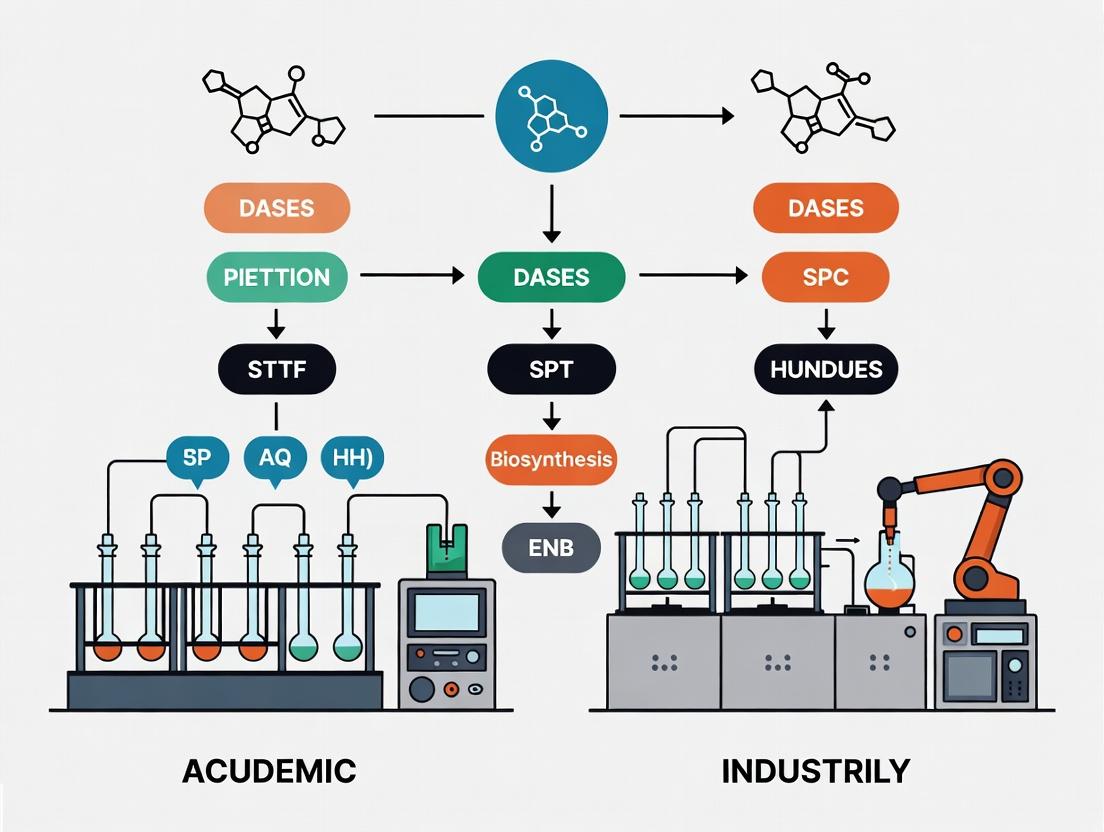
This article provides a comprehensive comparison of high-throughput experimentation (HTE) platforms in academic and industrial settings, tailored for researchers and drug development professionals.
Academic vs. Industrial HTE Platforms: A Comparative Guide for Drug Discovery & Development
Abstract
This article provides a comprehensive comparison of high-throughput experimentation (HTE) platforms in academic and industrial settings, tailored for researchers and drug development professionals. It explores their foundational philosophies, core methodologies, and unique capabilities. We delve into strategic applications, common troubleshooting scenarios, and key validation metrics, offering insights to help scientists navigate and select the optimal platform for their specific research and development goals, from early discovery to clinical candidate optimization.
Core Philosophies & Design: Understanding the DNA of Academic and Industrial HTE Systems
High-throughput experimentation (HTE) platforms represent a paradigm shift in scientific investigation, accelerating the testing of hypotheses and materials. Their application, however, diverges profoundly based on the mission of the implementing organization. In academia, HTE is an engine for Fundamental Discovery, probing the mechanisms of biology, chemistry, and physics to expand human knowledge. In the pharmaceutical industry, HTE is a tool for Pipeline Value Creation, designed to de-risk, optimize, and accelerate the delivery of therapeutic assets to patients and shareholders. This whitepaper details the technical manifestations of these distinct missions.
Core Mission Comparison
The following table contrasts the defining characteristics of HTE deployment in both spheres.
Table 1: Mission Parameters of Academic vs. Industrial HTE
| Parameter | Academia (Fundamental Discovery) | Industry (Pipeline Value Creation) |
|---|---|---|
| Primary Driver | Novel biological/chemical insight, publication, grant funding. | Project milestones, return on investment (ROI), pipeline velocity. |
| Hypothesis Scope | Broad, exploratory. "What is the mechanism of this phenotype?" | Narrow, focused. "Which of these 10^6 compounds inhibits target X with >100 nM potency and <5 hERG liability?" |
| Experimental Design | Iterative, open-ended, driven by unexpected results. | Highly structured, stage-gated, with predefined success criteria (e.g., IC50, selectivity index). |
| Key Performance Indicators (KPIs) | Publication impact factor, citations, new grants awarded. | Compound attrition rate, cycle time per design-make-test-analyze (DMTA) loop, clinical candidate nomination rate. |
| Risk Tolerance | High. Negative or complex results can be valuable. | Low. Failures are costly; the goal is predictable, interpretable data to guide decisions. |
| Data Emphasis | Depth, mechanistic understanding, reproducibility for the scientific community. | Speed, reproducibility under GxP-like rigor, integration into predictive models (QSAR, ML). |
| Technology Adoption | Early adoption of novel, sometimes unproven, platforms for capability. | Adoption of robust, validated, and scalable platforms with strong technical support. |
Case Study: HTE in Kinase Drug Discovery
The field of kinase inhibitor development provides a clear illustration of these divergent missions.
Fundamental Discovery (Academic Mission): An academic lab uses a HTE phenotypic screen to identify novel kinases involved in an obscure cellular process (e.g., non-canonical autophagy). The goal is to map a new signaling pathway. Pipeline Value Creation (Industrial Mission): A biotech company uses a HTE biochemical screen against a well-validated oncology target (e.g., EGFR T790M) to identify a novel chemical series with a differentiated intellectual property (IP) position and predicted blood-brain barrier penetration.
Experimental Protocols
Protocol A: Academic HTE for Pathway Discovery (Chemical Genetics)
- Library: Use a diverse library of ~5,000 kinase inhibitors with annotated targets (a "toolbox" library).
- Assay: Conduct a high-content imaging screen of a GFP-LC3 reporter cell line under nutrient-starvation conditions. Readout: autophagosome count per cell.
- Primary Screen: Plate cells in 384-well format. Dispense compounds via acoustic droplet ejection (final concentration 1 µM). Incubate for 24h. Fix, stain nuclei, and image.
- Analysis: Identify "hits" that significantly increase or decrease autophagosome counts beyond 3 standard deviations from the median.
- Target Deconvolution: Use affinity purification probes (e.g., kinobeads) coupled with mass spectrometry to identify the physical protein targets of unannotated hits.
- Validation: Employ CRISPRi knockdown/knockout of putative target kinases to confirm phenotypic mimicry.
Protocol B: Industrial HTE for Lead Optimization (SAR Expansion)
- Library: A focused library of ~50,000 analogs derived from a confirmed "hit" series from a primary screen.
- Assay: A panel of HTE biochemical assays: primary target (EGFR T790M) potency, anti-target (hERG, CYP3A4) liability, and selectivity against a panel of 50 representative kinases.
- Primary Screen: Run all compounds at a single concentration (10 µM) in 1536-well format for the primary potency assay. Compounds showing >70% inhibition advance.
- Dose-Response: For advancing compounds, perform 10-point dose-response curves in duplicate for all assay panels.
- Data Integration: Data is automatically uploaded to a centralized database. Potency (IC50), selectivity (Gini score), and early DMPK parameters (e.g., microsomal stability) are modeled simultaneously to guide the next round of chemical synthesis.
Visualization of Workflows
The Scientist's Toolkit: Essential Reagents & Platforms
Table 2: Key Research Reagent Solutions for Kinase-Focused HTE
| Item | Function in HTE | Typical Use Case |
|---|---|---|
| Kinase-Targeted DNA-Encoded Library (DEL) | Enables screening of billions of compounds in a single tube by tagging each unique chemical structure with a DNA barcode. | Industry: Ultra-high-throughput hit discovery against purified kinase targets. |
| Phospho-Specific Antibodies & Luminescent Probes | Detect phosphorylation events (e.g., p-ERK, p-AKT) in cell-based assays as a proximal readout of kinase activity. | Academia/Industry: High-content or plate-based signaling pathway analysis. |
| Cellular Thermal Shift Assay (CETSA) Kits | Measure target engagement in cells by detecting ligand-induced protein thermal stability shifts. | Industry: Early confirmation of on-target activity; Academia: Target deconvolution. |
| CRISPRi/a Knockdown Pooled Libraries | Genetically perturb thousands of genes (including kinases) in a pooled format for phenotypic screening. | Academia: Systematic identification of kinase regulators in a biological process. |
| Microfluidic Cytometry & Imaging Platforms | Analyze single-cell phenotypes (viability, signaling, morphology) at very high speed and throughput. | Both: Deep phenotypic profiling of compound or genetic perturbations. |
| Cloud-Based SAR Analysis Software | Platforms for visualizing structure-activity relationships, modeling ADMET properties, and collaborative data sharing. | Industry: Critical for integrating HTE data into the DMTA cycle and decision-making. |
Data Outputs and Translation
Table 3: Comparative Output Metrics from Recent HTE Campaigns (Representative)
| Output Metric | Academia (Fundamental Discovery) | Industry (Pipeline Value Creation) |
|---|---|---|
| Throughput (compounds/week) | Moderate (1,000 - 10,000) | Very High (100,000 - 1,000,000+) |
| Primary Data Type | High-content images, genomic/proteomic sequencing data. | Numerical IC50/EC50, selectivity ratios, DMPK parameters. |
| Validation Standard | Orthogonal assays (genetic rescue, biophysical binding). | In vivo pharmacokinetic/pharmacodynamic (PK/PD) efficacy. |
| Public Data Repository | Often deposited in public databases (e.g., PubChem, GEO). | Held as proprietary, confidential business information. |
| Time to Public Dissemination | 12-24 months (post-publication). | 3-10 years (via patent filings or conference abstracts). |
| Ultimate "Product" | Peer-reviewed paper, open-source dataset, trained researchers. | IND application, clinical candidate, new therapy. |
While the missions of academia and industry differ in immediate objectives—knowledge generation versus asset generation—they are symbiotically linked. Academic HTE identifies novel targets and biological principles, feeding the industry pipeline with new opportunities. Industrial HTE, in turn, validates these discoveries in the crucible of therapeutic development and funds future academic research through collaborations and licensing. The most effective modern research ecosystems are those that facilitate the flow of ideas, technologies, and talent across this discovery-value interface, leveraging the unique strengths of HTE in both realms to advance science and medicine.
The evolution of high-throughput experimentation (HTE) platforms is characterized by a fundamental tension between academic and industrial research paradigms. Academic pursuits often prioritize flexibility and open-source development to enable novel, exploratory science. In contrast, industrial drug development necessitates rigorous standardization and GxP (Good Practice) compliance to ensure patient safety, data integrity, and regulatory approval. This whitepaper explores the architectural blueprints required to navigate this dichotomy, providing a technical guide for deploying HTE systems that can bridge both worlds.
Core Architectural Principles: A Comparative Analysis
Table 1: Core Architectural Principles Comparison
| Principle | Open-Source/Flexible Approach | Standardized/GxP-Compliant Approach |
|---|---|---|
| Primary Goal | Maximize innovation, adaptability, and collaboration. | Ensure reproducibility, traceability, and patient safety. |
| Code & Hardware | Open-source licenses (e.g., Apache 2.0, GPL); modular, DIY components. | Validated, version-controlled commercial or internally developed systems. |
| Data Management | Flexible schemas (e.g., NoSQL); open formats (e.g., .h5). | Fixed schemas with audit trails; ALCOA+ principles; often SQL-based. |
| Protocol Execution | Scriptable, user-defined workflows (e.g., Jupyter, Python). | Pre-validated Standard Operating Procedures (SOPs) with electronic signatures. |
| Change Management | Community-driven, rapid iteration. | Formal change control procedures with impact assessments. |
| Cost & Speed | Lower upfront cost; faster initial setup. | High validation cost; slower deployment but reduced operational risk. |
Quantitative Landscape: Platform Adoption & Performance
Recent data (2023-2024) illustrates the measurable impacts of each architectural choice.
Table 2: Quantitative Comparison of HTE Platform Attributes
| Metric | Academic/Open-Source Platforms | Industrial/GxP Platforms | Measurement Source |
|---|---|---|---|
| Mean Time to Deploy New Assay | 2-4 weeks | 12-24 weeks | Industry survey data |
| Mean System Uptime | 92-95% | 99.5%+ (validated requirement) | Platform monitoring logs |
| Initial Hardware Cost (Core System) | $50k - $150k | $500k - $2M+ | Vendor quotations |
| Data Integrity Error Rate | ~0.5-1% (estimated) | <0.1% (validated target) | Audit findings, QC checks |
| Annual Maintenance Cost | 5-15% of initial cost | 15-25% of initial cost (incl. validation) | Financial reports |
Experimental Protocols for Cross-Paradigm Validation
To evaluate platforms bridging both paradigms, the following core validation protocol is essential.
Protocol 1: Cross-Paradigm HTE System Qualification Objective: To assess the performance of a flexible, open-source-derived platform against GxP-aligned reproducibility and data integrity standards. Materials: See "The Scientist's Toolkit" below. Methodology:
- System Specification: Define User Requirements Specification (URS) for both the experimental assay (e.g., cell viability dose-response) and data integrity needs.
- Open-Source Configuration: Deploy a core liquid handler using open-source API (e.g.,
Opentrons API) or framework (e.g.,FAIR Automation). All control scripts shall be version-controlled in Git. - GxP-Layer Integration: Implement a middleware data capture system that logs all instrument actions, environmental conditions (via IoT sensors), and raw data files to a centralized database with immutable audit trails.
- Performance Qualification (PQ):
- Execute a standardized 96-well plate cell viability assay (n=6 plates per run).
- Precision: Calculate intra- and inter-plate CV% for control wells.
- Accuracy: Compare mean IC50 values to a pre-qualified reference method using Bland-Altman analysis.
- Data Integrity Check: Manually introduce an anomaly (e.g., a skipped well). Verify the audit trail and system logs flag the discrepancy.
- Data Analysis: All analysis must be performed via versioned scripts (e.g., Python/R) that take raw data as input and produce outputs without manual intervention.
Architectural Visualizations
Diagram 1: HTE Platform Development Pathways (100 chars)
Diagram 2: Hybrid Data Integrity Workflow (100 chars)
The Scientist's Toolkit
Table 3: Essential Research Reagent Solutions & Materials
| Item | Function in Cross-Paradigm HTE | Example/Specification |
|---|---|---|
| Open-Source Liquid Handler | Provides the flexible, programmable core for assay automation. | Opentrons OT-2, custom-built systems using pyhamilton or dispense libraries. |
| GxP-Compliant LIMS | Ensures sample chain of custody, data integrity, and SOP management. | Benchling, STARLIMS, or a validated ELN instance. |
| Version Control System | Tracks changes to every protocol, script, and analysis, crucial for both collaboration and traceability. | Git (GitHub, GitLab, Bitbucket). |
| IoT Environmental Sensors | Monitors and logs critical lab conditions (temp, humidity) to the audit trail. | Validated, calibrated sensors with digital output. |
| Cell Viability Assay Kit | Standardized biochemical endpoint for performance qualification. | CellTiter-Glo 3D (for 3D models) or equivalent MTT/Resazurin kits. |
| Reference Control Compound | Provides a benchmark for inter-platform accuracy and reproducibility. | Staurosporine (non-specific kinase inhibitor) with well-characterized IC50. |
| Data Analysis Environment | Containerized, script-driven analysis to ensure reproducibility. | Docker/Singularity container with Python (SciPy, Pandas) or R environment. |
The future of high-throughput experimentation lies in architectures that embrace the innovative ethos of open-source development while embedding the rigorous data governance of GxP compliance from the outset. This is achieved not by choosing one paradigm over the other, but by implementing a layered blueprint: a flexible, open-source hardware/scripting core, surrounded by a standardized, validated data integrity layer. This convergent approach, guided by the protocols and tools detailed herein, accelerates translational research while building the essential bridge from academic discovery to industrial drug development.
This technical guide examines the infrastructure paradigms for high-throughput experimentation (HTE) within academic research and industrial drug development. The core thesis posits that academic platforms predominantly leverage modular, flexible benchtop setups to enable broad, exploratory science, while industrial platforms prioritize integrated, robust robotic workcells to achieve reproducible, scaled workflows for pipeline progression. This divergence stems from differing primary objectives: knowledge generation versus process optimization and asset delivery.
Core Architectural Comparison
Modular Benchtop Setups
- Hardware Philosophy: Assembled from discrete, often vendor-agnostic components (e.g., pipettors, plate handlers, readers) connected via open standards (e.g., SLAS/ANSI microplate footprints, USB/GPIB communication).
- Software Philosophy: "Glue" code (Python, Matlab) orchestrates components; data management often involves custom scripts and flat files. High reliance on researcher intervention and scripting expertise.
- Key Advantage: Flexibility; rapid reconfiguration for novel assay types.
- Primary Limitation: Throughput and hands-on time scalability; variability in integration reliability.
Integrated Robotic Workcells
- Hardware Philosophy: Pre-engineered systems with a centralized robotic manipulator (e.g., Cartesian, robotic arm) operating within a secured enclosure. Components are validated as a unified system.
- Software Philosophy: Proprietary, graphical scheduling software (e.g., HighRes Biosolutions, Thermo Fisher Momentum) for end-to-end workflow design, execution, and tracking. Direct integration with LIMS.
- Key Advantage: Robustness, reproducibility, and unattended operation for standardized, high-volume assays.
- Primary Limitation: High capital cost; lower adaptability to radically new protocols.
Table 1: Quantitative Comparison of Representative Platforms
| Feature | Academic-Modular (Example: Opentrons OT-2 + Components) | Industrial-Integrated (Example: Thermo Fisher STREAMLINE AXP) |
|---|---|---|
| Max Throughput (Plates/Day) | 10-40 (Highly variable) | 100-500+ (Consistent) |
| Typical Upfront Cost (USD) | $10k - $100k | $250k - $1M+ |
| Assay Development/Change Time | Days to Weeks | Weeks to Months |
| Mean Time Between Failures (MTBF) | 50-200 hours | 1000+ hours |
| Operator Hands-On Time / Plate | High (5-15 minutes) | Low (<1 minute, largely loading/unloading) |
| Data System Integration | Manual file export/scripting | Automated, direct-to-LIMS/ELN |
Experimental Protocol Case Study: High-Throughput Compound Screening
This protocol highlights the procedural differences in executing a 384-well cell-based viability assay.
Protocol for Modular Benchtop Setup
Objective: Screen 1,000 compounds in triplicate against a cancer cell line. Workflow:
- Plate Replication: Using a standalone plate replicator, transfer compound library from master stock plates to assay plates.
- Cell Seeding: Manual transport of assay plates to a semi-automated electronic multichannel pipettor for cell suspension dispensing.
- Incubation: Plates moved manually to a standalone CO2 incubator.
- Viability Readout: Manual transport to a microplate reader for luminescence measurement.
- Data Transfer: Manual export of .csv files from reader software to a network drive for analysis via custom Python/R scripts.
Diagram 1: Modular Benchtop Screening Workflow
Protocol for Integrated Robotic Workcell
Objective: Screen 100,000 compounds in singlicate against a cancer cell line. Workflow:
- Scheduler Setup: An integrated method is created in the workcell's scheduling software, defining plate movements, timings, and device interactions.
- Batch Loading: An operator loads stacks of empty assay plates, cell suspension reservoirs, tip boxes, and the compound library matrix into designated input bays.
- Unattended Execution: The robotic arm executes the full workflow within the enclosed cell: compound transfer via integrated dispenser, cell seeding, plate movement to an integrated hotel/incubator, timed incubation, transfer to an integrated multimode reader, and readout.
- Automated Data Pipeline: Reader data is automatically parsed, normalized, and pushed to the corporate activity database (e.g., Genedata Screener) via a direct API.
Diagram 2: Integrated Workcell Screening Workflow
The Scientist's Toolkit: Key Research Reagent Solutions
Table 2: Essential Materials for Cell-Based High-Throughput Screening
| Item | Function | Typical Example (Vendor) |
|---|---|---|
| ATP-Luminescence Viability Assay | Quantifies metabolically active cells via luciferase reaction with cellular ATP. Core readout for proliferation/cytotoxicity. | CellTiter-Glo 3D (Promega) |
| 384-Well, Tissue-Culture Treated Microplates | Provides sterile, optically clear vessel with surface treatment for cell adherence. Standardized footprint for automation. | Corning 384-well Black, Clear Bottom |
| DMSO-Tolerant Compound Library | Small molecules pre-dissolved in DMSO, formatted in 384-well source plates for liquid handling. | 100nL pre-spotted library (e.g., Echo-qualified) |
| Automation-Compatible Tip Boxes | Sterile, low-retention pipette tips in racks designed for automated pick-up. Critical for volume precision. | 10 µL Tips in SLAS-ANSI footprint (Beckman, Labcyte) |
| Cell Dissociation Reagent | Enzymatic (non-trypsin) solution for gentle detachment of adherent cells to create uniform single-cell suspensions for dispensing. | Accutase (Sigma) |
| Automated Liquid Handling Buffer | Low-foam, high-surfactant PBS used in bulk dispensers to prevent clogging and ensure droplet consistency. | BioTek Certified Wash Buffer |
Within the ongoing discourse on academic versus industrial high-throughput experimentation (HTE) platforms, the choice of iterative workflow design is a fundamental differentiator. Two predominant paradigms exist: hypothesis-driven screening, rooted in mechanistic biological inquiry, and campaign-oriented screening, optimized for industrial-scale lead discovery and optimization. This technical guide delineates the core principles, experimental architectures, and applications of each approach, providing a framework for researchers and drug development professionals to align methodology with strategic objectives.
Foundational Principles and Comparative Analysis
Hypothesis-Driven Screening
This approach is characterized by the formulation of a specific, mechanistic biological hypothesis prior to experimentation. The workflow is an iterative cycle of hypothesis generation, targeted experimental design, data analysis, and hypothesis refinement. It is deeply integrated with foundational biology and is prevalent in academic and early-discovery industrial research where understanding mode-of-action is critical.
Campaign-Oriented Screening
This approach prioritizes the systematic, high-volume interrogation of chemical or biological space against one or more assay endpoints. The primary goal is to generate actionable data (e.g., structure-activity relationships, SAR) for a defined project campaign, such as lead series identification or ADMET (Absorption, Distribution, Metabolism, Excretion, and Toxicity) profiling. Throughput, reproducibility, and data uniformity are key.
The following table summarizes the core quantitative and qualitative differences:
| Parameter | Hypothesis-Driven Screening | Campaign-Oriented Screening |
|---|---|---|
| Primary Objective | Test/refine a mechanistic biological model | Generate SAR or optimize compounds for a campaign goal |
| Experimental Design | Customized, variable assays per iteration | Highly standardized, uniform assay protocols |
| Throughput Scale | Low to Medium (10s - 1000s of data points) | Very High (10,000s - 1,000,000s of data points) |
| Key Success Metric | Biological insight, model confirmation | Hit rate, potency, ligand efficiency, project milestone attainment |
| Data Analysis Focus | Statistical significance, pathway mapping | Robust statistical thresholds (e.g., Z’>0.5), trend analysis across libraries |
| Typical Platform Context | Academic Core Facilities, Translational Research Labs | Industrial HTS and Lead Optimization Centers |
Experimental Protocols and Methodologies
Protocol 1: Hypothesis-Driven CRISPR Knockdown Screen for Pathway Validation
Objective: To validate the hypothesis that "Inhibiting the KEAP1-NRF2 pathway sensitizes NSCLC cells to ferroptosis inducers."
- Design: A focused siRNA or CRISPR library targeting ~100 genes in the oxidative stress response and ferroptosis pathways is designed.
- Cell Preparation: NSCLC cell lines (e.g., A549) are transduced with the lentiviral CRISPR library at a low MOI to ensure single integrations.
- Assay Execution: Cells are split into two arms: treated with a sub-lethal dose of a ferroptosis inducer (e.g., 500 nM RSL3) or DMSO vehicle. Cells are cultured for 5-7 population doublings.
- Sample Processing: Genomic DNA is harvested from both arms. The integrated sgRNA sequences are amplified via PCR and prepared for next-generation sequencing (NGS).
- Data Analysis: NGS reads are aligned to the library. sgRNA depletion or enrichment in the treated vs. control arm is calculated using algorithms like MAGeCK or RSA. Hits are genes whose knockdown significantly alters cell viability specifically in the treated arm.
Protocol 2: Campaign-Oriented HTS for a Kinase Inhibitor Program
Objective: To identify novel, potent inhibitors of EGFR L858R/T790M mutant from a 300,000-compound diversity library.
- Assay Development & Miniaturization: A robust, homogenous time-resolved fluorescence (HTRF) kinase activity assay is developed and miniaturized to 1536-well plate format. Key parameters (Z’ factor, signal-to-background) are optimized to >0.7 and >5, respectively.
- Automated Screening: Compound libraries are acoustically transferred (nL volumes) into assay plates. Assay reagents are dispensed via bulk dispensers. Plates are incubated and read on a plate-based imager.
- Primary Data Processing: Raw fluorescence values are normalized to high (100% inhibition) and low (0% inhibition) controls on a per-plate basis. Percent inhibition is calculated for all wells.
- Hit Identification: Compounds exhibiting >50% inhibition at 10 µM are flagged as primary hits. Hits are triaged based on chemical structure, potential pan-assay interference compounds (PAINS) filters, and cross-referencing with historical assay data.
- Confirmation & Progression: Primary hits are re-tested in dose-response (10-point, 1:3 serial dilution) in the primary assay and a counterscreen against wild-type EGFR. Confirmed hits with desired selectivity profile progress to the next campaign phase (e.g., hit-to-lead chemistry).
Visualizing Workflow Architectures
Title: Hypothesis-Driven Iterative Workflow
Title: Campaign-Oriented Screening Workflow
Title: KEAP1-NRF2 Pathway in Oxidative Stress
The Scientist's Toolkit: Essential Research Reagent Solutions
| Reagent / Material | Function in HTE | Typical Application |
|---|---|---|
| CRISPR-Cas9 Knockout Library (e.g., Brunello, GeCKO) | Enables genome-wide or targeted loss-of-function screening. | Hypothesis-driven screens to identify gene essentiality or drug-gene interactions. |
| Phospho-Specific Antibodies (HTRF/AlphaLISA Compatible) | Quantifies specific protein phosphorylation states in a homogenous, miniaturized format. | Campaign-oriented profiling of kinase inhibitor potency and selectivity in cellular assays. |
| Recombinant Purified Target Protein | Provides the primary target for biochemical activity assays. | Essential for primary HTS campaigns and mechanistic enzymology studies. |
| DNA-Barcoded Compound Libraries | Allows for pooled screening of compounds via next-generation sequencing readout. | Enables ultra-high-throughput cellular screening at reduced cost in campaign modes. |
| Cell Painting Reagent Set (Dyes) | A multiplexed fluorescence assay capturing multiple morphological features. | Used in hypothesis-driven phenotyping or campaign-oriented profiling for mechanism-of-action studies. |
| 3D Spheroid/Organoid Culture Matrices | Provides a more physiologically relevant microenvironment for cell-based assays. | Increasingly used in both paradigms for translational relevance, especially in oncology. |
| Nucleic Acid Transfection Reagents (High-Throughput) | Enables efficient, parallel delivery of siRNAs, plasmids, or CRISPR ribonucleoproteins. | Critical for hypothesis-driven functional genomics screens in arrayed formats. |
High-Throughput Experimentation (HTE) has become a cornerstone of modern research in chemistry, biology, and drug discovery. The fundamental ethos governing data and knowledge dissemination, however, diverges sharply between academic and industrial contexts. This guide examines the technical and operational implications of Open Publication versus Proprietary IP Management within HTE platforms, focusing on workflows, data handling, and strategic outcomes. Academia often prioritizes rapid, open dissemination to advance collective knowledge and secure funding, while industry must protect investments and maintain competitive advantage through controlled IP.
Comparative Analysis: Core Principles and Quantitative Impact
Table 1: Quantitative Comparison of Open vs. Proprietary Data Cultures in HTE
| Metric | Open Publication (Academic Model) | Proprietary IP (Industrial Model) |
|---|---|---|
| Typical Data Release Timeline | 6-24 months post-experiment | Indefinitely restricted or never publicly released |
| Average Cost per HTE Campaign (USD) | $50,000 - $200,000 (Grant-funded) | $500,000 - $5,000,000+ (Internal R&D) |
| Citation Impact (Avg. Citations/Paper) | 15-30 (for foundational methodology papers) | Not applicable (internally tracked as "inventions") |
| Patent Output Ratio | ~0.5 patents per major project | 5-20+ patents per major project |
| Data Repository Usage | >80% use public repos (e.g., PubChem, Zenodo) | <10% use public repos; rely on internal databases |
| Collaboration Rate (External) | High (60-80% of projects involve multiple institutions) | Low to Moderate (20-40%, often via controlled partnerships) |
| Primary Validation Metric | Peer review & reproducibility | Lead optimization success & projected ROI |
Experimental Protocols in Contrasting Data Cultures
Protocol 3.1: Open HTE for Novel Catalyst Screening (Academic)
Objective: To identify efficient photocatalysts for C–H functionalization and publish full datasets.
- Library Design: A diverse array of 384 commercially available organometallic complexes and organic dyes is selected based on computational diversity analysis.
- Platform Setup: Reactions are assembled in an inert-atmosphere glovebox using a liquid-handling robot (e.g., Hamilton STAR) in 96-well glass microtiter plates.
- Reaction Execution: Each well contains substrate (0.05 mmol), catalyst (2 mol%), and base in degassed solvent. Plates are irradiated in a parallel photoreactor (420 nm LEDs) for 24 hours at 25°C.
- Analysis: Quantification is performed via unified UPLC-MS with an autosampler. Calibration curves are generated for each plate.
- Data Deposition: All raw UPLC-MS files, processed yield data, and robot scripts are uploaded to a public repository (e.g., Figshare) with a DOI immediately upon manuscript submission. The chemical structures are deposited in PubChem.
Protocol 3.2: Proprietary HTE for Hit-to-Lead Optimization (Industrial)
Objective: To optimize a lead compound series for potency and ADMET properties while generating protected IP.
- Library Design: A proprietary virtual library of ~10,000 analogs is generated based on a confidential lead. A focused subset of 1,536 compounds is selected for parallel synthesis.
- Platform Setup: Synthesis is performed on an automated, closed-system synthesis platform (e.g., Chemspeed) within a secure, access-controlled lab. All electronic notebooks are digitally signed and stored on firewalled servers.
- Biological Assay: All synthesized compounds are tested in a high-throughput, target-specific biochemical assay (e.g., TR-FRET) and a counter-screen for selectivity in 384-well format. Cytotoxicity is assessed in parallel.
- Data Management: All data flows into a proprietary informatics platform (e.g., Dotmatics). Structure-activity relationships (SAR) are analyzed internally using machine learning models. Access is role-based and audited.
- IP Generation: Chemists and patent liaisons review SAR weekly. Novel, potent compounds are flagged for immediate patent application filing before any external disclosure.
Visualizing Workflows and Decision Pathways
Title: Open Publication HTE Workflow
Title: Proprietary IP Management HTE Workflow
Title: Data Culture Decision Pathway for HTE
The Scientist's Toolkit: Essential Research Reagent Solutions
Table 2: Key Reagents and Materials for HTE Platforms
| Item | Function | Typical Example in Open Model | Typical Example in Proprietary Model |
|---|---|---|---|
| Chemical Building Blocks | Core units for compound library synthesis. | Purchased from public catalogs (e.g., Enamine, Sigma-Aldrich). Listed in SI. | Sourced from custom vendors under CDA; often proprietary intermediates. |
| Assay Kits | For high-throughput biological screening. | Commercial kits (e.g., Promega Glo assay) with published protocols. | Licensed kits or fully developed, internally validated proprietary assays. |
| Catalyst Libraries | Diverse catalysts for reaction discovery/optimization. | Commercially available sets (e.g., Strem Catalyst Kit). | Custom-synthesized, novel ligand/metal complexes. |
| Informatics Software | For data analysis, SAR, and visualization. | Open-source (e.g., RDKit, KNIME, Jupyter). | Commercial/proprietary (e.g., Dotmatics, Schrödinger Suite, internal ML tools). |
| Data Repository | For storing, sharing, and curating experimental data. | Public (e.g., Zenodo, PubChem, GitHub). | Secure, internal database with audit trails (e.g., ELN/LIMS integration). |
| Automation Hardware | Liquid handlers, robotic arms, reactors. | Shared core facility equipment (e.g., Hamilton, Biotage). | Dedicated, owned systems often in sealed environments (e.g., Chemspeed, HighRes Biosolutions). |
Synthesis and Strategic Considerations
The choice between open and proprietary data cultures is not merely philosophical but defines the technical architecture of HTE platforms. Open models accelerate methodological innovation and validation through peer scrutiny, while proprietary models secure the commercial investment required for translational development. Emerging hybrid models, such as consortia (e.g., Structural Genomics Consortium) or pre-competitive public-private partnerships, attempt to leverage the strengths of both by delineating open foundational research from proprietary product development. The optimal data strategy must be consciously selected at the project's inception, as it fundamentally directs library design, platform security, informatics infrastructure, and ultimately, the societal and commercial impact of the research.
High-Throughput Experimentation (HTE) has become a cornerstone of modern molecular discovery and optimization. This guide provides a technical comparison of scale and throughput between academic and industrial HTE platforms, framed within a broader thesis that examines the distinct yet complementary roles these sectors play in advancing drug and materials discovery. The focus is on quantifying library sizes, screening capacities, and the underlying methodologies that enable such scale.
Library Scale: Academic vs. Industrial Platforms
A primary differentiator is the sheer size of compound and reaction libraries accessible for screening. Industrial platforms, backed by substantial capital investment, operate at a vastly larger scale.
Table 1: Typical Library and Screening Scale Comparison
| Platform Type | Typical Compound Library Size | Reaction Library/Matrix Size | Primary Screening Throughput (wells/day) | Hit Validation Capacity (compounds/week) |
|---|---|---|---|---|
| Academic Core Facility | 10,000 - 100,000 compounds | 96 - 384 reaction conditions | 10,000 - 50,000 | 100 - 500 |
| Industrial Discovery (Pharma/Biotech) | 1 - 5+ million compounds | 1,536 - 6,144 reaction conditions | 100,000 - 500,000+ | 5,000 - 20,000+ |
| Industrial Specialized (DEL, ASIN) | 10^8 - 10^12 DNA-encoded compounds | N/A (Library is the screen) | Billions (via NGS) | 1,000 - 5,000 (post-decoding) |
Key Definitions:
- DNA-Encoded Library (DEL): A technology where each small-molecule compound is tagged with a unique DNA barcode, allowing for pooled screening of billions of compounds in a single tube.
- ASIN: Acronym for "Automated Synthesis and Intrinsic Screening Network," representing platforms that integrate automated synthesis with immediate biological or physicochemical analysis.
Core Experimental Protocols for HTE Screening
The high throughput in both sectors is enabled by standardized, miniaturized protocols.
Protocol for Industrial Ultra-High-Throughput Screening (uHTS)
- Objective: Identify primary hits from a multi-million compound library against a purified protein target.
- Method:
- Assay Miniaturization: Reformulate biochemical assay for 1,536-well plate format, with reaction volumes of 1-10 µL.
- Liquid Handling: Use acoustic droplet ejection (ADE) or pintool transfer to dispense nanoliter volumes of compounds from source libraries into assay plates.
- Reagent Dispensing: Add assay buffer, enzyme, and substrate via high-speed, non-contact dispensers.
- Incubation & Detection: Incubate plates under controlled conditions. Read output (e.g., fluorescence, luminescence) using a plate imager or high-speed multimode plate reader.
- Data Processing: Robotic plate stackers feed readers. Data is automatically uploaded to an informatics pipeline for normalization (Z'-factor calculation), hit identification (typically >3σ from median), and compound management integration.
Protocol for Academic HTE Reaction Screening
- Objective: Rapidly optimize reaction conditions (e.g., ligand, base, solvent) for a given transformation.
- Method:
- Library Design: Create a 96- or 384-condition matrix varying key parameters (catalyst, ligand, base, solvent, temperature).
- Plate Preparation: Use a liquid handler to aliquot stock solutions of reagents into designated wells of a microtiter plate.
- Substrate Addition: Dispense a common stock solution of starting materials to all wells.
- Sealing & Reaction: Seal plate with a gas-permeable membrane. Agitate and heat/cool as needed.
- Quenching & Analysis: Add a standard quenching solution via dispenser. Analyze yields via high-throughput UPLC-MS or GC-MS with automated sample injection from the plate.
Visualizing HTE Workflows and Platforms
HTE Screening Core Process Flow
Academic vs. Industrial HTE Focus & Scale
The Scientist's Toolkit: Key Research Reagent Solutions
Table 2: Essential Materials for HTE Operations
| Item | Function in HTE | Example Vendor/Product (Illustrative) |
|---|---|---|
| Source Compound Plates | Pre-dispensed, formatted libraries for screening. Essential for reproducibility and speed. | Labcyte Echo Qualified Plates, Greiner Bio-One polypropylene plates. |
| Liquid Handling Reagents | Buffers, DMSO, assay substrates, and quenching solutions optimized for nanoliter dispensing. | Sigma-Aldrich HTS-grade DMSO, Promega Ultra-Glo Luciferase. |
| Detection Reagents | Fluorescent/luminescent probes, antibodies, or dyes compatible with miniaturized formats. | Thermo Fisher Scientific CellTiter-Glo, Cisbio HTRF reagents. |
| Assay-Ready Kits | Pre-optimized, validated biochemical or cellular assay systems in plate format. | Reaction Biology Corporation Kinase HotSpot, Eurofins Panlabs Profiling. |
| High-Throughput Catalysis Kits | Pre-weighed, arrayed sets of ligands, bases, and metal catalysts for reaction screening. | Sigma-Aldrix HTE Catalyst Library, Strem Chemicals Screening Sets. |
| Automation-Compatible Consumables | Microtiter plates, seals, and tip boxes designed for robotic arms and dispensers. | Agilent SureTect Seals, Eppendorf epT.I.P.S. Motion. |
Industrial platforms lead in raw throughput and library size, driven by the need for probability-based discovery and comprehensive pipeline support. Academic platforms, while smaller in scale, excel in developing novel HTE methodologies, exploring unconventional chemical space, and acting as testbeds for new assay technologies. The synergy arises when industrial-scale capacity is applied to novel paradigms pioneered in academia, such as new DNA-encoded chemistry or automated synthesis cycles, accelerating the overall pace of discovery.
Strategic Deployment: How to Apply Academic and Industrial HTE in the R&D Lifecycle
Within the broader thesis contrasting academic and industrial High-Throughput Experimentation (HTE) platforms, a critical distinction emerges in their primary use cases. Industrial HTE is predominantly optimized for pipeline acceleration and process optimization within defined chemical and biological spaces. In contrast, academic HTE platforms are uniquely positioned to tackle high-risk, fundamental exploratory research. This whitepaper details two ideal academic use cases: Exploratory Reaction Discovery and New Modality Tool Development, arguing that these areas leverage the academic environment's freedom to pursue long-term, foundational questions that underpin future industrial innovation.
Exploratory Reaction Discovery
Academic HTE excels in probing uncharted chemical space to discover novel reactions and catalytic processes, a pursuit often deemed too risky or non-applicative for immediate industrial ROI.
Core Methodology & Protocol
The workflow integrates automated synthesis, rapid analysis, and data informatics in an iterative cycle.
Protocol for High-Throughput Exploratory Catalysis Screening:
- Library Design: Prepare a diverse array of substrate pairs (e.g., 96–384 variants) featuring unexplored functional group combinations using a liquid handler.
- Reaction Assembly: In a glovebox under inert atmosphere, distribute aliquots of each substrate into wells of a microtiter plate.
- Catalyst/Additive Dispensing: Using a non-contact acoustic dispenser, add nanomole quantities of potential catalyst libraries (e.g., 50+ phosphine ligands, 20+ metal precursors, bases, additives) to create a full matrix.
- Sealing & Reaction: Seal plates with PTFE sheets and heat/stir in a dedicated HTE incubator/agitator block.
- Quenching & Analysis: After reaction, automatically quench and dilute aliquots. Analyze via UPLC-MS/MS with a dual autosampler for high-throughput.
- Data Processing: Convert chromatograms to quantified yields and conversion using cheminformatics software (e.g.,
Chemplexity,Methanolysis). Apply statistical analysis (PCA) to identify hit conditions.
Quantitative Data from Recent Studies
Table 1: Representative Output from Academic HTE Reaction Discovery Campaigns
| Study Focus | Library Size Screened | Hit Rate | Novel Reactions Identified | Key Metric |
|---|---|---|---|---|
| C-N Coupling with Redox-Active Esters | 1,536 conditions | ~2.1% | Dual catalytic Ni/Photoredox amination | 89% yield (best hit) |
| Selective Heteroarene Functionalization | 2,880 experiments | 1.5% | Electrochemical C-H sulfonylation | 7-fold selectivity improvement |
| Small-Ring Strain Release Chemistry | 576 substrates | 4.8% | New [3+2] cycloaddition pathway | 15 novel compound classes |
The Scientist's Toolkit: Research Reagent Solutions
Table 2: Essential Materials for HTE Reaction Discovery
| Item | Function & Key Feature |
|---|---|
| Pre-weighed Catalyst/ Ligand Plates | Commercial 96-well plates with pre-dispensed, nanomole-scale catalysts (e.g., RuPhos Pd G3, Ni(COD)₂). Eliminates weighing, enables rapid matrix assembly. |
| Diverse Building Block Sets | Curated sets of electrophiles, nucleophiles, and functionalized arenes with broad reactivity scopes, designed for direct use in HTE platforms. |
| Deuterated Internal Standard Mix | A multi-component MS standard for rapid UPLC-MS calibration and quantitative yield determination without pure analytical standards. |
| Gas-Manifold Equipped Microtiter Plates | Plates with integrated valve systems for performing parallel reactions under controlled atmospheres (CO₂, H₂, O₂). |
| Cheminformatics & Visualization Software | Platforms like Spotfire or TIBCO for visualizing multi-dimensional screening results and identifying hit clusters. |
Academic HTE Reaction Discovery Workflow
New Modality Tool Development
Academic HTE is pivotal for developing the foundational chemical and screening tools required for emerging therapeutic modalities (e.g., PROTACs, molecular glues, covalent inhibitors, RNA-targeted small molecules).
Core Methodology & Protocol
This involves creating and profiling large libraries of bespoke chemical probes to map structure-activity relationships (SAR) against novel biological targets or mechanisms.
Protocol for HTE Synthesis & Profiling of Covalent Fragment Libraries:
- Design & Docking: Design a library of 500-1000 electrophilic fragments, docking against a cysteine-specific target of interest.
- Parallel Synthesis: Execute parallel synthesis in 96-well format using solid-phase or solution-phase methods with automated liquid handling for coupling, washing, and cleavage steps.
- QC & Purification: Perform rapid analytical LC-MS on each crude product. Use preparative HPLC-MS with fraction collection for all compounds meeting purity thresholds (>85%).
- Concentration Normalization: Use an acoustic dispenser to transfer equal nanomole quantities of each compound into assay-ready daughter plates, followed by solvent evaporation.
- Functional & Covalent Screening: Re-dissolve compounds in buffer. Run two parallel assays: (a) a high-throughput biochemical activity assay, and (b) a mass spectrometry-based intact protein assay to confirm covalent modification.
- Data Triangulation: Cross-reference functional activity with MS-based covalent hit identification to eliminate false positives and generate robust SAR.
Quantitative Data from Recent Studies
Table 3: HTE Contributions to New Modality Toolkits
| Modality Class | Library Size Profiled | Primary Screening Assay | Key Output | Success Metric |
|---|---|---|---|---|
| PROTAC Prototypes | 240 heterobifunctional molecules | NanoBRET target engagement | 6 potent degraders (DC₅₀ < 100 nM) | >50-fold selectivity over related kinases |
| Covalent Fragments | 1,120 acrylamides | LC-MS/MS (intact protein) | 12 distinct covalent chemotypes | Modification efficiency (kᵢₙₐcₜ/Kᵢ) up to 250 M⁻¹s⁻¹ |
| RNA-Binder Libraries | 384 aminoglycoside analogs | Differential Scanning Fluorimetry (DSF) | 3 compounds stabilizing target RNA fold | ΔTₘ > 3.0°C, IC₅₀ ~ 5 µM in cell assay |
The Scientist's Toolkit: Research Reagent Solutions
Table 4: Essential Materials for New Modality Development
| Item | Function & Key Feature |
|---|---|
| Bifunctional Linker Building Blocks | E3 ligase ligands (e.g., Thalidomide, VH032) pre-functionalized with PEG/alkyl linkers and terminal chemical handles (azide, alkyne, NH₂) for modular PROTAC synthesis. |
| Diverse Electrophile "Warhead" Sets | Plates containing arrays of acrylamides, chloroacetamides, vinyl sulfonates, etc., for rapid assembly of targeted covalent libraries. |
| Assay-Ready, Concentration-Normalized Plates | Commercially available plates where each well contains a pre-dispensed, known quantity of a unique compound, ready for direct biochemical assay addition. |
| Cellular Target Engagement Kits | Live-cell compatible reporter assays (e.g., NanoBRET, NanoBIT) for high-throughput measurement of compound binding or degradation in cells. |
| Label-Free Biosensor Systems | Instruments like BLI (Bio-Layer Interferometry) or SPR (Surface Plasmon Resonance) in HT format for characterizing binding kinetics of novel modalities. |
HTE Workflow for New Modality Tool Development
Academic HTE platforms, unconstrained by immediate commercial pipelines, serve as essential engines for foundational discovery. In Exploratory Reaction Discovery, they systematically map unknown chemical territory, generating the novel reactions and catalysts that will define future industrial synthesis. In New Modality Tool Development, they build the essential chemical and biological understanding—and the physical toolkits of probes and prototypes—required to drug challenging targets. These use cases underscore the thesis that academic and industrial HTE are not competitors but complementary components of the innovation ecosystem, with academic efforts providing the fundamental tools and discoveries that de-risk and propel long-term industrial translation.
High-Throughput Experimentation (HTE) represents a cornerstone of modern industrial research and development. While academic HTE platforms often prioritize fundamental discovery, proof-of-concept studies, and methodological innovation, industrial HTE platforms are engineered with a distinct mandate: to derisk and accelerate the critical path from candidate molecule to viable product. This operational thesis dictates a focused application on three high-impact, high-value domains: Lead Optimization, Route Scouting, and Formulation Screening. This whitepaper provides a technical guide to the implementation, protocols, and strategic advantages of HTE within these industrial sweet spots, contextualized against the broader landscape of HTE research.
Lead Optimization: Accelerating SAR to Clinical Candidate
The primary goal is to rapidly elucidate Structure-Activity Relationships (SAR) and refine compound properties (potency, selectivity, ADMET) to identify a clinical candidate.
Experimental Protocol: Parallel Medicinal Chemistry (pMC) and Biochemical Screening
- Library Design: Use design-of-experiments (DoE) software to plan a focused library around a core scaffold, varying R-groups to probe steric, electronic, and lipophilic parameters.
- Automated Synthesis: Employ liquid handling robots for parallel synthesis in 24-, 96-, or 384-well microtiter plates. Common reactions (e.g., amide couplings, Suzuki-Miyaura cross-couplings, SNAr) are pre-optimized for a plate-based format.
- Purification & Analysis: Integrated high-throughput purification (e.g., mass-directed preparative HPLC) is followed by automated LC-MS analysis for purity and identity confirmation.
- Assay Cascade:
- Primary Assay: High-throughput biochemical assay (e.g., fluorescence polarization, TR-FRET) against the primary target. Run in 1536-well format.
- Counter-Screen: Selectivity panel against related targets (e.g., kinase family members).
- Physicochemical & Early ADMET: Parallel measurements of solubility (nephelometry), metabolic stability (microsomal incubation + LC-MS/MS), and permeability (PAMPA or cell-based assays like Caco-2).
Key Data Output Table: Lead Optimization HTE Campaign
| Parameter | Assay Format | Throughput (Compounds/Week) | Key Industrial Benchmark |
|---|---|---|---|
| Synthesis | 96-well plate | 50-200 | >95% purity for >80% of library |
| Biochemical Potency | 1536-well, TR-FRET | 10,000+ | IC50/EC50 determination |
| Selectivity (Kinase Panel) | 384-well, binding | 500-1000 | Selectivity index >100x |
| Aqueous Solubility | 96-well, nephelometry | 1,000+ | >100 µM at pH 7.4 |
| Microsomal Stability | 96-well, LC-MS/MS | 500 | % parent remaining >30% (human) |
| Permeability (PAMPA) | 96-well, UV/LC-MS | 1,000+ | Effective permeability >1 x 10⁻⁶ cm/s |
Route Scouting: Defining the Synthetic Blueprint
HTE is indispensable for rapidly identifying safe, scalable, and cost-effective synthetic routes for Active Pharmaceutical Ingredients (APIs).
Experimental Protocol: Reaction Screening and Condition Optimization
- Retrosynthetic Analysis: Identify 3-5 potential disconnections for the key bond-forming step.
- Reagent & Catalyst Screening: Prepare a matrix of catalysts (e.g., Pd, Cu, Ni complexes), ligands (phosphines, N-heterocyclic carbenes), bases, and solvents using automated liquid handlers.
- Parallel Reaction Execution: Reactions are set up in sealed microtiter plates or arrays of microvials (0.2-1 mL volume) on robotic platforms, often under controlled atmosphere.
- High-Throughput Analysis: Use UPLC-MS with fast gradients for quantitative yield analysis (via internal standard) and byproduct identification.
- DoE for Optimization: For the most promising conditions, a multivariate DoE (e.g., varying temperature, concentration, stoichiometry) is performed to define the optimal process window.
Key Data Output Table: Catalytic Cross-Coupling Route Scouting
| Condition Variable | Screening Range | Analysis Method | Industrial Success Criteria |
|---|---|---|---|
| Catalyst | 10-20 metal complexes | UPLC-MS | >80% conversion, <5% of key impurity |
| Ligand | 20-50 bidentate/monodentate ligands | UPLC-MS | Robust performance at low loading (<2 mol%) |
| Base | Carbonates, phosphates, amines | UPLC-MS | Full conversion, minimal side reactions |
| Solvent | 5-10 (e.g., toluene, dioxane, DMF, water) | UPLC-MS | Suitable for temperature range, facilitates work-up |
| Temperature | 60-150°C (via heating blocks) | UPLC-MS | Identified optimal ±10°C window |
Formulation Screening: Ensuring Developability
HTE enables the empirical identification of stable, bioavailable formulations early in development.
Experimental Protocol: Solid-State and Solution Stability Screening
- Salt/Polymorph Screen: Co-crystallize the API with multiple counterions (e.g., HCl, mesylate, sodium) under varied conditions (solvent, temperature, evaporation rate) in 96-well plates.
- High-Throughput Characterization: Rapid analysis via parallel XRPD (X-ray powder diffraction) and Raman microscopy to identify unique crystalline forms.
- Excipient Compatibility: Blend API with common excipients (fillers, binders, disintegrants, lubricants) in 96-well format.
- Forced Degradation Studies: Subject formulations to stressed conditions (40-75°C, 75% relative humidity) in climate-controlled chambers. Monitor appearance, assay, and related substances by UPLC at defined timepoints.
- Dissolution Profiling: Use miniaturized dissolution apparatus (e.g., 10-50 mL media) with UV fiber-optic probes to generate early dissolution curves.
Key Data Output Table: Formulation HTE Matrix
| Screen Type | Format | Variables Tested | Primary Analytical Readout |
|---|---|---|---|
| Salt Selection | 96-well crystallization plate | 8-12 counterions, 3-5 solvents | XRPD, Raman for form identity |
| Polymorph | 96-well plate | 5-10 solvent/anti-solvent systems, temperature gradients | XRPD for crystallinity & phase |
| Excipient Compatibility | 96-well glass vials | 15-20 GRAS excipients, binary/ternary blends | UPLC for potency & degradants after stress |
| Early Dissolution | 24- or 96-well micro-dissolution | pH 1.2, 4.5, 6.8 buffers | UV concentration vs. time profile |
The Scientist's Toolkit: Key Research Reagent Solutions
| Item/Category | Function in Industrial HTE | Example/Note |
|---|---|---|
| Prefabricated Catalyst/Ligand Kits | Accelerate route scouting by providing standardized, pre-weighed aliquots of diverse catalysts and ligands. | Commercially available kits from suppliers like Sigma-Aldrich (e.g., Solvias ligands) for cross-coupling, hydrogenation, etc. |
| DoE Software Suites | Enable systematic experimental design, data analysis, and model building to maximize information per experiment. | JMP, Modde, or Design-Expert for planning optimization campaigns. |
| Automated Liquid Handlers | Core platform for reproducible nanoliter-to-milliliter dispensing of reagents, catalysts, and substrates. | Hamilton STAR, Tecan Freedom EVO, or Echo acoustic dispensers. |
| High-Throughput Parallel Synthesizers | Conduct chemical reactions under controlled, varied conditions (temp, pressure, atmosphere) in parallel. | Unchained Labs Big Kahuna, Asynt Multi-React, or Heated/Stirred Microtiter Plates. |
| UPLC-MS Systems with Autosamplers | Provide rapid, quantitative analysis of reaction outcomes and purity for hundreds of samples per day. | Waters Acquity, Agilent InfinityLab with integrated plate samplers. |
| Integrated Purification-MS Systems | Automate the purification of synthesized libraries by triggering fraction collection based on MS detection. | Agilent Prep-MS, Waters FractionLynx. |
| Robotic XRPD Systems | Automate sample mounting and data collection for crystalline form identification from 96-well plates. | Rigaku G9, Malvern Panalytical Empyrean with robotic stage. |
| Microscale Dissolution Profilers | Enable dissolution testing with minimal API consumption, crucial for early-stage formulations. | Pion µDiss, or in-house setups with fiber-optic UV probes in 96-well plates. |
Visualizing the Industrial HTE Workflow and Strategic Context
Industrial vs. Academic HTE Focus
Lead Optimization HTE Workflow
Route Scouting HTE Workflow
Formulation Screening HTE Workflow
This case study is framed within a comparative thesis examining the distinct philosophies and outputs of academic versus industrial high-throughput experimentation (HTE) platforms. While industrial platforms are optimized for pipeline throughput and direct application, academic HTE often prioritizes fundamental discovery, mechanistic understanding, and the development of radically novel methodologies. This guide details how academic HTE is applied to invent and optimize new catalytic transformations, using recent exemplars from the literature.
Academic HTE: Philosophy and Infrastructure
Academic HTE for catalysis focuses on exploring vast, multidimensional chemical spaces (ligands, catalysts, substrates, additives, conditions) to uncover unexpected reactivity. The goal is discovery-led innovation rather than iterative optimization of a known process.
Key Differentiators from Industrial HTE:
- Objective: Novelty & mechanistic insight vs. process optimization.
- Library Design: Broad, diverse, often hypothesis-driven vs. focused, lead-oriented.
- Automation Level: Modular, adaptable, sometimes "home-built" vs. integrated, turnkey.
- Success Metrics: New reactions, selectivity paradigms, structure-activity relationships vs. yield, cost, scalability.
Core Experimental Protocol: HTE Workflow for Reaction Discovery
The following generalized protocol is standard for academic catalyst screening.
Protocol: Parallelized Microscale Reaction Screening
- Plate Preparation: A 96-well or 384-well glass-coated or polymer plate is used as the reaction block.
- Stock Solution Dispensing: Using an automated liquid handler or multichannel pipette:
- Add constant volumes of substrate stock solution (typically 0.1 M in substrate) to each well.
- Add variable volumes of catalyst/ligand/additive stock libraries to designated wells.
- Solvent & Atmosphere Control: Evaporate solvent (if needed) under vacuum. Refill wells with anhydrous solvent in an inert atmosphere glovebox.
- Initiation: Add a constant volume of a second substrate or reagent stock solution to all wells simultaneously to initiate reactions.
- Parallel Execution: Seal the plate and allow it to react under controlled temperature (ambient or heated/shaken incubator) for a set time.
- Quenching & Analysis: Add a standard quenching/dilution solution to each well.
- Primary Analysis: Analyze an aliquot directly via ultra-high-performance liquid chromatography (UPLC) or LC-MS, using a autosampler configured for microtiter plates.
- Data Processing: Conversion/yield is calculated by integration of analyte peaks relative to an internal standard.
Diagram: Academic HTE Catalyst Screening Workflow
Case Study: Discovery of a Novel Photoredox-Nickel Dual Catalytic C-O Coupling
A live search reveals a seminal 2014 Science paper (Macmillan et al.) as a paradigm. Academic HTE was crucial in identifying the effective combination of two distinct catalysts for a challenging cross-coupling.
Protocol: HTE for Dual Catalytic System Optimization
Variable Space Definition:
- Photoredox Catalyst Library: [Ir(dF(CF₃)ppy)₂(dtbbpy)]PF₆, Ru(bpy)₃Cl₂, eosin Y, etc. (8 candidates).
- Nickel Catalyst/Ligand Library: Ni(COD)₂ with bipyridines, phosphines, diamines (12 combinations).
- Additives: Bases (K₃PO₄, DIPEA), salts (LiCl).
- Conditions: Solvent (DME, DMF), light source (blue LED), concentration.
Matrix Setup: A partial factorial design was used to efficiently sample the 8x12 catalyst matrix in a 96-well format, holding other conditions constant initially.
Execution & Analysis: Reactions were run in parallel under blue LED irradiation. Analysis via UPLC determined yields of the target aryl ether.
Key Quantitative Findings:
Table 1: HTE Screening Results for Photoredox/Nickel Catalyst Pairs
| Photoredox Catalyst (5 mol%) | Nickel Ligand (10 mol%) | Average Yield (%)* | Key Observation |
|---|---|---|---|
| [Ir(dF(CF₃)ppy)₂(dtbbpy)]PF₆ | 4,4'-di-tert-butyl-2,2'-bipyridine | 92 | Optimal combination identified |
| Ru(bpy)₃Cl₂ | 4,4'-di-tert-butyl-2,2'-bipyridine | 78 | Active but less efficient |
| Eosin Y | 4,4'-di-tert-butyl-2,2'-bipyridine | <5 | Organic photocatalyst inactive |
| [Ir(dF(CF₃)ppy)₂(dtbbpy)]PF₆ | Tri-tert-butylphosphine | 15 | Phosphine ligands ineffective |
| None | 4,4'-di-tert-butyl-2,2'-bipyridine | 0 | No reaction without light |
*Yields are representative from initial screening.
Diagram: Dual Catalytic Cycle Relationship
The Scientist's Toolkit: Key Research Reagent Solutions
Table 2: Essential Materials for Academic Catalytic HTE
| Item | Function/Description | Example in Case Study |
|---|---|---|
| Modular HTE Rig | Customizable platform for liquid handling, reaction execution, and quenching. | Home-built 96-well reactor block with liquid handler. |
| Catalyst/Ligand Libraries | Pre-weighed, soluble stocks of diverse structural motifs to probe chemical space. | Ir/Ru photocatalyst set; Ni salts with bpy/P/N-ligand library. |
| Automated Chromatography | UPLC or LC-MS with plate autosampler for rapid (<5 min) analysis. | Acquity UPLC with PDA detector. |
| Microtiter Plates | Chemically resistant, glass-coated or polymer 96/384-well plates. | Glass-coated 96-well plate from ChemGlass. |
| Internal Standard | Chemically inert compound added pre-analysis for quantitative yield determination. | Trifluoromethylbenzene or similar. |
| Data Analysis Software | Platform to process chromatographic data into visual heatmaps for hit ID. | Custom Python scripts or commercial software (e.g., Mosaic). |
The application of High-Throughput Experimentation (HTE) in drug discovery represents a critical point of divergence between academic and industrial research. While academic platforms excel in developing novel methodologies and probing fundamental science, industrial HTE platforms are engineered for seamless integration into the pipeline, emphasizing robustness, reproducibility, and direct impact on candidate progression. This case study examines the industrial deployment of HTE to optimize Absorption, Distribution, Metabolism, Excretion, and Toxicity (ADMET) properties, a decisive factor in clinical candidate selection.
Core Industrial HTE Infrastructure for ADMET
Industrial ADMET-HTE relies on integrated systems combining parallel synthesis, rapid purification, and automated biological and physicochemical screening.
Key ADMET Property Screens in Industrial HTE
The following table summarizes primary in vitro ADMET endpoints addressed via industrial HTE campaigns.
Table 1: Core ADMET-HTE Screening Cascade
| ADMET Property | Primary Assay(s) | Throughput (Compounds/Week) | Industrial Target Threshold |
|---|---|---|---|
| Aqueous Solubility | Kinetic Turbidimetry, Nephelometry | 10,000+ | >100 µM (pH 7.4) |
| Metabolic Stability | Microsomal/Hepatocyte Half-life (T1/2) | 5,000 | Human T1/2 > 30 min |
| Permeability | PAMPA, Caco-2 / MDCK | 3,000 | Papp > 10 x 10⁻⁶ cm/s |
| CYP Inhibition | Fluorescent / LC-MS/MS probe assays | 5,000 | IC50 > 10 µM (CYP3A4/2D6) |
| hERG Liability | hERG binding assay, Patch-clamp (secondary) | 2,000 | IC50 > 10 µM |
| Plasma Protein Binding | Rapid Equilibrium Dialysis (RED) | 4,000 | Fu > 5% |
| Chemical Stability | PBS, Simulated Gastric Fluid assay | 5,000 | >80% remaining (24h) |
Detailed Experimental Protocols
Protocol 1: Parallel Microsomal Stability Screening
Objective: Determine intrinsic clearance (CLint) for a 384-member library.
- Incubation: In 96-well polypropylene plates, combine test compound (1 µM final) with human liver microsomes (0.5 mg/mL) in 100 mM potassium phosphate buffer (pH 7.4).
- Reaction Initiation: Pre-incubate for 5 min at 37°C. Initiate reaction by adding NADPH regeneration system (final 1 mM NADP+, 3 mM glucose-6-phosphate, 1 U/mL G6PDH).
- Timepoints: Aliquot 50 µL at t = 0, 5, 15, 30, 45 min into a quench plate containing 100 µL of cold acetonitrile with internal standard.
- Analysis: Centrifuge. Analyze supernatant via UPLC-MS/MS. Quantify parent compound peak area ratio (compound/IS) over time.
- Data Processing: Calculate T1/2 = (0.693)/k, where k is the elimination rate constant from linear regression of ln(peak area) vs. time. CLint = (0.693/T1/2) / (mg microsomal protein/mL).
Protocol 2: High-Throughput Equilibrium Solubility (CheqSol Turbidimetry)
Objective: Measure thermodynamic solubility of 100s of purified compounds.
- Sample Preparation: Dispense solid compound (0.5-1 mg) into 96-well glass plate. Add 200 µL of phosphate buffer (pH 7.4) via liquid handler.
- Titration & Monitoring: Use an integrated pH-stat and turbidimeter. Titrate between undersaturated and supersaturated states using HCl or NaOH while monitoring light scattering at 620 nm.
- Endpoint Determination: The point at which the solution transitions from clear to turbid (and vice versa) upon pH adjustment defines the solubility-pH profile. The solubility at pH 7.4 is interpolated.
- Analysis: Reported as µg/mL or µM solubility. Compounds are ranked, and structures below threshold trigger iterative chemistry design.
Visualization of Industrial ADMET-HTE Workflow
Diagram 1: Industrial HTE-ADMET Optimization Cycle
Diagram 2: Industrial ADMET-HTE Triaging Cascade
The Scientist's Toolkit: Key Research Reagent Solutions
Table 2: Essential Reagents & Materials for ADMET-HTE
| Item | Supplier Examples | Function in ADMET-HTE |
|---|---|---|
| Pooled Human Liver Microsomes (pHLM) | Corning, XenoTech, BioIVT | Standardized enzyme source for high-throughput metabolic stability and CYP inhibition assays. |
| Multiplexed CYP Inhibition Assay Kits | Promega, Thermo Fisher | Enable simultaneous assessment of inhibition against five key CYP isoforms (3A4, 2D6, 2C9, 2C19, 1A2) in a single well. |
| 96-Well Rapid Equilibrium Dialysis (RED) Plates | Thermo Fisher | Facilitate high-throughput measurement of unbound fraction (Fu) for plasma protein binding. |
| Ready-to-Use PAMPA Plates | pION, MilliporeSigma | Pre-coated plates for parallel artificial membrane permeability assays, critical for predicting passive absorption. |
| Cryopreserved Hepatocytes | BioIVT, Lonza | Gold-standard cell-based system for evaluating metabolic stability, clearance, and metabolite identification. |
| hERG Binding Assay Kits | Eurofins, PerkinElmer | Non-electrophysiological, high-throughput screening for initial hERG potassium channel liability. |
| LC-MS/MS Compatible Solvent/Plates | Agilent, Waters, Labcyte | Acetonitrile, methanol, and 384-well plates designed for minimal leachables and maximal MS sensitivity in HT analysis. |
| Automated Liquid Handlers | Hamilton, Beckman Coulter, Tecan | Enable precise, nanoliter-to-microliter dispensing for assay setup, quenching, and transfer across 100s of plates. |
Data Integration and Machine Learning
Industrial platforms feed all HTE data into centralized data lakes. Structure-Property Relationship (SPR) models, often using graph neural networks or random forests, are trained to predict ADMET outcomes for virtual libraries, guiding the next design-make-test-analyze (DMTA) cycle. This closed-loop system dramatically accelerates the optimization of challenging property trade-offs, such as balancing solubility against permeability or potency against metabolic clearance.
This case study underscores that industrial HTE for ADMET is not merely scaling up assays. It is a disciplined engineering of an integrated, decision-driving system. The contrast with academic HTE is stark: industrial platforms prioritize standardized protocols, rigorous quality control, and data integration directly into project timelines. The result is a drastic reduction in late-stage attrition due to poor pharmacokinetics or toxicity, enabling the delivery of safer, more viable clinical candidates at an unprecedented pace.
This whitepaper examines the growing convergence of academic and industrial high-throughput experimentation (HTE) platforms within drug discovery. While academic institutions excel in exploratory, tool-developing research, industrial platforms are optimized for scale, reproducibility, and pipeline throughput. This "platform capability gap" often hinders the translation of novel biological insights into robust therapeutic candidates. We argue that structured hybrid partnership models are essential for bridging this divide, combining academic innovation with industrial rigor to accelerate the discovery and development cycle. This guide details the technical frameworks, shared protocols, and co-developed infrastructure that make these partnerships successful.
High-Throughput Experimentation has become a cornerstone of modern biomedical research. However, a significant divergence exists in the objectives and capabilities of platforms housed in academic versus industrial settings.
| Platform Dimension | Academic HTE Focus | Industrial HTE Focus |
|---|---|---|
| Primary Goal | Novel target/mechanism discovery, tool development | Pipeline progression, lead optimization, safety assessment |
| Throughput Scale | Moderate (10^2 - 10^4 compounds/experiment) | Ultra-High (10^4 - 10^6 compounds/experiment) |
| Automation Level | Often modular, flexible | Fully integrated, highly standardized |
| Data Infrastructure | Often bespoke, focused on analysis depth | Enterprise-scale, built for audit and traceability (ALCOA+) |
| Metric of Success | Publication, grant renewal, biological insight | Target product profile, probability of technical success (PTS) |
This gap creates a "valley of death" for promising early-stage discoveries. Hybrid models formalize collaboration to leverage the strengths of both worlds.
Core Partnership Architectures
Three prevalent models structure these partnerships.
Diagram Title: Three Hybrid Partnership Architectures for HTE
Technical Implementation: Bridging the Workflow Gap
A key challenge is integrating academic assay biology with industrial automation. The following protocol exemplifies a co-developed workflow for a phenotypic screen.
Co-Development Protocol: Complex Phenotypic Screen Transfer
Objective: Transfer a novel academic 3D co-culture assay to an industrial HTE platform for a 100k-compound screen.
Materials & Reagents: The Scientist's Toolkit: Key Research Reagent Solutions
| Reagent/Material | Function in Protocol | Critical Specification |
|---|---|---|
| Primary Patient-Derived Cells (Academia) | Biologically relevant model system | Low passage ( |
| Matrigel Matrix | 3D culture scaffold | Lot-to-lot consistency, high protein concentration |
| Industrial QC'd Media | Standardized cell culture medium | Serum-free, chemically defined, performance-validated |
| Cypher-Encoded Compound Library (Industry) | High-density small molecule library | 1mM in DMSO, 1536-well format, QC'd purity/stability |
| Multiparametric Dye Set (Co-developed) | Live-cell imaging of 4 phenotypes | Non-overlapping emission, minimal cytotoxicity |
| Automation-Compatible 1536-Well Microplate | Platform standardization | Ultra-low attachment, black-walled, optically clear bottom |
Detailed Protocol:
- Assay Miniaturization & QC (Weeks 1-4):
- Academic partner prepares master cell banks and validates assay in 384-well format using a 2,000-compound benchmark library.
- Industrial partner performs liquid handling compatibility tests, determining optimal dispense parameters for viscous matrices.
- Jointly define QC metrics: Z'-factor >0.5, signal-to-background >3.
Process Automation & Integration (Weeks 5-8):
- Industrial engineers script the workflow on an integrated system (e.g., HighRes Biosolutions or Hamilton platform).
- Key steps automated: matrix dispensing (20 nL), cell seeding (500 cells/well in 2 μL), compound pin-transfer (23 nL), reagent addition.
- Academic partner trains on the automated system remotely via digital twin software.
Pilot Screen & Data Handshake (Weeks 9-12):
- Execute a 10k-compound pilot screen in duplicate.
- Industrial pipeline generates raw intensity data.
- Academic partner provides custom image analysis algorithm (e.g., CellProfiler pipeline) which is containerized and deployed on the industrial cloud.
- Data is processed; hit criteria are jointly set (e.g., >3σ from median in 2+ phenotypes).
Full Screen & Triaging (Weeks 13-16):
- Execute full 100k screen.
- Hit triage uses industrial ADMET prediction tools and academic functional genomics data to prioritize 500 leads for validation.
Diagram Title: Workflow for Academic-to-Industrial Assay Transfer
Data & Informatics: The Critical Bridge
Sustainable partnerships require interoperable data systems.
| Data Challenge | Academic Standard | Industrial Standard | Hybrid Solution |
|---|---|---|---|
| Metadata Capture | Minimal, in lab notebooks | Extensive, structured (ISA-Tab) | Co-developed minimal metadata schema (e.g., based on ACEA-Tab) |
| Primary Analysis | Custom scripts (Python/R) | Vendor software or internal pipelines | Containerized academic code (Docker/Singularity) deployed on industrial cloud |
| Data Sharing | Supplementary files, public repos | Secure, access-controlled portals | FAIR-compliant project portal with tiered access (e.g., using KNIME or Databricks) |
Case Study & Quantitative Outcomes
A recent partnership between the Academic Screening Center (ASC) and PharmaCo targeted undruggable transcription factors.
Experiment: A novel nanoBRET assay developed in academia to measure target-protein degradation was scaled for an industrial DEL (DNA-Encoded Library) screen of 5 billion compounds.
Key Hybrid Protocol Steps:
- Cell Line Engineering (Academic): Stable cell line expressing tagged transcription factor was created using CRISPR-HITI, validated via Western and microscopy.
- Assay Reformulation (Joint): Media optimized for industrial 1536-well cell dispensers; luciferase substrate stability tested over 72h.
- DEL Screening (Industrial): Screen performed in 4 pools, with deconvolution and synthesis of 300 hit structures.
- Triaging (Joint): Academic provided orthogonal cellular fitness assays; Industrial provided rapid PK/PD modeling.
Results Summary:
| Metric | Academic-Lab Scale | Industrial-Hybrid Scale | Improvement Factor |
|---|---|---|---|
| Compounds Screened | 50,000 (small library) | 5,000,000,000 (DEL) | 100,000x |
| Screen Duration | 3 weeks | 1 week | 3x faster |
| Confirmed Hit Rate | 0.1% | 0.05% (higher specificity) | Comparable |
| Time to Validated Lead | 18 months (projected) | 7 months (achieved) | >2.5x faster |
The platform capability gap between academia and industry is a significant bottleneck in therapeutic discovery. Hybrid partnership models, built on clearly defined technical workflows, shared reagent toolkits, and interoperable data systems, provide a robust framework for bridging this gap. By formalizing the integration of exploratory biology with industrialized HTE, these collaborations de-risk translation and accelerate the delivery of novel medicines to patients. The future of HTE lies not in isolated platforms, but in interconnected ecosystems that leverage the distinct and complementary strengths of both sectors.
Within the ongoing research discourse contrasting academic and industrial high-throughput experimentation (HTE) platforms, a transformative convergence is emerging: the integration of Artificial Intelligence and Machine Learning (AI/ML) for autonomous experiment design. While industrial platforms have traditionally led in scale and automation, and academic labs in fundamental methodological innovation, AI/ML is dissolving these boundaries. This technical guide examines the core architectures, algorithms, and protocols enabling this integration, providing a framework for researchers and drug development professionals to implement these approaches in both domains.
Core AI/ML Paradigms for Experiment Design
Live search results confirm the dominance of several key paradigms. The following table summarizes their characteristics, prevalence, and primary application contexts.
Table 1: Core AI/ML Paradigms in Experiment Design
| Paradigm | Key Algorithm Examples | Primary Application | Typical Platform Context | Reported Efficiency Gain |
|---|---|---|---|---|
| Active Learning & Bayesian Optimization | Gaussian Processes, Bayesian Neural Networks, Tree Parzen Estimators | Sequential parameter optimization, reaction condition screening | Both (Acad: Catalyst discovery; Ind: Process optimization) | 50-70% reduction in experiments needed to find optimum |
| Reinforcement Learning (RL) | Deep Q-Networks (DQN), Policy Gradient Methods | Multi-step synthesis planning, robotic control policy learning | Industrial (Increasing academic proof-of-concept) | Autonomous systems achieve >80% success in target synthesis |
| Generative Models | Variational Autoencoders (VAEs), Generative Adversarial Networks (GANs), Diffusion Models | De novo molecular design, formulation generation | Both (Strong industrial investment) | Generate >90% valid/novel structures within chemical space |
| Multi-fidelity & Transfer Learning | Kriging, Neural Processes | Integrating cheap (simulation, literature) and expensive (experimental) data | Academic (Bridging to industrial scale) | 30-50% cost saving by leveraging low-fidelity data |
| Symbolic AI & Causal Inference | Inductive Logic Programming, Structural Causal Models | Extracting scientific rules, hypothesis generation from heterogeneous data | Academic (Mechanistic insight) | N/A – Focus on interpretability over pure efficiency |
Experimental Protocols for Key AI/ML-Integrated Workflows
Protocol: Closed-Loop Bayesian Optimization for Reaction Optimization
Objective: To autonomously maximize yield/selectivity of a chemical reaction. Materials: Automated liquid handling system, online analytics (e.g., HPLC, UPLC), reaction block, central control server running AI/ML agent.
- Parameter Space Definition: Define variables (e.g., temperature, concentration, catalyst loading) with feasible ranges.
- Initial Design: Perform a small set (e.g., 8-16) of space-filling experiments (e.g., Sobol sequence) to seed the model.
- Model Initialization: Construct a surrogate model (typically a Gaussian Process) using initial data.
- Acquisition Function Calculation: Compute the next most informative experiment point using an acquisition function (e.g., Expected Improvement, Upper Confidence Bound).
- Execution & Analysis: The robotic platform executes the suggested experiment. Analytics provide the objective function value (e.g., yield).
- Model Update: The new data point is added to the training set, and the surrogate model is retrained.
- Loop Closure: Steps 4-6 are repeated for a set number of iterations or until convergence criteria are met.
- Validation: The predicted optimum is validated with manual replicates.
Protocol: RL for Multi-step Synthesis Robot Policy Training
Objective: Train a robotic platform to successfully execute a complex, multi-step synthesis protocol. Materials: Modular robotic platform (e.g., modular manipulators, cartridge-based reagent systems), sensors (visual, pressure, temperature), RL software framework (e.g., Ray RLlib).
- Environment Simulation: Create a digital twin of the robotic platform and chemistry, defining state space (equipment status, reaction stage) and action space (discrete operations: "add reagent A", "heat to 60°C").
- Reward Shaping: Define a reward function: +10 for successful step completion, +100 for final product confirmation, -1 for each action (encourage efficiency), -50 for catastrophic failure (e.g., precipitate clog).
- Offline Pre-training: Train the RL agent (e.g., DQN) in the simulation environment until it reliably completes the synthetic route.
- Deployment & Online Fine-tuning: Deploy the trained policy to the physical robot. Incorporate a safety layer (e.g., a rule-based override). Continue training with real-world data to adapt to physical stochasticity.
- Policy Evaluation: Measure success rate over n independent runs and compare to human-programmed protocols for speed and reliability.
Visualizing the Integrated Workflow
Title: AI/ML-Driven Autonomous Experimentation Loop
The Scientist's Toolkit: Essential Research Reagent Solutions
Table 2: Key Reagents & Materials for AI/ML-Integrated Experimentation
| Item | Function & Relevance to AI/ML Integration |
|---|---|
| Chemspeed, Unchained Labs, or HighRes Biosolutions Robotic Platforms | Provides the physical automation layer. Modularity and software API openness are critical for integration with AI/ML control agents. |
| Labcyte Echo or Dynamic Devices ATS Acoustic Liquid Handlers | Enable non-contact, low-volume dispensing essential for miniaturized, high-density plate-based experiments designed by AI for efficient space exploration. |
| Integrated Online Analytics (e.g., HPLC-MS, Flow NMR, ReactIR) | Provides real-time or rapid feedback ("ground truth") for the AI/ML model, enabling fast loop closure. Data must be structured and machine-readable. |
| Chemical & Biological "Foundational" Libraries | Large, diverse, well-characterized compound/sample libraries (e.g., Enamine REAL, protein fragment libraries) are the search space for generative AI models. |
| Cloud Compute & Data Lake Infrastructure (AWS, GCP, Azure) | Essential for training large models, storing massive heterogeneous experimental data, and hosting digital twin simulations. |
| Standardized Data Format Tools (e.g., AnIML, Allotrope, SDfiles) | Critical for transforming raw instrument data into FAIR (Findable, Accessible, Interoperable, Reusable) data for model consumption. |
| Software Platforms (e.g., CDD Vault, Benchling, Apex) | Acts as the Laboratory Information Management System (LIMS) and Electronic Lab Notebook (ELN), structuring data for AI/ML access and providing user interfaces. |
| Open-Chemoinformatic Toolkits (e.g., RDKit, DeepChem) | Provide essential chemical featurization (e.g., fingerprints, descriptors) for ML models and standard cheminformatics operations. |
Signaling Pathway for AI-Driven Discovery
Title: AI/ML Strategy Layer in Discovery Workflow
The integration of AI/ML for experiment design represents a paradigm shift that redefines the academic-industrial HTE landscape. Industrial platforms gain enhanced intelligence and predictive power, moving beyond brute-force screening. Academic research gains the ability to explore vast hypothesis spaces with unprecedented efficiency, blurring the line between exploration and exploitation. The protocols, tools, and architectures detailed here provide a foundational roadmap. Success in both domains will hinge on the creation of standardized, interoperable data ecosystems and a new generation of scientists skilled in both domain expertise and data-centric reasoning.
Navigating Challenges: Common Pitfalls and Performance Optimization for Both Platforms
High-Throughput Experimentation (HTE) has become a cornerstone of modern discovery in chemistry, biology, and materials science. However, a significant chasm exists between academic and industrial implementations. Academic HTE platforms are often engineered for flexibility, proof-of-concept studies, and method development, typically operating at a scale of hundreds to thousands of reactions/assays. Industrial platforms, particularly in pharmaceutical R&D, are built for robustness, standardized workflows, and massive scale—often exceeding hundreds of thousands of data points—with the explicit goal of direct pipeline translation.
The core challenges at this interface are twofold: (1) Maintaining Reproducibility when translating an academic discovery protocol to an industrial-scale platform, and (2) Translating Scale without a catastrophic loss of data fidelity or experimental control. This whitepaper delves into the technical roots of these challenges and provides a structured guide for bridging the gap.
The Reproducibility Crisis in Scale Translation: Core Technical Hurdles
Quantitative Data on Reproducibility Gaps
The following table summarizes key factors contributing to irreproducibility when scaling academic HTE protocols.
Table 1: Primary Sources of Reproducibility Loss in HTE Scale-Up
| Factor | Academic HTE Context | Industrial HTE Context | Impact on Reproducibility |
|---|---|---|---|
| Reagent Source & QC | Variable suppliers, limited batch QC, manual preparation. | Vendor-qualified, stringent QC, automated liquid handling. | Potency variation, impurity profiles, solvent water content. |
| Solid Handling | Manual weighing (mg-µg), static environment. | Automated dispensing, controlled atmosphere (argon/vacuum). | Mass error, compound hydration/degradation. |
| Liquid Handling | Manual pipettes or single-channel robots, variable tips. | Nanoliter dispensers, non-contact acoustic transfer, fixed tips. | Volumetric error, cross-contamination, tip adsorption. |
| Environmental Control | Benchtop, variable O₂/H₂O, ambient temperature. | Enclosed chambers (gloveboxes), controlled O₂/H₂O (<1 ppm), thermal uniformity. | Oxygen/moisture-sensitive reactions, evaporation gradients. |
| Data Acquisition | Heterogeneous instruments, manual data transfer. | Integrated platforms, automated metadata tagging. | Signal drift, inconsistent analysis parameters. |
| Data Processing | Custom scripts (Python/R), manual curation. | Standardized pipelines (Knime, Pipeline Pilot), audit trails. | Algorithmic variability, human error in curation. |
Detailed Protocol: Establishing a Reproducible HTE Workflow for Catalysis Screening
This protocol is designed to minimize reproducibility loss between academic validation and industrial implementation.
Aim: To screen 1,152 catalyst-ligand-substrate combinations for a C-N cross-coupling reaction.
Materials: See "The Scientist's Toolkit" below.
Protocol:
Plate Design & Map Generation:
- Use experiment design software (e.g., Mosaic, CHEMATRIX) to generate a randomized plate layout file (.csv). This controls for position-based effects (edge evaporation, thermal gradients).
- The design includes 24 catalyst stocks, 48 ligand stocks, 1 substrate, 4 control wells (no catalyst, no ligand, both, a known positive control). All reactions are performed in duplicate across two separate plates.
Master Stock Plate Preparation (Critical Step):
- Prepare catalyst and ligand stocks at 10 mM in anhydrous, degassed DMF in an inert atmosphere glovebox (<1 ppm O₂, H₂O). Use an automated liquid handler (e.g., Hamilton STAR) for all transfers.
- Seal stock plates with PTFE-coated foil, sonicate for 60s, centrifuge at 1000 x g for 2 min. Store at -20°C in a sealed container with desiccant. QC by UPLC-UV/MS for concentration and purity on a random sample of 5% of wells.
Reaction Plate Setup:
- In a glovebox, use an acoustic liquid handler (e.g., Labcyte Echo) to transfer 20 nL of catalyst and 20 nL of ligand from stock plates to a designated well in a 384-well microtiter plate. This ensures precise, non-contact transfer of viscous DMSO/DMF solutions.
- Using a positive-displacement pipetting robot (e.g., JANUS), add 10 µL of a 1 M solution of base in anhydrous solvent.
- Seal the plate with a gas-permeable membrane and remove from the glovebox.
Reaction Initiation & Quenching:
- On an integrated robotic deck, use an 8-channel dispenser to simultaneously add 10 µL of substrate solution (in anhydrous solvent) to all wells of a row to initiate reaction. Start timers.
- After the prescribed reaction time, a second dispenser adds 40 µL of a standardized quenching/internal standard solution (e.g., 0.1% TFA with dibromobenzene in MeCN) to each well.
Analysis & Data Processing:
- Centrifuge plates. Use a robotic autosampler (e.g., Agilent PAL3) coupled to UPLC-MS for analysis.
- A standardized data pipeline applies: (a) peak integration with controlled parameters, (b) conversion to yield/conversion using a calibration curve, (c) application of control well corrections (subtract background from no-catalyst wells), (d) aggregation of duplicate data with flagging for outliers (>15% difference triggers re-analysis).
The Scientist's Toolkit: Key Reagent Solutions for Cross-Coupling HTE
| Item | Function & Critical Specification |
|---|---|
| Anhydrous, Degassed Solvents | Eliminate variability from water/oxygen. Use from sealed ampules or via in-house purification system (e.g., MBraun SPS). QC by Karl Fischer titration. |
| QC'd Substrate & Reagents | Purchased with lot-specific certificates of analysis (CoA) for purity (HPLC, NMR). Re-quantify by quantitative NMR upon receipt. |
| Internal Standard Solution | For LC-MS quantification. Must be inert, elute separately from all reaction components, and have similar ionization efficiency. |
| Gas-Permeable Sealing Tape | Allows for equilibrium with inert atmosphere of glovebox/tray while preventing evaporation and contamination. |
| Calibration Standard Plate | Contains a dilution series of product in quench solution. Run at start, middle, and end of analysis batch to correct for instrument drift. |
Translating Scale: From Microtiter Plates to Pipeline
Data Fidelity at Scale: Quantitative Benchmarks
Table 2: Performance Metrics for Academic vs. Industrial HTE Platforms
| Metric | Academic Benchmark (Typical) | Industrial Target (Minimum) | Measurement Method |
|---|---|---|---|
| Liquid Handling Precision (CV) | 5-10% (manual), 2-5% (single-channel robot) | <1% (acoustic), <2% (positive displacement) | Gravimetric analysis or dye-based absorbance. |
| Solid Dispensing Accuracy | ± 0.1 mg (manual balance) | ± 0.01 mg (automated dispenser) | USP <41> compliant weighing. |
| Data Point Output/Month | 500 - 5,000 | 50,000 - 500,000 | Tracked via LIMS. |
| Result Turnaround Time | 1-4 weeks | 24-72 hours | From experiment end to analyzed data in database. |
| Assay Success Rate | 70-85% | >95% | Percentage of wells yielding analyzable, non-failed data. |
| Inter-plate Reproducibility (Z'-factor) | 0.3 - 0.5 | >0.7 for primary screens | Calculated from positive/negative controls across plates. |
Visualizing Workflows and Challenges
HTE Workflow Comparison: Academic vs. Industrial
Key Challenges in Translating Academic HTE to Industry
Bridging the academic-industrial HTE divide requires a conscious shift in academic practice toward industrial rigor without sacrificing innovation. This involves: adopting standardized QC for reagents, implementing detailed, parameterized protocols (defining tolerances for time, temperature, and handling), utilizing automation for critical steps, and employing structured data formats from the outset. Conversely, industrial platforms must maintain flexibility to incorporate novel academic designs. The future lies in pre-competitive collaborations where shared, cloud-based HTE platforms and data standards allow for seamless translation of scale, turning academic discovery into industrialized reality with reproducibility intact.
High-throughput experimentation (HTE) in industrial drug development represents a paradigm of accelerated discovery, yet it operates under a fundamentally different set of constraints compared to academic research. Where academia prizes novelty and mechanistic depth, industry must deliver safe, efficacious, and commercially viable drug candidates under intense time and cost pressures, all while adhering to stringent regulatory standards (e.g., FDA 21 CFR Part 58, ICH Q7, Q9, Q10). This guide examines the technical challenges at this intersection and provides a framework for optimizing the HTE triad: Speed, Cost, and Regulatory Rigor.
The Industrial-Academic HTE Dichotomy
Academic HTE platforms are often designed for maximum flexibility and exploration of fundamental biological principles. Industrial platforms, however, are engineered for a directed pipeline with a clear path to regulatory submission. The core divergence lies in data generation requirements. Academic studies may prioritize high-content, multi-parameter readouts from complex models (e.g., patient-derived organoids). In contrast, industrial workflows necessitate data that is not only robust and reproducible but also audit-ready and generated under standardized protocols suitable for inclusion in a regulatory dossier.
Table 1: Key Divergences Between Academic and Industrial HTE Platforms
| Parameter | Academic HTE Focus | Industrial HTE Focus |
|---|---|---|
| Primary Driver | Novelty, publication, mechanistic insight | Pipeline throughput, candidate safety/efficacy, IP generation |
| Model System | Often complex, physiologically relevant (e.g., zebrafish, primary cells) | Standardized, scalable, validated (e.g., immortalized lines, engineered assays) |
| Data Output | High-content, exploratory, multivariate | Robust, reproducible, simplified for decision-making |
| Automation | Flexible, modular, often bespoke | Integrated, robust, with full audit trails (ALCOA+ principles) |
| Success Metric | Publication impact, grants | Candidate progression rate, reduction in late-stage attrition |
| Cost Consideration | Secondary to scientific question | Primary constraint; calculated as cost per data point influencing pipeline decisions |
Core Technical Challenges and Methodological Solutions
Challenge: Achieving Regulatory-Grade Data at HTE Speed
Speed in HTE is not merely about rapid screening; it's about generating decision-quality data faster. Regulatory rigor requires data integrity, traceability, and protocol standardization (GxP-alignment where applicable).
Experimental Protocol: Automated Dose-Response Profiling with Integrated QC
- Objective: To generate IC50/EC50 values for 10,000 compounds in a 384-well format with data suitable for early regulatory filings (e.g., Investigational New Drug application).
- Materials: See "The Scientist's Toolkit" below.
- Method:
- Plate Mapping & Reformating: Use an integrated liquid handler to transfer compounds from master library plates to assay plates. A pre-dispensed, lyophilized control (positive/negative inhibition) is included in designated wells.
- Cell Seeding & Compound Addition: Seed cells expressing the target of interest using a multidrop dispenser. Incubate (37°C, 5% CO2) for 24h. Employ a timed-addition robotic arm to add compound dilutions.
- Assay Incubation & Readout: Incubate for predetermined time. Add homogeneous, luminescence-based assay reagent via injector. Read plate on a multimode microplate reader.
- In-Process QC: The system software automatically flags plates where control values fall outside pre-set statistical boundaries (e.g., Z' factor < 0.5, signal-to-background < 3). Failed plates are automatically scheduled for re-run.
- Data Processing: Raw luminescence is streamed to an analysis pipeline. Curve fitting (4-parameter logistic) is performed. All raw data, metadata (liquid handler logs, incubator conditions), and analysis parameters are written to a secure, version-controlled database.
Diagram Title: Industrial HTE Workflow with Automated QC Loop
Challenge: Containing Costs Without Compromising Data Quality
Cost per data point is a critical KPI. The goal is to shift from "cheap" assays to "informative" assays that reduce downstream, more expensive failures (e.g., clinical trial Phase II attrition).
Table 2: Cost-Benefit Analysis of Advanced HTE Enabling Technologies
| Technology | Upfront Cost | Operational Cost Impact | Regulatory/Quality Benefit | Net Effect on Pipeline Cost |
|---|---|---|---|---|
| Acoustic Droplet Ejection (ADE) | High | Reduces reagent/compound use by >90%; enables nanoliter dispensing. | High precision, non-contact reduces contamination risk. | High ROI via massive reagent savings and miniaturization. |
| High-Content Imaging (HCI) | Very High | Moderate (requires specialist analysis). | Provides multiparametric, phenotypic data predictive of toxicity. | High potential ROI by identifying cytotoxic compounds earlier. |
| Automated Cheminformatics & AI-Prioritization | Moderate | Low after implementation. | Ensures compounds meet lead-like criteria & avoid structural alerts. | Very High ROI by focusing synthesis & testing on high-value chemical space. |
| Integrated Lab Informatics Platform (LIMS/ELN) | High | Reduces manual data handling errors & time. | Enforces data integrity (ALCOA+), full audit trail for regulators. | Essential for compliance; ROI in reduced audit findings and faster dossier compilation. |
Integrating Predictive Toxicology Early: A Pathway-Centric Approach
A major industrial strategy is to front-load predictive safety assessments. Integrating target-based and phenotypic toxicity assays in primary HTE cascades mitigates late-stage, costly failures.
Diagram Title: HTE Cascade with Integrated Safety & PK Filters
Experimental Protocol: High-Throughput hERG Channel Inhibition Assay
- Objective: Identify compounds with potential for lethal cardiac arrhythmia (Torsades de Pointes) early in discovery.
- Principle: Fluorescence-based assay using a membrane-potential sensitive dye on cells expressing the hERG ion channel.
- Method:
- Plate frozen hERG-expressing cells into 384-well poly-D-lysine coated plates. Culture for 24h.
- Using ADE, transfer compounds to assay plate. Include positive control (e.g., E-4031) and DMSO controls.
- Load cells with membrane potential dye for 60 minutes.
- Read fluorescence (Ex/Em ~530nm/565nm) kinetically for 2 minutes to establish baseline.
- Add a depolarizing stimulus and continue reading for 10 minutes. Compounds inhibiting hERG reduce the fluorescence response.
- Calculate % inhibition relative to controls. Compounds with >50% inhibition at 10 µM are flagged for prioritization or structural modification.
The Scientist's Toolkit: Key Research Reagent Solutions
| Item | Function in Industrial HTE | Key Consideration |
|---|---|---|
| Lyophilized Control Compounds | Pre-dispensed, stable controls for assay QC. Eliminates variability from daily reconstitution. | Must be sourced with Certificate of Analysis (CoA) for regulatory compliance. |
| Ready-to-Assay Cell Lines | Commercially validated, mycoplasma-free cells with consistent expression of target. | Essential for reproducibility. Passage number tracking is mandatory. |
| Homogeneous, "Mix-and-Read" Assay Kits | Luminescence or fluorescence resonance energy transfer (FRET) assays enabling no-wash protocols. | Increases throughput, reduces automation complexity. Validate against traditional methods. |
| Graded DMSO | Ultra-pure, anhydrous dimethyl sulfoxide for compound solubilization. | Hygroscopic; use integrated humidity-controlled storage and dispensing to prevent concentration drift. |
| Audit-Ready Electronic Lab Notebook (ELN) | Software for capturing protocols, results, and observations in a time-stamped, immutable format. | Must be 21 CFR Part 11 compliant if used for GxP work. Integration with inventory and data systems is key. |
The push towards miniaturization in high-throughput experimentation (HTE) for chemistry and biology is driven by the need for speed, cost-reduction, and material conservation. However, a fundamental thesis in the field posits a divergence between academic and industrial platforms. Academic research often prioritizes flexibility, novel reaction discovery, and the use of open-source or modular liquid handling systems. Industrial platforms, particularly in pharmaceutical development, emphasize robustness, reproducibility, process analytical technology (PAT) integration, and seamless data management for regulatory compliance. This guide provides technical strategies to bridge this gap, ensuring reliability at the microscale regardless of the operational context.
Foundational Principles for Reliable Miniaturization
Fluid Dynamics & Surface Chemistry
At microfluidic and nanoliter scales, surface-to-volume ratios explode. Dominant forces shift from inertia and gravity to surface tension and capillary action.
- Tip: Systematically characterize the surface energy of all consumables (plates, tips, tubing). Use appropriate coatings (e.g., Parylene C for chemical inertness, PEG for protein repellency) to minimize nonspecific adsorption.
- Quantitative Impact: Uncoated polystyrene can adsorb >50 ng/mm² of protein; silanization or plate coating can reduce this by >90%.
Environmental Control
Evaporation is the primary adversary in microscale assays. A 100 nL droplet can evaporate in seconds under ambient conditions.
- Tip: Implement active humidity control (≥80% RH) within enclosures. For critical assays, use oil-overlay techniques or sealed, vapor-barrier microplates (e.g., Cyclic Olefin Copolymer).
Critical Experimental Protocols for Validation
Protocol 1: Miniaturized Biochemical Assay (Enzyme Inhibition)
Aim: To run a 5 µL, 384-well format kinase assay with reliability comparable to a 100 µL, 96-well assay.
Materials:
- Recombinant kinase, fluorescent peptide substrate, ATP, test compounds.
- 384-well low-volume, black-walled, flat-bottom assay plates.
- Non-contact acoustic liquid handler (e.g., Echo) or positive-displacement pintool dispenser.
- Plate centrifuge with microplate rotor.
- Humidity-controlled incubator/enclosure.
Method:
- Dispensing: Using acoustic transfer, dispense 25 nL of compound in DMSO to wells. Include controls (high = no inhibitor, low = staurosporine).
- Reaction Assembly: Dispense 2.5 µL of kinase/substrate mix (2x final concentration) into all wells. Use simultaneous dispense mode to minimize timing differences.
- Initiation: Dispense 2.5 µL of ATP solution (2x final concentration) to initiate reaction. Centrifuge plate at 500 x g for 60 seconds.
- Incubation: Incubate plate at 25°C, >80% RH, for 60 minutes.
- Detection: Read fluorescence polarization on a plate reader equipped with appropriate optics for 5 µL volumes.
- Data Analysis: Calculate % inhibition using controls. Use Z'-factor to validate assay quality:
Z' = 1 - [3*(σ_high + σ_low) / |μ_high - μ_low|]. A Z' > 0.5 is acceptable for HTS.
Protocol 2: Miniaturized Chemical Reaction Screening (Cross-Coupling)
Aim: To screen Pd-catalyzed cross-coupling conditions in a 5 µL total volume in a 1536-well plate.
Materials:
- Aryl halide, boronic acid, palladium catalyst ligands, bases.
- 1536-well glass-coated or ceramic microtiter plates.
- Contact dispenser for DMSO stocks, non-contact dispenser for aqueous/organic reagents.
- LC-MS system with microflow cell and automated plate sampler.
Method:
- Stocking: Prepare 100 mM DMSO stocks of all reaction components.
- Reagent Mapping: Use design-of-experiment (DoE) software to map reagent additions to create a matrix of conditions.
- Dispensing: Acoustic transfer 10 nL volumes of each DMSO stock to designated wells.
- Solvent Addition: Add 4.98 µL of solvent (e.g., toluene/water mix) via non-contact dispenser. Centrifuge plate.
- Reaction: Seal plate with adhesive aluminum foil. Heat in a precisely controlled thermal cycler with a 1536-well block at 80°C for 2 hours.
- Quenching & Analysis: Add 5 µL of quenching solvent (e.g., MeOH with internal standard) via dispenser. Analyze directly by UPLC-MS using a 1 mm column and a flow rate of 50 µL/min.
Data Presentation: Quantitative Performance Metrics
Table 1: Impact of Miniaturization on Assay Performance and Cost
| Metric | 96-Well (100 µL) | 384-Well (20 µL) | 1536-Well (5 µL) | Key Consideration |
|---|---|---|---|---|
| Reagent Cost/Sample | $1.00 (Baseline) | $0.20 | $0.05 | Savings offset by specialized equipment. |
| Data Point Density | 96 / plate | 384 / plate | 1536 / plate | Informatics infrastructure must scale. |
| Typical Z'-Factor | 0.7 - 0.8 | 0.6 - 0.75 | 0.5 - 0.7 | Evaporation control is critical. |
| Liquid Handling Speed | ~5 min/plate | ~8 min/plate | ~15 min/plate | Non-contact dispensers reduce wash steps. |
| Evaporation Rate (nL/hr) | 100-200 | 50-100 | 20-50 | Highly dependent on humidity control. |
Table 2: Comparison of Academic vs. Industrial Miniaturization Priorities
| Feature | Academic HTE Focus | Industrial HTE Focus | Optimization Tip |
|---|---|---|---|
| Liquid Handler | Open-source, modular, syringe pumps. | Integrated, automated, pipette-based or acoustic. | For academia, ensure syringe calibration weekly. |
| Data Management | Flat files, manual curation. | LIMS-integrated, automated ingestion, FAIR principles. | Implement a minimum metadata standard (e.g., ISA model). |
| Primary Goal | Novel condition discovery, method publication. | Lead optimization, process development, regulatory filing. | Design screens with orthogonal readouts for robustness. |
| Success Metric | Publication, hit identification. | Reproducibility, PK/PD correlation, pipeline throughput. | Include intra-plate and inter-day controls in all runs. |
Visualizing Workflows and Signaling Pathways
Miniaturized Biochemical Assay Workflow
PI3K-AKT-mTOR Pathway & Inhibition Point
The Scientist's Toolkit: Essential Research Reagent Solutions
Table 3: Key Materials for Reliable Microscale Experimentation
| Item | Function & Rationale | Example/Recommendation |
|---|---|---|
| Low-Binding, Low-Volume Microplates | Minimizes reagent loss via adsorption and enables meniscus stability for optical reads. | Corning 384-well Low Flange Black Polystyrene, Labcyte Echo Qualified plates. |
| Non-Contact Acoustic Dispenser | Enables precise, DMSO-tolerant transfer of nL-pL volumes without tip contamination or carryover. | Beckman Coulter Life Sciences Echo 655T. |
| Positive-Displacement Pin Tool | Alternative for viscous or surfactant-containing reagents where acoustic transfer fails. | V&P Scientific FP3 series. |
| Sealing Films & Mats | Prevents evaporation and cross-contamination during incubation and storage. | Thermo Fisher Microseal 'B' seals, PTFE/ silicone mats. |
| Automated Liquid Handler | For bulk reagent addition with high precision at µL scale across high-density plates. | Hamilton Microlab STAR, Tecan D300e. |
| Humidity Controller | Actively maintains >80% RH in the dispensing/incubation environment to control evaporation. | LiCONiC STX series incubators, local enclosure systems. |
| Microflow UPLC-MS | Provides sensitive analytical readout for nanoscale reaction samples with minimal dilution. | Waters ACQUITY UPLC M-Class, Sciex ExionLC AD system. |
| DMSO-Compatible Sealant | For sealing compound source plates during long-term storage to prevent water absorption. | Thompson Instrument Company Seal-Rite seals. |
Within the evolving landscape of high-throughput experimentation (HTE), a critical schism exists between academic and industrial research platforms. Academic platforms often prioritize flexibility, novel assay development, and mechanistic discovery, while industrial platforms are engineered for robustness, reproducibility, and integration into linear pipelines. This divergence fundamentally shapes the prevalence and nature of data fidelity issues—artifacts, edge effects, and false positives/negatives. This technical guide examines these core challenges through the lens of this broader thesis, providing methodologies for identification and mitigation.
Core Data Fidelity Issues: Definitions and Origins
Artifacts are systematic errors introduced by the experimental methodology or instrumentation. In industrial HTE, artifacts often stem from automated liquid handling calibration drift or plate reader optic inconsistencies. In academic settings, they may arise from batch effects in reagent synthesis or custom-built instrumentation.
Edge Effects describe the phenomenon where wells on the periphery of microplates (e.g., 96, 384-well) yield aberrant results due to increased evaporation and temperature gradients. This is a paramount concern in industrial screening where every data point carries financial implication.
False Positives/Negatives are incorrect assay readings. False positives are frequently driven by compound interference (e.g., fluorescence, quenching, aggregation) or overfitting of noisy data. False negatives often result from sub-optimal assay dynamic range, compound solubility issues, or instrument detection thresholds.
Quantitative Impact Analysis
The following table summarizes the typical prevalence and primary drivers of these issues across platform types, synthesized from recent literature and internal benchmarking studies.
Table 1: Prevalence and Drivers of Data Fidelity Issues in HTE Platforms
| Data Fidelity Issue | Typical Prevalence in Academic HTE | Typical Prevalence in Industrial HTE | Primary Driver in Academic Context | Primary Driver in Industrial Context |
|---|---|---|---|---|
| Edge Effects | 15-25% of plates show significant bias | <5% of plates, due to controls | Inconsistent environmental control, lack of plate sealing | Evaporation in long-running assays, despite humidity control |
| Compound-Mediated Artifacts | High (~30% of hits require triage) | Moderate (~10-15% of hits) | Use of diverse, unpurified compound libraries | Focused libraries, but aggregation persists |
| False Positives (Signal Interference) | Very High in phenotypic screens | Managed via counter-screens | Lack of orthogonal validation steps | Built-in multiplexing and confirmatory assays |
| False Negatives | Often unquantified | Rigorously quantified (~5-10% loss) | Assay sensitivity limits, single-concentration testing | Stringent hit-calling thresholds, cytotoxicity masking |
Experimental Protocols for Identification and Mitigation
Protocol 1: Systematic Edge Effect Quantification
Objective: To quantify and correct for spatial bias in microplate assays. Materials: 384-well microplate, assay reagents, control compound (e.g., agonist/inhibitor), plate reader, statistical software. Procedure:
- Plate Layout: Design a plate map where control compounds (high/low signal) are distributed across all columns and rows, including perimeter and interior wells. Include blank wells for background.
- Assay Execution: Run the standard assay protocol without deviation.
- Data Acquisition: Read plate using standard settings.
- Analysis: Calculate Z'-factor for interior vs. edge wells separately. Generate a heatmap of signal distribution. Apply spatial correction algorithms (e.g., using median polish or B-score normalization). Industrial Context: Automated as a QC step for every screening campaign. Academic Context: Often an ad-hoc analysis post-data collection.
Protocol 2: Artifact Triage via Orthogonal Assays
Objective: To distinguish true biological hits from assay artifacts. Materials: Primary hit compounds, orthogonal detection method assay kit (e.g., switch from fluorescence to luminescence), biophysical assay (e.g., Dynamic Light Scattering for aggregation). Procedure:
- Counter-Screen: Re-test all primary hits in an orthogonal assay measuring the same biological endpoint but with a different detection mechanism.
- Aggregation Test: Dilute compounds in assay buffer and measure particle size via DLS. Compounds forming aggregates >100 nm are suspect.
- Dose-Response Analysis: Perform full dose-response curves in both primary and orthogonal assays. True hits will show congruent potency and efficacy; artifactual hits will not. Industrial Context: This is a standardized, automated tier in the screening funnel. Academic Context: Often limited by budget, applied only to top candidates.
Visualizing Workflows and Pathways
Title: HTE Data Fidelity Validation Workflow
Title: Signal Origin Pathways: True vs. Artifact
The Scientist's Toolkit: Research Reagent Solutions
Table 2: Essential Reagents & Materials for Mitigating Data Fidelity Issues
| Item | Function | Specific Use in Mitigation |
|---|---|---|
| Pluronic F-127 | Non-ionic surfactant | Reduces compound aggregation, a major source of false positives. |
| DMSO-Tolerant Assay Kits | Optimized biochemical reagents | Maintains assay performance at high DMSO concentrations, reducing solvent-edge effects. |
| Low-Evaporation Plate Seals | Physical seals for microplates | Minimizes edge effects by reducing evaporation in perimeter wells during long incubations. |
| Orthogonal Detection Reagents | e.g., Luminescent substrate for a fluorescent assay | Enables artifact triage via counter-screening without biological pathway change. |
| Cell Viability Multiplex Kits | e.g., Caspase-3/7 + Viability dye | Identifies false positives/negatives due to cytotoxicity in cell-based assays. |
| Standardized Control Compounds | Well-characterized agonists/antagonists | Enables plate-to-plate and batch-to-batch normalization, identifying systematic drift. |
| Dynamic Light Scattering (DLS) Plate Reader | Biophysical measurement instrument | Directly quantifies compound aggregation in assay buffer. |
The evolution of High-Throughput Experimentation (HTE) has transformed materials science and drug discovery. A core thesis in modern research posits that academic platforms excel in generating novel, fundamental data through flexible, cutting-edge methodologies, while industrial platforms are optimized for robustness, standardization, and integration into downstream development pipelines. The critical divergence—and the most significant bottleneck—lies in the subsequent stages of data analysis and curation. Industrial workflows are often constrained by legacy systems and compliance requirements, whereas academic workflows suffer from ad-hoc, non-reproducible analysis scripts. This guide provides a technical framework for identifying and streamlining these bottlenecks.
Chapter 1: Identifying Core Bottlenecks
Current bottlenecks are quantified across common HTE domains. Data is synthesized from recent literature and industry surveys (2023-2024).
Table 1: Quantitative Analysis of HTE Workflow Bottlenecks
| Workflow Stage | Avg. Time Spent (Academic) | Avg. Time Spent (Industrial) | Primary Bottleneck Identified | Tool Fragmentation Score (1-10) |
|---|---|---|---|---|
| Raw Data Processing | 25% | 15% | Heterogeneous instrument outputs | 8 (Academic) / 6 (Industrial) |
| Data Curation & Annotation | 35% | 30% | Manual metadata entry, lack of standards | 9 / 5 |
| Primary Analysis (e.g., IC50, yield) | 20% | 25% | Custom script errors, versioning | 7 / 4 |
| Data Integration & Visualization | 15% | 25% | Siloed databases, access rights | 6 / 8 |
| Report Generation & Sharing | 5% | 5% | Manual figure assembly | 5 / 5 |
Chapter 2: Streamlining Methodologies & Protocols
Protocol 2.1: Automated Metadata Curation Pipeline
- Objective: To minimize manual intervention in data annotation using a rule-based and ML-augmented system.
- Materials: RAW data files, sample plate maps (CSV), electronic lab notebook (ELN) API access, a centralized database (e.g., PostgreSQL with CHEMICAL schema).
- Procedure:
- Trigger: Upon instrument run completion, a job is queued in a workflow manager (e.g., Nextflow, Apache Airflow).
- Ingestion: RAW files are parsed using vendor-specific libraries (e.g.,
pymzmlfor MS,rdkitfor chemical structures). - Annotation: Plate map CSV is joined with ELN-derived synthesis metadata via a unique batch ID.
- Validation: A rules engine (e.g.,
Droolsor custom Python class) checks for consistency (e.g., "compound weight cannot be negative"). - Curation: Validated data is written to the central database with a permanent digital object identifier (DOI).
- Key Metric: Reduction of manual curation time by >70%.
Protocol 2.2: Cross-Platform Data Normalization for Assay Integration
- Objective: To enable meta-analysis across disparate HTE campaigns (e.g., combining biochemical and phenotypic screening data).
- Materials: Dose-response data from multiple platforms (e.g., FLIPR, Envision, CellInsight).
- Procedure:
- Raw Signal Extraction: Use platform-specific software to export numeric matrices.
- Negative/Positive Control Normalization: For each plate, apply:
Norm = (Raw - Median(NegCtrl)) / (Median(PosCtrl) - Median(NegCtrl)). - Inter-Plate Correction: Apply robust Z-score or B-score normalization using the entire plate's population statistics to correct for spatial and temporal drift.
- Model Fitting: Fit a 4-parameter logistic (4PL) model using a constrained algorithm (e.g.,
drcpackage in R) to calculate normalized potency (IC50/EC50). - Quality Flagging: Automatically flag fits where the curve's top/bottom asymptotes exceed control bounds.
- Key Metric: Achieve a coefficient of variation (CV) of <15% for control compounds across platforms.
Chapter 3: Visualization of Workflows and Pathways
Diagram 1: HTE Data Analysis Workflow Bottleneck Map
Diagram Title: HTE Data Pipeline with Critical Bottlenecks Highlighted
Diagram 2: Streamlined Data Curation & Integration Pathway
Diagram Title: Automated Curation and Integration Pathway
The Scientist's Toolkit: Research Reagent Solutions
Table 2: Essential Tools for Streamlined HTE Data Workflows
| Item / Solution | Function | Example / Vendor |
|---|---|---|
| Workflow Manager | Orchestrates multi-step, compute-intensive data pipelines, ensuring reproducibility and scalability. | Nextflow, Apache Airflow, Snakemake |
| Containerization Platform | Packages software, libraries, and environment into a single, portable unit to eliminate "works on my machine" problems. | Docker, Singularity |
| Chemical-Aware Database | A database schema optimized for storing and searching chemical structures and associated assay data. | PostgreSQL + rdkit cartridge, CDD Vault |
| Electronic Lab Notebook (ELN) | Digitally captures experimental metadata at the source for automated downstream curation. | Benchling, Dotmatics, LabArchives |
| Interactive Analysis Notebook | Enables exploratory data analysis, visualization, and sharing of live code and results. | JupyterLab, RStudio (Posit) |
| Data Visualization Library | Creates standardized, publication-quality plots programmatically to avoid manual figure assembly. | Plotly (Python/R), ggplot2 (R), Altair (Python) |
| Automated Curve-Fitting Software | Robustly fits dose-response models across thousands of data points with quality control flags. | drc R package, PHATE (Python), Dotmatics Bioregister |
| Laboratory Information Management System (LIMS) | Tracks physical samples and associated data throughout their lifecycle, crucial for industrial traceability. | LabVantage, SampleManager |
Resource & Cost Management Strategies for Sustainable HTE Operations
High-Throughput Experimentation (HTE) has emerged as a transformative paradigm in chemical synthesis and drug discovery. The operational model and strategic imperatives, however, diverge significantly between academic and industrial platforms. This guide posits that sustainable HTE is not merely a function of throughput but of meticulously managed resources and costs, with optimal strategies being context-dependent on the platform's primary mission.
Academic HTE platforms are often thesis-driven, focusing on method development, exploratory chemistry, and training. Their sustainability is measured by publications, grants, and training outcomes. Cost management often centers on flexibility and maximizing the informational yield from a limited budget. In contrast, industrial HTE platforms are pipeline-driven, with a direct mandate to accelerate the delivery of clinical candidates. Their sustainability is measured by ROI, cycle time reduction, and pipeline productivity. Resource management emphasizes reproducibility, scalability, and integration with downstream development.
This whitepaper provides a technical framework for resource and cost management strategies that can be adapted to both environments, ensuring the long-term viability and impact of HTE operations.
Core Cost Drivers & Quantitative Analysis in HTE
The total cost of ownership (TCO) for an HTE platform extends beyond initial capital expenditure. Ongoing operational costs are the primary determinant of sustainability. The following table summarizes key cost drivers and their typical distribution, derived from recent analyses of operational platforms.
Table 1: Breakdown of High-Throughput Experimentation (HTE) Operational Cost Drivers
| Cost Category | Typical % of Annual Operational Budget | Academic Platform Nuance | Industrial Platform Nuance |
|---|---|---|---|
| Consumables & Reagents | 35-50% | Higher reliance on diverse, sometimes sub-optimal, building blocks for exploration. Bulk purchasing less common. | Dominated by specialized building blocks and substrates for focused libraries. High-volume contracts reduce unit cost. |
| Laboratory Personnel | 25-40% | Significant portion dedicated to graduate student/postdoc training. Lower fully-burdened salary costs. | Higher fully-burdened costs for PhD scientists and engineers. Efficiency per FTE is a critical KPI. |
| Equipment Maintenance & Depreciation | 15-25% | Often reliant on grant-funded instrument purchases; maintenance can be under-budgeted. | Capital depreciation is systematically accounted for. Service contracts are mandatory for uptime. |
| Analytical & Data Analysis | 10-20% | Can be a bottleneck; often reliant on shared facility or slower, low-cost techniques. | Integrated, high-speed analytics (e.g., UPLC-MS with automated analysis) are a major but necessary investment. |
| Data Management & Informatics | 5-15% | Often uses open-source or in-house developed solutions; can lack robustness. | Enterprise-level software (ELN, LIMS, data platforms) requires significant licensing and IT support. |
Strategic Pillars for Sustainable Resource Management
Reagent & Consumables Strategy
- Just-in-Time vs. Bulk Inventory: Academic labs benefit from just-in-time ordering from diverse suppliers to maintain flexibility. Industrial platforms must establish bulk purchasing agreements for core building blocks and solvents, implementing kanban-style inventory systems to minimize waste.
- Microscale Experimentation: Transitioning from standard 1-5 mmol scale to 0.1-0.2 mmol scale in 96- or 384-well plates reduces reagent costs per reaction by 80-95%. This requires optimized liquid handling and sensitive analytical methods.
High-Efficiency Experimental Design
- Design of Experiments (DoE): Moving from one-variable-at-a-time (OVAT) to multivariate DoE (e.g., factorial or response surface designs) extracts maximal information from minimal experimental runs. A 3-factor, 2-level full factorial requires 8 experiments vs. 15+ for OVAT.
- Protocol Standardization & Automation: Developing robust, unified protocols for common transformations (e.g., amide coupling, Suzuki-Miyaura coupling) reduces optimization time and reagent waste. Automation script libraries are a key intellectual property asset.
Integrated Data & Informatics Workflow
A seamless data pipeline from experiment design to analysis is the cornerstone of efficiency. The following diagram outlines the critical workflow and its logical control points.
Diagram Title: Logical Workflow for Sustainable HTE Operations
Equipment Utilization & Shared Resource Models
- Academic Model: Centralized, cross-departmental HTE facilities maximize access to expensive automation and analytics. A fee-for-service model ensures cost recovery and professional maintenance.
- Industrial Model: Dedicated HTE teams operate equipment near-continuously. Sustainability requires preventive maintenance scheduling and parallel processing (e.g., one robot setting up reactions while another runs analysis).
Detailed Experimental Protocol: A Cost-Optimized HTE Screen
Protocol: Microscale Suzuki-Miyaura Coupling Screen for Hit Identification
Objective: To identify productive catalyst/ligand/base combinations for a novel aryl chloride coupling partner at minimal reagent cost.
1. Design & Planning (Pre-Experiment):
- DoE: Utilize a 3-factor (Catalyst, Ligand, Base) categorical design. 4 catalysts x 4 ligands x 4 bases = 64 unique conditions. With duplicates for reliability, total = 128 reactions.
- Scale: 0.10 mmol scale in 1.0 mL solvent (0.1 M concentration) in a 96-well plate.
- Stock Solutions: Prepare 0.1 M stock solutions of all aryl chlorides, boronic acids, bases, and ligands in appropriate solvents (e.g., dioxane, water). Prepare catalyst stocks at 10 mM.
2. Automated Execution:
- Liquid Handling: Using a liquid handler (e.g., Hamilton Star):
- Dispense 100 µL of aryl chloride stock (10 µmol) to each well.
- Dispense 100 µL of boronic acid stock (12 µmol, 1.2 eq).
- Dispense 100 µL of base stock (20 µmol, 2.0 eq).
- Dispense 10 µL of ligand stock (1.0 µmol, 10 mol%).
- Dispense 10 µL of catalyst stock (0.1 µmol, 1 mol%).
- Seal plate, mix via vortex, and place in pre-heated heating block/shaker at 80°C for 18 hours.
3. High-Throughput Analysis:
- Quenching & Dilution: Automatically add 300 µL of acetonitrile with internal standard to each well.
- Analysis: Inject 2 µL from each well into a UPLC-MS system with a sub-2-minute gradient method.
- Data Processing: Use software (e.g., MestreNova, ChemStation) to automatically integrate peaks and calculate conversion based on internal standard and UV/ELSD response.
The Scientist's Toolkit: Key Research Reagent Solutions
Table 2: Essential Reagents & Materials for Medicinal Chemistry HTE
| Item | Function in HTE | Sustainable Practice Tip |
|---|---|---|
| Palladium Precatalysts(e.g., Pd-PEPPSI, XPhos Pd G3) | Air-stable, widely active catalysts for cross-couplings (Suzuki, Buchwald-Hartwig). Enable low catalyst loading. | Purchase in multi-gram quantities; store in automated dispenser to minimize waste and exposure. |
| Phosphine & N-Heterocyclic Carbene (NHC) Ligands | Modulate catalyst activity and selectivity. Essential for challenging substrates. | Utilize ligand kits from suppliers; screen only structurally diverse representatives to reduce cost. |
| Building Block Libraries(e.g., boronic acids, amines, heterocycles) | Core reactants for parallel synthesis. | Industrial: Curate a focused, "drug-like" library. Academic: Partner for donated libraries or use DOS-based sets. |
| Pre-weighed Reagent Kits | Kits containing mg quantities of diverse reagents (oxidants, reductants, bases) for rapid screening. | Drastically reduce set-up time and waste. Ideal for academic/exploratory labs. Refillable kits are preferable. |
| 384-Well Polypropylene Reaction Plates | Standardized vessel for microscale reactions. Must be chemically resistant and sealable. | Re-use plates for non-sensitive reactions after thorough cleaning (industrial). Use once for sensitive chemistry (academic). |
| Internal Standard Solution(e.g., 1,3,5-trimethoxybenzene) | Added post-reaction to enable quantitative HPLC/GC analysis without calibration curves for every compound. | Prepare in large, consistent batches in acetonitrile or DMSO for months of use. |
Pathway to Decision-Making: Integrating Cost & Data
The final step in a sustainable HTE cycle is turning data into decisions. The following diagram maps the critical signaling pathway from raw experimental results to a resource-conscious project decision, integrating cost constraints.
Diagram Title: HTE Result to Decision Pathway with Cost Filter
While the primary KPIs differ—academia values knowledge generation, industry values pipeline velocity—both spheres converge on the need for sustainable HTE operations. Effective resource and cost management is the linchpin. By adopting strategies of microscale experimentation, intelligent DoE, robust informatics integration, and strategic reagent management, HTE platforms can maximize their scientific output per unit of investment. This ensures their continued role as indispensable engines for discovery and development, capable of supporting the evolving thesis of both academic and industrial research.
Benchmarking Success: Validation Metrics and Decision Frameworks for Platform Selection
High-Throughput Experimentation (HTE) has become a cornerstone of modern drug discovery. While academic and industrial platforms share core technologies, their operational imperatives diverge significantly. Academic HTE prioritizes fundamental understanding, novel methodology development, and publication. Industrial HTE is driven by pipeline velocity, cost efficiency, and the direct delivery of clinical candidates. This divergence necessitates distinct yet overlapping frameworks for measuring success. Three KPIs—Hit Rate, Structure-Activity Relationship (SAR) Quality, and Cycle Time Reduction—serve as critical benchmarks for evaluating the performance and impact of HTE campaigns, particularly within the industrial context where translating screens to leads is paramount.
Defining and Measuring Core KPIs
Hit Rate
Definition: The proportion of tested compounds or conditions that yield a positive result above a defined activity threshold in a primary screen. It is a primary measure of library design quality and screening robustness.
Calculation: Hit Rate (%) = (Number of Confirmed Hits / Total Number of Compounds Tested) * 100
Industrial vs. Academic Context:
- Industrial: Aim for a "Goldilocks" hit rate (typically 0.1% - 1% for HTS). Too high may indicate promiscuous binders or assay artifacts; too low suggests poor library design. Focus is on actionable hits with confirmed activity and developability potential.
- Academic: May tolerate higher hit rates when probing a specific biological mechanism or a focused chemotype. Discovery of novel scaffolds is often prioritized over immediate developability.
SAR Quality
Definition: A multi-faceted measure of the informational value derived from screening data, indicating how well the experiment elucidates the relationship between chemical structure and biological activity. It transcends simple potency.
Key Dimensions:
- Potency Trend Clarity: Do structural changes lead to predictable changes in activity?
- Selectivity & Toxicology (In-silico): Do hits show potential for selectivity against anti-targets and clean predicted toxicology profiles?
- Chemical Tractability: Are the hit clusters synthetically accessible for rapid analogue generation?
- Property Landscapes: Are trends in calculated properties (cLogP, TPSA, etc.) consistent with drug-like space?
Cycle Time Reduction
Definition: The reduction in the total time required to complete an iterative "Design-Make-Test-Analyze" (DMTA) cycle. This is the most direct KPI for measuring HTE platform efficiency and its impact on project timelines.
Phases of the DMTA Cycle:
- Design: In-silico design and selection of compounds/conditions.
- Make: Synthesis, plating, and reformatting of compounds.
- Test: Execution of biological or biochemical assays.
- Analyze: Data processing, analysis, and generation of insights for the next cycle.
Target: Industrial leaders aim to reduce DMTA cycles from traditional 3-6 months to 2-4 weeks through integrated, automated platforms.
Table 1: Comparative KPI Benchmarks in Academic vs. Industrial HTE (Representative Data)
| KPI | Academic HTE Focus | Industrial HTE Target | Impact of Optimized Industrial HTE |
|---|---|---|---|
| Hit Rate | Variable (0.01% - 5%); often secondary to novelty. | Optimized 0.1% - 1% for primary HTS. | Higher quality lead series, reduced false-positive follow-up cost. |
| SAR Cycle Time | 3 - 12 months (manual, discontinuous processes). | 2 - 4 weeks (fully automated, integrated DMTA). | 3-5x faster project progression, earlier candidate nomination. |
| SAR Information Density | Limited by number of compounds made/tested per cycle. | High (100s-1000s of data points per cycle via parallel synthesis & screening). | More confident design decisions, efficient molecular optimization. |
| Primary Success Metric | Publications, novel mechanisms, tools. | Patentable lead series, IND candidates, pipeline value. | Direct return on platform investment. |
Table 2: Impact of Enabling Technologies on Cycle Time Reduction
| Technology | Traditional Timeline | HTE-Optimized Timeline | Key Enabler For |
|---|---|---|---|
| Parallel Synthesis | Weeks for 10-20 analogues. | Days for 100s-1000s of analogues. | "Make" phase |
| Nano-scale Liquid Handling | µL-scale assays, 384-well plates. | nL-scale assays, 1536-well plates. | "Test" phase (cost & reagent reduction) |
| Automated Data Analysis & AI | Manual analysis, spot-checking. | Real-time QSAR model updates, automated triage. | "Analyze" phase |
Experimental Protocols for KPI-Optimized HTE
Protocol 1: High-Density SAR Screening for Hit-to-Lead
Objective: To rapidly generate high-quality SAR from a confirmed hit cluster.
- Design: Using the hit scaffold, generate a virtual library of ~1000 analogues using reagent-based enumeration. Filter for drug-like properties (Ro5, synthetic accessibility).
- Make: Select top 200-300 compounds for parallel synthesis using solid-phase or plate-based solution-phase chemistry. Purify via integrated LC-MS, quantify, and dilute to standard concentration in DMSO. Reformatted into assay-ready plates.
- Test: Run a concentration-response (IC50/EC50) assay in 1536-well format against the primary target. Counter-screen against a related anti-target in parallel.
- Analyze: Automate data processing (curve fitting, outlier detection). Calculate potency, selectivity index. Cluster compounds by core R-group substitutions and visualize SAR trends as heatmaps (R-group vs. potency/selectivity).
Protocol 2: Cross-Reactivity Panel for SAR Quality Assessment
Objective: To evaluate selectivity early and improve SAR quality.
- Panel Design: Select a panel of 10-50 pharmacologically relevant targets (kinases, GPCRs, etc.) including the primary target and known anti-targets.
- Screening: Test all confirmed hits (e.g., 50 compounds) at a single concentration (e.g., 10 µM) against the full panel in a multiplexed or rapid-fire assay format.
- Analysis: Generate a selectivity heatmap. Calculate the promiscuity score (% of panel inhibited >50%). Compounds with clean profiles but potent primary activity are high-priority leads. This data directly informs the "Quality" in SAR.
Visualizing the HTE Workflow and Data Flow
Diagram Title: Integrated DMTA Cycle with KPI Feedback Loops
Diagram Title: Five Pillars of High-Quality SAR in Industrial HTE
The Scientist's Toolkit: Key Research Reagent Solutions
Table 3: Essential Materials for KPI-Driven HTE Campaigns
| Item / Solution | Function in HTE | Relevance to KPIs |
|---|---|---|
| DNA-Encoded Libraries (DELs) | Ultra-high-throughput screening technology allowing simultaneous testing of billions of compounds. | Drives Hit Rate by exploring vast chemical space; impacts early Cycle Time. |
| Acoustic Liquid Handlers | Non-contact dispensers for nL-volume transfers, enabling miniaturized assays. | Reduces reagent cost and enables 1536+ well formats, crucial for Cycle Time & data density. |
| Solid-Phase Synthesis Kits | Pre-packaged resins and reagents for automated parallel synthesis. | Accelerates the "Make" phase, directly reducing Cycle Time. |
| Assay-Ready Compound Plates | Commercially available plates with pre-dispensed, normalized compounds. | Eliminates reformatting steps, speeding "Test" phase and reducing Cycle Time. |
| Cryopreserved Cells | Ready-to-use cell aliquots for functional assays (e.g., reporter gene, cytotoxicity). | Improves assay consistency (SAR Quality) and reduces cell culture prep time (Cycle Time). |
| Multiplex Assay Kits | Kits allowing simultaneous readout of multiple targets/parameters (e.g., Luminex, MSD). | Enriches data per experiment, improving SAR Quality (e.g., selectivity) per Cycle. |
| Cloud-Based ELN/LIMS | Integrated electronic lab notebook and data management systems. | Enables real-time Analyze phase, seamless data flow, and Cycle Time tracking. |
In industrial drug discovery, Hit Rate, SAR Quality, and Cycle Time Reduction are not independent metrics but interlocking components of a successful HTE strategy. An optimized platform does not merely seek to maximize any single KPI in isolation. Instead, it seeks the optimal balance: a sufficient hit rate of high-quality leads, elucidated through SAR of exceptional informational density, at a dramatically accelerated pace. While academic HTE provides the foundational innovations, industrial HTE operationalizes these KPIs as critical gauges of efficiency and value creation. The future of HTE lies in further integrating AI-driven design with autonomous synthesis and testing, creating self-optimizing systems where these KPIs are continuously measured and fed back to accelerate the journey from hypothesis to medicine.
Within the ongoing academic versus industrial high-throughput experimentation (HTE) platforms research thesis, the assessment of data quality emerges as the critical differentiator. Industrial platforms prioritize data that is directly actionable for decision-making in drug development, necessitating rigorous, standardized validation protocols. Academic explorations often emphasize novel methodological development, where robustness might be assessed differently. This guide details the multi-layered approach to assessing data quality, from foundational statistical metrics to specific analytical validation techniques for core platforms like Liquid Chromatography-Mass Spectrometry (LC-MS) and Nuclear Magnetic Resonance (NMR).
Statistical Robustness: The Foundational Layer
Statistical metrics provide the first objective measure of data reliability, applicable across all HTE platforms.
Key Metrics for Robustness Assessment
Table 1: Core Statistical Metrics for Data Quality Assessment
| Metric Category | Specific Metric | Target Value (Typical) | Interpretation in HTE Context |
|---|---|---|---|
| Precision | Repeatability (Intra-assay %RSD) | < 10-15% | Measures variability when the same sample is analyzed repeatedly in a single batch. Critical for plate-based assays. |
| Intermediate Precision (Inter-assay %RSD) | < 15-20% | Measures variability across different days, analysts, or instruments. Key for industrial reproducibility. | |
| Accuracy | Percent Recovery (%) | 85-115% | How close the measured value is to the known true value (via spiked standards or reference materials). |
| Sensitivity | Limit of Detection (LOD) | Signal/Noise ≥ 3 | The lowest amount of analyte that can be detected. Defines the lower boundary of the assay. |
| Limit of Quantification (LOQ) | Signal/Noise ≥ 10 | The lowest amount that can be quantified with acceptable precision and accuracy. | |
| Dynamic Range | Linear Range | R² > 0.99 | The range over which the instrument response is linearly proportional to analyte concentration. |
Protocol for Assessing Intermediate Precision
Objective: To quantify the total variance introduced by within-lab alterations (days, equipment, analysts).
- Sample Preparation: Prepare a homogeneous pool of test samples at low, medium, and high concentrations within the assay range.
- Experimental Design: Analyze each concentration level in replicates (n=3) across six independent analytical runs. Vary factors such as:
- Analyst (two different trained personnel)
- Day (perform over at least three different days)
- LC-MS system or NMR spectrometer (if multiple available)
- Data Analysis: Calculate the overall mean and standard deviation (SD) for each concentration level across all runs. Compute the percent relative standard deviation (%RSD = (SD/Mean)*100%). This %RSD represents the intermediate precision.
Analytical Validation for LC-MS and NMR
Beyond general statistics, platform-specific validation is required.
LC-MS Data Quality Assessment
LC-MS validation focuses on chromatographic separation, mass accuracy, and ionization efficiency.
Table 2: Key LC-MS Validation Parameters
| Parameter | Experimental Protocol | Acceptance Criteria |
|---|---|---|
| Chromatographic Peak Shape | Inject standard and assess peak. | Symmetry factor (As) between 0.8 and 1.5. |
| Retention Time Stability | Inject reference standards intermittently throughout sequence. | %RSD of retention time < 2%. |
| Mass Accuracy | Analyze a known calibrant (e.g., polylalanine for TOF). | Deviation < 5 ppm (high-res MS) or < 0.2 Da (low-res MS). |
| Carry-over | Inject a blank solvent after a high-concentration sample. | Peak area in blank < 20% of LOD area. |
Detailed Protocol for LC-MS System Suitability Test (SST):
- Prepare a standard mixture of known compounds relevant to the assay at a concentration near the midpoint of the calibration curve.
- Inject the SST solution 5-6 times at the beginning of the sequence.
- Calculate for each key analyte: retention time %RSD, peak area %RSD, peak width, and asymmetry factor.
- Compare results against pre-defined criteria. The sequence is only approved if SST passes.
NMR Data Quality Assessment
NMR validation emphasizes spectral resolution, sensitivity, and reproducibility.
Table 3: Key NMR Validation Parameters
| Parameter | Experimental Protocol | Acceptance Criteria |
|---|---|---|
| Line Shape & Resolution | Analyze a standard sample (e.g., 0.1% ethylbenzene in CDCl₃). | Measure peak width at half height (in Hz). Should be consistent with magnet specification. |
| Signal-to-Noise (S/N) | Analyze a known standard (e.g., 0.1% ethylbenzene). Acquire a specified number of transients. | S/N ratio > a predefined threshold (e.g., 250:1 for 1D ¹H NMR) for a designated peak. |
| Chemical Shift Stability | Monitor the lock frequency drift over time. | Drift should be minimal (< few Hz per hour). |
| ¹H NMR Quantitative Accuracy | Analyze a validated quantitative reference standard (e.g., maleic acid). | Integration accuracy within ±2% of theoretical value. |
Detailed Protocol for NMR S/N Measurement (for 500 MHz):
- Prepare a sample of 0.1% v/v ethylbenzene in deuterated chloroform (CDCl₃).
- Insert the sample, lock, shim, and tune the probe.
- Acquire a standard ¹H NMR spectrum with 4 scans, a relaxation delay (D1) of 25 seconds, and an acquisition time of 4 seconds.
- Process the spectrum with 0.3 Hz line broadening.
- Measure the height of the tallest peak in the methylene quartet (around 2.65 ppm) and the root-mean-square (RMS) noise in a region with no signals (e.g., 9-10 ppm). Calculate S/N = (Peak Height / RMS Noise).
Integrated Data Quality Assessment Workflow
A systematic workflow is required to move from raw data to quality-assured analytical results.
Diagram 1: Data Quality Assessment Workflow
The Scientist's Toolkit: Research Reagent Solutions
Table 4: Essential Reagents and Materials for Data Quality Assessment
| Item Name | Category | Primary Function in Quality Assessment |
|---|---|---|
| Stable Isotope-Labeled Internal Standards (e.g., ¹³C, ¹⁵N) | LC-MS Reagent | Correct for matrix effects and ionization efficiency variability during mass spectrometry quantification. |
| Deuterated Solvents (e.g., D₂O, CD₃OD, CDCl₃) | NMR Reagent | Provide a lock signal for field frequency stabilization and enable NMR observation of ¹H/¹³C nuclei. |
| System Suitability Test Mix | LC-MS/NMR Standard | A calibrated mixture of compounds to verify instrument performance (resolution, S/N, retention, mass accuracy) before sample runs. |
| Quantitative NMR (qNMR) Reference Standard (e.g., maleic acid) | NMR Standard | A certified, pure compound with known proton count for absolute quantification and validation of ¹H NMR integration accuracy. |
| Quality Control (QC) Pool Sample | Biological/Chemical Sample | A representative, homogeneous sample repeatedly analyzed throughout a batch to monitor process stability and precision over time. |
| Mobile Phase Additives (e.g., Formic Acid, Ammonium Acetate) | LC-MS Reagent | Modulate pH and ionic strength to optimize chromatographic separation and analyte ionization in the MS source. |
The divergence in priorities between academic and industrial HTE platforms converges on the non-negotiable requirement for demonstrably high data quality. Industrial drug development mandates a stringent, predefined validation cascade as outlined here, where statistical robustness and analytical validation are inseparable. Academic research, while sometimes more flexible in early-stage method exploration, must adopt these same rigorous principles to ensure translational relevance and scientific credibility. A comprehensive framework integrating statistical metrics, platform-specific protocols, and a controlled workflow is essential for generating data that withstands scrutiny and drives discovery.
High-throughput experimentation (HTE) has revolutionized discovery workflows in chemistry and biology, enabling the rapid screening of thousands of molecular entities or reaction conditions. While academic labs have pioneered many foundational HTE methodologies, a critical question persists: can data generated on academic platforms reliably predict outcomes at an industrial scale and under production-relevant conditions? This whitepaper examines the translational gap between academic and industrial HTE, analyzing key parameters that influence predictive validity.
Quantitative Comparison of Platform Characteristics
The disparity in resources, objectives, and constraints between academic and industrial HTE platforms directly impacts data utility. The table below summarizes core differences.
Table 1: Characteristic Comparison of Academic vs. Industrial HTE Platforms
| Characteristic | Academic HTE Platform | Industrial HTE Platform |
|---|---|---|
| Primary Objective | Novel method development, fundamental understanding, publication. | Lead optimization, process development, scalable route identification, IP generation. |
| Typical Scale | Microscale (nL-μL volumes, mg-μg quantities). | Meso- to full scale (mL-L volumes, g-kg quantities). |
| Automation Level | Moderate, often modular or in-house built. | High, integrated robotic workcells with enterprise software. |
| Chemical Space Focus | Broad, diverse for proof-of-principle. | Targeted, focused on specific project pipelines. |
| Analytical Throughput | Often a bottleneck; reliance on fast but lower-resolution techniques. | High-throughput, integrated, with orthogonal validation (UPLC-MS, HPLC). |
| Reagent Consideration | Cost-limited; may use research-grade materials. | Scalability and sourcing of GMP-starting materials are critical. |
| Data Management | Lab notebooks, spreadsheets. | Structured databases (ELN, LIMS) with advanced informatics. |
| Success Metric | Publication, novel findings. | Project progression, cost/time savings, robust process parameters. |
Case Study Analysis: Catalytic Reaction Optimization
A prominent area for HTE is the discovery and optimization of homogeneous catalysts. Here, we analyze a representative workflow.
Experimental Protocols
Academic Protocol (Microwave Plate-Based Screening):
- Reagent Stock Solution Preparation: Precatalyst, ligand, and substrate stock solutions are prepared in anhydrous, degassed solvent (e.g., 1,4-dioxane) in a glovebox.
- Liquid Handling: Using an automated liquid handler, precatalyst solution (10 μL, 0.05 M), ligand solution (10 μL, 0.055 M), and substrate solution (20 μL, 0.5 M) are dispensed into a 96-well microwave reaction plate.
- Reaction Initiation: Base solution (10 μL, 1.0 M) is added via liquid handler to initiate the reaction.
- Reaction Execution: The plate is sealed, transferred to a microwave reactor, and heated at 100°C for 1 hour with agitation.
- Quenching & Analysis: Post-reaction, the plate is cooled, and an aliquot from each well is diluted into an analytical solvent containing an internal standard. Analysis is performed via high-throughput LC-MS or flow-injection analysis.
- Data Processing: Conversion and selectivity are calculated relative to the internal standard and controls.
Industrial Scale-Up Protocol (Parallel Batch Reactor Validation):
- Reagent Qualification: All starting materials are tested for purity and moisture content. Solvent is dried and degassed via standard industrial processes.
- Reaction Assembly: Reactions are assembled in parallel in a series of jacketed glass reactors (10-100 mL scale) equipped with overhead stirring, temperature probes, and condensers.
- Process-Sensitive Conditions: Precatalyst, ligand, substrate, and solvent are charged. The mixture is stirred and brought to the target temperature (100°C) using external heating/cooling.
- Reaction Execution: The base is added in one portion. The reaction is monitored over time by periodic sampling (manual or automated).
- Work-up Simulation: After completion, the reaction mixture is cooled and a representative work-up (e.g., quenching, extraction) is performed on each batch.
- Orthogonal Analysis: Samples are analyzed by validated UPLC/HPLC methods with calibrated standards to determine yield, purity, and enantiomeric excess (if applicable).
Comparative Data & Translational Gaps
Table 2: Hypothetical Catalytic Cross-Coupling Reaction Outcomes
| Condition | Academic HTE Result (Conv.) | Industrial Batch Result (Isolated Yield) | Key Discrepancy Factor |
|---|---|---|---|
| Catalyst A / Ligand X | 95% | 75% | Heat/Mass Transfer: Microwave vs. conductive heating differences. |
| Catalyst B / Ligand Y | 98% | 40% | Air/Moisture Sensitivity: Industrial handling exposed catalyst decomposition not seen in glovebox. |
| Catalyst C / Ligand Z | 30% | 85% | Mixing Efficiency: Poor mixing at microscale vs. efficient stirring at larger scale. |
| Catalyst A / Ligand W | 99% | 10% | Impurity Effects: Reagent-grade vs. technical-grade solvent introduced inhibitors. |
Visualizing the Validation Workflow
The logical flow for translational validation requires bridging the gap between discovery and process data.
Diagram 1: HTE Translational Validation Workflow
The Scientist's Toolkit: Key Research Reagent Solutions
Table 3: Essential Materials for Catalytic HTE & Scale-Up
| Item | Function & Importance |
|---|---|
| Precatalyst Stocks | Air-stable, soluble metal complexes (e.g., Pd-G3 precatalysts) in anhydrous solvent. Enable reproducible, rapid dispensing. |
| Ligand Libraries | Diverse, barcoded collections of phosphines, NHCs, etc., in pre-weighed vials or stock solutions. Key for exploring chemical space. |
| Dry, Degassed Solvents | Essential for air/moisture-sensitive reactions. Academic use: glovebox with solvent purification system. Industrial: bulk drying columns/processes. |
| Automated Liquid Handler | For precise, reproducible nanoliter-to-microliter dispensing in 96/384-well plates. Critical for academic HTE fidelity. |
| Parallel Pressure Reactors | Small-scale (6-24 parallel) reactors with independent temp/pressure control. Bridge the "mesoscale" gap for validation. |
| High-Throughput LC/MS | Rapid, automated analysis (1-2 min/sample) for conversion/selectivity. Industrial platforms prioritize robustness and reproducibility. |
| Process Analytical Tech (PAT) | In-situ probes (ReactIR, Raman) for real-time reaction monitoring at scale. Provides kinetics data absent in endpoint HTE. |
| Electronic Lab Notebook (ELN) | Structured data capture linking reagents, conditions, outcomes, and analytical files. Foundational for machine learning model building. |
Pathway to Improved Predictivity
Understanding the biochemical context is key for biological HTE. A common oncology drug discovery pathway is visualized below.
Diagram 2: Key Oncology Target Pathways for HTE Screening
To enhance translational success, a convergent approach is necessary. This involves designing academic HTE with scale in mind and using industrial platforms to de-risk early.
Diagram 3: Convergent Strategy for Predictive HTE
Academic HTE data provides an invaluable starting point for discovery, identifying promising regions of chemical and biological space. However, uncritical extrapolation to industrial scales is fraught with risk due to fundamental differences in platform design, objectives, and constraints. Predictive validity is not inherent but must be engineered through deliberate strategies: employing scalability filters early, investing in meso-scale validation bridges, rigorously documenting material provenance, and building machine learning models on integrated multi-scale datasets. The future of translational HTE lies in tighter collaboration and data sharing between sectors, fostering platforms and protocols designed from the outset for predictive scale-up.
1. Introduction Within the ongoing thesis debate on the efficacy of academic versus industrial high-throughput experimentation (HTE) platforms, a rigorous comparative cost-benefit analysis is fundamental. This guide provides a technical framework for analyzing the capital expenditure (CapEx), operational expenditure (OpEx), and return on investment (ROI) timelines specific to HTE in drug discovery. The divergence in priorities—academic platforms favoring maximal discovery and training versus industrial platforms demanding pipeline acceleration and asset value—directly shapes these financial parameters.
2. CapEx: Platform Acquisition and Establishment Initial capital outlay varies significantly based on platform scope, automation level, and sourcing strategy.
Table 1: Comparative CapEx for HTE Platforms (Representative Figures)
| CapEx Component | Academic/Open-Access Platform | Industrial/Proprietary Platform |
|---|---|---|
| Core Robotic System | $250,000 - $1,000,000 (refurbished or modular) | $1,500,000 - $5,000,000+ (integrated, high-end) |
| Analytical Suite (e.g., LC-MS) | $300,000 - $600,000 (shared facility model) | $700,000 - $2,000,000 (dedicated, ultra-high-throughput) |
| Software & Informatics | $50,000 - $200,000 (open-source with customization) | $500,000 - $1,500,000 (vendor-supported, enterprise) |
| Facility Modifications | $100,000 - $300,000 | $500,000 - $1,000,000 |
| Total Estimated CapEx Range | $700,000 - $2,100,000 | $3,200,000 - $9,500,000+ |
Experimental Protocol 1: CapEx Benchmarking Methodology
- Define Platform Scope: Catalog required capabilities (e.g., compound dispensing, incubation, solid/liquid handling, analysis modalities).
- Vendor Solicitation: Request detailed quotations from ≥3 vendors for both new and refurbished equipment.
- Total Cost of Ownership (TCO) Projection: Model costs over a 7-year period, including installation, training, and anticipated maintenance.
- Sensitivity Analysis: Vary core equipment costs by ±20% to model budget uncertainty.
3. OpEx: Sustaining Platform Operations Recurring costs determine platform accessibility and sustainability.
Table 2: Annual OpEx Breakdown for HTE Platforms
| OpEx Component | Academic Platform | Industrial Platform |
|---|---|---|
| Personnel (FTEs) | $150,000 - $300,000 (2-3 FTEs: staff scientist, postdoc, tech) | $450,000 - $750,000 (4-6 FTEs: dedicated team + informatics) |
| Consumables & Reagents | $100,000 - $250,000 | $500,000 - $2,000,000+ |
| Maintenance & Service Contracts | 10-15% of asset value annually ($70k - $315k) | 15-20% of asset value annually ($480k - $1.9M) |
| Software Licenses & IT | $20,000 - $50,000 | $100,000 - $300,000 |
| Total Annual OpEx Range | $340,000 - $915,000 | $1,530,000 - $4,950,000+ |
4. ROI Timelines and Value Metrics ROI is measured differently across sectors, affecting the acceptable timeline.
Table 3: ROI Metrics and Typical Timelines
| ROI Metric | Academic Platform | Industrial Platform | Typical Timeline to ROI |
|---|---|---|---|
| Primary Quantitative Measure | Grants awarded, high-impact publications, trained personnel. | Reduced cycle time, increased pipeline throughput, lead candidates advanced. | 3-5 years |
| Secondary Quantitative Measure | Cost avoidance via shared access vs. CRO fees. | Project cost savings, increased licensing revenue. | 2-4 years |
| Qualitative Measure | Enhanced institutional prestige, foundational knowledge. | Competitive advantage, intellectual property generation. | Ongoing |
| ROI Calculation Example | (Total Grant $ + Publication Value*) / (CapEx + 5-yr OpEx) | (Value of Time Saved + Asset Value Created) / Total Investment | 4-7 years (break-even) |
Publication value estimated via institutional weighting schemes. *Time saved monetized at fully burdened labor and overhead rates.
Experimental Protocol 2: Calculating Time-to-ROI
- Define Value Unit: Assign monetary value to key outputs (e.g., $/publication, $/screened compound, $/FTE month saved).
- Map Output to Investment: Using historical data, correlate platform usage (e.g., hours, assays) to output generation.
- Cumulative Value Curve: Plot cumulative monetary value generated vs. cumulative cost (CapEx + OpEx) over time.
- Break-Even Analysis: Identify the point where the value curve intersects the total cost curve.
5. The Scientist's Toolkit: Key Research Reagent Solutions
Table 4: Essential Materials for HTE in Drug Discovery
| Item | Function in HTE |
|---|---|
| Nano/Microplate Dispensers | Precise, non-contact dispensing of reagents and compounds in nanoliter volumes. |
| LVF/UV-Transparent Assay Plates | Enable miniaturized reactions and high-throughput kinetic readouts via spectroscopy. |
| Phosphorescent/Oxygen Sensors | Provide label-free, homogeneous readouts for enzyme activity and cell viability. |
| DNA-Encoded Library (DEL) Kits | Facilitate ultra-high-throughput screening of billions of compounds against purified targets. |
| Cryopreserved Cell Pools | Ensure consistent, on-demand cell supply for cellular assays, expressing target of interest. |
| Cloud-Based ELN & LIMS | Securely capture, structure, and analyze massive experimental datasets across teams. |
6. Visualizing the HTE Investment Decision Pathway
HTE Platform Investment Decision Logic
7. Conclusion The cost-benefit calculus for HTE platforms is not absolute but context-dependent, shaped by the core thesis of the operating organization. Academic platforms achieve ROI through disseminated knowledge and trained cohorts, while industrial platforms demand measurable acceleration of asset value. A disciplined application of the outlined analytical protocols enables data-driven investment, ensuring that both models maximize their distinct returns within scientifically and financially viable timelines.
High-Throughput Experimentation (HTE) has become a cornerstone of modern chemical and pharmaceutical research, accelerating the discovery and optimization of molecules, materials, and synthetic routes. This guide is framed within a broader thesis examining the fundamental dichotomy between academic-style and industrial HTE platforms. Academic platforms often prioritize flexibility, discovery, and hypothesis generation, while industrial platforms emphasize robustness, standardization, and direct pipeline impact. A third, increasingly vital pathway is outsourcing to specialized Contract Research Organizations (CROs). This whitepaper provides a structured decision matrix to guide researchers and development professionals in selecting the optimal HTE service model for their specific project goals, constraints, and stage of development.
Core Comparison: Capabilities, Outputs, and Costs
A live search of current service listings and literature reveals the following comparative landscape. Data is synthesized from public CRO service catalogs, academic core facility pages, and industrial benchmarking studies (2023-2024).
Table 1: Decision Matrix Core Parameters
| Parameter | Academic-Style Platform (University Core Lab) | Industrial Platform (Pharma/Biotech In-House) | CRO HTE Services |
|---|---|---|---|
| Primary Objective | Method development, fundamental understanding, high-risk exploratory research. | De-risking pipeline candidates, optimizing leads, solving specific process chemistry challenges. | Providing capacity, specialized expertise, or equipment without capital investment. |
| Typical Throughput | Moderate (10s-100s of reactions/conditions per week). | High to very high (100s-1000s+ of reactions per week). | Scalable, from low to very high, per project scope. |
| Experimental Flexibility | Very High. Adaptable to novel, non-standard chemistries and analyses. | Low to Moderate. Optimized for standardized, validated protocols. | Moderate to High. Depends on CRO specialization; can be tailored. |
| Data Robustness & QC | Variable; often research-grade. | Very High. Stringent, validated protocols under quality systems. | High; often follows GLP or client-defined SOPs. |
| Capital & Overhead Cost | Low (access via fees). Subsidized by institution. | Very High. Full burden of equipment, maintenance, and personnel. | None (pay-for-service). |
| Operational Speed | Slower (shared resource, queue times). | Fastest. Dedicated, priority-driven. | Fast, but dependent on contract and queue. |
| IP Control & Secrecy | Moderate (MTAs, potential publication delays). | Highest. Fully internal and confidential. | High (governed by CDAs and service agreements). |
| Typical Cost per Reaction* | $50 - $200 (highly variable). | $100 - $500+ (includes fully burdened internal cost). | $75 - $300 (market competitive). |
| Best For | Early-stage ideation, proof-of-concept, training, collaborative discovery. | Late-stage lead optimization, route scouting for key intermediates, proprietary catalyst screening. | Capacity overflow, access to niche expertise (e.g., biocatalysis, electrochemistry), specific assay deployment. |
*Cost estimates are order-of-magnitude and depend heavily on reaction complexity, analysis, and material costs.
Experimental Protocols: Exemplar HTE Workflows
The choice of platform directly influences experimental design. Below are detailed protocols for a common application: catalyst screening for a Suzuki-Miyaura cross-coupling.
Protocol 1: Academic-Style Exploratory Screening
- Objective: To rapidly assess a broad library of novel, air-sensitive Pd-precatalysts and phosphine ligands for a challenging substrate pair.
- Methodology:
- Plate Preparation: In an inert-atmosphere glovebox, stock solutions of substrates (aryl halide and boronic acid, 0.1 M in dioxane) and base (Cs2CO3, 0.2 M in H2O) are prepared.
- Dispensing: A liquid handler dispenses 100 µL of each substrate solution into a 96-well microtiter plate.
- Catalyst/Ligand Addition: 10 µL of each unique catalyst/ligand combination (0.01 M in THF) is added manually or via automated syringe to designated wells.
- Reaction Initiation: 50 µL of base solution is added via liquid handler to initiate reaction. Plate is sealed and heated at 80°C for 18 hours on a heated orbital shaker.
- Analysis: Plate is cooled, and an aliquot from each well is diluted for direct injection UPLC-UV/MS analysis using an autosampler. Yields are determined via internal standard calibration.
- Key Differentiator: Flexibility to handle air-sensitive compounds and non-standard catalyst architectures in a non-robotic, glovebox environment.
Protocol 2: Industrial/High-Robustness Screening
- Objective: To identify the optimal commercially available catalyst and conditions for a high-priority cross-coupling with extreme reproducibility.
- Methodology:
- DoE Setup: A Design of Experiment (DoE) software defines a parameter space (e.g., solvent, base, catalyst loading, temperature, concentration) for 5-7 commercial catalysts.
- Automated Setup: A fully integrated robotic platform (e.g., Chemspeed, Unchained Labs) performs all liquid transfers in air using pre-dried solvents. Solid reagents may be dispensed gravimetrically.
- Reaction Execution: Reactions run in sealed vials or well plates in a tracked carousel oven or thermal block.
- Quenching & Dilution: The robot automatically quenches reactions at precise times and performs serial dilutions into analysis plates.
- High-Fidelity Analysis: Analysis is performed via calibrated UPLC-UV with a fixed method. Data is automatically fed into a centralized informatics platform (e.g., ELN/LIMS) for immediate processing and model building via DoE software.
- Key Differentiator: Full automation, integration with informatics, and use of DoE for maximal information gain with minimal experiments, ensuring direct translatability to pilot plant.
Visualization: HTE Decision Pathway & Workflow
Diagram 1: HTE Platform Decision Pathway
Diagram 2: Generic HTE Experimental Workflow
The Scientist's Toolkit: Key Research Reagent Solutions
Table 2: Essential Materials for HTE Catalyst Screening
| Item | Function in HTE | Example/Notes |
|---|---|---|
| Pre-dried Solvents | Ensure reproducible water/oxygen content; critical for sensitive metal-catalyzed reactions. | Anhydrous DMF, THF, dioxane in septum-sealed bottles from dispensers. |
| Liquid Handling Tips | Enable precise, non-contact dispensing of reagents and catalysts. | Conductive, filtered tips for organic solvents to prevent precipitation and static. |
| Microtiter Plates | Standardized reaction vessels for parallel experimentation. | 96- or 384-well plates with PTFE/silicone seals, glass inserts optional. |
| Internal Standard | Allows for rapid, quantitative yield determination without full calibration for each compound. | Anthracene, dibromomethane, or other chemically inert compound not co-eluting with products. |
| Catalyst/ligand Library | Pre-formatted collections of reagents for rapid screening. | Commercial sets (e.g., Pd precatalysts, Buchwald ligands) or proprietary arrays in 96-well format. |
| UPLC-UV/MS Autosampler Vials & Plates | Direct compatibility from reaction block to high-throughput analysis. | 96-well format plates compatible with autosamplers to minimize manual transfer. |
| DoE Software | Statistically designs experiments to maximize information while minimizing number of trials. | JMP, Modde, or custom Python/R scripts for defining parameter spaces. |
| Informatics/ELN Platform | Captures, stores, and analyzes HTE data in a structured, searchable format. | Signals Notebook, LabVantage, or custom databases linking structures, conditions, and results. |
The decision between academic, industrial, and CRO-based HTE is not one of inherent superiority but of strategic fit. Academic platforms are the engines of methodological innovation. Industrial platforms are the precision tools for pipeline advancement. CROs offer a vital hybrid, providing elastic capacity and niche skills.
The optimal path is determined by a clear-eyed assessment of the project's primary Driver (knowledge vs. product), Constraints (time, budget, IP), and Stage (discovery vs. development). By applying the structured framework and comparative data presented in this matrix, research teams can make informed, strategic choices that maximize the value and impact of their high-throughput experimentation investments.
High-Throughput Experimentation (HTE) has emerged as a cornerstone of modern chemical and biological discovery. Traditionally, a chasm has existed between academic and industrial HTE platforms. Academic research often prioritizes flexibility, fundamental discovery, and open-source tool development, typically operating at lower throughput (10-1000 reactions/compounds). In contrast, industrial platforms demand robustness, high process reliability, extreme throughput (10,000+ reactions), and seamless integration with downstream scale-up and analytics, focusing on direct pipeline value.
The next generation of HTE platforms represents a convergence of these paradigms. This whitepaper explores the key technological trends driving this synthesis and details the evolving feature set defining the future state of HTE.
Core Convergence Trends
Our analysis identifies five dominant convergence trends, with quantitative benchmarks summarized in Table 1.
Table 1: Benchmarking of Next-Gen HTE Platform Capabilities
| Feature Category | Academic-Emphasis Legacy | Industrial-Emphasis Legacy | Converged Next-Gen Benchmark |
|---|---|---|---|
| Throughput (Rxns/Day) | 100 - 1,000 | 10,000 - 100,000 | 5,000 - 50,000 (modular) |
| Automation Integration | Custom scripts, modular tools | Closed, proprietary systems | API-first, hybrid open/closed |
| Data Volume per Experiment | Medium (MB - GB) | High (GB - TB) | Very High (TB - PB) with FAIR principles |
| AI/ML Readiness | Prototype algorithms, proof-of-concept | Production-scale model deployment | Embedded AI/ML co-pilots for design & analysis |
| Material Consumption | ~1 mg - 0.1 mL scale | ~0.1 mg - 10 µL scale | Nanoscale (µg - nL) with microfluidics |
| Key Analytical Modality | LC-MS, NMR | UPLC-MS, HPLC-MS | Integrated LC-MS-NMR (hyphenated) |
Full-Stack Automation & Robotics
The trend moves beyond isolated liquid handlers to integrated workcells. Next-gen platforms incorporate collaborative robots (cobots) for plate movement, solid dispensing, and coupling with analytical in-lines. Protocols now include automated catalyst weighing, inert atmosphere preparation, and cross-contamination mitigation.
The Rise of Microfluidics and Nanoscale HTE
Industrial scale-down meets academic material scarcity. Microfluidic reaction chips and nanoliter dispensers enable screening with precious materials (e.g., novel biologics, air-sensitive organometallics). This allows academic-style exploratory chemistry to be performed under industrially relevant throughput.
Experimental Protocol 1: Nanoscale Cross-Coupling Reaction Array
- Reagent Prep: Stock solutions of aryl halide (0.1 M in DMF), boronic acid (0.12 M in DMF), base (0.5 M in water), and catalyst (1 mM in DMF) are prepared under inert atmosphere.
- Dispensing: Using a acoustic droplet ejector (ADE), 50 nL of halide, 60 nL of boronic acid, 20 nL of base, and 10 nL of catalyst are dispensed into a 1536-well micro-reactor plate.
- Reaction: The plate is sealed, heated to 80°C, and agitated for 2 hours.
- Quenching & Dilution: An automated liquid handler adds 5 µL of acetonitrile with internal standard to each well.
- Analysis: The plate is directly interfaced with a UPLC-MS system via plate shuttle for yield determination by MS detection.
Closed-Loop, AI-Driven Experimentation
The most significant convergence is the integration of AI/ML directly into the experimental workflow. Platforms now feature "self-driving lab" components where experimental results are fed in real-time to adaptive algorithms that propose the next set of conditions to optimize a yield or property.
Diagram Title: Closed-Loop AI-Driven HTE Workflow
Hyphenated and Multi-Modal Analytics
The future state moves beyond single-point LC-MS analysis. Platforms integrate multiple analytical techniques in-line or at-line, such as HPLC-SPE-NMR, or rapid IR/Raman spectroscopy for real-time reaction monitoring.
Experimental Protocol 2: Real-Time HTE Reaction Monitoring via Flow-IR
- Setup: A microfluidic flow reactor is coupled inline with a FT-IR spectrometer equipped with a liquid flow cell.
- Execution: Reagents are pumped continuously, while reaction parameters (temperature, residence time) are varied via software control.
- Monitoring: IR spectra (e.g., for carbonyl loss at ~1700 cm⁻¹) are collected every 5-10 seconds.
- Feedback: Spectral data is processed in real-time using PLS models to convert absorbance to conversion, creating immediate yield-surface maps.
Cloud-Native Data Platforms & FAIR Compliance
Data management is a critical convergence point. Next-gen platforms are built on cloud-native architectures, ensuring data is Findable, Accessible, Interoperable, and Reusable (FAIR). This allows academic and industrial collaborators to share data seamlessly while maintaining IP security.
The Scientist's Toolkit: Key Research Reagent Solutions
Table 2: Essential Materials for Next-Gen HTE
| Item | Function & Rationale |
|---|---|
| Acoustic Droplet Ejectors (ADE) | Enables contactless, precise transfer of picoliter-to-nanoliter volumes of precious reagents, proteins, or catalysts, minimizing waste and cross-contamination. |
| 384-/1536-Well Microreactor Plates | High-density plates with chemically resistant seals for parallel reaction execution at microliter scales, enabling massive experimentation in a small footprint. |
| Modular Catalyst & Ligand Libraries | Commercially available spatially encoded libraries of diverse organocatalysts, metal complexes, and ligands for rapid screening of reaction space. |
| Integrated Solid Dispensers | Automated systems for accurate microgram-to-milligram dispensing of solid reagents (salts, bases, heterogeneous catalysts) directly into reaction wells. |
| Deuterated Solvents in Sealable Drums | For high-throughput NMR analysis, ensuring solvent consistency and allowing for automated, inert handling of NMR-sensitive experiments. |
| Stable Isotope-Labeled Building Blocks | (e.g., ¹³C, ¹⁵N) for use in HTE to facilitate direct reaction monitoring via advanced spectroscopic methods and mechanistic studies. |
| Bench-Stable Organometallic Precursors | Air- and moisture-stock solutions of Pd, Ni, Cu, etc., complexes that simplify automated handling for cross-coupling and C-H activation HTE. |
| Fluorogenic & Chromogenic Substrates | Enzyme substrates that produce a fluorescent or colored product upon reaction, enabling rapid, low-cost absorbance/fluorescence readouts in biocatalysis HTE. |
Future Outlook: The Unified Platform
The trajectory points toward unified platforms that are as flexible as academic tools but as robust and scalable as industrial systems. Key to this will be the adoption of universal communication standards (like SiLA 2) for lab equipment, the proliferation of cloud-based experiment design interfaces, and the continued merging of synthetic biology with chemical synthesis in HTE contexts.
Diagram Title: Convergence to Unified HTE Platform
The future state of HTE is not a victory of one paradigm over another, but a strategic synthesis. The convergence of AI-driven closed-loop experimentation, miniaturized automation, and FAIR data ecosystems creates a new class of platform. This platform empowers academic researchers to tackle industrially relevant scales of data and reproducibility, while providing industrial scientists with the exploratory power once confined to academia. The resulting acceleration in the discovery and optimization of molecules, materials, and reactions will define the next decade of scientific innovation.
Conclusion
The choice between academic and industrial HTE platforms is not a binary one of superiority, but a strategic decision based on project phase, goals, and resources. Academic platforms excel in open-ended exploration and method development, fostering innovation. Industrial platforms are engineered for reliability, scalability, and direct pipeline impact. The most effective modern R&D strategies often leverage both, either sequentially or through collaboration. The future lies in greater integration—where the agility and novel discovery power of academic systems converge with the robust, data-rich, and automated environments of industry. For biomedical research, this synergy promises to accelerate the journey from fundamental biological insight to validated therapeutic candidates, ultimately enhancing the efficiency and success rate of drug development.