The Biosynthetic Logic of Polyketide Synthases: From Assembly Line Mechanisms to Drug Discovery and Engineering
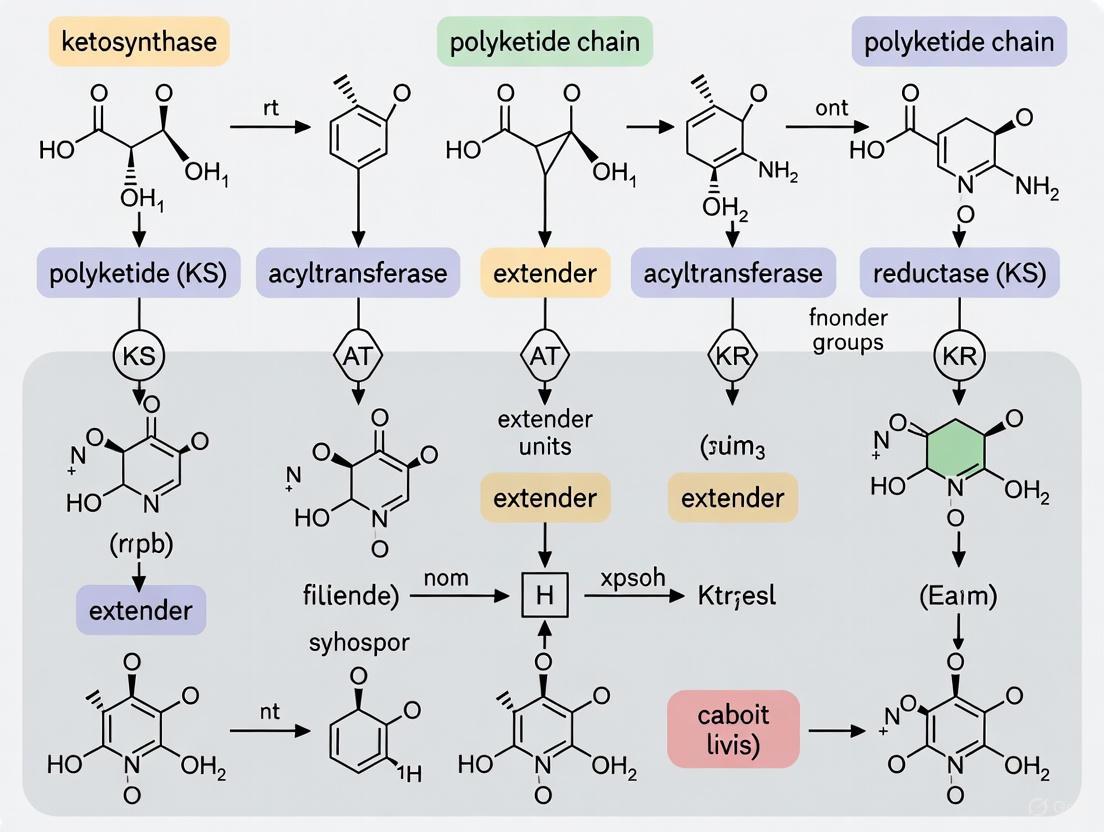
This article provides a comprehensive analysis of the biosynthetic logic underpinning polyketide synthases (PKSs), tailored for researchers, scientists, and drug development professionals.
The Biosynthetic Logic of Polyketide Synthases: From Assembly Line Mechanisms to Drug Discovery and Engineering
Abstract
This article provides a comprehensive analysis of the biosynthetic logic underpinning polyketide synthases (PKSs), tailored for researchers, scientists, and drug development professionals. It explores the foundational principles of PKS classification, architecture, and the assembly-line mechanism of polyketide chain elongation and modification. The scope extends to advanced methodological approaches, including chemoenzymatic synthesis and combinatorial biosynthesis for generating novel compounds. The content addresses key challenges in PKS engineering, such as optimizing protein-protein interactions and overcoming substrate specificity constraints, and presents validation strategies through case studies of clinically relevant polyketides. By synthesizing insights across these four core intents, this review serves as a strategic resource for leveraging PKS logic in natural product discovery and bioengineering.
Deconstructing the PKS Assembly Line: Core Principles and Architectural Diversity
Polyketides represent one of the largest families of natural products with profound impacts on human health, including many clinically essential drugs such as the antibiotic tetracycline, the immunosuppressant rapamycin, and the cholesterol-lowering agent lovastatin [1]. These structurally diverse compounds are biosynthesized by polyketide synthases (PKSs), enzymatic systems that share a core biosynthetic logic with fatty acid synthases (FASs) through the iterative decarboxylative condensation of acyl-CoA precursors [2] [3]. However, PKSs have evolved extraordinary mechanisms to generate vastly greater structural diversity than FASs through controlled variations at each step of the assembly process [3]. The current scientific understanding classifies PKSs into three major paradigms—type I, II, and III—based on their distinctive protein architectures, catalytic mechanisms, and evolutionary relationships [1]. This review provides a comprehensive technical overview of these three PKS paradigms, framed within the context of their biosynthetic logic and their expanding applications in drug discovery and development.
Comparative Analysis of PKS Architectures and Mechanisms
The three PKS paradigms represent nature's solution to producing chemical diversity through variations on a conserved catalytic theme. Table 1 summarizes the fundamental characteristics of each system, highlighting their distinct approaches to polyketide biosynthesis.
Table 1: Fundamental Characteristics of Type I, II, and III Polyketide Synthases
| Feature | Type I PKS | Type II PKS | Type III PKS |
|---|---|---|---|
| Protein Architecture | Large, multimodular multidomain proteins | Discrete, dissociated monofunctional enzymes | Homodimeric enzymes |
| Carrier Protein | Integrated ACP domains | Discrete ACP protein | ACP-independent |
| Catalytic Process | Assembly-line, non-iterative | Iterative multicomponent | Iterative condensing enzyme |
| Chain Length Control | Defined by module number | Primarily by KS/CLF complex | By active site pocket |
| Representative Products | Erythromycin, rapamycin [1] | Tetracycline, daunorubicin [1] [3] | Flavolin, alkyl-resorcinols [1] [4] |
| Substrate Selection | AT domains in cis or trans | MAT (malonyl-CoA:ACP transacylase) | Direct acyl-CoA utilization |
| Reductive Processing | Variable reductive domains per module | Variable reductive enzymes | Limited to condensation |
Type I PKS: The Assembly Line Paradigm
Type I PKSs are multifunctional enzymes organized into modular assembly lines, where each module houses a set of distinct, non-iteratively acting catalytic domains responsible for one cycle of polyketide chain elongation [1]. The prototypical example is the 6-deoxyerythronolide B synthase (DEBS), which synthesizes the macrocyclic core of erythromycin A through a highly coordinated, vectorial biosynthetic process [1] [2]. Each canonical module minimally contains three core domains: a ketosynthase (KS) that catalyzes chain elongation, an acyltransferase (AT) that selects and loads extender units, and an acyl carrier protein (ACP) that shuttles the growing polyketide chain between domains [2]. Additionally, modules may contain variable combinations of reductive domains - ketoreductase (KR), dehydratase (DH), and enoylreductase (ER) - that modify the β-keto group after each condensation cycle [2].
The catalytic cycle of a Type I PKS module involves three fundamental reactions: transacylation (transfer of an extender unit onto the ACP), elongation (decarboxylative Claisen condensation catalyzed by the KS), and translocation (movement of the growing chain to the next module) [2]. This process is distinguished from iterative PKSs and FASs by its requirement for two distinct translocation steps - entry from the previous module and exit to the next module - necessitating precise extraction and reinsertion of the polyketide intermediate at each stage [2]. Notably, while DEBS represents the canonical cis-AT Type I PKS, evolution has produced trans-AT PKSs where multiple AT-less modules share a stand-alone AT protein that acts iteratively in trans [1] [2].
Type II PKS: The Iterative Aromatic Specialist
Type II PKSs are multienzyme complexes that carry a single set of iteratively acting catalytic activities, typically producing aromatic polyketides through the controlled generation of reactive poly-β-ketone intermediates [1] [3]. The core "minimal PKS" consists of three essential components: a ketosynthase (KS), a chain length factor (CLF) that controls the number of elongation cycles, and an acyl carrier protein (ACP) [3] [5]. This system generates polyketide intermediates of specific chain lengths, with decaketides (C20) being most common, though nonaketides (C18) and other lengths also occur [5]. The poly-β-ketone backbone then undergoes specific cyclization and aromatization patterns mediated by cyclases/aromatases, followed by various tailoring modifications to produce the final bioactive compound [3].
Recent research has revealed unexpected flexibility in some Type II PKS systems. For instance, the var and oxt clusters in Streptomyces varsoviensis demonstrate dual chain-length programming, producing both decaketide-derived tetracyclines and nonaketide-derived tricyclic aromatic polyketides from the same minimal PKS [5]. This challenges the traditional view that individual Type II PKSs produce polyketide intermediates with a fixed, invariant chain length [5].
Type III PKS: The Minimalist Condensing Enzyme
Type III PKSs, also known as chalcone synthase-like PKSs, are homodimeric enzymes that function as iteratively acting condensing enzymes without requirement for an ACP cofactor [1] [4]. These systems directly utilize acyl-CoA substrates rather than ACP-tethered intermediates, representing a more simplified architectural approach to polyketide biosynthesis [1]. Despite their structural simplicity, Type III PKSs exhibit remarkable functional flexibility, as demonstrated by MMAR_2190 from Mycobacterium marinum, which can concurrently biosynthesize alkyl-resorcinols, acyl-phloroglucinols, and alkyl-α-pyrones from a single catalytic core [4]. This product diversity stems from alternative cyclization modes of the same polyketide intermediate, highlighting the mechanistic versatility of these systems [4].
Experimental Methodologies for PKS Research
Gene Cluster Identification and Manipulation
The study of PKS systems begins with the identification and analysis of their biosynthetic gene clusters (BGCs). For Type II PKSs, a common approach involves targeted strategies for identifying specific classes of BGCs, such as those for tetracycline biosynthesis [5]. Once identified, BGCs can be activated through various methods, including overexpression of pathway-specific regulatory genes, as demonstrated with the var cluster where SARP family regulator overexpression led to production of new metabolites [5]. For heterologous expression, the ExoCET technology can be employed to construct E. coli-Streptomyces shuttle plasmids containing complete BGCs, enabling expression in various streptomycete hosts [6].
Chassis Development for Heterologous Expression
Selecting an optimal host is critical for efficient PKS expression and natural product discovery. Streptomyces species serve as ideal chassis for heterologous expression of Type II PKSs due to their native compatibility with polyketide biosynthesis [6]. Development of high-performance chassis involves in-frame deletion of endogenous PKS gene clusters to mitigate precursor competition, as demonstrated with the creation of Chassis2.0 from Streptomyces aureofaciens J1-022 [6]. This chassis shows enhanced production efficiency for diverse Type II polyketides, including a 370% increase in oxytetracycline production compared to conventional strains [6].
Table 2: Key Research Reagents and Solutions for PKS Studies
| Reagent/Solution | Function/Application | Technical Notes |
|---|---|---|
| ExoCET Technology | Construction of E. coli-Streptomyces shuttle plasmids | Enables cloning of large PKS gene clusters [6] |
| Chassis2.0 | Heterologous expression host for Type II PKS | High-yield Streptomyces aureofaciens with endogenous clusters deleted [6] |
| BioPKS Pipeline | Automated retrobiosynthesis tool combining PKS and monofunctional enzymes | Integrates RetroTide (PKS design) and DORAnet (monofunctional enzymes) [7] |
| ClusterCAD 2.0 Database | Platform for PKS engineering and design | Provides curated PKS domains and modules for combinatorial biosynthesis [7] |
Computational Design and Engineering
Advanced computational tools are revolutionizing PKS research and engineering. The BioPKS pipeline represents an automated retrobiosynthesis tool that combines the design of chimeric Type I PKSs with monofunctional enzymatic pathways [7]. This system includes two complementary components: RetroTide for designing PKS carbon scaffolds and DORAnet for planning post-PKS tailoring steps [7]. These tools enable the in silico design of pathways for complex natural products, expanding the accessible chemical space for biomanufacturing.
Gene Conversion-Associated Engineering
Evolutionary-inspired approaches provide powerful strategies for PKS engineering. Gene conversion-associated engineering mimics natural evolutionary processes where genetic material is exchanged between adjacent homologous modules [8]. This approach involves identifying highly homologous DNA fragments between modules, then using these regions as boundaries for domain swapping [8]. Key guidelines include: (i) designing DNA fragments spanning from "GTNAH" to "HHYWL" signature motifs, (ii) prioritizing catalytic elements from the same BGC, and (iii) when using foreign elements, selecting those with high sequence homology to the host BGC [8].
Visualization of PKS Research Workflows
The diagram below illustrates the logical relationships and experimental workflows in contemporary PKS research, highlighting the interconnected approaches to understanding and engineering these complex biosynthetic systems.
The three PKS paradigms represent nature's elegant solutions to generating chemical diversity through variations on a conserved biosynthetic theme. While the type I, II, and III classifications have served the scientific community well, emerging research continues to reveal systems that challenge these categorical boundaries, highlighting the remarkable evolutionary plasticity of these enzymatic systems [1]. Current research is increasingly focused on leveraging this understanding for targeted engineering approaches, including the development of optimized chassis strains [6], computational design tools [7], and evolutionary-inspired engineering strategies [8]. As these approaches mature, they promise to unlock the full potential of PKS systems for drug discovery and development, enabling the efficient production of both natural and "unnatural" natural products with optimized pharmaceutical properties. The continued integration of structural biology, bioinformatics, and synthetic biology will undoubtedly yield new insights into the molecular mechanisms governing these fascinating enzymatic assembly lines and expand our ability to harness their biosynthetic potential.
Polyketide synthases (PKSs) represent a family of multifunctional enzymes that catalyze the biosynthesis of an extraordinarily diverse array of complex natural products with clinically valuable properties, including antibiotic, antifungal, anticancer, and immunosuppressant activities [2] [9]. These enzymatic systems operate on a biosynthetic logic closely related to that of fatty acid synthases (FAS), building complex molecules through the iterative decarboxylative Claisen condensation of acyl-CoA building blocks [10] [11]. However, PKSs generate far greater structural diversity than FASs through controlled variations in building block selection, chain length, and the programmed reduction of β-carbonyl groups at each elongation cycle [10]. The modular architecture of type I PKSs, in particular, embodies a remarkable molecular assembly line where discrete catalytic units operate in sequence to channel growing polyketide chains along uniquely defined pathways in a process termed vectorial biosynthesis [2]. This in-depth technical guide examines the fundamental organization of the core ketosynthase-acyltransferase-acyl carrier protein (KS-AT-ACP) domains and their auxiliary partners, framing this architectural logic within the broader context of programmable biosynthetic engineering.
Architectural Organization of PKS Modules
The Core KS-AT-ACP Domains
The minimal catalytic unit of a type I modular PKS consists of three essential domains that form the foundation of polyketide chain assembly: the ketosynthase (KS), acyltransferase (AT), and acyl carrier protein (ACP). These domains operate in concert to execute two universal reactions shared by all PKSs and FASs: transacylation and elongation [2].
Ketosynthase (KS): The KS domain serves as the gatekeeper of chain elongation, catalyzing the decarboxylative Claisen condensation between the growing polyketide chain and the extender unit [11]. This carbon-carbon bond-forming reaction represents the principal exergonic step within the catalytic cycle and is typically rate-limiting [2] [11]. Biochemical and evolutionary analyses indicate that KS domains strongly co-evolve with upstream domains, suggesting they function as part of the preceding catalytic unit—a concept formalized in the "PKS exchange unit" model where a module begins with the AT and ends after the KS [11].
Acyltransferase (AT): The AT domain is responsible for selecting and loading the appropriate extender unit (e.g., malonyl-CoA, methylmalonyl-CoA) onto the PKS assembly line [10]. It catalyzes a thiol-to-thioester exchange that transfers the α-carboxyacyl building block from acyl-CoA onto the phosphopantetheinyl arm of the ACP domain [2]. AT domains typically exhibit strict substrate specificity, with some exclusively accepting malonyl-CoA while others preferentially load methylmalonyl-CoA or other substituted malonyl extender units [12] [10].
Acyl Carrier Protein (ACP): The ACP serves as the central hub of the biosynthetic process, shuttling the growing polyketide chain between catalytic domains [13]. ACP function requires post-translational modification by a phosphopantetheinyl transferase that installs a 4'-phosphopantetheine (Ppant) arm, which serves as a flexible tether for covalent attachment of polyketide intermediates [13]. The inherent flexibility of the ACP, coupled with the 18-Å reach of its Ppant arm, enables it to interact with multiple catalytic partners throughout the elongation cycle [13].
Table 1: Core Catalytic Domains in Type I Modular PKSs
| Domain | Catalytic Function | Key Features | Essential for Elongation |
|---|---|---|---|
| Ketosynthase (KS) | Decarboxylative Claisen condensation | Active site cysteine for covalent substrate attachment; gatekeeper function | Yes |
| Acyltransferase (AT) | Selection and loading of extender unit | Specificity for malonyl-/methylmalonyl-CoA; can function in cis or trans | Yes |
| Acyl Carrier Protein (ACP) | Shuttling of intermediates | Phosphopantetheine arm for thioester linkage; highly flexible structure | Yes |
Structural Organization and Interdomain Linkers
High-resolution structural studies of intact PKS modules have revealed an asymmetric organization with two reaction chambers that operate asynchronously [14]. The core KS-AT didomain forms a stable structural unit, with the AT domain further divided into subdomains that undergo conformational changes during catalysis [12]. Critical to the structural integrity and function of these domains are the interdomain linker regions, particularly the KS-AT linker and the post-AT linker [12].
The post-AT linker, a approximately 30-residue segment that wraps around both the AT domain and the KS-AT linker, has been shown to be essential for chain elongation but not for the transacylation activity of the AT domain [12]. Experimental dissection of DEBS module 3 demonstrated that while AT domains lacking the post-AT linker could still be methylmalonylated and transfer the methylmalonyl unit to ACP, they failed to support KS-catalyzed condensation [12]. This highlights the critical role of linker regions in facilitating proper domain-domain interactions necessary for the coordination of catalysis.
Auxiliary Domains for β-Keto Processing
Following each chain elongation event, the β-keto group of the nascent polyketide intermediate can be processed by a variable set of reductive domains that determine the final oxidation state at each carbon center. The reductive loop of a PKS module can include up to three auxiliary domains that act sequentially on the β-carbonyl [2] [10].
Ketoreductase (KR): The KR domain catalyzes the NADPH-dependent reduction of the β-keto group to a β-hydroxyl group, introducing the first level of reductive processing [10]. KRs exhibit stereospecificity, generating hydroxyl groups with specific chiral configurations that significantly influence the three-dimensional structure of the final polyketide product [12].
Dehydratase (DH): Following ketoreduction, the DH domain catalyzes the dehydration of the β-hydroxy group to form an α,β-unsaturated enoyl intermediate [2]. This elimination reaction introduces a double bond at the β-position, further reducing the oxidation state of the carbon chain.
Enoylreductase (ER): The final reductive step is catalyzed by the ER domain, which reduces the enoyl double bond to a fully saturated methylene group using NADPH as a cofactor [2]. The presence of all three reductive domains results in complete reduction of the β-carbon to the most reduced state possible.
Table 2: Auxiliary Reductive Domains in Type I Modular PKSs
| Domain | Catalytic Function | Cofactor Requirement | Resulting Functional Group |
|---|---|---|---|
| Ketoreductase (KR) | Reduces β-keto to β-hydroxy | NADPH | Secondary alcohol |
| Dehydratase (DH) | Eliminates water to form enoyl | None | α,β-unsaturated thioester |
| Enoylreductase (ER) | Reduces enoyl to acyl | NADPH | Fully saturated carbon chain |
The combinatorial presence or absence of these reductive domains, along with variations in their stereochemical preferences, generates remarkable diversity in the final polyketide structures. For example, in DEBS, Module 2 contains only a KR domain, resulting in a hydroxyl group at the corresponding position, while Module 4 contains KR, DH, and ER domains, leading to a fully reduced carbon center [2].
Catalytic Cycle and Vectorial Biosynthesis
The coordinated activity of core and auxiliary domains enables the sequential elongation and processing of the polyketide chain through a carefully orchestrated catalytic cycle. As illustrated in Figure 1, the cycle begins with the AT domain selecting and loading an extender unit onto the ACP domain (transacylation). Concurrently, the KS domain receives the growing polyketide chain from the upstream module (entry translocation). The KS then catalyzes decarboxylative condensation between the extender unit and the polyketide chain (elongation), followed by β-keto processing by the reductive domains. Finally, the elongated chain is transferred to the KS domain of the next module (exit translocation), completing the cycle [2].
Figure 1: Catalytic Cycle of a PKS Module
A defining feature of assembly-line PKSs is the vectorial biosynthesis of polyketide chains, where intermediates are channeled along a uniquely defined sequence of modules, each used only once in the overall catalytic cycle [2]. This process involves two distinct translocation events: entry translocation (transfer from the upstream ACP to the current KS) and exit translocation (transfer from the current ACP to the downstream KS) [2]. This stands in contrast to iterative systems where the growing chain toggles back and forth between the same KS-ACP pair throughout biosynthesis [2].
The translocation mechanism remains incompletely understood but represents an evolutionary innovation that enables assembly-line PKSs to function as programmed biosynthetic factories. Recent structural studies have captured PKS modules in different catalytic states, showing the ACP domain docked alternately with the AT domain (during transacylation) and with the KS domain (during condensation), demonstrating the dynamic nature of these interactions [14].
Experimental Dissection and Reconstitution of PKS Modules
Domain Dissection Methodologies
Understanding PKS structure-function relationships has been advanced significantly through domain dissection approaches, wherein individual domains are expressed as standalone proteins and their activities characterized biochemically. The following protocol outlines the key steps for dissecting and reconstituting PKS modules based on successful experiments with DEBS module 3 [12]:
Identification of Domain Boundaries: Define authentic domain boundaries based on limited proteolysis and high-resolution structural data. Critical junction sites, such as the EEAPERE sequence following the KS3 domain in DEBS, serve as natural separation points [12].
Construct Design for Soluble Expression: Design expression constructs that include essential linker regions. For AT domains, inclusion of the complete KS-to-AT linker at the N-terminus and the post-AT linker at the C-terminus is crucial for solubility and activity [12].
Heterologous Expression and Purification: Express recombinant domains in suitable host systems (e.g., E. coli). Purify proteins using affinity chromatography followed by size exclusion chromatography to obtain monodisperse preparations [12].
Functional Assays: Develop specific assays to monitor individual domain activities:
- AT Acylation: Incubate AT with [¹⁴C]methylmalonyl-CoA and analyze covalent intermediate formation by radio-SDS-PAGE [12].
- KS Acylation: Monitor KS loading using N-acetyl cysteamine thioester analogs of polyketide intermediates [12].
- Condensation Activity: Reconstitute the complete elongation cycle by combining KS, AT, and ACP with appropriate substrates and detect products by radio-TLC [12].
The Scientist's Toolkit: Essential Research Reagents
Table 3: Key Research Reagents for PKS Domain Studies
| Reagent / Tool | Function / Application | Experimental Context |
|---|---|---|
| N-Acetyl Cysteamine (NAC) Thioesters | Surrogate substrates for KS acylation | Mimic native ACP-tethered intermediates [12] |
| [¹⁴C]-Labeled Methylmalonyl-CoA | Radiolabeled extender unit | Tracing AT-mediated loading and transacylation [12] |
| Discrete ACP Domains | Standalone carrier proteins | Studying protein-protein interactions and substrate channeling [12] [13] |
| Post-AT Linker Peptides | Critical structural elements | Reconstitution of condensation activity in dissected systems [12] |
| Phosphopantetheinyl Transferase | ACP activation enzyme | Conversion of apo-ACP to holo-ACP [13] |
Engineering Perspectives and Future Directions
The modular architecture of PKSs presents extraordinary opportunities for biosynthetic engineering through the rational design and recombination of catalytic domains. Two primary strategies have emerged for engineering novel polyketide pathways: module swapping and combinatorial domain assembly [15] [11]. However, these approaches face significant challenges related to domain-domain compatibility and the gatekeeping activity of KS domains, which often reject non-natural substrates from upstream modules [11].
Evolutionary analyses suggest that alternative module boundaries may enhance the success of engineering efforts. The PKS exchange unit (XU) model, which defines a module as beginning at the AT and ending after the KS (in contrast to the genetic organization), aligns better with functional constraints and co-evolution patterns [11]. Engineering studies utilizing XU boundaries have demonstrated improved activity in chimeric PKSs, particularly in trans-AT systems [11].
Recent advances in structural biology, including the first high-resolution structures of intact PKS modules, have revealed unprecedented details of interdomain interactions and asynchronous catalytic chambers [14]. These structural insights, combined with powerful computational tools like AlphaFold2 for protein structure prediction, are paving the way for more rational design principles in PKS engineering [11]. The integration of synthetic biology approaches—including standardized synthetic interfaces such as docking domains, coiled-coils, and SpyTag/SpyCatcher systems—further enables the programmable assembly of functional PKS chimeras [15].
As our understanding of the fundamental architectural principles governing PKS module organization continues to deepen, so too does our capacity to harness these remarkable molecular machines for the programmed biosynthesis of structurally complex and pharmacologically active polyketides.
Polyketides represent one of the largest classes of bioactive natural products, with profound importance in modern medicine due to their diverse pharmacological activities, including antibiotic, antifungal, anticancer, antiviral, antihypercholesterolemic, and immunosuppressant properties [3] [9]. These compounds are assembled by polyketide synthases (PKSs), enzymatic systems that share a core biosynthetic logic with fatty acid synthases, iteratively building complex molecules from simple precursors through decarboxylative Claisen condensation reactions [3] [16]. However, PKSs generate incredible structural diversity through strategic variations at each stage of synthesis, incorporating different building blocks and processing intermediates through tailored biochemical modifications [17]. Understanding the precise mechanisms of the biosynthetic stages—from starter unit loading to chain termination and release—provides the foundation for engineering novel polyketides with enhanced medicinal properties, representing a central focus in contemporary natural product research [3] [8].
This technical guide examines the core biosynthetic stages of polyketide assembly, framing these processes within the broader context of biosynthetic logic that governs PKS function. We present detailed experimental methodologies, quantitative data summaries, and visualization tools to equip researchers with practical resources for advancing polyketide engineering and drug development.
PKS Architecture and Classification
Polyketide synthases are classified into three primary types based on their architectural organization and catalytic mechanism [18]. Type I PKSs are large, multimodular proteins with catalytic domains covalently linked in a specific sequence, functioning like an assembly line where each module is responsible for one round of chain extension [19] [16]. These are further subdivided into modular systems (non-iterative) and iterative systems where the same module is reused multiple times [16]. Type II PKSs consist of discrete, monofunctional enzymes that form dissociable complexes and typically work iteratively to produce aromatic polyketides [3] [18]. The minimal components include a ketosynthase chain-length factor heterodimer (KSα-KSβ) and an acyl carrier protein (ACP) [18]. Type III PKSs (chalcone synthase-like) are homodimeric enzymes that utilize free acyl-CoA substrates directly without requirement for an ACP partner [18].
Despite their architectural differences, all PKS types share a common biosynthetic logic centered on the iterative assembly of simple carboxylic acid precursors. The structural diversity of final polyketide products stems from variations in: (1) starter and extender unit selection, (2) number of elongation cycles, (3) degree of β-keto group processing after each condensation, and (4) the mechanism of chain termination and release [17] [16]. This systematic variability provides nature with a powerful toolkit for chemical diversification, which researchers are now learning to harness through PKS engineering.
The Initiation Stage: Starter Unit Loading
The biosynthesis of polyketides initiates with the selection and loading of a starter unit onto the catalytic machinery of the PKS. The starter unit provides the foundation upon which the polyketide chain is assembled and significantly influences the structural properties of the final natural product [17].
Diversity of Starter Units
PKSs incorporate a remarkable variety of starter units, efficiently introducing unusual moieties such as p-nitrobenzenes, alkynes, branched-alkyl chains, and halogenated pyrroles into polyketide scaffolds [17]. The following table summarizes key starter units and their origins in representative polyketides:
Table 1: Diversity of Polyketide Starter Units and Their Incorporation
| Starter Unit | Biosynthetic Origin | Representative Polyketide | Structural Feature Introduced |
|---|---|---|---|
| Propionyl-ACP [17] | Methylmalonyl-ACP decarboxylation by AT/DC | Lomaiviticins (2) [17] | Ethyl side chain |
| p-Nitrobenzoic acid [17] | Sequential oxidation of p-aminobenzoic acid by AurF [17] | Aureothin (3) [17] | Nitroaryl moiety |
| Pyrrolyl-Carrier Protein [17] | Dehydrogenation of L-prolyl-S-CP by RedW [17] | Undecylprodiginine (4) [17] | Pyrrole ring |
| 4,5-Dichloropyrrolyl-CP [17] | Dichlorination of Pyrrolyl-CP by PltA [17] | Pyoluteorin (7) [17] | Halogenated pyrrole |
| 4-Guanidinobutyryl-CoA [17] | Oxidative decarboxylation of L-arginine [17] | Azalomycin F3a (13) [17] | Guanidinium group |
Experimental Analysis of Starter Unit Incorporation
The investigation of starter unit biosynthesis employs targeted genetic and biochemical approaches to elucidate novel priming mechanisms.
Protocol 3.2.1: In vitro Reconstitution of Starter Unit Biosynthesis
- Objective: To characterize the enzymatic activity of a putative bifunctional acyltransferase/decarboxylase (AT/DC) in generating a propionyl-ACP starter unit.
- Reagents:
- Recombinant AT/DC enzyme (e.g., Lom62)
- Standalone ACP (e.g., Lom63) in apo-form
- Methylmalonyl-CoA
- ATP, Mg²⁺
- Analytical buffer (e.g., Tris-HCl, pH 7.5-8.0)
- Methodology:
- Enzyme Purification: Clone, express, and purify the recombinant AT/DC and ACP proteins using affinity chromatography.
- Reaction Setup: Incubate the AT/DC enzyme with ACP, methylmalonyl-CoA, and necessary cofactors in analytical buffer.
- Product Analysis:
- Key Application: This approach confirmed that Lom62 selectively loads methylmalonyl-CoA onto Lom63 and subsequently decarboxylates it to yield propionyl-ACP, a novel priming mechanism for type II PKSs [17].
The Elongation Stage: Chain Extension and Processing
Following initiation, the polyketide chain undergoes iterative cycles of extension and processing, ultimately determining the carbon skeleton length and oxidation state.
Extender Unit Diversity and Incorporation
The elongation of the polyketide chain is facilitated by extender units, which contribute significantly to its structural diversity. The acyltransferase (AT) domain acts as the "gatekeeper," selecting the specific extender unit and transferring it to the ACP domain [16].
Table 2: Major Polyketide Synthase Extender Units
| Extender Unit | PKS Type(s) | Enzymatic Origin | Resulting Polyketide Structural Motif |
|---|---|---|---|
| Malonyl-CoA [16] | I, II, III [16] | Acetyl-CoA carboxylation [16] | Unsubstituted carbon backbone (β-keto) |
| (2S)-Methylmalonyl-CoA [16] | I, II [16] | Propionyl-CoA carboxylation or succinyl-CoA mutase/epimerase pathway [16] | α-Methyl branch |
| (2S)-Ethylmalonyl-CoA [16] | I, II [16] | Ethylmalonyl-CoA pathway from acetyl-CoA and crotonyl-CoA [16] | α-Ethyl branch |
| (2R)-Methoxymalonyl-ACP [16] | I (Modular) [16] | Glycolytic intermediates (1,3-bisphosphoglycerate) [16] | α-Methoxy branch |
| (2R)-Hydroxymalonyl-ACP [16] | I (Modular) [16] | Glycolytic intermediates [16] | α-Hydroxy branch |
| (2S)-Aminomalonyl-ACP [16] | I (Modular) [16] | Serine oxidation and activation [16] | α-Amino branch |
The core elongation cycle within a typical type I PKS module involves several coordinated steps [18]:
- The AT domain selects an extender unit (e.g., malonyl-CoA) and transfers it to the phosphopantetheine arm of the ACP domain.
- The KS domain catalyzes a decarboxylative Claisen condensation between the ACP-bound extender unit and the growing polyketide chain from the previous module, resulting in a two-carbon extension and a β-keto thioester.
- Optional processing of the β-keto group by a variable set of reductive domains (KR, DH, ER) follows.
Figure 1: Polyketide Chain Elongation Cycle. The diagram illustrates the coordinated action of KS, AT, and ACP domains within a PKS module to extend the polyketide chain by two carbons.
Experimental Analysis of Extender Unit Fidelity
Engineering PKSs to incorporate non-native extender units is a key strategy for drug discovery but is often hampered by the intrinsic specificity of AT domains and proofreading mechanisms.
Protocol 4.2.1: Gene Conversion-Associated AT Domain Swapping
- Objective: To successively engineer a modular PKS to alter extender unit incorporation specificity for the de novo production of analog structures.
- Reagents:
- Parent bacterial strain with target PKS gene cluster (e.g., cmm BGC for cinnamomycin).
- Donor DNA fragments from homologous BGC (e.g., mgm BGC).
- PCR reagents for amplification and assembly.
- Vectors and reagents for genetic manipulation in the host (e.g., Streptomyces).
- Methodology:
- Identify Gene Conversion Regions: Analyze homologous BGCs to locate regions of high nucleotide sequence identity, typically spanning from the C-terminus of the KS domain through the AT domain to the post-AT linker [8].
- Design Replacement Fragments: Design chimeric genes where the identified "ATc region" (e.g., from "GTNAH" to "HHYWL" motifs) from the donor BGC replaces the corresponding region in the parent PKS [8].
- Genetic Engineering: Introduce the designed constructs into the parent strain using appropriate genetic techniques (e.g., CRISPR-Cas9, REDIRECT) [8].
- Metabolite Analysis: Ferment the mutant strains and analyze extracts using HPLC and LC-MS to detect and characterize new polyketide analogs [8].
- Key Application: This strategy was successfully applied to the cinnamomycin BGC, enabling the production of mangromycin-like compounds with predicted alterations in their side chains [8].
The Termination Stage: Chain Release and Functionalization
The final stage of polyketide biosynthesis involves the release of the full-length chain from the PKS assembly line, often coupled with cyclization or other functionalization to yield the mature natural product.
Diverse Chain Termination Mechanisms
The thioesterase (TE) domain, typically found at the C-terminus of the final module in type I PKSs, is most commonly responsible for chain release [18]. The classic termination mechanism involves hydrolysis to release a linear acid or intramolecular cyclization to form a macrolactone [20] [18]. However, recent research has uncovered unprecedented and complex termination mechanisms that install unique functional groups.
A notable example is the termination process in the biosynthesis of curacin A, an anticancer agent from Lyngbya majuscula [20]. The terminal module contains adjacent sulfotransferase (ST) and thioesterase (TE) domains. Biochemical characterization revealed a novel decarboxylative chain termination mechanism:
- The ST domain selectively sulfonates the (R)-β-hydroxyl group of the full-length intermediate attached to the ACP.
- The TE domain then catalyzes hydrolysis of the thioester linkage.
- The sulfonate group acts as a leaving group, triggering successive decarboxylative elimination to form a terminal olefin, a rare moiety in the final metabolite [20].
Table 3: Polyketide Chain Termination Mechanisms and Outcomes
| Termination Mechanism | Catalytic Domain/Enzyme | Resulting Chemical Structure | Example Polyketide |
|---|---|---|---|
| Hydrolysis [18] | Thioesterase (TE) [18] | Free carboxylic acid | Various fatty acids |
| Macrolactonization [18] | Thioesterase (TE) [18] | Macrolactone | 6-Deoxyerythronolide B [19] |
| Decarboxylative Elimination [20] | Sulfotransferase + Thioesterase (ST-TE) [20] | Terminal olefin | Curacin A [20] |
| Claisen Cyclization | Ketosynthase (KS) | Aromatic ring | Aromatic polyketides (e.g., Actinorhodin) |
Experimental Characterization of Chain Termination
Elucidating novel termination mechanisms requires a combination of bioinformatics, molecular biology, and rigorous in vitro biochemistry.
Protocol 5.2.1: Biochemical Characterization of a Novel Termination Module
- Objective: To reconstitute and analyze the activity of an unusual ACP-ST-TE termination module in vitro.
- Reagents:
- Cloned genes for ACP, ST, and TE domains.
- Expression vectors for protein overproduction in E. coli.
- Apo-ACP protein.
- Svp phosphopantetheinyltransferase.
- Acyl-CoA substrates for generating model ACP-linked intermediates.
- PAPS (sulfonate donor for ST).
- HPLC, FTICR-MS, GC-MS systems.
- Methodology:
- Protein Production: Express and purify individual ACP, ST, and TE domains as soluble proteins. Confirm oligomeric state via size-exclusion chromatography [20].
- Substrate Synthesis: Generate model ACP-linked substrates (e.g., 3-hydroxy-5-methoxytetradecanoyl-ACP) by loading the corresponding acyl-CoA onto apo-ACP using Svp phosphopantetheinyltransferase [20].
- Individual Enzyme Assays:
- Incubate TE with ACP-substrate to test for canonical hydrolytic release.
- Incubate ST with ACP-substrate and PAPS to test for sulfonation.
- Analyze reactions by HPLC and FTICR-MS to detect conversion and mass changes of the ACP-bound species [20].
- Coupled Reaction Assay: Incubate ACP-substrate with both ST and TE in the presence of PAPS. Analyze the reaction mixture by LC-MS for sulfonated acid product and by GC-MS for the volatile terminal olefin product [20].
- Key Application: This protocol confirmed the sequence of ST sulfonation preceding TE hydrolysis and the subsequent decarboxylative elimination, establishing a novel chain termination pathway [20].
Figure 2: Curacin A Decarboxylative Termination. The ST-TE di-domain catalyzes a two-step termination process involving sulfonation and hydrolysis, leading to decarboxylative elimination and formation of a terminal olefin [20].
The Scientist's Toolkit: Key Research Reagents and Methodologies
Advancing research in PKS biochemistry and engineering requires a standardized set of reagents and analytical tools. The following table catalogues essential components for experimental investigations into PKS biosynthetic stages.
Table 4: Essential Research Reagents and Methodologies for PKS Studies
| Reagent / Methodology | Core Function | Key Experimental Application |
|---|---|---|
| Apo-ACP Proteins [20] [19] | Scaffold for covalent attachment of polyketide intermediates via phosphopantetheinyl arm. | In vitro reconstitution assays; substrate loading studies. |
| Phosphopantetheinyl Transferases (e.g., Svp) [20] | Activates apo-ACP by installing the 4'-phosphopantetheine moiety from CoA. | Generation of holo-ACP and loading of acyl-CoA substrates to create ACP-linked intermediates [20]. |
| Acyl-CoA Substrates [20] [16] | Provide activated building blocks (starter and extender units) for polyketide assembly. | Feeding studies; generation of ACP-linked substrates for enzymatic assays. |
| PAPS (3'-Phosphoadenosine-5'-phosphosulfate) [20] | Universal sulfonate group donor for sulfotransferase enzymes. | Assaying novel termination steps involving sulfonation [20]. |
| HPLC & LC-MS [20] | Separation and identification of organic compounds and their modifications. | Monitoring enzyme reactions, detecting intermediate and product formation [20] [8]. |
| FTICR-MS (Fourier Transform Ion Cyclotron Resonance Mass Spectrometry) [20] | Ultra-high mass accuracy analysis of biomolecules and their modifications. | Precisely determining mass changes of ACP-bound intermediates during catalysis [20]. |
| NMR Spectroscopy [19] | Determination of 3D protein structure and dynamics in solution. | Solving structures of PKS domains (e.g., ACP) to understand protein-protein interactions [19]. |
The biosynthetic logic of polyketide synthases—from starter unit loading through chain elongation to termination—represents a sophisticated paradigm for the combinatorial assembly of chemical complexity in nature. A detailed understanding of each stage, supported by the experimental protocols and analytical tools summarized in this guide, is critical for the rational engineering of these systems [3]. While significant progress has been made in understanding domain function and engineering PKSs to produce novel compounds, challenges remain, particularly regarding the fidelity and yield of engineered chimeric PKSs [3] [8]. Future research will increasingly focus on the structural basis of specific protein-protein interactions between ACPs and catalytic domains [3] [19], the application of evolutionary guidance for engineering [8], and the elucidation of yet-uncharacterized termination and tailoring steps. As these efforts mature, the systematic reprogramming of PKS assembly lines will unlock a new generation of therapeutic polyketides, firmly grounded in the fundamental biosynthetic logic dissected here.
The evolution of polyketide synthases (PKSs) from iterative fatty acid synthases (FASs) to vectorial modular assembly lines represents a fundamental adaptive innovation in natural product biosynthesis. This transition enabled microorganisms to generate unprecedented chemical diversity, yielding many pharmacologically essential compounds. By examining phylogenetic relationships, structural architectures, and catalytic mechanisms, this review delineates the molecular trajectory through which iterative, generalist FAS-like precursors evolved into specialized, assembly-line PKSs capable of programmed biosynthesis. Understanding these evolutionary principles provides a framework for engineering next-generation synthases to produce novel therapeutic agents.
Polyketides constitute one of the largest families of bioactive natural products, encompassing antibiotics, antifungals, anticancer agents, and immunosuppressants [3]. Their biosynthetic machinery, represented by PKSs, shares a core catalytic logic with FASs, iteratively constructing complex carbon skeletons from simple acyl-CoA precursors through decarboxylative Claisen condensation [3] [21]. However, while FASs generate chemically monotonic fatty acid chains through repetitive use of a single set of catalytic domains, PKSs have evolved sophisticated mechanisms to introduce remarkable structural diversity by varying substrate selection, chain length, and β-carbon processing at each elongation cycle [3] [22].
The evolutionary progression from iterative FAS-like systems to vectorial modular PKS assembly lines represents a key innovation in secondary metabolism. This transition enabled organisms to produce chemically complex metabolites with specialized biological activities, many of which have been harnessed for human medicine. This review examines the fundamental evolutionary insights underlying this biosynthetic sophistication, focusing on structural, phylogenetic, and mechanistic evidence that illuminates how iterative systems gave rise to modular assembly lines.
Structural and Mechanistic Foundations
The Catalytic Core: Shared Mechanisms and Divergent Outcomes
FASs and PKSs share fundamental catalytic domains and reaction mechanisms. Both systems utilize a ketosynthase (KS) for carbon-carbon bond formation, an acyl carrier protein (ACP) for substrate shuttling, and various modifying domains for β-keto processing [3] [23]. The critical distinction lies in how these components are organized and utilized.
Table 1: Comparative Analysis of FAS and PKS Architectures
| Feature | Fatty Acid Synthase (FAS) | Iterative PKS | Modular PKS |
|---|---|---|---|
| Domain Organization | Multifunctional polypeptide with single set of domains | Single module with full catalytic complement | Multiple modules, each with specific domains |
| Catalytic Logic | Repetitive use of all domains for each elongation | Repetitive use with variable reduction levels | Vectorial; each domain used once per chain |
| Processivity | High processivity with synchronized reactions | Moderate processivity with cryptic programming | Programmed processivity with defined intermediates |
| Product Diversity | Limited to saturated hydrocarbons | Moderate diversity through substrate variation | High diversity through module combination |
| Evolutionary Relationship | Ancestral state | Intermediate evolutionary form | Derived, specialized state |
In mammalian FAS, the homodimeric enzyme contains all catalytic domains within a single polypeptide, functioning as an iterative system that performs synchronized reactions to produce saturated fatty acids [23]. Recent cryo-EM studies of human FAS reveal an open architecture where the ACP domain shuttles between catalytic sites without requiring large-scale rotational motions between condensing and modifying wings [23]. This efficient iterative mechanism stands in contrast to the programmed biosynthesis of modular PKSs.
Structural Transitions: From Reaction Chambers to Assembly Lines
Cryo-electron microscopy studies of modular PKSs have revealed architectural principles distinct from FAS. The pikromycin PKS module (PikAIII) exhibits an arch-shaped symmetric dimer with a single ACP reaction chamber in the center, allowing the ACP to access all catalytic sites within a module while excluding foreign ACPs to maintain fidelity [24]. This organization differs fundamentally from the mammalian FAS structure, where catalytic sites are more accessible [24].
The structural transition from iterative to modular systems involved the creation of discrete reaction chambers that enforce biospecificity and prevent crosstalk. In modular PKSs, the ACP from the preceding module utilizes a separate entrance outside the reaction chamber to deliver the upstream polyketide intermediate, ensuring strict linear progression through the assembly line [24].
Evolutionary Trajectory and Phylogenetic Evidence
From Iterative Precursors to Modular Descendants
The evolutionary relationship between FASs and PKSs is well-established, with PKSs thought to share a common ancestor with mammalian FAS [24]. However, the specific mechanisms through which iterative systems evolved into modular assembly lines have remained elusive until recently.
Emerging evidence suggests that iterative PKSs served as evolutionary intermediates in this transition. Genome mining approaches have revealed that iterative PKSs are more broadly distributed in bacteria than previously recognized [21]. Phylogenetic analysis of ketosynthase domains indicates tight evolutionary relationships between bacterial iterative PKSs, bacterial modular PKSs, and fungal iterative PKSs, suggesting a complex evolutionary history with multiple horizontal gene transfer events [21] [25].
A pivotal insight comes from the observation that monomodular iterative PKSs could have served as direct ancestors for multimodular PKSs through gene duplication events [21]. The high substrate specificity and chain length tolerance of iterative PKSs would make them particularly competent precursors for generating functional multimodular systems. Supporting this hypothesis, the mycolactone-producing PKS assembly line contains KS domains with >97% sequence identity yet accepts substrates of remarkably different chemistry and chain length, reminiscent of their putative iterative precursors [21].
Figure 1: Evolutionary Trajectory from FAS to Vectorial Modular PKSs. The diagram illustrates key transitional events, including gene duplication, domain specialization, and horizontal gene transfer, that facilitated the emergence of programmed assembly-line biosynthesis.
The Role of Horizontal Gene Transfer in PKS Diversification
Phylogenetic comparisons of PKS genes and 16S ribosomal DNA sequences reveal disparate evolutionary patterns, indicating that bacterial evolution and polyketide evolution proceed independently through horizontal gene transfer [25]. Studies of actinomycetes have demonstrated that strains with identical 16S rDNA sequences can harbor diverse aromatic PKS genes, while strains with divergent 16S rDNA sequences can possess highly similar KS sequences [25]. This horizontal transfer of biosynthetic gene clusters has served as a powerful driver of chemical diversity in natural products, allowing organisms to rapidly acquire new metabolic capabilities.
Experimental Approaches for Elucidating PKS Evolution
Phylogenetic Analysis and Genome Mining
Protocol 1: KS Domain Phylogenetics
- Sequence Acquisition: Retrieve ketosynthase domain sequences from characterized PKS clusters using databases such as ClusterCAD [7]
- Multiple Sequence Alignment: Perform alignment using specialized algorithms (e.g., MAFFT, MUSCLE) with emphasis on conserved active site motifs
- Tree Construction: Generate phylogenetic trees using Bayesian inference and maximum likelihood methods
- Topology Comparison: Compare KS phylogenies with organismal phylogenies based on 16S rDNA to detect horizontal gene transfer events [25]
Protocol 2: Bacterial Iterative PKS Identification
- Genome Mining: Scan bacterial genomes for standalone PKS modules using strict selection criteria [21]
- KS-based Classification: Perform phylogenetic analysis of identified KS domains to classify iterative candidates
- Heterologous Expression: Express candidate PKS genes in suitable hosts (e.g., Streptomyces lividans) under strong promoters
- Product Characterization: Identify metabolic products using LC-MS/NMR to confirm iterative function [21]
Structural Biology Techniques
Protocol 3: Cryo-EM Analysis of PKS Architecture
- Sample Preparation: Tag and purify endogenous PKS complexes from native producers or heterologous systems [24] [23]
- Grid Preparation: Apply purified protein to cryo-EM grids, vitrify using liquid ethane
- Data Collection: Acquire cryo-EM images using modern detectors with dose fractionation
- Image Processing: Employ single-particle analysis with 3D classification to separate conformational states [24]
- Model Building: Rigidly fit homologous domain structures into EM densities to generate pseudo-atomic models [24]
Recent cryo-EM studies of human FAS have revealed unexpected dynamics, showing that the condensing and modifying wings exhibit unsynchronized catalytic reactions between monomers, challenging previous models of synchronized iterations [23]. Similar approaches applied to PKS systems have illuminated the structural basis for both intra-module and inter-module substrate transfer [24].
The Scientist's Toolkit: Essential Research Reagents
Table 2: Key Research Reagents for PKS Evolutionary Studies
| Reagent/Solution | Function | Application Example |
|---|---|---|
| Heterologous Expression Systems (Streptomyces lividans, E. coli) | Host organisms for pathway refactoring and characterization | Expression of bacterial iterative PKS genes for product identification [21] |
| ClusterCAD Database | Computational platform for PKS engineering and design | Retrobiosynthetic design of chimeric PKS systems [7] |
| BioPKS Pipeline | Automated retrobiosynthesis tool combining PKS and monofunctional enzymes | Designing pathways for complex natural products like cryptofolione [7] |
| 1,3-Dibromopropane (DBP) | Crosslinking reagent for ACP-KS interactions | Trapping ACP-engaged conformations in FAS and PKS structural studies [23] |
| Orlistat | Thioesterase inhibitor for human FAS | Stabilizing FAS complexes for structural analysis [23] |
| Nile Red Assay | Fluorescent dye for lipid detection | High-throughput screening of fatty acid production in engineered strains [26] |
Implications for Biosynthetic Engineering
Understanding the evolutionary principles governing PKS diversification provides powerful insights for engineering novel biosynthetic pathways. The natural evolutionary mechanisms of gene duplication, domain recombination, and horizontal gene transfer can be mimicked in laboratory settings to create chimeric PKS systems with altered product specificity [7] [25].
Emerging computational tools like BioPKS pipeline combine the deterministic logic of PKSs with the precision of monofunctional enzymes, enabling retrobiosynthetic design of complex molecules [7]. This approach mirrors nature's strategy of combining multifunctional enzymes for scaffold construction with monofunctional enzymes for structural fine-tuning.
Engineering strategies informed by evolutionary principles have already demonstrated success. For instance, modular optimization of multi-gene pathways for fatty acid production in E. coli has achieved titers of 8.6 g/L through balanced partitioning of acetyl-CoA formation, acetyl-CoA activation, and fatty acid synthase modules [26]. Similarly, domain-swapping experiments in DEBS (deoxyerythronolide B synthase) have enabled incorporation of non-natural extender units, including fluorinated precursors, expanding the chemical space accessible through engineered biosynthesis [7].
The evolutionary trajectory from iterative fatty acid synthases to vectorial modular PKS assembly lines represents a remarkable natural experiment in metabolic innovation. Through gene duplication, domain specialization, and horizontal transfer, biological systems have evolved sophisticated molecular assembly lines capable of programmed biosynthesis of complex natural products.
Future research directions include elucidating the structural determinants of intermodular communication, developing more accurate predictive models for chimeric PKS behavior, and harnessing evolutionary principles to design next-generation synthases for sustainable chemical production. By learning from nature's evolutionary playbook, we can accelerate the engineering of biosynthetic systems for drug discovery and green manufacturing.
The integration of phylogenetic, structural, and biochemical insights continues to illuminate the fundamental biosynthetic logic of polyketide synthases, providing both intellectual fascination and practical solutions to pressing challenges in medicine and sustainability.
Harnessing PKS Logic: Engineering Strategies for Novel Polyketide Production
Polyketide natural products, including clinical staples like erythromycin A (antibiotic), rapamycin (immunosuppressant), and lovastatin (anti-cholesterol), represent a cornerstone of modern therapeutics, with blockbuster drugs boasting sales exceeding $15 billion [27]. These complex molecules are biosynthesized by polyketide synthases (PKSs), enzymatic assembly lines that follow a deterministic logic to build carbon skeletons from simple acyl-CoA precursors [27] [2]. Type I PKSs, the focus of this review, are megadalton complexes organized into sequential modules. Each module minimally contains a ketosynthase (KS), an acyltransferase (AT), and an acyl carrier protein (ACP) domain, and is responsible for one round of chain elongation and potential modification of the growing polyketide [27] [2].
The biosynthetic logic is a recursive, vectorial process: the AT domain selects and loads an extender unit (e.g., malonyl-CoA or methylmalonyl-CoA) onto the ACP. The KS domain then catalyzes a decarboxylative Claisen condensation, extending the polyketide chain from the upstream module by two carbon atoms. Subsequently, optional reductive domains—ketoreductase (KR), dehydratase (DH), and enoylreductase (ER)—adjust the β-keto group's oxidation state. This process repeats, with the fully extended chain finally released from the assembly line, often by a thioesterase (TE) domain [27] [2]. Understanding and harnessing this logic is paramount for drug discovery, as it enables the rational redesign of PKSs to produce novel analogs with enhanced bioactivity or to combat antibiotic resistance [27] [28]. Chemoenzymatic synthesis, which merges the precision of enzymatic transformations with the flexibility of synthetic chemistry, has emerged as a powerful strategy to achieve this goal, with synthetic thioesters serving as indispensable probes [27] [29].
Synthetic Thioesters: Indispensable Tools for PKS Manipulation
Synthetic thioesters are biomimetic analogs of native acyl-CoA or acyl-ACP intermediates. Their primary role is to bypass specific steps of the native PKS pathway, allowing researchers to probe enzyme function, interrogate biosynthetic pathways, and incorporate unnatural chemical moieties into polyketide structures [27] [30].
N-Acetylcysteamine (SNAC) Thioesters
The N-acetylcysteamine (SNAC) thioester is the most widely used and versatile proxy for native phosphopantetheine-linked intermediates [27] [30]. Its popularity stems from its structural similarity to the native coenzyme A (CoA) thioester handle, commercial availability, ease of synthesis, and lack of pungent odor compared to alternatives like thiophenol [27].
Table 1: Key Research Reagent Solutions in Chemoenzymatic PKS Studies
| Reagent / Tool | Chemical Structure/Type | Primary Function in PKS Research |
|---|---|---|
| SNAC Thioester | N-Acetylcysteamine thioester | Biomimetic probe for acyl-CoA and acyl-ACP intermediates; used for in vitro reconstitution, substrate specificity assays, and precursor-directed biosynthesis [27] [30]. |
| Diimide Couplers (e.g., EDC, DCC) | Carbodiimide-based reagents | Activate carboxylic acids for direct coupling with SNAC to form thioesters [27]. |
| Meldrum's Acid Adducts | 2,2-Dimethyl-1,3-dioxane-4,6-dione | Pyrolysis yields β-keto thioesters cleanly, releasing CO₂ and acetone [27]. |
| Discrete Thioesterases (e.g., NanE) | Type II thioesterase enzyme | Hydrolyzes ACP-bound or SNAC-linked full-length polyketide to release the final product; demonstrates substrate specificity for glycosylated vs. aglycone products [31]. |
Synthetic Methodologies for Thioester Construction
Several robust chemical methods have been developed to synthesize these often-reactive and unstable thioester probes [27] [30].
- Direct Coupling with SNAC: The most common method involves coupling the carboxylic acid of the desired substrate with the free thiol of SNAC using diimide coupling reagents such as ethyl-3-(3-dimethylaminopropyl)carbodiimide (EDC), dicyclohexylcarbodiimide (DCC), or diisopropylcarbodiimide (DIC) [27].
- Trans-thioesterification: This two-step strategy first involves forming a thiophenyl thioester, which then undergoes a mild trans-thioesterification reaction with SNAC or CoA. This is particularly useful for fragile substrates resistant to direct coupling conditions [27].
- Pyrolysis of Meldrum's Acid Adducts: This method is highly efficient for constructing sensitive β-keto thioesters. Pyrolysis of the Meldrum's acid adduct cleanly releases carbon dioxide and acetone, yielding the desired β-keto thioester [27].
- Enzymatic Ligation: Complementary to chemical synthesis, enzymes like MatB (a malonyl-CoA ligase) can ligate malonate derivatives to CoA, providing a bio-based route to building blocks usable in both in vitro and in vivo settings [27].
Experimental Workflows and Core Applications
The application of synthetic thioesters enables several key experimental paradigms for studying and engineering PKSs. The following diagram illustrates a generalized workflow integrating these approaches.
Precursor-Directed Biosynthesis and Mutasynthesis
This approach feeds synthetic SNAC-thioesters mimicking native PKS intermediates to either wild-type or genetically engineered PKS systems. If the PKS enzymes exhibit sufficient substrate promiscuity, they will process the unnatural precursor, leading to a "non-natural" natural product [27] [28]. A classic example is feeding fluorinated or allylated extender unit analogs to the DEBS system, resulting in polyketides with fluorine atoms or terminal alkene handles regioselectively incorporated into their scaffolds [7].
Detailed Protocol: In Vitro Precursor-Directed Biosynthesis
- Synthesis: Prepare the unnatural SNAC-thioester (e.g., allylmalonyl-SNAC) using one of the synthetic methods described in Section 2.2. Purify and characterize the compound (NMR, MS).
- Enzyme Preparation: Isolate and purify individual PKS modules, multidomain complexes, or full PKS proteins from a heterologous host like E. coli or Streptomyces.
- Reaction Setup: In a suitable reaction buffer (e.g., pH 7.0-7.5 Tris-HCl), combine the following:
- Purified PKS enzyme(s).
- Unnatural SNAC-thioester (typical final concentration 0.1 - 1.0 mM).
- Cofactors as required (e.g., NADPH for reductive domains, Mg²⁺).
- Incubation: Incubate the reaction mixture at a permissive temperature (e.g., 25-30°C) for several hours.
- Product Extraction: Terminate the reaction by acidification or heat. Extract the products with an organic solvent (e.g., ethyl acetate).
- Analysis and Purification: Analyze the crude extract by LC-MS to detect new product formation. Purify the target analog using preparative HPLC or chromatography for full structural elucidation (NMR) and biological testing.
Probing Enzyme Mechanism and Specificity
Synthetic thioesters are vital tools for mechanistic enzymology. For instance, studies on the discrete thioesterase NanE in nanchangmycin biosynthesis used SNAC-thioesters of the full-length polyketide and its aglycone to quantitatively characterize the enzyme's function. The assay revealed NanE had a nearly 17-fold preference for hydrolyzing the glycosylated nanchangmycin-SNAC over its aglycone counterpart, providing crucial evidence that thioesterase-catalyzed hydrolysis is the final step in the pathway [31]. Furthermore, site-directed mutagenesis of NanE's catalytic triad (Ser96, His261, Asp120) confirmed their essential role, solidifying our understanding of thioesterase chemistry [31].
Computational Guide for Chemoenzymatic Synthesis
Transitioning between chemical and enzymatic steps can be inefficient. New computational tools like minChemBio and the BioPKS pipeline are being developed to plan hybrid synthesis routes that minimize these costly transitions [32] [7].
minChemBio uses a curated database of over 1.8 million chemical and 57,000 biological reactions. Its algorithm plans synthetic routes that minimize switches between chemical and biological reaction vessels, streamlining the overall process as demonstrated for bioplastic precursors [32].
The BioPKS pipeline integrates two tools: RetroTide for designing chimeric type I PKSs to build carbon scaffolds, and DORAnet for planning post-PKS tailoring using monofunctional enzymes. This in silico tool successfully proposed pathways for complex therapeutics like cryptofolione and basidalin, showcasing the power of combining multifunctional PKSs with precise tailoring enzymes [7].
Another tool, ACERetro, employs a Synthetic Potential Score (SPScore) to unify synthesis planning. The SPScore, derived from machine learning models trained on massive reaction databases (USPTO for chemistry, ECREACT for biology), heuristically guides whether a given intermediate is more promisingly synthesized by a chemical or enzymatic reaction, leading to routes for 46% more test molecules than previous state-of-the-art tools [33].
Synthetic thioesters, particularly SNAC derivatives, have cemented their role as indispensable tools for dissecting and reprogramming the biosynthetic logic of PKSs. They provide a direct conduit between synthetic organic chemistry and enzymatic biosynthesis, enabling researchers to probe complex protein-protein interactions, study domain specificity with quantitative precision, and generate diverse polyketide analogs. The future of this field lies in the deeper integration of these experimental strategies with powerful and emerging computational tools like BioPKS and SPScore-guided planning. This synergy between chemical synthesis, mechanistic enzymology, and computational design will undoubtedly accelerate the discovery and development of novel polyketide-based therapeutics to address pressing human health challenges.
Modular polyketide synthases (PKSs) function as enzymatic assembly lines, orchestrating the stepwise biosynthesis of structurally complex natural products with significant pharmaceutical value, including antibiotics, anticancer agents, and immunosuppressants [34] [2]. The biosynthetic logic of these systems is governed by a collinear architecture where each catalytic module is responsible for one round of polyketide chain elongation and modification [2]. A typical elongation module contains core domains—ketosynthase (KS), acyltransferase (AT), and acyl carrier protein (ACP)—and optional processing domains—ketoreductase (KR), dehydratase (DH), and enoylreductase (ER) [34]. The AT domain plays a critical role in this process by selecting a specific extender unit, typically malonyl-CoA or methylmalonyl-CoA, and loading it onto the ACP [34] [35].
Building block engineering focuses on reprogramming the biosynthetic machinery to incorporate non-native starter and extender units, thereby expanding the chemical diversity of polyketide scaffolds. This strategy leverages the inherent or engineered promiscuity of key catalytic domains, particularly the AT domain, to activate and incorporate structurally diverse building blocks [34] [35]. The fundamental logic of PKSs posits that controlled alterations to the building block repertoire can predictably alter the final polyketide structure, enabling the rational design of novel analogs. This review details the experimental strategies and mechanistic insights underlying the expansion of starter and extender unit diversity within the framework of PKS biosynthetic logic.
Engineering Strategies for Starter and Extender Unit Diversity
Acyltransferase (AT) Domain Engineering
The AT domain is the primary determinant of extender unit specificity and thus represents a major target for engineering efforts. Rational engineering strategies have included domain swaps, motif exchanges, and site-directed mutagenesis to alter substrate selectivity [34] [35].
- Domain Swapping: Replacing native AT domains with heterologous ATs possessing different inherent specificities can redirect the incorporation of extender units. This approach has been successfully implemented in both cis-AT and trans-AT PKSs [34] [36]. For example, an AT swap in the first module of the lipomycin PKS, combined with a reductive loop exchange, enabled the production of the fragrance compound 3-isopropyl-6-methyltetrahydropyranone [36].
- Active-Site Engineering: Targeted mutagenesis of AT active site residues can fine-tune or completely switch specificity without perturbing the overall protein architecture. A seminal study demonstrated that mutation of a conserved tryptophan residue could switch an AT's specificity from ACP-linked to coenzyme A (CoA)-linked extender units, opening a new route to diversification [35]. In the pikromycin PKS, mutagenesis of the final two modules enabled the unprecedented incorporation of consecutive non-natural extender units into the macrolactone core [35].
Precursor-Directed Biosynthesis and Pathway Engineering
Precursor-directed biosynthesis supplements the native cellular metabolism with synthetic, non-natural precursor analogs, leveraging the inherent promiscuity of PKS enzymes [35].
- Extender Unit Synthesis and Activation: The limited diversity of natural extender units has been expanded by employing malonyl-CoA synthetases to activate diverse C2-substituted malonates into their corresponding CoA-thioesters in vivo. A native malonyl-CoA synthetase from Streptomyces cinnamonensis was used to generate allyl-, propargyl-, and propyl-CoAs, leading to the production of monensin analogues [35].
- Halogenated Analogues: Halogenases such as SalL can be utilized to generate chlorinated and fluorinated malonyl-CoA analogs. Once incorporated into the polyketide chain, these halogens serve as chemical handles for further diversification via downstream cross-coupling reactions [35].
- In vitro Enzymatic Synthesis: The native promiscuity of enoyl-thioester carboxylase/reductases (ECRs) has been leveraged to produce non-natural extender units in vitro, providing a purified and controlled source of building blocks for PKS reactions [35].
The table below summarizes key engineered building blocks and their biosynthetic origins.
Table 1: Engineered Starter and Extender Units for Polyketide Diversification
| Building Block Type | Specific Example | Biosynthetic Origin/Engineering Strategy | Key Outcome |
|---|---|---|---|
| Halogenated Extender | Chlorinated/fluorinated mCoA | Halogenase (SalL) catalysis [35] | Introduces bioorthogonal handles for downstream chemistry |
| Alkyl Extender | Allyl-, Propargyl-, Propyl-CoA | Malonyl-CoA synthetase from S. cinnamonensis [35] | Production of monensin analogs with modified side chains |
| Non-natural Consecutive Extenders | Consecutive non-native units | AT domain mutagenesis in pikromycin PKS modules [35] | Altered macrolactone core structure |
| Non-natural Starter | 3-Hydroxybenzoic acid | Hybrid PKS construction with updated module boundaries [37] | Generation of a combinatorial library of novel molecules |
Combinatorial Biosynthesis and Module Engineering
Combinatorial biosynthesis applies a "plug-and-play" logic to PKS engineering, creating chimeric synthases through the exchange, insertion, or deletion of entire catalytic modules [35] [37]. The success of this strategy is highly dependent on the compatibility of the re-engineered protein interfaces.
- Updated Module Boundaries: Recent research has challenged the traditional module boundary definition (immediately upstream of the KS domain). A revised boundary situated downstream of the KS (following the AT-ACP-KS order) has demonstrated significantly higher success rates in constructing functional chimeric PKSs [37]. A large-scale study constructing 155 synthases from pikromycin PKS modules found that using the updated boundary led to the detection of anticipated products from 60% of triketide, 32% of tetraketide, and 6.4% of pentaketide synthases [37].
- Docking Domain Engineering: Efficient intermodular communication is facilitated by N- and C-terminal docking domains (NDDs and CDDs). Engineering these domains, such as using orthogonal docking motifs from the spinosyn synthase, can improve the self-assembly and activity of hybrid PKS polypeptides [37].
- Major Impediments: Despite advanced engineering, KS gatekeeping (where the KS domain selectively accepts intermediates from the previous module based on their structure) and module-skipping remain significant challenges to obtaining the intended polyketide products, especially in larger, multi-modular systems [37].
Experimental Protocols for Building Block Engineering
Protocol for High-Throughput PKS Assembly and Screening
The following methodology, adapted from a recent combinatorial study, details the construction and screening of a library of engineered PKSs [37].
- Platform Design (BioBricks-like): A cloning platform is established where DNA fragments encoding individual PKS modules, flanked by standardized restriction sites (e.g., HindIII/XbaI), are maintained on separate cloning plasmids. Each module is designed to include compatible docking domains (e.g., from the spinosyn synthase) at its termini to facilitate inter-polypeptide assembly [37].
- Sequential Ligation: The expression plasmid, containing the first and last modules of the target PKS (e.g., P1 and P7 from the pikromycin synthase), is digested with the appropriate restriction enzymes. Module-encoding DNA fragments from the cloning plasmids are then sequentially ligated into the expression vector in a predefined order to build synthases with the desired number and sequence of modules [37].
- Heterologous Expression: The constructed expression plasmids are transformed into a metabolically engineered production host, such as E. coli K207-3. This strain is engineered to heterologously express PKS proteins, activate them via phosphopantetheinylation, and supply methylmalonyl-CoA extender units [37].
- Fermentation and Metabolite Extraction: Transformed cells are cultured in shake flasks at a permissive temperature (e.g., 19°C) for an extended period (e.g., 7 days) to allow for polyketide production. Metabolites are then extracted from the culture media using ethyl acetate [37].
- Product Detection and Characterization: The extracts are analyzed by high-resolution liquid chromatography-mass spectrometry (LC/MS). The masses of detected compounds are compared to those calculated for the anticipated products. Key metabolites are isolated and their structures are confirmed using nuclear magnetic resonance (NMR) spectroscopy and crystallography [37].
Protocol for In Vivo Precursor-Directed Biosynthesis
This protocol outlines the steps for leveraging precursor pathway engineering to diversify polyketides [35] [36].
- Identify a Promiscuous Enzyme: Select a native or engineered enzyme with demonstrated promiscuity for non-natural substrates, such as a malonyl-CoA synthetase or an enoyl-thioester carboxylase/reductase (ECR) [35].
- Engineer the Host Pathway:
- Introduce the Promiscuous Enzyme: Express the gene encoding the promiscuous enzyme (e.g., the S. cinnamonensis malonyl-CoA synthetase) in the production host under a strong, inducible promoter [35].
- Modulate Native Metabolism (Optional): In some cases, it may be necessary to knockout native extender unit biosynthesis pathways or competing enzymatic activities to enhance the flux toward the desired non-natural building block [36].
- Provide Synthetic Precursors: Supplement the fermentation medium with the synthetic acid precursor corresponding to the desired extender unit (e.g., allylmalonate, propargylmalonate) [35].
- Express the Target PKS: Co-express the engineered or wild-type PKS gene cluster in the same host strain. The PKS must possess AT domains capable of recognizing and incorporating the newly generated CoA-thioesters [35] [36].
- Fermentation, Extraction, and Analysis: Cultivate the engineered strain, extract metabolites, and analyze the products using LC/MS and NMR as described in section 3.1 to identify and characterize the novel polyketide analogs [37].
Performance and Outcomes of Engineering Strategies
The success of building block engineering is quantified by the production titers of novel polyketides and the functional success rates of engineered synthases. The following table synthesizes key quantitative data from recent studies.
Table 2: Performance Metrics of Polyketide Engineering Strategies
| Engineering Strategy | System/Model Used | Key Metric | Result | Reference |
|---|---|---|---|---|
| Combinatorial Biosynthesis | Pikromycin PKS modules (155 synthases) | Functional Success Rate (Triketide) | 60% | [37] |
| Functional Success Rate (Tetraketide) | 32% | [37] | ||
| Functional Success Rate (Pentaketide) | 6.4% | [37] | ||
| Reductive Loop + KR Knockout | Bimodular Lipomycin PKS | Titer of Ethyl Ketone (4,6 dimethylheptanone) | 20.6 mg/L | [36] |
| Module Boundary Comparison | Pikromycin PKS (P1-P2-P3-P4-P7) | Relative Titer (Updated vs. Traditional Boundary) | 10.4-fold higher | [37] |
The Scientist's Toolkit: Essential Research Reagents
Table 3: Key Research Reagents for Polyketide Building Block Engineering
| Reagent / Tool | Function in Research | Specific Example |
|---|---|---|
| Metabolically Engineered Chassis | Provides essential PKS precursors (e.g., methylmalonyl-CoA) and supports heterologous expression. | E. coli K207-3 [37]; Streptomyces albus [36] |
| BioBricks-like Cloning Plasmids | Standardized vectors for rapid, sequential assembly of PKS module DNA, facilitating high-throughput combinatorial library construction. | pUC19-derived vectors with T7 promoter/terminator and docking domains [37] |
| Orthogonal Docking Domains | Engineered protein-protein interaction motifs that ensure proper assembly of hybrid PKS polypeptides from different origins. | Docking motifs from spinosyn synthase (SpnB/SpnC, SpnC/SpnD) [37] |
| Promiscuous CoA Ligases/Synthetases | Enzymes that activate a broad range of carboxylic acids into their CoA-thioester forms, generating a pool of non-natural extender units in vivo. | Malonyl-CoA synthetase from Streptomyces cinnamonensis [35] |
| Broad-Substrate AT Domains | Engineered or natural acyltransferases that can load non-canonical extender units onto the ACP, a critical step for their incorporation. | Mutated AT domains from pikromycin PKS [35]; orthogonal trans-ATs like ZmaF [35] |
Visualizing Engineering Workflows and Structural Relationships
Workflow for Combinatorial PKS Engineering
The following diagram illustrates the high-throughput, combinatorial pipeline for constructing and testing engineered polyketide synthases.
Catalytic Cycle and Engineering Targets
This diagram details the catalytic cycle of a typical PKS module, highlighting key domains that are targets for engineering starter and extender unit diversity.
Polyketides represent one of the most clinically significant classes of natural products, with applications as antibiotics, antifungals, anticancer agents, and immunosuppressants [3] [38]. Their structural complexity and diversity stem from a biosynthetic logic executed by polyketide synthases (PKSs)—multimodular enzymatic assembly lines that build complex molecules through iterative decarboxylative condensations of simple carboxylic acid precursors [39] [38]. The fundamental principle governing modular PKSs is collinearity, wherein the sequence of modules in the synthase directly corresponds to the structure of the final polyketide product [39] [38]. Each module typically catalyzes one round of chain extension and modification, with the specificities of its catalytic domains dictating the structural features incorporated at that position [40] [38].
This architectural paradigm makes PKSs prime targets for combinatorial biosynthesis, particularly through domain and module swapping. The core premise is that by strategically exchanging the genetic sequences encoding these discrete functional units, engineers can reprogram the biosynthetic assembly line to produce novel "designer" polyketides with predicted structural alterations [39] [8] [38]. While this concept of "Lego-ization" has been appealing since the initial discovery of modular PKSs, early attempts often resulted in nonfunctional chimeras due to incompatibility issues and a limited understanding of complex protein-protein interactions [39] [38]. Recent advances in structural biology, bioinformatics, and DNA assembly techniques have dramatically improved the success of these engineering efforts, bringing the field closer to realizing its potential for drug discovery and development [8] [40] [38].
Architectural Foundations of Modular Polyketide Synthases
Core Catalytic Domains and Their Functions
A functional extension module in a modular type I PKS contains, at a minimum, three essential domains: the acyltransferase (AT), acyl carrier protein (ACP), and ketosynthase (KS) [38]. Their coordinated activities execute a single chain elongation cycle:
- Acyltransferase (AT): Selects and loads the specific extender unit (e.g., malonyl-CoA, methylmalonyl-CoA) onto the ACP domain [40] [38].
- Acyl Carrier Protein (ACP): A small, flexible domain that shuttles the growing polyketide chain between catalytic domains using its phosphopantetheine (PPT) prosthetic group [3] [38].
- Ketosynthase (KS): Catalyzes the decarboxylative Claisen condensation between the ACP-bound extender unit and the growing polyketide chain from the previous module [40] [38].
In addition to these core domains, modules may contain tailoring domains that modify the β-carbonyl group introduced during elongation:
- Ketoreductase (KR): Reduces the β-keto group to a hydroxyl group [40] [38].
- Dehydratase (DH): Catalyzes the dehydration of the β-hydroxy group to form an enoyl group [40] [38].
- Enoylreductase (ER): Reduces the enoyl double bond to a fully saturated methylene group [40] [38].
The PKS assembly line is terminated by a thioesterase (TE) domain, which typically catalyzes the release of the full-length polyketide from the synthase, often through cyclization or hydrolysis [41] [38].
Structural Domains and Protein-Protein Interactions
Beyond the catalytic domains, critical structural elements mediate the complex protein-protein interactions required for assembly line function:
- Docking Domains: Short peptide sequences located at the N- and C-terminal ends of PKS polypeptides that facilitate specific recognition and assembly between discrete subunits [40] [38]. Orthogonal docking domains from different PKS systems (e.g., from the spinosyn synthase) can be engineered into chimeric systems to ensure proper assembly [40].
- Linker Regions: Flexible sequences connecting domains and modules within the same polypeptide that maintain structural integrity while allowing dynamic movements during catalysis [38].
Table 1: Core Catalytic Domains in Modular Polyketide Synthases
| Domain | Abbreviation | Primary Function | Key Features |
|---|---|---|---|
| Acyltransferase | AT | Selects and loads extender unit | Determines side-chain structure; can be malonyl- or methylmalonyl-specific |
| Acyl Carrier Protein | ACP | Shuttles growing polyketide chain | Contains phosphopantetheine prosthetic group for thioester linkage |
| Ketosynthase | KS | Catalyzes chain elongation | Gatekeeps for upstream processing steps; highly conserved |
| Ketoreductase | KR | Reduces β-keto to β-hydroxy | Controls oxidation state and stereochemistry |
| Dehydratase | DH | Eliminates water to form double bond | Creates unsaturation in final product |
| Enoylreductase | ER | Reduces double bond to single bond | Creates fully reduced carbon centers |
| Thioesterase | TE | Releases product from synthase | Often catalyzes macrocyclization |
Engineering Strategies for Pathway Diversification
Domain Swapping
Domain swapping involves replacing a single catalytic domain within a module with its counterpart from a different PKS, thereby altering the chemical logic at a specific step in the assembly process. The most common target for this approach is the acyltransferase (AT) domain, which directly controls the extender unit incorporated during chain elongation [8] [38].
Recent successful implementations have employed bioinformatic guidelines to select appropriate swapping boundaries. One study focusing on the cinnamomycin (cmm) biosynthetic pathway demonstrated that defining the "ATc region" as the sequence spanning from the "GTNAH" motif to the "HHYWL" motif provided optimal boundaries for functional domain exchanges [8]. This strategy enabled the engineering of a hybrid PKS that produced novel mangromycin-like compounds with predicted alterations to their side chains [8].
A critical consideration in domain swapping is gatekeeping—the phenomenon where KS domains exhibit selectivity for intermediates based on their processing states (e.g., β-carbon oxidation level) [40] [38]. This proofreading function ensures biosynthetic fidelity in natural systems but can pose challenges for engineering when swapped domains create intermediates that downstream KS domains reject [40].
Module Swapping
Module swapping represents a more extensive engineering approach where entire modules are exchanged between PKS systems. This strategy can alter multiple structural features simultaneously, including chain length, oxidation states, and stereochemistry [40].
A comprehensive study using a BioBricks-like platform to construct combinatorial PKS libraries revealed key insights into module swapping feasibility [40]. Researchers systematically constructed all possible triketide, tetraketide, and pentaketide synthases using modules from the pikromycin PKS, finding that anticipated products were detected from 60% of triketide synthases, 32% of tetraketide synthases, but only 6.4% of pentaketide synthases [40]. This decline in success rate with increasing synthase complexity highlights the growing incompatibility issues as more heterologous elements are combined.
The same study demonstrated that implementing the updated module boundary—placing recombination sites downstream of KS domains rather than upstream—significantly improved functional chimera formation [40]. This boundary choice preserves the evolutionary association between KS domains and the upstream processing domains that create their specific substrates [40] [38].
Gene Conversion-Inspired Engineering
Gene conversion is a natural evolutionary process observed in PKSs where genetic material is exchanged between adjacent, homologous modules, particularly in regions with high sequence similarity [8]. Emulating this process provides engineering guidelines that mirror nature's successful strategies.
In one application of this approach, researchers working with the cinnamomycin BGC used gene conversion principles to guide successive AT domain replacements [8]. Their methodology prioritized: (1) using DNA fragments spanning highly homologous regions as replacement boundaries, (2) selecting catalytic elements from the same BGC when possible, and (3) when incorporating elements from other sources, choosing those with high sequence homology to the host BGC [8]. This strategy enabled the generation of functional hybrid synthases that produced compounds with predicted structural alterations [8].
Table 2: Success Rates of Combinatorial PKS Engineering Approaches
| Engineering Strategy | Key Features | Reported Success Rate | Primary Challenges |
|---|---|---|---|
| Domain Swapping | Exchanges single catalytic domains; AT domains most common target | Varies by domain and system | KS gatekeeping; protein folding and stability |
| Module Swapping (Updated Boundary) | Exchanges complete modules; recombination downstream of KS | 60% (triketide), 32% (tetraketide), 6.4% (pentaketide) [40] | Module-skipping; intermodular protein-protein interactions |
| Gene Conversion-Guided | Mimics natural evolutionary process; uses homologous regions | Functional products obtained in successive engineering rounds [8] | Limited to highly homologous systems; requires detailed bioinformatic analysis |
Experimental Protocols for Domain and Module Swapping
Gene Conversion-Assisted Domain Swapping Protocol
This protocol outlines the process for engineering AT domains based on gene conversion principles, as demonstrated in the engineering of the cinnamomycin BGC [8]:
Bioinformatic Analysis:
- Identify target AT domains for replacement based on desired structural changes.
- Define the "ATc region" boundaries spanning from the "GTNAH" motif to the "HHYWL" motif using multiple sequence alignment.
- Identify donor AT domains with high sequence homology to the host system, prioritizing those from the same BGC when possible.
Vector Construction:
- Amplify the donor ATc region using PCR with primers containing appropriate restriction sites or homologous overhangs for recombination.
- Digest the recipient PKS expression vector and the donor ATc fragment with compatible restriction enzymes.
- Ligate the donor fragment into the recipient vector using T4 DNA ligase or perform Gibson assembly for seamless cloning.
- Transform the construct into a non-methylating E. coli strain (e.g., ET12567) for propagation.
Heterologous Expression:
- Introduce the constructed plasmid into the expression host (e.g., Streptomyces species or engineered E. coli K207-3 for PKS expression).
- Culture the engineered strain in appropriate production media at optimal temperature (often 19-28°C) for 5-7 days.
- Extract metabolites from culture broth using ethyl acetate or other organic solvents.
Product Analysis:
- Analyze extracts by high-resolution LC-MS to detect anticipated polyketides.
- Iserate novel compounds using preparative HPLC or chromatography for structural elucidation by NMR.
Combinatorial Module Swapping Using a BioBricks Platform
This protocol describes the construction of combinatorial PKS libraries using a standardized BioBricks-like platform, as implemented for the pikromycin synthase [40]:
Platform Design:
- Engineer cloning plasmids with synthetic DNA encoding T7 promoter/terminator, ribosomal binding sites, and orthogonal docking domains (e.g., from spinosyn PKS).
- PCR-amplify module fragments from source organisms with engineered SpeI/BmtI and MfeI/XbaI sites at appropriate boundaries.
- Construct the base expression plasmid containing the first and last modules (e.g., P1-P7 from pikromycin synthase) with HindIII and SpeI sites at their junction.
Combinatorial Assembly:
- For triketide synthases: Digest the P1-P7 expression plasmid with HindIII/SpeI and ligate with HindIII/XbaI-digested module fragments from cloning plasmids.
- For tetraketide synthases: Repeat the process with a second set of modules using compatible restriction sites.
- For pentaketide synthases: Incorporate a third set of modules using the appropriate docking domains.
- Transform each construct into an engineered E. coli host (e.g., K207-3) optimized for PKS expression and extender unit supply.
Screening and Characterization:
- Culture transformed strains in 96-deepwell plates or shake flasks at 19°C for 7 days to allow polyketide production.
- Extract culture media with ethyl acetate and analyze by high-resolution LC-MS.
- Identify products based on exact mass (within 5 ppm of calculated [M+H]+) and characteristic MS/MS fragmentation patterns.
- Isolate significant products for NMR analysis to confirm structures, particularly stereochemistry.
Visualization of Engineering Workflows
Domain Swapping Experimental Workflow
PKS Module Organization and Engineering Strategy
The Scientist's Toolkit: Essential Research Reagents
Table 3: Key Research Reagent Solutions for PKS Engineering
| Reagent/Resource | Function/Application | Examples/Specifications |
|---|---|---|
| BioBricks-like Plasmid System | Standardized platform for combinatorial PKS construction | pUC19-derived vectors with T7 promoter/terminator, lac operator, RBS, and orthogonal docking domains [40] |
| Orthogonal Docking Domains | Mediate specific inter-polypeptide assembly in chimeric PKS | Class 1a docking motifs from spinosyn synthase (SpnB/SpnC, SpnC/SpnD, SpnD/SpnE) [40] |
| Engineered E. coli Host | Heterologous expression of PKS pathways | K207-3 strain engineered for PKS activation and methylmalonyl-CoA supply [40] |
| Restriction Enzymes for Modular Cloning | Create specific junctions for domain/module swapping | SpeI, BmtI, MfeI, XbaI, HindIII, AvrII with optimized amino acid linkers [40] |
| High-Resolution LC-MS | Detection and characterization of novel polyketides | Mass accuracy within 5 ppm; MS/MS fragmentation pattern analysis [41] [40] |
| CRISPR-Cas9 System | Targeted gene editing for domain inactivation | Used for mutating catalytic residues (e.g., Ser to Ala in TE domains) [41] |
Combinatorial biosynthesis through domain and module swapping has evolved from a compelling concept to a practical engineering strategy for diversifying polyketide structures. The field has matured significantly through key technical advances: the implementation of updated module boundaries that respect evolutionary domain associations [40], the development of standardized BioBricks-like platforms for combinatorial assembly [40], and the application of gene conversion principles to guide rational design [8]. These approaches have collectively addressed earlier challenges of chimera functionality and productivity.
Looking forward, several emerging trends promise to further advance the capabilities of combinatorial biosynthesis. The integration of structural biology insights with bioinformatic analyses will enable more predictive engineering of chimeric synthases [38]. Additionally, the exploration of non-canonical PKS systems—such as those found in mushrooms and other eukaryotes that exhibit unconventional domain architectures and functions—may provide new engineering templates and parts [42]. As our understanding of the complex protein-protein interactions and proofreading mechanisms within PKS assembly lines deepens [40] [38], the vision of truly modular, programmable biosynthetic factories for producing novel therapeutic compounds moves closer to reality.
For drug development professionals, these advances offer a promising pathway to revitalize natural product discovery by creating optimized polyketide scaffolds with enhanced therapeutic properties or reduced side effects. The systematic approaches outlined in this review provide a framework for harnessing the biosynthetic logic of PKSs to expand accessible chemical space and develop new treatments for human diseases.
Polyketides represent one of the most profound classes of natural products in nature, with diverse structures and biological activities that make them invaluable as pharmaceuticals, agrochemicals, and biological probes [43]. These compounds are biosynthesized by polyketide synthases (PKSs), enzymatic assembly lines that follow a dedicated biosynthetic logic akin to fatty acid synthesis, building complex molecules through iterative decarboxylative Claisen condensations of acyl-CoA building blocks [3] [44]. The architectural organization of PKSs directly dictates the structural features of the final polyketide product, establishing a clear genotype-to-chemical phenotype relationship that forms the foundation for biosynthetic engineering.
The heterologous production of polyketides—expressing PKS pathways in genetically tractable model hosts like E. coli and Streptomyces—has emerged as a powerful strategy to overcome limitations of native producers, which are often difficult to culture or genetically manipulate [44]. This approach requires not only the functional expression of massive PKS proteins (often exceeding 300 kDa) but also the reconstruction of supporting metabolic pathways that generate essential acyl-CoA precursors and perform necessary post-translational modifications [45] [44]. By understanding and applying the core biosynthetic logic of PKSs, researchers can reprogram these enzymatic assembly lines to produce both natural and "unnatural" natural products with enhanced efficiency and structural diversity.
PKS Architectures and Their Biosynthetic Logic
Types of Polyketide Synthases
Polyketide synthases are categorized into three major types based on their architectural organization and catalytic mechanism, with type I further divided into modular and iterative systems [43]. Each type follows distinct biosynthetic logic rules that determine the structural outcome of the pathway.
Type I PKSs are large, multimodular megasynthases where each module typically catalyzes one round of chain extension and associated modifications. These systems operate in an assembly-line fashion, with the growing polyketide chain transferred from one module to the next [43]. A typical type I modular PKS module contains minimally three core domains: ketosynthase (KS), acyltransferase (AT), and acyl carrier protein (ACP), alongside optional modifying domains such as ketoreductase (KR), dehydratase (DH), enoylreductase (ER), and methyltransferase (cMT) [43].
Type II PKSs are complexes of discrete, monofunctional enzymes that operate iteratively to generate aromatic polyketides [43] [3]. These systems typically include a ketosynthase chain-length factor (KS/CLF) heterodimer that determines the polyketide chain length, along with malonyl-CoA:ACP transacylase (MAT), ketoreductase (KR), aromatase/cyclase (ARO/CYC), and other tailoring enzymes [3].
Type III PKSs are relatively small homodimeric proteins that catalyze iterative condensations of malonyl units with a CoA-linked starter molecule, primarily producing small aromatic compounds in plants and some bacteria [46]. These enzymes lack the carrier protein domains found in type I and II systems and instead use a single active site for multiple catalytic cycles [46].
Table 1: Comparison of Major Polyketide Synthase Types
| Feature | Type I Modular PKS | Type II PKS | Type III PKS |
|---|---|---|---|
| Organization | Multimodular megasynthase | Discrete monofunctional enzymes | Homodimeric iterative enzymes |
| Carrier Protein | Integrated ACP domains | Separate ACP protein | None |
| Processivity | Assembly-line, non-iterative | Iterative | Iterative |
| Typical Products | Macrolides, polyethers, polyenes | Aromatic polyketides | Simple aromatic compounds |
| Engineering Approach | Module swapping, domain engineering | Enzyme substitution | Starter unit engineering |
Biosynthetic Logic of Modular PKSs
The programming of modular PKSs follows a collinear logic where the number, type, and organization of catalytic modules directly determine the structure of the final polyketide product [43] [8]. Each module is responsible for one round of chain extension, with the specificities of the AT domains determining which extender unit is incorporated, and the complement of reductive domains (KR, DH, ER) controlling the oxidation state at each carbon center [43]. This one-to-one correspondence between module organization and chemical structure represents the fundamental biosynthetic logic that enables predictive pathway engineering.
The stereochemical logic of PKS systems is equally precise, with ketoreductase domains playing a particularly important role in controlling the stereochemistry of β-hydroxy and α-substitute outcomes [43]. KR domains can be both stereoselective and stereospecific, generating either L-β-hydroxyl groups (A-type KRs) or D-β-hydroxyl groups (B-type KRs) by reducing either D-α-substituents (A1- or B1-type KRs) or L-α-substituents (A2- or B2-type KRs) [43]. Understanding this stereochemical programming is essential for engineering PKSs to produce compounds with desired three-dimensional configurations.
Host Engineering for Heterologous Polyketide Production
Comparison of Model Host Systems
The selection of an appropriate heterologous host is critical for successful polyketide production, with E. coli and Streptomyces species representing the most widely used platforms, each offering distinct advantages and challenges [44].
Escherichia coli: This gram-negative bacterium has been extensively engineered as a heterologous host for polyketide production due to its rapid growth, well-characterized genetics, and the availability of sophisticated molecular tools [45] [44]. However, E. coli lacks natural mechanisms for phosphopantetheinylation (essential for ACP activation) and often has insufficient intracellular pools of polyketide building blocks, requiring substantial metabolic engineering [44]. The creation of specialist strains like BAP1, which incorporates the Bacillus subtilis sfp gene for phosphopantetheinylation and removes the propionate catabolic pathway, has significantly enhanced E. coli's capability for polyketide production [45].
Streptomyces coelicolor: As a natural producer of secondary metabolites, this gram-positive bacterium possesses inherent cellular machinery for polyketide biosynthesis, including native phosphopantetheinyl transferases, ACP domains, and often higher intracellular concentrations of malonyl-CoA and methylmalonyl-CoA [44]. The availability of stable high-copy-number vectors and strong promoters developed specifically for Streptomyces has further improved its utility as a heterologous production host [44].
Table 2: Comparison of Heterologous Hosts for Polyketide Production
| Characteristic | E. coli | Streptomyces coelicolor |
|---|---|---|
| Genetic Tools | Extensive, sophisticated | Well-developed, specialized |
| Growth Rate | Fast (doubling time ~20 min) | Moderate (doubling time ~2 hr) |
| Precursor Supply | Requires extensive engineering | Naturally higher precursor pools |
| Post-translational Modification | Requires heterologous PPTase | Native PPTase activity |
| Examples of Produced Polyketides | 6-deoxyerythronolide B, yersiniabactin, epothilone [44] | Actinorhodin, redesigned polyketides [44] |
| Metabolic Engineering Requirement | High | Moderate |
Precursor Pathway Engineering
A critical challenge in heterologous polyketide production is ensuring adequate supply of essential acyl-CoA precursors, particularly malonyl-CoA, methylmalonyl-CoA, and ethylmalonyl-CoA, which serve as extender units for chain elongation [45]. Different polyketides require specific precursors; for example, 6-deoxyerythronolide B (6-dEB) biosynthesis requires both propionyl-CoA and (2S)-methylmalonyl-CoA [45].
Several engineering strategies have been successfully implemented to enhance precursor supply:
Propionate → Propionyl-CoA → (2S)-methylmalonyl-CoA pathway: This approach utilizes exogenous propionate feeding combined with enhanced propionyl-CoA synthetase activity (prpE) and heterologous expression of propionyl-CoA carboxylase (pccB and accA1) to generate the required (2S)-methylmalonyl-CoA extender units [45].
Succinate → Succinyl-CoA → (2R)-methylmalonyl-CoA → (2S)-methylmalonyl-CoA pathway: This pathway leverages the native E. coli methylmalonyl-CoA mutase (MCM) in conjunction with a heterologous methylmalonyl-CoA epimerase to convert succinate into the required (2S)-methylmalonyl-CoA [45].
Malonyl-CoA enhancement: Heterologous expression of malonyl-CoA synthetase (matB) and dicarboxylate carrier protein (matC) from Rhizobium trifolii has been shown to increase intracellular malonyl-CoA concentrations, supporting the production of polyketides that utilize malonyl extenders [45].
Experimental studies have demonstrated that multi-factorial engineering combining pathway manipulations with bioprocess optimization can dramatically improve titers. For instance, deletion of the propionyl-CoA:succinate CoA transferase (ygfH) or over-expression of the transcriptional activator of short chain fatty acid uptake improved 6-dEB titer to over 100 mg L⁻¹, while the combination of both modifications improved titer to over 130 mg L⁻¹ [45].
Experimental Protocols for Pathway Reconstruction
Heterologous Expression of PKS Genes in E. coli
The functional expression of large PKS genes in E. coli requires careful consideration of codon usage, promoter strength, and post-translational activation. The following protocol has been successfully used for production of 6-deoxyerythronolide B (6-dEB) in engineered E. coli BAP1 [45]:
Strain Development:
- Start with E. coli BAP1, which has the sfp gene from Bacillus subtilis (encoding a phosphopantetheinyl transferase) inserted into the chromosome under T7 promoter control, and the native prpRBCD locus deleted to eliminate propionate catabolism [45].
- Introduce a T7 promoter upstream of the native prpE gene (encoding propionyl-CoA synthetase) to enhance flux to propionyl-CoA [45].
- For enhanced precursor supply, delete ygfH (propionyl-CoA:succinate CoA transferase) to increase methylmalonyl-CoA availability [45].
Plasmid Construction:
- Clone large PKS genes (e.g., eryAI, eryAII, eryAIII for DEBS) into compatible expression vectors with strong inducible promoters (e.g., T7 promoter in pET series vectors) [45].
- Include genes for precursor pathway enzymes as needed (e.g., accA1 and pccB for propionyl-CoA carboxylase) on separate compatible plasmids or operonically linked to PKS genes [45].
- For malonyl-CoA-dependent systems, include matB (malonyl-CoA synthetase) and matC (dicarboxylate carrier protein) from Rhizobium trifolii to enhance malonyl-CoA supply [45].
Fermentation and Production:
- Grow engineered strains in defined medium with appropriate carbon sources and precursor feeding (e.g., propionate at 10-20 mM, methylmalonate at 5-10 mM) [45].
- Induce PKS expression at mid-log phase (OD600 ~0.6-0.8) with IPTG (0.1-1.0 mM).
- Maintain cultures for 48-96 hours post-induction with continuous monitoring of polyketide production via LC-MS or HPLC.
- For 6-dEB production, optimized protocols have achieved titers exceeding 130 mg L⁻¹ through combined metabolic engineering and process optimization [45].
Gene Conversion-Associated PKS Engineering
Recent advances in PKS engineering have leveraged natural evolutionary processes such as gene conversion to successfully reprogram assembly lines. The following protocol, based on work with the cinnamomycin (cmm) biosynthetic gene cluster, enables successive engineering of modular PKSs while maintaining productivity [8]:
Identification of Gene Conversion Regions:
- Analyze target PKS gene cluster for regions of high sequence homology between modules, particularly in AT and KS domains.
- Define AT conversion regions (ATc) as DNA fragments spanning from "GTNAH" to "HHYWL" motifs, which represent natural boundaries for domain recombination [8].
Donor Sequence Selection:
- Prioritize catalytic elements from the same BGC or highly homologous clusters (e.g., mangromycin mgm BGC for cinnamomycin engineering) [8].
- For heterologous elements, select those with highest sequence homology to host BGC to maintain protein-protein interactions.
Vector Construction and Cloning:
- Use Red/ET recombineering or Gibson assembly to replace ATc regions in the target module with corresponding regions from donor modules.
- For cinnamomycin engineering, replace CmmD1-module1 ATc region with CmmD2-module4 ATc region to alter starter unit specificity [8].
- Construct combinatorial libraries where multiple AT domains are swapped to generate structural diversity.
Heterologous Expression and Screening:
- Introduce engineered PKS constructs into appropriate heterologous host (e.g., Streptomyces for cinnamomycin derivatives).
- Culture mutants under conditions supporting polyketide production and analyze extracts via HPLC and LC-MS.
- Iserate and structurally characterize novel compounds using NMR and HRMS to verify predicted structural changes.
This gene conversion-associated approach has successfully generated mangromycin-like compounds from engineered cinnamomycin PKS, demonstrating the power of mimicking natural evolutionary processes for PKS engineering [8].
The Scientist's Toolkit: Research Reagent Solutions
Table 3: Essential Research Reagents for Heterologous Polyketide Production
| Reagent/Resource | Function/Application | Examples/Specific Instances |
|---|---|---|
| Engineered E. coli Strains | Heterologous expression host with activated phosphopantetheinylation and enhanced precursor supply | BAP1 (BL21(DE3) derivative with sfp and modified prp operon) [45] |
| Specialized Vectors | Stable maintenance and expression of large PKS gene clusters | pET21c-based vectors (e.g., pBP130, pBP144 for DEBS genes) [45] |
| Phosphopantetheinyl Transferases | Post-translational activation of ACP domains | Bacillus subtilis Sfp [45] [44] |
| Precursor Pathway Enzymes | Enhanced supply of acyl-CoA building blocks | Rhizobium trifolii MatB/MatC (malonyl-CoA synthesis) [45]; Streptomyces coelicolor propionyl-CoA carboxylase (PccAB) [45] |
| Building Block Supplementation | Provision of essential precursors in fermentation | Propionate, methylmalonate, succinate (5-20 mM in culture medium) [45] |
| Analytical Standards | Detection and quantification of polyketide products | 6-deoxyerythronolide B (6-dEB) for erythromycin precursor studies [45] |
Current Challenges and Future Directions
Despite significant advances in heterologous polyketide production, several challenges remain that limit the efficient engineering of these complex systems. Protein-protein interactions between PKS modules represent a particular challenge, as the activity of hybrid PKSs is often reduced or abolished due to improper intermodular recognition [43]. Studies have revealed the importance of various intramodular and intermodular interactions, as well as the critical role of the central hub ACP and its recognition by all catalytic partners [43]. Future engineering efforts must therefore consider not only domain functionality but also the structural and interactional context of these domains within the larger assembly line.
The fidelity of extender unit incorporation represents another significant challenge, with recent research revealing that intra-module KS domains can act as proofreading elements to ensure correct extender unit selection [8]. This additional layer of specificity control complicates engineering efforts but also provides new opportunities for enhancing pathway accuracy. Furthermore, the dynamic conformational changes that PKS assembly lines undergo during catalysis present challenges for structure-guided engineering, as static crystal structures may not fully capture the functional movements of these molecular machines [8].
Future directions in the field include the development of high-throughput screening methods for rapid identification of functional PKS variants, the application of artificial intelligence and machine learning to predict productive engineering strategies, and the creation of standardized toolkits for modular PKS assembly [43] [8]. As our understanding of PKS biosynthetic logic continues to deepen, and as synthetic biology tools become increasingly sophisticated, heterologous production in model hosts promises to become a robust platform for accessing both natural and engineered polyketides with diverse structures and valuable biological activities.
Overcoming PKS Engineering Bottlenecks: From Specificity Gates to Translational Control
Polyketide synthases (PKSs) are among the most complex enzymatic systems in nature, responsible for synthesizing a broad array of structurally complex polyketides with immense pharmaceutical value, including antibiotics like erythromycin, antifungal agents, and immunosuppressants [34]. These massive enzymatic assembly lines operate through a sophisticated biosynthetic logic that orchestrates the controlled, stepwise assembly of small acyl-CoA substrates into structurally diverse products [34]. Within these molecular machines, the acyltransferase (AT) and ketosynthase (KS) domains serve as critical gatekeeping determinants of substrate specificity, ensuring that the correct building blocks are selected and incorporated during polyketide chain elongation [47]. Their precise molecular mechanisms for controlling substrate selection and processing represent a fundamental aspect of PKS function with significant implications for both natural product biosynthesis and rational engineering of novel compounds.
The gatekeeping functions of AT and KS domains operate within distinct PKS architectural paradigms. In cis-AT PKSs, the AT domain is integrated within each module and specifically selects acyl-CoA extender units for its own module [34]. In contrast, trans-AT PKSs employ discrete, stand-alone AT enzymes that service multiple modules across the assembly line [2] [48]. Despite this architectural difference, both systems maintain stringent control over substrate selection through complementary mechanisms employed by KS and AT domains. This technical guide examines the structural basis and functional mechanisms of these gatekeeping roles within the broader context of PKS biosynthetic logic, providing researchers with both theoretical foundations and practical experimental approaches for investigating and manipulating these critical enzymatic domains.
Structural Foundations of KS and AT Domain Function
Ketosynthase (KS) Domain Architecture and Mechanism
The KS domain operates as a dimeric interface that catalyzes the essential carbon-carbon bond formation between the growing polyketide chain and an incoming extender unit through a decarboxylative Claisen-like condensation [2]. This gatekeeping function extends beyond mere catalytic activity to include critical quality control mechanisms. KS domains possess specialized substrate binding tunnels that discriminate against incompletely processed intermediates, thereby ensuring that only properly modified polyketide chains progress along the assembly line [47].
Structural analyses of KS domains reveal 32 key substrate tunnel residues that create unique sequence fingerprints corresponding to the chemical features of their native substrates [47]. These residues form complementary surfaces that recognize specific functional groups at the α-, β-, and γ-carbons of polyketide intermediates. For instance, KSs that accept acetyl and propionyl starter units (Family A KSs) notably possess a methionine at Position 22 instead of smaller residues common in other families, along with distinctive ATxQ and AMxQ motifs at Positions 1-4 of the dimer interface loop [47]. Similarly, KSs that process β-ketoacyl intermediates (Families B-D) display characteristic patterns in their dimer interface loops and substrate tunnels that differentiate their substrate preferences.
Table 1: KS Domain Family Classification Based on Substrate Chemistry
| KS Family | α-Carbon Chemistry | β-Carbon Chemistry | Characteristic Motifs/Residues |
|---|---|---|---|
| A (Short starters) | Unsubstituted | Variable | Met22, Gly21, ATxQ/AMxQ motifs |
| B | Unsubstituted | β-keto | xxxH motif, small residues 1-3 |
| C | d-α-methyl | β-keto | xxxQ motif, Gln31 often replaced |
| D | l-α-methyl | β-keto | TNGQH motif, Phe27, Leu29, Ile32 |
| E-J | Variable | β-hydroxy | Distinct dimer interface loops |
Acyltransferase (AT) Domain Structure and Specificity
The AT domain functions as the primary substrate selectivity filter within PKS modules, responsible for recruiting and transferring specific acyl-CoA extender units onto the phosphopantetheine arm of the acyl carrier protein (ACP) [34] [2]. In cis-AT PKSs, each module contains its own integrated AT domain that specifically recognizes malonyl-CoA, methylmalonyl-CoA, or other specialized extender units based on complementary molecular interactions within its active site [34].
Structural studies reveal that AT domains employ a conserved arginine residue that forms a salt bridge with the carboxylate group of the acyl-CoA substrate, while other active site residues create a specificity pocket that discriminates between different extender units through steric and hydrogen-bonding interactions [34]. This molecular recognition system ensures that each module incorporates the appropriate building block at the corresponding position in the growing polyketide chain. Engineering efforts have demonstrated that modifying these key residues can alter AT domain specificity, providing a powerful strategy for generating novel polyketide analogs [34].
Experimental Methodologies for Investigating KS and AT Specificity
Structural Biology Approaches
X-ray crystallography and cryo-electron microscopy (cryo-EM) have been instrumental in elucidating the three-dimensional architectures of KS and AT domains, revealing the precise molecular interactions that govern substrate specificity [34]. These techniques enable researchers to visualize substrate binding tunnels, domain-domain interfaces, and catalytic residues at atomic resolution.
Protocol for Structural Analysis of KS Domains:
- Express and purify KS domains from target PKS modules
- Co-crystallize KS domains with substrate analogs or inhibitors
- Collect diffraction data at synchrotron facilities
- Solve structures using molecular replacement or experimental phasing
- Analyze substrate binding tunnels and dimer interface residues
- Validate findings through site-directed mutagenesis and functional assays
Recent advances in cryo-EM have enabled the determination of larger PKS module structures, including KS-AT-KR-ACP cassettes and complete reductive regions, providing unprecedented insights into interdomain interactions and substrate channeling mechanisms [34].
Site-Directed Mutagenesis and Functional Analysis
Rational engineering of KS and AT domains through site-directed mutagenesis represents a powerful approach for investigating structure-function relationships and altering substrate specificity [34] [47]. This method preserves native domain arrangements while systematically testing the contributions of individual residues to gatekeeping functions.
Protocol for KS Active Site Mutagenesis:
- Identify target residues through sequence alignment and structural analysis
- Design mutagenic primers to introduce specific amino acid substitutions
- Perform PCR-based site-directed mutagenesis on target KS domains
- Clone mutated KS sequences into appropriate expression vectors
- Express and purify mutant PKS proteins or modules
- Assess functionality through in vitro reconstitution assays
- Analyze products by LC-MS/MS to determine substrate specificity changes
A key finding from such studies is the exceptional sensitivity of conserved residues like Gln¹⁵⁴ in the KS substrate binding tunnel to mutation, suggesting that engineering these domains to accept unnatural substrates may require multiple coordinated mutations rather than single residue changes [47].
Gatekeeping Mechanisms and Quality Control
KS Domain as a Proofreading Checkpoint
Beyond catalyzing chain elongation, KS domains function as critical proofreading checkpoints that inspect incoming polyketide intermediates for correct processing by upstream modules [47]. This gatekeeping activity ensures that intermediates with improper reduction states or stereochemistry are excluded from further elongation, thereby maintaining the fidelity of polyketide assembly.
The gatekeeping function explains why inactivation of processing enzymes (KR, DH, ER) typically results in dramatically reduced polyketide production and accumulation of shunt products [47]. For example, KSs that normally accept β-methylene intermediates strongly exclude polar β-hydroxy groups, while KSs that accept reduced intermediates generally exclude β-keto groups [47]. This quality control mechanism prevents improperly processed intermediates from progressing through the assembly line, though it also presents challenges for engineering novel pathways where non-natural intermediates must be tolerated.
Structural Determinants of KS Gatekeeping
Molecular modeling of KS domains bound to their natural polyketide substrates has revealed specific structural adaptations that enable substrate discrimination [47]. These include:
Dimer interface loop substitutions: The four-residue stretch at the dimer interface (positions 1-4) displays characteristic motifs that correlate with substrate chemistry, such as TNGQ for α-unsubstituted, d-β-hydroxy intermediates and VMYH for α-unsubstituted, α/β-unsaturated intermediates [47].
Substrate tunnel reshaping: Residues throughout the substrate binding tunnel (positions 7-32) cooperatively create complementary surfaces for specific intermediate structures. For instance, accommodation of l-α-methyl groups often requires substitution of tryptophan with smaller residues to create additional space [47].
Conserved glutamine residue: A highly conserved glutamine (Gln¹⁵⁴ in EryKS3) participates in substrate recognition and proves exceptionally sensitive to mutation, highlighting the precise optimization of these gatekeeping interfaces through evolution [47].
Engineering Strategies for Manipulating Substrate Specificity
Rational Engineering of AT and KS Domains
Rational engineering approaches leverage structural insights to deliberately alter the substrate specificity of AT and KS domains [34]. For AT domains, this typically involves active-site engineering through site-directed mutagenesis to change extender unit selectivity, potentially enabling the incorporation of non-natural building blocks [34]. KS engineering presents greater challenges due to the intricate nature of the substrate binding tunnel but offers opportunities to alter intermediate processing rules and thereby generate novel polyketide scaffolds.
Table 2: Engineering Strategies for AT and KS Domains
| Domain | Engineering Approach | Key Target Regions | Expected Outcome |
|---|---|---|---|
| AT | Active-site mutagenesis | Substrate specificity pocket | Altered extender unit selection |
| KS | Substrate tunnel engineering | 32 active site positions | Modified intermediate acceptance rules |
| KS-ACP interface | Surface residue engineering | Domain-domain interfaces | Improved compatibility in chimeric systems |
| KR, DH, ER | Domain swapping or inactivation | Complete processing domains | Altered β-carbon processing |
Evolution-Inspired Engineering
Phylogenetic analyses reveal that trans-AT PKSs naturally exhibit extensive combinatorial diversity through module block exchanges, in contrast to the more conservative evolution of cis-AT PKSs [48]. This natural plasticity provides valuable lessons for engineering approaches. The transPACT algorithm, which automates global classification of trans-AT PKS modules, has identified widespread exchange patterns and conserved module blocks across bacterial taxa [48]. These observations suggest that recombination of extended PKS module series represents an important mechanism for metabolic diversification that can be harnessed for engineering purposes.
Engineering efforts informed by evolutionary patterns have demonstrated that designing chimeric PKSs using the updated module boundary downstream of KS (pairing ACPs with the KSs naturally downstream of them) consistently outperforms traditional engineering using the upstream KS-ACP boundary [47]. This refined approach respects the evolutionary co-migration of KSs with their upstream processing enzymes and preserves critical domain-domain interactions that ensure proper intermediate channeling [47].
Visualization of PKS Domain Interactions and Specificity
Diagram 1: KS and AT Domain Roles in Polyketide Assembly. The KS domain acts as a gatekeeper and catalyzes chain elongation, while the AT domain selects and transfers specific extender units.
Diagram 2: Catalytic Cycle of a PKS Module. The coordinated activities of AT, KS, and processing domains within each module, with KS gatekeeping ensuring proper intermediate processing before translocation.
Research Reagent Solutions and Essential Materials
Table 3: Essential Research Reagents for Investigating KS and AT Domain Function
| Reagent/Material | Function/Application | Key Characteristics |
|---|---|---|
| Heterologous Expression Systems | PKS expression and engineering | Streptomyces hosts, E. coli systems optimized for large protein production |
| Site-Directed Mutagenesis Kits | Introducing specific mutations | High-fidelity polymerases, DpnI digestion, optimized transformation protocols |
| Acyl-CoA Analogs | Probing AT specificity | Natural and non-natural extender units (malonyl-, methylmalonyl-, ethylmalonyl-CoA) |
| Crystallization Screens | Structural studies | Sparse matrix screens optimized for large multidomain proteins |
| LC-MS/MS Systems | Product analysis | High-resolution mass spectrometry for polyketide intermediate and product characterization |
| Phylogenetic Analysis Tools | Evolutionary studies | transPACT, specialized algorithms for KS and AT domain classification [48] |
| Cryo-EM Equipment | Structural biology | High-end microscopes and detectors for large PKS module visualization |
The gatekeeping roles of AT and KS domains in PKS systems represent a sophisticated molecular mechanism for ensuring fidelity in polyketide biosynthesis. The AT domain serves as the primary selector of building blocks, while the KS domain functions both as a catalyst for chain elongation and as a quality control checkpoint that verifies proper processing of incoming intermediates. Understanding these complementary functions provides fundamental insights into PKS biosynthetic logic and creates opportunities for rational engineering of novel natural products.
Future research directions will likely focus on elucidating the conformational dynamics of these domains during catalytic cycling, developing improved high-throughput screening methods for engineered PKS variants, and leveraging computational design tools to predict optimal domain combinations for desired polyketide structures [34]. The continued integration of structural biology, phylogenetic analysis, and synthetic biology approaches will further illuminate the intricate mechanisms of substrate specificity in these remarkable enzymatic assembly lines, ultimately enhancing our ability to harness PKS systems for pharmaceutical and biotechnological applications.
Modular polyketide synthases (PKSs) are enzymatic assembly lines that construct complex natural products through a sequential, assembly-line process [2]. Each module in these megasynthases catalyzes one round of polyketide chain elongation and optional modification, with the growing chain passed from one module to the next until a final product is released [49] [50]. The acyl carrier protein (ACP) serves as the central hub of this process, shuttling the growing polyketide chain to various enzymatic domains within a module and then transferring it to the next module in the pathway [2] [51]. This vectorial biosynthesis depends critically on precise protein-protein interactions between the ACP and partner domains, particularly the ketosynthase (KS) domains that catalyze chain elongation [2] [52]. Understanding the molecular basis of these interactions is fundamental to elucidating the biosynthetic logic of PKSs and harnessing their potential for engineered biosynthesis of novel therapeutic compounds.
Molecular Mechanisms of ACP Recognition and Interaction
Structural Foundations of ACP-Domain Recognition
The ACP domain interacts with multiple partner domains throughout the catalytic cycle, and these interactions are governed by specific structural motifs. Solution NMR structures of ACPs from various biosynthetic systems reveal that ACPs adopt a unique conformation for each covalently-attached intermediate, driven by changes in the internal fatty acid binding pocket [53]. These structural adaptations suggest a mechanism for effective molecular recognition by different partner enzymes over successive rounds of chain extension [53].
A key structural element implicated in ACP recognition is helix II, which functions as a protein-protein interaction motif [54]. Evidence from site-directed mutagenesis studies indicates that residues along this putative helix lie at the interface between the ACP and the phosphopantetheinyl transferase that catalyzes its activation, suggesting helix II may serve as a universal interaction motif in modular PKSs [54].
ACP-KS Interactions in Intermodular Chain Translocation
The transfer of the growing polyketide chain from one module to the next requires specific recognition between the ACP of the upstream module (donor) and the KS of the downstream module (acceptor) [2]. This intermodular chain translocation is distinct from intramodular interactions and involves orthogonal sets of protein-protein recognition elements [52]. Biochemical investigations have revealed that these ACP-KS interactions during intermodular polyketide chain translocation involve specific recognition surfaces that are critical for efficient chain transfer [52].
Table 1: Key Protein-Protein Interactions in PKS Catalytic Cycle
| Interaction Type | Partners | Function in Catalysis | Specificity Determinants |
|---|---|---|---|
| Intramodular | ACP-AT | Loading of extender units | Flanking linkers of AT domain [55] |
| Intramodular | ACP-KS | Chain elongation within module | Active site geometry [2] |
| Intermodular | ACP-KS | Chain translocation between modules | Docking domains; ACP surface residues [2] [52] |
| Intermodular | ACP-AT (trans-AT) | Extender unit loading in AT-less systems | Hydrophobic recognition motifs [56] |
| Accessory | ACP-Processing Enzymes | β-branching modifications | Specific helical motifs [49] |
ACP-AT Interactions in Transacylation
Acyltransferase (AT) domains are the gatekeepers of building block selection, responsible for loading the appropriate extender unit onto the ACP [55] [50]. These interactions exhibit significant specificity, with AT domains from the 6-deoxyerythronolide B synthase (DEBS) showing more than 10-fold preference for their cognate ACP domains over other ACPs from the same synthase [55]. Both N- and C-terminal linkers flanking the AT domain contribute to the efficiency and specificity of this transacylation reaction [55].
In the case of AT domains that recognize ACP-tethered extender units (such as hydroxymalonyl-ACP), structural studies reveal a patch of solvent-exposed hydrophobic residues in the area where the AT interacts with the precursor ACP [56]. This suggests a model where ACP interaction with a hydrophobic motif promotes secondary structure formation at the binding site, facilitating extender unit binding in the AT active site [56].
Quantitative Analysis of Interaction Specificity and Kinetics
Kinetic Parameters of ACP-AT Interactions
The specificity of ACP-AT interactions has been quantitatively assessed through kinetic analyses. Representative AT domains from DEBS show marked preference for their cognate ACP partners, with kinetic parameters revealing the mechanistic basis for this specificity [55]. The activity (kcat/KM) of a stand-alone AT from the disorazole synthase (DSZS) was found to be more than 250-fold higher than corresponding values for DEBS AT domains, highlighting the different evolutionary constraints on cis- versus trans-AT systems [55].
Table 2: Kinetic Parameters of ACP-AT Interactions in PKS Systems
| AT Domain | ACP Partner | kcat (min⁻¹) | KM (μM) | kcat/KM (μM⁻¹min⁻¹) | Specificity Relative to Cognate |
|---|---|---|---|---|---|
| DEBS AT1 | DEBS ACP1 | ~15 | ~2 | ~7.5 | 1.0 |
| DEBS AT1 | DEBS ACP2 | ~1.5 | ~3 | ~0.5 | 0.07 |
| DEBS AT2 | DEBS ACP2 | ~12 | ~1.5 | ~8.0 | 1.0 |
| DEBS AT2 | DEBS ACP1 | ~1 | ~4 | ~0.25 | 0.03 |
| DSZS AT | DSZS ACP | ~180 | ~0.5 | ~360 | 1.0 |
| DSZS AT | DEBS ACP1 | ~90 | ~2 | ~45 | 0.13 |
Protein-Protein vs. Substrate Recognition in Chimera Efficiency
Systematic studies of chimeric PKSs have quantified the relative contributions of protein-protein interactions versus substrate recognition to catalytic efficiency. When chimeric bimodular and trimodular PKSs were constructed by recombining modules from the erythromycin, rifamycin, and rapamycin synthases, nearly all chimeras exhibited specific activities below 10% of reference natural PKSs [52]. Analysis revealed that turnover efficiency correlated with the efficiency of intermodular chain translocation rather than substrate recognition by the ketosynthase domains [52].
In one key experiment, replacement of the ketoreductase domain of an upstream module with a paralog that produced the enantiomeric ACP-bound diketide caused no significant changes in processing rates for various heterologous downstream modules compared with the native diketide [52]. This demonstrates that protein-protein interactions play a larger role than enzyme-substrate recognition in the evolution or design of catalytically efficient chimeric PKSs [52].
Experimental Approaches for Studying ACP Interactions
Fluorescent Probing of Carrier Protein Environments
Recent methodological advances have enabled more detailed investigation of ACP interactions through fluorescent solvatochromic probes. The development of dapoxyl-pantetheinamide provides a versatile tool to monitor and quantify carrier protein interactions in vitro [51]. Upon loading onto target carrier proteins, this probe exhibits dramatic shifts in fluorescence emission wavelength and intensity that report on the local environment of the prosthetic group [51].
Application of this technology has revealed systematic differences in cargo sequestration between different classes of carrier proteins. Type II FAS and PKS ACPs, which sequester their cargo in a hydrophobic pocket, induce a blueshift and intensity increase in dapoxyl fluorescence, while type I FAS and PKS ACPs produce a more subdued response, consistent with looser constraints on probe movement [51]. This approach allows rapid characterization of ACP interactions and quantitative determination of protein-protein interaction inhibition [51].
Diagram 1: Workflow for fluorescent labeling of acyl carrier proteins using dapoxyl-pantetheinamide probe [51].
In Vitro Kinetic Assays for Intermodular Transfer
A critical experimental approach for quantifying intermodular chain transfer efficiency involves UV340 spectrophotometric assays that couple polyketide formation to NADPH consumption [52]. This assay capitalizes on the stoichiometric relationship between polyketide formation and NADPH consumption at steady state, where the stoichiometric coefficient corresponds to the number of catalytically active ketoreductase domains in the assembly line [52]. This enables sensitive monitoring of steady-state turnover rates of multimodular PKS assembly lines, providing a quantitative measure of the efficiency of intermodular chain translocation in both natural and engineered systems [52].
Research Reagent Solutions for PPS Interaction Studies
Table 3: Essential Research Reagents for Investigating ACP-Mediated Interactions
| Reagent / Tool | Function / Application | Key Features & Examples |
|---|---|---|
| Discrete AT Domains with Flanking Linkers | In vitro transacylation kinetics | Includes KS-AT and post-AT linkers for native activity [55] |
| Stand-alone Trans-AT Proteins | Comparative studies of cis vs trans systems | DSZS AT with/without post-AT linker [55] |
| Solvatochromic Probes (dapoxyl-pantetheinamide) | Fluorescent monitoring of CP interactions | Environmental sensitivity reports on sequestration; enables inhibitor screening [51] |
| Chimeric PKS Constructs with Orthogonal Docking Domains | Quantifying intermodular chain translocation | Modules from DEBS, RIFS, RAPS with compatible docking domains [52] |
| ACP Site-Directed Mutants | Mapping interaction interfaces | Residue substitutions in helix II and other putative motifs [54] |
| 4'-Phosphopantetheinyl Transferases (PPTases) | ACP activation and fluorescent labeling | Sfp for loading synthetic probes [51] |
Implications for PKS Engineering and Drug Development
The fundamental understanding of ACP-mediated protein-protein interactions has profound implications for PKS engineering and drug discovery. Engineering efforts aimed at producing novel polyketides through module swapping must prioritize compatibility of intermodular ACP-KS interactions [52]. Successful strategies include mutagenesis of ACP domains at residues predicted to influence KS recognition [52] and utilization of orthogonal docking domains to facilitate proper intermodular communication [52].
The central role of protein-protein interactions over substrate recognition in governing chimera efficiency suggests that engineering efforts should focus on optimizing these interactions rather than solely considering substrate compatibility [52]. As structural and mechanistic knowledge advances, the ability to rationally design PKS assembly lines with altered chain transfer specificity will expand the toolbox for generating novel therapeutic compounds through synthetic biology approaches [50].
Diagram 2: Central role of ACP in mediating key protein-protein interactions during polyketide chain elongation and transfer [49] [55] [2].
The biosynthetic logic of modular polyketide synthases (PKSs) presents a formidable challenge in natural product research: the efficient translation of exceptionally long mRNA transcripts. Truncated messenger RNAs constitute the majority of PKS mRNAs, drastically reducing the yield of functional, full-length enzymes and limiting the production of invaluable polyketide drugs. This technical guide details the implementation of a novel protein quality control system in Streptomyces hosts that selectively translates ultra-long, full-length PKS mRNAs. The Streptomyces protein quality control (strProQC) system represents a significant advancement in biosynthetic engineering, enabling a 1.4 to 4.7-fold increase in polyketide yields by ensuring ribosomal engagement only with intact mRNA templates. We provide comprehensive methodologies for system construction, optimization, and validation, alongside quantitative performance data and essential research reagents, framing this approach within the broader context of rewiring cellular machinery for efficient polyketide biosynthesis.
Modular type I polyketide synthases are enzymatic assembly lines that biosynthesize a vast array of clinically essential drugs, including antibiotics, anticancer agents, and immunosuppressants [35]. These monumental biosynthetic systems are encoded by genes that typically exceed 10 kilobases in length, creating substantial challenges for their heterologous expression and functional fidelity [57]. A critical bottleneck in maximizing polyketide production lies at the translational level—truncated messenger RNAs constitute the majority of PKS mRNAs within engineered hosts [57]. These incomplete transcripts translate into non-functional PKS fragments that cannot participate in polyketide assembly, squandering cellular resources and capping maximum product yields.
The field of metabolic engineering has evolved through three distinct waves to address such complex biosynthetic challenges. The current wave, heavily influenced by synthetic biology, focuses on designing and constructing complete metabolic pathways with synthetic nucleic acid elements for production of both natural and non-natural chemicals [58]. Within this paradigm, host engineering strategies have advanced from simple gene overexpression to sophisticated rewiring of fundamental cellular processes, including transcription, post-transcriptional regulation, and protein quality control. The development of systems for selective translation of full-length PKS mRNAs addresses a crucial gap in this engineering hierarchy, operating at the interface of transcriptional integrity and translational efficiency to maximize the output of functional biosynthetic machinery.
The strProQC System: Design Principles and Molecular Mechanism
Core Components and Operational Logic
The Streptomyces protein quality control (strProQC) system is an elegantly designed RNA-based device that distinguishes between full-length and truncated PKS mRNAs through complementary nucleic acid hybridization. Its operation hinges on two fundamental components:
Switch RNA: A regulatory RNA sequence that encapsulates the start codon and ribosome binding site within a stable secondary structure, physically preventing ribosomal access and translation initiation. This element maintains the translation apparatus in an "OFF" state by default.
Trigger RNA: The complementary RNA sequence to the switch RNA, positioned at the 3' terminus of the target PKS gene. When present on the same mRNA molecule, the trigger RNA hybridizes with the switch RNA, disrupting the secondary structure and exposing the translation-initiation region to ribosomes, thereby switching the system to an "ON" state [57].
The system's selectivity arises from the strategic positioning of these elements. In full-length mRNAs, the cis-positioned trigger RNA at the 3' end can freely interact with the 5'-located switch RNA, enabling translation initiation. In truncated mRNAs, which lack the 3' terminal trigger sequence, the switch RNA remains in its inhibitory conformation, preventing ribosomal engagement and translation of non-functional protein fragments.
Mechanism of Action Workflow
The following diagram illustrates the sequential molecular events that enable the strProQC system to discriminate between full-length and truncated mRNAs:
Diagram: strProQC System Selective Translation Mechanism
Implementation Protocol: System Construction and Optimization
Initial System Assembly
The implementation of strProQC begins with the strategic engineering of the target PKS gene and regulatory elements:
Genetic Fusion of Trigger Sequence: Amplify the target PKS gene (e.g., 7.8-kb spinosad PKS gene spnA or 25.7-kb rapamycin PKS gene rapA) and fuse the trigger RNA sequence to its 3' terminus using overlap extension PCR or Gibson assembly. The trigger should be positioned immediately following the stop codon.
Switch RNA Incorporation: Engineer the 5' untranslated region (UTR) to incorporate the switch RNA sequence, ensuring it forms a stable secondary structure that encompasses the ribosome binding site (RBS) and start codon. Computational prediction of secondary structure using tools like RNAfold is recommended.
Terminator Selection: Identify and incorporate strong transcriptional terminators flanking the construct to prevent read-through transcription and ensure discrete mRNA boundaries. Testing multiple terminators (e.g., T7, rmB, synthetic terminators) is advised to identify the most effective in your host context.
Vector Assembly: Clone the engineered PKS construct into an appropriate Streptomyces expression vector, ensuring compatibility with your selected host strain's genetic elements.
System Optimization and Validation
Following initial construction, system performance can be significantly enhanced through iterative optimization:
Switch Sequence Optimization: Exchange ribosome binding sites within the switch sequence context to alter hybridization kinetics and structural stability. In initial development, this approach improved the ON state strength by 2.8-fold and the ON/OFF ratio by 31.6-fold [57].
Switch-Trigger Pair Validation: Test multiple switch-trigger pairs with varying complementarity lengths and thermodynamic stabilities to identify optimal hybridization characteristics. Pairs should exhibit rapid association kinetics while maintaining specificity.
Host Strain Transformation: Introduce the assembled construct into an appropriate Streptomyces production host. Streptomyces albus or other established polyketide producers are suitable choices, considering their native capacity for PKS expression and precursor supply.
Functional Validation: Screen transformants for polyketide production using high-resolution LC-MS and compare yields to controls expressing wild-type PKS constructs without the quality control system.
Quantitative Performance Data
System Optimization Metrics
Table 1: strProQC System Optimization Performance
| Optimization Parameter | Baseline Performance | Optimized Performance | Fold Improvement |
|---|---|---|---|
| ON State Strength | 1.0x | 2.8x | 2.8-fold |
| ON/OFF Ratio | 1.0x | 31.6x | 31.6-fold |
Polyketide Production Enhancement
Table 2: Polyketide Yield Improvements with strProQC Implementation
| Polyketide Product | PKS Gene | Gene Size (kb) | Yield Improvement | Production Host |
|---|---|---|---|---|
| Spinosad | spnA | 7.8 | 1.4-fold increase | Streptomyces |
| Rapamycin | rapA | 25.7 | 4.7-fold increase | Streptomyces |
The quantitative data demonstrates that the strProQC system delivers substantial improvements in both system performance and ultimate product yields. Notably, the greater enhancement observed for the larger rapA gene (25.7 kb) suggests that the system's benefits may be particularly pronounced for exceptionally long PKS genes where truncation events are more frequent [57].
Essential Research Reagents and Tools
Table 3: Research Reagent Solutions for strProQC Implementation
| Reagent Category | Specific Examples | Function/Application |
|---|---|---|
| Expression Vectors | pCDF-1b derived vectors [40] | Maintains stable expression of large PKS constructs in engineered hosts |
| Docking Domains | SpnB/SpnC, SpnC/SpnD, SpnD/SpnE class 1a domains [40] | Mediates interpolypeptide interactions in multimodular PKS systems |
| Engineering Platforms | BioBricks-like modular assembly platform [40] | Enables rapid construction and testing of PKS variants |
| Host Strains | E. coli K207-3 [40] | Engineered for PKS polypeptide activation and methylmalonyl extender unit supply |
| Analytical Tools | High-resolution LC-MS/MS [57] | Detection and characterization of polyketide products from engineered systems |
Integration with Broader PKS Engineering Strategies
The strProQC system represents one critical hierarchy in a comprehensive metabolic engineering framework. Its implementation synergizes with other advanced strategies for rewiring cellular metabolism:
Combinatorial PKS Engineering: The development of BioBricks-like platforms for rapid construction of PKS variants testing all module combinations aligns with the precision offered by strProQC. Such platforms have demonstrated successful production of anticipated products from 60% of triketide synthases, 32% of tetraketide synthases, and 6.4% of pentaketide synthases [40].
Host Strain Engineering: Beyond translational quality control, strategic rewiring of cellular metabolism through hierarchical engineering at part, pathway, network, genome, and cell levels further enhances polyketide production [58]. This includes optimizing precursor supply, cofactor balancing, and stress tolerance.
Module Boundary Engineering: Recent successes in PKS engineering have employed updated module boundaries (downstream of KS domains) rather than traditional boundaries, resulting in significantly higher titers of polyketide products [40]. The strProQC system complements these structural engineering approaches.
Chromosomal Integration Systems: For stable heterologous expression, characterized chromosomal integration sites in production hosts enable reliable gene expression. Recent advances have identified 12 sites in Rhodotorula toruloides with integration efficiencies of ≥50%, with similar approaches applicable to Streptomyces [59].
The integration of translational quality control with these complementary approaches creates a powerful synergistic effect, addressing multiple limitations in PKS expression simultaneously.
The implementation of the strProQC system for selective translation of full-length PKS mRNAs represents a significant leap forward in our ability to harness the biosynthetic potential of modular polyketide synthases. By addressing the fundamental challenge of truncated mRNA translation, this technology directly enhances the functional output of engineered PKS pathways, as evidenced by the substantial improvements in spinosad and rapamycin production.
Future developments in this area will likely focus on expanding the system's applicability across diverse host organisms, optimizing switch-trigger pairs for different PKS families, and integrating this approach with other hierarchical metabolic engineering strategies. As synthetic biology tools continue to advance, particularly in DNA assembly and computational prediction of RNA structures, the precision and efficiency of such quality control systems will undoubtedly improve.
The strProQC system exemplifies the evolving sophistication of metabolic engineering—moving beyond simple pathway expression to fine-tune fundamental cellular processes. This approach not only enhances polyketide production but also contributes to our broader understanding of synthetic biology principles, paving the way for more reliable and predictable engineering of complex biological systems for drug development and beyond.
Polyketide synthases (PKSs) are multidomain enzymatic assembly lines that synthesize a vast array of structurally complex natural products with significant pharmaceutical value, including immunosuppressants, antibiotics, and anti-cancer agents [60]. These systems follow a biosynthetic logic closely related to fatty acid synthases, building complex molecules through the iterative decarboxylative condensation of simple acyl precursors such as malonyl-CoA, methylmalonyl-CoA, and other extended units [9]. The core catalytic domains include β-ketoacyl synthase (KS), acyltransferase (AT), and acyl-carrier protein (ACP) domains, which work in concert to select, activate, and incorporate building blocks into the growing polyketide chain [60]. The PKS biosynthetic process can be grouped into distinct stages: initiation, extension, reduction, aromatization and cyclization, and tailoring steps, with variations at each stage generating tremendous structural diversity [9].
Strategic redesign of PKS pathways through combinatorial biosynthesis represents a promising route to novel compounds with enhanced or new bioactivities. However, past efforts have frequently failed due to incompatible protein-protein interactions between components from different systems, particularly between ACP domains and downstream enzymatic partners [61]. For instance, chimeric ACPs combining elements from the actinorhodin polyketide synthase (ACT) and E. coli fatty acid synthase (AcpP) have demonstrated that residues in the loop I and α-helix II regions govern compatibility with ketosynthases like FabF [61]. These molecular recognition barriers necessitate advanced analytical techniques for detecting and quantifying acyl-intermediates stalled on mismatched carrier proteins, enabling rational debugging of chimeric pathways.
Mass Spectrometric Techniques for Acyl-Intermediate Analysis
Fourier Transform Mass Spectrometry (FTMS) for Intermediate Characterization
Fourier Transform Mass Spectrometry (FTMS) has emerged as a powerful technique for directly observing covalent intermediates tethered to PKS carrier proteins. This approach provides unprecedented resolution for identifying and characterizing the array of thioester-bound intermediates present on 100-700 kDa enzymes during natural product biosynthesis [62]. The key advantage of FTMS lies in its ability to achieve isotopic resolution, allowing researchers to incorporate stable isotopes to confirm structural assignments of biosynthetic intermediates to within 1 Dalton accuracy [62].
In a landmark study on the yersiniabactin (Ybt) PKS module from Yersinia pestis, limited proteolysis yielded an 11 kDa peptide from the ACP domain upon which at least five distinct covalent intermediates (42, 70, 86, 330, and 358 Da) could be detected [62]. The FTMS-based analysis confirmed the structural assignments of three pathway intermediates (86, 330, and 358 Da) through stable isotope incorporation experiments. This approach revealed critical catalytic inefficiencies, showing that approximately 75% of enzyme capacity was lost to unproductive decarboxylation of malonyl-S-ACP, constraining the production rate of yersiniabactin in vitro to 1.4 min⁻¹ [62]. Furthermore, the study demonstrated that acyl transfer to the ACP domain could be promoted approximately 10-fold over unproductive CO₂ loss in the presence of the cosubstrate S-adenosylmethionine (SAM), providing insights for optimizing catalytic efficiency [62].
Experimental Workflow for Acyl-Intermediate Analysis
The following diagram illustrates the comprehensive workflow for analyzing acyl-intermediates in PKS systems using mass spectrometry:
Figure 1: Experimental workflow for acyl-intermediate analysis in PKS systems
Key Acyl-Intermediate Processing Reactions in PKS Systems
The table below summarizes the major types of acyl-intermediates and processing reactions that can be monitored using MS techniques:
Table 1: Acyl-Intermediate Processing Reactions in PKS Systems
| Intermediate Type | Mass Range (Da) | Processing Reaction | Detection Method | Biological Significance |
|---|---|---|---|---|
| Malonyl-S-ACP | 42-86 | Decarboxylation/Chain Extension | FTMS, SV-AUC | Measures unproductive decay vs. productive elongation [62] |
| Allylmalonyl-S-AT | ~358 | Trans-acylation to ACP | Cross-linking assays, SPR | Determines substrate specificity in AT domains [60] |
| Methylmalonyl-S-ACP | ~70 | Chain Extension | FTMS with stable isotopes | Standard extender unit processing [62] |
| Chimeric ACP-KS Complex | Variable (11-200 kDa) | Protein-protein interaction | SV-AUC, SPR, MD simulations | Measures compatibility in engineered systems [61] |
Molecular Basis of Acyltransferase Specificity and Engineering
Structural Determinants of AT Domain Substrate Selection
Acyltransferase domains play a critical role in PKS pathway fidelity by selecting appropriate acyl units and loading them onto ACP domains through a two-step catalytic process: self-acylation followed by trans-acylation [60]. Understanding the molecular basis of AT specificity is paramount for debugging chimeric pathways, as incompatible AT-ACP interactions can stall biosynthesis. Research on AT4FkbB from the tacrolimus (FK506) PKS in Streptomyces tsukubaensis has identified five critical residues (Q119, L185, V186, V187, and F203) that govern recognition of unusual acyl units like allylmalonyl (allmal) and ethylmalonyl (ethmal) CoA [60].
Site-directed mutagenesis studies have revealed that mutations in these residues (Q119A, L185I-V186D-V187T, and F203L) decrease the efficiency of allmal transfer while increasing the ratio of ethmal incorporation [60]. Particularly, Val187 was identified as primarily contributing to allmal recognition, with the V187K mutant producing less of the FK520 analog compared to wild-type AT4FkbB [60]. Molecular dynamics simulations suggested that these mutations reduce nucleophilic attacks between Ser599 in the AT active site and the carbonyl carbon in the allmal unit, explaining the altered substrate specificity [60]. These findings provide a structural roadmap for engineering AT domains with desired substrate specificities in chimeric pathways.
Experimental Protocols for Analyzing AT-ACP Interactions
Protein Expression and Purification Protocol
For biochemical analysis of AT domains and ACP partners, researchers should:
- Clone target genes into expression vectors (e.g., pET28a) with appropriate tags (His-tag, Flag-tag) using restriction sites (NdeI/HindIII) [60].
- Generate point mutants using QuikChange site-directed mutagenesis kits with verified primers [60].
- Express proteins in E. coli BL21(DE3) by growing cultures in LB medium at 37°C to OD₆₀₀ = 0.4, then induce with 0.1 mM IPTG overnight at 16°C [60].
- Purify proteins using Ni-NTA affinity chromatography with lysis buffer (20 mM Tris-HCl pH 8.0, 250 mM NaCl) and elution buffer (20 mM Tris-HCl pH 8.0, 250 mM NaCl, 250 mM imidazole) [60].
- Dialyze purified proteins against storage buffer (20 mM Tris-HCl pH 8.0, 25 mM NaCl, 10% glycerol, 1 mM DTT) for biochemical assays [60].
Self-Acylation and Trans-Acylation Assays
To characterize AT domain functionality:
- Self-acylation reactions: Combine 20 μM AT protein with 200 μM acyl-CoA (allmal-CoA, ethmal-CoA, or 1:1 mixture) in 100 mM Tris-HCl (pH 8.0) and incubate at 25°C for 1 hour [60].
- Trans-acylation reactions: Include ACP domains (20-50 μM) in the reaction mixture to measure transfer efficiency to carrier proteins [60].
- Cross-linking experiments: Use mechanism-based crosslinkers to trap AT-ACP complexes for structural analysis [61].
- Analyze products using SDS-PAGE, Western blotting with anti-Flag antibodies, or mass spectrometric detection of acylated species [60].
Research Reagent Solutions for PKS Pathway Analysis
The table below compiles essential research reagents and their applications in debugging chimeric PKS pathways:
Table 2: Essential Research Reagents for PKS Pathway Analysis
| Reagent/Category | Specific Examples | Function/Application | Experimental Context |
|---|---|---|---|
| Expression Vectors | pET28a | Recombinant protein expression with His-tag | AT and ACP domain production [60] |
| Site-Directed Mutagenesis Kits | QuikChange Kit | Introduction of specific point mutations | AT domain engineering [60] |
| Acyl-CoA Donors | allmal-CoA, ethmal-CoA | Acyl donor substrates for AT assays | Measuring substrate specificity [60] |
| Chromatography Resins | Ni-NTA Agarose | Affinity purification of tagged proteins | Protein purification [60] |
| Biophysical Analysis Tools | Surface Plasmon Resonance (SPR) | Measuring protein-protein interaction kinetics | ACP-enzyme partner compatibility [61] |
| Structural Analysis Tools | Molecular Dynamics Simulations | Predicting conformational changes and binding | Understanding AT substrate specificity [60] |
| Mass Spectrometry Platforms | Fourier Transform Mass Spectrometry (FTMS) | High-resolution detection of acyl intermediates | Pathway intermediate identification [62] |
Biosynthetic Logic Framework for Pathway Debugging
The complex biosynthetic logic of polyketide assembly lines can be visualized through the following diagram, which illustrates the decision points where debugging efforts should focus:
Figure 2: Biosynthetic logic of PKS with critical debugging checkpoints
Within this framework, several critical checkpoints require monitoring when debugging chimeric pathways:
Extender Unit Selection: AT domains must recognize non-cognate acyl-CoA substrates and transfer them to ACP partners. In chimeric systems, substrate specificity mismatches can occur, which can be detected through FTMS analysis of acyl-ACP intermediates [60] [62].
Chain Transfer and Elongation: KS domains must recognize the acyl-S-ACP intermediates presented by upstream modules. Incompatible ACP-KS interactions represent a major bottleneck in chimeric pathways, detectable through crosslinking studies, sedimentation velocity assays, and molecular dynamics simulations [61].
Structural Context of Protein-Protein Interactions: Research indicates that the loop I and α-helix II regions of ACPs contain critical residues governing compatibility with enzymatic partners like ketosynthases [61]. Strategic secondary element swaps based on these findings can expand ACP compatibility across previously incompatible systems.
The strategic application of acyl-intermediate MS techniques, particularly FTMS, provides an unparalleled window into the catalytic events occurring within chimeric PKS pathways. When combined with biochemical assays, site-directed mutagenesis, and structural analyses, these approaches enable researchers to identify rate-limiting steps and incompatible protein-protein interactions that undermine pathway efficiency. The continuing evolution of mass spectrometry platforms, including improved sensitivity, resolution, and coupling with chromatographic separation techniques, promises to further enhance our ability to characterize the complex array of intermediates present on PKS assembly lines. As engineering efforts grow more sophisticated, leveraging these analytical techniques for debugging chimeric pathways will be essential for realizing the full potential of synthetic biology to produce novel therapeutic compounds.
Validating PKS Strategies: Case Studies in Pharmaceutical and Biofuel Production
This whitepaper provides an in-depth analysis of the biosynthetic logic underpinning three pharmaceutically significant polyketide synthase (PKS)-derived compounds: erythromycin, rapamycin, and select anticancer agents. Polyketides represent a cornerstone of modern pharmacotherapy, with applications spanning antibacterial, immunosuppressive, and oncological domains. Their structural complexity arises from sophisticated enzymatic assembly lines that follow a programmable biosynthetic logic, offering tremendous potential for bioengineering. This guide examines the molecular architecture, enzymatic mechanisms, and pathway regulation of these compounds, with a specific focus on their type I modular PKS systems. Designed for researchers and drug development professionals, the document integrates detailed experimental methodologies, quantitative data comparisons, and pathway visualizations to serve as a technical reference for ongoing natural product research and engineering efforts.
Polyketide synthases (PKSs) are multifunctional enzyme complexes that catalyze the biosynthesis of one of the most structurally diverse classes of natural products, many of which possess potent biological activities [18] [63]. These enzymes share a remarkable evolutionary and mechanistic relationship with fatty acid synthases (FASs), building complex carbon skeletons through the iterative decarboxylative condensation of small acyl-CoA precursors such as malonyl-CoA, methylmalonyl-CoA, and ethylmalonyl-CoA [64] [10]. However, PKSs generate far greater structural diversity than FASs through controlled variations in chain length, choice of extender units, and the programmed reductive processing of β-carbonyl groups at each condensation cycle [10].
The pharmaceutical significance of polyketides is profound. They form the basis of numerous therapeutic agents, including antibiotics (e.g., erythromycin, tetracycline), immunosuppressants (e.g., rapamycin), cholesterol-lowering drugs (e.g., lovastatin), and anticancer compounds (e.g., epothilone B) [18] [63]. This biosynthetic class has been particularly invaluable in antimicrobial therapy, with polyketides exhibiting activity against a broad spectrum of pathogens, including WHO-priority listed drug-resistant bacteria such as methicillin-resistant Staphylococcus aureus (MRSA) and carbapenem-resistant Enterobacterales [63].
PKSs are broadly classified into three types based on their architecture and mechanism. Type I PKSs are large, multimodular proteins where each module contains a set of distinct, covalently linked catalytic domains responsible for one round of chain elongation and modification; these function as dedicated "assembly lines" and are further subdivided into cis-AT and trans-AT subgroups [18]. Type II PKSs utilize dissociated, monofunctional enzymes that operate iteratively to produce typically aromatic compounds, such as the anticancer agent doxorubicin [3] [10]. Type III PKSs are relatively small homodimeric enzymes that directly utilize acyl-CoA substrates without the need for an acyl carrier protein (ACP) and primarily generate small aromatic metabolites [18] [10].
This whitepaper focuses primarily on type I modular PKSs, as exemplified by the pathways for erythromycin and rapamycin, which represent the most sophisticated examples of biosynthetic logic and offer the greatest potential for engineered biosynthesis of novel therapeutics.
Case Study 1: Erythromycin and the DEBS Assembly Line
Pathway Architecture and Biosynthetic Logic
Erythromycin A, a macrolide antibiotic produced by the actinomycete Saccharopolyspora erythraea, is synthesized by the 6-deoxyerythronolide B synthase (DEBS), a prototypical type I modular PKS [64] [10]. DEBS comprises three large multimodular proteins (DEBS 1, DEBS 2, and DEBS 3) that collectively house six functional extension modules, plus a loading module and a terminal thioesterase domain [10]. The biosynthesis proceeds with propionyl-CoA as the starter unit, which is extended by six methylmalonyl-CoA extender units. The minimal set of domains in each elongation module includes a ketosynthase (KS), an acyltransferase (AT), and an acyl carrier protein (ACP), which collaborate to perform a single round of decarboxylative Claisen condensation [64].
The programming of erythromycin biosynthesis is embedded in the specific domain composition and organization of each module, which dictates the structure of the final polyketide chain. After the assembly of the full-length polyketide chain, the thioesterase (TE) domain catalyzes its release and guides macrolactonization to form the 14-membered macrolactone ring of 6-deoxyerythronolide B (6-dEB), the aglycone core of erythromycin [10]. This biologically inactive intermediate is subsequently modified by tailored enzymes, including P450 monooxygenases and glycosyltransferases, to yield the mature antibiotic erythromycin A [10].
Table 1: Module and Domain Organization of DEBS for Erythromycin Biosynthesis
| Protein | Module | Domains | Carbon Length Change | β-Carbon Processing | Substrate Specificity |
|---|---|---|---|---|---|
| Loading module | - | AT-ACP | - | None | Propionyl-CoA |
| DEBS 1 | 1 | KS-AT-KR-ACP | C3→C5 | Keto→Hydroxy | Methylmalonyl-CoA |
| DEBS 1 | 2 | KS-AT-DH-ER-KR-ACP | C5→C7 | Keto→Fully reduced | Methylmalonyl-CoA |
| DEBS 2 | 3 | KS-AT-KR-ACP | C7→C9 | Keto→Hydroxy (no reduction)* | Methylmalonyl-CoA |
| DEBS 2 | 4 | KS-AT-DH-ER-KR-ACP | C9→C11 | Keto→Fully reduced | Methylmalonyl-CoA |
| DEBS 3 | 5 | KS-AT-KR-ACP | C11→C13 | Keto→Hydroxy | Methylmalonyl-CoA |
| DEBS 3 | 6 | KS-AT-KR-ACP + TE | C13→C15 → Macrolactone | Keto→Hydroxy | Methylmalonyl-CoA |
*The KR domain in module 3 is redox-inactive but possesses epimerase activity [64] [10].
Structural Organization of PKS Modules
The structural biology of DEBS has provided critical insights into the organization and function of modular PKSs. Each PKS module is a homodimer with an extensive protein-protein interface between KS domains that contributes significantly to the complex's stability [64]. High-resolution structures of KS-AT didomains from DEBS modules reveal an extended conformation, with each AT domain extending outward and connected to the KS via a ferredoxin-like linker domain [64]. The ketoreductase (KR) domains are monomeric and consist of larger structural and smaller catalytic subdomains, with active site variations determining stereospecificity [64].
The C-terminal acyl carrier protein (ACP) domains are small, 10-kD three-helix bundles that are post-translationally modified with a phosphopantetheine (Ppant) arm, which tethers the growing polyketide chain as a thioester [64]. The terminal thioesterase (TE) domain forms a homodimer with a substrate channel that passes through the entire protein, allowing it to accept the linear polyketide chain from the ACP of the final module and catalyze macrolactonization [64]. Docking domains at the N- and C-termini of PKS proteins facilitate specific intermodular interactions through weak, transient coiled-coil interactions that enable the vectorial channeling of intermediates between modules [64].
Figure 1: DEBS Assembly Line for 6-Deoxyerythronolide B Biosynthesis. The pathway shows three large multidomain proteins (DEBS 1, 2, and 3) with six extension modules and a terminal thioesterase (TE) domain that catalyzes macrolactone formation.
Experimental Protocol for In Vitro PKS Activity Assays
Objective: To reconstitute and measure the activity of individual PKS modules or didomains in vitro.
Materials and Methods:
- Protein Expression and Purification: Clone and express individual PKS domains (e.g., KS-AT, KR, ACP) as His-tagged fusion proteins in E. coli. Purify using immobilized metal affinity chromatography (IMAC) followed by size-exclusion chromatography.
- ACP Phosphopantetheinylation: Incubate ACP domains with Bacillus subtilis phosphopantetheinyl transferase (Sfp) and coenzyme A (CoA) to install the phosphopantetheine arm essential for substrate tethering.
- Radioactive Malonyl-CoA Loading Assay: Incubate phosphopantetheinylated ACP with [2-¹⁴C]malonyl-CoA and MAT (malonyl-CoA:ACP acyltransferase) at 30°C for 30 minutes. Terminate reactions with SDS-PAGE loading buffer and visualize radiolabeled ACP by phosphorimaging.
- Crosslinking and Structural Analysis: For studying domain interactions, engineer cysteine mutations at predicted interaction interfaces. Incubate domains with 1,2-bismaleimidoethane as a bifunctional crosslinker. Analyze crosslinked products by non-reducing SDS-PAGE and mass spectrometry. Crystallize crosslinked complexes for structural determination [64].
- Kinetic Analysis of Acyl Transfer: Use continuous spectrophotometric assays monitoring the release of free CoA at 412 nm in the presence of 5,5'-dithio-bis-(2-nitrobenzoic acid) (DTNB). Determine kinetic parameters (Kₘ, kcat) by varying substrate concentrations.
Case Study 2: Rapamycin - A Complex Hybrid Metabolite
Biosynthetic Pathway and Gene Organization
Rapamycin (sirolimus) is a 31-membered macrocyclic lactone produced by Streptomyces hygroscopicus with diverse pharmacological activities including antifungal, immunosuppressive, antitumor, and antiaging properties [65] [66]. Its biosynthesis represents a remarkable example of a hybrid system combining type I modular PKS with nonribosomal peptide synthetase (NRPS) components. The rapamycin PKS is encoded by three giant genes (rapA, rapB, and rapC) spanning 107.3 kb and encoding enzymes RAPS1 (900 kDa), RAPS2 (1.07 MDa), and RAPS3 (660 kDa), which collectively contain 14 modules [65] [66].
The core macrolactone ring of rapamycin is biosynthesized through a pathway initiated by the unusual starter unit (4R,5R)-4,5-dihydroxycyclohex-1-enecarboxylic acid (DHCHC), derived from the shikimate pathway [65]. This starter unit is elongated through 14 condensation steps utilizing a combination of acetate (7 units) and propionate (7 units) [65]. The linear polyketide chain is then condensed with L-pipecolate, derived from lysine, by a peptide synthetase (RapP), followed by macrolactamization to form the macrocyclic ring [65]. The final biosynthetic steps involve several post-PKS tailoring modifications, including oxidations catalyzed by cytochrome P450 monooxygenases (RapJ and RapN) and O-methylations by S-adenosylmethionine-dependent methyltransferases (RapI, RapM, RapQ) [65] [66].
Table 2: Rapamycin Biosynthetic Gene Cluster Organization and Functions
| Gene | Protein Size/Type | Function in Rapamycin Biosynthesis |
|---|---|---|
| rapA | 900 kDa (Multimodular PKS) | Encodes modules 1-4 for polyketide chain initiation and early elongation |
| rapB | 1.07 MDa (Multimodular PKS) | Encodes modules 5-10 for mid-chain elongation |
| rapC | 660 kDa (Multimodular PKS) | Encodes modules 11-14 for late-chain elongation |
| rapP | Pipecolate-incorporating enzyme | Condenses polyketide chain with pipecolate and catalyzes macrolactamization |
| rapJ, rapN | Cytochrome P450 monooxygenases | Post-PKS oxidation steps |
| rapI, rapM, rapQ | O-Methyltransferases | O-Methylation tailoring modifications |
| rapO | Ferredoxin | Electron transfer for P450 enzymes |
Nutritional Regulation and Yield Optimization
The production of rapamycin in S. hygroscopicus is highly influenced by nutritional factors. Early work by Demain's group demonstrated that optimal rapamycin production occurs with low ammonium concentrations and in the absence of phenylalanine and methionine, which are typically used as nitrogen sources in fermentation [65]. Additionally, supplementation with ferrous salt combined with limitations in phosphate and magnesium salts enhances productivity [65]. The addition of exogenous shikimic acid, a precursor of the DHCHC starter unit, was found to double rapamycin production, whereas the addition of proline led to the formation of the analog prolylrapamycin due to competition between proline and endogenous pipecolic acid [65].
Experimental Protocol for Precursor-Directed Biosynthesis and Mutasynthesis
Objective: To generate novel rapamycin analogs through precursor-directed biosynthesis and mutasynthesis.
Materials and Methods:
- Strain Engineering: Create targeted mutations in the rap gene cluster to disrupt specific biosynthetic steps, particularly those involved in starter unit biosynthesis (e.g., DHCHC) or unique extender unit incorporation.
- Precursor Feeding: Supplement fermentation media of engineered strains with synthetic analogs of biosynthetic precursors (e.g., cyclohexane carboxylic acid derivatives as DHCHC analogs, or alternative amino acids in place of pipecolate).
- Fermentation Conditions: Cultivate S. hygroscopicus strains in optimized media containing 5-10 mM of the analog precursor. Use 500 mL baffled flasks with 100 mL working volume at 28°C for 5-7 days with constant agitation at 220 rpm.
- Analog Extraction and Purification: Extract culture broth with equal volumes of ethyl acetate. Concentrate extracts under reduced pressure and purify compounds using silica gel column chromatography with stepwise gradient elution (hexane to ethyl acetate), followed by reversed-phase HPLC (C18 column, methanol-water gradient).
- Structural Elucidation: Analyze purified analogs using high-resolution mass spectrometry (HRMS) and 1D/2D NMR spectroscopy (¹H, ¹³C, COSY, HSQC, HMBC) to confirm structural modifications.
- Bioactivity Screening: Evaluate biological activities of novel analogs using appropriate assays: (i) antifungal activity against Candida albicans via broth microdilution MIC assays; (ii) immunosuppressive activity using IL-2-driven T-cell proliferation assays; (iii) mTOR inhibition via kinase activity assays [65].
Case Study 3: Anticancer Polyketides and Their Mechanisms
Diverse Anticancer Polyketides and Their Biosynthetic Origins
Polyketides represent a rich source of anticancer agents with diverse mechanisms of action. Notable examples include epothilone B (a microtubule stabilizer), doxorubicin (a DNA intercalator and topoisomerase inhibitor), and rapamycin derivatives (mTOR inhibitors) such as temsirolimus and everolimus [65] [18]. These compounds are produced by various bacterial species, primarily actinomycetes, through different PKS mechanisms.
Epothilones are produced by the myxobacterium Sorangium cellulosum via a type I modular PKS system with a mixed PKS-NRPS architecture. Doxorubicin, an anthracycline antibiotic, is biosynthesized in Streptomyces peucetius by a type II iterative PKS that generates a polyketide backbone which undergoes extensive tailoring, including glycosylation [10]. The rapamycin analogs temsirolimus (CCl-779) and everolimus (RAD001) are semi-synthetic derivatives of rapamycin developed specifically for improved pharmaceutical properties in cancer treatment [65].
Table 3: Anticancer Polyketides and Their Biosynthetic Features
| Compound | Producing Organism | PKS Type | Molecular Target | Clinical Applications |
|---|---|---|---|---|
| Rapamycin | Streptomyces hygroscopicus | Type I modular + NRPS | mTOR | Immunosuppressant, anticancer |
| Temsirolimus | Semi-synthetic derivative | - | mTOR | Renal cell carcinoma |
| Everolimus | Semi-synthetic derivative | - | mTOR | Renal cell carcinoma, breast cancer |
| Epothilone B | Sorangium cellulosum | Type I modular + NRPS | Microtubules | Investigational anticancer agent |
| Doxorubicin | Streptomyces peucetius | Type II iterative | DNA intercalation, Topoisomerase II | Various cancers (e.g., breast, leukemia) |
| Pterocidin | Streptomyces hygroscopicus | Type I modular | Unknown | Cytotoxic activity against tumor cells [66] |
mTOR Inhibition as an Anticancer Mechanism
Rapamycin and its analogs (rapalogs) exert their anticancer effects primarily through inhibition of the mechanistic target of rapamycin (mTOR), a serine/threonine kinase that functions as a master regulator of cell growth, proliferation, and survival [65] [67]. mTOR exists in two distinct complexes: mTOR complex 1 (mTORC1) and mTOR complex 2 (mTORC2). The rapamycin-FKBP12 complex directly binds to and inhibits mTORC1, which consists of mTOR, regulatory-associated protein of mTOR (raptor), and other components [65].
mTORC1 inhibition leads to suppression of protein synthesis through inhibition of ribosomal S6 kinase (S6K) and eukaryotic translation initiation factor 4E-binding protein (4E-BP1), cell cycle arrest in the G1 phase, and induction of autophagy [65] [67]. In cancer cells with hyperactive mTOR signaling, this results in suppressed proliferation and angiogenesis. Additionally, rapamycin has been shown to inhibit chronic inflammation and cellular senescence, which contribute to the tumor microenvironment [68]. Recent studies have explored combination therapies, such as rapamycin with trametinib (a MEK inhibitor), showing enhanced anticancer effects in preclinical models by simultaneously targeting multiple signaling pathways [68].
Figure 2: mTOR Signaling Pathway and Rapamycin Mechanism in Cancer. Rapamycin-FKBP12 complex specifically inhibits mTORC1, downstream protein synthesis, and cell growth, while having limited effect on mTORC2.
Experimental Protocol for Assessing mTOR Inhibition and Anticancer Activity
Objective: To evaluate the anticancer efficacy and mechanism of action of polyketide mTOR inhibitors.
Materials and Methods:
- Cell Culture and Treatment: Maintain human cancer cell lines (e.g., MCF-7 breast cancer, PC-3 prostate cancer) in appropriate media. Treat cells with rapamycin or analogs (0.1-100 nM) for 24-72 hours. Include vehicle controls and combination treatments with other targeted agents (e.g., trametinib at 1-100 nM) where applicable.
- Cell Proliferation Assays: Seed cells in 96-well plates (3,000-5,000 cells/well) and treat with compounds for 72 hours. Assess viability using MTT or CellTiter-Glo luminescent assays according to manufacturer protocols.
- Western Blot Analysis of mTOR Signaling: Lyse treated cells in RIPA buffer. Separate proteins (20-30 μg) by SDS-PAGE, transfer to PVDF membranes, and probe with primary antibodies against phospho-S6K (Thr389), total S6K, phospho-4E-BP1 (Thr37/46), and total 4E-BP1. Use β-actin as loading control.
- Autophagy Induction Assessment: Detect autophagy induction by monitoring LC3-I to LC3-II conversion via western blotting or using GFP-LC3 transfected cells and quantifying puncta formation by fluorescence microscopy.
- Cell Cycle Analysis: Fix treated cells in 70% ethanol, stain with propidium iodide (50 μg/mL) containing RNase A (100 μg/mL), and analyze DNA content by flow cytometry.
- In Vivo Efficacy Studies: Administer compounds intraperitoneally or orally to nude mice bearing human cancer xenografts (e.g., 1.5-5 mg/kg daily). Monitor tumor volume twice weekly using caliper measurements. At endpoint, harvest tumors for immunohistochemical analysis of Ki-67 (proliferation) and CD31 (angiogenesis).
The Scientist's Toolkit: Essential Research Reagents and Methodologies
Table 4: Key Research Reagent Solutions for PKS and Polyketide Research
| Reagent/Category | Specific Examples | Function/Application | Technical Notes |
|---|---|---|---|
| Expression Systems | E. coli BL21(DE3), Streptomyces expression vectors | Heterologous production of PKS enzymes and polyketides | E. coli suitable for individual domains; Streptomyces for full pathways |
| Protein Purification | His-tag IMAC, Size-exclusion chromatography | Purification of PKS domains and modules | Maintain low temperatures (4°C) and include protease inhibitors |
| Enzymatic Assays | [2-¹⁴C]Malonyl-CoA, DTNB, Sfp phosphopantetheinyl transferase | ACP loading, acyl transfer kinetics, and PKS activity | Radioactive assays offer high sensitivity for initial rate determinations |
| Structural Biology | 1,2-bismaleimidoethane (crosslinker), Crystallization screens | Studying domain interactions and 3D architecture | Crosslinking enables trapping of transient ACP-enzyme interactions [64] |
| Genetic Tools | λ-RED recombination, CRISPR-Cas9 for Streptomyces | Gene knockout, mutation, and pathway engineering | Essential for mutasynthesis and combinatorial biosynthesis |
| Analytical Chemistry | HPLC-MS, HRMS, NMR spectroscopy | Identification and structural elucidation of polyketides | LC-MS enables detection of intermediates; NMR for full structure determination |
| Bioactivity Assays | IL-2 T-cell proliferation, Candida MIC, mTOR kinase assays | Evaluating immunosuppressive, antifungal, and anticancer activities | Use appropriate positive controls (e.g., FK506 for immunosuppression) |
The biosynthetic pathways of erythromycin, rapamycin, and anticancer polyketides exemplify the sophisticated logic and remarkable engineering potential of modular PKS systems. The programmable nature of these enzymatic assembly lines, where specific domain arrangements directly correlate with structural outcomes, provides an attractive platform for engineered biosynthesis of novel therapeutics. Current research continues to elucidate the structural basis of domain-domain interactions, substrate specificity, and intermediate channeling, which remain critical challenges for successful pathway engineering [64].
Future directions in the field include the development of more efficient heterologous expression systems, advanced genome editing tools for actinomycetes, and computational algorithms for predicting PKS module specificity and function. The integration of structural insights from cryo-EM studies of intact modules with combinatorial biosynthesis approaches promises to accelerate the creation of designed polyketides with tailored pharmacological properties [64]. Furthermore, the exploration of underrepresented bacterial genera and metagenomic mining of PKS pathways from uncultured microorganisms may yield novel polyketide scaffolds with unique bioactivities, particularly against emerging drug-resistant pathogens and recalcitrant cancers [63].
As our understanding of PKS biosynthetic logic deepens, the rational design of polyketide therapeutics will increasingly move from art to science, potentially enabling the generation of bespoke molecules targeting specific disease mechanisms. This progression will depend on continued multidisciplinary collaboration between structural biologists, geneticists, chemists, and pharmacologists to fully harness the potential of these remarkable biosynthetic systems.
Polyketides represent one of the major classes of natural products with remarkable structural diversity and significant biological activities, including antibiotic, antifungal, anticancer, and immunosuppressive properties [63] [69]. These compounds are synthesized by polyketide synthases (PKSs), enzymatic assembly lines that catalyze the sequential condensation of acyl-CoA precursors. The biosynthetic logic of PKSs follows a paradigm of decentralized control, where simple building blocks are transformed into complex molecular architectures through iterative reactions [70]. Understanding the comparative aspects of PKS types across biological kingdoms is fundamental for harnessing their biotechnological potential in drug discovery and synthetic biology applications.
This technical guide provides a comprehensive analysis of the three principal PKS types—I, II, and III—across bacteria, fungi, and plants. We examine their structural architectures, catalytic mechanisms, evolutionary trajectories, and product diversity, with a specific focus on the context of biosynthetic logic in polyketide research. The analysis integrates recent genomic findings with experimental characterizations to offer researchers a systematic framework for PKS exploration and engineering.
Classification and Structural Architectures of PKS Systems
Type I PKS: Modular and Iterative Systems
Type I PKSs are multifunctional megasynthases that operate as modular assembly lines (type I modular PKSs) in bacteria or as iterative enzymes (type I iterative PKSs) in fungi [71] [69]. These systems are characterized by large polypeptides containing multiple catalytic domains organized in modules, where each module is responsible for one round of polyketide chain elongation and modification [69].
- Bacterial Type I PKSs: Typically modular, with each module used only once during the assembly process. The erythromycin PKS (DEBS) represents the archetypal system, comprising three large proteins (DEBS 1, 2, and 3) with 28 distinct active sites that catalyze six rounds of elongation to form 6-deoxyerythronolide B [71].
- Fungal Type I PKSs: Primarily iterative, with a single set of catalytic domains used repeatedly for multiple elongation cycles. Non-reducing PKSs (NR-PKSs) in fungi lack reductive domains and specialize in producing aromatic polyketides [72]. Their core domain architecture includes starter unit acyl carrier protein transacylase (SAT), ketosynthase (KS), acyltransferase (AT), product template (PT), acyl carrier protein (ACP), and often a thioesterase (TE) domain [72].
Type II PKS: Dissociable Enzyme Complexes
Type II PKSs are dissociable complexes of monofunctional proteins that work iteratively to produce aromatic polyketides, primarily in bacteria [71] [69]. These systems generate highly reactive poly-β-keto intermediates that undergo specific cyclizations to form diverse aromatic structures [71]. The minimal type II PKS requires two ketosynthase subunits (KSα and KSβ) and an acyl carrier protein (ACP) [71]. Representative compounds include actinorhodin, tetracenomycin, and doxorubicin [71] [69].
Type III PKS: Homodimeric Plant-like Synthases
Type III PKSs are homodimeric enzymes that utilize a single active site to perform iterative decarboxylation, elongation, and cyclization reactions [73] [74]. Initially discovered in plants, they have since been identified in bacteria and fungi [75]. These enzymes are structurally simpler than type I and II systems, consisting of homodimers with each monomer containing a Cys-His-Asn catalytic triad [74]. Type III PKSs exhibit remarkable substrate promiscuity, accepting various CoA-linked starter units and employing different cyclization mechanisms to generate diverse scaffolds [73].
Table 1: Comparative Features of PKS Types Across Biological Kingdoms
| Characteristic | Type I PKS | Type II PKS | Type III PKS |
|---|---|---|---|
| Structural Organization | Multidomain megasynthases (modular or iterative) | Dissociable complexes of monofunctional enzymes | Homodimeric enzymes |
| Catalytic Mechanism | Processive (modular) or iterative (fungal) | Iterative | Iterative |
| Domain Architecture | KS, AT, ACP, KR, DH, ER, TE (variable) | KSα, KSβ, ACP, cyclases, aromatases | KS (catalytic triad) |
| Representative Compounds | Erythromycin, rapamycin, lovastatin | Actinorhodin, tetracenomycin, doxorubicin | Chalcones, stilbenes, pyrones, resorcylic acids |
| Primary Distribution | Bacteria (modular), Fungi (iterative) | Bacteria | Plants, Bacteria, Fungi |
Distribution and Evolutionary Trajectories Across Kingdoms
Bacterial PKS Systems
Bacteria predominantly utilize type I (modular) and type II PKSs for producing polyketides with ecological and pharmacological significance [71] [69]. Modular type I PKSs in bacteria follow an assembly-line logic, where the linear order of modules corresponds to the sequence of biochemical operations [71]. Type II systems in bacteria generate aromatic polyketides through specific cyclization patterns of poly-β-keto intermediates [71]. Interestingly, bacterial type III PKSs have been identified, with evolutionary analyses suggesting horizontal gene transfer events from plants to bacteria and subsequently to fungi [75].
Fungal PKS Systems
Fungi primarily employ iterative type I PKSs, which are classified based on their reductive capabilities: non-reducing (NR-PKSs), partially reducing (PR-PKSs), and highly reducing (HR-PKSs) [72]. Recent phylogenomic analyses of NR-PKSs in Ascomycota have identified nine distinct clades with specific product profiles:
Table 2: Non-Reducing PKS Clades in Ascomycetous Fungi
| Clade | Representative Enzyme | Primary Product Type | KEGG Orthology |
|---|---|---|---|
| Clade 1 | PksA | Aflatoxins | K15316 |
| Clade 2 | Fsr1 | Fusarubins | - |
| Clade 3 | WA | Melanin precursors | K15321 |
| Clade 4 | PksCT | Citrinin | - |
| Clade 5 | Zea1 | Zearalenone | K15417 |
| Clade 6 | OrsA | Orsellinic acid | K15416 |
| Clade 7 | AptA | Aurofusarin | K15317 |
| Clade 8 | MdpG | Monodictyphenone | K15415 |
| Clade 9 | Bik1 | Bikaverin | - |
Fungal type III PKSs, though less common, have been identified across diverse taxa. Kingdom-wide mining of fungal genomes revealed 1148 putative type III PKSs in 806 fungal strains, with approximately 38% of examined genomes containing at least one type III PKS gene [73]. Phylogenetic analyses of 522 type III PKSs from 1,193 fungal genomes revealed complex evolutionary histories involving massive gene duplications and losses, as well as horizontal gene transfer events from bacteria to fungi [75].
Plant PKS Systems
Plants predominantly utilize type III PKSs to produce an immense array of specialized metabolites, including flavonoids, stilbenes, and pyrones [74]. These enzymes exhibit remarkable catalytic plasticity, accepting diverse starter units (from simple acetyl-CoA to complex phenylpropanoid-CoAs) and employing varying cyclization mechanisms to generate distinct scaffolds [74]. The biosynthetic logic of plant type III PKSs centers on active-site permutations that enable functional diversification from a conserved structural framework [70].
Product Diversity and Bioactive Compound Profiles
The structural diversity of polyketides across biological kingdoms reflects the evolutionary adaptation of PKS systems to specific ecological niches and biological functions.
Table 3: Representative Polyketides and Their Biological Activities Across Kingdoms
| Kingdom | PKS Type | Representative Compound | Biological Activity |
|---|---|---|---|
| Bacteria | Type I Modular | Erythromycin | Antibacterial [71] |
| Avermectin | Antiparasitic [69] | ||
| Type II | Actinorhodin | Antibacterial [69] | |
| Type III | 1,3,6,8-Tetrahydroxynaphthalene | Melanin precursor [75] | |
| Fungi | Type I Iterative (NR-PKS) | Aflatoxin | Mycotoxin [72] |
| Melanin | Pigment, virulence factor [72] | ||
| Type III | Alkylresorcinols | Antimicrobial [73] | |
| Protocatechuic acid | Antioxidant [75] | ||
| Plants | Type III | Naringenin (chalcone) | Phytoalexin precursor [74] |
| Resveratrol (stilbene) | Antioxidant, phytoalexin [74] | ||
| Curcumin | Anti-inflammatory [69] |
Experimental Methodologies for PKS Characterization
Genome Mining and Phylogenetic Analysis
Protocol 1: Kingdom-Wide Genome Mining for Type III PKSs [73]
- Sequence Data Collection: Compile reference sequences of experimentally characterized PKSs from public databases (e.g., UniProt, InterPro).
- Database Query: Search genomic databases (e.g., JGI MycoCosm for fungi) using reference sequences as queries.
- Sequence Dereplication: Merge and dereplicate identified sequences to create a non-redundant dataset.
- Sequence Similarity Network Analysis: Use tools like EFI-EST with appropriate sequence identity cutoffs (e.g., 80%) to identify functional clusters.
- Active Site Analysis: Map variations in active site residues based on reference PKS structures (e.g., MsCHS from Medicago sativa).
Protocol 2: Phylogenetic Classification of Non-Reducing PKSs [72]
- Reference Dataset Compilation: Collect reported NR-PKS sequences from literature and databases.
- Domain Annotation: Identify conserved domains (SAT, KS, AT, PT, ACP, TE) using Pfam and CDD.
- Orthology Assignment: Use KEGG BlastKOALA to assign KEGG Orthology (KO) numbers.
- Phylogenetic Reconstruction: Query sequences against reference trees (e.g., NaPDoS2) for classification.
- Clade Validation: Assess cluster support through KEGG KO and homology-based modeling.
Functional Characterization of Type III PKSs
Protocol 3: Cell-Free Expression and Activity Profiling [73]
- DNA Template Design: Construct linear DNA fragments containing target genes with C-terminal split-GFP and hexahistidine tags.
- Cell-Free Expression: Use myTXTL cell-free expression system for rapid protein production.
- Expression Quantification: Measure protein expression levels via split-GFP complementation assay.
- Substrate Panel Preparation: Assemble diverse CoA-activated substrates (e.g., fatty acyl-CoAs, aromatic CoAs).
- Enzyme Assays: Incubate expressed PKSs with substrates and malonyl-CoA, analyze products by LC-MS.
- Machine Learning Modeling: Train predictive models on enzyme-substrate activity data for substrate specificity predictions.
Protocol 4: Heterologous Expression in Microbial Hosts [74]
- Host Selection: Choose appropriate microbial host (E. coli, S. cerevisiae, Y. lipolytica) based on target pathway requirements.
- Pathway Reconstruction: Engineer upstream precursor pathways (shikimate for aromatic amino acids; acetyl-CoA to malonyl-CoA).
- Enzyme Expression: Codon-optimize and express type III PKS genes with appropriate promoters.
- Precursor Balancing: Modulate precursor supply through metabolic engineering (e.g., ACC overexpression for malonyl-CoA).
- Product Characterization: Extract and analyze metabolites using HPLC, LC-MS, and NMR.
Research Reagent Solutions for PKS Studies
Table 4: Essential Research Reagents for PKS Characterization
| Reagent/Tool | Function | Application Examples |
|---|---|---|
| myTXTL Cell-Free System | Rapid protein expression from linear DNA templates | Functional characterization of type III PKSs [73] |
| Split-GFP Tags | Protein expression quantification | Monitoring soluble expression of PKS constructs [73] |
| Diverse Acyl-CoA Libraries | Substrate specificity profiling | Testing starter unit preferences of type III PKSs [73] |
| Heterologous Host Systems | Pathway reconstruction and expression | E. coli, S. cerevisiae, Y. lipolytica for polyketide production [74] |
| Bioinformatics Tools | Genome mining and domain analysis | NaPDoS2, antiSMASH, Pfam, CDD for PKS annotation [72] |
Biosynthetic Workflows and Engineering Strategies
Diagram 1: PKS Discovery and Engineering Workflow
Diagram 2: Architectural Diversity of PKS Types
The comparative analysis of PKS systems across bacteria, fungi, and plants reveals a remarkable evolutionary diversification of enzymatic strategies for generating chemical diversity. While type I PKSs dominate bacterial and fungal secondary metabolism, and type III PKSs are prevalent in plants, the distribution of these systems reflects complex evolutionary histories involving gene duplication, loss, and horizontal transfer events.
The functional characterization of PKSs, particularly through high-throughput approaches like cell-free expression and substrate profiling, is accelerating our understanding of structure-function relationships in these systems. Machine learning models trained on enzyme-substrate activity data show promise for predicting substrate specificity and guiding enzyme engineering [73]. The heterologous reconstruction of plant polyketide pathways in microbial hosts further demonstrates the potential for industrial production of valuable compounds [74].
Future research directions should focus on elucidating the complete biosynthetic pathways for orphan PKS clusters, engineering chimeric PKSs with novel functions, and developing computational models that accurately predict polyketide structures from sequence data. The integration of synthetic biology with structural insights will enable the systematic exploration of polyketide chemical space, unlocking new opportunities for drug discovery and biotechnological applications.
Marine dinoflagellates, a large group of unicellular protists, have emerged as a prolific and promising source of structurally complex bioactive polyketides with significant pharmacological potential [76]. These organisms possess some of the largest known genomes among eukaryotes, which have assimilated genetic material from diverse sources throughout evolution, resulting in highly chimeric nuclear genomes capable of synthesizing a vast array of bioactive compounds [76]. The chemical ingenuity of dinoflagellates is evidenced by their production of extraordinarily complex molecules, including some of the largest and most architecturally intricate polyketides identified to date [77]. These secondary metabolites display remarkable biological activities, ranging from valuable therapeutic effects such as anticancer, antimicrobial, and antifungal properties to concerning neurotoxicities that cause significant public health hazards through shellfish poisoning incidents [76] [77].
Research into dinoflagellate polyketides operates within the broader context of polyketide synthase (PKS) research, which seeks to understand the biosynthetic logic governing the assembly of these complex natural products [76]. Polyketide synthases are enzymatic complexes that catalyze the stepwise condensation of simple acyl-CoA precursors into highly functionalized polyketide chains, following a biosynthetic program that parallels fatty acid synthesis but with far greater diversity in the resulting structures [78]. The study of dinoflagellate PKSs not only promises access to novel pharmaceutical agents but also offers insights into the evolutionary adaptations of biosynthetic pathways in marine organisms [76]. This technical guide provides a comprehensive overview of emerging sources, discovery methodologies, and experimental approaches for investigating bioactive polyketides from marine dinoflagellates, framed within the context of PKS biosynthetic logic.
Chemical Diversity and Biological Significance of Dinoflagellate Polyketides
Structural Classes and Representative Molecules
Dinoflagellate polyketides encompass a remarkable array of chemical structures, which can be broadly categorized into three major classes: polyether ladders, macrocycles, and linear polyethers [77]. Each class exhibits distinct structural features and biological activities, making them attractive targets for drug discovery and biosynthetic studies.
Table 1: Major Structural Classes of Dinoflagellate Polyketides and Their Characteristics
| Structural Class | Representative Compounds | Key Structural Features | Biological Activities |
|---|---|---|---|
| Polyether Ladders | Brevetoxins A & B, Ciguatoxin, Maitotoxin | Trans-fused ether rings with syn stereochemistry, oxygen atoms alternating as bridges | Neurotoxicity, sodium channel activation, calcium channel modulation |
| Macrocycles | Amphidinolides A-S, Caribenolide I | Macrolide rings of varying sizes, extensive oxygenation | Cytotoxicity against cancer cell lines, antifungal properties |
| Linear Polyethers | Okadaic acid, Dinophysistoxins (DTXs) | Linear carbon chains with embedded ether rings, sulfate esters | Protein phosphatase inhibition, tumor promotion, diarrhetic shellfish poisoning |
The polyether ladders represent some of the most notorious dinoflagellate-derived polyketides, with brevetoxins A and B being the first whose structures were elucidated [77]. These compounds are composed of a series of trans-fused ether rings with syn stereochemistry across the top and bottom of the molecules. Maitotoxin, produced by Gambierdiscus toxicus, stands as one of the largest and most complex non-protein natural products known, with a molecular weight exceeding 3,400 Da and numerous ether rings [77]. These compounds primarily exert their effects through modulation of ion channels, leading to neurotoxic effects that have significant public health implications.
The macrocylic polyketides are particularly well-represented by compounds from Amphidinium species, with over 20 amphidinolides (A-S) characterized to date [77]. Many of these macrolides exhibit significant cytotoxicity against various cancer cell lines, including human colon tumor cells, murine leukemia L1210 cells, and KB human epidermoid carcinoma cells [77]. The amphidinolides showcase tremendous structural diversity, with ring sizes ranging from 12 to 29 members and varying degrees of unsaturation and oxygenation [76]. For instance, amphidinolide B exists as three stereoisomers with significantly different biological activities, highlighting the importance of stereochemistry in their function [77].
Linear polyethers such as okadaic acid (OA) and the dinophysistoxins (DTXs) were initially isolated from marine sponges but were later shown to be produced by dinoflagellates belonging to the genera Prorocentrum and Dinophysis [77]. These compounds are potent inhibitors of protein phosphatases 1 and 2A, leading to their tumor-promoting activity through hyperphosphorylation of cellular proteins [77]. The consumption of shellfish contaminated with these compounds results in diarrhetic shellfish poisoning (DSP), characterized by gastrointestinal symptoms including diarrhea, vomiting, and abdominal pain [78].
Biosynthetic Origins and Peculiarities
Stable isotope feeding experiments have firmly established the polyketide origins of representative compounds from each of the three structural classes, yet some unusual labeling patterns have been observed [77]. A distinctive feature of many dinoflagellate polyketides is the frequent derivation of pendant methyl groups from C-2 of acetate, in contrast to the more common S-adenosylmethionine derived methylations. Additionally, deletions of C-1 of acetate are common in their biosynthetic pathways, suggesting unique biochemical processing [77].
The biosynthetic machinery responsible for producing these complex molecules is driven by polyketide synthase complexes, which follow a conserved enzymatic process [76]. These PKSs build carbon chains through sequential Claisen ester condensations with malonyl-CoA, similar to fatty acid synthase (FAS) systems, but with additional enzymatic domains that introduce structural variations through reductions, dehydrations, and other modifications [78]. The similarity between PKS and FAS systems suggests a common evolutionary origin, with fatty acids being essential components of cell membranes while polyketides primarily serve as defensive compounds or signaling molecules [78].
Experimental Approaches for Polyketide Discovery and Characterization
Integrated Multi-Omics Workflow for PKS Gene Discovery
The complex genetics of dinoflagellates, characterized by enormous genomes and unique chromosomal organization, present significant challenges for biosynthetic studies [77]. However, advances in multi-omics technologies have enabled researchers to overcome these obstacles and gain unprecedented insights into the genetic basis of polyketide production in these organisms.
Diagram 1: Multi-omics workflow for PKS discovery. This integrated approach combines transcriptomic, proteomic, and metabolomic data to identify and validate polyketide synthase gene clusters in dinoflagellates.
A recent study on Prorocentrum species demonstrated the power of integrated transcriptomic and proteomic analysis for identifying PKS genes involved in diarrhetic shellfish toxin production [78]. The researchers identified 45 type I PKSs and 45 type II FASs as candidate proteins potentially involved in DST synthesis, with sequence analysis revealing high consistency across different omics datasets [78]. This integrated methodology overcomes the limitations of single-omics approaches, which are often insufficient for fully characterizing the complexity of dinoflagellate biological systems [78].
Research Reagent Solutions for Dinoflagellate Polyketide Studies
Table 2: Essential Research Reagents and Materials for Dinoflagellate Polyketide Research
| Reagent/Material | Specification/Example | Research Application | Key Function |
|---|---|---|---|
| Culture Media | f/2 medium, L1 medium, K medium | Dinoflagellate cultivation | Provides essential nutrients for growth and polyketide production |
| Molecular Biology Kits | RNA extraction kits (e.g., Qiagen RNeasy) | Transcriptomics | High-quality RNA isolation for gene expression studies |
| Chromatography Columns | C18 reversed-phase columns | Metabolite separation | Fractionation of complex crude extracts |
| Mass Spectrometry Standards | Okadaic acid, DTX-1 standards | Metabolite quantification | Calibration and identification of target polyketides |
| Antibodies | Anti-PKS domain antibodies | Proteomic analysis | Detection and localization of PKS enzymes |
| PCR Reagents | High-fidelity DNA polymerases | Gene amplification | Amplification of PKS gene fragments from cDNA |
| Bioinformatics Tools | AntiSMASH, PKS/NRPS Analysis Tools | Genomic mining | Identification and annotation of PKS gene clusters |
The selection of appropriate research reagents is critical for successful investigation of dinoflagellate polyketides. For culture maintenance, standardized marine media such as f/2 medium provide the necessary nutrients, though optimization may be required for different dinoflagellate species [78]. The extreme sensitivity of mass spectrometry-based detection necessitates high-purity standards for accurate quantification, particularly for regulated toxins such as okadaic acid and dinophysistoxins [78]. For molecular studies, high-fidelity PCR enzymes are essential due to the complex and often repetitive nature of PKS genes, while specialized bioinformatics tools enable in silico prediction of PKS domain organization and function [76] [78].
Biosynthesis and Biotechnology: Current Understanding and Future Directions
Biosynthetic Logic of Dinoflagellate PKS Systems
The biosynthesis of polyketides in dinoflagellates follows the fundamental logic of type I modular polyketide synthases, wherein multi-domain enzymes assemble complex carbon skeletons through iterative decarboxylative Claisen condensations [78]. However, dinoflagellate PKS systems exhibit several distinctive features that deviate from the canonical collinearity rule observed in bacterial systems.
Diagram 2: Modular logic of polyketide biosynthesis. This diagram illustrates the domain organization of a typical PKS extension module and the sequential process of polyketide chain elongation and modification.
Dinoflagellate PKSs typically operate as monomodular iterative systems, wherein a single set of catalytic domains performs multiple rounds of chain extension with varying degrees of reduction after each condensation [78]. This biosynthetic strategy differs from the assembly-line process observed in modular PKSs of bacteria, where each extension module is used only once. The iterative nature of dinoflagellate PKSs contributes to the structural complexity of their polyketide products, as the same active sites are employed to generate diverse chemical outcomes through context-dependent catalysis [76].
Genetic studies have revealed that dinoflagellate PKS genes often exhibit unusual architectures, including high copy numbers and potential horizontal gene transfer events [76]. The massive genomes of dinoflagellates, which can be up to 80 times larger than the human haploid genome, have assimilated genetic material from diverse sources, including peridinin plastids, tertiary replacement plastids, cyanobacteria, red algae, and bacteria [76]. This genetic chimerism has enabled dinoflagellates to evolve biosynthetic pathways capable of producing an extraordinary array of structurally complex polyketides with diverse biological activities.
Biotechnological Strategies for Enhanced Polyketide Production
The low natural yield of Amphidinium-derived polyketides and other dinoflagellate metabolites limits their potential for sustainable molecular farming and pharmaceutical development [76]. To address this supply challenge, researchers have developed several biotechnological approaches:
Strain improvement through culture optimization: Manipulation of environmental factors such as temperature, nutrient availability, and light conditions can enhance polyketide production in dinoflagellate cultures [78]. For instance, phosphorus limitation has been shown to influence toxin profiles in Prorocentrum species, suggesting a connection between nutrient stress and polyketide biosynthesis [78].
Heterologous expression systems: Cloning of dinoflagellate PKS genes into tractable microbial hosts such as Escherichia coli or Saccharomyces cerevisiae offers a promising solution to the supply problem [76]. However, the large size and complex domain architecture of dinoflagellate PKSs present significant challenges for functional expression in heterologous systems.
Synthetic biology approaches: Reconstruction of partial biosynthetic pathways in engineered hosts enables production of key polyketide intermediates that can be chemically elaborated to the final natural products [76]. This approach reduces the metabolic burden on host organisms while providing access to complex molecular scaffolds.
Metabolic engineering: Manipulation of precursor supply and energy metabolism in dinoflagellate cultures through the addition of specific metabolic precursors or enzyme cofactors can enhance polyketide yields [78]. Understanding the interconnection between fatty acid metabolism and polyketide biosynthesis is particularly important for optimizing production [78].
Marine dinoflagellates represent a rich and largely untapped source of bioactive polyketides with significant potential for drug discovery and development. The structural complexity and diverse biological activities of these natural products, combined with the unique biosynthetic logic of dinoflagellate PKS systems, offer fascinating opportunities for scientific investigation and technological innovation. Advances in multi-omics technologies, bioinformatics, and biotechnology are rapidly accelerating the pace of discovery, enabling researchers to overcome traditional challenges associated with dinoflagellate biology and polyketide supply. As our understanding of the biosynthetic principles governing polyketide assembly in these organisms continues to grow, so too will our ability to harness their chemical potential for pharmaceutical applications and as tools for probing fundamental biological processes.
The biosynthetic logic of polyketide synthases (PKSs) represents one of nature's most sophisticated systems for molecular assembly. For decades, research has focused predominantly on harnessing these enzymatic assembly lines for pharmaceutical applications, yielding clinically essential drugs such as the immunosuppressant FK506, the antibiotic erythromycin, and the anticancer agent doxorubicin [39] [79]. However, the inherent modularity, substrate promiscuity, and catalytic versatility of PKSs present a compelling opportunity to repurpose this biosynthetic logic toward a radically different goal: the sustainable production of biofuels and industrial chemicals. This paradigm shift aligns with the growing need for renewable alternatives to petroleum-derived products and leverages the ability of PKSs to generate structurally diverse molecules with tailored properties [80] [43].
The foundational principle enabling this application is the modular architecture of type I PKSs, which function as molecular assembly lines. Each module within a PKS is responsible for one round of chain extension and specific modification of the growing polyketide backbone [39]. This module typically contains core domains—a ketosynthase (KS), an acyltransferase (AT), and an acyl carrier protein (ACP)—responsible for chain elongation. Additionally, auxiliary domains such as ketoreductase (KR), dehydratase (DH), enoylreductase (ER), and methyltransferase (cMT) fine-tune the structure by controlling the oxidation state and introducing methyl branches [43]. The collinear relationship between the genetic code of the PKS and the structure of its chemical product provides a theoretical framework for rational engineering [39]. By strategically adding, removing, or swapping these enzymatic domains and modules, the PKS assembly line can be reprogrammed to synthesize molecules with predefined structures ideal for industrial applications, such as short-chain acids, ketones, and branched hydrocarbons that serve as fuel precursors [80] [43].
PKS Engineering Strategies for Non-Pharmaceutical Products
Foundational Engineering Approaches
The reprogramming of PKSs for industrial chemicals relies on a toolkit of well-established molecular bioengineering strategies. The primary goal is to alter the structure of the final polyketide product to possess physical and chemical properties suitable for fuels or chemical feedstocks, which often involves creating shorter, more reduced, or strategically branched carbon chains compared to complex pharmaceuticals.
- Combinatorial Biosynthesis and Domain Swapping: This approach involves substituting entire catalytic domains or modules between PKSs from different natural pathways to alter the sequence of chemical operations performed on the growing polyketide chain. Success depends heavily on maintaining functional protein-protein interactions, particularly at the interfaces between swapped domains and the native machinery [43].
- Starter Unit Engineering: The loading module of a PKS determines the initial building block of the polyketide chain. Exploiting the relaxed substrate specificity of certain loading AT domains allows for the incorporation of non-native starter units, such as pivaloyl-CoA or carboxyacyl-CoAs, which directly introduce desired structural features like terminal carbon branches or carboxylic acid groups essential for subsequent chemical conversion to fuels [43].
- Extender Unit Manipulation: The choice of extender units (e.g., malonyl-CoA, methylmalonyl-CoA) dictates the carbon backbone's substitution pattern. While most extending AT domains are highly selective, swapping AT domains or utilizing promiscuous trans-acting ATs can enable the incorporation of atypical extender units, thereby introducing novel functionalities [43].
- Module Truncation and Teardown: Pharmaceutical polyketides are typically elongated through multiple modules. For shorter-chain industrial chemicals, the pathway can be truncated by introducing a thioesterase (TE) domain early in the biosynthetic sequence, leading to premature chain release and the production of shortened intermediates [80].
The table below summarizes the primary engineering strategies and their application in producing targeted industrial compounds.
Table 1: PKS Engineering Strategies for Biofuels and Industrial Chemicals
| Engineering Strategy | Target Compound Class | Specific Example | Key PKS Modification | Reported Outcome/Challenge |
|---|---|---|---|---|
| Starter Unit Engineering [43] | Branched β-Hydroxy Acids | 2,4-dimethyl-3-hydroxypentanoic acid (precursor to 2,4-dimethylpentane) | Use of promiscuous Lipomycin loading AT with isobutyryl-CoA. | Successful production, though the reaction rate ((k{cat}/KM)) was significantly lower with non-native starter pivaloyl-CoA [80]. |
| Module Truncation + TE Domain Insertion [80] | Short-Chain Carboxylic Acids | Adipic acid (C6 dicarboxylic acid) | Borrelidin PKS loading AT (for succinyl-CoA) + one extension module + TE. | Successful in vitro production demonstrated, highlighting the need for compatible KS/DH domains [43]. |
| AT Domain Swapping [43] | Short-Chain Ketones | 2- and 3-ketones | Swapping AT domains to alter extender unit selection (malonyl- vs. methylmalonyl-CoA) followed by decarboxylation. | Proof-of-concept for altering carbon chain branching. |
| Heterologous cMT Integration [80] | gem-Dimethyl Branched Acids | 2,2,4-trimethyl-3-hydroxypentanoic acid | Proposed introduction of a C-methyltransferase (cMT) domain into a module. | Not yet successfully demonstrated; a significant technical challenge in creating functional chimeric modules. |
Experimental Workflow for PKS Engineering and Validation
The development of a PKS-based production system for a novel compound follows a structured, multi-stage experimental pipeline. The diagram below outlines this generalized workflow from design to production scaling.
Diagram 1: Generalized workflow for developing PKS-derived products, from design to scaled production.
Detailed Experimental Protocol for In Vitro PKS Characterization:
A critical first step in repurposing a PKS is the in vitro characterization of engineered enzymes to confirm activity before proceeding to more complex in vivo systems [80].
- Gene Design and Synthesis: The target PKS gene(s) are designed computationally. For truncated systems, this involves fusing a loading module and one extension module to a thioesterase (TE) domain. Codon optimization is performed for the expression host (typically E. coli) [80].
- Plasmid Construction and Expression: The synthesized gene is cloned into an appropriate expression vector (e.g., pET series). The plasmid is then transformed into an E. coli expression strain (e.g., BL21(DE3)). Cells are grown in a rich medium (e.g., LB or TB) at 37°C until mid-log phase, and protein expression is induced by adding Isopropyl β-d-1-thiogalactopyranoside (IPTG), followed by incubation at a lower temperature (e.g., 18-20°C) to promote soluble protein production [80].
- Protein Purification: Cells are harvested via centrifugation and lysed by sonication or homogenization. The recombinant PKS protein, often tagged with a polyhistidine (His-tag), is purified using immobilized metal affinity chromatography (IMAC) under native conditions. Protein purity and size are verified by Sodium Dodecyl-Sulfate Polyacrylamide Gel Electrophoresis (SDS-PAGE) [80].
- In Vitro Enzyme Assay: The purified PKS protein is incubated in a reaction buffer containing:
- Acyl-CoA Starter Units (e.g., isobutyryl-CoA, pivaloyl-CoA, succinyl-CoA)
- Acyl-CoA Extender Units (e.g., malonyl-CoA, methylmalonyl-CoA)
- Cofactors such as NADPH (if reductive domains are present) and Mg2+
- The reaction is allowed to proceed at a defined temperature (e.g., 25-30°C) for several hours [80] [43].
- Product Analysis by LC-MS: The reaction mixture is quenched and extracted with an organic solvent (e.g., ethyl acetate). The extract is analyzed by Liquid Chromatography-Mass Spectrometry (LC-MS). The mass of the detected product is compared to the theoretical mass of the target compound. For definitive structural confirmation, larger-scale reactions are performed, and the product is purified for analysis by Nuclear Magnetic Resonance (NMR) spectroscopy [80].
Case Studies in Biofuel and Chemical Production
Gasoline Substitute Precursors
A prominent example is the engineering of PKSs to produce precursors of isooctane (2,2,4-trimethylpentane), a high-octane component of gasoline. The strategy involves designing a PKS that synthesizes a branched C8 hydroxyacid, which can then be chemically reduced to the corresponding alkane.
- Target Molecule: 2,4,4-Trimethyl-3-hydroxypentanoic acid.
- PKS Engineering: A hybrid PKS was constructed using the loading didomain from the lipomycin PKS (known to accept branched starters) fused to its first extension module and a thioesterase (TE) domain from the erythromycin PKS [80].
- Building Blocks: Pivaloyl-CoA as the starter unit and methylmalonyl-CoA as the extender unit.
- Outcome: The hybrid PKS (LipPks1+TE) was solubly expressed in E. coli. While a product with the correct mass was detected, the catalytic efficiency ((k{cat}/KM)) with the non-native pivaloyl-CoA was dramatically low—less than 1/50 of the efficiency with natural starters like isobutyryl-CoA [80]. This highlights a significant challenge in repurposing natural enzymes for non-natural substrates.
Commodity Chemical: Adipic Acid
Adipic acid, a C6 dicarboxylic acid used in nylon production, is traditionally derived from petroleum. PKS pathways offer a renewable route.
- Target Molecule: Adipic acid.
- PKS Engineering: The loading module from the borrelidin PKS, which naturally incorporates a carboxyacyl starter unit, was utilized. This was combined with a single extension module and a TE domain [43] [3].
- Building Blocks: Succinyl-CoA as the starter unit and malonyl-CoA as the extender unit.
- Outcome: This engineered system successfully produced adipic acid, demonstrating the feasibility of generating simple dicarboxylic acids. The success was attributed to using a full set of compatible domains (KS, AT, DH) that naturally recognize a carboxyacyl starter unit, minimizing issues with substrate channeling [43].
The Scientist's Toolkit: Key Reagents and Research Materials
The engineering of PKSs for industrial applications relies on a specific set of molecular tools and reagents. The table below catalogs essential components for constructing and testing engineered PKS pathways.
Table 2: Essential Research Reagents for PKS Engineering
| Reagent/Material | Function/Description | Application Example |
|---|---|---|
| Lipomycin PKS Loading AT-ACP [80] | A promiscuous loading didomain that accepts various short-chain acyl-CoAs. | Incorporation of branched-chain starter units (e.g., isobutyryl-CoA, pivaloyl-CoA) for biofuel precursors. |
| Borrelidin PKS Loading AT [43] | A loading acyltransferase domain that recognizes carboxyacyl-CoAs. | Incorporation of dicarboxylic acid starter units (e.g., succinyl-CoA) for commodity chemicals like adipic acid. |
| Erythromycin PKS TE Domain [80] | A thioesterase domain that catalyzes the hydrolysis of the full-length polyketide from the PKS. | Engineered into truncated PKSs to release shorter-chain intermediates prematurely. |
| Atypical Extender Unit Enzymes (e.g., promiscuous malonyl-CoA synthetase) [43] | Enzymes that generate "unnatural" extender units (e.g., ethylmalonyl-CoA, methoxymalonyl-CoA). | Diversifying the structures of polyketide chains by introducing alternative functional groups. |
| His-tag Vectors (e.g., pET series) | Plasmid systems for high-level expression and one-step purification of recombinant PKS proteins in E. coli. | Essential for in vitro biochemical characterization of engineered PKS proteins. |
| Acyl-CoA Substrates (e.g., methylmalonyl-CoA, malonyl-CoA, specialized starters) | Activated building block monomers used by PKSs for chain initiation and elongation. | Substrates for in vitro enzyme assays to test the activity and specificity of engineered PKSs. |
Technical Challenges and Future Directions
Despite promising proofs-of-concept, the efficient re-purposing of PKSs for industrial-scale chemical production faces significant technical hurdles that are active areas of research.
- Low Catalytic Efficiency with Non-Native Substrates: As seen in the isooctane precursor case, engineered PKSs often exhibit drastically reduced turnover rates when utilizing non-natural substrates or chimeric architectures [80]. This inefficiency renders large-scale production economically unfeasible without further optimization.
- Protein-Protein Interaction Incompatibility: The activity of hybrid PKSs is frequently reduced or abolished due to non-productive interactions between heterologous domains and modules. The ACP domain, which must interact with every catalytic partner in its module, is a particular hotspot for such incompatibilities [43]. Debugging these interactions remains a central challenge.
- The "Gatekeeping" Effect of KS Domains: The ketosynthase domain, which catalyzes the chain elongation step, can exhibit strong substrate specificity. If a KS domain does not accept the intermediate passed from an upstream hybrid module, the entire biosynthetic process stalls [43]. Our current ability to predict or re-engineer KS specificity is limited.
- Difficulties in Engineering Complex Domains: The successful integration of certain auxiliary domains, such as C-methyltransferases (cMTs) that create valuable gem-dimethyl branches, into heterologous PKS modules has not yet been reported, representing a major technical frontier [80].
Future progress depends on multi-disciplinary efforts combining structural biology, directed evolution, and computational modeling. A deeper mechanistic understanding of domain interfaces and ACP partner recognition is crucial to formulating rules for creating functional chimeric systems [39] [43]. Furthermore, the development of high-throughput screening methods for PKS activity will be essential for engineering enzymes with the catalytic efficiency required for industrial feasibility.
The refactoring of polyketide synthases for the production of biofuels and industrial chemicals is a technically complex yet fundamentally feasible endeavor. Leveraging the innate biosynthetic logic of PKSs—their modularity, promiscuity, and collinear architecture—researchers have successfully generated proof-of-concept pathways for fuel precursors and commodity chemicals. However, the transition from laboratory-scale demonstration to economically viable biomanufacturing is impeded by substantial challenges related to catalytic efficiency, protein compatibility, and pathway optimization. Addressing these challenges requires a deeper fundamental understanding of PKS enzymology and stronger engineering rules. The ongoing research in this field not only aims to open new renewable pathways for chemical production but also serves to stress-test and refine our understanding of the core biosynthetic logic governing these remarkable molecular assembly lines.
Conclusion
The biosynthetic logic of polyketide synthases represents a powerful, programmable framework for generating molecular complexity. The foundational understanding of PKS as assembly lines, combined with advanced engineering methodologies and robust troubleshooting strategies, has validated their immense potential. Future directions point toward the systematic de-orphanization of PKS gene clusters, the rational design of chimeric systems guided by structural biology, and the refinement of heterologous expression platforms. The continued integration of synthetic biology, enzymology, and computational tools will further unlock the ability to custom-design polyketides, accelerating the discovery of next-generation therapeutics, biofuels, and fine chemicals. The translation of PKS logic from foundational principle to practical application promises to be a cornerstone of innovation in biomedical and industrial biotechnology.
References
- 1. Polyketide biosynthesis beyond the type I, II and III ... [https://www.sciencedirect.com/science/article/abs/pii/S1367593103000206]
- 2. Structure and Mechanisms of Assembly-Line Polyketide ... [https://pmc.ncbi.nlm.nih.gov/articles/PMC11907408/]
- 3. Type II Polyketide Synthases: impact on human health ... [https://www.sciencedirect.com/science/article/pii/S0021925825026018]
- 4. Article Functional flexibility of a type III polyketide synthase ... [https://www.sciencedirect.com/science/article/pii/S2589004225013902]
- 5. Discovery of Tricyclic Aromatic Polyketides Reveals ... [https://www.mdpi.com/1422-0067/26/16/7801]
- 6. Development of a versatile chassis for the efficient ... [https://www.nature.com/articles/s41467-025-62659-0]
- 7. Merging the computational design of chimeric type I ... [https://www.nature.com/articles/s41467-025-61160-y]
- 8. Gene conversion-associated successive engineering of ... [https://www.nature.com/articles/s42004-025-01671-3]
- 9. Type II Polyketide Synthases: impact on human health, ... [https://pubmed.ncbi.nlm.nih.gov/40992659/]
- 10. Polyketide Biosynthesis - an overview [https://www.sciencedirect.com/topics/medicine-and-dentistry/polyketide-biosynthesis]
- 11. Module-Based Polyketide Synthase Engineering for de Novo ... [https://pmc.ncbi.nlm.nih.gov/articles/PMC10661043/]
- 12. Structure-Based Dissociation of a Type I Polyketide ... [https://pmc.ncbi.nlm.nih.gov/articles/PMC1978548/]
- 13. Probing the structure and function of acyl carrier proteins to ... [https://pmc.ncbi.nlm.nih.gov/articles/PMC7949117/]
- 14. First Atomic Structure of an Intact Polyketide Synthase ... [https://www-ssrl.slac.stanford.edu/ssrl/web/research/science-highlight/first-atomic-structure-intact-polyketide-synthase-revealing-two]
- 15. Engineering modular enzyme assembly: synthetic interface ... [https://pubs.rsc.org/en/content/articlehtml/2025/np/d5np00027k]
- 16. Biosynthesis of Polyketide Synthase Extender Units - PMC [https://pmc.ncbi.nlm.nih.gov/articles/PMC2766543/]
- 17. Recent advances in the biosynthesis of unusual polyketide ... [https://pmc.ncbi.nlm.nih.gov/articles/PMC4742410/]
- 18. Polyketide synthase [https://en.wikipedia.org/wiki/Polyketide_synthase]
- 19. Solution structure and proposed domain ... [https://pmc.ncbi.nlm.nih.gov/articles/PMC2204127/]
- 20. Polyketide Decarboxylative Chain Termination Preceded ... [https://pmc.ncbi.nlm.nih.gov/articles/PMC2839324/]
- 21. The role of the iterative modules in polyketide synthase evolution - PMC [https://pmc.ncbi.nlm.nih.gov/articles/PMC7183167/]
- 22. Iterative Polyketide Biosynthesis by Modular ... [https://pmc.ncbi.nlm.nih.gov/articles/PMC4706475/]
- 23. Structural dynamics of human fatty acid synthase in the ... [https://www.nature.com/articles/s41586-025-08782-w]
- 24. Structure of a modular polyketide synthase - PubMed Central [https://pmc.ncbi.nlm.nih.gov/articles/PMC4278352/]
- 25. of Evolution in bacteria - PMC polyketide synthases [https://pmc.ncbi.nlm.nih.gov/articles/PMC2290765/]
- 26. Modular optimization of multi-gene pathways for fatty acids ... [https://www.nature.com/articles/ncomms2425]
- 27. Current State-of-the-Art Toward Chemoenzymatic ... [https://pmc.ncbi.nlm.nih.gov/articles/PMC10964317/]
- 28. Combinatorial Biosynthesis of Polyketides – A Perspective [https://pmc.ncbi.nlm.nih.gov/articles/PMC3328608/]
- 29. Current Progress in the Chemoenzymatic Synthesis of ... [https://pmc.ncbi.nlm.nih.gov/articles/PMC9571504/]
- 30. Biomimetic Thioesters as Probes for Enzymatic Assembly ... [https://www.sciencedirect.com/science/article/pii/S2451945616303075]
- 31. Mechanism of Thioesterase-Catalyzed Chain Release in ... [https://pmc.ncbi.nlm.nih.gov/articles/PMC2426748/]
- 32. Guiding chemoenzymatic synthesis [https://www.nature.com/articles/s41589-025-01876-6]
- 33. Chemoenzymatic synthesis planning guided by synthetic ... [https://pubs.rsc.org/en/content/articlehtml/2025/dd/d5dd00008d]
- 34. Structural insights and rational engineering strategies for ... [https://www.sciencedirect.com/science/article/abs/pii/S0141813025058544]
- 35. Synthetic Biology Enabling Access to Designer Polyketides [https://pmc.ncbi.nlm.nih.gov/articles/PMC7820671/]
- 36. A bimodular PKS platform that expands the biological ... [https://www.sciencedirect.com/science/article/abs/pii/S1096717620301105]
- 37. Assessing and harnessing updated polyketide synthase ... [https://pmc.ncbi.nlm.nih.gov/articles/PMC11294587/]
- 38. Diversification of polyketide structures via synthase engineering [https://pmc.ncbi.nlm.nih.gov/articles/PMC7053703/]
- 39. Steps towards the synthetic biology of polyketide ... [https://pmc.ncbi.nlm.nih.gov/articles/PMC4237116/]
- 40. Assessing and harnessing updated polyketide synthase ... [https://www.nature.com/articles/s41467-024-50844-6]
- 41. Mapping the biosynthetic pathway of a hybrid polyketide ... [https://www.nature.com/articles/s41467-021-24682-9]
- 42. Insights into the diversity and complexity of mushroom ... [https://www.sciencedirect.com/science/article/pii/S1367593124000863]
- 43. Engineering Modular Polyketide Synthases for Production of ... [https://pmc.ncbi.nlm.nih.gov/articles/PMC5862724/]
- 44. Engineered biosynthesis of polyketides in heterologous hosts [https://www.sciencedirect.com/science/article/abs/pii/S0009250904006864]
- 45. Multi-factorial engineering of heterologous polyketide ... [https://pmc.ncbi.nlm.nih.gov/articles/PMC3076518/]
- 46. review article engineering microbes for plant polyketide ... [https://www.sciencedirect.com/science/article/pii/S2001037014600763]
- 47. How cis-Acyltransferase Assembly-Line Ketosynthases ... [https://pmc.ncbi.nlm.nih.gov/articles/PMC9879353/]
- 48. Evolution of combinatorial diversity in trans-acyltransferase ... [https://www.nature.com/articles/s41467-021-21163-x]
- 49. Protein-Protein Interactions in “cis-AT” Polyketide Synthases [https://pmc.ncbi.nlm.nih.gov/articles/PMC6207950/]
- 50. Acyltransferases as Tools for Polyketide Synthase ... [https://www.mdpi.com/2079-6382/7/3/62]
- 51. Differentiating carrier protein interactions in biosynthetic ... [https://pmc.ncbi.nlm.nih.gov/articles/PMC11575542/]
- 52. Protein-Protein Interactions, Not Substrate Recognition ... [https://pmc.ncbi.nlm.nih.gov/articles/PMC4965586/]
- 53. Recognition of Intermediate Functionality by Acyl Carrier ... [https://www.sciencedirect.com/science/article/pii/S1074552110002152]
- 54. Evidence for a Protein-Protein Interaction Motif on an Acyl ... [https://www.sciencedirect.com/science/article/pii/S1074552106001505]
- 55. Protein-Protein Recognition between Acyltransferases and ... [https://pmc.ncbi.nlm.nih.gov/articles/PMC2805051/]
- 56. A Polyketide Synthase Acyltransferase Domain Structure ... [https://journals.plos.org/plosone/article?id=10.1371/journal.pone.0110965]
- 57. Developing the protein quality control system in ... [https://pubmed.ncbi.nlm.nih.gov/41245008/]
- 58. Hierarchical metabolic engineering for rewiring cellular ... [https://pmc.ncbi.nlm.nih.gov/articles/PMC12514951/]
- 59. Metabolic Engineering [https://www.sciencedirect.com/science/article/abs/pii/S1096717625000138]
- 60. Substrate Specificity of Acyltransferase Domains for ... [https://pmc.ncbi.nlm.nih.gov/articles/PMC6090053/]
- 61. Engineered chimeras unveil swappable modular... | ScienceGate [https://www.sciencegate.app/document/10.1101/2021.12.30.471467]
- 62. Site-specific observation of acyl processing in... intermediate [https://pubmed.ncbi.nlm.nih.gov/14621984/]
- 63. Diverse chemotypes of polyketides as promising antimicrobial ... [https://pubs.rsc.org/en/content/articlehtml/2025/ra/d5ra03414k]
- 64. Structure and Mechanism of Assembly Line Polyketide ... [https://pmc.ncbi.nlm.nih.gov/articles/PMC5136517/]
- 65. Biosynthesis of rapamycin and its regulation [https://www.nature.com/articles/ja201071]
- 66. Molecular and therapeutic insights of rapamycin [https://pmc.ncbi.nlm.nih.gov/articles/PMC9875782/]
- 67. Rapamycin for longevity: the pros, the cons, and future ... [https://www.frontiersin.org/journals/aging/articles/10.3389/fragi.2025.1628187/full]
- 68. Insights from the 2025 Rapamycin–Trametinib Study [https://www.gethealthspan.com/research/article/rapamycin-and-trametinib?srsltid=AfmBOoqKsDda3Uo47licTXKWzIWwrnMlWGodN9H-eeyXmWSBVSW1xfW8]
- 69. Application of Synthetic Biology to the Biosynthesis ... [https://www.sciepublish.com/article/pii/248]
- 70. The biosynthetic logic of polyketide diversity [https://pubmed.ncbi.nlm.nih.gov/19514004/]
- 71. Polyketide Synthase - an overview [https://www.sciencedirect.com/topics/medicine-and-dentistry/polyketide-synthase]
- 72. Diversity and Distribution of Non-Reducing Polyketide ... [https://pmc.ncbi.nlm.nih.gov/articles/PMC12470490/]
- 73. Unravelling the Functional Diversity of Type III Polyketide ... [https://pmc.ncbi.nlm.nih.gov/articles/PMC12559476/]
- 74. Engineered biosynthesis of plant polyketides by type III ... [https://pmc.ncbi.nlm.nih.gov/articles/PMC9614166/]
- 75. Evolutionary Histories of Type III Polyketide Synthases in ... [https://www.frontiersin.org/journals/microbiology/articles/10.3389/fmicb.2019.03018/full]
- 76. Bioactive Polyketides from Amphidinium spp.: An In-Depth ... [https://pmc.ncbi.nlm.nih.gov/articles/PMC12194139/]
- 77. Polyketides from dinoflagellates: origins, pharmacology ... [https://www.sciencedirect.com/science/article/abs/pii/S0305049199001078]
- 78. Multi-omics analysis reveals potential mechanisms of ... [https://www.sciencedirect.com/science/article/abs/pii/S0304389425005886]
- 79. A Review of the Microbial Production of Bioactive Natural ... [https://pmc.ncbi.nlm.nih.gov/articles/PMC6596283/]
- 80. Bio-based production of fuels and industrial chemicals by ... [https://www.nature.com/articles/ja2016136]