The Biosynthetic Logic of Nonribosomal Peptide Synthetases (NRPS): From Assembly Lines to Medical Applications
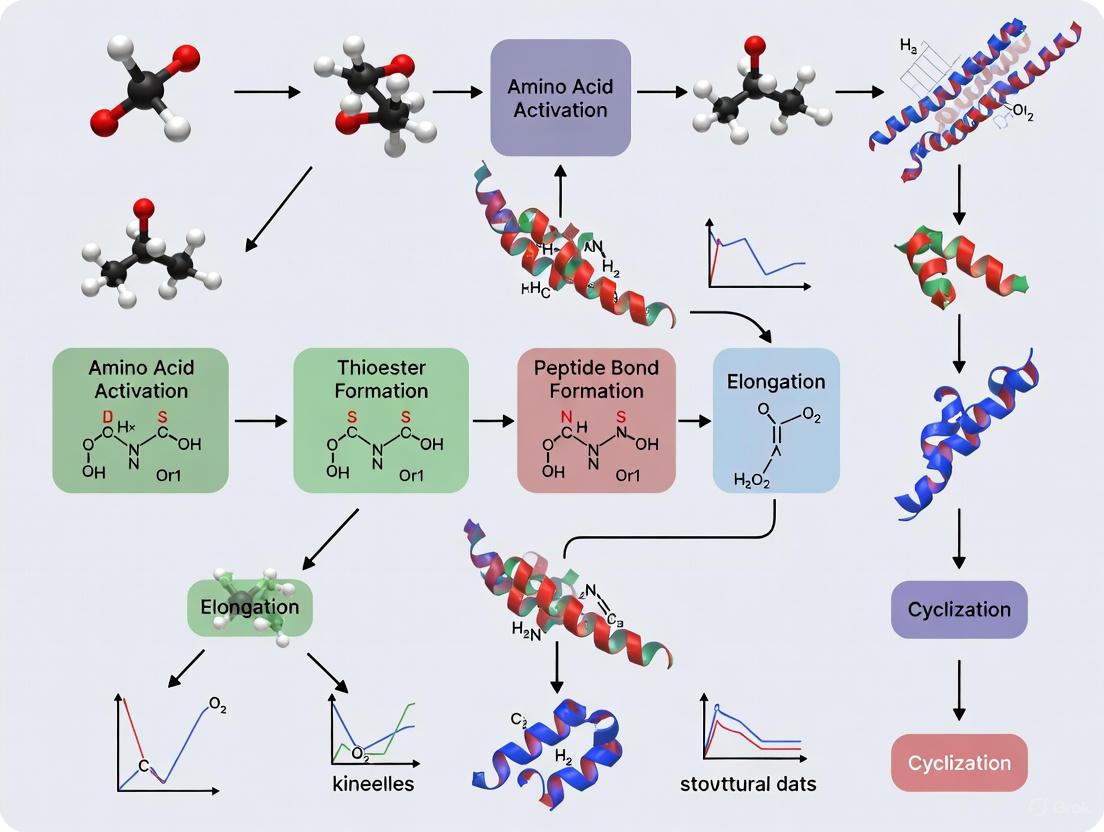
This article provides a comprehensive exploration of the biosynthetic logic of nonribosomal peptide synthetases (NRPSs), the massive enzymatic assembly lines that produce a vast array of complex natural products with...
The Biosynthetic Logic of Nonribosomal Peptide Synthetases (NRPS): From Assembly Lines to Medical Applications
Abstract
This article provides a comprehensive exploration of the biosynthetic logic of nonribosomal peptide synthetases (NRPSs), the massive enzymatic assembly lines that produce a vast array of complex natural products with clinical importance. Tailored for researchers, scientists, and drug development professionals, it covers the foundational principles of NRPS domains and modular organization, delves into advanced methodological and engineering approaches for novel compound discovery, addresses key challenges in troubleshooting and optimization, and discusses rigorous validation and comparative analysis techniques. By synthesizing the latest research, this review aims to bridge fundamental enzymology with applied synthetic biology, highlighting pathways for developing new therapeutic agents against pressing global threats like antimicrobial resistance.
Decoding the NRPS Assembly Line: Domains, Modules, and Biosynthetic Logic
The Core Mechanism of Nonribosomal Peptide Synthesis
Nonribosomal peptide synthetases (NRPSs) are massive, multimodular enzyme complexes that function as molecular assembly lines to synthesize peptides independently of the ribosomal machinery [1] [2]. These systems are prevalent in bacteria and fungi and are responsible for producing a diverse array of secondary metabolites with significant pharmacological activities, including antibiotics (e.g., vancomycin, daptomycin), immunosuppressants (e.g., cyclosporine), and anticancer agents (e.g., bleomycin) [1] [3] [4]. Unlike ribosomal synthesis, which is constrained to the 20 canonical L-amino acids and operates based on mRNA templates, NRPSs utilize a template-independent, thiotemplate mechanism that enables the incorporation of a vast repertoire of over 400 distinct monomers, including D-amino acids, non-proteinogenic amino acids, fatty acids, and hydroxy acids [3] [2]. This fundamental difference underpins the ability of NRPSs to generate structurally complex peptides with unique chemical properties and potent bioactivities that are inaccessible through ribosomal pathways [2].
The biosynthesis initiated by NRPSs proceeds in an N- to C-terminal direction, typically producing peptides between 3 and 15 amino acids in length [1]. The primary peptide products can be linear, cyclic, or branched-cyclic, and they often undergo further post-synthetic modifications—such as methylation, glycosylation, hydroxylation, acylation, or halogenation—by dedicated tailoring enzymes to achieve their mature, biologically active forms [1] [4]. This extensive chemical diversification contributes to the broad spectrum of biological activities observed in nonribosomal peptides (NRPs) [1].
The NRPS Assembly Line: Modular Organization and Domain Functions
The NRPS assembly line is organized into sequential modules, each responsible for incorporating a single monomeric building block into the growing peptide chain [2]. Each module is further subdivided into catalytic domains that perform discrete steps in the elongation cycle. A minimal elongation module comprises three core domains: Condensation (C), Adenylation (A), and Thiolation (T) [1] [2]. The order of these modules generally collates with the sequence of the final peptide product [1].
The following diagram illustrates the core domains and the linear flow of the NRPS assembly line:
The table below summarizes the core and common auxiliary domains within NRPS modules, detailing their specific functions and molecular mechanisms:
| Domain | Size (approx.) | Primary Function | Molecular Mechanism |
|---|---|---|---|
| Adenylation (A) | 550 amino acids [1] | Selects and activates the amino acid substrate [2] | Uses Mg-ATP to form an aminoacyl-adenylate intermediate [1] |
| Thiolation (T)/PCP | 80 amino acids [1] | Shuttles activated substrates and intermediates [2] | Covalently binds intermediates via a thioester bond to a 4'-phosphopantetheine (PP) arm [1] |
| Condensation (C) | 450 amino acids [1] | Catalyzes peptide bond formation [1] | Mediates nucleophilic attack by the downstream amino acid on the upstream thioester [2] |
| Thioesterase (TE) | 30 kDa [2] | Releases the full-length peptide from the NRPS [2] | Hydrolysis or macrocyclization [1] [2] |
| Epimerization (E) | 50 kDa [2] | Converts L-amino acids to their D-form [2] | Epimerization of the amino acid attached to the PCP domain [2] |
| Heterocyclization (Cy) | Not Specified | Forms thiazoline or oxazoline rings from Cys/Ser/Thr residues [4] | Catalyzes cyclization and subsequent dehydration [4] |
Table 1: Core and common auxiliary domains in NRPS modules. PCP: Peptidyl Carrier Protein.
Before an NRPS can initiate synthesis, a crucial activation step is required. Phosphopantetheinyl transferases (PPTases) post-translationally modify the T domains by attaching a 4'-phosphopantetheine prosthetic group, converting them from their inactive "apo" forms to active "holo" forms [2]. This modification provides the flexible Ppant arm that acts as a swinging arm to covalently tether and shuttle intermediates between catalytic domains [2].
Engineering the NRPS Assembly Line
The modular architecture of NRPSs suggests a compelling potential for bioengineering—swapping domains or modules like building blocks to create novel assembly lines that produce custom peptides [2]. However, this engineering endeavor faces significant challenges. NRPSs are highly interdependent systems, and simply swapping fragments at random junctions often disrupts crucial protein-protein interactions, leading to non-functional enzymes or dramatically reduced product yields [5] [2]. A primary obstacle is the incompatibility between parts from different NRPS systems, which can result in impaired catalytic activity or the production of unintended side products [5].
Advanced Strategies for NRPS Engineering
To overcome these challenges, researchers have developed sophisticated strategies based on the concept of eXchange Units (XUs), which are conserved motifs located within or between domains that serve as reliable "split sites" for recombination [2]. These strategies aim to preserve the natural interfaces and "handshake" between functional units, thereby improving the compatibility and success rate of generating functional chimeric NRPSs [2].
The following workflow visualizes the decision process for selecting an appropriate NRPS engineering strategy:
The table below compares the primary XU strategies developed for NRPS engineering:
| Strategy | Split Site Location | Key Advantages | Potential Limitations |
|---|---|---|---|
| XU | C-A interface (within WNATE motif) [2] | Enables modular recombination while preserving domain specificity [2] | Often results in reduced production titers [2] |
| XUC | Inside the C domain [2] | Significantly higher product yields; reduces diversity of side products [2] | Less flexible for single-domain swaps [2] |
| XUTI | Linker region between A-T domains [2] | Broad applicability across diverse NRPSs; preserves intact T domain and its interaction with the downstream C domain [2] | Incompatibilities may still arise at inter-module interfaces (e.g., upstream A to downstream T) [2] |
| XUTIV | Inside the T domain [2] | Inspired by natural evolutionary recombination; allows assembly of fragments from highly diverse sources [2] | Risk of incompatibility within the T domain itself [2] |
Table 2: Comparison of eXchange Unit (XU) strategies for NRPS engineering.
A recent pioneering example of NRPS engineering involved the repurposing of a termination module responsible for adding a C-terminal putrescine moiety to glidonins, a class of dodecapeptides [6]. Researchers successfully swapped this unusual termination module into two other NRPS systems, which led to the addition of putrescine to the C-terminus of the resulting peptides. This modification improved the hydrophilicity and bioactivity of the engineered products, demonstrating the potential of module swapping for generating novel and improved nonribosomal peptides [6].
Experimental and Computational Toolkit for NRPS Research
Key Experimental Protocols and Reagents
Elucidating the biosynthetic logic of NRPSs and engineering new pathways requires a combination of robust experimental protocols. The following table lists essential reagents and materials used in key experiments within the field:
| Research Reagent / Material | Function in NRPS Research |
|---|---|
| Redαβ7029 Recombineering System | An efficient genetic tool used for in-situ promoter insertion to activate silent NRPS gene clusters in native producers like Schlegelella brevitalea and for targeted gene inactivation [6]. |
| CRISPR-Cas9 Genome Editing | Enables precise domain inactivation within NRPS genes in the native host organism (e.g., point mutations in TE, C, or A domains) to map biosynthetic steps and characterize intermediates [7]. |
| Heterologous Expression Hosts | Chassis organisms (e.g., E. coli) used to express entire NRPS gene clusters from difficult-to-manipulate native producers, facilitating product isolation and pathway characterization [8]. |
| High-Resolution LC-MS/MS | Used for comparative metabolomics to identify novel NRPs, characterize their structures, and detect biosynthetic intermediates that accumulate in engineered or mutant strains [7] [6]. |
| 4'-Phosphopantetheinyl Transferase (PPTase) | Essential post-translational activation reagent that converts inactive apo-NRPSs into their active holo-forms by installing the phosphopantetheine cofactor on T domains [1] [2]. |
| Glepidotin B | Glepidotin B, CAS:87440-56-0, MF:C20H20O5, MW:340.4 g/mol |
| BTA-2 | BTA-2, CAS:10205-62-6, MF:C16H16N2S, MW:268.4 g/mol |
Table 3: Key research reagents and materials for NRPS experimentation.
A critical protocol for functional characterization involves domain inactivation via genome editing followed by comparative metabolomics [7]. This methodology can be broken down into the following steps:
- Design and Introduction of Mutations: Use CRISPR-Cas9 to introduce specific point mutations into the target NRPS gene within the native producer organism. The mutations are designed to alter key catalytic residues in a specific domain (e.g., replacing the active-site serine in a TE domain with alanine) [7].
- Cultivation and Metabolite Extraction: Grow the mutant strain under appropriate fermentation conditions alongside a wild-type control. Harvest cells and extract metabolites using standard organic solvents [7] [6].
- Metabolite Analysis via LC-MS: Analyze the crude extracts using high-resolution liquid chromatography-mass spectrometry (LC-MS). Compare the chromatograms and mass spectra of the mutant and wild-type strains to identify the absence of the final product and the potential accumulation of biosynthetic intermediates [7].
- Intermediate Purification and Structure Elucidation: For conclusive identification, scale up the culture of the mutant strain. Purify the accumulated intermediates through multiple chromatographic steps (e.g., HPLC). Elucidate their structures using advanced techniques such as NMR spectroscopy and MS/MS fragmentation [7] [6].
Computational Tools for Pathway Prediction and Engineering
Computational tools are increasingly vital for navigating the complexity of NRPS systems, from predicting the function of enigmatic domains to planning the engineering of new pathways.
- BioNavi-NP: A deep learning-driven toolkit that predicts biosynthetic pathways for natural products via bio-retrosynthesis [9]. It uses transformer neural networks trained on biochemical and organic reactions to propose plausible precursor molecules for a target compound. Its AND-OR tree-based planning algorithm can then map multi-step pathways from simple building blocks to the complex target NP, achieving a high success rate in recovering known building blocks [9]. This is particularly useful for elucidating or reconstructing pathways for NRPs of unknown biogenesis.
- Phylogenetic Analysis for Engineering: Computational phylogenetics can analyze the evolutionary relationships between NRPS domains and modules. This analysis helps predict the compatibility between units from different NRPS systems, guiding the pre-selection of functional combinations for engineering and increasing the success rate of generating active chimeric assembly lines [2].
- Specificity Predicting Tools: Online tools and algorithms (e.g., based on the signature sequences of A domains, known as Stachelhaus codes) can predict the substrate specificity of A domains from genomic sequence data, providing a preliminary blueprint of the peptide structure encoded by an NRPS gene cluster [1] [6].
Nonribosomal peptide synthetases (NRPSs) are monumental enzymatic assembly lines responsible for the biosynthesis of a vast array of complex peptide natural products with potent biological activities, including many essential pharmaceuticals. The biosynthetic logic of these systems is governed by a modular, assembly-line architecture where each module, responsible for incorporating a single monomeric unit, contains core catalytic domains that perform sequential activation, carrier, and condensation functions. This whitepaper provides an in-depth technical examination of the three core domains—the Adenylation (A) domain, the Thiolation/Peptidyl Carrier Protein (T/PCP) domain, and the Condensation (C) domain. We summarize their precise molecular mechanisms, structural characteristics, and intricate functional coordination, which together determine the sequence and structure of the final peptide product. Framed within the context of biosynthetic engineering, this review also details contemporary experimental methodologies and reagents essential for probing NRPS function, aiming to equip researchers with the tools to harness and reprogram these machineries for the synthetic biology-driven discovery of novel bioactive compounds.
Nonribosomal peptide synthetases (NRPSs) are multimodular megaenzymes that catalyze the synthesis of a wide spectrum of peptide-based natural products without the direct template of mRNA [10] [11]. These peptides, such as the antibiotic daptomycin and the immunosuppressant cyclosporin A, are notable for their structural complexity, which arises from the incorporation of non-proteinogenic amino acids, D-amino acids, and various heterocyclic rings, as well as tailoring modifications like N-methylation and glycosylation [10]. The pharmaceutical relevance of these compounds has driven extensive research into the fundamental principles of their biosynthesis.
The foundational logic of NRPSs is their modular and assembly-line-like organization. A single module is typically responsible for the incorporation of one building block into the growing peptide chain [10] [12]. A minimal elongation module comprises three core catalytic domains that perform a coordinated sequence of operations:
- Adenylation (A) Domain: Selects and activates a specific amino acid substrate.
- Thiolation/Peptidyl Carrier Protein (T/PCP) Domain: Shuttles the activated substrate and the growing peptide chain between catalytic domains.
- Condensation (C) Domain: Catalyzes peptide bond formation between adjacent building blocks.
The initiation module of an NRPS pathway lacks a C domain, while the termination module features a specialized domain such as a Thioesterase (TE) or Reductase (R) domain to release the fully assembled product [10] [11]. The following sections delve into the structure, function, and mechanistic details of each core domain, providing a comprehensive guide to the biosynthetic logic of these complex molecular machines.
The Adenylation (A) Domain: The Gatekeeper of Specificity
Structure and Catalytic Mechanism
The A domain is the primary determinant of substrate specificity in NRPS assembly lines. It is a ~550 residue domain belonging to the adenylate-forming enzyme superfamily, which also includes firefly luciferase [12]. Structurally, it is composed of a large N-terminal subdomain (Acore, residues ~1-400) and a smaller C-terminal subdomain (Asub, residues ~500-550) [12] [13]. The active site, located at the interface of these two subdomains, features conserved signature sequences designated A1 through A10 [12].
The A domain catalyzes a two-step reaction through a Bi Uni Uni Bi ping-pong mechanism:
- Adenylation: The A domain recognizes its specific amino acid substrate and, in an ATP-dependent reaction, activates it to form an aminoacyl-adenylate (aminoacyl-AMP) intermediate, releasing inorganic pyrophosphate (PPi).
- Thioesterification: The aminoacyl moiety is subsequently transferred from the adenylate to the thiol of the 4'-phosphopantetheine (PPant) arm, which is covalently attached to the adjacent PCP domain. This forms a stable thioester linkage [12].
A critical feature of this mechanism is domain alternation. After the adenylation step, the Asub domain undergoes a ~140° rotation relative to the Acore domain. This dramatic conformational change reorients the active site, ejecting the spent AMP and creating a new binding surface to accommodate the incoming PCP domain for the thioesterification step [12].
Substrate Selection and Engineering
The A domain contains a dedicated substrate specificity pocket within the Acore subdomain that sterically and chemically defines which amino acid it activates [10]. Ten key residues within this pocket, known as the "nonribosomal code," have been identified as primary determinants of substrate selection [11]. This knowledge enables bioinformatic prediction of incorporated substrates from gene sequences using tools like NRPSpredictor2 [11] and facilitates rational engineering efforts. By mutating these specificity-conferring residues, researchers have successfully altered the substrate selectivity of A domains, a cornerstone strategy for generating novel "non-natural" natural products through pathway engineering [10] [11].
Table 1: Key Structural and Functional Features of the Core NRPS Domains
| Domain | Core Function | Key Structural Motifs | Essential Cofactors/ Ligands | Catalytic Steps |
|---|---|---|---|---|
| Adenylation (A) | Substrate activation | A1-A10 motifs; Substrate specificity pocket | ATP, Mg²âº, Amino Acid | 1. Adenylation (aminoacyl-AMP formation)2. Thioesterification (loading onto PCP) |
| Thiolation/Peptidyl Carrier Protein (T/PCP) | Substrate/ intermediate shuttling | 4-helix bundle; Conserved serine residue | Coenzyme A (for PPant post-translational modification) | Covalent tethering of substrates via thioester bond |
| Condensation (C) | Peptide bond formation | HHxxxDG catalytic motif; Donor & Acceptor Tunnels | None (catalyzes nucleophilic attack) | Amide bond formation between PCP-bound donors and acceptors |
The Thiolation/Peptidyl Carrier Protein (T/PCP) Domain: The Molecular Shuttle
Structure and Post-Translational Modification
The T/PCP domain is a small, ~80-100 amino acid domain that serves as a flexible swing arm, tethering the growing peptide chain and shuttling intermediates between the catalytic centers of the NRPS module [10] [12]. Its structure is characterized by a compact, four-helix bundle fold [14] [12]. A conserved serine residue, located at the beginning of the second helix, is the site for an essential post-translational modification catalyzed by a phosphopantetheinyl transferase (PPTase) [10] [12]. The PPTase attaches the 4'-phosphopantetheine (PPant) moiety derived from coenzyme A to this serine, converting the inactive "apo" form of the PCP to the active "holo" form [12]. The terminal thiol of this PPant arm serves as the covalent attachment point for all amino acid and peptidyl intermediates during synthesis.
Conformational Dynamics and Partner Domain Interactions
The PCP domain does not operate in isolation; its function is defined by its interactions with other catalytic domains. Structural studies, including NMR and X-ray crystallography, reveal that the PCP domain utilizes a hydrophobic patch surrounding the PPant-attachment site to dock with its partner domains, such as the A and C domains [12] [15]. These interactions are dynamic and are believed to be guided by the PCP's conformational flexibility, which allows it to present its cargo to the correct active site at the appropriate time in the catalytic cycle [14] [12]. The functional interplay between the PCP and its partner domains is a critical area of research, as improper PCP-domain interactions are a major hurdle in the engineering of functional hybrid NRPSs [10].
The Condensation (C) Domain: The Peptide Bond Architect
Structure and Catalytic Motif
The C domain is responsible for the central chemical step in NRP synthesis: the formation of the peptide bond. It is a ~450 residue domain that adopts a pseudo-dimeric fold, with each half resembling the structure of chloramphenicol acetyltransferase (CAT) [15] [16]. The two subdomains create a V-shaped active site cleft with two distinct substrate-access tunnels: one for the donor substrate (the upstream peptidyl-S-PCP) and one for the acceptor substrate (the downstream aminoacyl-S-PCP) [15].
At the heart of the C domain active site lies the universally conserved HHxxxDG motif [15] [16]. The first histidine residue of this motif is generally considered the primary catalytic base, responsible for deprotonating the α-amino group of the acceptor substrate, thereby enhancing its nucleophilicity for attack on the thioester carbonyl carbon of the donor substrate [15] [16].
Acceptor Substrate Selectivity and Gatekeeping
While A domains are the primary arbiters of substrate selection, C domains also exhibit significant acceptor substrate selectivity, which is crucial for ensuring the correct order of amino acid incorporation [15]. Structural studies of a C domain in complex with an aminoacyl-PCP acceptor substrate have illuminated the mechanism behind this selectivity. The interface is predominantly hydrophobic, and access to the active site is controlled by a "gatekeeping" arginine residue [15]. This residue is thought to prevent unloaded or incorrectly loaded PCPs from entering the acceptor tunnel, thereby acting as a checkpoint for fidelity [15].
Furthermore, recent research has revealed that C domains can possess specialized functions beyond standard peptide bond formation. These include epimerization (E) activities, where the C domain works in concert with a dedicated E domain to control stereochemistry, and heterocyclization (Cy) activities, where the C domain catalyzes both peptide bond formation and the subsequent cyclization of Cys, Ser, or Thr residues to form thiazoline or oxazoline rings [10] [16].
Figure 1: The Catalytic Cycle of a Minimal NRPS Elongation Module. The core domains work in concert: the A domain activates and loads a building block onto the PCP domain; the PCP domain shuttles the cargo to the C domain, which catalyzes peptide bond formation with the upstream peptide chain.
Coordination Between Core Domains: The RXGR Motif and Structural Dynamics
The high efficiency of NRPSs relies on the precise coordination between the A, PCP, and C domains, minimizing the diffusion of intermediates and ensuring catalytic fidelity. Recent structural biology breakthroughs have provided molecular insights into this coordination. A key discovery is the role of a conserved RXGR motif located in the C domain [13].
This motif mediates a dynamic interaction with the A domain of the same module. The substrate-induced rotation of the A domain's Asub subdomain is guided by its interaction with the C domain via the RXGR motif. This interaction enhances the adenylation activity of the A domain by stabilizing a more efficient state transition [13]. When this interaction is disrupted, the Asub domain rotates randomly, leading to significantly reduced adenylation efficiency. This reveals a previously underappreciated mechanism where the C domain allosterically assists its cognate A domain in substrate selection and activation, ensuring the rapid and correct loading of the PCP domain to fuel the assembly line [13].
Experimental Approaches for Studying Core Domains
Structural Elucidation Methodologies
Understanding the structure-function relationships of NRPS domains has been propelled by techniques like X-ray crystallography and NMR spectroscopy.
- Protein Engineering for Crystallography: A common strategy involves dissecting the mega-enzyme into single domains or stable didomain constructs (e.g., A-PCP, PCP-C, C-A) with carefully chosen domain boundaries [12] [15]. For instance, the structure of the fuscachelin PCP2-C3 didomain was solved by expressing this discrete construct, which yielded stable, crystallizable protein [15].
- Trapping Transient Complexes: Capturing the transient interaction between a PCP and its partner catalytic domain is challenging. This has been achieved using mechanism-based inhibitors, such as fluorophosphonates and aminophosphates, which form stable covalent mimics of the reaction intermediates (e.g., acyl-enzymes or tetrahedral intermediates) [12] [17]. For example, a fluorophosphonate analog of nocardicin G was used to trap and solve the structure of the thioesterase domain in a substrate-bound state [17].
- Solution-State Studies with NMR: NMR is particularly valuable for studying the dynamics of individual domains like the PCP, which sample multiple conformations in solution. NMR structures of PCP domains in both apo and holo forms have provided critical insights into the conformational flexibility that enables their shuttling function [14] [12].
Functional and Biochemical Assays
- Adenylation Activity (ATP-PPi Exchange Assay): This classic assay quantifies the first half-reaction of the A domain. It measures the A domain's ability to catalyze the ATP-dependent formation of an aminoacyl-adenylate by tracking the incorporation of radioactively labeled PPi back into ATP. The rate of this exchange is proportional to the A domain's activity and specificity for a given amino acid substrate [12].
- Holoprotein Formation and Loading Assay: The activity of the PPTase and the subsequent loading of the amino acid onto the holo-PCP can be monitored using radioactively labeled substrates (e.g., ³H- or ¹â´C-amino acids) or by mass spectrometry. Following the covalent attachment of the radiolabeled amino acid to the PCP domain via gel electrophoresis or HPLC confirms successful priming and loading [12].
- Condensation Activity Assays: C domain activity is typically assayed in reconstituted systems containing the donor peptidyl-S-PCP (or mimic), the acceptor aminoacyl-S-PCP (or mimic), and the C domain. Product formation is analyzed by HPLC or LC-MS. Using stable PCP-domain mimics, such as acyl-N-acetylcysteamine (SNAC) thioesters, simplifies these assays by providing soluble, small-molecule surrogates for the PCP-bound substrates [17].
Table 2: Essential Research Reagents and Methodologies for NRPS Domain Analysis
| Reagent / Method | Function / Application | Technical Insight |
|---|---|---|
| Defined Domain Constructs (e.g., A-PCP, C-A) | Enables structural and biochemical studies of discrete functional units. | Constructs are designed based on bioinformatic analysis of domain boundaries and linker regions to ensure proper folding and activity [15]. |
| Mechanism-Based Inhibitors (e.g., Fluorophosphonates) | Traps catalytic domains in a specific, substrate-bound state for crystallography. | Forms a stable covalent complex with the active site serine (e.g., in TE domains), mimicking the tetrahedral intermediate of the hydrolysis reaction [17]. |
| S-N-acetylcysteamine (SNAC) Thioesters | Soluble, small-molecule mimics of PCP-bound substrates. | Used in in vitro assays to study the activity of C, TE, and other domains without the need for full-length, difficult-to-express PCP proteins [17]. |
| ATP-PPi Exchange Assay | Quantifies the substrate specificity and catalytic activity of Adenylation (A) domains. | A radioactive or colorimetric/microplate-based version of this assay is a standard tool for characterizing A domain function and engineering altered specificities [12]. |
| Phosphopantetheinyl Transferase (PPTase) | Converts inactive apo-PCP domains to active holo-PCP domains in vitro. | An essential reagent for in vitro reconstitution experiments. Coexpression of a PPTase is also required for functional NRPS expression in heterologous hosts like E. coli [12]. |
The core A, T/PCP, and C domains form the foundational machinery of the nonribosomal peptide assembly line, operating through a highly coordinated and dynamic biosynthetic logic. The A domain serves as the specificity gatekeeper, the PCP domain as the indispensable molecular shuttle, and the C domain as the peptide bond-forming architect. Recent structural biology breakthroughs, such as the elucidation of the RXGR-mediated C-A domain interaction and the structures of PCP-acceptor complexes with C domains, have profoundly deepened our understanding of the allosteric regulation and selectivity mechanisms that govern these systems [15] [13].
This advanced knowledge is critical for overcoming the historical challenges in NRPS engineering, such as poor yield and incorrect processing in hybrid systems. As the structural and functional data continue to accumulate, the rational design and reprogramming of NRPSs become increasingly feasible. The continued development of robust experimental tools—including high-throughput methods for characterizing domain specificity, advanced computational modeling for predicting domain interactions, and CRISPR-based tools for precise genome editing in native producers—will empower scientists to more effectively harness these enzymatic assembly lines. The ultimate goal is to reliably expand the chemical diversity of nonribosomal peptides, opening new avenues for the discovery and development of next-generation therapeutics to address pressing medical needs.
The multiple carrier model of nonribosomal peptide synthesis represents a fundamental paradigm in secondary metabolite biosynthesis, describing a modular, assembly-line process where dedicated carrier proteins shuttle substrates and intermediates between catalytic domains. This mechanistic framework explains how large, multifunctional enzyme complexes known as nonribosomal peptide synthetases (NRPSs) produce an enormous diversity of structurally and functionally complex peptides, including many clinically essential pharmaceuticals. Unlike ribosomal peptide synthesis, this model enables the incorporation of non-proteinogenic amino acids and facilitates extensive structural tailoring, creating natural products with optimized bioactive properties. This technical guide examines the core principles of the multiple carrier model, its structural basis, and the experimental methodologies driving both fundamental understanding and engineering applications in drug discovery.
Nonribosomal peptide synthetases (NRPSs) are massive, multi-domain enzymatic assembly lines responsible for producing a vast array of biologically active peptide natural products. These secondary metabolites include critically important drugs such as penicillin (antibiotic), cyclosporine (immunosuppressant), and vancomycin (antibiotic) [18] [19]. The biosynthetic logic of NRPS systems contrasts sharply with ribosomal protein synthesis. Rather than relying on messenger RNA templates and the ribosome, NRPSs utilize a modular architecture where each module is responsible for incorporating a single building block into the growing peptide chain [18] [20]. This template-free strategy allows for the incorporation of hundreds of different amino acid precursors, including D-amino acids, fatty acids, and hydroxy acids, vastly expanding the chemical diversity of the final products [20].
The multiple carrier model, first explicitly named and substantiated in 1996, provides the mechanistic foundation for understanding this assembly line process [21]. It superseded the earlier "thiotemplate mechanism," which proposed a single, shared carrier cofactor for the entire enzyme complex. The key distinction of the multiple carrier model is its assertion that each amino acid-activating module within the NRPS contains its own 4'-phosphopantetheine (4'-Ppant) cofactor, forming independent thioester binding sites for amino acid substrates and the elongating peptide chain [21] [18]. This architecture eliminates the need for transthiolation reactions between modules and allows the growing peptide to be passed sequentially from one carrier protein to the next in a coordinated, directional manner.
Historical Development and Mechanistic Evolution
The conceptual journey to the multiple carrier model began with observations that the biosynthesis of peptides like gramicidin S and tyrocidine was unaffected by ribosome-targeting inhibitors, indicating a template-independent pathway [18]. Fritz Lipmann and colleagues played a pivotal role in the early 1960s and 1970s by demonstrating that amino acid incorporation was ATP-dependent and that the growing peptide chain remained covalently tethered to the enzyme throughout synthesis [18].
A critical breakthrough was the identification of the 4'-phosphopantetheine (4'-Ppant) cofactor, derived from coenzyme A, as the covalent attachment point for substrates [18]. Early hypotheses suggested a single 4'-Ppant might service the entire enzyme. However, protein sequencing data later revealed a correlation of approximately 70-75 kDa of protein per amino acid activated, hinting at a modular organization [18]. This led to the initial "thiotemplate mechanism," which involved a complex series of transthiolation reactions between cysteine thiols and a single, shared 4'-Ppant cofactor.
The definitive shift to the multiple carrier model came from affinity-labeling and peptide-mapping studies on gramicidin S synthetase. These experiments demonstrated that each of the five thiolation centers in the enzyme system possessed its own 4'-Ppant cofactor attached to a conserved serine residue within a specific thiolation motif (LGG(H/D)S(L/I)) [21]. This finding was consistent with emerging genetic data showing repeating sequences in NRPS genes equivalent to the number of activated amino acids, solidifying the model of a modular, multiple-carrier system where each module operates with its own dedicated carrier protein [18].
Table 1: Evolution of NRPS Mechanistic Models
| Model | Key Feature | Carrier Cofactor Usage | Key Experimental Evidence |
|---|---|---|---|
| Thiotemplate Mechanism | Single shared carrier; transthiolation reactions between cysteine thiols and one 4'-Ppant | One cofactor per synthetase | Insensitivity to ribosome inhibitors; covalent tethering of intermediates; initial biochemical characterization [18] |
| Multiple Carrier Model | Dedicated carrier domain per module; sequential peptide elongation without transthiolation | One 4'-Ppant cofactor per activation module | Affinity labeling of all thiolation centers; CNBr/protease digestion and peptide isolation; genetic sequencing revealing repeating domains [21] [18] |
Core Domains and the Stepwise Elongation Mechanism
The multiple carrier model is operationalized through the coordinated activity of core catalytic domains organized into modules. A minimal initiation module contains an adenylation (A) domain and a peptidyl carrier protein (PCP) domain, while each elongation module contains, at a minimum, a condensation (C) domain, an A domain, and a PCP domain. A termination module concludes with a thioesterase (TE) or reductase (R) domain [12] [20].
The Core Catalytic Domains
Adenylation (A) Domain: The A domain is responsible for substrate selection and activation. It catalyzes a two-step reaction: first, it recognizes a specific amino acid and reacts it with ATP to form an aminoacyl-adenylate (aminoacyl-AMP), releasing pyrophosphate (PPi); second, it transfers the aminoacyl moiety to the thiol of the 4'-Ppant cofactor attached to the associated PCP domain, forming a covalent aminoacyl-thioester and releasing AMP [12] [18]. The A domain belongs to the adenylate-forming enzyme superfamily and undergoes a large conformational change, described as "domain alternation," between the adenylate-forming and thioester-forming states [12].
Peptidyl Carrier Protein (PCP) Domain: The PCP domain is a small, four-helix bundle protein (70-90 amino acids) that serves as the mobile shuttle of the assembly line [12] [22]. A conserved serine residue is post-translationally modified by a phosphopantetheinyl transferase (PPTase) to attach the 4'-Ppant prosthetic group. The thiol terminus of this swinging arm covalently binds the amino acid and peptide intermediates as thioesters. The PCP delivers its cargo to the various catalytic domains within its module [12].
Condensation (C) Domain: The C domain catalyzes the central reaction of peptide elongation: the formation of the peptide bond. It is a ~450 amino acid V-shaped pseudodimer [12] [20]. The C domain facilitates the nucleophilic attack of the amino group from the downstream (acceptor) PCP-bound aminoacyl-thioester on the carbonyl carbon of the upstream (donor) PCP-bound peptidyl-thioester. This results in the transfer of the growing peptide chain to the downstream PCP, elongating it by one residue [12] [23].
Thioesterase (TE) Domain: The TE domain is typically found in the termination module and catalyzes the release of the full-length peptide from the final PCP domain. This often occurs through hydrolysis (producing a linear peptide) or, more commonly, intramolecular cyclization to form macrocyclic lactones or lactams [12] [20].
The Stepwise Elongation Cycle
The following diagram illustrates the core cycle of the multiple carrier model for a single elongation module.
The elongation cycle proceeds as follows:
- Loading (A Domain Activity): The A domain in the elongation module activates its cognate amino acid and loads it onto its associated PCP domain, forming an aminoacyl-S-PCP thioester [12] [18].
- Carrier Translocation: The upstream module's PCP domain is loaded with the growing peptidyl-S-PCP chain (n residues long). Both the upstream (donor) and the current (acceptor) PCP domains translocate and dock at the condensation (C) domain of the current module [12] [20].
- Peptide Bond Formation (C Domain Activity): The C domain catalyzes nucleophilic attack by the primary amine of the aminoacyl-S-PCP (acceptor) on the carbonyl of the peptidyl-S-PCP (donor). This transpeptidation reaction forms a new peptide bond, resulting in an elongated peptidyl-S-PCP (n+1 residues) attached to the current module's carrier protein. The upstream PCP is left as a vacant holo-protein [12] [23].
- Chain Translocation: The cycle repeats as the newly elongated peptidyl-S-PCP is now the donor substrate for the C domain of the next downstream module. This process continues until the complete peptide is assembled and delivered to the termination module [20].
Table 2: Core NRPS Domains and Their Functions in the Multiple Carrier Model
| Domain | Size & Key Features | Catalytic Function | Key Motifs/Structures |
|---|---|---|---|
| Adenylation (A) | ~500 aa; Two subdomains (N & C-terminal); "Domain alternation" [12] | Selects/activates amino acid; Forms aminoacyl-AMP; Thioesterifies PCP [12] [18] | A1-A10 core motifs for ATP & substrate binding [12] |
| Peptidyl Carrier Protein (PCP) | ~80 aa; 4-helix bundle; Post-translational modification site [12] [22] | Shuttles covalently-bound substrates/peptides between catalytic domains [12] | Conserved serine for 4'-Ppant attachment; LGG(H/D)S(I/L) motif [21] [12] |
| Condensation (C) | ~450 aa; V-shaped pseudodimer; Active site tunnel [12] [20] | Catalyzes peptide bond formation between donor and acceptor PCP-bound thioesters [12] [23] | Donor and acceptor PCP binding sites; HHxxxDG motif often associated [20] |
| Thioesterase (TE) | ~275 aa; α/β-hydrolase fold; Variable lid region [12] [20] | Releases full-length peptide from terminal PCP via hydrolysis or cyclization [12] | Catalytic triad (Ser-His-Asp); Oxyanion hole [20] |
Structural Biology and Conformational Dynamics
The functional reality of the multiple carrier model hinges on extensive conformational dynamics. Structural biology has been instrumental in visualizing these complex enzymes, revealing how carrier proteins interact with catalytic domains and how linkers facilitate communication.
The PCP domain is the workhorse of the carrier model. NMR and crystal structures show it is an oblong four-helix bundle, with the 4'-Ppant cofactor attached to a conserved serine at the N-terminus of helix α2 [12] [22]. This location allows the PCP to present its covalently attached cargo to the active sites of partner domains. NMR studies of PCP domains, including those with their native linker regions, reveal that these domains are not static. They exhibit dynamics on fast (ps-ns) timescales, particularly in the loops and the region surrounding the active serine, which is likely necessary for the many molecular interactions and transformations it must undergo [22]. Furthermore, the unstructured linker regions flanking the PCP are not merely passive tethers. The N-terminal linker, in particular, can interact with the PCP core, stabilizing the folded state and modulating dynamics at sites involved in partner domain interactions, suggesting a role for allosteric communication within the NRPS [22].
Structures of multi-domain complexes provide snapshots of the carrier model in action. For instance, the structure of the SrfA-C termination module (C-A-PCP-TE) from surfactin synthetase revealed large distances between active sites, confirming that substantial conformational changes are required for the PCP to visit each domain [12] [20]. More recently, innovative techniques like crosslinking have been used to trap transient states, such as the peptide condensation step between two modules, allowing visualization by electron microscopy and providing unprecedented insight into how these dynamic proteins coordinate their activities [19].
Experimental Methodologies and Research Toolkit
Studying the complex dynamics and specificity of NRPSs requires a sophisticated toolkit of biochemical, structural, and engineering techniques. The following workflow and associated reagent table outline key methodologies for probing the multiple carrier model.
Table 3: The Scientist's Toolkit for NRPS (Multiple Carrier Model) Research
| Research Reagent / Tool | Function & Role in NRPS Research | Key Characteristics & Examples |
|---|---|---|
| Sfp Phosphopantetheinyl Transferase | Converts inactive apo-PCP domains to active holo-PCP by installing the 4'-Ppant cofactor from CoA [23]. | Broad substrate specificity; Essential for in vitro reconstitution of NRPS activity; Used in chemoenzymatic loading of PCPs [23] [12]. |
| Mechanism-Based Inhibitors / Crosslinkers | Trap NRPS complexes in specific conformational states, enabling structural characterization of transient intermediates [19]. | Covalently link domains (e.g., A and PCP) or modules; Allow visualization of steps like condensation by Cryo-EM [19] [12]. |
| Yeast Surface Display | High-throughput platform for engineering NRPS domain specificity (e.g., of C domains) by linking function to cell sorting [23]. | Allows functional display of large NRPS modules; Enables FACS-based screening of mutant libraries after "click" chemistry-based product detection [23]. |
| N-glycosylation Site Mutants | Enables functional studies of NRPSs in heterologous hosts like yeast, which can add inhibitory sugar moieties [23]. | Point mutations (e.g., Asn→Gln) to disrupt glycosylation motifs; Critical for maintaining A domain activity in eukaryotic expression systems [23]. |
| Chemical Probes (e.g., Alkyne-tagged Substrates) | Facilitate detection and isolation of NRPS-bound intermediates via bioorthogonal chemistry (e.g., click chemistry with azide-fluorophores/biotin) [23]. | Allow tracking of substrate channeling and product formation without radioactive labels; Used in conjunction with yeast display and FACS [23]. |
| MMP12-IN-3 | MMP12-IN-3, MF:C20H26N2O5S, MW:406.5 g/mol | Chemical Reagent |
| 4-Methoxycinnamyl alcohol | 3-(4-Methoxyphenyl)-2-propen-1-ol|RUO | 3-(4-Methoxyphenyl)-2-propen-1-ol is a versatile RUO for fragrance synthesis, pharmaceutical research, and method development. For Research Use Only. Not for personal use. |
Key Experimental Workflows
In Vitro Reconstitution: A foundational approach involves expressing and purifying individual NRPS modules or domains. The PCP domains are converted to their active holo-form using Sfp PPTase and coenzyme A. Activity is then assayed by providing ATP, Mg²âº, and amino acid substrates, with products analyzed by HPLC or mass spectrometry. This method allows precise dissection of the kinetics and specificity of each enzymatic step [12] [18].
Yeast Display for Engineering: A powerful high-throughput method involves displaying a full NRPS module (e.g., C-A-T) on the yeast surface. An upstream donor module, provided in solution, can dock and its substrate be condensed with the acceptor substrate on the displayed module. The product, tethered to the yeast, is labeled via a bioorthogonal tag (e.g., an alkyne) and detected by fluorescence-activated cell sorting (FACS). This platform allows for the screening of massive mutant libraries to reprogram A or C domain specificity [23].
Structural Characterization of Intermediates: The inherent dynamics of NRPSs make structural studies challenging. To overcome this, researchers use mechanism-based crosslinkers that trap the enzyme in a specific state, such as during condensation. These stabilized complexes can then be studied using cryo-electron microscopy (cryo-EM) or X-ray crystallography to provide atomic-level snapshots of the multiple carrier model in action [19] [12].
Engineering and Applications in Drug Discovery
The modular logic of the multiple carrier model makes NRPSs attractive targets for bioengineering to produce novel peptides with tailored properties. The primary strategies involve domain or module swapping, where A, C, or entire modules are exchanged between different NRPS systems to create hybrid assembly lines that produce chimeric peptides [23]. Additionally, reprogramming A domains via site-directed mutagenesis of their substrate-binding pockets allows for the incorporation of non-native amino acids [23].
A major recent advance is the high-throughput engineering of C domains, which have long been a bottleneck due to their complex structure and role as selectivity filters. Using the yeast display platform described above, researchers successfully reprogrammed the C domain of the surfactin termination module to accept fatty acid donors instead of its native peptidyl donor, increasing catalytic efficiency for this noncanonical substrate by >40-fold [23]. This demonstrates the potential to rationally alter the core condensation chemistry to generate entirely new peptide scaffolds.
These engineering efforts are driven by the profound medical importance of nonribosomal peptides. Understanding the multiple carrier model enables synthetic biology approaches to create new antibiotics, immunosuppressants, and anticancer agents, helping to address the growing crisis of antibiotic resistance and the constant need for new therapeutics [18] [23].
The multiple carrier model provides a comprehensive mechanistic framework for understanding the assembly-line biosynthesis of nonribosomal peptides. From its historical roots in foundational biochemistry to its modern validation through structural biology and its application in cutting-edge enzyme engineering, the model continues to guide research in the field. The precise coordination of multiple PCP domains shuttling intermediates between catalytic centers like the A and C domains represents a sophisticated solution for template-independent peptide synthesis. Ongoing research, leveraging high-throughput engineering and advanced structural techniques, continues to refine our understanding of this model, pushing the boundaries of our ability to harness and reprogram these enzymatic assembly lines for the discovery and production of novel bioactive compounds.
The modular architecture of nonribosomal peptide synthetases (NRPSs), with its core adenylation (A), peptidyl carrier protein (PCP), and condensation (C) domains, functions as a molecular assembly line. However, the true chemical diversity of nonribosomal peptides (NRPs) stems from the activity of specialized auxiliary domains. These domains, which include epimerization (E), cyclization (Cy), thioesterase (TE), and reductase (R) domains, perform intricate modifications on the nascent peptide chain, profoundly influencing its final three-dimensional structure, stability, and biological activity. Understanding the precise mechanisms of these domains is not merely an academic exercise; it is a prerequisite for the rational engineering of NRPS machinery to produce novel therapeutics, a critical pursuit in the face of escalating antimicrobial resistance [24] [25]. This guide provides an in-depth technical overview of the structure, function, and experimental investigation of these key specialized domains.
Domain Functions and Characteristics
The following table summarizes the core attributes, mechanisms, and outcomes associated with the four key specialized NRPS domains.
Table 1: Characteristics and Functions of Specialized NRPS Domains
| Domain | Primary Function | Key Catalytic Motif/Residues | Position in Module | Resulting Modification |
|---|---|---|---|---|
| Epimerization (E) | Epimerization of the last amino acid in the growing peptide chain from L- to D-conformation [16]. | Proposed base-acid mechanism; specific residues still debated [16]. | Following a PCP domain in an elongation module [11]. | Incorporation of D-amino acids, which confers protease resistance and influences peptide conformation [11]. |
| Cyclization (Cy) | Catalyzes both peptide bond formation and the cyclization of Cys, Ser, or Thr side chains [16] [11]. | Likely a variant of the C-domain HHxxxDG motif [16]. | Replaces the C-domain in elongation modules [11]. | Formation of thiazoline (from Cys) or oxazoline (from Ser/Thr) rings; often followed by oxidation to aromatic thiazoles/oxazoles [16] [11]. |
| Thioesterase (TE) | Releases the full-length peptide from the NRPS assembly line [12] [25]. | Catalytic triad (e.g., Ser-His-Asp) [12]. | Termination module [11] [25]. | Hydrolysis (linear peptide) or macrocyclization (cyclic peptide) [12] [11]. |
| Reductase (R) | Releases the peptide by reducing the terminal thioester to an aldehyde or alcohol [11]. | NADPH-binding motif [12]. | Termination module (as an alternative to TE) [11]. | Peptide aldehydes or alcohols, which represent distinct chemical functionalities and bioactivities [12] [11]. |
Experimental Methodologies for Probing Domain Function
Elucidating the specific role of an auxiliary domain within a multi-modular NRPS requires a combination of genetic, biochemical, and analytical techniques. The workflow below outlines a general strategy for characterizing a specialized domain, from target identification to functional validation.
Diagram Title: Experimental Workflow for Domain Characterization
Detailed Methodologies:
Domain-Targeted Mutagenesis: A primary method for establishing domain function is the creation of targeted point mutations. This involves substituting key catalytic residues (e.g., the serine in the TE domain catalytic triad or histidines in the Cy domain motif) with alanine or other non-functional amino acids [7]. The mutant NRPS gene is then expressed in a suitable host (e.g., E. coli or a native producer strain with the original gene cluster knocked out). The metabolites produced by the mutant strain are compared to those from the wild-type strain using Liquid Chromatography-Mass Spectrometry (LC-MS). The absence of the final product or the accumulation of a putative intermediate, as seen in NRPS-1 TE domain mutants [7], provides direct evidence of the domain's role.
In vitro Reconstitution with Synthetic Substrates: For a biochemical dissection of activity, individual domains or didomains (e.g., a PCP-E didomain) can be cloned and heterologously expressed. A powerful technique to bypass the A domain's specificity and study downstream domains like C, E, or Cy involves loading aminoacyl-CoA analogues directly onto the PCP domain using a promiscuous phosphopantetheinyl transferase (PPTase) like Sfp from Bacillus subtilis [26] [27]. These pre-loaded PCPs can then be incubated with the purified target domain and necessary co-factors to monitor the reaction in vitro. This approach was used to demonstrate the high stereospecificity of the acceptor site of C domains [26].
Structural Analysis via X-ray Crystallography: Determining high-resolution three-dimensional structures of domains, either alone or in complex with their substrates or partner proteins, is invaluable for understanding mechanism and specificity. Techniques involve generating truncated protein constructs with carefully considered domain boundaries and using mechanism-based inhibitors to trap transient complexes, such as those between A domains and PCPs [12]. For example, structures of condensation domains in complex with acceptor PCPs have revealed the hydrophobic nature of the PCP-C interface and identified gating residues that control substrate access to the active site [15].
The Scientist's Toolkit: Key Research Reagents
Table 2: Essential Reagents for NRPS Specialized Domain Research
| Reagent / Tool | Function and Application |
|---|---|
| Sfp Phosphopantetheinyl Transferase | A broad-substrate PPTase used to convert apo-PCPs to holo-PCPs and to load PCPs with synthetic aminoacyl-/peptidyl-CoA substrates, enabling in vitro assays [26] [27]. |
| Aminoacyl-CoA Synthetases / Chemical Synthesis | Methods to generate stable aminoacyl-CoA or peptidyl-CoA analogs, which serve as donors for Sfp-mediated PCP loading [26]. |
| Catalytic Residue Mutants | Plasmids encoding NRPSs with point mutations in key catalytic residues (e.g., Ser→Ala in TE, His→Ala in Cy/C) are essential controls for confirming domain function via mutagenesis studies [7]. |
| Structured Domain Constructs | Cloned DNA for expressing individual domains or didomains (e.g., PCP-TE, PCP-E, Cy) with optimized boundaries for solubility, used in structural and in vitro biochemical studies [12] [15]. |
| Mechanism-Based Inhibitors | Small molecules that form covalent or highly stable intermediates with the target domain (e.g., adenylate analogs for A domains), used to trap and crystallize otherwise transient domain complexes [12]. |
| p-Hydroxyphenethyl anisate | 2-(4-Hydroxyphenyl)ethyl 4-Methoxybenzoate For Research |
| DAF-2DA | DAF-2DA, CAS:205391-02-2, MF:C24H18N2O7, MW:446.4 g/mol |
Implications for Drug Discovery and Engineering
The specialized domains of NRPSs are prime targets for combinatorial biosynthesis, an approach aimed at creating new-to-nature peptides with improved or novel pharmaceutical properties. The TE domain's capacity for macrocyclization can be harnessed to generate diverse cyclic peptide libraries, a structural class of high interest in drug discovery due to their metabolic stability and ability to target protein-protein interactions [24]. Engineering E domains or incorporating them into hybrid assembly lines allows for the programmed installation of D-amino acids, a key feature in many antibiotic peptides like penicillin and gramicidin [11] [25].
However, engineering efforts often face challenges such as low yields of the desired hybrid product. This underscores the complexity of NRPS machinery, where successful biosynthesis depends not only on the catalytic activity of individual domains but also on precise protein-protein interactions and the efficient channeling of intermediates [26] [24] [25]. A deep understanding of the structural and mechanistic principles outlined in this guide is therefore fundamental to overcoming these barriers and fully unlocking the potential of NRPS engineering for the discovery of next-generation therapeutics.
Nonribosomal peptide synthetases (NRPSs) are molecular assembly lines that generate a diverse array of bioactive natural products without ribosomal instruction. These massive, multi-domain enzymes follow a precise biosynthetic logic, activating and incorporating specific amino acid and carboxylic acid building blocks into complex peptide architectures. The NRPS machinery operates through a modular organization where each "module," responsible for incorporating one building block, contains catalytic domains that activate, modify, and condense substrates in an assembly-line fashion [28] [29]. This review examines the biosynthetic logic of NRPS systems through two detailed case studies: the fimsbactin pathway from Acinetobacter baumannii and the gramillin pathway from Fusarium graminearum. By dissecting the domain organization, substrate selectivity, and unique biochemical strategies employed by these systems, we aim to illuminate the fundamental principles governing nonribosomal peptide assembly and highlight emerging engineering approaches for generating novel bioactive compounds.
Case Study 1: Fimsbactin Biosynthesis inAcinetobacter baumannii
Fimsbactin A is a mixed-ligand siderophore critical for the virulence of the multi-drug resistant pathogen Acinetobacter baumannii. This structurally unusual siderophore contains phenolate-oxazoline, catechol, and hydroxamate metal-chelating groups branching from a central L-Ser tetrahedral unit via both amide and ester linkages [30]. Its biosynthesis is encoded by the fbs operon, which facilitates the conversion of simple precursors—two molecules of L-Ser, two molecules of 2,3-dihydroxybenzoic acid (DHB), and one molecule of L-Orn—into the final functional siderophore [30]. Fimsbactin represents a compelling NRPS target for engineering therapeutic interventions because its iron-scavenging capability is essential for bacterial survival under low-iron conditions during infection [28].
Domain Architecture and Biosynthetic Logic
The fimsbactin assembly line comprises four NRPS enzymes (FbsE, FbsF, FbsG, and FbsH) working in concert with tailoring enzymes (FbsI, FbsJ, FbsK). The biosynthetic logic follows a branched pathway rather than a linear assembly, an unusual feature in NRPS systems [28] [30].
Key Enzymes and Domains:
- FbsH: A stand-alone aryl adenylation domain that activates and loads DHB onto the N-terminal peptidyl carrier protein (PCP) of FbsE [28].
- FbsE: Contains two PCP domains (N-terminal and C-terminal) and a truncated adenylation domain. The N-terminal PCP partners with FbsH to accept the DHB moiety [28].
- FbsF: Features adenylation and PCP domains responsible for activating and loading L-Ser onto the C-terminal PCP of FbsE and the PCP of FbsG [30].
- FbsG: Contains condensation and cyclization domains that catalyze oxazoline formation and product release [30].
- FbsIJK: A set of tailoring enzymes that convert L-Orn to N1-acetyl-N1-hydroxy-putrescine (ahPutr), the hydroxamate precursor [30].
The fimsbactin pathway exemplifies a unique "branching" logic facilitated by a terminating C-T-C motif in FbsG, which enables dynamic equilibration between N-DHB-Ser and O-DHB-Ser thioester intermediates, ultimately forming both amide and ester linkages in the final product [30].
Structural Basis for Substrate Selectivity and Engineering
Recent structural studies of FbsH have provided insights into the molecular determinants of substrate selectivity. The enzyme's active site contains specific residues that form hydrogen bonds with the two hydroxyl groups of its native substrate, DHB, while hydrophobic residues create a complementary binding pocket [28]. Structures of FbsH bound to DHB and the inhibitor Sal-AMS revealed the conformational flexibility of its C-terminal subdomain, which adopts distinct orientations during the adenylate-forming and thioester-forming steps of the catalytic cycle [28].
Engineering Expanded Substrate Promiscuity: Structure-guided mutagenesis of FbsH has successfully expanded its binding pocket to accommodate DHB analogs with bulkier substituents. These engineered FbsH variants showed significantly improved activity toward non-native substrates in adenylation assays, demonstrating the potential for pathway engineering to generate novel siderophore analogs [28]. In vitro reconstitution experiments confirmed that some of these alternate substrates can progress through the entire fimsbactin assembly line, albeit with varying efficiencies, indicating that downstream domains also exert selectivity constraints [28].
Table 1: Key Catalytic Domains in Fimsbactin Biosynthesis
| Enzyme | Domain Organization | Function | Native Substrate |
|---|---|---|---|
| FbsH | A domain | Activates and adenylates aryl acid | 2,3-dihydroxybenzoic acid (DHB) |
| FbsE | PCP(N)-A({trunc})-PCP(_C) | Carriers for aryl acid and first serine | DHB (on PCP(N)), L-Ser (on PCP(C)) |
| FbsF | A-T | Activates and loads serine | L-Serine |
| FbsG | C(1)-C(2)-Cy-T-TE | Condensation, cyclization, release | N-DHB-Ser, O-DHB-Ser, ahPutr |
| FbsIJK | Decarboxylase, Monooxygenase, Acetyltransferase | Converts L-Orn to ahPutr | L-Ornithine |
Experimental Protocols for Pathway Reconstitution
In Vitro Reconstitution of Fimsbactin Biosynthesis: The complete fimsbactin biosynthesis has been successfully reconstituted in a cell-free system using purified enzymes [30]. The protocol involves:
- Enzyme Purification: Heterologous expression and purification of individual Fbs enzymes (FbsEFGH and FbsIJK).
- Substrate Preparation: Preparation of DHB, L-Ser, L-Orn, and ATP as core substrates.
- Reaction Assembly: Combining substrates and enzymes in appropriate buffer conditions with necessary cofactors (Mg(^{2+}), NADPH).
- Product Analysis: LC-MS analysis to detect fimsbactin A and intermediates.
Chemoenzymatic Production of Analogs: For producing fimsbactin analogs, the protocol can be modified:
- Alternate Substrate Screening: Incubation of FbsH with DHB analogs to assess activation efficiency.
- Partial Reconstitution: Using synthetic ahPutr with FbsEFGH to bypass the tailoring steps.
- Thioesterase Assay: Monitoring FbsM activity through detection of the shunt metabolite DHB-oxa [30].
Case Study 2: Gramillin Biosynthesis inFusarium graminearum
Gramillins A and B are bicyclic lipopeptides identified as virulence factors produced by the filamentous fungus Fusarium graminearum. These compounds possess a unique fused bicyclic structure where the main peptide macrocycle is closed via an anhydride bond—the first documented instance of such cyclization in a natural peptide [31] [29]. Gramillins display host-specific virulence, promoting fungal infection in maize but not in wheat, illustrating how pathogens can deploy specialized metabolites in a host-dependent manner [31]. Their production in planta on maize silks enhances fungal virulence, and infiltration of purified gramillins induces cell death specifically in maize leaves [31].
Domain Architecture and Biosynthetic Logic
Gramillin biosynthesis is governed by the NRPS8 gene cluster, which includes the core NRPS enzyme GRA1 and a pathway-specific transcription factor GRA2 that regulates cluster expression [31] [29]. GRA1 is a multi-modular NRPS containing seven adenylation (A) and condensation (C) domains that assemble the cyclic lipopeptide backbone through a defined sequence of catalytic events [29].
Biosynthetic Logic: The gramillin assembly line follows a linear logic initiated with either glutamic acid or 2-amino adipic acid, with subsequent modules incorporating leucine, serine, HO-glutamine, 2-amino decanoic acid, and two cysteine residues [29]. The unique anhydride bond formation occurs during the cyclization release step, creating the characteristic fused bicycle that defines the gramillin structure.
Table 2: Gramillin Structural Features and Bioactivity
| Feature | Gramillin A | Gramillin B |
|---|---|---|
| Structure Type | Bicyclic lipopeptide | Bicyclic lipopeptide |
| Cyclization | Anhydride bond | Anhydride bond |
| Biological Role | Host-specific virulence factor | Host-specific virulence factor |
| Host Specificity | Virulent in maize | Virulent in maize |
| Cellular Effect | Induces cell death in maize | Induces cell death in maize |
Experimental Protocols for Pathway Elucidation
Gene Cluster Identification and Validation:
- Bioinformatic Analysis: Identification of the NRPS8 cluster using antiSMASH and similar genome mining tools.
- Targeted Gene Disruption: Knockout of GRA1 and GRA2 to confirm their essential role in gramillin production.
- Heterologous Expression: Expression of cluster genes in heterologous hosts to confirm biosynthetic capability.
Structural Elucidation Protocols:
- Compound Purification: Isolation of gramillins from fungal cultures using chromatographic methods.
- NMR Analysis: Application of advanced NMR techniques including (^1)H-(^{15})N-(^{13})C HNCO and HNCA on isotopically enriched compounds to determine the bicyclic structure.
- Mass Spectrometry: High-resolution LC-MS to confirm molecular formulas and fragmentation patterns.
Comparative Biosynthetic Logic and Engineering Strategies
Domain Organization and Product Structural Diversity
Despite sharing the fundamental NRPS assembly-line logic, fimsbactin and gramillin biosynthesis employ distinct domain organizations that yield dramatically different products. The fimsbactin system utilizes a combination of stand-alone adenylation domains and multi-domain proteins with specialized termination domains that enable branched architecture formation [28] [30]. In contrast, the gramillin system employs a more conventional linear multi-modular NRPS but achieves unique cyclization through anhydride bond formation—a rare release mechanism that creates its signature bicycle [31] [29].
This comparison highlights how nature has evolved diverse solutions within the NRPS paradigm: fimsbactin exemplifies branching logic through dynamic intermediate equilibration, while gramillin demonstrates innovative release mechanisms that create constrained architectures. Both systems illustrate how module number, domain composition, and release mechanisms collectively determine final product structure.
Experimental and Engineering Frameworks
The investigation of both systems exemplifies modern approaches to elucidating and engineering NRPS logic. For fimsbactin, in vitro reconstitution has been pivotal for understanding the pathway biochemistry and enabling engineering efforts [30]. For gramillin, genetic approaches including targeted gene disruption coupled with detailed structural analysis have revealed the biosynthetic pathway [31] [29].
Emerging Engineering Strategies: Recent advances in synthetic biology offer powerful strategies for engineering NRPS systems like fimsbactin and gramillin:
- Synthetic Interface Engineering: Implementation of synthetic coiled-coils, SpyTag/SpyCatcher systems, and split inteins as orthogonal connectors to facilitate module swapping and pathway engineering [32].
- Cell-Free Biosynthesis Platforms: Utilization of cell-free expression systems for rapid prototyping of NRPS pathways and production of novel analogs [33].
- mRNA Truncation Rescue: Splitting large NRPS genes into smaller, separately translated subunits to rescue translation of truncated mRNAs, significantly improving biosynthetic efficiency as demonstrated in polyketide systems [34].
- Structure-Guided Engineering: Using structural information of adenylation domains to rationally engineer substrate specificity, as successfully demonstrated with FbsH [28].
Table 3: Key Research Reagents and Experimental Tools for NRPS Studies
| Reagent/Tool | Function/Application | Example Use |
|---|---|---|
| Sal-AMS | Inhibitor of aryl adenylation domains | Structural studies of FbsH substrate binding [28] |
| Cell-free expression systems | In vitro pathway reconstitution | Fimsbactin biosynthesis from purified enzymes [33] [30] |
| Heterologous hosts (e.g., P. pastoris) | Cluster expression and validation | Expression of fgm genes for GAA biosynthesis [29] |
| AntiSMASH | Bioinformatic identification of BGCs | NRPS8 cluster identification in F. graminearum [29] |
| Isotopically labeled substrates | NMR-based structure elucidation | Structural determination of gramillins [31] |
Visualization of NRPS Biosynthetic Logic
The following diagrams illustrate key concepts in NRPS biosynthetic logic using Dot language, visualizing the fundamental domain organization and assembly line processes.
Fimsbactin Assembly Line Logic
Gramillin NRPS Assembly Line
The case studies of fimsbactin and gramillin biosynthesis exemplify the sophisticated logic embedded in NRPS assembly lines while highlighting distinct strategies for generating structural diversity. Fimsbactin demonstrates how branching architectures arise through dynamic equilibration of intermediates and specialized termination domains, while gramillin illustrates how novel release mechanisms can create constrained bicyclic scaffolds. Both systems underscore the relationship between domain organization and product structure—a fundamental principle of NRPS logic.
The experimental frameworks and engineering strategies discussed provide a roadmap for future NRPS research and applications. Structure-guided engineering of adenylation domains, combined with emerging synthetic biology tools such as synthetic interfaces and cell-free systems, offers powerful approaches for reprogramming these molecular assembly lines. As our understanding of NRPS logic deepens through continued investigation of diverse systems, the potential to harness these enzymes for generating novel bioactive compounds continues to expand, promising new avenues for therapeutic development in an era of increasing antimicrobial resistance.
Nonribosomal peptide synthetases (NRPSs) are massive enzymatic assembly lines that produce a vast array of structurally complex peptides with significant pharmaceutical applications, including antibiotics, immunosuppressants, and anticancer agents [26] [35]. Unlike ribosomally synthesized peptides, NRPSs generate peptides with extraordinary structural diversity, which can be categorized into three primary architectural classes: linear, cyclic, and branched forms [26] [3]. The biosynthetic logic of NRPSs follows a modular organization where each module, typically comprising core adenylation (A), thiolation (T), and condensation (C) domains, is responsible for incorporating a specific monomeric building block into the growing peptide chain [26] [29]. This collinear arrangement between module organization and peptide sequence provides the foundational biosynthetic logic that enables the predictable engineering of novel peptide structures [26]. The remarkable architectural diversity of nonribosomal peptides stems from the intricate coordination of multifunctional domains and their tailoring enzymes, which work in concert to generate structural modifications that significantly expand the chemical space beyond what is achievable through ribosomal peptide synthesis [26] [3].
Core NRPS Domains and Their Functions in Peptide Assembly
The NRPS assembly line operates through the coordinated activity of specialized domains that activate, transport, and join monomeric building blocks. Understanding these core catalytic domains is essential for comprehending the structural diversity of the final peptide products.
Table 1: Core Catalytic Domains in NRPS Assembly Lines
| Domain | Function | Role in Peptide Architecture |
|---|---|---|
| Adenylation (A) Domain | Selects and activates amino acid substrates through adenylation | Determines monomer incorporation and side chain properties |
| Thiolation (T/PCP) Domain | Carries activated substrates on phosphopantetheine arm | Shuttles intermediates between catalytic sites |
| Condensation (C) Domain | Catalyzes peptide bond formation between donor and acceptor substrates | Controls chain elongation and stereochemistry |
| Thioesterase (TE) Domain | Releases full-length peptide from assembly line | Determines linear vs. cyclic architecture through hydrolysis or cyclization |
| Epimerization (E) Domain | Converts L-amino acids to D-amino acids | Introduces stereochemical diversity critical for bioactivity |
| Heterocyclization (Cy) Domain | Catalyzes cyclization of Cys/Ser/Thr residues | Forms thiazoline/oxazoline rings for structural complexity |
The biosynthesis begins when the A domain recognizes and activates a specific amino acid substrate through adenylation, forming an aminoacyl-AMP intermediate [26] [35]. The activated substrate is then transferred to the T domain (also called peptidyl carrier protein, PCP), which tethers it via a thioester linkage to a 4'-phosphopantetheine (Ppant) cofactor [26]. The C domain subsequently catalyzes peptide bond formation between the upstream donor substrate and the downstream acceptor substrate, resulting in peptide chain elongation [26] [23]. This process repeats along the NRPS assembly line until the complete peptide is assembled and released, typically by a TE domain that can catalyze either hydrolysis to yield linear peptides or cyclization to generate cyclic architectures [26] [29].
Figure 1: NRPS Core Domain Organization and Biosynthetic Logic
Linear Nonribosomal Peptides: Biosynthesis and Examples
Linear nonribosomal peptides represent the simplest architectural class, where amino acid monomers are joined in a sequential chain without branching or macrocyclization. These peptides are characterized by their straightforward assembly line biosynthesis and N-to-C terminal directionality.
Biosynthetic Mechanism of Linear Peptides
The biosynthesis of linear peptides follows the canonical NRPS assembly line logic, where modules activate, transport, and condense amino acids in a colinear fashion [26]. The defining feature of linear peptide biosynthesis is the final cleavage step catalyzed by the thioesterase (TE) domain, which hydrolyzes the thioester bond linking the completed peptide to the final T domain, resulting in the release of a linear peptide product [26] [29]. In some specialized cases, linear peptides undergo C-terminal functionalization, such as the addition of putrescine moieties observed in glidonins, where an unusual termination module directly catalyzes the assembly of putrescine into the peptidyl backbone [6].
Representative Linear Peptides and Functions
Table 2: Representative Linear Nonribosomal Peptides and Their Properties
| Peptide Name | Producing Organism | Amino Acid Composition | Biological Function |
|---|---|---|---|
| Fusaoctaxins | Fusarium graminearum | GABA/GAA initiation, 7 L/D-amino acids | Virulence factors during wheat infection |
| Gramillin | Fusarium graminearum | Glu/2-amino adipic acid, Leu, Ser, HO-Gln, 2-amino decanoic acid, 2xCys | Host-specific virulence factor |
| Glidonins | Schlegelella brevitalea | Dodecapeptides with C-terminal putrescine | Bioactivity enhanced by improved hydrophilicity |
| Viscosin | Pseudomonas fluorescens | Cyclic lipopeptide precursor | Biosurfactant properties, root colonization under drought |
Fusaoctaxins A and B exemplify linear peptides with unusual structural features. These octapeptides, produced by Fusarium graminearum, are characterized by C-terminally reduced structures rich in D-amino acid residues [29]. Their biosynthesis involves two core NRPS genes (nrps5 and nrps9) that collaborate to assemble the peptide chain, with NRPS9 serving as a load module for initiating unit binding (either γ-aminobutyric acid or guanidoacetic acid), while NRPS7 contains seven extension modules [29]. The linear peptide gramillin represents another fascinating example, featuring a unique anhydride bond involvement in its cyclization, marking the first reported occurrence of such structural feature in a cyclic peptide [29].
Cyclic Nonribosomal Peptides: Structural Diversity and Biosynthetic Logic
Cyclic architecture represents one of the most common structural motifs in nonribosomal peptides, with nearly three-quarters of NRPs featuring cyclic components [3]. These structures provide enhanced metabolic stability and conformational restraint that often translates to improved biological activity.
Macrocyclization Mechanisms
The cyclization of nonribosomal peptides is primarily mediated by thioesterase (TE) domains that catalyze intramolecular cyclization rather than hydrolysis [26] [29]. These TE domains recognize the full-length peptide tethered to the final T domain and facilitate nucleophilic attack by an internal functional group (typically a hydroxyl, amine, or thiol side chain) on the thioester bond, resulting in macrocyclization and product release [26]. In some cases, such as the cyclic hexapeptide fusahexin, additional structural features like uncommon ether bonds between proline C-δ and threonine C-β further increase structural complexity [29].
Cyclic Peptide Structural Classes
Cyclic nonribosomal peptides exhibit significant variation in their cyclization patterns, including:
- Homodetic cyclic peptides: Feature backbone amide bonds between the N- and C-termini, such as cyclosporine [3].
- Branch-cyclized peptides: Contain cyclization through side chain-to-backbone bonds, as observed in gramillins with their fused bicyclic structure where the main peptide ring is cyclized through the carboxylic group of glutamic acid and the side chain of 2-amino adipic acid [29].
- Polycyclic systems: Feature multiple interlocking rings, exemplified by glycopeptide antibiotics like vancomycin [3].
Fusahexin represents a sophisticated example of cyclic peptide biosynthesis in Fusarium graminearum, where the NRPS4 enzyme coordinates five modules to assemble a cyclic hexapeptide containing D-alanine, L-leucine, D-allo-threonine, L-proline, and a serially reusable module for D-leucine and L-leucine incorporation [29]. This intricate biosynthetic logic demonstrates how NRPS assembly lines can deviate from strict colinearity to generate complex cyclic architectures.
Branched and Complex Architectures in Nonribosomal Peptides
Branched nonribosomal peptides represent the most structurally complex architectural class, featuring nonlinear connections between monomeric units that create intricate three-dimensional scaffolds. While relatively rare compared to linear and cyclic forms (approximately 1% of NRPs contain only branchings), these structures often display unique biological activities [3].
Biosynthetic Strategies for Branching
Branching in nonribosomal peptides arises through several specialized biosynthetic strategies:
- Starter C domains: Initiate biosynthesis by condensing fatty acyl chains with the first amino acid, creating a branch point at the N-terminus [6]. The initiation module of glidonin biosynthesis contains a starter condensation (Cs) domain that catalyzes the attachment of diverse fatty acid chains to the peptidyl backbone, generating a family of lipopeptides with variable N-terminal branching [6].
- Side chain cyclization: Heterocyclization (Cy) domains catalyze the formation of thiazoline or oxazoline rings from Cys, Ser, or Thr residues, which may subsequently be oxidized to their aromatic counterparts [29].
- Cross-linking and anastomoses: A small percentage (8%) of NRPs feature complex structures with overlapping cycles and branching, creating polycyclic systems as observed in vancomycin and other glycopeptide antibiotics [3].
Structural and Functional Implications
The incorporation of branching elements significantly impacts the physicochemical properties and biological activities of nonribosomal peptides. In glidonins, the combination of diverse N-terminal acyl branches and a C-terminal putrescine moiety creates amphipathic molecules with improved hydrophilicity and enhanced bioactivity [6]. Similarly, the presence of fatty acyl branches in lipopeptides like viscosin influences membrane interaction and surfactant properties, providing competitive advantages during rhizoplane colonization under drought stress conditions [36].
Experimental Methodologies for NRPS Architecture Analysis
Gene Cluster Identification and Analysis
The initial step in characterizing NRPS diversity involves comprehensive identification of biosynthetic gene clusters (BGCs) through genome mining [29] [37]. AntiSMASH (antibiotics and secondary metabolite analysis shell) represents the cornerstone tool for this process, enabling systematic prediction of BGCs based on conserved domain architecture [37]. For example, in the analysis of 199 marine bacterial genomes, antiSMASH 7.0 revealed 29 distinct BGC types, with NRPS, betalactone, and NI-siderophores being the most predominant [37]. Subsequent clustering using BiG-SCAPE (Biosynthetic Gene Similarity Clustering and Prospecting Engine) facilitates the grouping of related BGCs into gene cluster families (GCFs) based on domain sequence similarity, providing insights into evolutionary relationships and structural diversity [37].
Domain Function Characterization
Understanding the catalytic specificity of individual NRPS domains is essential for predicting and engineering structural diversity. The adenylation (A) domain's substrate specificity can be profiled through sequence-based analysis of conserved active site residues, particularly the Stachelhaus codes [29] [6]. For condensation (C) domains, which serve as secondary gatekeepers with stringent selectivity for acceptor substrates [26] [23], specialized high-throughput approaches have been developed, including yeast display systems that enable engineering of C-domain substrate specificity [23]. This methodology allowed reprogramming of a surfactin synthetase module to accept fatty acid donors, increasing catalytic efficiency for noncanonical substrates by more than 40-fold [23].
Table 3: Key Experimental Approaches for NRPS Architecture Studies
| Methodology | Application | Technical Output |
|---|---|---|
| antiSMASH Analysis | BGC identification and domain architecture prediction | Catalog of core biosynthetic domains and their organization |
| Heterologous Expression | Cluster activation and product characterization | Structural elucidation of novel peptides from silent BGCs |
| Gene Knockout/Complementation | Functional analysis of specific domains | Correlation between domain function and structural features |
| Yeast Display Screening | C-domain engineering and specificity profiling | Variants with altered substrate selectivity for novel architectures |
| Module Swapping | Hybrid NRPS engineering | Peptides with modified architectures and improved properties |
Structural Elucidation Techniques
Comprehensive structural characterization of novel nonribosomal peptides employs a combination of mass spectrometry (HR-ESI-MS) for molecular formula determination and multidimensional NMR spectroscopy for sequence assignment and stereochemical analysis [29] [6]. For glidonins, detailed interpretation of HMBC correlations from amide protons to adjacent carbonyl groups established both the amino acid sequence and the location of the unusual C-terminal putrescine moiety [6]. In complex cases such as the fused bicyclic structure of gramillins, advanced NMR techniques including ROESY and NOESY experiments are essential for determining three-dimensional architecture and spatial relationships between structural elements [29].
The Scientist's Toolkit: Essential Research Reagents and Solutions
Table 4: Essential Research Reagents for NRPS Architecture Studies
| Reagent/Method | Function | Application Example |
|---|---|---|
| antiSMASH Software | BGC identification and annotation | Predicting NRPS domain architecture from genomic data [37] |
| Heterologous Host Systems | Expression of silent BGCs | Activating glidonin production in Schlegelella brevitalea [6] |
| Sfp Phosphopantetheinyl Transferase | T domain activation | Post-translational modification of carrier domains with ppant cofactor [23] |
| Yeast Display System | High-throughput C-domain engineering | Reprogramming surfactin synthetase for fatty acid recognition [23] |
| Redαβ7029 Recombineering System | Gene cluster manipulation | Promoter insertion for activating silent NRPS BGCs [6] |
| Big-SCAPE Analysis | BGC classification and networking | Grouping vibrioferrin BGCs into gene cluster families [37] |
| Amine-PEG-CH2COOH (MW 3400) | Amine-PEG-CH2COOH (MW 3400), CAS:10366-71-9, MF:C4H9NO3, MW:119.12 g/mol | Chemical Reagent |
| MAPTAM | MAPTAM, CAS:147504-94-7, MF:C36H44N2O18, MW:792.7 g/mol | Chemical Reagent |
Figure 2: Experimental Workflow for NRPS Architecture Studies
Engineering NRPS Architecture for Drug Discovery
The modular architecture of NRPS assembly lines presents exceptional opportunities for engineering novel peptide architectures with enhanced pharmaceutical properties. Several strategic approaches have emerged for reprogramming NRPS output:
Domain and Module Swapping: Exchanging A domains with altered substrate specificity represents the most straightforward approach for generating structural analogs [23] [6]. For instance, swapping the termination module responsible for putrescine incorporation in glidonin biosynthesis to other NRPS systems successfully added putrescine to the C-terminus of related nonribosomal peptides, improving their hydrophilicity and bioactivity [6]. This demonstration of module swapping highlights the potential for creating hybrid NRPS assembly lines that combine biosynthetic elements from different pathways to generate architecturally novel compounds.
C-domain Engineering: As critical gatekeepers controlling peptide bond formation, C domains represent promising targets for engineering novel peptide architectures [26] [23]. The development of high-throughput yeast display assays for C-domain specificity has enabled the reprogramming of condensation domains to accept noncognate substrates [23]. This approach successfully modified the terminal C domain in surfactin synthetase to recognize fatty acid donors rather than amino acids, expanding the potential for incorporating diverse lipid moieties into NRP scaffolds to enhance membrane targeting and antimicrobial activity [23].
Combinatorial Biosynthesis: Strategic combination of engineered domains and modules enables the generation of comprehensive libraries of structurally diverse peptides [26] [6]. By leveraging the colinear logic of NRPS assembly lines and the growing toolkit of engineering strategies, researchers can systematically explore chemical space to identify novel architectures with optimized pharmaceutical properties, creating new opportunities for drug discovery in areas of unmet medical need.
Harnessing and Engineering NRPS Logic for Novel Compound Synthesis
Nonribosomal peptide synthetases (NRPSs) are multimodular enzymatic assembly lines found in bacteria and fungi that synthesize a remarkable array of complex natural products with pharmaceutical relevance, including antibiotics (e.g., vancomycin, daptomycin), immunosuppressants (e.g., cyclosporin A), and anticancer agents (e.g., romidepsin) [2]. These megaenzymes operate independently of the ribosome, enabling them to incorporate a vast repertoire of over 400 distinct monomers, including non-proteinogenic amino acids, D-amino acids, and fatty acids, thereby generating extraordinary structural diversity that is inaccessible to ribosomal synthesis [2]. The synthetic logic of NRPSs resembles an industrial assembly line, where each module is responsible for incorporating a single amino acid into the growing peptide chain [38]. The smallest functional unit of an NRPS consists of a condensation (C) domain for peptide bond formation, an adenylation (A) domain for substrate activation, and a thiolation (T) domain for substrate transport [2]. The biosynthesis concludes with a thioesterase (TE) domain that catalyzes the release of the completed peptide, often through macrocyclization [2] [39].
The TE domain achieves macrocyclization by activating the linear peptide thioester, positioning the nucleophilic amine, and stabilizing the tetrahedral intermediate in an oxyanion hole [39]. This sophisticated enzymatic mechanism provides the inspiration for developing chemical methods that mimic its efficiency and selectivity. The challenges of traditional peptide macrocyclization—including epimerization, oligomerization, and extensive protecting group strategies—have long hindered the synthesis of nonribosomal cyclic peptide (NRcP) analogues for drug development [39] [40]. This review details a bio-inspired chemical macrocyclization method that harnesses the conformational bias inherent in NRPS-derived peptide sequences and employs a highly reactive C-terminal acyl azide to achieve macrocyclization of unprecedented speed and selectivity [39].
The Biochemical Foundation of NRPS-Driven Cyclization
Modular Architecture and Domain Organization
The NRPS assembly line is organized in a modular fashion, with each module typically comprising three core domains that catalyze a single elongation cycle [2]:
- Adenylation (A) Domain: Selects and activates a specific amino acid building block through adenylation to form an aminoacyl-AMP intermediate.
- Thiolation (T) Domain: A peptidyl carrier protein (PCP) equipped with a 4'-phosphopantetheine (Ppant) prosthetic group that shuttles the activated amino acid and the growing peptide chain between catalytic domains.
- Condensation (C) Domain: Catalyzes the formation of the peptide bond between the growing peptide chain on the upstream T domain and the aminoacyl group on the downstream T domain.
Additional auxiliary domains introduce further chemical complexity. Epimerization (E) domains convert L-amino acids to their D-configuration, while cyclization (Cy) domains can generate oxazolines or thiazolines [2] [41]. The process is initiated by phosphopantetheinyl transferases (PPTases), which activate the T domains by attaching the essential Ppant arm [38].
The Thioesterase Domain as Nature's Macrocyclization Catalyst
The TE domain is the key to biosynthetic macrocyclization. It accepts the full-length linear peptide attached to the final T domain and catalyzes its release. For cyclic peptides, the TE domain forms an acyl-enzyme intermediate by transferring the peptide to a catalytic serine residue [39]. This activation creates a highly reactive C-terminus. The conformation of the NRPS-bound peptide, dictated by the order and identity of its modules and integrated modifications (e.g., N-methylation, D-amino acids), pre-organizes the peptide so that an internal nucleophile (e.g., the N-terminal amine, a side-chain hydroxyl or amine) is positioned for an intramolecular attack [39]. The TE domain's active site stabilizes the transition state, facilitating efficient cyclization with minimal side reactions.
Bio-inspired Rapid Chemical Macrocyclization via Acyl Azides
Conceptual Translation from Biological to Chemical Activation
Inspired by the TE domain's mechanism, a novel chemical method was developed to replicate its key features [39]:
- Mimicking the Acyl Enzyme Intermediate: The use of a C-terminal acyl azide directly mirrors the high-energy, activated acyl intermediate in the TE active site. Acyl azides are highly electrophilic, making them superior to traditional thioesters for cyclization.
- Exploiting Biosynthetic Conformational Bias: The linear peptide sequence, determined by the NRPS module order, inherently encodes a conformation that is primed for cyclization. The method leverages this intrinsic pre-organization, eliminating the need for extensive external templating.
This approach circumvents the need for the complex protein machinery by directly employing the chemical reactivity of the acyl azide and the structural information embedded in the peptide sequence.
Detailed Experimental Protocol
The following protocol, optimized for the synthesis of the anti-tuberculosis peptide rufomycin B, provides a generalizable workflow for NRcP macrocyclization [39].
Solid-Phase Synthesis of the Linear Peptide Hydrazide
- Synthesis: Perform standard Fmoc-SPPS to assemble the linear peptide sequence on a solid support.
- C-Terminal Hydrazide: Incorporate a C-terminal acyl hydrazide during SPPS. This serves as a stable precursor that can be cleanly converted to the acyl azide.
- Cleavage and Deprotection: Cleave the peptide from the resin under mild acidic conditions (e.g., using TFA with standard scavengers) to preserve the hydrazide functionality and side-chain protecting groups if necessary.
- Purification: Purify the linear peptide hydrazide by reverse-phase HPLC and confirm its identity by mass spectrometry.
One-Pot Oxidation and Macrocyclization
- Reaction Setup: Dissolve the purified peptide hydrazide (e.g., at a concentration of 2.2 mM) in a 6 M guanidinium chloride (GdmCl) solution, acidified to pH 3. The denaturant helps prevent peptide aggregation and ensures solubility.
- Acyl Azide Formation: Add a slight excess of sodium nitrite (NaNO₂) to the chilled (0 °C) solution to oxidize the hydrazide to the acyl azide in situ. Monitor the reaction by HPLC to ensure complete conversion.
- Macrocyclization: After confirming acyl azide formation, rapidly raise the pH to 7.0–7.5 by adding a cold aqueous buffer containing sodium bicarbonate (NaHCO₃). This partial deprotonation of the N-terminal amine facilitates nucleophilic attack on the C-terminal acyl azide.
- Reaction Monitoring: The cyclization is exceptionally fast, typically going to completion within minutes at room temperature. Monitor the reaction by HPLC and MS.
- Work-up and Purification: Quench the reaction by acidification. Purify the crude product using reverse-phase HPLC to isolate the cyclic peptide from any hydrolyzed byproduct.
Table 1: Key Reaction Components and Their Functions in Acyl Azide Macrocyclization
| Component | Function | Notes & Alternatives |
|---|---|---|
| Peptide Acyl Hydrazide | Stable precursor for the C-terminal acyl azide. | Compatible with Fmoc-SPPS; allows for purified linear precursor. |
| Sodium Nitrite (NaNOâ‚‚) | Oxidizing agent for hydrazide-to-azide conversion. | Used in acidic conditions (pH 3). |
| Guanidinium Chloride (GdmCl) | Denaturant ensuring peptide solubility and preventing aggregation. | 6 M concentration typical. |
| Sodium Bicarbonate Buffer | Provides pH 7–7.5 to partially deprotonate the N-terminal amine for nucleophilic attack. | Critical for reaction speed and yield. |
| Mixed Aqueous/Organic Solvent | Maintains peptide solubility while supporting acyl azide reactivity. | e.g., 25-50% acetonitrile or DMSO. |
Optimization and Quantitative Performance Data
Extensive optimization of the rufomycin B system revealed that the combination of a highly reactive acyl azide and the correct solvent environment is crucial. The use of a mixed aqueous/organic solvent system was found to be essential for maintaining both peptide solubility and the reactivity of the acyl azide functionality [39].
Table 2: Comparative Performance of Macrocyclization Strategies for NRcPs
| Method | Cyclization Time | Key Challenges | Reported Yield (Rufomycin B) |
|---|---|---|---|
| Traditional Amide Coupling | Hours to Days | Epimerization, oligomerization, extensive protecting groups [39]. | Low, often not quantified due to side reactions [39]. |
| Silver-Assisted Thioester Cyclization | ~1 Hour | Hydrolysis, dimerization, moderate yields [39]. | 14% cyclization, 13% hydrolysis, 11% dimerization [39]. |
| Acyl Azide Method | Minutes | Requires precise pH control and rapid kinetics to outcompete hydrolysis [39]. | 63% cyclization, 37% hydrolysis (initial conditions) [39]. |
The acyl azide method's success is attributed to its unparalleled speed, which allows it to outcompete the primary side reaction—hydrolysis. The conformational bias of the biosynthetically-inspired linear peptide ensures that the intramolecular aminolysis is entropically favored.
Visualization of the Workflow and Logical Framework
The following diagram illustrates the conceptual and experimental workflow of the bio-inspired acyl azide macrocyclization strategy.
Diagram 1: Bio-inspired workflow for rapid peptide macrocyclization, illustrating the translation from NRPS logic to chemical synthesis.
The Scientist's Toolkit: Essential Reagents and Materials
Table 3: Key Research Reagent Solutions for Acyl Azide Macrocyclization
| Category | Reagent/Material | Specific Function in Protocol |
|---|---|---|
| SPPS Reagents | Fmoc-Amino Acids, Rink Amide Resin | Foundation for synthesizing the linear peptide precursor with C-terminal hydrazide. |
| Activation Reagents | Sodium Nitrite (NaNOâ‚‚) | Oxidizes the C-terminal hydrazide to the reactive acyl azide. |
| Solubility Agents | Guanidinium Chloride (GdmCl) | Chaotropic agent that denatures the peptide, preventing aggregation and ensuring homogeneity during cyclization. |
| Buffer Systems | Sodium Bicarbonate (NaHCO₃) | Provides the mildly basic (pH 7-7.5) environment necessary for N-terminal amine deprotonation and nucleophilic attack. |
| Analytical Tools | HPLC-MS System | Critical for monitoring the conversion of hydrazide to azide and the rapid progression of the cyclization reaction. |
| MPAC-Br | MPAC-Br, CAS:177093-58-2, MF:C20H20BrNO2, MW:386.3 g/mol | Chemical Reagent |
| N-Methyl lactam | N-Methyl lactam, CAS:116212-46-5, MF:C8H8N2O, MW:148.16 g/mol | Chemical Reagent |
The bio-inspired rapid macrocyclization strategy using C-terminal acyl azides represents a significant advance in the synthesis of complex peptide natural products and their analogues. By directly translating the biosynthetic logic of NRPSs—specifically, the conformational encoding of linear peptides and the principle of C-terminal activation—this method achieves cyclization with a speed and selectivity that closely mirrors its enzymatic counterpart [39]. This methodology has been successfully applied to a range of NRcPs, including rufomycin, colistin, and gramicidin S, demonstrating its general applicability across different sequences, ring sizes, and cyclization modes (head-to-tail and side-chain-to-tail) [39].
This chemical approach serves as a powerful tool for biochemical investigation and drug development. It facilitates the study of NRPS biosynthesis by enabling the rapid production of substrate analogs and the testing of cyclization hypotheses. For drug discovery, it provides a robust and scalable route to generate macrocyclic peptide libraries for screening against pharmacologically relevant targets, opening new avenues for tackling challenging diseases, particularly in the face of rising antimicrobial resistance [39] [42]. By bridging the gap between the logic of biological assembly lines and modern synthetic chemistry, this method unlocks the vast potential of nonribosomal peptide space for therapeutic innovation.
Protein Ligation Strategies for Structural and Mechanistic Studies
Nonribosomal peptide synthetases (NRPSs) are megadalton enzymatic assembly lines found in bacteria and fungi that synthesize a remarkable array of pharmaceutically important natural products, including antibiotics such as vancomycin and linear gramicidin, immunosuppressants like cyclosporin, and anti-cancer compounds including actinomycin D [43] [2]. These massive enzymes operate through a modular, assembly-line logic where each module is responsible for incorporating a single amino acid or other acyl monomer into the growing peptide chain [43]. Each canonical elongation module contains, at minimum, condensation (C), adenylation (A), and thiolation (T) domains that work in concert to activate, transport, and link monomers [2]. The biosynthetic logic resembles an industrial assembly line, with growing intermediates covalently attached to the prosthetic 4'-phosphopantetheine (ppant) moieties of T domains for shuttling within and between modules [43].
A significant challenge in structural and mechanistic studies of NRPSs arises from the need to investigate catalytic steps that involve multiple T domains simultaneously. This is particularly relevant for studying condensation reactions, where both donor and acceptor acyl-ppant-T domains from adjacent modules must deliver their substrates to the C domain for peptide bond formation [43]. Traditional methods using promiscuous ppant transferases like Sfp result in heterogeneous mixtures when multiple T domains are present, as the enzyme indiscriminately loads various acyl-CoA analogs onto all available T domains [43]. This heterogeneity precludes precise structural studies of complexes with defined substrates at specific positions. To overcome this limitation, protein ligation strategies have emerged as powerful tools for assembling homogeneous NRPS complexes with different, appropriate analogs specifically affixed to individual T domains, enabling high-resolution structural and mechanistic investigations [43].
Protein Ligation Enzymes and Their Mechanism in NRPS Assembly
Key Ligation Enzymes and Their Characteristics
Two primary enzymatic systems have been adapted for NRPS assembly: sortase A from Staphylococcus aureus (SaSrtA) and asparaginyl endopeptidase 1 from Oldenlandia affinis (OaAEP1). These enzymes recognize specific sorting sequences at the C- and N-termini of proteins or peptides, facilitating either intramolecular cyclization or intermolecular ligation when placed on separate polypeptide chains [43]. Bioengineering efforts have generated variants of both OaAEP1 and SaSrtA with significantly improved catalytic properties, making them particularly suitable for assembling large NRPS complexes [43].
Table 1: Key Enzymes for NRPS Protein Ligation
| Enzyme | Origin | Recognition Sequence | Ligation Scar | Key Features |
|---|---|---|---|---|
| SaSrtA | Staphylococcus aureus | LPXTG (C-terminal) + oligo-G (N-terminal) | Leu-Pro-Glu-Thr-Gly-Gly-Gly | Calcium-dependent; widely used for protein engineering |
| OaAEP1 | Oldenlandia affinis | Asn (C-terminal) + Gly-Leu (N-terminal) | Asn-Gly-Leu | Naturally catalyzes cyclization of kalata B1; engineered variants available |
Structural Basis of Ligation Strategy
The fundamental strategy involves expressing two NRPS modules that are normally part of the same protein as separate constructs, modifying them separately with different acyl-ppants, and then ligating them together using SaSrtA or OaAEP1 [43]. This approach was successfully demonstrated with the dimodular linear gramicidin synthetase subunit A (LgrA), which consists of module 1 (F1A1T1) and module 2 (C2A2T2) [43]. In the native biosynthetic cycle, A1 adenylates valine and attaches it to the ppant arm of T1, which then transports it to F1 for N-formylation. Meanwhile, A2 adenylates glycine and attaches it to T2. Both T domains then deliver their substrates to C2, which catalyzes peptide bond formation to produce fVal-Gly on T2 [43].
The ligation strategy places the sorting sequences along the intermodular linker between T1 and C2, enabling the separate production and modification of the two modules before their precise reassembly into a functional complex [43]. This technique allows researchers to install different, non-hydrolysable analogs on each T domain, creating homogeneous samples suitable for high-resolution structural studies.
Experimental Protocols for NRPS Ligation and Assembly
Construct Design and Sorting Sequence Implementation
For SaSrtA-mediated ligation of LgrA modules, researchers designed constructs with appropriate sorting sequences fused to the C-terminus of F1A1T1 and the N-terminus of C2A2T2 [43]. The C-terminal fragment required the LPXTG motif, while the N-terminal fragment needed an oligoglycine sequence. Similarly, for OaAEP1-mediated ligation, the C-terminal fragment was engineered to end with an asparagine residue, while the N-terminal fragment began with Gly-Leu [43]. These sorting sequences were positioned along the native intermodular linker between T1 and C2 to minimize disruption of natural protein-protein interactions and maintain catalytic functionality after ligation.
The constructs were typically expressed in E. coli and purified using affinity chromatography tags. Critical to this process was the use of phosphopantetheinyl transferases to install the prosthetic 4'-phosphopantetheine arm on each T domain prior to ligation [43] [2]. For structural studies, non-hydrolysable substrate analogs (e.g., thioether or amide analogs) were installed on the separate modules using promiscuous ppant transferases like Sfp before the ligation step, ensuring each T domain carried the appropriate analog for the desired structural study [43].
Optimization of Ligation Reaction Conditions
Extensive optimization of reaction conditions is essential for achieving high yields of correctly ligated NRPS complexes. Key reaction parameters that require optimization include:
- Enzyme-to-substrate ratio: Testing various ratios of ligase to NRPS fragments (typically ranging from 1:10 to 1:100) to maximize conversion while minimizing non-specific reactions
- Reaction time course: Monitoring ligation efficiency over time (typically 2-24 hours) to identify the optimal duration before product degradation or side reactions occur
- Temperature optimization: Evaluating reaction efficiency at different temperatures (often 4°C, 16°C, and 25°C) to balance enzyme activity with complex stability
- Buffer composition: Screening different pH conditions, salt concentrations, and additive combinations to identify optimal reaction milieu
- Cofactor requirements: For SaSrtA, ensuring appropriate calcium concentration; for OaAEP1, identifying any specific activation requirements
Following the ligation reaction, the products must be purified from the reaction mixture using techniques such as size-exclusion chromatography or affinity tag-based methods to remove the ligase enzyme, unreacted starting materials, and any side products [43]. The efficiency of ligation is typically quantified by SDS-PAGE analysis, mass spectrometry, or functional assays that demonstrate the restored catalytic activity of the assembled complex.
Table 2: Quantitative Comparison of Ligation Approaches for NRPS Assembly
| Parameter | SaSrtA-mediated Ligation | OaAEP1-mediated Ligation | Traditional Co-expression |
|---|---|---|---|
| Ligation Efficiency | ~40-60% under optimized conditions | ~50-70% under optimized conditions | N/A |
| Homogeneity of Product | High when pre-loaded with substrates | High when pre-loaded with substrates | Low due to heterogeneous loading |
| Structural Characterization | Compatible with crystallography | Successfully used for crystallography [43] | Challenging for complexes with defined substrates |
| Reaction Time | 4-16 hours | 2-8 hours | N/A |
| Key Limitation | Leaves larger scar (7 aa) | Leaves smaller scar (3 aa) | Unable to control substrate loading at specific T domains |
Applications in Structural Biology and Mechanistic Studies
Enabling High-Resolution Structural Analysis
The primary application of protein ligation strategies in NRPS research is to enable high-resolution structural studies of complexes with defined substrates at specific positions. This approach was successfully used to study the condensation reaction in linear gramicidin synthetase, where the complex built by OaAEP1-mediated ligation yielded crystals suitable for X-ray crystallography [43]. By having different, appropriate non-hydrolysable analogs affixed to each T domain, researchers could capture the complex in a state that mimics the natural catalytic intermediate, providing unprecedented insights into the mechanism of peptide bond formation.
These structures reveal critical details about domain-domain interactions, substrate positioning, and conformational changes that occur during the catalytic cycle. For condensation domains, this includes visualizing how the donor and acceptor substrates are positioned for nucleophilic attack, how the catalytic histidine residue facilitates the reaction, and how the T domains interact with the C domain to ensure proper geometry for peptide bond formation [43] [44]. Such structural insights are invaluable for understanding the fundamental mechanisms of nonribosomal peptide synthesis and for guiding engineering efforts.
Studying Intermodular Communication and Dynamics
Beyond static structural information, ligation-assembled NRPS complexes enable biochemical and biophysical studies that probe the dynamics and intermodular communication within these megaenzymes. Techniques such as single-molecule FRET, hydrogen-deuterium exchange mass spectrometry, and cryo-electron microscopy can be applied to complexes with defined substrate loading states to understand how conformational changes are coordinated along the assembly line.
These studies help elucidate how the catalytic cycle is regulated to ensure processivity and fidelity in peptide synthesis. For example, they can reveal how the completion of one catalytic event signals the next module to become active, or how the growing peptide chain influences the dynamics and specificity of downstream modules. Such mechanistic insights are crucial for understanding the fundamental principles of NRPS function and for developing effective engineering strategies.
The Scientist's Toolkit: Essential Research Reagents
Table 3: Key Research Reagent Solutions for NRPS Ligation Studies
| Reagent/Category | Specific Examples | Function in NRPS Ligation Studies |
|---|---|---|
| Ligase Enzymes | SaSrtA, OaAEP1 (wild-type and engineered variants) | Covalent joining of separately modified NRPS fragments |
| PPTases | Sfp from B. subtilis, MtaA | Installation of ppant arm on T domains; Sfp used for loading substrate analogs |
| Substrate Analogs | CoA analogs with thioether, amide, or other non-hydrolysable moieties | Mimicking native acyl-ppant intermediates for structural studies |
| Expression Systems | E. coli strains with T7 polymerase, arabinose-inducible systems | Heterologous production of NRPS fragments |
| Affinity Tags | His-tag, GST-tag, MBP-tag | Purification of NRPS fragments and ligated complexes |
| Protease Inhibitors | PMSF, complete EDTA-free protease inhibitor cocktails | Preventing proteolytic degradation of NRPS fragments during purification |
| Chromatography Media | Ni-NTA resin, glutathione sepharose, size-exclusion matrices | Purification and characterization of NRPS fragments and complexes |
| Piazthiole | Piazthiole, CAS:273-13-2, MF:C6H4N2S, MW:136.18 g/mol | Chemical Reagent |
| Levamlodipine besylate | Levamlodipine besylate, CAS:150566-71-5, MF:C26H31ClN2O8S, MW:567.1 g/mol | Chemical Reagent |
Technical Considerations and Implementation Challenges
Optimization Strategies for Successful Ligation
Several technical aspects require careful consideration when implementing protein ligation for NRPS studies. First, the positioning of sorting sequences must be optimized to avoid disrupting critical interdomain interactions while maintaining accessibility for the ligase enzyme. This often involves testing multiple insertion sites within natural linker regions and verifying that the ligated product retains catalytic competence. Second, the order of operations—whether to install substrate analogs before or after ligation—must be determined empirically for each system, as this can affect both ligation efficiency and the homogeneity of the final product.
For challenging ligations where efficiency is low, several strategies can improve yields:
- Incorporating affinity tags on both fragments to enable purification of properly assembled complexes
- Testing engineered variants of ligase enzymes with enhanced activity or altered specificity
- Using intein-based approaches as complementary strategies for assembling NRPS complexes [45]
- Optimizing the stoichiometry of the fragments and including crowding agents to promote productive encounters
Validation of Functional Integrity
After ligation, it is crucial to validate that the assembled complex maintains structural integrity and catalytic function. This typically involves multiple complementary approaches:
- Functional assays: Demonstrating that the ligated complex can catalyze the expected transformation with kinetics comparable to the native system
- Mass spectrometry: Verifying the molecular weight of the ligated product and confirming the presence of installed substrate analogs
- Analytical size-exclusion chromatography: Assessing the proper folding and oligomeric state of the ligated complex
- Limited proteolysis: Probing the domain organization and comparing protease sensitivity patterns to native complexes
These validation steps are essential for ensuring that structural and mechanistic insights derived from ligated complexes accurately reflect the biology of native NRPS systems.
Integration with Broader NRPS Engineering Strategies
Protein ligation represents one approach within a broader toolkit for NRPS engineering and study. Other complementary strategies include XU (eXchange Unit) approaches that enable module swapping by recombining at conserved motifs, and split-intein methods that facilitate post-translational assembly of NRPS fragments [2]. The ligation strategy is particularly valuable when precise control over substrate loading at specific positions is required, such as for structural studies or detailed mechanistic investigations.
Recent advances in cell-free synthetic biology systems also offer promising platforms for applying ligation strategies, as they provide greater control over reaction conditions and substrate availability [33]. These systems allow for rapid prototyping of engineered NRPS pathways and can be coupled with ligation approaches to produce novel natural product analogs.
Protein ligation strategies represent powerful tools for advancing our understanding of NRPS structure and mechanism. By enabling the assembly of homogeneous complexes with defined substrates at specific positions, these methods facilitate high-resolution structural studies and detailed mechanistic investigations that were previously challenging or impossible. The successful application of OaAEP1-mediated ligation to obtain crystal structures of NRPS complexes highlights the potential of these approaches [43].
As structural information accumulates, computational modeling and machine learning approaches will likely play an increasingly important role in predicting optimal ligation sites and designing engineered NRPS systems. Combined with advanced structural biology techniques and biochemical methods, protein ligation strategies will continue to drive discoveries in the fundamental mechanisms of nonribosomal peptide synthesis and enable the rational engineering of these complex systems for pharmaceutical applications.
Cell-Free Protein Synthesis (CFPS) for Rapid NRPS Prototyping
The biosynthetic logic of nonribosomal peptide synthetases (NRPS) follows a modular, assembly-line organization where each module is responsible for the incorporation of a single amino acid building block into the final peptide product [46]. This colinear relationship between domain organization and metabolite structure makes NRPS pathways attractive targets for bioengineering. However, their large, complex multidomain architecture ("mega-enzymes" often exceeding 100 kDa) presents significant challenges for heterologous expression in living cells [46] [47]. Cell-free protein synthesis (CFPS) has emerged as a powerful complementary approach that bypasses the constraints of cellular systems, enabling rapid prototyping of NRPS pathways and accelerating the design-build-test-learn (DBTL) cycles essential for synthetic biology and natural product discovery [46] [48].
CFPS is particularly suited to overcome key bottlenecks in NRPS research, including the cytotoxicity of products, metabolic burden on host cells, misfolding of large proteins, and unavailability of necessary precursors in heterologous hosts [46]. By removing the cellular membrane and decoupling protein production from cell survival, CFPS provides a flexible, open platform that allows researchers to focus all the system's energy on producing the protein of interest and directly control the reaction environment [49] [50]. This technical guide examines the core principles, methodologies, and applications of CFPS for rapid NRPS prototyping, providing researchers with practical frameworks for implementing this transformative technology.
CFPS Systems: Fundamental Concepts and Advantages for NRPS Research
CFPS platforms are broadly divided into two main categories: crude cell lysates and fully recombinant systems. Crude lysate-based systems are generated from cell growth and then supplemented with cofactors and biological components necessary for in vitro transcription and translation (TX-TL) [46]. The PURE (Protein synthesis Using Recombinant Elements) system represents a more defined approach, comprising purified essential components required for protein synthesis [46] [51]. Each approach offers distinct advantages for NRPS research, as detailed in the table below.
Table 1: Comparison of Major CFPS Platform Types for NRPS Research
| Platform Type | Key Features | Advantages for NRPS | Limitations |
|---|---|---|---|
| Crude Lysate-Based | Cellular extracts containing transcriptional/translational machinery, metabolites, cofactors [46] | Contains chaperonins for proper folding of large NRPS proteins; Allows inclusion of accessory genes [46] | More complex with potential background interference; Lower specificity [46] |
| PURE System | Purified recombinant components (ribosomes, tRNAs, enzymes, etc.) [46] [51] | Defined composition; Minimal background; High specificity [51] | Lower yields for some proteins; Limited accessory factors unless added [46] [51] |
| E. coli-Based | Most common lysate source; Well-established protocols [49] | High protein yields; Extensive optimization data available [47] [49] | May lack eukaryotic PTM machinery without engineering [50] |
| Eukaryotic-Based | Extracts from wheat germ, yeast, insect, or mammalian cells [49] [50] | Native capability for complex PTMs; Better folding for some eukaryotic NRPS [50] | Generally lower yields; More complex preparation [49] |
The fundamental workflow for implementing CFPS involves culturing the source organism, lysing cells while maintaining ribosomal integrity, preparing clarified extract, and utilizing the extract in protein synthesis reactions [49]. This process eliminates the need for transformation and bypasses cellular growth constraints, reducing prototyping time from 1-2 weeks in living cells to just 1-2 days [46].
Table 2: Key Advantages of CFPS Over In Vivo Expression for NRPS Prototyping
| Feature | In Vivo Expression | CFPS Platform | Impact on NRPS Research |
|---|---|---|---|
| Timeframe | 1-2 weeks [46] | 1-2 days [46] | Accelerates DBTL cycles for pathway engineering |
| Cytotoxicity Tolerance | Limited by cell viability [46] | High tolerance for toxic products [46] [47] | Enables production of antimicrobial peptides |
| Reaction Control | Limited by cellular membranes [49] | Open system allows direct manipulation [49] [50] | Precise control over substrates, cofactors, and conditions |
| Non-Canonical Components | Requires membrane permeability [46] | Direct incorporation into reaction [46] | Enables use of non-proteinogenic amino acids |
| Metabolic Burden | Can inhibit cell growth [46] | All energy directed toward protein synthesis [49] | Improves expression of large NRPS enzymes |
CFPS Methodology for NRPS Expression and Analysis
Core Experimental Workflow
The following diagram illustrates the generalized workflow for NRPS prototyping using CFPS:
NRPS Biosynthetic Logic and CFPS Reconstitution
Understanding the modular domain architecture of NRPS is essential for effective prototyping. The following diagram illustrates the biosynthetic logic and how CFPS enables pathway reconstitution:
Key Experimental Protocols
High-Yield NRPS Expression in E. coli CFPS
The foundational protocol for NRPS expression in CFPS was established through work with gramicidin S synthetase components [47]. This methodology demonstrates that functional NRPS enzymes exceeding 100 kDa can be successfully expressed in cell-free systems:
Template Preparation: Utilize individual plasmids containing NRPS genes (e.g., grsA and grsB1 for gramicidin S) under T7 promoter control [47].
Extract Preparation: Culture E. coli BL21 Star (DE3) in 2× YPTG medium at 37°C with shaking at 200 RPM. Harvest cells at OD600 of 3 by centrifugation at 5000× g for 10 minutes at 10°C. Wash pellet with S30 buffer (10 mM Tris OAc, pH 8.2, 14 mM Mg(OAc)2, 60 mM KOAc, 2 mM DTT). Repeat wash three times total [49].
Cell Lysis: Resuspend pellet in S30 buffer (1 mL per 1 g cells). Sonicate on ice for 3 cycles of 45 seconds on, 59 seconds off at 50% amplitude, delivering 800-900 J total for 1.4 mL resuspended pellet. Supplement with 3 mM DTT final concentration [49].
Extract Processing: Centrifuge lysate at 18,000× g at 4°C for 10 minutes. Transfer supernatant while avoiding pellet. Perform runoff reaction on supernatant at 37°C and 250 RPM for 60 minutes. Centrifuge at 10,000× g at 4°C for 10 minutes. Flash-freeze supernatant and store at -80°C [49].
CFPS Reaction: Assemble reactions containing 30% volume cell extract, energy sources (phosphoenolpyruvate or creatine phosphate), amino acid mixture, nucleotides, T7 RNA polymerase, and plasmid DNA. Incubate at 30°C for 17 hours for protein synthesis [47].
NRPS Activation and Functional Analysis
A critical step for NRPS functionality is the post-translational modification that converts the apo-enzyme to the active holo-form:
Phosphopantetheinylation: After initial CFPS incubation, add Sfp phosphopantetheinyl transferase from Bacillus subtilis and coenzyme A (CoA) directly to the reaction mixture. Incubate for additional 3 hours at 30°C or 37°C [47].
Functional Validation: Confirm holo-form conversion through:
- Fluorescent labeling: Use Bodipy-CoA analog with Sfp for fluorescence detection [47].
- LC-MS/MS analysis: Detect phosphopantetheinylated peptides via proteomic-style analysis after tryptic digest [47].
- Product detection: Extract metabolites with n-butanol and chloroform (4:1, v/v) and analyze by LC-MS/MS for natural product formation [47].
Performance Metrics and Quantitative Outcomes
CFPS has demonstrated significant success in expressing complex NRPS pathways and producing biologically active natural products. The table below summarizes key performance data from published studies:
Table 3: Quantitative Performance of NRPS Expression and Natural Product Synthesis in CFPS
| NRPS System | CFPS Platform | Protein Yield | Natural Product | Product Yield | Reference |
|---|---|---|---|---|---|
| GrsA/GrsB1 (Gramicidin S) | E. coli extract | GrsA: ~106 µg/mL; GrsB1: ~77 µg/mL [47] | d-Phe-l-Pro diketopiperazine | ~12 mg/L [47] | [47] |
| General NRPS | PURE system | Variable based on size and complexity [46] | Various nonribosomal peptides | Higher than in vivo for some toxic compounds [46] | [46] |
| Various NRPS | E. coli lysate | Higher than PURE for large proteins [46] [51] | Complex peptides with non-proteinogenic amino acids | Enabled by direct precursor addition [46] | [46] |
The yield of approximately 12 mg/L of diketopiperazine natural product from the gramicidin S NRPS expressed in CFPS exceeds levels previously reported from cell-based recombinant expression systems [47]. This demonstrates the significant potential of CFPS for natural product biosynthesis.
Essential Research Reagents and Materials
Successful implementation of CFPS for NRPS prototyping requires specific reagents and materials. The following table details essential components and their functions:
Table 4: Essential Research Reagent Solutions for CFPS NRPS Prototyping
| Reagent Category | Specific Components | Function in NRPS CFPS | Implementation Notes |
|---|---|---|---|
| Cell Extract Sources | E. coli BL21 Star (DE3) extract [47] [49] | Provides transcriptional/translational machinery | Optimized for high-yield NRPS expression [47] |
| Activation Enzymes | Sfp phosphopantetheinyl transferase [47] | Converts apo-NRPS to holo-form | Essential for functional NRPS; promiscuous activity [47] |
| Cofactor Systems | Coenzyme A (CoA) [47] | Ppant group donor for Sfp-mediated activation | Required for post-translational modification |
| Energy Sources | Phosphoenolpyruvate, creatine phosphate [49] | Regenerates ATP for protein synthesis | Maintains energy-intensive NRPS expression |
| Detection Reagents | Bodipy-CoA analogs [47] | Fluorescent labeling of holo-NRPS | Confirms successful phosphopantetheinylation |
| Template DNA | Plasmid DNA with T7 promoters [47] | Encodes NRPS genes | Linear PCR products also possible [51] |
| Redox Control | Glutathione redox buffer [50] | Enables disulfide bond formation | Critical for proteins requiring proper folding |
Future Perspectives and Concluding Remarks
The integration of CFPS into NRPS research represents a paradigm shift in how scientists approach natural product discovery and engineering. As CFPS technologies continue to evolve, several emerging trends promise to further enhance their utility for NRPS prototyping. The incorporation of artificial intelligence and machine learning for optimizing CFPS reaction conditions is already underway, potentially accelerating the optimization process for complex NRPS pathways [52]. Additionally, the development of specialized extracts from native NRPS producers such as Streptomyces species may provide better compatibility with complex secondary metabolite biosynthesis machinery [53].
Another promising frontier is the integration of CFPS with vesicle-based delivery systems, creating encapsulated environments that mimic cellular compartments and enable improved folding of membrane-associated proteins [50]. This approach could particularly benefit NRPS systems that interact with cellular membranes or require specific lipid environments for optimal activity. Furthermore, advances in eukaryotic CFPS systems are expanding capabilities for producing NRPS products that require complex eukaryotic post-translational modifications [50].
As these technologies mature, CFPS is poised to become an indispensable tool in the synthetic biology toolkit, enabling more rapid exploration of the vast chemical space encoded by silent and cryptic NRPS gene clusters [46] [53]. By dramatically accelerating the DBTL cycle for NRPS engineering, CFPS platforms will facilitate the discovery and development of novel bioactive compounds with applications as pharmaceuticals, agrochemicals, and bioproducts, ultimately harnessing the full potential of nonribosomal peptide biosynthetic logic [46].
Domain and Module Swapping for Pathway Engineering
Nonribosomal peptide synthetases (NRPSs) are multimodular enzymatic assembly lines that synthesize a vast array of bioactive peptides independently of the ribosome. These megasynthetases produce compounds with profound therapeutic value, including antibiotics (vancomycin, daptomycin), immunosuppressants (cyclosporin A), and anticancer agents (romidepsin) [2]. The biosynthetic logic of NRPSs follows a modular, assembly-line paradigm where each module is responsible for incorporating a single monomeric building block into the growing peptide chain. This inherent modularity presents a compelling engineering opportunity: by swapping domains or entire modules between NRPS pathways, researchers can reprogram these molecular factories to produce novel peptides with tailored structures and functions [2] [54]. This guide examines the current methodologies, challenges, and future directions of domain and module swapping, framing these engineering efforts within the broader context of understanding NRPS biosynthetic logic.
NRPS Architectural Fundamentals
Core Domains and Modular Organization
The catalytic activity of a minimal, elongation NRPS module is partitioned into three core domains, arranged in a C-A-T order. Each domain executes a discrete biochemical step in the peptide assembly process [2] [54]:
- Adenylation (A) Domain: Selects and activates a specific amino acid or hydroxycarboxylic acid building block using ATP to form an aminoacyl-AMP intermediate.
- Thiolation (T) Domain (Peptidyl Carrier Protein, PCP): Carries the activated substrate as a thioester via a covalently attached 4′-phosphopantetheine (Ppant) arm, shuttling intermediates between catalytic domains.
- Condensation (C) Domain: Catalyzes peptide bond formation between the growing peptide chain attached to the upstream T domain and the amino acid attached to the downstream T domain.
The biosynthesis is typically initiated by a specialized starter C domain (Cs) for lipopeptides or a formylation (F) domain, and terminated by a Thioesterase (TE) Domain that releases the full-length peptide product through hydrolysis or macrocyclization [2] [6]. This domain organization confers a colinear relationship between the module sequence and the final peptide product, a principle that underpins all rational engineering efforts.
Beyond the Core: Auxiliary Domains
Structural diversity is further expanded by auxiliary domains that introduce chemical modifications into the nascent peptide. Common auxiliary domains include [2]:
- Epimerization (E) Domain: Converts L-amino acids to their D-isomers.
- Heterocyclization (Cy) Domain: Catalyzes the formation of thiazoline or oxazoline rings from cysteine, serine, or threonine residues.
- Methyltransferase (MT) Domain: Transfers methyl groups to the peptide backbone or side chains.
- Reduction (R) Domain: Reduces peptidyl-thioesters to aldehydes or alcohols.
- Oxidation (Ox) Domain: Catalyzes oxidation reactions.
Table 1: Core and Auxiliary Domains in NRPS Engineering
| Domain | Key Function | Role in Engineering | Considerations for Swapping |
|---|---|---|---|
| Adenylation (A) | Substrate selection & activation | Primary target for altering peptide sequence | Specificity is determined by ~10 residue substrate-binding pocket [54]. |
| Condensation (C) | Peptide bond formation | Critical for donor/acceptor substrate compatibility; can act as selectivity filter [23]. | Defines stereochemistry; classes exist for L-amino acids, D-amino acids, and fatty acids [23]. |
| Thiolation (T) | Substrate shuttling | Essential for functional interaction with upstream/downstream domains. | Requires post-translational phosphopantetheinylation for activity [2]. |
| Thioesterase (TE) | Product release | Target for altering macrocyclization vs. hydrolysis. | Can influence final product structure and yield [2]. |
| Epimerization (E) | L- to D-amino acid conversion | Used to introduce D-amino acids for stability/bioactivity. | Often integrated with C domain function [2]. |
| Heterocyclization (Cy) | Heterocycle formation | Introduces structural constraints and complexity. | Mechanism can be complex and involve 1,2-N-to-O-acyl shifts [41]. |
Engineering Strategies: From Domains to Modules
Domain-Level Engineering
A Domain Reprogramming
The A domain is the primary gatekeeper of substrate incorporation. Several strategies exist to alter its specificity [54]:
Substrate-Specificity Code Mutagenesis: The 10-12 amino acid residues lining the substrate-binding pocket determine specificity. Site-directed mutagenesis of these codes can reprogram the A domain to accept non-cognate substrates, though success can be unpredictable due to the complex nature of substrate recognition.
Subdomain Swapping: The A domain itself is composed of two subdomains: a large N-terminal core (Acore) that contains the specificity code and catalytic machinery, and a small C-terminal segment (Asub). Swapping the entire Acore subdomain or short, specificity-conferring sequence stretches (flavodoxin-like subdomains) between A domains has proven effective. For example, researchers successfully transplanted nine different specificity-conferring subdomains into the Phe-specific GrsA initiation module, generating a functional Val-incorporating chimera [55].
C Domain Engineering
C domains can act as secondary selectivity filters, potentially rejecting non-cognate substrates delivered by engineered A domains. A high-throughput yeast display assay has been developed to engineer C domains [23]. This system involves displaying a full NRPS module on the yeast surface and supplying an upstream donor module in solution. Product formation, tethered to the yeast via the T domain, is detected via fluorescence-activated cell sorting (FACS), enabling the screening of large C-domain mutant libraries. This approach successfully reprogrammed the C domain of surfactin synthetase to accept a fatty acid donor instead of its native amino acid substrate, boosting catalytic efficiency for the non-canonical substrate by over 40-fold [23].
Module-Level Swapping and Exchange Unit (XU) Strategies
Exchanging entire modules is an intuitive approach for introducing large structural changes. However, the large size of modules and critical inter-modular communication interfaces make this challenging. Incompatible interactions often lead to dramatic reductions in product yield or complete failure [2].
To overcome this, the concept of eXchange Units (XUs) was developed. XUs are defined split sites at conserved motifs within or between domains that facilitate more reliable recombination by preserving natural "handshakes" between functional units [2]. The table below summarizes the primary XU strategies.
Table 2: Exchange Unit (XU) Strategies for NRPS Engineering
| Strategy | Split Site Location | Advantages | Limitations/Considerations |
|---|---|---|---|
| XU | C-A interface (within WNATE motif) | Enables modular recombination. | Often results in reduced production titers [2]. |
| XUC | Inside the C domain | Higher product yields; reduced side-product diversity [2]. | - |
| XUTI | A-T linker (90 bp upstream of T domain's FFxxGGxS motif) | Evolution-inspired; broad applicability; keeps thiolation domain intact [2]. | Potential incompatibility at inter-module interfaces (e.g., upstream A and downstream T domains) [2]. |
| XUTIV | Inside the T domain | Permits assembly of NRPS fragments from diverse sources [2]. | Risk of incompatibilities within the Thiolation domain itself [2]. |
The XUTI strategy is often preferred for its balance of flexibility and reliability, as it preserves the native structure of the thiolation domain and its interaction with the downstream condensation domain [2]. These XU strategies can be combined; for instance, XUTI can be used with the XU strategy to swap individual A domains, increasing engineering flexibility [2].
Experimental Protocols for NRPS Engineering
Protocol: High-Throughput Engineering of a C Domain via Yeast Display
This protocol is adapted from the groundbreaking work that enabled the reprogramming of the surfactin SrfA-C C domain [23].
Principle: A full NRPS module is functionally displayed on the yeast surface. An upstream donor module, provided in solution, loads a substrate with a click-compatible handle (e.g., O-propargyl-Tyr). Successful C-domain-catalyzed peptide bond formation results in a dipeptide product tethered to the yeast surface, which is detected via click chemistry and FACS.
Key Reagents and Solutions:
- EBY100 Yeast Cells: Saccharomyces cerevisiae strain optimized for surface display.
- Display Plasmid: Plasmid encoding the NRPS module (e.g., C-A-T domains of SrfA-C) fused to Aga2p for cell wall anchoring. Critical: Mutate all N-glycosylation sites (e.g., Asn625Thr, Ser787Gln, Asn909Gln in SrfA-C) to prevent inactivation by yeast glycosylation [23].
- Upstream Donor Module: Purified protein (e.g., engineered TycA W227S activating O-propargyl-L-Tyr).
- Sfp Phosphopantetheinyl Transferase: For post-translational activation of T domains.
- Coenzyme A (CoA): Cofactor for Sfp.
- Substrates & Cofactors: O-propargyl-L-Tyr, L-Leu, ATP, Mg²âº.
- Click Chemistry Reagents: Biotin-azide, Copper(II) sulfate, Tris[(1-benzyl-1H-1,2,3-triazol-4-yl)methyl]amine (TBTA), Sodium ascorbate.
- Detection Reagent: Streptavidin conjugated to R-Phycoerythrin (R-PE).
Procedure:
- Yeast Transformation and Display: Transform EBY100 cells with the glycosylation-null NRPS display plasmid. Induce culture with galactose to express and display the module on the yeast surface.
- T Domain Priming: Incubate yeast cells with Sfp and CoA to attach the Ppant arm to the T domain.
- Acceptor Substrate Loading: Incubate primed yeast cells with L-Leu and ATP to allow the displayed A domain to load L-Leu onto the T domain.
- Donor Module Reaction: Add the upstream donor module (W227S TycA), its substrate O-propargyl-L-Tyr, ATP, and Mg²âº. Incubate to allow module docking and C-domain-catalyzed dipeptide formation.
- Click Labeling: Wash cells to remove donor module. Perform copper-catalyzed azide-alkyne cycloaddition (CuAAC) with biotin-azide to label the alkyne-containing dipeptide.
- FACS Analysis and Sorting: Label cells with streptavidin-R-PE and analyze by flow cytometry. Sort the population with the highest fluorescence, which corresponds to cells displaying NRPS modules with the desired C-domain activity.
- Characterization: Sequence sorted clones and characterize purified mutants for catalytic efficiency.
Protocol: Module Swapping Using the XUTI Strategy
Principle: This method uses a conserved split site in the linker between the A and T domains to swap modules or larger units while preserving the integrity of the T domain and its interaction with the downstream C domain [2].
Key Reagents and Solutions:
- Genetic Constructs: Plasmid or genomic DNA containing the donor and acceptor NRPS genes.
- PCR Reagents: High-fidelity DNA polymerase, dNTPs.
- Cloning Reagents: Restriction enzymes (if using traditional cloning), Gibson Assembly or In-Fusion cloning mix.
- E. coli or Heterologous Host: For cloning and expression. Schlegelella brevitalea has been used as a chassis for NRPS expression [6].
- CRISPR-Cas9 System (for genomic edits): For precise, large-fragment replacement in native hosts, as demonstrated in Streptomyces [56].
Procedure:
- Identify XUTI Site: Locate the conserved region 90 base pairs upstream of the FFxxGGxS motif in the T domain of both the donor and acceptor modules [2].
- Amplify Fragments: Perform PCR to amplify:
- The upstream portion of the assembly line (from the start to the XUTI site of the acceptor NRPS).
- The downstream portion (from the XUTI site of the donor module to the end of the module or a further logical split point).
- Assemble Chimeric Construct: Recombine the two PCR fragments using isothermal assembly (e.g., Gibson Assembly) into an appropriate expression vector. Alternatively, for genomic integration, use a CRISPR-Cas9 system with a donor template containing the swapped module and homology arms, employing a theophylline riboswitch to control Cas9 expression and reduce cytotoxicity [56].
- Heterologous Expression: Transform the assembled construct into a suitable heterologous host (e.g., E. coli, S. brevitalea) that provides essential auxiliary proteins like PPTases.
- Product Analysis: Culture the engineered strain and analyze metabolite extracts using Liquid Chromatography-Mass Spectrometry (LC-MS/MS) to detect and characterize the novel peptide product.
The Scientist's Toolkit: Essential Research Reagents
Table 3: Key Reagents for NRPS Domain and Module Swapping
| Reagent / Tool | Function | Example & Notes |
|---|---|---|
| Sfp Phosphopantetheinyl Transferase | Activates T domains by attaching Ppant arm. | Essential for in vitro reconstitution and yeast display assays [23]. |
| Coenzyme A (CoA) | Ppant donor for Sfp. | - |
| Non-hydrolyzable Aminoacyl-AMS Analogs | A domain inhibitors; used for crystallography and mechanistic studies. | - |
| Yeast Display System | High-throughput screening of domain/module libraries. | EBY100 yeast strain; Aga2p fusion plasmid [23]. |
| Heterologous Host Strains | Expression chassis for engineered BGCs. | E. coli, Streptomyces spp., Schlegelella brevitalea DSM 7029 [57] [6]. |
| CRISPR-Cas9 Editing System | Genomic integration of large DNA constructs in native hosts. | Use with a regulated promoter (e.g., theophylline riboswitch) to mitigate Cas9 cytotoxicity [56]. |
| Bioinformatic Tools | Predict A domain specificity; identify BGCs and split sites. | antiSMASH, PRISM, AdenPredictor; crucial for rational design [2] [29] [54]. |
| 1,2-DLPC | Dilaurylphosphatidylcholine (DLPC) | |
| 3,5-Dinitro-p-toluic acid | 3,5-Dinitro-p-toluic acid, CAS:16533-71-4, MF:C8H6N2O6, MW:226.14 g/mol | Chemical Reagent |
Challenges and Future Directions
Despite significant advances, NRPS engineering remains challenging. The unpredictability of inter-domain and inter-modular interactions often leads to non-functional chimeric synthetases or dramatically reduced titers [2]. Key challenges include:
- Preserving Protein-Protein Interactions: Compatible docking domains and T:C interactions are critical for functional communication between subunits [23].
- Maintaining Proper Folding and Stability: Large, multi-domain chimeric enzymes are prone to misfolding and aggregation.
- Predicting Substrate Acceptance: Even with an engineered A domain, downstream C domains may reject the non-cognate intermediate [23].
Future progress hinges on the integration of advanced computational protein design and machine learning to predict the compatibility of swapped units and the functionality of the resulting chimeras [2]. The continued development of high-throughput screening methods, like yeast display, will be essential for experimentally probing the vast sequence-function landscape of NRPSs. As our understanding of NRPS biosynthetic logic deepens, the vision of routinely designing and building custom peptide assembly lines for drug discovery and development moves closer to reality.
Visualizing Experimental Workflows
Yeast Display for C-domain Engineering
Exchange Unit (XU) Swapping Strategies
Utilizing Non-Canonical Substrates to Expand Chemical Diversity
The biosynthetic logic of nonribosomal peptide synthetases (NRPSs) represents a paradigm of modular enzymatic assembly, enabling the production of an immense array of structurally complex peptide natural products with significant pharmaceutical and biotechnological value [58] [25]. These multimodular megaenzymes operate via a thiotemplated assembly-line mechanism, where each module is responsible for the incorporation of a single monomeric building block into the growing peptide chain [59] [25]. The foundational sequence and structural diversity of nonribosomal peptides (NRPs) are dictated by the order and specificity of these modules, a principle often referred to as co-linearity [58] [60]. However, the true chemical potential of NRPS machinery extends far beyond the twenty proteinogenic amino acids, residing in its capacity to activate and incorporate a vast repertoire of non-canonical substrates [58] [61]. This review details the core principles and experimental methodologies for exploiting this capacity, framing the strategic utilization of non-canonical substrates as a central tenet in the biosynthetic logic of NRPSs for expanding chemical diversity in the genomics era.
The NRPS Biosynthetic Framework and Gatekeeping Domains
The Core NRPS Assembly Line
A minimal NRPS module contains three essential domains: the Condensation (C) domain, the Adenylation (A) domain, and the Carrier Protein (CP or T) domain [59] [25]. The biosynthetic logic follows a precise, multi-stage cycle:
- Post-Translational Activation: A phosphopantetheinyltransferase (PPTase) primes the CP domain by attaching a 4'-phosphopantetheine (ppant) arm derived from coenzyme A, providing a reactive thiol for covalent substrate tethering [59] [25].
- Substrate Activation and Loading: The A domain, acting as the primary gatekeeper, selectively recognizes a specific carboxylic acid-containing substrate (e.g., an amino acid). It activates the substrate using ATP to form an aminoacyl-adenylate intermediate and then transfers it onto the thiol of the adjacent ppant-arm, forming a covalent acyl-S-CP thioester [58] [25].
- Peptide Bond Formation: The C domain catalyzes amide bond formation between the upstream donor substrate (peptidyl-S-CP) and the downstream acceptor substrate (aminoacyl-S-CP), elongating the peptide chain [59] [23].
- Product Release: After full assembly, the peptide is typically released from the terminal CP domain, often through hydrolysis or macrocyclization catalyzed by a thioesterase (TE) domain [58] [59].
This domain organization and catalytic sequence forms the foundational biosynthetic logic that can be engineered or exploited for diversification.
Domains Governing Substrate Selection
The incorporation of non-canonical substrates is governed by the specificity and promiscuity of key NRPS domains, primarily the A and C domains.
Adenylation (A) Domains: The A domain is the primary determinant of substrate selection. Its specificity is largely dictated by a set of core residues within the substrate-binding pocket, a relationship formalized as the "nonribosomal peptide specificity code" or Stachelhaus code [25]. While powerful for predicting the activation of proteinogenic amino acids, this code is less reliable for non-canonical substrates, which often interact with different binding pocket residues [58] [25]. The inherent promiscuity of some A domains for structurally analogous amino acids is a significant source of natural analog production [61].
Condensation (C) Domains: Once a substrate is loaded, the C domain can act as a secondary selectivity filter. C domains are responsible for catalyzing peptide bond formation and can exhibit varying degrees of tolerance toward the donor and acceptor substrates involved in the condensation reaction [23] [25]. Some C domains have evolved specialized functions, such as accepting D-amino acids or even non-amino acid donors like fatty acids [23].
The following table summarizes the key domains and their roles in substrate selection and incorporation.
Table 1: Key NRPS Domains Governing Substrate Selection and Incorporation
| Domain | Primary Function | Role in Substrate Selection | Engineering Consideration |
|---|---|---|---|
| Adenylation (A) | Substrate activation and loading | Primary gatekeeper; specificity determined by substrate-binding pocket residues | Target for swapping or mutagenesis to alter amino acid specificity; promiscuity can be exploited. |
| Condensation (C) | Peptide bond formation | Secondary filter; can be selective for donor and/or acceptor substrates | Critical for successful incorporation of non-canonical substrates, especially when the upstream donor is altered. |
| Carrier Protein (CP/T) | Shuttling of activated substrates | Binds activated substrate via thioester linkage; minimal direct selectivity | Requires post-translational modification by PPTase for activity; essential conduit for all substrates. |
| Thioesterase (TE) | Product release from assembly line | Can influence final product structure (e.g., macrocyclization) | Engineering can alter release mechanism and final product topology. |
Strategic Approaches for Incorporating Non-Canonical Substrates
Exploiting Natural NRPS Promiscuity
Many NRPS A domains exhibit inherent substrate flexibility, allowing for the incorporation of non-proteinogenic amino acids, β-amino acids, α-hydroxy acids, and fatty acids without genetic manipulation [58] [61] [25]. This promiscuity enables microorganisms to rapidly adapt and generate libraries of analog peptides. A notable example is the initiation module of the glidonin biosynthetic pathway, which exhibits wide substrate selectivity, leading to diverse N-terminal modifications in the final peptide products [6].
A-Domain and C-Domain Engineering
Rational and combinatorial engineering of A and C domains is a powerful method to reprogram substrate specificity.
A-Domain Engineering: Early efforts focused on swapping entire A domains or rationally mutating specificity-conferring residues based on the Stachelhaus code [25]. While successful in some cases, this approach is often hampered by low production yields, potentially due to disrupted interdomain communications or incompatibility with downstream C domains [25] [23].
High-Throughput C-Domain Engineering: The C domain can be a bottleneck for incorporating non-canonical substrates. A recent breakthrough involves a yeast surface display platform for engineering C domains in high throughput [23]. This method entails displaying a full NRPS module (C-A-T) on yeast. An upstream donor module, provided in solution, loads a non-canonical substrate. Successful C-domain-catalyzed condensation tethers the product to the displayed yeast cell, which is then quantified and sorted via fluorescence-activated cell sorting (FACS) using a bioorthogonal "click" chemistry tag (e.g., an alkyne) on the donor substrate [23]. This technology was used to reprogram the C domain of surfactin synthetase to accept a fatty acid donor, increasing catalytic efficiency for this non-canonical substrate by over 40-fold [23].
Utilization of Unusual Termination Domains
Beyond standard peptide bond formation, specialized termination modules can introduce unique C-terminal moieties. The biosynthesis of glidonins involves an unusual termination module (Module 13) that directly incorporates a putrescine molecule at the C-terminus of the dodecapeptide [6]. This module lacks a functional A domain core but contains a C domain that catalyzes the assembly of putrescine into the peptidyl backbone. Swapping this module into other NRPS systems successfully added putrescine to the C-terminus of heterologous peptides, improving their hydrophilicity and bioactivity [6].
Experimental Protocols for Key Methodologies
Protocol 1: Yeast Surface Display for Engineering C-Domain Specificity
This protocol enables high-throughput screening of C-domain mutant libraries to alter donor substrate specificity [23].
Construct Design and Yeast Transformation:
- Clone the target NRPS module (e.g., C-A-T domains) into a yeast display vector, fused to the Aga2p mating factor for cell wall anchorage. Include epitope tags (e.g., Myc tag) for display quantification.
- Critical Step: Mutate all potential N-glycosylation sites (Asn-Xaa-Ser/Thr) in the A domain to prevent inhibitory glycosylation (e.g., N625T, S787Q, N909Q in SrfA-C) [23].
- Transform the construct into S. cerevisiae strain EBY100.
Yeast Cultivation and Module Display:
- Grow transformed yeast in selective glucose media at 30°C to an OD600 of ~2-5.
- Induce display by transferring cells to selective galactose media and incubating at 20°C for 24-48 hours.
Post-Translational Modification and Substrate Loading:
- Harvest induced cells and wash.
- Incubate cells with 10 µM coenzyme A (CoA) and the B. subtilis 4’-ppant transferase Sfp (or similar PPTase) to install the phosphopantetheine arm on the T domain.
- Load the acceptor substrate onto the displayed module by incubating cells with the cognate amino acid and ATP.
In-Solution Donor Module Reaction:
- Incubate the displayed, substrate-loaded yeast cells with the upstream donor module (e.g., an engineered TycA variant), its non-canonical alkyne-tagged substrate (e.g., O-propargyl-L-Tyr), ATP, and Mg²⺠for 15-60 minutes at room temperature.
Product Detection and FACS:
- Wash cells to remove excess donor module and substrates.
- Perform a copper(I)-catalyzed azide-alkyne cycloaddition (CuAAC) "click" reaction with an azide-functionalized fluorescent dye (e.g., azide-PE).
- Analyze and sort cells using FACS. Cells displaying active C-domain mutants will be fluorescently labeled.
Table 2: Essential Research Reagents for Yeast Display C-Domain Engineering
| Reagent / Tool | Function / Explanation |
|---|---|
| Yeast Display Vector (e.g., pYD1) | Plasmid for expressing NRPS module-Aga2p fusion on surface of S. cerevisiae. |
| S. cerevisiae EBY100 | Laboratory yeast strain genetically engineered for efficient surface display. |
| 4’-Phosphopantetheinyl Transferase (Sfp) | Enzyme that catalyzes essential post-translational addition of ppant arm from CoA to the T domain. |
| Coenzyme A (CoA) | Source of the 4’-phosphopantetheine prosthetic group for T domain activation. |
| Non-Canonical Substrate with Alkyne Tag | Donor substrate (e.g., O-propargyl-L-Tyr) functionalized for subsequent bioorthogonal "click" labeling. |
| "Click" Chemistry Reagents | Copper catalyst, ligand, and fluorescent azide dye for detecting alkyne-tagged product on yeast surface. |
| Fluorescence-Activated Cell Sorter (FACS) | Instrument for high-throughput analysis and isolation of yeast cells based on product-derived fluorescence. |
Protocol 2: Characterizing Novel NRP Structures via Advanced Mass Spectrometry
The structural elucidation of NRPs incorporating non-canonical substrates requires advanced analytical techniques, with mass spectrometry (MS) playing a central role [61].
Sample Preparation and LC-MS/MS Analysis:
- Prepare natural product extracts from microbial cultures. Use methanol precipitation for crude broths.
- Analyze samples using Liquid Chromatography coupled to Tandem Mass Spectrometry (LC-MS/MS) on a high-resolution instrument (e.g., Q-TOF or Orbitrap).
Multistage Fragmentation for De Novo Sequencing:
- Employ hybrid fragmentation techniques like EThcD (Electron-Transfer/Higher-Energy Collisional Dissociation). EThcD provides complementary fragmentation patterns, enabling the sequencing of peptides with non-proteinogenic amino acids, isobaric residues (e.g., Leu/Ile), and complex post-translational modifications like hydroxylations [61].
Ion Mobility Spectrometry:
- Couple LC-MS/MS with ion mobility (IMS) for an additional separation dimension based on the collisional cross-section (CCS) of ions. IMS can differentiate disulfide-rich peptide conformers and shows future potential for distinguishing enantiomers containing D-amino acids [61].
Visualization of Key Concepts and Workflows
Diagram: Engineering NRPS C-domains via Yeast Display
The diagram below illustrates the high-throughput yeast surface display platform for engineering C-domain specificity [23].
Diagram: Biosynthetic Logic of NRPS Incorporating Non-Canonical Substrates
This diagram outlines the strategic decision points and methodologies for incorporating non-canonical substrates into NRPS assembly lines.
The strategic utilization of non-canonical substrates is a powerful approach rooted in the inherent biosynthetic logic of NRPSs. By moving beyond the constraints of proteinogenic amino acids through methods such as exploiting natural enzyme promiscuity, engineering A and C domains with high-throughput tools like yeast display, and harnessing specialized termination modules, researchers can dramatically expand the structural diversity of nonribosomal peptides. These advanced methodologies provide a robust experimental framework for reprogramming NRPS assembly lines, paving the way for the discovery and development of novel bioactive compounds with tailored properties for therapeutic and biotechnological applications.
Nonribosomal peptide synthetases (NRPSs) are massive, multimodular enzyme complexes that operate via an assembly-line biosynthetic logic to produce an immense diversity of peptide-derived natural products. These enzymes function independently of the ribosome, allowing for the incorporation of over 500 different building blocks—including D-amino acids, fatty acids, and hydroxy acids—into their final products [25]. The core biosynthetic logic is modular and colinear: the order of enzymatic modules within the NRPS assembly line directly dictates the sequence of the peptide product [35] [62]. This predictable programming, combined with the vast structural diversity of the resulting nonribosomal peptides (NRPs), has made NRPSs prime targets for industrial biotechnology, enabling the production of critical compounds in medicine and agriculture [1].
These microbial secondary metabolites include some of the most important drugs in clinical use, such as the antibiotics penicillin and vancomycin, the immunosuppressant cyclosporin, and potent biosurfactants like surfactin [35] [25] [1]. The industrial production of these compounds leverages our understanding of NRPS biosynthetic logic, from optimizing fermentation conditions in native producers to employing genetic engineering strategies to generate novel analogs with improved properties [6].
Core Mechanistic Logic of NRPS Systems
The NRPS Assembly Line
The fundamental logic of nonribosomal peptide synthesis is that of a biochemical assembly line. A single module within the NRPS is responsible for incorporating one building block (e.g., an amino acid) into the growing peptide chain. Each minimal module contains three core domains that catalyze a defined set of reactions [25] [1]:
- Adenylation (A) Domain: This "gatekeeper" domain is responsible for substrate recognition and activation. It specifically selects an amino acid (or other substrate) and activates it using ATP, forming an aminoacyl-adenylate (aminoacyl-AMP) intermediate [35] [25].
- Peptidyl Carrier Protein (PCP) Domain: Also known as the thiolation (T) domain, it is covalently modified with a 4'-phosphopantetheine (4'-PP) cofactor. The activated amino acid is transferred from the A domain and tethered as a thioester to the swinging arm of this cofactor [35] [1].
- Condensation (C) Domain: This domain catalyzes peptide bond formation between the growing peptide chain attached to the upstream module and the aminoacyl group attached to the current module [25] [1].
The synthesis proceeds in a linear, N- to C-terminal direction. The initiation module lacks a C domain, and the termination module often contains a specialized thioesterase (TE) domain that releases the full-length peptide from the enzyme, frequently through hydrolysis or cyclization [25] [11].
Elaboration of the Core Logic: Domains for Structural Diversity
Beyond the minimal three domains, NRPS assembly lines can incorporate additional domains that elaborate the core structure, greatly expanding the structural diversity of the final products. These include [11]:
- Epimerization (E) Domains: Convert L-amino acids to their D-form.
- Heterocyclization (Cy) Domains: Catalyze the formation of thiazoline or oxazoline rings from cysteine/serine/threonine residues.
- N-Methyltransferase (NMT) Domains: Add N-methyl groups to the peptide backbone.
- Formylation (F) Domains: Add a formyl group to the N-terminus.
- Reduction (R) Domains: In termination modules, reduce the thioester to an aldehyde or alcohol, releasing the product [29].
The following diagram illustrates the logical flow of the NRPS assembly line, including these auxiliary domains.
Industrial Production of NRPs: Compounds and Methodologies
Clinically Essential Antibiotics
NRPS-derived antibiotics represent a critical line of defense against bacterial infections. The table below summarizes key NRP antibiotics, their producing organisms, and primary mechanisms of action.
Table 1: Industrially Relevant NRP Antibiotics
| Antibiotic | Producing Organism | NRPS Type / Key Features | Mechanism of Action |
|---|---|---|---|
| Penicillins | Penicillium rubens | Tripeptide ACV synthetase; β-lactam ring formed by separate enzyme (IPNS) [25] [63]. | Inhibition of bacterial cell wall synthesis. |
| Vancomycin | Amycolatopsis orientalis | Complex glycopeptide; targets lipid II [35]. | Inhibition of bacterial cell wall synthesis. |
| Daptomycin | Streptomyces roseosporus | Lipopeptide; contains a fatty acid tail [35] [25]. | Calcium-dependent disruption of bacterial cell membrane. |
| Bacitracin | Bacillus subtilis | Cyclic peptide; contains thiazoline rings [63]. | Interferes with cell wall synthesis by dephosphorylating the lipid carrier. |
| Nocardicin A | Nocardia uniformis | Monocyclic β-lactam; β-lactam ring formed in-line by a specialized C domain [63]. | Inhibition of bacterial cell wall synthesis. |
A prominent example of NRPS logic is the biosynthesis of nocardicin A. Unlike penicillins, where the β-lactam ring is formed by a dedicated isopenicillin N synthase (IPNS) after peptide assembly, the β-lactam ring in nocardicin is synthesized by the NRPS condensation domain itself. A specific, histidine-rich C domain catalyzes both peptide bond formation and the subsequent cyclization to create the four-membered β-lactam ring, showcasing an elegant evolutionary modification of the core NRPS logic [63].
Immunosuppressants
The NRP cyclosporin A, produced by the fungus Tolypocladium inflatum, is a cornerstone drug in organ transplantation. Its NRPS, SimA, is a massive 1.6 MDa enzyme consisting of 11 modules that synthesizes the cyclic undecapeptide. A key feature of its structure is the presence of several N-methylated amino acids, which are incorporated by integrated N-methyltransferase (NMT) domains within the NRPS modules. This methylation is crucial for the drug's bioactivity and membrane permeability [1] [11].
Lipopeptide Biosurfactants
Lipopeptide biosurfactants (LPBSs) are NRPs with a hydrophilic peptide cycle and a hydrophobic fatty acid chain, making them powerful surfactants with antimicrobial properties. Bacillus and *Pseudomonas species are industrial workhorses for LPBS production [62].
Table 2: Major Lipopeptide Biosurfactants from Bacillus
| Lipopeptide Family | Example Structure | Key Industrial Properties |
|---|---|---|
| Surfactin | β-OH-FA - Glu - Leu - D-Leu - Val - Asp - D-Leu - Leu [62] | One of the most powerful biosurfactants known; antiviral, anti-inflammatory [62] [64]. |
| Fengycin | β-OH-FA - Glu - D-Orn - Tyr - D-allo-Thr - Glu - D-Ala/Val - Pro - Gln - Tyr - Ile [62] | Potent antifungal activity [62]. |
| Iturin | β-NH2-FA - Asn - D-Tyr - D-Asn - Gln - Pro - D-Asn - Ser [62] | Strong antifungal activity; used in biocontrol [62]. |
The industrial production of surfactin is regulated by a complex quorum-sensing system. The ComX pheromone activates the ComP/ComA two-component system, which in turn induces transcription of the srfA operon encoding the surfactin NRPS [1] [64]. Furthermore, the NRPS enzyme complex requires post-translational activation by a 4'-phosphopantetheinyl transferase (Sfp) to convert the inactive apo-PCP domains to their active holo-forms [1] [64].
Experimental Workflows for NRPS Research and Engineering
In Vivo Quantification and Dynamic Analysis
Understanding the dynamics of NRPS complex formation and availability is crucial for optimizing production titers. A recent study established a robust method for the in vivo quantification of the surfactin NRPS complexes in Bacillus subtilis [64].
Table 3: Key Research Reagent Solutions for NRPS Analysis
| Reagent / Tool | Function / Description | Application Example |
|---|---|---|
| Fluorescent Protein Tags (e.g., mEGFP) | Fusion to NRPS subunits allows visualization and quantification in live cells. | Quantifying SrfAA, SrfAB, SrfAC, and SrfAD availability during a fermentation process [64]. |
| Promoter Insertion Systems (e.g., PApra) | Strong, constitutive promoters used to "awaken" silent NRPS gene clusters. | Activation of the silent glidonin BGC in Schlegelella brevitalea for discovery [6]. |
| Phosphopantetheinyl Transferases (e.g., Sfp) | Essential post-translational modification enzyme that activates PCP domains. | Conversion of inactive apo-NRPS to active holo-NRPS; also used in in vitro assays [1] [64]. |
| Redαβ7029 Recombineering System | Efficient genetic engineering system for Burkholderiales strains. | Targeted gene knockouts and promoter insertions in S. brevitalea DSM 7029 [6]. |
Protocol: In Vivo Quantification of NRPS Availability [64]
- Strain Construction: Fuse the gene encoding the fluorescent protein (e.g., megfp) to the 3' end of the NRPS subunit gene (e.g., srfAA) via homologous recombination, creating a functional fusion protein.
- Cultivation: Grow the sensor strain in a chemically defined mineral salt medium in a microtiter plate or shake flask under controlled conditions (e.g., 37°C).
- Real-Time Monitoring: Use a fluorescence plate reader to monitor optical density (OD600) and fluorescence (excitation 485 nm, emission 520 nm) every 10 minutes over 12-33 hours.
- Data Correction: Correct raw fluorescence intensity (FIuncorrected) for background autofluorescence using a parental strain without the fluorescent tag as a reference.
- FIcorrected = FIuncorrected - (ODsample / ODRef) × FIRef
- Quantification: Express results as Relative Fluorescence Units (RFU) per OD600. RFU can be converted to an estimated number of NRPS molecules per cell using quantification packages like FPCountR.
The workflow and key findings of this methodology are summarized below.
NRPS Engineering for Novel Compounds
The modular logic of NRPSs makes them attractive targets for engineering novel peptides. Strategies include swapping A domains to alter substrate specificity or exchanging entire modules to add, remove, or rearrange amino acids in the final product [25] [6]. A recent advance involves engineering the C-terminus of peptides. For example, the termination module of the glidonin synthetase was shown to incorporate a putrescine moiety instead of a standard amino acid. Swapping this module into other NRPSs successfully added putrescine to their products, improving their hydrophilicity and bioactivity [6].
Protocol: Module Swapping to Introduce a C-terminal Putrescine [6]
- Identification: Identify a termination module capable of putrescine incorporation (e.g., module 13 from the glidonin (gdn) BGC). This module typically contains a C domain, a truncated A* domain, a T domain, and a noncanonical TE domain.
- Genetic Engineering: Using recombineering systems (e.g., Redαβ7029), replace the native termination module of the target NRPS with the identified putrescine-incorporating module.
- Heterologous Expression: Introduce the engineered NRPS gene cluster into a suitable heterologous host (e.g., S. brevitalea) for expression.
- Product Analysis: Analyze the metabolic profile of the engineered strain using LC-MS and NMR to confirm the successful incorporation of putrescine and characterize the structure of the new NRP.
The biosynthetic logic of NRPSs—modular, colinear, and highly versatile—provides a powerful foundation for industrial production of complex peptides. From fermenting native strains to produce life-saving drugs to engineering chimeric assembly lines for novel compounds, leveraging this logic is key to advancing biotechnological applications. Future research will continue to elucidate the intricate protein-protein interactions and dynamics of these mega-enzymes, enabling more sophisticated engineering. As the tools for genetic manipulation and metabolic engineering improve, the potential for NRPS-based platforms to supply next-generation antibiotics, immunosuppressants, and specialty chemicals will become increasingly tangible.
Overcoming Hurdles in NRPS Expression, Engineering, and Production
Addressing Challenges in Heterologous Expression and Solubility
The study of non-ribosomal peptide synthetases (NRPSs) represents a frontier in natural product discovery, with profound implications for developing new therapeutics, agrochemicals, and bioproducts [29] [46]. These massive enzymatic assembly lines generate structurally complex peptides with diverse biological activities, including antibiotics like penicillin and daptomycin, immunosuppressants like cyclosporine, and anticancer agents like bleomycin [3] [46]. However, accessing this chemical diversity through heterologous expression faces significant technical hurdles. The inherent characteristics of NRPSs—their massive size, multi-domain architecture, complex post-translational modifications, and frequently cytotoxic products—create substantial challenges for achieving sufficient functional expression and solubility in heterologous hosts [65] [46]. Overcoming these bottlenecks is essential for unlocking the full potential of NRPS-derived compounds and advancing our understanding of their biosynthetic logic.
Core Challenges in NRPS Heterologous Expression
Protein Size and Complexity
NRPSs are among nature's largest enzymatic complexes, organized into modular assembly lines where each module is responsible for incorporating one monomeric building block into the growing peptide chain [46]. A typical NRPS module contains a minimum of three core domains: adenylation (A), peptidyl carrier protein (PCP), and condensation (C) domains, with additional modifying domains such as epimerization (E), methyltransferase (MT), or cyclization (Cy) domains further increasing complexity [29] [46]. This modular architecture results in proteins that frequently exceed 300 kDa, pushing the limits of heterologous expression systems. The large size and multi-domain nature make NRPSs prone to misfolding, premature truncation, and aggregation when expressed in non-native hosts [46].
Solubility and Inclusion Body Formation
A predominant issue in bacterial expression systems, particularly E. coli, is the aggregation of recombinant NRPSs into insoluble inclusion bodies (IBs) [65]. The bacterial cytoplasm presents a reducing environment that often cannot support the proper folding of complex eukaryotic proteins or proteins requiring specific post-translational modifications. This results in low yields of soluble, functional enzyme. While IBs can contain partially active and correctly folded protein, recovering functional NRPSs typically requires complex denaturation and refolding procedures that are often inefficient for such large proteins [65].
Cytotoxicity and Metabolic Burden
The heterologous expression of NRPSs imposes a significant metabolic burden on host cells, diverting resources from essential cellular processes [46]. Furthermore, the bioactive products of NRPS pathways—such as antibiotics—are frequently cytotoxic to the host organism, creating a fundamental conflict between production and cell viability [65] [46]. This is particularly problematic for high-throughput screening and bioprospecting efforts aimed at discovering new bioactive compounds. Even low levels of leakage expression before induction can inhibit host growth and severely reduce final protein yields [65].
Incompatibility of Post-Translational Modifications
Functional NRPSs require essential post-translational modifications, most critically the phosphopantetheinylation of PCP domains [46]. This modification, catalyzed by phosphopantetheinyl transferases (PPTases), installs the 4'-phosphopantetheine arm that serves as a flexible tether for shuttling intermediates between catalytic domains. Heterologous hosts may lack compatible PPTases or possess them at insufficient levels, resulting in inactive NRPS machinery despite successful protein expression [46].
Table 1: Major Challenges in NRPS Heterologous Expression and Their Consequences
| Challenge | Underlying Cause | Consequence |
|---|---|---|
| Low Solubility & IB Formation | Reductive bacterial cytoplasm; rapid protein synthesis; complex folding requirements | Insufficient yields of active enzyme; need for complex refolding protocols |
| Host Cell Toxicity | Leaky expression of toxic proteins or their bioactive products | Inhibited host growth; reduced cell density; low protein yield |
| Improper Folding & Activity | Lack of specific chaperones; incompatible cellular environment; missing PTMs | Inactive enzyme despite good expression levels; failure to produce target compound |
| Metabolic Burden | High resource demand for large protein synthesis | Reduced host fitness; impaired growth and protein production |
Strategic Solutions and Expression Platforms
Advanced Prokaryotic Systems
Escherichia coli remains the most widely used heterologous host due to its well-characterized genetics, rapid growth, and extensive toolkit of expression vectors and strains [65]. For NRPS expression, several specialized E. coli systems have been developed:
Disulfide Bond Formation Systems: The CyDisCo (cytoplasmic disulfide bond formation in E. coli) system co-expresses enzymes involved in disulfide bond formation and isomerization, enabling production of complex disulfide-bonded proteins in the E. coli cytoplasm [65]. This system has successfully produced mammalian extracellular matrix proteins containing between 8 and 44 disulfide bonds, demonstrating its capacity for highly complex targets [65].
Tight Regulation Systems: For toxic proteins, dual transcriptional-translational control systems provide essential suppression of leakage expression. These systems may incorporate site-specific unnatural amino acid incorporation, riboswitches, ribozymes, or antisense RNA to ensure strict regulation until induction [65].
Specialized Strains: Commercial E. coli strains with mutations in the reduction pathway genes (gor and trxB) facilitate disulfide bond formation, while other specialized strains enhance the expression of eukaryotic proteins or toxic genes [65].
Cell-Free Protein Synthesis (CFPS) Systems
Cell-free synthetic biology has emerged as a powerful complementary approach for NRPS expression, bypassing many limitations of cellular systems [46]. CFPS platforms decouple protein synthesis from cell viability, allowing direct control of the reaction environment and removal of toxicity constraints.
Table 2: Comparison of NRPS Expression Systems
| System Type | Key Features | Advantages | Limitations | Example Applications |
|---|---|---|---|---|
| E. coli (Standard) | T7 or tac promoters; common lab strains | Simple, fast, inexpensive, scalable | Limited PTMs; inclusion body formation; toxicity issues | Single-module NRPS subunits [66] |
| E. coli (Enhanced) | CyDisCo; protease-deficient; oxidative strains | Disulfide bond formation; enhanced solubility | More complex strain engineering | Disulfide-rich proteins; mammalian ECM proteins [65] |
| Cell-Free (Lysate) | E. coli extract-based; supplemented | Bypasses toxicity; rapid (1-2 days); flexible environment | Lower yields; costly cofactor supplementation | NRPS prototyping; toxic metabolite production [46] |
| Cell-Free (PURE) | Recombinant elements only; defined | Highly defined; minimal background | Lacks chaperonins; limited PTM capability | NRPS characterization; domain swapping [46] |
Implementation Protocols: CFPS systems are primarily divided into two categories: (1) crude cell lysates/extracts supplemented with energy sources and cofactor recycling systems, and (2) the PURE (Protein Synthesis Using Recombinant Elements) system comprising individually purified components [46]. Lysate-based systems retain endogenous chaperonins and may contain accessory enzymes beneficial for NRPS function, while the PURE system offers a more defined environment with minimal interference. The production timeline for CFPS is significantly shortened from the 1-2 weeks typically required for cellular expression to just 1-2 days, dramatically accelerating design-build-test-learn (DBTL) cycles for NRPS engineering [46].
Solubility Enhancement Strategies
Fusion Tags: Fusion tags such as maltose-binding protein (MBP), glutathione S-transferase (GST), or thioredoxin (Trx) are well-established tools for improving solubility [65]. These tags can be combined with protease-cleavage sites for subsequent removal. For NRPS subunits, N-terminal fusion tags appear to be particularly effective, potentially by facilitating proper folding initiation.
Media and Induction Optimization: Specialized growth media and carefully controlled induction parameters significantly impact both cell density and protein solubility [67]. Autoinduction media, which automatically induce protein expression upon metabolic shift, often yield superior results compared to traditional IPTG induction [67]. Key parameters include induction temperature (frequently reduced to 16-25°C), inducer concentration, and cell density at induction (OD600).
Diagram 1: Strategic Framework for Addressing NRPS Expression Challenges. This diagram illustrates the relationship between core challenges (red) and corresponding solution strategies (green) that lead to successful functional NRPS expression (blue).
Experimental Protocols and Methodologies
Heterologous Expression in Engineered E. coli
Strain and Vector Selection: For NRPS expression, start with engineered E. coli strains such as BL21(DE3) derivatives optimized for disulfide bond formation (e.g., SHuffle T7) or enhanced solubility (e.g., Origami B). Select vectors with tight, inducible promoters (T7, tac) and compatible fusion tags (MBP, Trx).
CyDisCo Co-expression Protocol:
- Transform the target NRPS gene into CyDisCo-compatible strains (e.g., BL21(DE3) containing pMJS175 plasmid)
- Inoculate 5 mL LB with appropriate antibiotics and grow overnight at 30°C
- Dilute 1:100 into fresh autoinduction media supplemented with 0.5 mM MgSO4
- Incubate at 30°C with shaking (220 rpm) for 6-8 hours
- Reduce temperature to 18-20°C and continue incubation for 16-20 hours
- Harvest cells by centrifugation (4,000 × g, 20 min) and process for protein purification
Solubility Screening Protocol:
- Test multiple fusion tags (MBP, GST, NusA, Trx) in parallel constructs
- Evaluate expression at different temperatures (16°C, 25°C, 30°C)
- Screen induction OD600 (0.4, 0.6, 0.8, 1.0) with varying IPTG concentrations (0.1-1.0 mM)
- Analyze solubility via centrifugation of lysed cells followed by SDS-PAGE of soluble and insoluble fractions
Cell-Free NRPS Expression
E. coli Extract Preparation:
- Grow BL21(DE3) in 2xYTP media to OD600 ~3.0
- Harvest cells by centrifugation and wash twice with S30 buffer (10 mM Tris-acetate, 14 mM magnesium acetate, 60 mM potassium acetate, pH 8.2)
- Disrupt cells by French press or sonication on ice
- Centrifuge at 30,000 × g for 30 minutes at 4°C
- Incubate supernatant at 37°C for 80 minutes with slow shaking to run off endogenous mRNA
- Dialyze against fresh S30 buffer, aliquot, and flash-freeze for storage
CFPS Reaction Assembly:
- 12 μL E. coli extract
- 10 μL energy mix (1.5 mM ATP, 0.9 mM GTP, 0.9 mM UTP, 0.9 mM CTP, 10 mM magnesium glutamate)
- 8 μL amino acid mix (2 mM each)
- 4 μL plasmid DNA (50-100 ng/μL)
- 2 μL T7 RNA polymerase
- 4 μL phosphopantetheinyl transferase (for PCP activation)
- Additional supplements as needed: molecular chaperones (GroEL/ES), DsbC for disulfide bonds, specialized cofactors
Incubation and Analysis:
- Incubate reaction at 30°C for 6-8 hours with gentle mixing
- Monitor protein synthesis by fluorescence (if using tagged constructs) or SDS-PAGE
- For functional analysis, assay adenylation domain activity or complete NRPS function by supplying precursor amino acids and detecting product formation via LC-MS
Diagram 2: Experimental Workflow for NRPS Heterologous Expression. This diagram compares parallel pathways for cellular (blue) and cell-free (red) expression strategies, from gene cloning to functional characterization.
Table 3: Key Research Reagent Solutions for NRPS Expression
| Reagent/Resource | Function/Application | Examples/Specifications |
|---|---|---|
| Specialized E. coli Strains | Optimized protein expression | SHuffle T7 (disulfide bonds), Rosetta 2 (rare codons), Origami B (oxidative folding) [65] |
| CyDisCo System | Cytoplasmic disulfide bond formation | Plasmid system co-expressing sulfhydryl oxidase and disulfide isomerase [65] |
| Phosphopantetheinyl Transferases | PCP domain activation for NRPS function | Sfp (B. subtilis), EntD (E. coli), or broad-specificity PPTases [46] |
| Fusion Tag Systems | Solubility enhancement and purification | MBP, GST, Trx, NusA with protease cleavage sites (TEV, PreScission) [65] |
| Cell-Free System Components | In vitro NRPS expression | E. coli extracts, energy regeneration systems, amino acid mixtures, T7 RNA polymerase [46] |
| Chaperone Plasmids | Protein folding assistance | GroEL/ES, DnaK/DnaJ/GrpE, or TF co-expression vectors |
| Specialized Media | Enhanced protein yield and solubility | Autoinduction media, enriched media (2xYT, TB), solubility enhancement supplements [67] |
Case Studies and Applications
Successful NRPS Engineering in E. coli
The heterologous production of Rhabdopeptide/xenortide-like peptides (RXPs) demonstrates the successful application of these strategies. Researchers expressed the VietABC NRPS system from Xenorhabdus vietnamensis in E. coli, producing unique three-amino-acid RXPs [66]. Through domain swapping—replacing adenylation/methyltransferase domains in VietA and VietB with counterparts from related systems—they generated new combinatorial biosynthetic systems that produced novel RXPs with non-natural amino acid compositions [66]. This approach yielded a fully methylated tripeptide mV-mF-mL-PEA, demonstrating the potential for creating defined peptide libraries rather than complex product mixtures.
Cell-Free Prototyping for NRPS Engineering
Cell-free systems have proven particularly valuable for rapid NRPS prototyping. In one application, researchers used E. coli-based CFPS to express difficult-to-produce NRPS subunits, achieving functional synthesis in a fraction of the time required for cellular expression [46]. The open nature of the CFPS environment allowed direct manipulation of cofactor concentrations and the addition of non-canonical amino acids, expanding the chemical space accessible through NRPS engineering. This approach accelerates the DBTL cycles essential for optimizing NRPS function and engineering novel specificities.
The challenges of heterologous expression and solubility present significant but surmountable barriers in NRPS research. Strategic selection of expression platforms—from engineered E. coli strains to innovative cell-free systems—enables researchers to overcome the inherent limitations of each system. The continued development of tools like the CyDisCo system for disulfide bond formation, enhanced regulatory circuits for toxic proteins, and modular cell-free platforms will further expand our ability to access the vast chemical diversity encoded by NRPS biosynthetic gene clusters. As these technologies mature, they will accelerate the discovery and engineering of novel non-ribosomal peptides with applications across medicine, agriculture, and biotechnology, fully realizing the biosynthetic logic embedded in these remarkable enzymatic assembly lines.
Strategies for Optimizing Precursor Supply and Cofactor Availability
The biosynthetic logic of nonribosomal peptide synthetases (NRPSs) revolves around large, modular enzyme complexes that function as assembly lines, activating, loading, and condensing amino acid precursors into complex peptide natural products [68] [1]. These megasynthases exhibit a remarkable template-driven mechanism where the order and specificity of modules directly dictate the sequence of the final peptide [68]. However, the efficient operation of these enzymatic assembly lines is critically dependent on the cellular metabolic environment, particularly the availability of key precursors and essential cofactors. The adenylation (A) domains of NRPSs initiate synthesis by activating specific amino acid substrates using ATP to form aminoacyl-AMP intermediates, which are subsequently loaded onto the phosphopantetheine arm of peptidyl carrier protein (PCP) domains [69] [68]. This fundamental mechanism creates an intrinsic competition for metabolic resources between the NRPS machinery itself and the host's transcription/translation systems, especially in cell-free expression environments where both processes occur simultaneously [69]. Optimizing the supply of these essential components—precursor amino acids, ATP, magnesium, and the phosphopantetheine cofactor—is therefore paramount for maximizing the titers of target nonribosomal peptides, both in vivo and in cell-free systems for drug discovery and development.
Core Optimization Parameters: Quantitative Guidelines
Experimental optimization of NRPS-based biosynthesis requires careful balancing of reaction components. The following table summarizes key parameters and their optimized concentrations as established in recent studies.
Table 1: Key Optimization Parameters for NRPS Precursors and Cofactors
| Parameter | Optimal Concentration Range | Experimental Context | Impact on NRPS Function |
|---|---|---|---|
| Phosphoenolpyruvate (PEP) | 0–60 mM [69] | E. coli lysate CFE expressing BpsA | Energy substrate for ATP regeneration; high concentrations can inhibit TX-TL [69]. |
| Magnesium (Mg²âº) | 0–16 mM [69] | E. coli lysate CFE expressing BpsA | Cofactor for A-domain adenylation reaction; essential for both NRPS activity and TX-TL machinery [69]. |
| Amino Acid Mixture | 1–3 mM (each) [69] | E. coli lysate CFE expressing BpsA | Building blocks for the target peptide; also consumed for de novo enzyme synthesis [69]. |
| NADPH | Required for reductive release [70] | Lysate-based tilimycin biosynthesis | Essential cofactor for reductase (R) domains that catalyze reductive release of peptides [70]. |
| Sfp Phosphopantetheinyl Transferase | Co-expression or supplementation [69] [70] | Activation of PCP domains in Bacillus subtilis and CFE systems | Converts inactive apo-PCP to active holo-PCP by installing the phosphopantetheine arm; critical for NRPS function [1]. |
Experimental Protocols for Optimization
Protocol: Optimizing Resource Competition in Cell-Free Expression Systems
This protocol is adapted from studies investigating the lysate-based expression of the model NRPS Blue Pigment Synthetase A (BpsA) [69].
- Reaction Setup: Prepare a standard E. coli cell-free reaction mixture containing cell extract, DNA template for the target NRPS, and a primary energy source.
- Parameter Titration: Set up parallel reactions to systematically vary the concentration of a single target component:
- Phosphoenolpyruvate (PEP): Test a concentration range of 0 mM to 60 mM.
- Magnesium Glutamate: Test a concentration range of 0 mM to 16 mM.
- Amino Acid Mixture: Test a concentration range of 1 mM to 3 mM for each amino acid.
- Incubation and Analysis:
- Incubate reactions for a defined period (e.g., 8-12 hours) at a controlled temperature (e.g., 30°C).
- Quantify full-length NRPS synthesis using a C-terminal tetracysteine (TC) tag and the FlAsH fluorescence assay [69].
- In parallel, measure NRPS activity by quantifying the formation of its catalytic product (e.g., indigoidine for BpsA via absorbance at 590 nm) [69].
- Data Interpretation: Identify the concentration for each component that yields the best balance between high levels of full-length enzyme synthesis and high product titers. These optimal points often differ from those used for expressing standard reporter proteins like sfGFP [69].
Protocol: Lysate-Based Biosynthesis of Tilimycin
This methodology utilizes pre-expressed biosynthetic enzymes in lysates to bypass competition with transcription/translation, focusing on precursor conversion [70].
- Enzyme Lysate Preparation:
- Individually express the tilimycin biosynthetic enzymes (NpsA, ThdA, NpsB) in E. coli BL21(DE3) strains.
- Cultivate cells, induce protein expression, and harvest by centrifugation.
- Lyse cell pellets using a buffer such as 50 mM HEPES (pH 7.5), 150 mM NaCl. Clarify the lysates by centrifugation.
- Biosynthesis Reaction Assembly:
- Combine lysates containing the functional NRPS proteins NpsA, ThdA, and NpsB.
- Supplement the reaction with the precursor substrates 3-hydroxyanthranilic acid (3HA) and L-proline.
- Include essential cofactors based on the pathway requirements; for the NpsB reductase domain, this includes NADPH [70].
- Incubation and Product Analysis:
- Incubate the combined reaction mixture at 30°C for several hours.
- Quench the reaction, extract the tilimycin product, and analyze it using Liquid Chromatography-Mass Spectrometry (LC-MS) to confirm identity and quantify yield [70].
Workflow Diagram: Resource Optimization in NRPS Biosynthesis
The following diagram illustrates the logical workflow and key decision points for optimizing precursor and cofactor supply in NRPS engineering, integrating both cell-free and lysate-based approaches.
The Scientist's Toolkit: Essential Research Reagents
Successful optimization of NRPS pathways relies on a suite of specialized reagents and tools. The following table details key solutions for experimental workflows.
Table 2: Essential Research Reagent Solutions for NRPS Optimization
| Research Reagent | Function / Application | Key Features / Considerations |
|---|---|---|
| Tetracysteine (TC) Tag / FlAsH Assay [69] | Real-time detection and quantification of full-length NRPS synthesis in CFE. | Enables rapid screening of reaction conditions without lengthy protein purification; specific fluorescence upon binding biarsenical dye FlAsH. |
| Sfp Phosphopantetheinyl Transferase [69] [1] | Activation of PCP domains. | Converts inactive apo-PCP to active holo-PCP; essential for functional NRPS assembly lines in many bacterial systems. |
| Specialized Cell Lysates (e.g., BAP1) [69] | CFE systems pre-equipped for NRPS expression. | Derived from strains with genomically integrated sfp; ensures efficient PCP priming during CFE reactions. |
| Degenerate PCR Primers (e.g., A3F/A7R) [71] | Discovery of novel NRPS gene clusters from microbial isolates. | Target conserved motifs in adenylation domains; allows amplification of NRPS gene fragments from uncharacterized strains. |
| MbtH-like Proteins (MLPs) [72] | Chaperones for NRPS A-domains. | Co-purifies with and stabilizes NRPS subunits; essential for the functional expression of many NRPS assembly lines. |
Optimizing the metabolic logic that underpins nonribosomal peptide synthesis is a critical determinant of success in NRPS research and engineering. As detailed in this guide, a strategic approach involves quantitatively balancing the supply of precursors and cofactors—notably ATP, magnesium, amino acids, and NADPH—to fuel the demanding enzymatic assembly line without starving the host's core metabolic processes. The integration of robust experimental protocols, such as titrating key resources in cell-free systems and employing lysate-based biosynthesis, provides a powerful framework for overcoming these challenges. By systematically applying these strategies and leveraging the growing toolkit of specialized reagents, researchers can significantly enhance the titers and diversity of valuable nonribosomal peptides, thereby accelerating the discovery and development of new therapeutic agents.
Preventing Mispriming and Off-Pathway Reactions with Type II Thioesterases
Nonribosomal peptide synthetases (NRPSs) represent one of nature's most sophisticated biosynthetic assembly lines, producing a diverse array of pharmaceutically valuable compounds including antibiotics, immunosuppressants, and anticancer agents. The biosynthetic logic of these megasynthetases follows a strict modular architecture where organized catalytic domains collaborate to activate, modify, and incorporate amino acid building blocks into complex peptide products. However, this elegant system faces fundamental challenges in maintaining biosynthetic fidelity against erroneous initiation and off-pathway reactions that can derail production. Within this framework, type II thioesterases (TEIIs) have emerged as crucial editing factors that maintain NRPS efficiency by preventing and correcting such metabolic errors [73] [74].
These discrete hydrolytic enzymes, often encoded within NRPS gene clusters, perform essential housekeeping functions that go beyond simple hydrolysis. TEIIs have evolved specialized mechanisms to recognize and resolve stalled NRPS complexes, remove aberrant intermediates, and in some remarkable cases, even mediate strategic chain translocation events between carrier proteins [75]. This whitepaper examines the molecular basis of TEII functions, presents quantitative biochemical data on their activities, details experimental approaches for their study, and discusses their growing importance in synthetic biology and drug development platforms where NRPS engineering offers routes to novel therapeutic compounds.
Molecular Mechanisms: How TEIIs Safeguard NRPS Assembly Lines
Correction of Mispriming Events
The most extensively characterized function of TEIIs involves correcting mispriming errors that occur during the posttranslational modification of NRPS carrier proteins. Each peptidyl carrier protein (PCP) domain must be converted from its inactive apo-form to the active holo-form through the attachment of a 4'-phosphopantetheine (4'PP) arm by phosphopantetheinyl transferases (PPTases). This priming step exhibits inherent promiscuity, as PPTases can utilize acyl-CoA substrates instead of free CoA, resulting in PCP domains that are initially blocked with acetyl or other acyl groups instead of the required 4'PP arm [74].
TEIIs resolve this metabolic impasse by hydrolyzing these incorrect acyl groups, thereby freeing the PCP for proper priming and subsequent amino acid loading. This editing function was definitively established through biochemical characterization of TEIIsrf from the surfactin biosynthetic cluster, which demonstrated high catalytic efficiency against acetyl-PCP substrates (KM = 0.9 μM, kcat = 95 minâ»Â¹) [74]. This corrective action is particularly critical during heterologous expression of NRPS systems, where incompatible cellular milieus often exacerbate mispriming issues [76].
Removal of Aberrant Intermediates
Beyond addressing mispriming, TEIIs also intercept off-pathway reactions that occur during peptide assembly. NRPS A-domains occasionally activate and load non-cognate amino acids onto PCP domains that cannot be processed by downstream condensation domains due to specificity constraints. These stalled intermediates effectively block the assembly line, drastically reducing product yield [73] [74].
TEIIs exhibit remarkable substrate plasticity in recognizing and hydrolyzing such aberrant aminoacyl- or peptidyl-PCP adducts. For instance, GrsT from the gramicidin S pathway efficiently hydrolyzes L-Phe from GrsA when the epimerization domain is inactivated, preventing accumulation of stereochemically incompatible intermediates [76]. This proofreading function maintains flux through the biosynthetic pathway despite occasional errors in substrate selection or processing.
Non-Canonical Chain Translocation
Recent research has revealed an unexpected role for certain TEIIs in actively mediating chain translocation events. In the legonmycin biosynthetic pathway, LgnA exemplifies this non-canonical function by catalyzing the transfer of a L-Thr unit from the LgnB-T0 carrier protein to the LgnD-T1 domain, enabling subsequent condensation with isovaleryl-CoA and dehydration to form a key dehydrobutyrine (Dhb) intermediate [75].
This remarkable activity expands the functional repertoire of TEIIs beyond editing to include direct participation in intermediate routing, highlighting the evolutionary adaptation of these enzymes to meet specific biosynthetic challenges in unusual NRPS architectures. The mechanistic basis for this transfer activity appears to involve the formation of a transient acyl-enzyme intermediate that can be intercepted by nucleophilic acceptors other than water [75].
Table 1: Functional Classes of Type II Thioesterases in NRPS Systems
| Functional Class | Molecular Mechanism | Biosynthetic Impact | Representative Example |
|---|---|---|---|
| Mispriming Corrector | Hydrolyzes acyl groups erroneously transferred to PCP domains by promiscuous PPTases | Ensures proper NRPS activation and initiation | TEIIsrf (surfactin cluster) [74] |
| Proofreading Editor | Removes non-cognate amino acids or stalled intermediates from PCP domains | Maintains assembly line flux despite synthetic errors | GrsT (gramicidin S cluster) [76] |
| Chain Translocator | Mediates intermodular transfer of aminoacyl or peptidyl chains between carrier proteins | Enables unique biosynthetic routing in specialized pathways | LgnA (legonmycin cluster) [75] |
Quantitative Analysis of TEII Enzymatic Activities
The catalytic proficiency of TEIIs has been quantified against various substrates, revealing insights into their substrate specificity and potential physiological roles. Kinetic parameters provide valuable indicators for selecting appropriate TEIIs for specific NRPS engineering applications.
Table 2: Kinetic Parameters of Type II Thioesterases Against Various Substrates
| TEII Enzyme | Biosynthetic Source | Substrate | kcat (minâ»Â¹) | KM (mM) | kcat/KM (Mâ»Â¹sâ»Â¹) | Reference |
|---|---|---|---|---|---|---|
| TylO | Tylosin (PKS) | Propionyl-NAC | 29.2 | 37.9 | 12.9 | [73] |
| ScoT | Coelimycin (PKS) | Propionyl-NAC | 450 | 34 | 221 | [73] |
| FscTE | Candicidin (PKS) | Propionyl-NAC | 109.2 | 32.0 | 56.9 | [73] |
| TEIIsrf | Surfactin (NRPS) | Acetyl-PCP | 95 | 0.0009* | ~1759* | [74] |
| MBP-GrsT | Gramicidin S (NRPS) | Acetyl-CoA | - | - | 28 ± 3 | [76] |
| MBP-GrsT | Gramicidin S (NRPS) | Butyryl-CoA | - | - | 120 ± 30 | [76] |
Note: *Calculated from reported KM (0.9 μM) and kcat (95 minâ»Â¹) values [74]
Several key observations emerge from these kinetic data. First, TEIIs generally exhibit higher catalytic efficiency against their physiological substrates (e.g., TEIIsrf with acetyl-PCP) compared to small-molecule analogs (e.g., acyl-NAC or acyl-CoA derivatives). Second, many TEIIs show preference for longer acyl chains, as evidenced by the increasing kcat/KM values of GrsT from acetyl- to butyryl-CoA, suggesting adaptation to hydrophobic active sites [76]. Finally, the considerable variation in kinetic parameters among different TEIIs highlights their specialization to particular biosynthetic contexts and underscores the importance of selecting cognate or compatible TEIIs for engineering applications.
Experimental Approaches for Investigating TEII Functions
Biochemical Assays for TEII Activity
Robust experimental protocols have been developed to quantify TEII activity in vitro, enabling mechanistic studies and engineering applications:
Acetyl-Hydrolysis Assay: This standard approach measures TEII-mediated hydrolysis of acetylated carrier proteins. Apo-PCP domains (1 μM) are incubated with [1-¹â´C]-acetyl-CoA (20 μM), the PPTase Sfp (50 nM), and MgClâ‚‚ (10 mM) in assay buffer (50 mM HEPES, 100 mM NaCl, 1 mM EDTA, pH 7.3) at 37°C to generate radiolabeled acetyl-PCP. After complete modification, TEII is added (500 nM), and samples are taken at timed intervals. Reaction quenching with trichloroacetic acid (10% w/v) precipitates proteins, which are collected by centrifugation, washed, and quantified by liquid scintillation counting to determine hydrolysis rates [74].
Aminocycl-PCP Hydrolysis Assay: To assess proofreading activity against mischarged intermediates, PCP domains are specifically loaded with non-cognate amino acids. For example, holo-PCP (1 μM) is incubated with appropriate A-domain, MgClâ‚‚ (10 mM), ATP (5 mM), and [¹â´C]-amino acid (4.1 μM) in assay buffer. After complete charging, TEII is added, and time-point samples are processed as above to quantify hydrolysis [74].
Chain Transfer Assay: For TEIIs with proposed translocation activity, assays monitor interdomain transfer. A representative protocol includes LgnA (0.5 μM), LgnB (10 μM), and LgnD (10 μM) incubated with L-Thr, L-Pro, isovaleryl-CoA, and ATP. Reactions are monitored by HPLC and HR-MS to detect transferred intermediates and products, with omission controls establishing TEII dependence [75].
Diagram 1: TEII Mechanisms in NRPS Editing and Translocation
Essential Research Reagents and Tools
Table 3: Key Research Reagents for TEII Functional Characterization
| Reagent/Solution | Function in TEII Research | Application Examples |
|---|---|---|
| 4′PP Transferases (e.g., Sfp) | Converts apo- to holo-PCP domains by attaching 4′PP arm | Carrier protein priming for mischarging assays [74] [75] |
| Acyl-/Aminoacyl-CoAs | Substrates for priming or analog studies | Assessing substrate specificity and kinetic parameters [73] [76] |
| Radiolabeled Acetyl-CoA ([1-¹â´C]) | Radiolabeling of acetyl-PCP for hydrolysis assays | Quantitative measurement of TEII deacylation activity [74] |
| N-Acetylcysteamine (NAC) Thioesters | Small-molecule PCP analogs for activity screening | Initial characterization of substrate scope and specificity [73] |
| p-Nitrophenyl (p-NP) Esters | Chromogenic substrates for rapid activity assessment | High-throughput screening of TEII variants or inhibitors [73] |
| Heterologously Expressed NRPS Modules | Defined systems for editing and translocation studies | Reconstitution of partial NRPS pathways in controlled settings [75] [76] |
TEII Applications in NRPS Engineering and Synthetic Biology
The remarkable editing functions of TEIIs have been successfully harnessed to enhance the efficiency of engineered NRPS platforms, addressing critical bottlenecks in heterologous expression and combinatorial biosynthesis.
In split-NRPS systems designed to overcome the technical challenges of expressing gigantic multidomain proteins, TEII co-expression has proven vital for maintaining productivity. When the gramicidin S synthetase GrsB was split between modules to improve heterologous production, the resulting system showed markedly reduced product yield despite enhanced protein quality. Supplementation with the cognate TEII GrsT restored gramicidin S production by clearing stalled intermediates that accumulated at the engineered interface [76].
Similarly, TEIIs have demonstrated utility in optimizing artificial NRPS pathways where non-native module combinations create suboptimal interactions prone to misprocessing. The inherent promiscuity of many PPTases becomes particularly problematic in these contexts, as heterologous cellular environments often present aberrant acyl-CoA pools that lead to widespread PCP mispriming. TEII co-expression mitigates this issue by continuously proofreading the carrier protein states, effectively maintaining the functional NRPS pool [74] [76].
Beyond these corrective functions, the recently discovered chain-translocating TEIIs offer entirely new engineering possibilities for creating hybrid NRPS systems that combine modules from evolutionarily unrelated pathways. The LgnA paradigm demonstrates how specialized TEIIs can facilitate communication between otherwise incompatible biosynthetic subunits, providing a potential solution to the long-standing challenge of module interoperability in combinatorial biosynthesis [75].
Diagram 2: TEII Enhancement Strategy for NRPS Engineering
Type II thioesterases represent sophisticated editing factors embedded within the biosynthetic logic of nonribosomal peptide assembly lines. Their multifunctional roles in correcting mispriming errors, removing stalled intermediates, and facilitating strategic chain translocations establish TEIIs as essential components for maintaining NRPS efficiency and fidelity. The quantitative biochemical data and experimental methodologies presented herein provide researchers with critical tools for investigating and harnessing these remarkable enzymes.
As NRPS engineering advances toward more ambitious combinatorial biosynthesis and therapeutic compound production, TEII co-utilization will undoubtedly become standard practice in synthetic biology workflows. Future research directions should focus on expanding our repertoire of characterized TEIIs with diverse specificities, engineering TEII variants with enhanced editing capabilities, and exploiting the newly discovered translocation activities for creating novel NRPS architectures. By fully integrating TEII strategies into NRPS engineering platforms, researchers can overcome persistent bottlenecks in heterologous expression and module interoperability, ultimately accelerating the discovery and development of next-generation peptide-based therapeutics.
Dealing with Product Toxicity and Low Titer in Native and Heterologous Hosts
The biosynthetic logic of nonribosomal peptide synthetases (NRPSs) enables microorganisms to produce an immense diversity of structurally complex peptides with potent biological activities, including many clinically valuable drugs such as antibiotics (daptomycin, vancomycin), immunosuppressants (cyclosporine), and anticancer agents (actinomycin D) [35] [77]. These multi-modular enzymatic assembly lines synthesize peptides through a thiotemplate mechanism independent of the ribosome, incorporating over 500 different proteinogenic and non-proteinogenic amino acid building blocks into linear, cyclic, or branched architectures [1] [35]. Despite this remarkable biosynthetic potential, a central challenge in natural product research and development involves overcoming two critical bottlenecks: (1) product toxicity to the host organism which can limit or prevent production, and (2) low production titers that are insufficient for structural characterization, bioactivity testing, or clinical development [78] [79]. These challenges manifest in both native producers, which are often slow-growing or genetically intractable soil bacteria, and heterologous hosts engineered for more convenient production [78]. This technical guide examines the molecular basis of these limitations within the framework of NRPS biosynthetic logic and presents validated experimental strategies to overcome them, enabling reliable access to valuable nonribosomal peptide natural products.
Molecular Mechanisms of Product Toxicity
Nonribosomal peptides frequently exhibit biological activities that, while therapeutically valuable, can be inherently toxic to the producing host. The mechanisms of toxicity are often linked to the compound's mode of action:
Membrane disruption: Many nonribosomal peptides (e.g., surfactin, daptomycin) function by integrating into and disrupting cellular membranes, causing leakage of cellular contents and ultimately cell death [1]. In the native producer Bacillus subtilis, surfactin production is tightly regulated to mitigate self-toxicity, with transcriptional repression by CodY when intracellular concentrations of branched-chain amino acids are high [1].
Essential process inhibition: Peptides like actinomycin D intercalate into DNA and inhibit transcription, while echinocandins target cell wall biosynthesis in fungi [29] [35]. These mechanisms inevitably affect the producing organism if adequate resistance mechanisms are not co-expressed.
Reactive intermediate accumulation: During NRPS biosynthesis, reactive intermediates or shunt products can generate reactive oxygen species or form non-specific adducts with cellular macromolecules, leading to oxidative stress and metabolic dysfunction [79].
Fundamental Causes of Low Titer
Low production titers in both native and heterologous systems stem from multiple interconnected factors:
Insufficient precursor supply: Nonribosomal peptides often incorporate unusual amino acids or hydroxy acids whose biosynthetic pathways may be rate-limiting [78] [79]. For example, the production of the octapeptide fusaoctaxin in Fusarium graminearum requires γ-aminobutyric acid (GABA) or guanidoacetic acid (GAA) as starting units, whose biosynthesis is dependent on multiple tailoring enzymes (Fgm1, Fgm2, Fgm3) that may not be optimally expressed in heterologous systems [29].
Inefficient transcriptional regulation: In native producers, NRPS gene clusters are typically embedded within complex regulatory networks. The srfA operon for surfactin production in Bacillus subtilis requires activation by the phosphorylated response regulator ComA, which itself is regulated by the ComP histidine kinase in response to the ComX pheromone [1]. When NRPS clusters are transferred to heterologous hosts, these native regulatory connections are severed, often resulting in suboptimal expression.
Incompatible post-translational modification: NRPS enzymatic activity requires essential post-translational modifications, most notably the conversion of inactive apo-forms to active holo-forms by 4'-phosphopantetheinyl transferases (PPTases) [1]. Heterologous hosts may lack compatible PPTases or produce them at insufficient levels for optimal NRPS function.
Inefficient product secretion and storage: Many nonribosomal peptides are toxic upon intracellular accumulation and require dedicated export systems. For instance, the NRPS4 cluster in Fusarium graminearum responsible for fusahexin production includes genes encoding an ABC transporter and a major facilitator superfamily (MFS) transporter presumed to be involved in product export [29].
Table 1: Common Challenges in NRPS Expression Systems and Their Manifestations
| Challenge | Native Host Manifestation | Heterologous Host Manifestation |
|---|---|---|
| Transcriptional Regulation | Complex regulation by global (DegU), pleiotropic, and pathway-specific regulators [1] | Severed regulatory networks; potential promoter recognition issues [79] |
| Precursor Supply | Competition with primary metabolism; feedback inhibition | Lack of complete biosynthetic pathways for unusual building blocks [29] |
| Post-translational Activation | Native PPTases (e.g., Sfp) may have suboptimal activity | Incompatible or inefficient PPTase activity for heterologous NRPSs [1] |
| Product Toxicity | Native resistance mechanisms (export, modification) may be insufficient | Lack of specific resistance mechanisms present in native producer |
| Cellular Energetics | High ATP demand for adenylation reactions may drain cellular energy pools | Resource competition between heterologous pathway and host metabolism [78] |
Experimental Strategies for Toxicity Mitigation
Engineering Efflux and Resistance Mechanisms
A primary defense against product toxicity involves enhancing cellular export systems:
ABC Transporter Overexpression: Co-express ATP-binding cassette (ABC) transporters with your NRPS cluster. For example, the NRPS4 cluster for fusahexin biosynthesis includes dedicated ABC and MFS transporters presumed essential for product export and self-resistance [29]. In heterologous hosts, select transporters with broad substrate specificity or identify and co-express transporters from the native cluster.
Engineered Efflux Systems: In Burkholderia thailandensis heterologous hosts, significant titer improvements for FK228 (romidepsin) were achieved by creating efflux mutants (ΔBAC::attB and ΔoprC::attB) that enhanced compound export [80]. Similar strategies can be applied by deleting endogenous efflux repressors or overexpressing efflux pump components.
Target Site Modification: For compounds targeting essential cellular processes, engineer resistant versions of the target protein through mutation or DNA shuffling. This approach has been successfully employed in industrial production of antibiotics like rifamycin.
Experimental Protocol 1: Efflux System Identification and Validation
- Bioinformatic Analysis: Identify potential transporter genes within or adjacent to your target NRPS gene cluster using antiSMASH [29] [77].
- Cloning: Amplify candidate transporter genes with appropriate regulatory elements and clone into compatible expression vectors.
- Co-expression Testing: Transform transporter genes alongside your NRPS cluster into the production host.
- Toxicity Assessment: Compare growth curves and viability between strains with and without transporters in production conditions.
- Product Quantification: Measure extracellular and intracellular product concentrations using LC-MS/MS to confirm enhanced export.
Temporal and Spatial Control of Production
Separating cell growth from product synthesis can mitigate toxicity:
Inducible Promoter Systems: Replace native NRPS promoters with inducible systems (e.g., L-arabinose-inducible araC/PBAD, L-rhamnose-inducible rhaRS/PrhaB, or tetracycline-inducible systems) to delay production until sufficient biomass accumulation [80]. In Burkholderia heterologous hosts, these systems have successfully controlled NRPS expression to balance growth and production.
Two-Stage Fermentation: Develop cultivation protocols where production is induced only after high cell density is achieved, typically in a second production medium optimized for NRPS expression.
Dynamic Regulation Circuits: Implement quorum-sensing based or other autonomous regulatory circuits that automatically trigger NRPS expression when cells reach a specific density or physiological state.
Strategies for Titer Improvement
Host Engineering and Selection
Choosing and optimizing an appropriate production host is fundamental to achieving high titers:
Native Host Engineering: When genetically tractable, native producers often achieve the highest titers due to pre-optimized regulatory and metabolic networks. In Streptomyces griseus, overexpression of the pathway-specific positive regulator FdmR1 increased fredericamycin A production 6-fold to approximately 1 g/L by activating transcription of key biosynthetic genes [79]. Similar strategies have been applied to Bacillus subtilis, where manipulation of DegU and ComA regulators enhanced surfactin production [1].
Specialized Heterologous Hosts: Select heterologous hosts phylogenetically close to the native producer with demonstrated NRPS capacity. Burkholderia species have emerged as particularly valuable hosts for betaproteobacterial NRPS clusters, with B. thailandensis achieving impressive titers of up to 985 mg/L for FK228 (romidepsin) [80]. Other established heterologous hosts include Streptomyces coelicolor, S. albus, and E. coli strains engineered with phosphopantetheinyl transferase activity.
Genome-Reduced Chassis: Use systematically engineered hosts with deleted competing pathways and endogenous NRPS/PKS clusters to reduce metabolic burden and channel precursors toward your target compound.
Experimental Protocol 2: Rapid Host Selection and Evaluation
- Host Prioritization: Select 3-5 potential hosts spanning phylogenetic proximity to native producer and established genetic tools.
- Vector Compatibility: Clone your NRPS cluster into vectors with proven replication/maintenance in each candidate host (e.g., pBBR1 replicon, φC31 integrative vectors) [80].
- Transformation Efficiency: Assess transformation efficiency for each host-vector combination.
- PPTase Compatibility: Co-express compatible phosphopantetheinyl transferases (e.g., Sfp from B. subtilis) if endogenous activity is insufficient.
- Microscale Production Screening: Evaluate production in 24- or 96-deep well plates with optimized media, quantifying titers via LC-HRMS.
Metabolic Pathway Optimization
Enhancing precursor supply and reducing metabolic competition are critical for titer improvement:
Precursor Pathway Engineering: Identify and overexpress biosynthetic pathways for unusual amino acid building blocks. For fusaoctaxin biosynthesis in Fusarium, this requires reconstruction of the GAA pathway involving Fgm1 (cytochrome P450), Fgm2 (amidohydrolase), and Fgm3 (PLP-dependent lyase) [29].
Central Metabolic Node Modulation: Engineer key nodes in central metabolism (e.g., TCA cycle, glycolysis, pentose phosphate pathway) to enhance carbon flux toward NRPS precursors.
Energy Cofactor Regeneration: Optimize ATP regeneration systems to support the energetically demanding adenylation reactions performed by NRPS A-domains.
Table 2: Quantitative Titer Improvements Achieved Through Various Optimization Strategies
| Natural Product | Host System | Optimization Strategy | Titer Improvement | Final Titer |
|---|---|---|---|---|
| Fredericamycin A | Streptomyces griseus (native) | Overexpression of pathway-specific regulator FdmR1 [79] | 6-fold | ~1 g/L |
| Fredericamycin A | Streptomyces lividans (heterologous) | Co-overexpression of FdmR1 and ketoreductase FdmC [79] | 12-fold | 17 mg/L |
| FK228 (Romidepsin) | Burkholderia thailandensis (heterologous) | Efflux mutant (ΔBAC::attB, ΔoprC::attB) in thailandepsin knockout background [80] | Not specified | 985 mg/L |
| Capistruin | Burkholderia sp. FERM BP-3421 | Optimized promoter and regulatory elements [80] | Not specified | 240 mg/L |
| Unspecified NRPS Products | Various | Heterologous expression in optimized Burkholderia hosts [80] | Varies | Up to 985 mg/L reported |
Regulatory and Transcriptional Optimization
Precise control of NRPS gene expression is essential for maximizing production:
Promoter Engineering: Replace native promoters with well-characterized constitutive or inducible promoters optimized for your host system. In Burkholderia hosts, constitutive promoters like Pgenta, Ptn5-km, Ppra, and PKan have been successfully employed [80].
Ribosome Binding Site (RBS) Optimization: Design synthetic RBS sequences with varying strengths to balance expression of individual NRPS modules and tailoring enzymes.
Operon Architecture Refactoring: Reconfigure gene order and operon structure to minimize polar effects and ensure stoichiometric expression of NRPS subunits and accessory proteins.
The Scientist's Toolkit: Essential Research Reagents and Solutions
Table 3: Key Research Reagents for NRPS Toxicity and Titer Optimization
| Reagent Category | Specific Examples | Function/Application |
|---|---|---|
| Specialized Heterologous Hosts | Burkholderia thailandensis E264 (thailandepsin Δtdp::attB mutant) [80] | Expression of betaproteobacterial NRPS clusters; achieved 985 mg/L FK228 production |
| Burkholderia gladioli ATCC 10248 (gladiolin Δgbn::attB mutant) [80] | Expression of diverse NRPS and PKS-NRPS hybrid clusters | |
| Streptomyces albus J1074 [79] | Expression of actinobacterial NRPS clusters | |
| Expression Vectors | pBBR1 replicon with BGC native promoters (e.g., PrhlA) [80] | Maintenance and expression in Burkholderia hosts |
| φC31 integrative vectors with constitutive promoters (Pgenta, Ptn5-km) [80] | Chromosomal integration and stable expression | |
| L-arabinose inducible araC/PBAD systems [80] | Tightly regulated induction of NRPS expression | |
| Genetic Toolkits | 4'-Phosphopantetheinyl Transferases (Sfp from B. subtilis) [1] | Essential activation of NRPS carrier domains |
| Pathway-specific regulators (e.g., FdmR1 SARP family regulator) [79] | Transcriptional activation of silent or poorly expressed clusters | |
| CRISPR-Cas9 systems for Burkholderia and Streptomyces [80] | Targeted genome editing for host engineering | |
| Analytical Standards | Authentic standards for target NRPs and biosynthetic intermediates | LC-MS/MS quantification and metabolic flux analysis |
Integrated Workflow for Systematic Optimization
Implementing a coordinated approach addressing both toxicity and titer simultaneously yields the best results:
Integrated Experimental Protocol: Combined Toxicity and Titer Optimization
Cluster Identification and Analysis: Use antiSMASH for comprehensive NRPS cluster annotation, identifying core biosynthetic genes, regulatory elements, and potential resistance/transport mechanisms [29] [77].
Dual-Host Strategy Implementation:
- Engineer native host if tractable, focusing on regulatory gene manipulation (e.g., SARP family regulator overexpression)
- In parallel, clone complete cluster into 2-3 specialized heterologous hosts (Burkholderia thailandensis, Streptomyces albus, etc.)
Toxicity Circuit Installation:
- Incorporate inducible promoter systems to separate growth and production phases
- Co-express transporters from native cluster or broad-specificity efflux pumps
- Implement nutrient-controlled expression systems
Metabolic Balancing:
- Overexpress rate-limiting precursor pathways identified through metabolic flux analysis
- Modulate central carbon metabolism to enhance energy cofactor supply
- Implement CRISPRi to downregulate competing pathways
Iterative Analytical Optimization:
- Employ LC-MS/MS for precise quantification of intracellular and extracellular product levels
- Use RNA-seq to identify transcriptional bottlenecks
- Apply 13C-metabolic flux analysis to optimize precursor supply
Overcoming product toxicity and low titer challenges in NRPS engineering requires a integrated understanding of both the fundamental biosynthetic logic of these complex enzymatic systems and the physiological constraints of production hosts. By implementing the coordinated strategies presented in this guide—including careful host selection, targeted genetic modifications to mitigate toxicity, systematic optimization of metabolic fluxes, and precise transcriptional control—researchers can reliably achieve production titers sufficient for drug development and industrial application. The continued development of specialized heterologous hosts like Burkholderia species, coupled with advanced synthetic biology tools for pathway refactoring, promises to further accelerate access to the valuable chemical diversity encoded in NRPS biosynthetic pathways. As these technologies mature, they will undoubtedly unlock previously inaccessible nonribosomal peptides with potential applications across medicine and agriculture.
Optimizing Cell-Free Systems for High-Yield NRPS Expression and Activity
Nonribosomal peptide synthetases (NRPSs) are multimodular megaenzymes that synthesize a vast array of complex peptide natural products with applications as pharmaceuticals, agrochemicals, and bioproducts [46]. The biosynthetic logic of NRPSs resembles an assembly line, where each module is responsible for the incorporation of a single amino acid into the growing peptide chain [46] [38]. A typical NRPS module contains core domains including an adenylation (A) domain for amino acid recognition and activation, a peptidyl carrier protein (PCP or T) domain that shuttles intermediates, and a condensation (C) domain that catalyzes peptide bond formation [46]. The colinear relationship between domain organization and metabolite structure makes NRPSs attractive targets for bioengineering to produce novel bioactive compounds [46].
Despite their immense potential, NRPSs present significant challenges for heterologous expression in living cells. Their large size and complex multi-domain architecture often lead to solubility issues, premature truncation, and low yields [46]. Furthermore, the cytotoxicity of some peptide products and the metabolic burden on host cells complicate production in cellular systems [46] [33]. Cell-free protein synthesis (CFPS) has emerged as a powerful alternative that bypasses these limitations by decoupling protein production from cell viability [46]. The open nature of CFPS enables direct manipulation of reaction conditions, rapid expression times (1-2 days compared to 1-2 weeks in vivo), and the incorporation of non-natural components [46]. This technical guide examines current strategies for optimizing cell-free systems to achieve high-yield NRPS expression and activity, framed within the broader context of NRPS biosynthetic logic research.
Core Components of Cell-Free Systems for NRPS Expression
System Types and Selection Criteria
Two primary CFPS approaches are utilized for NRPS expression: crude cell lysates and purified reconstituted systems. Crude lysates, typically derived from Escherichia coli, contain the complete transcriptional and translational machinery of the cell and offer the advantage of including chaperonins and other accessory factors that may assist with NRPS folding and function [46]. The PURE (Protein synthesis Using Recombinant Elements) system is a fully reconstituted alternative comprising only the essential components for transcription and translation, offering a defined biochemical background but at higher cost [81] [46]. For most NRPS applications, lysate-based systems are preferred due to their compatibility with complex multi-domain proteins and their cost-effectiveness for screening and optimization [46].
Essential Research Reagent Solutions
The successful expression of functional NRPSs in cell-free systems requires careful formulation of reaction components. The table below details key reagents and their specific functions in supporting NRPS synthesis and activity.
Table 1: Essential Research Reagents for NRPS Cell-Free Expression
| Reagent Category | Specific Examples | Function in NRPS Expression |
|---|---|---|
| Cell Extract Source | E. coli S30 extract [81], Wheat germ extract [82], Insect cell extract [50] | Provides core transcriptional/translational machinery; eukaryotic extracts enable complex PTMs. |
| Energy System | Phosphoenolpyruvate (PEP), Creatine phosphate, Pancreatect [81] | Regenerates ATP essential for the energy-intensive NRPS adenylation and elongation cycles. |
| Cofactors | Mg2+, K+, 4′-phosphopantetheine (4′-Ppant) [46] [38] | Mg2+/K+ are essential for translation; 4′-Ppant is the prosthetic group for T domains. |
| Redox Optimization | Glutathione redox buffer, Iodoacetamide (IAM) [50] | Facilitates correct disulfide bond formation within NRPS domains; IAM inactivates cytosolic reductases. |
| PPTase Enzyme | Bacillus subtilis Sfp, E. coli EntD [46] | Catalyzes the essential post-translational phosphopantetheinylation of T domains to activate the carrier. |
Optimization Strategies for Enhanced NRPS Yield and Function
Extract and Reaction Mixture Engineering
The preparation of high-quality cell extracts is foundational to successful NRPS expression. Culture conditions significantly impact extract performance, with fast-growing cells containing more ribosomes per unit mass [81]. Using nutrient-rich media like 2xYT and optimizing harvest timing are critical for maximizing the concentration of active translational machinery [81]. For NRPS production, a key challenge is ensuring the correct folding of these large proteins. Supplementing reaction mixtures with molecular chaperones such as GroEL/ES can improve the solubility and proper assembly of NRPS domains [46].
A critical optimization for NRPS activity is the efficient post-translational modification of PCP domains. The 4′-phosphopantetheinyl transferase (PPTase) must be present in sufficient quantities and with appropriate activity to convert inactive apo-T domains into active holo-T domains carrying the 4'-Ppant arm [46] [38]. This can be achieved by pre-supplementing the CFPS reaction with purified PPTases like the promiscuous Sfp from B. subtilis [46].
DNA Template Design and High-Throughput Strategies
DNA template design significantly influences NRPS expression yields. While plasmids are commonly used, linear expression templates (LETs) offer a rapid alternative that bypasses weeks of cloning [82]. For massive parallelization, advanced DNA assembly techniques like Golden Gate Assembly can generate diverse NRPS libraries [83]. Recent innovations integrate artificial intelligence (AI) and active learning to accelerate the optimization of CFPS conditions. One AI-driven workflow achieved a 2- to 9-fold increase in protein yield in just four design-build-test-learn (DBTL) cycles by selecting informative and diverse experimental conditions [84].
Table 2: Quantitative Performance of Optimized CFPS Systems for Complex Proteins
| System Component | Optimization Parameter | Performance Outcome | Reference Application |
|---|---|---|---|
| Disulfide Bond Formation | IAM pretreatment + GSH/GSSG buffer + DsbC | Enabled formation of up to 24 disulfide bonds in proteins (14.3–53.2 kDa) | Antibody fragments [50] |
| AI-Driven Optimization | Active Learning in DBTL cycles | 2- to 9-fold increase in protein yield in 4 cycles | Colicin M and E1 [84] |
| Glyco-Engineering | Glyco-optimized E. coli extract + oligosaccharyltransferases | Achieved site-specific glycosylation in a one-pot reaction | Glycoprotein therapeutics [50] |
| Membrane Protein Integration | CFPS + liposome supplementation | Correct folding and insertion of complex GPCRs and ion channels | Drug target screening [50] |
Advanced Methodologies and Experimental Protocols
Workflow for NRPS Expression and Analysis
The following diagram illustrates the integrated workflow for expressing and analyzing NRPS activity in a cell-free system, incorporating optimization feedback loops.
Protocol for NRPS Expression in E. coli-Based CFPS
Step 1: Cell Extract Preparation
- Grow E. coli strain (e.g., BL21) in 2xYT medium to mid-log phase (OD600 ~2-3) to maximize ribosome content [81].
- Harvest cells by centrifugation and wash with S30 buffer.
- Lyse cells using a French press or homogenizer.
- Centrifuge lysate at 30,000 × g for 30 minutes to remove cell debris.
- Perform a runoff reaction to deplete endogenous mRNA.
- Dialyze supernatant against storage buffer and aliquot for storage at -80°C.
Step 2: Reaction Mixture Formulation
- Prepare a master mix containing the following final concentrations:
- 30% (v/v) cell extract
- 50 mM HEPES buffer (pH 7.5-8.0)
- 1.2 mM ATP and 0.8 mM each of GTP, UTP, CTP
- 20 mM phosphoenolpyruvate as energy source
- 0.25 mM of each amino acid
- 2% (w/v) PEG-8000 to mimic molecular crowding
- 10 mM magnesium glutamate and 150 mM potassium glutamate
- 0.5 mM T7 RNA polymerase for transcription
- 0.1-0.5 µM purified Sfp PPTase for T domain activation [46]
Step 3: NRPS Expression and Activation
- Add DNA template (50-100 µg/mL plasmid or linear DNA) to the reaction mixture.
- Incubate at 30-37°C for 4-8 hours with gentle shaking.
- Monitor reaction progress via fluorescent reporter proteins if included in design.
- For peptide production, supplement with required amino acid substrates and additional cofactors (e.g., NADPH for reductive release domains).
Step 4: Analysis of Expression and Activity
- Quantify full-length NRPS synthesis by SDS-PAGE and western blotting.
- Confirm T domain phosphopantetheinylation using mass spectrometry or gel-shift assays [38].
- Measure peptide product formation using LC-MS/MS or HPLC.
- Assess functional activity through enzyme-coupled assays or antimicrobial activity testing.
Emerging Technologies and Future Perspectives
Integrated Vesicle Systems and Novel Ligation Strategies
The integration of CFPS with vesicle-based delivery platforms represents a promising advancement for NRPS studies. These hybrid systems facilitate the production of membrane-associated proteins in a lipid bilayer environment that mimics physiological conditions, improving stability and functionality [50]. For NRPS research, this approach could be valuable for studying interactions with membrane-bound partners or for engineering novel lipopeptide antibiotics.
For structural studies of NRPS megaenzymes, novel protein ligation strategies enable the site-specific loading of different acyl/peptidyl groups onto individual T domains within multimodular proteins. Sortase A and asparaginyl endopeptidase 1 (OaAEP1) have been successfully used to ligate separately modified NRPS modules, allowing the formation of defined complexes for crystallographic studies [38]. This methodology provides unprecedented precision for investigating NRPS peptide bond formation mechanisms.
AI-Driven Optimization and High-Throughput Engineering
The future of CFPS optimization for NRPS expression lies in the integration of machine learning and automated workflows. AI-driven platforms can efficiently navigate the complex parameter space of CFPS reactions, identifying optimal conditions that would be impractical to discover through traditional one-factor-at-a-time approaches [84]. These systems utilize active learning algorithms to select the most informative experiments, dramatically reducing the number of cycles needed to achieve significant yield improvements.
Complementing these computational approaches, high-throughput DNA assembly methods like Golden Gate Assembly enable the rapid generation of diverse NRPS libraries [83]. When combined with automated CFPS screening platforms, these technologies create powerful design-build-test-learn cycles that can accelerate the engineering of novel NRPS pathways for drug discovery and bioproduct development.
The optimization of cell-free systems for high-yield NRPS expression requires a multifaceted approach addressing extract preparation, reaction formulation, template design, and specialized activation requirements. By leveraging the strategies outlined in this technical guide—including chaperone supplementation, PPTase co-expression, disulfide bond optimization, and AI-driven parameter tuning—researchers can overcome the historical challenges associated with these complex megaenzymes. The ongoing development of integrated vesicle systems, novel ligation methodologies, and high-throughput engineering platforms promises to further enhance our capability to prototype and produce valuable nonribosomal peptides, ultimately advancing drug discovery and synthetic biology applications.
Overcoming Epimerization and Dimerization in Chemical Macrocyclization
Nonribosomal peptide synthetases (NRPSs) are nature's master architects of structurally complex macrocyclic peptides. These enzymatic assembly lines produce bioactive compounds with remarkable efficiency, avoiding the side reactions—particularly epimerization and dimerization—that plague synthetic macrocyclization efforts in the laboratory [12]. In chemical synthesis, epimerization refers to the unintended racemization at stereocenters, while dimerization and oligomerization occur when intermolecular reactions outcompete the desired intramolecular cyclization [85] [86].
The biosynthetic logic of NRPSs offers invaluable lessons for overcoming these challenges. Within NRPS modules, specialized catalytic domains work in concert with precise spatial organization. The condensation (C) domain catalyzes peptide bond formation without epimerization, while carrier protein domains deliver substrates in a controlled manner that prevents undesirable intermolecular reactions [12] [16]. This review explores how principles derived from NRPS structure and function inform chemical strategies to suppress epimerization and dimerization during macrocyclization, enabling more efficient synthesis of macrocyclic therapeutic compounds.
Learning from Nature: Structural Basis of NRPS Fidelity
Domain Architecture and Structural Control
NRPSs achieve high-fidelity peptide synthesis through their multi-domain organization. The core domains function with specialized roles:
- Adenylation (A) domains select and activate specific amino acid substrates [12]
- Peptidyl Carrier Protein (PCP) domains shuttle activated intermediates between catalytic sites [12]
- Condensation (C) domains catalyze peptide bond formation with strict stereocontrol [12] [16]
Structural studies reveal that C domains contain a conserved HHxxxDG motif that is essential for their catalytic activity [16]. These domains are composed of two lobes with homology to chloramphenicol acetyltransferase, creating binding sites for the upstream and downstream peptidyl carrier protein-bound ligands [16]. The precise positioning of these substrates within the active site enables selective amide bond formation while preventing epimerization at chiral centers.
Structural Preorganization and Gatekeeping
A key structural feature that prevents side reactions in NRPSs is the conformational control exerted by domain interactions. The carrier protein domains are known to adopt different conformations when interacting with various catalytic partners, effectively guiding the reaction pathway toward the desired product [12]. Recent structural biology work has demonstrated that specific regions of the PCP domain—particularly the loop joining helix α1 to α2 and helix α2 itself—are critical for proper interactions with catalytic domains [12]. This precise molecular recognition ensures that substrates are delivered to the correct active sites in the proper orientation, minimizing opportunities for uncontrolled reactions that lead to dimerization.
Table 1: Core NRPS Domains and Their Roles in Preventing Side Reactions
| Domain | Primary Function | Structural Features that Prevent Side Reactions |
|---|---|---|
| Adenylation (A) | Substrate activation and selection | Specific substrate binding pockets that exclude incorrect stereoisomers |
| Peptidyl Carrier Protein (PCP) | Substrate shuttling | Conformational switching that controls interaction with catalytic domains |
| Condensation (C) | Peptide bond formation | HHxxxDG active site motif; precise substrate positioning |
| Thioesterase (TE) | Product release and cyclization | Catalytic triad that facilitates intramolecular cyclization |
Chemical Macrocyclization Strategies and Challenges
Traditional Amide Bond Formation
Head-to-tail macrocyclization via lactam formation represents one of the most direct approaches to peptide macrocycles but faces significant entropic and kinetic challenges. Conventional head-to-tail amide formation is particularly problematic for peptides shorter than seven residues, where cyclodimerization and C-terminal epimerization compete strongly with the desired intramolecular reaction [85].
The choice of coupling reagents significantly impacts epimerization risk. Traditional carbodiimide reagents can promote racemization, whereas phosphonium (e.g., PyBOP) and aminium/uronium reagents (e.g., HATU) often provide better stereocontrol [85]. For instance, the synthesis of cyclomarin C was accomplished using PyBOP, while teixobactin required a mixture of HATU/Oxyma Pure/HOAt/DIEA to minimize epimerization [85]. Additives such as Oxyma Pure specifically help suppress base-catalyzed racemization during activation.
Chemoselective Ligation Approaches
Modern chemoselective ligation strategies dramatically reduce epimerization and dimerization by operating under mild, aqueous conditions with orthogonal reactivity:
Native Chemical Ligation (NCL): An N-terminal cysteine reacts with a C-terminal thioester at neutral pH, with the reversible transthioesterification step ensuring chemoselectivity [85]. The irreversible S-to-N acyl transfer occurs specifically at the 1,2-aminothiol moiety of cysteine, preventing epimerization. This approach has been successfully adapted to solid-phase using methyldiaminobenzoyl (MeDbz) linkers [85].
Thiazolidine Formation: An N-terminal cysteine condenses with a C-terminal aldehyde (installed as a glycolaldehyde ester) to form a thiazolidine ring via ring-contraction mechanism [85]. This traceless ligation proceeds without epimerization and has been used for head-to-tail cyclization.
Silver-Mediated Thioamide Cyclization: Ag(I) selectively activates an N-terminal thioamide, bringing it in proximity to the C-terminal carboxylate [85]. After isoimide intermediate formation and acyl transfer, macrocyclization occurs without racemization. Thioamides are introduced using benzotriazole-based thioacylating reagents at the final step of solid-phase peptide synthesis.
Table 2: Comparison of Macrocyclization Strategies and Their Propensity for Side Reactions
| Method | Epimerization Risk | Dimerization/Oligomerization Risk | Key Controlling Factors |
|---|---|---|---|
| Traditional Lactam | Moderate to High | High | Coupling reagent choice, peptide sequence, concentration |
| Native Chemical Ligation | Low | Low | pH, presence of cysteine, thioester stability |
| Thiazolidine Formation | Low | Low | Aldehyde stability, pH conditions |
| Silver-Mediated | Low | Moderate | Ag(I) concentration, solvent system |
| On-Resin Cyclization | Low | Low | Linker chemistry, resin loading |
Practical Experimental Approaches
Conformational Preorganization Strategies
Mimicking the NRPS strategy of substrate preorganization significantly improves macrocyclization efficiency:
Turn-Inducing Elements: Incorporation of proline, d-amino acids, or N-methylated amino acids promotes favorable conformations for cyclization by increasing the effective molarity of reacting termini [85]. These elements reduce the entropic penalty of macrocyclization, directly suppressing dimerization pathways.
Solid-Phase Macrocyclization: Anchoring peptides to resin via side-chain functionality creates a pseudo-dilution effect that favors intramolecular reaction over intermolecular oligomerization [85]. Both Fmoc- and Boc-compatible strategies have been developed, with specific linkers such as the MeDbz linker enabling efficient on-resin native chemical ligation [85].
Reaction Condition Optimization
Strategic manipulation of reaction parameters can dramatically suppress competing pathways:
Controlled Dilution: Performing macrocyclization at high dilution (typically 0.1-1 mM) reduces dimerization and oligomerization by decreasing intermolecular collisions [85]. However, this approach can challenge synthetic scalability.
Biomimetic Assembly: Recent advances in modular biomimetic assembly enable more efficient macrocyclization through novel reactions that overcome entropic challenges associated with large-ring formation [87]. These approaches preserve potent bioactivities while exploring previously inaccessible macrocyclic chemical space.
Diagram 1: Strategic overview for overcoming macrocyclization challenges. Key approaches derived from NRPS logic include chemoselective ligation, conformational preorganization, and optimized reaction conditions.
The Scientist's Toolkit: Essential Reagents and Methods
Table 3: Research Reagent Solutions for Macrocyclization
| Reagent/Method | Function | Application Context |
|---|---|---|
| HATU with Oxyma Pure | Peptide coupling with minimized epimerization | Traditional lactam-based macrocyclization |
| PyBOP | Phosphonium-based coupling reagent | Cyclization of sterically hindered sequences |
| Sfp Phosphopantetheinyl Transferase | Converts apo-PCP to holo-PCP in NRPS engineering | Biochemical studies of NRPS domains [23] |
| Tris(2-carboxyethyl)phosphine (TCEP) | Reducing agent for disulfide bonds | Native chemical ligation in aqueous buffer [85] |
| MeDbz Linker | Enables on-resin NCL | Solid-phase macrocyclization via NCL [85] |
| Benzotriazole-based Thioacylating Reagents | Introduce N-terminal thioamide | Silver-mediated macrocyclization [85] |
Advanced Engineering and Future Directions
NRPS Engineering Platforms
Recent advances in protein engineering enable direct optimization of NRPS components for improved macrocyclization. Yeast surface display platforms allow high-throughput screening of C-domain variants with altered substrate specificity [23]. This approach has been used to reprogram surfactin synthetase modules to accept noncanonical fatty acid donors, achieving >40-fold improvement in catalytic efficiency for non-native substrates [23].
A key innovation in this platform involves disabling N-glycosylation motifs (e.g., Asn625Thr, Ser787Gln, Asn909Gln in SrfA-C) to maintain NRPS functionality when expressed in yeast [23]. This system enables fluorescence-activated cell sorting of yeast cells displaying active C-domain variants based on their ability to produce surface-tethered dipeptide products.
Structural Insights for Catalyst Design
The expanding repository of NRPS domain structures provides blueprints for designing better synthetic catalysts. Multi-domain structures reveal how carrier proteins adopt different conformations when interacting with various catalytic domains, preventing unproductive interactions [12]. Understanding these natural molecular recognition elements informs the design of synthetic templates that preorganize linear precursors for cyclization.
Diagram 2: High-throughput yeast display platform for engineering NRPS condensation domains. This approach enables screening of C-domain libraries to reprogram substrate specificity.
The biosynthetic logic of NRPSs provides a powerful framework for addressing the persistent challenges of epimerization and dimerization in chemical macrocyclization. By emulating nature's strategies—including substrate preorganization, spatial confinement, and chemoselective catalysis—synthetic chemists can develop more efficient macrocyclization methodologies. The continuing integration of structural biology insights with high-throughput engineering platforms promises to expand the accessible chemical space of macrocyclic compounds, enabling the development of novel therapeutic agents that target traditionally undruggable protein interfaces. As we deepen our understanding of NRPS structure-function relationships, we unlock new opportunities to overcome synthetic challenges through biomimetic design.
Analyzing and Validating NRPS Mechanisms and Products
Bioinformatic Tools for NRPS Gene Cluster Identification and Analysis (e.g., anti-SMASH)
Nonribosomal peptide synthetases (NRPSs) are modular enzymatic assembly lines that produce a vast array of bioactive peptide natural products with significant pharmaceutical applications, including antibiotics, antifungals, and anticancer agents [35]. The biosynthetic logic of these systems follows a colinear architecture where the order of catalytic modules typically dictates the sequence of amino acid incorporation in the final peptide product [35] [88]. As microbial genome sequencing has advanced, bioinformatic mining of biosynthetic gene clusters (BGCs) has become indispensable for discovering new NRPS pathways and understanding their encoded chemical diversity. Among the tools available, antiSMASH (antibiotics & Secondary Metabolite Analysis SHell) has emerged as the premier platform for systematic identification and analysis of BGCs, including those encoding NRPSs [89] [90]. This technical guide provides researchers and drug development professionals with comprehensive methodologies for leveraging antiSMASH in NRPS research, framed within the context of deciphering NRPS biosynthetic logic.
The AntiSMASH Platform: Core Capabilities for NRPS Analysis
Evolution and Detection Scope
Since its initial release in 2011, antiSMASH has evolved significantly, with version 8.0 (2025) expanding detectable BGC types from 81 to 101 distinct classes [89]. For NRPS-specific detection, antiSMASH uses manually curated rules based on profile hidden Markov models (pHMMs) to identify genomic regions containing the essential catalytic domains that define NRPS machinery [89] [90]. The pipeline detects not only complete NRPS clusters but also NRPS-like regions where not all hallmark domains are present, providing flexibility in identifying potentially fragmented or novel systems [91].
Recent versions have substantially improved the analysis of modular enzymes like NRPSs through several key enhancements. AntiSMASH 8.0 now detects additional biosynthetic domains including siderophore-associated β-hydroxylases and interface domains, provides more accurate annotation of CoA-ligase (CAL) domains as starting modules in lipopeptide BGCs, and implements validation checks for catalytic residues in condensation (C) and epimerization (E) domains, flagging those with missing residues as potentially inactive [89].
NRPS Detection Stringency Levels
AntiSMASH offers three levels of detection stringency for BGC identification, each employing different rules for NRPS cluster calling [91]:
Table 1: AntiSMASH Detection Stringency Levels for NRPS Analysis
| Stringency Level | Detection Criteria | Use Case |
|---|---|---|
| Strict | Requires presence of KS, AT, and ACP domains for T1PKS; C, A, and PCP domains for NRPS | Conservative analysis minimizing false positives |
| Relaxed (Default) | Allows designation of "NRPS-like" clusters when only some hallmark domains are detected | Balanced approach for most discovery applications |
| Loose | Includes additional classes often associated with primary metabolism | Comprehensive mining at risk of increased false positives |
For most NRPS research applications, the relaxed stringency setting is recommended as it provides an optimal balance between sensitivity and specificity [91].
Experimental Protocol for NRPS Cluster Identification
Input Preparation and Job Submission
The initial step in NRPS analysis involves preparing appropriate input data and configuring antiSMASH parameters for optimal results:
Input Preparation: AntiSMASH accepts genomic DNA sequences in plain FASTA nucleotide format, EMBL, or GenBank files. For FASTA inputs, the pipeline automatically performs gene prediction using Glimmer3 for bacterial sequences or GlimmerHMM for eukaryotic data [90]. When obtaining sequences from NCBI, download the "GenBank (full)" or "FASTA (text)" format, noting that "GenBank (full)" differs from the standard "GenBank" format [91].
Sequence Submission: Using the web interface (https://antismash.secondarymetabolites.org/), researchers can either enter an NCBI nucleotide accession number (GenBank accessions starting with "NZ" or "NC" are preferred over RefSeq) or upload a sequence file directly [91] [92].
Parameter Configuration: For NRPS-focused analysis, enable the following analysis options while leaving the default detection strictness at "relaxed" [91]:
- KnownClusterBlast: Compares identified clusters against the MIBiG repository of experimentally characterized BGCs [91] [89].
- ClusterBlast: Identifies similar gene clusters in a comprehensive database of predicted BGCs using inspired by MultiGeneBlast [91].
- SubClusterBlast: Searches for operons involved in the biosynthesis of common secondary metabolite building blocks [91].
- ActiveSiteFinder: Detects and reports variations in active sites of highly conserved biosynthetic enzymes [91].
The following workflow diagram illustrates the comprehensive NRPS analysis process using antiSMASH:
Interpretation of NRPS-Specific Results
AntiSMASH provides several NRPS-specific analyses that require specialized interpretation:
Domain Architecture Analysis: The pipeline identifies and annotates core NRPS domains including adenylation (A) domains for amino acid selection and activation, peptidyl carrier protein (PCP) domains for substrate tethering via 4'-phosphopantetheine arms, and condensation (C) domains for peptide bond formation [35] [88]. Recent versions also detect optional domains such as epimerization (E) domains that convert L-amino acids to D-isomers [89] [88].
Substrate Specificity Predictions: Adenylation domain specificities are predicted using integrated methods including NRPSPredictor2 and the signature sequence method, generating a consensus prediction for each module [90]. AntiSMASH 8.0 additionally provides links to external predictors like PARAS for expanded substrate specificity analysis [89].
Module Organization and Colinearity: The pipeline maps detected domains to their corresponding modules and predicts the biosynthetic order based on assumed colinearity, providing insights into the potential peptide sequence encoded by the NRPS cluster [90].
Advanced Analysis and Integration
Tailoring Enzyme Annotation
Beyond core NRPS domains, antiSMASH 8.0 provides enhanced annotation of tailoring enzymes that modify the nascent peptide scaffold. The new dedicated "tailoring" tab organizes these enzymes by Enzyme Commission category, displaying only categories with hits in the region of interest [89]. For each tailoring enzyme, antiSMASH provides detailed functional predictions, with cross-references to the MITE database when sequences share at least 60% amino acid identity with characterized enzymes [89].
Comparative Cluster Analysis
AntiSMASH facilitates comparative genomics through several integrated features. KnownClusterBlast places identified NRPS clusters in context with experimentally characterized relatives from the MIBiG database, recently updated to version 4.0 [89]. ClusterBlast identifies similar gene clusters across microbial genomes, while SubClusterBlast specifically detects conserved operons for building block biosynthesis [91]. The similarity metrics have been simplified in recent versions to three confidence levels: high (≥75% similarity), medium (50-75%), and low (15-50%), with clusters below 15% similarity no longer displayed [89].
Downstream Experimental Validation
Bioinformatic predictions require experimental validation, and antiSMASH results can guide downstream approaches:
Cluster Isolation and Heterologous Expression: Prioritize NRPS clusters with novel domain architectures or substrate predictions for heterologous expression in tractable host organisms such as Streptomyces or Bacillus species [88].
Metabolite Profiling: Link NRPS cluster predictions with metabolomic data through tools like NPLinker or mass spectrometry-guided platforms such as Seq2PKS to connect genomic potential with chemical products [89].
Gene Inactivation: Design targeted gene knockouts for core NRPS genes to confirm their role in producing specific metabolites and determine bioactivities of purified compounds [88].
Table 2: Key Research Reagent Solutions for NRPS Experimental Analysis
| Resource Category | Specific Tools/Databases | Function in NRPS Research |
|---|---|---|
| BGC Detection Platforms | antiSMASH (v8.0) [89]DeepBGC [89]GECCO [89] | Primary pipeline for NRPS cluster identification; Machine learning-based alternatives |
| Specialized Analysis Tools | NRPSPredictor2 [90]PARAS [89] | Adenylation domain substrate specificity prediction |
| Reference Databases | MIBiG (v4.0) [89]Norine [88]MITE [89] | Curated repository of experimentally characterized BGCs; Nonribosomal peptide database; Tailoring enzyme repository |
| Comparative Genomics | BiG-SCAPE [89] [37]ARTS [89] | BGC clustering into Gene Cluster Families; Resistance-targeted genome mining |
| Experimental Design | StreptoCAD [89] | Genome engineering for BGC heterologous expression |
AntiSMASH provides an indispensable bioinformatic platform for deciphering the biosynthetic logic of NRPS systems, enabling researchers to transition from genomic data to testable hypotheses about NRPS-encoded chemical diversity. The continued evolution of the tool, particularly with version 8.0's enhanced NRPS domain detection and tailoring enzyme annotation, offers increasingly sophisticated capabilities for connecting genetic information with chemical output. When integrated with experimental validation strategies, antiSMASH-powered genome mining significantly accelerates the discovery and characterization of novel nonribosomal peptides with potential therapeutic applications, effectively bridging the gap between sequence data and chemical reality in NRPS research.
In Vitro Reconstitution for Validating Domain and Module Function
In the field of natural product discovery and engineering, understanding the biosynthetic logic of nonribosomal peptide synthetases (NRPS) is paramount. These modular enzymatic assembly lines produce a diverse array of bioactive peptides with significant pharmaceutical value, including antibiotics, immunosuppressants, and anticancer agents [93]. The modular architecture of NRPS, where each module typically consists of condensation (C), adenylation (A), and thiolation (T) domains dedicated to incorporating a specific amino acid into the growing peptide chain, suggests potential for rational re-engineering [94]. However, the frequent failure of such engineering attempts highlights complex sequence entanglements and functional couplings that are not yet fully understood [94].
In vitro reconstitution has emerged as a powerful reductionist approach for systematically validating the function of individual NRPS domains and modules, free from the complexities of the cellular environment. This technical guide outlines current methodologies and experimental protocols for the in vitro reconstitution of NRPS proteins, providing researchers with robust tools to elucidate NRPS biosynthetic logic and advance engineering efforts.
Core Principles of NRPSIn VitroReconstitution
In vitro reconstitution involves expressing and purifying NRPS proteins or subunits and combining them with essential cofactors and substrates in a test tube to recreate biosynthetic activity. This approach offers several key advantages for functional validation:
- Tunability: Precise control over reaction conditions, including pH, temperature, and component concentrations [47].
- Flexibility: Easy incorporation of atypical precursors, isotope-labeled substrates, or synthetic intermediates [47].
- Analytical Simplicity: Direct access to the reaction mixture for sampling and analysis without cellular lysis or metabolite extraction.
- Domain-Specific Probing: Ability to test individual catalytic steps and isolate the function of specific domains within the multi-domain NRPS architecture.
The fundamental requirement for NRPS function is the post-translational modification of T domains by 4'-phosphopantetheinyl transferases (PPTases), which installs the phosphopantetheine arm essential for shuttling substrates and intermediates [47]. Successful in vitro reconstitution must therefore include this essential priming step.
Experimental Workflows and Methodologies
Protein Expression and Purification
The challenging expression and purification of intact, functional NRPS proteins represents a major technical hurdle. Their substantial molecular weights (often >100 kDa per module) and complex multi-domain structures complicate heterologous expression [72]. The following protocols detail two established purification strategies.
Protocol: Chromosomal Tagging forIn-SituPurification
This method, adapted from recent work on pyoverdine NRPS subunits, enables efficient purification of NRPS proteins from their native producer strains [72].
Genetic Modification:
- Employ homologous recombination using a suicide plasmid system to insert a tandem affinity tag (e.g., 6×His + Flag, "cHF") scarlessly at the C-terminus of the target NRPS gene directly on the chromosome of the native producer strain.
- Verify correct double-crossover events through PCR with primers designed both on the purification tag and target regions outside the homology arms. Confirm by sequencing.
Culture and Harvest:
- Cultivate the tagged mutant strain under conditions known to activate the target NRPS gene cluster (e.g., iron-deficient medium for siderophore NRPS like pyoverdine) [72].
- Harvest cells by centrifugation after approximately 20 hours of growth.
Protein Extraction and Purification:
- Lyse the cell pellet using a French press or sonication in a suitable buffer.
- Purify the tagged NRPS protein using one-step affinity chromatography. For the cHF tag, use either Immobilized Metal Affinity Chromatography (IMAC with Ni-TED resin) or immunoaffinity chromatography (Flag-M2 resin).
- Analyze the purity and homogeneity of the eluted protein by SDS-PAGE, native PAGE, and gel filtration chromatography.
This method yielded highly pure (>95%) and homogeneous monomeric NRPS subunits, with reported yields of approximately 1.7–4.9 mg of protein per liter of culture [72].
Protocol: Cell-Free Protein Synthesis (CFPS)
CFPS bypasses cell-based expression altogether, using a crude cellular extract for in vitro transcription and translation [47].
System Setup:
- Utilize an E. coli-based CFPS system. The BL21 Star (DE3) strain has been reported to give high yields for NRPS proteins like GrsA (~106 µg/mL) and GrsB1 (~77 µg/mL) [47].
- Incubate plasmid DNA containing the target NRPS gene under a T7 promoter in the CFPS reaction mixture for approximately 20 hours at the recommended temperature.
Functional Priming:
- After the protein synthesis incubation, add the PPTase Sfp from Bacillus subtilis and coenzyme A (CoA) directly to the CFPS mixture to convert the apo-T domains to their active holo-form.
- Incubate for an additional 1-3 hours at 30°C or 37°C. Holo-form conversion can be verified by fluorescent labeling if a Bodipy-CoA analogue is used instead of native CoA [47].
Functional Validation of Domain Activity
After obtaining primed NRPS proteins, the function of specific domains must be validated.
A Domain Specificity and Activation:
- Confirm substrate selectivity by conducting ATP-PP(_i) exchange assays, which measure the A domain's ability to activate a specific amino acid [93].
- Alternatively, use adenylation assays with radioactive or chromogenic labels.
T Domain Phosphopantetheinylation:
C Domain Catalysis and Peptide Bond Formation:
- The ultimate validation is demonstrating complete di- or tripeptide synthesis from individual amino acids. This requires holo-form NRPS proteins, the cognate amino acid substrates, and ATP.
- Assemble reactions in vitro and detect products using Liquid Chromatography-Mass Spectrometry (LC-MS). Compare retention times and mass spectra to synthetically prepared standards for definitive identification, as demonstrated for the cyclic dipeptide d-Phe-l-Pro diketopiperazine [47].
Table 1: Key Research Reagent Solutions for NRPS *In Vitro Reconstitution*
| Reagent / Material | Function / Role in Reconstitution | Technical Notes |
|---|---|---|
| Sfp Phosphopantetheinyl Transferase | Essential for activating T domains by transferring the phosphopantetheine arm from CoA to a conserved serine residue. | A promiscuous PPTase from Bacillus subtilis; can use synthetic CoA analogues (e.g., Bodipy-CoA) for labeling [47]. |
| Coenzyme A (CoA) | Substrate for Sfp; serves as the donor of the phosphopantetheine moiety. | |
| Adenosine Triphosphate (ATP) | Energy source for A domains to activate amino acids as aminoacyl-adenylates. | Required in mM concentrations in CFPS and peptide synthesis reactions [47]. |
| Amino Acid Substrates | Building blocks for the nonribosomal peptide. | Can include proteinogenic and non-proteinogenic amino acids. A domain selectivity should be verified bioinformatically first [93]. |
| Affinity Chromatography Resins | Purification of recombinantly expressed NRPS proteins. | Examples: Ni-TED resin for His-tags; Flag-M2 resin for Flag-tags [72]. |
| Cell-Free Protein Synthesis System | In vitro transcription and translation system for expressing NRPS proteins. | An E. coli-based crude extract system can yield soluble, functional NRPS proteins >100 kDa [47]. |
| MbtH-like Protein (MLP) | Molecular chaperone that stabilizes and facilitates the folding of A domains. | Co-purifies with NRPS subunits; can be tagged to purify the entire NRPS assembly line [72]. |
Workflow Visualization: A Generalized Pathway forIn VitroReconstitution
The following diagram illustrates the logical workflow and key decision points in a typical NRPS in vitro reconstitution experiment.
A Case Study: Reconstituting a Cyclic Dipeptide Synthetase
The in vitro reconstitution of the first two modules (GrsA and GrsB1) of the gramicidin S assembly line from Brevibacillus brevis serves as an exemplary model [47]. This study successfully demonstrated the cell-free expression, priming, and concerted action of two large NRPSs (>100 kDa each) to produce the cyclic dipeptide d-Phe-l-Pro diketopiperazine (DKP).
Experimental Summary:
- Co-expression: GrsA and GrsB1 were co-expressed in a single-pot E. coli CFPS system [47].
- Priming: The PPTase Sfp was added post-translationally to generate the holo-enzymes.
- Product Synthesis: The primed NRPS mixture, when supplied with phenylalanine and proline, produced the target DKP.
- Detection & Quantification: Metabolites were extracted with n-butanol and chloroform. The DKP was identified and quantified using LC-MS against a synthetically prepared standard, achieving a yield of approximately 12 mg/L [47].
Table 2: Quantitative Data from NRPS *In Vitro Reconstitution Studies*
| NRPS System | Reconstitution Method | Key Functional Output | Quantified Yield / Output | Reference |
|---|---|---|---|---|
| GrsA/GrsB1 (Gramicidin S) | Cell-Free Protein Synthesis | Production of d-Phe-l-Pro Diketopiperazine (DKP) | ~12 mg/L | [47] |
| PvdL (Pyoverdine) | Chromosomal Tagging & In-Situ Purification | Protein purified from native strain | ~3.3 mg per liter of culture | [72] |
| PvdI (Pyoverdine) | Chromosomal Tagging & In-Situ Purification | Protein purified from native strain | ~1.7 mg per liter of culture | [72] |
| PvdJ (Pyoverdine) | Chromosomal Tagging & In-Situ Purification | Protein purified from native strain | ~4.9 mg per liter of culture | [72] |
| PvdD (Pyoverdine) | Chromosomal Tagging & In-Situ Purification | Protein purified from native strain | ~2.4 mg per liter of culture | [72] |
In vitro reconstitution is an indispensable strategy for dissecting the complex biosynthetic logic of NRPS assembly lines. The methodologies outlined here—from advanced protein purification and CFPS to functional assays—provide a robust experimental framework. By enabling the direct validation of domain and module function in a controlled environment, this approach yields critical insights that are often obscured in in vivo studies. As these techniques continue to evolve and integrate with structural biology and computational models, they will significantly accelerate the rational engineering of NRPS machinery for the discovery and production of novel bioactive peptides.
Nonribosomal peptide synthetases (NRPSs) are multimodular megaenzymes that operate as biological assembly lines to produce a vast array of complex peptide natural products with significant pharmaceutical relevance, including antibiotics such as vancomycin and linear gramicidin, immunosuppressants like cyclosporin, and anti-cancer drugs such as actinomycin D [95]. The biosynthetic logic of these systems follows a modular architecture where each dedicated module, typically encompassing adenylation (A), thiolation (T), and condensation (C) domains, is responsible for incorporating a single monomeric building block into the growing peptide chain [6]. Understanding the precise structural mechanisms and dynamics that govern this assembly line process is paramount for rational engineering efforts aimed at generating novel bioactive compounds. Structural biology, primarily through X-ray crystallography and Molecular Dynamics (MD) simulations, provides the necessary atomic-resolution insights into the complex conformational rearrangements and catalytic events that define the NRPS functional cycle. This technical guide details the core methodologies and reagents essential for studying these megaenzymes, framed within the broader thesis of elucidating and leveraging NRPS biosynthetic logic for drug discovery and development.
Structural and Dynamic Foundations of NRPS
The catalytic proficiency of NRPSs stems from their intricate multi-domain organization and dynamic behavior. A comprehensive understanding of these foundations is a prerequisite for effective structural biological investigation.
Modular Architecture and Domain Organization
Each canonical elongation module within an NRPS is composed of three core domains [6]:
- Adenylation (A) Domain: Selects and activates a specific amino acid substrate using ATP, forming an aminoacyl-AMP intermediate.
- Thiolation (T) Domain (also Peptidyl Carrier Protein, PCP): Carries the activated amino acid or growing peptide chain as a thioester on a covalently attached 4'-phosphopantetheine (ppant) arm.
- Condensation (C) Domain: Catalyzes the formation of a peptide bond between the upstream donor peptidyl-/aminoacyl-T domain and the downstream acceptor aminoacyl-T domain.
The biosynthesis initiates at a loading module and terminates with a thioesterase (TE) domain that releases the full-length peptide product, often through hydrolysis or cyclization [6]. The structural characterization of the 6-deoxyerythronolide B synthase (DEBS) from Streptomyces erythraeus marked a pivotal advancement in understanding the analogous architecture of modular megaenzymes [32].
Conformational Dynamics in the Catalytic Cycle
NRPS modules are intrinsically dynamic machines. The A domain itself undergoes large-scale conformational changes, alternating between two primary states [96]:
- Adenylation Conformation: For amino acid activation and adenylation.
- Thioester-Forming Conformation: For loading the activated amino acid onto the ppant arm of the adjacent T domain.
Furthermore, the T domain, with its flexible ppant arm, must shuttle substrates between the A, C, and other tailoring domains. This requires substantial movement and reorientation of entire domains relative to one another. Structural studies of EntF, a model NRPS from the enterobactin biosynthesis pathway in E. coli, have directly visualized these different conformational states and highlighted the high degree of flexibility within a single module, including the mobile thioesterase domain [96]. MD simulations complement crystallographic snapshots by probing the kinetics and energetics of these transitions, revealing the slow dynamics that orchestrate communication between distal binding sites, such as those within condensation domains [97].
Experimental Protocols for X-ray Crystallography of NRPS Modules
The structural determination of NRPS modules via X-ray crystallography involves a multi-stage process, with specific challenges arising from the size and flexibility of these megaenzymes. The following protocols outline key methodologies.
Protein Engineering and Complex Trapping
A major hurdle in NRPS crystallography is obtaining homogeneous, conformationally locked complexes that represent a specific state of the catalytic cycle.
Protocol: Trapping Pre-Condensation Complexes via Protein Ligation
- Objective: To generate a homogeneous dimodular NRPS complex with defined, non-hydrolysable substrate analogs attached to two distinct T domains for structural study [95].
- Principle: Instead of co-expressing a two-module protein, the modules are expressed separately, modified with specific acyl-ppant analogs, and then covalently ligated using engineered enzymes.
- Construct Design: A dimodular protein (e.g., LgrA, F1A1T1C2A2T2) is split between T1 and C2 domains. Sorting sequences for specific ligases (e.g., Sortase A or OaAEP1) are added to the C-terminus of the upstream fragment (F1A1T1-SrtA) and the N-terminus of the downstream fragment (SrtA-C2A2T2) [95].
- Separate Expression and Modification: Each fragment is expressed and purified separately. The ppant transferase Sfp is used to install distinct, non-hydrolysable aminoacyl-ppant analogs (e.g., fVal-NH-ppant on T1 and Gly-NH-ppant on T2) onto each T domain. Performing this step on separate fragments avoids heterogeneous loading [95].
- Enzymatic Ligation: The modified fragments are incubated with the appropriate ligase (e.g., Sortase A). The ligase recognizes the sorting sequences and covalently links the two fragments, reconstituting the dimodular complex stalled in a pre-condensation state [95].
- Purification: The ligated, analog-loaded complex is purified to homogeneity using affinity and size-exclusion chromatography for crystallization trials [95].
Protocol: Mechanism-Based Inhibition for Conformational Trapping
- Objective: To trap and crystallize a specific conformational state of an NRPS module, such as the thioester-forming conformation of the A domain [96].
- Principle: Mechanism-based inhibitors, such as amino acid adenosine vinylsulfonamides (AA-AVS), mimic the aminoacyl-AMP transition state and covalently cross-link the T domain's ppant arm to the A domain's active site.
- Incubation: The target NRPS module (e.g., EntF) is incubated with a molar excess of the serine adenosine vinylsulfonamide (Ser-AVS) inhibitor.
- Covalent Trapping: The inhibitor covalently attaches to the active site serine of the A domain and the thiol of the ppant cofactor, locking the A domain in the thioester-forming conformation and the T domain in the A domain binding site.
- Complex Formation with Partner Proteins: For modules that require binding partners like MbtH-like proteins (MLPs) for activity or stability, the trapped NRPS-MLP complex (e.g., EntF-YbdZ) is co-purified prior to crystallization [96].
Crystallization and Data Collection
- Crystallization Screening: Standard vapor-diffusion methods are employed. Due to the large size and flexible linkers, crystal formation often requires optimized conditions and may benefit from sparse matrix screens. The presence of ordered domains in EntF-YbdZ complexes, for instance, was achieved in a new crystal form (space group I2) [96].
- Cryo-Protection and Vitrification: Crystals are cryo-protected using solutions containing high molecular weight cryo-protectants like glycerol or ethylene glycol before being flash-cooled in liquid nitrogen.
- Data Collection and Processing: X-ray diffraction data are collected at synchrotron beamlines (e.g., APS 23-ID-B, SSRL12-2). Data sets from multiple crystals may be merged to achieve complete and high-quality data, as was necessary for the EntF-YbdZ structure (3.0 Ã… resolution) [96]. Data processing involves indexing, integration, and scaling using software like XDS or HKL-2000.
Key Reagent Solutions for NRPS Structural Biology
The following table summarizes essential reagents and their functions in the structural and functional analysis of NRPS megaenzymes.
Table 1: Key Research Reagent Solutions for NRPS Structural Biology
| Reagent / Tool | Function and Application in NRPS Research |
|---|---|
| Sfp Phosphopantetheinyl Transferase | A promiscuous ppant transferase from Bacillus subtilis used to install phosphopantetheine arms (from CoA) or synthetic analogs onto T domains. Essential for activating T domains and loading substrate analogs [95]. |
| Non-hydrolysable Acyl-CoA Analogs (e.g., Gly-NH-ppant, fVal-NH-ppant) | Chemically modified CoA derivatives where the thioester is replaced by a more stable moiety (e.g., amide). Used to load T domains with stable substrate mimics for crystallography or biochemical assays [95]. |
| Mechanism-Based Inhibitors (e.g., Amino Acid Adenosine Vinylsulfonamides) | Transition-state analogs that covalently trap the NRPS assembly line at a specific step, such as the A-T domain interaction in the thioester-forming conformation, enabling structural studies of transient states [96]. |
| Protein Ligation Enzymes (e.g., Sortase A, OaAEP1) | Enzymes used to covalently link separately expressed and modified NRPS fragments. Critical for creating homogeneous, multi-T domain complexes with defined acyl groups for structural biology [95]. |
| MbtH-like Proteins (MLPs) | Small activator proteins (~70 residues) that bind to A domains, enhancing their adenylation activity, acting as chaperones for soluble expression, or both. Co-expression or co-crystallization with MLPs is often essential for studying certain NRPS modules [96]. |
Workflow and Signaling Logic Visualization
The following diagrams, generated using Graphviz DOT language, illustrate the core experimental workflow and the catalytic logic of the NRPS condensation domain.
NRPS Crystallography Workflow
This diagram outlines the key stages in the structural determination of NRPS megaenzymes, highlighting strategies to overcome challenges like dynamics and complex formation.
Condensation Domain Catalytic Logic
This diagram depicts the proposed mechanism and communication pathways within the condensation domain during peptide bond formation, integrating structural and dynamic data.
Integrating MD Simulations with Crystallographic Data
While X-ray crystallography provides static structural snapshots, Molecular Dynamics (MD) simulations are critical for understanding the functional dynamics implied by these structures.
- Probing Allosteric Communication: MD simulations can identify networks of residues involved in allosteric communication. For instance, slow dynamics observed in NMR studies (e.g., CPMG, CEST) of condensation domains suggest a mechanism for coordinating distal binding sites, which can be further validated and visualized through multi-microsecond MD simulations [97].
- Simulating Domain Motions: MD can model the large-scale conformational transitions of the A domain and the shuttling motion of the T domain between catalytic sites, providing a temporal view of the assembly line process that is inaccessible to crystallography alone.
- Informing Engineering Efforts: Energetic and dynamic information from MD simulations (e.g., residue correlation maps, free energy landscapes) can guide the rational design of engineered NRPS systems by predicting the functional consequences of domain swapping or point mutations aimed at altering substrate specificity or improving module compatibility [32].
The integration of high-resolution X-ray crystallography with computational MD simulations provides a powerful, synergistic framework for deciphering the complex biosynthetic logic of NRPS megaenzymes. The continuous development of sophisticated experimental methods—such as protein ligation and mechanism-based trapping—enables the visualization of key catalytic states. These structural insights, when combined with an understanding of protein dynamics, create a foundation for the rational engineering of NRPS assembly lines. This approach holds immense promise for the programmable biosynthesis of novel peptide therapeutics, directly addressing the urgent need for new drugs in the face of rising antibiotic resistance and other human diseases.
Comparative Analysis of Bacterial vs. Fungal NRPS Systems
Nonribosomal peptide synthetases (NRPSs) are multimodular enzymatic assembly lines that biosynthesize a broad spectrum of bioactive peptides independently of the ribosome. These secondary metabolites possess significant pharmaceutical importance, serving as antibiotics, immunosuppressants, anticancer agents, and siderophores [98] [99]. While both bacteria and fungi employ NRPS machinery, these systems have evolved distinct architectural, functional, and genetic characteristics reflective of their phylogenetic domains. Understanding these differences is crucial for harnessing their biosynthetic potential. This review provides a comprehensive technical comparison of bacterial and fungal NRPS systems, framing the analysis within the broader context of biosynthetic logic and its implications for drug discovery and bioengineering.
Core NRPS Biochemistry and Modular Architecture
Fundamental Domains and Assembly Line Logic
NRPSs are organized into sequential modules, each typically responsible for incorporating one monomeric unit into the growing peptide chain. A minimal elongation module contains three core domains [98] [100]:
- Adenylation (A) domain: Selects and activates the specific amino acid or hydroxyacid substrate using ATP to form an aminoacyl-adenylate.
- Thiolation (T) domain (Peptidyl Carrier Protein, PCP): A small carrier protein post-translationally modified with a 4'-phosphopantetheine cofactor, which covalently binds the activated substrate via a thioester linkage.
- Condensation (C) domain: Catalyzes peptide bond formation between the upstream donor intermediate and the downstream acceptor intermediate.
The assembly line initiates with a starter module that often contains specialized domains for unique priming reactions and terminates with a release domain that cleaves the full-length peptide from the enzyme [98]. Additional auxiliary domains, such as Epimerization (E), N-Methyltransferase (M), and Heterocyclization (Cy) domains, further modify the incorporated residues, generating structural diversity [100].
Product Release Mechanisms
The mechanism of peptide chain termination differs significantly between systems and influences the final product structure:
- Thioesterase (TE) domain: Common in bacteria, this domain releases the peptide via hydrolysis (linear product) or cyclization (cyclic product) [98] [100].
- Terminal Condensation (C) domain: Predominant in fungi, this domain catalyzes chain release through intermolecular or intramolecular amide bond formation [100].
- Reductase (R) domain: Found in both systems but frequently employed by fungal NRPSs, this NADPH-dependent domain reduces the terminal thioester to an aldehyde, which may undergo further spontaneous or enzymatic modification [98] [100].
Table 1: Core Catalytic Domains in NRPS Assembly Lines
| Domain | Abbreviation | Primary Function | Representative Organisms |
|---|---|---|---|
| Adenylation | A | Substrate recognition and activation | All NRPS-containing organisms |
| Thiolation | T | Carrier for thioester-tethered intermediates | All NRPS-containing organisms |
| Condensation | C | Peptide bond formation | All NRPS-containing organisms |
| Thioesterase | TE | Product release via hydrolysis/cyclization | Primarily bacteria |
| Epimerization | E | L- to D-amino acid conversion | Bacteria and fungi |
| N-Methyltransferase | M | N-methylation of amino acids | Bacteria and fungi |
| Reductase | R | NADPH-dependent reduction to aldehyde | Primarily fungi |
Comparative Analysis: Bacterial vs. Fungal NRPS Systems
Architectural and Organizational Differences
Bacterial and fungal NRPSs exhibit distinct organizational patterns that reflect different evolutionary trajectories [99] [100].
- Modularity and Synthetase Type: Bacterial NRPS pathways frequently display a modular (type II) organization, with multiple discrete enzymes interacting to form the assembly line. In contrast, fungal pathways tend toward megasynthase (type I) organization, where multiple modules are consolidated into very large, single polypeptides [99].
- Evolutionary Relationships: Phylogenomic analyses reveal that fungal NRPSs fall into two major groups. One group, consisting primarily of mono- and bi-modular enzymes, shares a closer phylogenetic relationship with bacterial NRPSs. The other group contains primarily multimodular enzymes that are exclusively fungal and of more recent origin [100].
- Domain Architecture Stability: Mono- and bi-modular NRPSs, which are evolutionarily older, demonstrate more conserved domain architectures, suggesting functional conservation in core metabolic processes. Multimodular NRPSs, particularly those unique to euascomycetes, exhibit less stable architectures with evidence of extensive domain duplication, loss, and rearrangement, indicating adaptation to niche-specific functions [100].
Signature Sequences and Substrate Specificity
The A domain contains critical signature sequences (SNSs), also known as specificity-conferring codes, which determine substrate selection. A recent comparative analysis of 2051 A domains from 67 bacterial species identified 508 distinct SNSs, over 80% of which displayed distinct specificity for 36 proteinogenic and nonproteinogenic α-amino acid moieties [101]. These SNSs, particularly the 10 core residues at defined positions within the A domain, enable in silico prediction of NRPS substrates [101]. While the fundamental mechanism of substrate adenylation is conserved, fungal A domains often contain an integrated N-methyltransferase domain, a feature less common in bacterial counterparts [99].
Termination Logic and C-Terminal Modifications
The logic of chain termination often differs, leading to structurally distinct peptide classes.
- Bacterial Putrescine Incorporation: In certain bacterial systems, such as the glidonin biosynthetic pathway in Schlegelella brevitalea, an unusual termination module containing a partial A domain and a noncanonical TE domain incorporates a putrescine moiety directly at the C-terminus of the peptide. This C domain directly catalyzes the assembly of putrescine into the peptidyl backbone [6]. Swapping this module into other bacterial NRPSs successfully added putrescine to other peptides, altering their hydrophilicity and bioactivity [6].
- Fungal Reductive Release: Many fungal NRPSs utilize a terminal Reductase (R) domain for product release, generating peptide aldehydes. This is observed in pathways such as the biosynthesis of fusaoctaxins in Fusarium graminearum, where reductive release yields C-terminally reduced octapeptides [102].
Table 2: Key Comparative Features of Bacterial and Fungal NRPS Systems
| Feature | Bacterial NRPS | Fungal NRPS |
|---|---|---|
| Primary Organization | More modular (type II) | More megasynthase (type I) |
| Common Release Domains | Thioesterase (TE) | Terminal C, Reductase (R) |
| Evolutionary Origin | Ancient, with some shared ancestry with fungal mono/bi-modular NRPSs | Two groups: ancient (mono/bi-modular) and recent, fungal-specific (multimodular) |
| Integrated Methylation | Less common | Common (integrated N-MT domain in A domain) |
| Chaperone Requirements | Often require MbtH-like proteins for function and stability | Do not encode MbtH-like proteins; expression can be enhanced by bacterial MLPs [103] |
| Genomic Cluster Stability | Generally stable, pathway-specific | Often rapidly evolving; some located in subtelomeric regions [100] |
Experimental Methodologies for NRPS Research
Genome Mining andIn SilicoCluster Analysis
The discovery of NRPS biosynthetic gene clusters (BGCs) is now heavily reliant on bioinformatics [88].
- Tools and Workflows: The primary tool for BGC detection is antiSMASH (Antibiotics & Secondary Metabolite Analysis Shell), which identifies, annotates, and analyzes genomic loci encoding secondary metabolite pathways [88]. A standard workflow involves:
- Retrieving complete genome sequences from databases like NCBI.
- Submitting genomic data to antiSMASH for BGC prediction.
- Analyzing the resulting domain architecture, module organization, and substrate specificity predictions.
- Comparing predicted monomer compositions against databases of known NRPs like Norine to identify novel compounds [88].
- Signature Sequence Analysis: For A domain substrate prediction, sequences are aligned against a reference A domain (e.g., the GrsA Phe-activating domain). The 10 critical SNS residues are extracted, and their clustering patterns are analyzed using tools like ClustalX and NCBI BLAST to infer substrate specificity [101].
Heterologous Expression and Pathway Activation
Many NRPS BGCs are "silent" under laboratory conditions. Activation is required for functional characterization.
- Promoter Insertion: In native producers, strong constitutive promoters can be inserted upstream of silent BGCs using recombineering systems (e.g., the Redαβ7029 system used in S. brevitalea) to activate expression and enable metabolite detection [6].
- Heterologous Expression: Cloning entire BGCs into model microbial hosts (e.g., S. cerevisiae, P. pastoris, or engineered B. subtilis strains) is a common strategy. This requires robust transformation protocols and often the co-expression of auxiliary genes, such as phosphopantetheinyl transferases for T domain activation [102] [104].
Biochemical and Genetic Validation
- Gene Inactivation: Targeted gene knockout or disruption (e.g., via CRISPR-Cas9 or homologous recombination) is essential for linking a BGC to its metabolic product. The loss of product in the mutant strain confirms the cluster's involvement [102].
- In Vitro Reconstitution: Purifying individual NRPS domains or entire modules allows for biochemical characterization. This includes adenylation assays to measure ATP-pyrophosphate exchange in the presence of specific substrates, confirming A domain specificity [101].
- MbtH-like Protein (MLP) Co-expression: As bacterial MLPs can enhance NRPS folding and activity, their co-expression in fungal hosts (e.g., expressing bacterial MLPs in Penicillium chrysogenum) has been shown to increase the titers of NRP intermediates and final products, providing a tool for natural product discovery and yield improvement [103].
The Scientist's Toolkit: Key Research Reagents and Solutions
Table 3: Essential Reagents and Resources for NRPS Research
| Reagent / Resource | Function and Application in NRPS Research |
|---|---|
| antiSMASH | Bioinformatics platform for the genome-wide identification, annotation, and analysis of BGCs [88]. |
| Norine Database | Database of known nonribosomal peptides; used for comparing and identifying predicted NRP structures [88]. |
| ClustalX / BLAST | Sequence alignment and analysis tools for comparing A domain sequences and identifying SNSs [101]. |
| Heterologous Hosts | Engineered strains of P. pastoris, B. subtilis, S. cerevisiae for expressing foreign BGCs [102] [88]. |
| Redαβ7029 Recombineering System | Genetic tool for efficient promoter insertion and gene inactivation in Schlegelella and related bacteria [6]. |
| MbtH-like Proteins (MLPs) | Small bacterial proteins that interact with A domains to enhance solubility, stability, and adenylation activity; used as a tool to boost NRP production in fungal hosts [103]. |
| Sfp-type Phosphopantetheinyl Transferase | Enzyme that post-translationally modifies T domains by adding the essential phosphopantetheine cofactor, activating the NRPS assembly line [103]. |
Visualization of NRPS Evolutionary Relationships and Experimental Workflows
Figure 1: Evolutionary and Architectural Relationships between Fungal and Bacterial NRPS Systems. Phylogenomic analysis reveals fungal NRPSs split into two main groups: mono/bi-modular systems sharing features with bacteria, and multimodular systems that are exclusively fungal. Bacterial systems are characterized by modular organization and specific chaperone requirements.
Figure 2: A Standard Experimental Workflow for NRPS Discovery and Characterization. The pipeline begins with genome sequencing and proceeds through bioinformatic prediction, genetic or heterologous activation, biochemical analysis, and culminates in pathway engineering for novel compounds.
Bacterial and fungal NRPS systems, while operating on a conserved thiotemplate principle, have diverged significantly in their architectural logic, evolutionary history, and genetic regulation. Bacterial systems often exhibit a modular, dispersed organization with a preference for TE-domain-mediated termination, whereas fungal systems frequently consolidate activities into megasynthases employing diverse release mechanisms, including reductive and condensation-domain-mediated release. The evolutionary trajectory of fungal NRPSs reveals an ancient, conserved group and a more dynamic, recently derived group that contributes to niche adaptation. These differences are not merely academic; they have profound implications for drug discovery. The distinct biosynthetic logics offer complementary avenues for engineering novel peptides. Future research leveraging combinatorial biosynthesis, heterologous expression, and computational prediction will continue to decode the vast synthetic potential of these enzymatic assembly lines, paving the way for a new generation of bioactive compounds to address emerging challenges in medicine and agriculture.
Nonribosomal peptide synthetases (NRPSs) are large, multi-domain enzymes responsible for the biosynthesis of a vast array of biologically active peptide natural products, many of which have been developed into critical pharmaceuticals such as penicillin (antibiotic), cyclosporin (immunosuppressant), and bleomycin (anticancer) [25] [105]. Unlike ribosomal peptide synthesis, NRPSs operate independently of mRNA and ribosomes, allowing for the incorporation of a diverse set of building blocks including non-proteinogenic amino acids, fatty acids, and α-hydroxy acids [25] [58]. The enzymatic logic governing these assembly lines—linear, iterative, and nonlinear—dictates the structure, complexity, and ultimate function of the resulting nonribosomal peptides (NRPs). Understanding these distinct biosynthetic logics is fundamental for advancing natural product research and harnessing the power of NRPSs for rational design and engineered biosynthesis of novel compounds, particularly in an era of growing antibiotic resistance [25]. This framework explores the core principles, comparative mechanisms, and experimental methodologies for dissecting these complex enzymatic systems.
The Core Domains of NRPS and the Foundational Linear Logic
The fundamental machinery of an NRPS is built upon three core catalytic domains that operate within a minimal module. A minimal module is organized in a C-A-T arrangement and is responsible for the incorporation of a single amino acid building block into the growing peptide chain [105].
- Adenylation (A) Domain: The A domain acts as the gatekeeper of the module, responsible for substrate selection and activation. It recognizes a specific amino acid (or other carboxylic acid substrate) and, in an ATP-dependent reaction, catalyzes the formation of an aminoacyl-adenylate (aminoacyl-AMP) intermediate [25] [58]. Key residues within the A domain's binding pocket determine its specificity, a relationship formalized as the nonribosomal specificity code or "Stachelhaus code" [25].
- Thiolation (T) Domain: Also known as the peptidyl-carrier protein (PCP), the T domain is post-translationally modified by a phosphopantetheinyltransferase (PPTase) to bear a 4'-phosphopantetheine (Ppant) arm. The thiol terminus of this arm receives the activated amino acid from the A domain, forming a covalent thioester bond [58] [105]. This Ppant arm acts as a flexible swivel, shuttling the covalently tethered intermediates between catalytic domains [105].
- Condensation (C) Domain: The C domain is responsible for catalyzing peptide bond formation. It receives the upstream peptidyl-S-T domain (donor) and the downstream aminoacyl-S-T domain (acceptor) and facilitates nucleophilic attack of the downstream amino group on the upstream carbonyl thioester, elongating the peptide chain [25] [105]. The C domain can also exert a secondary gatekeeping function by verifying the incoming substrates [25].
In the canonical linear logic, NRPSs function as an assembly line where the order and specificity of modules, arranged in a colinear fashion from N- to C-terminus, directly dictate the primary sequence of the final peptide product [58]. Each module is used precisely once in a highly processive manner. The synthesis is typically terminated by a Thioesterase (TE) domain, which releases the full-length peptide from the enzyme via hydrolysis or macrocyclization [25] [105].
Table 1: Core Catalytic Domains of a Minimal NRPS Module
| Domain | Core Function | Key Features & Requirements |
|---|---|---|
| Adenylation (A) | Substrate selection and activation | ATP-dependent; forms aminoacyl-AMP; follows the nonribosomal specificity code. |
| Thiolation (T/PCP) | Carrier for substrates/intermediates | Requires post-translational modification with a 4'-phosphopantetheine arm; acts as a mobile swivel. |
| Condensation (C) | Peptide bond formation | Catalyzes amide bond formation between upstream peptidyl and downstream aminoacyl intermediates. |
| Thioesterase (TE)* | Product release | Typically in the termination module; catalyzes hydrolysis or macrocyclization. |
Note: The TE domain is not part of a minimal elongation module but is essential for product release in many NRPSs.
Deviations from Linearity: Iterative and Nonlinear Logic
Many NRPS systems deviate from the strict linear, colinear paradigm, resulting in more complex biosynthetic programming and challenging bioinformatic predictions. These deviations are primarily categorized as iterative and nonlinear logic.
Iterative Logic
In iterative logic, a single module or set of modules is reused multiple times during the synthesis of a single peptide product. This is common in fungal NRPSs that produce cyclic depsipeptides like beauvericin and bassianolide [106]. For example, the beauvericin synthetase (BbBEAS) and bassianolide synthetase (BbBSLS) share an identical C1-A1-T1-C2-A2-MT-T2a-T2b-C3 domain organization. Despite this fixed architecture, BbBEAS produces a cyclic trimer, while BbBSLS produces a cyclic tetramer [106]. Biochemical and mutational studies revealed an alternate incorporation strategy: the two biosynthetic precursors (D-Hiv and N-Me-L-Phe/N-Me-L-Leu) are alternately incorporated into the growing depsipeptide chain by the C2 and C3 domains, with the chain swinging between the T1 and T2a/T2b carrier domains. The C3 domain plays a critical role in both chain elongation and determining the final product length by cyclizing the chain when it reaches full length [106].
Nonlinear Logic
Nonlinear logic encompasses systems where the domain architecture and usage do not correspond in a straightforward way to the final peptide sequence. A prime example is found in the biosynthesis of fungal siderophores like ferricrocin by the SidC NRPS [107]. SidC possesses only three A domains but produces a cyclic hexapeptide requiring six amino acid incorporations. This is achieved through extreme domain and module interdependence. Key features include:
- Inter-modular Loading: The A3 domain loads its AHO substrate not only onto its cognate T3 domain but also trans-loads the T4 and T5 domains of downstream modules that lack integrated A domains [107].
- Non-canonical Chain Elongation: The SidC NRPS utilizes its domains in a non-sequential order to assemble the hexapeptide backbone, a process that cannot be explained by a simple linear or iterative model [107].
Another form of nonlinearity is exhibited in the biosynthesis of branched peptides, such as the siderophore fimsbactin A. Here, a multifunctional cyclization (Cy) domain orchestrates a branching event by facilitating a secondary condensation between two dipeptidyl intermediates, generating a branched tetrapeptide thioester [41].
The following diagram illustrates the core differences in peptide assembly between these three NRPS logics.
Diagram 1: A comparative view of NRPS assembly-line logic. Linear logic shows strict sequential module use. Iterative logic involves module recycling. Nonlinear logic features inter-modular domain usage (e.g., trans-loading).
Comparative Analysis of NRPS Logic Frameworks
The table below provides a structured comparison of the defining characteristics, advantages, and key examples of the three NRPS biosynthetic logics.
Table 2: Comparative Framework of Linear, Iterative, and Nonlinear NRPS Logic
| Feature | Linear Logic | Iterative Logic | Nonlinear Logic |
|---|---|---|---|
| Defining Principle | Colinear; one module per amino acid incorporated. | Reuse of a module or set of modules for multiple incorporations. | Domain/module usage does not follow a sequential, colinear path. |
| Domain:Module:Product Relationship | 1:1:1 | N:1:M (Fewer modules than product residues) | Complex and non-corresponding (e.g., 3 A domains for a 6-residue peptide). |
| Common Occurrence | Found in many bacterial NRPSs. | Prevalent in fungal NRPSs for cyclic depsipeptides. | Observed in fungal siderophore NRPSs and branched peptide assembly. |
| Key Mechanisms | Processive assembly-line catalysis; termination by TE domain. | "Swinging" of peptidyl chain between T domains; alternate precursor incorporation by C domains. | Inter-modular substrate loading (e.g., one A domain loads multiple T domains); multifunctional domains (e.g., Cy domains). |
| Bioinformatic Predictability | High (from sequence to product). | Moderate to challenging. | Very challenging without biochemical validation. |
| Key Examples | Penicillin ACV synthetase [25], Tyrocidine [105]. | Beauvericin (BbBEAS) [106], Bassianolide (BbBSLS) [106]. | Ferricrocin (SidC) [107], Fimsbactin A [41]. |
Experimental Protocols for Elucidating NRPS Logic
Deciphering the precise logic of an NRPS requires a combination of in vitro biochemical reconstitution, targeted mutagenesis, and analytical techniques to track intermediate formation and product release.
In Vitro Reconstitution of NRPS Activity
The gold standard for characterizing NRPS function is to purify the enzyme and demonstrate its activity in a controlled cell-free system [107] [106].
- Protein Expression and Purification: The NRPS gene is heterologously expressed in a suitable host, such as Saccharomyces cerevisiae BJ5464-npgA, which possesses an integrated phosphopantetheinyl transferase (npga) to ensure proper post-translational modification of T domains [107] [106]. The protein is then purified via affinity chromatography (e.g., polyhistidine-tag).
- Reaction Setup: The purified NRPS is incubated in a reaction mixture containing:
- Buffer (e.g., HEPES or Tris-HCl, pH 7.0-8.5).
- Essential Cofactors: ATP (for A domain activity) and Mg²⺠(as a cofactor for adenylation) [106].
- Building Block Substrates: The specific amino acids and/or hydroxy acids predicted to be incorporated (e.g., L-Phe and D-Hiv for BbBEAS) [106].
- S-adenosylmethionine (SAM) if methyltransferase domains are present [106].
- Product Analysis: The reaction is quenched, and products are extracted. Analysis is typically performed via Liquid Chromatography-Mass Spectrometry (LC-MS). The mass of the detected product is compared to authentic standards or predicted values for identification [107] [106].
Intact Protein Mass Spectrometry (MS) to Capture Intermediates
This powerful technique allows for the direct observation of peptidyl intermediates covalently bound to the T domains of the NRPS, providing a snapshot of the biosynthetic process [107].
- Sample Preparation: The NRPS is incubated with building blocks under native conditions, often for shorter time points to trap intermediates.
- MS Analysis: The intact protein is analyzed using high-resolution mass spectrometry (e.g., ESI-TOF). The mass added to the holo-T domain (bearing the Ppant arm) corresponds to the mass of the covalently tethered intermediate.
- Data Interpretation: By identifying which T domain is loaded with which intermediate (e.g., a single amino acid, a dipeptide, or a longer chain), the sequence of biosynthetic events and the flow of intermediates through the NRPS can be mapped, directly revealing nonlinear or iterative behavior [107].
Domain Inactivation and Dissection Studies
The function of specific domains is probed by systematically inactivating them and observing the resulting biochemical phenotype.
- Site-Directed Mutagenesis: Conserved catalytic residues in A, C, or T domains are mutated. For example, the essential serine residue in a T domain's phosphopantetheine attachment motif (e.g., (I/L)GG(D/H)SL) is mutated to alanine (S->A) to prevent substrate loading [106].
- Functional Complementation: The NRPS is dissected into separate protein fragments, which are then co-expressed or mixed in vitro. This tests whether domains can function in trans and identifies essential protein-protein interactions [106]. For instance, co-expressing C1-A1-T1-C2-A2-MT and T2b-C3 fragments of BbBEAS demonstrated that T2a was dispensable for beauvericin biosynthesis [106].
The Scientist's Toolkit: Essential Reagents and Materials
Table 3: Key Research Reagent Solutions for NRPS Studies
| Reagent / Material | Function in NRPS Research |
|---|---|
| Heterologous Expression Hosts (e.g., S. cerevisiae BJ5464-npgA) | Provides a eukaryotic system for expressing large, correctly modified fungal NRPSs with endogenous phosphopantetheinylation [107] [106]. |
| Adenosine Triphosphate (ATP) & Mg²⺠Salts | Essential cofactors for the adenylation reaction catalyzed by A domains [106]. |
| S-adenosylmethionine (SAM) | Methyl donor for NRPS-embedded methyltransferase (MT) domains that modify amino acid substrates (e.g., N-methylation) [106]. |
| SNAC-linked Substrates (e.g., D-Hiv-SNAC) | Synthetic small-molecule mimics of T-domain-bound thioesters. Used to bypass early NRPS domains and feed specific intermediates to the enzyme for mechanistic studies [106]. |
| High-Resolution Mass Spectrometry (HR-MS) | Critical for determining the exact mass of both final NRP products and intermediates captured on intact NRPS proteins, enabling definitive structural assignments [107] [106]. |
| Site-Directed Mutagenesis Kits | Enable targeted inactivation of specific catalytic domains (A, C, T) to probe their function within the larger NRPS assembly line [41] [106]. |
Nonribosomal peptide synthetases (NRPSs) are multimodular enzymatic assembly lines responsible for producing a vast array of complex peptide natural products with diverse biological activities, including antibiotics, cytostatics, and immunosuppressants [11]. Unlike ribosomally synthesized peptides, NRPSs incorporate an expanded repertoire of building blocks, including non-proteinogenic amino acids, and generate peptides with characteristic cyclic, branched, and extensively modified structures [11]. Understanding the biosynthetic logic of these systems—how they activate, assemble, and release their products—is fundamental to exploiting their potential in drug development.
The modular architecture of NRPSs is key to their function. A minimal elongation module consists of three core domains: the adenylation (A) domain for substrate selection and activation, the peptidyl carrier protein (PCP) domain for shuttling intermediates, and the condensation (C) domain for catalyzing peptide bond formation [108] [11]. Termination modules employ specialized domains like thioesterase (TE) or reductase (R) domains to release the final peptide product, often via cyclization or reduction [109] [108]. This report delineates how the complementary analytical techniques of mass spectrometry (MS) and nuclear magnetic resonance (NMR) spectroscopy are deployed to characterize the intermediates and final products of these sophisticated biosynthetic pathways.
Structural and Functional Domains of NRPSs
The assembly-line function of NRPSs is governed by a highly dynamic multi-domain architecture. The following table summarizes the core and auxiliary domains and their functions.
Table 1: Key Domains in Nonribosomal Peptide Synthetases
| Domain | Abbreviation | Core Function | Key Features |
|---|---|---|---|
| Adenylation | A | Selects and activates amino acid substrates using ATP | Primary gatekeeper for substrate incorporation; undergoes large conformational changes [108] |
| Peptidyl Carrier Protein | PCP (also T) | Shuttles growing peptide chain between domains | Contains a phosphopantetheine (Ppant) prosthetic group for covalent substrate attachment [12] [108] |
| Condensation | C | Catalyzes peptide bond formation between PCP-bound substrates | Central role in chain assembly; may influence stereochemistry and selectivity [15] |
| Thioesterase | TE | Releases the full-length peptide from the NRPS | Often catalyzes hydrolysis or macrocyclization [12] [108] |
| Reductase | R | An alternative termination domain that catalyzes reductive release | NAD(P)H-dependent release of peptides as linear aldehydes, alcohols, or cyclic products [109] |
| Epimerization | E | Converts L-amino acids to D-amino acids within the assembly line | Introduces stereochemical diversity into the peptide product [11] |
The coordinated activity of these domains requires precise interdomain communication and conformational flexibility. Structural biology has been instrumental in visualizing these interactions. For instance, crystal structures of didomain constructs like PCP-R [109] and PCP-C [15] have revealed that the PCP domain interacts with its catalytic partners through a common hydrophobic surface, centered on a conserved helix and the loop bearing the phosphopantetheine-attachment site.
Figure 1: The catalytic cycle and domain coordination in a minimal NRPS elongation module. The A domain activates the amino acid, the PCP shuttles the covalently attached substrate, and the C domain forms the peptide bond.
The Analytical Toolkit: Fundamental Principles of MS and NMR
Mass Spectrometry (MS) in Structural Biology
Mass spectrometry is a powerful tool for identifying and quantifying biomolecules with high sensitivity and throughput [110]. Its application to NRPS research hinges on several key principles:
- Ionization: Techniques like electrospray ionization (ESI) are used to transfer biomolecules like peptides from a liquid phase into the gas phase as ions. Proteins and peptides are typically protonated to form cations, while oligonucleotides are deprotonated to form anions [110].
- Mass Analysis: The mass-to-charge (m/z) ratio of these ions is determined by analyzers such as Orbitrap or time-of-flight (TOF) devices [110].
- Tandem MS (MS/MS): Ions can be fragmented to reveal structural information. The predictable fragmentation patterns of peptides allow for sequence determination, a process now largely automated [110].
A key MS-based method for studying NRPS intermediates is cross-linking coupled to MS (XL-MS), which provides low-resolution structural information on protein complexes and protein-RNA interactions by identifying proximal residues [110].
Nuclear Magnetic Resonance (NMR) Spectroscopy
NMR spectroscopy provides atomic-level resolution information on the structure and dynamics of molecules in solution, closely mimicking physiological conditions [110]. Key advantages for NRPS studies include:
- Atomic-Level Insight: NMR provides detailed information on chemical shifts, coupling constants, and spin systems, which are direct reporters of molecular structure and bonding [111].
- Solution-State Dynamics: It is uniquely suited for studying conformational changes, dynamics, and weak interactions that are central to the function of flexible NRPS assemblies [110].
- Non-Destructive and Quantitative: NMR analysis is non-destructive, allowing for sample recovery, and provides straightforward methods for metabolite quantitation [111].
The Complementary Nature of MS and NMR
MS and NMR are highly complementary techniques. The table below contrasts their core strengths and limitations, illustrating why their combined use is so powerful.
Table 2: Complementary Analytical Strengths of MS and NMR
| Parameter | Mass Spectrometry (MS) | Nuclear Magnetic Resonance (NMR) |
|---|---|---|
| Sensitivity | Very high (femtomolar to attomolar) [111] | Lower (micromolar range) [111] |
| Sample Throughput | High | Moderate |
| Quantitation | Possible, but can be affected by ion suppression | Direct and absolute [111] |
| Structural Information | Molecular mass, sequence (via MS/MS), cross-linking data | Atomic connectivity, stereochemistry, 3D structure, dynamics |
| Key Limitation | Ionization efficiency and ion suppression [111] | Limited by abundance and spectral overlap [111] |
| Impact on Sample | Destructive | Non-destructive [111] |
The synergy is clear: MS excels at detecting and identifying low-abundance species, while NMR provides the atomic-level structural and dynamic context. Combining them greatly improves the coverage of the metabolome and the accuracy of metabolite identification, overcoming the limitations inherent to each technique when used alone [111].
Integrated Methodologies for NRPS Analysis
Workflow for Characterizing NRPS Products and Intermediates
A robust strategy for characterizing NRPS output involves parallel and integrated analyses using both MS and NMR.
Figure 2: An integrated MS/NMR workflow for the identification and characterization of NRPS-derived metabolites and intermediates.
Experimental Protocols for Key Analyses
Protocol 4.2.1: Capturing Acyl-Intermediates for MS Analysis
This protocol is designed to "trap" acyl- and peptidyl-PCP intermediates by covalently binding them to the carrier protein, allowing their characterization.
- Reconstitution: Incubate the NRPS module or didomain construct (e.g., A-PCP) with its cognate amino acid substrate and ATP in an appropriate reaction buffer.
- Trapping: Halt the reaction rapidly, typically by acid quenching or flash-freezing, to preserve the acyl-PCP thioester intermediate.
- Proteolytic Digestion: Digest the protein with a protease like trypsin to generate smaller peptides containing the modified PCP domain.
- LC-MS/MS Analysis:
- Separate the peptide mixture using reversed-phase liquid chromatography (LC).
- Analyze the eluent with a high-resolution mass spectrometer (e.g., Orbitrap) equipped with electrospray ionization (ESI).
- Acquire full-scan MS spectra to determine the accurate mass of the Ppant-bearing peptide and its acylated form.
- Subject selected ions to collision-induced dissociation (CID) or higher-energy collisional dissociation (HCD) to generate MS/MS fragmentation spectra. The Ppant moiety produces a characteristic 314 Da fragment ion, and the fragmentation pattern can confirm the identity of the tethered amino acid or peptide [110] [111].
Protocol 4.2.2: Solution-State NMR Analysis of Domain Dynamics
This methodology uses NMR to study conformational changes in NRPS domains, such as those occurring during the adenylation domain's catalytic cycle.
- Sample Preparation:
- Produce a uniformly (^{15}\text{N})- and/or (^{13}\text{C})-labeled NRPS domain (e.g., an A domain) recombinantly.
- Purify the protein to homogeneity and exchange into an NMR-compatible buffer (e.g., 20-50 mM phosphate buffer, pH 6.5-7.0).
- NMR Data Acquisition:
- Collect a (^{1}\text{H})-(^{15}\text{N}) heteronuclear single quantum coherence (HSQC) spectrum of the apo protein. This provides a "fingerprint" of the protein's backbone amide groups.
- Titrate the protein with substrates or analogs (e.g., ATP, amino acid, or a non-hydrolyzable ATP analog like AMPCPP) and acquire a new HSQC spectrum at each step.
- Data Analysis:
- Monitor chemical shift perturbations (CSPs) in the (^{1}\text{H})-(^{15}\text{N}) HSQC spectra upon ligand binding.
- Map significant CSPs onto a available 3D structure of the domain to identify binding interfaces and conformational changes.
- This approach can distinguish between the adenylate-forming and thioester-forming conformations of the A domain, revealing the structural basis of domain alternation [110] [108].
The Scientist's Toolkit: Essential Reagents and Materials
Table 3: Key Research Reagent Solutions for NRPS Analytics
| Reagent / Material | Function / Application | Example in Context |
|---|---|---|
| Stable Isotope-Labeled Precursors (e.g., (^{13}\text{C}), (^{15}\text{N})) | Tracing incorporation into final products; enhancing NMR sensitivity and resolution. | Feeding (^{13}\text{C})-labeled amino acids to a producing organism to trace backbone assembly via NMR [111]. |
| Non-Hydrolyzable ATP Analogs (e.g., AMPCPP) | Trapping NRPS domains in specific conformational states for structural studies. | Used in crystallography or NMR to study the structure of the A domain in its adenylate-forming conformation [12]. |
| Phosphopantetheinyl Transferase | Converts apo-PCP domains to their active holo-form by attaching the Ppant arm. | Essential for in vitro reconstitution experiments to ensure PCP domains are functional [12] [11]. |
| Mechanism-Based Inhibitors | Covalently traps complexes between catalytic domains and holo-PCPs. | Used to determine the structure of an adenylation domain in complex with its PCP partner [12]. |
| Cross-linking Reagents | Captures transient protein-protein and protein-RNA interactions for MS analysis. | Provides distance restraints for modeling the 3D architecture of multi-domain NRPS complexes [110]. |
Case Studies in Integrated NRPS Analysis
Elucidating PCP-Domain Interactions with Termination Domains
The interaction between a peptidyl carrier protein (PCP) and its downstream termination domain is critical for product release. A recent structural study of a PCP-R didomain from Methanobrevibacter ruminantium provided the first atomic-level view of this interface [109]. The researchers solved the crystal structure of the Ppant-modified PCP-R didomain at 1.95 Ã… resolution. The structure revealed that a novel helix-turn-helix (HTH) motif, unique to NRPS R domains within the larger short-chain dehydrogenase/reductase (SDR) family, mediates a major part of the interaction with the PCP domain. This insight helps explain the mechanistic basis for reductive peptide release and provides a blueprint for engineering termination domains to produce novel peptide products [109].
Visualizing Acceptor Substrate Selectivity in Condensation Domains
While A domains are the primary gatekeepers for substrate selection, C domains also contribute to selectivity. A 2021 study reported the structure of a PCP-C didomain from the fuscachelin NRPS in Thermobifida fusca, caught in complex with an aminoacyl-PCP acceptor substrate [15]. The 2.2 Ã… resolution structure showed that the interface between the PCP and C domains is predominantly hydrophobic. Furthermore, it identified a specific arginine residue that acts as a gatekeeper, controlling access of the acceptor substrate to the C domain's active site. Biochemical assays confirmed the C domain's tolerance for a small range of aliphatic amino acids, demonstrating that C domains lack a deep sidechain selectivity pocket like A domains but instead use key active site residues to fine-tune acceptor substrate selection [15]. This finding is crucial for re-engineering NRPS pathways, as it expands the understanding of specificity checkpoints beyond A domains.
The integrative application of mass spectrometry and nuclear magnetic resonance spectroscopy provides a powerful, synergistic platform for deconstructing the complex biosynthetic logic of nonribosomal peptide synthetases. MS brings unparalleled sensitivity for detecting low-abundance intermediates and defining sequences, while NMR offers atomic-resolution insights into three-dimensional structure, dynamics, and interactions. As the field moves toward studying larger and more dynamic NRPS assemblies, the continued development and application of these hybrid approaches—including cross-linking MS, advanced NMR experiments, and integrated cheminformatics—will be indispensable. This holistic analytical capability not only deepens our fundamental understanding of these molecular assembly lines but also accelerates the rational engineering of NRPSs to generate novel bioactive peptides for drug discovery.
Conclusion
The exploration of NRPS biosynthetic logic reveals a powerful and programmable enzymatic platform for generating molecular complexity. The synergy between foundational understanding of domain functions, innovative methodological advances in engineering and synthesis, effective troubleshooting strategies, and rigorous validation techniques is paving the way for a new era in natural product discovery and development. Future directions will be dominated by the increasing integration of synthetic biology, computational design, and cell-free systems to create bespoke NRPS assembly lines for novel therapeutics. This is particularly critical in the ongoing battle against antimicrobial resistance, where engineered nonribosomal peptides offer a promising avenue for next-generation antibiotics. The continued elucidation of complex logic, such as the branching mechanisms in siderophore biosynthesis, promises to unlock further hidden potential within these remarkable molecular machines for biomedical and clinical research.
References
- 1. and their applications in industry Nonribosomal peptides synthetases [https://sustainablechemicalprocesses.springeropen.com/articles/10.1186/s40508-016-0057-6]
- 2. NRPS Engineering - Marburg - iGEM 2025 [https://2025.igem.wiki/marburg/nrps-engineering]
- 3. Diversity of Monomers in Nonribosomal Peptides [https://pmc.ncbi.nlm.nih.gov/articles/PMC2944527/]
- 4. Synthesis | IntechOpen Nonribosomal Peptide [https://www.intechopen.com/chapters/81604]
- 5. Repurposing Modular Polyketide Synthases and Non ... [https://pmc.ncbi.nlm.nih.gov/articles/PMC7242659/]
- 6. Biosynthesis and engineering of the nonribosomal ... [https://www.nature.com/articles/s41467-023-42387-z]
- 7. Mapping the biosynthetic pathway of a hybrid polyketide ... [https://www.nature.com/articles/s41467-021-24682-9]
- 8. Unraveling the Biosynthetic Logic Behind the Production of ... [https://www.mdpi.com/2311-5637/10/11/544]
- 9. Deep learning driven biosynthetic pathways navigation ... - PMC [https://pmc.ncbi.nlm.nih.gov/articles/PMC9187661/]
- 10. Explorations of Catalytic Domains in Non-Ribosomal Peptide ... [https://pmc.ncbi.nlm.nih.gov/articles/PMC4807874/]
- 11. Nonribosomal peptide [https://en.wikipedia.org/wiki/Nonribosomal_peptide]
- 12. Structural Biology of Non-Ribosomal Peptide Synthetases - PMC [https://pmc.ncbi.nlm.nih.gov/articles/PMC4760355/]
- 13. Researchers Reveal Novel Catalytic Mechanism ... [https://english.cas.cn/newsroom/research_news/life/202403/t20240305_657931.shtml]
- 14. Structure of the terminal PCP domain of the non-ribosomal ... [https://pubmed.ncbi.nlm.nih.gov/25586301/]
- 15. Structures of a non-ribosomal peptide synthetase ... [https://www.nature.com/articles/s41467-021-22623-0]
- 16. Structural and functional aspects of the nonribosomal ... [https://www.sciencedirect.com/science/article/pii/S1570963917301103]
- 17. Structure of a bound peptide phosphonate reveals the ... [https://www.nature.com/articles/s41467-019-11740-6]
- 18. Nonribosomal Peptide Synthetases Involved in the Production of Medically Relevant Natural Products - PMC [https://www.ncbi.nlm.nih.gov/pmc/articles/PMC3131160/]
- 19. Visualizing a Key Step in How an NRPS Enzyme Produces ... [https://today.ucsd.edu/story/visualizing-nrps-enzyme]
- 20. Piecing together nonribosomal peptide synthesis [https://www.sciencedirect.com/science/article/abs/pii/S0959440X17301161]
- 21. The multiple carrier model of nonribosomal peptide biosynthesis at modular multienzymatic templates - PubMed [https://pubmed.ncbi.nlm.nih.gov/8663196/]
- 22. Molecular Cross-Talk between Nonribosomal Peptide Synthetase Carrier Proteins and Unstructured Linker Regions - PMC [https://pmc.ncbi.nlm.nih.gov/articles/PMC5380562/]
- 23. High-throughput reprogramming of an NRPS condensation ... [https://www.nature.com/articles/s41589-023-01532-x]
- 24. Project Description - NRPieceS - Marburg - iGEM 2025 [https://2025.igem.wiki/marburg/project-description]
- 25. Nonribosomal peptide synthetases and their biotechnological ... [https://pmc.ncbi.nlm.nih.gov/articles/PMC8788816/]
- 26. Structure, Function and Engineering of the Nonribosomal ... [https://pmc.ncbi.nlm.nih.gov/articles/PMC11546977/]
- 27. Protein-protein interface analysis of the non-ribosomal peptide ... [https://pmc.ncbi.nlm.nih.gov/articles/PMC8857579/]
- 28. Expanding the substrate selectivity of the fimsbactin ... [https://pmc.ncbi.nlm.nih.gov/articles/PMC11291136/]
- 29. encoding products and their biosynthetic logics in Fusarium [https://microbialcellfactories.biomedcentral.com/articles/10.1186/s12934-024-02378-1]
- 30. In Vitro Reconstitution of Fimsbactin Biosynthesis from ... [https://pubmed.ncbi.nlm.nih.gov/36122366/]
- 31. Gramillin A and B: Cyclic Lipopeptides Identified as the ... [https://pubmed.ncbi.nlm.nih.gov/30395461/]
- 32. Engineering modular enzyme assembly: synthetic interface ... [https://pubs.rsc.org/en/content/articlehtml/2025/np/d5np00027k]
- 33. Cell-free synthetic biology for natural product biosynthesis ... [https://pmc.ncbi.nlm.nih.gov/articles/PMC11920963/]
- 34. Improving polyketide biosynthesis by rescuing the ... [https://www.nature.com/articles/s41467-025-55973-0]
- 35. Nonribosomal Peptide Synthetases Involved in the Production ... [https://pmc.ncbi.nlm.nih.gov/articles/PMC3131160/]
- 36. NRPS gene dynamics in the wheat rhizoplane show ... [https://pmc.ncbi.nlm.nih.gov/articles/PMC12570501/]
- 37. Genomic insights into biosynthetic gene cluster diversity ... [https://www.nature.com/articles/s41598-025-21523-3]
- 38. Protein ligation for the assembly and study of nonribosomal ... [https://pubs.rsc.org/en/content/articlelanding/2025/cb/d4cb00306c]
- 39. Rapid Peptide Cyclization Inspired by the Modular Logic of ... [https://pmc.ncbi.nlm.nih.gov/articles/PMC11191687/]
- 40. Recent advances in peptide macrocyclization strategies [https://pubs.rsc.org/en/content/articlehtml/2024/cs/d3cs01066j]
- 41. Chemical Logic of Peptide Branching by Iterative Nonlinear ... [https://pubmed.ncbi.nlm.nih.gov/39847710/]
- 42. Synthesis and direct assay of large macrocycle diversities ... [https://www.nature.com/articles/s41467-022-31428-8]
- 43. Protein ligation for the assembly and study of nonribosomal ... [https://pubs.rsc.org/nb/content/articlehtml/2025/cb/d4cb00306c]
- 44. NRPS Structures [https://www.acsu.buffalo.edu/~amgulick/NRPSChart.html]
- 45. Marburg - iGEM 2025 [https://2025.igem.wiki/marburg/results]
- 46. Cell-free protein synthesis for nonribosomal peptide ... [https://www.frontiersin.org/journals/natural-products/articles/10.3389/fntpr.2024.1353362/full]
- 47. In Vitro Reconstruction of Nonribosomal Peptide ... [https://pmc.ncbi.nlm.nih.gov/articles/PMC5250536/]
- 48. Advancing synthetic biology through cell-free protein ... [https://www.sciencedirect.com/science/article/pii/S200103702300185X]
- 49. A User's Guide to Cell-Free Protein Synthesis - PMC [https://pmc.ncbi.nlm.nih.gov/articles/PMC6481089/]
- 50. Cell-free protein synthesis and vesicle systems for ... [https://jbioleng.biomedcentral.com/articles/10.1186/s13036-025-00523-x]
- 51. Applications of cell free protein synthesis in protein design [https://pmc.ncbi.nlm.nih.gov/articles/PMC11344276/]
- 52. An AI-driven workflow for the accelerated optimization of ... [https://www.sciencedirect.com/science/article/pii/S2589004225018607]
- 53. Cell-free synthetic biology for natural product biosynthesis and ... [https://pubs.rsc.org/en/content/articlehtml/2025/cs/d4cs01198h]
- 54. Functional Diversity and Engineering of the Adenylation ... [https://pmc.ncbi.nlm.nih.gov/articles/PMC11355689/]
- 55. Article A Subdomain Swap Strategy for Reengineering ... [https://www.sciencedirect.com/science/article/pii/S1074552115001593]
- 56. A CRISPR-Cas9 System for Knock-out and... | Research Square [https://www.researchsquare.com/article/rs-6229288/v1]
- 57. An Engineered Synthetic Pathway for Discovering ... [https://pmc.ncbi.nlm.nih.gov/articles/PMC5635690/]
- 58. Refining and Expanding Nonribosomal Peptide Synthetase ... [https://pmc.ncbi.nlm.nih.gov/articles/PMC6460464/]
- 59. Structure and Noncanonical Chemistry of Nonribosomal ... [https://pmc.ncbi.nlm.nih.gov/articles/PMC3442147/]
- 60. A Non-Canonical NRPS Is Involved in the Synthesis of ... [https://journals.plos.org/plosone/article?id=10.1371/journal.pone.0098212]
- 61. Illuminating the dark space of bioactive peptides with mass ... [https://pubs.rsc.org/en/content/articlehtml/2025/np/d4np00057a]
- 62. Diversity of Nonribosomal Peptide Synthetases Involved in ... [https://pmc.ncbi.nlm.nih.gov/articles/PMC3039948/]
- 63. β-Lactam formation by a non-ribosomal peptide synthetase ... [https://www.nature.com/articles/nature14100]
- 64. In Vivo Quantification of Surfactin Nonribosomal Peptide ... [https://www.mdpi.com/2076-2607/12/11/2381]
- 65. Heterologous Expression of Difficult to Produce Proteins in ... [https://pmc.ncbi.nlm.nih.gov/articles/PMC10815505/]
- 66. Engineering of Specific Single-Module Nonribosomal ... [https://pmc.ncbi.nlm.nih.gov/articles/PMC9872161/]
- 67. Optimizing Expression and Solubility of Proteins in E. coli ... [https://pubmed.ncbi.nlm.nih.gov/28470599/]
- 68. Recent advances in engineering nonribosomal peptide assembly lines... [https://pubs.rsc.org/en/content/articlehtml/2016/np/c5np00099h]
- 69. Investigating and Optimizing the Lysate-Based Expression of ... [https://pmc.ncbi.nlm.nih.gov/articles/PMC11236431/]
- 70. An efficient lysate-based approach for biosynthesis of the ... [https://www.sciencedirect.com/science/article/abs/pii/S0168165625000690]
- 71. of Degenerate PCR Conditions for Reducing Error Rates... Optimization [https://pmc.ncbi.nlm.nih.gov/articles/PMC9895980/]
- 72. In-Situ Purification of Non-Ribosomal Peptide Synthetases ... [https://pmc.ncbi.nlm.nih.gov/articles/PMC11855355/]
- 73. Roles of type II thioesterases and their application for ... [https://pmc.ncbi.nlm.nih.gov/articles/PMC4147253/]
- 74. Regeneration of misprimed nonribosomal peptide synthetases ... [https://pmc.ncbi.nlm.nih.gov/articles/PMC137840/]
- 75. Aminoacyl chain translocation catalysed by a type II ... [https://www.nature.com/articles/s41467-021-27512-0]
- 76. Proof-Reading Thioesterase Boosts Activity of Engineered ... [https://pmc.ncbi.nlm.nih.gov/articles/PMC9486807/]
- 77. Synthetic-bioinformatic natural product -inspired peptides - Natural... [https://pubs.rsc.org/en/content/articlehtml/2025/np/d4np00043a]
- 78. Methods and options for the heterologous production of ... [https://pmc.ncbi.nlm.nih.gov/articles/PMC9896020/]
- 79. Challenges and Opportunities for Natural Product ... [https://pmc.ncbi.nlm.nih.gov/articles/PMC6405299/]
- 80. The development of Burkholderia bacteria as heterologous ... [https://pubs.rsc.org/en/content/articlehtml/2025/np/d5np00024f]
- 81. Cell-free expression system: a promising platform for ... [https://microbialcellfactories.biomedcentral.com/articles/10.1186/s12934-025-02661-9]
- 82. Cell-free protein synthesis platforms for accelerating drug ... [https://pmc.ncbi.nlm.nih.gov/articles/PMC11929937/]
- 83. High-Throughput Engineering and Modification of Non ... [https://pubmed.ncbi.nlm.nih.gov/41074745/]
- 84. An AI-driven workflow for the accelerated optimization of ... [https://pubmed.ncbi.nlm.nih.gov/41111918/]
- 85. strategies for cyclic peptides and peptidomimetics... Macrocyclization [https://pmc.ncbi.nlm.nih.gov/articles/PMC8372203/]
- 86. sciencedirect.com/topics/ chemistry / epimerization [https://www.sciencedirect.com/topics/chemistry/epimerization]
- 87. Strategies and Technologies for Drug Discovery [https://pmc.ncbi.nlm.nih.gov/articles/PMC12114740/]
- 88. Prospection for potential new non-ribosomal peptide gene ... [https://www.frontiersin.org/journals/microbiology/articles/10.3389/fmicb.2025.1515483/full]
- 89. antiSMASH 8.0: extended gene cluster detection ... [https://pmc.ncbi.nlm.nih.gov/articles/PMC12230676/]
- 90. antiSMASH: rapid identification, annotation and analysis of ... [https://pmc.ncbi.nlm.nih.gov/articles/PMC3125804/]
- 91. chevrm/antiSMASH_tutorial [https://github.com/chevrm/antiSMASH_tutorial]
- 92. antiSMASH Documentation [https://docs.antismash.secondarymetabolites.org/]
- 93. In Silico/In Vitro Strategies Leading to the Discovery of New ... [https://www.mdpi.com/2076-2607/9/11/2297]
- 94. Subtypes, novel motifs, and sequence entanglements [https://journals.plos.org/ploscompbiol/article?id=10.1371/journal.pcbi.1011100]
- 95. Protein ligation for the assembly and study of nonribosomal ... [https://pmc.ncbi.nlm.nih.gov/articles/PMC11824870/]
- 96. Structures of a Nonribosomal Peptide Synthetase Module ... [https://pmc.ncbi.nlm.nih.gov/articles/PMC5077193/]
- 97. Highlights [https://www.sciencedirect.com/science/article/abs/pii/S0022283625005509]
- 98. Nonribosomal Peptide Synthetase Biosynthetic Clusters of ... [https://pmc.ncbi.nlm.nih.gov/articles/PMC5551671/]
- 99. Surveys of Non-Ribosomal Peptide and Polyketide ... [https://pmc.ncbi.nlm.nih.gov/articles/PMC2965788/]
- 100. Phylogenomics reveals subfamilies of fungal nonribosomal ... [https://bmcecolevol.biomedcentral.com/articles/10.1186/1471-2148-10-26]
- 101. Comparative Analysis of Signature Sequences from ... [https://pmc.ncbi.nlm.nih.gov/articles/PMC12283262/]
- 102. Non-ribosomal peptide synthetase (NRPS)-encoding ... [https://pmc.ncbi.nlm.nih.gov/articles/PMC10967133/]
- 103. Bacterial MbtH-like Proteins Stimulate Nonribosomal ... [https://pmc.ncbi.nlm.nih.gov/articles/PMC6713467/]
- 104. Combinatorial biosynthesis for the engineering of novel ... [https://www.nature.com/articles/s42004-024-01172-9]
- 105. Nonribosomal Peptide Synthesis - an overview [https://www.sciencedirect.com/topics/biochemistry-genetics-and-molecular-biology/nonribosomal-peptide-synthesis]
- 106. Decoding and reprogramming fungal iterative ... [https://www.nature.com/articles/ncomms15349]
- 107. Elucidating the molecular programming of a nonlinear non- ... [https://www.nature.com/articles/s41467-023-38484-8]
- 108. Structural, biochemical and bioinformatic analyses of ... [https://pubs.rsc.org/en/content/articlehtml/2024/np/d3np00064h]
- 109. Structural characterization of a PCP–R didomain from an ... [https://pmc.ncbi.nlm.nih.gov/articles/PMC8024701/]
- 110. Combining Mass Spectrometry (MS) and Nuclear Magnetic ... [https://pmc.ncbi.nlm.nih.gov/articles/PMC6601463/]
- 111. Combining mass spectrometry and nuclear magnetic ... [https://www.sciencedirect.com/science/article/abs/pii/S0079656516300656]