Accelerating Drug Discovery: The Power of Design-Build-Test-Learn Cycles in Plant Synthetic Biology
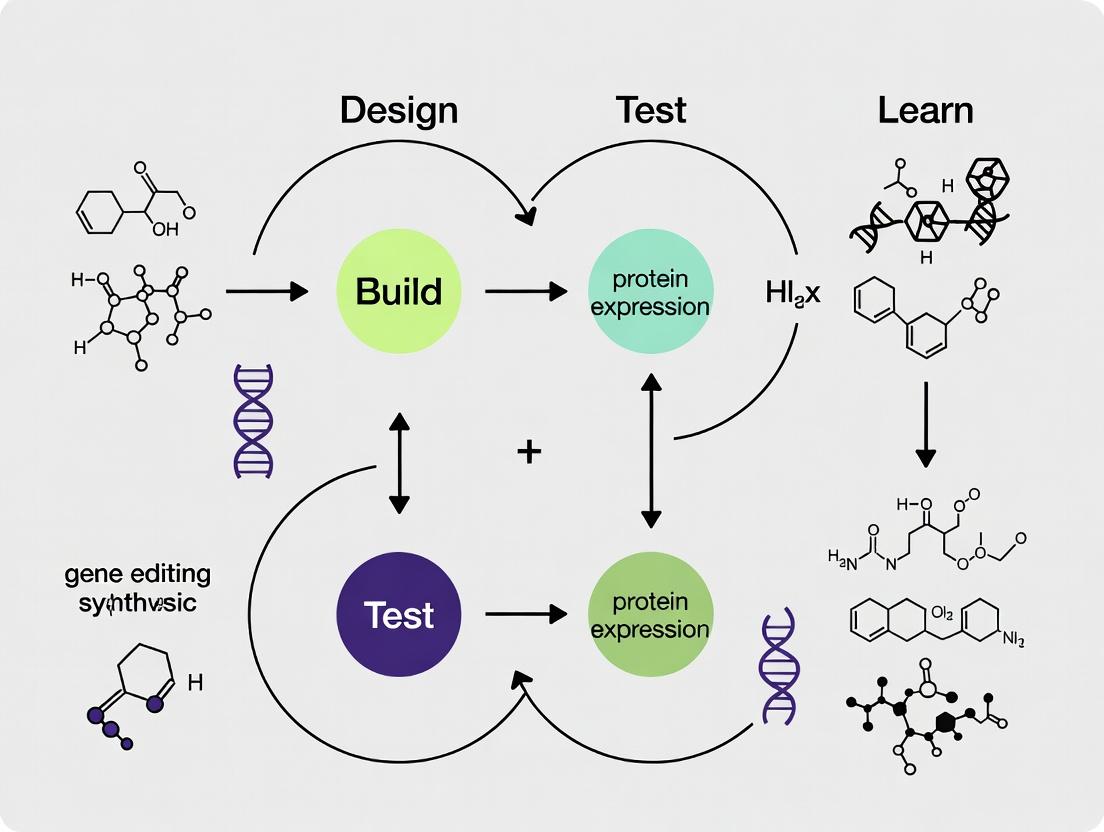
This article provides a comprehensive analysis of the Design-Build-Test-Learn (DBTL) framework as applied to plant synthetic biology, a critical engine for next-generation therapeutic development.
Accelerating Drug Discovery: The Power of Design-Build-Test-Learn Cycles in Plant Synthetic Biology
Abstract
This article provides a comprehensive analysis of the Design-Build-Test-Learn (DBTL) framework as applied to plant synthetic biology, a critical engine for next-generation therapeutic development. Tailored for researchers, scientists, and drug development professionals, we explore the foundational principles of plant-based metabolic engineering for high-value compounds. The article details current methodologies for constructing plant chassis and biosynthetic pathways, addresses common bottlenecks and optimization strategies, and validates the approach through comparative analysis with microbial systems. The synthesis offers a roadmap for leveraging plant DBTL cycles to streamline the production of vaccines, antibodies, and complex natural products, thereby transforming biomedical pipelines.
Plant Synthetic Biology 101: The DBTL Framework as a Catalyst for Next-Gen Therapeutics
The Design-Build-Test-Learn (DBTL) cycle is the core operational framework for modern engineering biology, providing a structured, iterative approach to converting biological designs into functional systems. In plant synthetic biology, this cycle is crucial for overcoming the complexity of plant genomes, slow growth times, and intricate metabolic networks to engineer traits for sustainable agriculture, biomanufacturing, and drug development.
The DBTL Cycle in Plant Engineering: Application Notes
Design Phase: Computational tools are used to model and specify genetic constructs. For plant systems, this includes selection of species-specific promoters (e.g., constitutive 35S, inducible, or tissue-specific), codon optimization for plant expression, and targeting signals for organelles (chloroplast, mitochondria). Genome-scale metabolic models (GMMs) of plants like Arabidopsis or Nicotiana benthamiana guide the design of metabolic pathways for novel compound production.
Build Phase: This involves the physical assembly of DNA constructs and their transformation into plant cells. Key technologies include Golden Gate and MoClo modular assembly for high-throughput construct generation, Agrobacterium-mediated transformation for stable genomic integration, and viral vectors (e.g., Tobacco Mosaic Virus-based) for rapid transient expression.
Test Phase: Engineered plants or transiently transformed tissues are analyzed using multi-omics approaches. Phenotyping is accelerated via automated imaging systems (phenomics), while metabolomics and proteomics quantify the output of engineered pathways. For drug development, this phase includes quantifying yields of plant-made pharmaceuticals (PMPs) like monoclonal antibodies or vaccines.
Learn Phase: Data from the Test phase is analyzed to inform the next Design iteration. Machine learning models, trained on omics and phenotypic data, predict which genetic parts and configurations will improve performance. This phase closes the loop, turning observational data into predictive design rules.
Quantitative Performance Metrics in Recent Plant DBTL Studies
Table 1: Key Metrics from Plant Synthetic Biology DBTL Implementations
| Study Focus | Host Organism | Cycle Time | Key Metric Improvement | Primary Analysis Method |
|---|---|---|---|---|
| Artemisinin Precursor Pathway | Nicotiana benthamiana (Transient) | 2-3 weeks | 25-fold increase in amorphadiene yield | GC-MS Metabolomics |
| Drought Resistance Traits | Arabidopsis thaliana | 3-4 months | 40% reduction in water loss under stress | Automated Phenomics Imaging |
| Monoclonal Antibody Production | Lemna minor (Duckweed) | 6 months | Accumulation to 5% of total soluble protein | ELISA & LC-MS |
| CRISPR/Cas9 Multiplex Editing | Solanum lycopersicum (Tomato) | 9 months | 90% targeted mutagenesis efficiency in T1 | NGS Amplicon Sequencing |
Detailed Experimental Protocols
Protocol 1: High-Throughput Golden Gate Assembly for Plant Vector Construction Objective: Assemble a multigene construct for plant expression. Materials: Type IIS restriction enzyme (e.g., BsaI-HFv2), T4 DNA Ligase, modular DNA parts (promoters, CDS, terminators), plant binary destination vector (e.g., pICH47732), NEB Golden Gate Assembly Kit. Procedure:
- Design: Arrange parts with standard 4-bp overhangs using software like Cloner or ApE.
- Reaction Setup: In a single tube, mix 50-100 fmol of each DNA part, 50 fmol of destination vector, 1µL BsaI-HFv2, 1µL T4 DNA Ligase, 2µL 10X T4 Ligase Buffer, and ddH₂O to 20µL.
- Thermocycling: Cycle 25 times: 37°C (2 min) + 16°C (5 min), then 50°C (5 min), 80°C (5 min). Hold at 4°C.
- Transformation: Transform 2µL into competent E. coli, plate on selective media, and sequence-verify colonies.
Protocol 2: Transient Expression in N. benthamiana via Agroinfiltration for Rapid Testing Objective: Rapidly produce and test proteins or metabolites in plant leaf tissue. Materials: Recombinant Agrobacterium tumefaciens strain GV3101, YEP media, antibiotics, infiltration buffer (10 mM MES, 10 mM MgCl₂, 150 µM acetosyringone, pH 5.6), 1 mL needleless syringe. Procedure:
- Culture: Grow Agrobacterium harboring the binary vector in YEP + antibiotics at 28°C to OD₆₀₀ ~1.0.
- Induction: Pellet cells, resuspend in infiltration buffer to OD₆₀₀ = 0.5. Incubate at room temp for 1-3 hours.
- Infiltration: Press the syringe tip against the abaxial side of a 4-week-old N. benthamiana leaf and gently inject the suspension. Mark the infiltration zone.
- Incubation: Grow plants under normal light conditions for 3-7 days.
- Harvest: Excise infiltrated leaf tissue, flash-freeze in liquid N₂, and store at -80°C for analysis (e.g., protein extraction, metabolomics).
Visualizations
Diagram 1: The DBTL Cycle Workflow in Plant Engineering
Diagram 2: Signaling Pathway for Inducible Promoter Activation
The Scientist's Toolkit: Research Reagent Solutions
Table 2: Essential Materials for Plant Synthetic Biology DBTL Cycles
| Reagent/Tool | Function & Application in DBTL | Example Product/Catalog |
|---|---|---|
| Plant Modular Cloning (MoClo) Toolkit | Standardized DNA parts for high-throughput, hierarchical assembly of multigene constructs. | Arabidopsis MoClo Toolkit (Addgene Kit # 1000000044) |
| Agrobacterium Strain GV3101 | Disarmed strain for efficient transient transformation (N. benthamiana) and stable transformation of many plant species. | GV3101 (pMP90) Competent Cells |
| Acetosyringone | A phenolic compound that induces the Agrobacterium Vir genes, critical for efficient T-DNA transfer during infiltration. | Acetosyringone, 99% (Sigma D134406) |
| Liquid Chromatography-Mass Spectrometry (LC-MS) | Quantifies small molecules and metabolites in complex plant extracts; critical for Test phase in metabolic engineering. | UHPLC-QTOF Systems |
| CRISPR/Cas9 Ribonucleoprotein (RNP) Complexes | Enables precise genome editing without stable DNA integration; accelerates trait Build and Test. | Alt-R S.p. Cas9 Nuclease V3 |
| Plant Preservative Mixture (PPM) | A broad-spectrum biocide used in tissue culture to suppress microbial contamination, improving reliability in scale-up. | Plant Cell Technology PPM |
| Automated Phenotyping Imaging Software | Quantifies plant growth, morphology, and physiology from images; enables high-throughput Test phase analysis. | LemnaTec Scanalyzer Software |
Why Plants? Advantages of Plant Chassis for Complex Molecule Production
Within the Design-Build-Test-Learn (DBTL) paradigm of synthetic biology, the choice of production chassis is a foundational Design decision. Plants represent a eukaryotic chassis offering distinct advantages for the production of complex, high-value molecules, such as pharmaceuticals, nutraceuticals, and industrial enzymes. This application note details the benefits of plant systems and provides protocols for their utilization, accelerating DBTL cycles in plant synthetic biology.
Quantitative Advantages of Plant Chassis
Table 1: Comparative Analysis of Bioproduction Chassis for Complex Molecules
| Feature | Plant Systems (e.g., Nicotiana benthamiana, Moss) | Microbial (E. coli, Yeast) | Mammalian Cell Culture | Insect Cell Culture |
|---|---|---|---|---|
| Production Cost | Very Low (sunlight, water, minerals) | Low/Medium | Very High | High |
| Scalability | Highly Scalable (agricultural scale) | Highly Scalable (fermentation) | Limited, expensive | Limited, expensive |
| Protein Folding & PTMs | Eukaryotic machinery, plant-specific glycans | Limited (prokaryotes), or fungal-specific (yeast) | Human-compatible PTMs | Eukaryotic, simpler glycans |
| Production Speed | Rapid (days for transient expression) | Very Rapid (hours-days) | Slow (weeks) | Medium (weeks) |
| Pathway Complexity | Can accommodate multi-enzyme pathways, subcellular targeting | Limited compartmentalization | Excellent compartmentalization | Good compartmentalization |
| Safety | Generally free of human pathogens | Endotoxin concerns (bacteria) | Risk of human viral contaminants | Risk of viral contaminants |
| Downstream Processing | Can be complex (plant biomass) | Standardized | Complex, costly | Complex |
| Key DBTL Advantage | Rapid Build phase (transient); low-cost Test scaling | Rapid Build & Test | Fidelity for Test; low scalability for Learn | Medium fidelity & scalability |
Detailed Protocols
Protocol 3.1: RapidBuild– Agrobacterium-mediated Transient Expression inN. benthamiana(Agroinfiltration)
Application: Rapid production of recombinant proteins or metabolites for Test phase within a DBTL cycle.
Research Reagent Solutions Toolkit:
| Reagent/Material | Function in Protocol |
|---|---|
| Agrobacterium tumefaciens strain GV3101 | Vector for plant cell transformation and DNA transfer. |
| pEAQ-series or pTRAk expression vector | Plant expression vector with strong viral promoters (e.g., CaMV 35S). |
| Silwet L-77 | Surfactant that reduces surface tension for efficient leaf infiltration. |
| Acetosyringone | Phenolic compound that induces Agrobacterium vir gene expression. |
| LB Broth & Agar with antibiotics | For selection and growth of transformed Agrobacterium. |
| Infiltration Buffer (10 mM MES, 10 mM MgCl2, pH 5.6) | Buffer for final resuspension of bacteria for infiltration. |
| 4-6 week old N. benthamiana plants | Model plant chassis with silenced gene silencing machinery. |
Methodology:
- Clone gene of interest (GOI) into plant expression vector (e.g., pEAQ-HT) using standard molecular techniques (Design/Build).
- Transform the construct into competent Agrobacterium cells via freeze-thaw or electroporation.
- Culture a single colony in LB with appropriate antibiotics at 28°C for 24-48 hours.
- Induce the culture by diluting 1:50 in fresh LB with antibiotics, 10 mM MES, and 20 μM acetosyringone. Grow to OD600 ~0.8-1.0.
- Pellet cells at 5000 x g for 10 min. Resuspend in infiltration buffer to a final OD600 of 0.2-1.0 (optimization required).
- Infiltrate the abaxial side of young, healthy leaves using a needleless syringe or vacuum infiltration for whole plants.
- Incubate plants under normal growth conditions for 3-7 days.
- Harvest leaf tissue for protein extraction or metabolite analysis (Test).
Protocol 3.2:Test– Analysis of Recombinant Protein Yield and N-glycosylation
Application: Characterizing product quantity and quality from a DBTL Build round.
Methodology: A. Total Soluble Protein (TSP) Extraction:
- Grind 1 g infiltrated leaf tissue in liquid N2.
- Homogenize in 2 mL extraction buffer (100 mM Tris-HCl pH 7.5, 150 mM NaCl, 0.1% Triton X-100, 1x protease inhibitor cocktail).
- Centrifuge at 15,000 x g, 4°C for 20 min. Collect supernatant as TSP.
- Quantify TSP via Bradford assay.
B. Product-Specific Quantification (ELISA/Western Blot):
- Perform SDS-PAGE with 10-20 μg TSP per lane.
- Transfer to PVDF membrane and probe with antibody specific to target protein.
- Use densitometry against a purified standard curve to estimate yield (μg/g Fresh Weight).
C. N-glycan Analysis (PNGase F Digestion):
- Immunoprecipitate target protein from TSP.
- Denature eluted protein, digest with PNGase F to release N-glycans.
- Label released glycans with 2-AB fluorescent tag.
- Analyze by Hydrophilic Interaction Liquid Chromatography (HILIC) or Mass Spectrometry to determine glycan profiles (e.g., plant-specific β1,2-xylose and α1,3-fucose vs. mammalian-type).
Visualizing Pathways and Workflows
Diagram 1: DBTL Cycle in Plant SynBio
Diagram 2: Agroinfiltration Workflow
Diagram 3: Plant Chassis Advantages & Applications
1. Introduction This document provides application notes and detailed protocols for the production of core targets—vaccines, therapeutic proteins, and high-Value natural products—within the framework of Design-Build-Test-Learn (DBTL) cycles in plant synthetic biology. Plants offer a scalable, cost-effective, and eukaryotic production system capable of complex post-translational modifications. Integrating these workflows into iterative DBTL cycles accelerates the optimization of yield, stability, and bioactivity.
2. Application Notes & Quantitative Data Summary
Table 1: Recent Case Studies in Plant-Based Production (2023-2024)
| Core Target Class | Example Product | Host System | Reported Yield | Key Advancement (DBTL Context) | Reference/PMID |
|---|---|---|---|---|---|
| Vaccine | SARS-CoV-2 RBD subunit vaccine | Nicotiana benthamiana | 80-120 mg/kg FW (transient) | Learn: Glycoengineering to eliminate plant-specific glycans; Test: Immunogenicity comparable to mammalian cell-produced antigen. | PMID: 36759724 |
| Therapeutic Protein | Human Alpha-1-Antitrypsin (AAT) | Lemna minor (Duckweed) | 450 mg/kg DW (stable) | Build: Stable transformation; Test: Functional activity in serum confirmed; Learn: Secretion enhances purification yield. | PMID: 37809245 |
| High-Value Natural Product | Cannabigerolic Acid (CBGA) | Saccharomyces cerevisiae (Plant Pathways) | 8.7 mg/L | Design: Reconstitution of Cannabis pathway; Test-Learn: Cytochrome P450 screening identified optimal enzyme for prenylation. | PMID: 38030711 |
| Therapeutic Protein | Broadly Neutralizing Anti-HIV Antibody (PGT121) | N. benthamiana | 1.2 g/kg FW (transient) | Build: Co-expression of human chaperones; Learn: Chaperone co-expression critical for complex mAb assembly in plants. | PMID: 37100988 |
| High-Value Natural Product | Anticancer Vinca Alkaloid Precursor (Strictosidine) | N. benthamiana (transient) | 1.5 mg/g DW | Design-Build: Multi-gene vector assembly; Test: Rapid (<1 week) pathway testing via transient expression. | N. benthamiana 2023 |
3. Detailed Protocols
Protocol 3.1: Transient Expression of a Vaccine Antigen in N. benthamiana (Agroinfiltration) Objective: Rapid production and recovery of a recombinant subunit vaccine protein. Materials: See Scientist's Toolkit. Procedure:
- Design & Vector Preparation: Clone gene of interest into an Agrobacterium tumefaciens-compatible binary vector (e.g., pEAQ-HT) with appropriate signal peptide (e.g., PR1a for apoplast targeting).
- Agrobacterium Culture: Transform vector into A. tumefaciens strain GV3101. Inoculate a single colony in 5 mL LB with antibiotics. Grow overnight at 28°C, 220 rpm.
- Induction & Infiltration: Pellet cells (3000 x g, 10 min). Resuspend to OD600 = 0.5-1.0 in MMA buffer (10 mM MES, 10 mM MgCl2, 100 µM Acetosyringone, pH 5.6). Incubate 1-3 hrs at RT. Using a needleless syringe, infiltrate suspension into the abaxial side of 4-5 week-old N. benthamiana leaves.
- Harvest: Harvest leaf tissue 5-7 days post-infiltration (dpi). Weigh, flash-freeze in liquid N2, and store at -80°C.
- Extraction & Purification: Grind tissue to a fine powder. Extract with 2-3 vol/wt of extraction buffer (100 mM Tris-HCl, pH 8.0, 150 mM NaCl, 1% PVPP, 0.1% Tween-20, 1 mM EDTA, plus protease inhibitors). Clarify by filtration and centrifugation (15,000 x g, 20 min, 4°C). Purify via His-tag IMAC (Ni-NTA).
- Test: Analyze by SDS-PAGE, Western blot, and ELISA for quantification and quality assessment.
Protocol 3.2: Stable Expression and Purification of a Secreted Therapeutic Protein from Duckweed Objective: Generate stably transformed duckweed for continuous, scalable protein production. Materials: Sterile Lemna minor fronds, selective media, Agrobacterium. Procedure:
- Design & Vector: Use a binary vector with a strong constitutive promoter (e.g., 35S) and a secretion signal (e.g., extension signal peptide).
- Transformation & Selection: Co-culture sterile Lemna fronds with Agrobacterium (prepared as in 3.1) for 2-3 days on solid media. Transfer to wash media with antibiotics to kill Agrobacterium, then to selection media (e.g., with hygromycin). Subculture surviving fronds every 2 weeks.
- Screening: After 6-8 weeks, screen lines by ELISA of spent culture media for protein secretion.
- Scale-Up: Transfer high-expressing lines to liquid bioreactor systems (e.g., a vented flask with Schenk & Hildebrandt medium).
- Recovery: Collect spent media. Concentrate via tangential flow filtration. Purify via affinity chromatography (e.g., Protein A for antibodies, IMAC for His-tagged proteins).
- Test: Assess purity (SDS-PAGE), glycosylation (PNGase F treatment, mass spectrometry), and in vitro functional activity.
Protocol 3.3: Metabolic Engineering for a Natural Product Pathway in Plant Tissue Objective: Test a reconstructed biosynthetic pathway using transient expression. Materials: Multi-gene assembly vector(s), N. benthamiana plants. Procedure:
- Design: Assemble multiple expression cassettes (target genes, regulatory elements) into a single T-DNA or use co-infiltration of multiple Agrobacterium strains.
- Build & Infiltrate: Prepare Agrobacterium cultures for each construct. Mix cultures at equal OD600 pre-infiltration. Infiltrate as in 3.1.
- Harvest & Metabolite Extraction: Harvest tissue 5-10 dpi. Freeze-dry and grind. Extract metabolites with appropriate solvent (e.g., 80% methanol for alkaloids). Centrifuge and filter supernatant.
- Test & Learn – Analysis: Quantify target compound via LC-MS/MS. Compare levels across different construct ratios or genetic parts to identify pathway bottlenecks.
4. Visualization: DBTL Workflow and Pathway Diagrams
Diagram Title: Plant Synthetic Biology DBTL Cycle
Diagram Title: Monoclonal Antibody Production Pathway in Plants
5. The Scientist's Toolkit: Essential Research Reagents & Materials
| Item | Function | Example/Catalog # |
|---|---|---|
| Binary Vector System | Agrobacterium-mediated gene delivery; enables transient/stable expression. | pEAQ-HT, pTRAk, pCAMBIA |
| Agrobacterium Strain | Engineered for plant transformation; disarmed pathogen. | GV3101, LBA4404, AGL1 |
| N. benthamiana Seeds | Model plant host for rapid transient expression; possesses silenced RNAi machinery. | Wild-type, ΔXT/FT (glycoengineered) |
| Acetosyringone | Phenolic compound inducing Agrobacterium vir genes; critical for T-DNA transfer. | Sigma D134406 |
| Plant Extraction Buffer | Lyses plant cells, stabilizes proteins, inhibits proteases/polyphenols. | Tris-HCl, NaCl, PVPP, Tween-20, protease inhibitors |
| Ni-NTA Agarose | Immobilized metal affinity chromatography resin for His-tagged protein purification. | Qiagen 30210 |
| Protein A/G Resin | Affinity chromatography for antibody purification based on Fc region. | Cytiva 17078001/17061801 |
| Glycosidase (PNGase F) | Enzyme to remove N-glycans for glycosylation analysis. | NEB P0704S |
| LC-MS/MS System | High-sensitivity quantification and identification of proteins and metabolites. | e.g., Thermo Q Exactive series |
Application Notes
Genomics in the DBTL Cycle
Genomics provides the foundational sequence data and functional annotations essential for the Design phase. High-throughput sequencing (e.g., Illumina NovaSeq X, PacBio Revio) enables the assembly of complex plant genomes, identification of gene targets, and characterization of native regulatory elements. During the Learn phase, whole-genome resequencing and RNA-seq are used to analyze engineered strains, identifying unintended mutations and global expression changes.
Table 1.1: Quantitative Comparison of Key Genomic Platforms
| Platform (Model) | Read Type | Avg. Read Length | Output per Run | Key Application in Plant DBTL |
|---|---|---|---|---|
| Illumina (NovaSeq X Plus) | Short | 2x150 bp | Up to 16 Tb | Variant calling, RNA-seq, ChIP-seq |
| PacBio (Revio) | Long, HiFi | 15-20 kb | 360 Gb | De novo genome assembly, full-length transcriptomics |
| Oxford Nanopore (PromethION 2) | Long | >10 kb (variable) | 100-200 Gb | Real-time sequencing, direct detection of base modifications |
Promoters and Regulatory Parts
Synthetic promoters, derived from native sequences (e.g., CaMV 35S, UBQ10) or designed de novo, are crucial for precise transcriptional control in the Build phase. Inducible (e.g., ethanol-, dexamethasone-, light-responsive) and tissue-specific promoters allow for spatial and temporal regulation of metabolic pathways. Quantitative characterization via promoter:barcode fusion libraries and sequencing provides data for predictive models in subsequent Design cycles.
Table 1.2: Characteristics of Common Plant Promoters
| Promoter | Origin | Strength (Relative) | Inducibility/Tissue Specificity | Best Use Case |
|---|---|---|---|---|
| CaMV 35S | Cauliflower mosaic virus | High (1.0x) | Constitutive (most tissues) | Strong, constitutive expression |
| ZmUBI | Maize | Very High (1.5-2.0x) | Constitutive | High-level protein production |
| RD29A | Arabidopsis | Low (0.1x) | Abiotic stress-inducible | Stress-responsive pathways |
| AtSUC2 | Arabidopsis | Medium | Phloem-specific | Vascular-targeted expression |
Vectors and Assembly Systems
Modern plant transformation vectors are built using high-throughput DNA assembly techniques (Golden Gate, MoClo). Essential components include T-DNA borders (Agrobacterium-mediated), selectable markers (e.g., hptII for hygromycin, pat for glufosinate), and reporter genes (e.g., GFP, GUS). Multigene vectors and transient expression systems (e.g., viral vectors, geminiviral replicons) enable complex pathway engineering and rapid Test cycles.
Transformation Techniques
Stable and transient transformation methods deliver DNA into plant cells. The choice of technique impacts throughput and timeline within the DBTL cycle. Agrobacterium tumefaciens-mediated transformation remains the gold standard for stable integration in dicots, while biolistics is often used for monocots. Recent advancements in Agrobacterium-mediated transient transformation (e.g., Agroinfiltration) and novel methods like carbon nanotube-mediated delivery accelerate the Build-Test phases.
Table 1.3: Comparison of Plant Transformation Techniques
| Technique | Target Species | Throughput | Typical Use Case | Time to Analysis (Transient) | Time to Stable Line |
|---|---|---|---|---|---|
| Agrobacterium-mediated (stable) | Dicots (e.g., tobacco, tomato), some monocots | Medium | Stable integration, gene editing | N/A | 3-6 months |
| Biolistic (gene gun) | Monocots (e.g., wheat, maize), difficult species | Low | Species recalcitrant to Agrobacterium | N/A | 6-12 months |
| Agroinfiltration (transient) | Nicotiana benthamiana, lettuce | Very High | Rapid protein production, pathway prototyping | 3-7 days | N/A |
| Protoplast Transfection | Many species | High | Rapid promoter testing, CRISPR screens | 1-3 days | N/A |
Experimental Protocols
Protocol: Golden Gate Assembly for Plant Multigene Vector Construction
Objective:Assemble a T-DNA vector containing 5 transcriptional units using a Level 1 MoClo-compatible plant toolkit.
Materials (Research Reagent Solutions): Table 2.1: Key Reagents for Golden Gate Assembly
| Item | Function | Example Product/Catalog # | ||
|---|---|---|---|---|
| BsaI-HF v2 Restriction Enzyme | Type IIS enzyme for digesting and creating compatible overhangs | NEB #R3733 | ||
| T4 DNA Ligase | Ligates DNA fragments with compatible overhangs | NEB #M0202 | ||
| 10x T4 DNA Ligase Buffer | Provides ATP and optimal reaction conditions | Supplied with NEB #M0202 | ||
| MoClo Plant Toolkit Parts (Level 0) | Promoters, CDS, terminators with appropriate overhangs | Addgene Kit #1000000047 | ||
| pICH47732 (Level 1 Empty Backbone) | Accepts up to 8 Level 0 modules; contains spectinomycin resistance | Addgene #50266 | ||
| NEB 5-alpha Competent E. coli | For transformation and propagation of assembled plasmid | NEB #C2987 |
Methodology:
- Design: Select Level 0 modules (Promoter, 5'UTR, CDS, Terminator) for each gene. Ensure overhang compatibility for desired assembly order.
- Setup Assembly Reaction:
- In a 20 µL total volume, combine:
- 50 ng of linearized Level 1 acceptor vector (e.g., pICH47732).
- 37.5 fmol of each Level 0 insert (typically 1-2 µL).
- 1 µL BsaI-HFv2 (10 U/µL).
- 1 µL T4 DNA Ligase (400 U/µL).
- 2 µL 10x T4 DNA Ligase Buffer.
- Nuclease-free water to 20 µL.
- In a 20 µL total volume, combine:
- Thermocycler Program:
- 37°C for 5 minutes (digestion).
- 16°C for 5 minutes (ligation).
- Repeat steps 1 & 2 for 50 cycles.
- 60°C for 10 minutes (enzyme inactivation).
- 4°C hold.
- Transformation: Transform 2 µL of reaction into 50 µL of competent E. coli. Plate on LB agar with appropriate antibiotic (e.g., spectinomycin 50 µg/mL).
- Validation: Screen colonies by colony PCR or restriction digest. Confirm final assembly by Sanger sequencing across all junctions.
Protocol: High-ThroughputAgrobacterium-Mediated Transient Transformation (Agroinfiltration) ofN. benthamiana
Objective:Rapid, transient expression of multigene constructs for pathway prototyping (Testphase).
Materials:
- Agrobacterium tumefaciens strain GV3101 pSoup, harboring the expression vector(s).
- Infiltration buffer: 10 mM MES, 10 mM MgCl₂, 150 µM acetosyringone, pH 5.6.
- 1 mL needleless syringes.
* 4-5 week oldN. benthamianaplants.
Methodology:
- Culture Preparation: Grow Agrobacterium overnight in LB with appropriate antibiotics. Pellet cells and resuspend in infiltration buffer to a final OD600 of 0.3-0.5 for each strain.
- Strain Mixing (for multigene pathways): Combine equal volumes of individual Agrobacterium suspensions to achieve the desired OD600 for each construct. Add silencing suppressor strain (e.g., p19) if required.
- Infiltration: Use a syringe to gently press the tip against the abaxial side of a leaf. Slowly infiltrate the bacterial suspension, watching for the leaf area to become water-soaked. Infiltrate multiple leaves/plants per construct.
- Incubation: Place plants in a controlled growth chamber (22-24°C, 16-hr light/8-hr dark) for 3-7 days.
- Harvest & Analysis: Harvest infiltrated leaf discs at the desired time point. Process for downstream analysis (e.g., metabolite extraction, protein purification, fluorescence imaging).
Protocol: Whole-Genome Resequencing forLearnPhase Analysis
Objective:Identify genomic changes in engineered plant lines compared to the wild-type.
Methodology:
- DNA Extraction: Use a high-molecular-weight DNA extraction kit (e.g., Qiagen Genomic-tip) from 1g of young leaf tissue.
- Library Preparation: Prepare a sequencing library using an Illumina DNA Prep kit, aiming for 350 bp insert size.
- Sequencing: Sequence on an Illumina NovaSeq platform to achieve >30x genome coverage.
- Bioinformatics Analysis:
- Quality Control: Use FastQC and Trimmomatic to assess and trim reads.
- Alignment: Map reads to the reference genome using BWA-MEM.
- Variant Calling: Identify SNPs and InDels using GATK Best Practices pipeline.
- Structural Variant Calling: Use Delly or Manta to detect large insertions/deletions, translocations.
- Copy Number Variation: Use Control-FREEC to assess CNVs, particularly around the T-DNA integration site.
Diagrams
Diagram 1: DBTL Cycle and Key Tools Integration
Diagram 2: Promoter Characterization Workflow
Historical Context and Evolution of the Plant SynBio Field
Application Notes: The DBTL Framework in Plant SynBio
The evolution of plant synthetic biology is inextricably linked to the adoption and refinement of Design-Build-Test-Learn (DBTL) cycles. This computational, iterative framework has accelerated the engineering of plant systems for foundational research and applied biotechnology.
Key Historical Milestones and Data
Table 1: Quantitative Milestones in Plant Synthetic Biology Evolution
| Year Range | Phase | Key Technological/Cognitive Advance | Representative Output (Quantitative Impact) |
|---|---|---|---|
| 2000-2005 | Pre-SynBio | High-throughput sequencing; Arabidopsis genome completion. | First plant genome (2000); ~25k genes annotated. |
| 2006-2012 | Foundational | Establishment of modular genetic parts (promoters, terminators). | Characterization of ~50 core plant genetic parts. |
| 2013-2018 | DBTL Adoption | CRISPR/Cas9 for plant genome editing; standardized assembly (Golden Gate, MoClo). | Editing efficiency increase from <1% to >80% in models; 10x reduction in DNA assembly time. |
| 2019-2024 | Systems Integration | AI/ML for gene design; multiplexed editing; automated phenotyping (phenomics). | Predictive promoter strength models (R² >0.8); throughput of 100,000+ plant images/day for analysis. |
Current Application: Engineered Secondary Metabolite Pathways
A prime application is the reconstruction and optimization of plant-derived pharmaceutical (PDP) pathways in heterologous hosts (e.g., tobacco, yeast). A 2024 study demonstrated the DBTL cycle to enhance the production of the anti-cancer precursor strictosidine.
Table 2: DBTL Cycle Impact on Strictosidine Production in Nicotiana benthamiana
| DBTL Cycle | Engineering Focus | Titration (mg/g DW) | Cycle Duration |
|---|---|---|---|
| Initial Design | Expression of 5 core pathway genes from Catharanthus roseus. | 0.5 | 4 months |
| Build-Test-Learn 1 | Codon optimization; substitution with Ophiorrhiza pumila synthase. | 1.8 | 3 months |
| Build-Test-Learn 2 | Promoter tuning (strength, induction); scaffolding of key enzymes. | 5.2 | 2.5 months |
| Build-Test-Learn 3 | Compartmentalization (chloroplast targeting); suppression of competing pathways via CRISPRi. | 12.7 | 2 months |
Detailed Protocol: Transient Agrobacterium-Mediated Metabolic Pathway Assembly inN. benthamiana
This protocol details the "Build" phase for testing novel pathway designs, a cornerstone of modern plant SynBio DBTL cycles.
Research Reagent Solutions Toolkit
Table 3: Essential Reagents for Transient Plant SynBio Experiments
| Item | Function/Specification | Example/Supplier |
|---|---|---|
| pEAQ-HT Expression Vector | High-expression, binary T-DNA vector with silenced suppressor of gene silencing. | (Patron et al., 2009) |
| Golden Gate Assembly Kit (MoClo Plant) | Standardized, modular DNA assembly system for multi-gene constructs. | Plant Parts Kit, Addgene #1000000044 |
| Electrocompetent Agrobacterium tumefaciens strain GV3101 (pMP90) | Disarmed strain with high transformation efficiency for plant infiltration. | Many commercial suppliers. |
| Silwet L-77 | Non-ionic surfactant for effective leaf infiltration. | Lehle Seeds, CAT# VIS-02 |
| LC-MS/MS Standard for Target Metabolite | Quantitative analytical standard for "Test" phase. | e.g., Strictosidine, Sigma-Aldrich SML1600 |
Protocol: Multi-Gene Construct Assembly and Transient Expression
Part A: Modular DNA Assembly (Design/Build)
- Design: Using standardized MoClo Level 0 parts (promoters, CDS, terminators), plan assembly into a Level 1 "Transcriptional Unit" (TU) and subsequent assembly of multiple TUs into a final Level 2 "Multigene Construct" in the pEAQ-HT destination vector.
- Golden Gate Reaction:
- Set up a 20 µL reaction: 50 ng each Level 1 TU plasmid, 100 ng pEAQ-HT destination vector, 1 µL T4 DNA Ligase (5 Weiss U/µL), 1 µL BsaI-HFv2 (10 U/µL), 2 µL 10x T4 Ligase Buffer. Nuclease-free water to volume.
- Cycle in a thermocycler: 37°C for 5 min (digestion), 20°C for 5 min (ligation), repeat for 30 cycles, then 50°C for 5 min, 80°C for 10 min.
- Transformation & Verification: Transform 5 µL reaction into E. coli DH5α, plate on selective media. Verify colonies by colony PCR and diagnostic restriction digest. Sequence-confirm final plasmid.
Part B: Agroinfiltration of N. benthamiana (Build/Test)
- Agrobacterium Transformation: Electroporate 50 ng of the final pEAQ-HT plasmid into A. tumefaciens GV3101. Select on LB plates with appropriate antibiotics (gentamicin, kanamycin, rifampicin).
- Starter Culture: Inoculate a single colony into 5 mL LB with antibiotics. Shake at 28°C, 220 rpm for 24-48 hrs.
- Induction Culture: Dilute starter 1:100 into 50 mL fresh LB with antibiotics, 10 mM MES buffer (pH 5.6), and 20 µM acetosyringone. Grow to OD600 ~0.8-1.0 (~24 hrs).
- Cell Preparation: Pellet cells at 3000 x g for 15 min. Resuspend in infiltration buffer (10 mM MgCl2, 10 mM MES pH 5.6, 150 µM acetosingone). Adjust final OD600 to 0.5 for each strain. For co-infiltration of multiple constructs, mix equal volumes of adjusted cultures.
- Infiltration: Using a needleless syringe, press the tip against the abaxial side of a 3-4 week old N. benthamiana leaf and gently inject the bacterial suspension. Infiltrate multiple leaves/plants per construct.
- Incubation: Maintain plants under normal growth conditions (22-25°C, 16/8 hr light/dark) for 5-7 days post-infiltration (dpi).
Part C: Metabolite Extraction & Analysis (Test/Learn)
- Harvesting: At 5-7 dpi, harvest infiltrated leaf discs, flash-freeze in liquid N2, and lyophilize.
- Extraction: Homogenize 50 mg dry weight tissue with 1 mL 80% methanol/water (v/v) containing 0.1% formic acid and internal standard. Sonicate 15 min, centrifuge at 15,000 x g for 10 min.
- Analysis: Filter supernatant (0.22 µm). Analyze by UHPLC-MS/MS using a C18 column and a multiple reaction monitoring (MRM) method optimized for the target metabolite(s). Quantify against a standard curve.
- Data Integration (Learn): Compile metabolite titers with construct design parameters (promoter strength, gene order, etc.) to inform the next DBTL cycle design.
Visualizations
Plant SynBio DBTL Cycle Workflow
Agroinfiltration for Metabolic Engineering
From Code to Crop: A Step-by-Step Guide to Implementing Plant DBTL Cycles
Within the Design-Build-Test-Learn (DBTL) cycle for plant synthetic biology, the Design Phase is foundational. It is here that researchers transition from a biological question to a precise, testable blueprint. Computational tools enable the predictive modeling of metabolic pathways and the rational design of genetic circuits, thereby reducing costly iterative wet-lab cycles. This document provides application notes and protocols for key computational methodologies in this phase, specifically for plant systems.
Core Computational Tools & Application Notes
Pathway Prediction & Metabolic Modeling
Application Note: Predicting novel biosynthetic pathways in plants requires tools that can handle plant-specific metabolism (e.g., compartmentalization in chloroplasts, vacuoles) and secondary metabolite synthesis.
| Tool Name | Primary Function | Input Example | Output Example | Key Metric (Performance) |
|---|---|---|---|---|
| PathPred (KEGG) | Predicts biodegradation & biosynthesis pathways | Target compound (SMILES) | Predicted enzyme reaction sequence | Recall: ~85% for known pathways |
| RetroPath RL | Retrobiosynthesis using reinforced learning | Desired product (SMILES) | Ranked heterologous pathways | Generates 1000+ pathways in <30 min |
| PlantSEED | Genome-scale metabolic modeling for plants | Plant genome annotation | Functional metabolic reconstruction | Covers >90% of core plant metabolism |
| AntiSMASH | Identifies biosynthetic gene clusters (BGCs) | Plant genomic sequence | Predicted BGCs & putative products | Identifies BGCs in >80% of plant genomes |
Protocol 2.1.1: De Novo Pathway Prediction Using RetroPath RL
- Define Target Molecule: Obtain the SMILES string for your desired plant metabolite (e.g., a novel flavonoid).
- Set Up Environment: Install RetroPath RL from its public GitHub repository within a Conda environment as per developer instructions.
- Configure Search Parameters:
- In the
config.ymlfile, specify thesink(end metabolite) as your target SMILES. - Define the
sourcecompounds (e.g., common plant precursors like malonyl-CoA, p-coumaroyl-CoA). - Set the
ruleslibrary toplant_rulesif available, or a generalized enzymatic reaction rule set.
- In the
- Execute Prediction: Run the core script (
python retropath_rl.py). The algorithm will explore the biochemical reaction space. - Analyze Output: The tool generates a ranked list of pathways as JSON/CSV. Key evaluation columns include: estimated yield, number of steps, enzyme compatibility score, and novelty score.
- Integration with Plant Context: Manually or via script, map predicted enzymes to known plant orthologs using databases like Phytozome or PLAZA. Check for subcellular localization signals to ensure compartment compatibility.
Genetic Circuit Design for Plants
Application Note: Genetic circuits in plants must account for endogenous noise, environmental inputs, and long development times. Tools must support part selection for stable expression and inducible control.
| Tool Name | Primary Function | Input Example | Output Example | Key Metric |
|---|---|---|---|---|
| Cello 2.0 | Automated genetic circuit design from truth tables | Verilog code (logic function) | DNA sequence (UCF-compatible) | Success rate: ~90% in microbes; plant UCF under development |
| GROW | Predicts plant gene expression from promoter sequence | Promoter DNA sequence (∼1000bp) | Predicted expression level (FPKM) | Prediction correlation (R²): ~0.7 in Arabidopsis |
| DeepSignal | Predicts transcription factor binding sites in plants | Genomic region & TF motif | Binding probability score | AUC-ROC: >0.85 for major TF families |
| Virus-Based Expression Vector Designer (VBEx) | Designs viral amplicons for rapid plant expression | Gene of Interest (GOI) sequence | Recombinant viral genome map | Turnaround: 3-5 days for Nicotiana infiltration |
Protocol 2.2.1: Logic Circuit Design with Cello 2.0 for Plant Chassis
- Define Circuit Behavior: Formalize the desired input/output logic (e.g., "Output ON only if Light Input AND Drought Signal are present"). Represent this as a truth table or Verilog file.
- Select User Constraint File (UCF): Cello requires a UCF defining available genetic parts and their characteristics. For plants, adapt a microbial UCF or create a new one with plant-specific data (e.g., from the Plant Parts Registry).
- Critical UCF parameters: Promoter strengths (RPU), RBS efficiencies (for nuclear transgenes, use Kozak context), terminator efficiencies, and protein degradation rates.
- Run Cello Workflow: Upload Verilog and UCF to the Cello web server or local instance. Execute the design algorithm.
- Review Output: Cello provides a DNA sequence, a schematic, and predictive dynamic simulations of circuit behavior. Critically evaluate the predicted ON/OFF ratios and response time.
- Adapt for Plant Delivery: The output sequence may require adaptation: codon optimization for the plant host, addition of introns for enhanced expression, and flanking with appropriate homology arms for your transformation method (Agrobacterium, biolistics).
- Incorporate Inducible Systems: Manually replace constitutive promoters in the design with well-characterized plant-inducible systems (e.g., ethanol, dexamethasone, light-switchable promoters) based on your input logic.
Visualization of Workflows & Pathways
Pathway Prediction Computational Workflow
Automated Genetic Circuit Design Process
The Scientist's Toolkit: Research Reagent Solutions
| Item | Supplier Examples | Function in Design Phase |
|---|---|---|
| Plant-Specific UCF Template | JBEI Public Registry, Addgene | Provides standardized genetic part parameters (promoter strength, etc.) for predictive modeling in tools like Cello. |
| Curated Plant Metabolic Network (PlantSEED) | ModelSEED, KBase | A database of biochemical reactions for genome-scale modeling to predict metabolic flux impacts of new pathways. |
| Golden Gate MoClo Plant Toolkit | Addgene, MoClo Plant Parts | A modular cloning system with standardized level 0 parts for rapid, combinatorial assembly of designed circuits. |
| Plant Codon Optimization Tool (e.g., IDT Codon Optimization) | Integrated DNA Technologies (IDT) | Adjusts heterologous gene sequences to match plant host tRNA abundance, maximizing translation efficiency. |
| In Silico PCR & Restriction Tool (ApE) | M. Wayne Davis (Open Source) | Validates designed constructs for correct assembly, confirms absence of unwanted restriction sites. |
| Plant Inducible Promoter Library | TAIR, published literature | Collection of well-characterized promoters responsive to abiotic/biotic stimuli (heat, light, chemicals) for logic gate input. |
Application Notes
Within the Build phase of the Design-Build-Test-Learn (DBTL) cycle, the efficient and precise construction of genetic modules and their subsequent delivery into plant cells are critical for rapid hypothesis testing and iterative learning. Advanced DNA assembly techniques enable the combinatorial construction of complex multigene pathways, while sophisticated transformation strategies, both stable and transient, facilitate the rapid functional assessment of these designs.
Advanced DNA Assembly: Modern plant synthetic biology relies on modular, standardized assembly systems (e.g., Golden Gate, MoClo). These systems allow for the hierarchical assembly of transcriptional units and multigene constructs from libraries of standardized parts, accelerating the Build phase and enabling direct comparison between different genetic designs.
Agrobacterium-mediated Stable Transformation: This remains the gold standard for generating stable transgenic plants, integrating T-DNA into the plant genome. It is essential for long-term, heritable trait analysis and multi-generational studies within the DBTL cycle.
Transient Expression Systems: Technologies such as Agrobacterium infiltration (agroinfiltration) and viral vectors allow for rapid, high-level protein expression without genomic integration. This is invaluable for the rapid Test phase of DBTL, enabling quick assessment of construct functionality, protein-protein interactions, and pathway prototyping before committing to lengthy stable transformation.
Integration into DBTL: The speed and fidelity of these Build techniques directly determine the turnover rate of DBTL cycles. Robust protocols and quantitative data on transformation efficiency and expression levels are crucial for informing subsequent Design iterations.
Protocols
Protocol 1: Golden Gate Assembly of a Multigene Plant Expression Construct
Objective: Assemble a Level 1 transcriptional unit and subsequently a Level 2 multigene construct using the MoClo Plant Toolkit.
- Prepare DNA Components: Dilute all plasmid parts (promoter, 5' UTR, CDS, terminator) to 20-50 ng/µL in nuclease-free water.
- Set Up Level 1 Assembly Reaction:
- Combine in a 10 µL total volume: 20-50 fmol of each entry vector, 1 µL T4 DNA Ligase Buffer (10X), 0.5 µL BsaI-HFv2, 0.5 µL T4 DNA Ligase, nuclease-free water.
- Thermocycler Program: (37°C for 2 min; 20°C for 5 min) x 30 cycles → 50°C for 5 min → 80°C for 10 min.
- Transform: Transform 2 µL reaction into competent E. coli, plate on selective media, and sequence-verify colonies.
- Set Up Level 2 Assembly Reaction: Use the verified Level 1 plasmid(s) and a destination vector with BpiI (or Esp3I) in an identical reaction setup, substituting BsaI with BpiI enzyme.
- Validate: Confirm final multigene construct by restriction digest and sequencing.
Protocol 2:Agrobacterium tumefaciens-Mediated Transient Expression inNicotiana benthamiana(Agroinfiltration)
Objective: Rapidly express and test a DNA construct in plant leaf tissue within 3-5 days.
- Transform Agrobacterium: Introduce the expression vector (e.g., pEAQ-HT, pBIN61) into electrocompetent A. tumefaciens strain (GV3101 pSoup). Select on appropriate antibiotics.
- Starter Culture: Inoculate a single colony in 5 mL LB with antibiotics. Grow at 28°C, 220 rpm for 24-48h.
- Induction Culture: Dilute starter 1:100 into 20 mL fresh LB with antibiotics, 10 mM MES pH 5.6, and 20 µM acetosyringone. Grow to OD600 ~0.8-1.0 (approx. 24h).
- Harvest and Resuspend: Pellet cells at 3500 x g for 15 min. Resuspend in MMA infiltration medium (10 mM MgCl2, 10 mM MES pH 5.6, 150 µM acetosyringone) to a final OD600 of 0.2-1.0.
- Infiltration: Incubate suspension at room temperature for 1-3h. Using a needleless syringe, press the tip against the abaxial side of a young N. benthamiana leaf and infiltrate the bacterial suspension. Mark the infiltrated area.
- Incubate and Analyze: Grow plants for 3-5 days post-infiltration under normal conditions before harvesting tissue for protein or metabolite analysis.
Protocol 3: Stable Transformation ofArabidopsis thalianavia Floral Dip
Objective: Generate stably transformed T1 Arabidopsis seeds.
- Grow Agrobacterium Culture: Follow steps 1-3 of Protocol 2, using a binary vector with a plant selection marker. Resuspend the final pellet in 5% sucrose solution + 0.02-0.05% Silwet L-77 to an OD600 of ~0.8.
- Prepare Plants: Grow Arabidopsis plants until primary inflorescences are ~5-10 cm tall. Clip off any siliques or open flowers to encourage proliferation of new floral buds.
- Dip Infiltration: Subvert the above-ground portion of the plant into the Agrobacterium suspension for 30 seconds with gentle agitation.
- Post-Dip Care: Lay plants horizontally in a tray, cover with transparent film to maintain humidity for 16-24h. Return to normal growth conditions.
- Seed Harvest: Allow seeds to mature fully (approximately 4-6 weeks). Harvest dry T1 seeds.
- Selection: Surface sterilize and plate T1 seeds on appropriate antibiotic or herbicide selection media to identify transformants.
Table 1: Comparison of Plant Transformation & Expression Methods
| Method | Typical Efficiency | Time to Result (Days) | Key Applications in DBTL | Key Limitations |
|---|---|---|---|---|
| Golden Gate/MoClo Assembly | >90% correct clones | 3-7 | Modular, scarless construction of multigene pathways; design iteration. | Requires standardized part libraries. |
| Stable Agrobacterium Transformation (Arabidopsis Floral Dip) | ~0.5-3% T1 transformants | 60-90 (to T1 seeds) | Generating heritable lines for whole-plant, multi-generational testing. | Lengthy timeframe; species-dependent. |
| Agrobacterium Transient (N. benthamiana) | N/A (tissue-level) | 3-5 | Rapid protein expression, pathway prototyping, subcellular localization. | Non-heritable, can be heterogeneous. |
| Viral Vector Expression (e.g., TMV, PVX) | High copy number per cell | 5-14 | Extremely high-level protein production; VIGS for gene silencing. | Potential insert size limits; biocontainment. |
| Particle Bombardment | Variable, low % stable | 1-7 (transient) / 90+ (stable) | Transformation of recalcitrant species; organelle transformation. | High cost, complex integration patterns. |
Table 2: Common Agrobacterium Strains for Plant Transformation
| Strain | Key Genotype/Features | Optimal Use Case | Common Plant Hosts |
|---|---|---|---|
| GV3101 (pMP90) | C58 chromosomal background, Ti plasmid pMP90 (gent^R), vir helper. | General-purpose, high-efficiency transient and stable transformation. | N. benthamiana, Arabidopsis, tomato. |
| LBA4404 | Ach5 chromosomal background, disarmed Ti plasmid pAL4404 (vir helper). | Stable transformation, often used with cointegrate vectors. | Rice, tomato, potato. |
| EHA105 | C58 background, pTiBo542-derived virulence (super-virulent). | Transformation of recalcitrant species. | Soybean, poplar, cereals. |
| AGL1 | C58 background, pTiBo542-derived, carries a carbenicillin resistance gene. | Strains where kanamycin selection is not desired; high virulence. | Arabidopsis, Medicago. |
Diagrams
Diagram 1: DBTL Cycle with Build Phase Focus
Diagram Title: DBTL Cycle with Highlighted Build Phase
Diagram 2: Advanced DNA Assembly to Plant Transformation Workflow
Diagram Title: DNA Assembly and Plant Transformation Workflow
Diagram 3: KeyAgrobacterium-Plant Cell Interaction in Transformation
Diagram Title: Agrobacterium T-DNA Transfer Pathway
The Scientist's Toolkit
Research Reagent Solutions for Advanced Plant Transformation
| Item | Function & Application |
|---|---|
| MoClo Plant Toolkit Parts | Standardized, curated libraries of promoters, CDS, and terminators for Golden Gate assembly of plant expression constructs. |
| pEAQ-HT Destabilized Vectors | Agrobacterium binary vectors enabling very high-level, rapid transient expression in plants via suppressed gene silencing. |
| GV3101 Agrobacterium Strain | A widely used, versatile strain with high transformation efficiency for both stable and transient assays in many plant species. |
| Acetosyringone | A phenolic compound used to induce the Agrobacterium vir genes, critical for efficient T-DNA transfer during transformation. |
| Silwet L-77 | A surfactant that reduces surface tension, used in floral dip methods to enhance Agrobacterium penetration into plant tissues. |
| MMA Infiltration Buffer | A standardized buffer (MgCl2, MES, acetosyringone) for resuspending Agrobacterium for leaf infiltration, optimizing bacterial viability and T-DNA transfer. |
Within the Design-Build-Test-Learn (DBTL) framework for plant synthetic biology, the Test phase is critical for evaluating engineered metabolic pathways. High-throughput analytics for metabolite and protein profiling provide the quantitative data necessary to assess pathway performance, identify bottlenecks, and inform subsequent design iterations. This application note details protocols and workflows for robust, parallelized analysis to accelerate DBTL cycles.
Experimental Workflow for High-Throughput Profiling
A streamlined workflow is essential for processing hundreds of plant tissue samples generated in a single DBTL cycle.
Diagram Title: HTP Profiling Workflow for Plant DBTL
Detailed Protocols
Protocol 1: High-Throughput Metabolite Extraction from Plant Tissue
Objective: To reproducibly quench metabolism and extract polar and semi-polar metabolites from small-scale plant samples (e.g., callus, hairy roots, seedling punches) in a 96-well format. Materials: See "Scientist's Toolkit" below. Procedure:
- Tissue Quenching: Transfer harvested tissue (10-50 mg FW) to a pre-cooled 2 mL deep well plate on dry ice. Immediately add 500 µL of ice-cold 40:40:20 methanol:acetonitrile:water with 0.1% formic acid.
- Homogenization: Seal plate and homogenize using a bead mill homogenizer (4°C, 5 min, 30 Hz). Centrifuge (4°C, 10 min, 4000 g).
- Transfer & Evaporation: Transfer 400 µL of supernatant to a new 96-well collection plate. Dry under a gentle stream of nitrogen at 30°C using a 96-port evaporator.
- Reconstitution: Reconstitute dried metabolites in 100 µL of 10% methanol for LC-MS analysis. Vortex vigorously for 2 min.
- Storage: Seal plate and store at -80°C until analysis (up to 4 weeks).
Protocol 2: Parallel Protein Extraction and Quantification for Pathway Enzymes
Objective: To extract total soluble protein from the same tissue batch for quantification and potential immunoblotting. Procedure:
- Pellet Processing: Following metabolite supernatant transfer, add 300 µL of alkaline lysis buffer (100 mM NaOH, 0.1% SDS) to the remaining tissue pellet.
- Incubation: Incubate at 95°C for 10 min with shaking (500 rpm). Cool to room temperature.
- Neutralization & Clarification: Add 150 µL of neutralization buffer (1 M Tris-HCl, pH 7.5). Vortex, then centrifuge (RT, 15 min, 4000 g).
- High-Throughput Quantification: Transfer 10 µL of clarified lysate to a 384-well plate for Bradford or BCA assay using an automated liquid handler. Read absorbance (595 nm for Bradford).
- Normalization: Use protein concentration to normalize metabolite data to cellular biomass.
Protocol 3: Untargeted LC-MS/MS Metabolite Profiling
Objective: To acquire comprehensive metabolite profiles using complementary chromatography. Chromatography Conditions:
- HILIC (Polar Metabolites): Column: ZIC-pHILIC (150 x 2.1 mm, 5 µm). Gradient: 80% B to 20% B over 15 min (A=Water, B=Acetonitrile, both with 10 mM ammonium carbonate). Flow: 0.25 mL/min.
- Reversed-Phase (Semi-Polar): Column: C18 (100 x 2.1 mm, 1.7 µm). Gradient: 5% B to 95% B over 18 min (A=Water, B=Methanol, both with 0.1% formic acid). Flow: 0.4 mL/min. Mass Spectrometry: Use a high-resolution Q-TOF or Orbitrap instrument in data-dependent acquisition (DDA) mode. Polarity switching enabled. MS1 range: 70-1000 m/z. Top 10 ions fragmented per cycle.
Data Analysis & Integration Pathway
Raw data must be processed and integrated to generate actionable insights for the Learn phase.
Diagram Title: Data Flow from MS Raw Data to DBTL Insight
Key Research Reagent Solutions
| Reagent / Material | Function in Protocol | Key Considerations for HTP |
|---|---|---|
| Pre-cooled 96-well Deep Well Plates (Polypropylene) | Holds tissue during quenching and homogenization. | Chemically resistant to organic solvents; maintains low temperature. |
| Cryogenic Bead Mill Homogenizer | Disrupts tough plant cell walls for efficient extraction. | 96-well format compatibility; cooling chamber to prevent metabolite degradation. |
| 40:40:20 MeOH:ACN:H2O + 0.1% FA | Quenching/Extraction solvent. | Quenches enzyme activity; extracts broad metabolite classes; acidic pH stabilizes some compounds. |
| 96-Port Nitrogen Evaporator | Rapidly removes extraction solvent post-transfer. | Even flow across all wells prevents cross-contamination; temperature control crucial. |
| ZIC-pHILIC LC Column | Separates highly polar metabolites (sugars, acids). | Robust for hundreds of injections; provides complementary data to RP. |
| High-Res Q-TOF or Orbitrap MS | Detects and fragments metabolites for ID. | Fast scanning speed for narrow LC peaks; high mass accuracy for annotation. |
| Alkaline Lysis Buffer (NaOH/SDS) | Efficiently extracts and denatures proteins from recalcitrant tissue. | Compatible with downstream colorimetric assays; avoids interference from metabolites. |
| Automated Liquid Handler | Dispenses assay reagents for protein quantification. | Enables precise, parallel processing of 384-well plates; reduces manual error. |
Table 1: Performance Metrics for HTP Profiling of Engineered Nicotiana benthamiana Hairy Roots (n=96 biological replicates).
| Analytical Metric | Targeted Metabolites (Flavonoids) | Untargeted Features | Protein Quantification |
|---|---|---|---|
| Throughput | 96 samples / 24 hr | 96 samples / 48 hr | 96 samples / 3 hr |
| Precision (CV%) | ≤15% (peak area) | Median CV ~25% | ≤10% (assay) |
| Linear Dynamic Range | 3-4 orders of magnitude | N/A | 0.05-2 mg/mL |
| Avg. Features Detected/Sample | 5-10 targets | 450±50 (HILIC+RP) | 1 (total protein) |
| Annotation Confidence | Level 1 (Standard) | Level 2-3 (MS/MS, m/z) | N/A |
Table 2: Impact of Analytics on DBTL Cycle Learning: Identifying a Limiting Step in Benzylisoquinoline Alkaloid (BIA) Pathway.
| Engineered Line | Thebaine Precursor (µg/g FW) | Final Product (µg/g FW) | Key Enzyme Abundance (rel.) | Diagnosed Bottleneck |
|---|---|---|---|---|
| DBTL Cycle 1 - Design A | 12.5 ± 2.1 | 0.8 ± 0.3 | 1.0 (reference) | Late-stage methyltransferase |
| DBTL Cycle 2 - Design B | 5.2 ± 1.3 | 5.5 ± 1.7 | 0.4 | Precursor availability |
| DBTL Cycle 3 - Design C | 15.7 ± 3.0 | 10.2 ± 2.5 | 2.1 | Optimized |
Within the Design-Build-Test-Learn (DBTL) cycle for plant synthetic biology, the Learn Phase is where iterative model refinement occurs. It integrates heterogeneous data from prior cycles (e.g., omics, phenotypic, environmental) using machine learning (ML) to generate predictive, actionable insights. This phase closes the loop, transforming raw data into refined genetic designs for the next DBTL iteration, accelerating the engineering of plant systems for metabolite or therapeutic protein production.
Data Integration Framework
Effective learning requires integrating multi-modal data streams into a unified, analyzable format.
Table 1: Core Data Types for Integration in Plant DBTL Cycles
| Data Type | Example Sources (Plant SynBio) | Key Metrics/Format | Primary Use in Learn Phase |
|---|---|---|---|
| Genomic | DNA sequencing, SNP arrays, CRISPR edits | FASTA, VCF, variant calls | Define design space, identify causal edits |
| Transcriptomic | RNA-Seq, Microarrays | Count matrices, FPKM/TPM values | Link genotype to molecular phenotype, identify pathway activity |
| Proteomic | LC-MS/MS, Immunoassays | Protein abundance, PTM scores | Quantify enzyme levels, post-translational regulation |
| Metabolomic | GC-MS, LC-MS, NMR | Peak intensities, concentration (µM/gFW) | Measure end-product, flux analysis |
| Phenotypic | HTS imaging, biomass, yield | Images, numerical scores (e.g., height, yield) | Model organism-level performance |
| Environmental | Bioreactor/Phytotron logs | Temperature, light, pH, time-series | Contextualize performance under conditions |
Machine Learning for Model Refinement
ML algorithms uncover non-linear relationships within integrated data to predict the outcomes of future designs.
Table 2: ML Approaches for Different Refinement Tasks
| Task | Recommended Algorithm(s) | Input Features | Target Output | Rationale |
|---|---|---|---|---|
| Prioritize Genetic Parts | Random Forest, Gradient Boosting | Promoter/UTR sequences, histone marks, prior expression | Predicted expression level | Handles non-linearity, provides feature importance |
| Predict Metabolite Titer | Partial Least Squares (PLS), Neural Networks | Enzyme expression levels, precursor metabolites, growth phase | Titer (mg/L) | Manages collinearity, models complex interactions |
| Optimize Pathway Flux | Bayesian Optimization | RBS strengths, gene copy numbers, induction timing | Flux distribution (from 13C labeling) | Efficiently navigates high-dim. design space with few experiments |
| Classify Successful Constructs | SVM, Logistic Regression | Integrated multi-omics profile, design parameters | Success/Failure binary label | Effective for high-dimensional classification |
Experimental Protocols
These protocols enable the generation of standardized data for integration and model training.
Protocol 4.1: Multi-Omics Sample Preparation from Plant Cell Suspension Cultures
Objective: To co-harvest material for transcriptomic, proteomic, and metabolomic analysis from a single culture, ensuring data congruence. Materials: Sterile plant cell culture, vacuum filtration system, liquid N2, RNAlater, extraction buffers.
- Culture & Perturbation: Grow transgenic plant cell culture in controlled bioreactor. Apply experimental perturbation (e.g., inducer addition, pathway precursor).
- Simultaneous Harvest: At precise time points, rapidly draw culture aliquot. Immediately vacuum-filter over a pre-chilled filter membrane.
- Biomass Division: Using a sterile spatula, quickly divide the frozen biomass on the filter into three aliquots under liquid N2.
- Aliquot Processing:
- For Transcriptomics: Transfer aliquot to RNAlater, then homogenize and extract RNA with a column-based kit.
- For Proteomics: Transfer aliquot to ice-cold lysis buffer with protease inhibitors. Homogenize and centrifuge. Precipitate proteins.
- For Metabolomics: Transfer aliquot directly to cold (-20°C) methanol:water extraction solvent. Vortex, sonicate on ice, and centrifuge. Collect supernatant.
- Storage: Store RNA at -80°C, protein pellets at -80°C, metabolite extracts at -80°C until analysis.
Protocol 4.2: Setting Up a Bayesian Optimization Loop for Pathway Tuning
Objective: To iteratively select the best combination of genetic parts (e.g., promoter strengths) to maximize product titer. Materials: Library of genetic constructs, plant transformation/transient expression system, product quantification assay (e.g., HPLC).
- Define Design Space: Parameterize your genetic variables (e.g., Promoter1 strength: 1-10, Promoter2 strength: 1-10). Set constraints (e.g., total cellular burden limit).
- Initial Design (Cycle 0): Select 5-10 construct designs using a space-filling design (e.g., Latin Hypercube) to cover the parameter space broadly.
- Build-Test Cycle: Construct the designed vectors, transform into your plant host (e.g., Nicotiana benthamiana), grow under standard conditions, and measure the target titer.
- Learn & Propose:
- Model Fitting: Train a Gaussian Process (GP) surrogate model using all accumulated data (design parameters as input, titer as output).
- Acquisition Function: Calculate the Expected Improvement (EI) across the entire design space using the GP model.
- New Design Selection: Choose the design point that maximizes EI. This balances exploration (trying uncertain regions) and exploitation (improving on known high points).
- Iterate: Return to Step 3 with the new proposed design(s). Continue for a set number of cycles or until titer converges.
Visualization
Learn Phase in the DBTL Cycle
ML Model for Titer Prediction
The Scientist's Toolkit
Table 3: Essential Research Reagent Solutions for Learn Phase Protocols
| Item | Function/Application in Learn Phase | Example Product/Catalog |
|---|---|---|
| Multi-Omics Lysis Kits | Simultaneous, co-extraction of RNA, protein, and metabolites from a single, limited plant sample. Minimizes biological variation. | e.g., Qiagen AllPrep, IBI SCIEX PLEX |
| Stable Isotope Tracers (13C, 15N) | Enable metabolic flux analysis (MFA). Critical for training ML models that predict pathway flux distributions. | e.g., Cambridge Isotope Labs U-13C-Glucose |
| High-Throughput DNA Assembly Mix | Rapid, parallelized construction of genetic variant libraries for the "Build" phase, based on ML-prioritized designs. | e.g., NEB HiFi DNA Assembly, Golden Gate MoClo kits |
| NGS Library Prep Kits | Generate transcriptomic (RNA-Seq) and genomic (amplicon-Seq) data from engineered plant lines for model training. | e.g., Illumina Stranded mRNA, Nextera XT |
| LC-MS/MS Solvents & Columns | For high-resolution proteomic and metabolomic profiling. Reproducible chromatography is key for data integration. | e.g., Waters Cortecs C18+, Thermo Accucore |
| Bayesian Optimization Software | Open-source or commercial platforms to implement the iterative design-of-experiments loop. | e.g., GPyOpt, BoTorch, Synthace Digital Experiment Platform |
Application Notes: Accelerating Antigen Design and Production via Plant-Based DBTL Cycles
The development of biologics like vaccines and monoclonal antibodies (mAbs) in plant systems is uniquely amenable to accelerated Design-Build-Test-Learn (DBTL) cycles. This agility is critical for rapid response to emerging pathogens. Plant platforms (e.g., Nicotiana benthamiana, lettuce) offer scalable transient expression, eukaryotic post-translational modifications, and a contained production environment.
Key Advantages for DBTL:
- Design: Computational tools can predict immunogenic epitopes and model protein structures for stability.
- Build: High-throughput cloning (Golden Gate, Gibson Assembly) and rapid agroinfiltration enable parallel testing of dozens of constructs in weeks.
- Test: Plants allow direct in-planta analytics (ELISA, Western Blot) and rapid purification for functional assays (neutralization, SPR).
- Learn: Data on expression yield, protein integrity, and immunogenicity feed back to refine genetic designs (codon optimization, glycoengineering, subcellular targeting) in the next cycle.
Quantitative Performance Benchmarks (Recent Studies):
Table 1: Representative Yields and Timelines for Plant-Based Biologics (2022-2024)
| Biologic Type | Target | Plant Host | Max Expression Level (mg/kg FW) | Time from Sequence to Purified Product | Key Finding |
|---|---|---|---|---|---|
| Virus-Like Particle (VLP) Vaccine | SARS-CoV-2 Spike | N. benthamiana | 120-180 | ~3 weeks | Rapid scale-up to 10,000 doses in 1 month post-optimization. |
| Monoclonal Antibody (mAb) | Ebola virus glycoprotein | N. benthamiana | 450 | ~4 weeks | Glycoengineered (ΔXF) version showed enhanced Fc effector function. |
| Subunit Vaccine | Influenza HA | Duckweed (Lemna minor) | 75 | ~6 weeks | Stable transgenic expression; oral delivery feasible. |
| Therapeutic Enzyme | Glucocerebrosidase | N. benthamiana (transgenic) | 300 | N/A | Targeted to apoplast simplified downstream processing. |
Detailed Experimental Protocols
Protocol 1: High-Throughput Agrobacterium-Mediated Transient Expression (Agroinfiltration) in N. benthamiana
Objective: To rapidly express and screen multiple antigen or mAb construct variants. Research Reagent Solutions:
- pEAQ-HT Expression Vectors: Binary vector system enabling high-level, post-transcriptional gene silencing-suppressed expression.
- GV3101 Agrobacterium tumefaciens Strain: Optimized for plant transformation, lacking the oncogenes present in wild-type strains.
- Silwet L-77 Surfactant: A non-ionic surfactant that lowers surface tension, improving agroinfiltration efficiency.
- Nicotiana benthamiana ΔXF Lines: Glycoengineered plants lacking plant-specific β1,2-xylose and α1,3-fucose for humanized N-glycans on antibodies.
Methodology:
- Construct Assembly (Build): Clone gene of interest (GOI) into a plant-optimized expression vector (e.g., pEAQ-HT) using Golden Gate assembly. Transform into E. coli, verify sequence.
- Agrobacterium Preparation: Electroporate verified plasmid into A. tumefaciens strain GV3101. Select on appropriate antibiotics. Inoculate a single colony into 5 mL LB medium with antibiotics and incubate at 28°C, 220 rpm for 24-48h.
- Culture Induction: Pellet cells at 4000 x g for 10 min. Resuspend to OD600 of 0.5-1.0 in infiltration buffer (10 mM MES, 10 mM MgCl2, 150 μM acetosyringone, pH 5.6). Incubate at room temperature for 1-3 hours.
- Plant Infiltration: Use a needleless syringe to infiltrate the bacterial suspension into the abaxial side of leaves of 4-5 week old N. benthamiana plants. For co-expression (e.g., mAb light & heavy chains), mix equal volumes of separate Agrobacterium cultures before infiltration.
- Harvest: Harvest leaf tissue 5-7 days post-infiltration (dpi). Flash-freeze in liquid N2 and store at -80°C or process immediately.
Protocol 2: Rapid In-Planta Titer and Integrity Analysis (Test)
Objective: To quantify and qualify recombinant protein expression without purification. Research Reagent Solutions:
- Plant Total Protein Extraction Kit (e.g., from Thermo Fisher): Contains optimized buffers for solubilizing plant proteins while minimizing protease activity and phenolic compound interference.
- Anti-Human Fc HRP Conjugate: For specific detection of human IgG mAbs or Fc-fusion proteins in crude extracts via ELISA.
- Tag-Specific Nanobodies (e.g., ALFA-tag binder): For rapid, high-affinity detection and purification of tagged antigens in crude lysates.
Methodology:
- Extraction: Homogenize 100 mg infiltrated leaf tissue in 500 μL extraction buffer. Centrifuge at 15,000 x g, 4°C for 15 min. Collect supernatant.
- Quantitative ELISA: Coat ELISA plate with capture reagent (e.g., anti-target antigen for mAbs, or anti-tag for antigens). Block. Add serial dilutions of crude extract and purified standard. Detect with appropriate HRP-conjugated secondary antibody. Calculate concentration from standard curve.
- Rapid Integrity Check: Mix 20 μL extract with SDS-PAGE loading buffer (non-reducing for mAb assembly check). Run on a precast 4-20% gradient gel. Perform semi-dry Western blotting. Probe with specific antibody to confirm molecular weight and assembly (e.g., for mAbs, bands at ~150 kDa and ~50/25 kDa under non-reducing/reducing conditions).
Visualizations
Plant-Based Biologic DBTL Cycle
High-Throughput Agroinfiltration and Screening Workflow
The Scientist's Toolkit: Essential Research Reagents
Table 2: Key Reagents for Plant-Based Biologic Development
| Reagent / Material | Function in the Protocol | Key Consideration |
|---|---|---|
| pEAQ-HT Vector System | Provides hyper-translatable mRNA, leading to very high recombinant protein yields. | Suppresses gene silencing; essential for high-level transient expression. |
| Glycoengineered N. benthamiana (ΔXF) | Production host that adds human-like, non-immunogenic N-glycans to mAbs. | Critical for therapeutics where effector function or serum half-life is important. |
| Acetosyringone | Phenolic compound that induces the Agrobacterium Vir genes, enabling T-DNA transfer. | Must be fresh; incubation time is critical for high transformation efficiency. |
| cOmplete Protease Inhibitor Cocktail | Added to extraction buffers to prevent protein degradation during sample processing. | Plant tissues are rich in proteases; inhibition is mandatory for accurate quantification. |
| Anti-Human IgG (Fc) ELISA Kit | Enables rapid, specific titer measurement of human mAbs in complex crude plant extracts. | Allows high-throughput screening of hundreds of samples without purification. |
| Magnetic ALFA-Tag Beads | For single-step purification or pull-down of ALFA-tagged antigens from crude lysates. | Enables rapid integrity check and small-scale purification for functional testing. |
Overcoming Bottlenecks: Optimization Strategies for Efficient Plant DBTL Workflows
Within Design-Build-Test-Learn cycles for plant synthetic biology, three interconnected pitfalls frequently derail projects. Low Yield refers to insufficient production of the target compound. Gene Silencing involves the epigenetic or post-transcriptional shutdown of transgene expression. Metabolic Burden is the redirection of cellular resources toward heterologous pathways, impairing host fitness. These issues are often discovered in the "Test" phase, necessitating a return to "Design" and "Learn."
Table 1: Common Causes and Impact Magnitude of Pitfalls
| Pitfall | Primary Causes | Typical Reduction in Yield/Expression | Common Plant Systems |
|---|---|---|---|
| Low Yield | Poor codon optimization, weak promoter, improper subcellular targeting, rate-limiting enzymes, precursor scarcity. | 50-95% reduction vs. theoretical maximum. | Nicotiana benthamiana, Physcomitrella patens. |
| Gene Silencing | Repeat sequences, strong viral promoters, high GC content, DNA methylation, siRNA activity. | 70-99% loss over 1-4 weeks post-infiltration/transformation. | Nicotiana tabacum, Arabidopsis thaliana. |
| Metabolic Burden | High copy number T-DNA, constitutive expression of resource-intensive pathways, competition for ATP/NADPH. | 20-60% reduction in biomass/growth rate; nonlinear yield scaling. | Lemna minor, plant cell suspension cultures. |
Table 2: Mitigation Strategies and Efficacy
| Strategy | Target Pitfall | Typical Efficacy | Key Consideration |
|---|---|---|---|
| Promoter Engineering (Inducible/tissue-specific) | Silencing, Burden | 5-50x increase over CaMV 35S | Leakiness, inducer cost. |
| Transgene Optimization (Introns, codon usage, UTRs) | Low Yield, Silencing | 2-10x yield improvement | Host-specific. |
| Organelle Targeting (Chloroplast/plastid expression) | Silencing, Burden | 10-70% total soluble protein | Transformation difficulty. |
| Multi-Gene Strategy (Operons vs. stacking) | Burden, Low Yield | Varies; can reduce burden 30% | Linker design, processing. |
| Phytosensor Feedback (DBTL integration) | All | Enables real-time learning | Complexity of design. |
Detailed Application Notes & Protocols
Protocol 3.1: Assessing Transient Expression Yield & Silencing inN. benthamiana
Objective: Quantify protein yield and monitor transcriptional silencing over time post-agroinfiltration. Materials: See Scientist's Toolkit (Section 5). Procedure:
- Design: Construct vectors with target gene under test promoter (e.g., CaMV 35S, pEAQ-HT) with C-terminal fluorescent tag (e.g., eYFP). Include an internal co-infiltration control (RFP under a different, constitutive promoter).
- Build: Transform constructs into Agrobacterium tumefaciens strain GV3101.
- Build – Infiltration: a. Grow agrobacterium cultures to OD₆₀₀ ~0.6. Pellet and resuspend in infiltration buffer (10 mM MES, 10 mM MgCl₂, 150 µM acetosyringone, pH 5.6) to final OD₆₀₀ of 0.5. b. Mix test and control strains 1:1 (v/v). Infiltrate abaxial side of 4-6 week-old N. benthamiana leaves using a needleless syringe. c. Tag multiple leaves per construct (biological replicates).
- Test – Time-Series Measurement: a. At 3, 5, 7, 10, and 14 days post-infiltration (dpi), harvest leaf discs from infiltrated zones. b. For Fluorescence Assay: Image discs under standardized conditions for eYFP/RFP. Quantify using ImageJ. c. For Protein Quantification: Homogenize discs in extraction buffer. Use SDS-PAGE/western blot or ELISA for absolute target protein quantification. d. For Transcript Analysis: (7 & 14 dpi) Use RT-qPCR on extracted RNA to measure mRNA levels. Normalize to housekeeping and RFP control.
- Learn: Plot yield (protein) and expression (mRNA, fluorescence) vs. time. A sharp drop in mRNA with stable RFP control indicates transcriptional silencing. Correlate with promoter choice and sequence features.
Protocol 3.2: Evaluating Metabolic Burden in Stable Transgenic Lines
Objective: Measure host fitness and pathway efficiency correlates of metabolic burden. Procedure:
- Design/Build: Generate stable transgenic lines (e.g., Arabidopsis) expressing a heterologous pathway (e.g., anthocyanin biosynthesis) under constitutive and inducible promoters.
- Test – Phenotypic & Metabolic Metrics: a. Growth Assay: Measure rosette diameter, fresh weight, and root length at standardized time points vs. wild-type. b. Photosynthetic Efficiency: Use PAM fluorometry to measure Fᵥ/Fₘ (maximum quantum yield of PSII) in dark-adapted leaves. c. Energy Charge Assay: Extract metabolites (ATP, ADP, AMP) via HPLC-MS. Calculate Energy Charge = ([ATP] + 0.5[ADP]) / ([ATP]+[ADP]+[AMP]). d. Target Metabolite Quantification: Measure final product titer (e.g., anthocyanin via absorbance) and key intermediates via LC-MS.
- Learn: Perform correlation analysis. A significant decrease in Fᵥ/Fₘ and Energy Charge alongside reduced growth indicates high burden. Compare promoter strategies to identify conditions decoupling product yield from burden.
Diagrams
Title: Plant Gene Silencing Molecular Pathway
Title: DBTL Cycle with Pitfall Analysis Feedback
Title: Metabolic Burden Causation & Assessment Workflow
The Scientist's Toolkit
Table 3: Essential Research Reagents & Materials
| Item | Function & Application | Example/Supplier Note |
|---|---|---|
| pEAQ-HT Expression Vector | Hyper-translatable, silencing-suppressive vector for high-yield transient expression in plants. | (Patent-held; research use) |
| Golden Gate MoClo Toolkit | Modular cloning system for plant synthetic biology; enables rapid, standardized assembly of multigene constructs. | Plant Parts (Weber et al.) |
| Acetosyringone | Phenolic compound inducing Agrobacterium vir genes; essential for efficient agroinfiltration. | Standard chemical supplier. |
| Luciferase/YFP Reporter Assays | Quantitative, real-time reporters of promoter activity and gene silencing dynamics. | Promega, Takara Bio. |
| PAM Fluorometer | Measures photosynthetic efficiency (Fᵥ/Fₘ) as a sensitive indicator of metabolic stress/burden. | Walz, Hansatech. |
| LC-MS/MS Systems | For absolute quantification of target metabolites, intermediates, and energy charge nucleotides. | Agilent, Sciex, Thermo. |
| CRISPR/dCas9-Effector Tools | For targeted DNA methylation/demethylation (to study/manipulate epigenetic silencing). | Engineered variants available from Addgene. |
| Plant Cell Culture Bioreactors | For controlled, scaled-up Test phases to measure yield and burden under defined conditions. | Eppendorf, Applikon. |
1.0 Introduction and Application Notes
Within the iterative framework of Design-Build-Test-Learn (DBTL) cycles for plant synthetic biology, the optimization of genetic parts is fundamental. A critical bottleneck in achieving high-yield production of valuable metabolites, pharmaceuticals (e.g., plant-made pharmaceuticals, PMPs), or industrial enzymes is often insufficient transgene expression and protein accumulation. This protocol focuses on two core strategies: (1) enhancing promoter strength to increase transcriptional initiation and (2) improving protein stability to extend the functional half-life of the expressed protein. Systematic optimization of these parameters within a DBTL cycle accelerates the engineering of high-performance plant chassis for diverse applications.
2.0 Quantitative Data Summary
Table 1: Common Promoter Classes in Plant Synthetic Biology
| Promoter Class | Example | Relative Strength (Arbitrary Units)* | Inducibility | Primary Use Case |
|---|---|---|---|---|
| Constitutive Viral | CaMV 35S | 100 (reference) | No | High-level constitutive expression in dicots. |
| Constitutive Plant | ZmUBI1 | 80-120 | No | High-level constitutive expression in monocots. |
| Constitutive Synthetic | pCestrum | 150-200 | No | Enhanced constitutive expression (designed). |
| Chemically Inducible | pOp6/LhGR (Dex) | <5 (uninduced) to >150 (induced) | Yes (Dexamethasone) | Tightly regulated, high-level induction. |
| Developmentally Induced | rbcS | Variable (light/tissue) | Yes (Light/Tissue) | Tissue-specific or photosynthetic tissue expression. |
*Note: Strength is highly context-dependent (species, tissue, construct architecture). Values are illustrative for comparison.
Table 2: Strategies for Enhancing Protein Stability
| Strategy | Mechanism | Example/Tool | Expected Impact on Half-life |
|---|---|---|---|
| Fusion Tags | Inhibition of degradation or aiding folding | 6xHis, GST, GFP, Elastin-like polypeptides (ELPs) | Increase by 2- to 10-fold, tag-dependent. |
| Subcellular Targeting | Sequestration to protective compartments | ER retention (KDEL), Chloroplast targeting, Protein bodies | Can dramatically increase accumulation (10-100x). |
| Ubiquitin Site Masking | Mutation of degradation signals (degrons) | Mutation of PEST sequences or lysine residues | Variable, can significantly reduce turnover rate. |
| Protease Inhibition (Co-expression) | Suppression of proteolytic activity | Co-expression of serine protease inhibitors | Context-dependent; can stabilize labile proteins. |
| Codon Optimization | Improved translation efficiency & fidelity | Gene synthesis with host-preferred codons | Indirectly increases yield by reducing misfolding. |
3.0 Experimental Protocols
Protocol 3.1: High-Throughput Promoter Strength Assay using Dual-Luciferase Reporter System Objective: To quantitatively compare the strength of multiple candidate promoters in a plant protoplast transient expression system. Materials: Plant protoplasts, PEG-Ca²⁺ transformation solution, promoter:GUS reporter constructs, p35S:Renilla luciferase (internal control) construct, Dual-Luciferase Reporter Assay System, luminometer. Procedure:
- Design & Build: Clone each promoter candidate to drive expression of the firefly luciferase (FLuc) gene. Normalize all plasmid concentrations.
- Transform: Co-transform 1x10⁵ protoplasts with 10 µg of promoter:FLuc reporter and 2 µg of p35S:RLuc control plasmid using PEG-mediated transfection. Include a promoterless FLuc construct as negative control.
- Incubate: Incubate transformed protoplasts in the dark at 22-25°C for 16-24 hours.
- Test: Harvest cells by gentle centrifugation. Lyse protoplasts using 1X Passive Lysis Buffer for 15 minutes.
- Assay: Transfer lysate to a luminometer tube. Inject Luciferase Assay Reagent II, measure FLuc luminescence. Subsequently, inject Stop & Glo Reagent to quench FLuc and activate RLuc, measure RLuc luminescence.
- Learn: Calculate normalized promoter activity as the ratio of FLuc/RLuc luminescence. Perform statistical analysis (n≥6) to rank promoter strength.
Protocol 3.2: Assessing Protein Half-life via Cycloheximide Chase Assay Objective: To determine the in vivo half-life of a target protein and evaluate stabilization strategies. Materials: Transgenic plant lines or protoplasts expressing the protein of interest, Cycloheximide (CHX) stock solution (100 mg/mL in DMSO), protein extraction buffer, Western blot equipment, antibodies against target protein and a constitutive loading control (e.g., Actin). Procedure:
- Treat: Apply cycloheximide (final conc. 100 µM) to plant tissue or protoplast cultures to inhibit de novo protein synthesis. Prepare replicate samples for each time point (e.g., 0, 15, 30, 60, 120, 240 minutes post-CHX).
- Harvest: Collect tissue/protoplasts at each time point, immediately flash-freeze in liquid N₂.
- Extract: Homogenize samples in ice-cold extraction buffer with protease inhibitors. Centrifuge to clear lysates. Determine total protein concentration.
- Analyze: Resolve equal protein amounts by SDS-PAGE. Transfer to membrane and perform Western blot with target and loading control antibodies.
- Quantify: Use densitometry software to quantify band intensity. Normalize target protein signal to the loading control at each time point.
- Calculate: Plot normalized protein abundance against time. Fit data to an exponential decay curve. Calculate half-life (t₁/₂) from the decay constant (k) using t₁/₂ = ln(2)/k.
4.0 Visualizations
Title: DBTL Cycle for Genetic Part Optimization
Title: Pathways to Enhance Expression & Stability
5.0 The Scientist's Toolkit
Table 3: Essential Research Reagent Solutions
| Reagent/Tool | Function in Optimization | Example Vendor/Product |
|---|---|---|
| Dual-Luciferase Reporter Assay System | Enables quantitative, normalized measurement of promoter activity by assaying firefly and Renilla luciferase sequentially. | Promega (E1910) |
| Plant Protoplast Isolation & Transfection Kit | Provides standardized reagents for high-efficiency transient transformation for rapid part testing. | Thermo Fisher (Invitrogen) or Sigma |
| Cycloheximide (CHX) | A potent translation inhibitor used in chase assays to block new protein synthesis and measure decay kinetics. | Sigma-Aldrich (C4859) |
| Protease Inhibitor Cocktail (Plant) | Inhibits endogenous proteases during protein extraction, preventing artificial degradation for accurate stability assays. | Roche (cOmplete) |
| Golden Gate or MoClo Assembly Kit | Modular, standardized DNA assembly system for rapid, high-throughput construction of promoter-gene fusion variants. | Addgene (Toolkit resources) |
| Anti-GFP/Epitope Tag Antibodies | Allow detection and quantification of tagged fusion proteins via Western blot or ELISA, independent of native antibodies. | ChromoTek (GFP-Trap) |
| Codon Optimization Software | Algorithms to redesign gene sequences for optimal translation in the plant host, reducing misfolding. | IDT Codon Optimization Tool, GeneDesigner |
Application Notes
Within the Design-Build-Test-Learn (DBTL) framework for plant synthetic biology, transient expression systems are indispensable for rapid prototyping. They enable the functional testing of genetic designs—including promoters, gene circuits, and protein variants—in a matter of days, bypassing the lengthy process of stable transformation. This acceleration is critical for iterative learning and design optimization. Key platforms include Agrobacterium-mediated infiltration (agroinfiltration) in Nicotiana benthamiana and viral vectors. Applications span from metabolic pathway engineering and protein production (e.g., antibodies, vaccines) to screening CRISPR-Cas components and evaluating synthetic signaling pathways before committing to stable lines. Quantitative data from transient assays directly inform the "Learn" phase, guiding the next design iteration.
Table 1: Comparison of Common Plant Transient Expression Systems
| System | Typical Host Plant | Time to Peak Expression (Days Post-Infiltration) | Max. Protein Yield (Reported Range) | Primary Use Case |
|---|---|---|---|---|
| Agrobacterium (Leaf Infiltration) | N. benthamiana | 2-4 | 0.1-5 mg/g fresh weight | High-throughput testing, protein production |
| Deconstructed Viral Vectors (e.g., MagnICON) | N. benthamiana | 4-7 | 0.5-10 mg/g fresh weight | High-level recombinant protein scale-up |
| Plant Protoplast Transfection | Various (leaf-derived) | 1-2 | N/A (assay-dependent) | Rapid promoter/circuit testing, signaling studies |
| Agrobacterium (Floral Dip - Transient Seed) | Arabidopsis thaliana | 14-21 (seed maturation) | Variable | Testing in model plants, avoiding somatic effects |
Protocols
Protocol 1: Agroinfiltration ofNicotiana benthamianafor Leaf Transient Expression
Objective: To express and test a gene of interest (GOI) in plant leaf tissue within 3-5 days.
Materials (Research Reagent Solutions Toolkit):
| Item | Function |
|---|---|
| Agrobacterium tumefaciens strain GV3101 (pMP90) | Disarmed vector for plant cell transformation. |
| Binary vector with GOI (e.g., pBIN19, pEAQ-HT) | Carries T-DNA with gene of interest for transfer. |
| Nicotiana benthamiana plants (4-5 week-old) | Model plant with high susceptibility to agroinfiltration. |
| LB broth & agar with appropriate antibiotics | For bacterial culture selection. |
| Induction Buffer (10 mM MES, 10 mM MgCl₂, 150 µM Acetosyringone, pH 5.6) | Activates Agrobacterium Vir genes for T-DNA transfer. |
| 1-mL needleless syringe | For manual infiltration of bacterial suspension. |
Method:
- Bacterial Preparation: Transform the binary plasmid into A. tumefaciens. Inoculate a single colony into 5 mL LB with appropriate antibiotics. Grow overnight at 28°C, 200 rpm.
- Secondary Culture: Dilute the primary culture 1:50 in fresh LB with antibiotics and 10 mM MES (pH 5.6). Grow to OD₆₀₀ ~0.8-1.0.
- Induction: Pellet cells at 4000 x g for 10 min. Resuspend in Induction Buffer to a final OD₆₀₀ of 0.4-0.6. Incubate at room temperature, in the dark, for 1-3 hours.
- Infiltration: Select a fully expanded, healthy leaf. Gently press the tip of a needleless syringe containing the bacterial suspension against the abaxial (lower) leaf surface, while supporting the leaf from the other side. Apply gentle pressure to infiltrate the intercellular spaces. A water-soaked area indicates success. Mark the infiltrated spot.
- Plant Incubation: Place plants in a growth chamber (22-25°C, 16-h light/8-h dark cycle) for 2-4 days.
- Harvest & Analysis: Excise infiltrated leaf tissue. Analyze using western blot, enzymatic assay, or fluorescence microscopy.
Protocol 2: Rapid Protoplast Transfection for Circuit Testing
Objective: To quantitatively test synthetic promoter or circuit activity in isolated plant cells within 24 hours.
Materials (Research Reagent Solutions Toolkit):
| Item | Function |
|---|---|
| Plasmid DNA (purified, endotoxin-free) | Encoding the genetic construct to be tested. |
| Leaf tissue from Arabidopsis or N. benthamiana | Source for protoplast isolation. |
| Enzyme Solution (1.5% Cellulase R10, 0.4% Macerozyme R10, 0.4 M Mannitol, 20 mM KCl, 20 mM MES, pH 5.7) | Digests plant cell wall to release protoplasts. |
| W5 Solution (154 mM NaCl, 125 mM CaCl₂, 5 mM KCl, 2 mM MES, pH 5.7) | For washing and resuspending protoplasts. |
| PEG-Calcium Solution (40% PEG-4000, 0.2 M Mannitol, 0.1 M CaCl₂) | Facilitates plasmid DNA uptake by protoplasts. |
| WI Solution (0.5 M Mannitol, 20 mM KCl, 4 mM MES, pH 5.7) | For final culture after transfection. |
Method:
- Protoplast Isolation: Cut young leaves into thin strips (<1 mm) and immerse in Enzyme Solution. Vacuum infiltrate for 15-30 min, then digest in the dark, with gentle shaking (30-50 rpm), for 3-4 hours.
- Filtration & Washing: Filter the digest through a 70-µm nylon mesh into a tube. Rinse with an equal volume of W5. Pellet protoplasts at 100 x g for 5 min. Carefully remove supernatant.
- Protoplast Counting: Resuspend in a small volume of W5. Count using a hemocytometer. Adjust density to 1-2 x 10⁵ protoplasts/mL in W5. Keep on ice for 30 min.
- Transfection: Pellet 1 x 10⁵ protoplasts (100 x g, 5 min). Aspirate W5 completely. Add 10-20 µg of plasmid DNA (in up to 10 µL). Mix gently. Add 110 µL of PEG-Calcium Solution, mix immediately but gently. Incubate at room temperature for 15-20 min.
- Dilution & Culture: Gradually add 1 mL of WI Solution with gentle mixing. Pellet cells (100 x g, 5 min). Resuspend in 1 mL of WI Solution. Transfer to a multi-well plate. Incubate in the dark at 22-25°C for 16-24 hours.
- Analysis: Measure reporter gene expression (e.g., luciferase, GFP, YFP) via plate reader or flow cytometry.
Title: Transient Expression in Plant DBTL Cycle
Title: Agroinfiltration Workflow for N. benthamiana
Application Notes
Scaling plant synthetic biology innovations from laboratory to Controlled Environment Agriculture (CEA) requires rigorous navigation of the Design-Build-Test-Learn (DBTL) cycle within vastly different operational scales. While laboratory benchtops offer precision and control, CEA facilities introduce variables in lighting, airflow, nutrient delivery, and plant density that can dramatically alter engineered trait performance. The core challenge is to translate genotype-phenotype relationships established in Petri dishes and growth chambers into predictable, robust, and economically viable outcomes in high-density vertical farms or greenhouses.
Successful scale-up hinges on treating the CEA environment itself as a critical component of the experimental system. This necessitates DBTL iterations where the "Build" phase includes both genetic constructs and the environmental framework, and the "Test" phase incorporates multi-omics phenotyping under realistic production conditions. Key learnings must then inform the re-design of both biological and engineering parameters.
Table 1: Comparative Analysis of Growth Environments Across Scales
| Parameter | Laboratory (Bench) | Growth Chamber | Warehouse-Style Vertical Farm | Greenhouse |
|---|---|---|---|---|
| Typical Footprint | 0.1 - 1 m² | 1 - 5 m² | 1,000 - 10,000 m² | 10,000 - 50,000 m² |
| Environmental Control | Very High (Precise) | High (Uniform) | Moderate (Zonal) | Low to Moderate (Subject to external climate) |
| Light Source | LED arrays, adjustable spectrum | Adjustable LED or fluorescent | Predominantly fixed-configuration LED | Solar + supplemental LED |
| Plant Density | Low (for individual analysis) | Moderate | Very High (>50 plants/m²) | Moderate to High |
| Primary Scaling Challenge | N/A (Baseline) | Maintaining uniformity in larger chambers | Heterogeneity in light, airflow, and climate across facility | Integrating engineered traits with dynamic natural light |
| Key DBTL Focus | Trait discovery & proof-of-concept | Preliminary phenotypic validation | System robustness & yield optimization | Environmental resilience & cost-effectiveness |
Table 2: Quantitative Impact of Scaling on Key Phenotypic Metrics for a Model Engineered Trait (e.g., Anthocyanin Production)
| DBTL Cycle | Scale | Light Intensity (µmol/m²/s) | PPFD Uniformity* | Anthocyanin Content (mg/g DW) | Variance (σ²) | Biomass Yield (kg/m²/cycle) |
|---|---|---|---|---|---|---|
| Cycle 1 (Bench) | Lab Bench | 150 (Precise) | >95% | 15.2 | 0.5 | N/A (Destructive sampling) |
| Cycle 2 (Test) | Growth Chamber | 150 (Target) | 85% | 12.8 | 1.8 | 1.5 |
| Cycle 3 (Pilot) | Vertical Farm Bay | 140 (Avg., Zonal variance) | 70% | 9.5 | 4.2 | 3.8 |
| Cycle 4 (Learn/Re-design) | Vertical Farm Bay (optimized lighting recipe) | 160 (Avg., Enhanced spectrum) | 78% | 14.1 | 2.1 | 4.2 |
*Photosynthetic Photon Flux Density (PPFD) uniformity across the canopy.
Protocols
Protocol 1: Multi-Scale Phenotyping Workflow for DBTL Cycles
Objective: To systematically assess the performance and stability of a synthetic biology trait (e.g., nutrient enhancement, stress resilience) across laboratory, growth chamber, and pilot-scale CEA environments.
Materials:
- Genetically engineered and wild-type control plant lines.
- Laboratory growth facilities (sterile media, controlled incubators).
- Walk-in growth chamber with programmable climate and lighting.
- Pilot-scale CEA system (e.g., single vertical farm rack or greenhouse bay).
- Portable photosynthesis system (e.g., LI-6800).
- Hyperspectral or multispectral imaging system.
- Tools for tissue sampling, flash-freezing in liquid N₂, and RNA/DNA extraction.
Procedure:
- Laboratory Benchmarking (Design/Build): Establish baseline phenotype in vitro or on small soil plants. Collect data on primary metrics (e.g., target metabolite level, fluorescence reporter signal).
- Growth Chamber Validation (Test): a. Transplant a statistically significant number (n≥30 per line) of plants into the growth chamber configured to mimic ideal CEA parameters (light, temperature, humidity). b. Perform non-destructive imaging weekly. c. At harvest, record biomass and partition samples for: i) Target compound quantification (HPLC/MS), ii) Transcriptomic analysis (RNA-seq), iii) Metabolic profiling.
- Pilot-Scale CEA Integration (Test/Learn): a. Scale plant numbers to hundreds per line and introduce into the pilot CEA environment. b. Implement environmental sensor grids to log spatial variation in PPFD, temperature, and VPD. c. Perform zonal sampling—collecting tissue from plants in high-, medium-, and low-light intensity zones within the farm. d. Repeat analytical suite from Step 2c, correlating data with spatial environmental logs.
- Data Integration & Re-Design (Learn): a. Use statistical models to separate environmental effects from genetic performance. b. Identify environmental factors causing maximal variance in trait output. c. Feed data back into the next DBTL cycle to either: i) Re-design the genetic circuit for greater robustness, or ii) Re-design the CEA operating protocol (e.g., altered light recipe, nutrient schedule) to better support the trait.
Protocol 2: Environmental Stress Gradient Assay for Trait Robustness
Objective: To proactively test engineered traits against the environmental heterogeneities encountered during scale-up.
Materials:
- Growth chamber with partitioned or gradient-capable lighting.
- Programmable drip or aeroponic nutrient delivery system.
- Environmental sensors (light, temperature, humidity at canopy level).
Procedure:
- Gradient Setup: Configure a single growth chamber or array to create a linear gradient of a key abiotic stressor relevant to the target CEA system (e.g., PPFD from 100 to 300 µmol/m²/s, or temperature differential of 5°C).
- Plant Placement: Arrange replicate plants of engineered and control lines spatially across the established gradient.
- Monitoring: Use automated imaging and sensor logs to track plant growth and physiology in situ across the stress gradient.
- Analysis: Model the trait performance (e.g., expression level of a biosynthetic pathway gene) as a function of the environmental variable. This generates a "stability profile" predictive of performance in non-uniform CEA conditions.
Visualizations
DBTL Cycle for CEA Scaling
Engineered Plant Signaling Pathway
The Scientist's Toolkit: Research Reagent Solutions
Table 3: Essential Materials for Scaling Plant Synthetic Biology
| Item | Function in Scaling Research |
|---|---|
| Tissue Culture Media & Hormones | For the sterile propagation and regeneration of transformed plant lines, ensuring genetic uniformity before scale-up. |
| Golden Gate or MoClo Modular Assembly Kits | Standardized DNA assembly systems for rapid, reproducible construction of genetic circuits for DBTL iterations. |
| Viral Vectors (e.g., TRV, Bean Yellow Dwarf Virus) | For transient gene expression or silencing in mature plants, allowing rapid testing of circuit components without stable transformation. |
| Fluorescent Protein & Luciferase Reporters | Visual, quantifiable markers for characterizing promoter activity and circuit function in vivo at different scales. |
| Plant CRISPR-Cas9 Editing Systems | For creating stable knockout lines or making precise edits to endogenous pathways as part of the 'Design' phase. |
| Phytohormones & Small Molecule Inducers | Chemical triggers to control the timing and amplitude of engineered circuit activation in complex canopies. |
| Metabolomics & Transcriptomics Kits | For comprehensive profiling of plant responses, linking engineered genotype to observed phenotype across environments. |
| Hydroponic/Aeroponic Nutrient Solutions | Defined growth media for consistent nutrient delivery in controlled environment trials, removing soil variability. |
| Portable Chlorophyll Fluorometer (PAM) | Measures photosynthetic efficiency, a key indicator of plant health and stress under scaled growing conditions. |
| Canopy-Sensing Multispectral Camera | Provides spatial data on plant health, biomass, and pigment content across large areas in CEA pilot studies. |
Data Management and Standardization for Reproducible Research
Reproducible research is the cornerstone of effective Design-Build-Test-Learn (DBTL) cycles in plant synthetic biology. Each phase generates heterogeneous data—from genetic designs and assembly protocols (Design/Build) to metabolomics and phenotypic screens (Test). Standardized data management transforms these outputs into actionable knowledge (Learn), closing the cycle by informing the next design iteration. This protocol details the application notes for implementing a FAIR (Findable, Accessible, Interoperable, Reusable) data management system tailored to plant synthetic biology projects.
Application Notes: Core Data Standards and Repositories
Adherence to community-endorsed standards ensures interoperability across labs and with public repositories. The following table summarizes key standards applicable to each DBTL phase.
Table 1: Core Data Standards for Plant Synthetic Biology DBTL Cycles
| DBTL Phase | Data Type | Applicable Standard/Schema | Primary Public Repository |
|---|---|---|---|
| Design | DNA Sequence, Genetic Parts | SBOL (Synthetic Biology Open Language), FASTA, GenBank | SynBioHub, JBEI ICE |
| Build | Assembly Protocols, Strains | DACS (Data About a Constructed Sample), Plant Experimental Data | BioStudies, EurBioImaging |
| Test | Phenomics, Metabolomics | MIAPPE (Minimal Information About a Plant Phenotyping Experiment), ISA-Tab, mzML | EMBL-EBI MetabolLights, PhenomeOne |
| Learn | Models, Analyses | COMBINE (OMEX, SED-ML), Jupyter Notebooks | BioModels, GitHub with DOI |
Experimental Protocols for Key Data-Generating Experiments
Protocol 3.1: High-Throughput Plant Phenotyping Data Acquisition
- Objective: To standardize the capture of image-based phenotypic data for Nicotiana benthamiana leaves transiently expressing synthetic pathways.
- Materials: Growth chambers with controlled light/temperature, imaging cabinet (RGB, NIR, fluorescence cameras), potted N. benthamiana plants, calibration targets.
- Procedure:
- Plant Preparation: Infiltrate 4-week-old plants with Agrobacterium harboring synthetic constructs. Include empty vector controls.
- Experimental Metadata Recording: Using a pre-formatted electronic lab notebook (ELN) template, record MIAPPE-compliant metadata: species, unique plant ID, growth conditions, treatment details, and investigator.
- Image Acquisition (Days 3-7 post-infiltration): Place plants in imaging cabinet. Capture standardized images:
- RGB Image: For morphology and color analysis.
- Fluorescence Image (GFP/RFP): For transfection efficiency and reporter quantification.
- Near-Infrared (NIR) Image: For biomass/water content estimation.
- Data Output: Save raw images in TIFF format. Automatically generate a manifest.csv file linking each image to its plant ID and metadata.
Protocol 3.2: Metabolite Profiling for Engineered Pathway Flux Analysis
- Objective: To generate standardized LC-MS metabolomics data from engineered plant tissue.
- Materials: Liquid nitrogen, freeze-dryer, analytical balance, LC-MS system, solvents, internal standards.
- Procedure:
- Sample Quenching & Extraction: Flash-freeze leaf discs (100mg) in liquid N₂. Homogenize and extract metabolites using 1ml 80% methanol/water with internal standards.
- Data Acquisition: Inject sample onto reversed-phase LC column coupled to high-resolution mass spectrometer. Use quality control (QC) sample injections every 6 experimental runs.
- Data Processing & Annotation: Process raw (.raw/.d) files with software (e.g., MS-DIAL, XCMS). Align peaks, annotate using authentic standards or spectral libraries (MassBank, GNPS). Export peak intensity table as a .csv file.
- Metadata Documentation: Create an ISA-Tab package describing sample sources, extraction protocol, chromatographic method, and instrument parameters.
Visualization of the Integrated Data Management Workflow
Diagram Title: FAIR Data Flow in a Plant DBTL Cycle
The Scientist's Toolkit: Research Reagent Solutions for Data Management
Table 2: Essential Tools for Data Management in Plant SynBio
| Item / Solution | Function in Data Management |
|---|---|
| Electronic Lab Notebook (ELN) | Centralizes experimental metadata and protocols; ensures MIAPPE/ISA compliance. (e.g., RSpace, Benchling). |
| Version Control System (Git) | Tracks changes to code, scripts, and document versions; essential for collaboration and reproducibility. |
| Containers (Docker/Singularity) | Packages complete computational environment (OS, software, dependencies) to guarantee result reproducibility. |
| Metadata Schema Templates | Pre-formatted templates (MIAPPE, ISA) guide consistent metadata capture at the point of experimentation. |
| Persistent Identifiers (DOIs) | Provide a permanent, citable link to datasets deposited in repositories, ensuring findability and credit. |
| Workflow Management System | Automates multi-step computational analyses (e.g., Snakemake, Nextflow), documenting the data provenance. |
| QC Reference Materials | Physical standards (e.g., control seeds, metabolite mixes) validate experimental batches and instrument performance. |
Benchmarking Success: Validating Plant-Based Platforms Against Microbial and Mammalian Systems
Within the Design-Build-Test-Learn (DBTL) framework for plant synthetic biology, the selection of an optimal chassis and expression system is a critical "Build" phase decision. This application note provides a head-to-head comparison of two dominant platforms: transient expression in Nicotiana benthamiana and stable transformation in Physcomitrium patens. We evaluate key performance indicators—Yield, Cost, Scalability, and Product Fidelity—to inform protocol selection for recombinant protein production, particularly for pharmaceutical precursors.
Quantitative Comparison Table
Table 1: Platform Performance Metrics for Recombinant Protein Production
| Metric | Transient N. benthamiana (Agroinfiltration) | Stable P. patens (Gemmae-based) | Notes / Conditions |
|---|---|---|---|
| Yield (mg/kg FW) | 50 - 500 | 5 - 30 | Target: Human IgG. N. benthamiana range varies with vector, silencing suppressor, harvest time. |
| Time to First Product (Days) | 14 - 21 | 60 - 90 | From DNA sequence to purified protein. P. patens includes transformation & selection. |
| Capital & Operational Cost | Low-Medium | Medium-High | N. benthamiana requires growth facilities; P. patens demands sterile bioreactors. |
| Scalability (Max Batch) | ~100 kg FW (Greenhouse) | >10,000 L (Photobioreactor) | P. patens offers superior linear scalability in contained systems. |
| Glycosylation Fidelity | Plant-specific (β1,2-xylose, α1,3-fucose) | Human-like (lack of immunogenic glycans) | P. patens lacks key plant-specific glycosyltransferases. |
| Process Consistency (Batch-to-Batch) | Medium | High | Stable moss lines provide genetic uniformity; plant growth more variable. |
| Multi-Protein Complex Assembly | Excellent (Co-infiltration) | Good (Requires stable co-transformation) | Transient system ideal for rapid testing of protein complexes. |
Experimental Protocols
Protocol 1: High-Yield Transient Expression inN. benthamianavia Agroinfiltration
Objective: Express a recombinant protein using Agrobacterium tumefaciens-mediated transient transformation. Materials: See "The Scientist's Toolkit" below. Procedure:
- Vector Design (Design Phase): Clone gene of interest into a binary vector (e.g., pEAQ-HT) with suitable promoter (e.g., CaMV 35S) and terminator.
- Agrobacterium Preparation (Build Phase): a. Transform vector into disarmed A. tumefaciens strain GV3101. b. Plate on selective media, incubate at 28°C for 2 days. c. Inoculate a single colony in 5 mL LB with antibiotics, shake overnight. d. Subculture 1:100 in fresh medium with antibiotics and 10 mM MES, pH 5.6. Grow to OD600 ~0.8. e. Pellet cells at 5000 x g for 10 min. Resuspend in infiltration buffer (10 mM MES, 10 mM MgCl2, 150 µM acetosyringone) to final OD600 of 0.5. Incubate at room temperature for 1-3 hours.
- Plant Infiltration (Build Phase): a. Use 4-6 week-old N. benthamiana plants. b. Using a needleless syringe, infiltrate the bacterial suspension into the abaxial side of fully expanded leaves.
- Harvest & Extraction (Test Phase): a. Harvest leaf tissue 5-7 days post-infiltration. b. Flash-freeze in liquid N2, homogenize. c. Extract protein in suitable buffer (e.g., PBS, pH 7.4, with protease inhibitors).
- Analysis (Test Phase): Quantify yield via ELISA or SDS-PAGE/densitometry. Assess glycosylation via western blot or MS.
Protocol 2: Recombinant Protein Production in StableP. patensLines
Objective: Generate and cultivate a stable transgenic moss line secreting a recombinant protein. Materials: See "The Scientist's Toolkit" below. Procedure:
- Vector Design (Design Phase): Clone gene of interest with signal peptide (e.g., Phytase signal) into a P. patens targeting vector (e.g., pPAT- GG) for homologous recombination into a genomic locus.
- Protoplast Transformation & Selection (Build Phase): a. Cultivate P. patens (Gransden strain) in liquid Knop medium for 7 days. b. Digest cell walls using Driselase to generate protoplasts. c. PEG-mediated transformation with 10-20 µg linearized vector DNA. d. Regenerate protoplasts on selective cellophane-overlaid plates (e.g., with G418) for 2-3 weeks.
- Screening & Cultivation (Test Phase): a. Pick resistant colonies for PCR genotyping. b. Cultivate positive lines in shake flasks with Knop medium. c. For secretion analysis, separate moss biomass from culture supernatant by filtration.
- Bioreactor Upscaling (Build Phase): a. Inoculate sterile photobioreactor with gemmae or homogenized tissue. b. Maintain under controlled conditions (e.g., 25°C, 16/8 light cycle, pH 6.0). c. Harvest supernatant continuously or at stationary phase.
- Purification & Analysis (Test Phase): Purify protein from supernatant via filtration and chromatography (e.g., IMAC). Analyze yield and glycan profile (e.g., using PNGase F digestion and LC-MS).
Visualizations
Diagram 1: DBTL Cycle in Plant Synthetic Biology
Diagram 2: Platform Decision Workflow for Researchers
The Scientist's Toolkit: Research Reagent Solutions
Table 2: Essential Materials for Featured Platforms
| Item | Function | Example Product/Catalog # |
|---|---|---|
| Binary Vector (High Yield) | For Agrobacterium-mediated expression; often includes silencing suppressor. | pEAQ-HT, pTRAk |
| Agrobacterium Strain | Disarmed strain for plant transformation. | GV3101, LBA4404 |
| Acetosyringone | Phenolic compound inducing Agrobacterium virulence genes. | Sigma-Aldrich, D134406 |
| P. patens Targeting Vector | Vector for homologous recombination in moss. | pPAT-GG (N-terminal tagging) |
| Driselase | Enzyme mixture for moss cell wall digestion to make protoplasts. | Sigma-Aldrich, D9515 |
| Knop Medium | Standard nutrient solution for moss cultivation. | Custom formulation or commercial plant media |
| Glycosidase (PNGase F) | Enzyme for removing N-glycans for fidelity analysis. | NEB, P0704S |
| Anti-Plant Glycan Antibody | Detect plant-specific glycans (e.g., anti-β1,2-xylose). | Agrisera, AS07-268 |
Regulatory and Safety Advantages of Plant-Made Pharmaceuticals (PMPs)
Plant-Made Pharmaceuticals (PMPs) represent a disruptive production platform within the Design-Build-Test-Learn (DBTL) framework of plant synthetic biology. Their intrinsic advantages accelerate iterative cycles: the "Design" phase leverages plant genomic tools; the "Build" phase utilizes rapid, scalable plant expression systems; the "Test" phase benefits from reduced risk of human pathogen contamination; and the "Learn" phase is informed by streamlined regulatory pathways. This synergy positions PMPs as a strategically advantageous modality for agile therapeutic development.
Table 1: Comparative Analysis of Production Platforms for Biologics
| Parameter | Plant-Based Systems (PMPs) | Mammalian Cell Culture (e.g., CHO) | Microbial Fermentation (e.g., E. coli) |
|---|---|---|---|
| Capital Facility Cost | ~$50-100M for large-scale cGMP facility | ~$250-500M for equivalent capacity | ~$150-300M for equivalent capacity |
| Production Timeline (from gene to product) | ~6-8 weeks for transient expression | ~6-12 months for stable cell line development & scale-up | ~2-4 months |
| Risk of Adventitious Human/Animal Pathogens | Very Low (Plants are hosts for different pathogens) | High (Requires rigorous viral testing and clearance validation) | Low (but endotoxin control is critical) |
| Typical Product Yield (Recombinant Protein) | 0.1-5 g/kg leaf biomass (transient); up to 20% TSP (stable) | 0.5-10 g/L culture medium | 1-15 g/L culture medium |
| Protein Fidelity | Capable of complex post-translational modifications (e.g., human-like glycans with engineering) | Complex human-like PTMs, but with host-specific glycan profiles | Generally no glycosylation; limited to simple proteins |
| Downstream Processing Complexity | Moderate-High (plant-specific impurities: alkaloids, phenolics) | High (host cell proteins, DNA, media components, viruses) | Moderate (endotoxins, host cell proteins) |
| Environmental Footprint | Lower water/energy use; CO2 sequestration | High energy for sterilization, incubation, mixing | High energy for fermentation and cooling |
Table 2: Documented Safety Incidents and Regulatory Submission Times
| Platform | Reported Contaminations with Human Pathogens (Last Decade) | Typical Time to First-In-Human Trial Approval (Months) | Notable Regulatory Designations/Pathways |
|---|---|---|---|
| Plant-Based (PMPs) | 0 | ~12-18 (for well-characterized products) | USDA/APHIS oversight for confined use; FDA guidance for medical products. |
| Mammalian Cell Culture | Multiple (e.g., Mycoplasma, viral contaminations) | ~18-24 | Full EMA/FDA biologics license application (BLA) pathway. |
| Microbial Fermentation | Low (endotoxin focus) | ~12-18 |
Application Notes & Protocols
Application Note AN-PMP-001: Rapid Production of a PMP Candidate for DBTL "Test" Phase Using Transient Agroinfiltration
Objective: To quickly produce a candidate therapeutic protein (e.g., a monoclonal antibody) in Nicotiana benthamiana for preliminary safety and efficacy testing within a DBTL cycle.
Principle: Agrobacterium tumefaciens strains, engineered to carry the gene(s) of interest on a binary vector, are infiltrated into plant leaf tissue. The T-DNA is transferred to plant cells, leading to transient expression and protein accumulation within 4-10 days.
Research Reagent Solutions Toolkit:
| Item | Function | Example/Supplier |
|---|---|---|
| Agroinfiltration-Ready N. benthamiana Seeds | Optimized plant host with reduced protease activity and silenced RNAi machinery for high-yield protein expression. | ΔXT/FT or Nicotiana benthamiana p19 transgenic lines. |
| Binary Expression Vector (e.g., pEAQ series) | High-level transient expression vector utilizing viral elements (e.g., CPMV-HT) for rapid, robust protein production. | pEAQ-HT (available from public repositories). |
| Electrocompetent Agrobacterium Cells | Strain for plant transformation, optimized for virulence and lacking antibiotic resistance markers for regulatory compliance. | A. tumefaciens GV3101 or LBA4404. |
| Silwet L-77 Surfactant | Non-ionic surfactant that lowers surface tension, enabling efficient infiltration of Agrobacterium suspension into leaf intercellular spaces. | Lehle Seeds. |
| cGMP-Compliant Extraction Buffer | Buffered solution for protein extraction under controlled, reproducible conditions, compliant with good manufacturing practices. | Phosphate buffer with ascorbic acid, PVPP, and proprietary protease inhibitors. |
| Protein A/G Affinity Resin | For initial capture and purification of antibody products from complex plant crude extracts. | MabSelect SuRe (Cytiva) or equivalent. |
Protocol:
- Vector Construction (DBTL 'Build'): Clone gene of interest into a plant-optimized binary vector (e.g., pEAQ-HT). Transform into electrocompetent E. coli, then mobilize into Agrobacterium tumefaciens strain GV3101 via tri-parental mating or direct transformation.
- Agroinfiltration: a. Grow Agrobacterium cultures to OD600 ~0.8-1.0 in appropriate medium with antibiotics. b. Pellet cells and resuspend in infiltration buffer (10 mM MES, 10 mM MgCl2, 150 µM acetosyringone, pH 5.6) to a final OD600 of ~0.3-0.5. c. Add Silwet L-77 to a final concentration of 0.01-0.02% (v/v). d. Using a syringe without a needle, infiltrate the suspension into the abaxial side of leaves of 4-5 week-old N. benthamiana plants.
- Harvest and Extraction: Harvest infiltrated leaf tissue 5-7 days post-infiltration. Homogenize tissue in a pre-chilled extraction buffer (1:2 w/v ratio) using a blender. Clarify the extract by filtration and centrifugation.
- Purification: Filter clarified extract through a 0.45 µm membrane. Apply to a Protein A/G affinity column. Wash with phosphate buffer, then elute with low-pH buffer (e.g., 0.1 M glycine-HCl, pH 3.0). Immediately neutralize the eluate.
- Analysis (DBTL 'Test'): Analyze purity (SDS-PAGE), identity (Western blot, MS), glycosylation profile (HPLC or MS), and endotoxin levels (LAL assay).
Application Note AN-PMP-002: Safety Assessment of Plant-Specific Impurities
Objective: To detect and quantify key plant-specific impurities (PSIs) such as phenolics, alkaloids (e.g., nicotine), and host cell proteins (HCPs) in PMP batches, addressing a core regulatory requirement.
Protocol:
- Sample Preparation: Prepare purified PMP product and process intermediates (crude extract, post-capture eluate).
- Phenolic Content (Folin-Ciocalteu Assay): a. Prepare gallic acid standard curve (0-500 µg/mL). b. Mix 100 µL sample/standard with 500 µL dilute Folin-Ciocalteu reagent. Incubate 5 min. c. Add 400 µL 7.5% (w/v) sodium carbonate solution. Incubate at room temperature for 60 min in the dark. d. Measure absorbance at 765 nm. Express results as µg gallic acid equivalents per mg of product.
- Alkaloid Screening (LC-MS/MS): a. Extract samples with methanol/water/acetic acid. b. Separate on a reversed-phase C18 column using a water/acetonitrile/formic acid gradient. c. Use tandem mass spectrometry in Multiple Reaction Monitoring (MRM) mode for specific alkaloids (e.g., nicotine, anabasine). Quantify against pure standards.
- Plant Host Cell Protein (HCP) ELISA: a. Use a commercially available ELISA kit specific for N. benthamiana HCPs. b. Follow manufacturer's instructions: coat plates with anti-HCP antibodies, add standards and samples, detect with labeled secondary antibody. c. Calculate HCP ppm (ng HCP per mg of therapeutic protein).
Visualizations
Diagram 1: DBTL Cycle Enhanced by PMP Advantages
Diagram 2: PMP vs Traditional Platform Regulatory Pathway
Diagram 3: Key Safety Assessment Workflow for PMPs
Evaluating Glycosylation and Post-Translational Modifications in Different Hosts
Within the Design-Build-Test-Learn (DBTL) framework of plant synthetic biology, the selection of an optimal expression host is paramount. A critical Test-phase parameter is the fidelity and human-compatibility of post-translational modifications (PTMs), especially glycosylation. This application note provides protocols and data for evaluating N-glycosylation and other key PTMs across common hosts (plant, mammalian, yeast, bacterial) to inform the Learn phase and guide subsequent DBTL cycles for therapeutic protein production.
Quantitative Comparison of PTM Capabilities
Table 1: Comparative Glycosylation Profiles Across Expression Hosts
| Host System | Typical N-Glycan Type | Presence of β(1,2)-Xylose / α(1,3)-Fucose | Sialylation Capacity | O-Glycosylation Complexity | Common Disulfide Bond Efficiency |
|---|---|---|---|---|---|
| Wild-Type Plants | High-Mannose, Paucimannosidic, Plant Complex (GnGnXF) | Yes / Yes | No | Plant-specific (Arabinogalactan) | High (Oxidizing Apoplast) |
| Glyco-Engineered Plants (e.g., ΔXT/FT) | Human-like (GnGn) | No / No | Low (requires introduction of pathways) | Limited | High |
| Mammalian (CHO, HEK293) | Complex, Hybrid | No / No (core α1,6-Fuc possible) | High (native pathways) | Complex (Mucin-type) | High |
| Yeast (S. cerevisiae) | High-Mannose (50-200 mannose residues) | No / No | No | Simple (Mannose) | High (but often intracellular) |
| Insect (Sf9) | Paucimannose, Hybrid | No / Yes (core α1,6-Fuc) | Very Low | Limited | Variable |
| E. coli | None | No / No | No | None (prokaryote) | Low (Reducing Cytoplasm) |
Table 2: Analytical Techniques for PTM Evaluation
| Technique | PTM Analyzed | Key Metrics | Typical Throughput | Sample Requirement |
|---|---|---|---|---|
| Liquid Chromatography-Mass Spectrometry (LC-MS/MS) | N/O-Glycosylation, Phosphorylation | Glycan composition, site occupancy, macro/micro-heterogeneity | Medium | 1-10 µg protein |
| Capillary Electrophoresis (CE) | Charged Glycans (e.g., sialylation) | Sialic acid linkage and quantity | High | <1 µg released glycans |
| Lectin Microarray | Glycan Profile Screening | Relative abundance of specific glycan epitopes | High | 0.1-1 µg protein |
| Intact Mass Analysis (LC-MS) | Overall Modification | Molecular weight shift, overall glycosylation pattern | Medium | 5-20 µg protein |
| Peptide Mapping (LC-MS/MS) | Site-Specific PTMs | Precise modification site identification | Low | 10-50 µg protein |
Detailed Experimental Protocols
Protocol 3.1: N-Glycan Release, Labeling, and CE-LIF Analysis
Objective: Profile and quantify N-linked glycans from a purified recombinant protein. Materials: Recombinant protein (≥20 µg), PNGase F, 2-AB fluorescent label, Sepharose HILIC microcolumns, CE-LIF instrument (e.g., PA800 Plus). Procedure:
- Denature and Digest: Denature 20 µg protein in 1% SDS, 50 mM DTT at 65°C for 10 min. Add NP-40 to 1% and 2-5 U PNGase F in 50 mM ammonium bicarbonate. Incubate 37°C, 18 hours.
- Label Released Glycans: Purify released glycans using a HILIC microcolumn. Dry and resuspend in 5 µL 0.35 M 2-AB in 70% DMSO/30% acetic acid. Incubate at 65°C for 3 hours.
- Cleanup: Remove excess dye using a HILIC microcolumn. Elute labeled glycans in 50 µL water.
- CE-LIF Analysis: Inject sample hydrodynamically (0.5 psi, 5-10 s) onto a carboxylated capillary (50 µm i.d., 50 cm effective length). Run in 25 mM ammonium acetate, pH 4.5, at 30 kV. Detect with LIF (excitation 488 nm, emission 520 nm).
- Data Analysis: Identify peaks by comparison to a 2-AB-labeled glucose ladder and known glycan standards. Quantify by normalized peak area.
Protocol 3.2: Intact Mass Analysis for Global PTM Assessment
Objective: Determine the overall molecular weight and glycoform distribution. Materials: Purified protein (≥5 µg), RPLC column (e.g., C4, 1.0 x 50 mm), UPLC system coupled to high-resolution mass spectrometer (e.g., Q-TOF). Procedure:
- Sample Preparation: Desalt protein into 0.1% formic acid using a centrifugal filter (10 kDa MWCO). Adjust concentration to ~0.1 µg/µL.
- LC-MS Setup: Inject 5 µL onto column. Use gradient: 5-95% B over 15 min (A: 0.1% FA in water; B: 0.1% FA in acetonitrile). Flow rate: 50 µL/min.
- Mass Spectrometry: Operate MS in positive ion mode. Source temp: 150°C, capillary voltage: 3 kV. Acquire data over m/z 600-3000.
- Deconvolution: Use instrument software (e.g., MassLynx MaxEnt1) to deconvolute the multiply charged ion series to a zero-charge mass spectrum.
- Interpretation: Compare observed mass(es) to theoretical amino acid chain mass. Mass differences correspond to glycan populations or other PTMs (e.g., +162 Da = hexose).
Protocol 3.3: Glyco-Engineering Workflow in a Plant DBTL Cycle
Objective: Test the impact of glyco-engineering (e.g., knocking out plant-specific glycosyltransferases) on glycoprotein quality. Materials: ΔXT/FT Nicotiana benthamiana line, Agrobacterium tumefaciens strain, target gene construct, infiltration buffer. Procedure:
- Design & Build: Clone gene of interest into plant expression vector (e.g., pEAQ-HT) with signal peptide for apoplastic secretion.
- Transient Expression: Grow Agrobacterium harboring construct to OD600=0.8. Resuspend in infiltration buffer (10 mM MES, 10 mM MgCl2, 150 µM acetosyringone). Co-infiltrate leaves of wild-type and ΔXT/FT plants.
- Harvest: Harvest leaf tissue 5-7 days post-infiltration. Extract protein in PBS with protease inhibitors.
- Test: Purify protein via His-tag affinity. Analyze glycosylation using Protocols 3.1 and 3.2.
- Learn: Compare glycan profiles. If ΔXT/FT produces more human-compatible glycans, this host becomes the new standard for the next DBTL cycle.
Visualization of Pathways and Workflows
Title: DBTL Cycle Integrated with PTM Analysis
Title: N-Glycan Processing Pathways in Different Hosts
The Scientist's Toolkit: Essential Research Reagents & Materials
Table 3: Key Reagents for PTM Evaluation
| Item | Supplier Examples | Function in Protocol |
|---|---|---|
| Recombinant PNGase F | Promega, New England Biolabs | Enzymatically releases N-linked glycans from glycoproteins for analysis. |
| 2-Aminobenzamide (2-AB) | Sigma-Aldrich, Ludger | Fluorescent label for glycan derivatization, enabling sensitive CE-LIF detection. |
| Sepharose HILIC Microcolumns | Cytiva, ProZyme | For purification and desalting of released glycans prior to labeling or MS. |
| Lectin Microarray Kit | GlycoTechnica, Vector Labs | High-throughput screening of glycan binding profiles using immobilized lectins. |
| Trypsin/Lys-C, MS Grade | Promega, Thermo Fisher | Protease for digesting proteins into peptides for LC-MS/MS site-specific PTM mapping. |
| Triton X-114 | Sigma-Aldrich | For phase partitioning to enrich membrane proteins or lipidated proteins. |
| Endoglycosidase H (Endo H) | New England Biolabs | Distinguishes high-mannose from complex N-glycans; useful for tracking processing. |
| Anti-Xylose / Anti-Fucose Antibodies | Agrisera, Carbosource | ELISA or Western blot detection of plant-specific glycan epitopes. |
| Glycan Standards (2-AB labeled) | Ludger, Dextra | Essential calibrants for assigning peaks in CE-LIF or LC-MS glycan profiles. |
| C4 or C8 UPLC Columns (1.0 mm) | Waters, Agilent | Reversed-phase chromatography for intact protein separation prior to MS. |
Within the Design-Build-Test-Learn (DBTL) paradigm of plant synthetic biology, the ultimate validation of platform efficacy is the successful translation of research into approved therapeutics. This application note examines specific case studies where plant-based expression systems have progressed through clinical trials to regulatory approval or demonstrated significant success in late-stage trials. These examples serve as critical "Learn" phase outputs, informing the iterative optimization of plant chassis, genetic constructs, and downstream processing in subsequent DBTL cycles.
Case Study 1: Taliglucerase Alfa (Elelyso) for Gaucher Disease
Approved Therapeutic: Taliglucerase alfa (Elelyso), a recombinant form of human glucocerebrosidase, produced in a carrot cell suspension system (Protalix BioTherapeutics/Pfizer). It was approved by the FDA in 2012 and by other regulatory bodies globally.
Clinical Success Data:
Table 1: Key Clinical Trial Outcomes for Taliglucerase Alfa
| Trial Phase | Patient Cohort | Primary Endpoint Result | Key Quantitative Finding |
|---|---|---|---|
| Phase III (PB-06-002) | 31 adult treatment-naïve patients | Change in spleen volume at 9 months | Mean spleen volume decreased by 33.9% |
| Phase III (PB-06-006) | 23 adult patients switched from imiglucerase | Maintenance of hemoglobin levels | Mean hemoglobin level maintained at 12.7 g/dL (non-inferiority met) |
| Long-term Extension | Patients from pivotal trials (up to 5 years) | Safety and sustained efficacy | Mean hemoglobin concentration remained stable at ~13.4 g/dL; spleen/liver volumes sustained. |
Detailed Protocol: Activity Assay for Glucocerebrosidase
- Objective: To quantify the enzymatic activity of taliglucerase alfa.
- Reagents: Recombinant taliglucerase alfa sample, substrate solution (4-Methylumbelliferyl β-D-glucopyranoside, 5mM in citrate-phosphate buffer, pH 5.4), stop solution (Glycine-NaOH buffer, pH 10.7).
- Procedure:
- Dilute the enzyme sample in assay buffer (0.1% Triton X-100, 0.25% sodium taurocholate in citrate-phosphate buffer, pH 5.4).
- In a microplate, mix 50 µL of diluted sample with 50 µL of substrate solution.
- Incubate at 37°C for 1 hour.
- Terminate the reaction by adding 150 µL of stop solution.
- Measure fluorescence (excitation 365 nm, emission 450 nm) using a plate reader.
- Calculate activity (Units/mL) by comparison to a 4-methylumbelliferone standard curve.
Visualization: Plant-Based Bioproduction Workflow for Taliglucerase Alfa
Diagram 1: DBTL cycles for plant-based drug production.
Case Study 2: Moss-Generated Galactosidase (Lacromin)
Clinical Trial Success Story: Moss (Physcomitrella patens)-derived recombinant human α-galactosidase A (Moss-aGal, developed by Greenovation Biotech). While not yet globally approved, it demonstrated success in a Phase I/II clinical trial, positioning it as a viable plantibody for Fabry disease.
Clinical Trial Data Summary:
Table 2: Moss-aGal Phase I/II Clinical Trial (2017) Key Results
| Parameter | Baseline (Mean) | Post-Treatment (Mean) | Significance/Outcome |
|---|---|---|---|
| Plasma Lyso-Gb3 | 111 ng/mL | Reduced to 62 ng/mL at 12 months | ~44% reduction, p<0.01 |
| eGFR (Kidney Function) | 86 mL/min/1.73m² | Remained stable at 12 months | No significant decline observed |
| Safety (Infusion Reactions) | N/A | All infusion-related reactions were mild | No severe or life-threatening events reported |
Detailed Protocol: Lyso-Gb3 Quantification via LC-MS/MS
- Objective: Measure plasma concentration of globotriaosylsphingosine (Lyso-Gb3), a key Fabry disease biomarker.
- Reagents: Patient plasma, Lyso-Gb3 internal standard (Lyso-Gb3-d5), methanol, acetonitrile, formic acid.
- Procedure:
- Add 50 µL of plasma to 150 µL of internal standard working solution in methanol.
- Vortex vigorously and centrifuge at 14,000 x g for 10 min at 4°C.
- Transfer supernatant to an autosampler vial.
- LC Conditions: Reverse-phase C18 column; mobile phase A (0.1% formic acid in water), B (0.1% formic acid in acetonitrile); gradient elution.
- MS/MS Conditions: Positive electrospray ionization (ESI+); multiple reaction monitoring (MRM) for Lyso-Gb3 (m/z 786→282) and internal standard (m/z 791→287).
- Quantify using a calibration curve prepared in analyte-free matrix.
Visualization: α-Galactosidase A Activity & Substrate Clearance Pathway
Diagram 2: Enzyme replacement therapy mechanism of action.
The Scientist's Toolkit: Key Research Reagent Solutions
Table 3: Essential Reagents for Plant-Based Therapeutic Protein Analysis
| Reagent/Material | Supplier Examples | Function in Protocol |
|---|---|---|
| Plant-Specific Protein Extraction Buffer | (e.g., Thermo Fisher, Sigma-Aldrich) | Lyses plant cell walls while stabilizing recombinant proteins, often contains PVPP and specific protease inhibitors. |
| Hydrophobic Interaction Chromatography (HIC) Resins | Cytiva, Bio-Rad, Tosoh Bioscience | Purifies proteins based on surface hydrophobicity; critical for separating plant host cell proteins from target biopharmaceuticals. |
| Anti-α-1,3-Fucose & Anti-β-1,2-Xylose Antibodies | Agrisera, GlycoTrack | ELISA or Western blot detection of plant-specific N-glycan epitopes for immunogenicity risk assessment. |
| Recombinant Endoglycosidase H (Endo H) | New England Biolabs | Cleaves high-mannose and hybrid N-glycans; used to assess glycan processing on plant-derived glycoproteins. |
| 4-Methylumbelliferyl (4-MU) Substrate Kits | Sigma-Aldrich, Carbosynth | Fluorogenic substrates for measuring enzymatic activity of lysosomal enzymes (e.g., glucocerebrosidase, α-galactosidase). |
| Stable Isotope-Labeled Biomarker Standards (e.g., Lyso-Gb3-d5) | Avanti Polar Lipids, Sigma-Aldrich IS | Internal standards for precise, quantitative LC-MS/MS analysis of disease biomarkers in pharmacokinetic/pharmacodynamic studies. |
Application Notes: Plant-Based Platforms for Rapid Response
Pandemic Antigen Production
Plant-based systems enable rapid, scalable, and low-cost production of vaccine antigens and diagnostic reagents. Their eukaryotic post-translational modification capabilities are suitable for complex proteins, while their lack of human pathogens ensures safety.
Table 1: Comparative Production Metrics of Plant vs. Traditional Systems for Model Antigens
| Platform | Time to Gram-Scale (weeks) | Approx. Cost per Dose | Yield (mg/kg Biomass) | Key Advantage |
|---|---|---|---|---|
| Plant (Nicotiana benthamiana) | 4-6 | <$1 | 50-500 | Ultra-rapid deployment |
| Mammalian Cells (CHO) | 20-30 | $10-$100 | 5-50 | Human-like glycosylation |
| Yeast | 10-15 | $2-$10 | 100-1000 | High yield, fermentation |
| E. coli | 8-12 | $1-$5 | 500-5000 | High yield, no glycosylation |
Personalized Cancer Vaccines
Plants can produce patient-specific neoantigen vaccines. The workflow involves:
- Bioinformatics: Identification of tumor-specific mutations from sequencing data.
- DNA Synthesis & Vector Assembly: Rapid construction of plant expression vectors encoding neoantigen polypeptides.
- Transient Expression: Infiltration of N. benthamiana with agrobacteria harboring the vector.
- Purification: Affinity-based recovery of the vaccine protein.
- Formulation: Adjuvant combination for patient administration.
Table 2: Timeline for Plant-Based Personalized Vaccine Pipeline
| Stage | Activity | Estimated Duration |
|---|---|---|
| 1. Design | Tumor biopsy, sequencing, neoantigen prediction, DNA sequence design. | 7-10 days |
| 2. Build | DNA synthesis, Golden Gate or Gibson assembly into plant expression vector (e.g., pEAQ-HT). | 3-5 days |
| 3. Test | Agroinfiltration, expression analysis via Western Blot/ELISA. | 6-8 days |
| 4. Learn | Yield assessment, iteration on construct design (e.g., fusion tags, subcellular targeting). | Ongoing |
| 5. Produce | Scale-up infiltration, purification (IMAC), formulation. | 10-14 days |
| Total | ~5 weeks |
Experimental Protocols
Protocol 2.1: Rapid, High-Throughput Transient Expression inN. benthamiana
Objective: Express a target protein (e.g., a viral receptor-binding domain) for immunogenicity or diagnostic studies. Materials:
- Agrobacterium tumefaciens strain GV3101 with binary expression vector.
- 4-6 week old N. benthamiana plants.
- Infiltration buffer: 10 mM MES, 10 mM MgSO₄, 150 µM Acetosyringone (pH 5.6).
- Syringe or vacuum infiltration apparatus.
Procedure:
- Agrobacterium Culture: Inoculate a single colony in LB with appropriate antibiotics. Grow overnight at 28°C, 220 rpm.
- Induction: Pellet cells at 5000 x g for 10 min. Resuspend in infiltration buffer to an OD₆₀₀ of 0.5-1.0. Incubate at room temperature for 2-4 hours.
- Infiltration: Using a needleless syringe, press the tip against the abaxial side of a leaf and gently inject the suspension. Alternatively, submerge the whole aerial plant under vacuum (50-100 mbar) in the bacterial suspension for 2 minutes.
- Incubation: Maintain plants under standard growth conditions (22-26°C, 16h light/8h dark).
- Harvest: Harvest leaf tissue 5-7 days post-infiltration. Flash-freeze in liquid N₂ and store at -80°C until processing.
- Analysis: Homogenize tissue, extract total soluble protein, and analyze expression by SDS-PAGE, Western blot, or ELISA.
Protocol 2.2: Purification of His-Tagged Antigen via Immobilized Metal Affinity Chromatography (IMAC)
Objective: Purify a recombinant protein fused to a 6xHis tag from infiltrated leaf tissue. Materials:
- Frozen, infiltrated leaf biomass.
- Extraction Buffer: 50 mM Tris-HCl (pH 8.0), 150 mM NaCl, 10 mM Imidazole, 0.1% (v/v) Tween-20, 1 mM PMSF, 1x protease inhibitor cocktail.
- Ni-NTA Agarose Resin.
- Wash Buffer: 50 mM Tris-HCl (pH 8.0), 150 mM NaCl, 20 mM Imidazole.
- Elution Buffer: 50 mM Tris-HCl (pH 8.0), 150 mM NaCl, 250 mM Imidazole.
- Desalting column (e.g., PD-10) pre-equilibrated in PBS.
Procedure:
- Extraction: Homogenize 10g frozen leaf tissue in 30 mL cold Extraction Buffer. Centrifuge at 15,000 x g, 30 min, 4°C. Filter supernatant through 0.45 µm membrane.
- Batch Binding: Incubate clarified extract with 1 mL pre-equilibrated Ni-NTA resin for 60 min at 4°C with gentle mixing.
- Wash: Pellet resin (500 x g, 5 min). Wash 3x with 10 mL Wash Buffer.
- Elution: Resuspend resin in 2 mL Elution Buffer. Incubate 10 min on ice. Pellet resin and collect supernatant. Repeat for a second elution fraction.
- Desalting: Pool eluates and pass through desalting column to remove imidazole into PBS. Concentrate using a centrifugal concentrator (10 kDa MWCO). Determine concentration (e.g., by Bradford assay) and purity by SDS-PAGE.
Visualizations
Title: DBTL Cycle for Rapid Plant-Based Vaccine Development
Title: Plant Immune Signaling for Biopharmaceutical Production
The Scientist's Toolkit: Key Research Reagent Solutions
Table 3: Essential Materials for Plant SynBio Biologics Development
| Reagent/Material | Supplier Examples | Function in Protocol |
|---|---|---|
| pEAQ-HT Expression Vector | N/A (Academic) | Hypertranslatable binary vector for high-level transient expression in plants. |
| Agrobacterium tumefaciens GV3101 | CIB, Takara | Disarmed strain for efficient delivery of T-DNA into plant cells. |
| Nicotiana benthamiana Seeds | Lehle Seeds | Model plant host with silenced RNAi machinery for high protein yields. |
| Acetosyringone | Sigma-Aldrich | Phenolic compound that induces Vir gene expression in Agrobacterium. |
| Ni-NTA Superflow Resin | Qiagen | Immobilized metal affinity chromatography resin for purifying His-tagged proteins. |
| cOmplete Protease Inhibitor Cocktail | Roche | Inhibits a broad spectrum of plant proteases during protein extraction. |
| Anti-His Tag Antibody (HRP conjugate) | GenScript, Abcam | Detection of His-tagged recombinant proteins via Western blot or ELISA. |
| Plant Total Protein Extraction Kit | Thermo Fisher, Bio-Rad | Reagents optimized for efficient protein solubilization from tough plant tissue. |
| Syringe Filters (0.45 µm, PES) | Millipore | Clarification of crude plant extracts prior to chromatography. |
Conclusion
The Design-Build-Test-Learn cycle represents a paradigm-shifting framework for plant synthetic biology, transforming it from a discovery-oriented field into a predictable engineering discipline. By mastering the foundational concepts, implementing robust methodological workflows, proactively troubleshooting bottlenecks, and rigorously validating outputs against established platforms, researchers can harness the unique advantages of plants—such as scalable biomass, eukaryotic processing, and inherent safety—to revolutionize therapeutic production. The future of DBTL in plant synBio points toward fully automated, AI-integrated platforms capable of rapidly designing and deploying plant systems for on-demand manufacturing of vaccines, antibodies, and complex natural products, ultimately creating more agile, resilient, and equitable biomanufacturing pipelines for global health.